I have scrapped my original idea of an Afrika korp tiger tail heading to a port. Instead I’m going to do a port scene using RT dioramas “At The Port” kit. What color would Tigers have been painted when they arrived in Afrika? From my research some say it was Ral 7008 which is roughly an olive green color. AI which I take with a grain of salt said it was painted this color in factories but I thought the Battalions trained with them prior. Either way would an olive green or Afrika Tan be an appropriate color for arriving in Afrika at a port?
2 Likes
I think should be RAL8000/7008 like the Bovington Tiger, but I may be mistaken.
3 Likes
@Venko from what I’ve read it depends on the year. When the desert campaign went badly it sounds like new equipment came in 7008 but I’m not sure if there was additional camp added or not.
1 Like
For an early North African Tiger, RAL 8000 with RAL 7008 camouflage would be a very plausible choice. avoid assuming they were simply Afrika Tan when they arrived, as many retained their factory-applied tropical scheme. An olive/brownish finish would look historically appropriate for a port scene.
By the time the Tigers would have arrived the Afrikan scheme should have been 8020 Braun/7027 Grau.
2 Likes
Also at certain light and distance, the 8000/7008 scheme could look very green, so maybe that was mistaken for whole olive green coverage.
1 Like
The question is a little confusing. Let’s straighten things out.
There were no Tigers in the Afrikakorps. All of the Tigers sent to Africa were assigned to Panzerarmee 5.
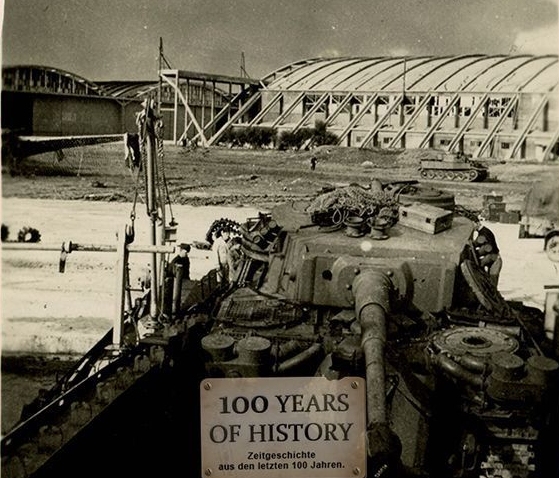
African Tigers didn’t see any real ports, as far as we know. Most of them left Italy by driving off the promenade at Reggio Calabria, across the beach and onto a Marinefahrprahm. They drove off those barges onto the bare concrete apron of the seaplane base at Bizerte, as the photo shows (it’s Tiger 02 of the 501st).
There was no colour called “Africa tan” so I don’t know what to say about that.
The Tigers of the 501 and 504 battalions were painted overall RAL8000 when shipped to the units at the training school. They apparently got their camouflage pattern (RAL7008) and their numbers and other markings in the school before leaving for Africa. We know the kind of pattern applied to Tiger “131” of the 504, but we’re not clear about the 501 Tigers. Photos hint that they used very wide green bands.
Yes, the official “tropical” paints at the time were 8020 + 7027. But the factories were instructed to use up the older paint stocks, so that’s what they did at Henschel.
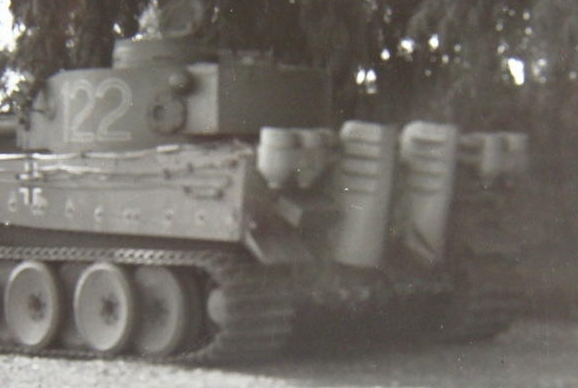
The African Tiger battalions were issued new cans of paint, and some of these cans were 8020 and 7027. But, photos reveal they didn’t repaint any Tigers overall in the new colours. They did apply 8020 to any repairs on the tanks, e.g. patches welded over impact holes. And - for the 501 battalion only - a lot of the external equipment didn’t arrive until training, to be added to the tanks right there in the school, and it could be painted in RAL 8020. The photo shows a Tiger of the 501st and you can see this. The turret bin and the toolbox were painted RAL8020 in some cases, but it’s the Feifels and the exhaust covers here.
David
17 Likes
@DByrden thank you for the wealth of information. I was trying to use other resources and one of those was flames of war which admittedly could be hit or miss due to scale differences. They had discussed that when the tigers pulled back closer to the coast the paint scheme went to almost an all khaki grey.
I remember from another thread we talked about the tanks being issued at the school, were any, such as replacements sent piecemeal or in ones or twos?
Another question, when you say old factory stocks of paint what does that mean, is that an off shoot of the dunkagelb Or Gelbbraun ? Or do you mean they were sent in the gray paint scheme then other paint was applied over the base coat?
Sorry if my question sounds confusing.
2 Likes
Gregory:
“when the tigers pulled back closer to the coast the paint scheme went to almost an all khaki grey.”
That sounds like nonsense. I’ve seen hundreds of photos of African Tigers and I’ve never noticed a full re-paint while in service.
But, the poster must have said that for a reason, so perhaps he saw something that I missed. Can you link me to that thread?
Each Tiger was sent individually on a barge, as far as we know, except the first three. They went on a ship. The vehicles did arrive in small groups.
What I mean by old stocks, is that some factories still had the first “tropical” paints in stock - RAL 8000 and RAL 7008 - even after the second “tropical” scheme was mandated. And they were instructed to keep using the old paints until they ran out. That is why dozens and dozens of Tigers were painted similar to Tiger “131” in the UK. Every Tiger sent to Africa was painted with these colours.
Some people argue that they were painted Dunkelgrau at the factory, then the “tropical” colours were applied only when the tanks got earmarked for Africa. I cannot say if that’s true or not. A complete re-paint covers up the evidence!
We do have photos of new Tigers arriving at the training school for the 501 battalion, and it’s 1942, during the time of grey paint, and they are definitely not grey.
David
5 Likes
Here is the post on flaws of war. It appears I may have misunderstood to an extent but i also done know the validity.
the scene I will most likely do will be one of the first three tigers arriving or going on a ship. My assumption is that the first unit to go over painted or began painting them at the docks. I am basing this on our last conversation when I considered doing a railhead diorama.
Would it be within reason that when they arrived in Italy they got there initial DAK colors?
1 Like
Well, they are not D.A.K. tanks and no colours were explicitly called D.A.K. colours, but that’s not important.
We have photographs of the first few Tigers when they were leaving Reggio Calabria and getting on a ship or ferry.
They are fully camouflaged and have all their markings.
We can also see that the paint on the sides has been burnt and discoloured where the little blocks for the side skirting were welded on.
Now, if they got painted at the docks, then this welding job would have to happen later, at the docks. And that’s just silly.
These tanks were fully painted and marked at the training school.
David
4 Likes
@DByrden thank you, I didn’t catch the side skirts having to be welded on. Why was that? Did they take them off for shipping or was it an addition at the training grounds?
1 Like
The African Tigers of the 501 battalion were some of the first ones - mostly within the first 30 to be built.
Side skirts had just been invented. These Tigers were delivered to the 501 at the training school without side skirts, or Feifel gear, or many other parts. We have photos of this.
The equipment arrived at the school later and they had to add it there.
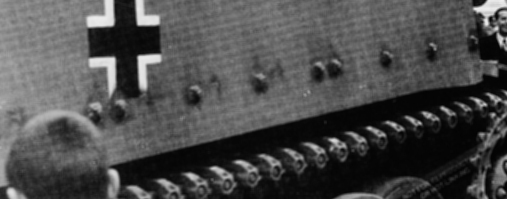
This photo of Tiger “142”, when relatively new, shows discolouration around the welded blocks. There are better photos but I can’t remember them right now.
David
4 Likes
@DByrden safe to assume they had the gear welded on before shipping.
I didn’t realize there originally wasn’t side skirts for tigers. I wonder what brought that change?
Either way this is fascinating, I could maybe add some burn discoloring around the skirts when I paint my kit.
2 Likes
What brought that change? The tracks were wider than the hull. Without skirts you could have an insane amount of mud thrown up.
The real question is, why did they put the tank into service before finishing its design.
David
4 Likes
Wasn’t the Reich sort of in a panic to get the first Tigers into combat? As soon as they were battle-worthy off the assembly line (bins, fenders, and tool/cable brackets weren’t necessary) they were shipped out. At least that is what I’ve read.


4 Likes
@DByrden seems like some of these things were after thoughts to the builder. It makes sense though with how wide the tracks are, you’d assume that would have been recognized sooner.
1 Like
The Tank Museum did a little video a few years back about their research into Tiger colours. I don’t think it’s adding much new than what has already said here, but you may find it interesting nonetheless.

Enjoy.
3 Likes
I assume they did recognise it sooner, but had some kind of pressing reason to deliver the tanks without for the moment. As David says, the interesting question is what that reason might have been.
This is not exactly unique, BTW, Early Churchill tanks were issued with handbooks that outright admitted the tanks had many defects, but also that the manufacturer was working hard on rectifying those.
3 Likes
@phantom_phanatic thank you I’ll give the video a watch. Anything is helpful.
@Jakko i didn’t know the Churchill crews were given books that said that. Than again wasn’t the Churchill first used at dieppe and that was an eye opening moment.
2 Likes