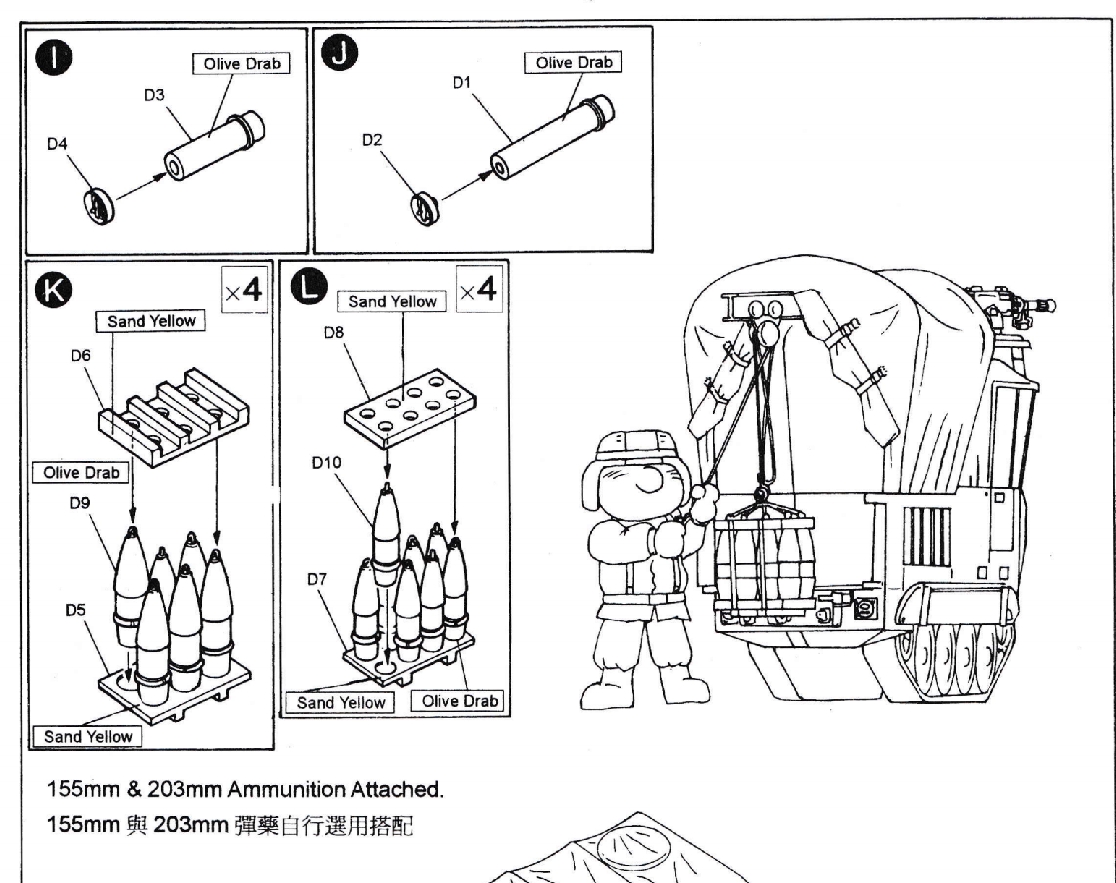
I’m building the M109A6 and I have the M548A1 which comes with 155mm and 203mm shells. But I don’t know which is which could some one help me out and let me know which is which. And which propellant cartridge part goes with the 155.
1 Like
Compare the two types side by side: the thin projectiles and containers are for the 155 mm. Since there are eight of them to a pallet in the instructions, I assume D10 to be the 155 mm shells and D1/D2 the 155 mm propellant containers.
3 Likes
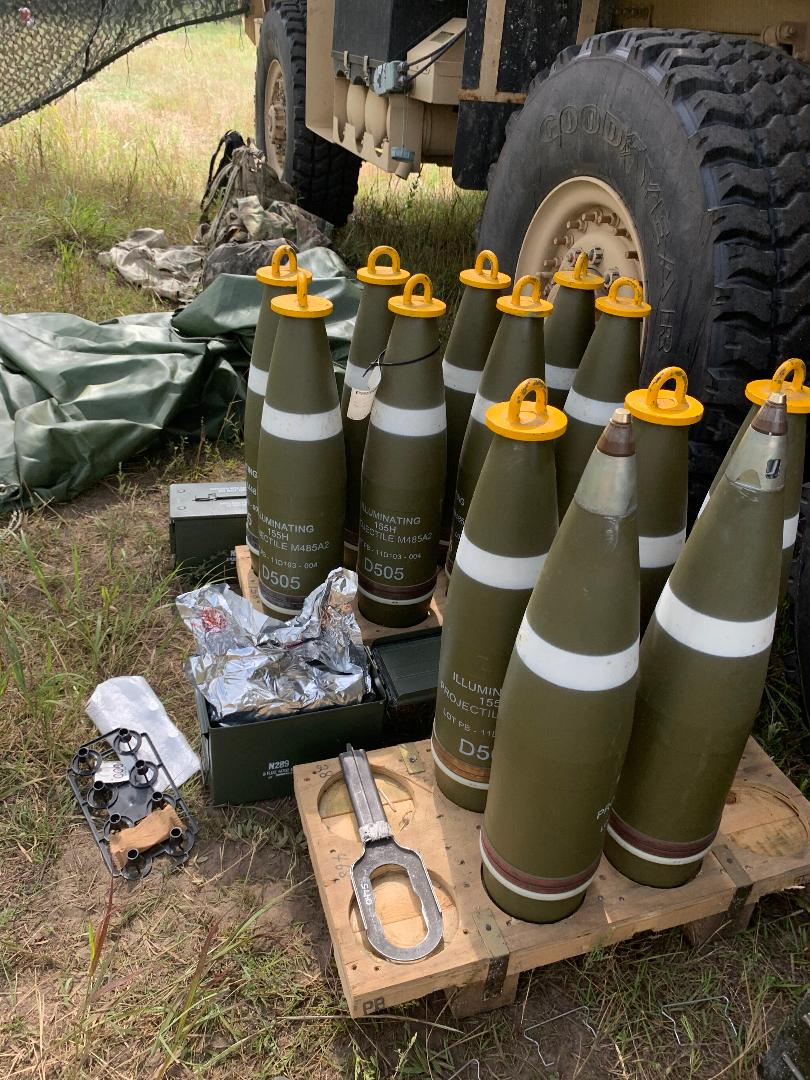
For a Paladin you may want to upgrade to AFV Club’s set #25299 - the newer Modular Artillery Charge System. Either way, your projos are the ones that look like this:

The new containers in the set look like this:
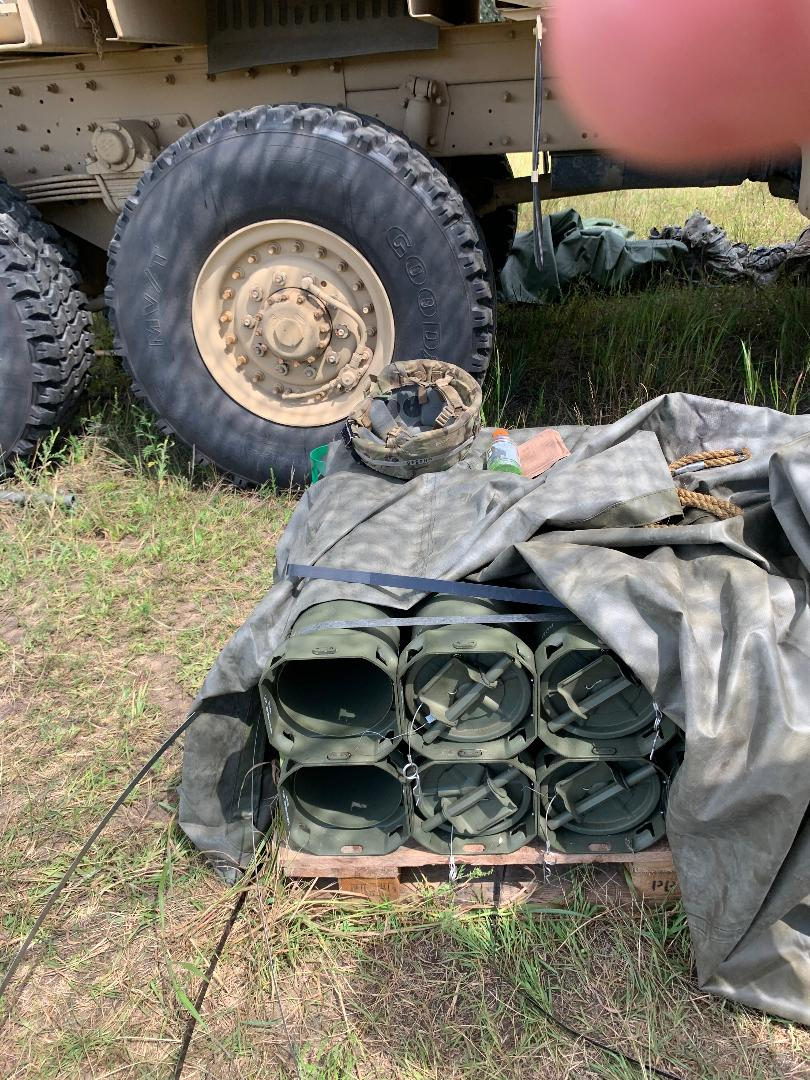
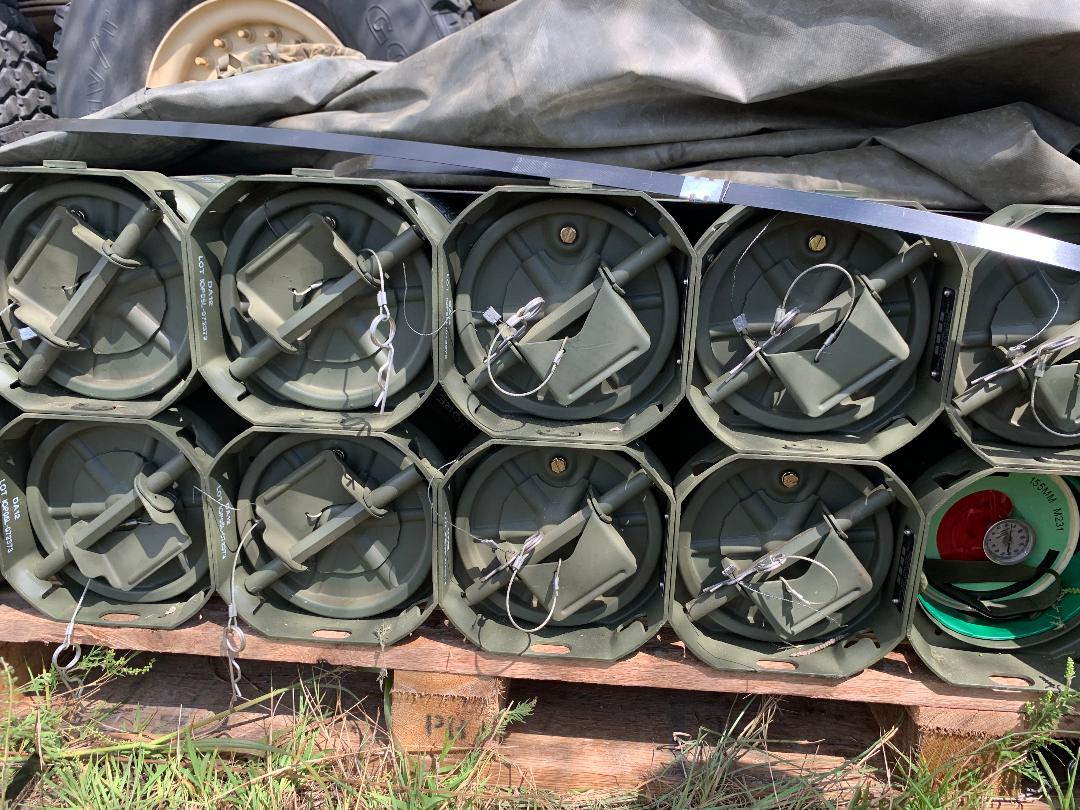
I’m showing you how they’re laid out when firing as it sounds like you want to do a diorama. Don’t forget the metal can for the fuzes, as seen in the first photo.
Maybe you can scratch a fuze wrench as well.
Note the difference between the Time Fuze (M565 or M767) on the illum rounds, and the VT fuzes (M728 or M732) on the HE rounds.
4 Likes
Thank you. No diorama for M109A6 I just wanted to put a pallet of them next to it in the display case.
1 Like
In the AFV Club set, L above are 155mm rounds. J are the older style powder cans that were used up until the mid-2000s.
3 Likes
Ah. Then no need for the thermometer as in the last photo
2 Likes
If I was doing a dio I would have to make some of them flat so no one can make IEDs from them.
2 Likes
The ammunition in the set has very little time overlap with the M109A6. It is really only valid for 1950-2000, approximately, best for Korea to Desert Storm.
First off, the large diameter projectiles are for the weapons with larger diameter bores, 203mm vs. 155mm.
The shells have the WW II-era lifting plugs in their noses, not the current shock attenuating plugs shown in Skip’s photos.
The set only has two types of propellant containers when each weapon had two (White bag and Green bag). I forget which the set purports to show or whether they are the correct length and diameter to match the markings.
Drifting off topic, I gave AFV Club the info for their “modern” ammo set. I had hoped they would make a plastic version but went with a metal set that had only one or two of each projectile. I gave them a wide range and was really hoping they would provide markings because several of the shells have similar contours so one molding could do multiple duty with different paint and lettering. I compiled the info in 2012 and tried to fill in the gap between 1960 and then when a number of new ammunition types were introduced. I also provided propellant charge and container information but they didn’t use it. The info was for the:
M449 APICM
M483A1 DPICM
M485 ILLUM
M549/M549A1 HE RA
XM631 TAC CS
M687 GB2
M692/M731 ADAM
M712 COPPERHEAD HEAT CLGP
M718/M718A1/M741/M741A1 RAAMS
M795 HE
M825/M825A1 WP
M864 DPICM
M898 SADARM
M982 EXCALIBUR HE PGM
I mention this to illustrate how model companies get their information: They ask somebody. They don’t have large R&D operations like General Motors or Northrop-Grumman has. They usually don’t have anyone. The quality of that information depends almost solely on the skill, attention to detail, and intellectual honesty (are they willing to admit what they don’t know) of the person providing it. Even then, the companies can’t or don’t use all of it, or use any of it correctly.
When people complain about accuracy and claim that the model companies aren’t willing to fly halfway around the globe to visit a museum for two hours or contact a known “expert”, it really just shows how ignorant of business in general and the model business in particular the complainers are. Most of the model companies today are in Asia while the experts on western equipment are in the West. While somebody in Kansas City or Brussels may believe it’s easy to find an authoritative expert on practically any subject, the basic process itself is well nigh impossible for the third of the world that doesn’t even use a form of the Latin alphabet. As I say to these whiners, if it is so easy, come back tomorrow with the names of recognized experts on 21st Century Chinese infantry vehicles or South American AFV development - AND who are willing to help design a model.
KL
4 Likes
You beat me to it, Kurt. I was at the gym and could do limited evaluation at the time, but I know that “straight sided” projos are off. That’s why I showed photos from my phone, which I took on my very last fire mission in 2001. As the Gino says, “L” are indeed 155mm projos, but that’s about it. They are certainly not correct for the Paladin.
I too contacted AFV Club about the incorrect projos as I have done quite a bit of work with them. I was disappointed with the new set. The two steps in the body between the nose and the obturation band are not correct in either the turned brass rounds or the plastic ones. And neither has the classic “boattail” shape associated with the current HE rounds. The older style may have indeed been used until 2000 as you say, but by 1999 we were firing the boattail style at Ft. Sill. Old stocks were probably used up in most locations by then. Although I will say in '98 we fired some pretty old 105mm ammo. B ut that’s not relevant here.
For anyone wanting even a modicum of accuracy, skip the L projo (another company dod make correct ones) or modify one to the correct shape and cast them.
They also glean much of their information from open sources on the internet, like this forum. Which is why when people don’t take the time to make the distinction, or simply put out BS, inaccurate kits and accessories are perpetuated.
2 Likes
OK then…
But can we try and get model companys to put those little cartoon people back in the instruction books they are funny.
3 Likes
I will admit that I never even opened up the package but the illustrations on the card looked like pretty good matches to the dimensioned sketches I sent them.

My M483A1 sketch:

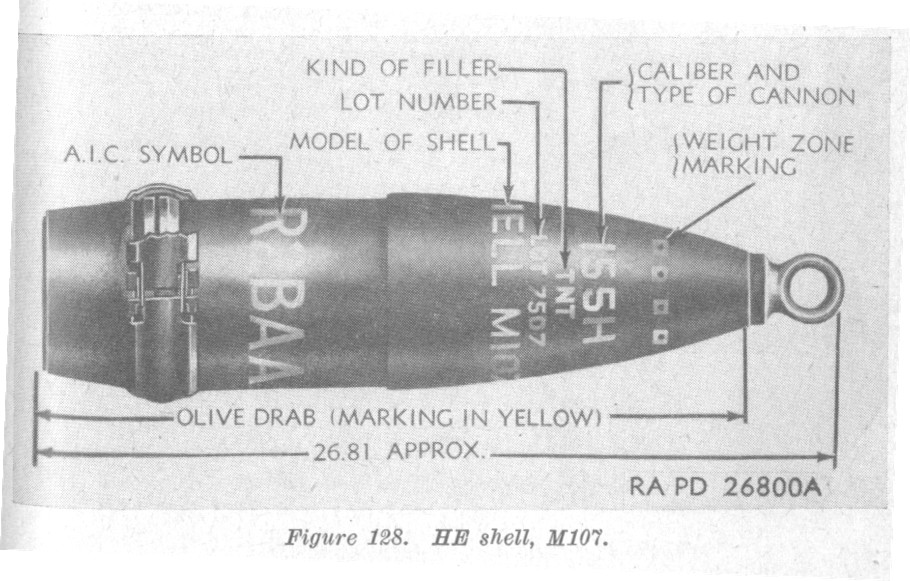
Almost every shell has a bourrelet on the forward portion to guide it in the bore, with a reduced diameter section between it and the rotating band, but the diameter difference is small, giving only a 0.01 in/0.25mm step to the surface. That shouldn’t be visible on a turned round in 1/35 and is clearly way overdone on the plastic rounds. I suspect they originally measured off an illustration like this where the diameter difference is suggestive, not accurate.
That’s why I showed photos from my phone, which I took on my very last fire mission in 2001.The older style may have indeed been used until 2000 as you say, but by 1999 we were firing the boattail style at Ft. Sill. Old stocks were probably used up in most locations by then.
Ummm, well . . .that second 2001 photo shows M107 DODAC: D571 projectiles that were adopted in 1939, so they are the old style.
It’s surprising how often people get offended when one corrects them and they deny saying what they said, then get downright angry when you post a screen shot. I will try to preface things with “For future reference . . .” to try to steer them away from thinking it’s an attack,but that rarely works.
That’s part of that “intellectual honesty” I mentioned . . .
KL
5 Likes
For future reference . . .Not just current, but almost all projectiles developed after 1918 (Base ejection shells are a notable exception) have a boattail taper ahead of the base.
KL
3 Likes