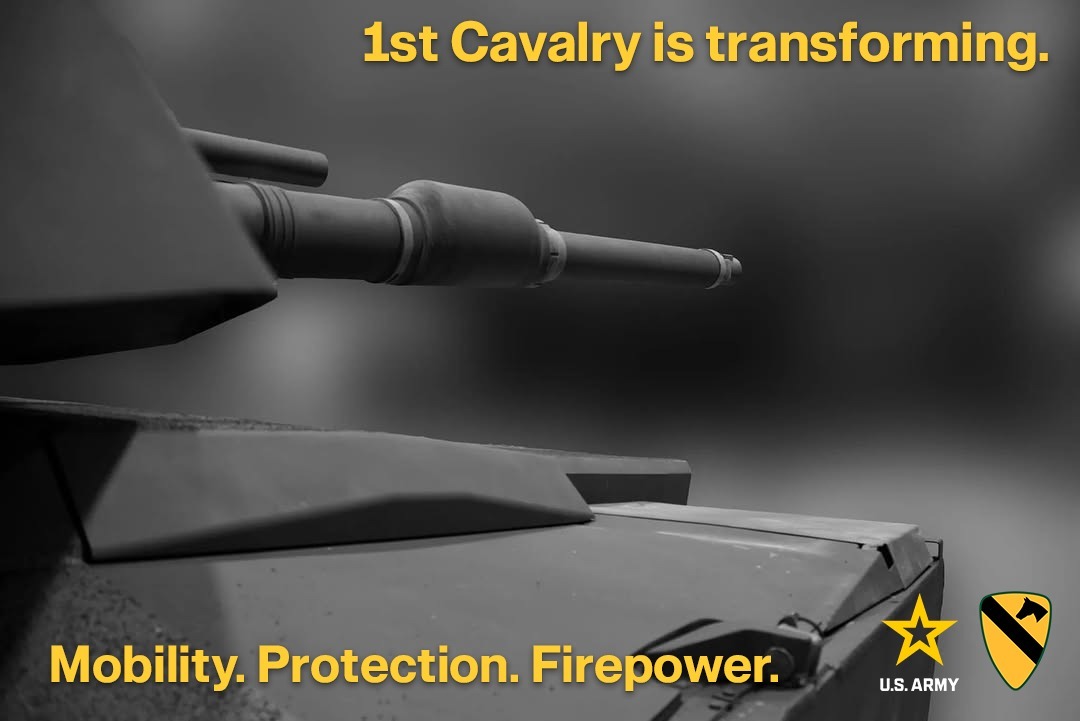
Well, looks like we now know which division will be trialling the M1E3…
3 Likes
From the US Army FY2027 Budget Justification Documents.
“In FY 2027 the Abrams Production Program will begin building pilot production tanks of the new variant. The M1E3 is a major ECP redesign to substantially reduce weight, increase fuel efficiency, decrease crew cognitive burden, improve overall survivability, and provide a Modular Open Systems Architecture (MOSA). The initial pilot production vehicles will be used to prove out the modernised updated assembly line and validation of the updated manufacturing processes.”
3 Likes
Having read the back and forth of this discussion since I last posted, I think the arguments on both sides are forgetting the fact that occupation and destruction do not necessarily conflict. Obviously when you put infantry and armor units into the line of fire you’re risking their destruction, but something people often forget is that a well equipped and trained unit does actually inflict great casualties when used correctly, and in the case of a future war a force that does not screen drones is forced to fight how you guys have been discussing it – reduced to choose between attempting to hold ground, and taking massive casualties, or inflicting massive losses via unmanned systems but accomplishing limited tactical objectives.
There are far more options to screen for drones than people have been considering. Not to mention a future war concerning the United States needs to consider the presence of air power and the effect that has over an unmanned and manned battlespace. I would feel perfectly comfortable using armored formations, particularly armored cavalry to probe enemy forces using systems like perch In addition to existing methods to force a response from enemy drone defenses and actual maneuver formations. The next war (I’m assuming it will be Taiwan) will be a LOT of boots on the ground. China needs to physically take Taiwan, and Taiwan is a small country. They will be fighting on their home turf, likely in heavy urban combat. In addition to that, china’s PLANMC is a relatively heavily mechanized force, as far as I know. High vehicle density will force the PLANMC to also adapt drone defenses, which means future wars may be more conventional than previously thought. As per usual, we can expect major powers to adapt defenses to these common problems. And drones don’t require a massive “fix” to defend against. They’re still cost effect, and they’re still a good option, especially as I said for probing, but they’re not a wonder weapon because they’re good at killing defenseless infantry in trenches.
What this comes down to is this: Infantry are “squishy” or fluid, which means it can be hard to leverage precision strikes against them, or even indirect strikes unless they are decisively engaged. Armor is easier to hit with precision strikes. FPV drones are simply cost effective enough that they can be leveraged in enough volume to actually have an effect on infantry formations in current conflicts. The US and China are being forced to account for this. Once FPV drones loose their effect, the argument of destruction vs occupation falls apart. You can’t just cluster bomb urban environments constantly, because you’ll have a contested airspace, and counter-battery fire to worry about for artillery. In addition when it comes to Taiwan I have trouble believing UAVs will really survive for much time in such a small airspace, with so many troops packed into it as the conflict develops.
Overall, I honestly think that as screening FPVs becomes feasible, manned combat will 100% be common, and effective, and that the argument of destruction vs occupation ONLY applies to conflicts involving limited capabilities forcing both sides to make less than optimal decisions with less than optimal forces.
(sorry for the rambling)
1 Like
I think we actually agree on more than it might seem at first glance.
I’m not arguing that drones create some entirely new “destruction vs. occupation” problem, or that they replace maneuver warfare. I agree with you that screening, adaptation, and combined arms will push things back toward more conventional fighting—and that any conflict like Taiwan is going to involve a lot of boots on the ground.
I think we might just be framing one part of this a bit differently:
The destruction vs. occupation dynamic isn’t dependent on FPVs at all. It’s been there long before drones and it doesn’t go away if their effectiveness drops.
Even in conflicts like World War II or the Vietnam War, you see the same pattern—massive destructive capability shaping the battlefield, but not resolving the war on its own without physically controlling territory. Destruction sets conditions, occupation determines outcomes.
What drones (especially FPVs) seem to be doing is raising the cost of that occupation phase, not replacing it. Screening them will absolutely help, but it doesn’t eliminate the underlying issue—it just shifts it. You still have to accept losses to seize and hold ground, just like always.
On Taiwan specifically, I’d actually expect the environment you described—dense, urban, heavily contested—to cut both ways. It makes large-scale maneuver harder, but it also creates a lot of opportunities for small, short-range systems to persist in ways that are difficult to fully suppress.
So from my perspective, what you’re describing—adaptation, screening, continued relevance of maneuver—doesn’t really contradict the destruction vs. occupation framework. If anything, it reinforces it: even with better defenses, someone still has to physically control terrain to achieve the political objective.
Edro
1 Like
What you’re saying isn’t wrong, but it feels like an incomplete picture. Right now in Ukraine we’re seeing the most effective and adaptable fires employment to date (drones, and drones used with artillery). This has made it FAR more risky to conduct any maneuver warfare, and even before the drones, ATGMs made massive armored movements risky and many times not worth the cost. My argument is simply that once you take away those fires effectiveness, which is likely to happen to some degree in Taiwan or even a future European conflict, you’re back to maneuver forces. You can bomb the hell out of things still, but that either can win your war or it does nothing, it’s very hit or miss depending on the foe and reliant on air superiority. At the end of the day maneuver forces are still (probably) going to be the secondary or primary element of DESTRUCTION, not just occupation, even though fires will play a big role.
Also worth nothing that seizing terrain grants military objectives as well as political ones. When you advance your forces and force an engagement, fires employment can force a breakthrough of sorts, or they’re forced to pull more forces to their to repell an attack. Being on the assault by all means allows for greater manuver capabilities, so with a contested airspace and limited drone operations I will again restate the importance of Cavalry for future wars, as well as the broadened effectiveness of actually have forward deployed units to engage drones specifically before they can reach farther back. When you force the enemy to reposition on the defensive, it gives you an advantage, and can cause lapses in their command, logistics, and air defenses.
What I’m trying to say is, maneuver warfare will remain a viable element of destruction, and a potent enabler of destruction, but first drone air defenses need to be widely implemented. Otherwise the losses are just too steep for the US or China.
Hope this makes sense since I rambled a bit.
AC
1 Like
I think we’re largely on the same page. Maneuver definitely contributes to destruction—I don’t disagree with that at all. I’m just looking at it from another angle, where regardless of how that destruction is achieved, the outcome still comes down to who’s able to control the ground in the end.
Edro
1 Like
I will also throw in logistics. It seems that if you are not able to supply a long drawn out operation with the materials needed to sustain it, you will stall out and the front will become stagnate. If artillery shells, rocket/ missile munitions, fuel, food etc. run low or were never there in sufficient quantities to start with then the chances of stagnation or failure increase. I worry about our own stock piles and the ability to move them in a conflict. I fear we underestimate what will be needed and would struggle in an intense long term conflict with a major power. What I mean by that is if you haven’t created enough stockpiled material prior to the conflict, you may runout and not be able to replace what is needed at the current demand it is needed.
1 Like