And the concept of an “example” is utterly foreign to you, then? The three-color camouflage scheme makes for a convenient example, because period color photographs exist that show the tonal variation in what was issued as single colors of pastes, due to the differences in thinning and application; it’s much harder to derive the same information from black&white photographs. Inspectorate 2 issued a directive on 17 March 1941 specifying the initial tropen camouflage, which specified that troops were to order paint directly from the manufacturers mentioned in H. B. Bl. 1940 part C page 180 item 535 and page 531 item 1269, introducing another source of variation in shade between suppliers. On 25 March 1942, Inspectorate 2 issued a new directive redefining the colors to be used for the tropen camouflage, which specified that troops were to obtain the paint through regular supply channels, eliminating the ability of a unit to buy what it needed for a particular color of paint from a single manufacturer, instead getting whatever the supply depot had on hand, again increasing the likelihood that repaints would be in different shades.
Ah, I hadn’t read the caption properly. It is from Lehr Batterie 901. IIRC the “Tropen” colours are a dark yellow/sand and a slightly darker green/grey colour, like Tiger 131 in the tank museum. This would certainly give the slight contrast shown in the original picture (i.e. the original black and white one). Googling “Lehr Batterie 901” shows it at Kharkov in 1943, which is presumably where the picture in question is taken. This puts it beautifully on the cusp of the changeover from Panzergrau to Dunkelgelb so actually anybody’s guess! The paint under the worn whitewash on the accompanying Sdkfz253 seems to match tonally. Looking at the black and white photo carefully, I believe I can see three distinct tones on the front plate.
Well, it’s the right time, place, and unit to be painted in Tropen 1. I agree with David @DByrden that this StuG III is in Tropen1.
Yes, it does LOOK like Tropen 1, but I’m not so sure as I am with Tigers.
Because I know that the Tiger factory was using Tropen 1 paint during and after the time when new Tigers were sent to Kharkov. If they were “tropical” painted at all, it would be Tropen 1.
But what about the factory that made this Stug? They might have been using Tropen 2 paint - it was certainly available. Can we check what paint they were using when they made, say, Stugs for the Mediterranean area?
David
Hi all,
Thank you all for the continued discussion, it really has been amazing! I found another photo posted to a random forum (scroll down to reply #17963), of a stug from 901 Batterie in Ukraine, early 1943 with the same camouflage. Based on the timing and location what do you guys think? It seems to indicate that the other pictures taken were from around the same time. Which based on the information provided here probably means Tropen? But again which colors are most likely?
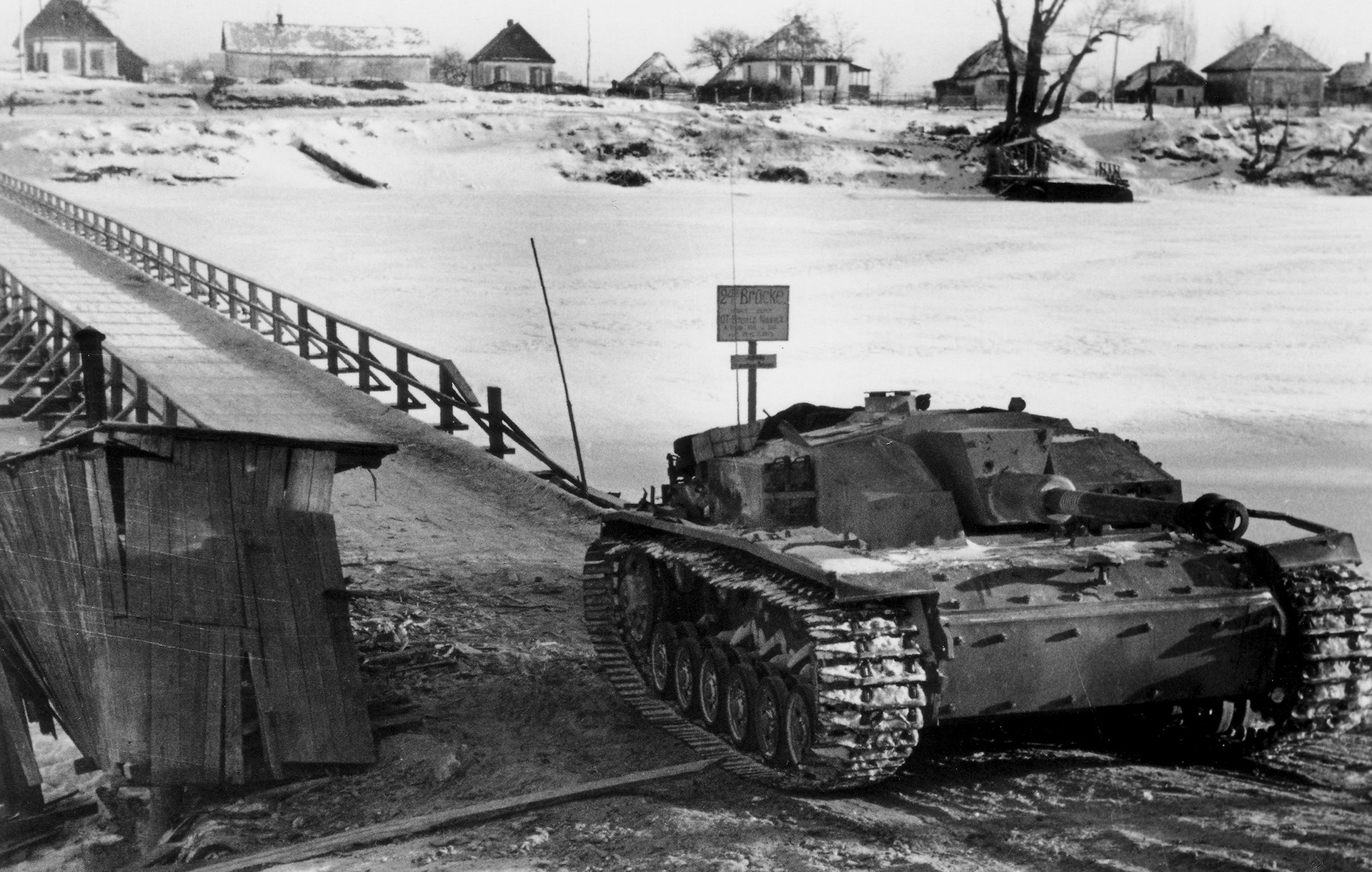
If it’s “Tropen” then it’s the first Tropen.
The second one has a light base colour, comparable to Dunkelgelb.
David