Something a little different - one of my other hobbies is collecting militaria. Over the past few years, I’ve really been interested in the development and fielding of radio technology as a way to better understand how the US military was preparing for and what its readiness state was for the war.
Turns out there are many false and misleading “urban legends” and myths surrounding the general topic, and the advanced state of the US Army’s Signal Corps Laboratory’s designs and development (which included very close association with the electronics industry before and during the war) emphasizes the myth of the general and longstanding belief of unpreparedness.
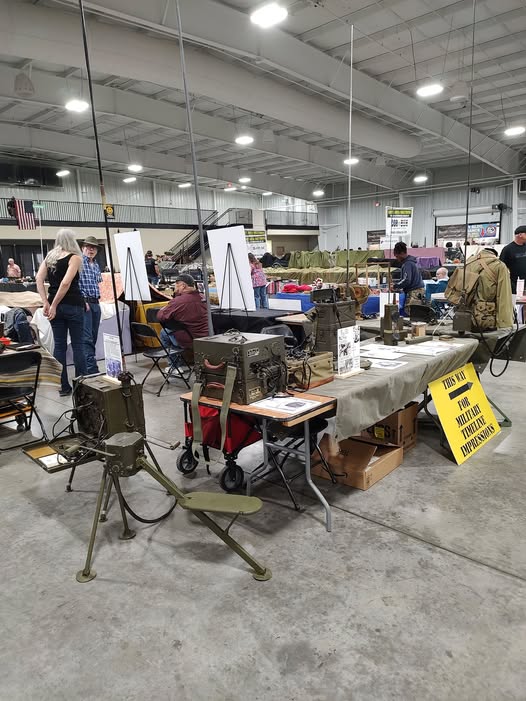
From left to right: SCR-284 battalion “base station” radio; the SCR-610 artillery / forward observer set and remote control device; the SCR-300 “Walkie Talkie” battalion and company set; the SCR-536 “Handy Talkie” company and platoon set; on the corner, the SCR-511 “Pogo Stick” set designed for the horse cavalry but fielded and used by the infantry battalion and company in North Africa, Italy and early years in the Pacific; and in the center background, the SCR-195 ORIGINAL “Walkie Talkie” infantry battalion and company set, fielded in 1936 at the basis of issue of 36 sets per infantry regiment.
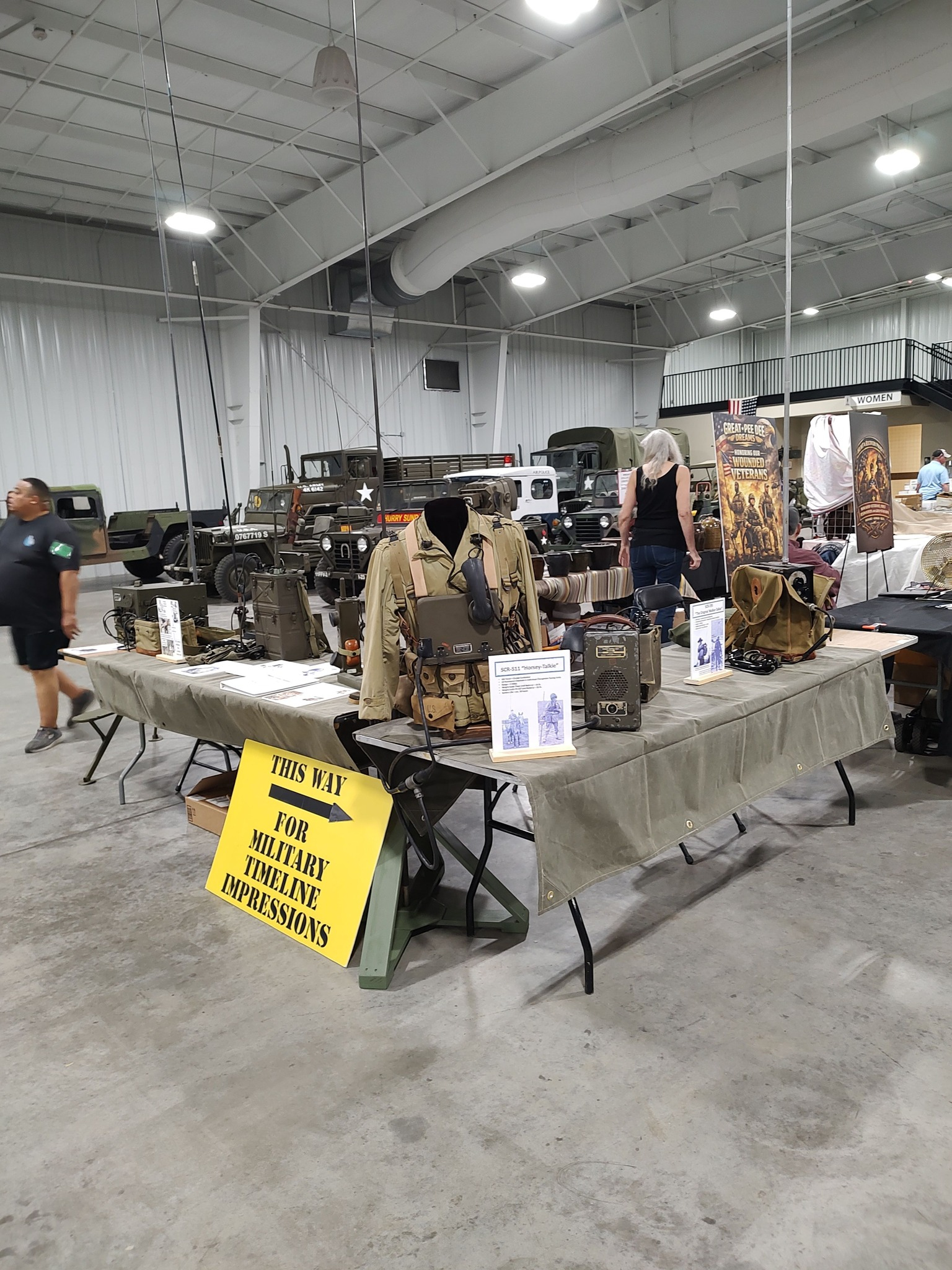
From right to left: the SCR-195 original “Walkie Talkie” first fielded in 1936 after initial prototyping and tests which started in 1932 and used through ca. 1943 by some infantry divisions; on the corner, another view of the SCR-511 “Pogo Stick” set also used through 1943 by some infantry divisions; followed by the more familiar SCR-536 “Handy Talkie”, the second generation “Walkie Talkie” SCR-300; the artillery SCR-610 with remote control device; and on the floor in the background, the battalion “base station” SCR-284 with hand cranked G-43 generator.
Keep in mind that these are just the radios used in the Infantry Battalion, Company and Platoon. The basis of issue meant that it was common for even single infantry squads to have push-to-talk radio coms with their platoon and company command. Every infantry company commander had push-to-talk coms with his battalion and battalion support assets (battalion trains for logistics and battalion mortars and the battalion med). Every battalion had both Morse Code and voice radio coms with its parent regiment or brigade and in a pinch with its division. This doesn’t include landline phone coms throughout the battalion using the EE-8 field phone and the battalion’s switch board.
With the exception of the battalion signals platoon using its organic SCR-284, none of the other radio sets required specialist, school-trained radio operators. All of the other sets could be operated by anyone with just the briefest of familiarization. Every infantryman could be a radio operator for his tactical unit. This greatly reduced the problems for training and manning infantry units. Radio “operator” casualties were simply replaced with another infantryman from the same unit. The large numbers of radio sets meant that most damaged or lost sets were quickly replaced from a pool of extra sets held at the next higher level of support.
ALL of these radio sets, with the exception of the SCR-284, employed crystal frequency controls and were literally, push-to-talk. No intermittent tuning was necessary (as environmental or use changed the internal mechanical tuning element characteristics resulting in frequency “drift” over the course of operations), nor was it necessary to conduct the daily (sometimes more often) “netting” procedures common with other armies necessary in order to get all of the stations precisely tuned / re-tuned with each other before the start of or during combat operations.