Another recent build I finished in the nick of time to pack into the car for the drive to Las Vegas for a crew’s reunion last October. September was a blur with 18-hour days required to pull it together. Since there were over 200 of the crew there, I built two versions of the boat.
The two shorter hulls are the Seawolf in its initial as-built configuration from the 1950’s. The four longer hulls depict the boat’s Special Projects conversion at Mare Island Naval Shipyard in the early 70’s with a 53-foot section (we called it “The Plug”) installed.
When Parche and Seawolf were in drydock, (one drydock was always reserved for their immediate use) large security curtains were placed around the hull and slowly lowered as the drydock was pumped dry. They protected sight-sensitive details from overhead satellites and any uncleared prying eyes for anyone not cleared for the project. MINSY posted armed guards at the curtain entrances in the drydock basin as well. Even they weren’t cleared for what they were guarding.
As such, both the Parche and Seawolf models I designed are unclassified. (I’m still too pretty for jail.)
If the security requirements ever change, I’ll update both in their “real” configurations which would look pretty cool. These were unique boats with unique crews.
After delivery, I made some design changes (especially in both versions of the sail) since those weren’t even designed two weeks before the delivery deadline and I never had time to add a full set of masts and antennas for each time period. The original sails had indented areas where the bridge windows resided. The new revisions used through-holes filled with clear resin to correct that and a two-piece bridge to make painting the white bridge interior a lot more user-friendly.
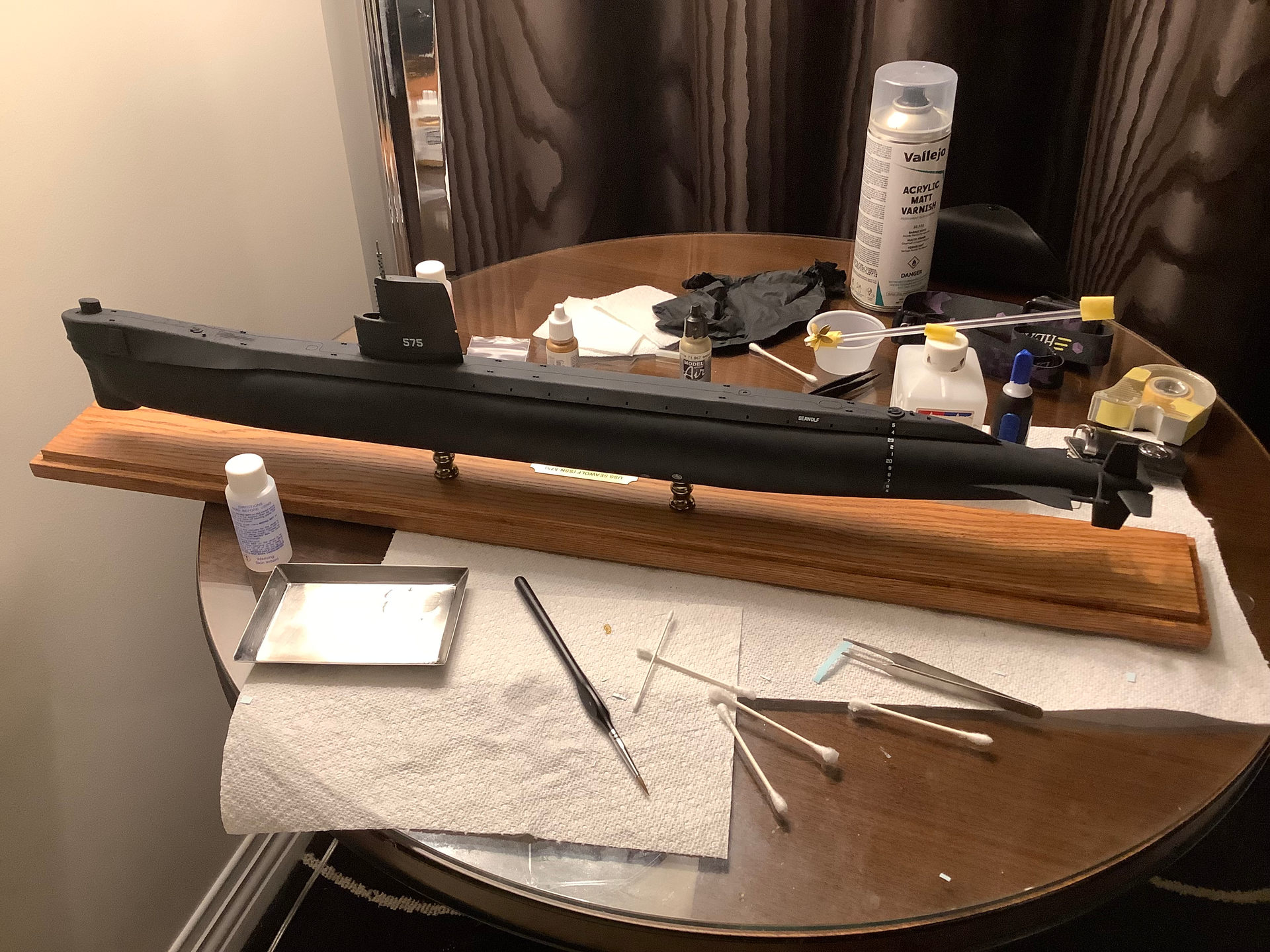
Arriving at the hotel after midnight, I still had to add the custom, waterslide decal draft marks. This is one of the two original hulls. Note the only mast or antenna I had designed for this version was the Type-8 Observation periscope, bonded to the top of the hull. I was not pleased but finding suitable reference material for that time period was tough. I found some ancient videos of the boat and used screen captures to begin the later conversion.
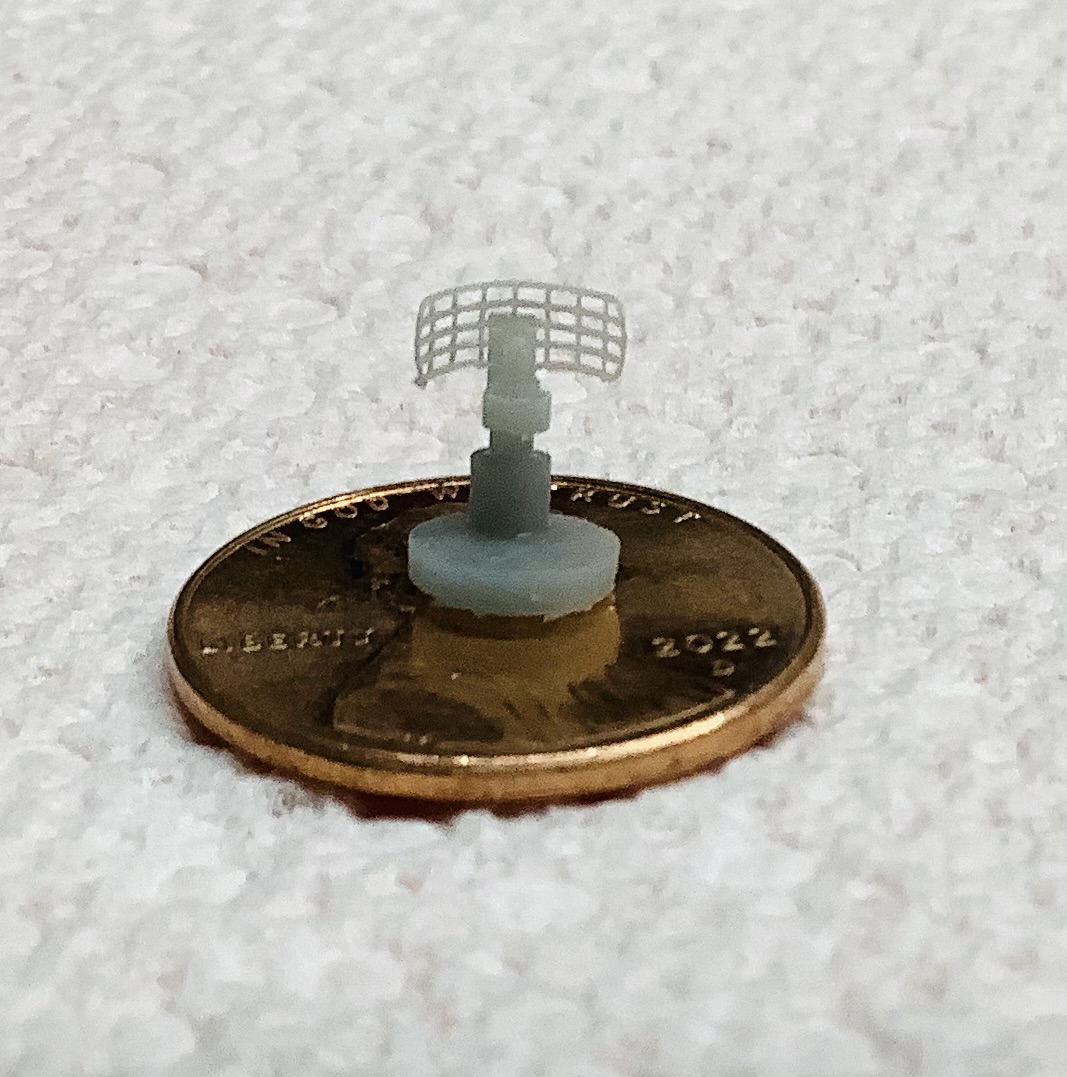
With the improved references, a suitable surface search radar was 3D printed. These were so fragile, (very soft when removed from the printer) I printed twenty to get two I was happy with. A UV wand was used to post-cure the exterior to make them strong enough to handle for sanding and painting. They were intentionally made short to fit into the sail in the lowered position for protection.

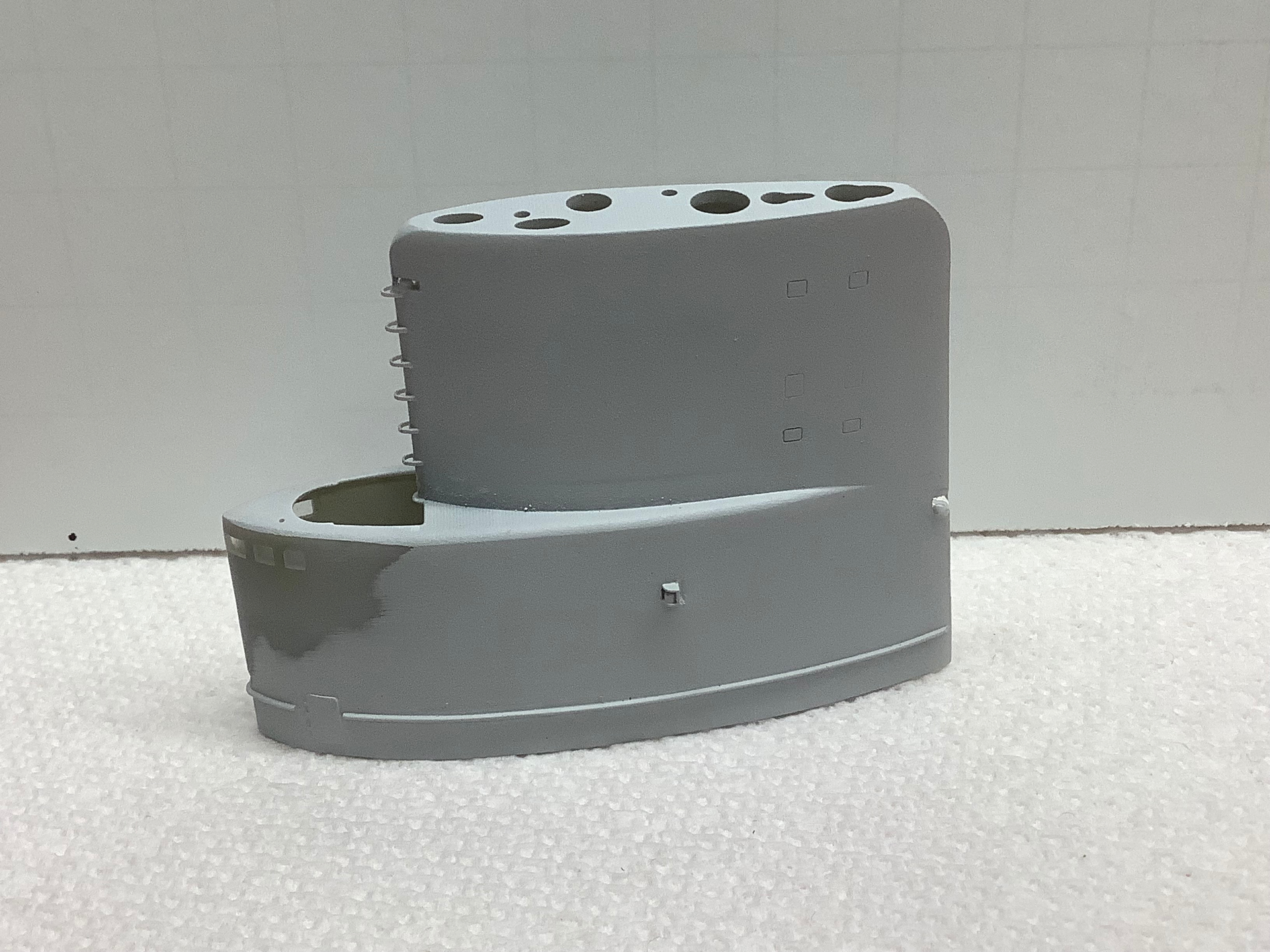
The primed (original style) sail with the clear bridge windows added and polished. All were masked and the front primed again before masking and painting.
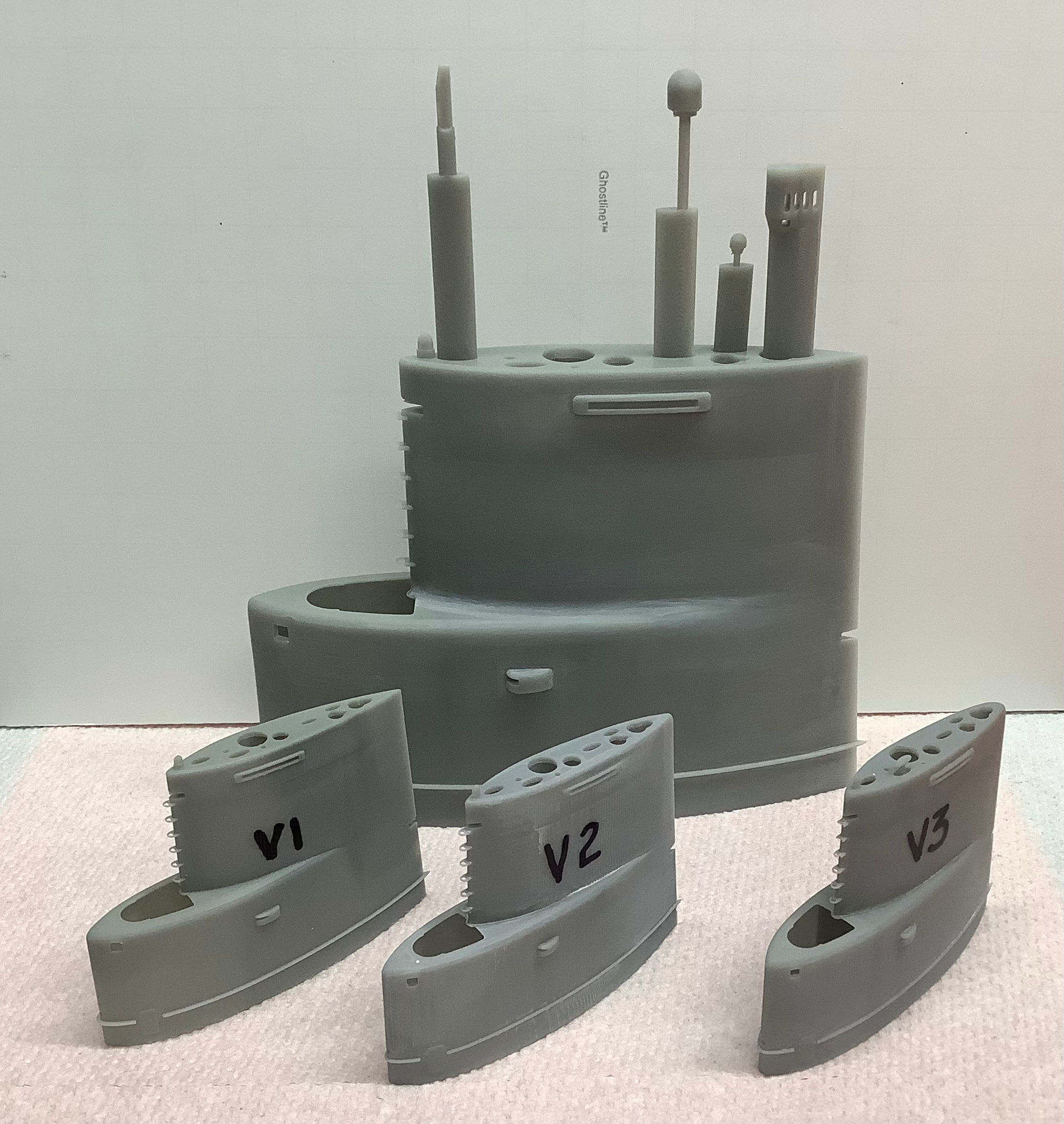
A 1/72 sail with three 1/144 scale revisions. Building the larger sail made it easier to find any flaws before committing to the smaller versions. These are the early 70’s Special Projects sails. Note the side-scan sonar projectors on either side near the top. The projector windows were painted a yellow/orange and clear resin applied.
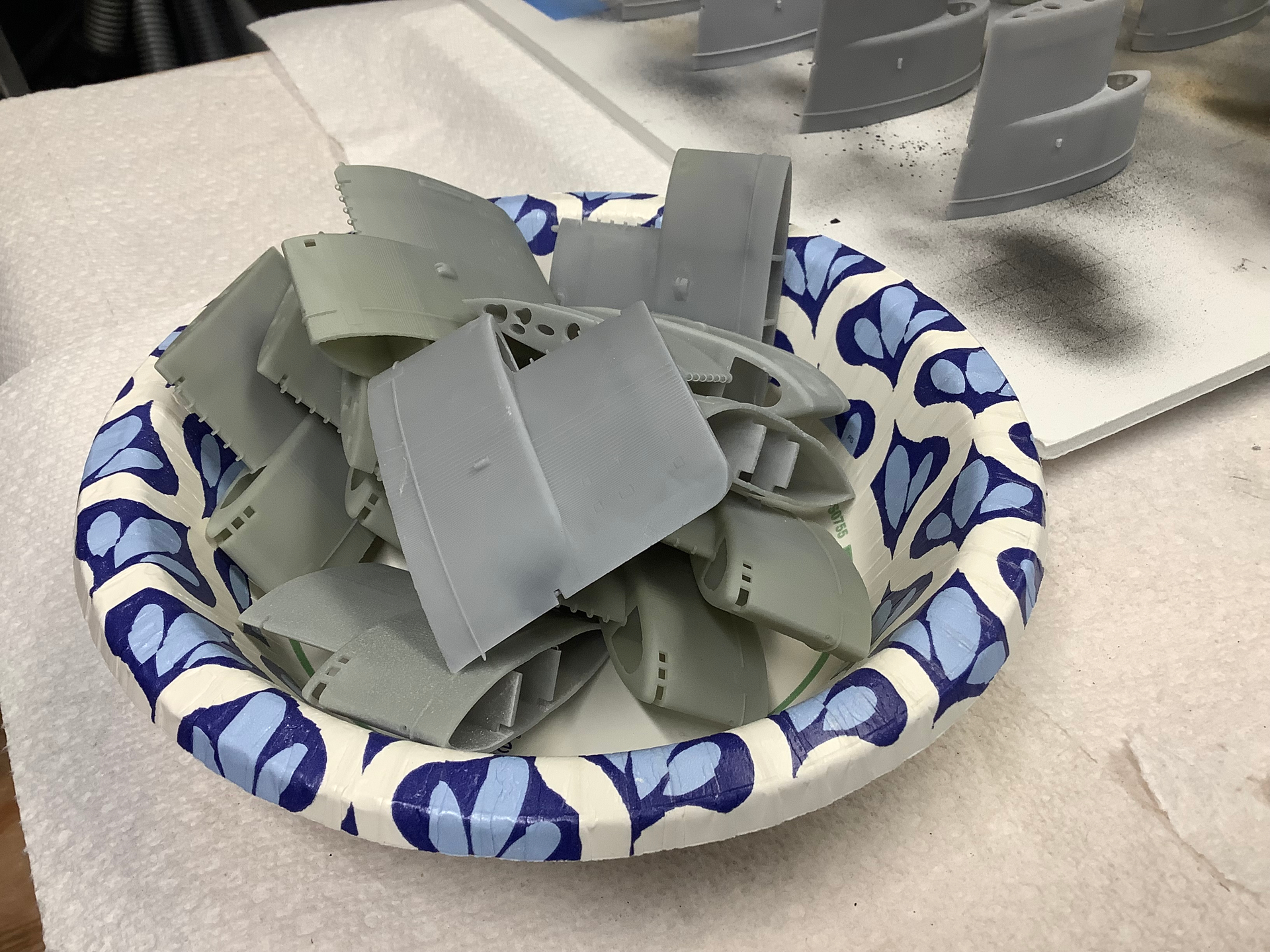
Another pile of scrap sails. While sanding, it was too easy to break the front handholds. That usually happened when I was nearly finished after an hour was expended on each.
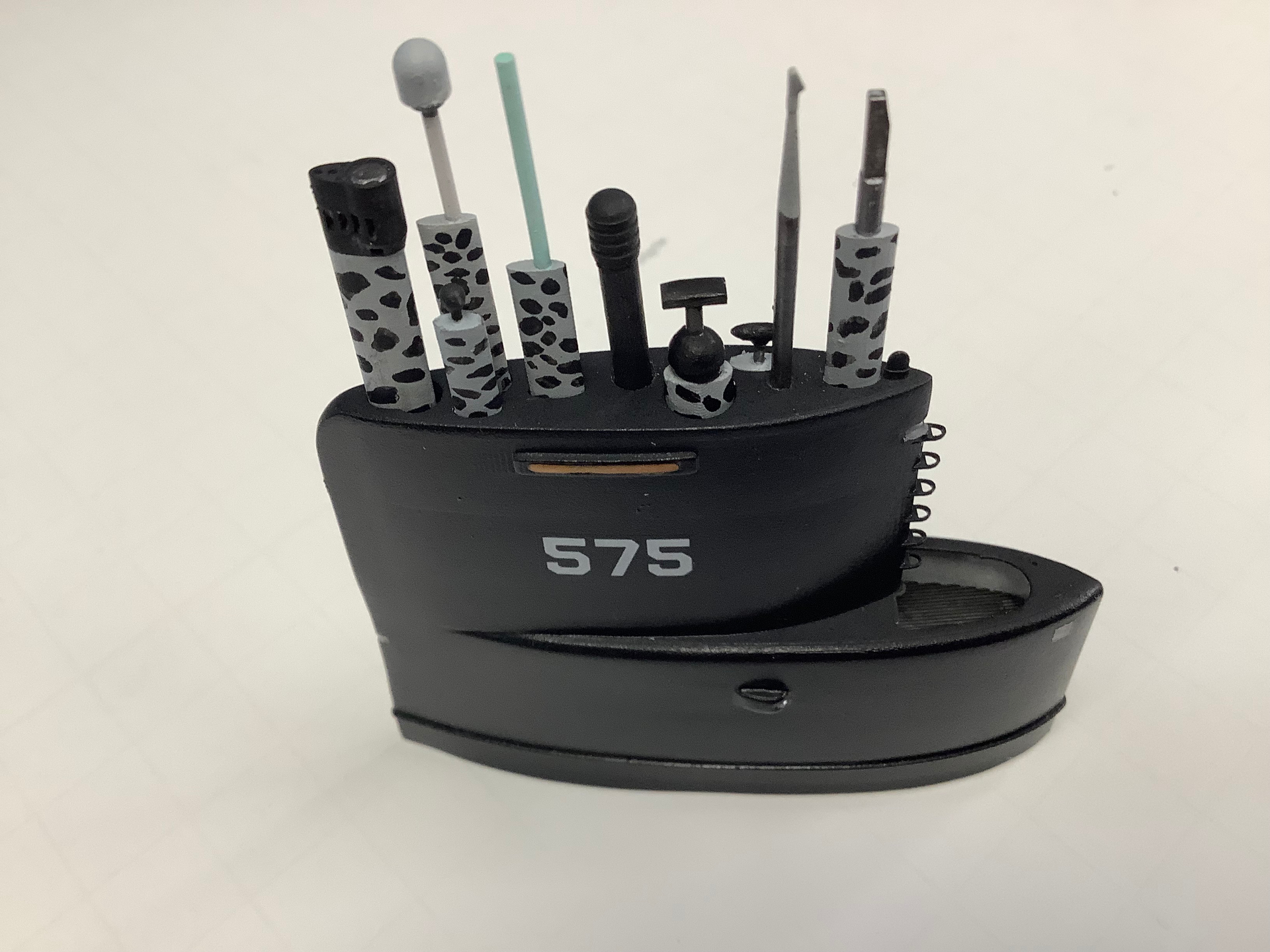
Final Special Projects 1/144 scale sail with a complete set of masts and antennas installed.
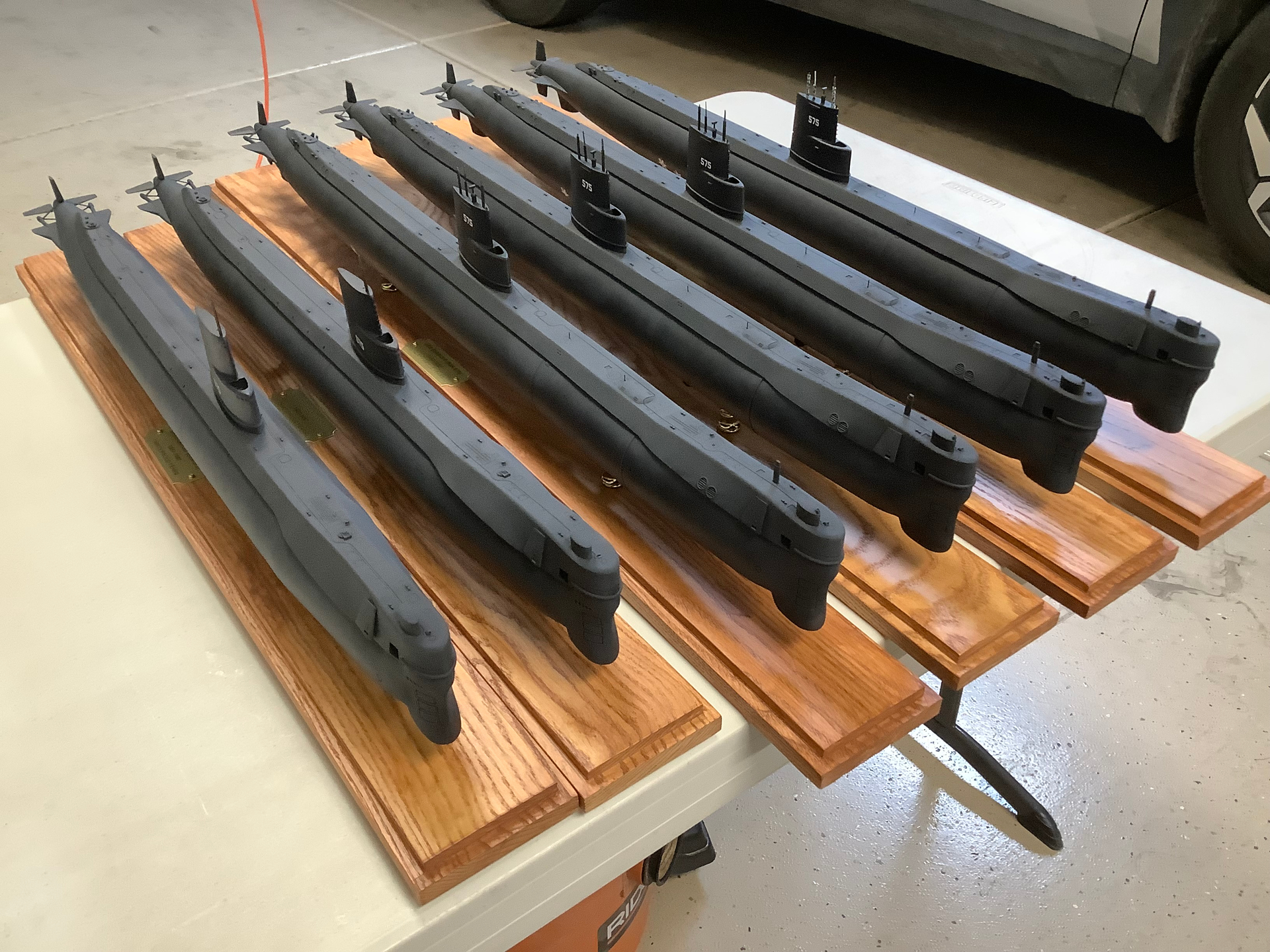
This was taken about an hour before I loaded them all in the trunk for the drive to Vegas (with the sails I wasn’t happy with.)
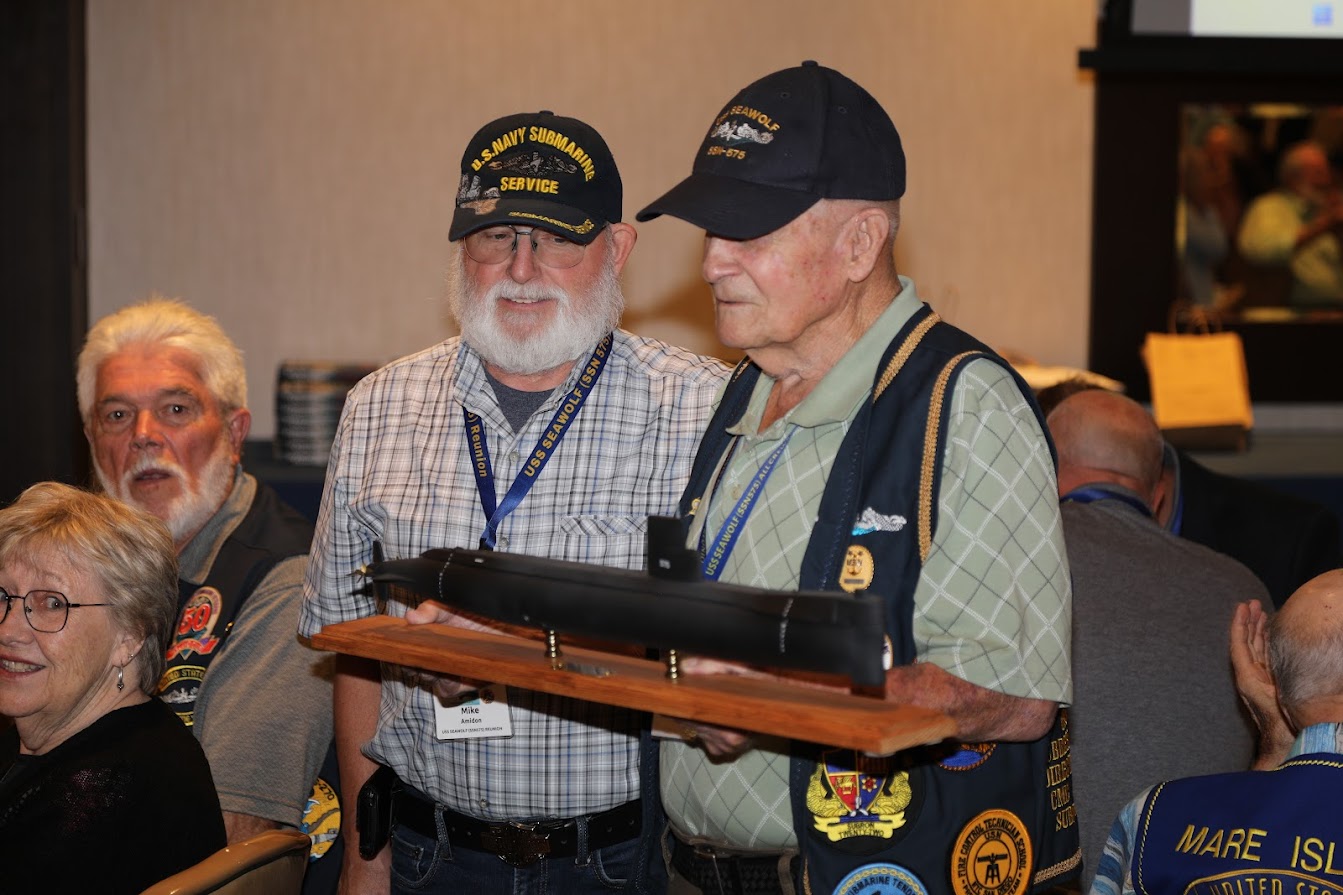
With such a large turnout at the reunion, I was compelled to build two of the original, as-built hulls for the old-timers. Luckily, only two showed up. . .
We have another reunion in two years, so I’ll be much more prepared with more accurate models to give away!
CC