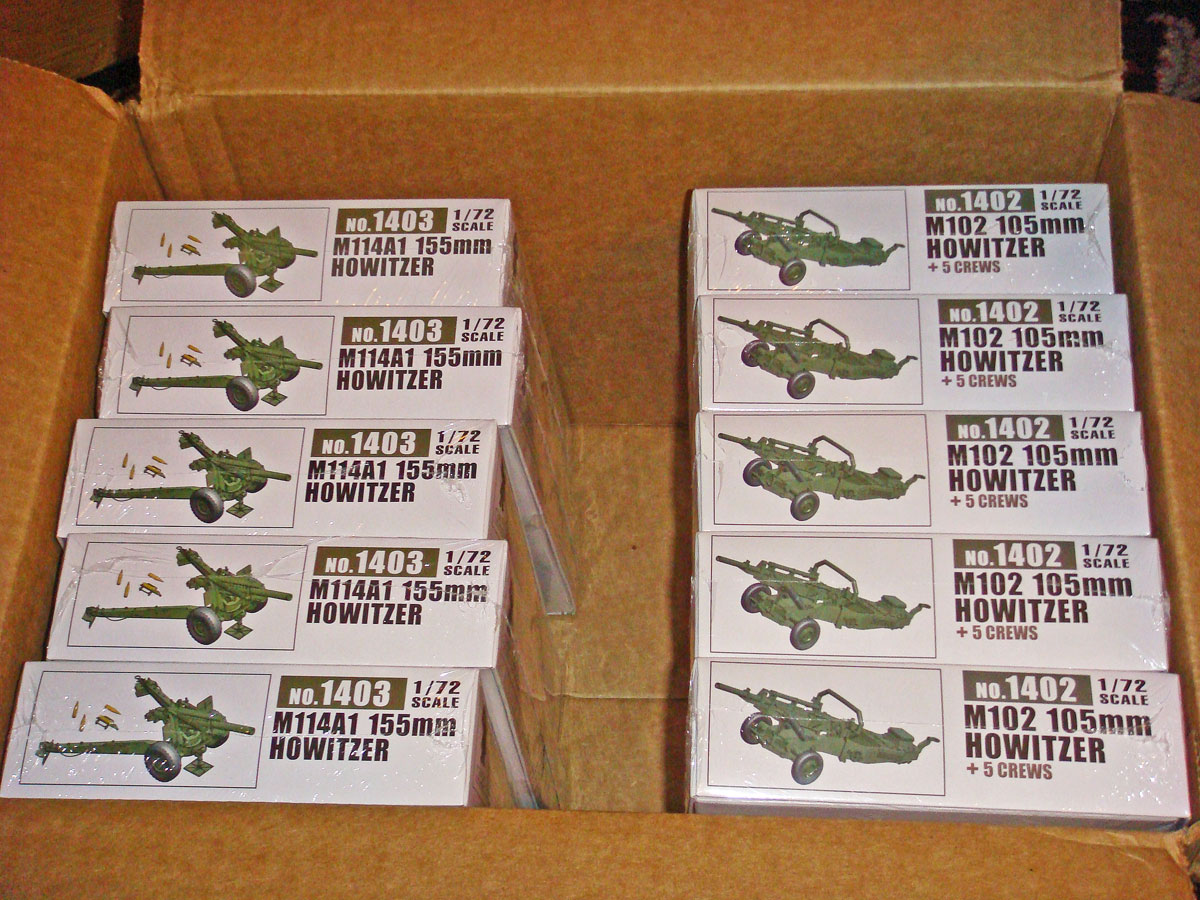
Both howitzer kits were Toxso, 1/72 scale injection molded. I believe that both kits are out of production, but you may be able to find them on the secondary market.
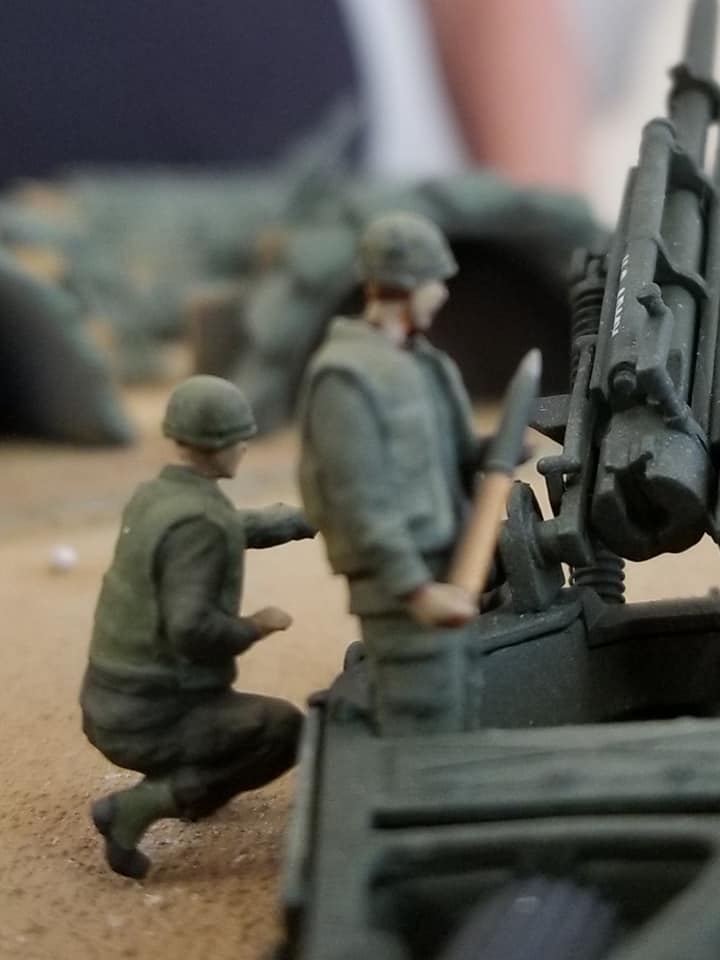
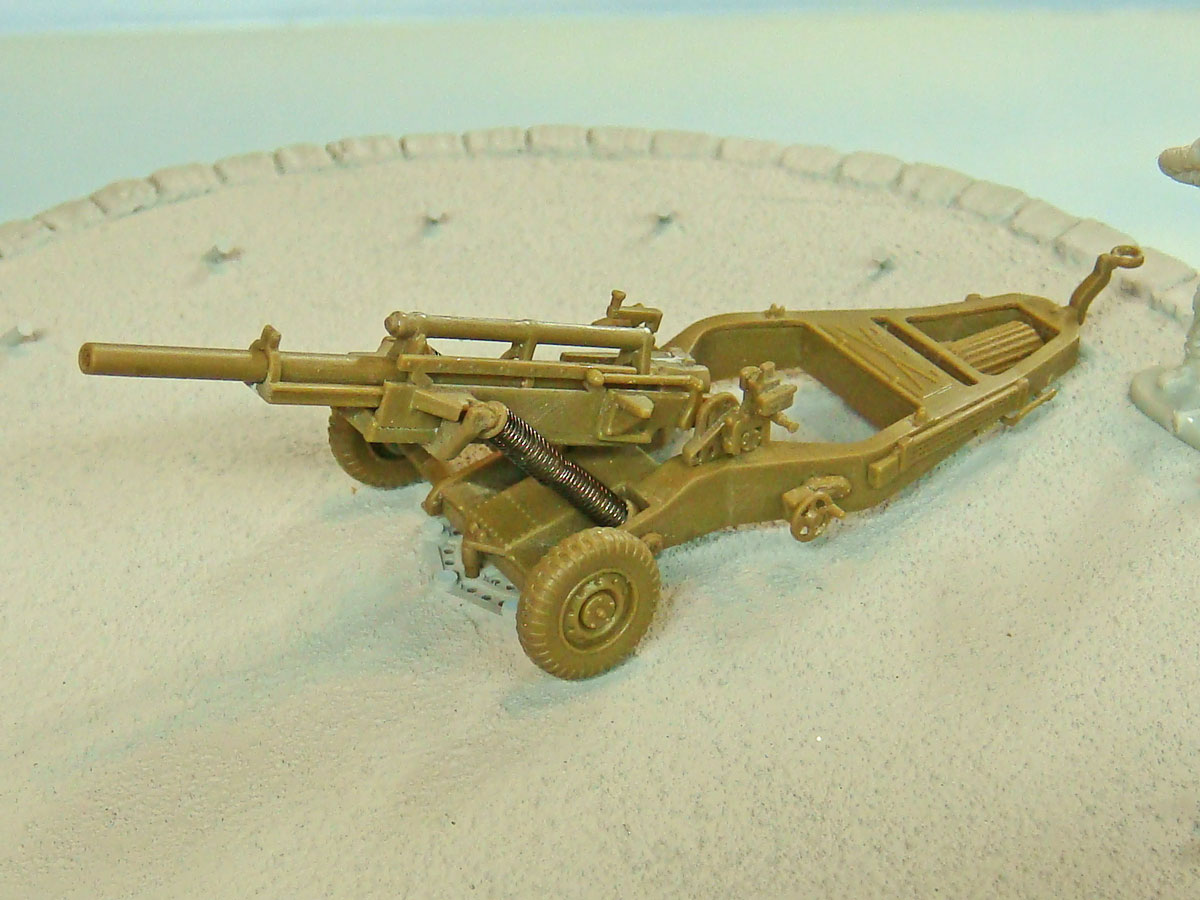
The 105 kit has to be backdated to the Vietnam War version (mostly a matter of leaving off some parts and filling the alignment holes). The crew figures that come with it are in modern uniforms ca. 1990-ish.
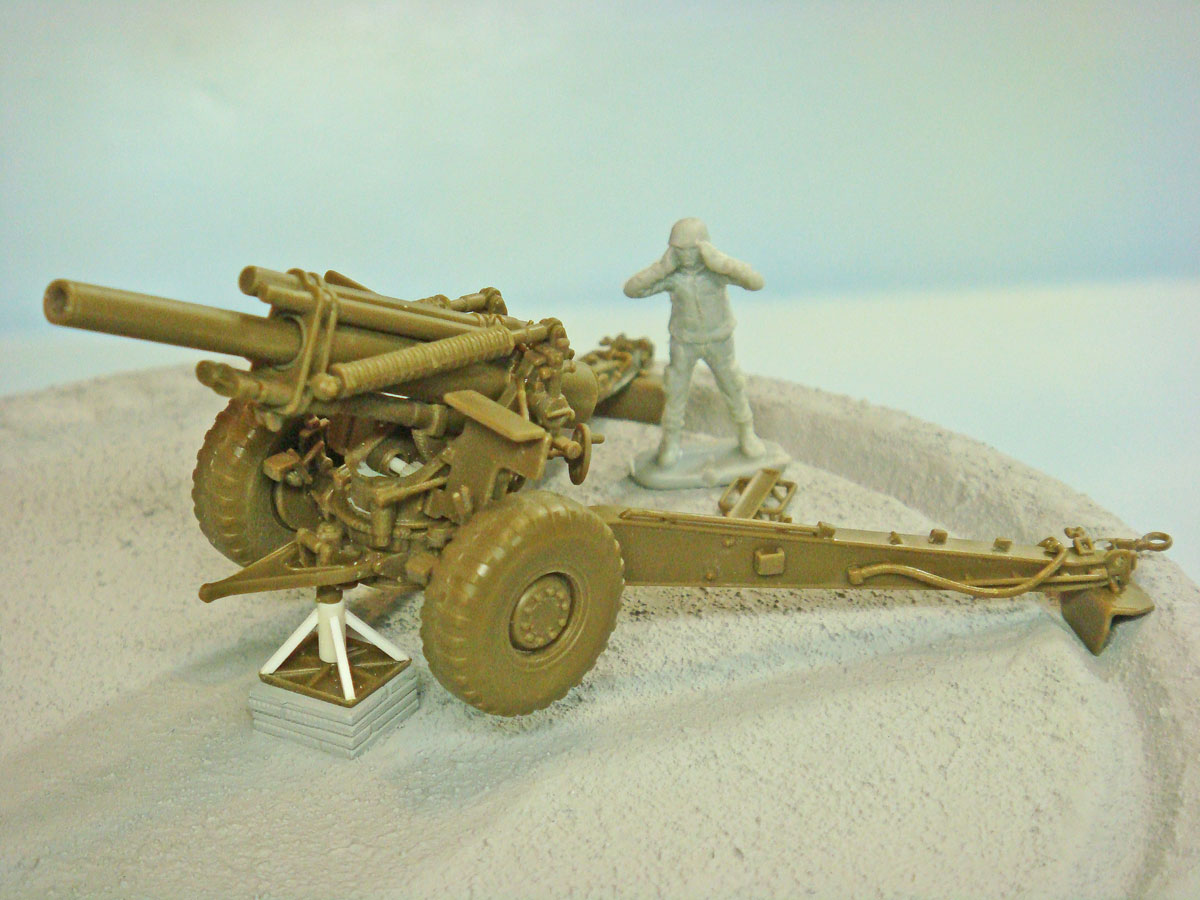
However, both kits are really quite nice. We modified elevation (speed) jacks for the 155s to match our reference photos for the ones used on FSB Ripcord and mastered and resin cast 155 shells, powder containers, and shipping dunnage. The Toxso 105 kit comes with a few shells which we also copied in resin (many hundreds of copies!).
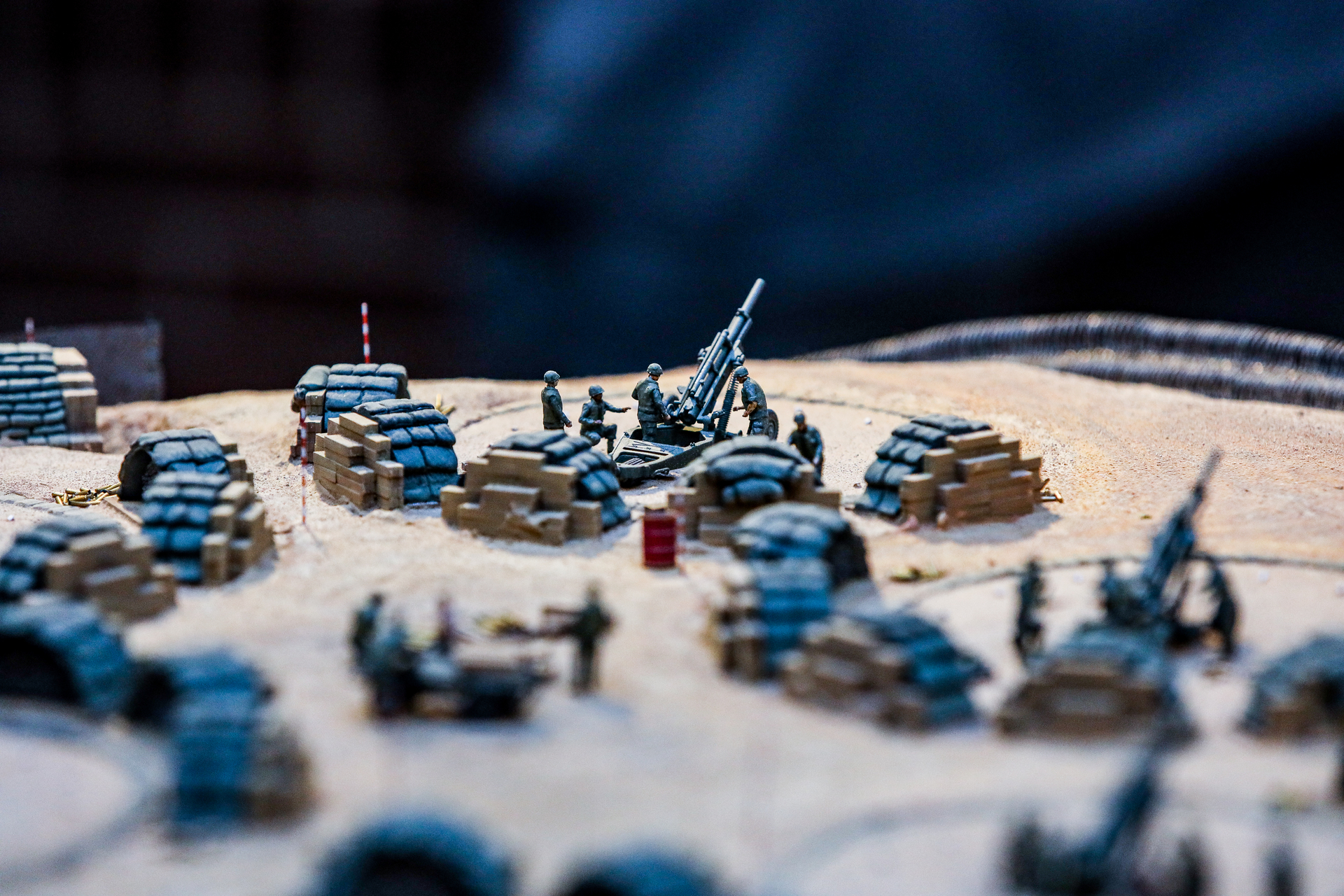
The modified 105 kit on one of the resin copies of the firing positions (we needed five of these positions which were circular, smooth and provided with azimuth (direction markers) made from fired shell cases stuck down into the ground. The howitzer turntable was also dug in and staked down, so these are also cast with the position. The simplest way to do all of this was to master one and then cast resin copies.
The 155 firing positions were also cast as resin copies of a single master. Again, this was faster and easier than making each one individually. The figure (used here for scale reference) is one of the modern figures that were included with the 105 kits. On RIPCORD, the 155’s were “super elevated” by placing their speed jacks up on stacks of dunnage. This presumably was to increase their range in combination with the natural elevation of the mountain top that the firebase was located on. (Or perhaps the opposite, to shorten the minimum range through extra elevation. I forget off the top of my head which way elevation changes work with howitzers, being an old mortarman, myself. I seem to recall that the elevation-range relationship for howitzers is opposite from that of mortars. So for howitzers with a given charge, more elevation equals greater range, but the opposite is true for mortars. With mortars, the greater the elevation, the shorter the range.) They were initially intended to be fired on targets located in the A Shua Valley almost all the way to the Cambodian border.
Both kits were quite nice and detailed and could be displayed in a variety of optional ways (in battery, guns recoiled, elevated or level, trails open or closed, etc.).
I forget who we sourced these from (maybe Hobby Easy?). There were just out of production when we got them, and we had a bit of difficulty finding a single vendor that had five of each.
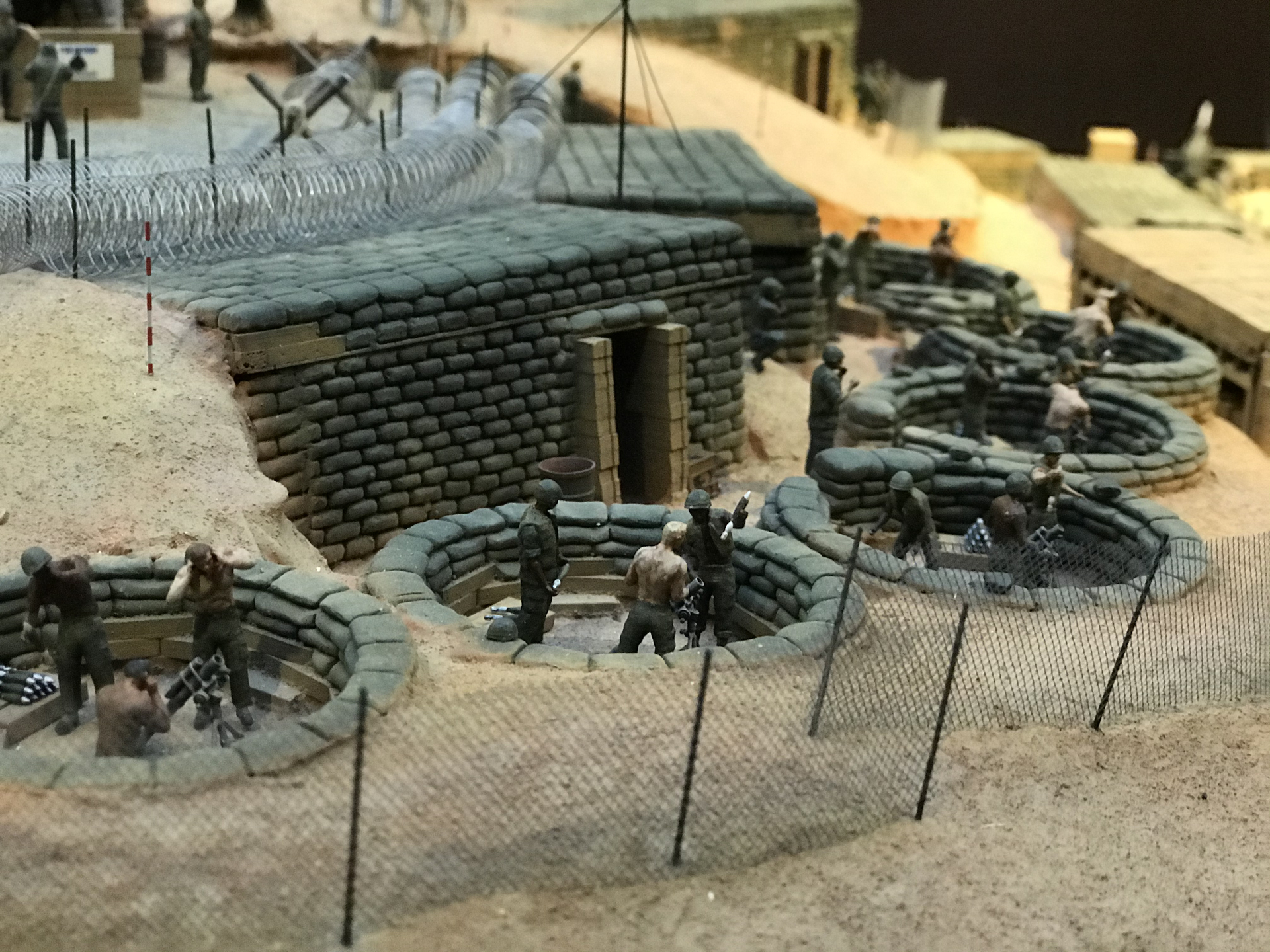
If interested, you should be able to get copies of these round howitzer firing positions from HQ72. They were the ones who cast the copies of all of our terrain our masters (firing positions, bunkers, ammo bunkers, infantry fighting positions, etc.).



 .

 )


 .