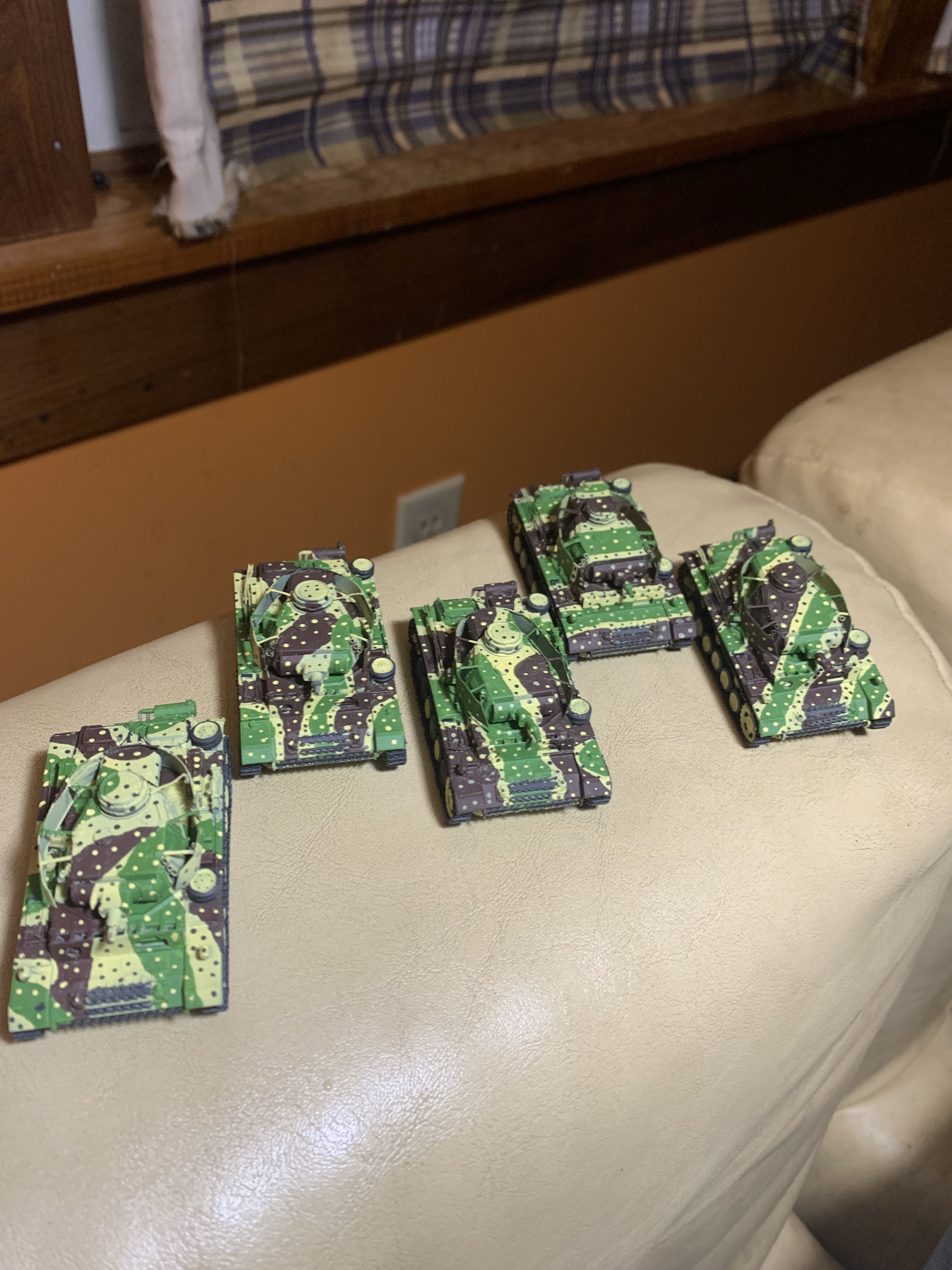
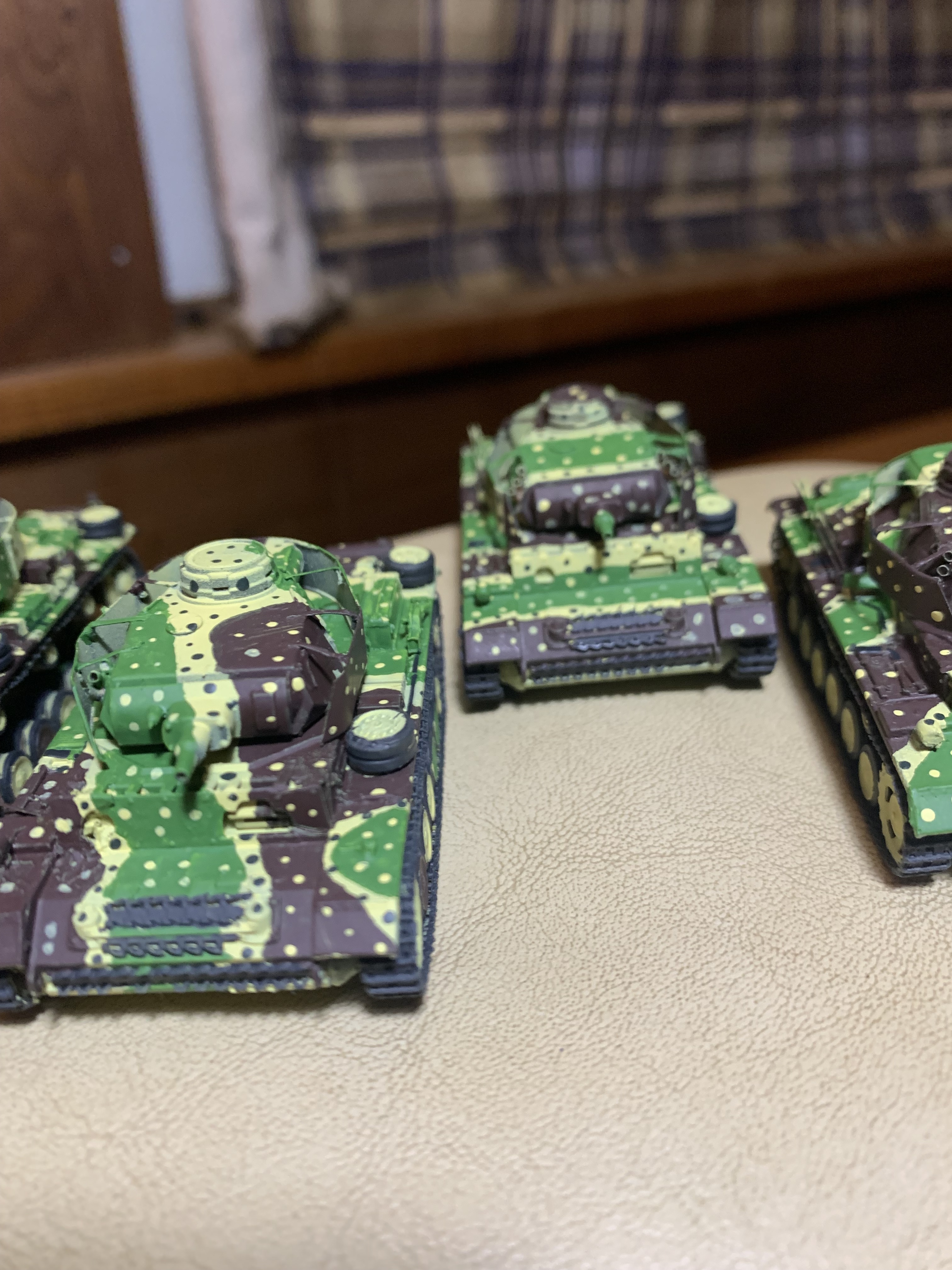
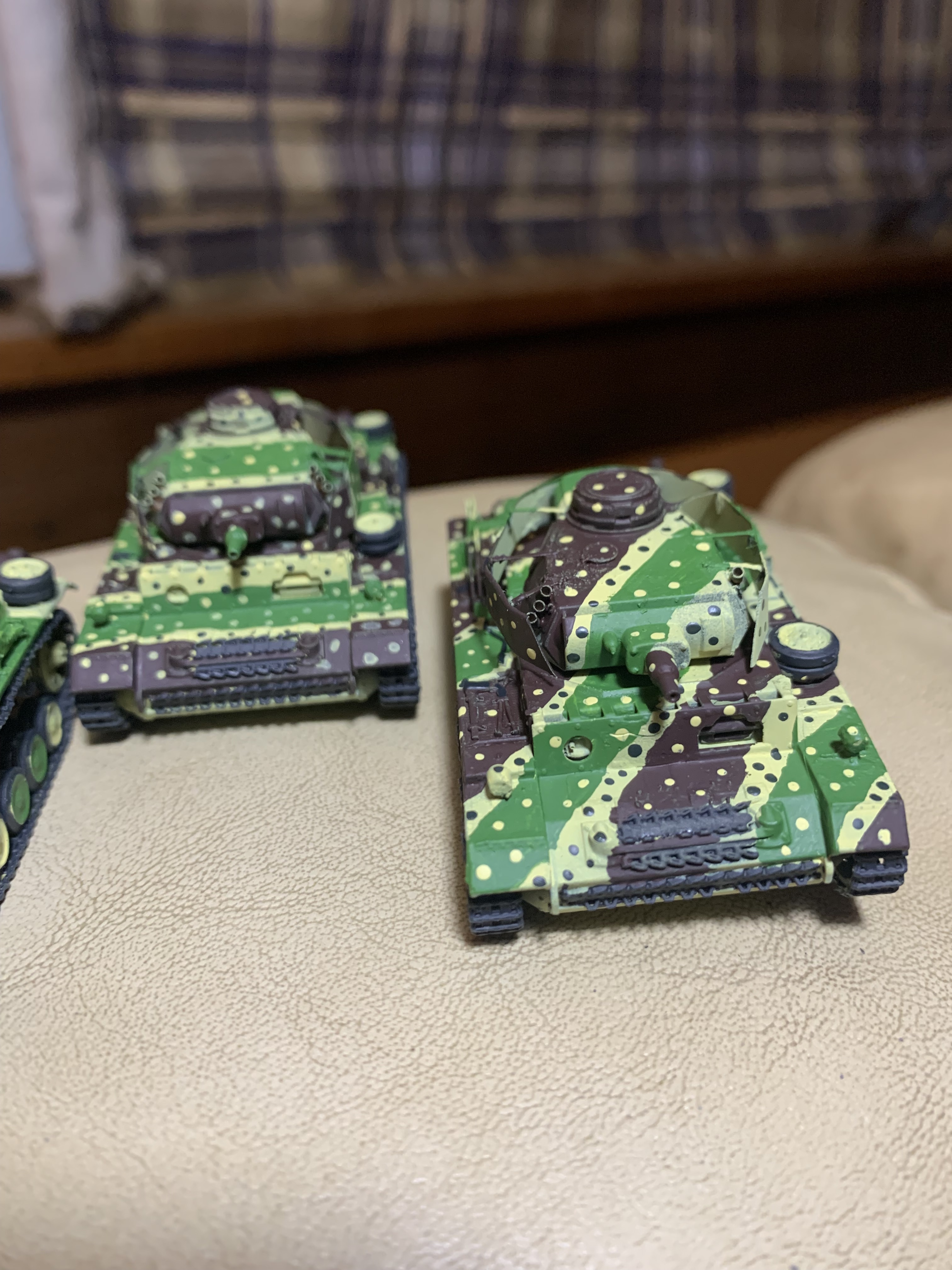
They are not perfect , will get some weathering but just about done.

5 Likes
Looks good, but you’re aware Panzer III’s weren’t done in this particular camo pattern during the war, right?
2 Likes
ive come across a photos of some in norway, at the end of the war. They had zimmerit too but thats just to fiddly to do in this scale.
2 Likes
They were still fiddly and fun to build even if they were not that camo.
2 Likes
It would not have been the factory scheme though, as PIII’s were no longer in production by the time that pattern came into use.
Everything I’ve seen has Norwegian tanks as sporting the standard tri-color. Can you link to any images or other reference?
1 Like
I just came across a google search for pz3 camo, the norwegan pics were not clear on camo but i ,assumed ,near the end of the war units would use the latest fad in camo. I admit it may not be historically accurate. I am no expert. But i find the more you search the oddest things show up especially among german panzers.
1 Like
That pattern was pretty much limited to the big cats (Panther G, Jagdpanther, Tiger IIs, Jagdtigers), Stug IV’s, Hetzers, and the later Pz IV’s/Jagdpanzer IVs/mobile anti-air. Basically what was in production in August of 1944 as it was primarily applied at the factory. Earlier vehicles would be field jobs; at that point they wouldn’t waste resources repainting a Pz III to the new specs since they were practically obsolete.
Obviously there could be a rare instance; we’ll never know 100% but the above is what I’ve gathered from cross-referencing multiple camo discussions with timelines. Made myself a spreadsheet comparing vehicle production dates against the approximate dates of the different camouflage schemes from January 1939 to July 1945, including call-outs for units that had particular schemes, the colors used in North Africa, etc. It was inspired by all the unknown units that Dragon released to us; the sheet was my attempt to plot what schemes were appropriate for each type of tank over the production run if I felt like ignoring the kit scheme.
2 Likes

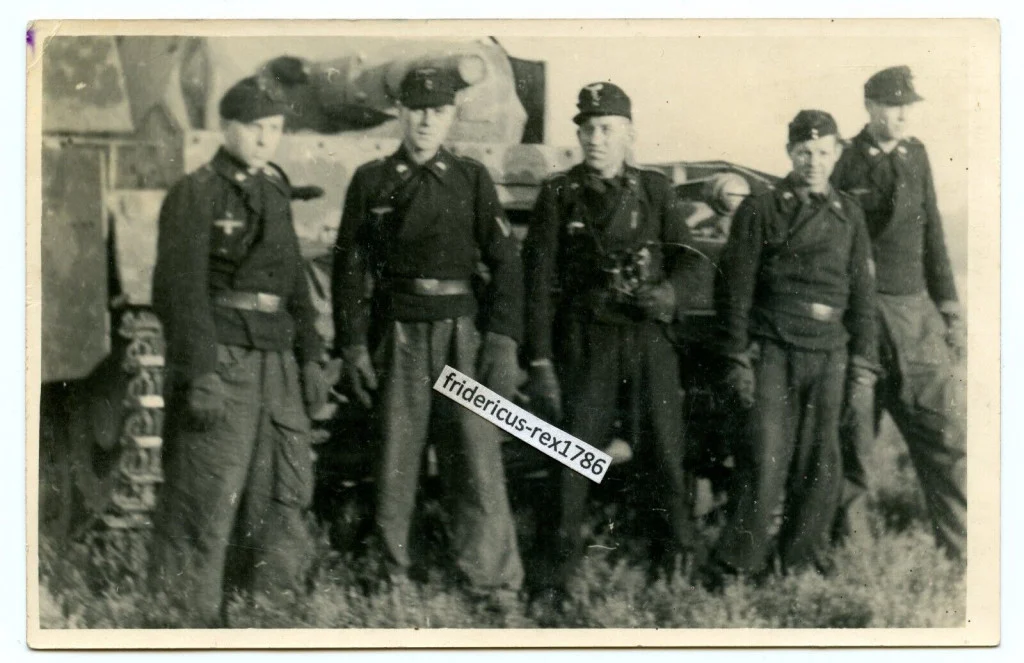
Sure those aren’t Panzer IV’s?
1 Like
Very sure.
1 Like
Thanks for the info, a spreadsheet is a great idea.
1 Like
Just a perspective: I’m a retired geologist, and long time student of history, so “what happened back then” is something for which I have perspective. Here it is: History (geologic or human) is not only stranger than we imagine, it is stranger than we can imagine. It is very, very difficult to say, with certainty, that something didn’t happen in the way-back-when. Both the fossil record and the historical record are rife with gaps of information. If there is any information that even indicates something did happen, then there is little hope to say, definitively, that it did not. There’s an old axiom of logic: one cannot prove a negative, and it is especially true of history, whether measured in decades, millennia, or geologic epochs. But it is tremendous fun to research and speculate.
2 Likes
Well, I did mention we’ll never know 100% if a thing is as expected.
Also, history is not a record of the past but rather what survived from the past.
2 Likes
Exactly. Very few are actually trained to view what they see and hear objectively. And for those who are, that training is mostly that what they perceive is not what was or is, only a best approximation. Few people can tolerate that. As a species, we want definite, unambiguous answers. Nature—and we are part of nature—doesn’t care. We do, and we should.
2 Likes