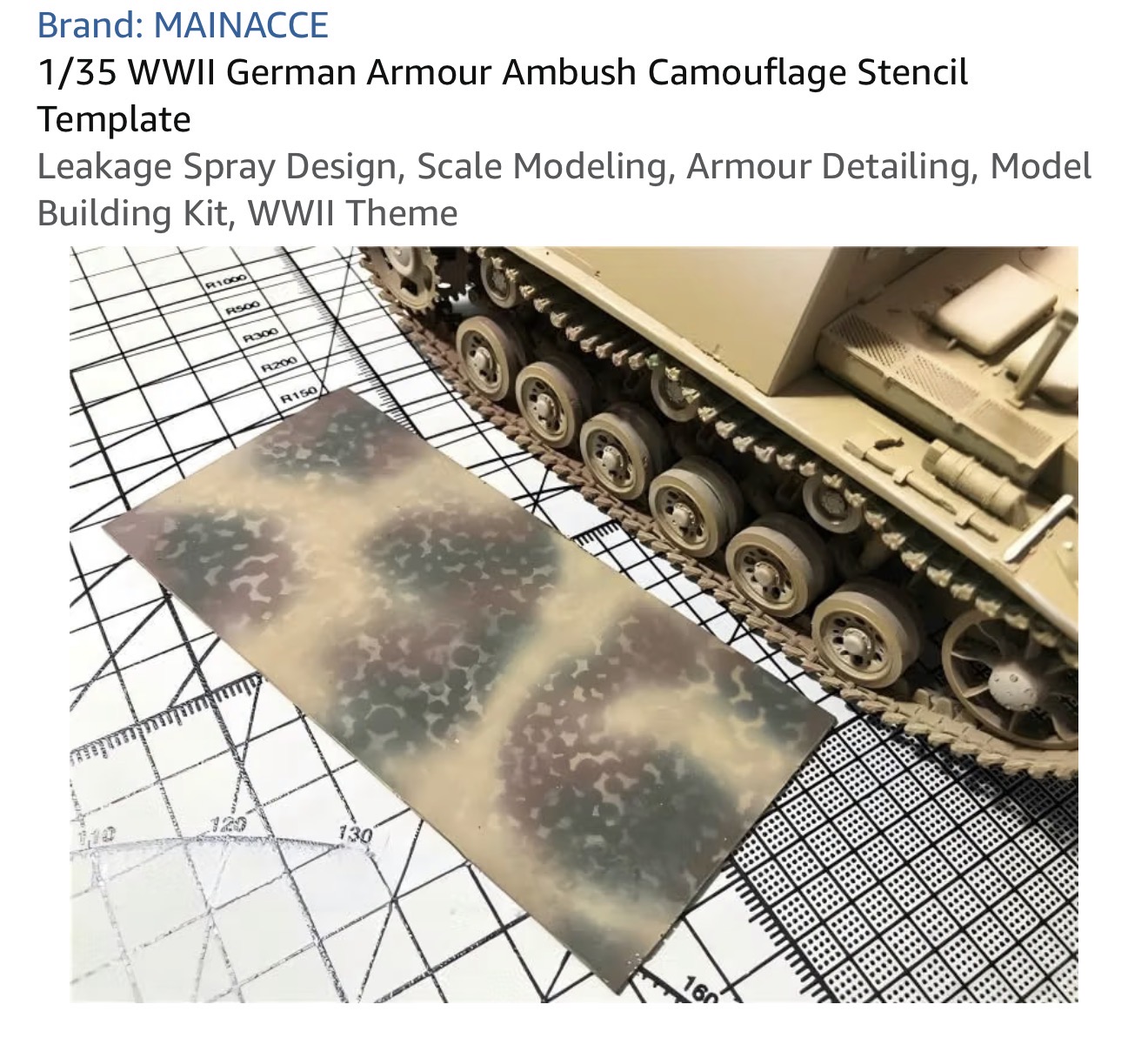
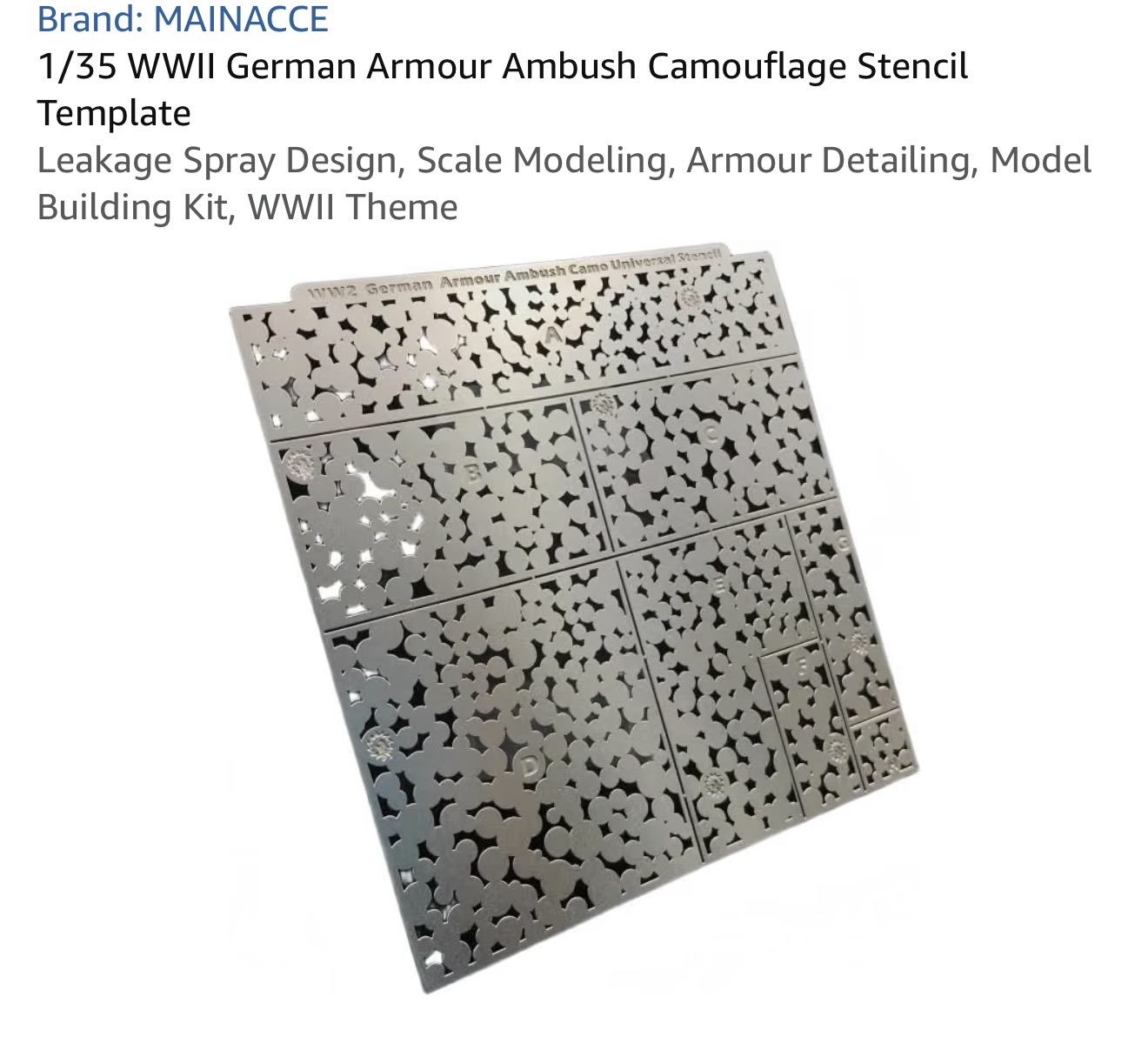
Hiya everyone! So I got the academy panther G last production kit going on next, and my idea was to make it as a latest war production as possible, (like kind of the last tanks being built before the war was lost, very hastily and getting it out of production and onto the front line as soon as possible). Being that most vehicles were primed in red oxide before getting any kind of camo pattern, I read that a lot of those late war tanks just kept the red oxide in the camo pattern since they were so short on pigments to make full camo schemes. In the instructions painting guide, there are a few patterns with just the red oxide and olivgrun. Assuming because dunkengelb and rotbrown pigments were so scarce. Question is, (for the historically correct guys out there), are the patterns provided in the instructions the only patterns that were used at the time? That late in the war? I was thinking of a red oxide with olivgrun pattern, with the ambush/disk type pattern in dunkengelb. I’ll attach some pics of the camo pattern I like, with the disk template to apply the dunkengelb. Is it possible that this camo scheme could have existed at that time? Or am I just fantasizing? lol! Thanks in advance everyone!

Hi NordicNomad
Do yourself a favour and get acess to:
https://www.super-hobby.de/products/Panther-External-Appearance-and-Design-Changes.html
Don’t go down the “Red Oxide” path … it’s a myth.
Cheers
Christopher
Yes. I know the red primer thing has been quite the fad, but there is no actual historical basis for it.
Did I get caught in the Red Oxide myth with my Hasegawa 1/72 Panther?
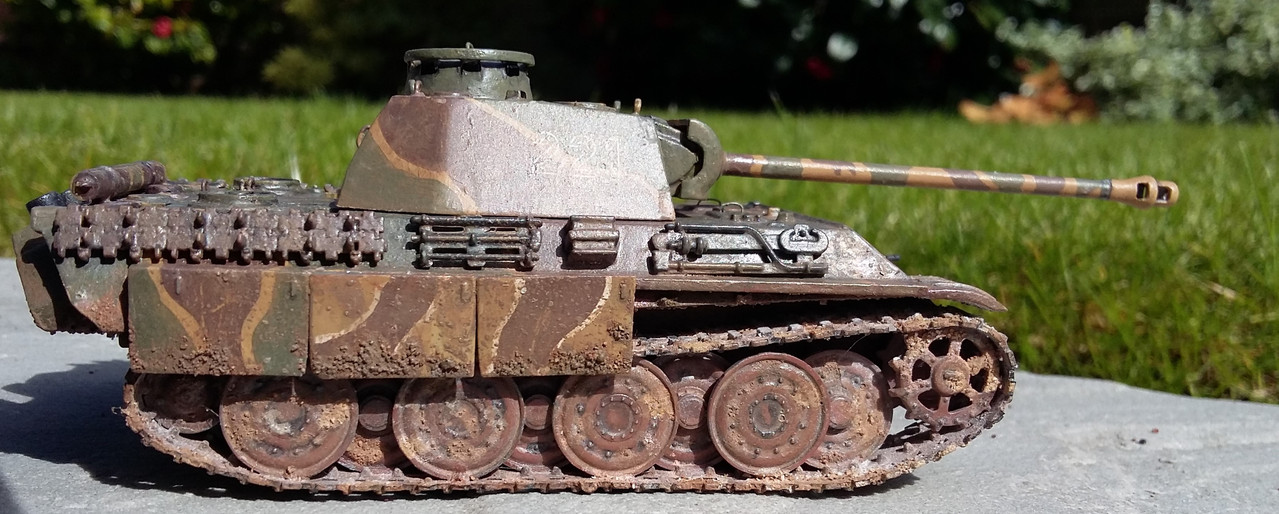
Three colour cam on the upper hull and most of the schurzen but 2 schurzen plates “borrowed” from a wreck with a different cam pattern. Running gear and lower hull (in shadow here) left in red primer.
I need to add that hinterhalt camouflage was discontinued in late 1944. End war Panthers would not include this as part of their production.
Dang guys! Now I’m depressed! Red oxide a myth and over played in the modeling community??  I feel betrayed! Lmao! Maybe it was hyped up because it looks so damn cool!
 I appreciate the replies everyone. So I looked at the site briefly, but without dropping 75 euros, I’ll read the pages it has available later on at work. But could you go more into more detail please Christopher? What’s the synopsis? Were they NOT primed in red oxide? Or just didn’t use the red in camo patterns? I pretty much knew the hinterhalt pattern wouldn’t be applied that late in the war, but I had a thread of hope that it was possible because it would look so cool! And basically, are the instructions accurate with the patterns they provide, (3 tone and 2 tone)? Using the base red oxide as part of the camo to save paint and pigments, like the oxide and olivgrun 2 tone in the beginning of my post?
Thanks in advance guys
Hey NordicNomad
The only few tanks that could fit this narrative might be the very last 3-4 “Octopus” camo King Tigers produced in April 1945. All previous KTs manfacured up to March 1945 had a textbook applied “Licht & Schatten” camo as all KTs from Sept. 1944 onwards. So NO proof that Henschel ever ran out of paint till April 1945.
With the Panther things are a little different depending on the manufacturer. Daimler-Benz and M.A.N kept applying various “Classic” 3-tone camo schemes. M.H.N already switched to their distintive “Striped-Typ” interpretation around Oct. 1944.
The last 20+ Panthers assembled by M.A.N were finished at Grafenwöhr Training-grounds in a Green base coat with broader Brown patches (DRAGON got this wrong with their artwork). We know this because one of these caputered last Panthers was shipped to the US in exactly such colour application.
Gun-mantlets varied from early to late types depending what was available.
Even with other types of WH tanks there is zero evidence supporting the “Red Oxide” theory in the final stages of the war as standard practice.
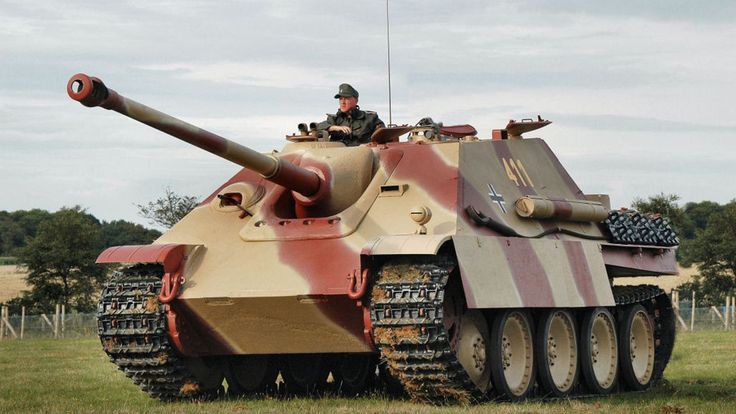
The British Tank Museeum unfortually fell for this illusion when painting their Panther & Jagdpanther.
So do not feel alone … a whole generation of modellers became victim of a translation error.
The book recommend is the most solid researched on Panther Tanks and their factory applied camouflage.
Cheers
Christopher
I get 75 Euros is a lot of money, but that information in that book is priceless. I bought the book to finish the Meng Panther G in the most correct scheme that I could deduce for the information provided. It will provide more information when I build my next Panther.
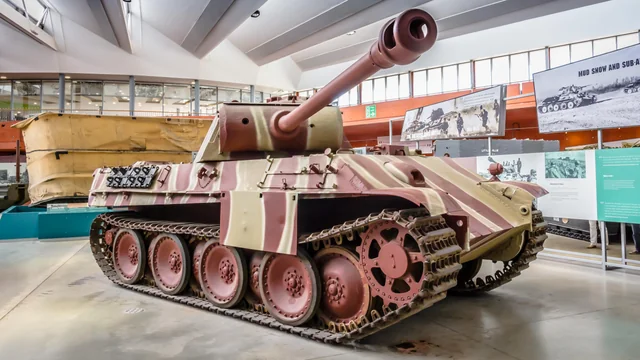
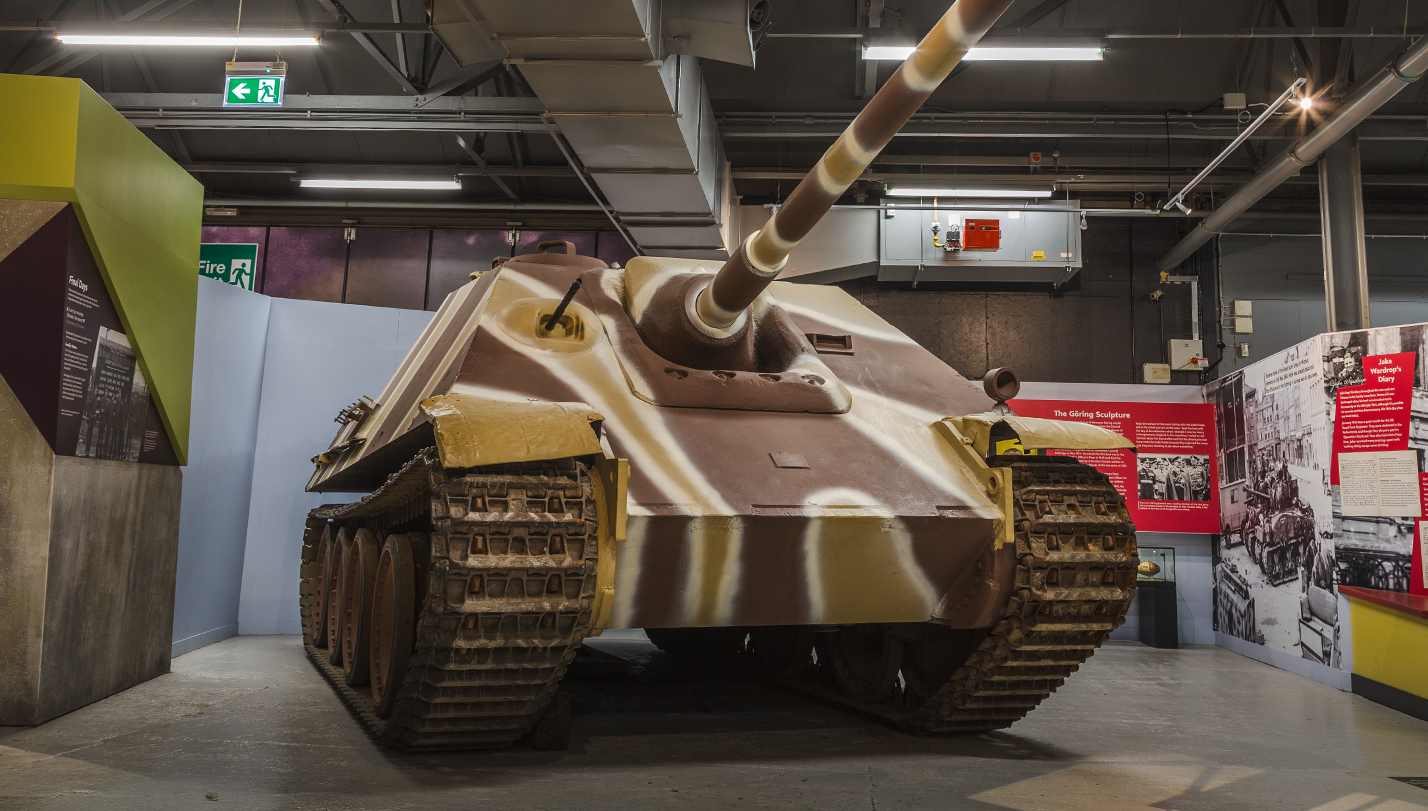
Color post-surrender photos at Daimler-Benz also show turrets, hulls in greenish zinc oxide primer.
I would say the Germans were fastidious regarding camouflage painting to the very end as the famous D-B schmalturm photo illustrates.
The red primer notion seems to also have started from a mistranslation by Tom Jentz, which he later corrected. I noticed too that the red primer thing seemed to have started in earnest on M-L and in the Osprey book regarding modeling Panthers.
Then we have the “experts” on the internet seemingly basing their assertions on World of Tanks and old books which claimed for instance, that the Germans used stocks of panzergrau late war on Panthers and that the Germans painted white stripes around turrets and air recognition white crosses on turret roofs in order to mimic Red Army tanks. Neat ideas, but not supported by any historical evidence at all.
I thought that was 1/35! Nice!
I am still working on a series of Panthers … you can search “KG Peiper in the Ardennes …” here on this site.
“PANTHER External Appearance and Design Changes” is invaluable for my builds.
The “Duel in the mist” series is also a perfect addition with some nice color plates.
In the mean time there are very good reseached books available … from Panzertracks … for example,so besides constructing a realistic build one can apply the matching camo nowadays. Unsuprisingly the factory applied camo is much better documented then prior Sept. 1944.
But then again :
Cheers
Christopher
Man! I’ve trained there so many times when stationed with the 173rd in Italy! Graf, Vilsek, Hohensfels, etc. I wish I could go back in time and pay more attention to things as a young man!
Thank you so much for the wealth of information everyone! I’ll definitely be doing some research on this. I had no idea!! Thanks British Tank Museum for confusing every modeler and manufacturer for decades! 
“The red primer notion seems to also have started from a mistranslation by Tom Jentz, which he later corrected”. I wonder how this guy sleeps at night knowing he mislead thousands of modelers for years from probably just one word translated! would love to be sitting around a campfire with a beer picking his brain! Lmao
Tom Jentz passed on several years ago.
A workaround could be to obtain a paper panzer kit. You could build an E-50 and paint it with a red turret on a panzergrau hull if you like and no one can say it’s wrong. 
I am interested in that kit although its suspension is fairly ridiculous and it has molded grills which I don’t like. I seem to remember Eduard had a photoetch with replacement grills, but not seeing that on eBay now.
In my modest stash I have that silly L/100 Panther F, something that never could have existed although Hitler did propose an L/100 Panther. I intend to paint it as per the box art — the MNH striped camouflage.
And at least you got your hinterhalt stencil. Years ago, I ordered one on eBay from a Chinese seller who told me to wait on it and yeah, I am still waiting…
I remember way back on Armorama the debates regarding red primer with the “you can’t prove it didn’t happen, so that proves it did happen” logical fallacy.
It can’t be proved that they didn’t paint road wheels purple and pink, but that hardly proves that they did.
Another kit I have waiting is the Rheinmetall turret Panther II, which if the Panther II project continued, would have been as depicted by the kit.
Another kit I have is a Panther II with a corresponding Dragon Panther F kit for the schmalturm as my tribute to the mysterious five-armed sprocket on a hull at D-B.
I wish I had the time for this hobby. I work a lot and we are looking at the possibility of a seven day a week 4:30 a.m. start time again. Did that for a year.
Grafenwöhr at the time was quite “zivilized” … I remember freeezing my. A$$ off in Hohenfels at the time 
I do not believe it’s that simple.
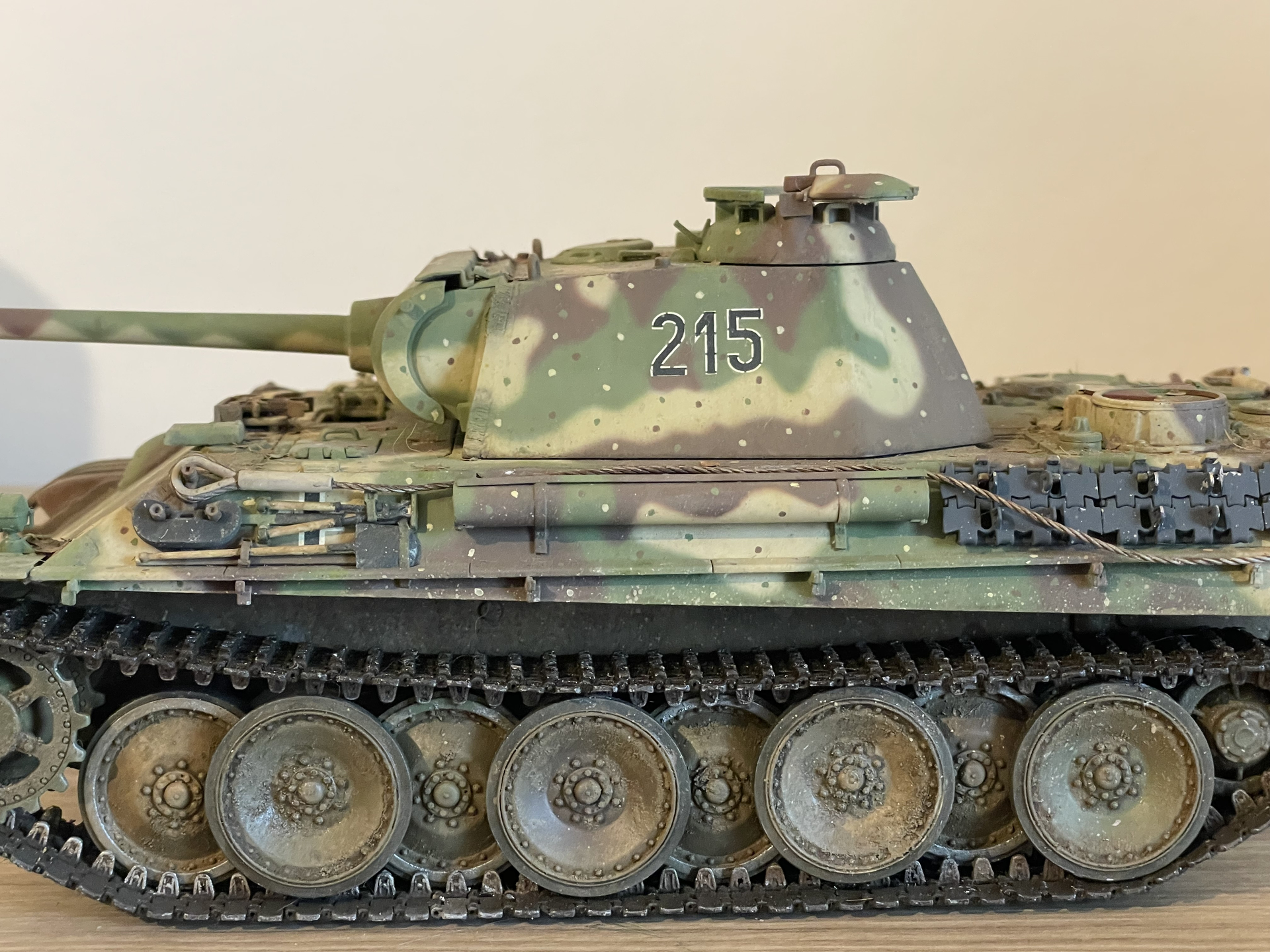
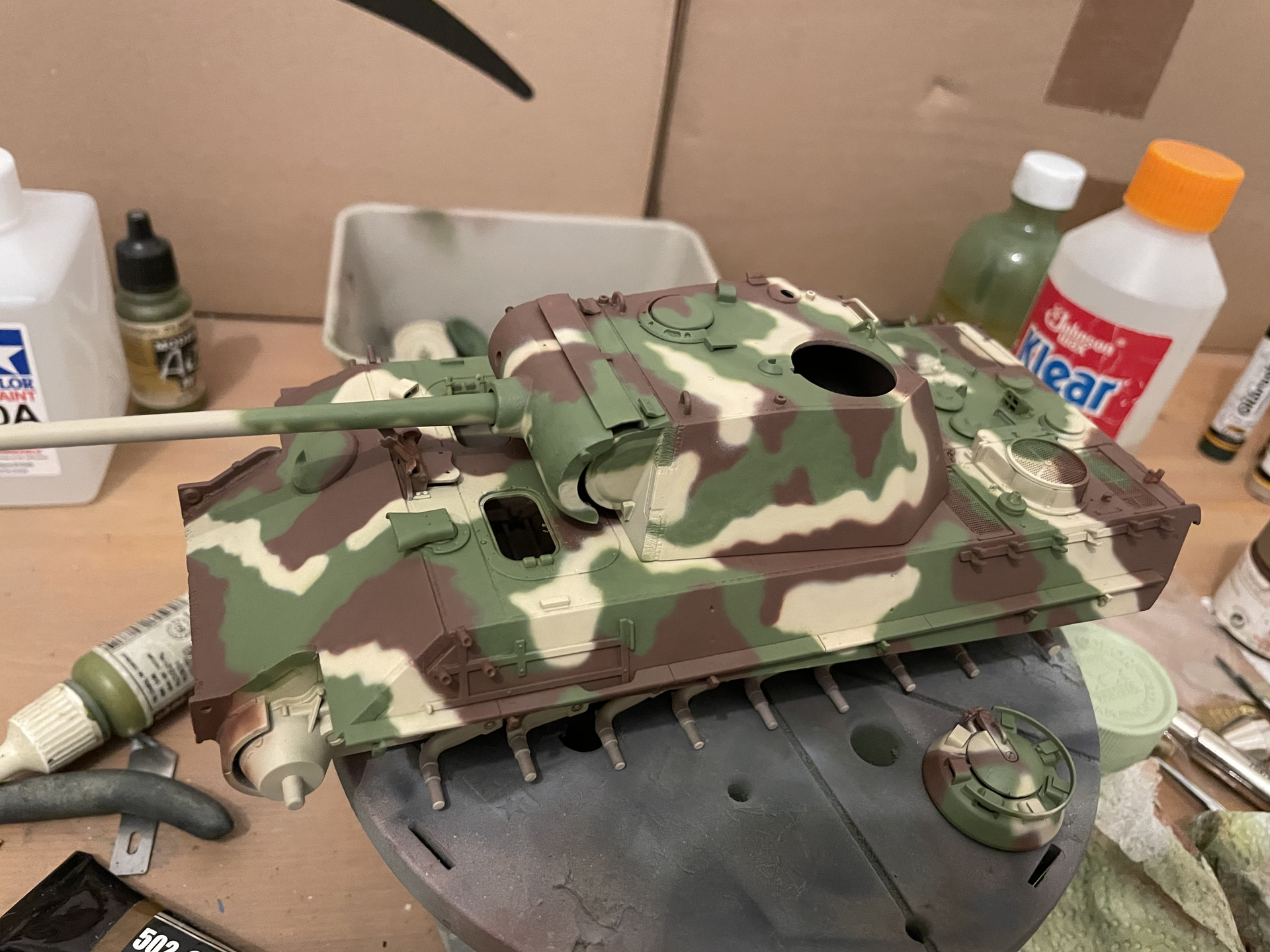
The translation … on which you have to rely if you don’t know the language … got the method of application of the colours wrong if I recall correctly. The German order states to “thinly spread” (indicates saving Brown ?) the different camo colours of the the primer. So one does not apply a overall base coat of RAL 7028 instead only the areas selected according to the camo scheme and then “shape” this spot with the additional paints.
The “wavy” shape of the Dunkelgelb on the Panther turret does not deem the whole turret to be painted previously … saving time & costs.
Hope this makes sense …
Cheers
Christopher
Freezing in “The Box!” The good’ole days! We just wanted to get out of there as fast as possible, meanwhile as we grew older, we miss it!
The orders for a base coat of olivgrun were delivered December 20, 1944 and to be fully implemented by June, 1945.
Factories began spraying the olivgrun base coat in February, 1945 upon which the dunkelgelb and rotbraun were to be applied.
Like you, I am interested in a last ditch rollout, which is why the steel wheel Panther F kit I have, I intend to finish in overall olivgrun. No tactical numbers, just Balkenkreuz markings in the normal Daimler-Benz positions.
I chose steel wheels based on some postwar interrogations which suggest this, but are admittedly unsupported by any photographic evidence.