David, I will take no lessons from someone who has erroneously used a possessive adjective “your”, indicating ownership, when I assume, you mean “you’re” which as I’m sure you know deep down, is a contraction of “you are”.
Touché I think(!)
David, I will take no lessons from someone who has erroneously used a possessive adjective “your”, indicating ownership, when I assume, you mean “you’re” which as I’m sure you know deep down, is a contraction of “you are”.
Touché I think(!)
@BootsDMS it’s a slow Sunday and I have been subjected to too many episodes on “Midsummer Murders” today and I needed some fun to save the little sanity i have left.
David, you have my sympathy (I abhor Midsummer Murders); have you thought of trying some modelling….?
Just sayin’.
the wife gets upset when I disappear into the ‘man cave’ and forget to come out.
I do plan to watch “Apocalypse Now” when she goes to bed. watching war films with my wife is hard work, having to point out the Germans in ‘the longest day’ are not on our side gets a little tiresome after a while.
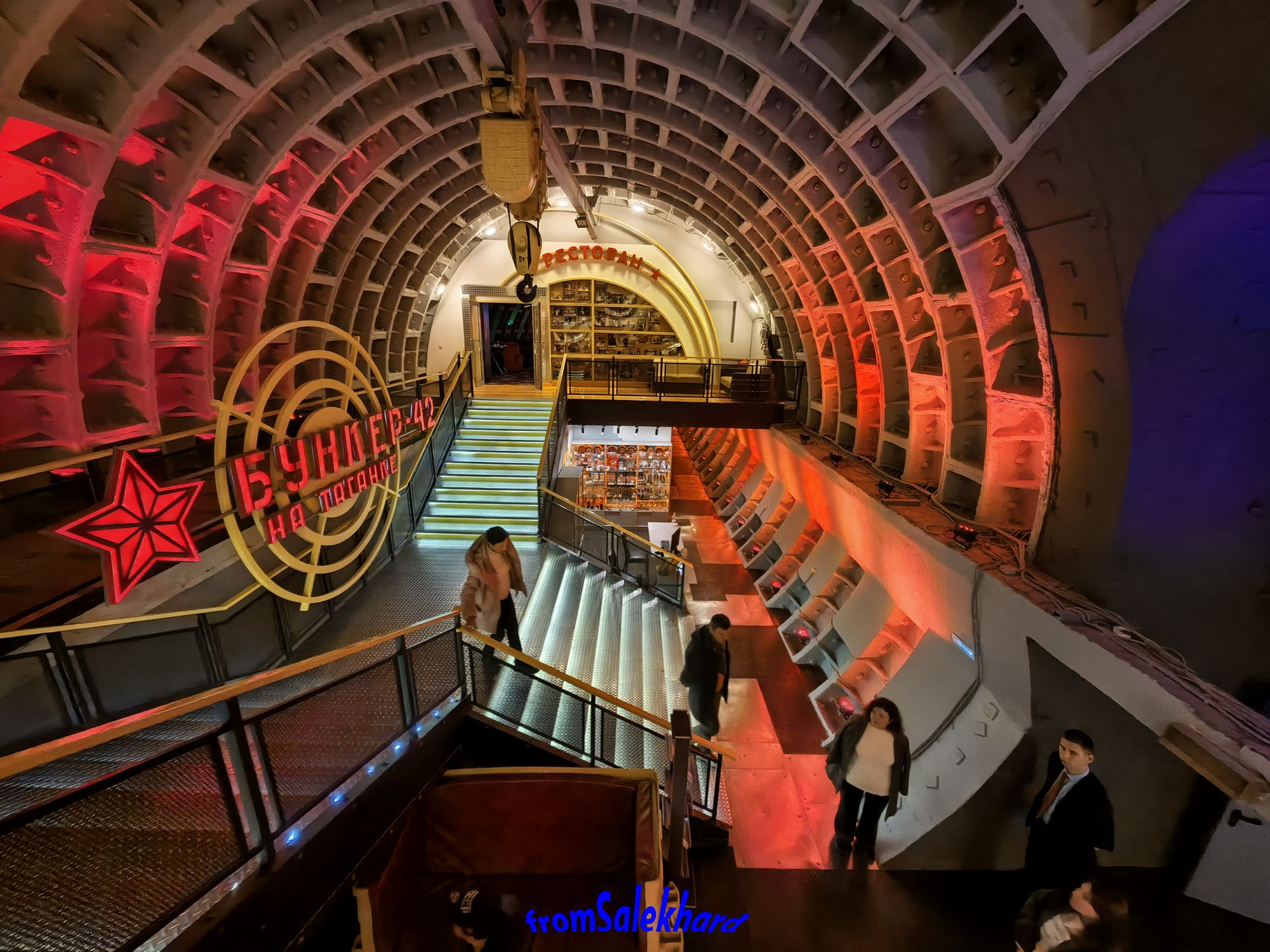
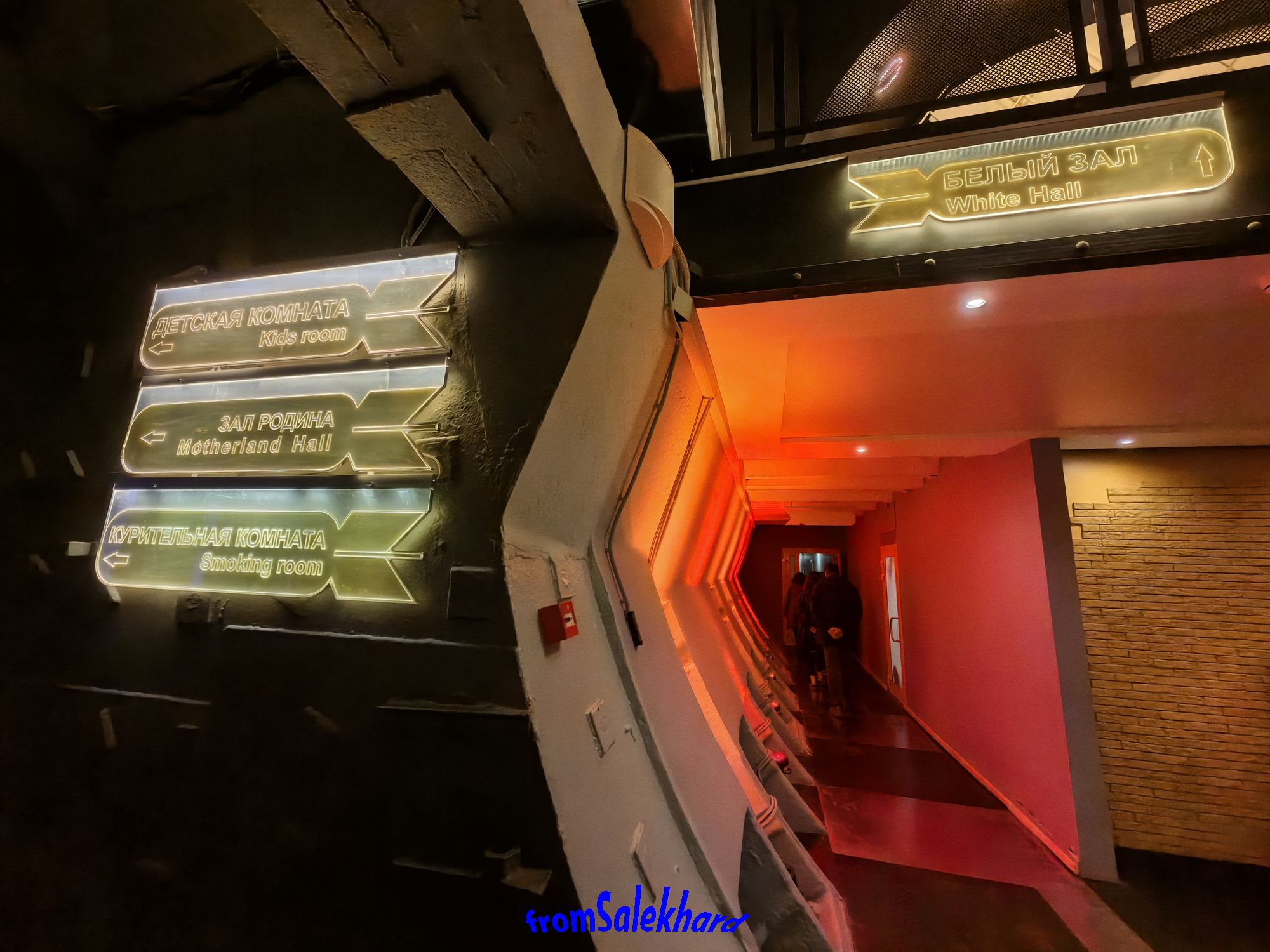
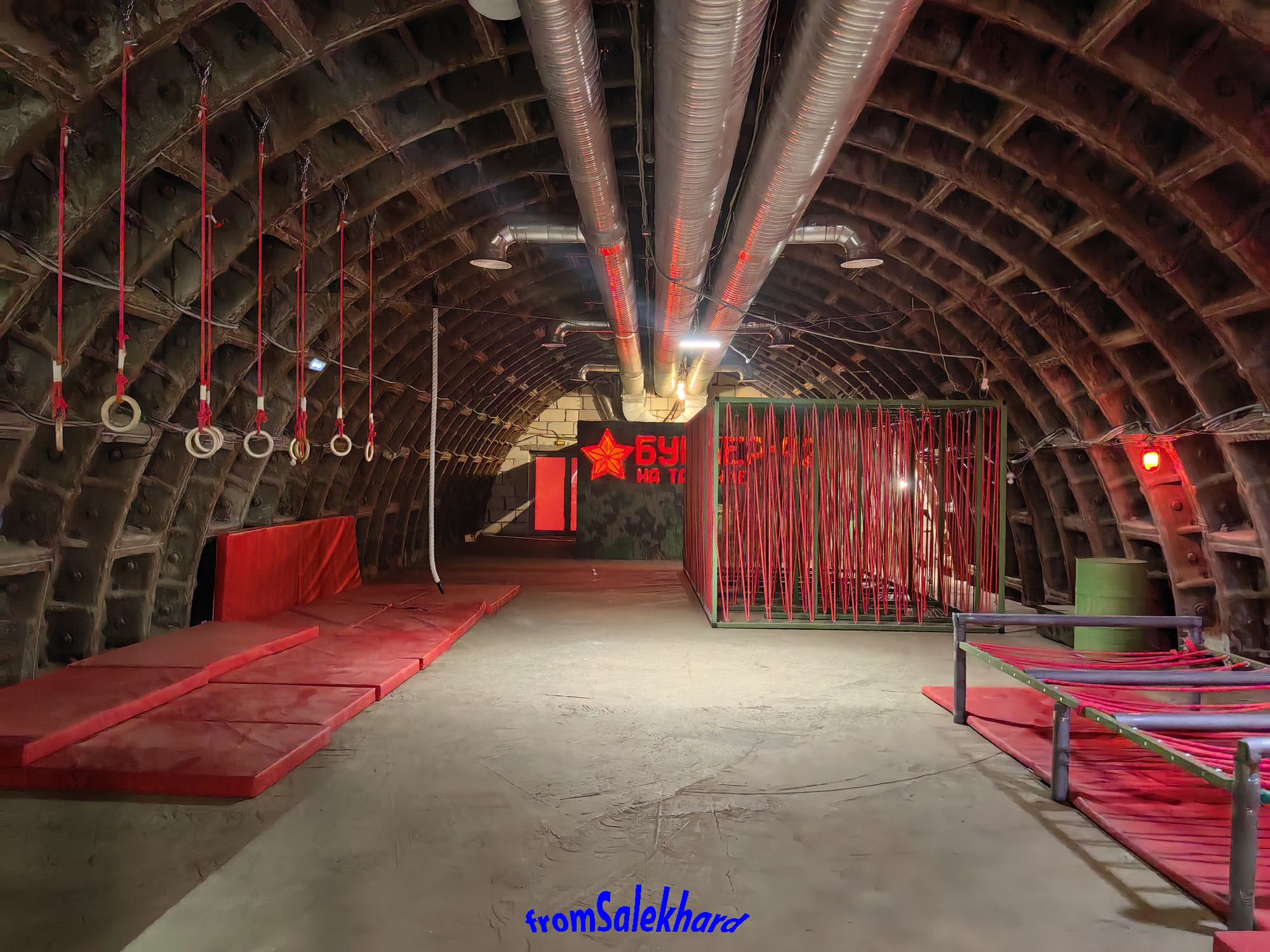
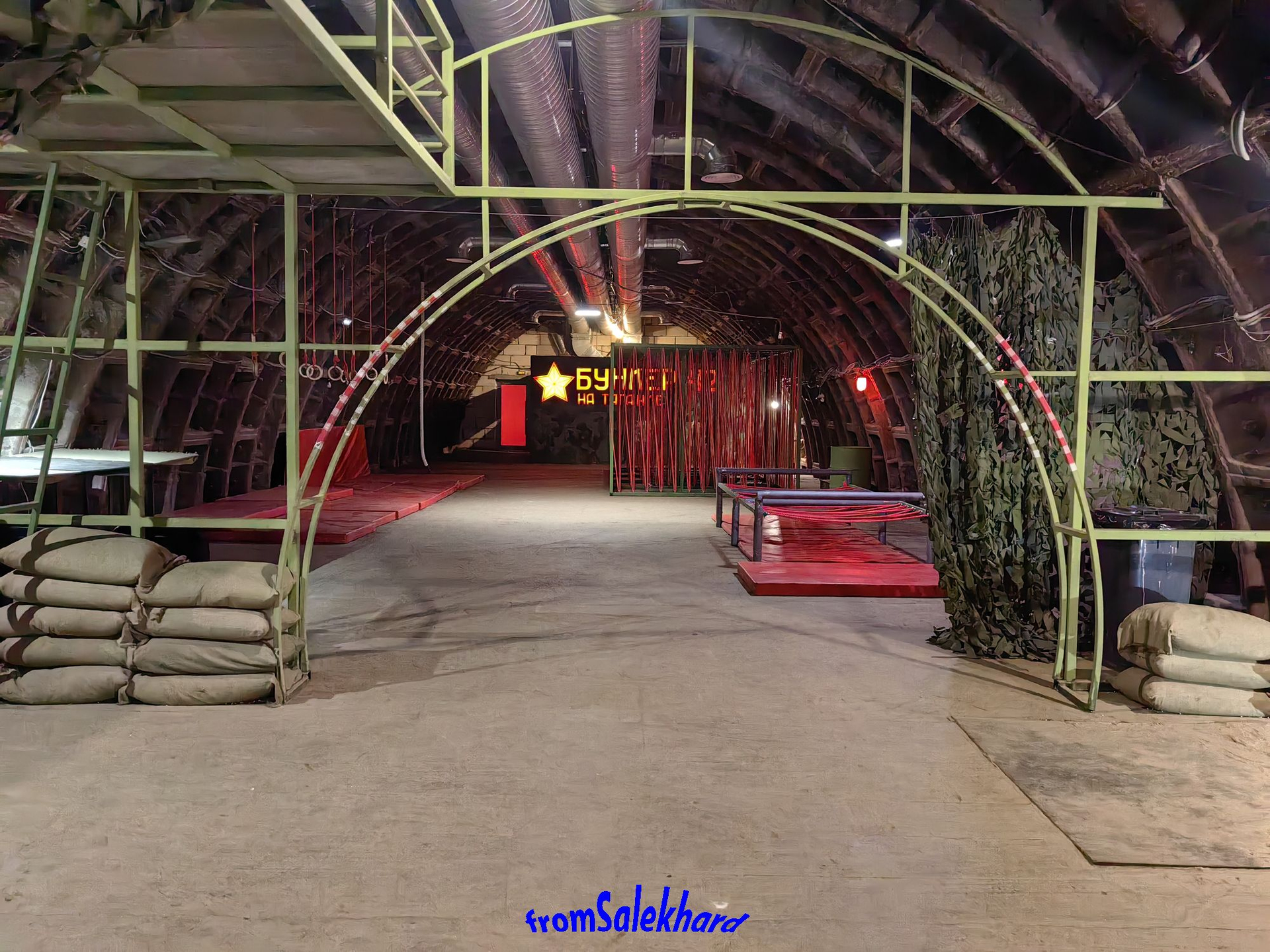
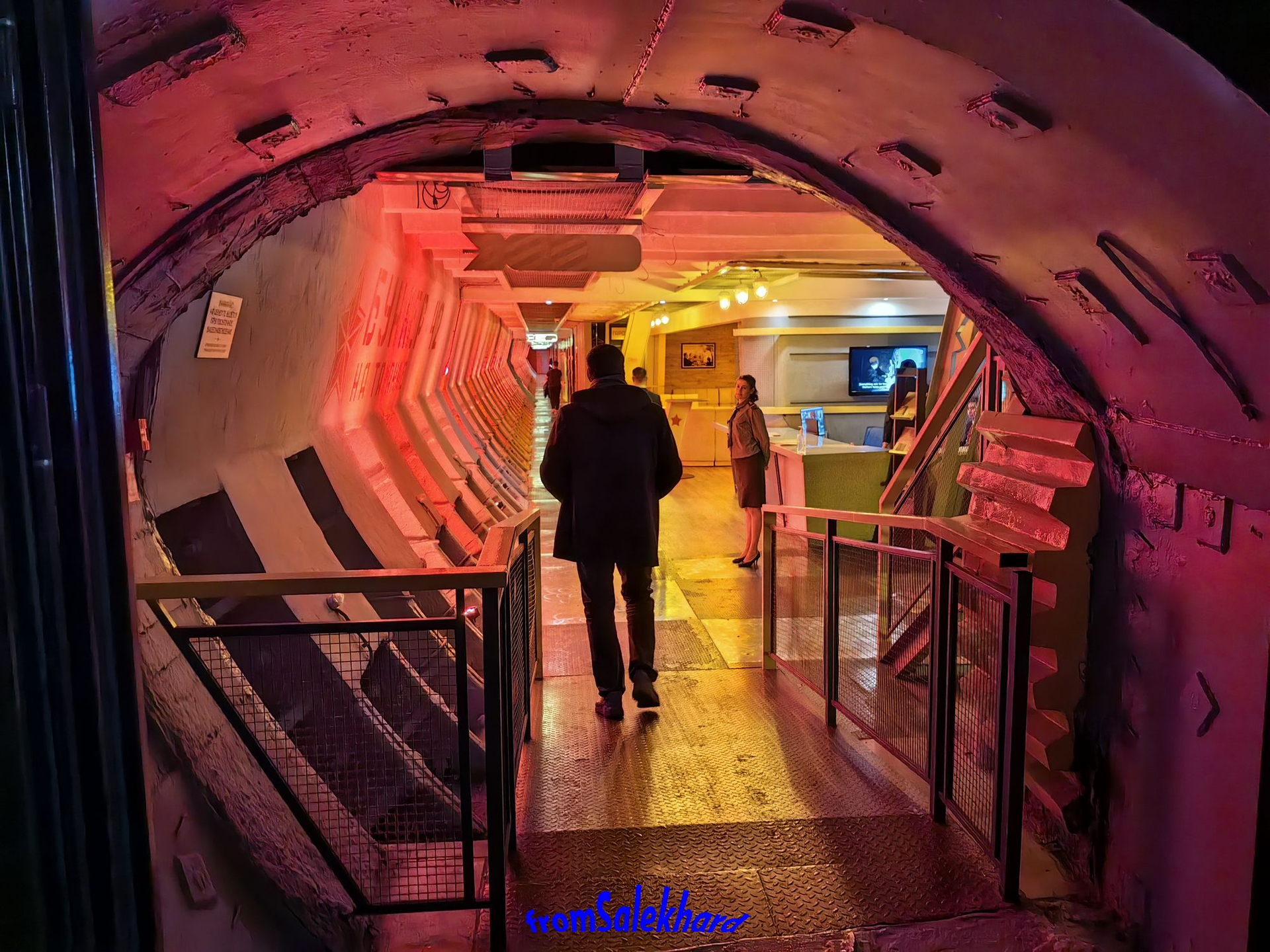
We find ourselves in the next large, unexpectedly decorated and used hall.
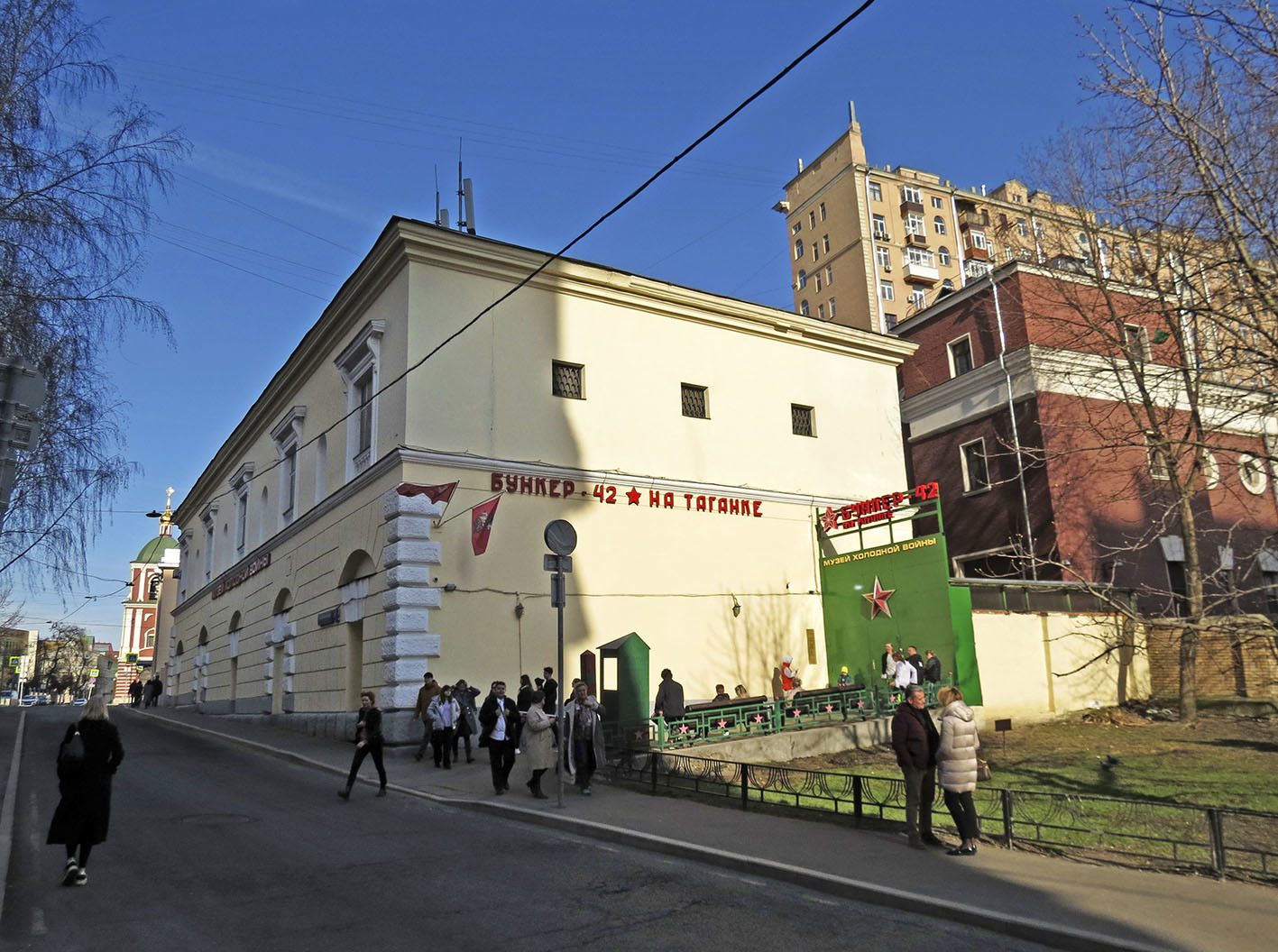
Text: Restaurant “Bunker-42 on Taganka”
There are some simpler ways to get there. My colleague, with whom I had arranged a meeting at one of the nearby similar, but land-based establishments, mistakenly forced his way into this restaurant, saying, “They’re waiting for me there.”
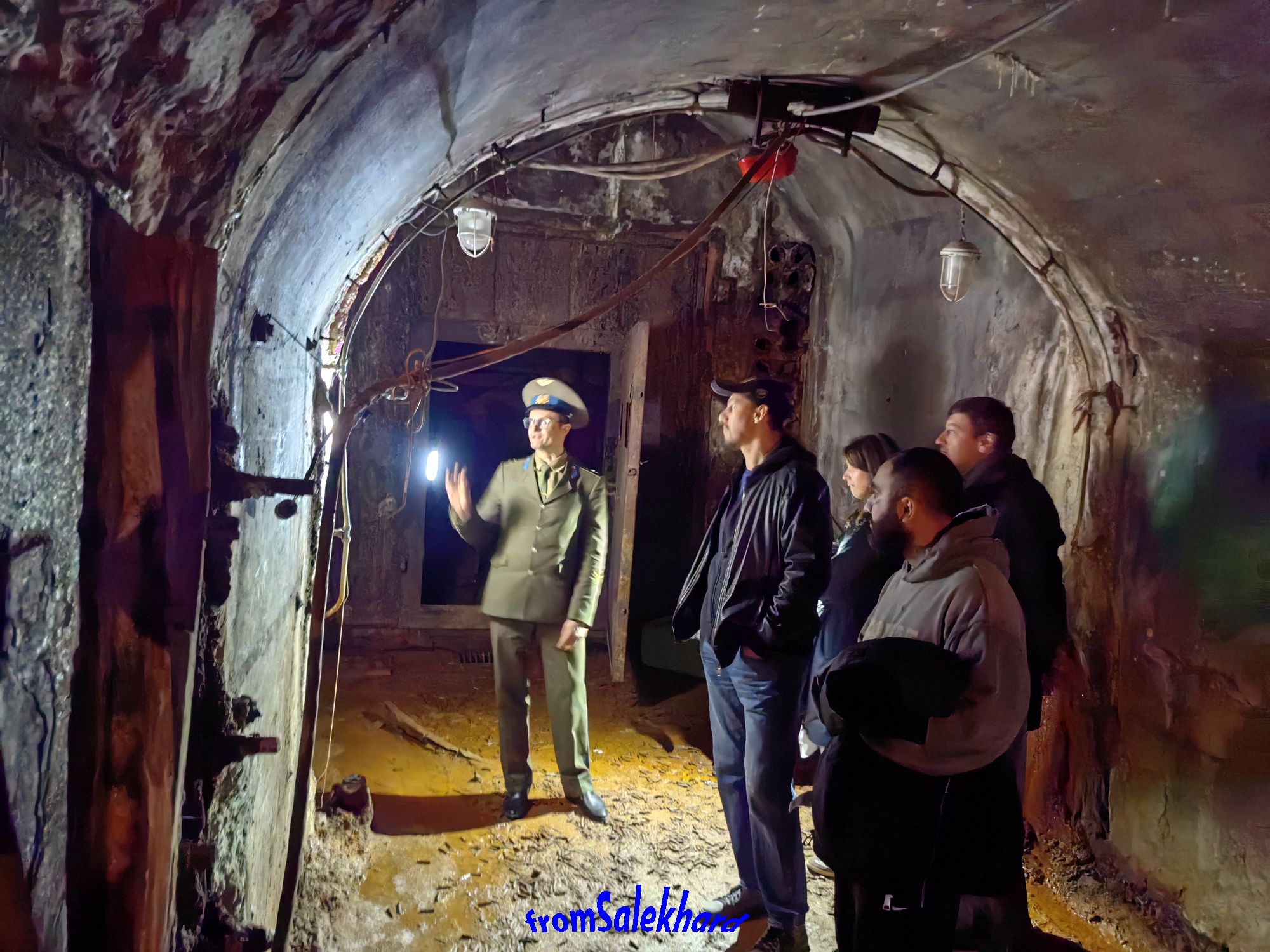
Our tour didn’t linger there either and moved on.
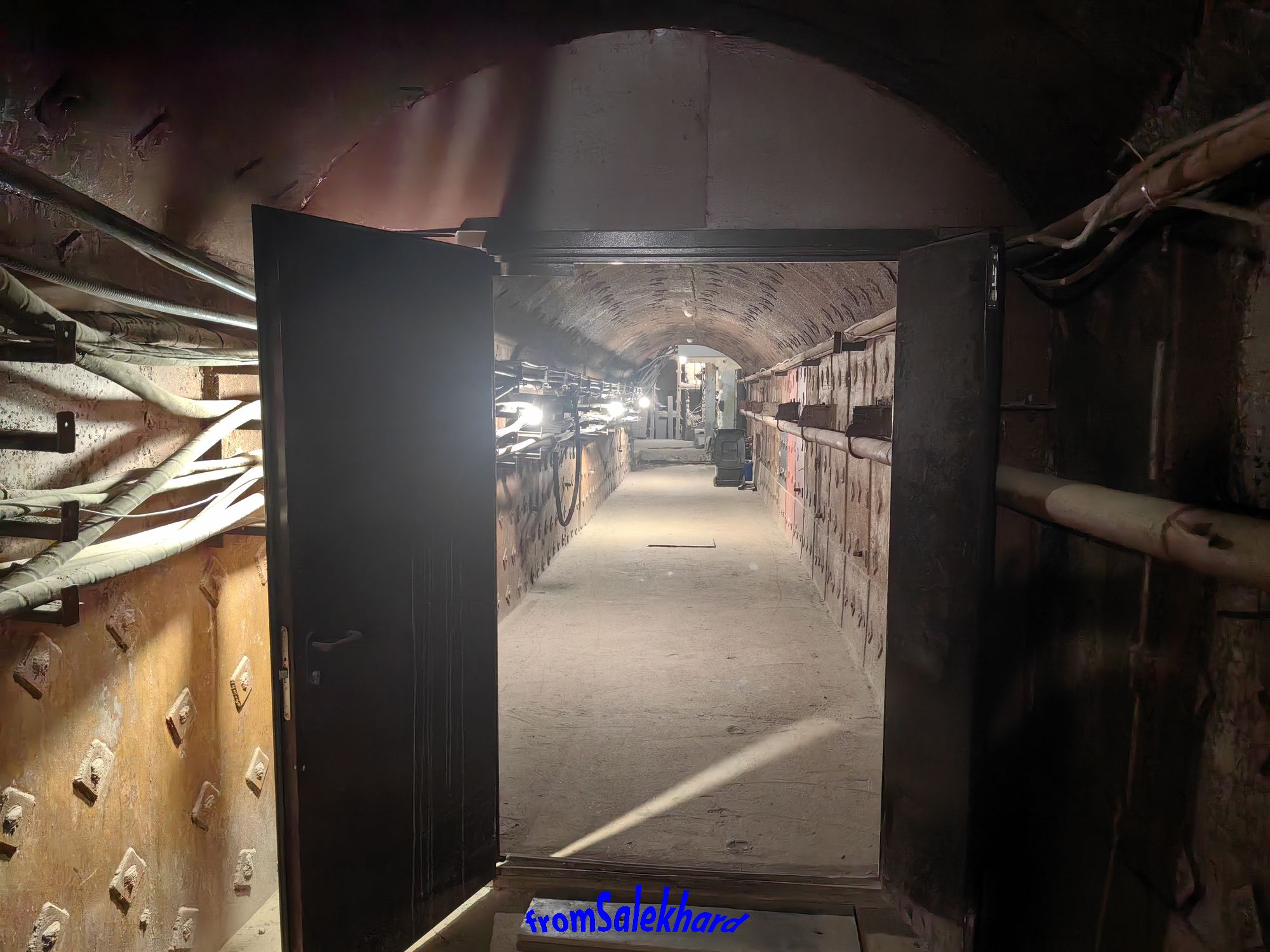
Then we began to come across various branches and forks.
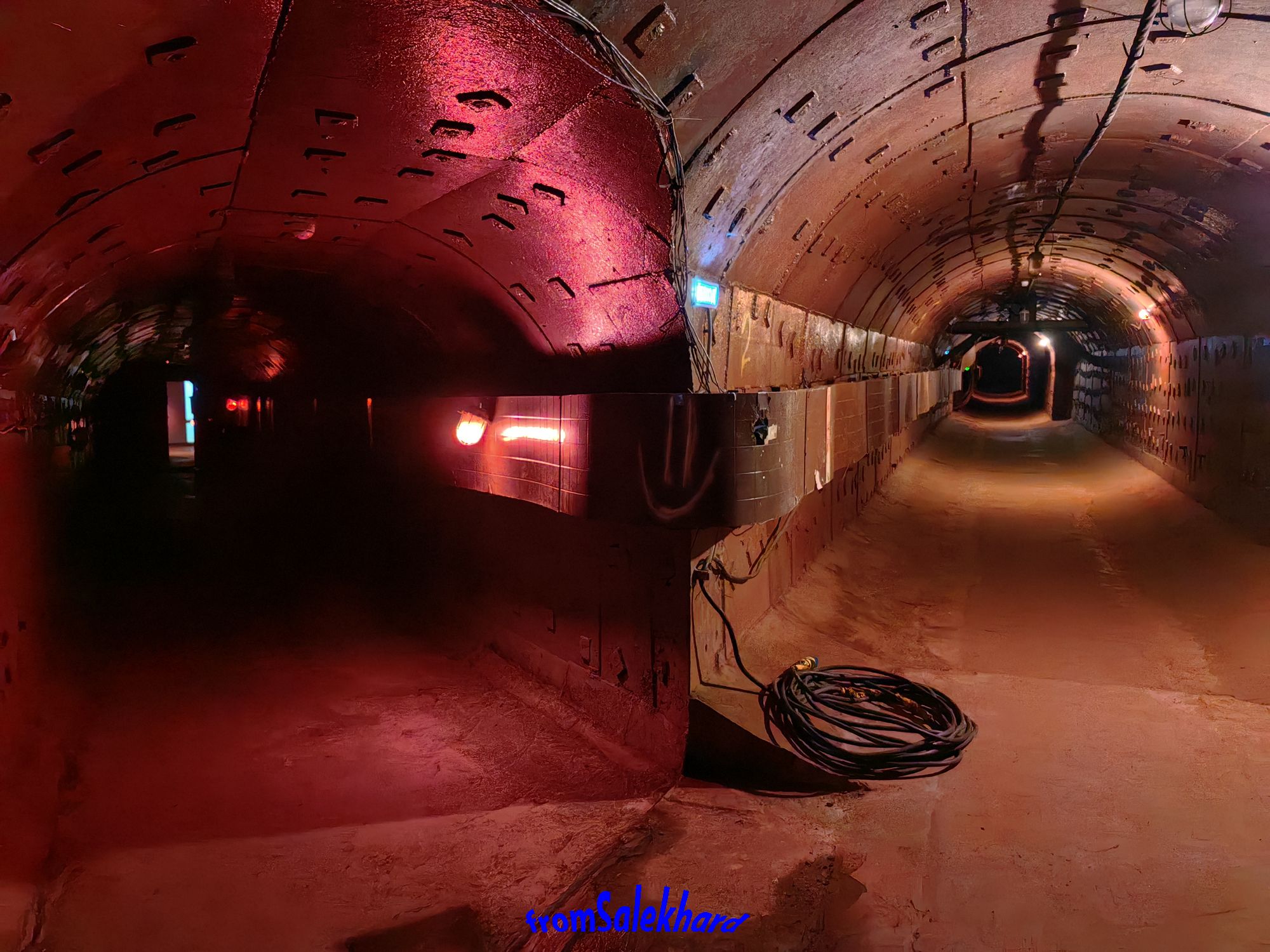
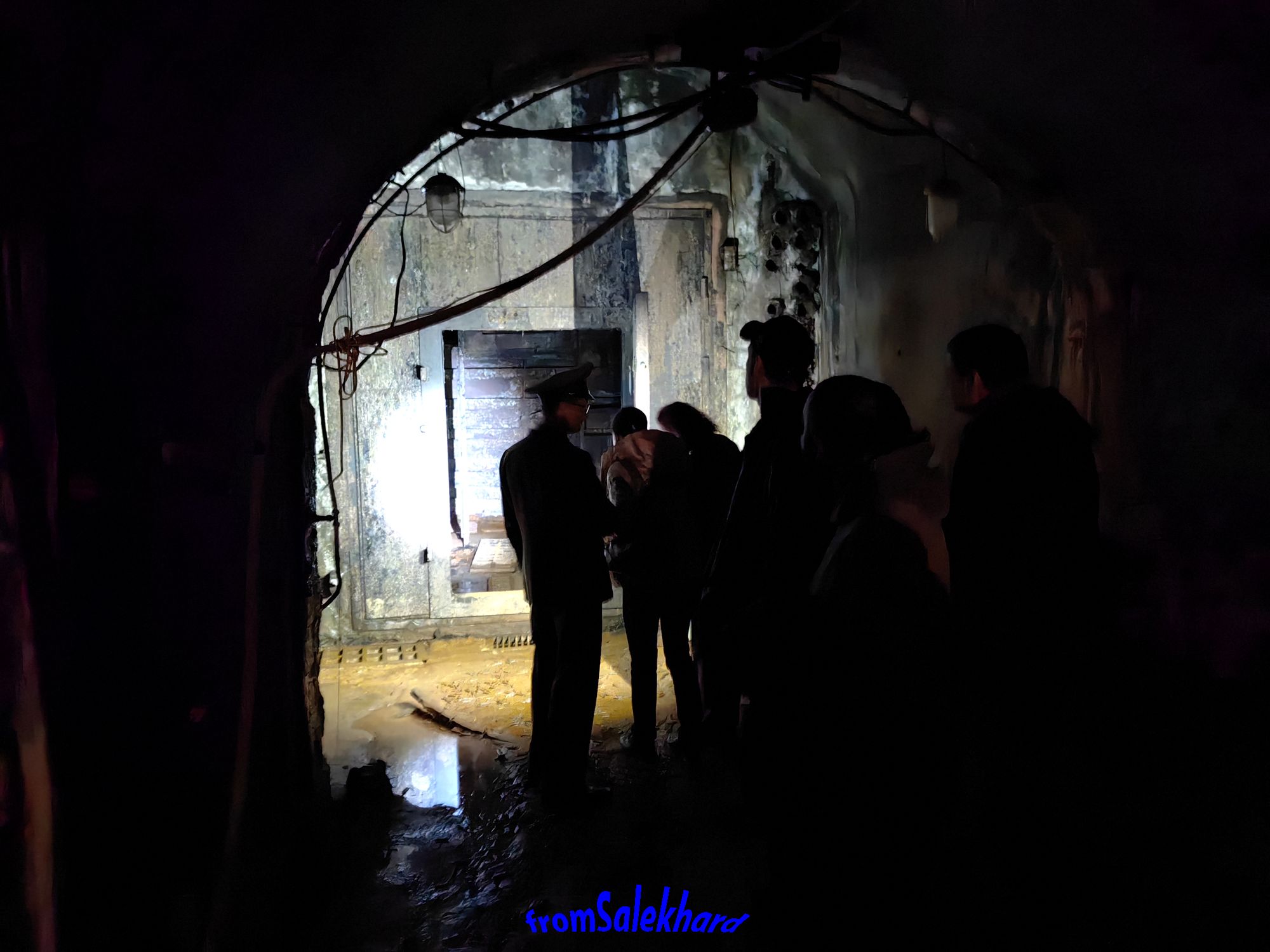
And, in the end, they brought us to this terrifying place, where there is not even lighting, but you can actually hear the subway trains.
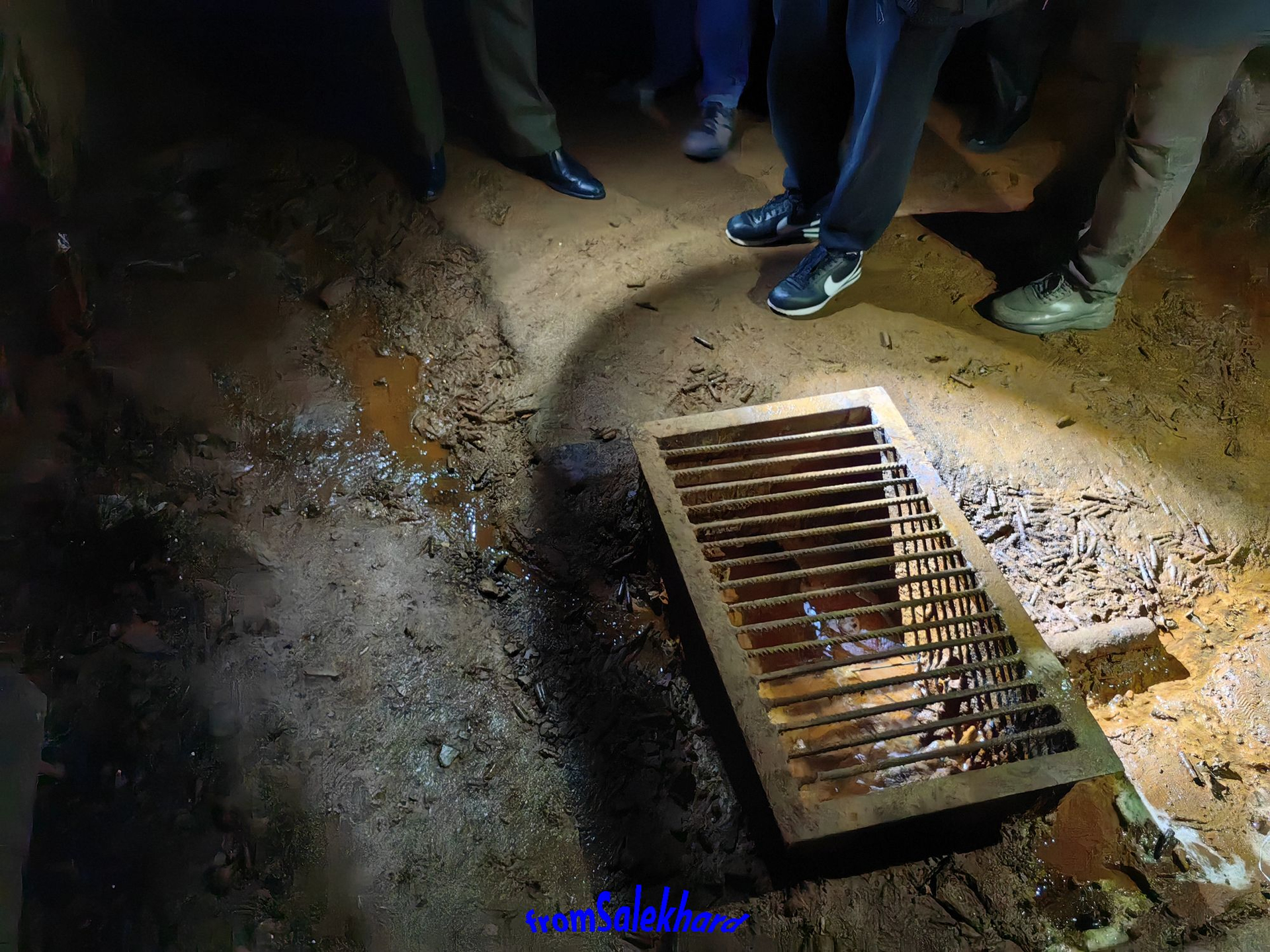
Only now did I notice that the floor was strewn with something resembling cartridges.
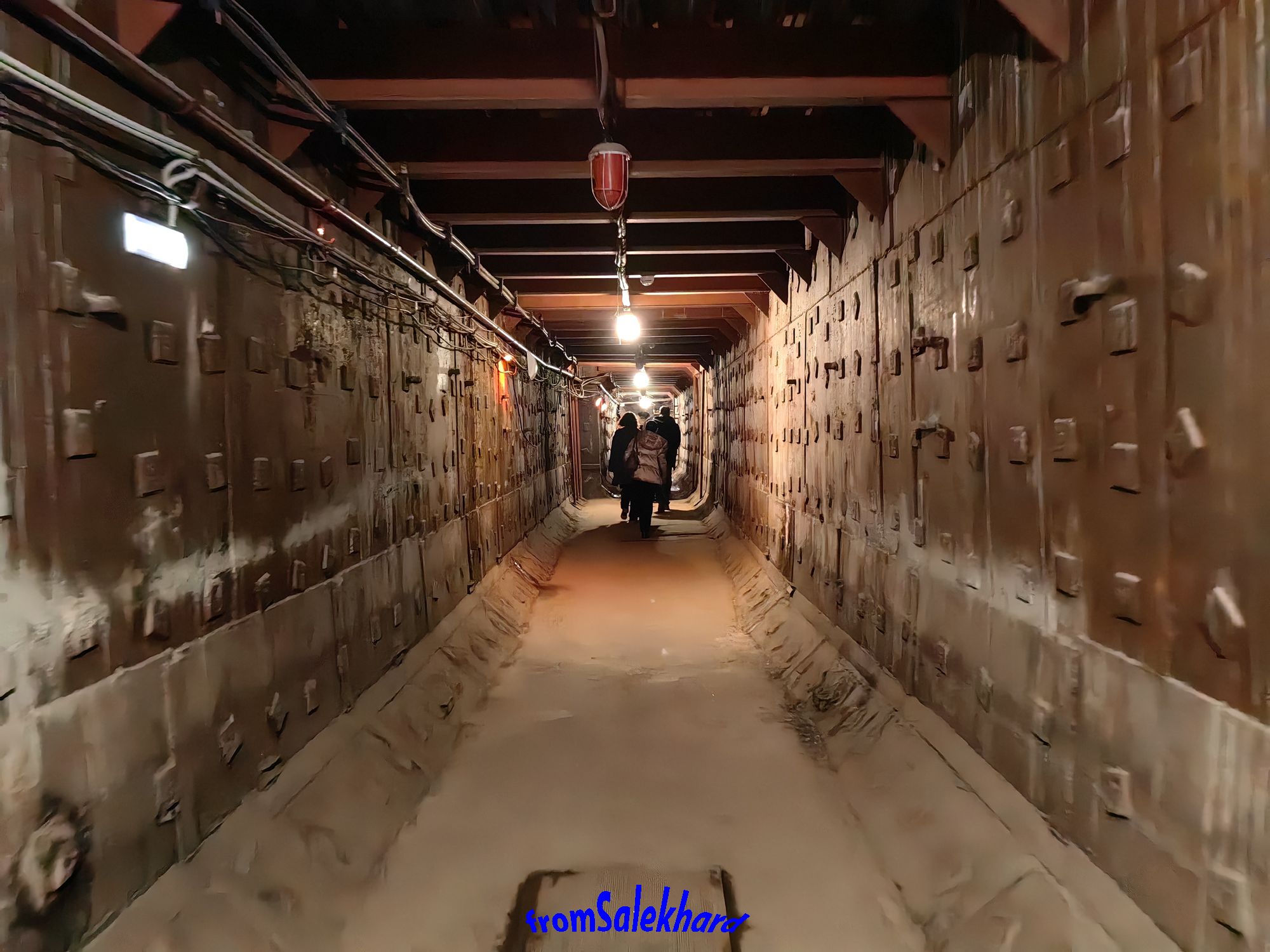
Or maybe it was the site of an execution? The iron was removed from the walls to prevent ricochets, and the drain wasn’t for water, but for blood! 
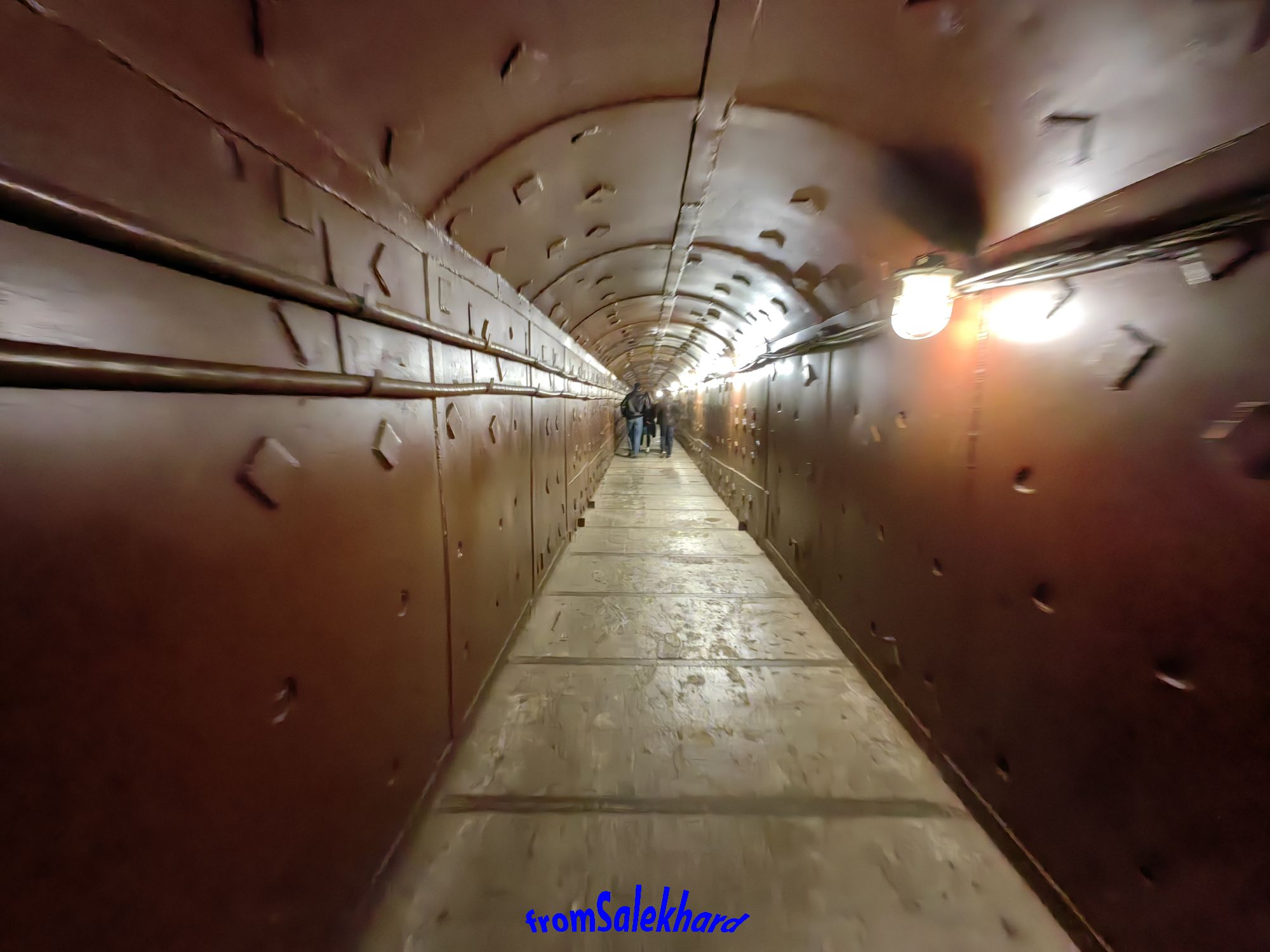
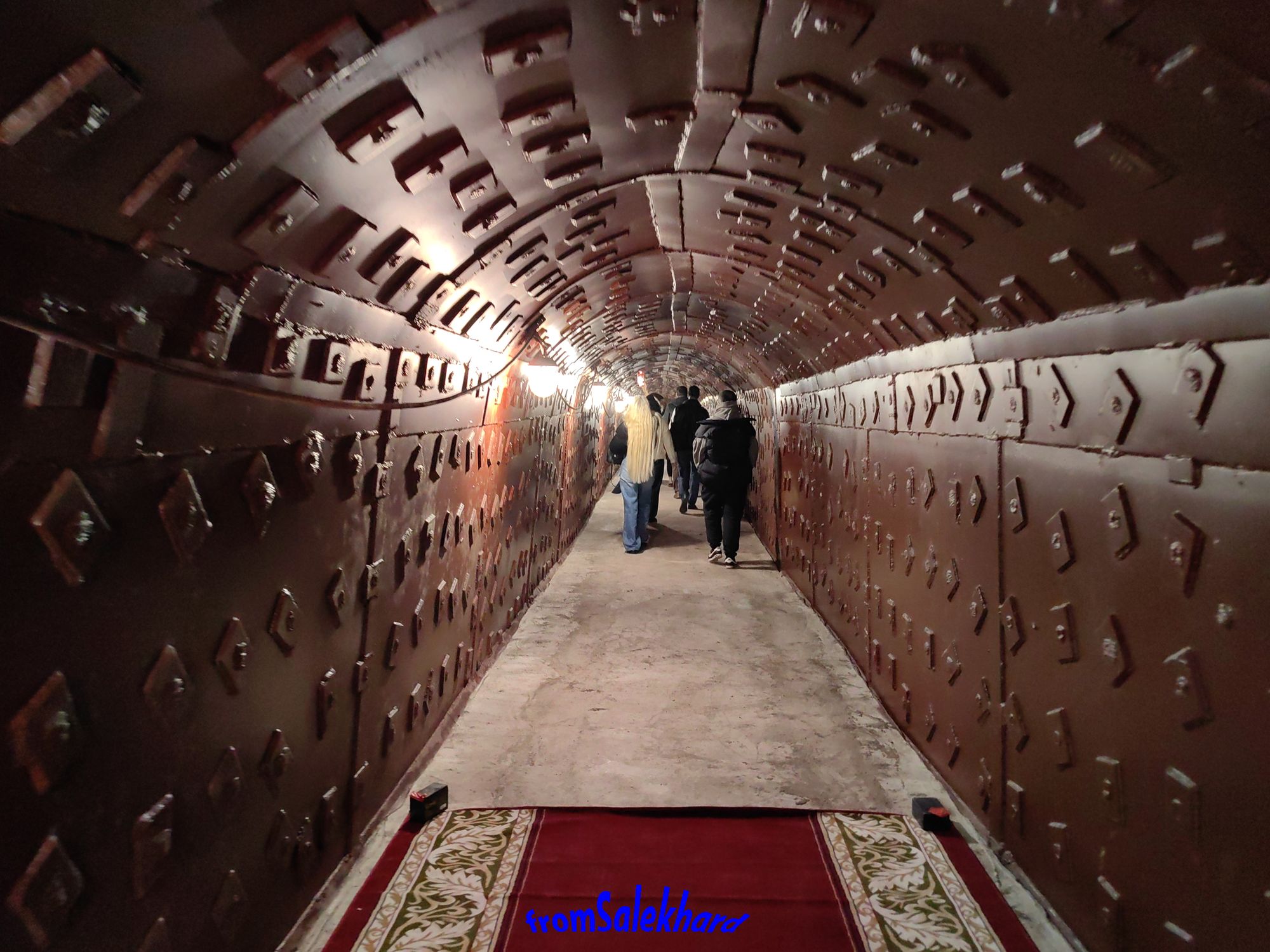
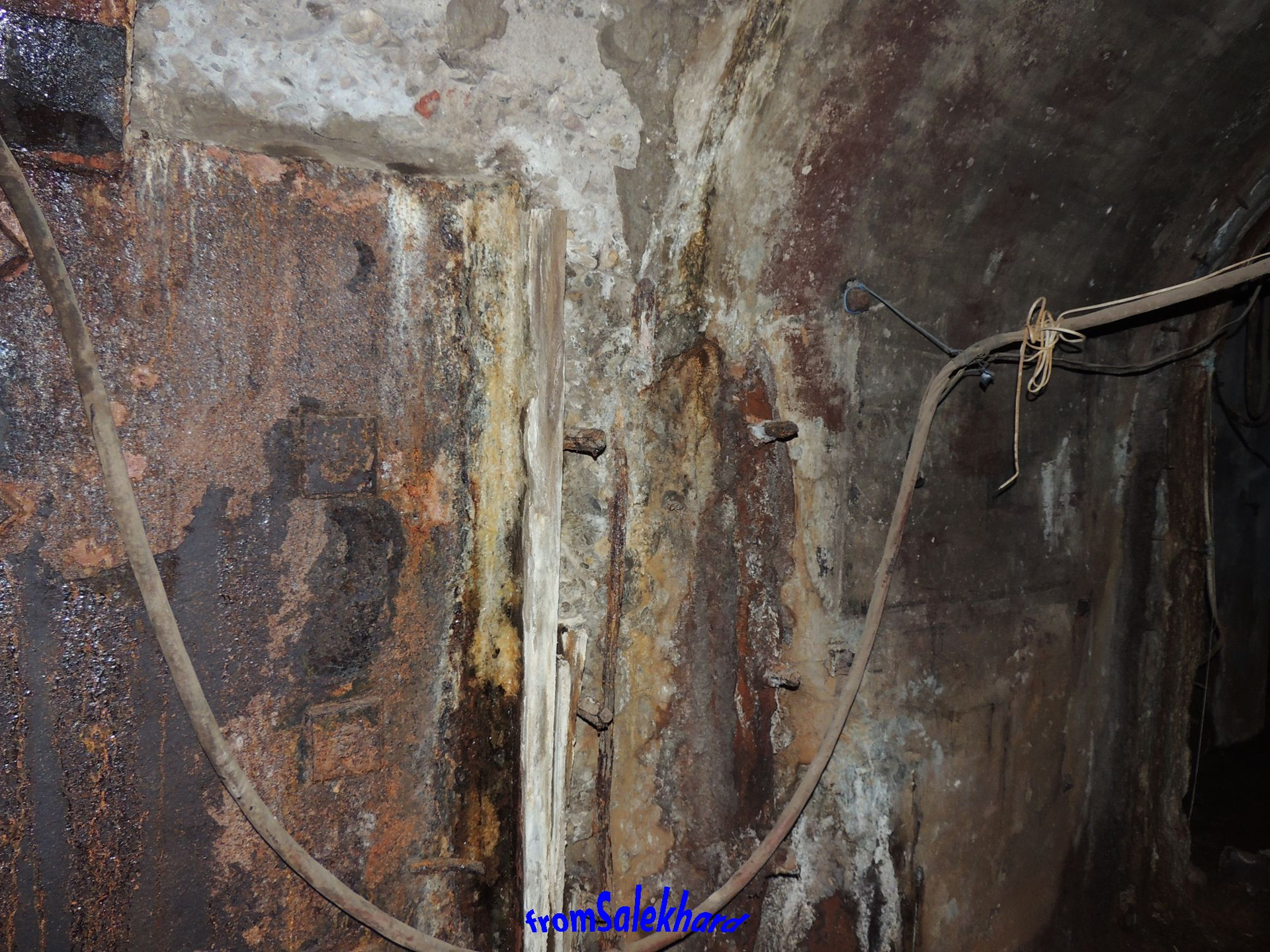
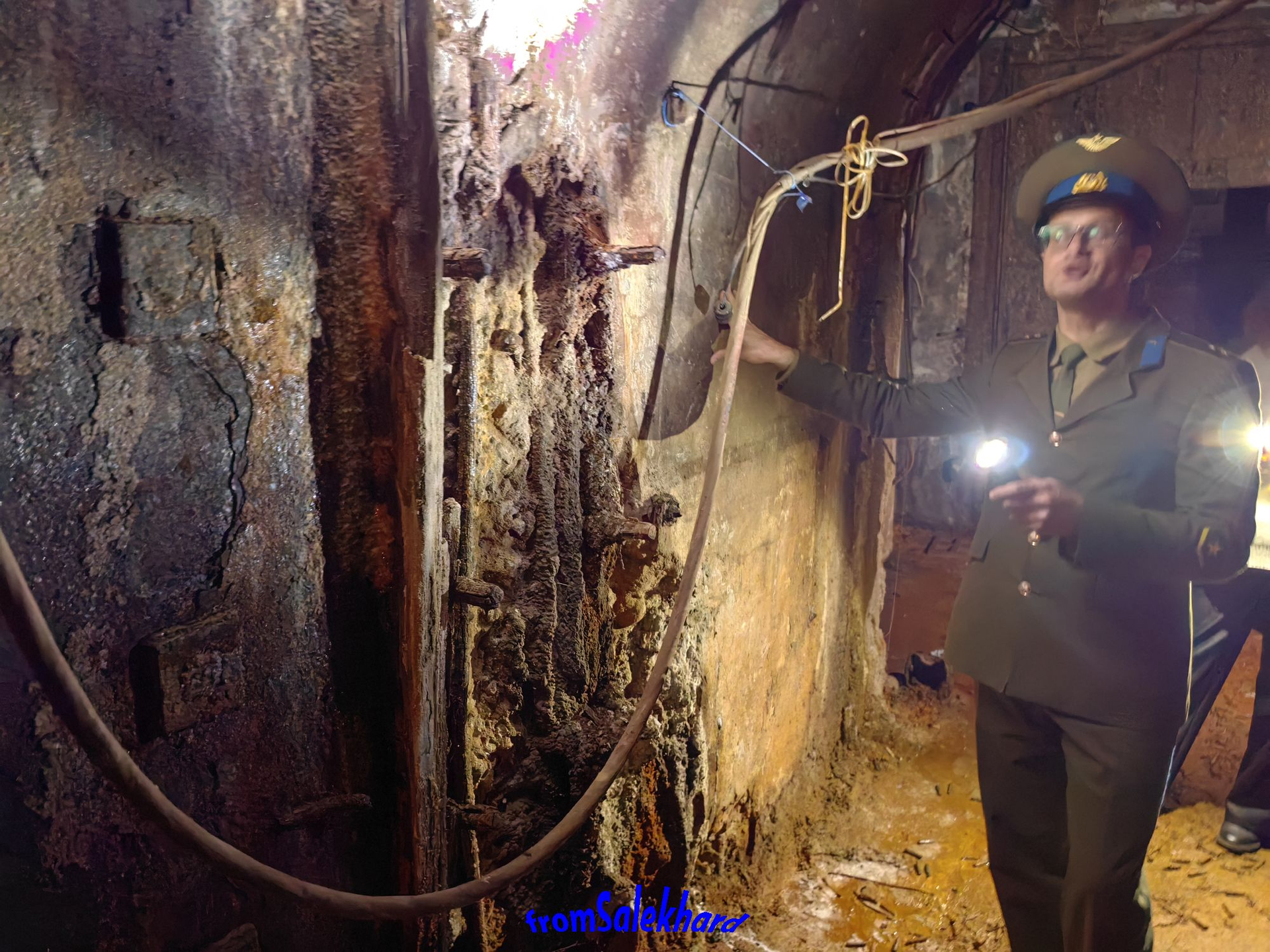
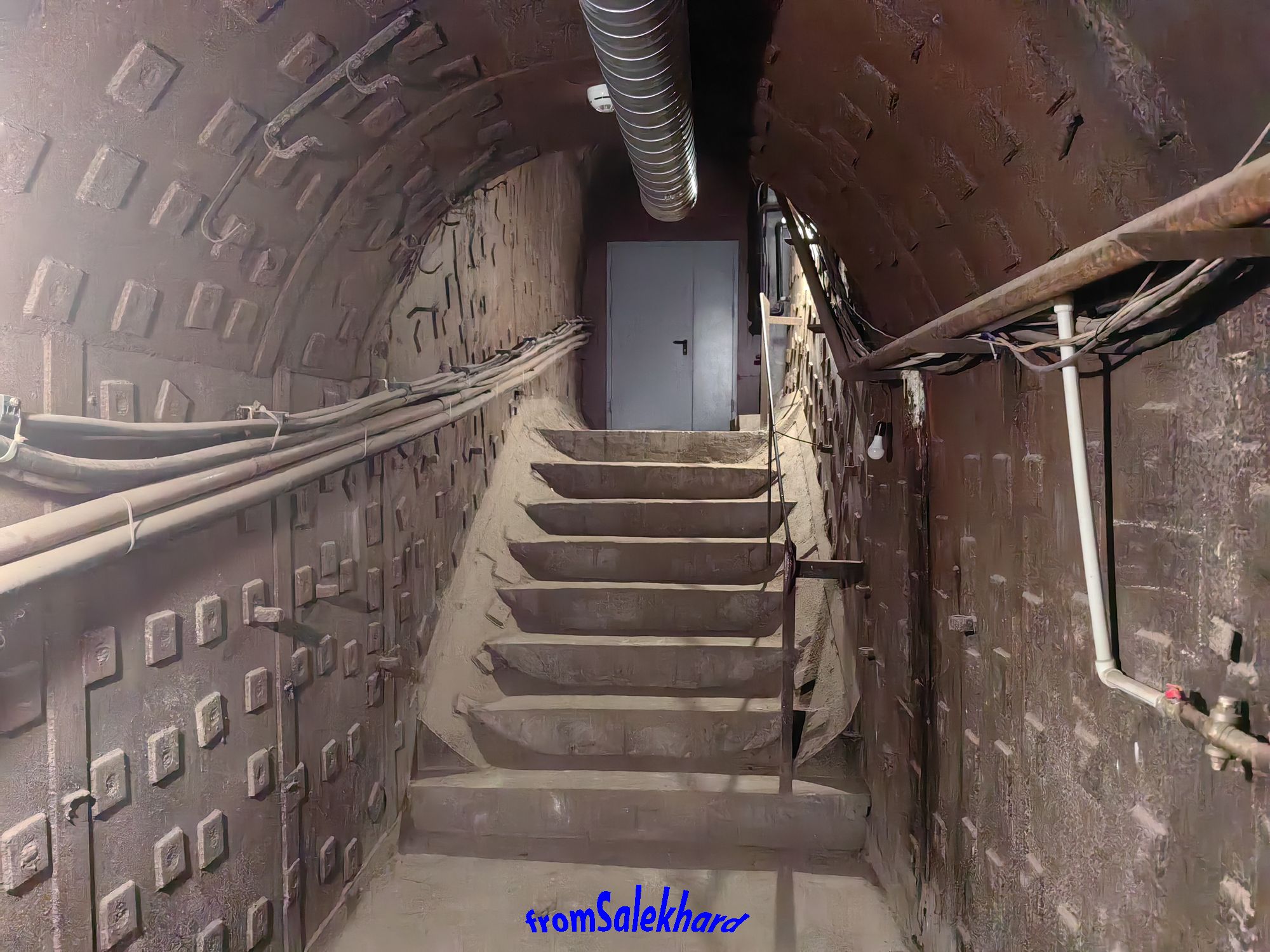
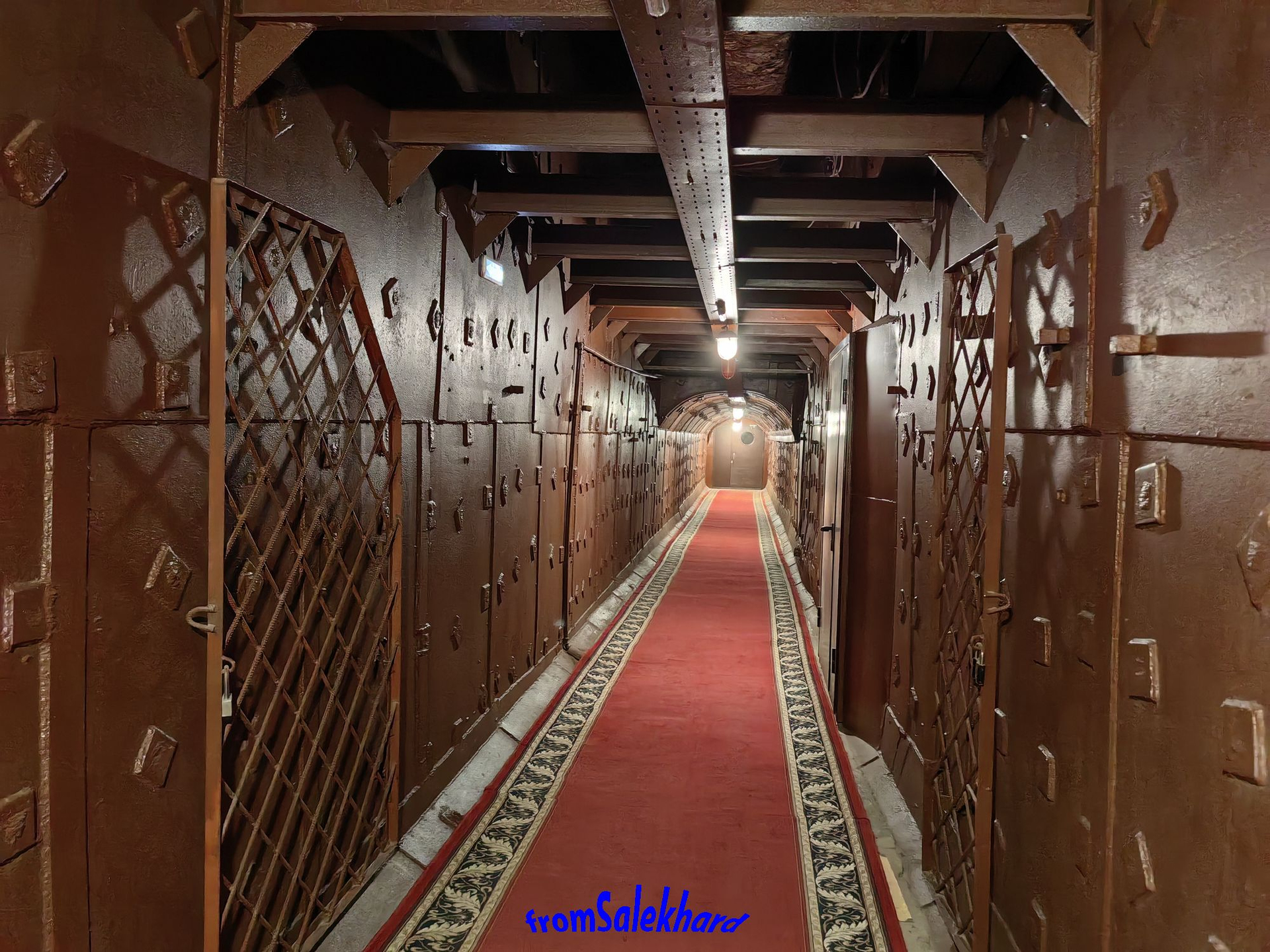
It was here that it became clear what those metal plaques welded to the walls were.
These plates are welded to reinforcement rods embedded in the concrete walls and support the metal cladding.
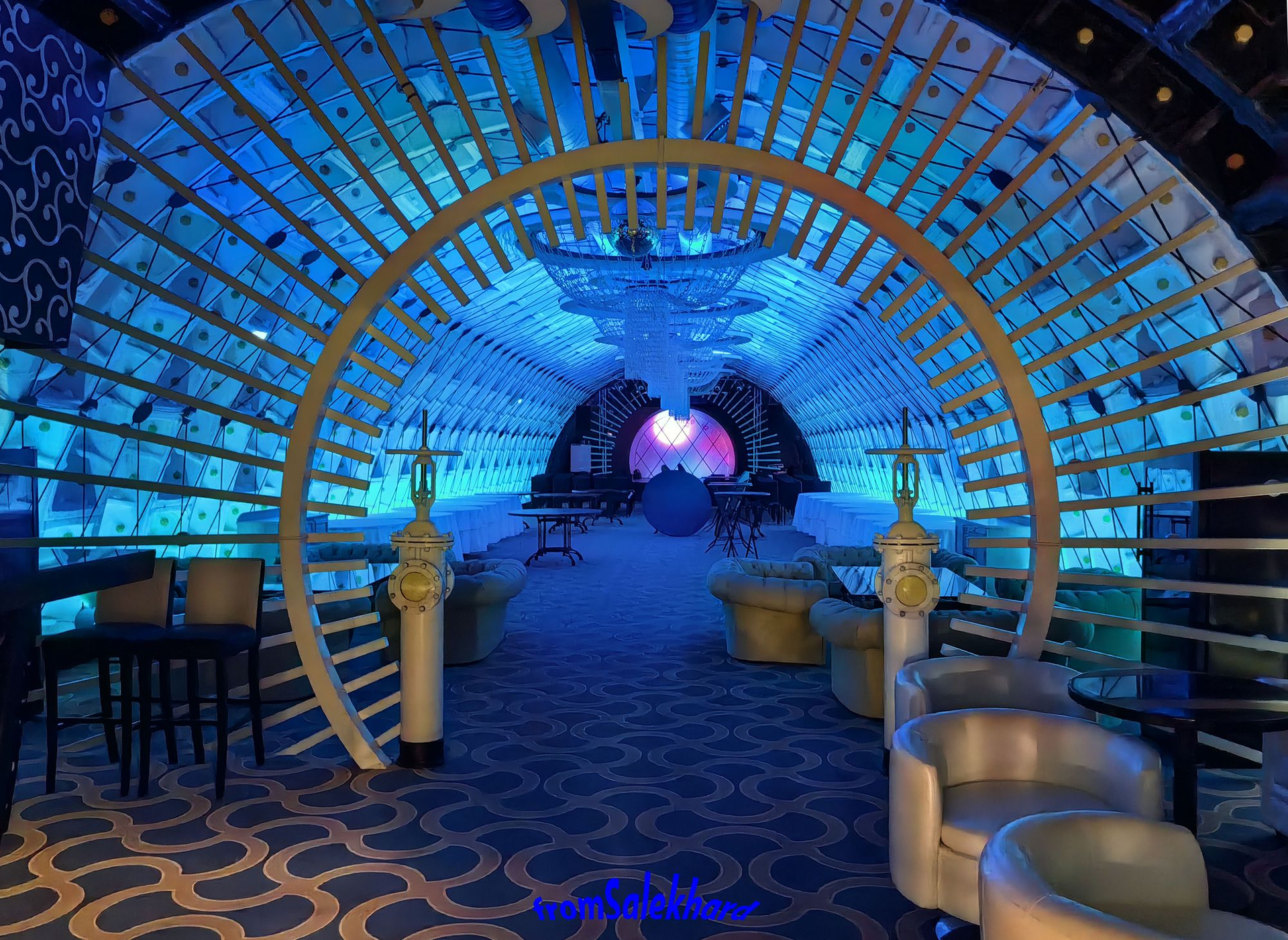
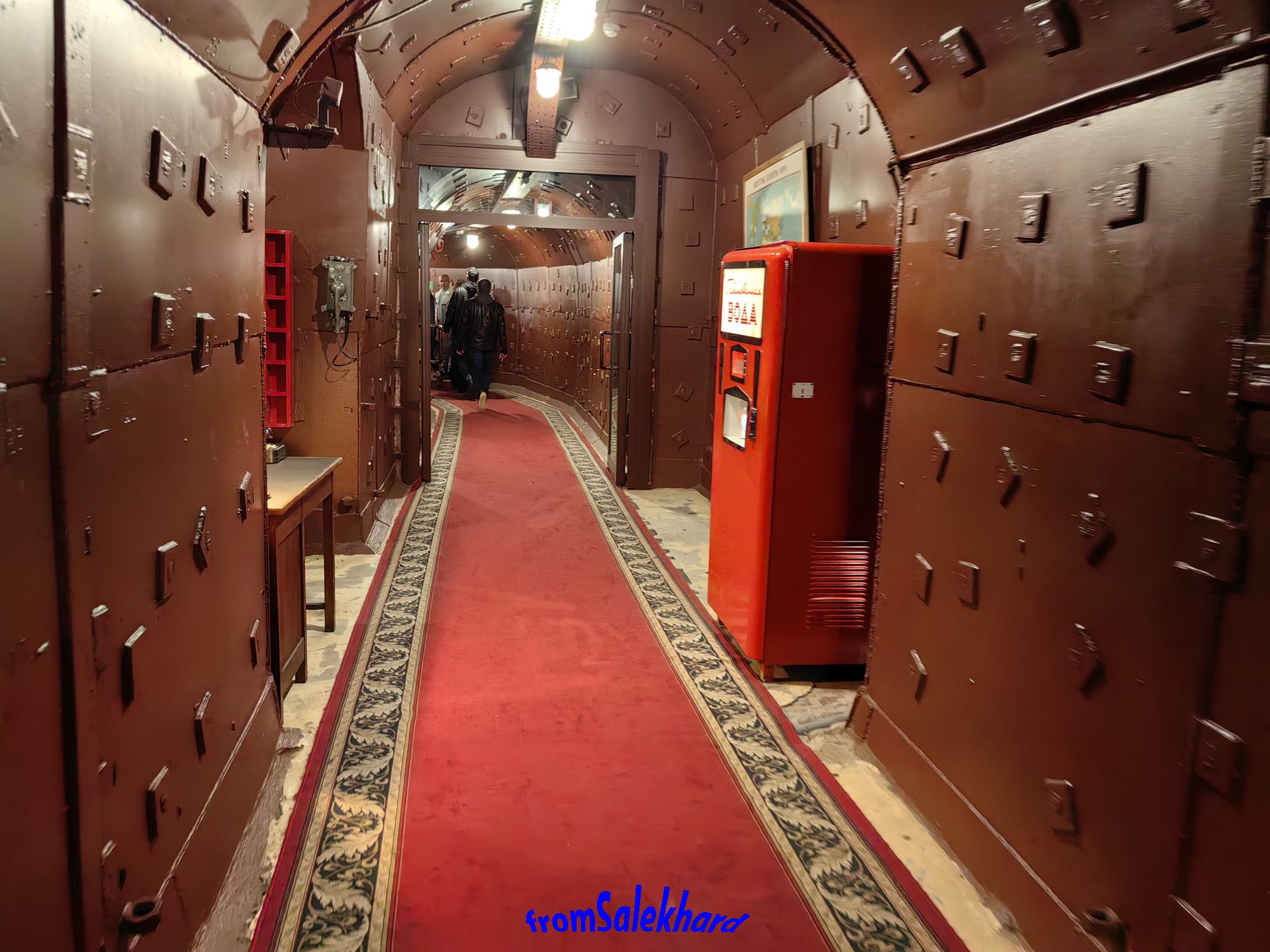
The corridors have lost a significant amount of glamour, but gained a significant amount of charisma.
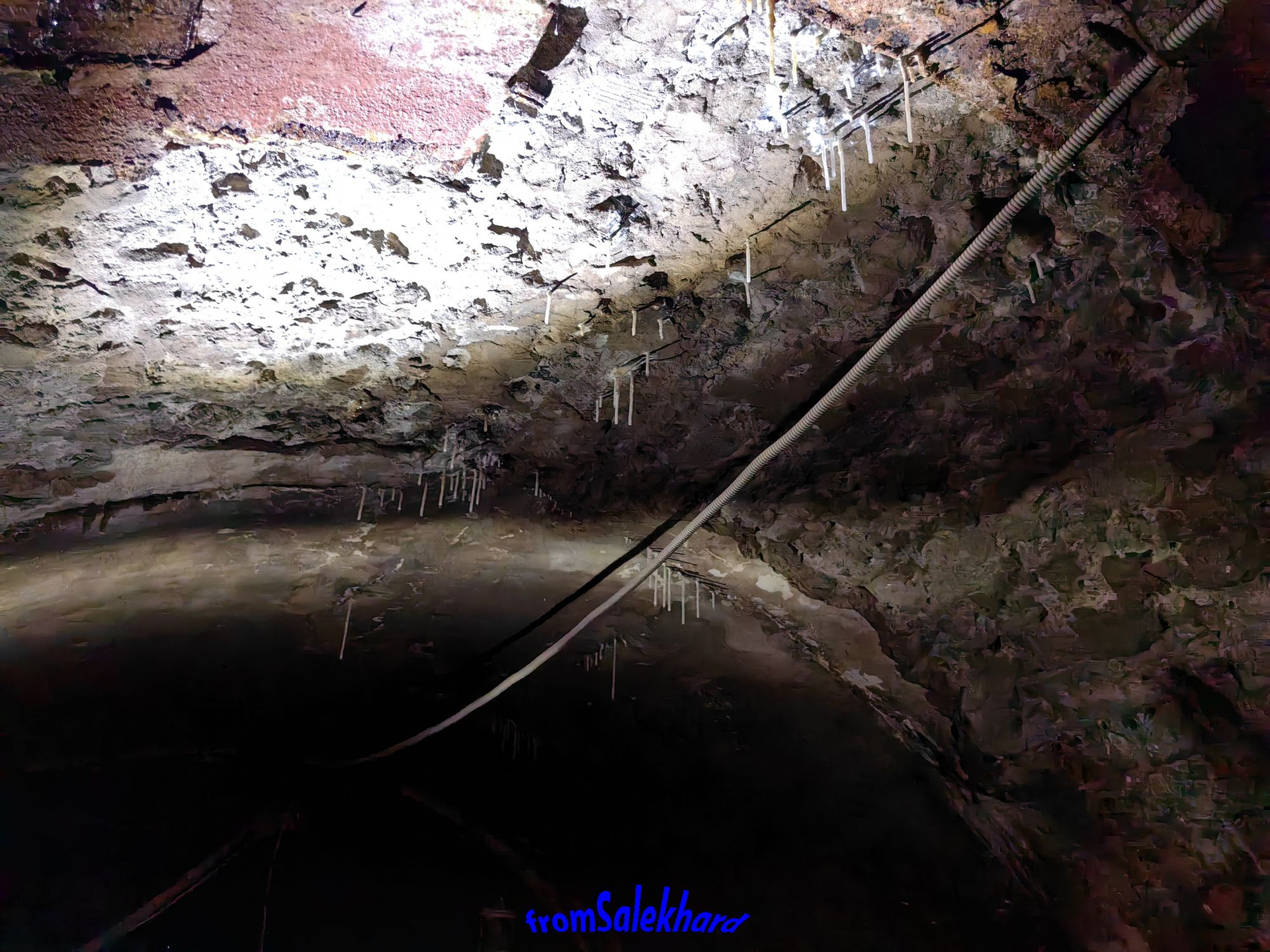
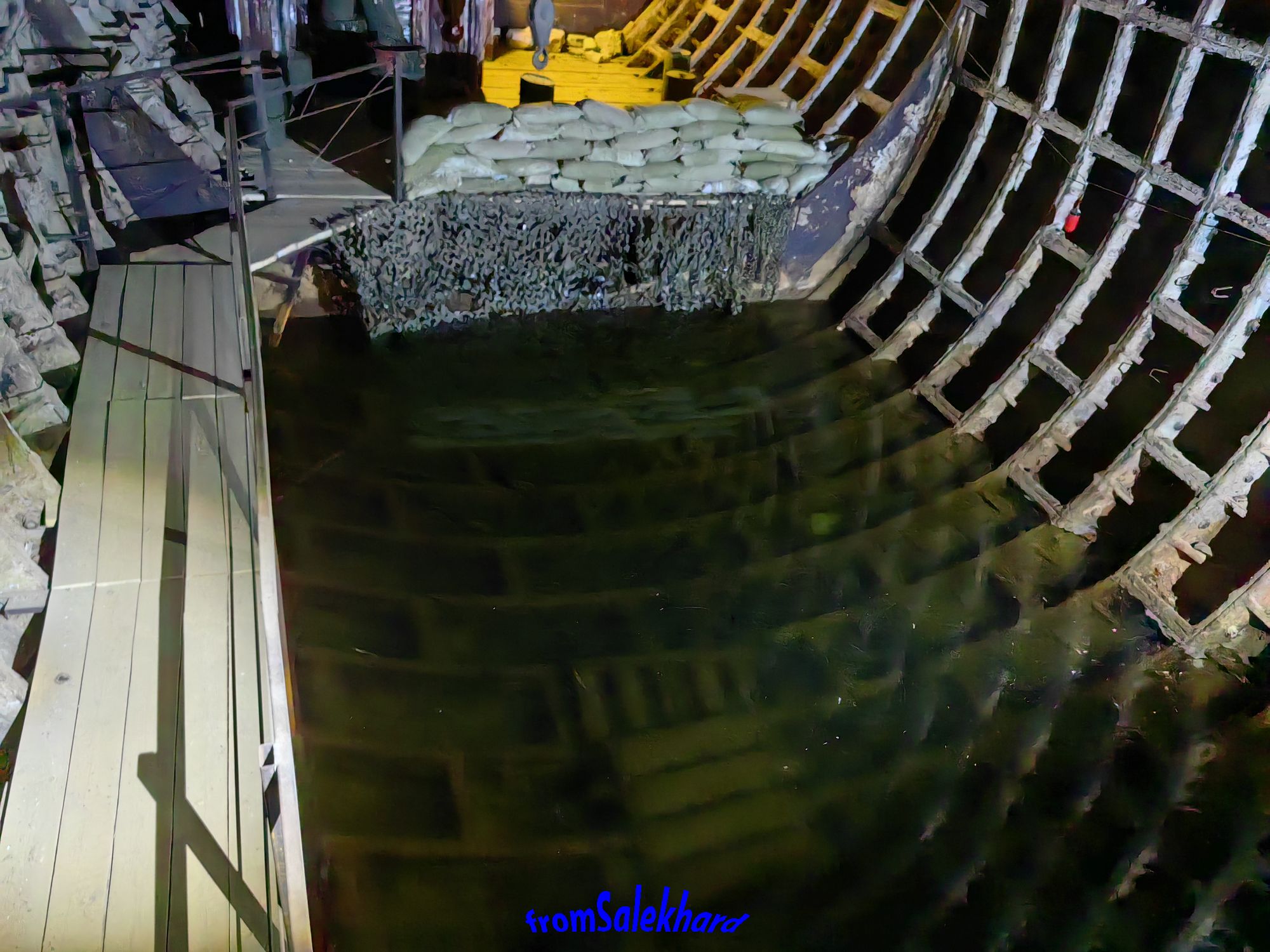
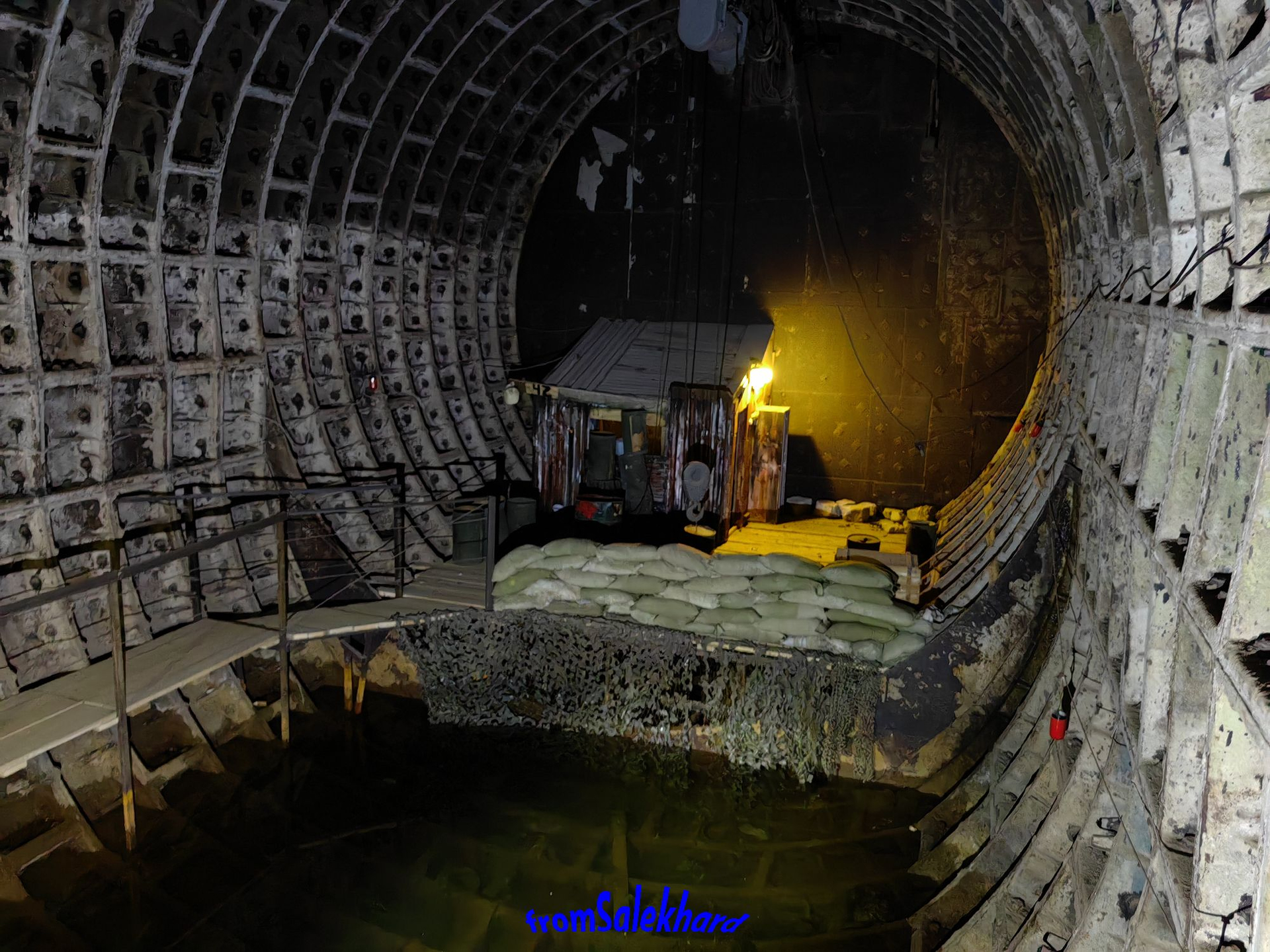
We walked through the corridors to the underground “lake”
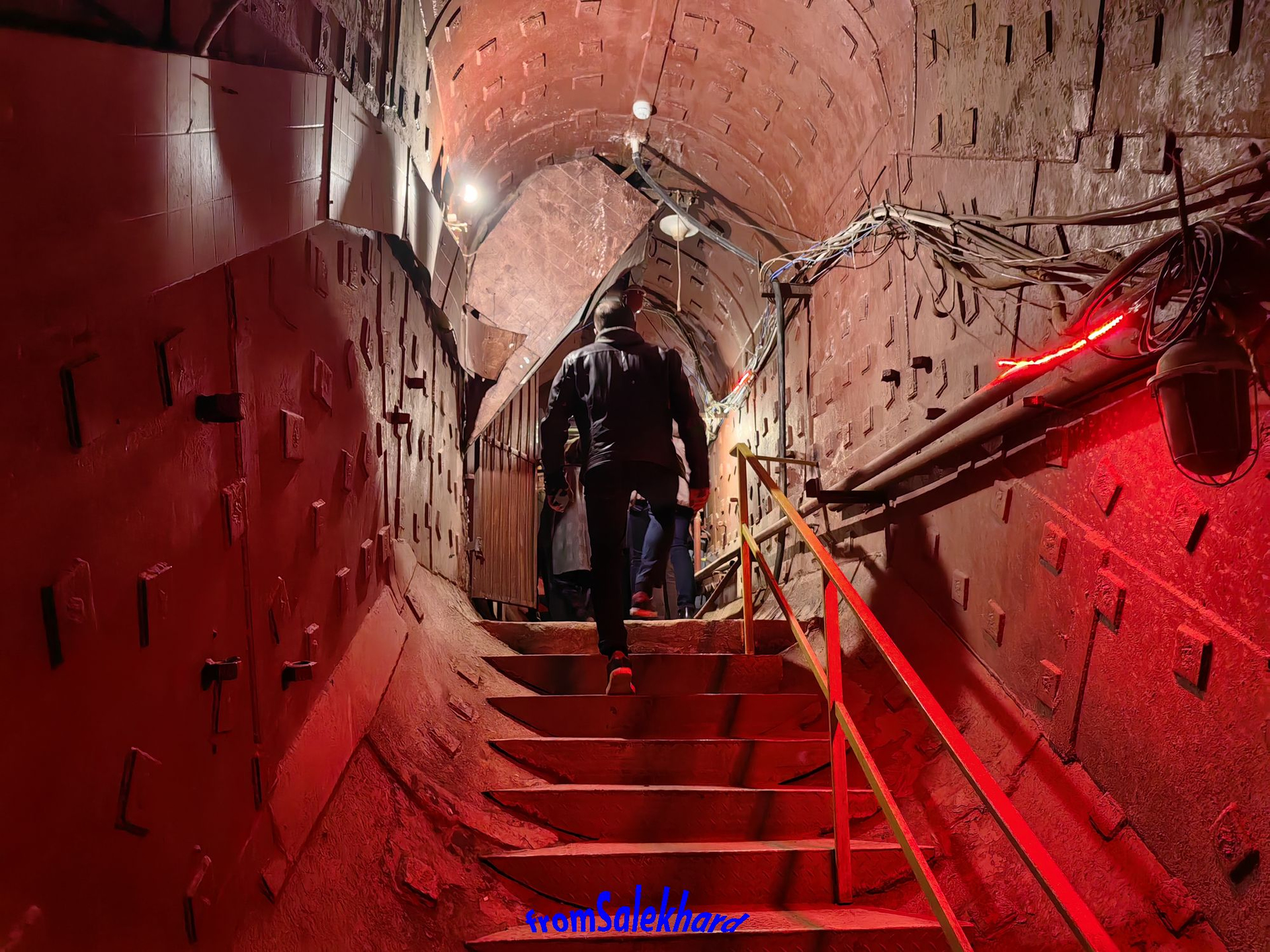
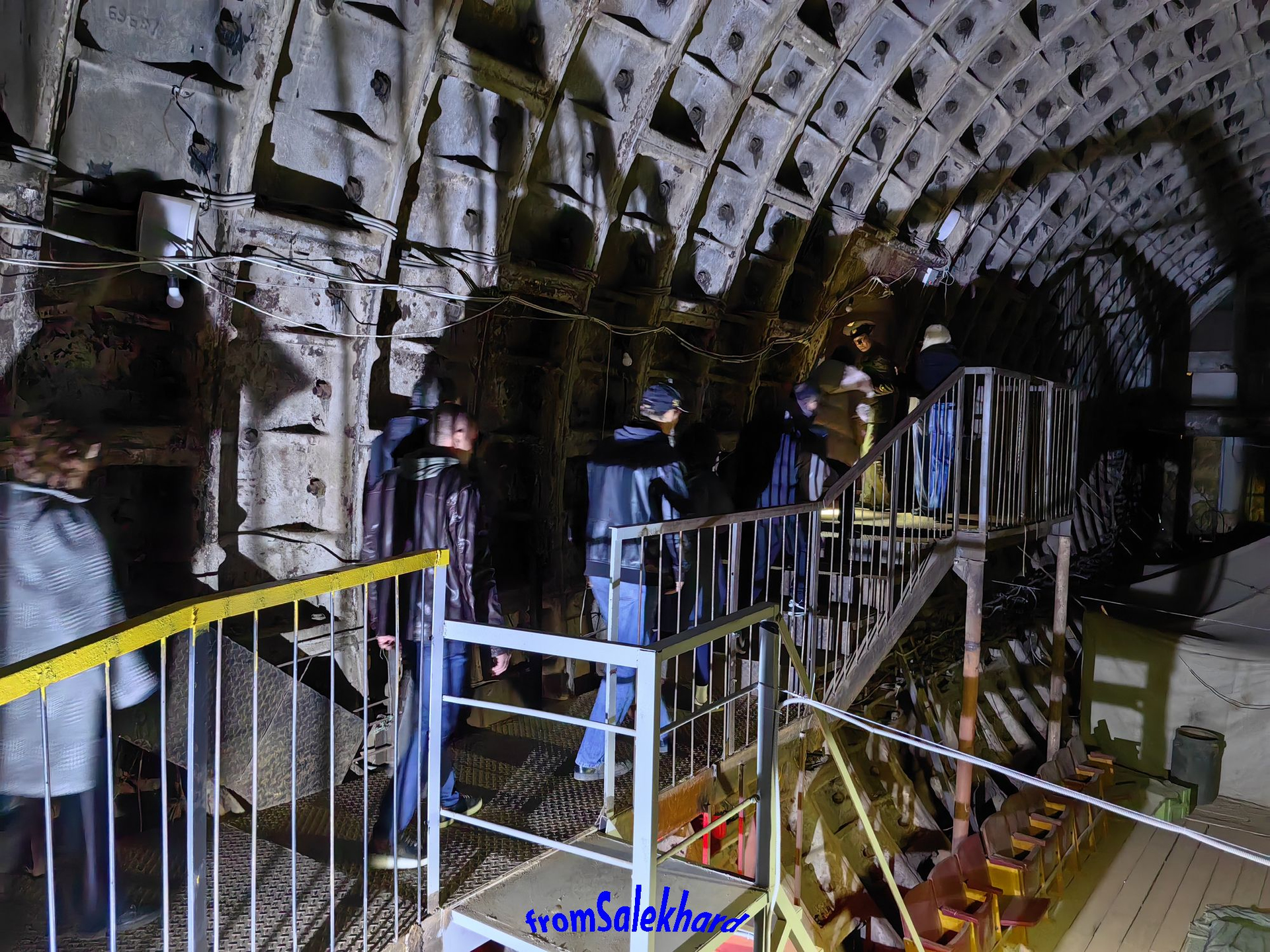
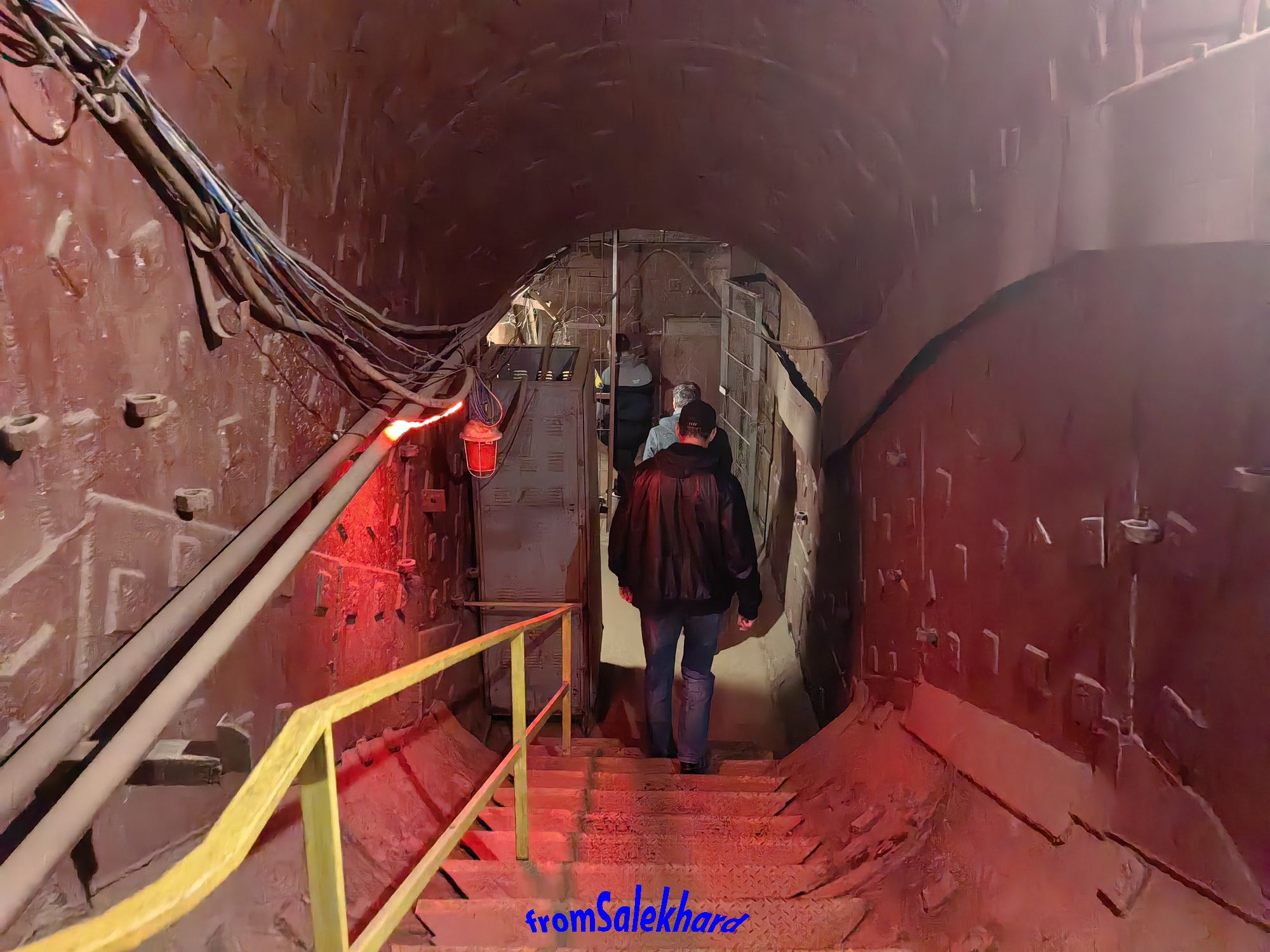
We left from there along narrow iron ladders and stairs
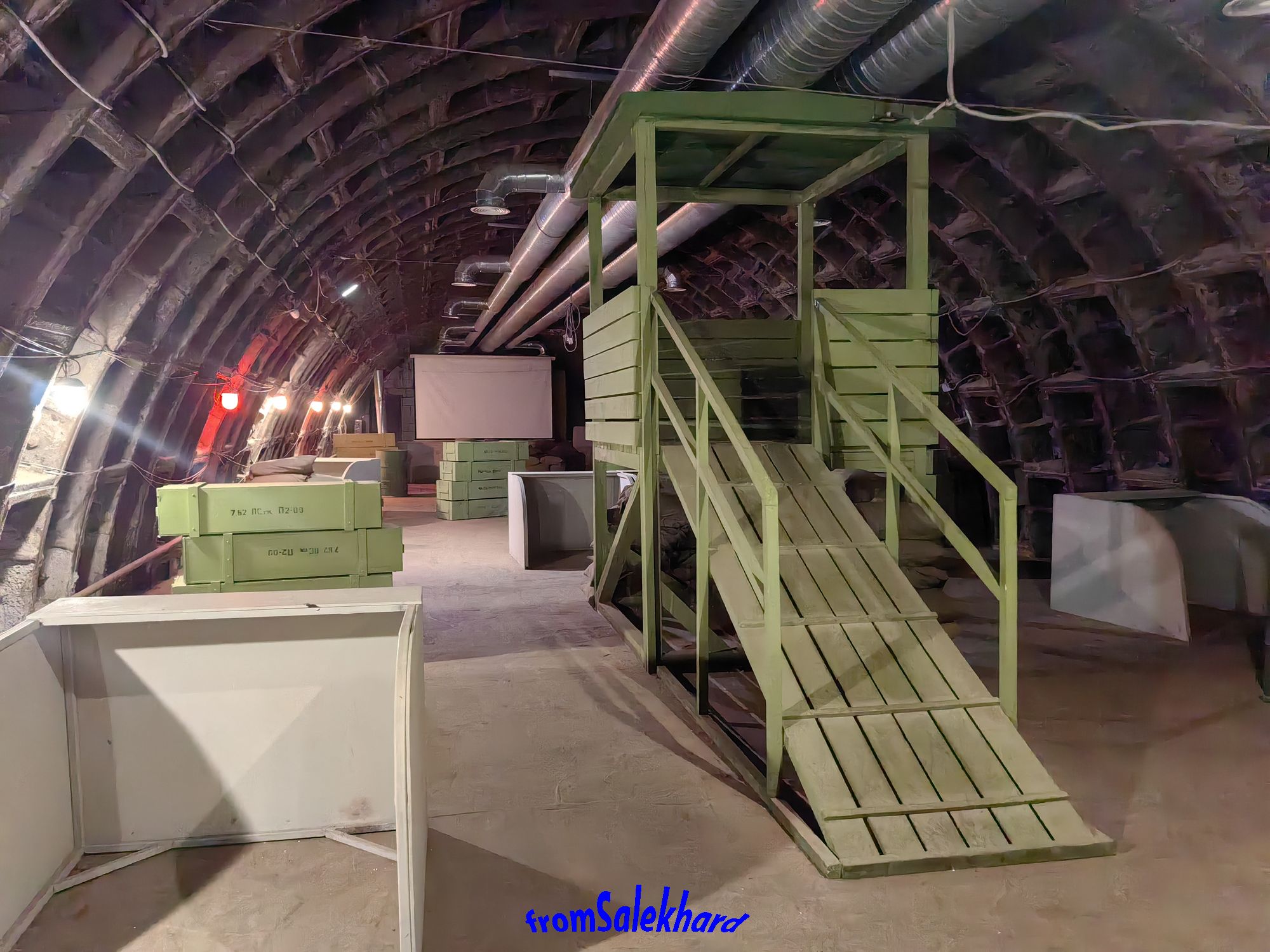
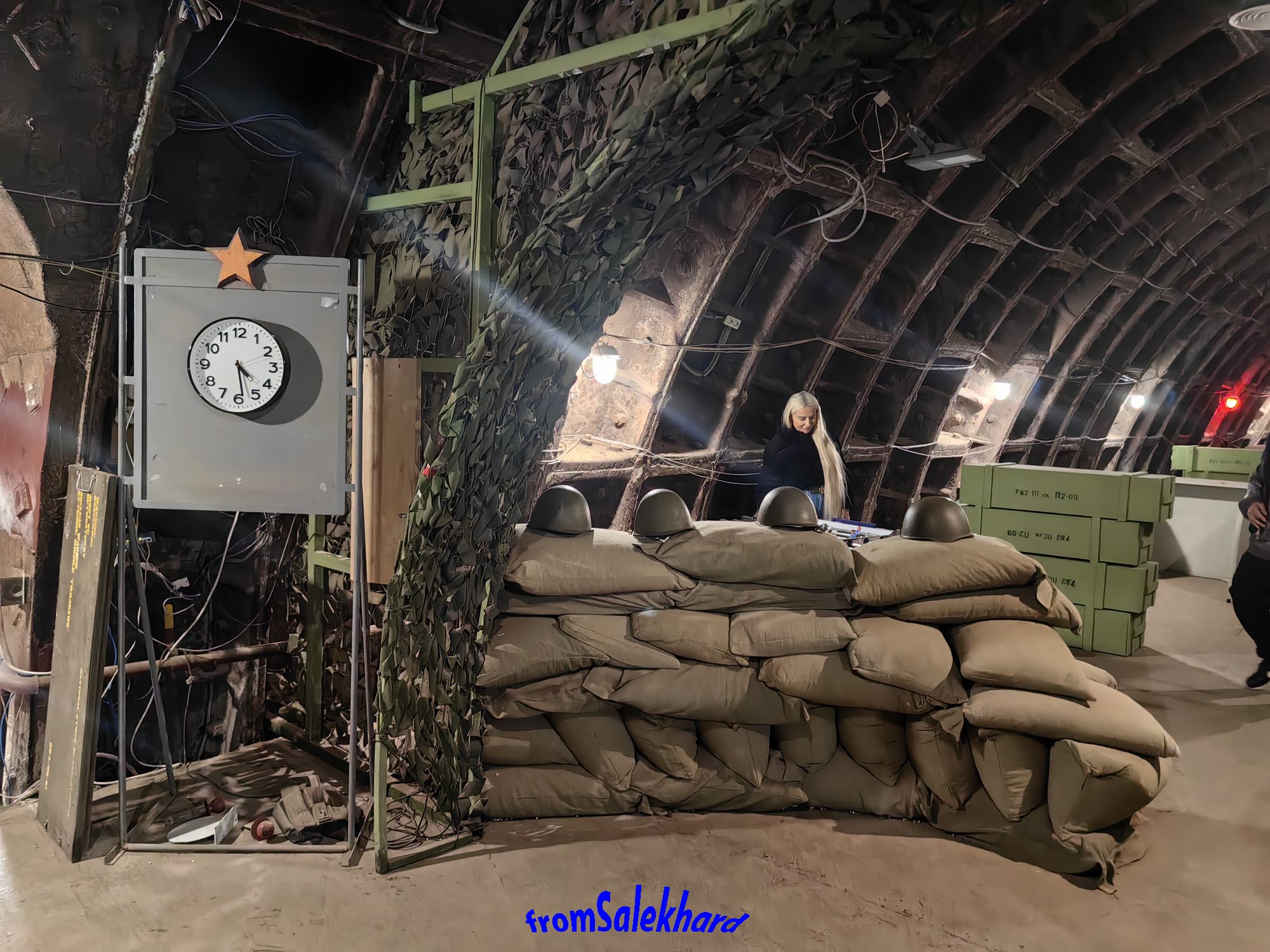
and found themselves in the territory of military-patriotic education.
After that, on the way back we collected the remains of the colorful transitions.
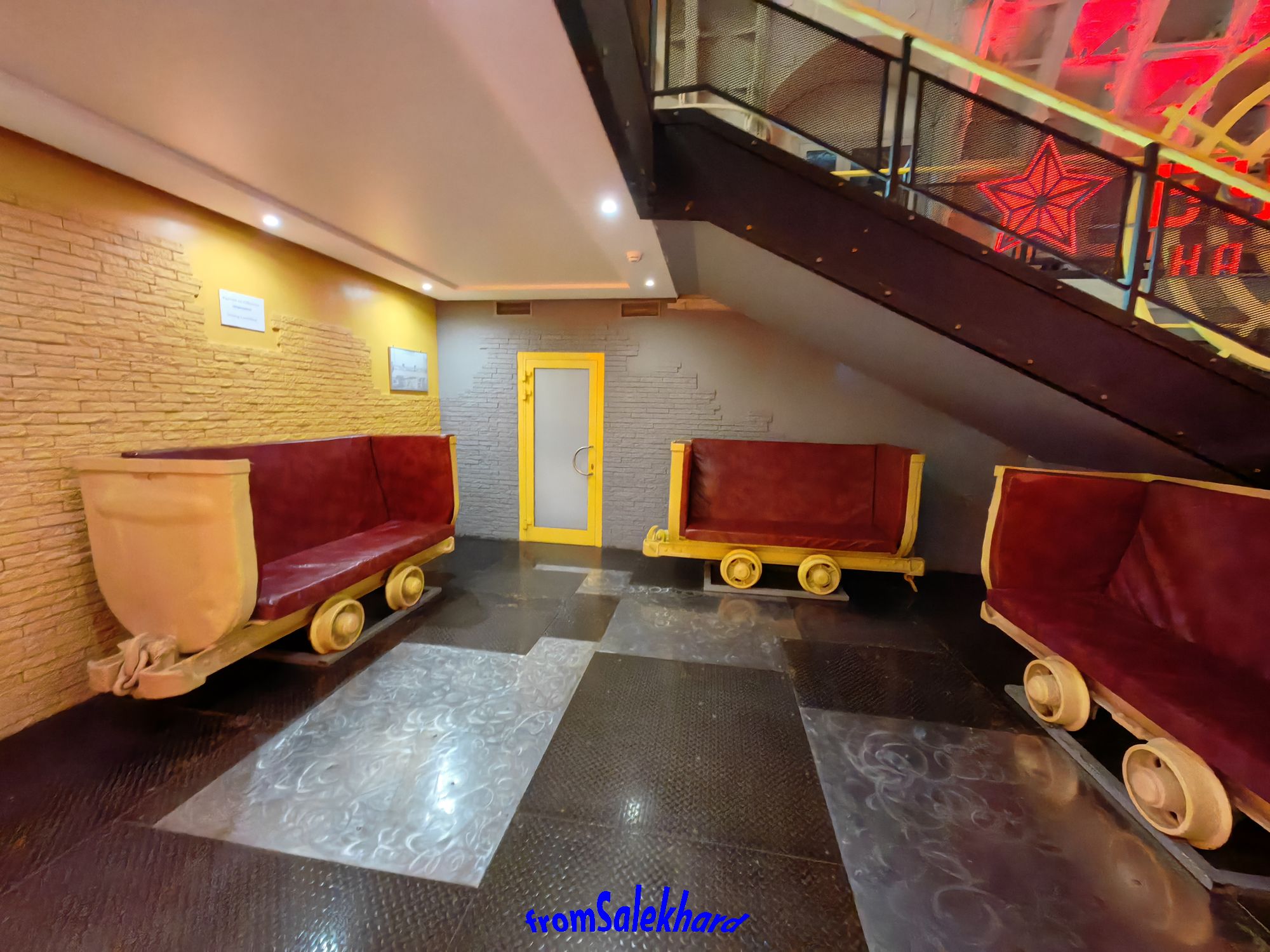
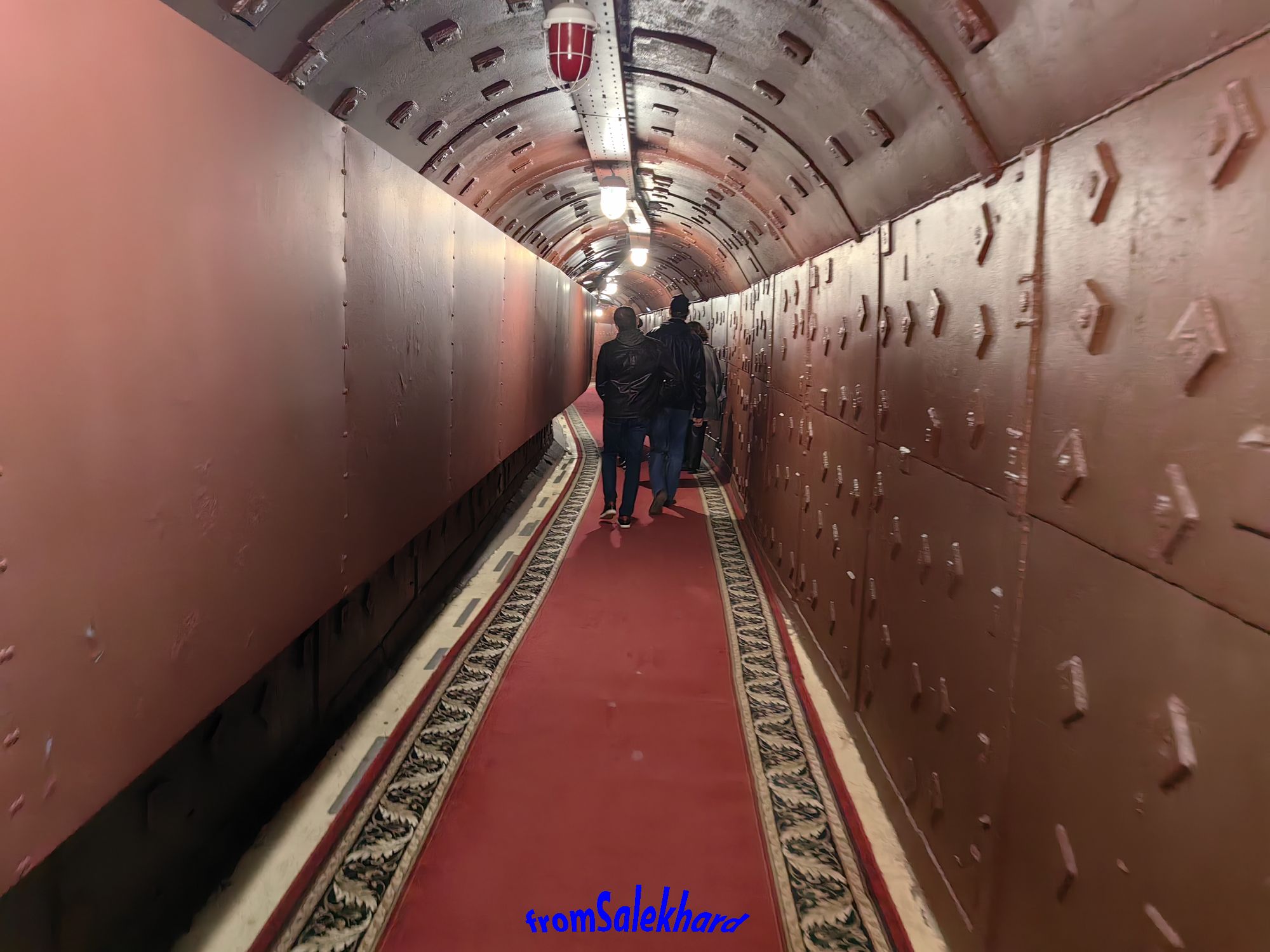
Then the interiors began to improve.
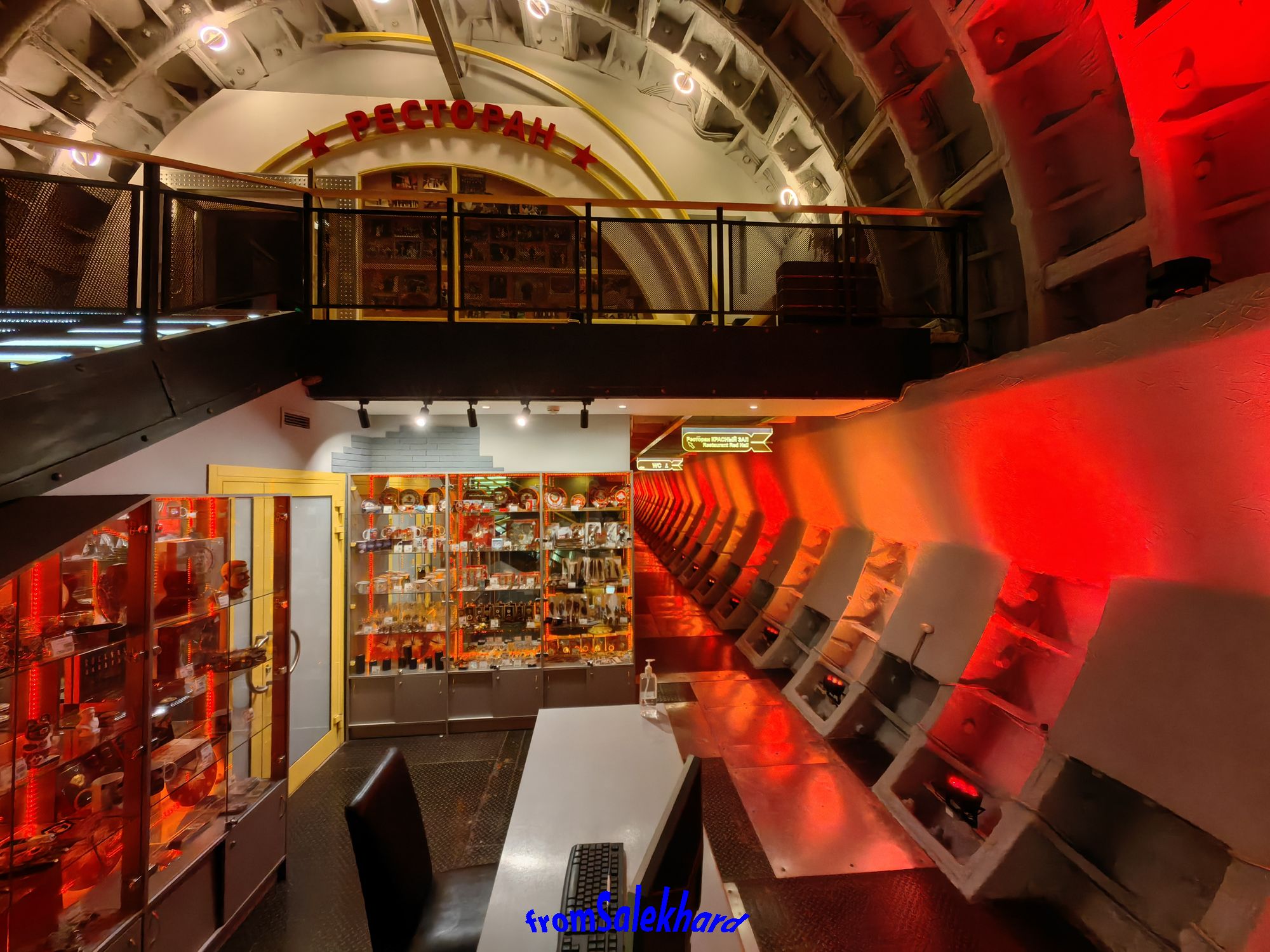
Somehow we passed the restaurant again, but from the other side.
An outstanding tour - bravo!
Stunning place to visit- thank you Yuri for showing us around it!
Another great tour, Yuri!
Keep them comming,
Cheers
Angel
Dang, what a tour! Thank you so much for this!
One thing I don’t quite understand: Why the sign saying, “STOP! THEY ARE SHOOTING!” Who was shooting? In a bunker? Why?
a translation failure, this happens a lot in various languages, I once saw a restaurant menu translating pomegranate as hand grenades when I was in Spain last year.
Warning signs such as “CAUTION”, “STOP”, “DANGER” and so on are not able to stop a Russian person. I would even expand: Soviet man. I can even say this about myself. They simply mean you need to be more careful. Here they immediately point out that the jokes are over. 
I was recently lucky enough to see such signs near a secret military facility.
I speak some Russian, so I was confused by the sign.  As in, who is shooting in an underground bunker? Who is this mysterious “they” who are shooting?
Dang! Hand grenades??? 
Yuri! Thank you for such an interesting and wonderful tour!
Thank you all for your active attention, comments and questions. To provide a complete picture, I’m offering additional materials on this site.
Above are my photographs and impressions of the visit, and below I’m offering you material I’ve compiled from several Russian-language sources. It contains information about the bunker itself, including photographs and images that I don’t have.
Why is it called “Bunker 42”? This stands for “4”—the model of the bunker—and “2”—the building number (the first is located under the Kremlin).
Design of the bunker in central Moscow began in 1945 in connection with the development of the atomic bomb in the United States.
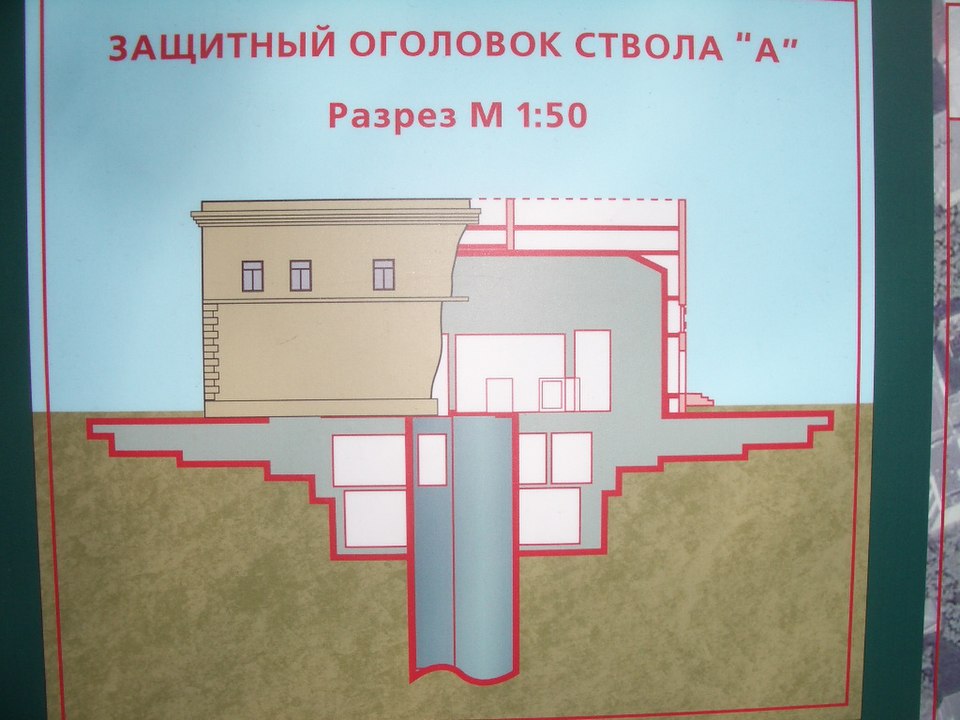
In the 1950s, construction of the bunker began in an atmosphere of utmost secrecy. The thinnest wall of this bunker is 6 meters. To disguise the special facility, a fake residential building was even erected outside: brick walls with windows reliably concealed the concrete dome over the entrance to the shelter from prying eyes.
The building bore a sign reading “Library,” intended for officers. But most of the employees came here through the metro station and in civilian clothes. No one suspected that 600 officers worked inside.
The structure’s design and depth were chosen based on the results of nuclear tests conducted in the Soviet Union in 1949.
The location was deliberate: the bunker was to be located close to the Kremlin, allowing Stalin and the government quick access to it and control of the state and the army in the event of a nuclear war.
The design documentation stated that a substation for the metro was being built. Excavation from the tunnels was removed at night through the metro station.
The bunker was built by professional metro builders in parallel with the metro station. There were no prisoners there, and all the horror stories about construction workers being eliminated due to secrecy are untrue. Only professionals were involved in the construction. But the composition of the workers changed every two months, so that none of them had any idea of the integral object. They were convinced they were building either a station or a substation.
There’s no real difference between the metro and the bunker. The walls are simply lined with lead and rubber right down to the very depths to prevent radiation from penetrating.
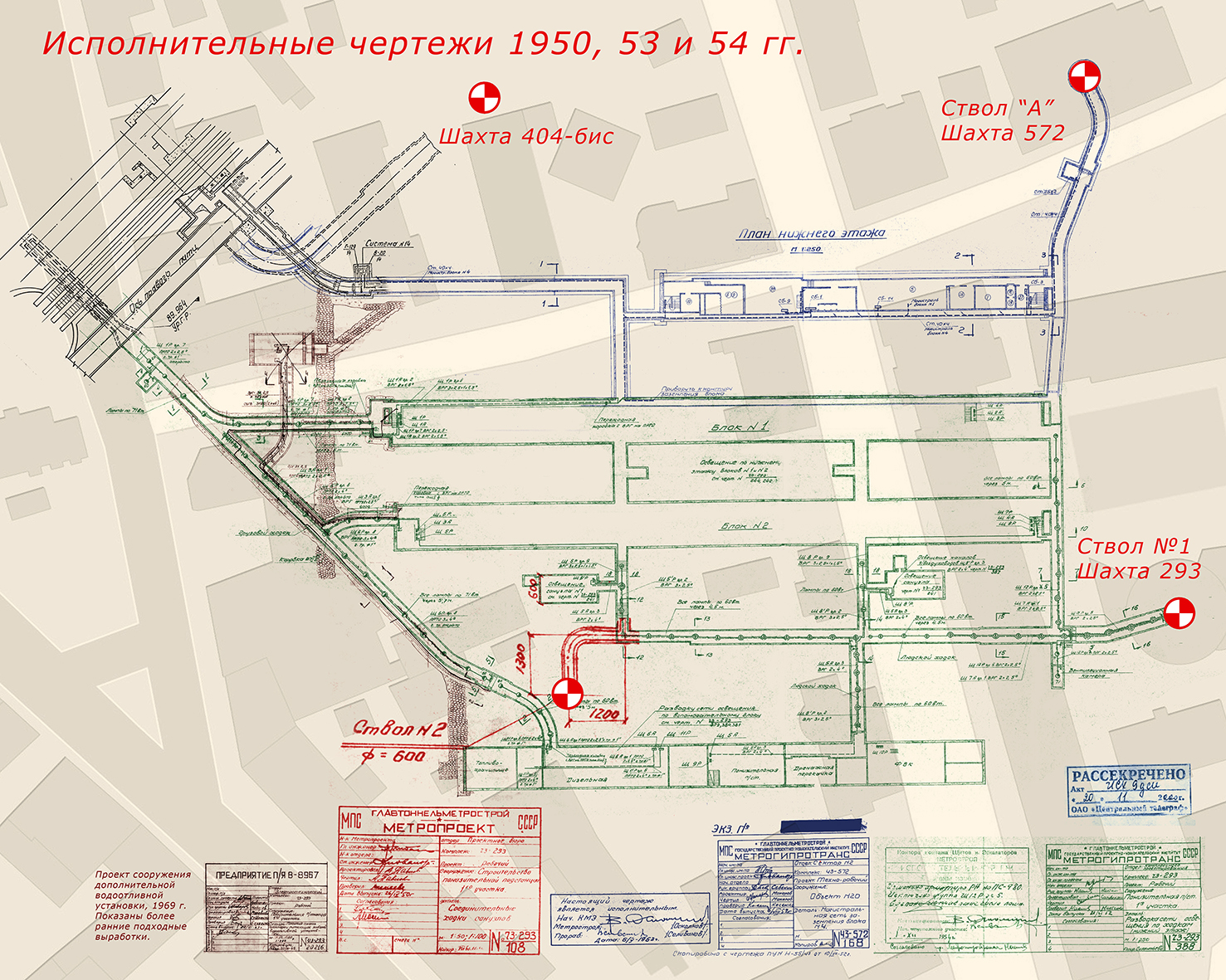
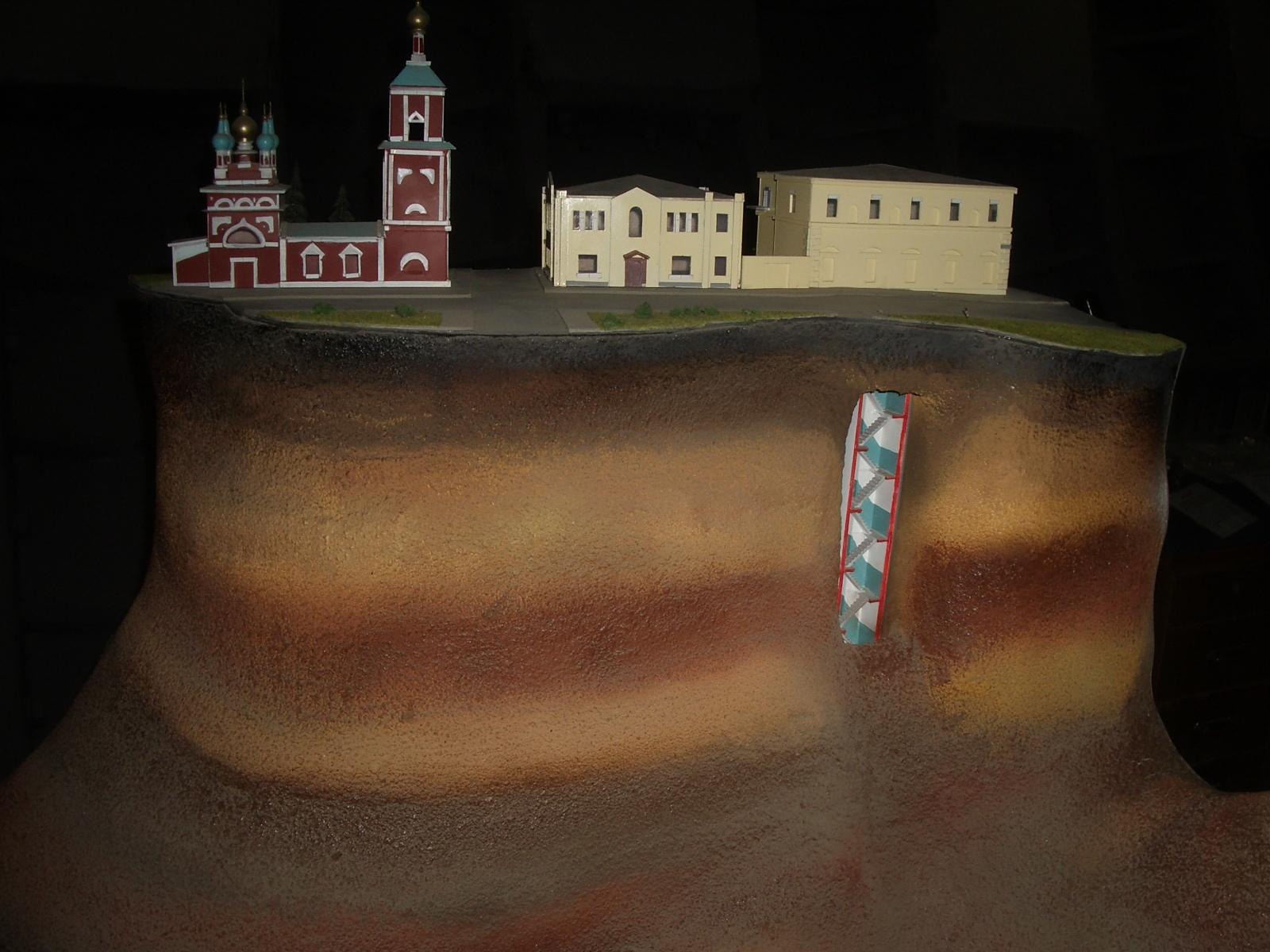
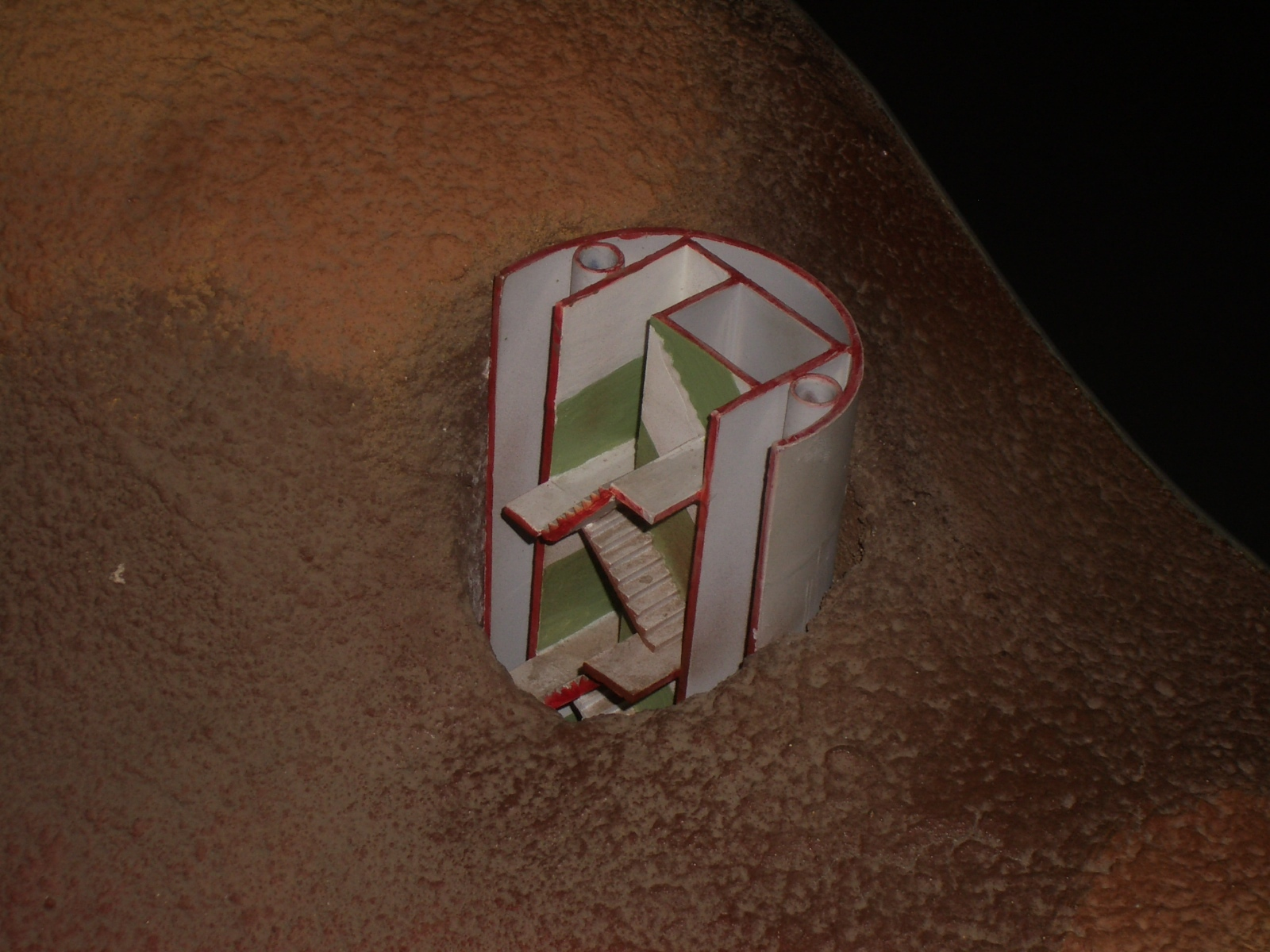
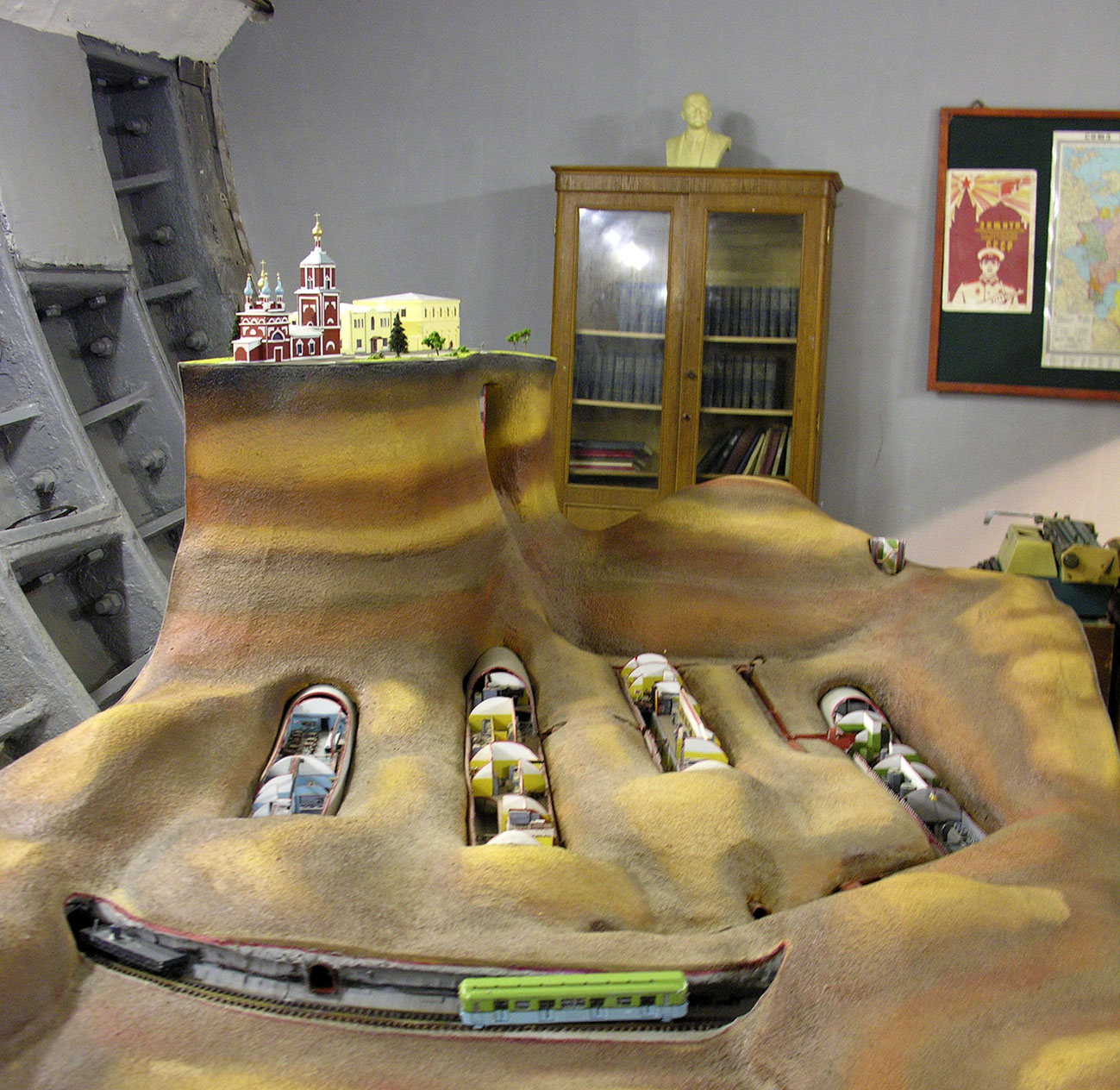
A vertical shaft, 6 meters in diameter, leads from the top of the structure into the building, with an elevator, stairs, and auxiliary utilities to a depth of over 60 meters.
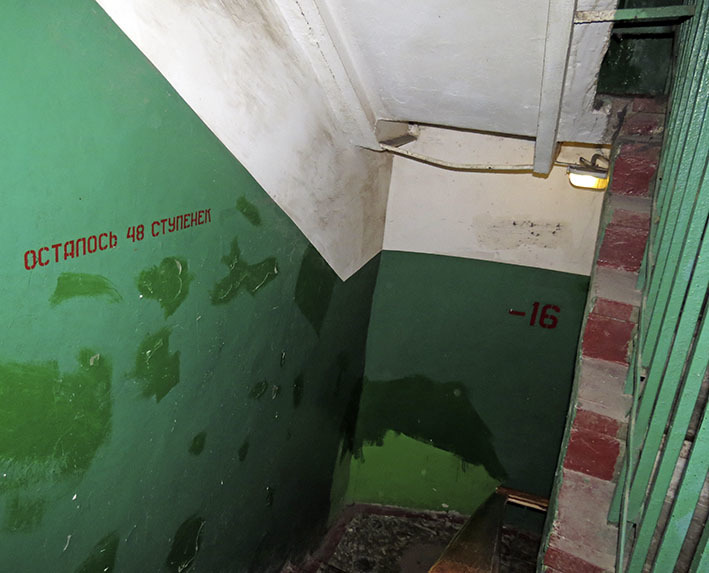
The staircase, similar to the staircase in a regular building, is conventionally divided into floors, and there are 18 floors below the surface, or 310 steps.
The elevator is for restaurant guests only; tours take the stairs!
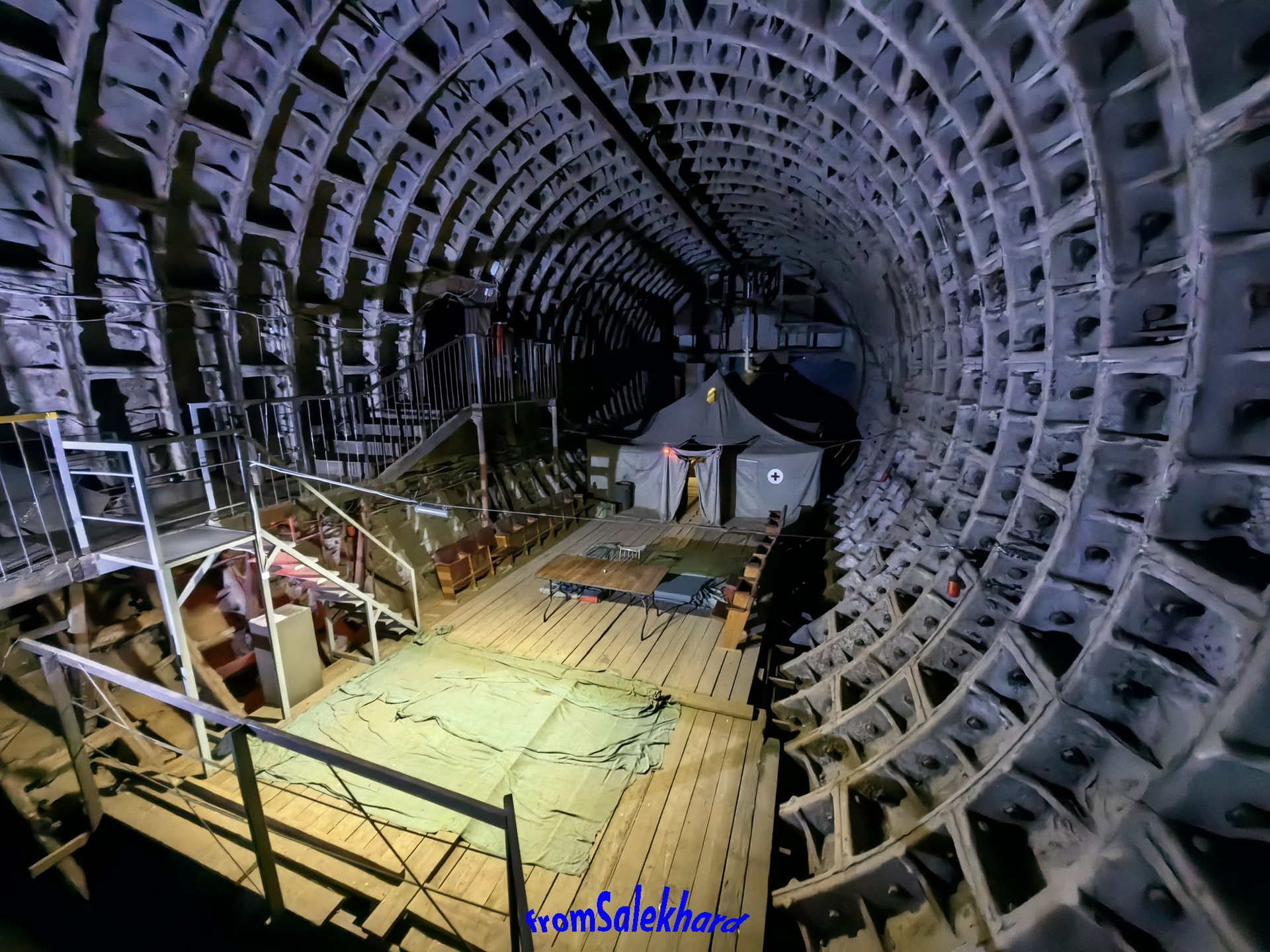
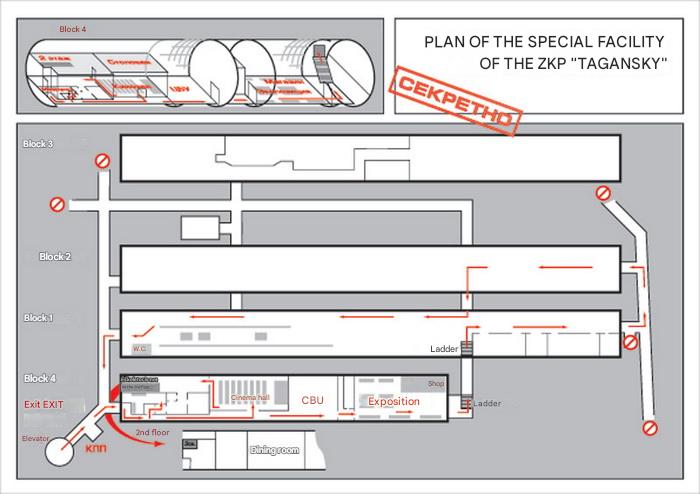
The bunker consists of four tunnel-like structures, each 9.5 meters in diameter and covering a total area of over 7,000 square meters, connected by passages.
All four blocks are roughly level and parallel to each other.
Stalin’s office in the bunker is one of the most popular tourist attractions. It looks exactly as planned. But Stalin himself never visited. The bunker was commissioned after his death, in 1956. Nevertheless, Stalin personally signed the bunker’s plans and even marked the spot where his desk stands with an X.
The rivets we see aren’t just for show. When they built the bunker, they drilled holes, drove in rods, and then welded them in place. That’s why there’s an additional two-meter reinforced concrete ring around the tunnels.
The bunker was fully equipped to handle a possible nuclear strike: it stored food and fuel supplies, and had two artesian wells with drinking water. Air purification systems could keep personnel on duty for extended periods.
The telegraph operator was tasked with transmitting a message announcing the start of World War III and instructions to those who survived the atomic strike. The officers could work autonomously for 90 days. Their task, even if they were the last people left on earth, was to strike back at the enemy. It was here that the Minister of Defense and the marshals waited 10 days for a decision. If no decision was reached, the order for a retaliatory nuclear strike would have been issued from this bunker.
The politicians came to an agreement and the blow was not dealt. The bunker was repurposed and became a long-range aviation command center. In 1987, military technology changed, and the bunkers became useless. Hiding there became pointless.
The premises were cleared of equipment for reconstruction. The command post was supposed to be converted to serve as a central telegraph office, but this plan was later abandoned, and in 2000 the facility was completely declassified.
It was only in 2006, however, that reconstruction began to create a museum. Models of equipment and weapons were brought into the bunker, and tours began to be offered.
Absolutely fascinating! Thank you so much for posting all this.