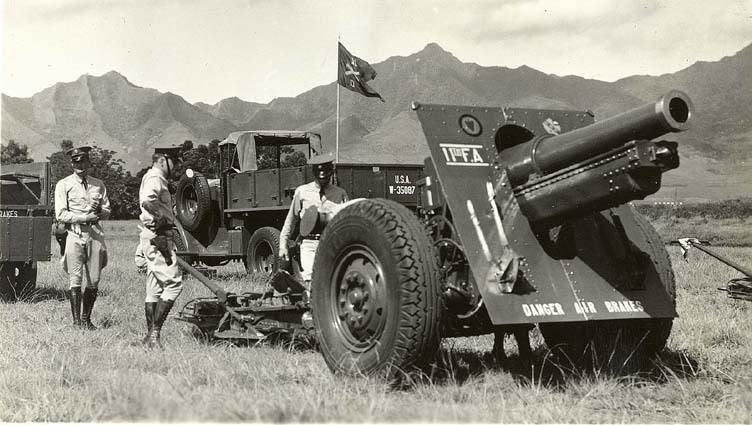
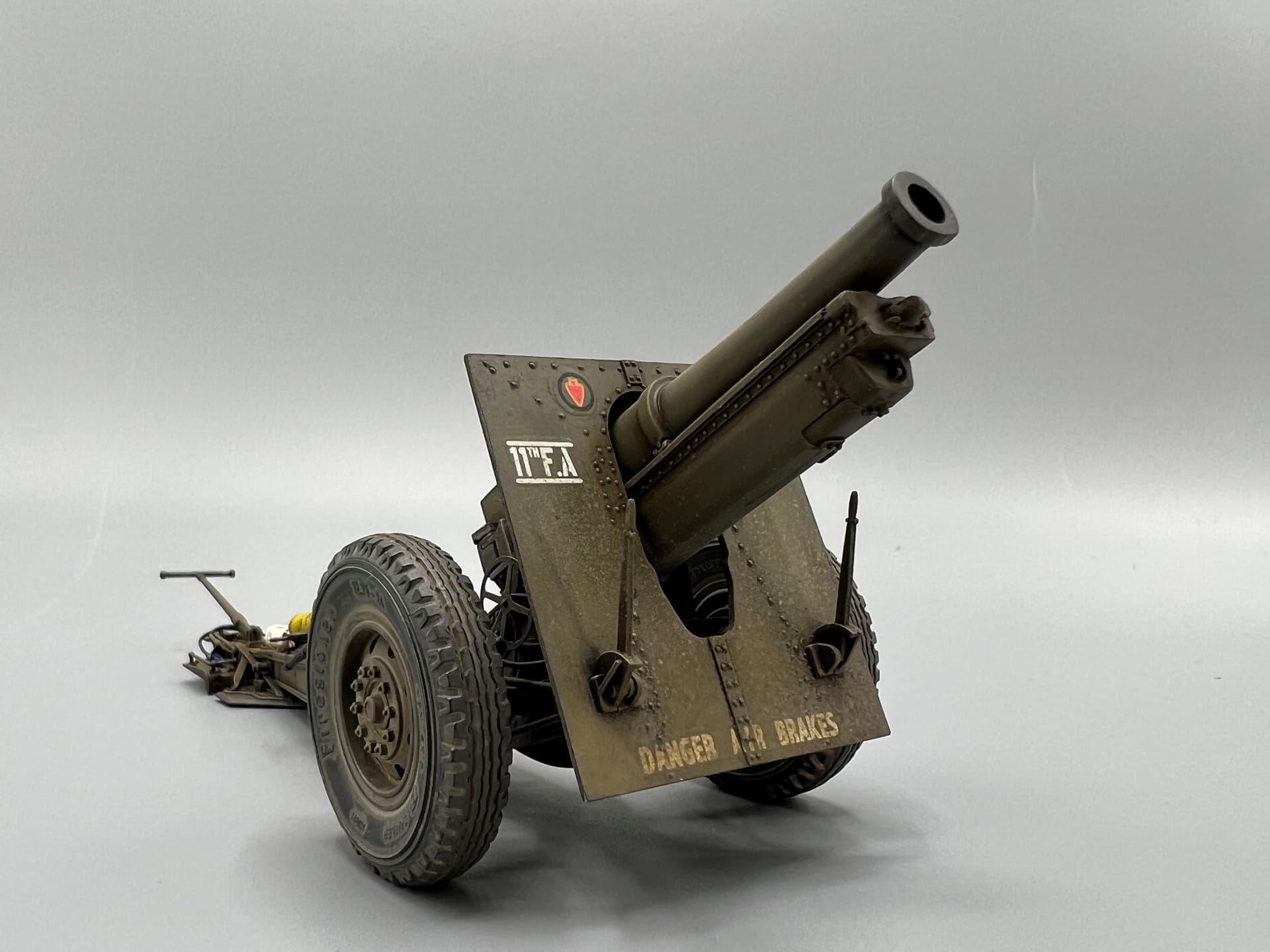
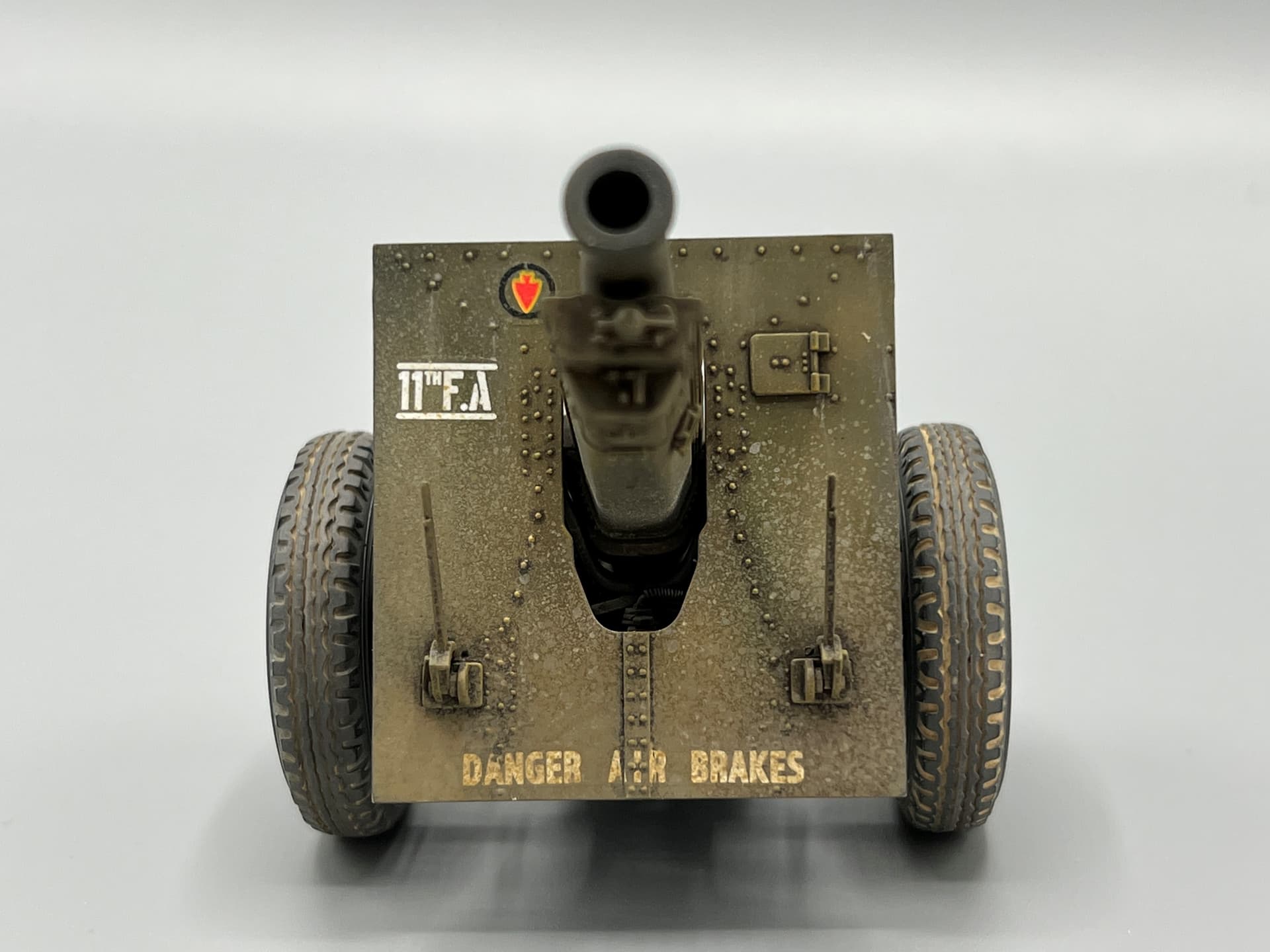
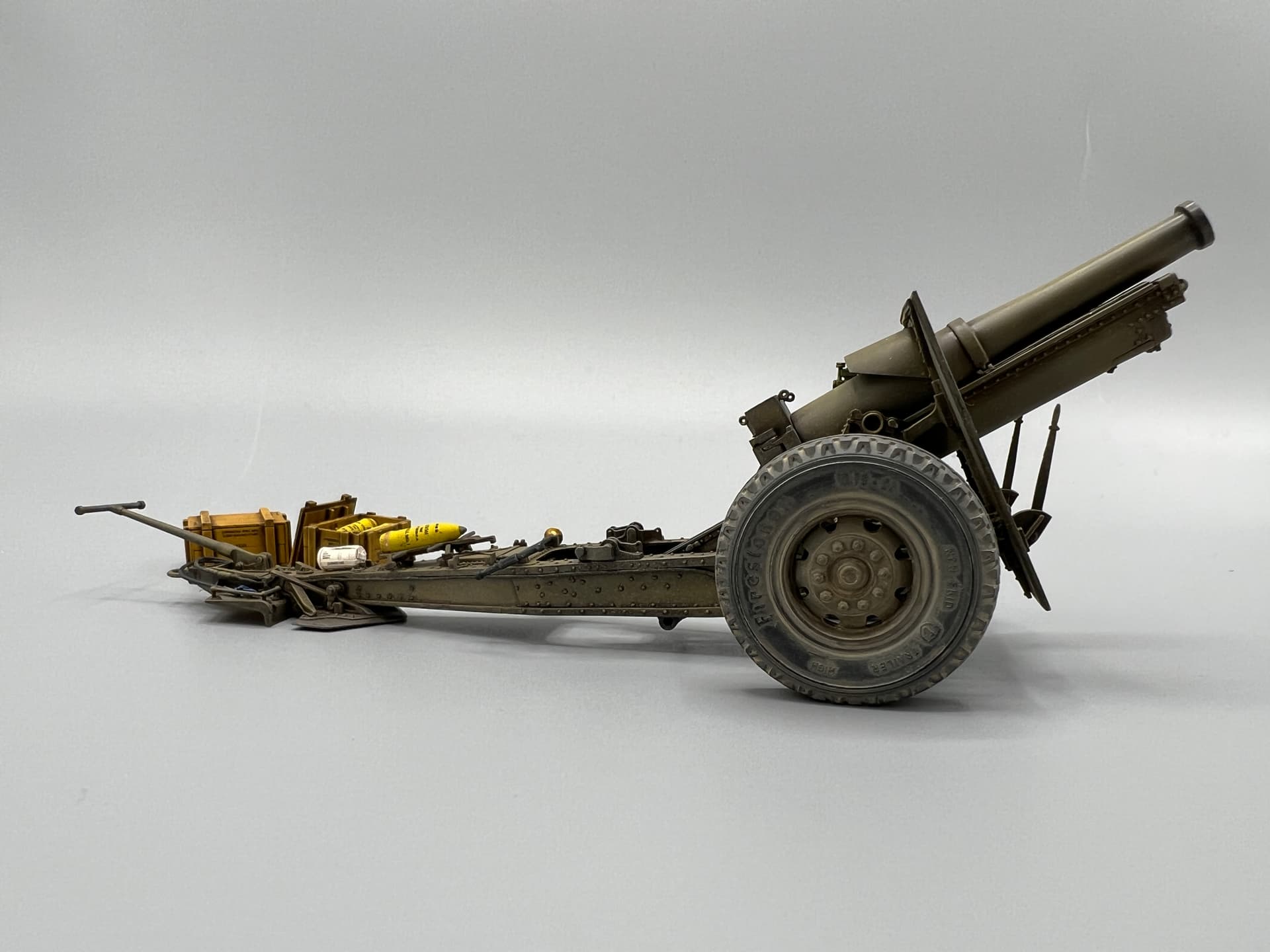
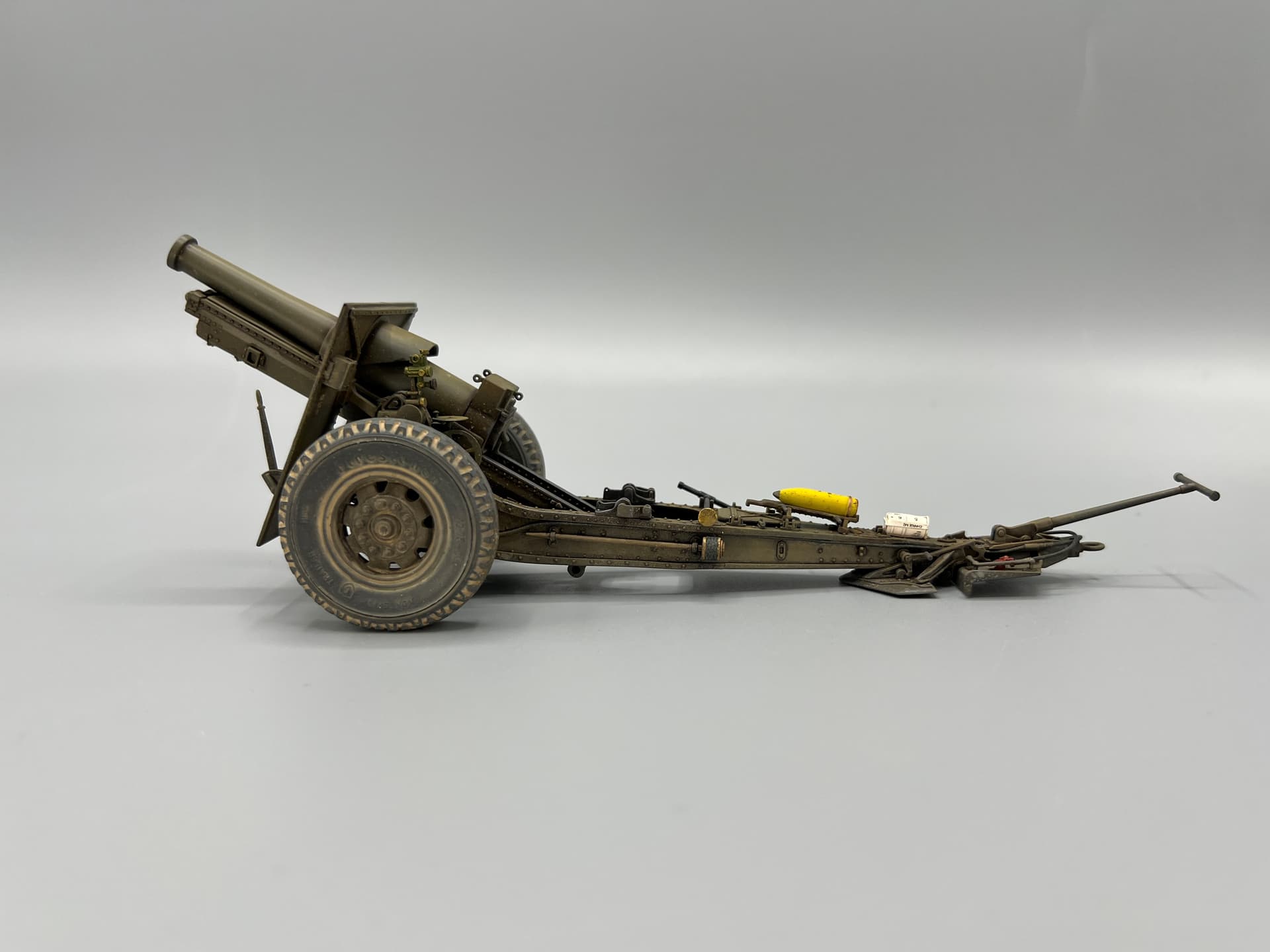
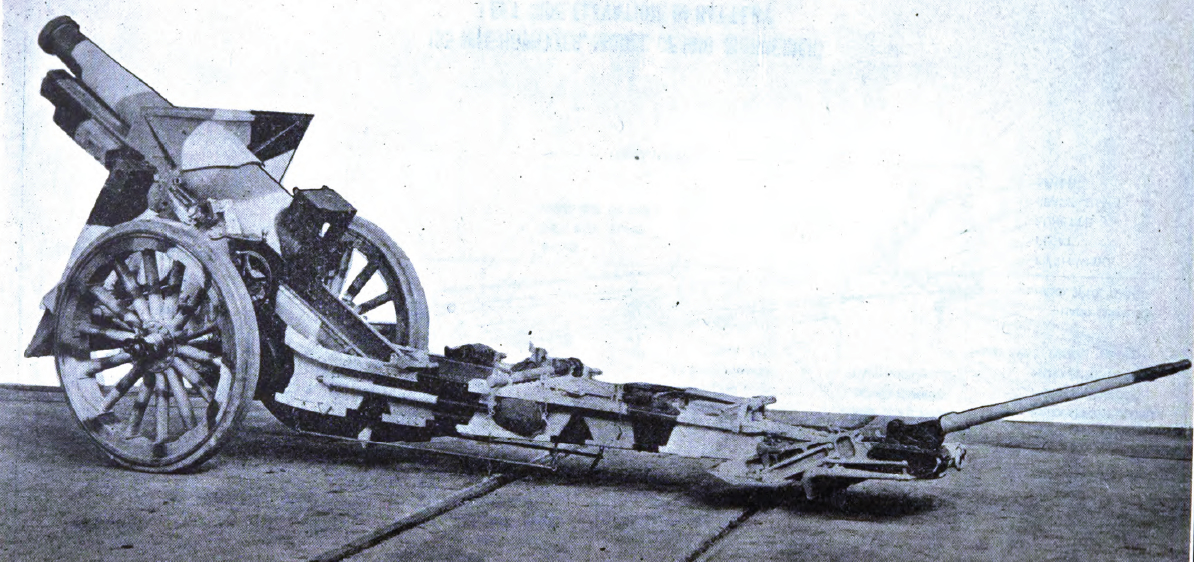
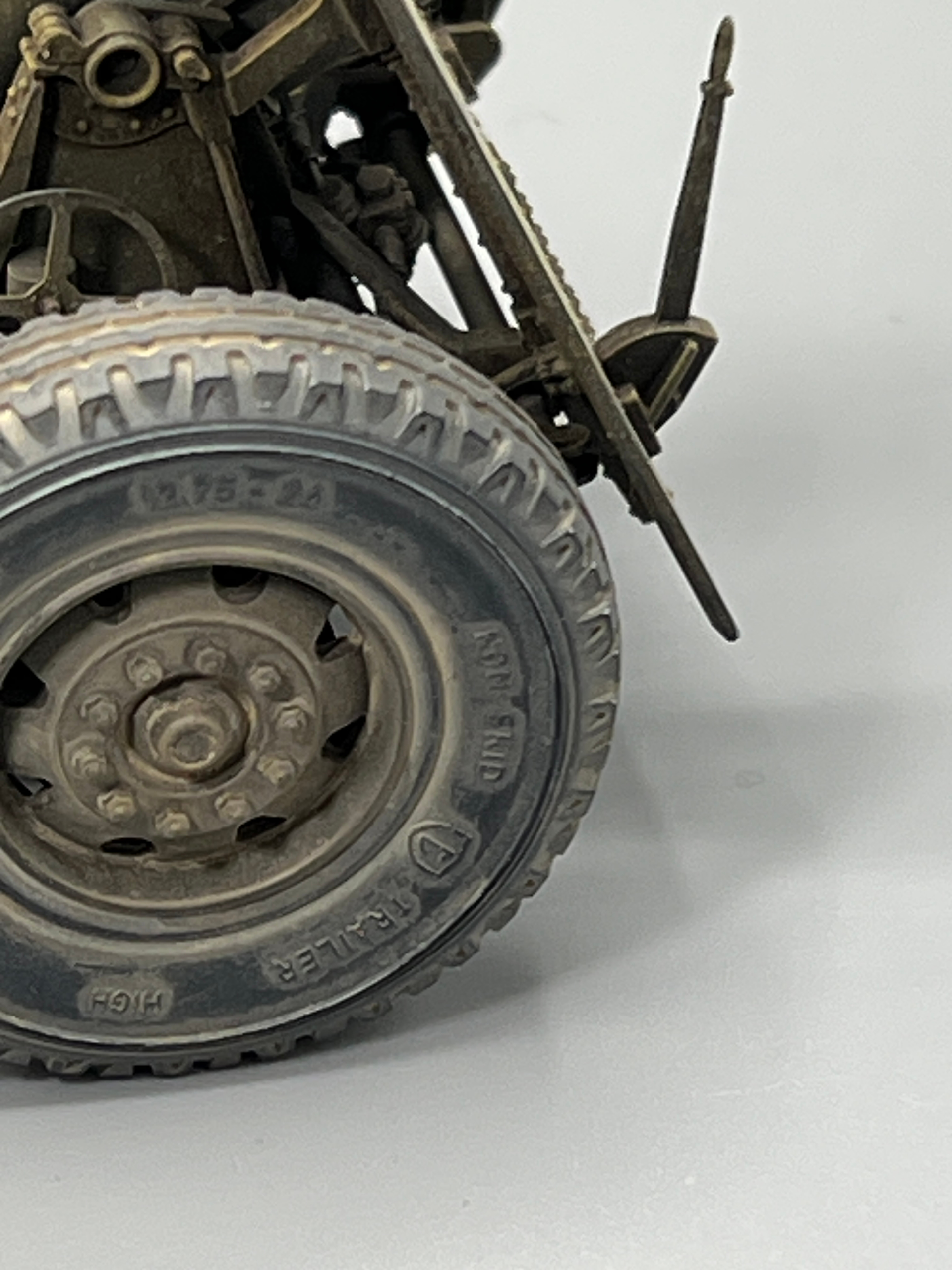
This was a license built, made in the USA, version of the excellent French WW1 Schneider 155mm howitzer. The American built weapons had a flat 2-piece shield vs. the curved shield on the French pieces. In the 1930s this still excellent howitzer was upgraded with pneumatic tires and airbrakes to allow towing at “high speed” behind trucks. The upgraded weapons saw service in WW2 in Tunisia and were used extensively in the Pacific theater.
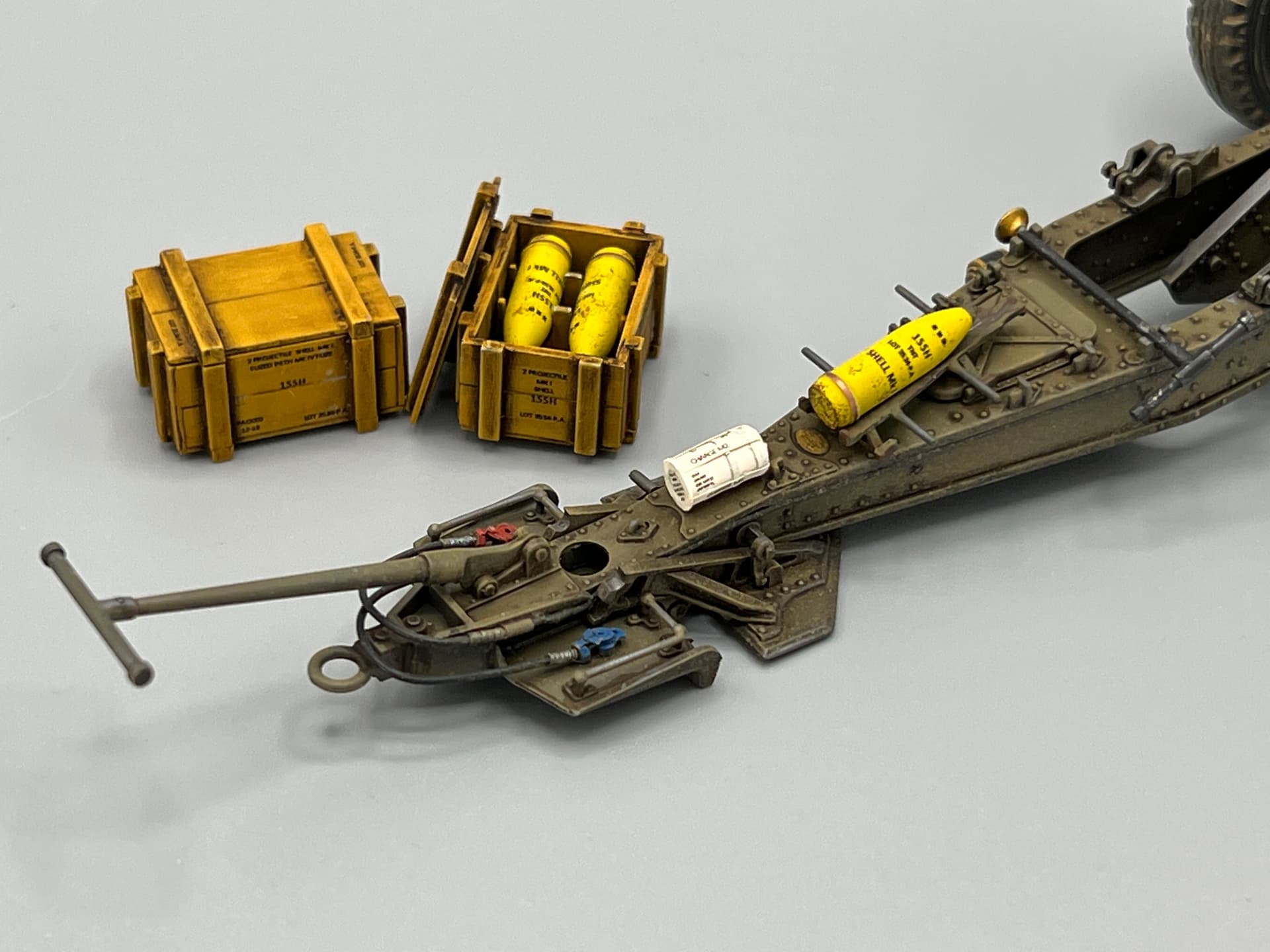
This was my first Das Werk kit. It is a decent kit - far better than the resin kits that had been a modeler’s only choice prior to Das Werk. The accuracy and fit is good. Detail is generally good. Some of the parts are molded too thickly and there are a couple of parts that feel incomplete. The travel locks look decent from the top but are incomplete when viewed from the sides. The sight is only finished on one side - the other is flat. The kit lacks the airbrakes which were part of the high-speed upgrade. The kit includes projectiles and ammo boxes. I opted not to use the metal barrel that I purchased as the prominent muzzle flare was a separate nylon part which had to be butt glued to the end of the barrel. I was sure that this would not survive handling during the painting and weathering process. I did use the nice brass projectiles from the set.
I made a number of improvements to the kit.
*Thinned edges of the shield
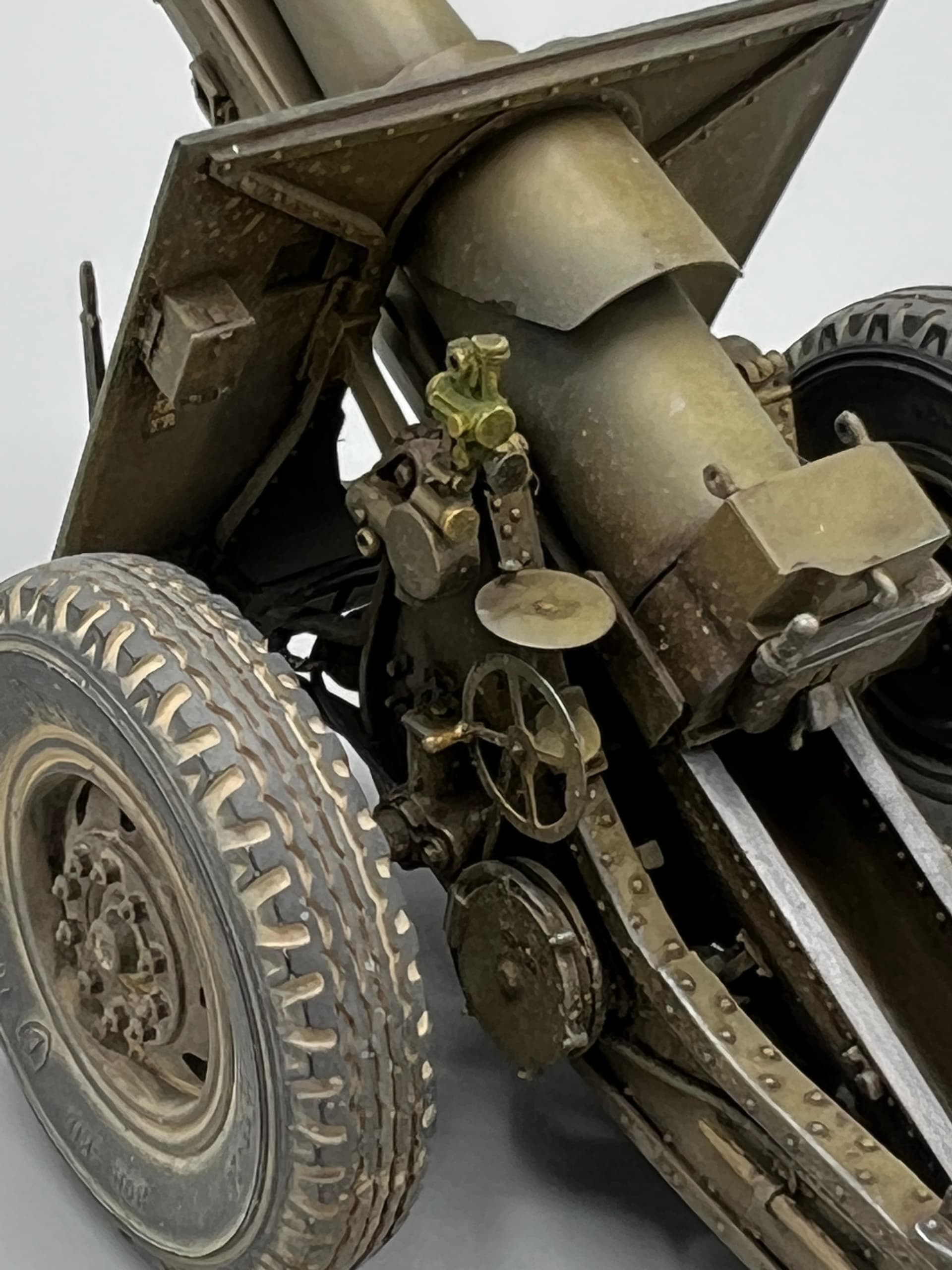
*Scratched new thinner sight door in the shield
*Added missing rivets to spade bottom
*Added detail to the handspike hinges
*Fixed the 2-dimensional travel locks
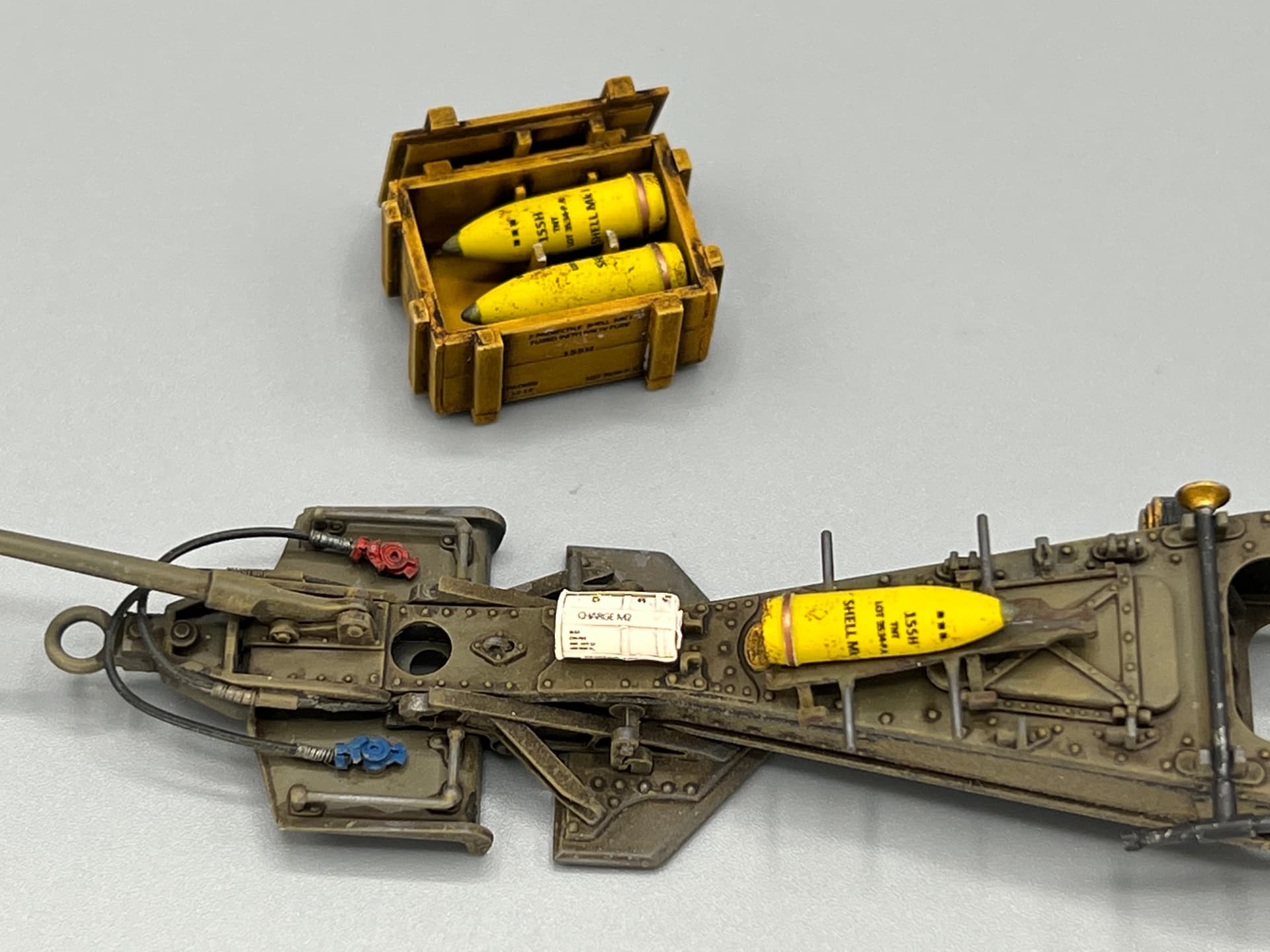
*Added missing loop on rear of trails from copper wire
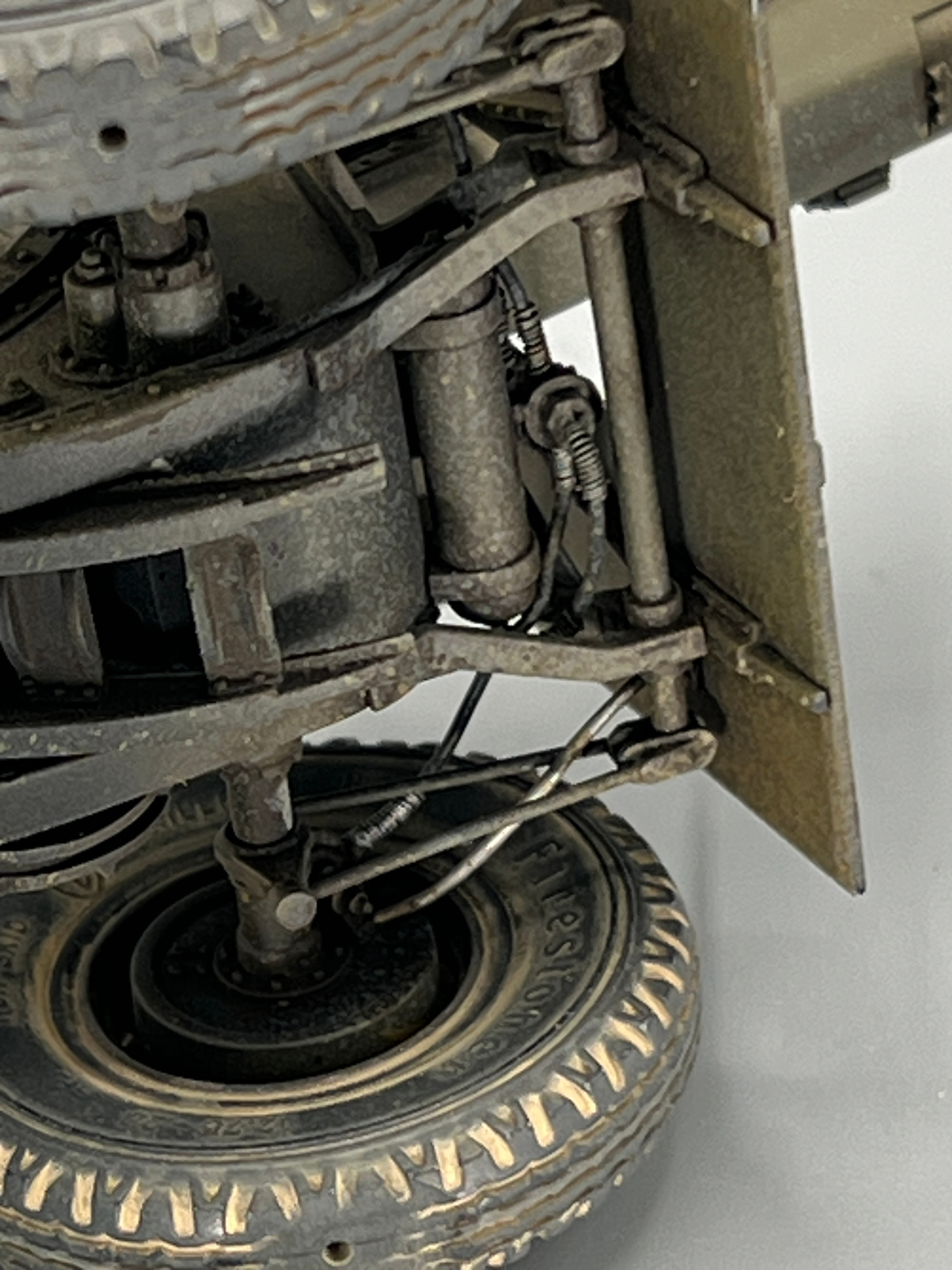
*Added missing hand brake cable
*Scratch built a powder charge to go with the projectile.
*Scratched a new sight as the kit one is 2 D
*Detailed the air tank
*Scratch built missing air regulator and mounting brackets
*Added all of the airbrake hoses and fittings - combination of scratch building, copper wire, lead wire and Aber PE gladhands
*Made custom decals for projectile markings, and ammo boxes
After priming with rattle can Mr Surfacer 1500 black, I preshaded with Tamiya XF-2 White. I used Vallejo Model Air 71.043 US Olive Drab for the rather brownish early war OD. I applied a dot filter of various Winsor & Newton oil paints to the flat surface. I gloss coated the model with Aclad Aqua Gloss in preparation for decals and again after the decals were down and dry. With the model glossy, I pin washed with my favorite AK Streaking Grime. I added streaks with AK Rainmarks and Streaking Grime. I used some of my precious remaining Model Master Flat Lacquer to get the model back to a dead flat and seal in the weathering effects. The model was then dry brushed with Winsor & Newton Yellow Ochre oil paint and wear points hit with Uschi Chrome pigments. The dirt on the tires is a slurry of AK Europe Earth pigments and mineral spirits. Fine splashes of AK Dust Effects, AK Kursk Earth and Brown Earth were flicked on with a brush and toothpick.
This kit required more work than it should have; but the investment in time was worth it. The model looks good and fills a gap in my collect of US WW2 artillery.
Thanks, Dan and Richard! The Daw Werk kit is a big improvement over the previous cast resin offerings of the Schneider. I donated my old Commander Models version of the “high-speed” Schneider once this one arrived. This model did win a 1st place in the artillery category at the 2023 San Marcos IPMS Nats.
I took a flyer on the Commander’s model recently when Squadron had them on sale for pennies on the dollar, thinking there might be something useful out of it for a DW kit. I lost that bet.
I noticed the same problems with the DW kits that you did (travel locks, air brake system) and also with the firing locks depicted the same on the French and American models. (Did you take any photos of the air system in process?)
I wish somebody would make American rubber-tired wooden wheels to allow a true M1918.
Did the boxed ammo come with the kit? The info I have out of pre-war publications going back to the Great War says that HE shells were shipped unboxed with rope grommets. (Gas and Shrapnel shells were boxed though.) This might have been French practice that DW carried on from their other kit.
The boxed ammo did come with the kit. Thanks for the heads up on the HE packaging.
I’d also love to see the rubber-tired wooden wheels. If the wooden part of the wheel is the same as for the iron-tired wheel, it wouldn’t be too difficult to convert. They have a rubber-tired caisson for the Schneider at Ft Lewis. I’d best run down there and measure it before the museum closes.
Dan, unfortunately, yes. The Army’s museum system is scheduled to shrink from 41 museums at 29 locations to 12 field museums and four training support facilities at 12 locations. The Lewis Army Museum is not expected to close before 2027.
Thanks for the photos, Rick! I have a number of shots and illustrations of real air systems; I was wondering how they got translated onto a model.
The rubber-tired M1918 wheels were 1350mm on the carriage and 1240mm on the limber. I suspect the steel-tired wheels were the same diameter, meaning the wooden part was much smaller on the M1918.