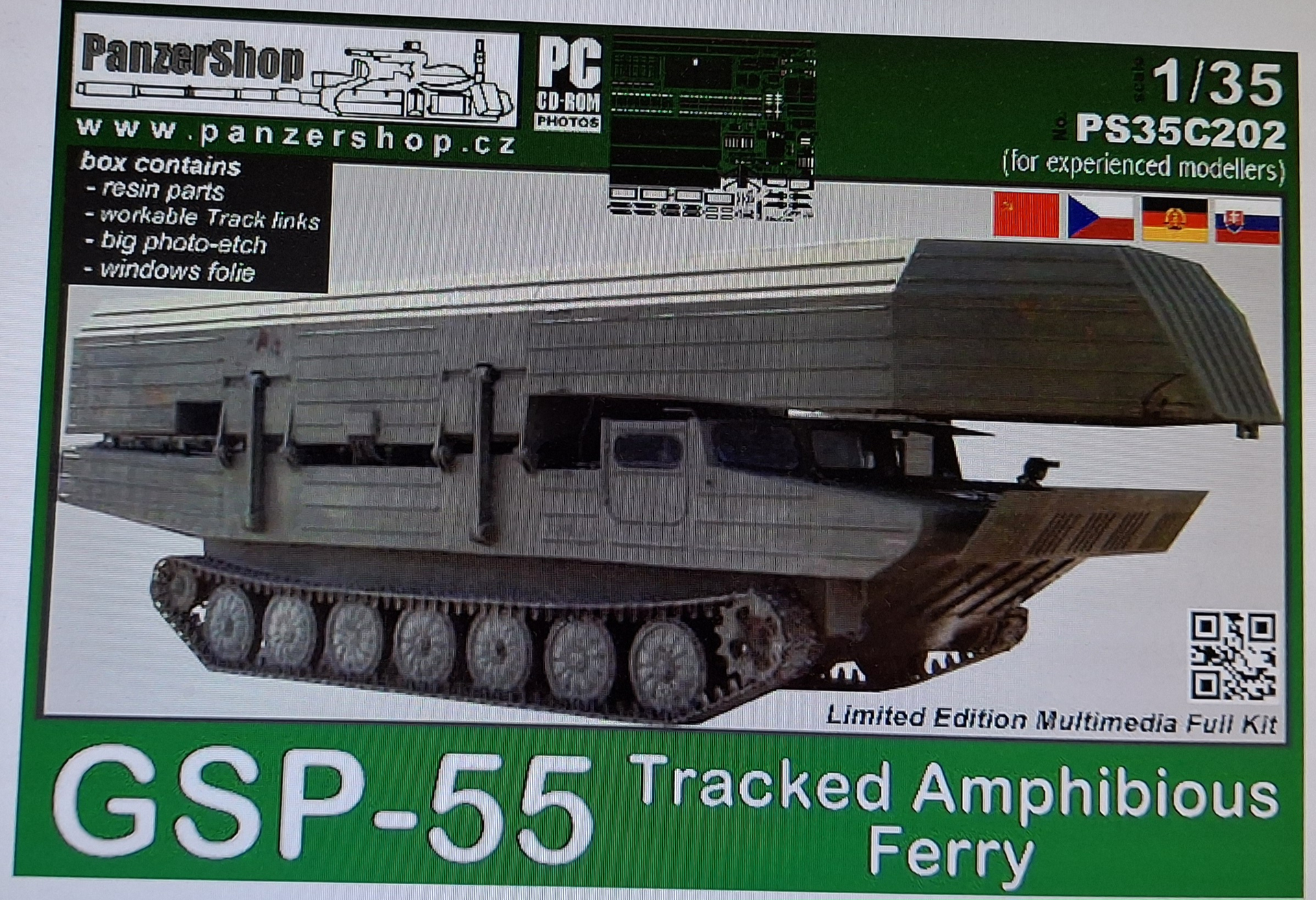
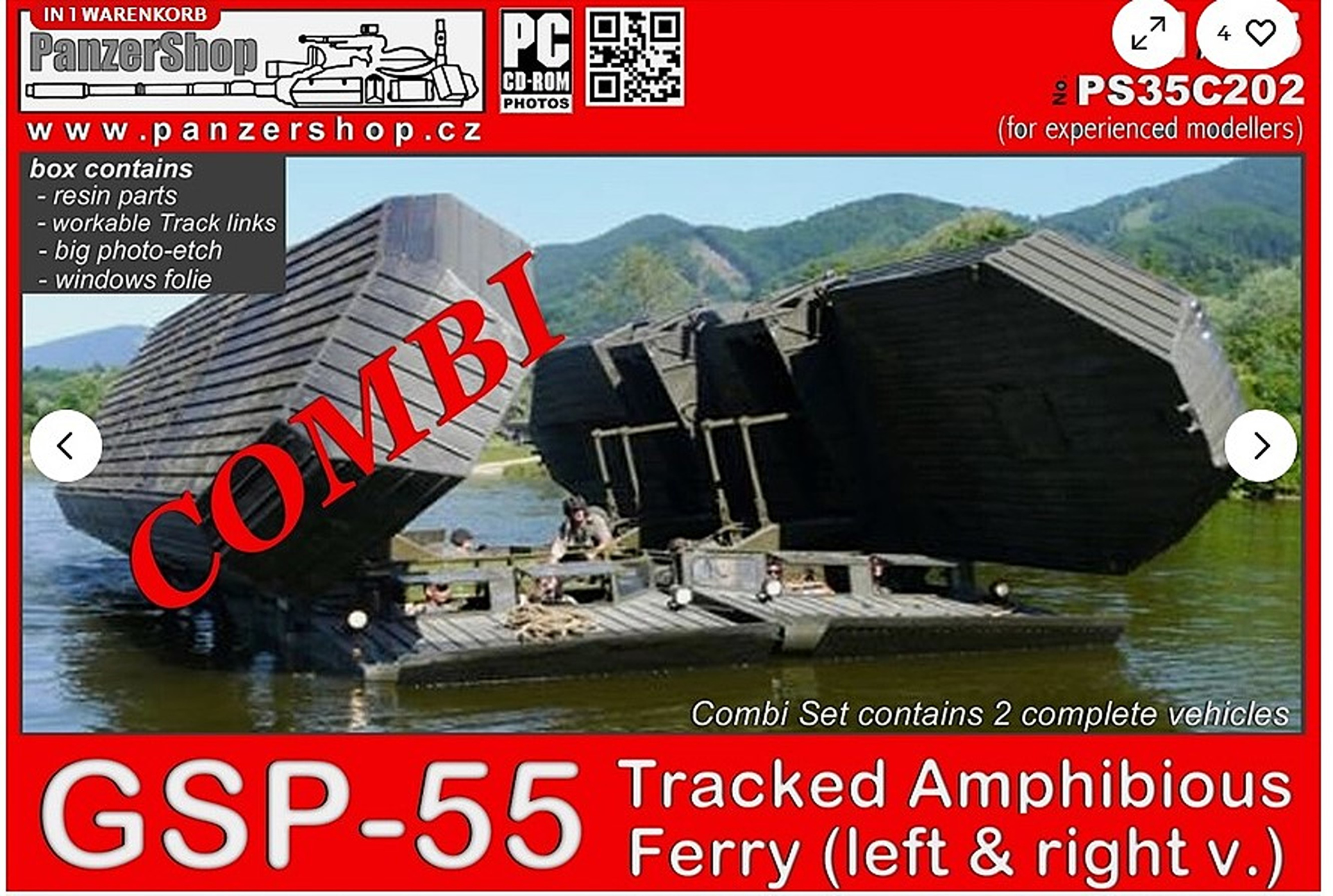
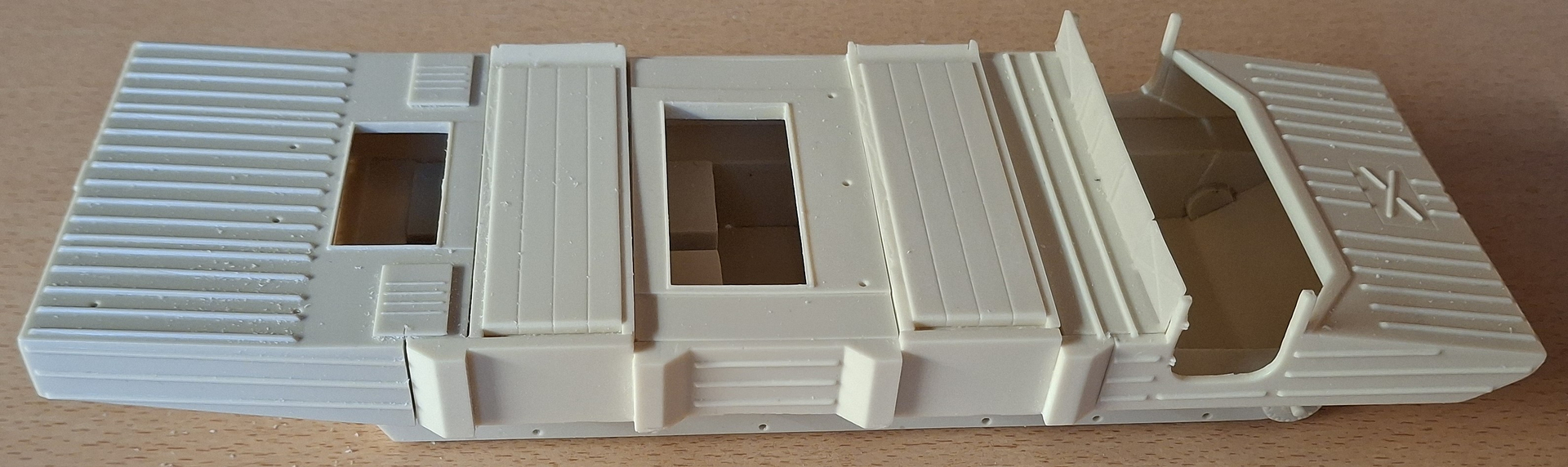
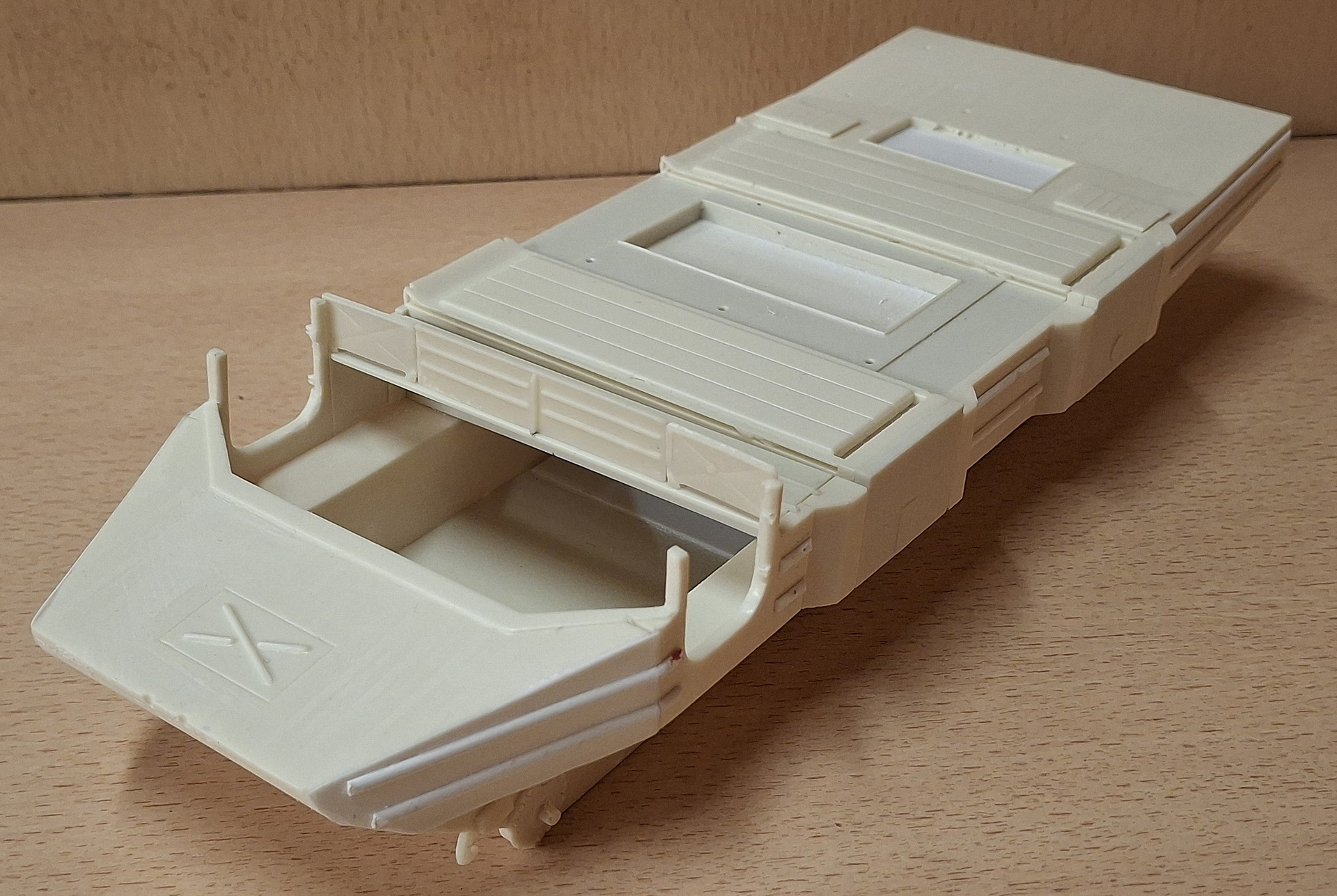
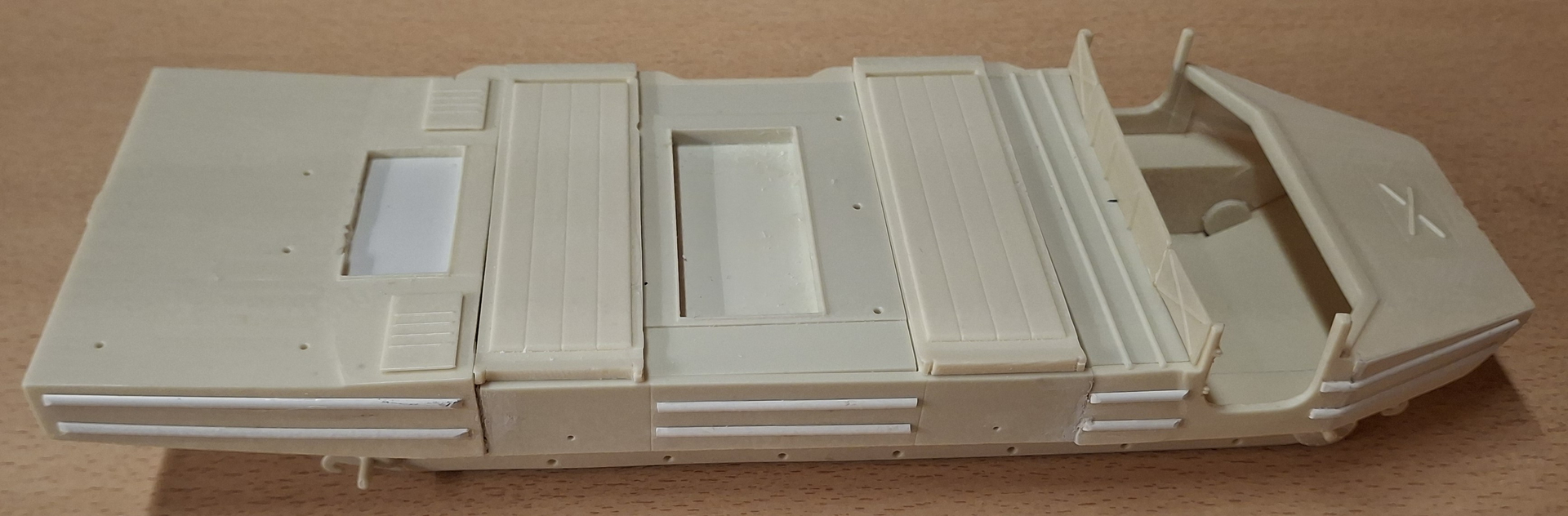
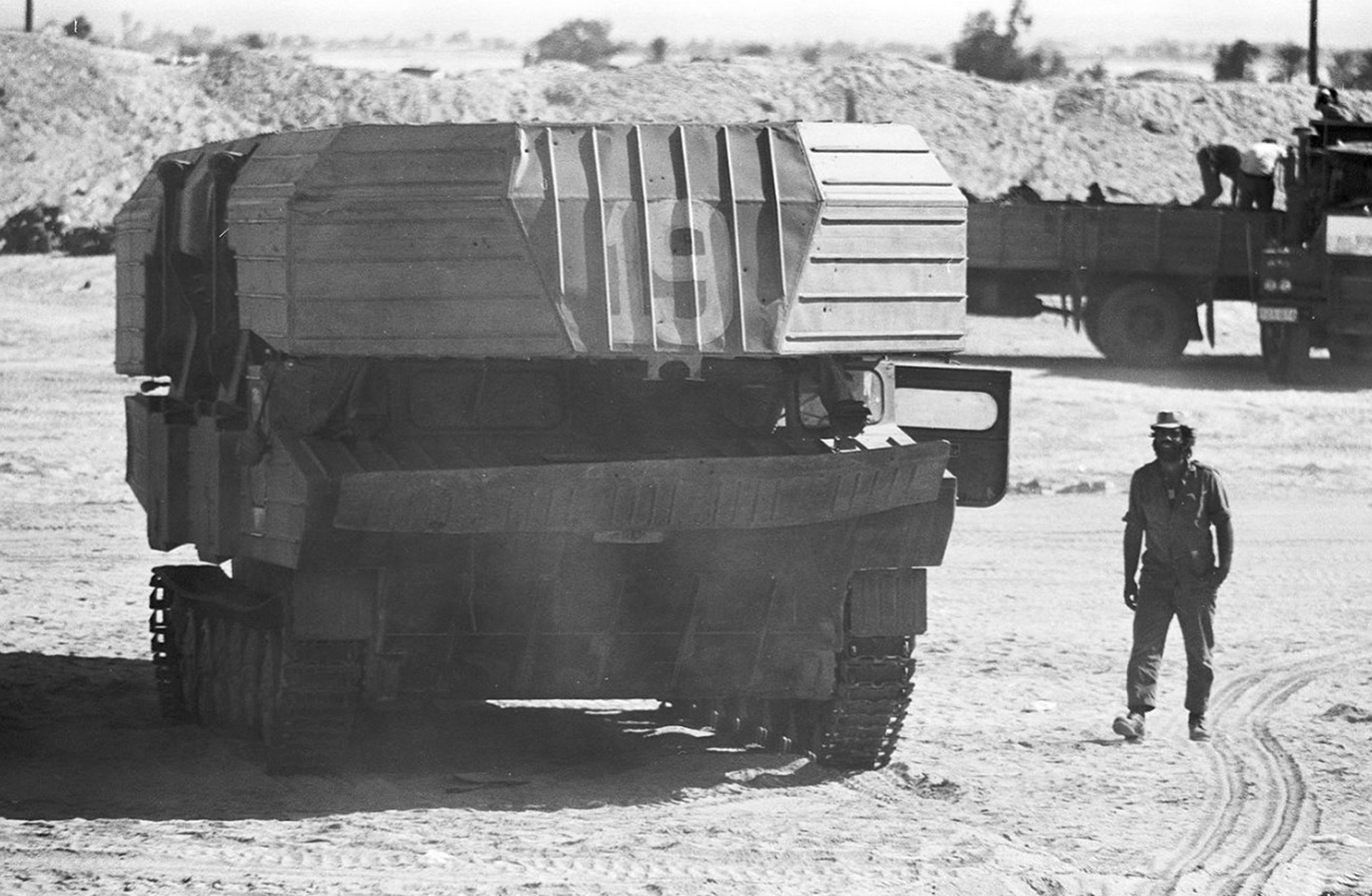
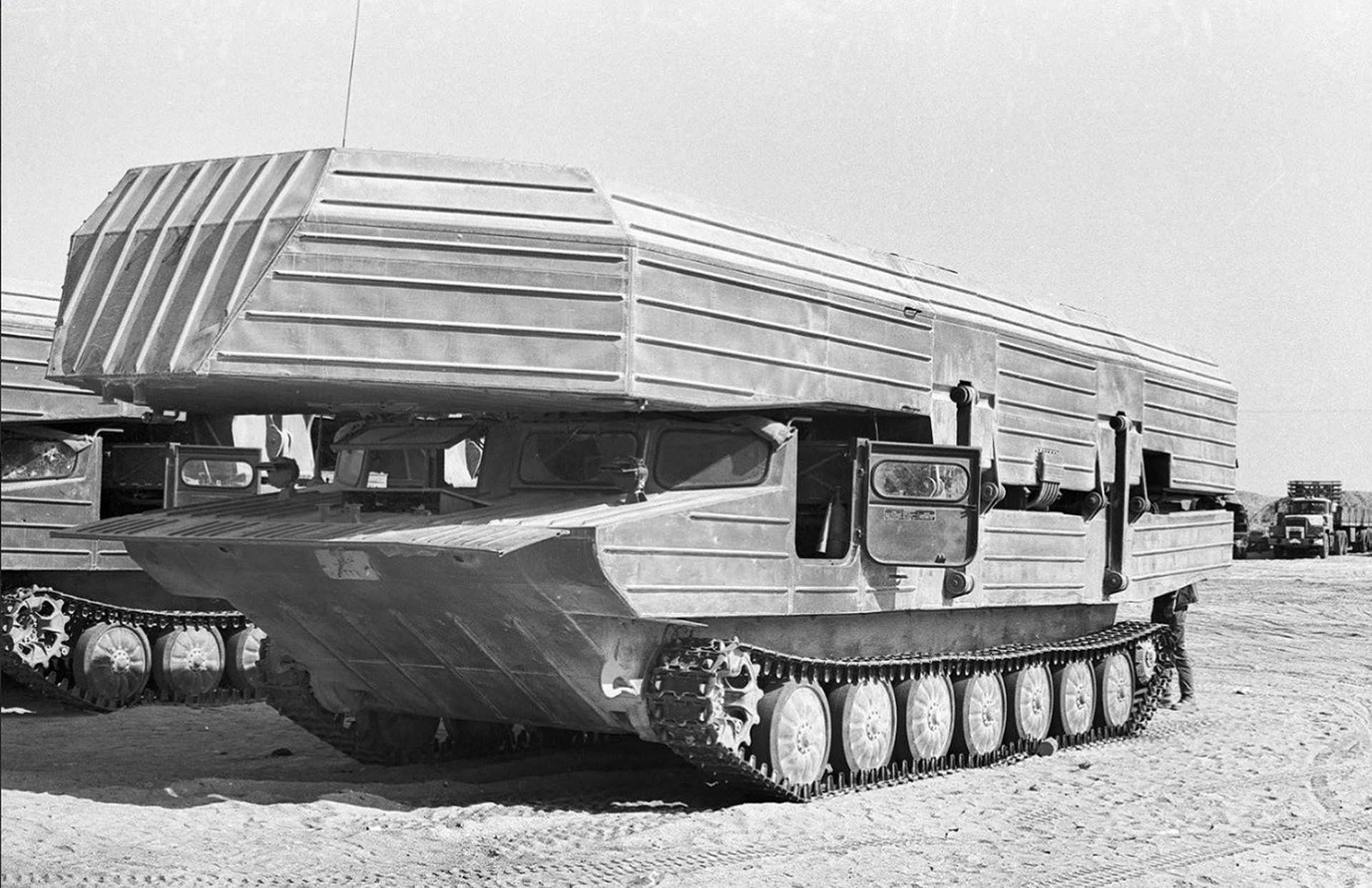
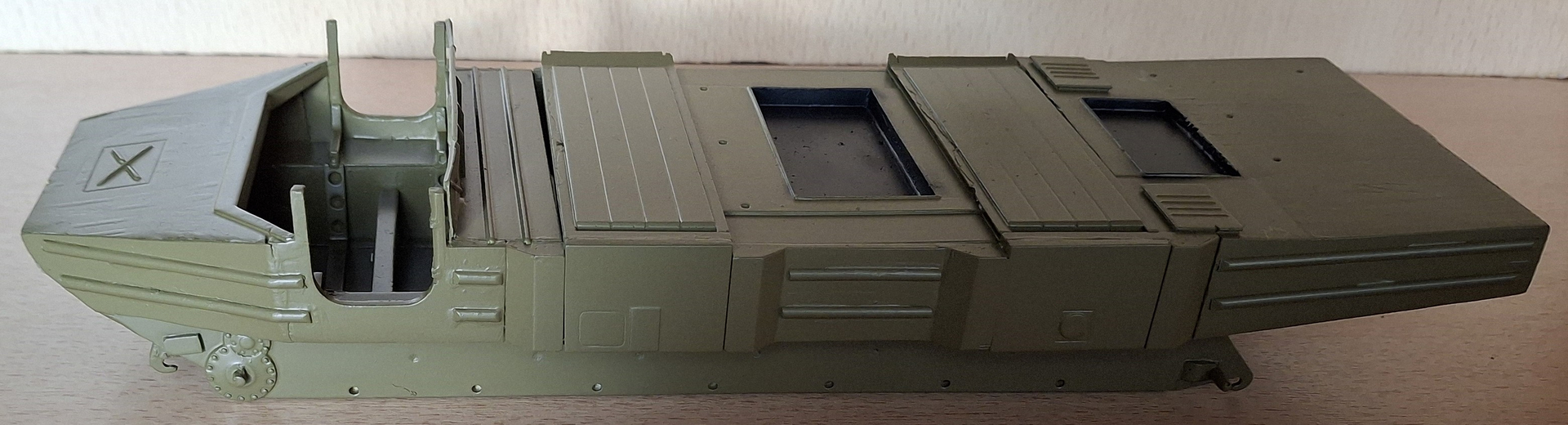
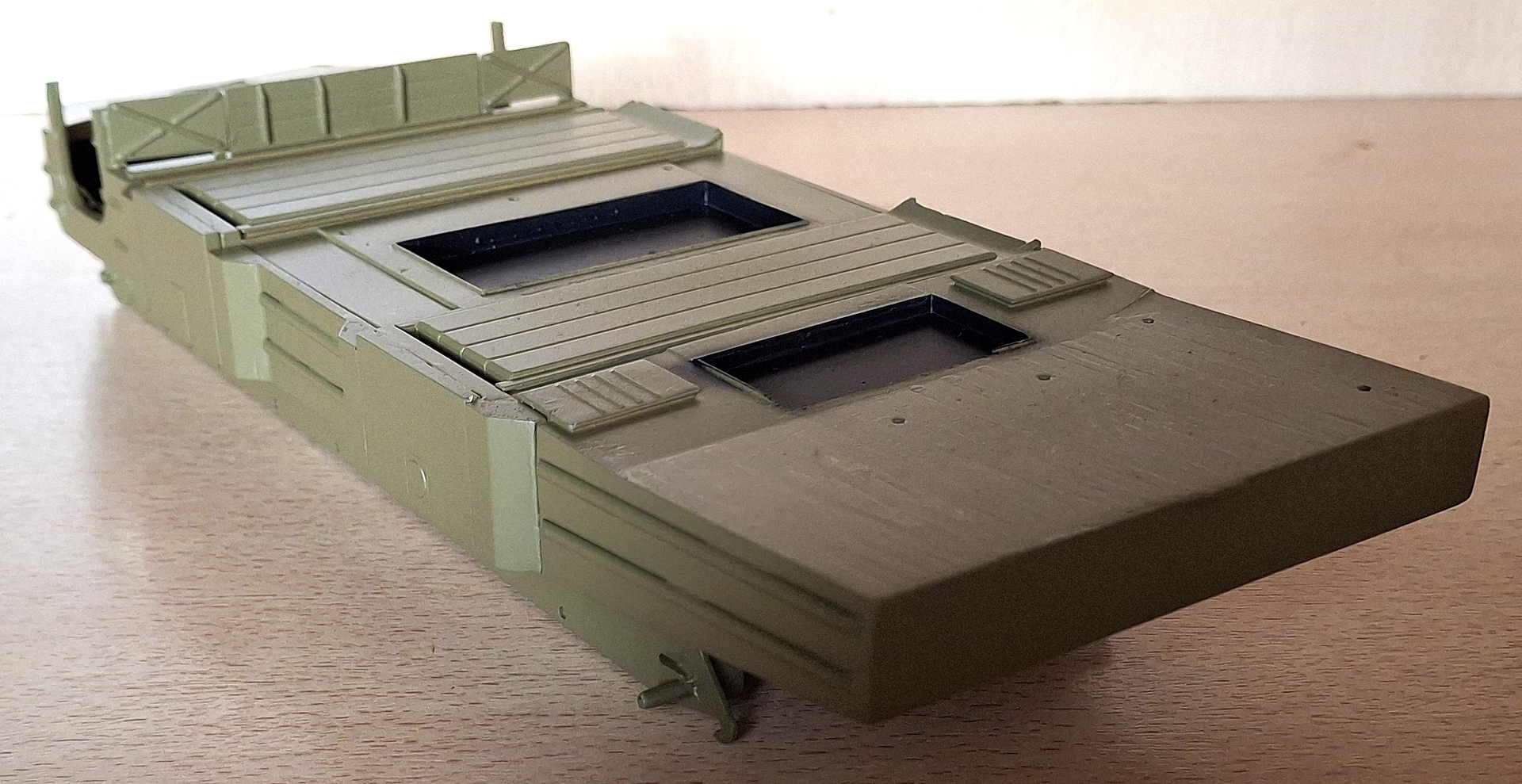
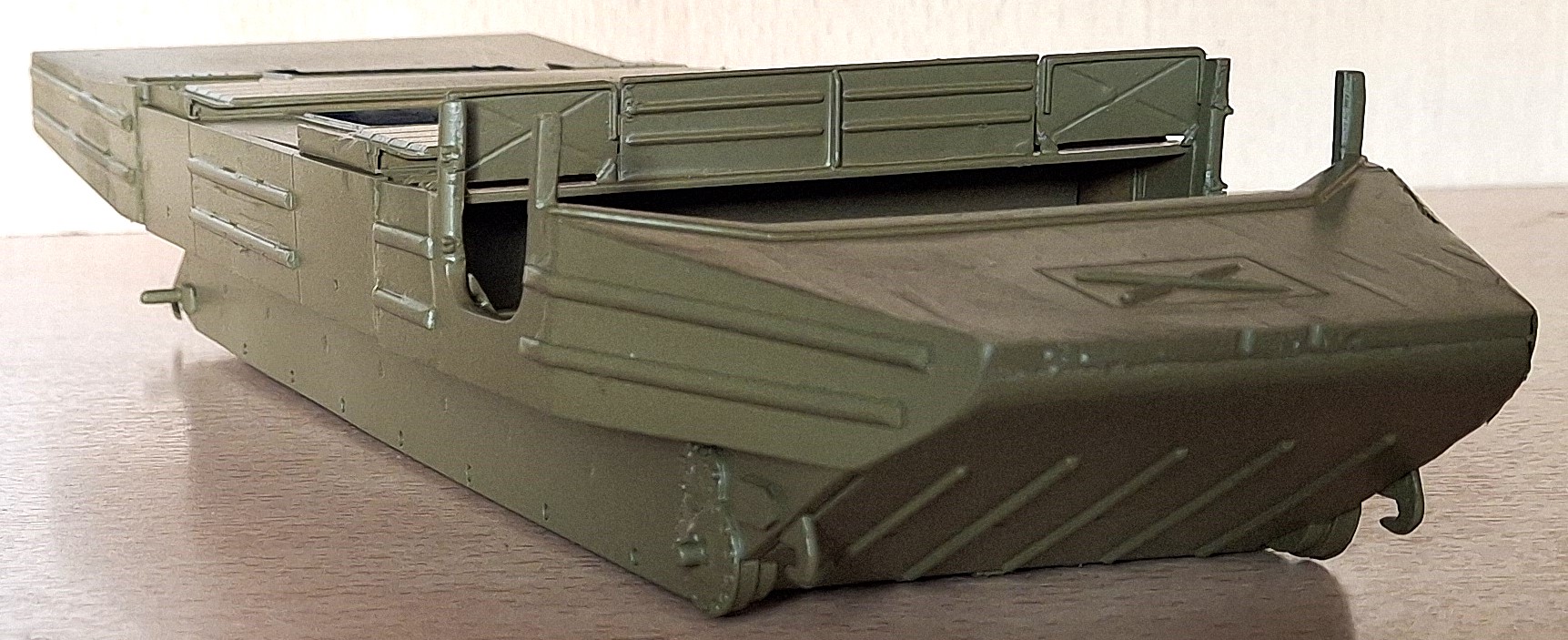
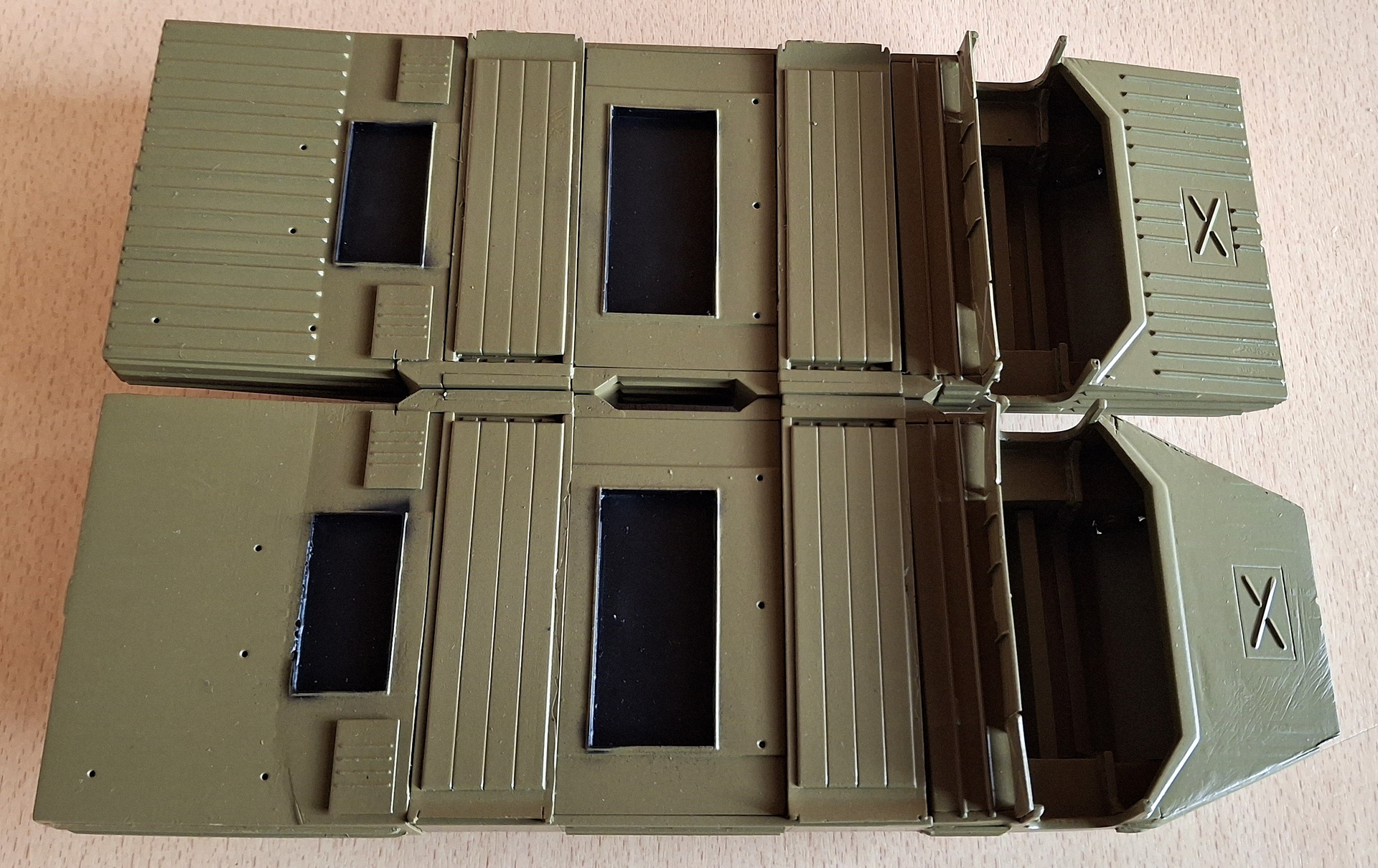
I had already announced a new model in the post about the PMM-2M ferry. I decided to build another ferry—the GSP-55 used by the GSSD during the Cold War. With this model, I can add another piece to my collection and complete the set of amphibious crossing vehicles. The collection includes the BAW, K-61, PTS-M, PTS-2, PMM-1, and PMM-2M. The GSP-55 was developed back in the 1950s and has a long history; it evolved from the K-61 transporter. The initial ferries bore the designation K-71. One could write a novel about its development, but the focus here is on building the model itself.
Two models from PanzerShop are available for this build. Since they are resin kits, assembly is not straightforward. The quality of the cast parts is good, although some are warped. Metal tracks from Friul are included. I am also using three Trumpeter PT-76 kits so that I do not have to use certain resin parts.
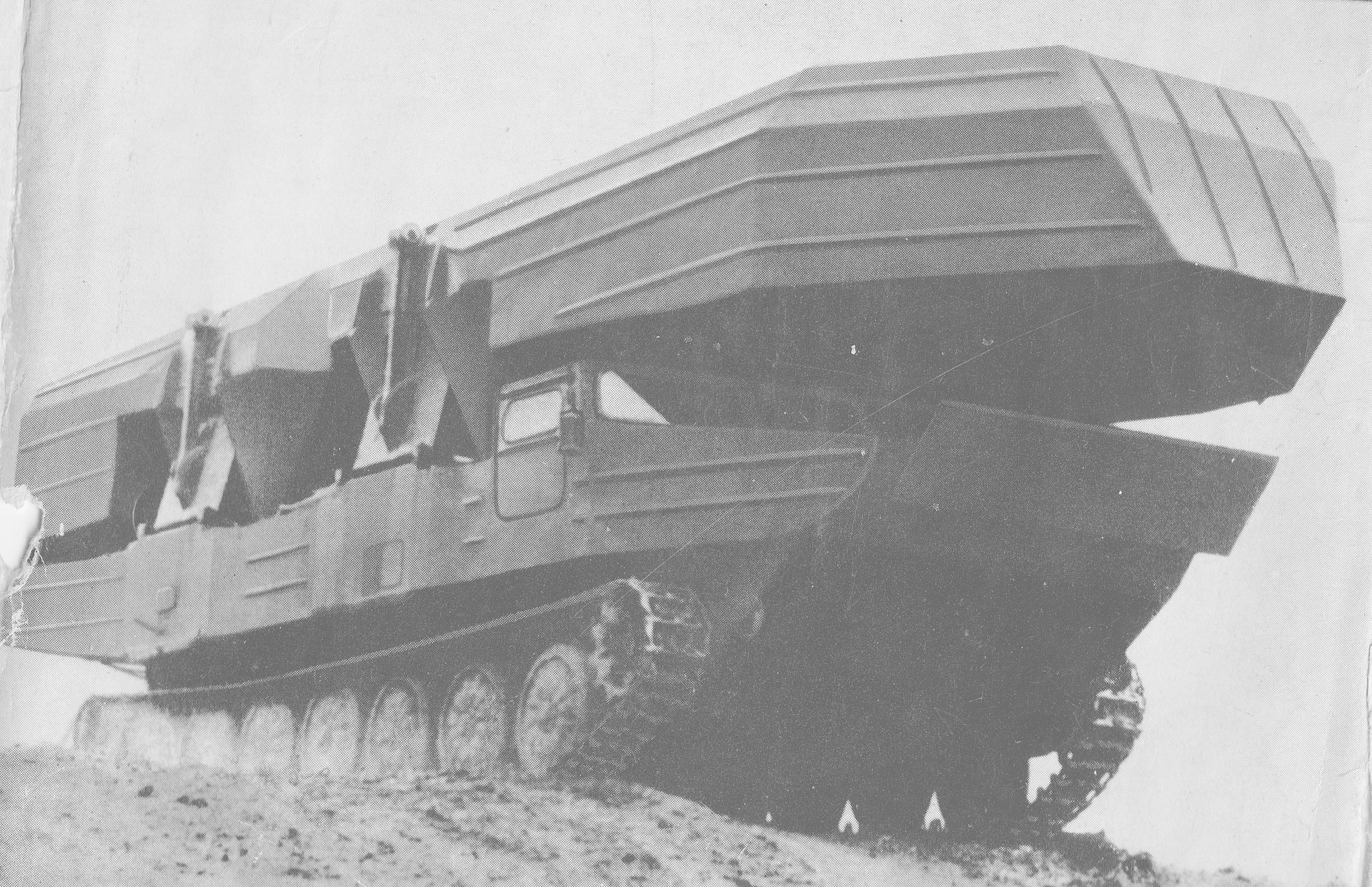
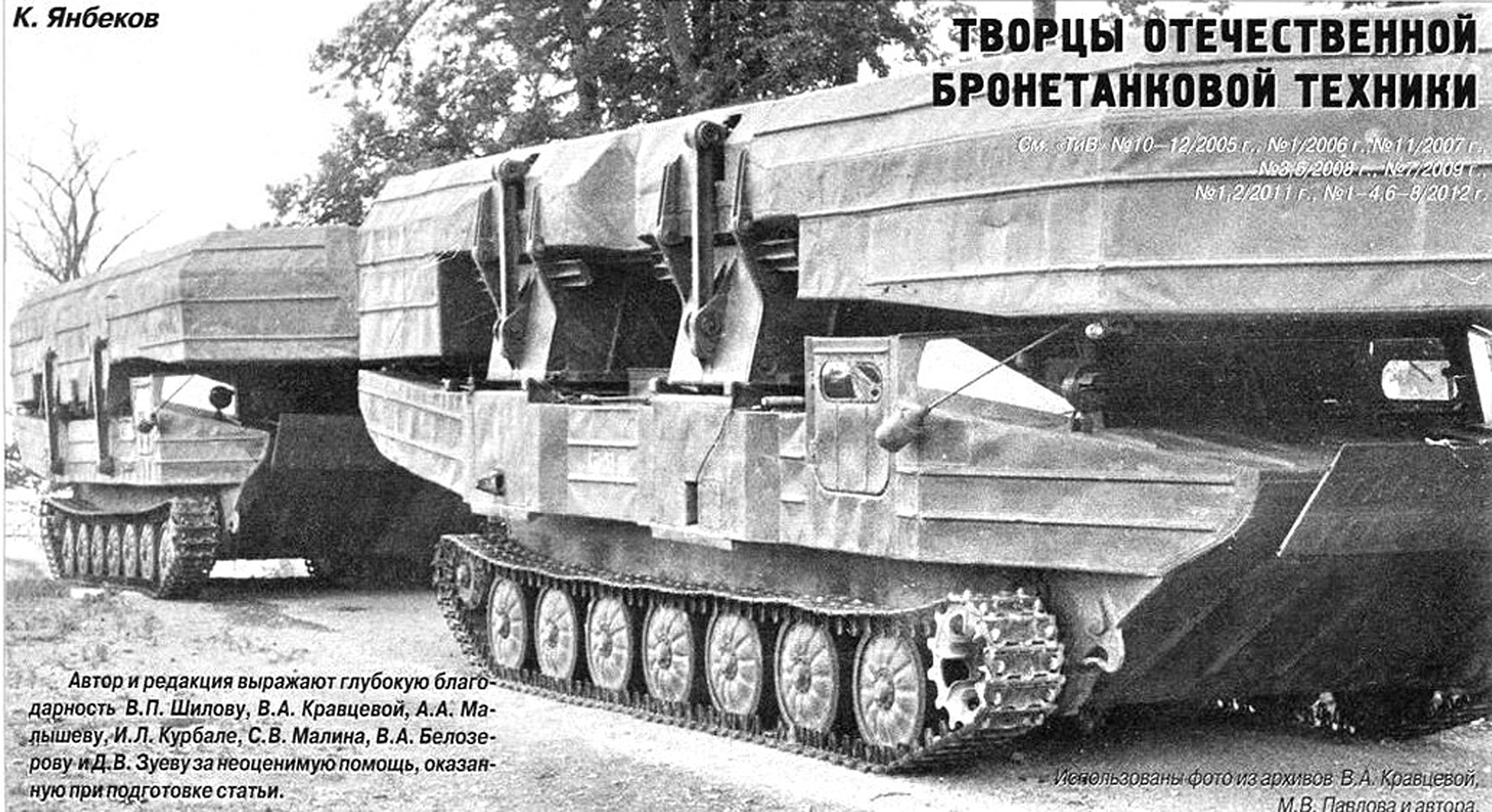
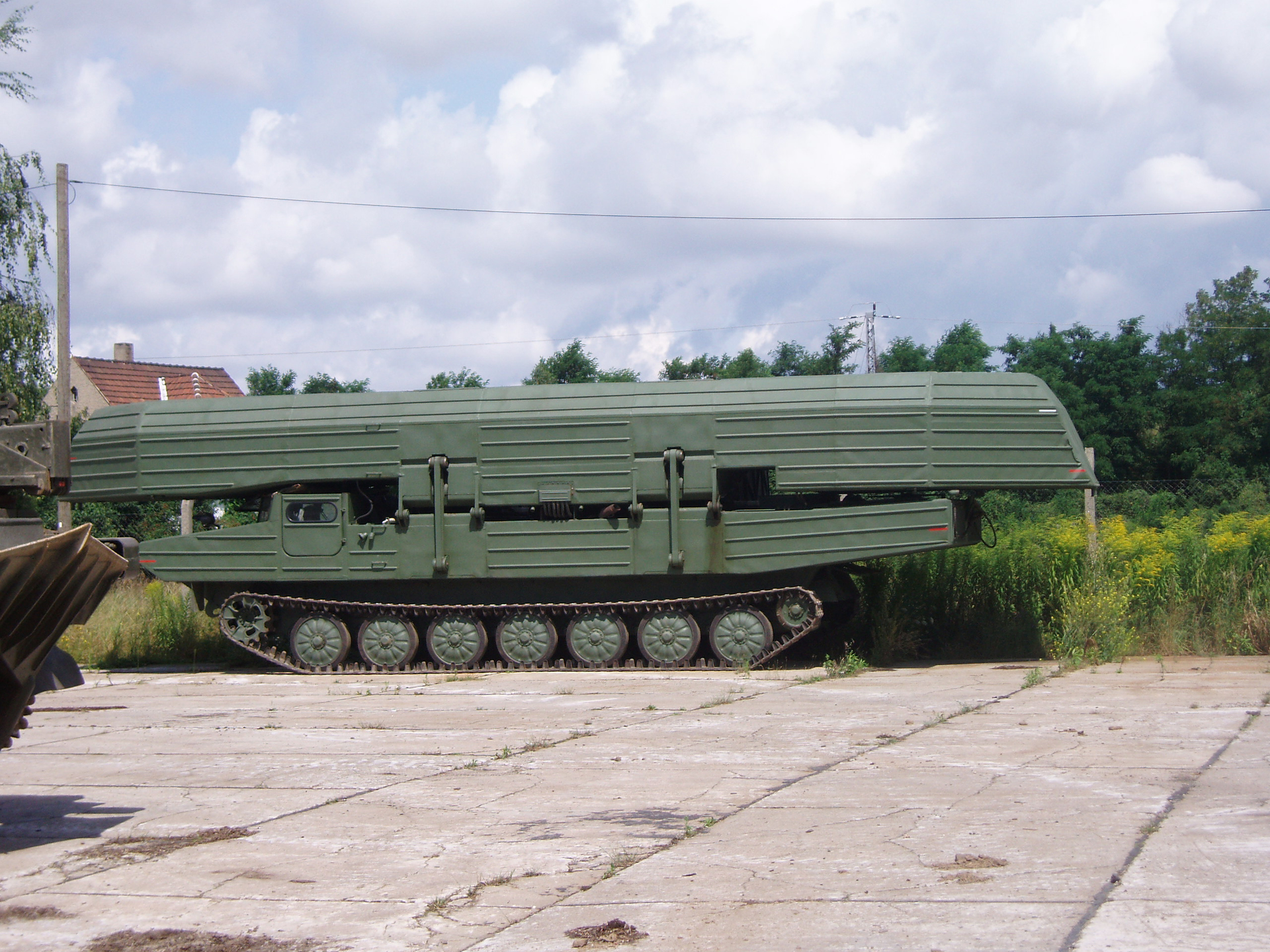
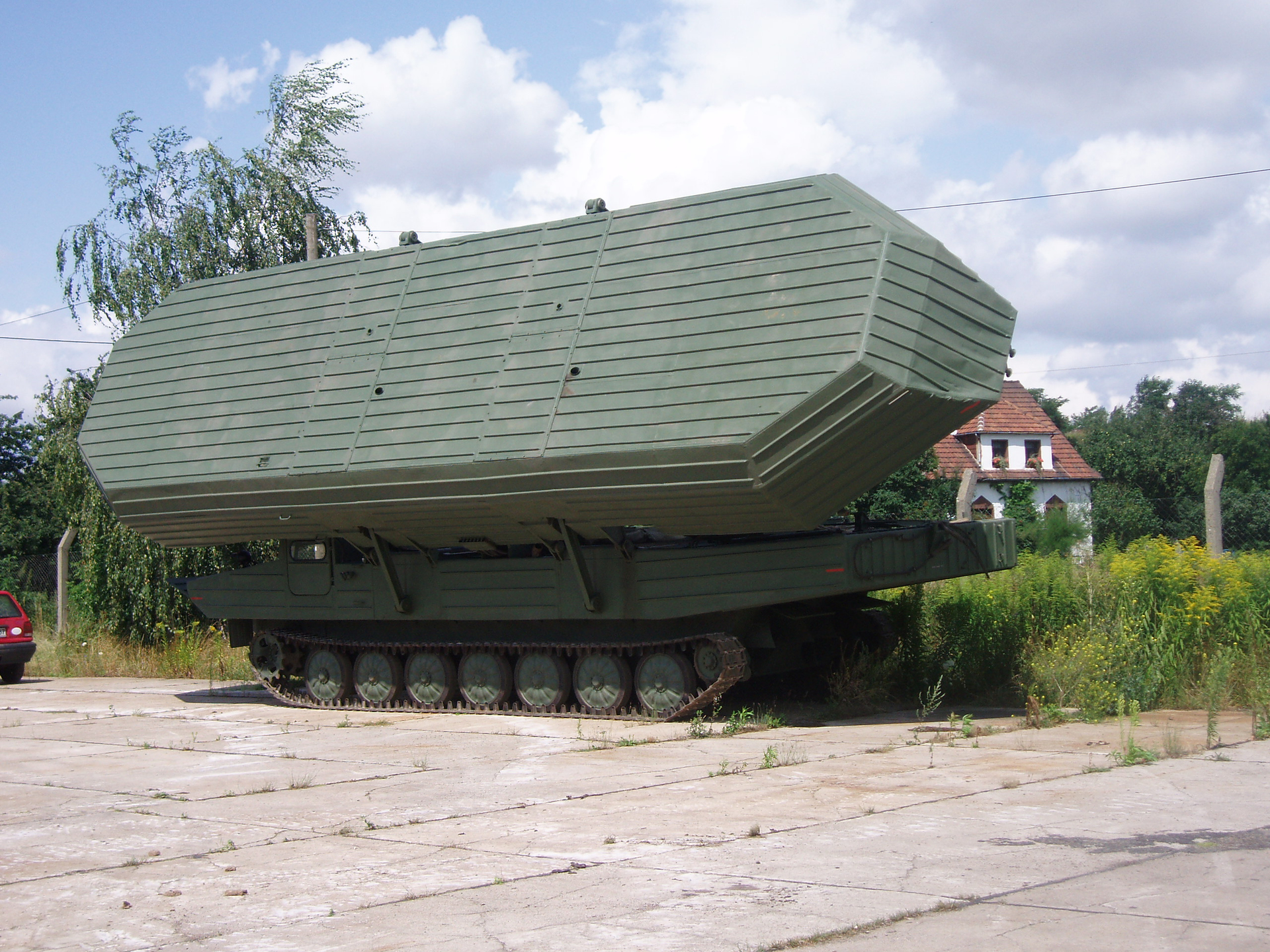
My main concern here is the running gear. Since the complete ferry consists of two ferry units, the plan is to build a right-hand and a left-hand unit.However, since I have no desire to build the same thing twice, I decided to build one early version and one of the final variants. The K-61 origins are clearly visible in the early version. However, the conversion presents major issues with the resin parts.Here are a few pictures to start with—showing the kits, the originals, and the early stages of my model.
I am looking very forward to this one, yet again Joachim. I have actually seen one of these units, and crawled all over it. It wasn’t in Germany, but Africa, in Zimbabwe to be precise. The former Rhodesian Army - this was in 1981 - had amassed a huge amount of Soviet equipment from the former native warring factions prior to the new state of Zimbabwe being born. Not only did I manage to drive a T-55, fire an AK-47, but as I say, inspected all this equipment, just rotting there in the sun.
The GSP-55 (Gusenichny Samokhodniy Parom) tracked amphibious ferry was used by the Egyptian army during the Suez Canal crossing in the 1973 Yom Kippur War.
Operational Role & Use in 1973
Deployment: Prior to the war, Soviet-supplied GSP-55 ferries were integrated into Egyptian engineering brigades alongside PMP pontoon bridging systems and K-61/PTS amphibious transports.
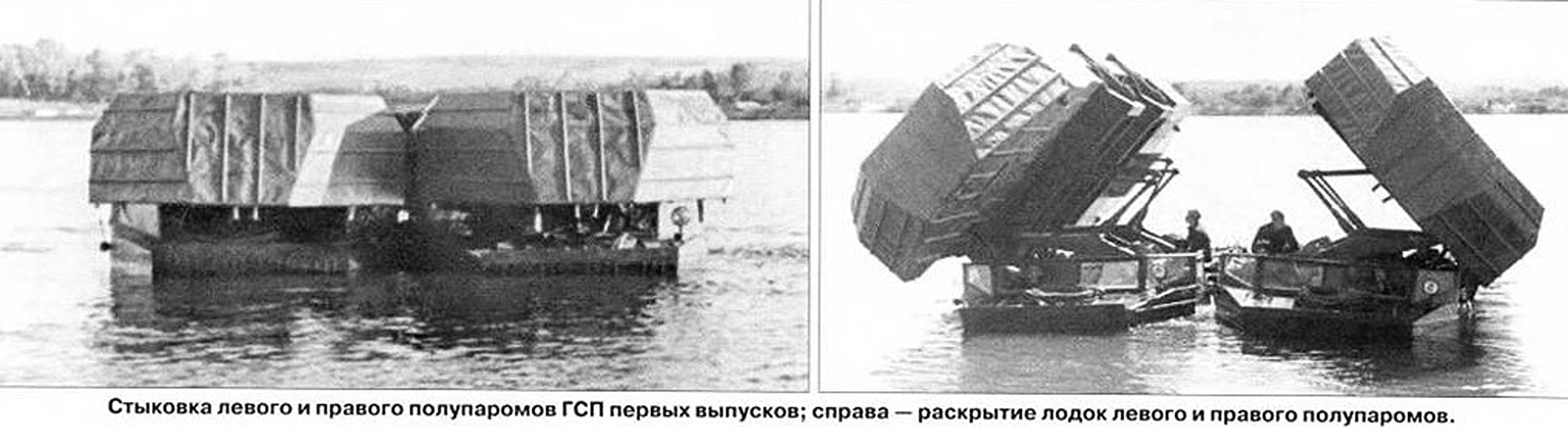
Operation Badr (October 6, 1973): During the initial crossing phase, GSP-55 units operated in mated pairs (a left-half vehicle and a right-half vehicle joined together in the water) to rapidly ferry heavy armor—including T-54, T-55, and T-62 main battle tanks—across the Suez Canal before fixed pontoon bridges were fully erected and operational.
Ferrying Capacity: A single combined pair created a self-propelled ferry capable of carrying a payload of up to 52 tonnes, which allowed it to handle the Egyptian army’s main battle tanks.
Looks like it should be of interest here as well
Many thanks to BootsDMS and Robert_Goldman for the replies. Here are some photos relating to Robert_Goldman’s post. Work on the model has continued; here are some photos of that as well.
All that effort in providing a river-crossing capability par excellence (amongst other equipments of course). It just goes to show that if necessary, the Soviets were not going to let mere rivers get in their way; as exemplified by Stalin’s response to Ambassador Harriman’s comment in 1945 that the Soviet leader must take great satisfaction in seeing his troops in Berlin. Stalin replied, “Tsar Nicholas got to Paris”.
Yes, BootsDMS, I fully agree with your account. You are just as familiar with the Cold War era as I am, even though we were on opposing sides. The military doctrine of that time held that the best defense was a good offense, and the armies’ equipment reflected this. Crossing bodies of water—regardless of their width—was not an obstacle. Soldiers had to master this complex hardware, so—much to the local population’s dismay—exercises were held even on Sundays and public holidays. Christmas and Easter meant nothing to the GSSD. All of that is unthinkable today.
That reminds me, in a sad yet humourous way: we all agreed, amongst ourselves, that the best time for the Soviet/WP forces to attack would be over a Christmas leave period; most troops would be on leave in UK - though some locally, those that were left would be paralytically drunk in barracks.
That said, it was interesting - to me at least(!) when Op Danube took place in 1968, they chose August, when most of the western world goes on holiday.
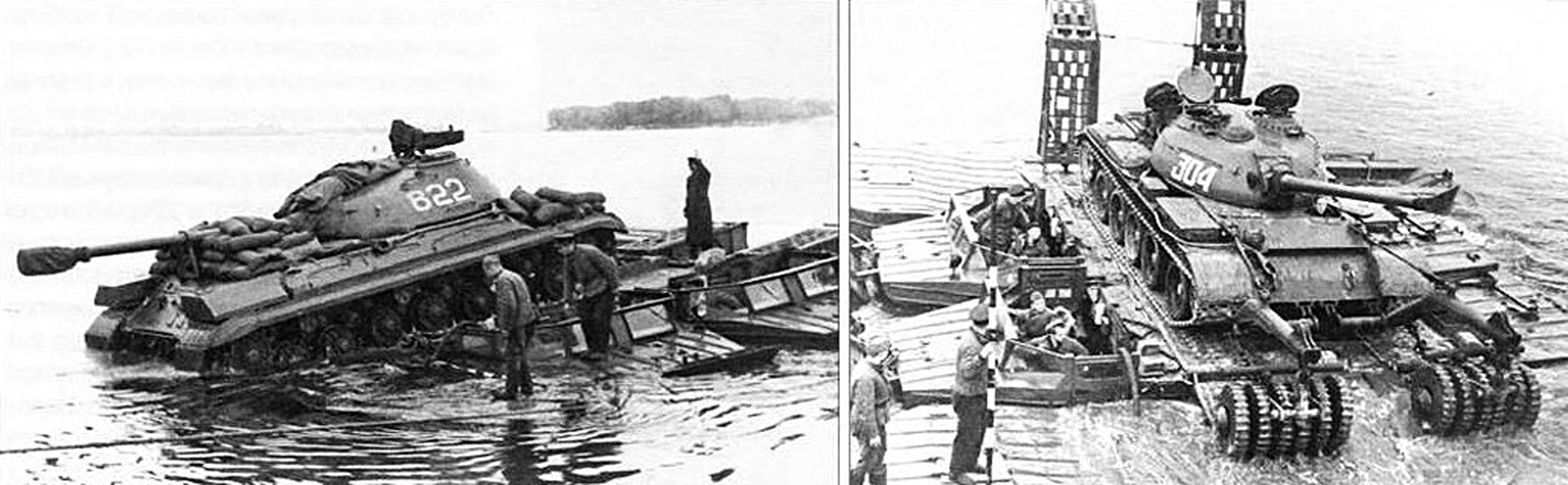
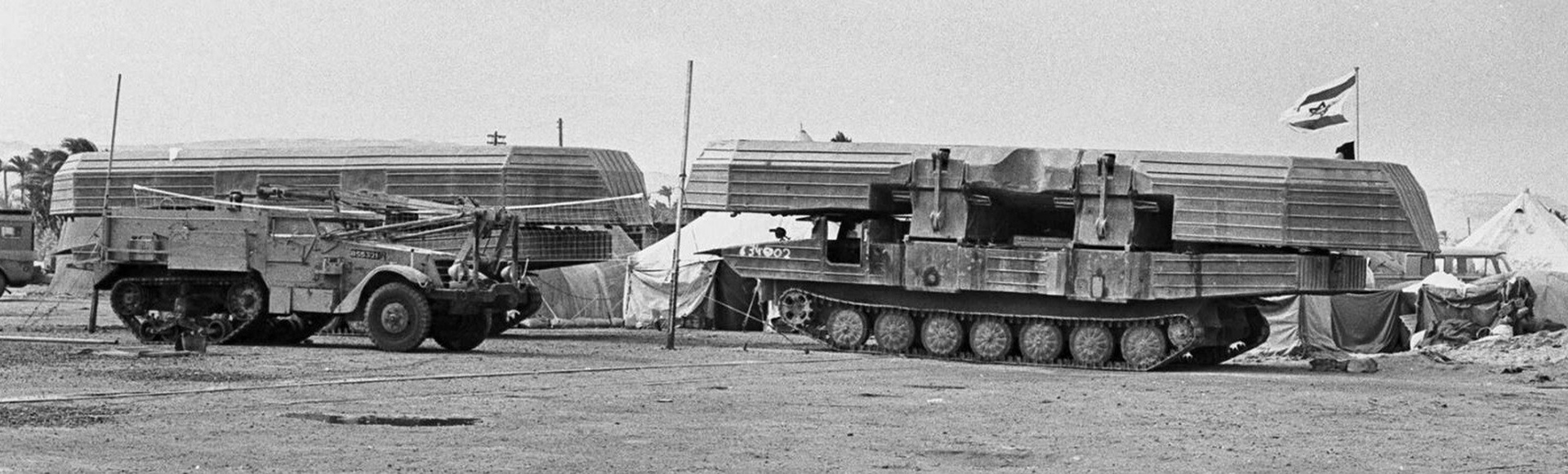
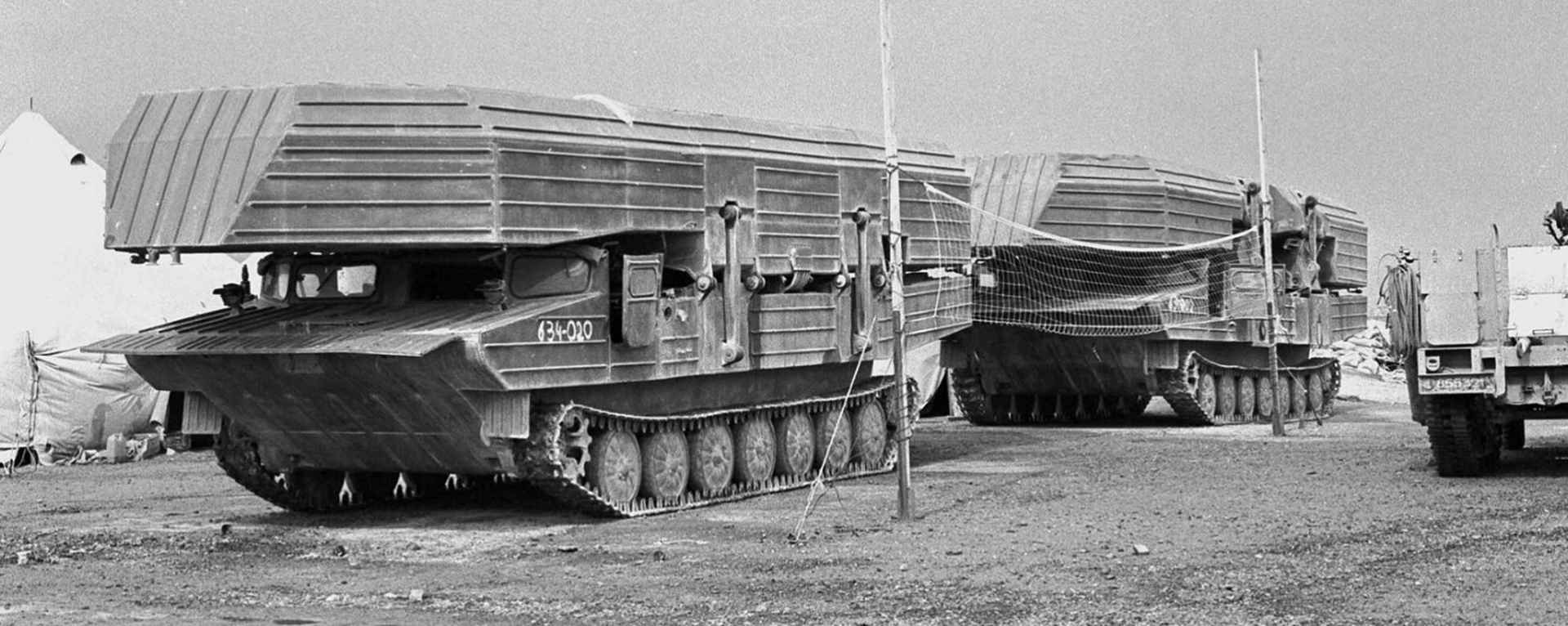
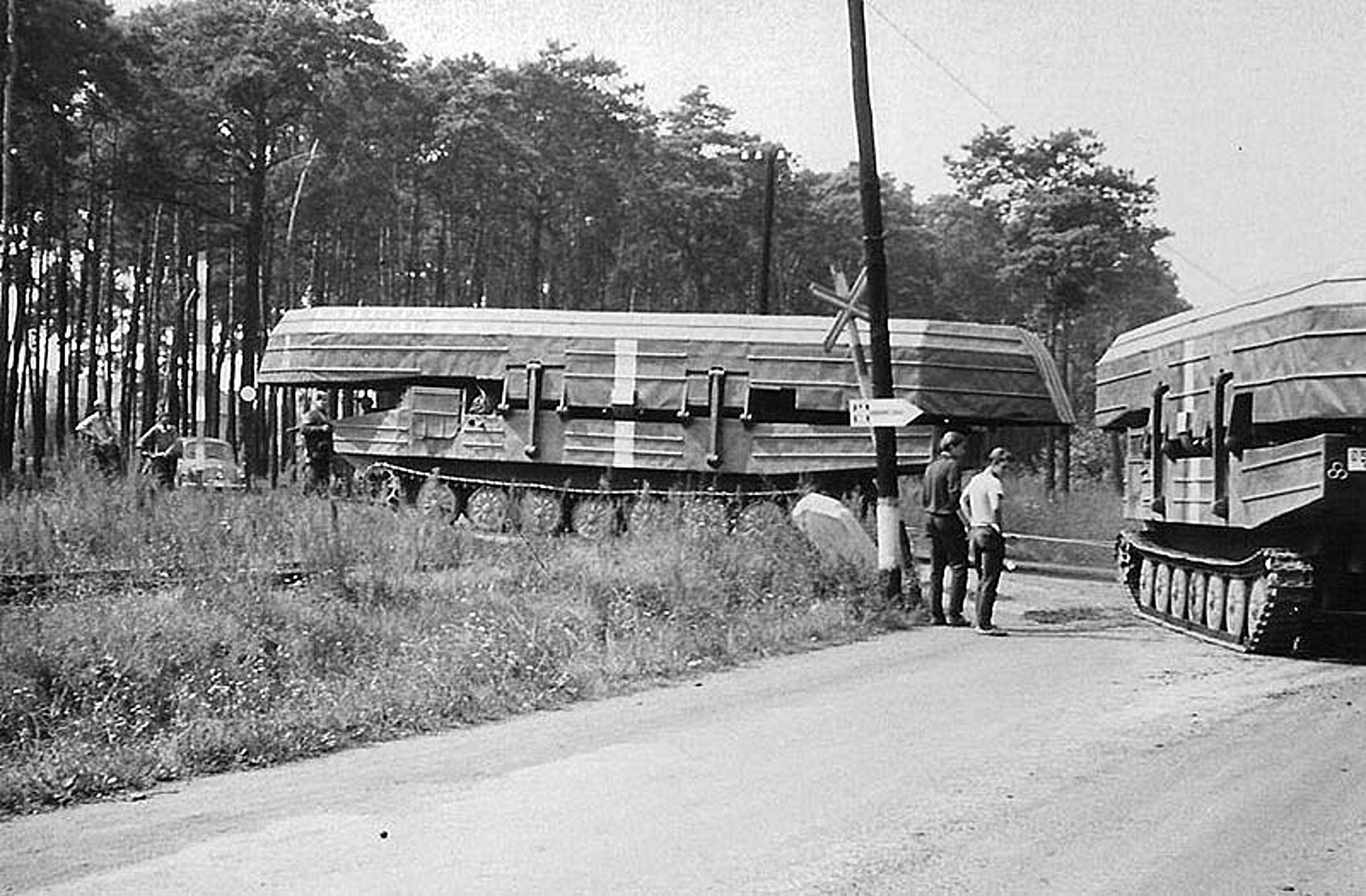
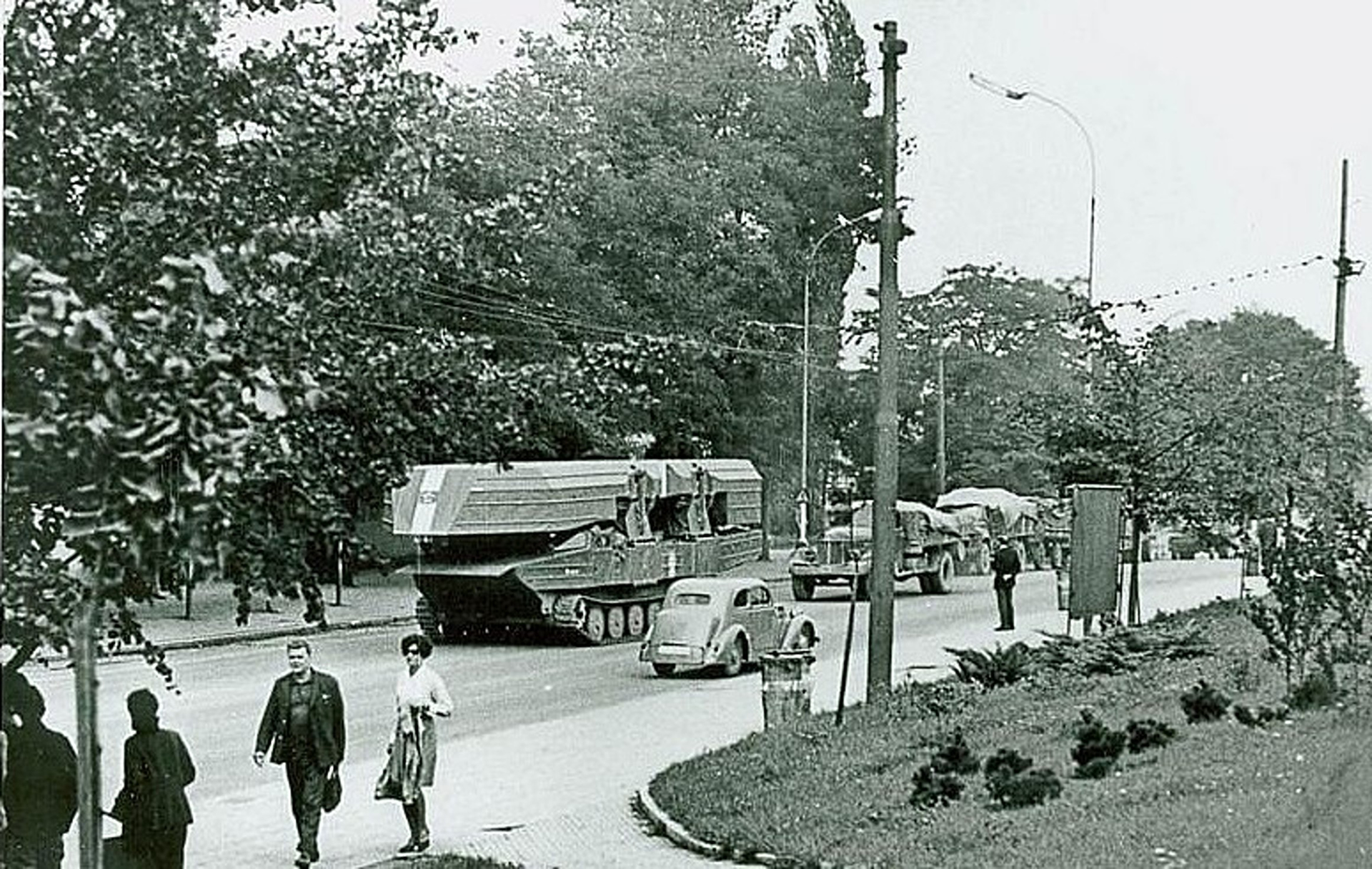
Hello BootsDMS, I want to reply to your post first before continuing with the build log. I will never forget the weekend of the invasion of Czechoslovakia. I was eleven years old at the time, and it was Saturday midday when the first advance units drove through our town heading toward Czechoslovakia. They were reconnaissance troops with PT-76s, followed by endless columns representing all branches of the military. They were likely coming from the Jüterbog area near Berlin. People stood at the intersections watching the columns; at the time, no one knew it was the invasion of Czechoslovakia. There was no internet or mobile phones, and there was no mention of it on the news. The spectacle continued until Sunday morning. Everyone was fully prepared for a worst-case scenario—which, thank God, did not come to pass. Logistically, it was a masterstroke by the armies to carry out an invasion in such a short time. I have never seen troop movements of that magnitude since.Unfortunately, there are no photos of this event from my city. The roads were completely chewed up; the tank tracks lacked rubber pads.GSP-55s were involved back then, too; here are two photos from the CSSR, and then we’ll continue with the build report.
Fascinating Joachim, just fascinating; I was 14 (so these days quite old!) and I would join the Army the following year. Looking at the images and footage on our then, black and white TV made a huge impact on me. Here, in brutal fashion, was the projection of military force writ large. The message to me, as a schoolboy, was that one doesn’t mess with the Soviet Union. The stark realities clashed with all the hand-wringing of impotent western politicians, who could do absolutely nothing. Although generally pretty much unaware of anything at all politically, it was also noticeable that those who had been loudest in the protests about the Vietnam war, were generally mute about this particular invasion. The hypocrisy was overwhelming. But as a schoolboy, I found it all interesting; the footage of T-62s ramming buildings - I mean - wow! What is there not to be impressed with when one is a schoolboy?
As I say, the political ramifications passed me by, - as perhaps they should aged 14(!) but as an example of military planning and execution it was quite something.
Thanks for providing your memories about this seminal event.
We had something similar in Sweden many years later when there was troubles in SE Asia:
Vietnam vs Kampuchea & Vietnam vs China.
Which commie should the Swedish commies root for? There was a bit of internal discussions between the China supporter, the Vietnam supporters and the Khmer Rouge fans.
Once again, a big thank you for your replies. BootsDMS, I’ve long noticed that we share the same views on political matters—likely due to our life experiences. I fully endorse what you wrote. One shouldn’t step on the Russian bear’s toes. The events in the CSSR in August 1968 could be a topic in their own right; that would certainly be interesting.
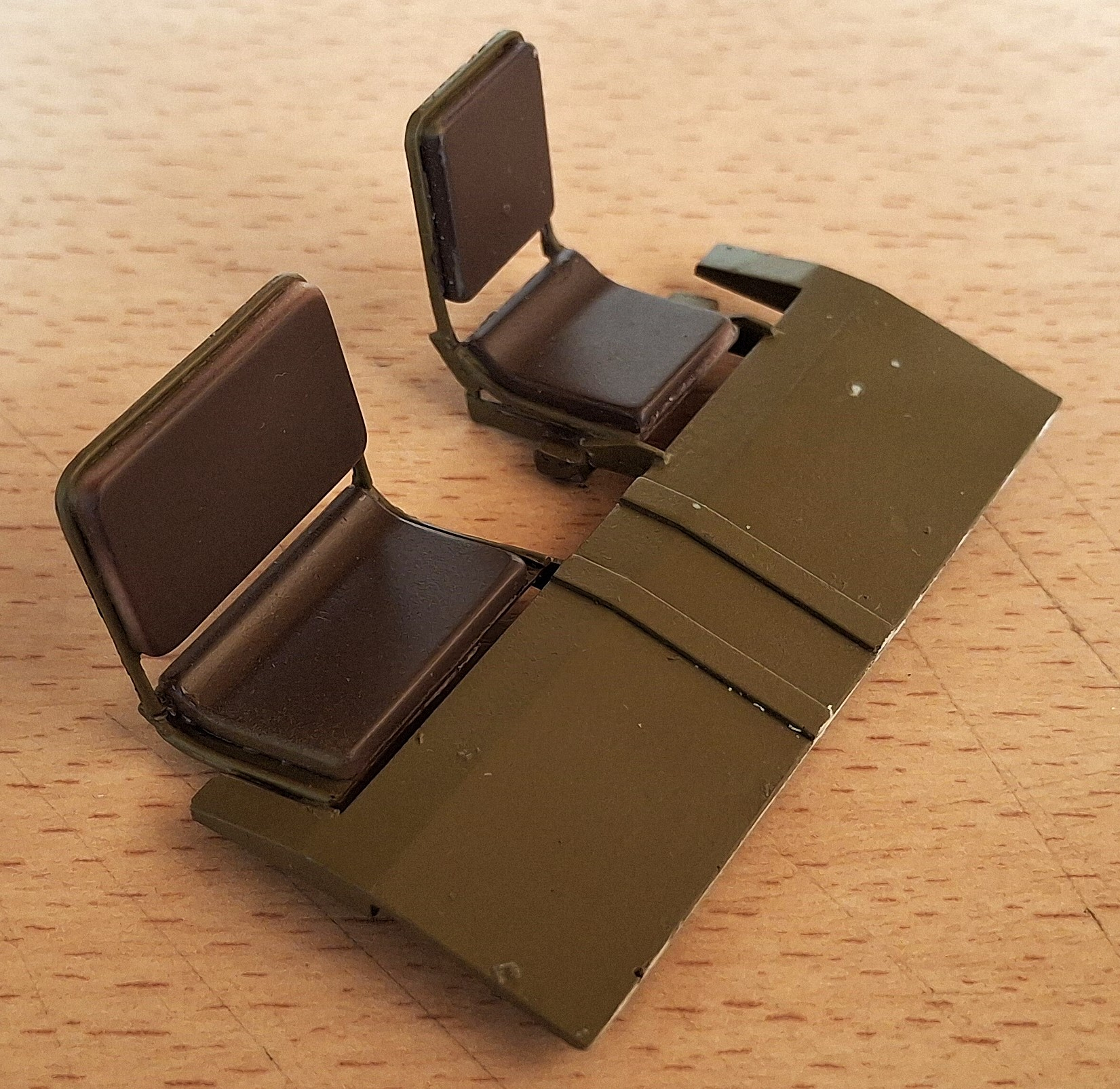
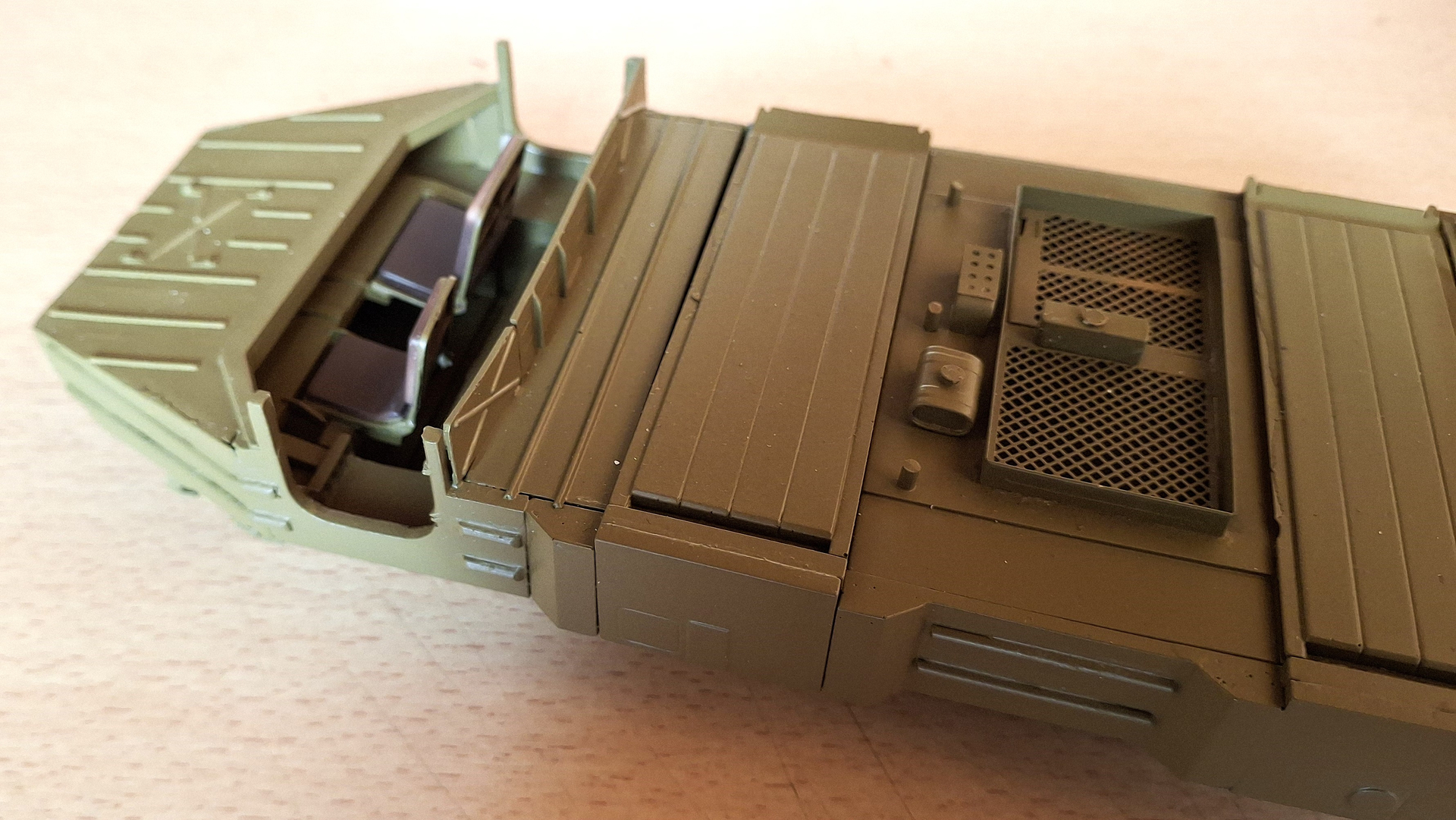
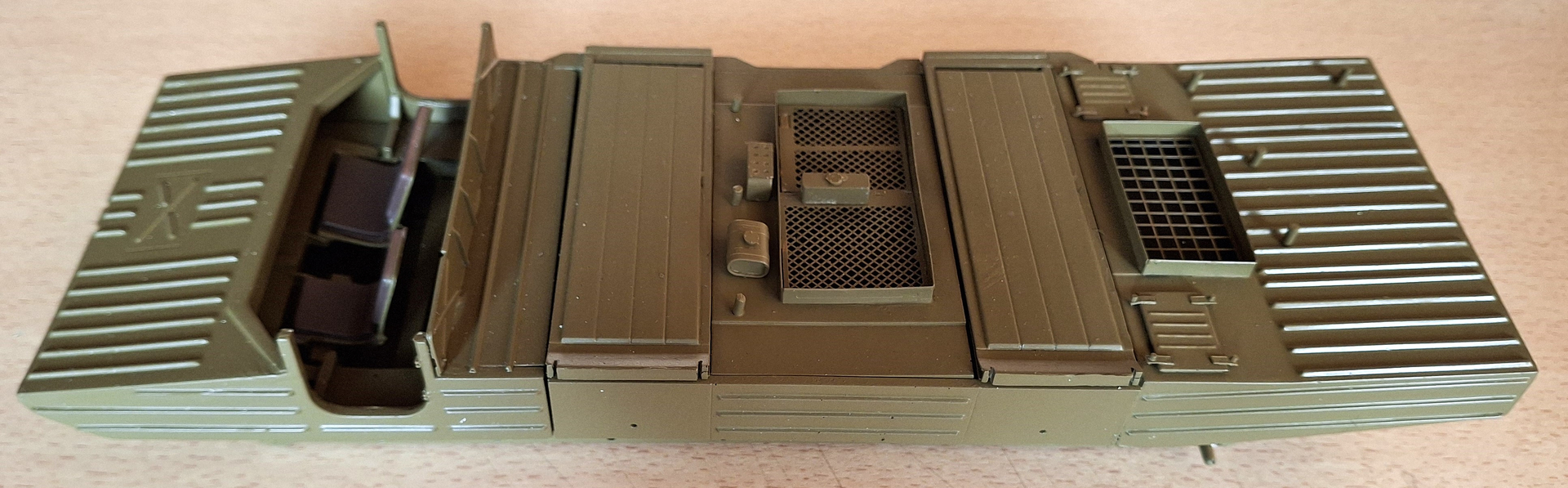
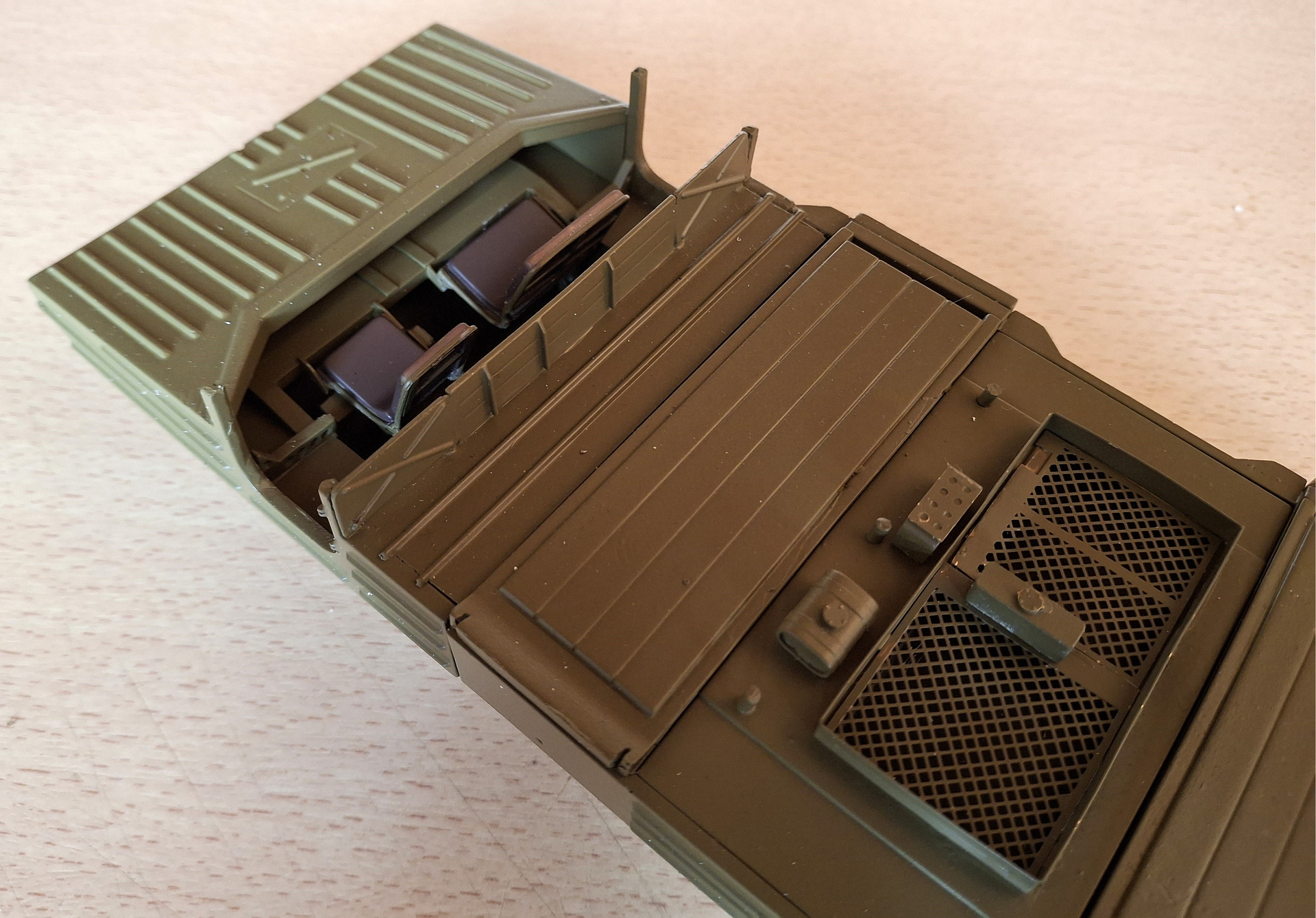
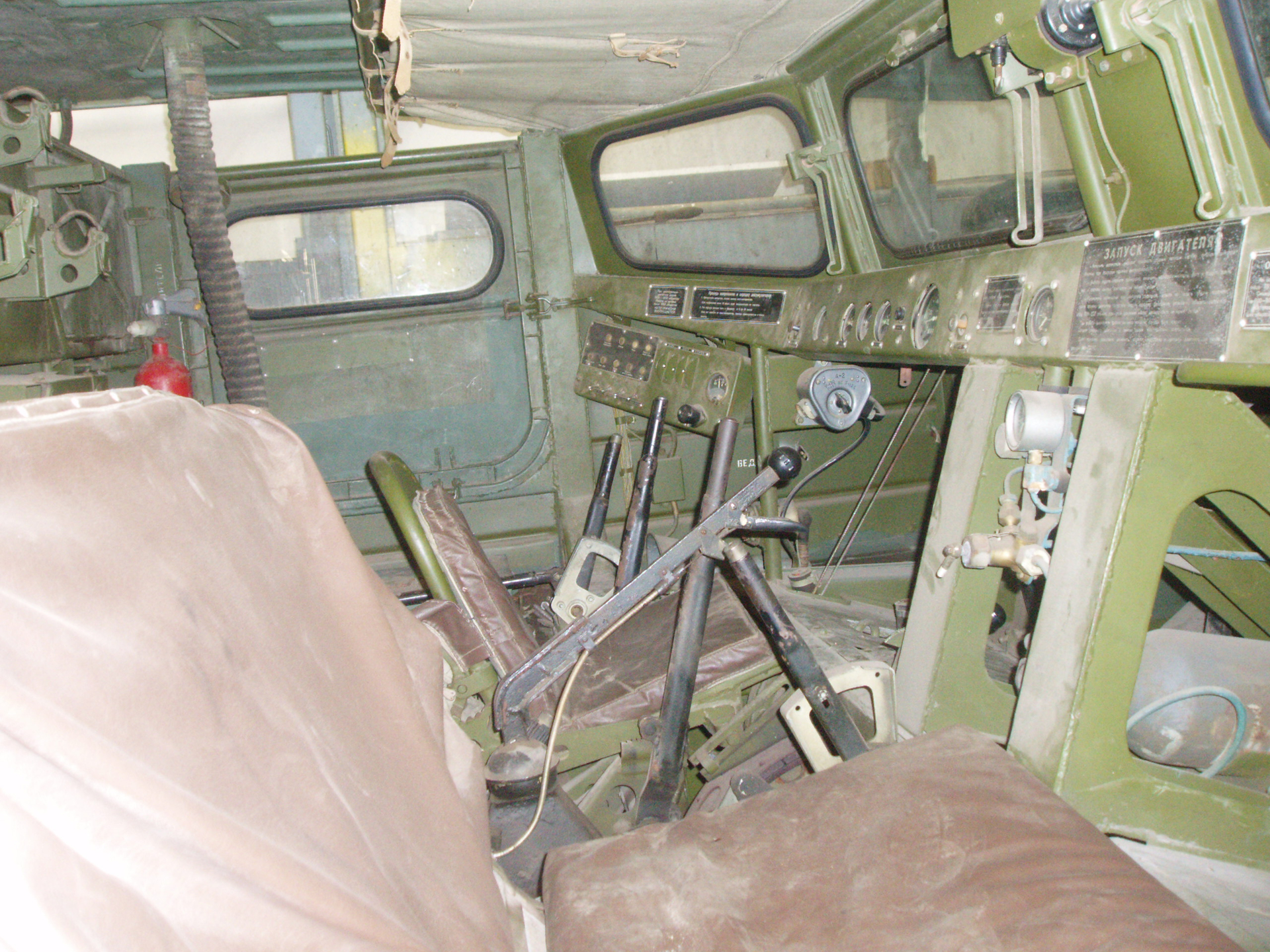
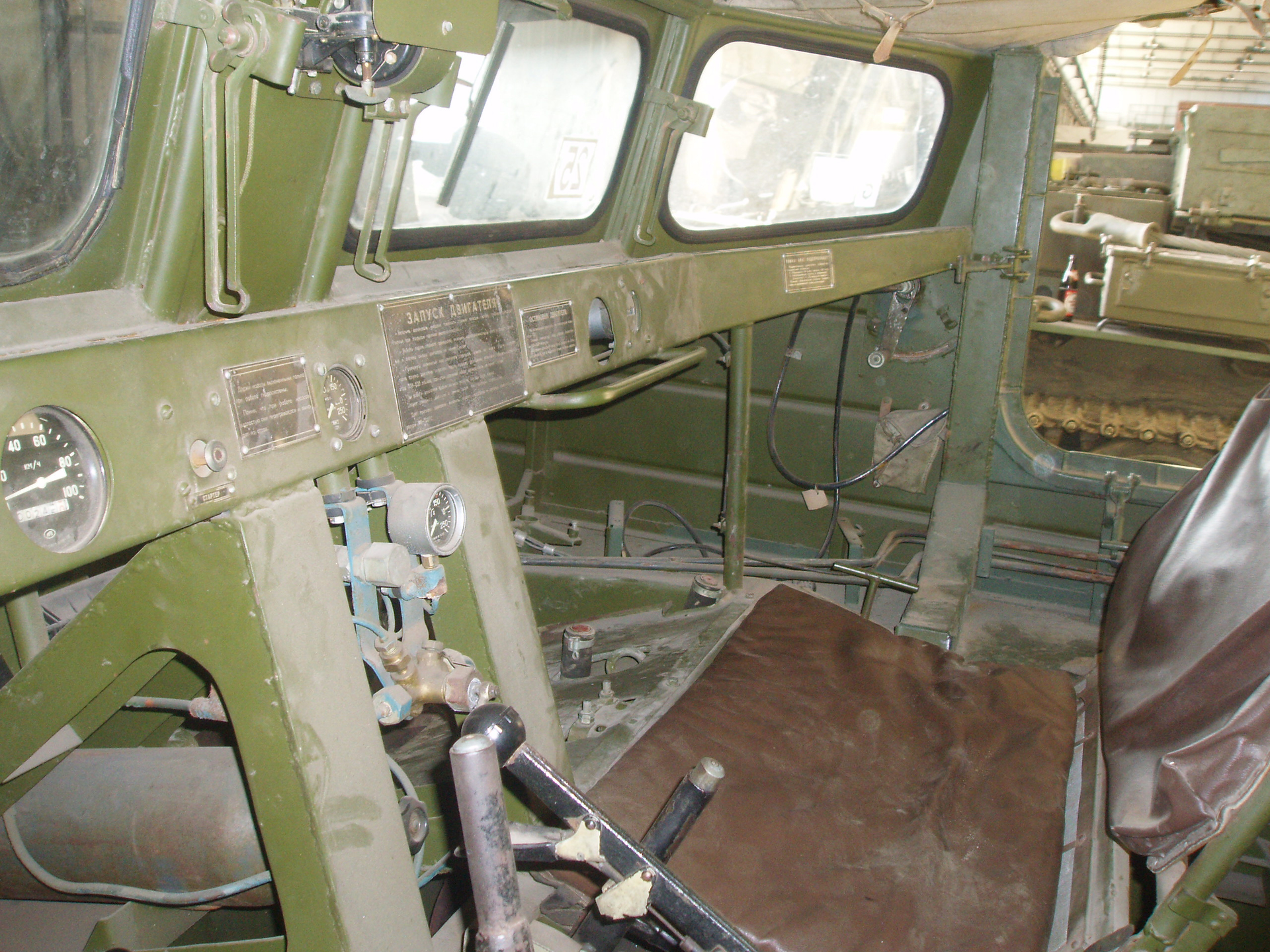
Now, back to building the model. PanzerShop has put together a very good kit, but it is not easy to assemble. Having driven and repaired an actual GSP-55 with a military vehicle club for many years, I was able to prepare for building the model well in advance—specifically by taking the kind of reference photos that cannot be found on the internet. These images are a great help to me in building the model, and I will also show them here alongside the corresponding construction stages. I am currently working on the cabin section; the seats alone are very intricate and complex to assemble. Here are a few photos.