French tanks. With a difference …

Now that both Cuckoo and the Tamiya Archer I have underway are nearly done, I think I can allow myself to start a topic about the next thing I will be building. Not one but two French tanks:

… but not quite as you might expect :slight_smile:

About the how and why of this, I’ll keep you wondering for a bit longer :stuck_out_tongue:

12 Likes

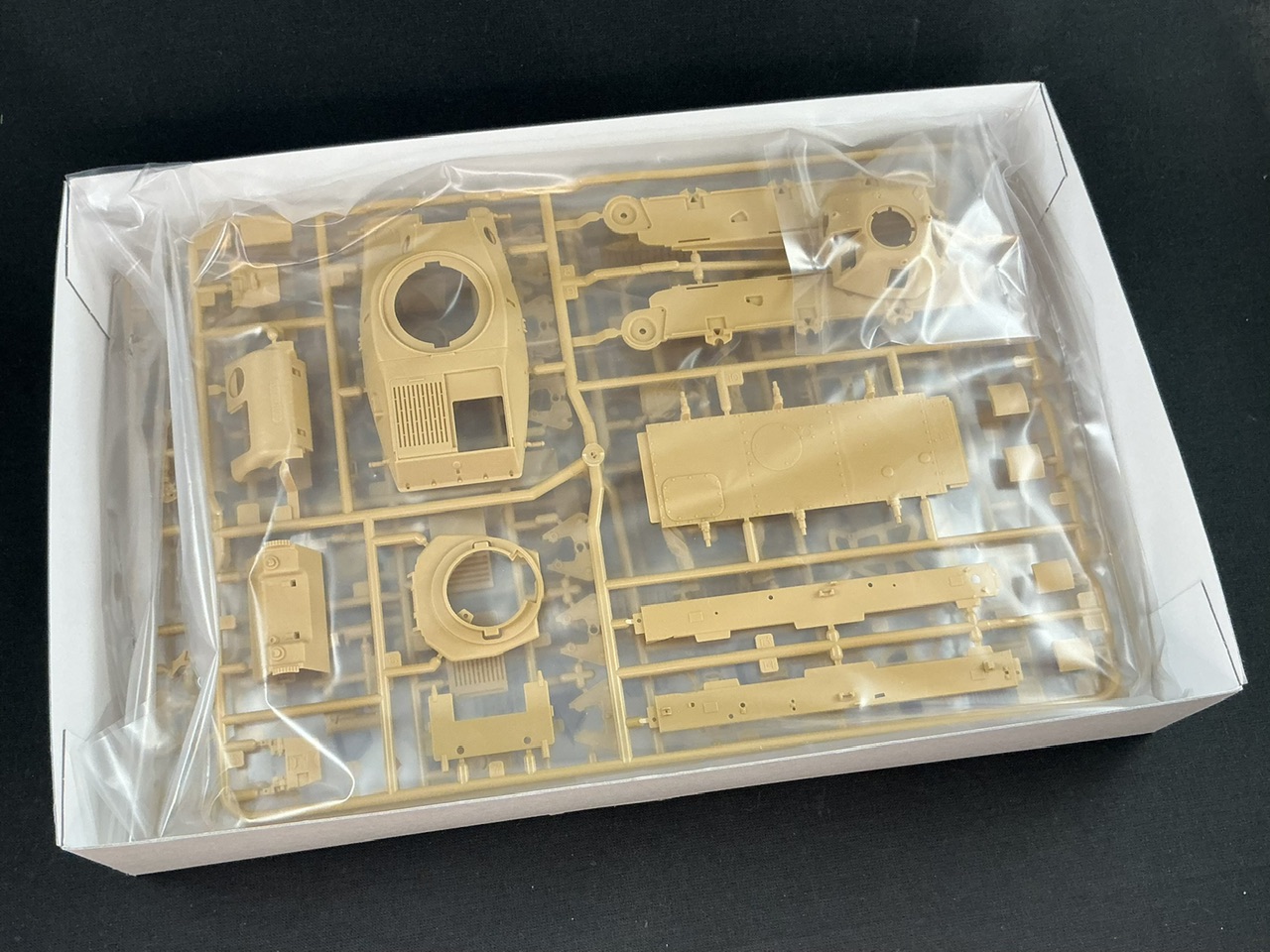
Let’s start by showing the contents of the boxes. The H39 is, of course, brand-new and looks very good, as you would expect of modern Tamiya kits:

And the B1 bis:

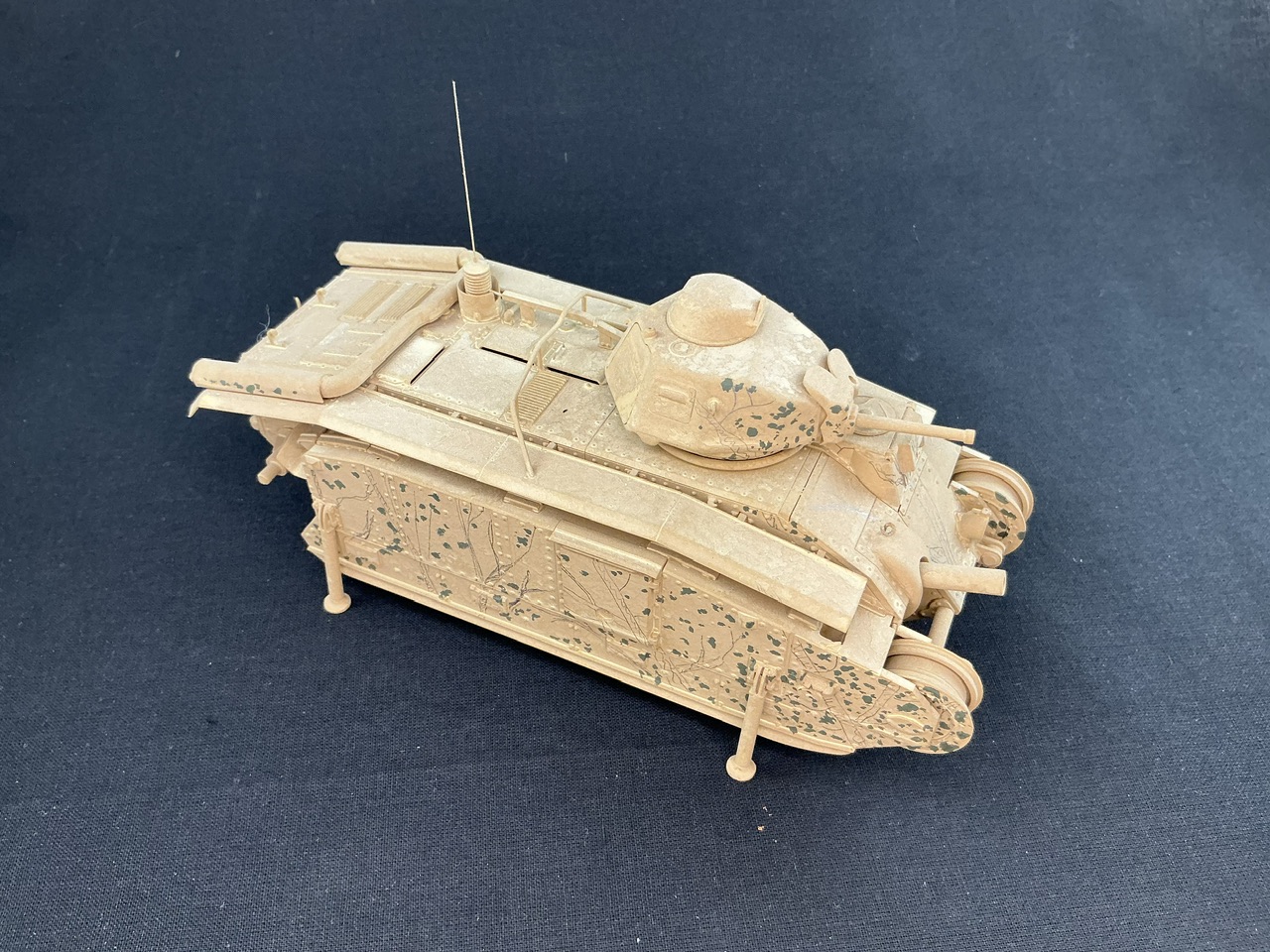
Um … Oh, yeah, I’ve had this for a bit longer, that’s right … :slight_smile: Almost twenty years ago, when it was new, I bought and built this kit, but never finished painting it:

As those knowledgeable about the B1 will already have spotted, the intention was to make it into tank No. 251, named Fantasque, but my artistic skills weren’t up to doing justice to the painted-on trees and shrubs, which meant it ended up back in its box only to come out of it again now :slight_smile:

The reason to do that and buy an H39 as well is:—

Because this has some interesting things to tell us about reasonably serious plans to cast armoured components for the H39 and/or Char B1 in the UK, in return for which the British would get completed tanks equal to half the number of castings they supplied. This never actually happened for several reasons, primarily of course the fall of France in June 1940, but also because the British were looking at making quite a few changes to make the H39 (the main candidate for this plan) better suited to their ways of armoured warfare. They wanted a two-man turret, for example, because they felt it needed more than one man (many French shared this opinion, but they were stuck with the turret, at least in the short run). There was also mention of doubling the number of bogies, but I can’t figure out what exactly they meant by that — two side-by-side? I can’t make much else of it, but it seems unlikely. There were also ideas about boring out the 37 mm gun to 39 mm so that it could fire British 2-pounder ammunition (a gun that today is considered a 40 mm, but in the late 1930s apparently a 39 mm).

In other words, this will be a what-if: What if the Battle of France had gone according to Franco-British plans so that the Germans would have been halted in northern France? and What if (because of this) French tanks had been supplied to the British in order to continue the war in France?.

The H39 will be built more or less straight from the box, with a few modifications. At the very least a British antenna, and probably reinforcing plates on all six bogies instead of only on the front ones or none at all, as Tamiya supplies them. And perhaps a hint that the gun uses 2-pounder ammunition.

The B1 bis will also get a British antenna and also a 2-pounder gun, because that was a better antitank gun than the French 47 mm and as far as I can tell, would fit in the turret. I also need to remove several parts that are already on the model, because Fantasque was a mid-production vehicle while the British would of course have gotten tanks with later features than that. Luckily, the details are on chars-francais.net.

And, of course, British camouflage, markings and crews for both. That’s what the Gecko figures and Peddinghaus decals are for :slight_smile:

12 Likes

That sounds both original and interesting. Not my favorite period for tanks but I’ll follow your builds.

Olivier

2 Likes

The main reason for it is because I found the idea more interesting than a French H39, let alone a German one :slight_smile: But it has to be plausible, as far as I’m concerned.

2 Likes

Certainly a fresh idea!

2 Likes

I’m hanging around here, cool idea!

2 Likes

Cool :slight_smile:

I began work on the model by taking off the unnecessary bits tonight:

The turret, its hatch and the commander’s cupola were loose anyway, the rest took a bit more effort. Not that much, because almost everything came off reasonably easily, except the antenna. I had to saw through that for about two-thirds of its diameter and then did the rest with a chisel-shaped knife, because there were details on the roof in the way of the saw. In doing this, I just managed to avoid stabbing myself in the fingers when the antenna gave way at the end of the— even though I was consciously trying to keep them out of the path of the blade! In other words: always beware.

7 Likes

After taking the B1 apart, I had to clean up some more stuff before I could start rebuilding the model. In some of the holes for the mudguard locating pins, broken-off pieces of those pins remained, but I managed to get them out by giving them a tap using a punch and hammer from one of my punch-and-die sets. Unfortunately, I didn’t notice in time that there are pins only at about half the locations of the mudguard supports on the real tank, leading me to think that there were also pins at the others that refused to come out, so I drilled those out. When I noticed my mistake, I had to fill them all with some putty again :slight_smile:

I then filed off the remains of the antenna base, losing a couple of rivets in the process, in addition to the ones that had to be cut away to fit the antenna back when I originally built this kit. Using the drawing in the instructions that tells you which rivets to remove for that, I could put all of them back after scribing the seam between the plates that was also lost by glueing the antenna over it:

The white dot is putty in an unnecessarily drilled hole :slight_smile: The horrible patterns in the paint appeared as soon as I first sprayed the model way back when. I don’t know what I did wrong, but I clearly did. That was another reason I put the model back into the box :slight_smile:

That done, I could fit the other mudguards:

I had also completely taken off the fence on the hull top (which serves to prevent the turret guns from shooting up the back of the tank), but it fit neatly back in place. I also took off the driver’s hatch, as I intend to replace that with another.

7 Likes

By now I’ve also started on the H39:

The upper hull is still loose, it’s only on to make sure the lower hull is correct. But it’s very obvious that this is a brand-new Tamiya kit: everything simply fits as it should, not too loose but also not too tight like you get with many Chinese brands.

6 Likes

Nice start on both of them.

1 Like

The real H39 had a number of variations in the bogies: without reinforcing plates welded to the wheel arms, or with a few different sizes of those. I’m under the impression (based on asking about this on Missing-Lynx) that this plate was enlarged over time to make the wheel arms sufficiently strong. When the Germans rebuilt H39s, they put them on the front wheel stations, while in French service they could be on one, two or all three stations per side. But Tamiya only gives two reinforced bogies with a large plate on both arms and six with only a small plate on one arm per bogie. Because I figure the speculative British H39s would have had the latest improvements that were in production in 1940, I wanted a large plate on all of the wheel arms. That required a little cutting so I could glue bits of 0.25 mm plastic card, 4 mm high and 3.5 mm wide, to the wheel arms:

At left an unmodified part, in the middle one from which I’ve cut away the small plate, at upper right one with both plates glued on, and below that a kit part with those plates. I didn’t use that last one because I don’t want there to be an obvious difference between the kit parts and the converted ones. Another way, of course, is to ask two people for their leftover parts :slight_smile:

Here’s all six modified bogies:

I only glued the plates to the outside, because those on the inside would be all but invisible. I think I might smear a little putty along the edges to replicate the welds around the plates.

The hull is now largely done and the basic turret shape is also together:

I’m undecided whether to fit the trench skid on the rear of the hull. It’s exactly the kind of thing that the British Army’s higher-ups might have decided is unnecessary, and which tank crews then later wished they had it :slight_smile:

6 Likes

A British tank won’t have had a French machine gun, but does a Besa fit in the H39’s gun shield?

It looks like it could fit more or less as the photo shows (but next to the gun, of course :slight_smile: ), with the forward end of the barrel sticking out beyond the armour that has been made to protect the barrel of the French MAC 1931. Except I don’t think a Besa would fit inside that, because it’s a pretty wide weapon with large protective plates alongside the barrel at the front of the receiver (missing on the gun in the photo). On British tanks, the Besa was normally mounted in a kind of “trough” that is open at the top, I assume for better cooling. Some measuring, though, proved that such a trough can be fitted here, too:

I first cut away the upper, side and front parts of the French “barrel guard”. The barrel is a piece of plastic rod left over from a kit, with a little block of plastic glued underneath for the protective plates to be stuck onto, which were made from plastic strip. I next added some thin plastic card and putty on the left, to close the gap towards the 37 mm gun barrel, then glued the barrel in place, made the right-hand side from 0.75 mm and the front from 1 mm plastic card. The glue on this now has to dry before I can scrape and putty it all a bit so it will look more like a single-piece casting with the rest of the gun shield.

Only thing is that this has made the shield here wider and taller than the original, which prevents it from fitting into the turret. This, I solved by filing out the opening in the front plate to the right and up until the gun fits and can elevate as it should. You can’t really tell this from the photo because I forgot to take a “before” picture, but if you compare it to pictures of a non-converted model, it should be obvious :slight_smile:

9 Likes

The H39 is now mostly done:


I glued the extra shields around the armament, but of course had to cut the one on the right-hand side back a bit to fit over the new machine-gun mounting. The tools are partly from the kit, but all the green plastic is from an AFV Club Churchill, because I think the British would have wanted British pioneer tools on the tank. The rest of the green is paint, brushed into areas that will be hard to reach with an airbrush later.

What’s still missing is four things: e British antenna (base), a British tow cable (rather than a French chain)m, the towing eyes and British smoke launchers. The latter are easy enough to make, except for the slight snag that I haven’t found any tube or similar of a suitable diameter yet.

On the B1 bis, I sawed the gun from the turret and replaced it by an Aber 2-pounder barrel:

That only just worked, because the new barrel is 2.8 mm thick and the plastic of the old one is about 3 mm. It’s actually only attached to a sliver of the old barrel that’s wrapped around maybe half the barrel …

Incidentally, the muzzle is 30 mm in front of the gun shield. That’s less than the full length of the Aber barrel, because I worked out from drawings how far it should go to have the trunnions in the same location as for the original 47 mm SA 38 gun.

7 Likes

Do you plan at add any additional texture to the H39?

1 Like

No :slight_smile: As I mentioned in the other thread where one is being built as a German tank, it already has subtle cast texture on it. It’s not like the real tank had an anti-slip surface:


(source for both)

6 Likes

I’ve been making British smoke grenade dischargers today:

After a lot of searching for suitable diameter pipe to make them from, I discovered that parts of the H39 sprue have approximately the correct diameter (which is 3.3 mm). I first drilled a 2 mm hole into this, then reamed it out to almost the full diameter with a sharp knife. The firing mechanism was made just like the real thing: by cutting down Lee-Enfield rifles :slight_smile: The bracket is just some plastic card cut to size and glued to the turret. It still needs cables added from the trigger guards to a hole somewhere in the turret.

On the B1, I also added the Besa barrel that came in the Aber set with the 2-pounder. It simply sticks out from the B1’s gun shield here, because by holding the plastic Besa next to the turret, it looks like there would have been enough space to have installed it this far forward on the real tank.

9 Likes

On the H39, I added two tow cables:

These are cable eyes from (IIRC) a Tamiya Sd.Kfz. 221 with nylon string between them to make a total length of 12.5 cm, which is approximately the scale length of such British tow cables. They’re just a bit too short to allow them to be fastened to the front and rear towing eyes, though, so I put them on the middle one instead, which seems a reasonable way to stow them to me.

For the B1, the brilliant idea (yes, indeed …) came to me that by 1941, the tank might well have been welded instead of riveted in order to simplify production and increase protection against enemy fire. I used a couple of different knives to chisel, cut and scrape away a whole bunch of rivets:

On the roof and around the 75 mm gun, I left them in place because on the real thing those were — as far as I can determine from photos — bolts with conical heads instead of rivets. On the right-hand side I also completely removed two strips with rivets, because with welded construction, strips like those aren’t needed. Now I still have to add weld beads, over nearly all the seams that had rivets alongside them :slight_smile:

I replaced the driver’s hatch by a plate without hinges, but with two British periscopes from a Churchill on top. Another one of those little modernisations that seems plausible to me.

7 Likes

In the end, I decided to after all do my normal thing for non-workable tracks: glue them to the wheels so I can later on paint everything in a mud or dust colour, thereby avoiding the difficulty of painting all the bits in their proper colours :slight_smile:

9 Likes

Thanks to your blog, I ordered Tamiya’s Somua.

3 Likes

I’ve not built that, but I’ve read it’s a good kit, too.

3 Likes