Hi,
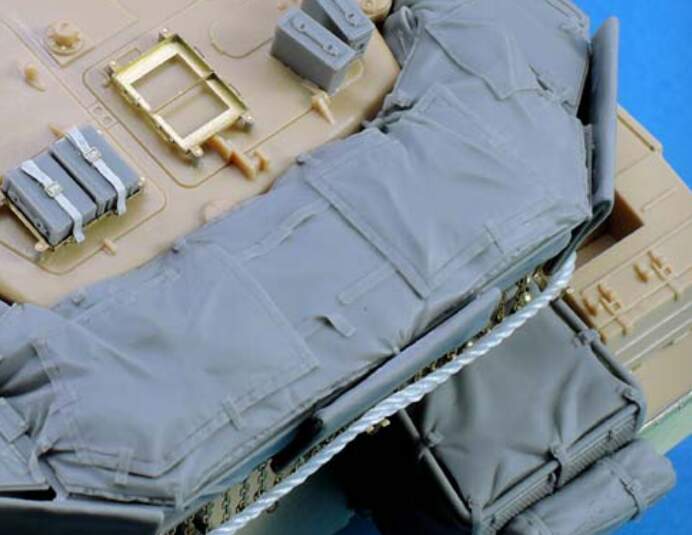
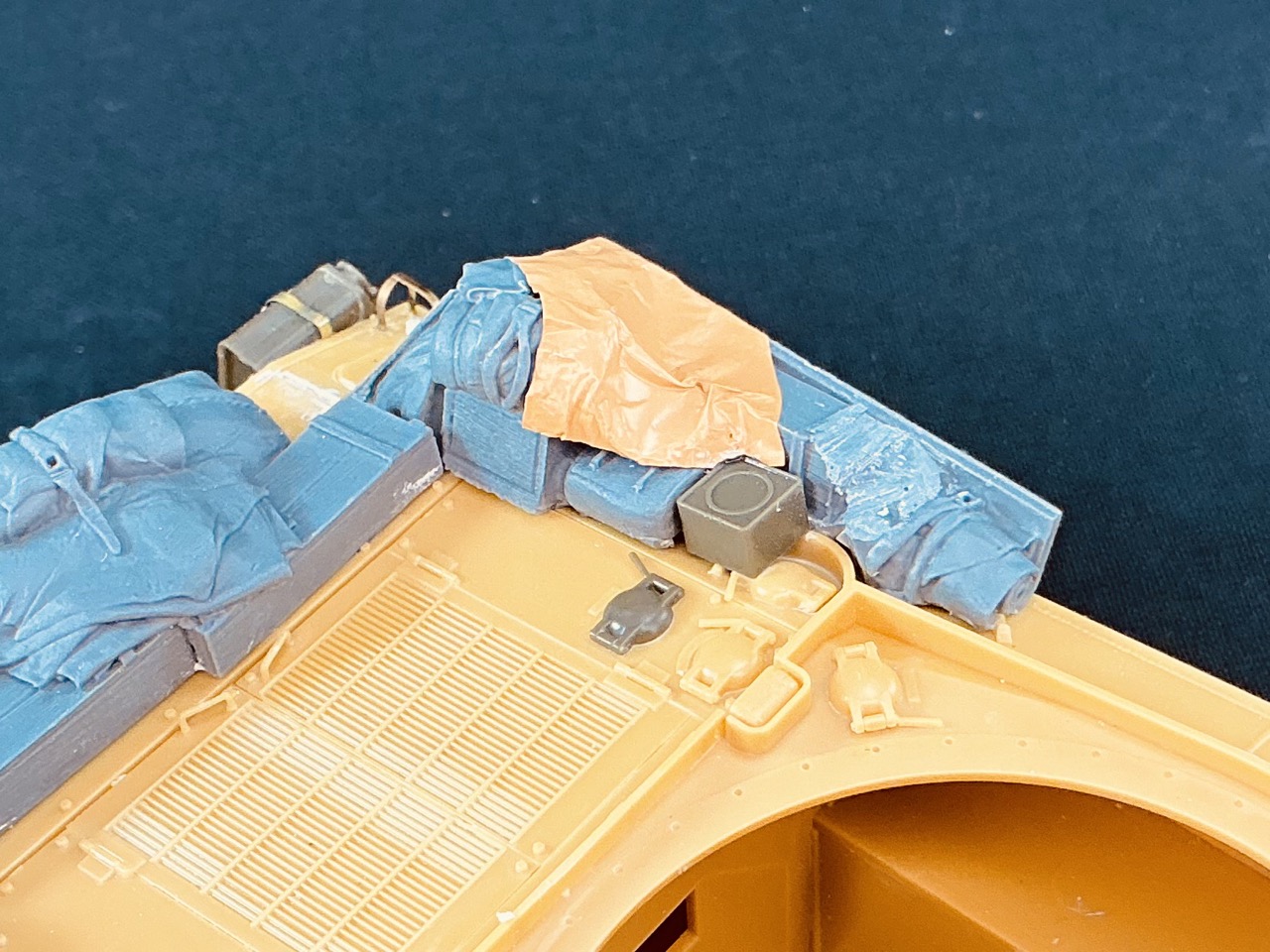
I had this Resin for another model, and now I want something on another where such stuff isn’t available. Had anyone ideas how to replicate this, especially the smaller patches on the larger tarp.
Hi,
I had this Resin for another model, and now I want something on another where such stuff isn’t available. Had anyone ideas how to replicate this, especially the smaller patches on the larger tarp.
Tutorials on how to make bags out of Miliput will show you how - it’s not even hard, most important is to have a good reference of what you are trying to build.
It’s harder than that comment makes it seem, though 
One way to make those kinds of tarps is to take two-part epoxy putty (not Milliput — any other brand is better than bloody Milliput) and roll it out thin before draping it over random stuff you put in the bins (which can just be shapes you cut from wood, foam or whatever material). While it’s still soft you can press folds and details in it.
The thinner panels you can make in the same way, by adding a thin sheet on top of the first. It’s probably best to let the basic tarp harden first, though.
You might have luck using paper and VMS paper shaper. It’s pretty easy to make tarps with that, although they won’t look as detailed as that resin part. You could get a better result by using a two-part epoxy putty like green stuff or Tamiya epoxy putty, but you would have to roll it very into very thin sheets, and you need something to not make the putty stick to everything for that. From what I read petroleum jelly (whatever that is) would be best for that. I’ve seen some people use something like flour to make their putty not-sticky. Haven’t figured that out for myself yet, but putty-tarps have the advantage of being really easy to detail up.
When casting parts in resin you can pour the excess, leftover resin onto a very lightly oiled baking sheet. What you’ll get is an extremely thin sheet of resin. You can drape it over items and hit it with a blow dryer. It’ll conform very nicely to whatever’s underneath it. Then add detail with strip of tape or lead foil.
I tried it once or twice and it didn’t seem hard… Maybe I’m talented?
Once I did a winterfront for a ZiL:

After painting it all up it looked like this:

And it was Miliput…
Vaseline is one brand of purified and very clean petroleum jelly.
Can you just make a mold of this and make a resin copy?
Almost certainly But what is easy for one person may be very difficult for someone else. I can sculpt stuff to the kind of level you show there, too, but I think you’ll agree that this level of work is a lot less detailed than the Merkava tarp shown in the first post. My point was that achieving that is far from simple.
Now imagine what you could do with epoxy putty that isn’t tough as old boots
Another technique is to use tissue paper (facial tissue, not TP!). Drape it, wet it very lightly, and use a blunt tool to shape it. Allow to dry completely. Apply CA and allow to harden. In larger scales, this will give you a fabric texture. Can also serve as a base for applying putty, which saves on putty. Patches and straps can be made by cutting tissue to shape, dipping in CA, then placing and draping. T
Or soak the tissue in thinned PVA glue rather than using superglue. Also, to get rid of the paper texture, once the glue is dry you can thin putty from a tube until it’s like thick paint and brush that over the tarp.
CA (superglue) will make it rigid. PVA will give you a flexible piece, both of which have advantages in different situations. In fact, I got the idea for the CA from someone who was using PVA. 
I use baby powder which works great.
Don’t use facial tissue or TP! By design they both dissolve in fluids. Use white gift wrap tissue or “shirt box tissue”.
Another usable material are “washable” paper handkerchiefs, i.e. those that don’t disintegrate when you forgot them in your pocket as it went into the machine.
And then there’s fine silk fabric, like of ladies’ blouses or underwear.That stuff can be dyed with plain water colors which will give it sufficient rigidity to hold folds etc. after drying and can be reshaped by moistening. Another advantage being that they bring a fine woven structure.
Just be very careful about the way to obtain such textiles - you might be misunderstood.