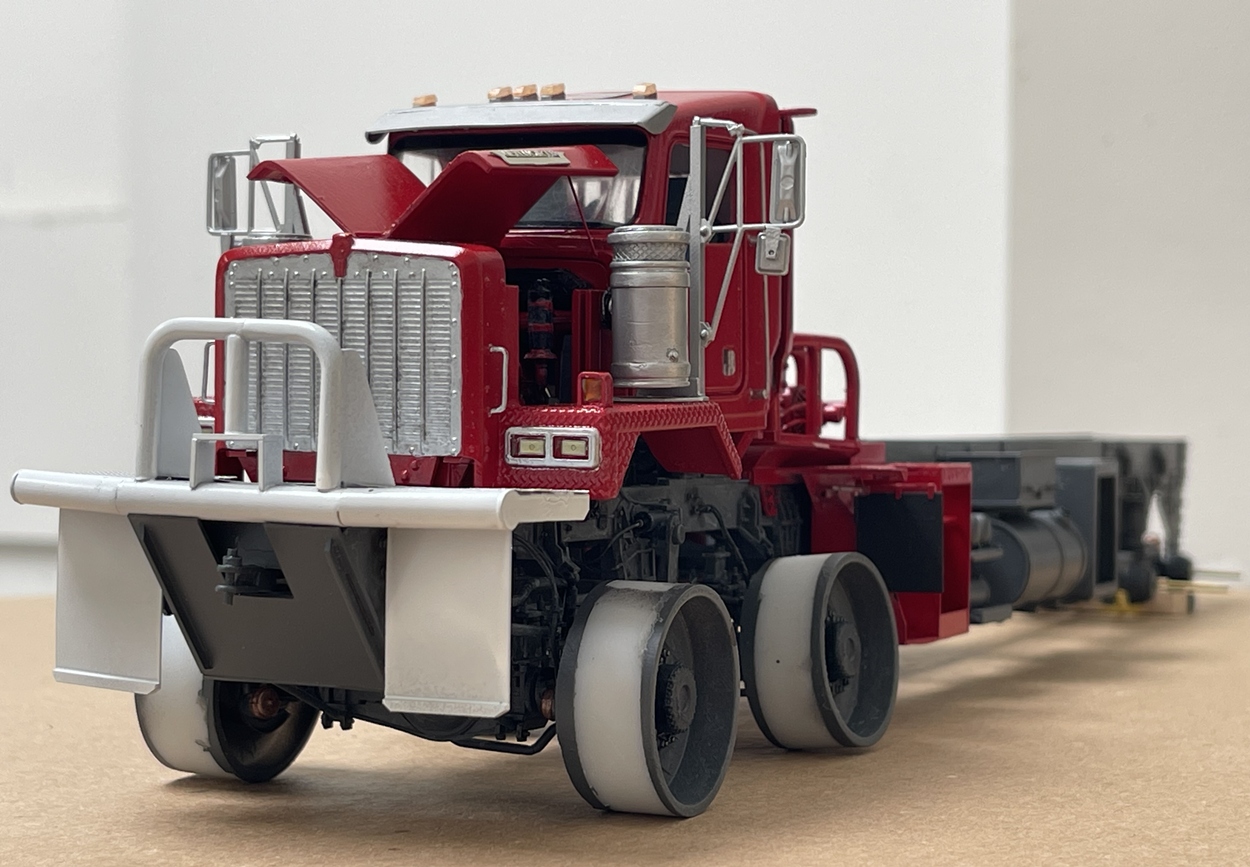
Kenworth C500 tandem tandem bed truck a brute

Hi model builders, so what is a C500 tandem tandem? this:
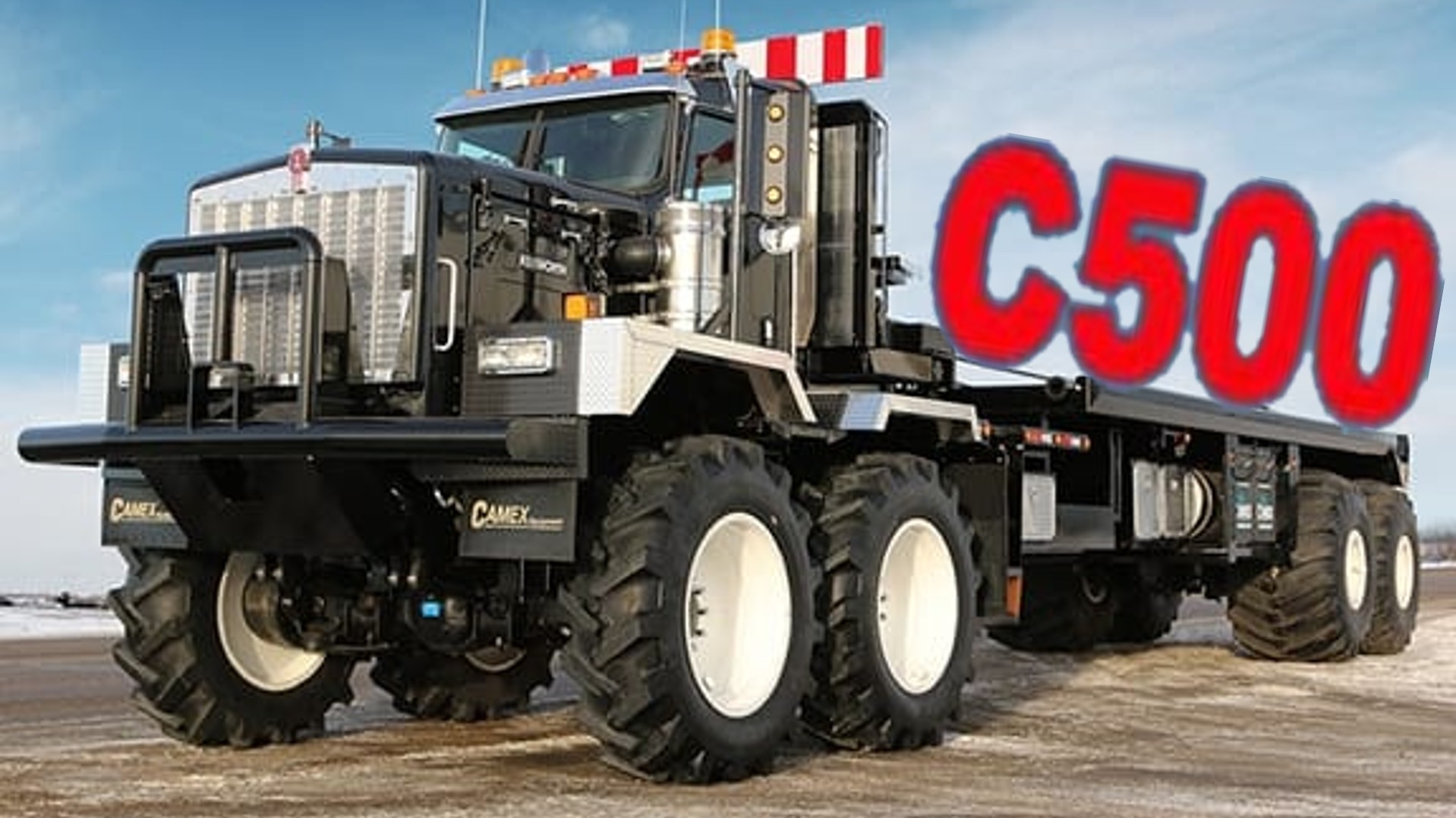
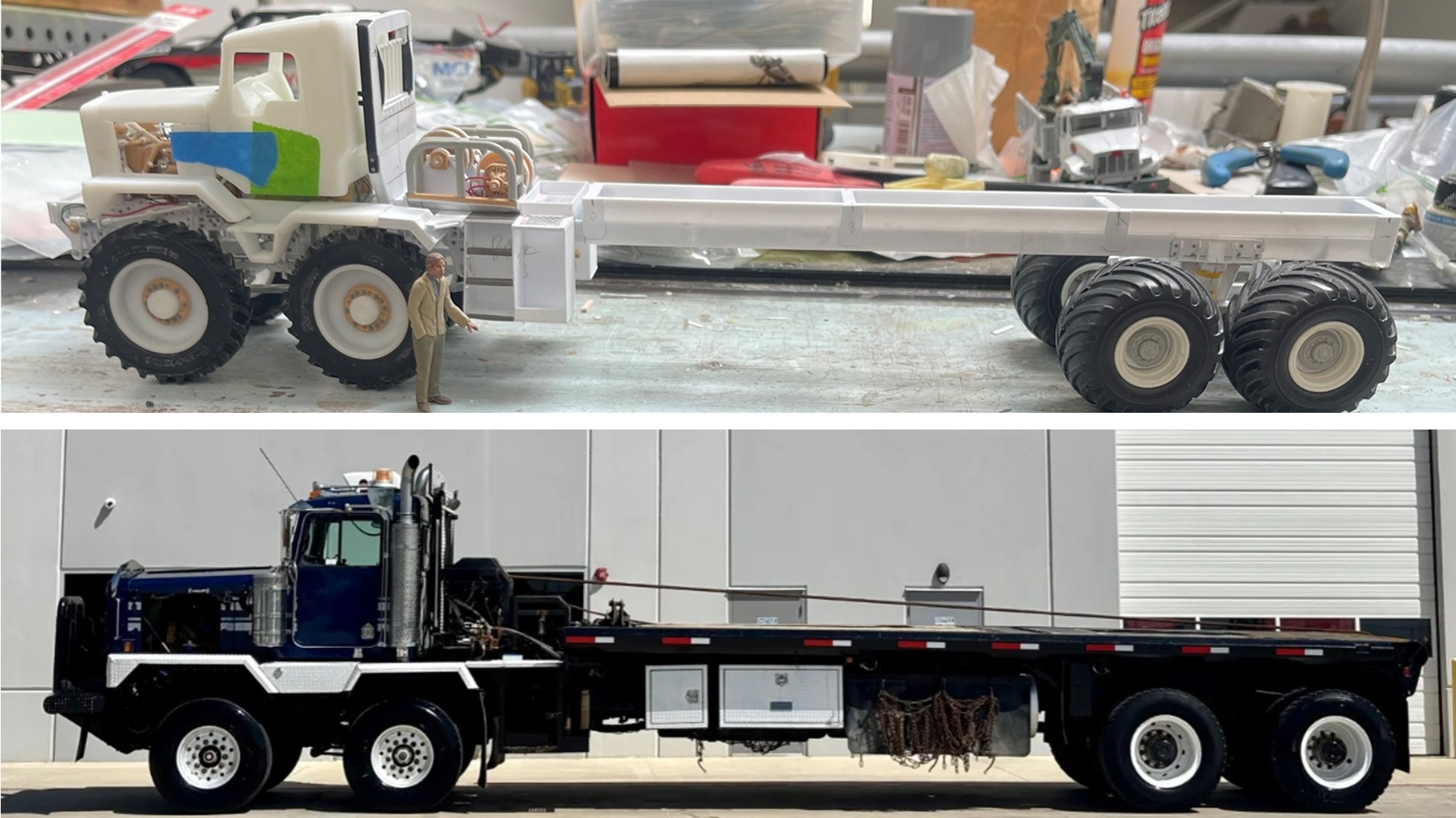
Yes - this brute of course. Heavy duty, off highway, 8x8, bed truck - what a treat! I’ve been pondering making one of these for a while, but was stumped by scale. I built a Kenworth 963 a while ago, and concluded that 1/24 scale would be great - it was, but: it is huge! measuring in at 25” long ((even with a short bed)), heavy, and way more expensive than I think makes sense (ie giant resin tires wheels etc = not cheap!)

So, I’m trying this in 1/32 scale. And a bit more on what it is:
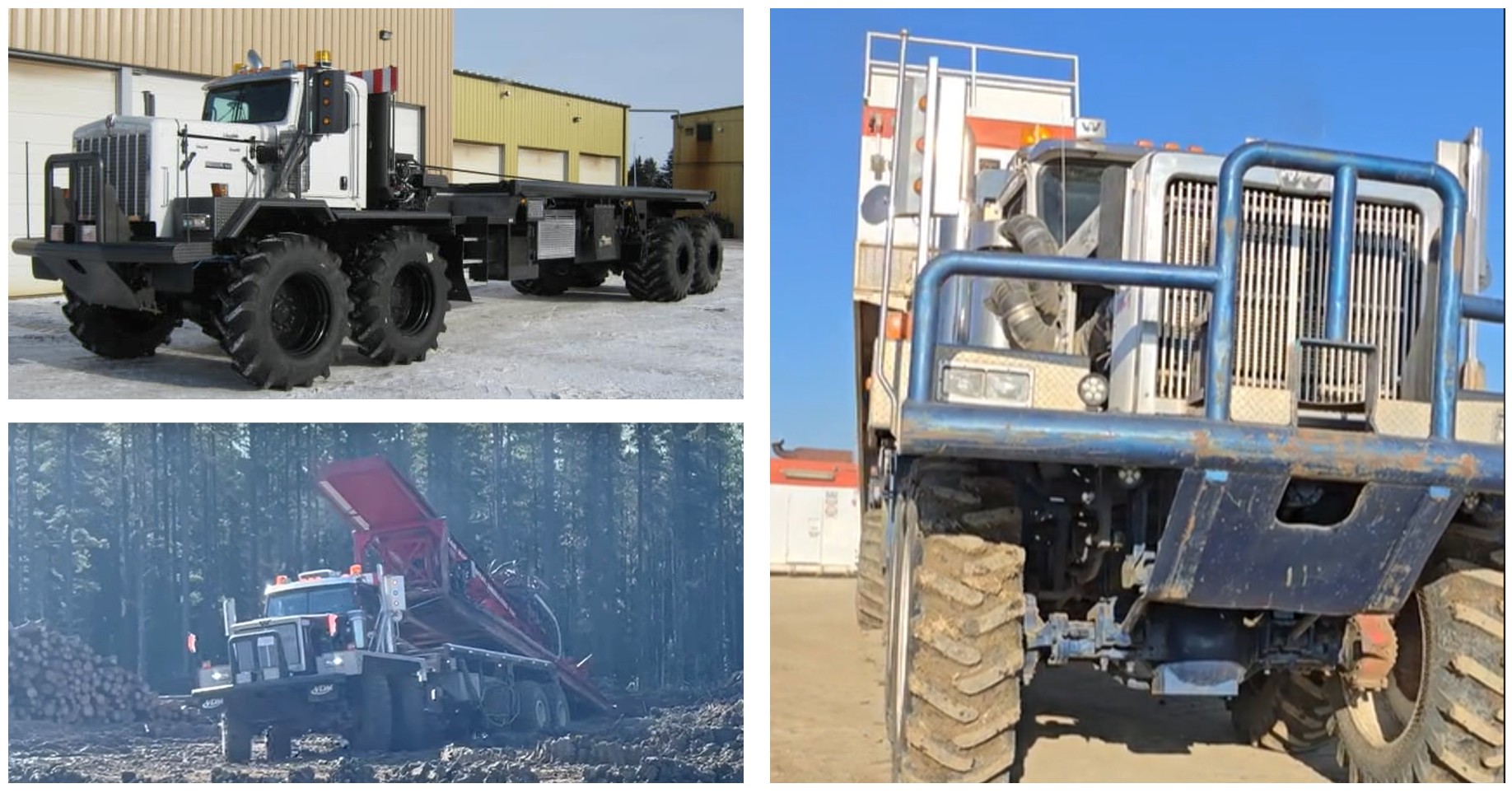
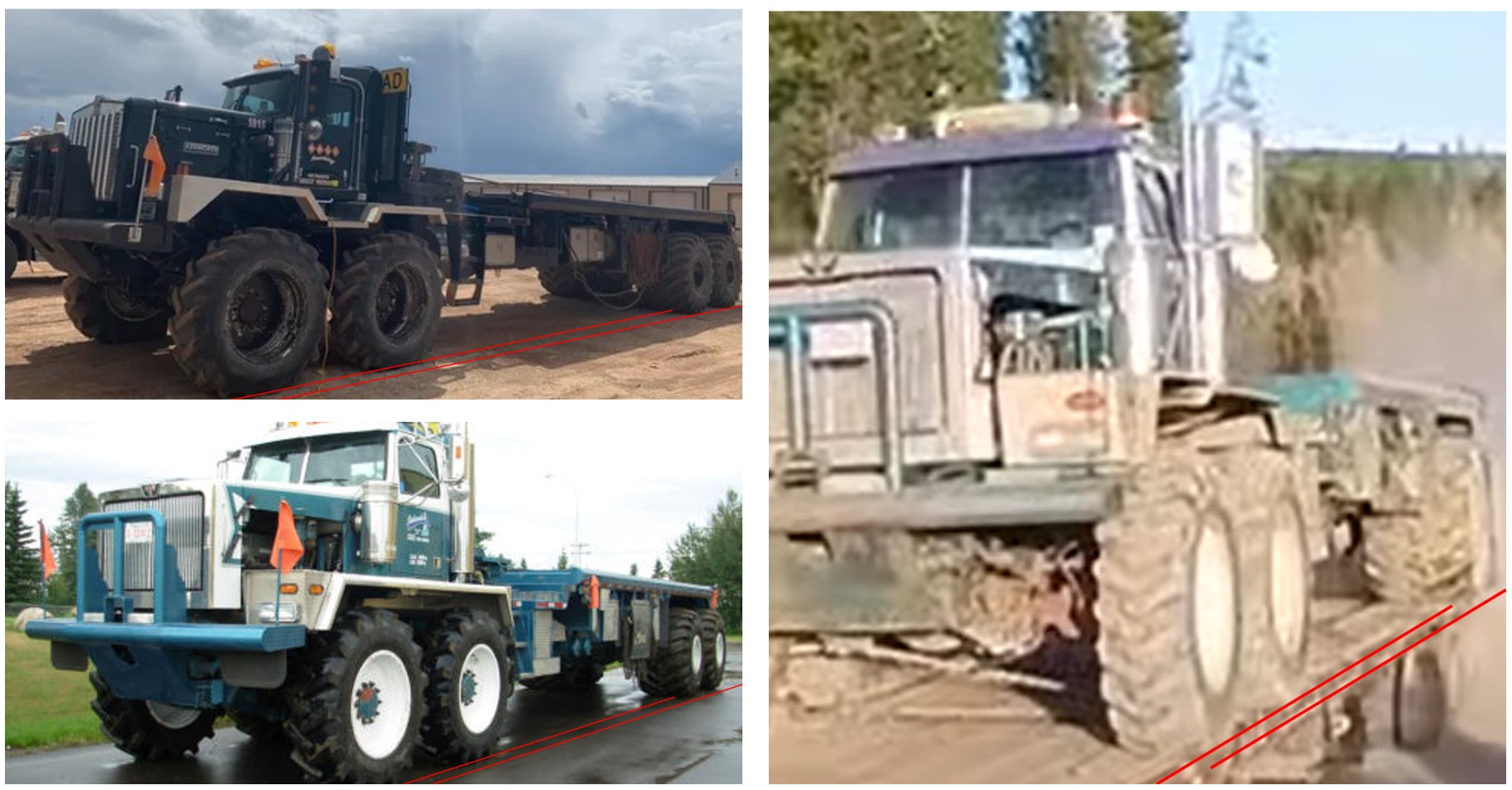
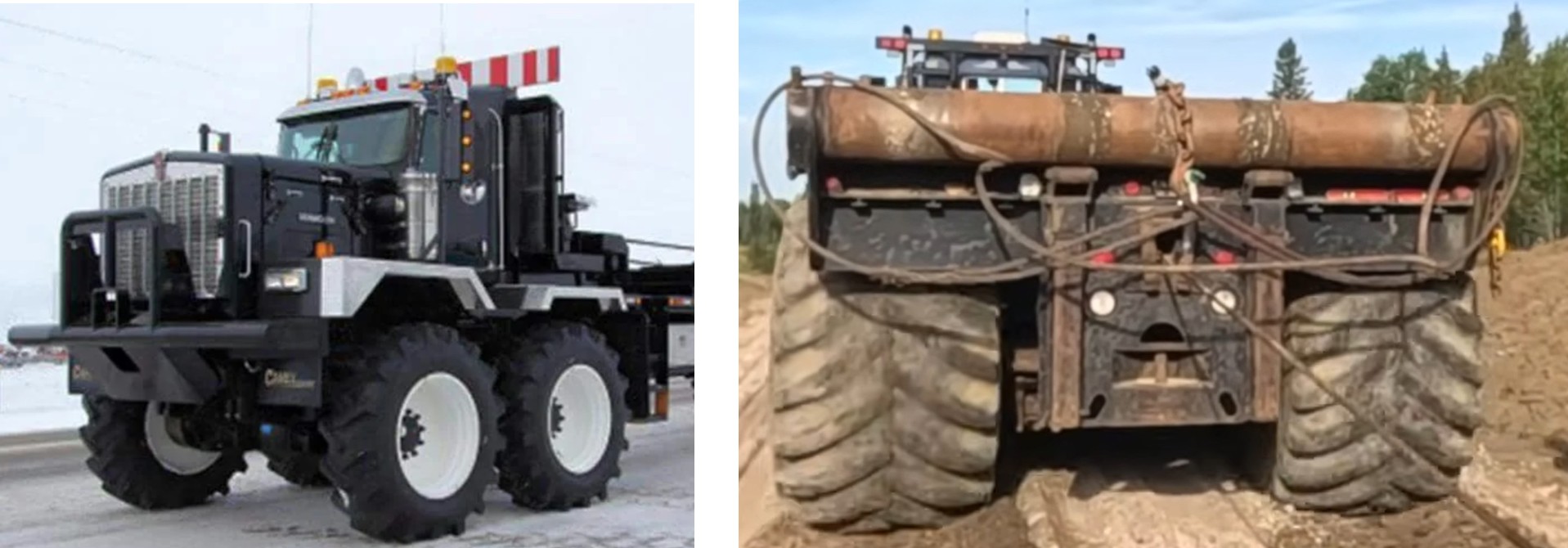
These are heavy duty oil field bed trucks, and in this configuration set up for running around mucky places - like the majestic Western Star shown n the lower left! note the frame flex! As far as scale, these are pretty big:
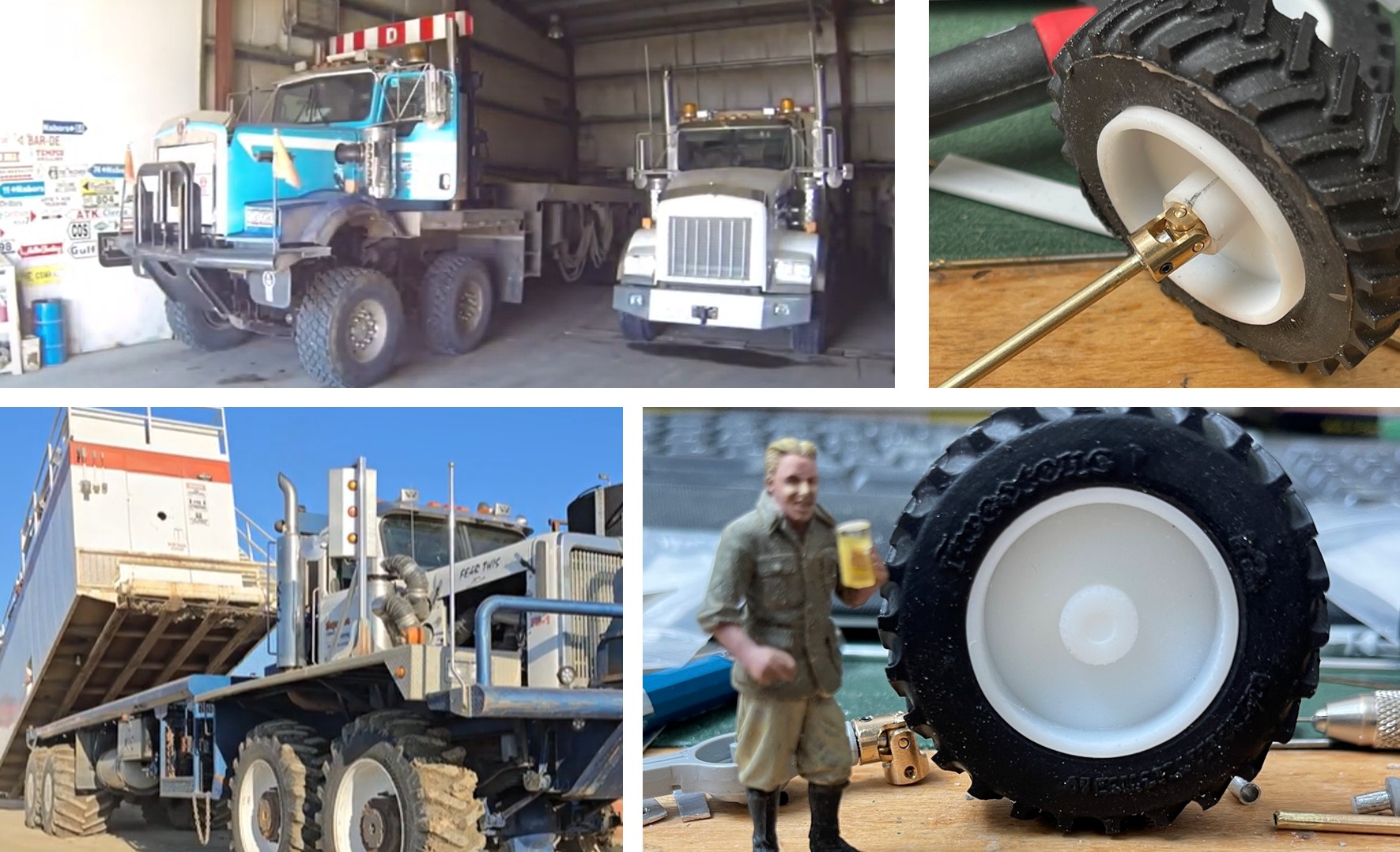
I like the pic in the upper left - that is merely a C500 8x4 next to a W900 and, yes, it is big. In the lower left, a Western Star lifting something big. I settled on 1/32 as I could find a 3d printed cab, and for wheels, these are 1/32 scale tractor tires that are about the right size - a about 1/8 - 3/16” too tall - but hey, I can live with that. The guy overly enjoying his cold brew is 1/35 scale, so a bit short, but close enough for this illustration.

As for the build, I want this to have posable steering that won’t snap off, as the tires/wheels and ultimate build is/will be heavy. I started with some 1/35 HEMTT axles, then attached some U-joints intended for use in RC cars. I had these left over from another project.
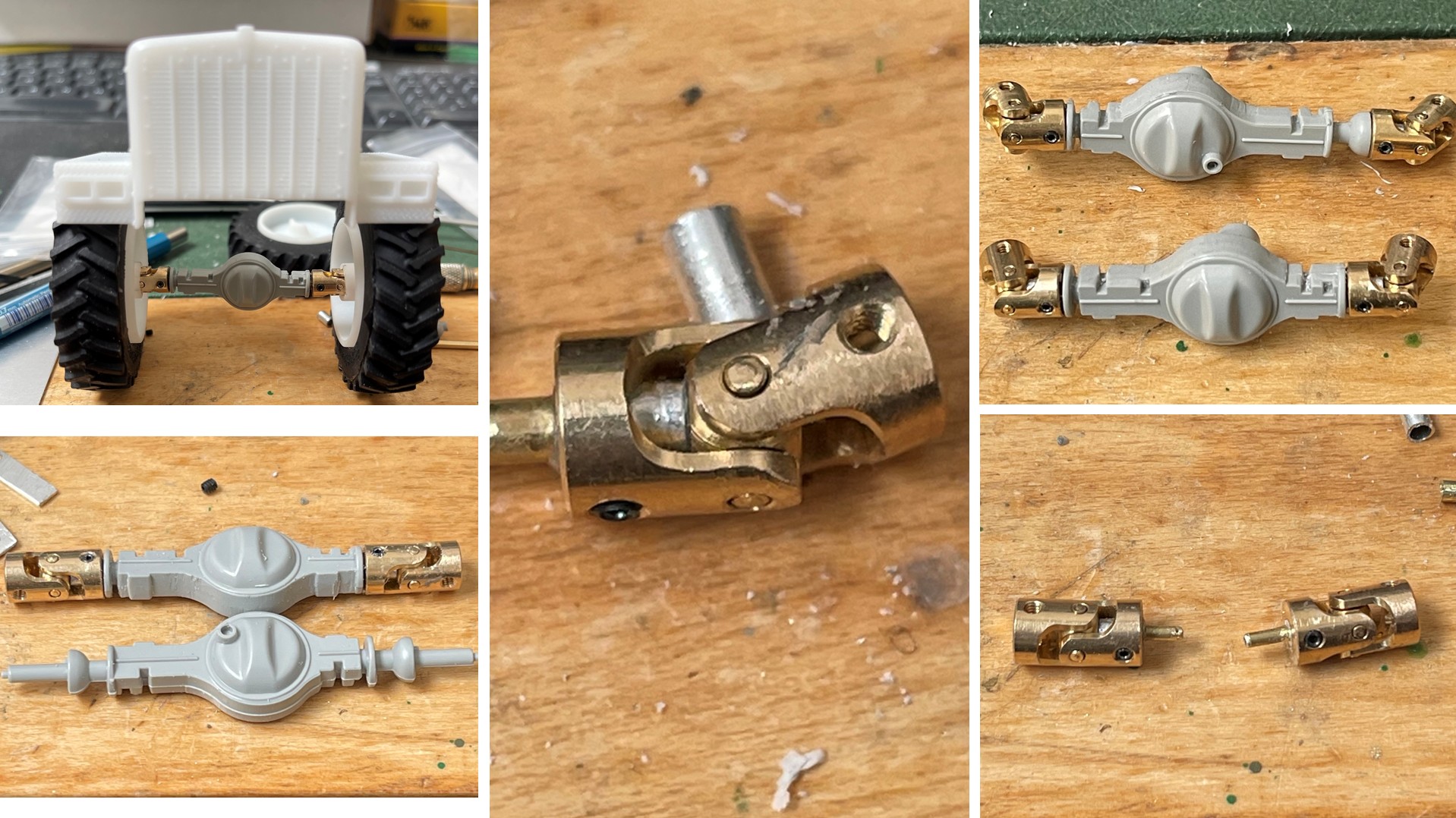
To make this work, I over drilled the inside of the hubs, to accept the u-joints. But, as these are u-joints, they move up/down and side/side, so had to eliminated the up/down movement. It turns out the u-joint, is not the usual “+” shape, and is instead a solid cube, drilled out to allow movement. To resolve this, and shown in the center, the axle shaft (built up with brass rod and alu tube, was pressed against one side of the block (center picture), so now the piece only moves along one, and not two planes. Next, figuring out how to apply all this cleverness to a chassis and body - piece of cake! :grinning_face_with_smiling_eyes: nope, not that:

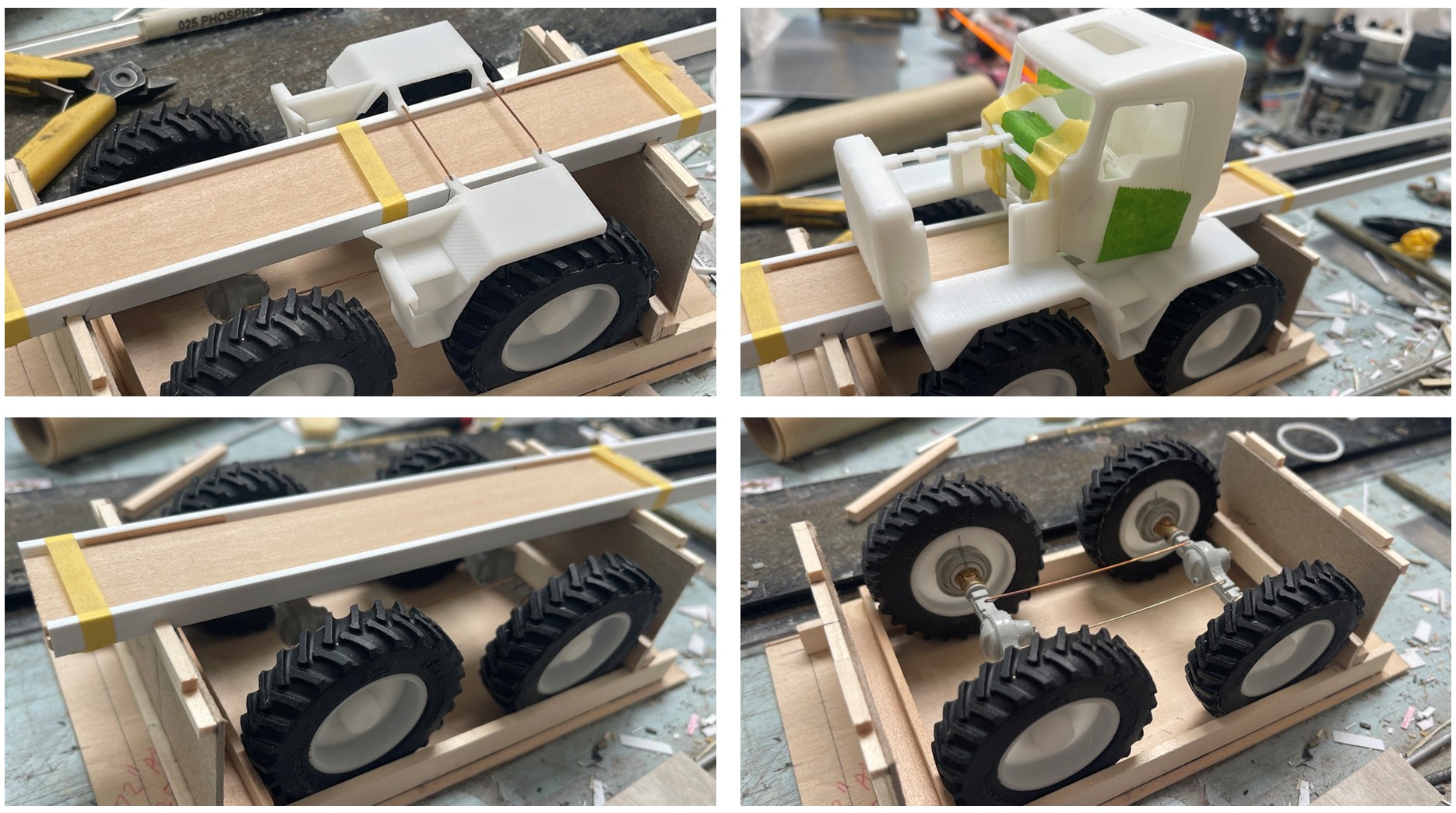
Like the 963 project I built a jig for the cab and front suspension.

In the lower right, the two axles with four tires, set in a wood box. The axles have temporary metal rods attached to keep them from moving back and forth. It’s hard to see in the pic, but I also added inner hubs/brakes, and the spot for attaching steering arms that I’ll scratch build later

In the lower left, a temporary chassis, using channel, spaced with wood, and wedged into the jig.

In the upper left, the rear fenders temporarily attached to the frame. This is important in order to set body height and axle spacing.

Finally, in the upper right, the cab set in place.

I did all of this so that I could set a working chassis height, and determine the distance between spring mounts and axles which I need to make - likely using remnant kit leaf springs, and scratch built hangers.

While this might look like a bit of PITA to set up, I’ve had pretty good luck making jigs like this in the past. Even if not exactly right, at least things stay in fixed locations while measuring and test fitting, and most importantly, when done, this helps keep axles square and wheels in line with each other and ultimately within body openings.

I don’t know if this will be a fast build, but it will be interesting. I have another project well underway but am a bit burned out on painting and still have some tedious decals and weathering to do - so, why not start a new project! :sweat_smile:

Thanks for having a look -

Cheers

Nick :man_biking:

10 Likes

Oh, I see those regularly around here! Nice project; good luck!

1 Like

Another wild build from the “House of Stick”, looking forward to this as always mate.

Cheers, D

1 Like

Hi @Fanchmodel,I understand these can be seen around Alberta, specifically Red Deer and north! Grande Prairie, Slave Lake and so on! These must be quite a sight in real life :astonished_face: :grinning_face_with_smiling_eyes: I can only imagine how big they are, as you will see below, they are pretty big even in 1/32 scale!

@AussieReg, Hi D, yes, another eater of styrene underway! thanks for dropping by!

How many problems? all of them! For this week the plan is to get going on the rear end. To explain what this means, a few prototype images:

First up of course, scale. The bed on this truck that is the actual bed, behind the pair of winches mounted behind the cab, seems to generally be in the 25-35+ foot range, so, as you can see above, they are long! Next - exactly how does the geometry of this work? well, it’s not as obvious as it may look:

It turns out, on the version of the truck I am trying to make, with the high floatation tractor tires, the rear wheels seem to be/sit wider than the front tires. This makes enough sense as the front tires are tall and thin, and the rears, not. It took me a while to figure the nuance of this out, but it becomes pretty obvious when you try and set the rear tires flush to the chassis frame rails, which of course have a uniform width. Noticing this, I went back to my prototype pictures and confirmed that yes, the rears stick out past (are wider) than the front.

Then on to guestimating how far? as shown below:

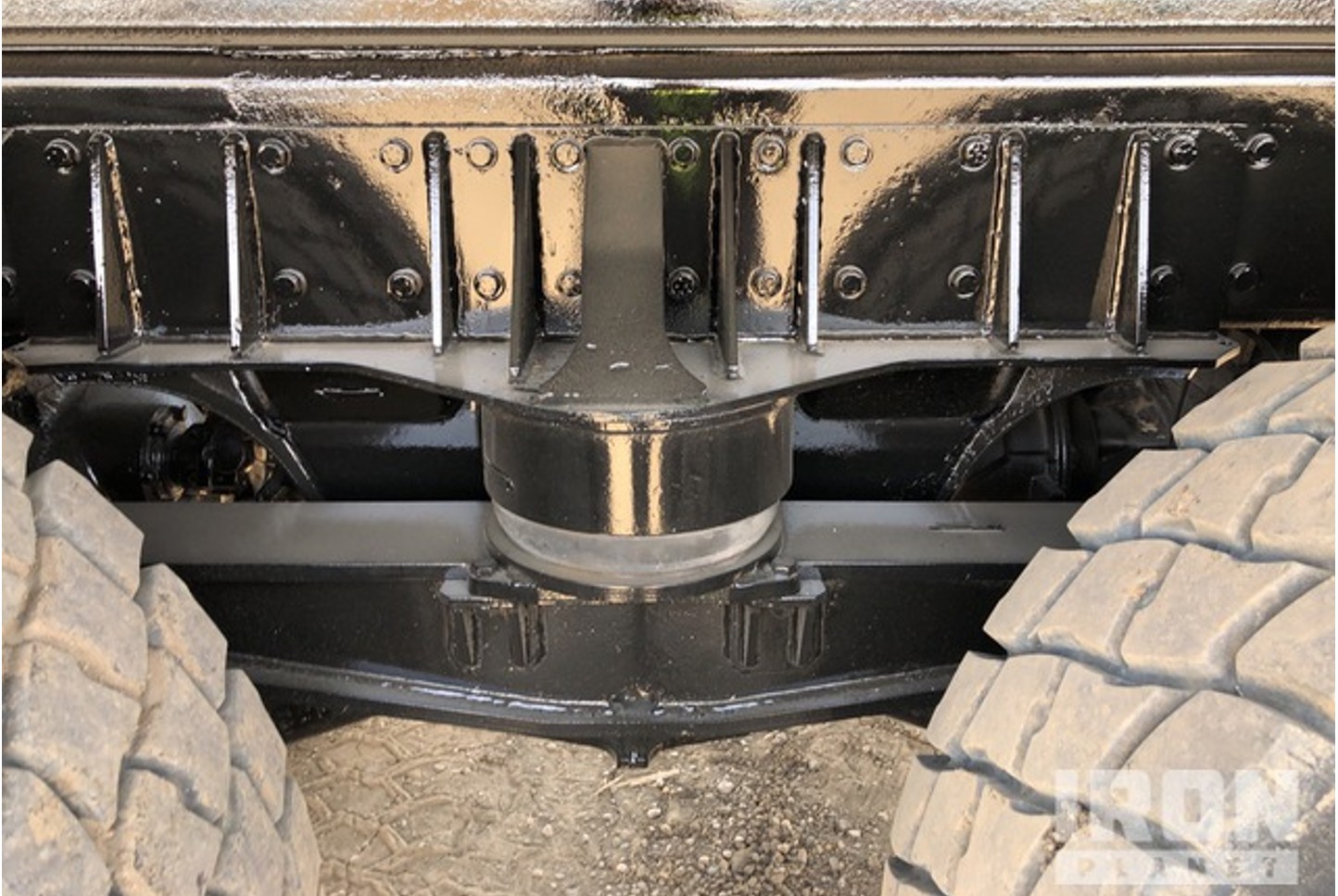
The rear suspension on these trucks often includes a walking beam, which is of course located beneath the frame rails. So the fires are offset enough to allow for vertical movement, but evidently not too far, which makes sense, as the axle (distance) between the walking beam and wheel hub/planetary gear could (I imagine) become/function something like a moment arm. That is, the axle strength might be compromised if it were to project too far outward from the mounting points on the walking beam - or, so I am guessing! :grinning_face_with_smiling_eyes: And as such, I’m trying to set the wheel/hubs relatively close to the walking beam, but not too close.

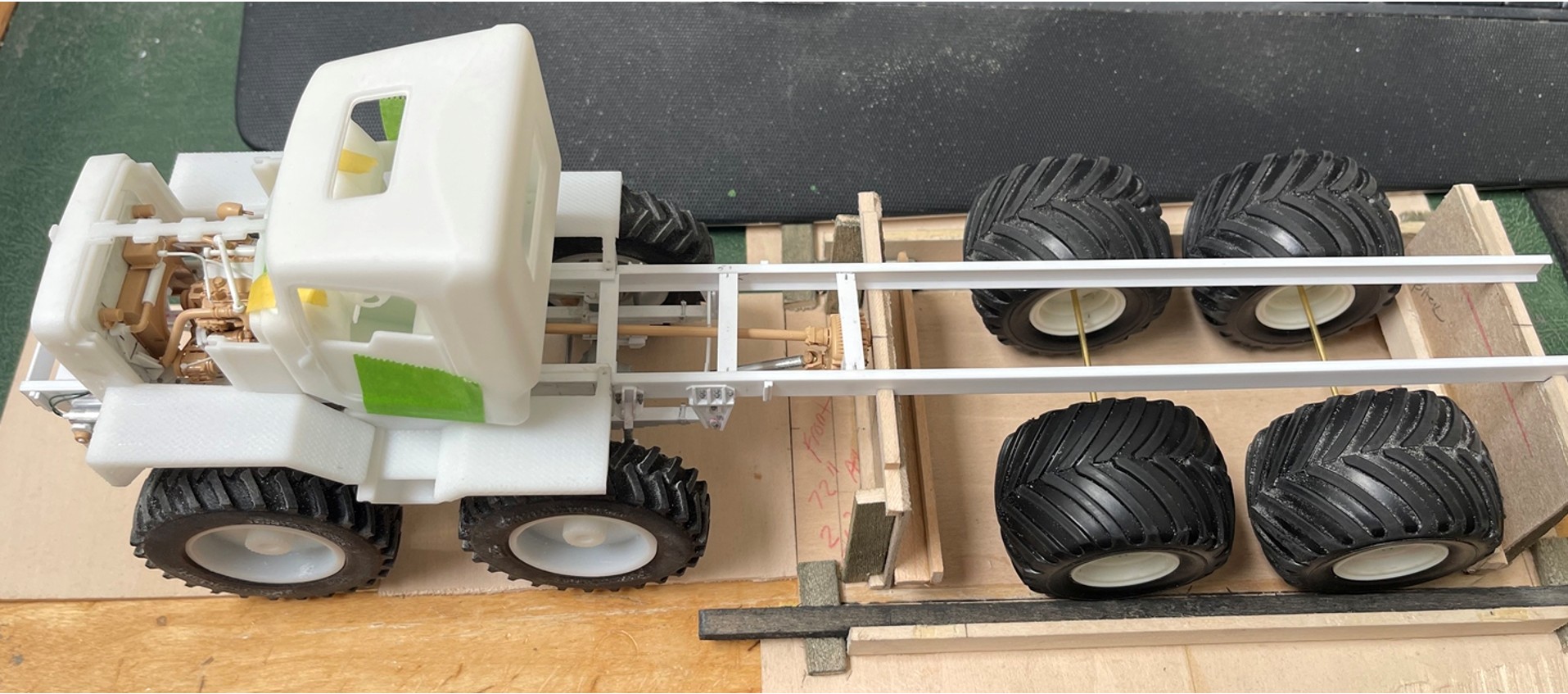
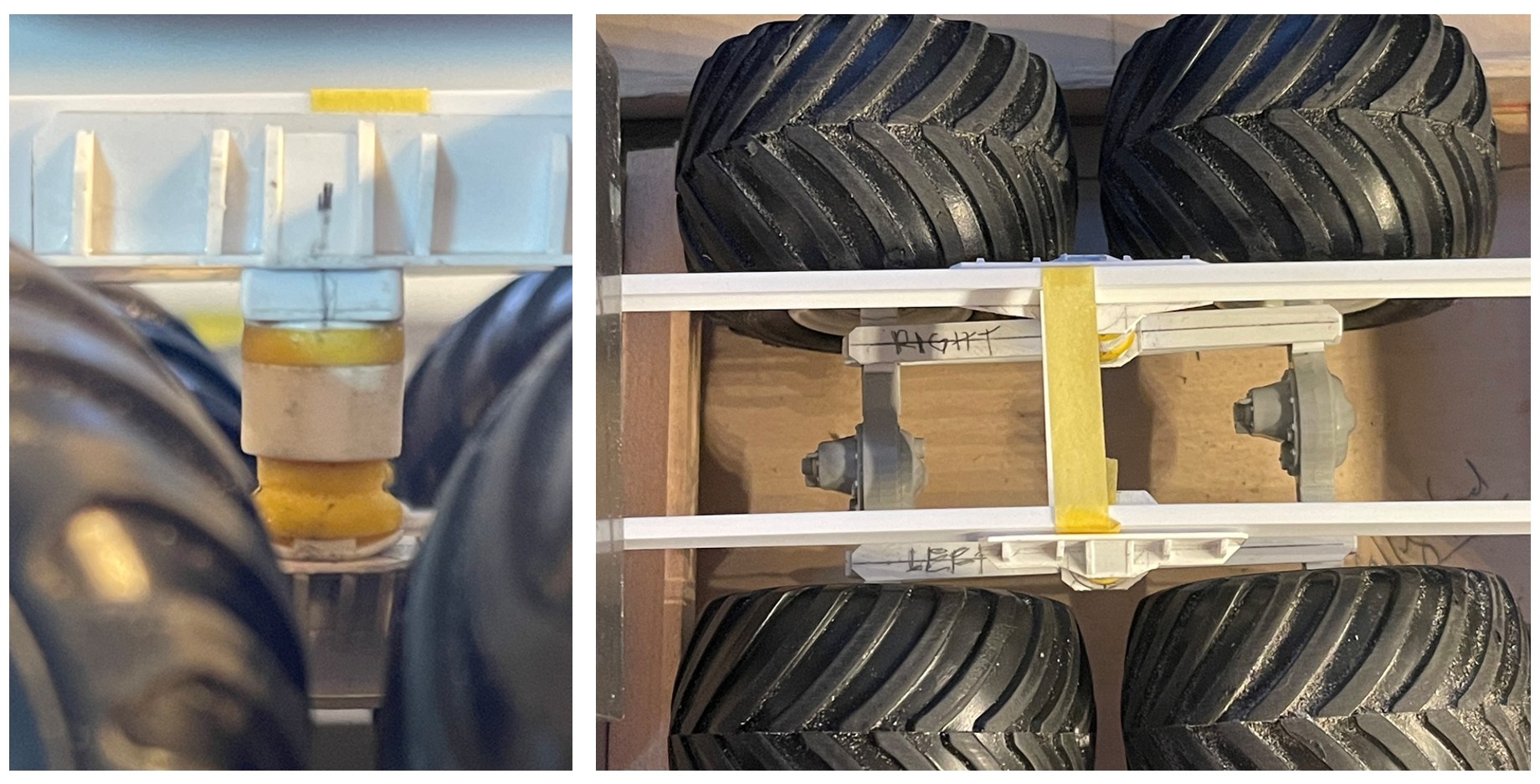
To get this underway, I modified the jig I used to make the front suspension, as this will ensure the distance between the bottom of the frame rails, plus the walking beam thickness, will set the axle location, establishing overall chassis height in the rear! Wow - that was a lot of words! So, have a look:

Oh, and note, the chassis rails will be lengthened about 5”, so it wont look as squat as this.

I set the front end on a sheet of wood that’s the same thickness as the base of the jig, so the chassis height remains constant. Then, adapted the jig to allow for the wider rear tires/wheels. The wheels are temporarily spaced with brass rods, which I’ll eventually use as axle shafts.

So, slowly but surely this is moving along.

Thanks for having a look

Cheers

Nick :man_biking:
11 Likes

More work on the front end of this truck. It turns out, I jumped the gun on the rear end :grinning_face_with_smiling_eyes: There was plenty to do up front:

I added an axle truss - note to self - do this earlier in the process :grinning_face_with_smiling_eyes:

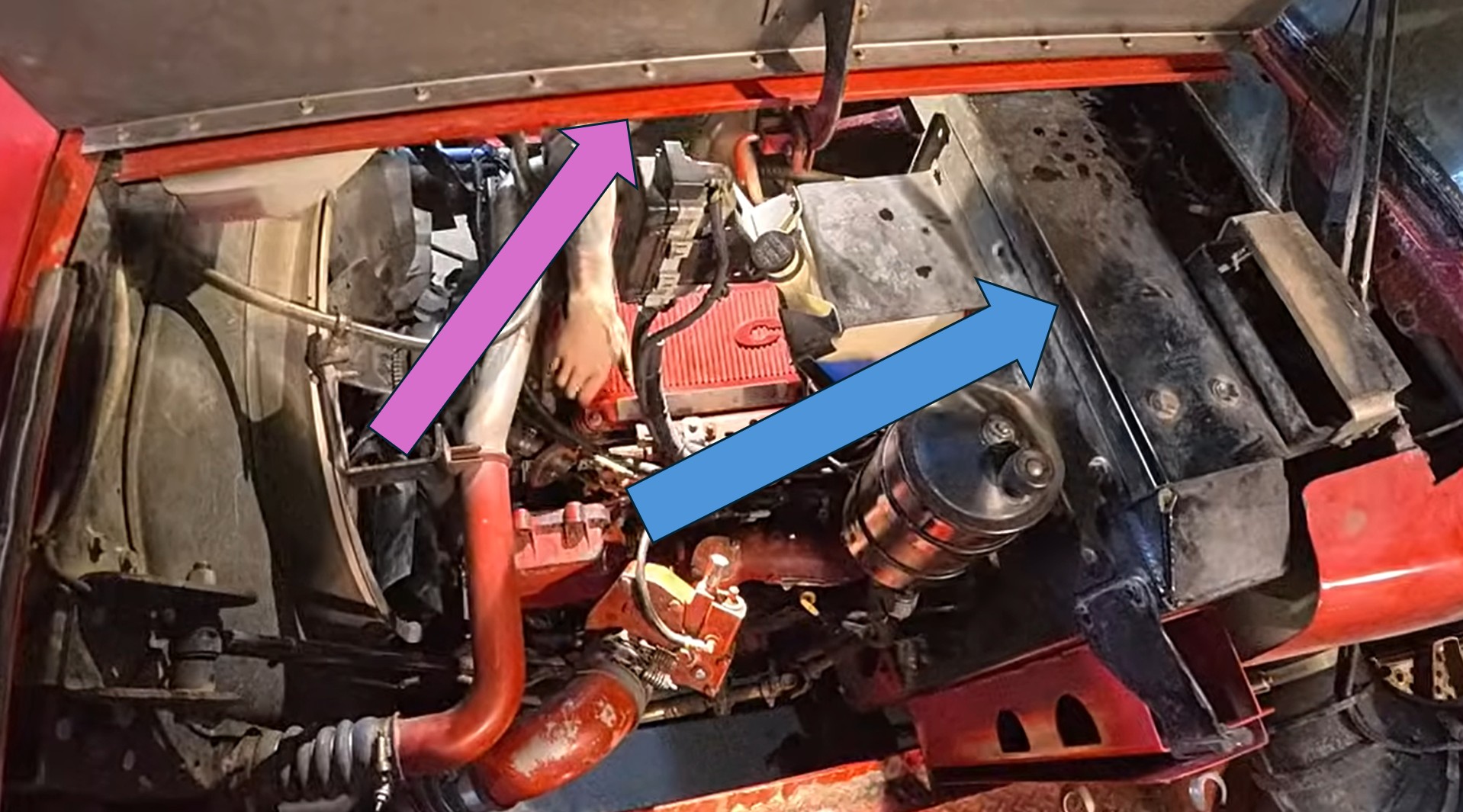
Next up, I thought would be to add wires and so on to the firewall, but after looking at prototype photos, realized that was not the thing to do:

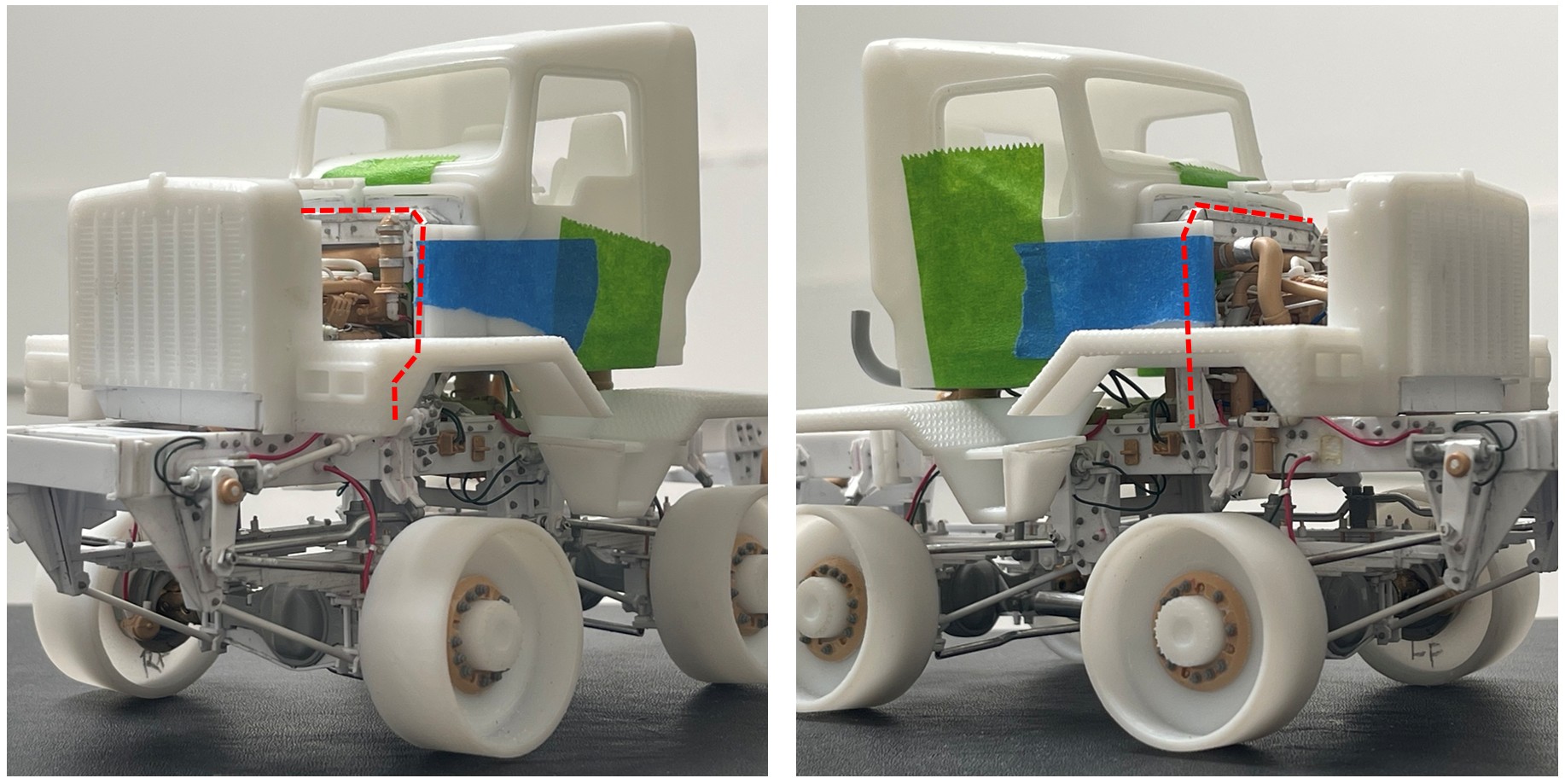
The blue arrow is pointing toward the firewall - and you can see the black area, which is part of a structural frame going down to the chassis. So, I went about adding it. The purple line points to the hinge on the butterfly hood.

A challenge was to locate these towers, and then build them convincingly around the engine and steering

The red dashed lines give an idea of what’s going on

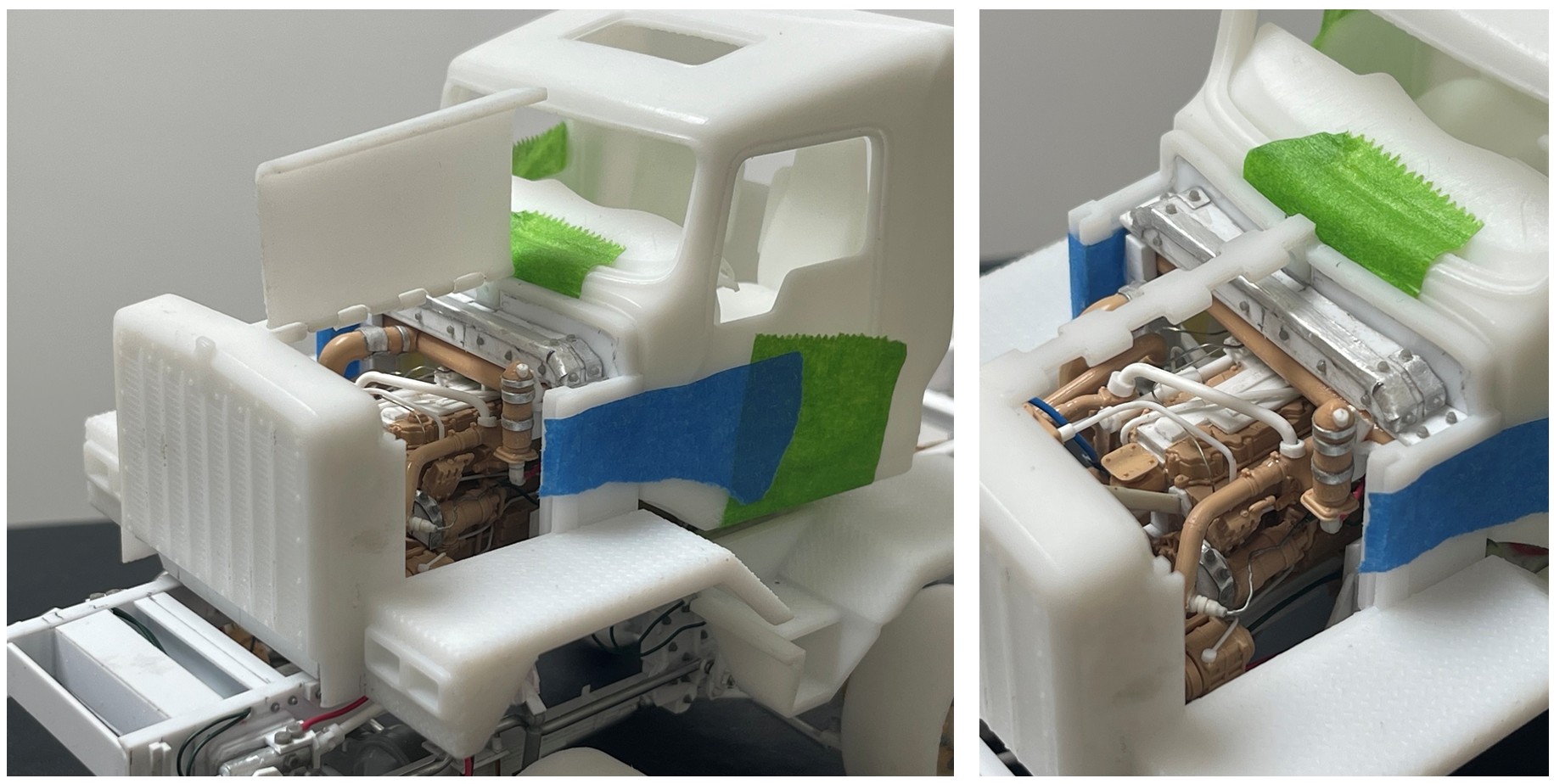
And from above.

OK, on we go, thanks for having a look

Nick :woman_biking:

12 Likes

Looking good, as usual.

2 Likes

Awesome stuff Nick, always inspiring work! I love your methodical approach to overcoming any trouble spots.

Cheers, D

1 Like

@18bravo , hi Rob, well you know, you are at least partially responsible for this unnecessary consumption of styrene, metal, alu, and glue…how you ask? It’s funny, more than ten years ago now, I bought my first walk around collection from you! I discovered that with enough patience, you can build an awful lot using only pictures. So on we go!

@AussieReg, HI D, thanks very much! I appreciate it, and am glad to see you back at it. Hope all is well with you and yours -

OK, for today, I decided to get after the rear end. I realized I might have added all sorts of un-needed detail to the front end because: 1) I wasn’t exactly sure how the rear end works; and, 2) I was a bit scared to get into it! Nonetheless, that is what I did.

First, I spent too much time trying to learn about what is actually going on back there, and eventually discovered it’s likely that this is a Chalmers 800 walking beam. It also turns out this rear end is a lot more complicated than I had guessed. I also found that they offer a low, high and extra high versions to accommodate various tire sizes, all good, except, I was unable to discern the difference between them. So, rather than waiting for some sort of mystic intervention providing clarity, I just started work.

First up working on the axles and getting spacing right:

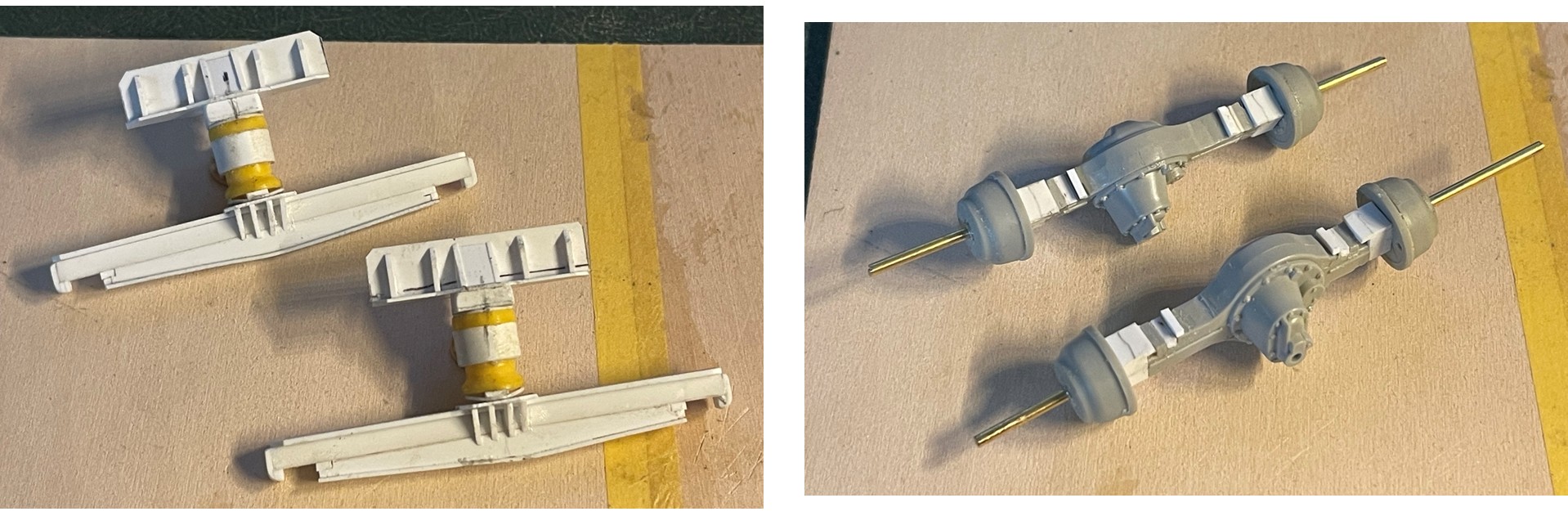
No, I didn’t draw it up in CAD and print it :grinning_face_with_smiling_eyes: instead, relied on my decidedly low tech approach. The axles donors are from an Italeri M1120, widened and modified to suit my needs, then on to the walking beams:

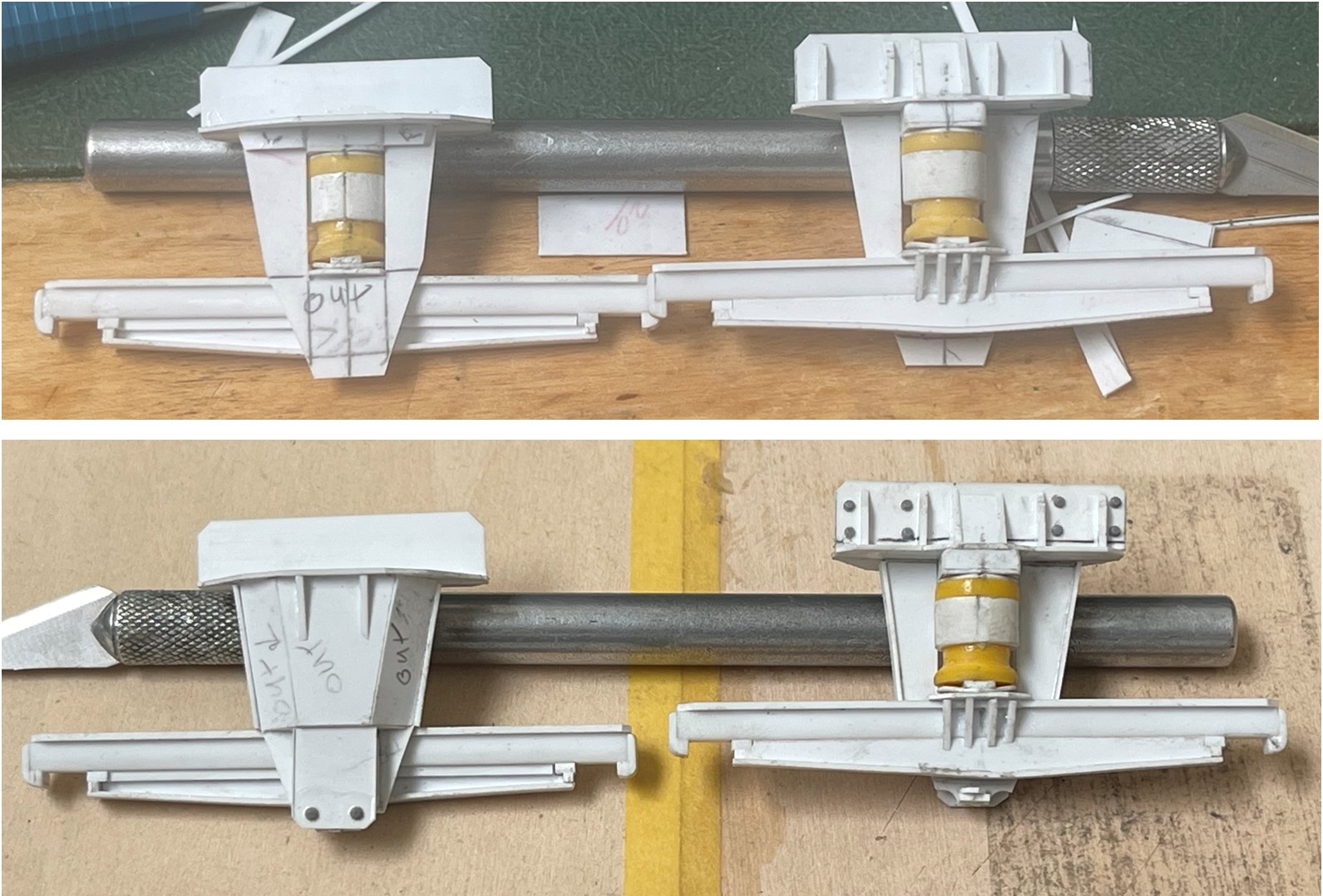
I forgot to take pics of the process! good job me….anyway, making the walking beams took a long time. I wanted them to match and fit snugly, which as it turns out is easier said than done.

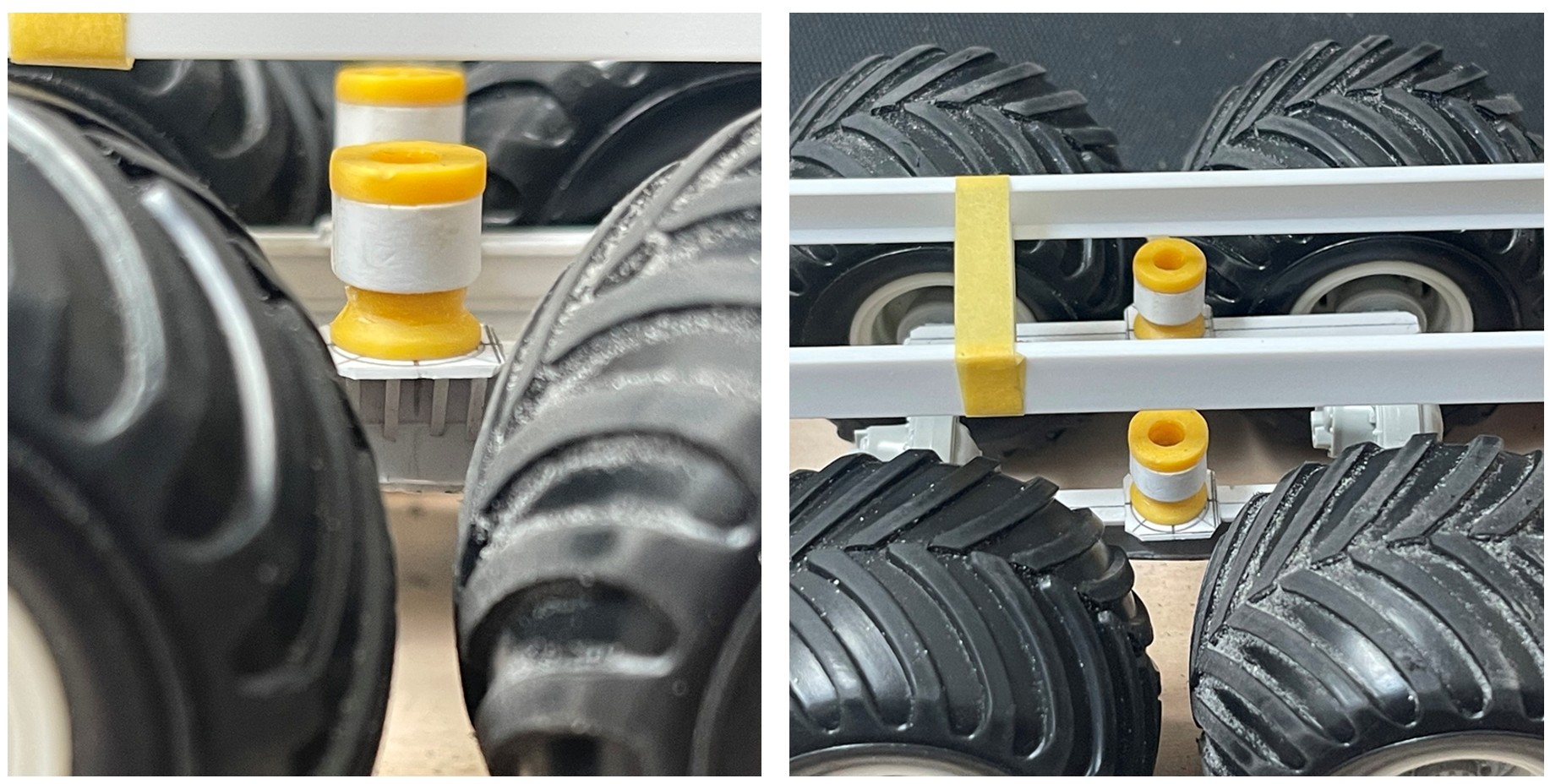
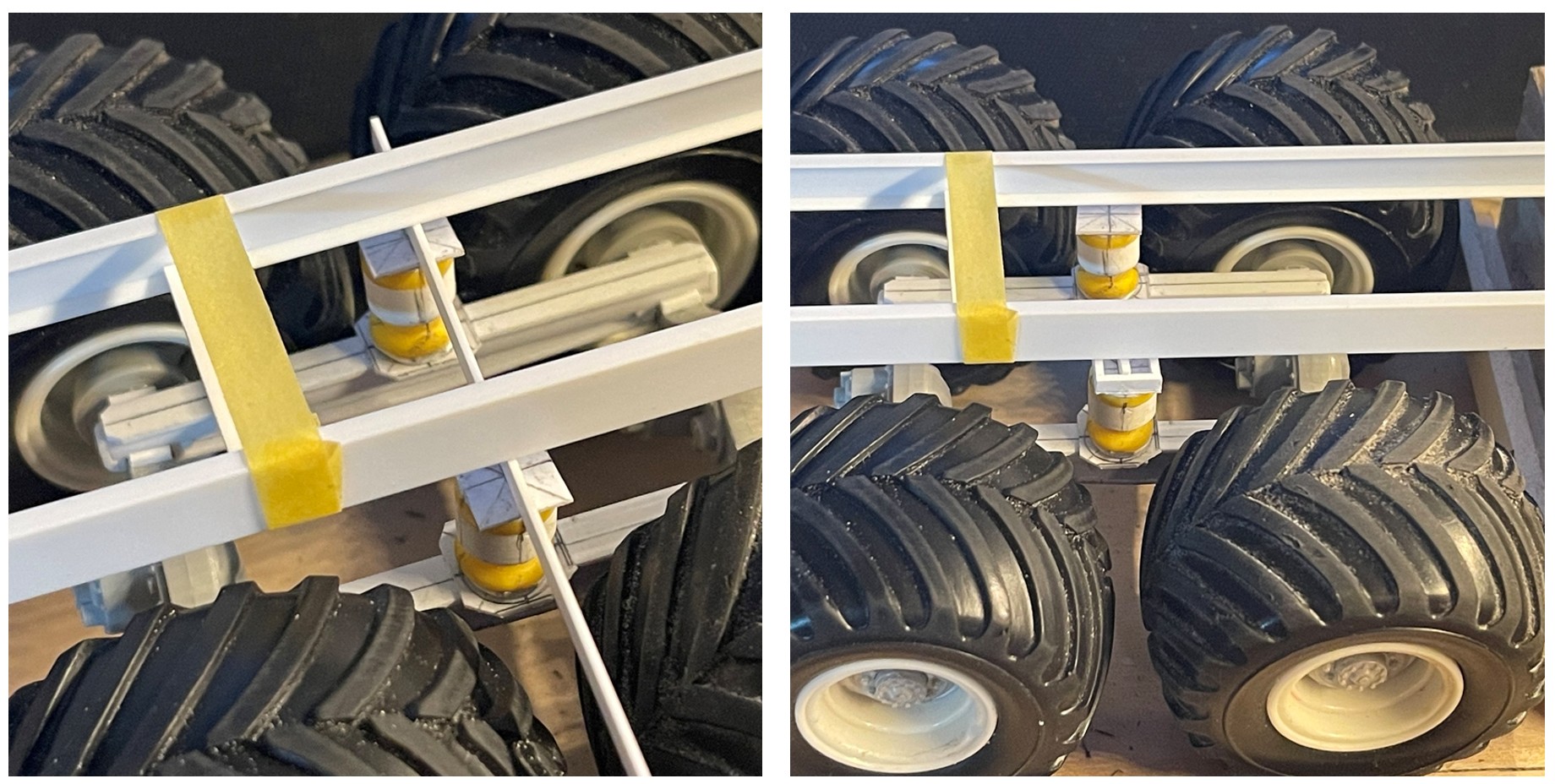
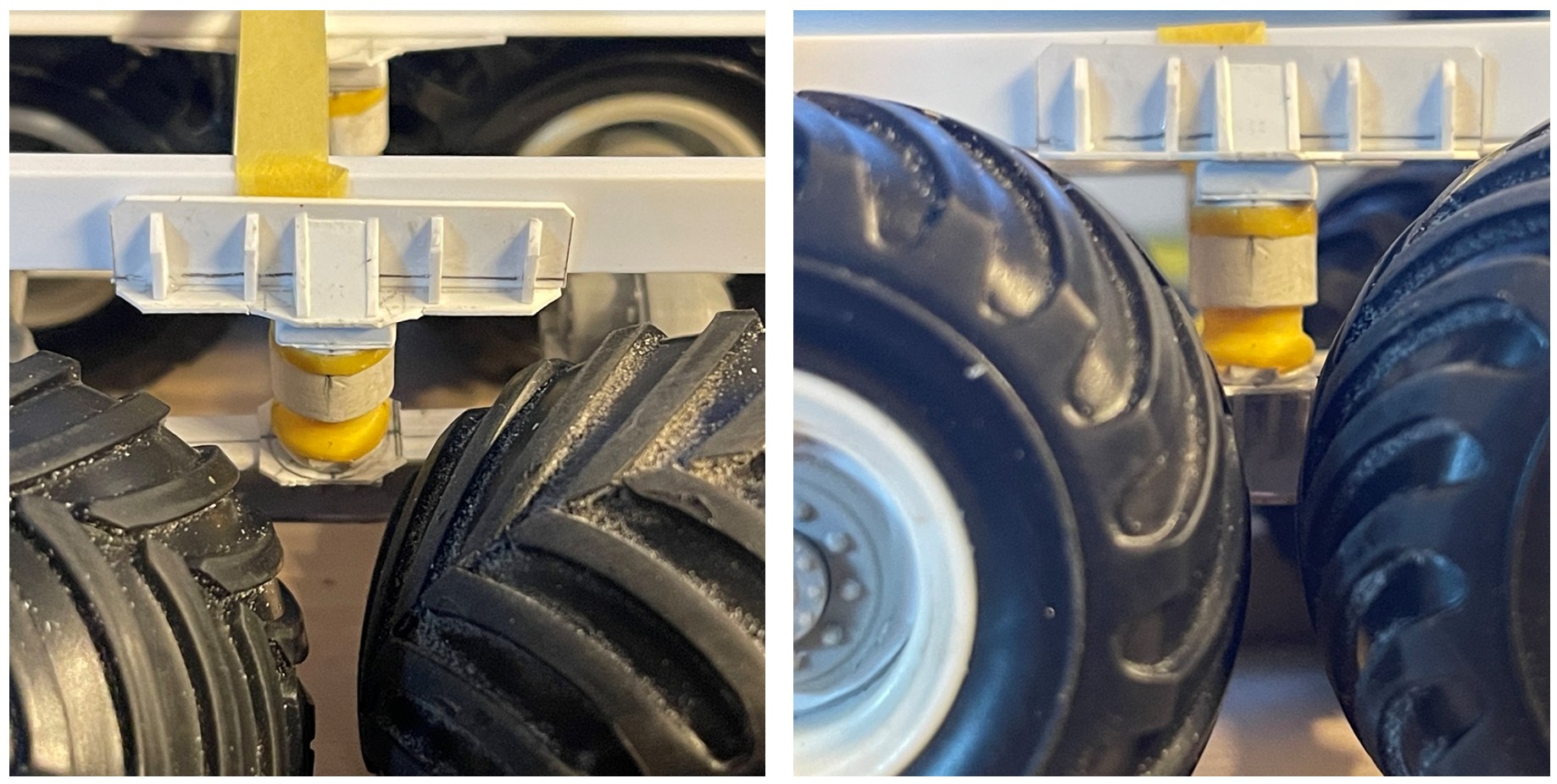
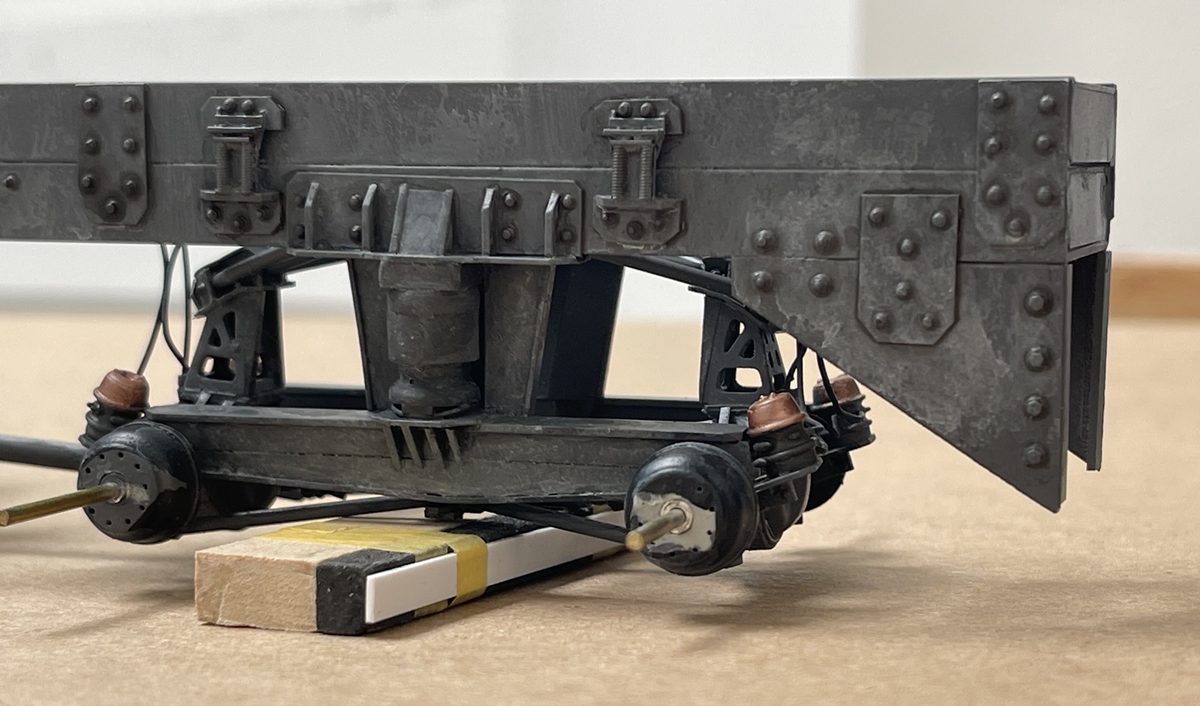
With the beams worked out, I began building upward toward my temporary frame rails. At this point I was glad to have this jig - as things stayed where I wanted them as I filled in the space between the two, The yellow towers are representing large rubber blocks and their housing.

With the towers where I wanted them, I made up the brackets to attach them to the frame rails.

And after all of this, what do we get?

Four parts. None of which are close to being done.

The walking beams will next get internal frames and brackets for torque arms.

The axles will get brake pots, and brackets on the ends, and atop the differential for…more torque arms.

Then, once the frame is built…yes, more brackets for, you guessed it! more torque arms! :grinning_face_with_smiling_eyes:

So, on we go

thanks for having a look, and cheers

Nick :man_biking:

6 Likes

17744486469602341341907703648573

2 Likes

Ha! yes, pull up and enjoy this styrene extravaganza! :grinning_face_with_smiling_eyes:

I have stuck with the rear suspension tasks - which is turning out to be every bit as challenging as the front end.

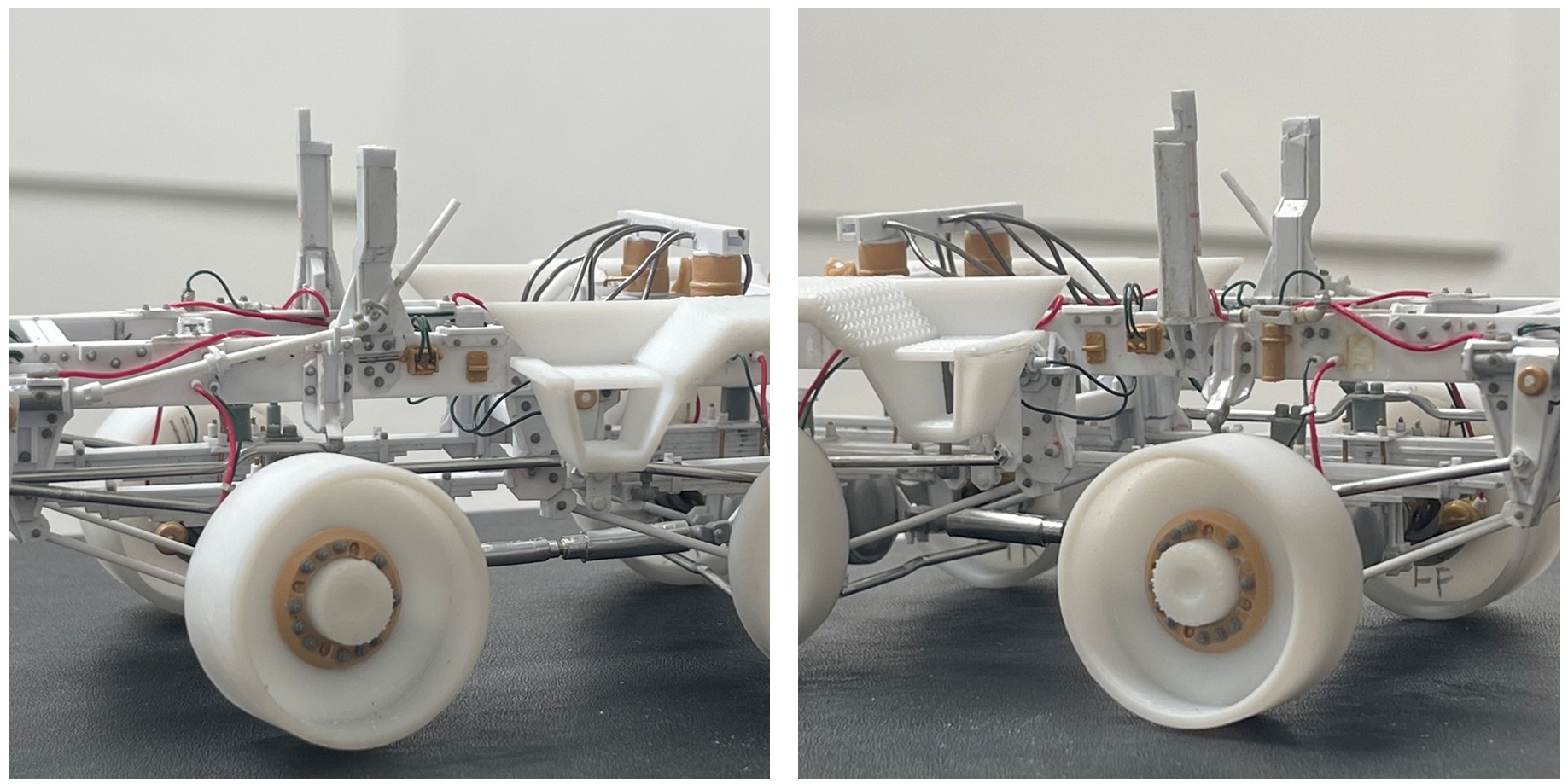
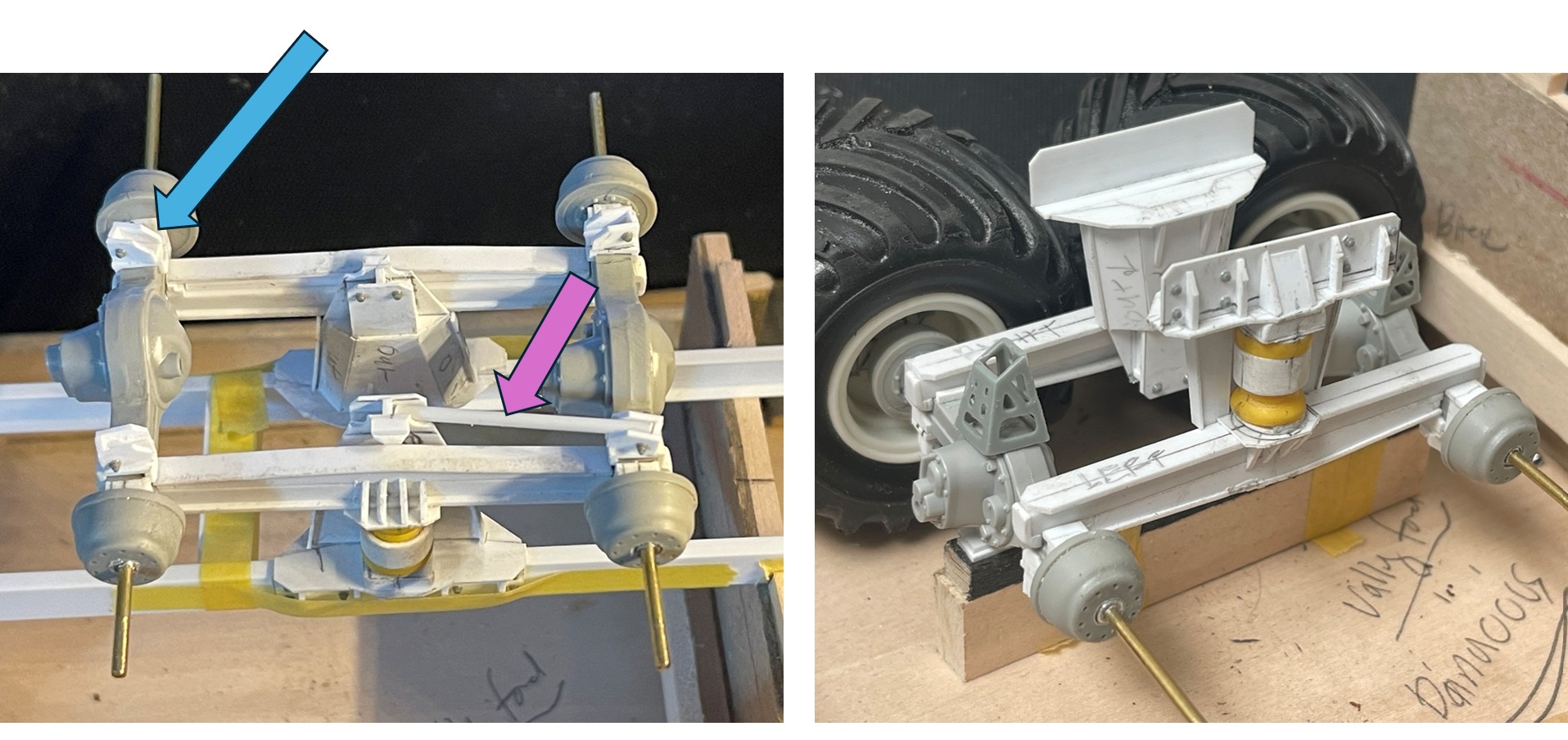
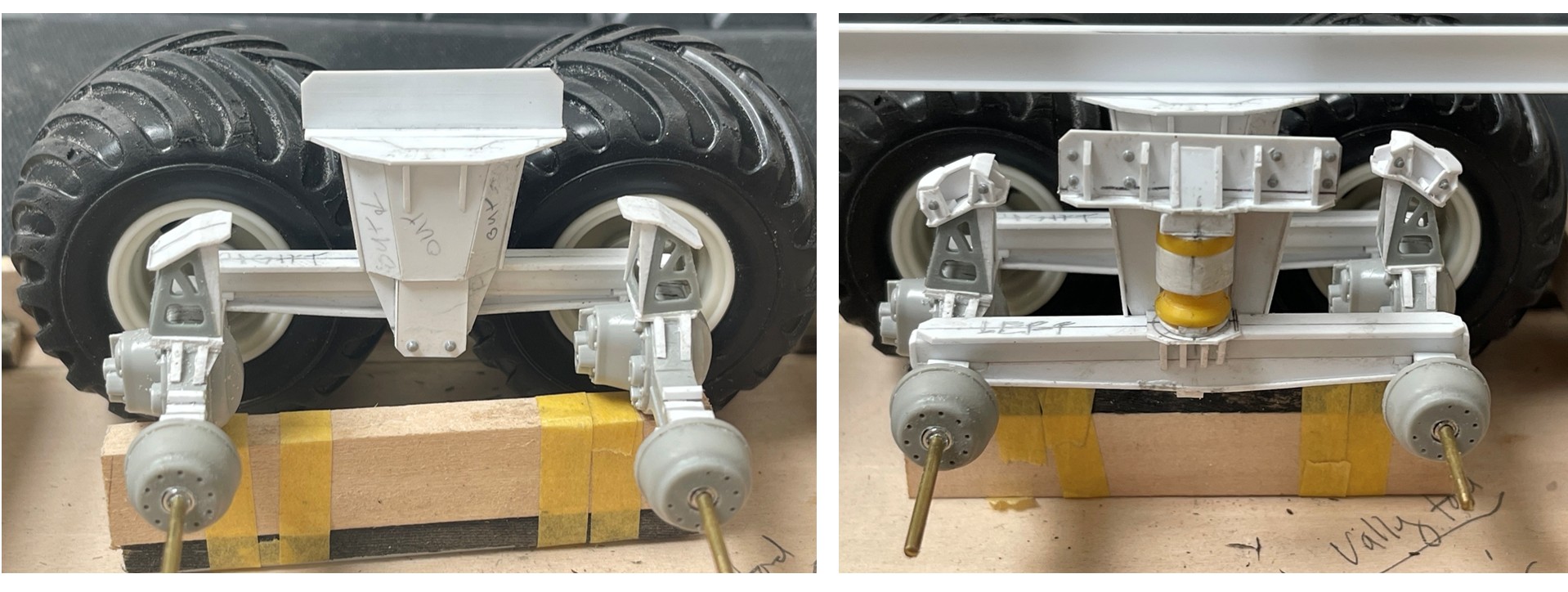
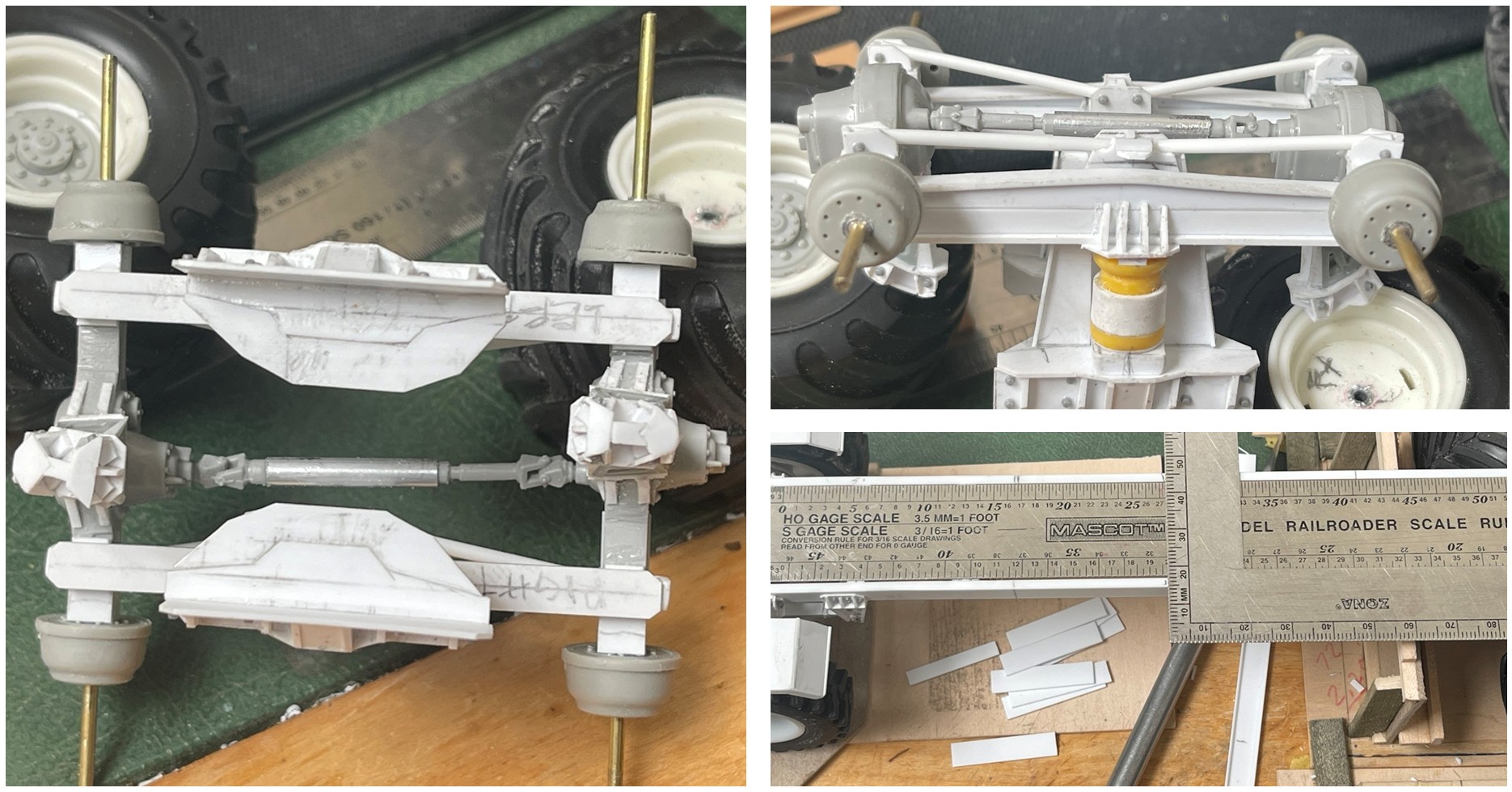
First up, more styrene attached to the inside of the towers that the walking beams are attached to, with the clear caveat that - while I found many images of the typical Chalmers rear end, I never found images of the high, or extra high variants, so, this relies on me interpreting how the standard version might get stretched to make it higher :man_shrugging:

The top photo shows the inside and outside of the towers - and below, on the left you can see the inside with a structure added. This is based on the typical version adapted to be taller - again, it is right? I don’t know!

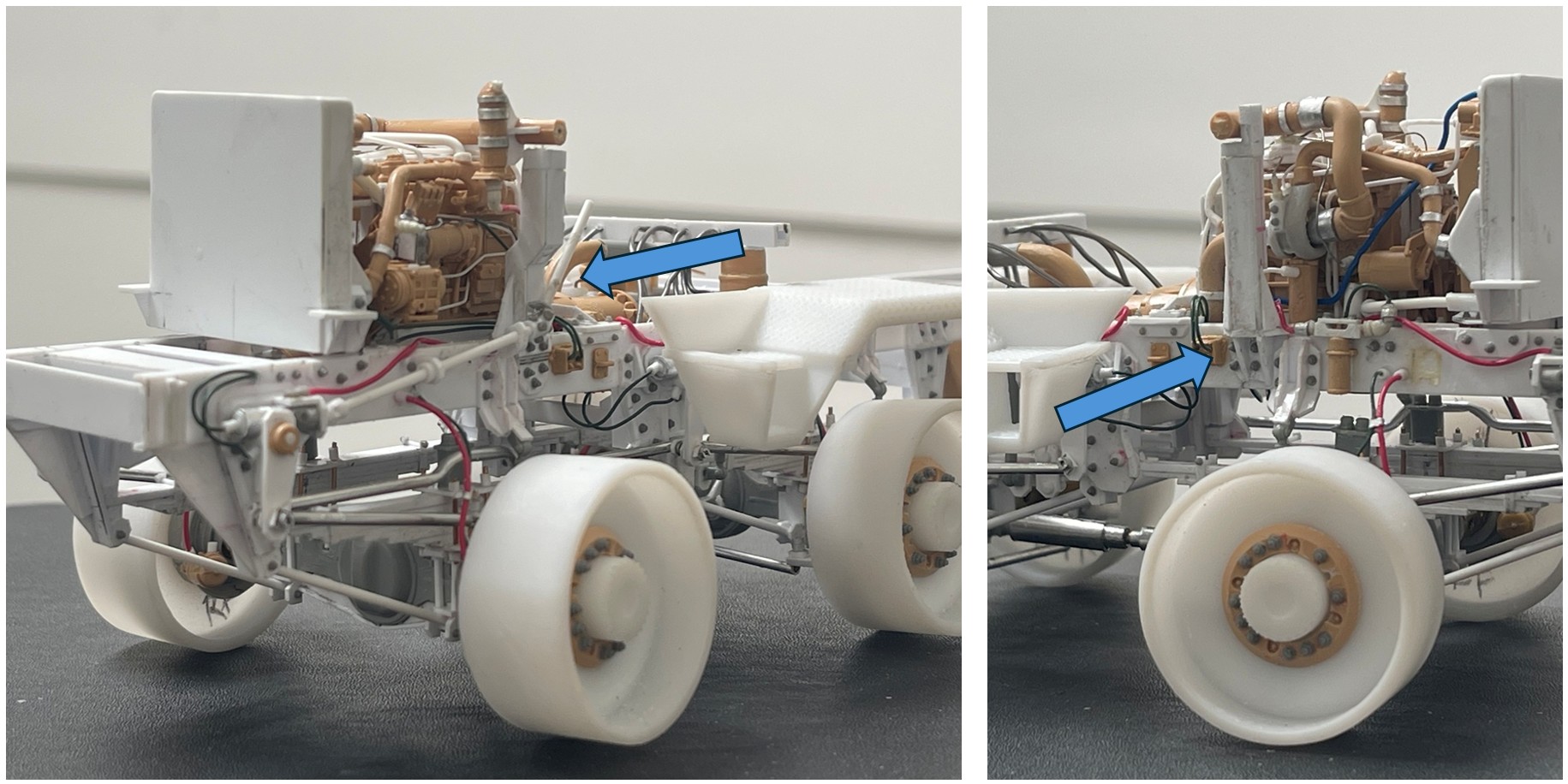
In the left pic, showing the lower torque rod components. The purple arrow is pointing to a placeholder torque rod, while the blue arrow points to one of six mounting brackets, installed to each axle and the towers.

The pic on the right shows the early steps of making up another pair of towers , this time over differentials for, you guessed it, more torque rods! :grinning_face_with_smiling_eyes: As noted above, well, this required some imagination, and I speculated this might look something like a four link rear end - I know the torque rods are mounted above the diffs, but had to guess how.

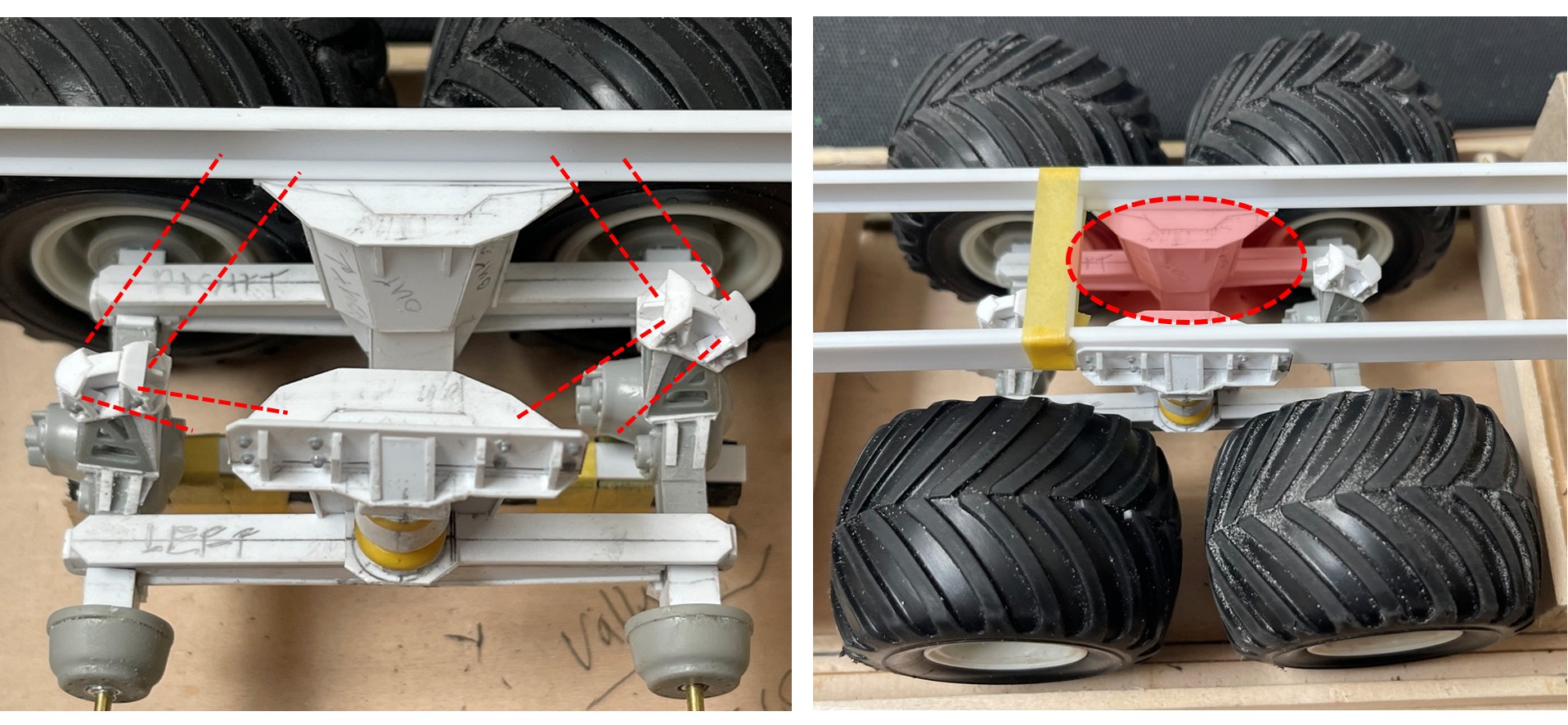
Which led to these differential towers and a total of 8 torque rod mounting points. This uses a lot of really small pieces of styrene.

For some clarity, the pic on the left with the red dashed lines illustrates where the torque rods will mount to the towers. The red oval in the pic on the right shows where I’ll eventually make up a big bracket between the frame rails to receive the torque rods.

This was a real challenge, but time to go on to other stuff. I’ll need to make up the winches next, as they go between the cab and bed. But I don’t know how big they will be, so until that’s done, I can’t figure out how long the frame rails will need to be!

Cheers

Nick :woman_biking:
8 Likes

Mesmerising work and beautifully engineered Nick. I’d like to see a pic of your (assumed to be) Evergreen stash, just to see if you have their complete range in stock. With images like yours they should bestow you with a lifetime’s free supply in exchange for publishing them.

2 Likes

Amazing…such models should be in a college mechanics or engineering department for “educational purposes!” :grinning_face:

2 Likes

@Dioramartin, ha! yes Tim, I do eat up a lot of evergreen, plastruct, and junk box remnants! If you have any connection with evergreen, I’d be pleased to participate in the plastic for life program! :grinning_face_with_smiling_eyes:

@Trisaw, thanks, Peter. While I am not an expert in these by any means, I do want to build something that is convincing even if not right! I spend a lot lot of time staring at, enlarging, and searching for pictures of what this is supposed to look like, but at some point have to concede I’m not exactly sure what’s going on, and make the leap of faith and try and figure it out :grinning_face_with_smiling_eyes:

Speaking of trying to figure it out, well, I did just that:

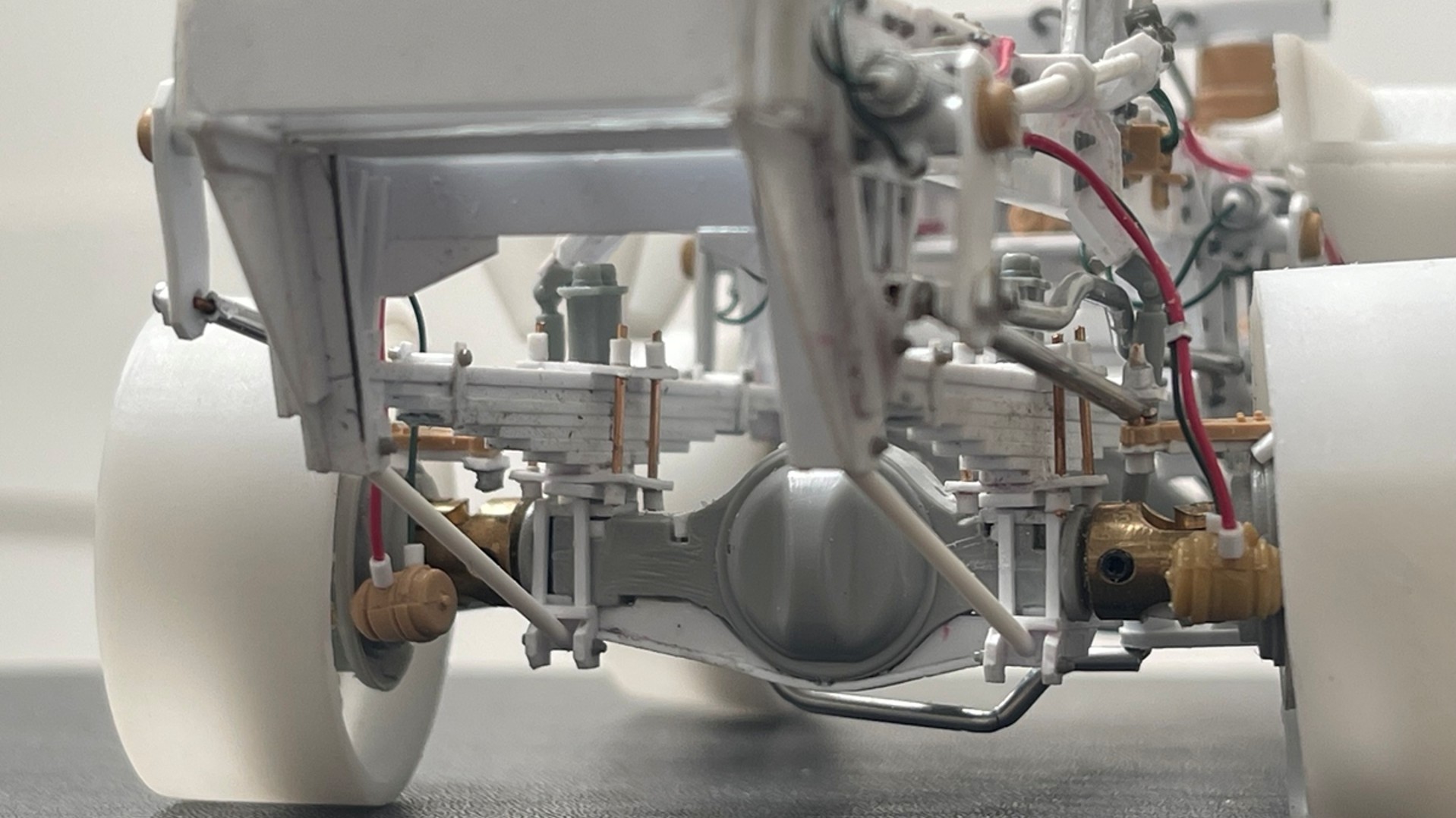
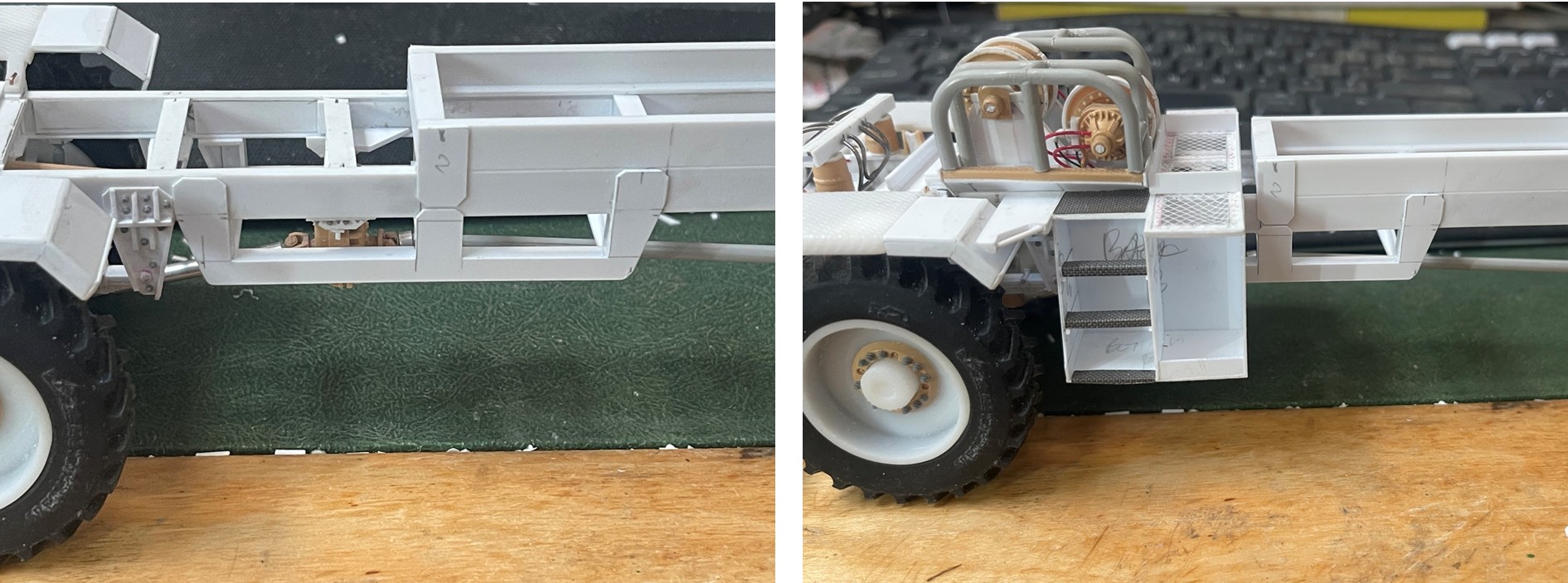
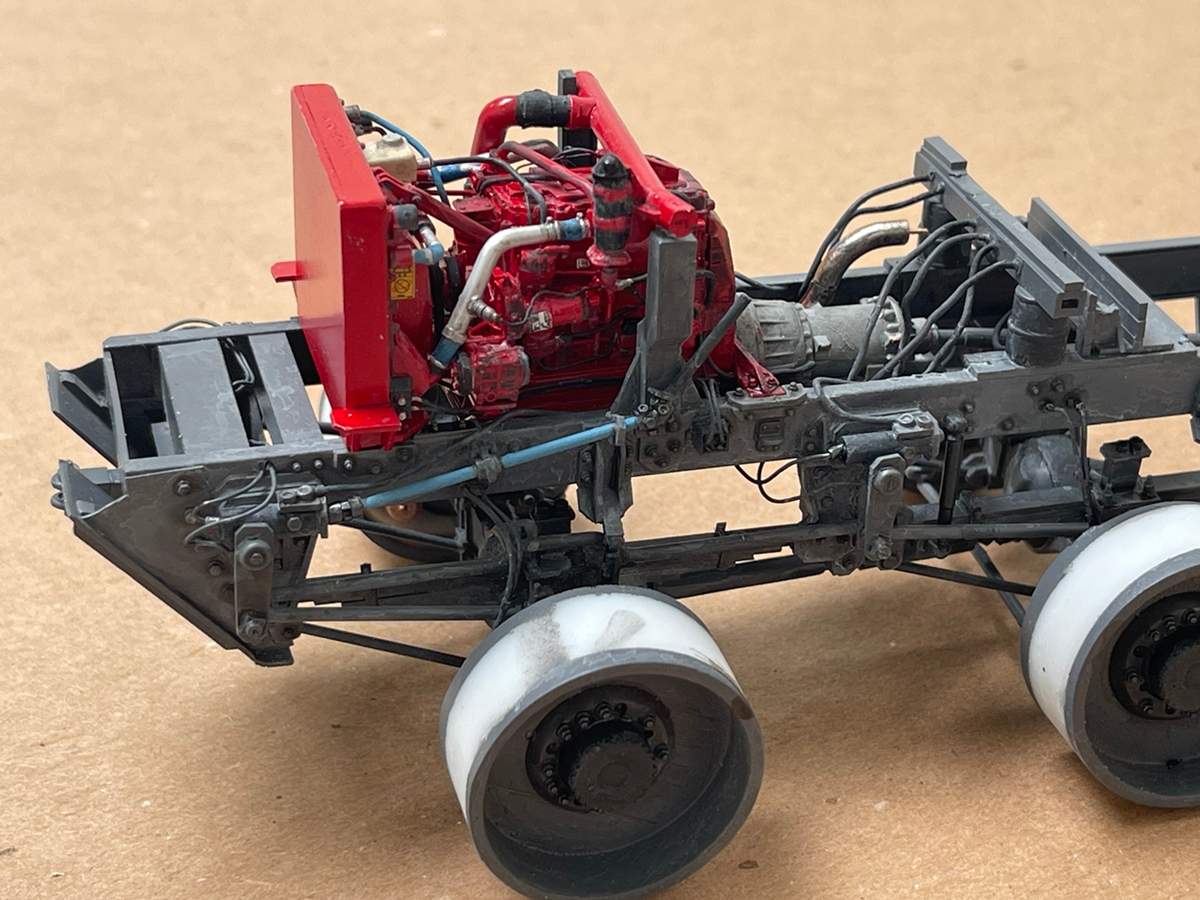
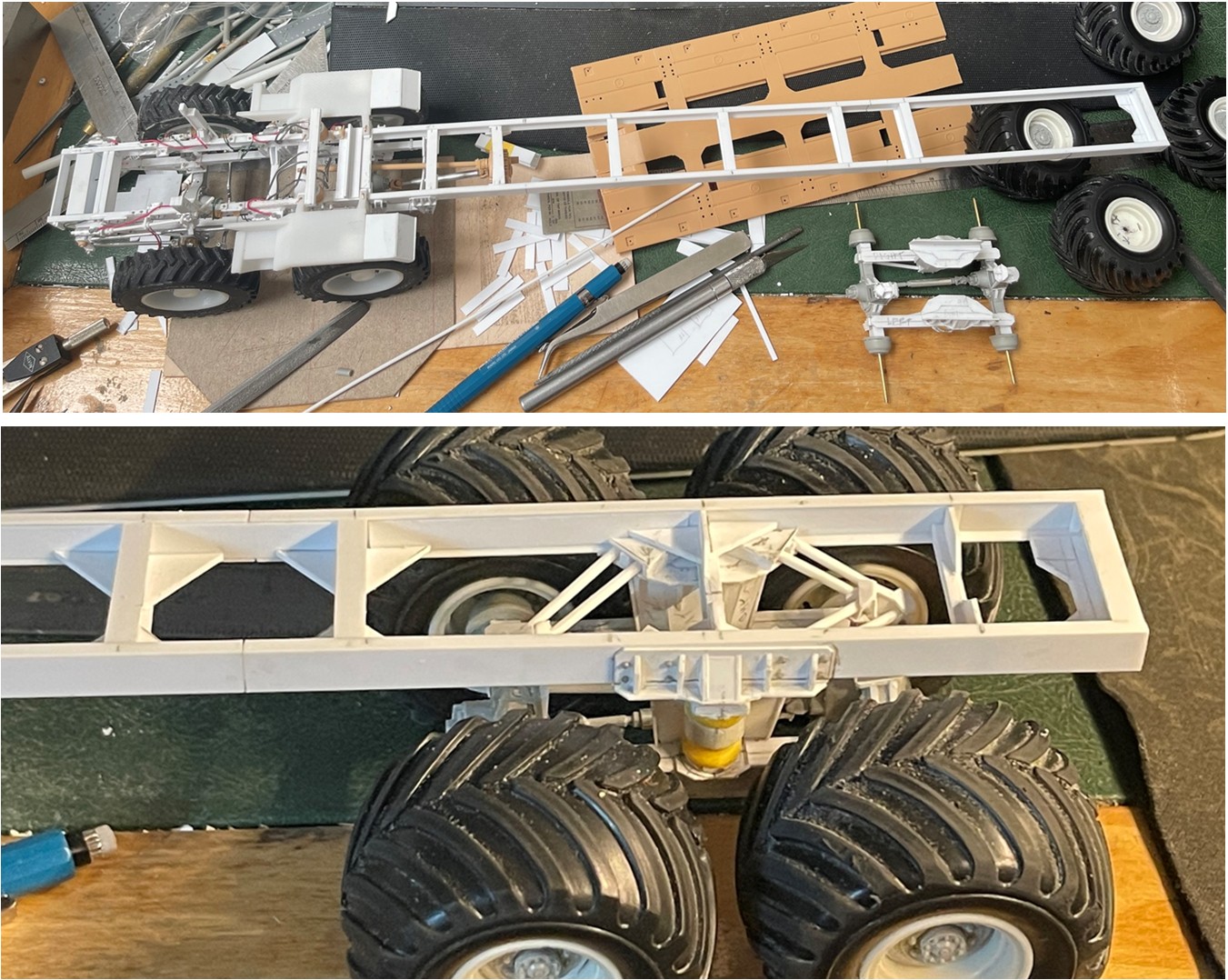
First up, on the left and upper right, finishing up the rear end. I did cheat and not add the brake pots. I might still add them, but they will be hard to see and very tough to plumb, so not sure about that. On the left, squeezed in a drive shaft, and on the right added 4 torque rods. While a bit small, and maybe hard to read, in the lower right, making up the frame rail extensions. It turns out the space between the rails is about the same as my steel ruler, which was very helpful with laying it out square - similarly, I could use the small square to make things perpendicular.

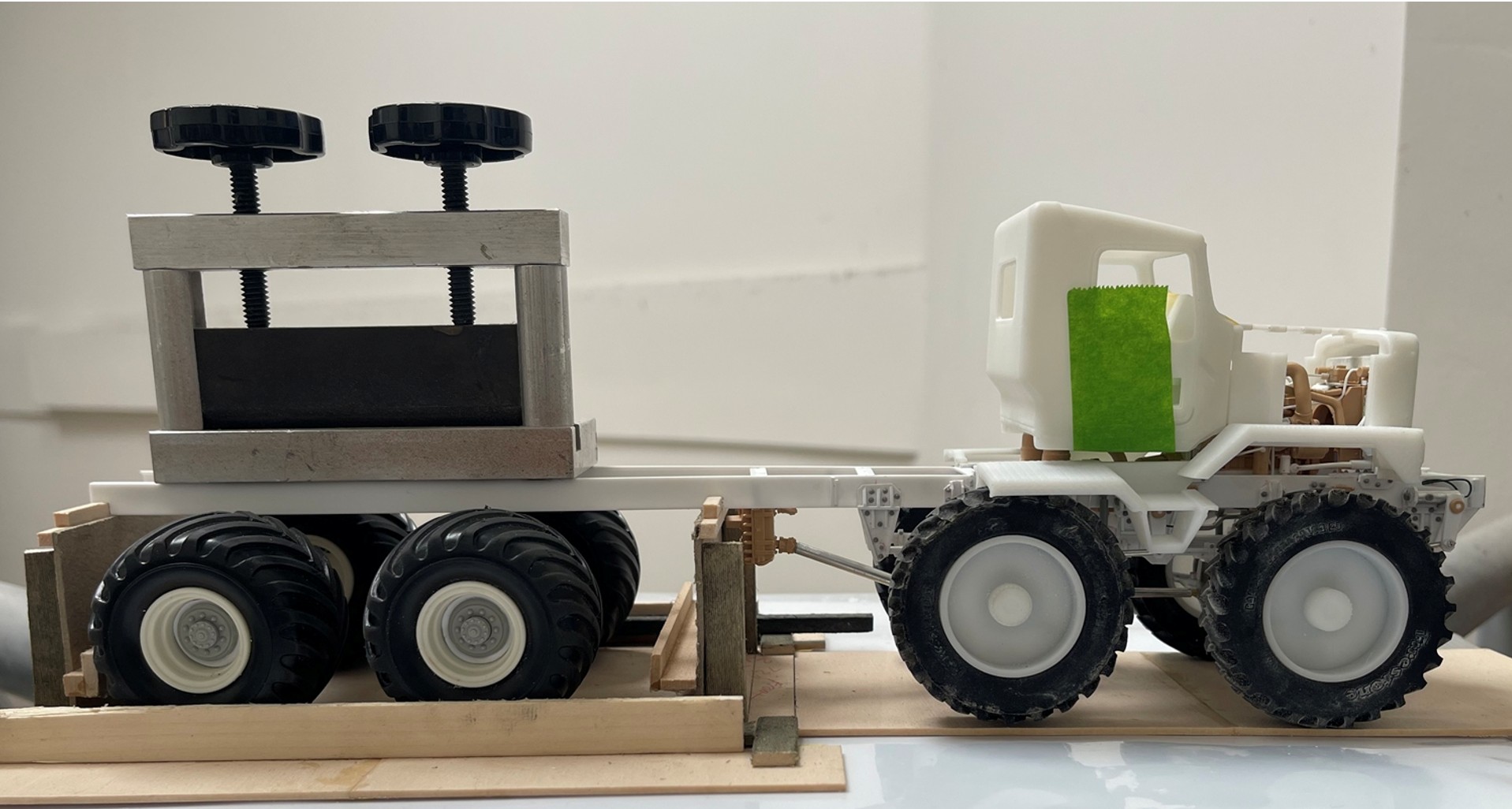
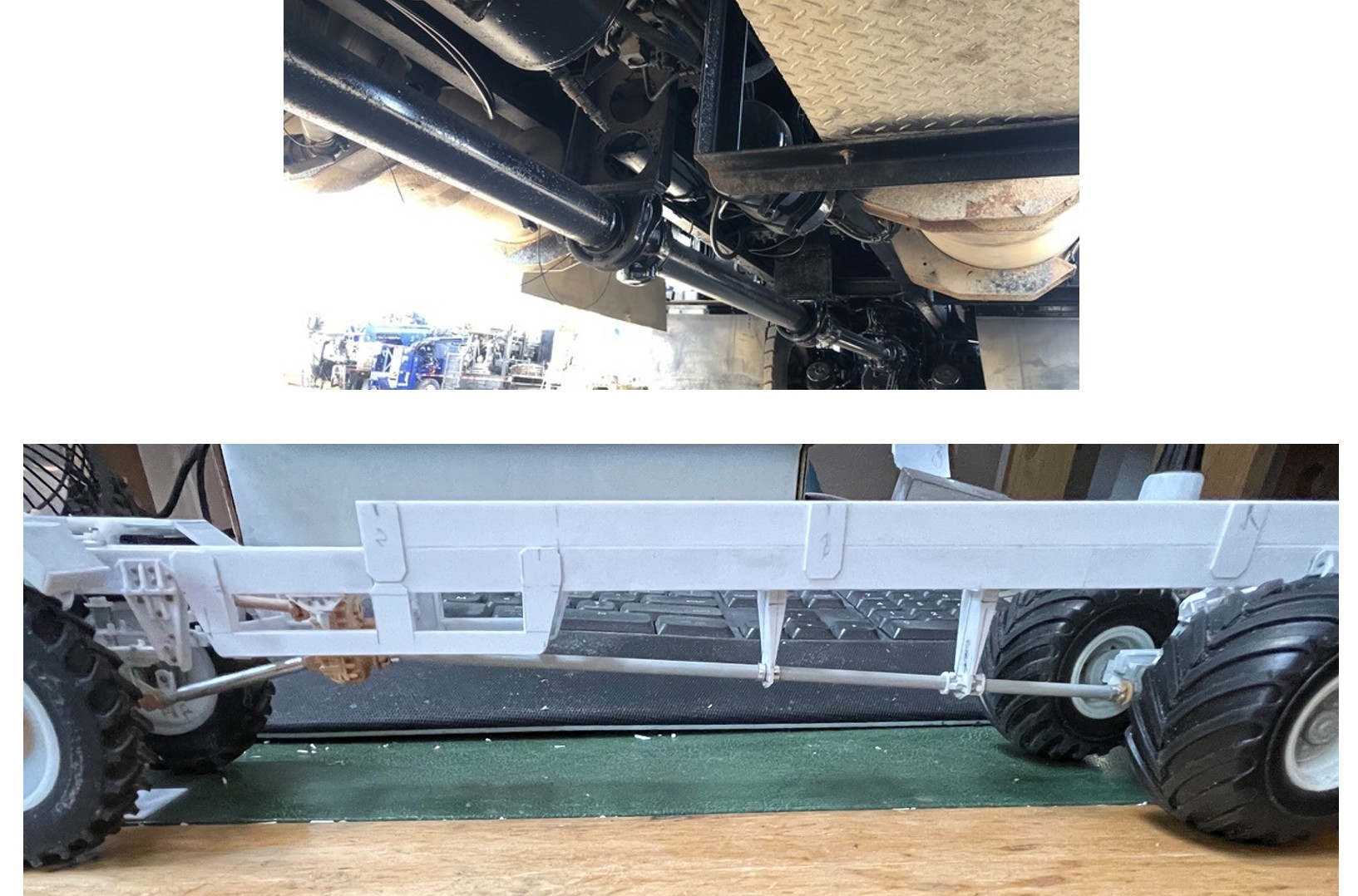
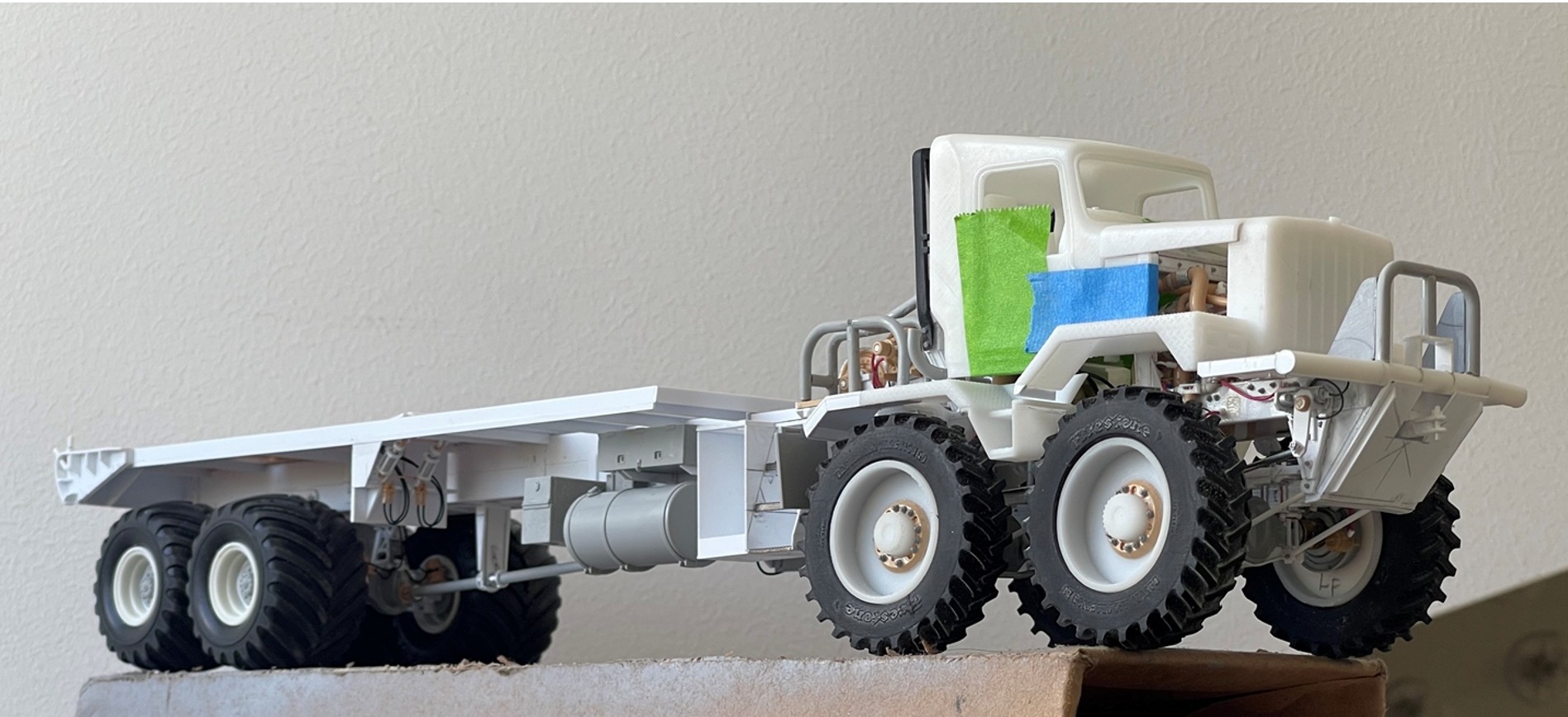
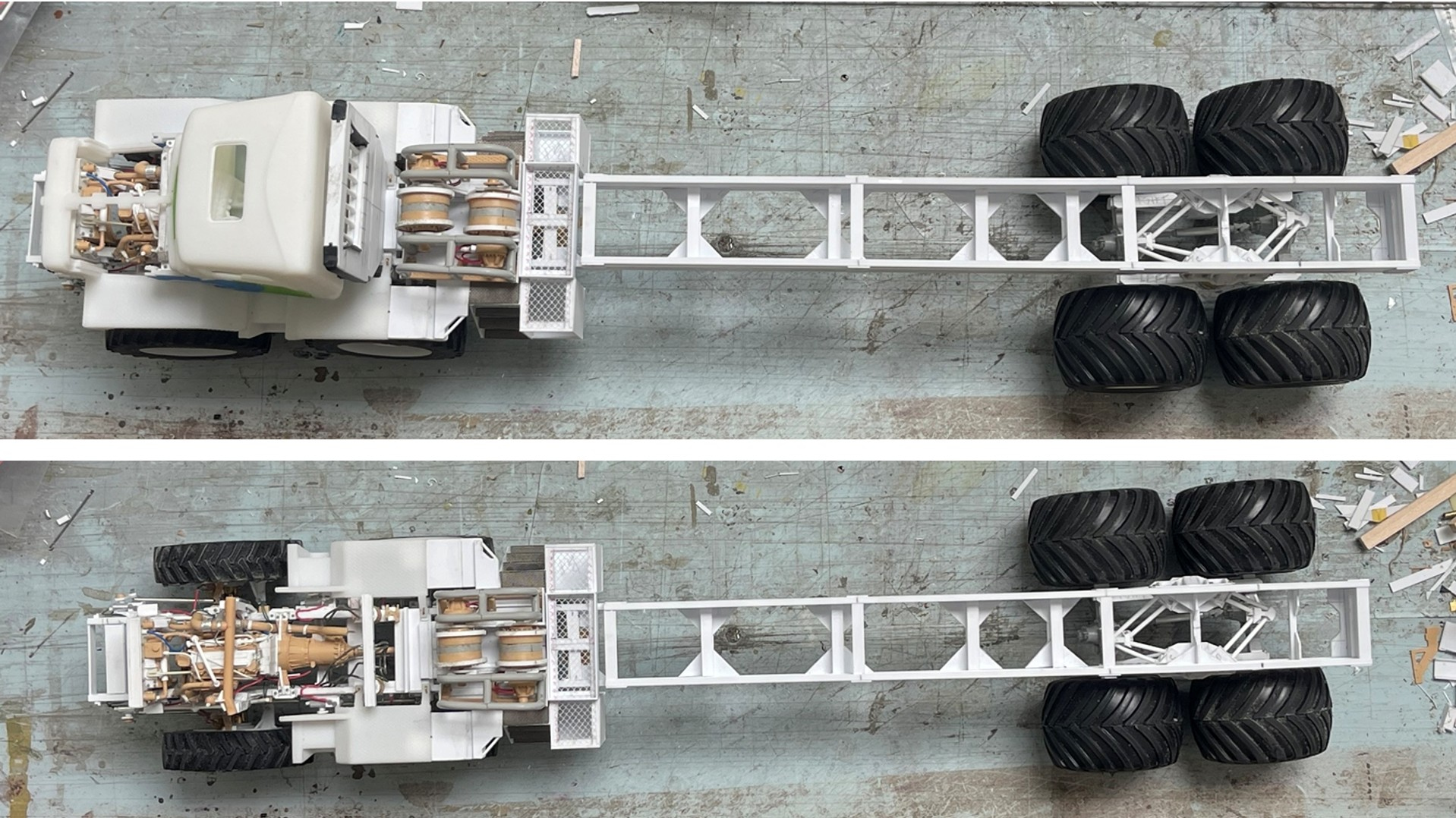
Oh what a treat! one true to scale, full length chassis - long enough to allow for a whopping 350” bed :grinning_face_with_smiling_eyes: In the lower photo, you can see the rear suspension and the 8 upper torque rods installed. It turns out this worked pretty well, as they (total of 12) do a great job of stabilizing the rear end, which is good considering the size of the tires, and length of the chassis.

Above, you get a sense of how long this truck is - and you can see lots of bracing on the rear, long chassis rail runs, which has double channels.

I added a deck behind the winches. This turned out to be two modules (winches and deck) which can slide together. The top of the deck started as one sheet, cut into a ‘U’ shape, so it can slide along a little track along the winches.

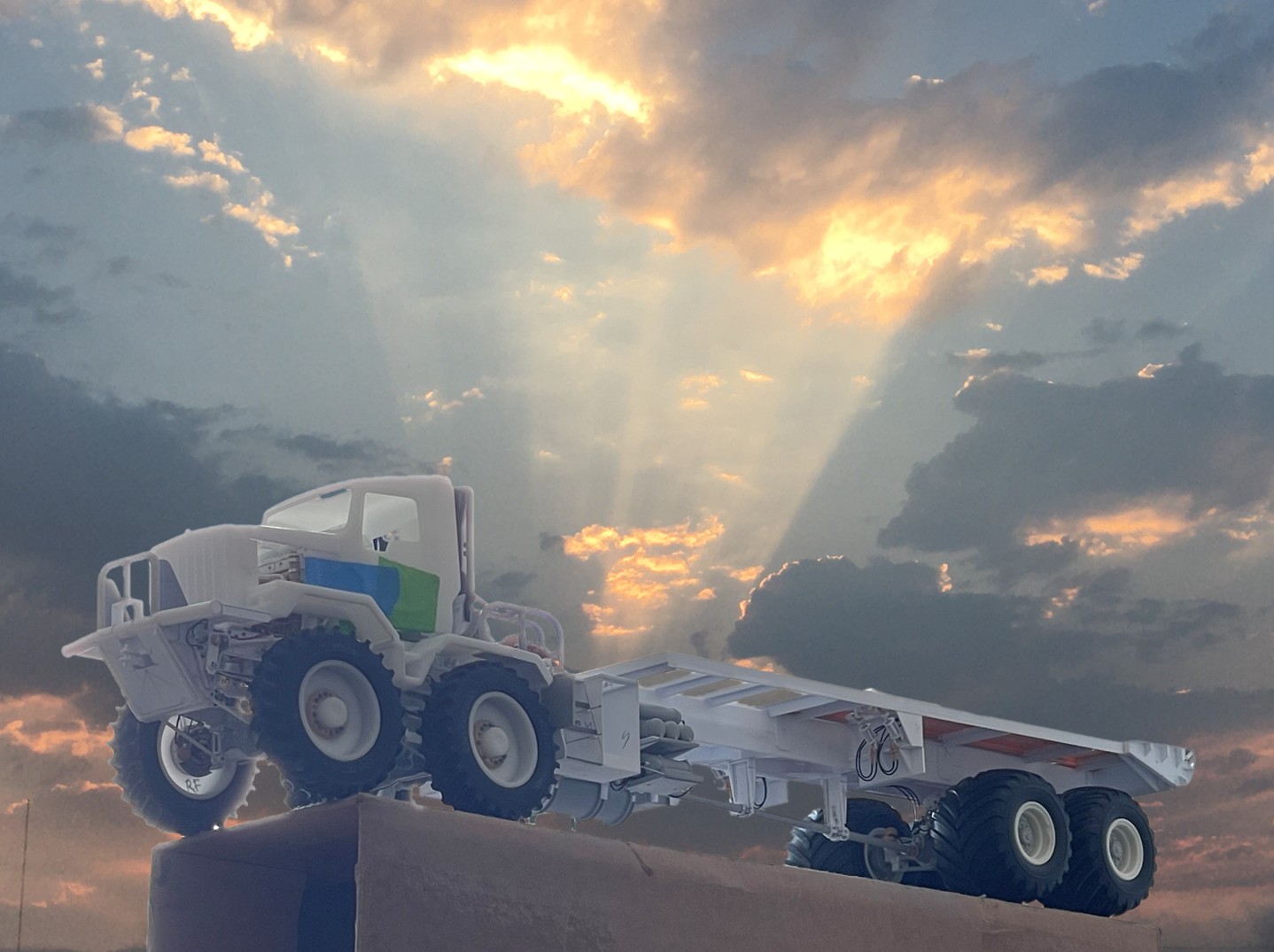
And the best news, it sits flat on all 8 tires! The example truck is a bit different as it’s not an 8 x 8, floater, and has a shorter bed, but you get the point. But, at this point I noticed there was more flex in the frame than I liked, as bot the front and rear are heavy. It turns out, the rear section is stable as the stacked channels and bracing did a good job, while up front all the styrene for the suspension made it pretty rigid too. But there was a gap where the two meet - allowing horizontal and vertical flex - so not great. To solve this, I made up a truss beneath the frame:

The arrow points to what amounted to a hinge point (blue arrow) between the two stable frame sections. And, as you can see in the second pic, there was not a lot of room in there to work with. Taking some cues from the front suspension mounts, I made up two underframe trusses, which bridge the ‘gap’.

This worked out pretty well - the ‘out’ facade is a single sheet, but it is boxed on the inside. This eliminated the flex I didn’t like, and fit inside the winches and deck. The visible section will likely get screened by tanks and storage boxes - and finally, the rear driveshaft which was installed before the under chassis trusses:

Unfortunately, like much of the rest of this, I couldn’t find images of the underside of the 8 x8 with huge tires, so did what I could to interpret what I could find - including a pair of carrier bearings -

OK, on we go - thanks for having a look

Cheers

Nick :man_biking:
8 Likes

3 Likes

Looking great mate, I love your updates! So much awesomeness.

Cheers, D

1 Like

@AussieReg well D, I prefer to say….majesty!

:grinning_face_with_smiling_eyes: :grinning_face_with_smiling_eyes:

And @Dioramartin, Tim, more styrene? yes, lots and lots more:

Quite a combination of styrene, junkbox spare parts, and recycled sprues!

With trusty photos on the computer screen, ‘a cuttin’ and gluin’ I happily went:

The front are rear are both good and complicated, and seemed to thoroughly enjoy eating styrene! I used a cut up remnant from an M1000 bed for the base, and in the end, was likely more work than it was worth - what you can’t see here is the amount of styrene required under the bed to make it work, which was quite a lot.

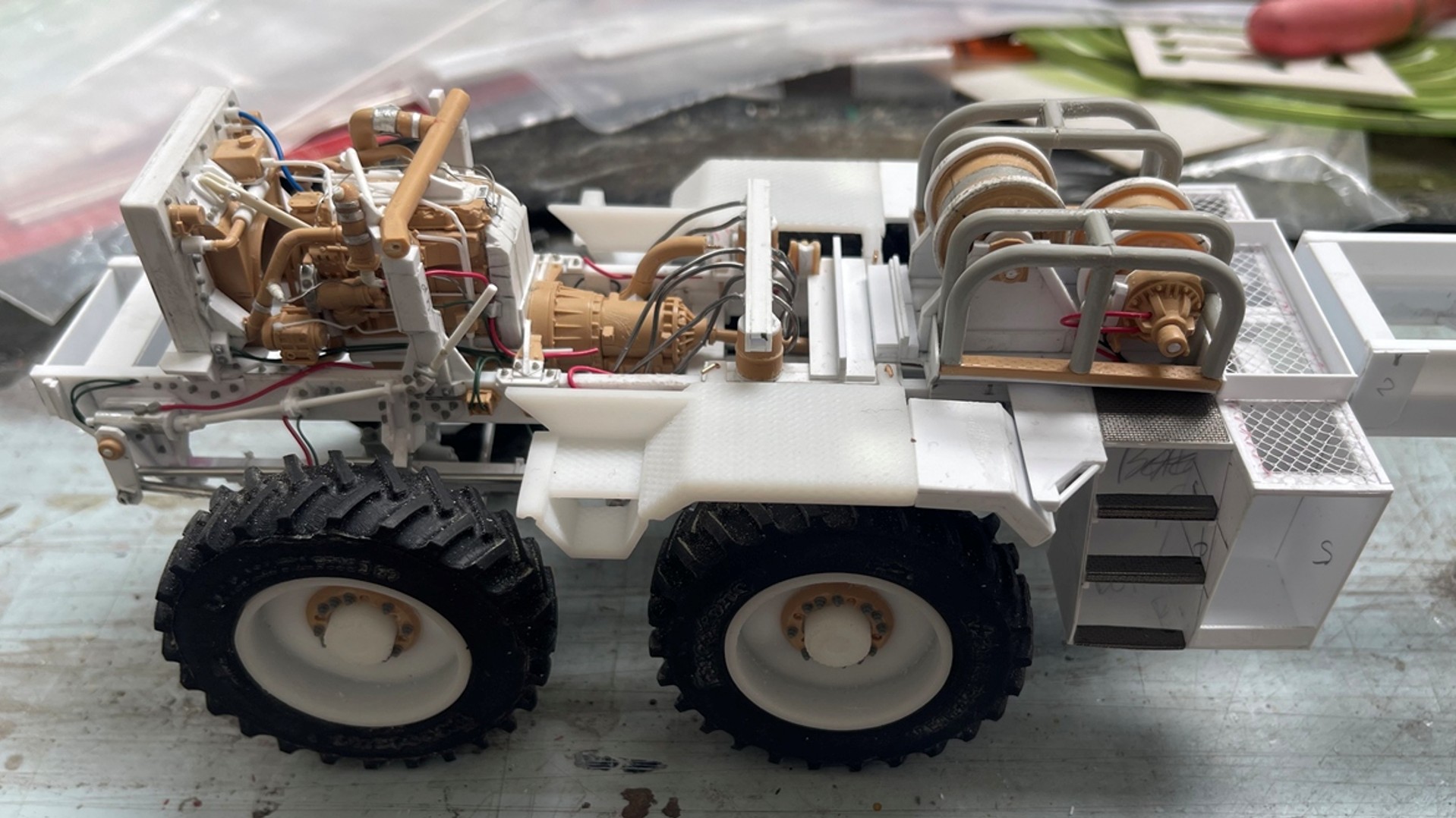
I kept going on the structure surrounding the winches, so that is a bit closer to what was wanted, same as before, using old sprue

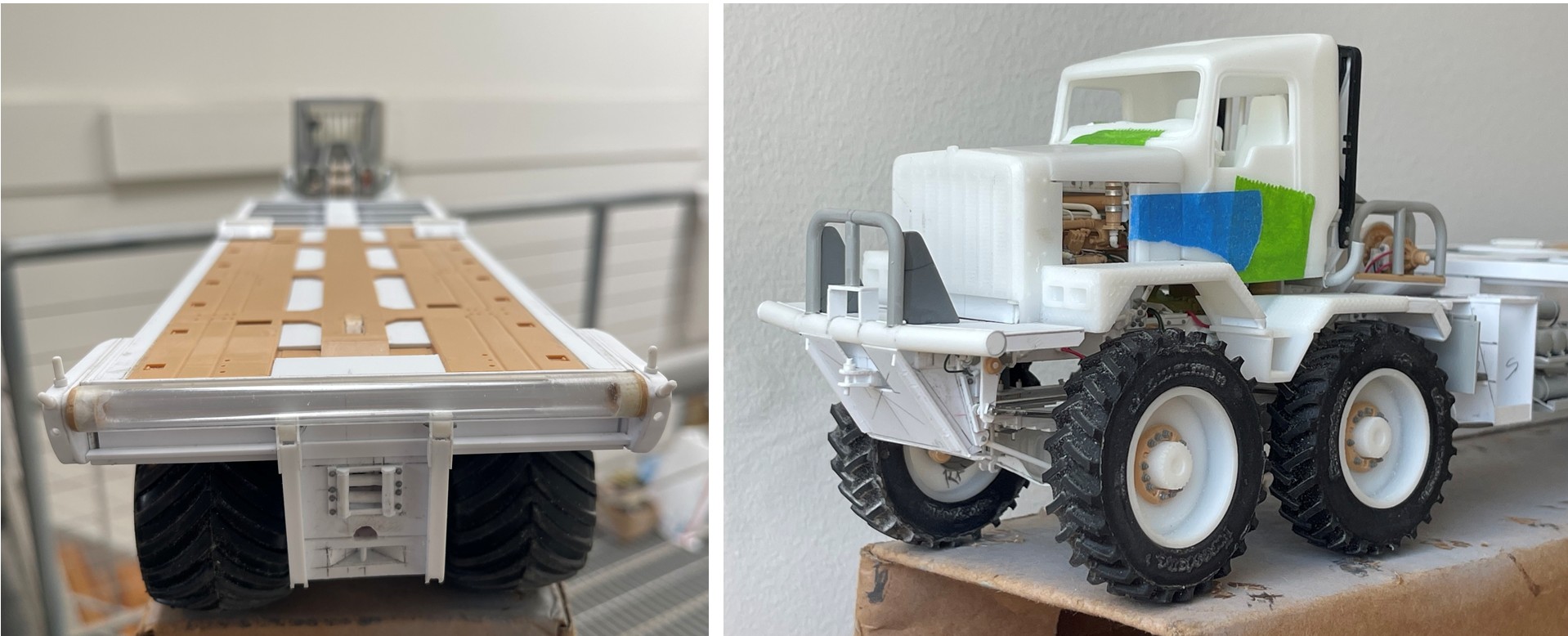
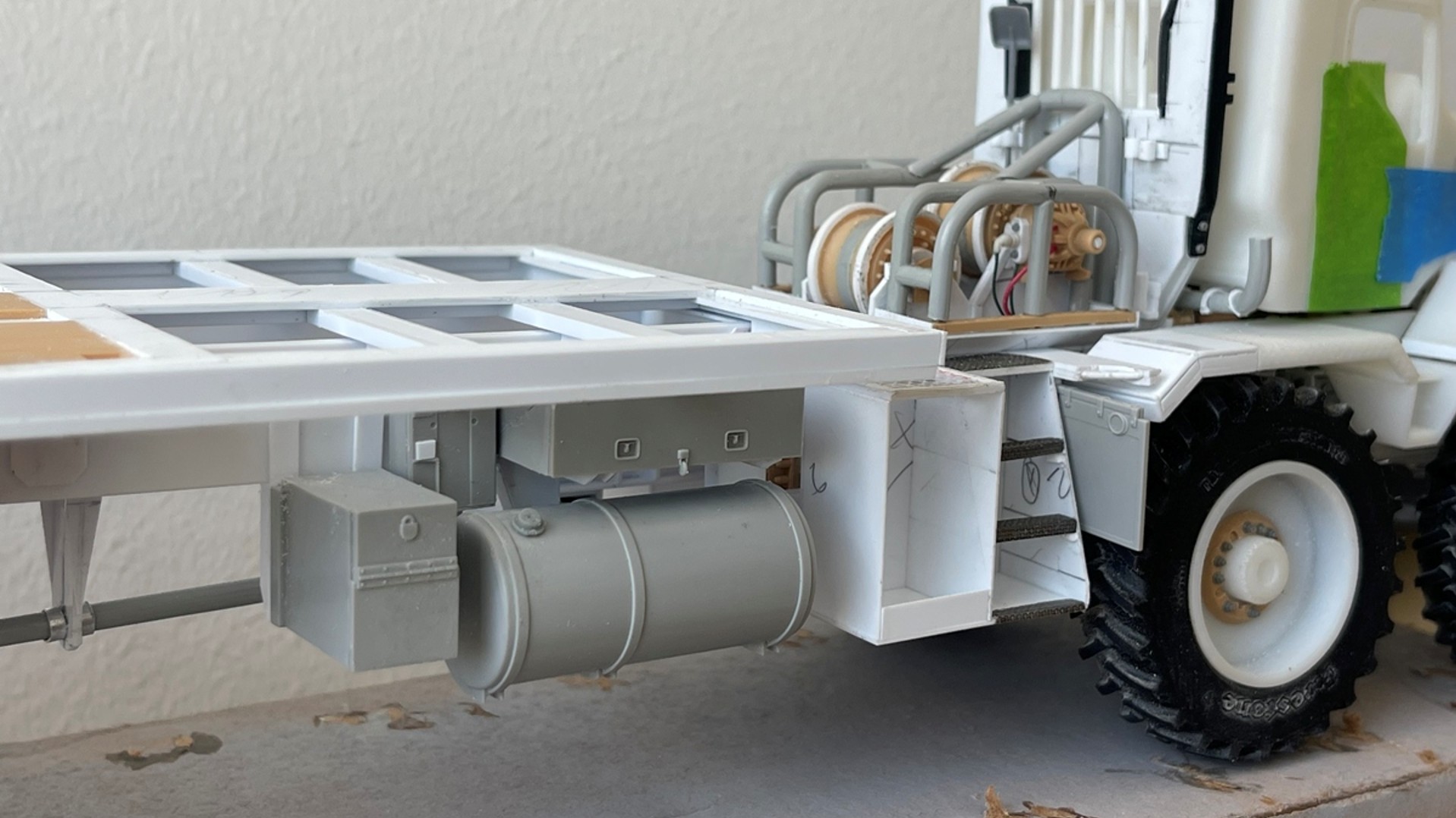
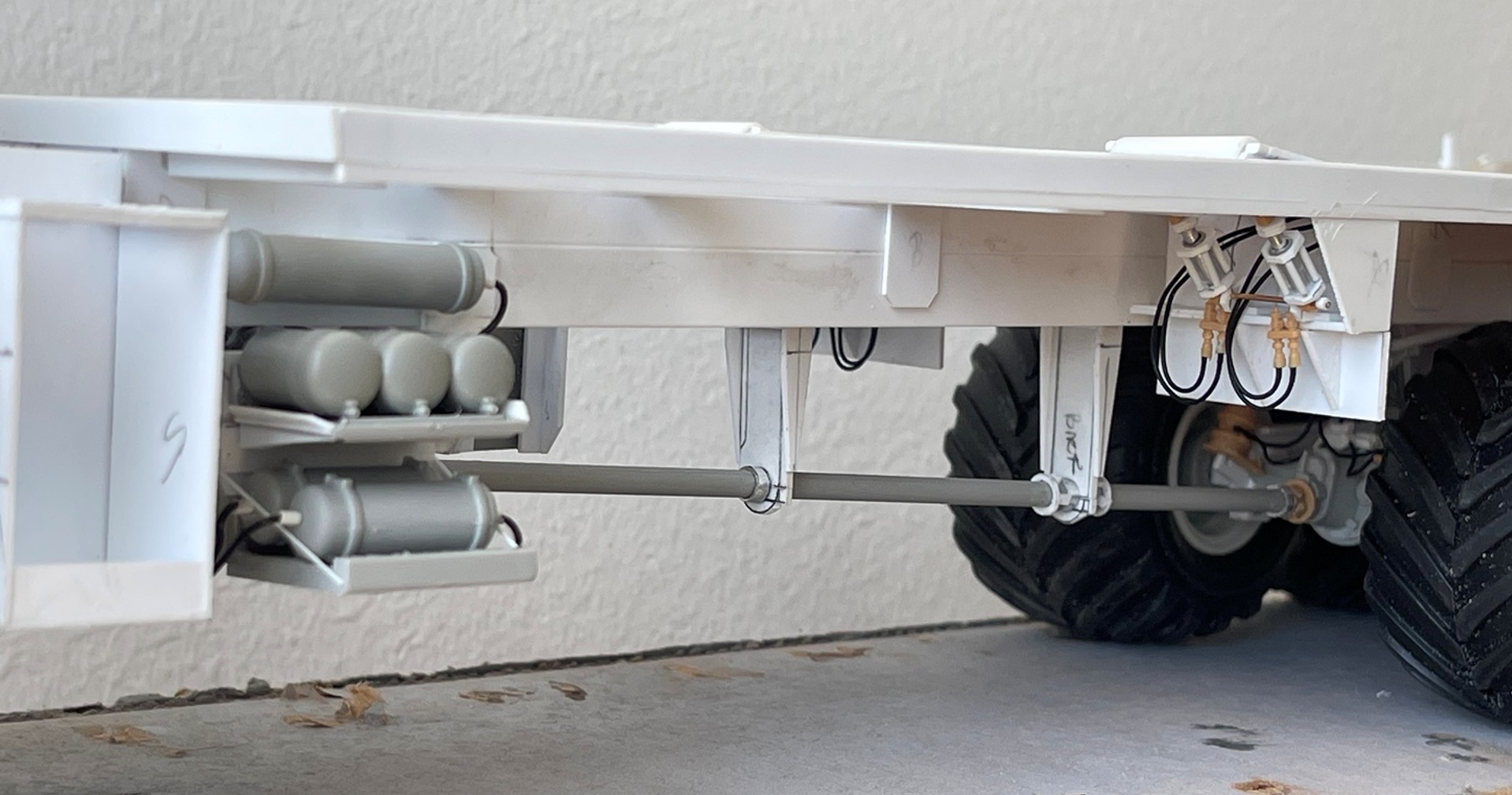
I eventually added rear brake pots and hoses, and as you can see, the hydraulic rams used for the mid bed rollers, The tanks and boxes are from an Italeri M1120 kit.

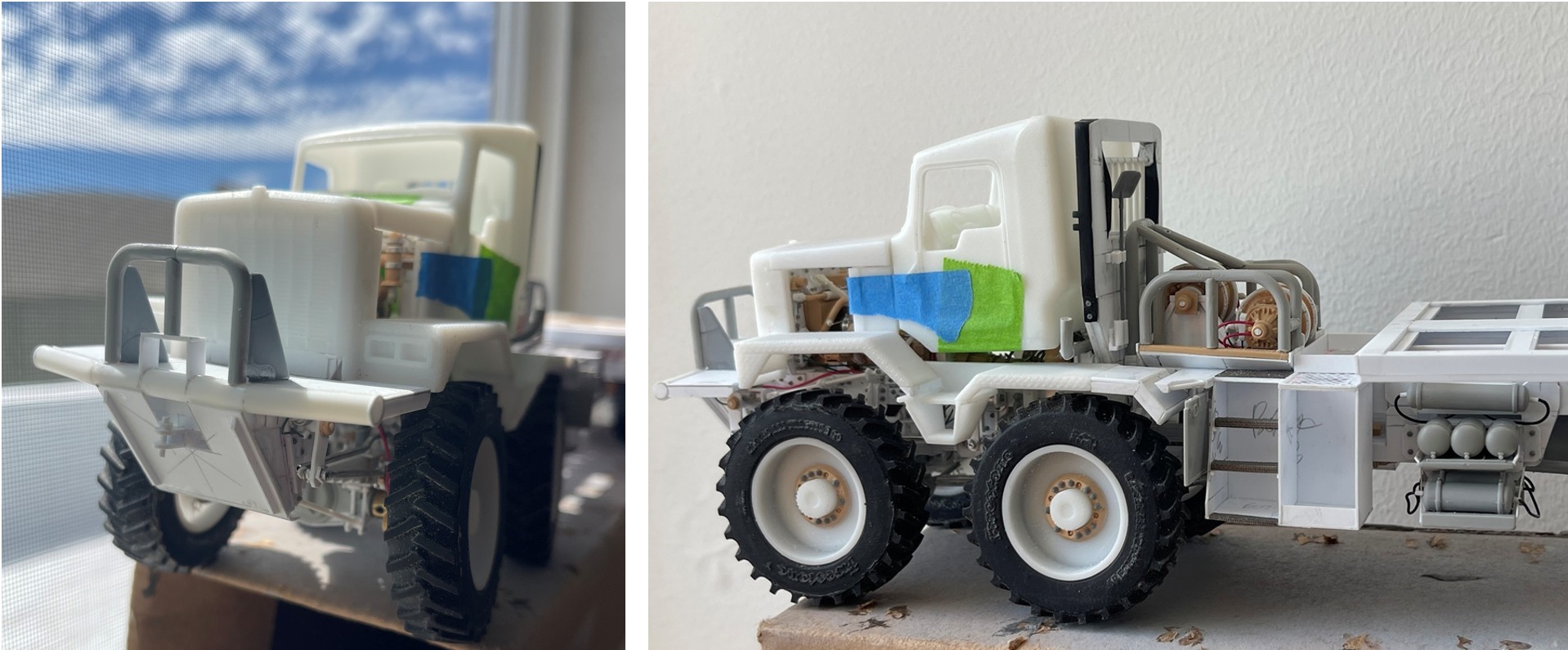
The front bumper needs some internal framing plates and bolts, and the boxes next to the stairs needs some trim too, and we still need more boxes along the bed but these will be scratch built, and on and on - the consumption of styrene will be going for a while -

Thanks for having a look

Cheers

Nick :man_biking:
5 Likes