What are my options? aftermarket or scratchbuilt brackets and/or tie down eyes
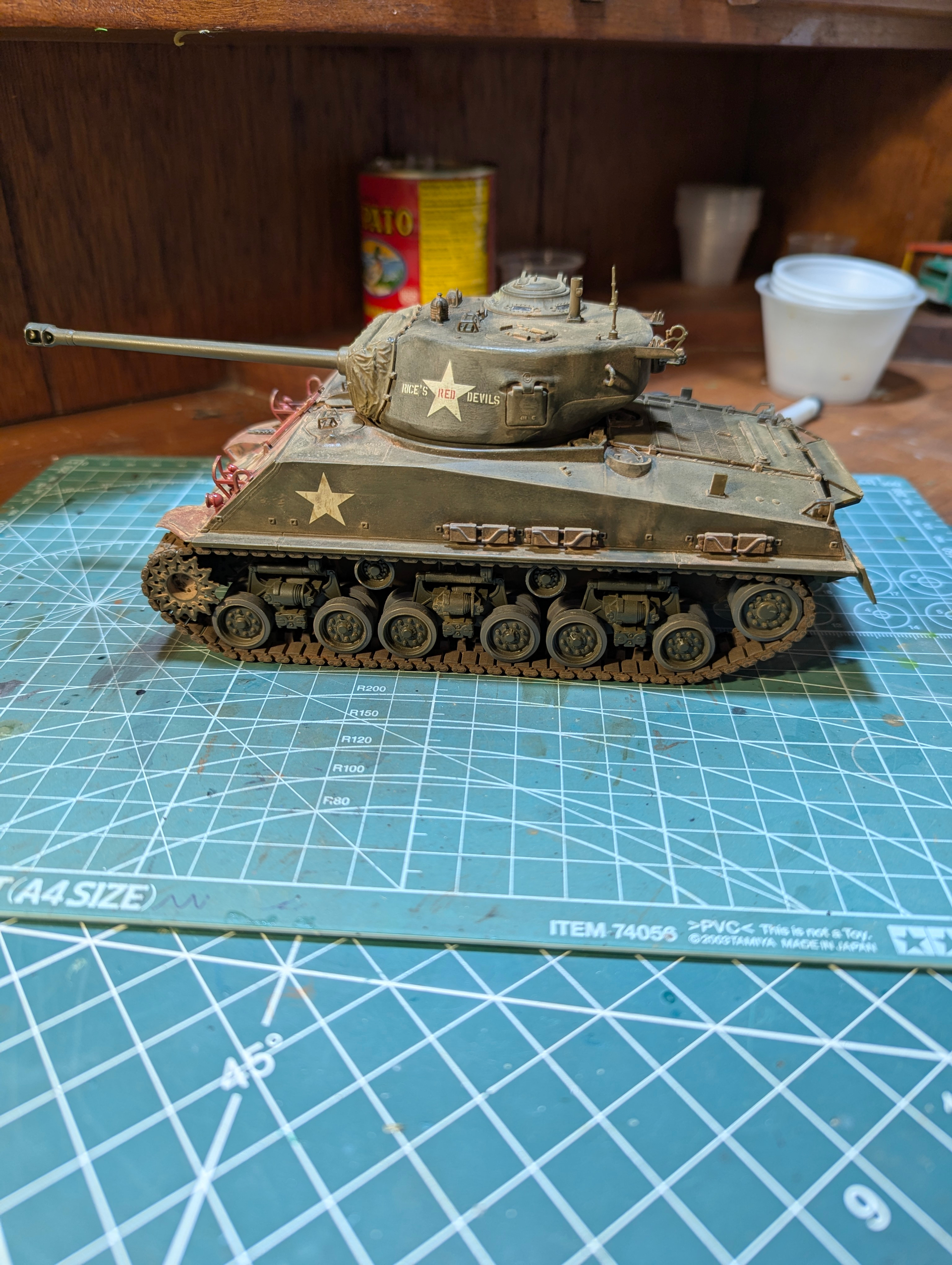
? I am not finding any armor accessories for my little guy 
What are my options? aftermarket or scratchbuilt brackets and/or tie down eyes
? I am not finding any armor accessories for my little guy
Your options for jerry can locations, tie downs and methods are quite variable. Crews would strap or tie them down wherever there was room that would not interfere with basic fighting operations, and by using what they had on hand: cargo straps, rope, under tarps, wedged between large stowage items. The could be on the rear cargo shelf, the engine deck, the fenders, glacis plate, turret sides… just where they would not interfere with hatches, optics, weapons, etc.
Do some image searches of Shermans and you’ll see what I mean.
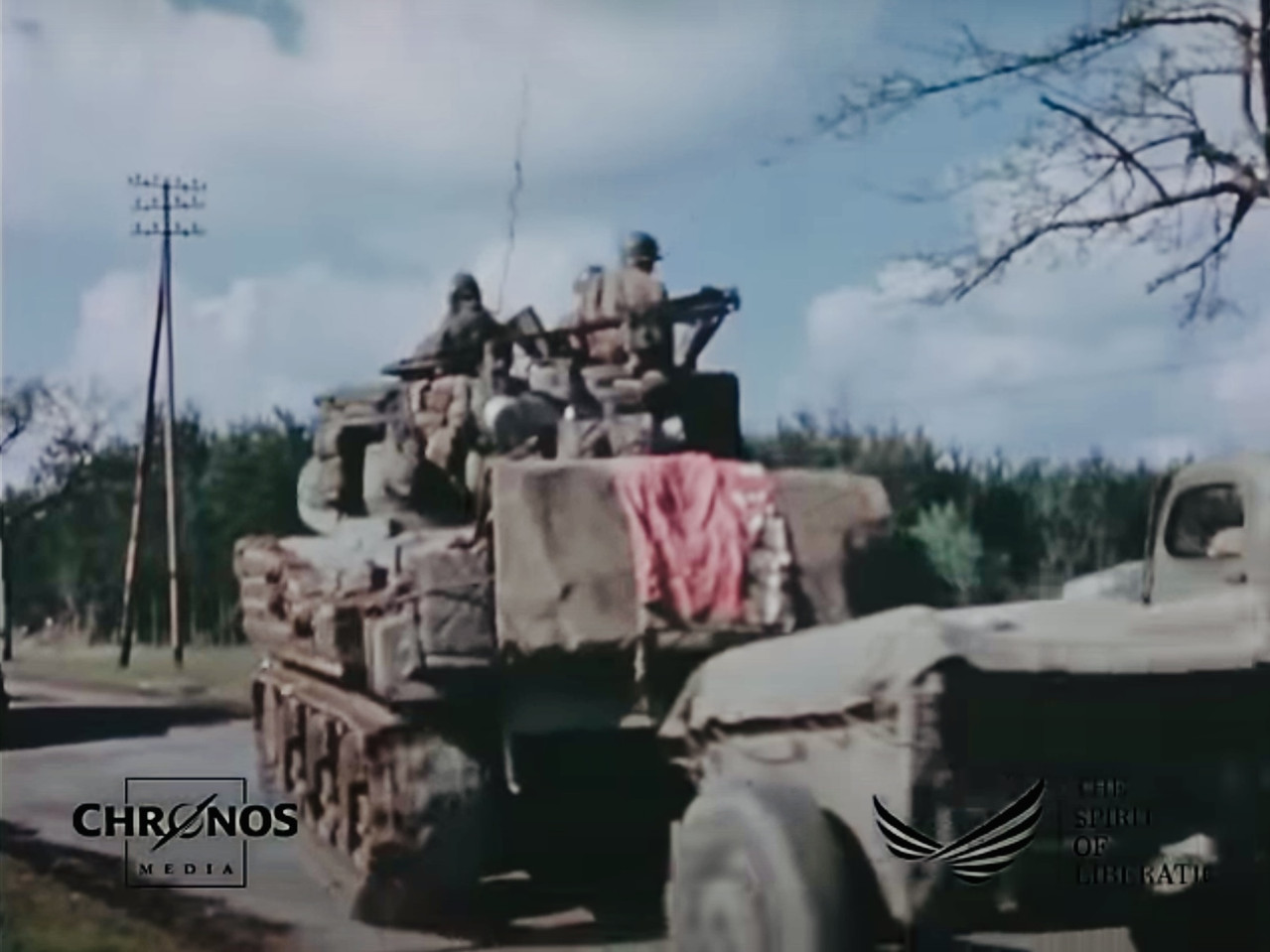
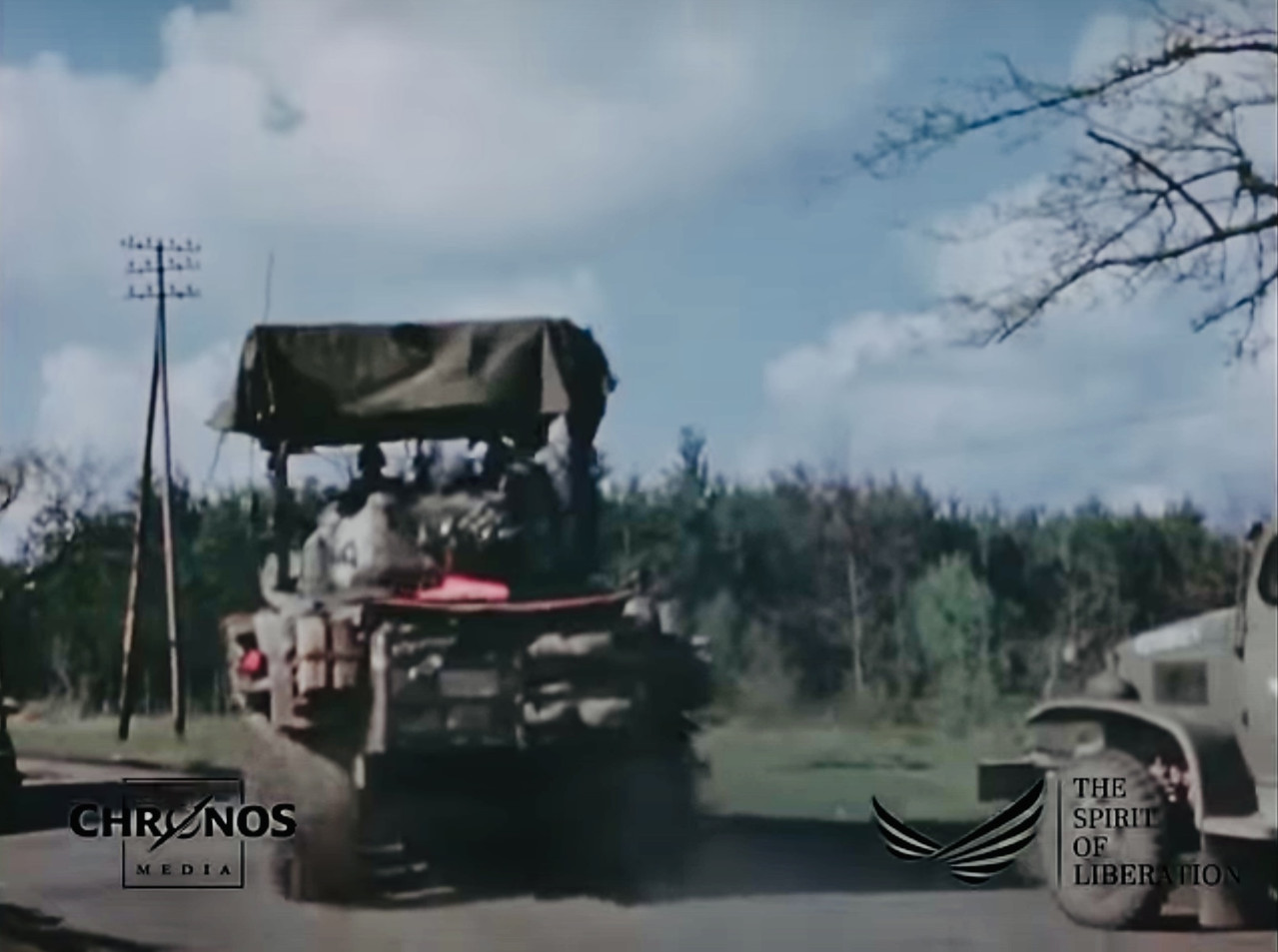
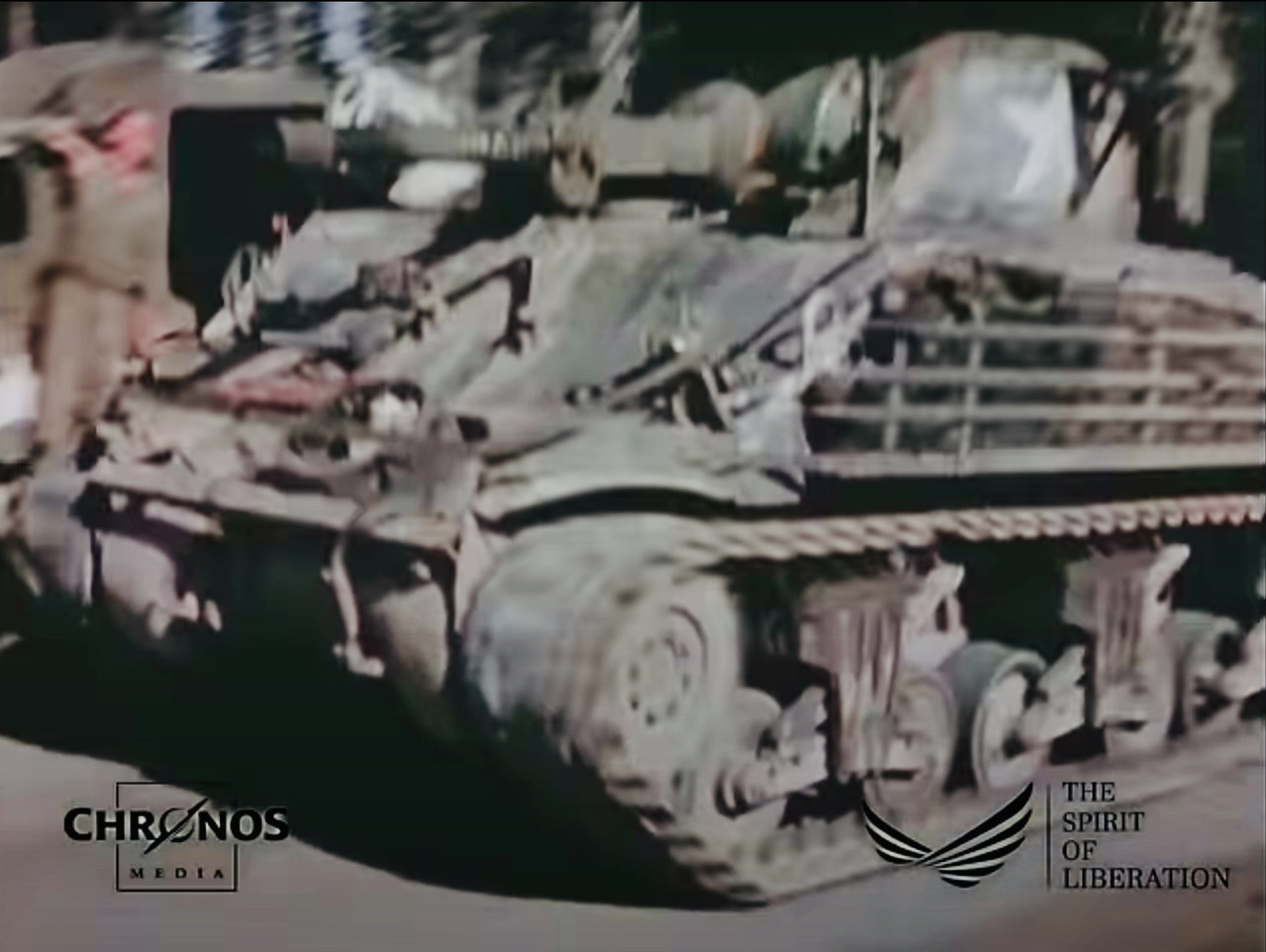
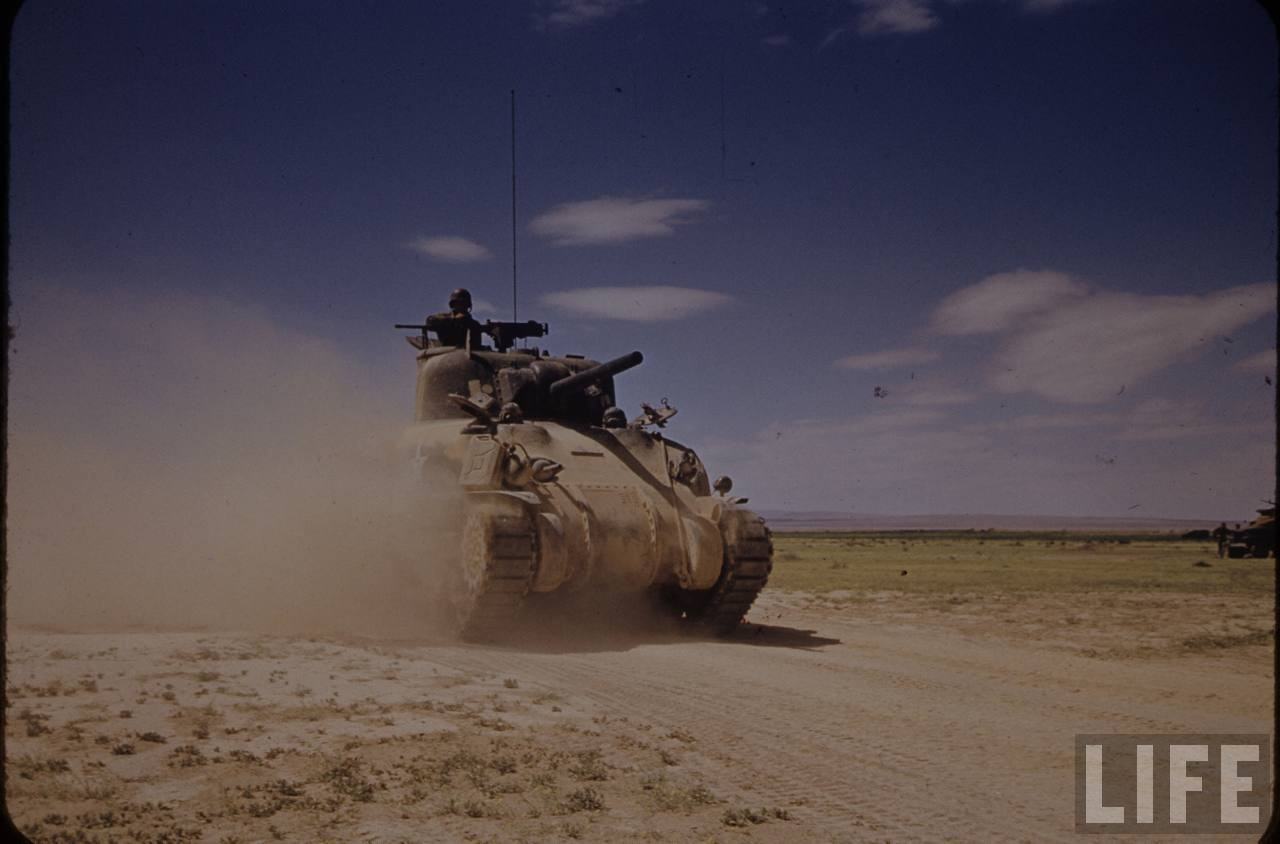
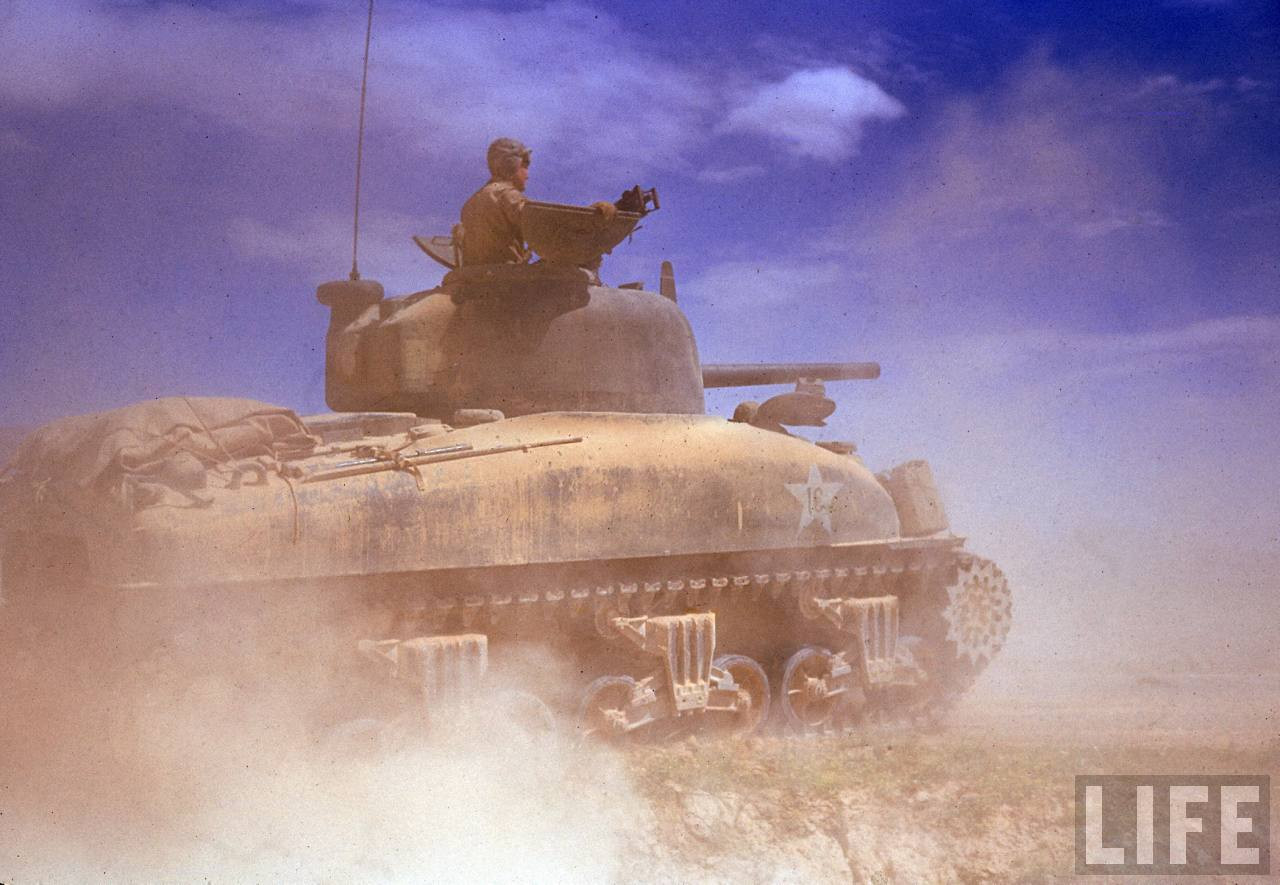
I see, so rope would be ok tied down to whatever. should look ok strapped between the tank spare tracks on the side.. confused since some tanks have “specially designed metal racks or Jerry can holders” welded or bolted on. Would be nice to find after market accessories that fit that description. Thanks for your reply. Seems random how they would do this out in the field.


H.P.
You’re welcome. And yes it was random as to how and where crews strapped down the cans. On the “wet” stowage hull Shermans, there was actually a rack inside the hull for three jerry cans where an ammo rack had previously been on the right side sponson.
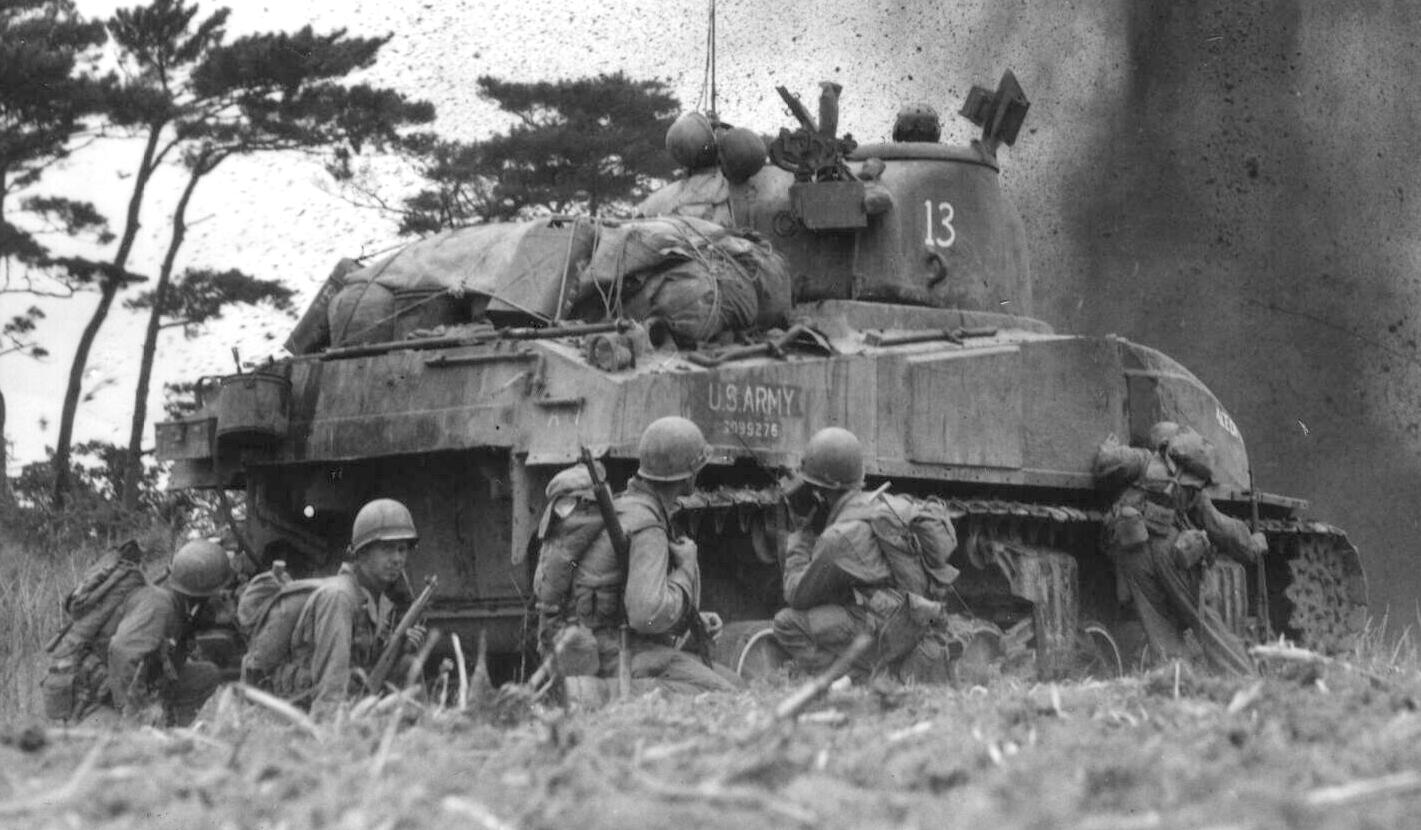
One more example of random stowage including a jerry can or two… Okinawa, spring 1945.
oh yes, you mentioned after market racks and availability. If you have a 3D printer, or know someone who does, Cults3D has a stl file available for free download of 1/35 Sherman jerry can racks.
I suspect the general lack of official racks on most Shermans was a deliberate choice by the designers - external cans of fuel are a fire hazard waiting to happen in combat. And external water cans are pointless once ventilated by enemy fire. Of course, field troops needing to load up for a route march will want to take as much supply on their tank as possible, hence the use of bailing wire and twine to hold cans wherever they can fit! But I bet most of them were removed before entering combat.
On an E8 the fenders make a tempting location, but you need somewhere for the ropes to attach to.
This picture always makes me laugh a little. Why does a tank carry a sabre as part of its stowage?
“Drive me closer, I want to hit them with my sword!”
“Souvenir from Germany”
H.P.
that strap on the rear rack looks like the way to go.Thanks
Yes fuel cans are a major fire hazard in combat. But I suspect that the POL cans were probably filled with lube oils instead. On the 113 family vehicles that I crewed on, we always had two 5 gallon jerry cans strapped to the stowage points on either side of the ramp. One filled with 10 weight oil for the transmission, differential, transfer case, and final drives, and the other filled with 30 weight oil for the engine itself. Fluids needed to be checked daily and topped off during operations, or performance is lost if not kept at proper levels. I suspect that the Shermans required something similar. If all of those automotive components used the same weight oil it would be great, but knowing the US Army, I suspect it would be more than one type of oil needed. Of course oil burns, but it has a higher ignition flash point than gasoline or diesel fuel.
There are some advantages to keeping at least some fuel on the outside of a tank and other armored vehicles rather than stored on the inside.
For example, the M113A1 vehicles I first served on had a large fuel tank on the inside of the crew compartment. This was regarded as a huge fire hazard for the crew and the fuel was eventually moved to the exterior of the vehicle on the M113A2 and later, into two armored tanks built on to the rear of the hull straddling the entry/egress ramp. They held 95 gallons (360L) of diesel fuel together.
We had Jerry cans for additional fuel, too, as did the tanks and Bradleys, and these were strapped to the outside of the vehicle with canvas straps or very strong bungie cords, normally somewhere near the rear, not stored inside the vehicle. If there was going to be a fire, we wanted that fire on the outside.
The Jerry cans had to be strapped down or tied down in some way, not stored loose. Armored vehicles bounce around a lot and the bounces can be violently big, as in break a bone big. Anything not tied or strapped down would be bounced right off the vehicle very quickly once we got off road.
The Jerry cans were even more common for headquarters vehicles because the fuel was needed for portable generators.
If cans had other than fuel or water, how were they labeled as to their different contents? A sticker, a sharpie? Has anyone seen pix from WWII of jerrycans labeled for other lubricants?
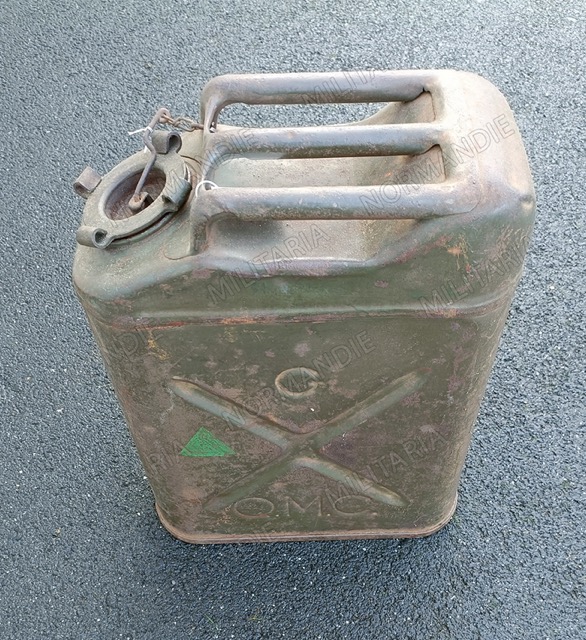
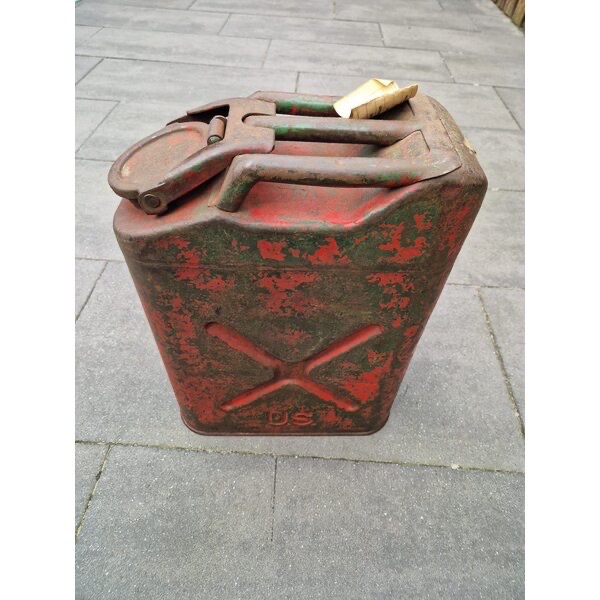
American jerrycans, you mean? You can tell by the caps.
Fuel:
Water:
Also by the letters embossed in the jerrycans: G for gasoline, nothing for water.
I don’t recall off the top of my head how oil cans fit in this, though.
Engine oil could be carried in 1 quart ( = 0.946 liter ) cans
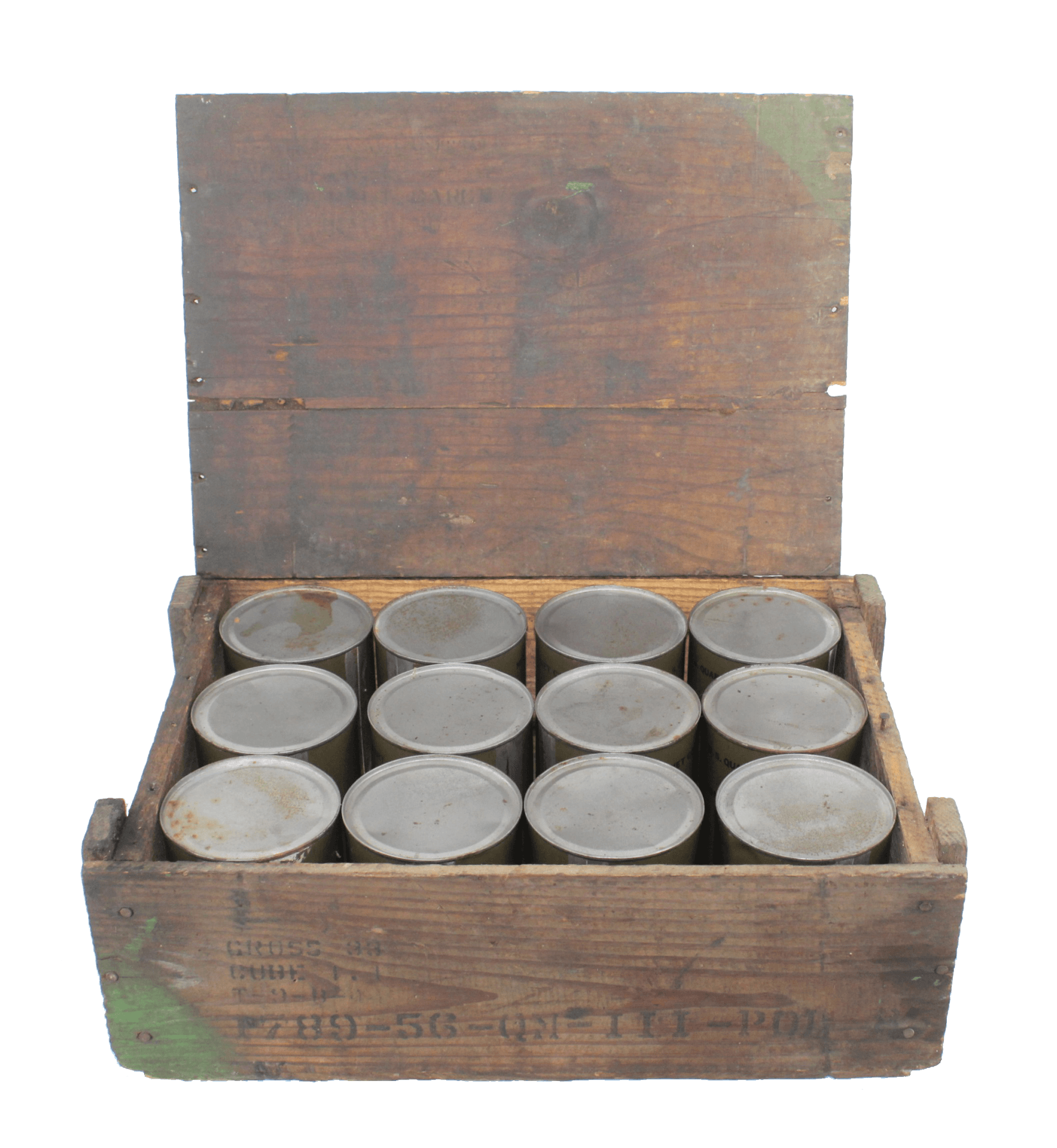
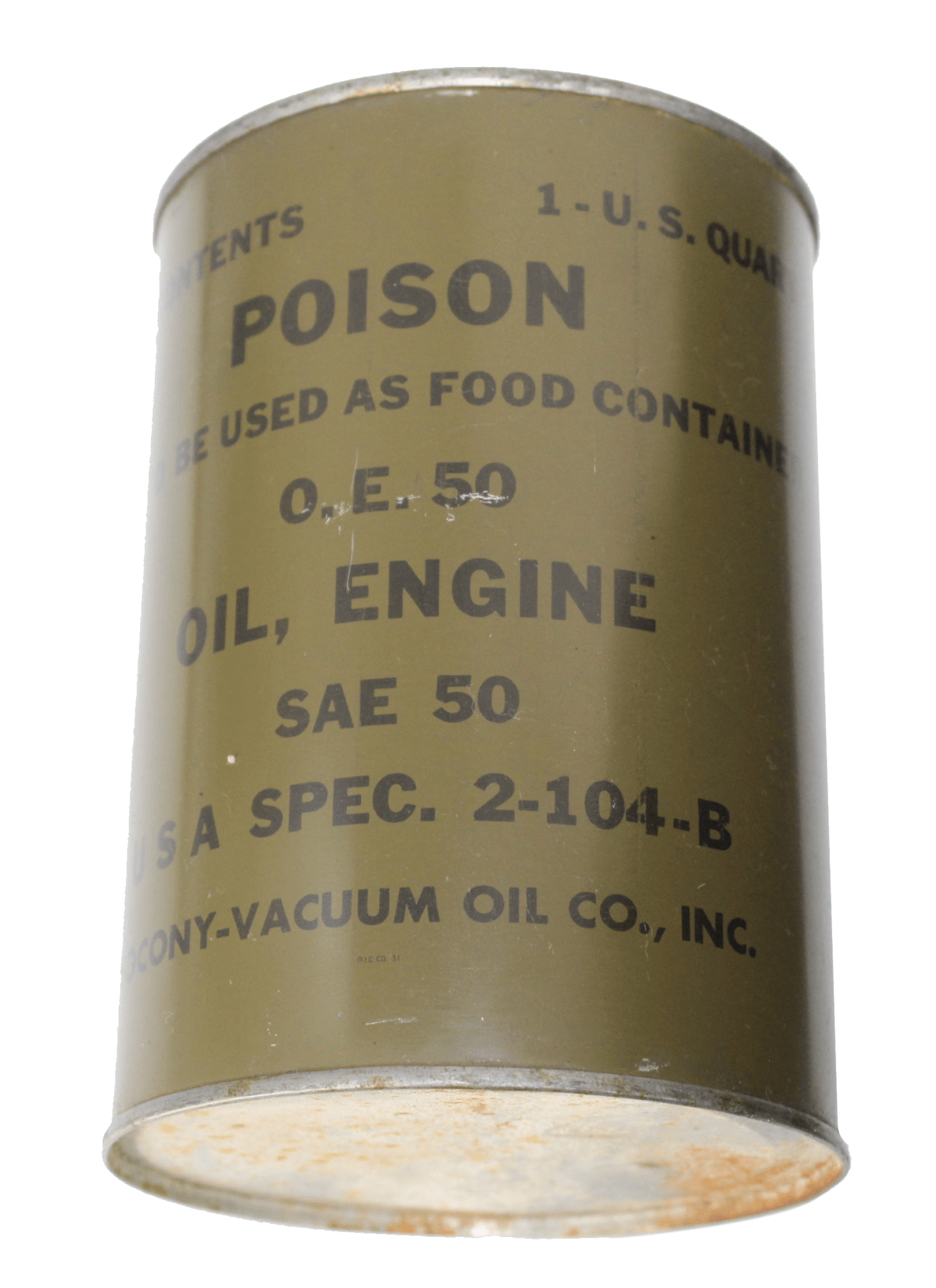
H.P.
British quarts are 1.14 litres and change, American quarts are 0.946 litres  This because they’re both one-quarter of a gallon, but British gallons are larger than American ones (4.55 l vs. 3.79 l), which in turn is because British gallons consist of 20 pints but American gallons have only 16 of those; pints then consist of 8 fluid ounces for both, but a British fl.oz. is 28.4 ml while an American one is 29.6 ml. All this is just to make things easy on everyone, of course
Post edited accordingly 
H.P.
Oil was used in the same cans as Fuel. Fuel cans were usually color coded with Yellow for Diesel and Red for Mogas, aka gasoline. It could be a band around the bootie, the upper portion of the can, or some quick spray painted blob on the side. Oil cans had the weight of the oil stenciled on them. In total darkness contents could be determined by touch and/or smell.
I’m curious as to when US Army 113A2s were fitted with the external fuel cells. Last time that I rode in one was in ‘99, and at that time it was still the original internal fuel tank. Never rode drove or TC’d one that had the external fuel. But I know that the IDF had fitted their A1s with the external armored fuel cells by the time of the ‘82 Lebanon War.
That’s a really good question and I don’t know the answer. A friend in 10th Engineers in Germany about 1989 said at the time that their tracks which had the external tanks were A2s but had the original drive controls like our 9th Engineer A1s. Maybe they were given the external fuel tanks as part of a RISE mod or maybe they were actually A3s. I don’t know. Hopefully someone here will have a good answer.
3ID tracks had the external tanks in 1999 at Ft. Stewart. I don’t know if they were M113A2s or M113A3s.
AI says that the external tanks were standardized with the M113A3 beginning in 1987. They were retrofit to many A2s as part of RISE upgrades.
The few guys I knew who had crewed an A3 said it was a much better ride than an A1 due to the better suspension, transmission and driver controls.
The timelines make sense. The M981 FISTVs came factory equipped with the armored external fuel cells, and those started to be fielded in the late 80’s. I remember in 1988 seeing some 113A3s at Ft Huachuca in a motor pool there with various fittings that I had never seen before, including the new external fuel. But at that same time my unit was using standard 113A2s. Of course the total Army was so big at that time that it took years to re equip across all components- active, guard, and reserve.