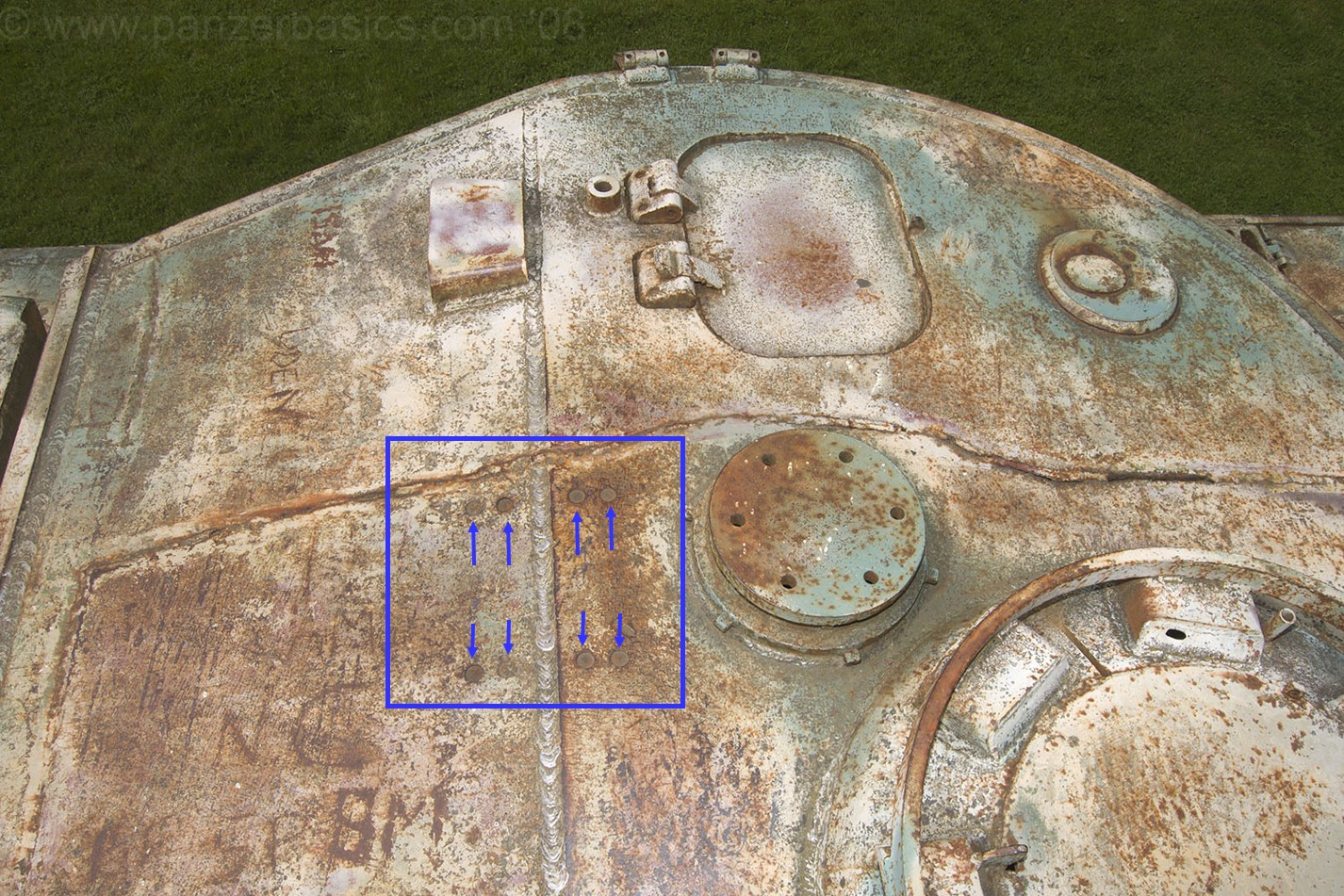
Can somebody tell me what these 8 circular recesses are on the 40mm roof of the Vimoutiers Tiger ?
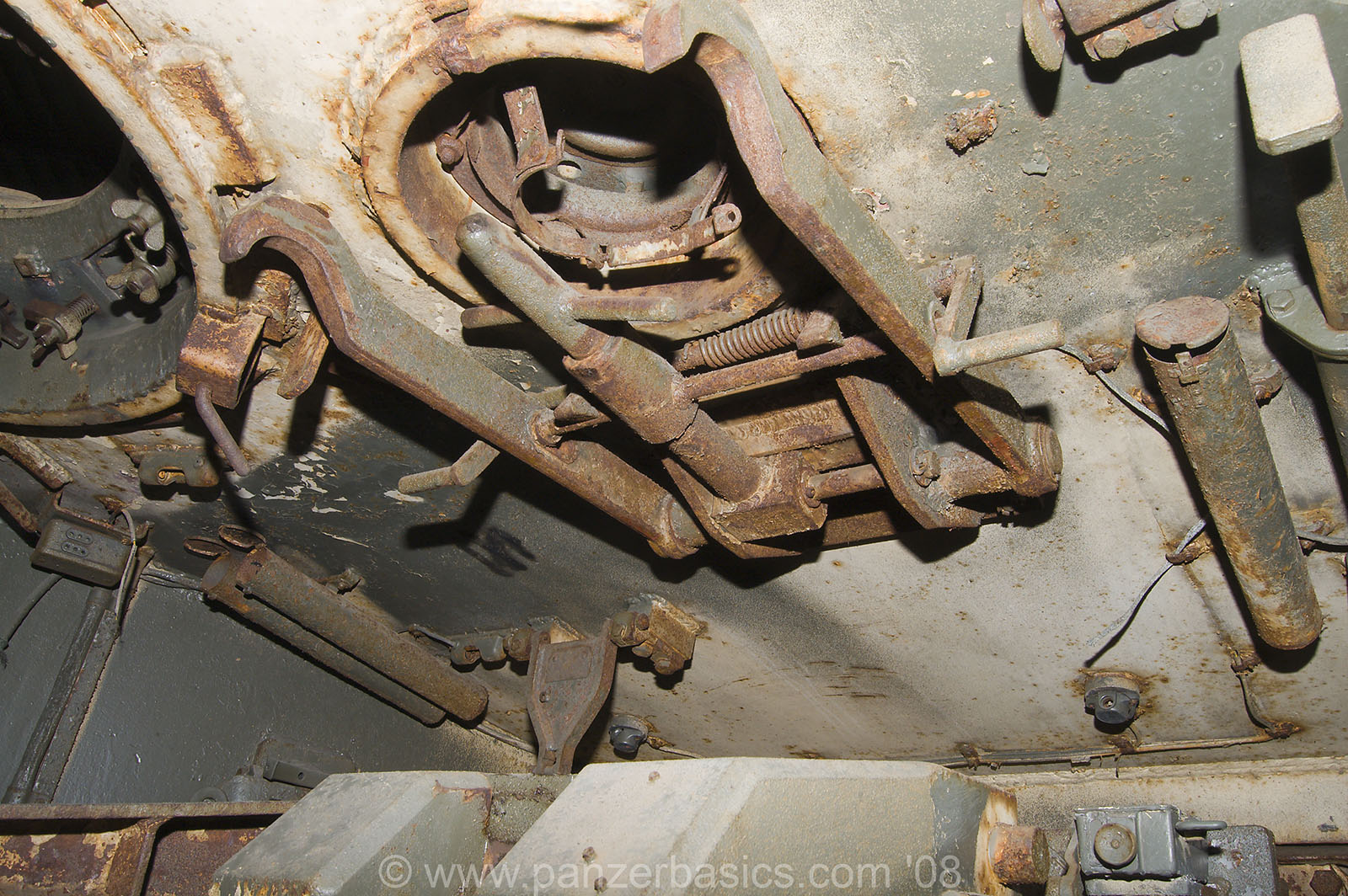
and are they related to this device inside the turret ?
Can somebody tell me what these 8 circular recesses are on the 40mm roof of the Vimoutiers Tiger ?
and are they related to this device inside the turret ?
It’s the travel lock and they are the bolt heads.
I imagine you’re seeing the ends of the bolts when looking down on the roof, since they are screwed upward from below.
That thing’s as rusty as my 2-ton floor jack.
Thanks for the reply. When you say “ travel lock” , may I presume it was ment to lock the gun during travelling ? Or does it have a completely other function ?
Yes, the travel lock prevents gun movement when traveling while not in combat, such movement could damage the elevation and traverse mechanisms.
So it locks on to the breech or near the mantlet and it can be undone from inside the turret without exposing the crew? I have not seen that before. How effective was it? Seems like the exterior barrel could still develope a lot of momentum and still damage the barrel.
It would lock into the recoil guard with a second adjustable lock to the gunners sight. The main function of the travel lock was to preserve the calibration of the gun to sight during movement over any distance. As you can imagine not good if you have to recalibrate the sight after every move and before combat. There would also be a traverse lock to prevent the turret turning. Judging by the kill ratio’s it must have been pretty effective.
Thank you so much. Always fun to learn something new, makes this hobby endlessly interesting.
No, it didn’t connect to the recoil guard. You’re thinking of the Panzer IV.
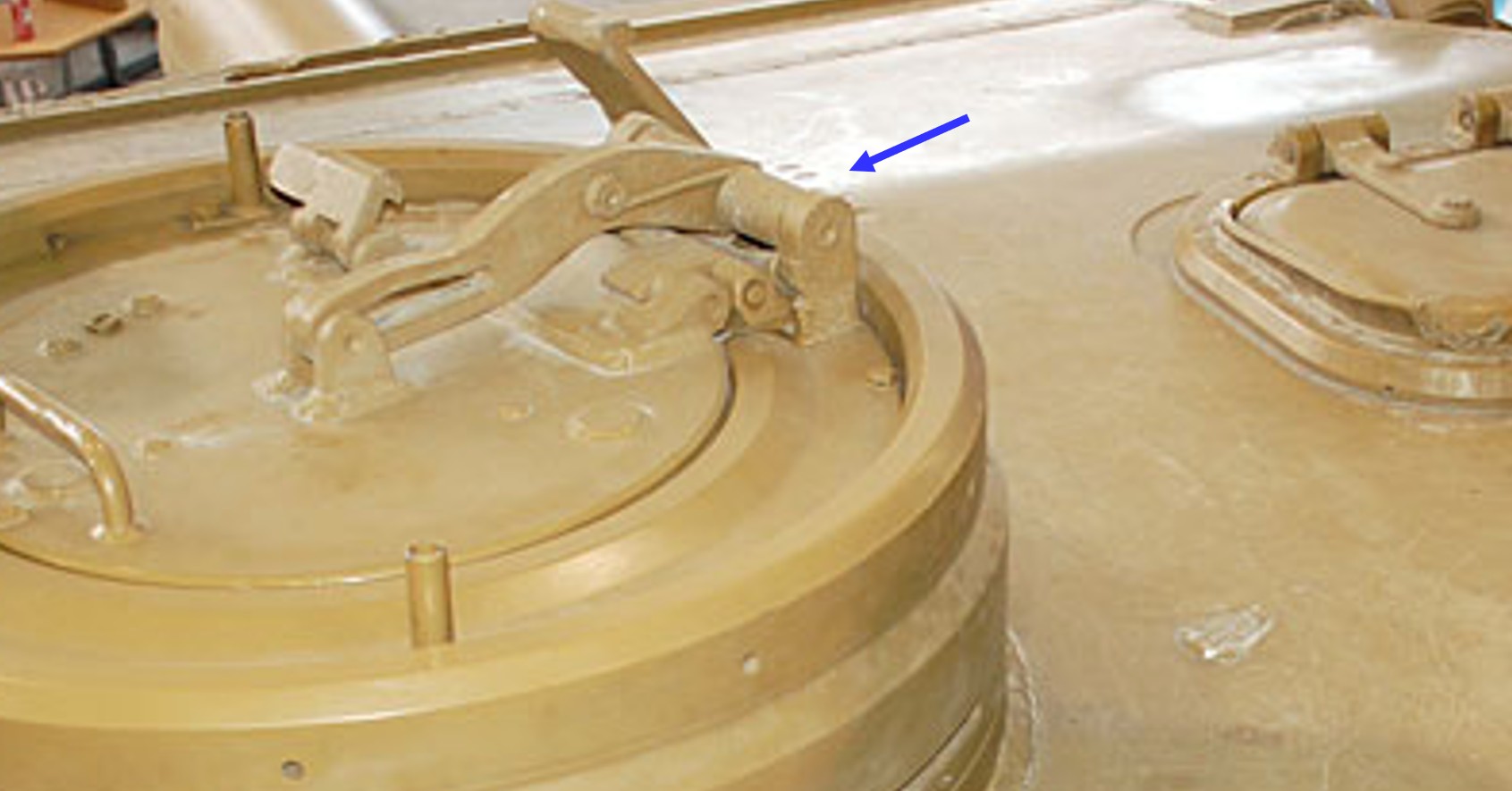
The Tiger’s travel lock hooked onto cylindrical protrusions on the breech ring itself. You can see one of them in the photo already posted.
And yes, a long gun needs a better lock than this. In the autumn of 1943 a complicated lock was added to the Tiger, at the rear right-hand side of the back wall. Within weeks it was dropped and a simple wooden block was provided instead.
David
I would say that it helps more with keeping the zero on the main gun.
While I agree with your statement, here is the Google AI quote;
…secures the main gun during transport to prevent damage, reduce strain on elevation/traverse mechanisms, protect the crew from the moving breach, and make the vehicle more compact, typically used for long road marches or shipping by locking the gun rearward or in a specific safe position, rather than in combat when it’s disengaged. It minimizes vibration, misalignment, and potential collisions, safeguarding the sensitive optics and gun mounts from the harsh conditions of movement.
I base my comment on using one in real life.
Certainly, misalignment of the gun sight is an immediate combat liability, but damage to the elevation / traverse mechanisms is a much more time-consuming repair than recalibration, is it not? That’s all I’m saying, not which one is the more immediate or likely problem to occur. In my original statement, I only mentioned one of the many reasons for the use of a travel lock, not all of them, nor did I imply any relative importance.
You are correct  atm I am thinking all things panzer IVcos it’s what I am working on an the ole brain ain’t what it used to be.
Although the technical aspect of this mechanism is quite important and not to so simple, the pure visual aspect of the bolt recesses from the outside of the turret roof play also a significant role. Simply because I need to modify my early Tiger roof into a late 40mm version. When I first heard that the recesses are the upper side of “the bolts”, I wondered why they are so perfectly round and all at the same depth under the roof surface. (in english : with a recess) When you cut a normal bolt flush with the roof surface, you see no recess at all. It would be flush and barely visible, looking down on the roof surface. But in the mean time I discovered that on an early Tiger 20mm roof and on a late Tiger 40mm roof, those bolts show the SAME recess on the roof surface. The answer lies in above picture : each bolt has a conical head that, once installed, always lies under the roof surface.I really appreciate it when I have questions on the visual aspect of these 8 bolt recesses and soon afterwards, 1 simple drawing that shows up in the replies explains the whole story. What’s more, I get a free in-depth explanation about the travel lock mechanism. Gentlemen, thank you all for sharing your knowledge.
Actually, I was sitting on Tiger “131” and it took me a while to find these holes.
But I have photos of the various surviving Late Tigers and they are obvious.
The travel lock was completely redesigned at one point. Perhaps the original design took more care to hide the bolts. Or perhaps the factory workers became less careful when drilling the holes.
David
It is hard to find pictures of the Bovington Tiger that show the bolt recesses on the roof. This is the best I found :