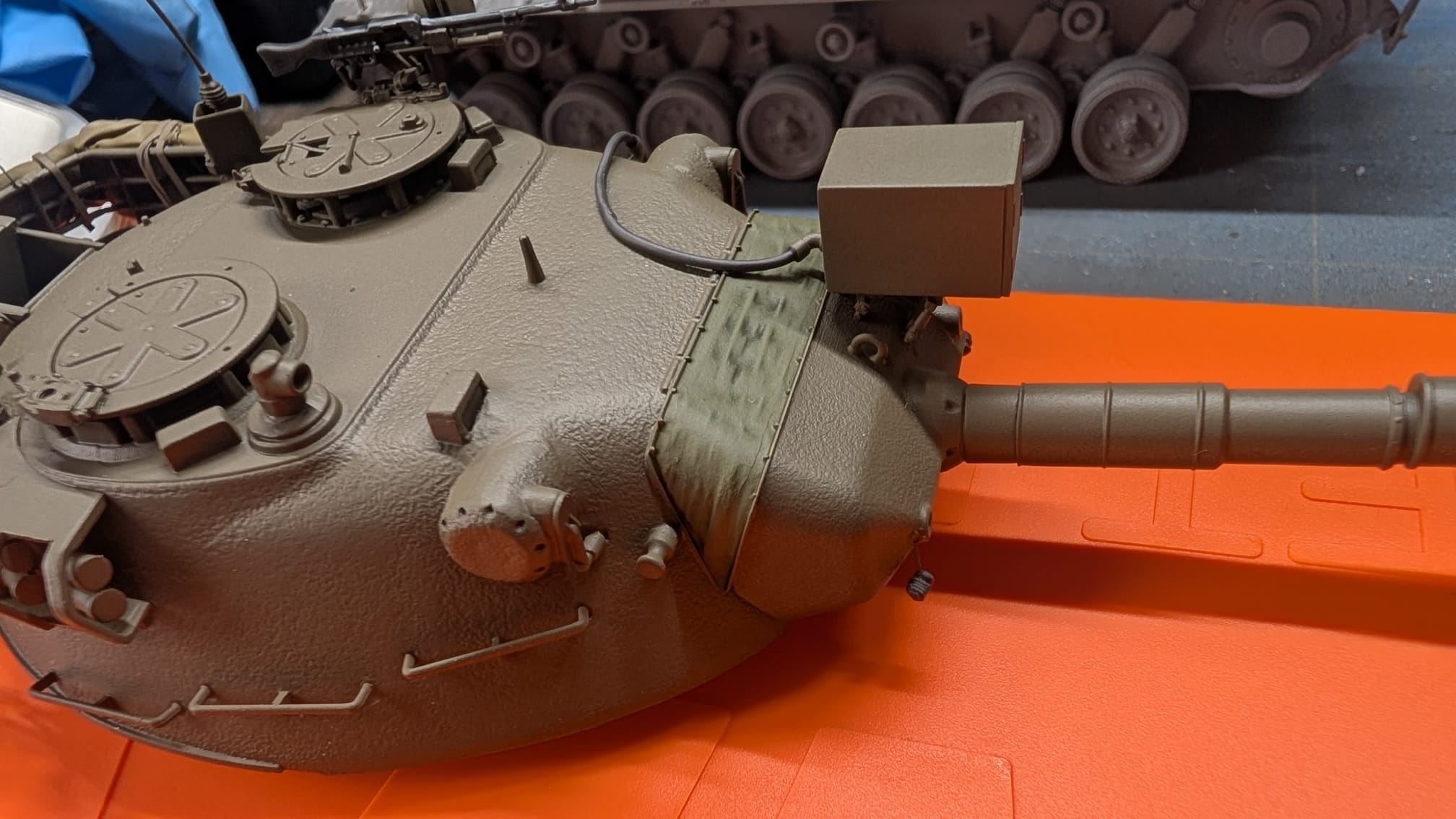
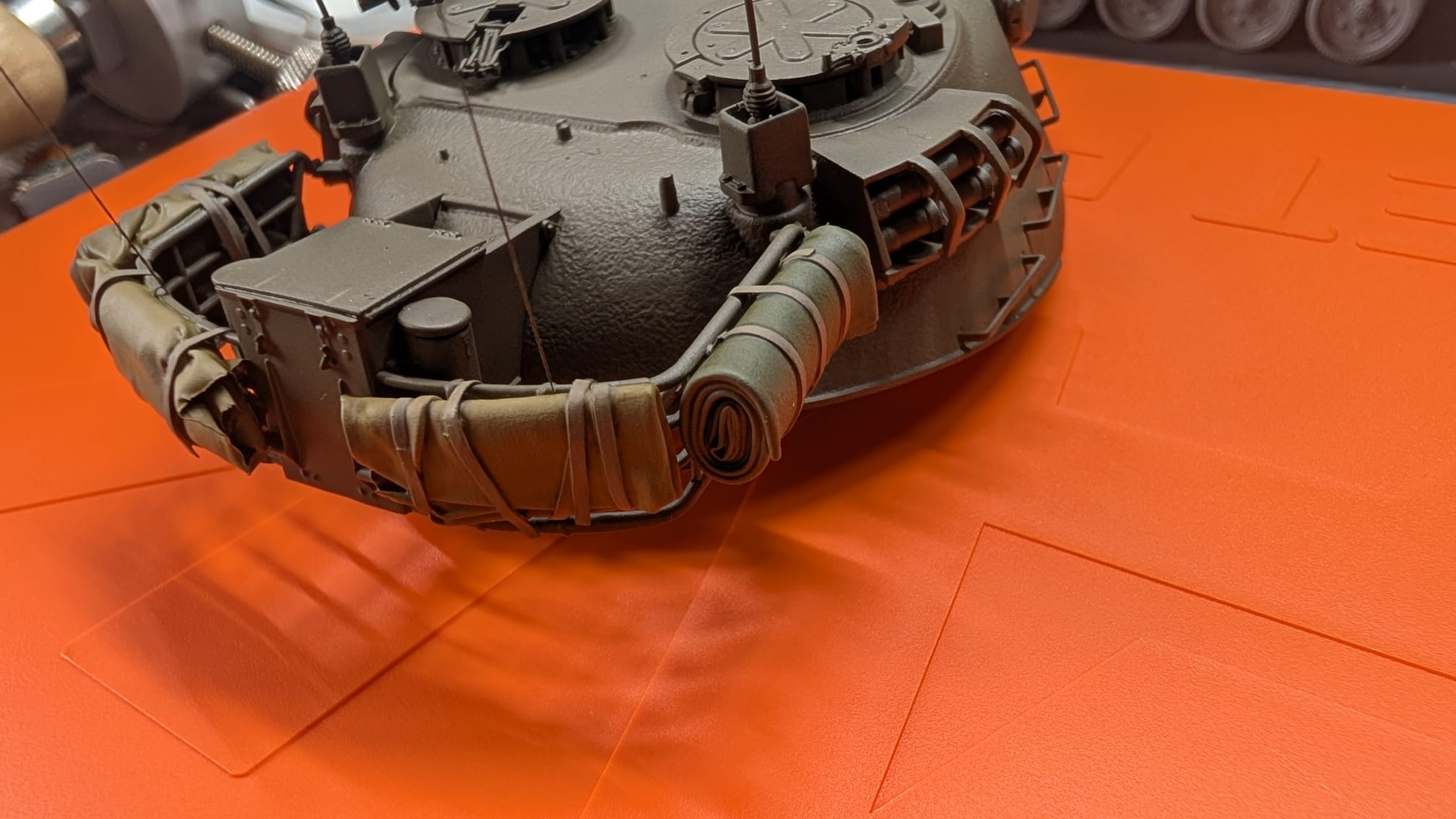
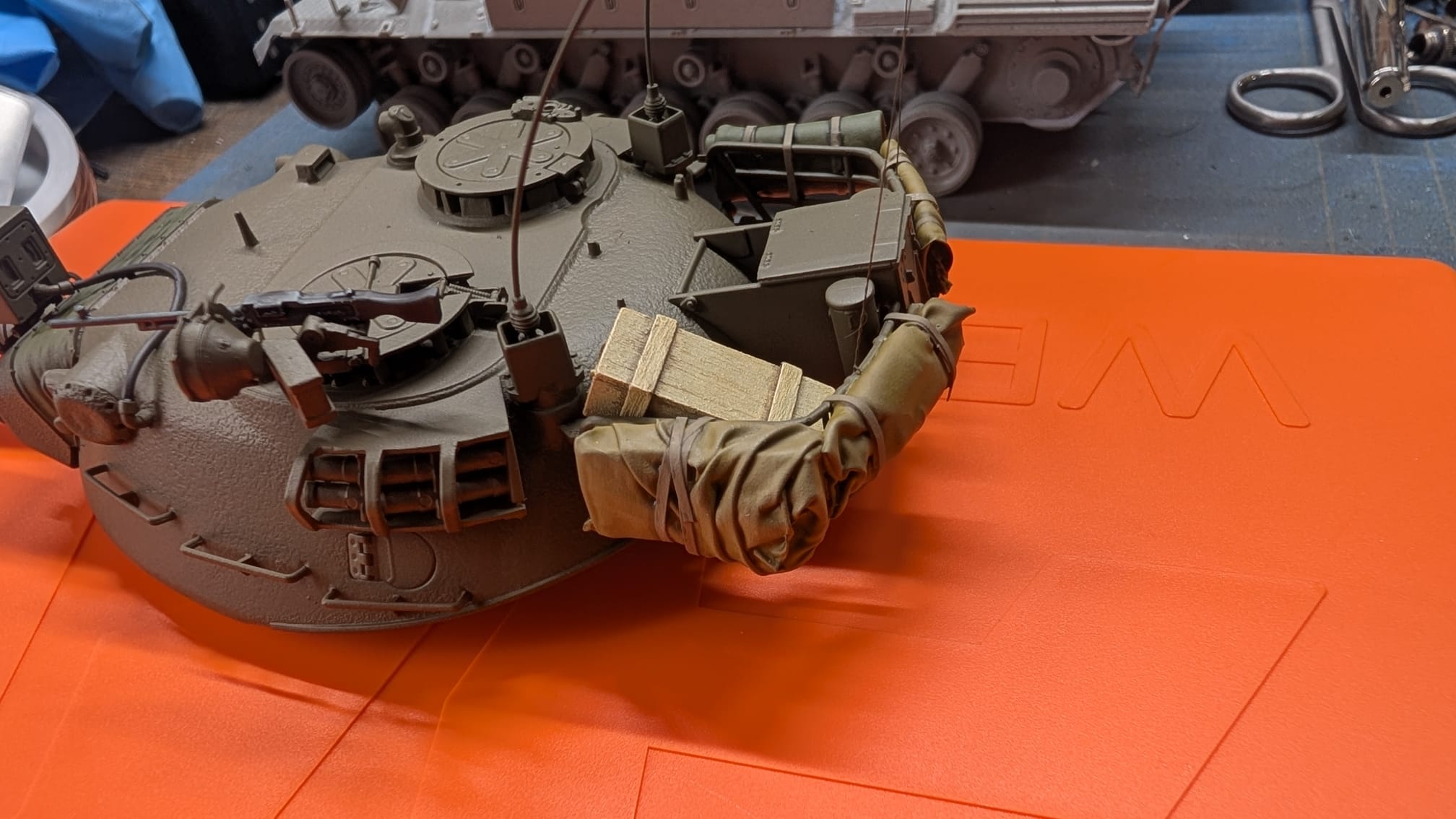
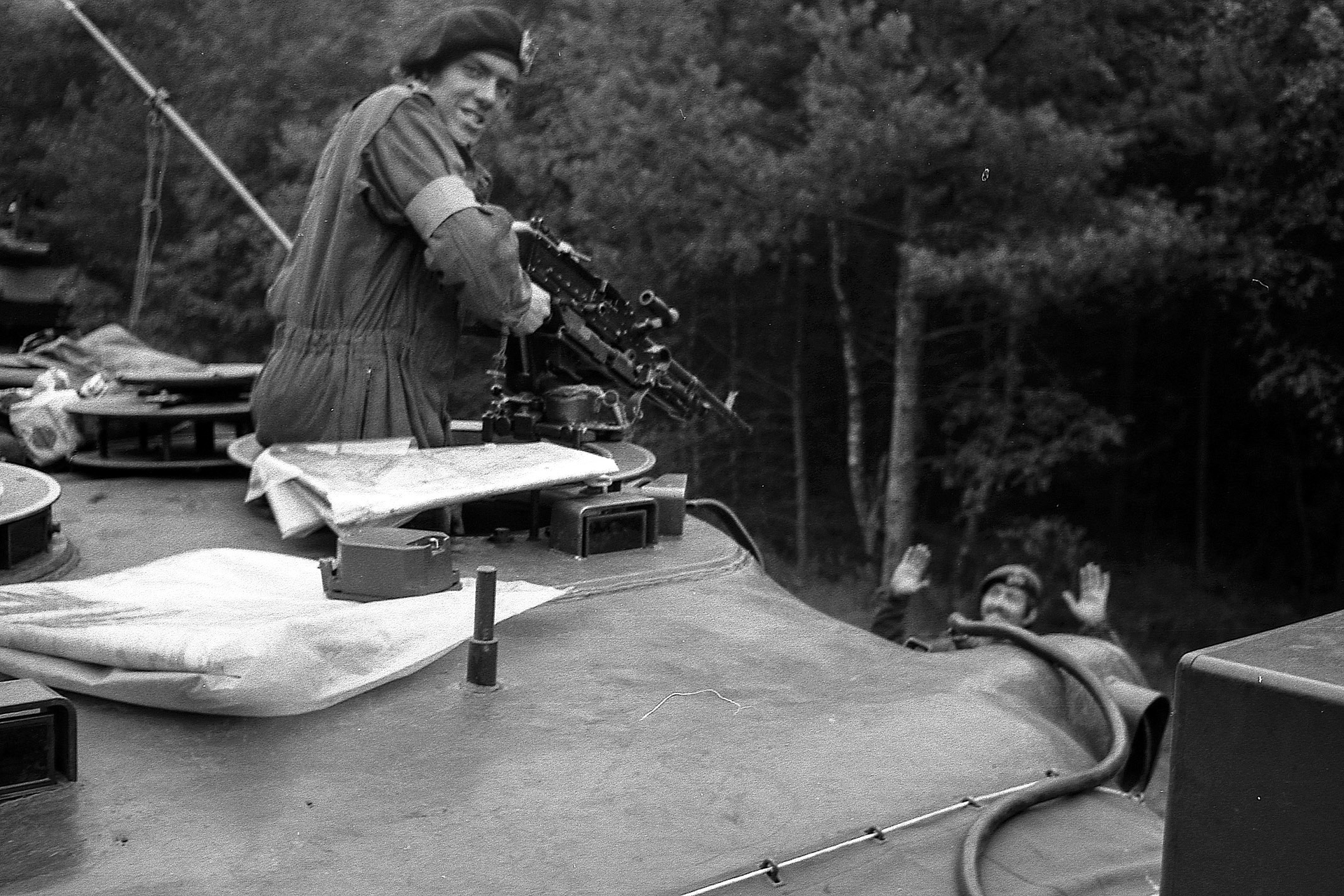
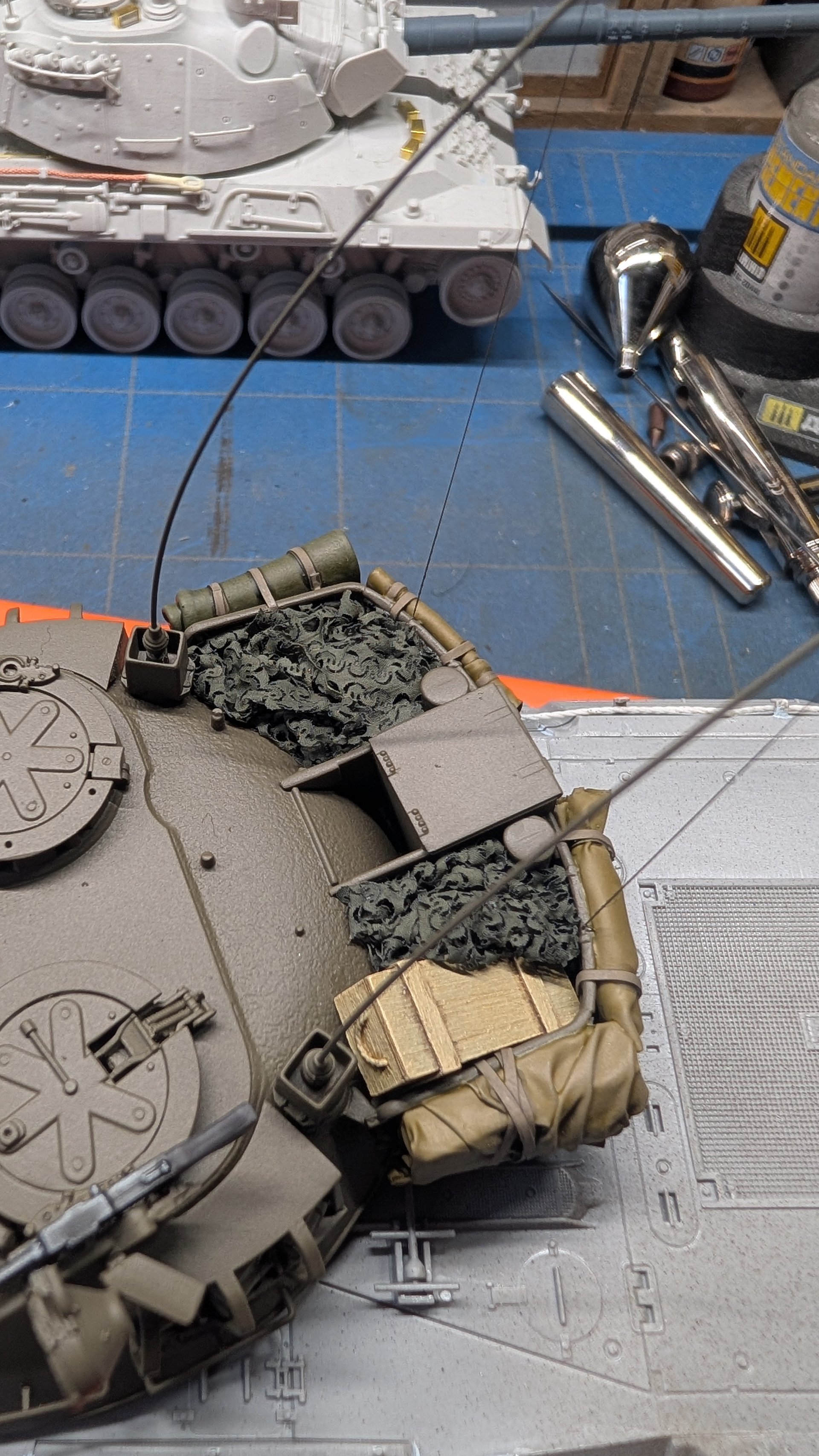
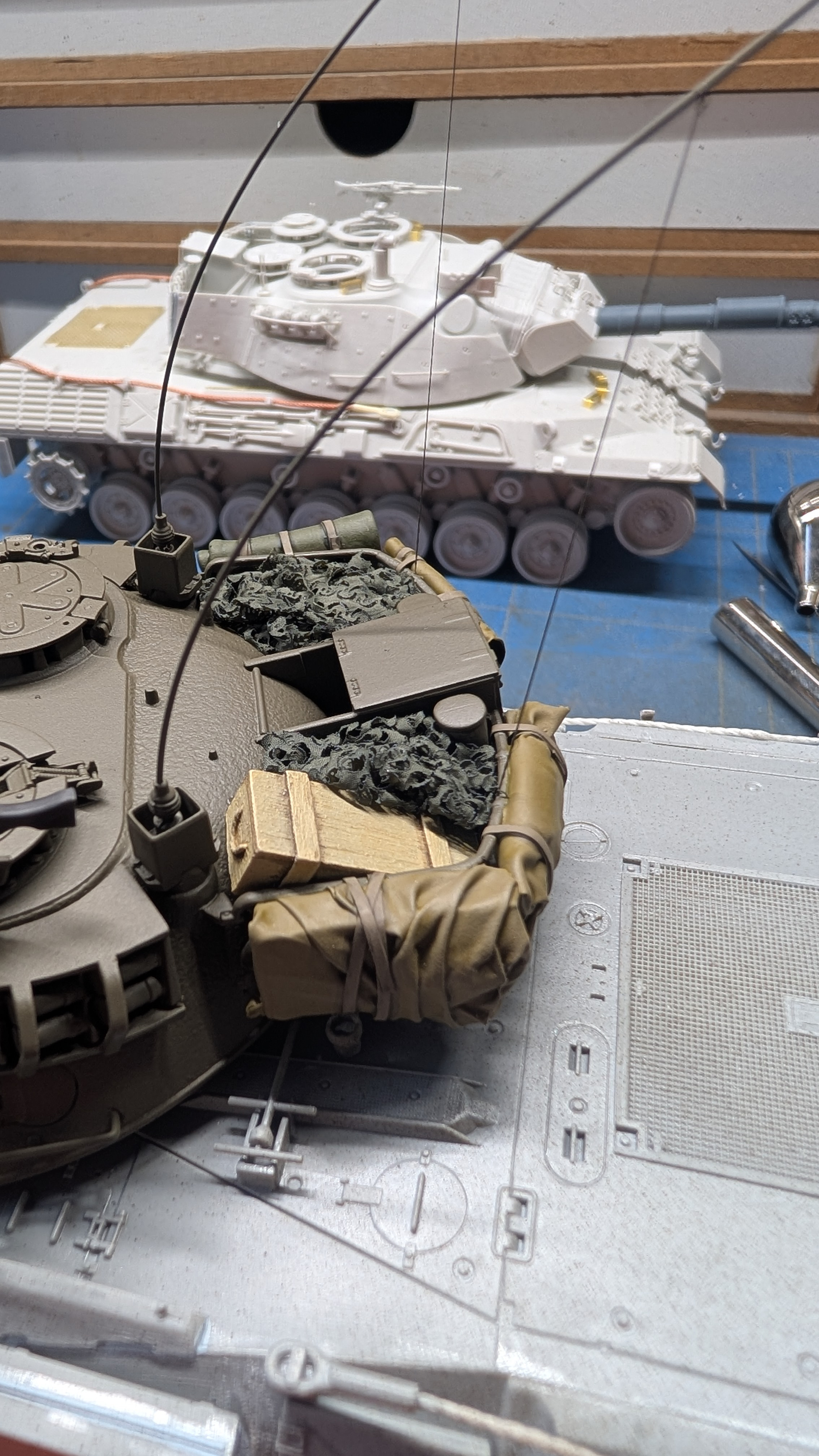
Quick question, besides more displays of Dutch professionalism, what is the purpose of the small post more or less on the center line of the turret, besides making people trip over it and faceplanting on some armor plate?
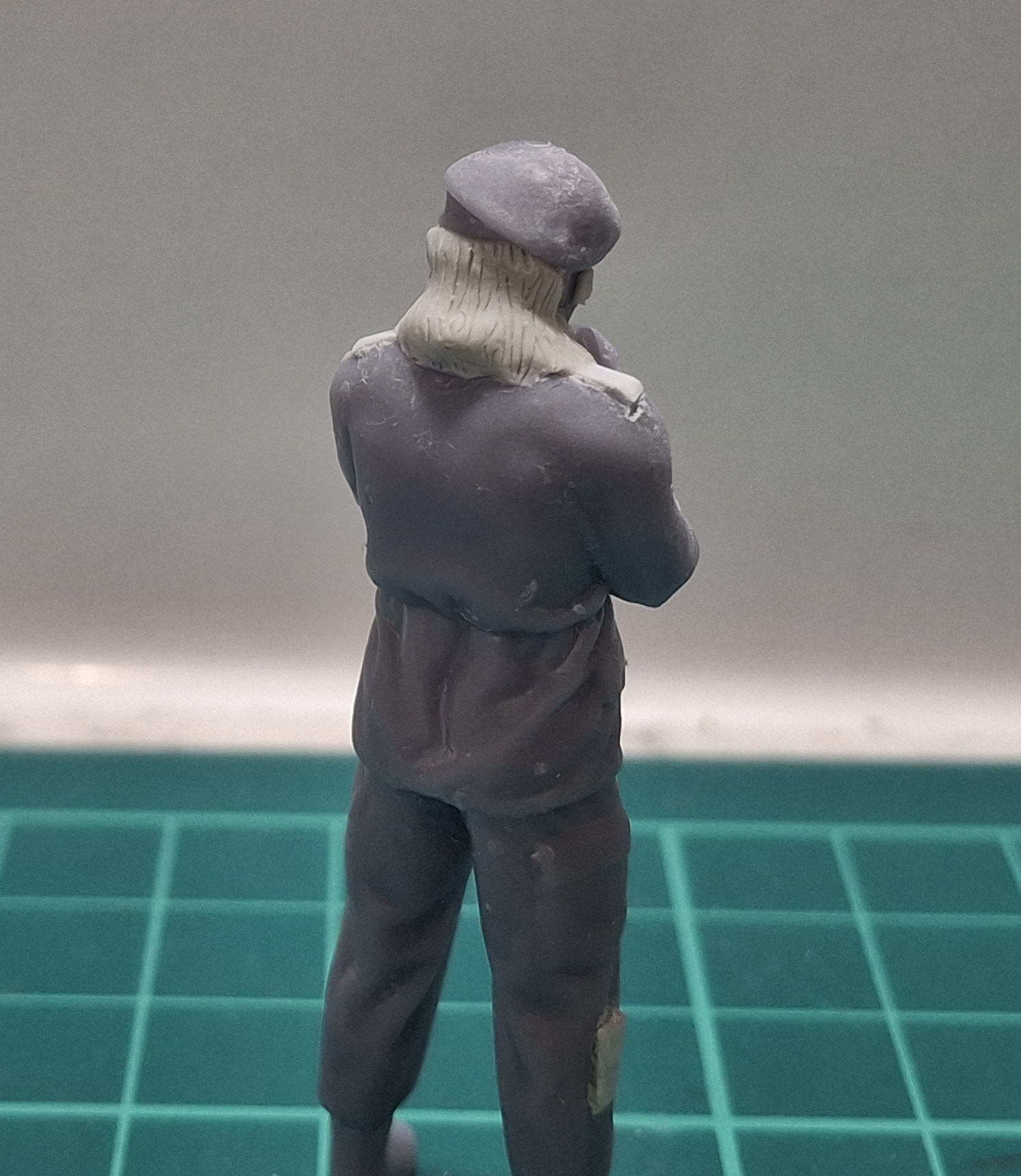
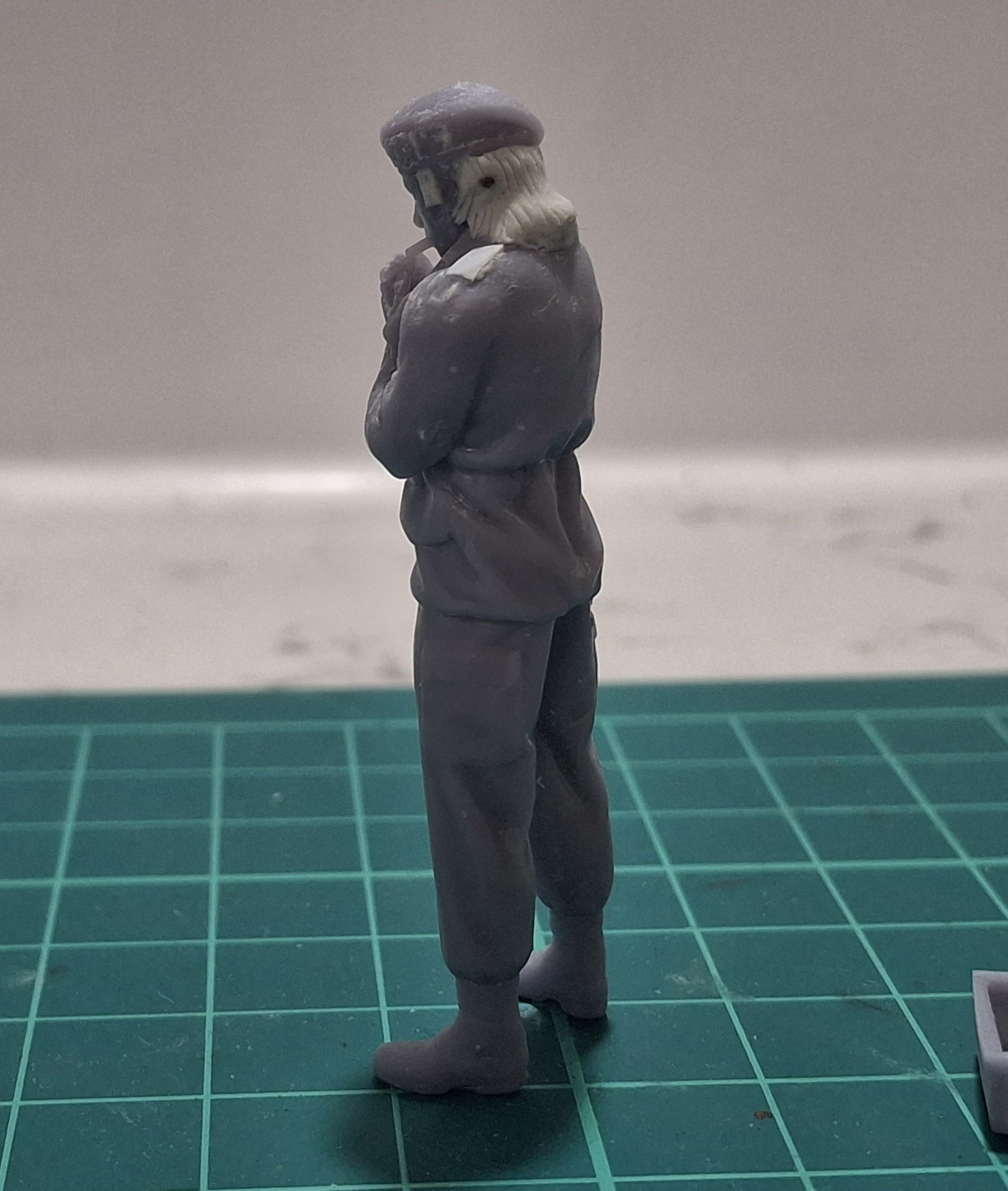
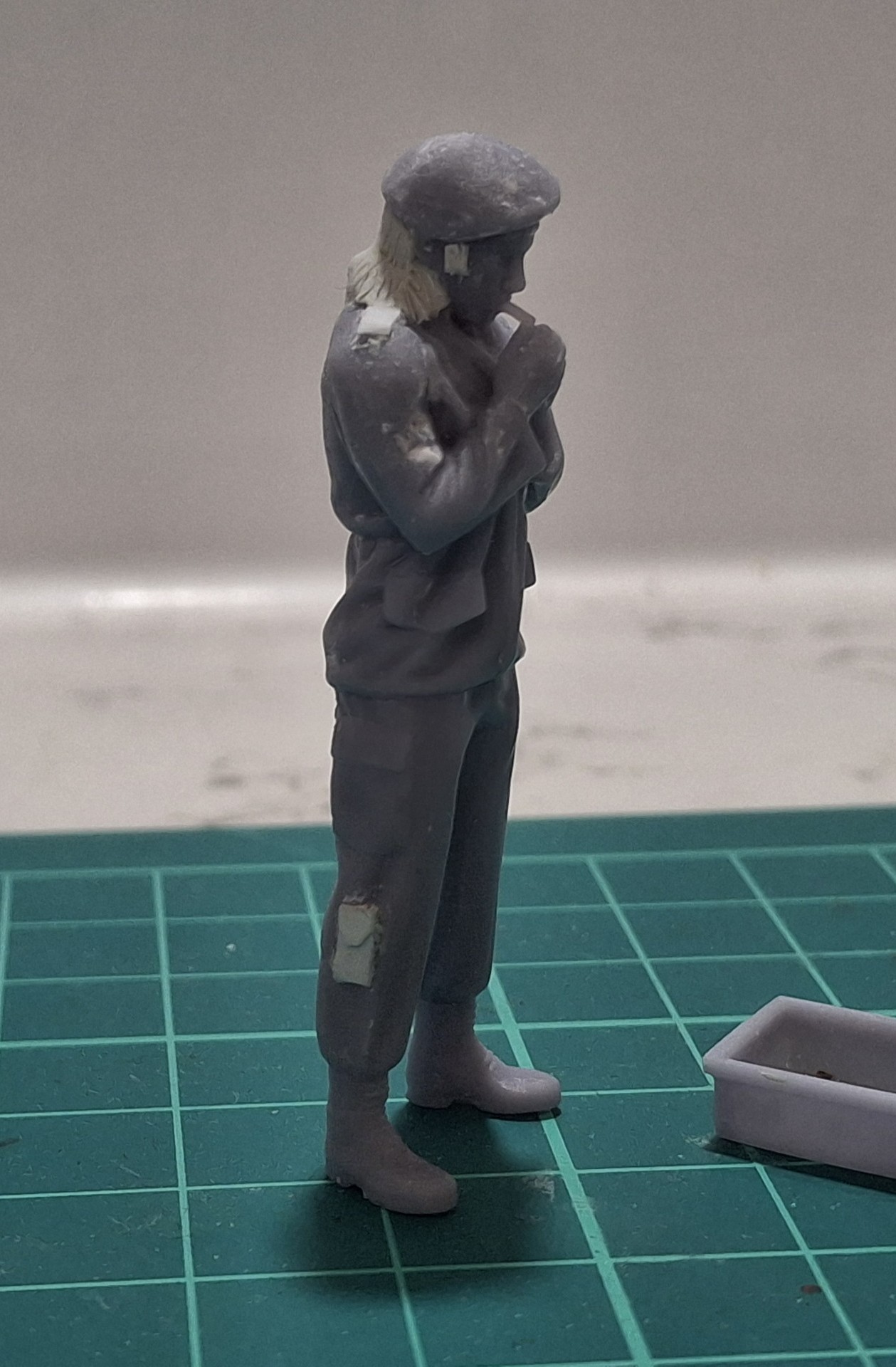
Much as I admire Sylly’s Models efforts, you are right in that he hasn’t done any figures in tank suits; I plan to convert the ones I’ve identified. I’ve done similar on Bundeswehr tank crews so it shouldn’t be too much of a problem; famous last words(!)
I note that on some of his Dutch figures there are no epaulettes, which is a bit of a pain, though nothing that can’t be fixed. The small pocket on the lower right leg of the trousers is there, but not especially defined, but again, that’s an easy fix.
I’ve also tackled a first for me, in that I’ve attempted to add long hair to the driver figure; I’m itching to paint it all but will have to wait at least overnight while the Magic Sculp cures. I plan to do that on a few of the figures I’ve amassed, if it works.
I was talking to some British ex–tank-crewmen last month. One had been on Chieftains and Challengers, and when I mentioned the Dutch Army in the late ’60s had tested a Chieftain against a Leopard 1 to decide which to buy, he said words to the effect of, “They made the right choice”
Its armament and armour of course were first class, though not much use without a decent power pack to get it around; mind you, one could foresee T-64 eating Leopards for breakfast.
The T-64 had the same kind of mechanical problems as the Chieftain, didn’t it? Because of using essentially the same engine — that is, both developed from the same German concept.
Yes, it did initially to such an extent that the manufacturers were embedded with the troops; I suspect the same happened with Chieftain. All ironic in a away, I always suspected the KGB of industrial espionage somewhere along the line, then it bit them in the rear end.
But the T-64 was lethal; NATO was driven to almost panic. Countermeasures became the order of the day and the development of a new ammunition to deal with it. And of course, there were a lot of them.
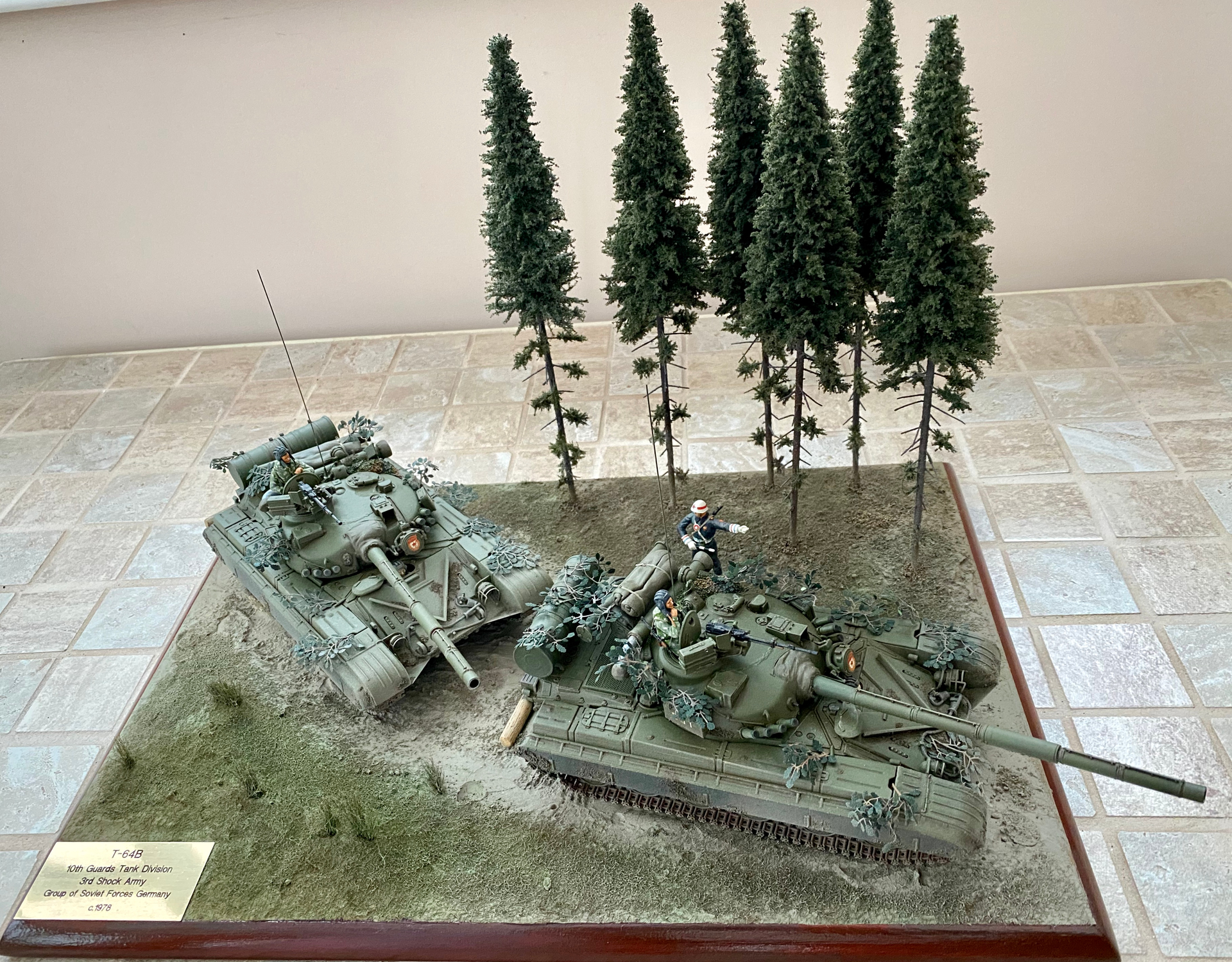
For some reason various commentators disparage the T-64, but it was a game changer in NATO’s Central Region. It was fast and nimble, armed with the formidable 125mm, and sported a new composite armour. NATO’s tank fleet at the time sported the 105mm, and 90mm, with of course, BAOR’s Chieftains’ 120mm.
They were interesting times, and to me, hugely stimulating regarding 1/35 models. yet I’ve only built one model of the T-64(!)
I have one of those in my stash, plus the separate-link track set, as well as their BMP-3. I never found the courage to build it — and the price stickers on them are in guilders, without euros alongside
Well, if you ever decide to do something with it, just note that the Skif separate track links don’t work/fit. I used Trumpeter ones on mine (which begs the question why not get Trumpeter in the first place?)
IIRC, they’re (the Skif ones) are also wrong in that only half the links have holes in them. But if I do want to build a T-64 in the future, I’ll just get a Trumpeter kit instead. Less work, better model
Just for your information: that pocket is/was (not sure if it is still on the latest version of the Dutch uniform) exclusively used to store a small emergency bandage (noodverbandje).
That pocket served almost no purpose whatsoever. A couple of chinagraphs/pens perhaps and that was it. Later they introduced a field dressing pocket on the sleeve, which when fitted, snagged on just about everything. Prior to that it was located just below the waist on the combat trousers; this meant you couldn’t bend particularly well.
Truly, the British Army at times moves in mysterious ways.