No one fooled themselves into thinking that the calm that came on the 4th, after the vain attempts to push past Alamein and which spread along the entire front, could last.
The Australians attacked on the night of the 10th with seasoned skill, sudden and violent, along the coast. They slipped through the gaps in the 7th Bersaglieri and the Sabratha division, which had just arrived at the front to occupy positions they knew nothing about after a grueling and sky-targeted journey. The battalions ended up encircled in rings of steel and fire, cut off, as were the artillery units of the 3rd Celere Duca d’Aosta, unable to fire for fear of hitting our own infantry. After annihilating the division, by dawn the Australians reached Hill 33, eight kilometers behind the outposts, hitting the army’s heavy artillery deployment—a disaster—but in the end, the breakthrough is somehow contained.
The plan is made to reclaim Hill 33, which the enemy has meanwhile reinforced with a lot of artillery. The task is entrusted to the XI medium tanks battalion, Trieste division. The assault company is the third one, commanded by Vittorio Bulgarelli, the nineteen tanks have to parade under the ridge of Marsa el Hamra, the Red Bay, then push out into the open for three kilometers across the dry lagoon and attack the slopes of the Hill. As they appear, the 57 mm anti-tank guns and the 88s open fire. The company moves forward confidently, the tracks biting into the damp but compact sand and salt, zigzagging to avoid the increasingly frequent incoming shots.
-Ramazzotti, the driver of my tank, calls me over the intercom: <Lieutenant, the gearbox is broken, we can only go in first or second gear!> <Never mind, go in first and second and try not to stop!> I understand him, poor guy, he has doubts… and who doesn’t? The tank struggles as best it can through artillery fire and clouds of dust, heading into the unknown, because, once again, we have no idea what’s going on. We’re positioned facing east with the sun blinding us and making our armor sparkle. In the distance, ahead of us, I make out shadowy shapes… Almost at the same time, I hear a shot on my right and the screams of the radio operator who seems to have gone mad, while Visentini, manning the gun, tries to calm him down. The tank has been hit, not directly fortunately, but on the track which now hangs lifeless as a hail of bullets rains between us and other tanks get destroyed. There’s no time to lose, my tank is stuck and… ‘stuck tank is a dead tank’, everyone out.-
Some tanks are stuck less than two kilometers from the Hill. Then, some head south to climb the slope, hiding in the small valleys. Others move across the plain, but they all get hit, spewing flames and smoke, with explosions and gunfire cracking inside the hulls. Only one tank, isolated and reckless, keeps running unscathed toward the ridge, reaches it, passes it, disappears on the other side, and is destroyed with all the crew beyond the goal, on the far side of the Australian line.
The action went badly. A retreat to the starting line has been ordered. From the immobilized and smoking tanks, the survivors come out, almost all injured, burned, or bruised. They help each other, scattering in the lagoon, poorly protected by three tanks trying to get back while grenades fall and Vickers long-range machine gun bullets whistle meter by meter. Sixteen tanks are left in the dark, salty sand, with the dead and some dying.
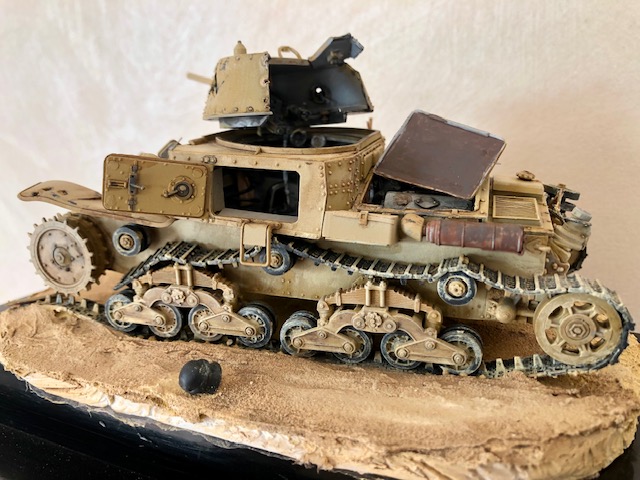
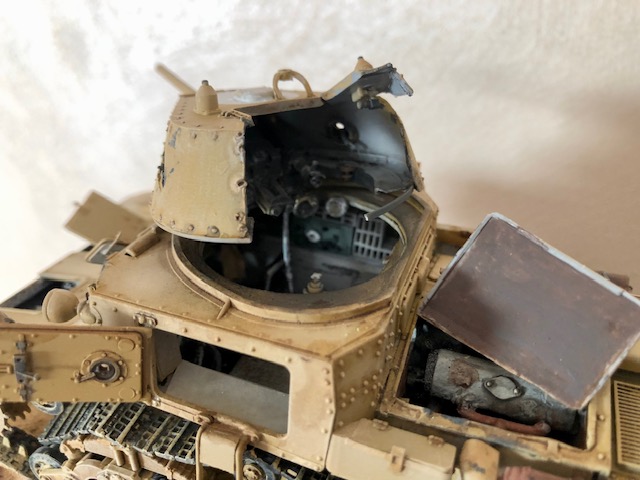
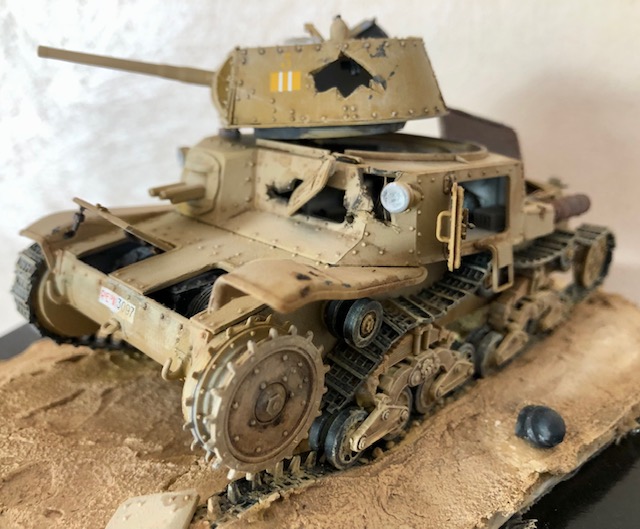
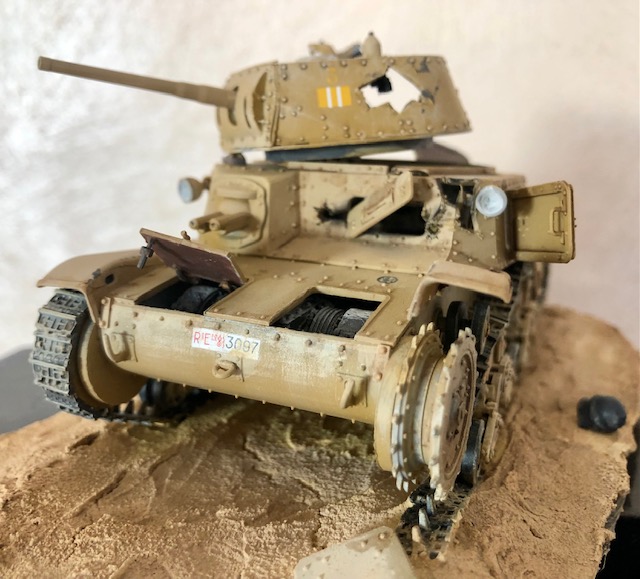
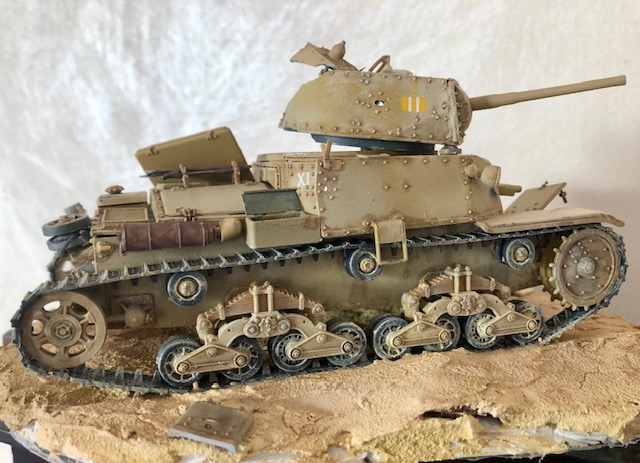
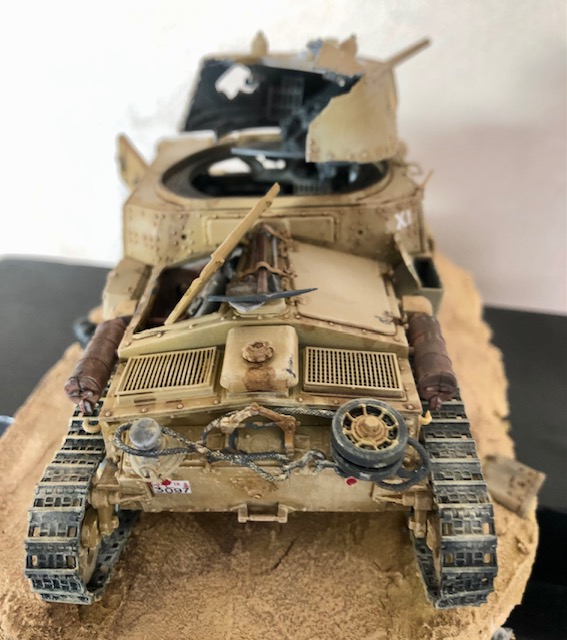
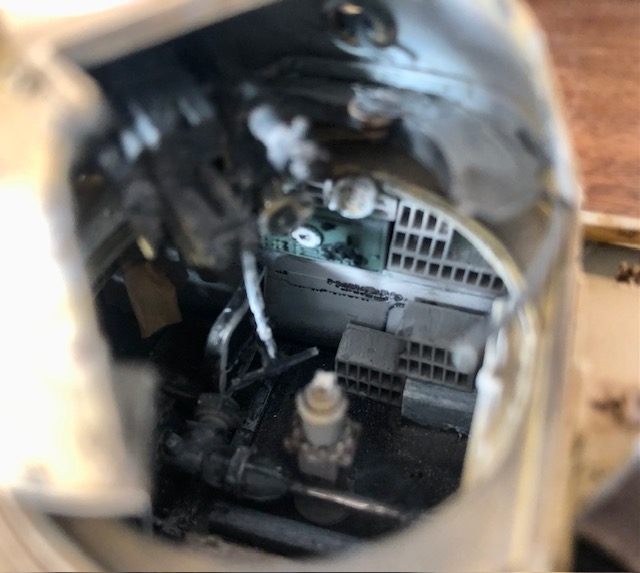
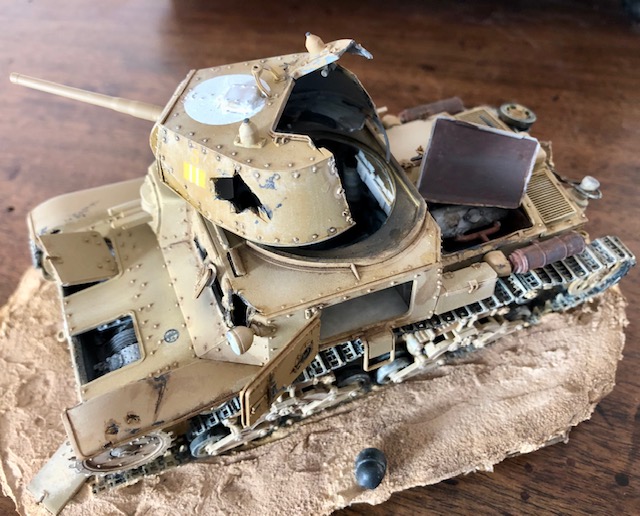
The M13s and M14s, pierced through, without German or American tanks nearby to restore a sense of scale, stand among the sparse bushes of the dry lagoon and look gigantic. The tracks left by the treads, imprinted on the ground, tell the story of an iron existence, expressed in curves and maneuvers, interrupted here and there by shell craters, until the very last shudder. Where the pattern ends lies the torn-apart wreck still smoking, the cannon aimed at the enemy, the turret with the little yellow rectangle of the 3rd Bulgarelli Company, the treads spread out flat on the ground like undulating carpets. Further on, the pattern disappears, it’s no longer needed… A few hundred meters away, there’s the sea, a deep turquoise blue, and with the roar of battle ended, you can almost hear the waves breaking… beyond the sea, so far away, Italy.
By Alamein of P.C.Dominioni and by Guerra di Corazzati in Africa Settentrionale of A.Luciano

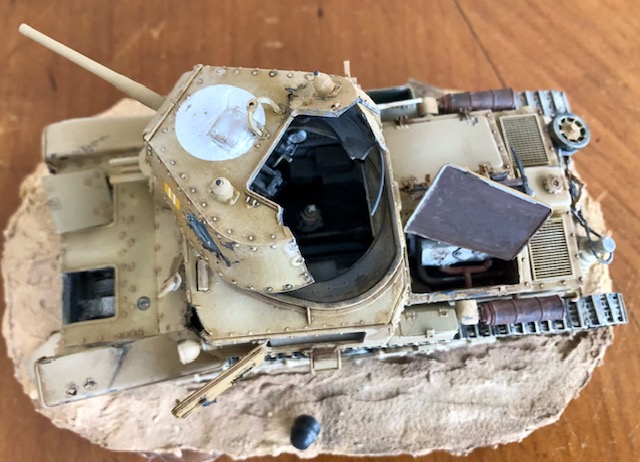
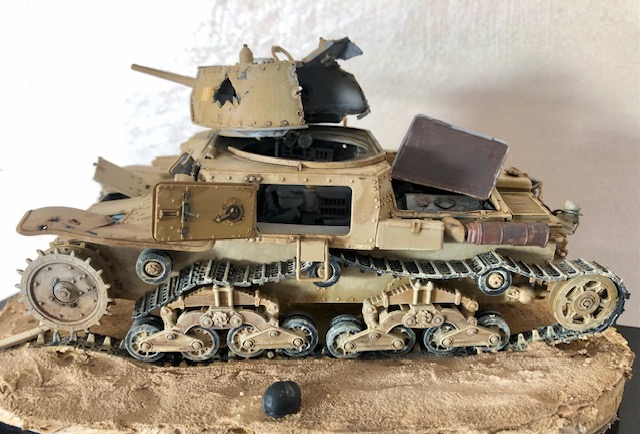
Thanks in advance for viewing and comments 