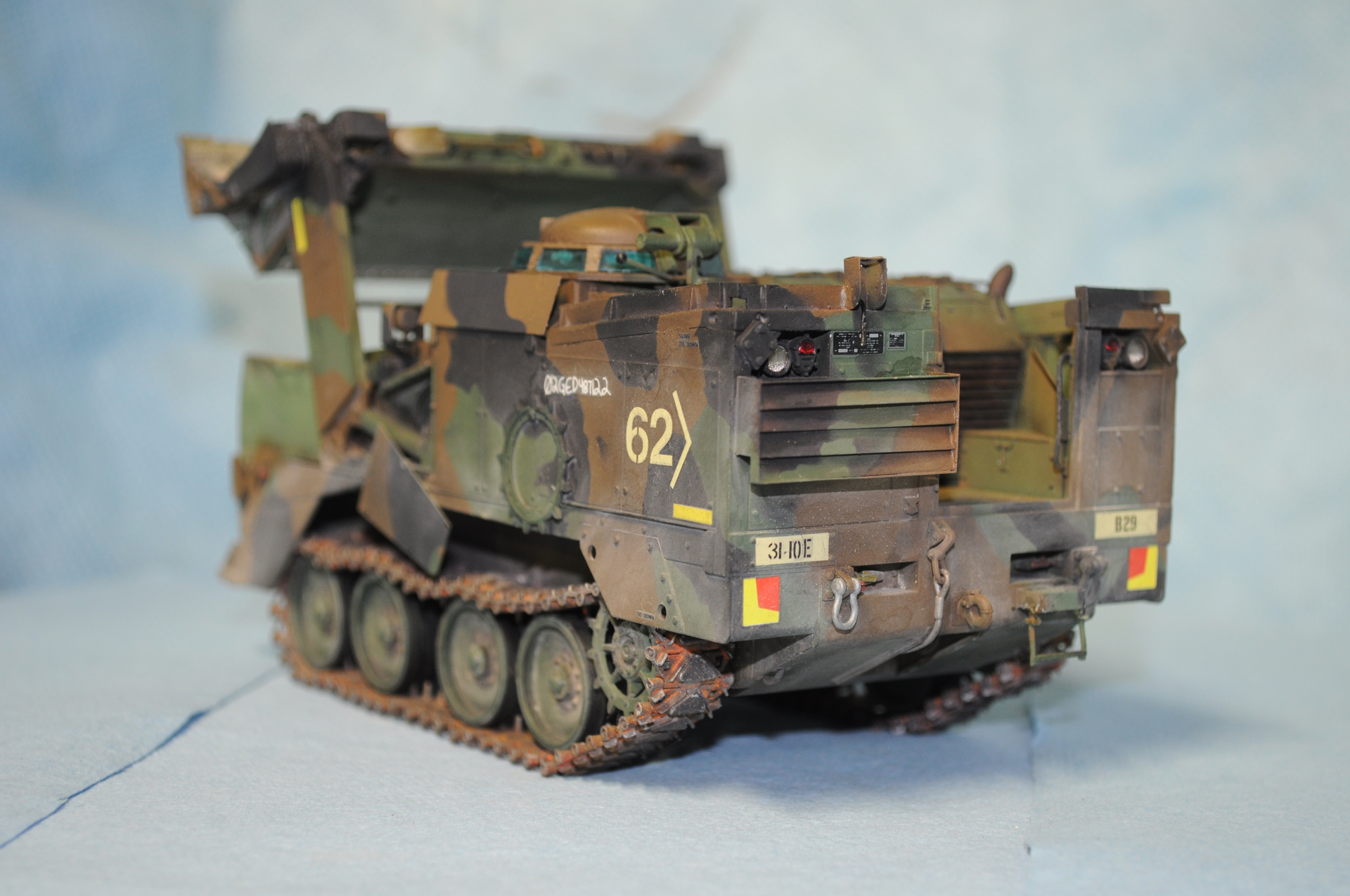
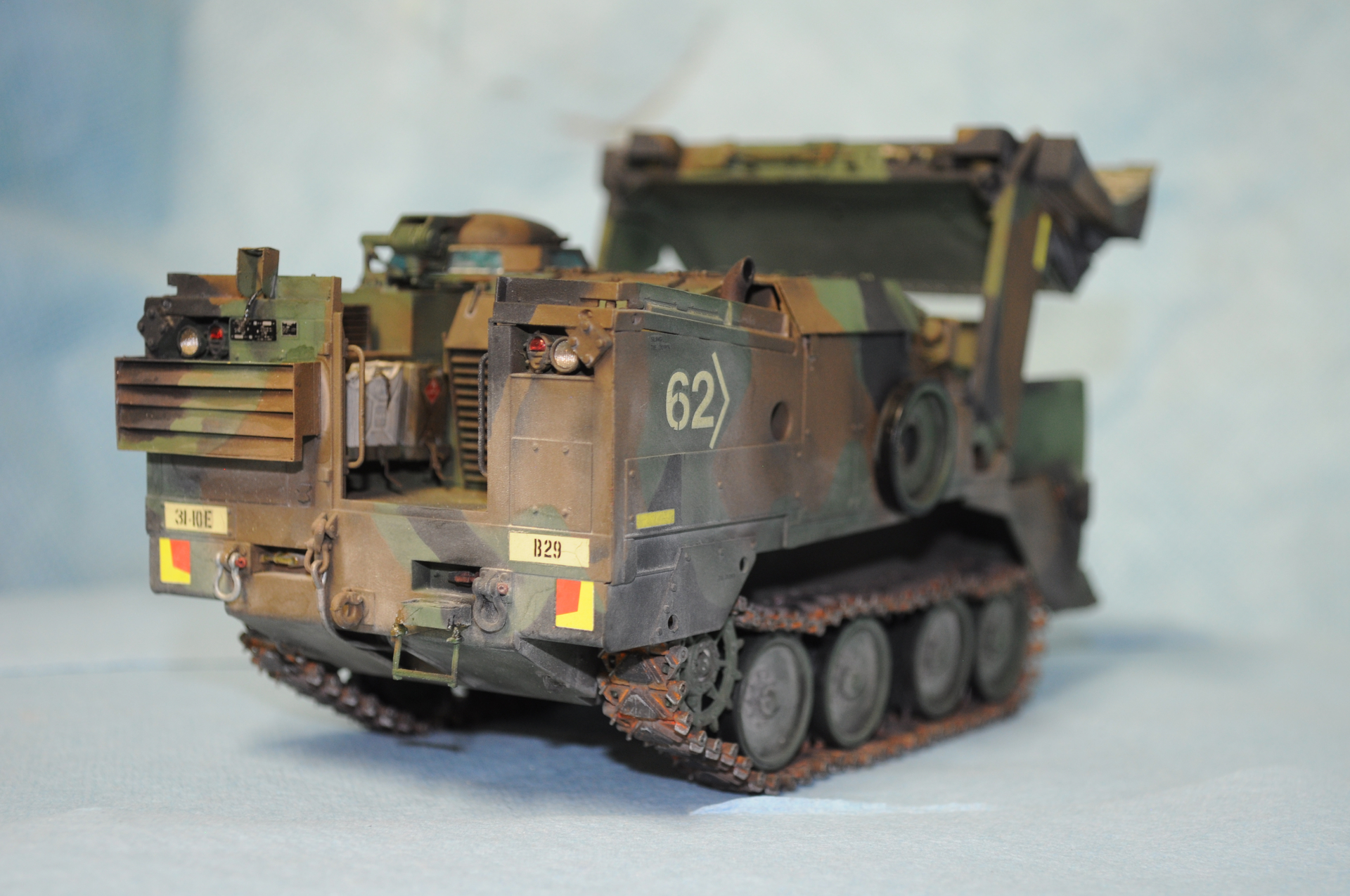
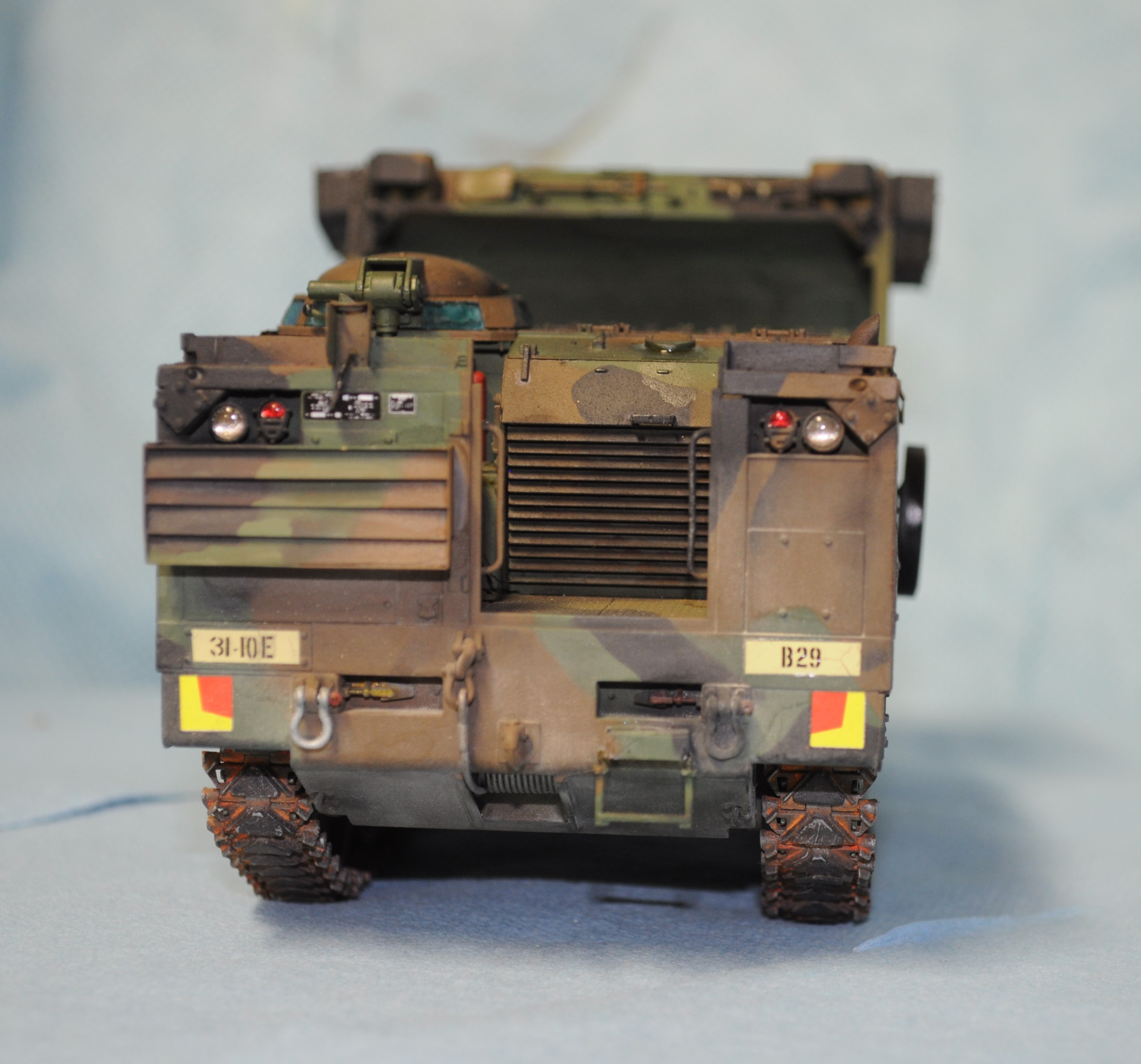
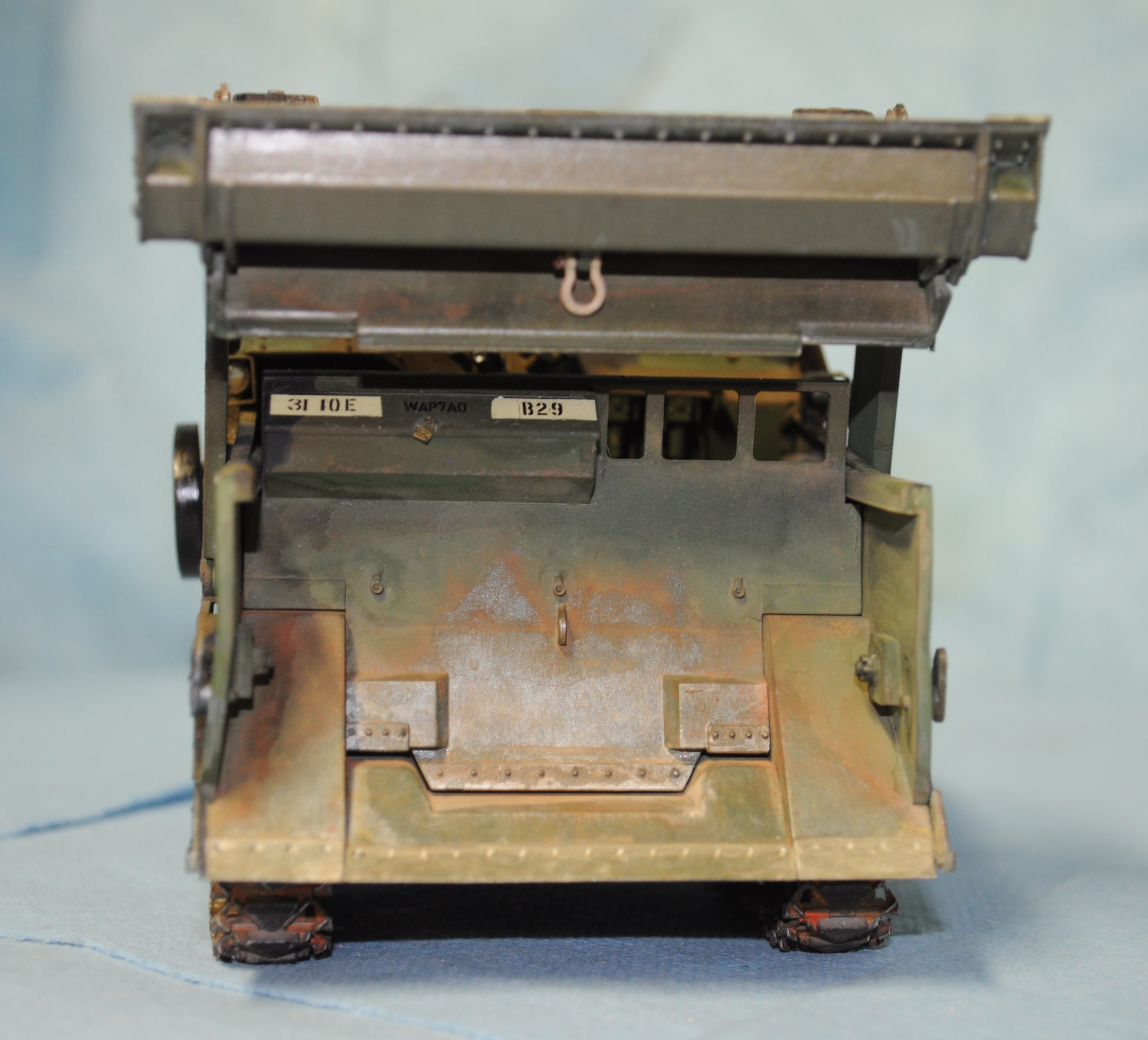
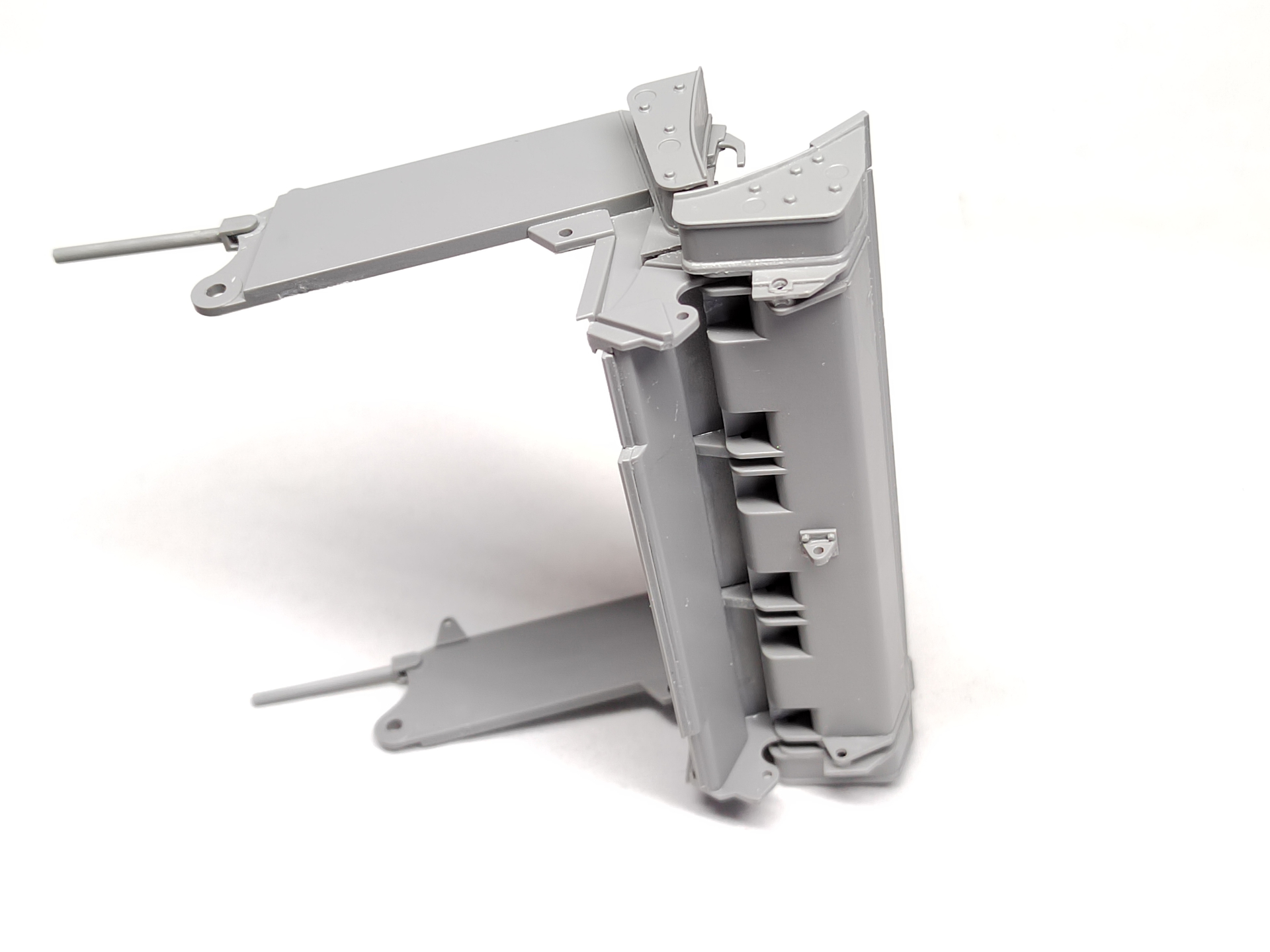
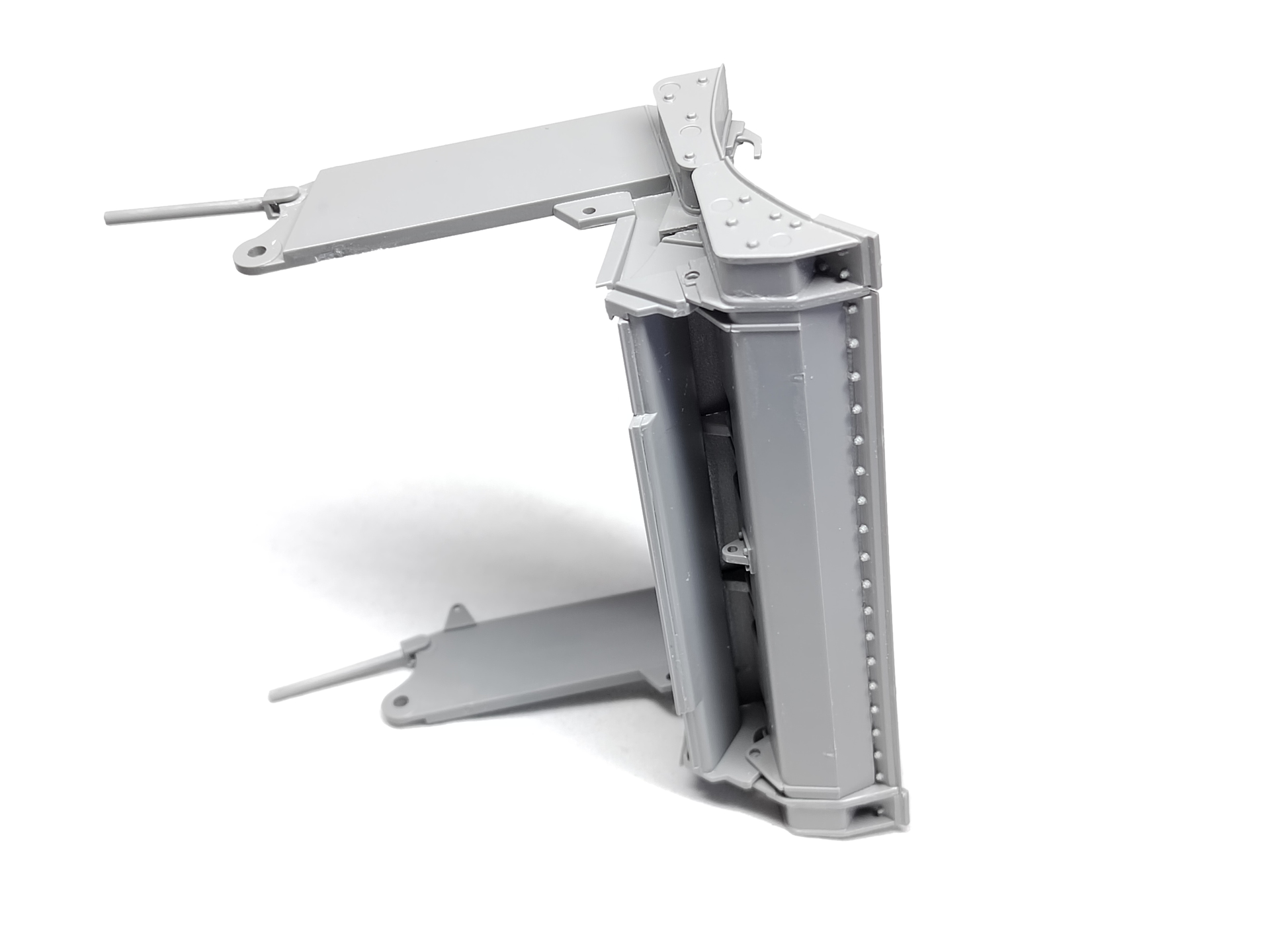
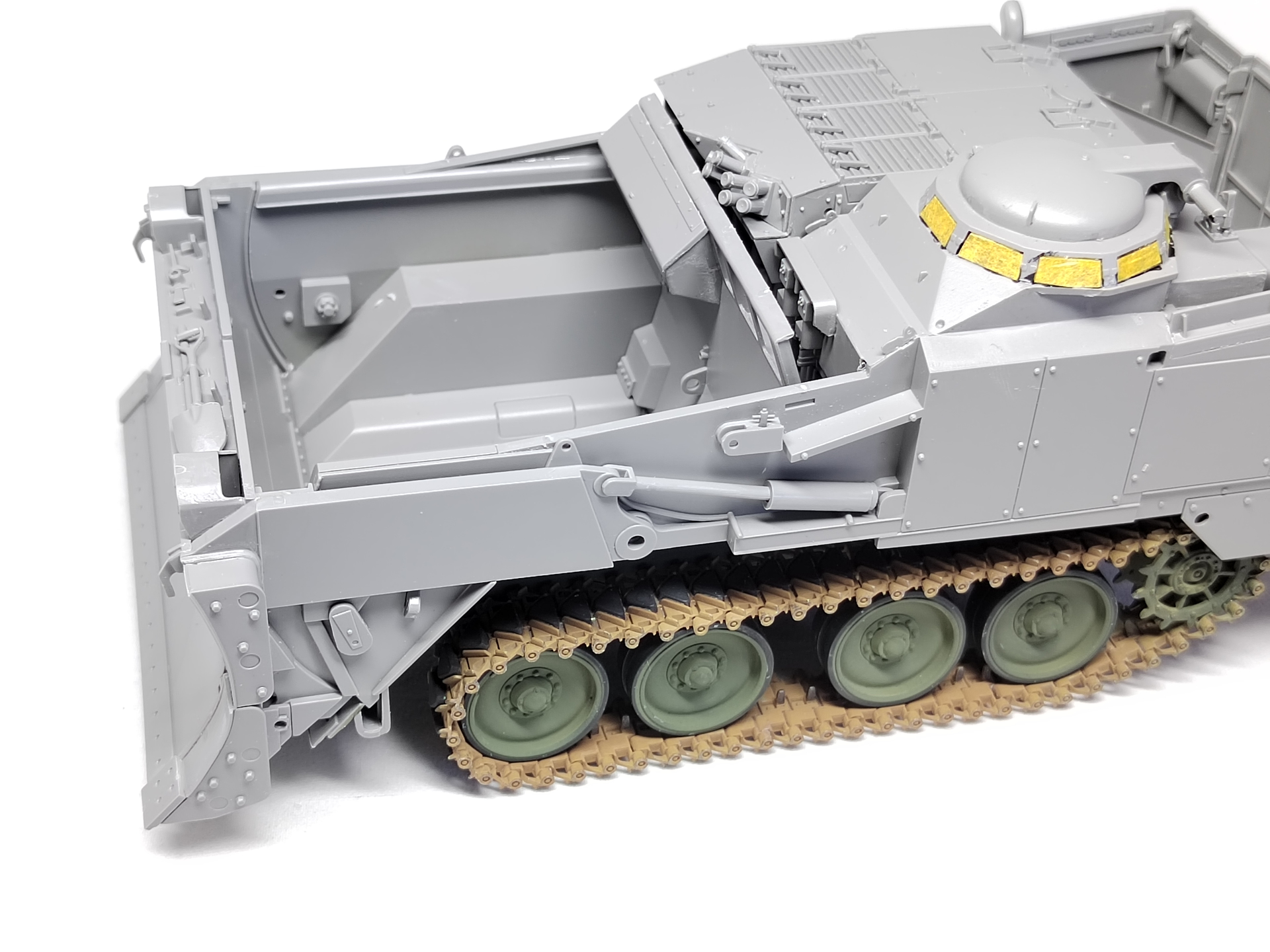
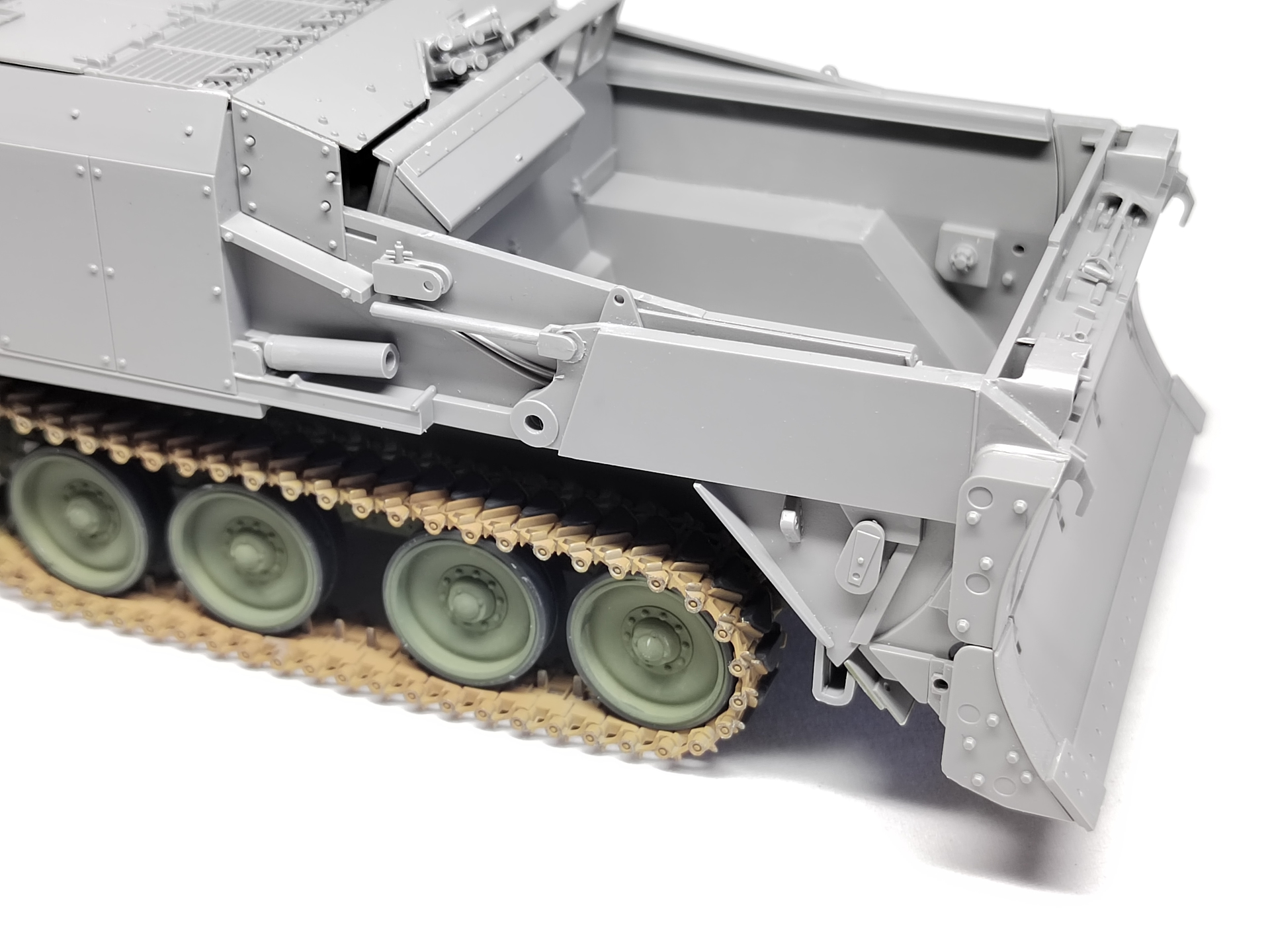
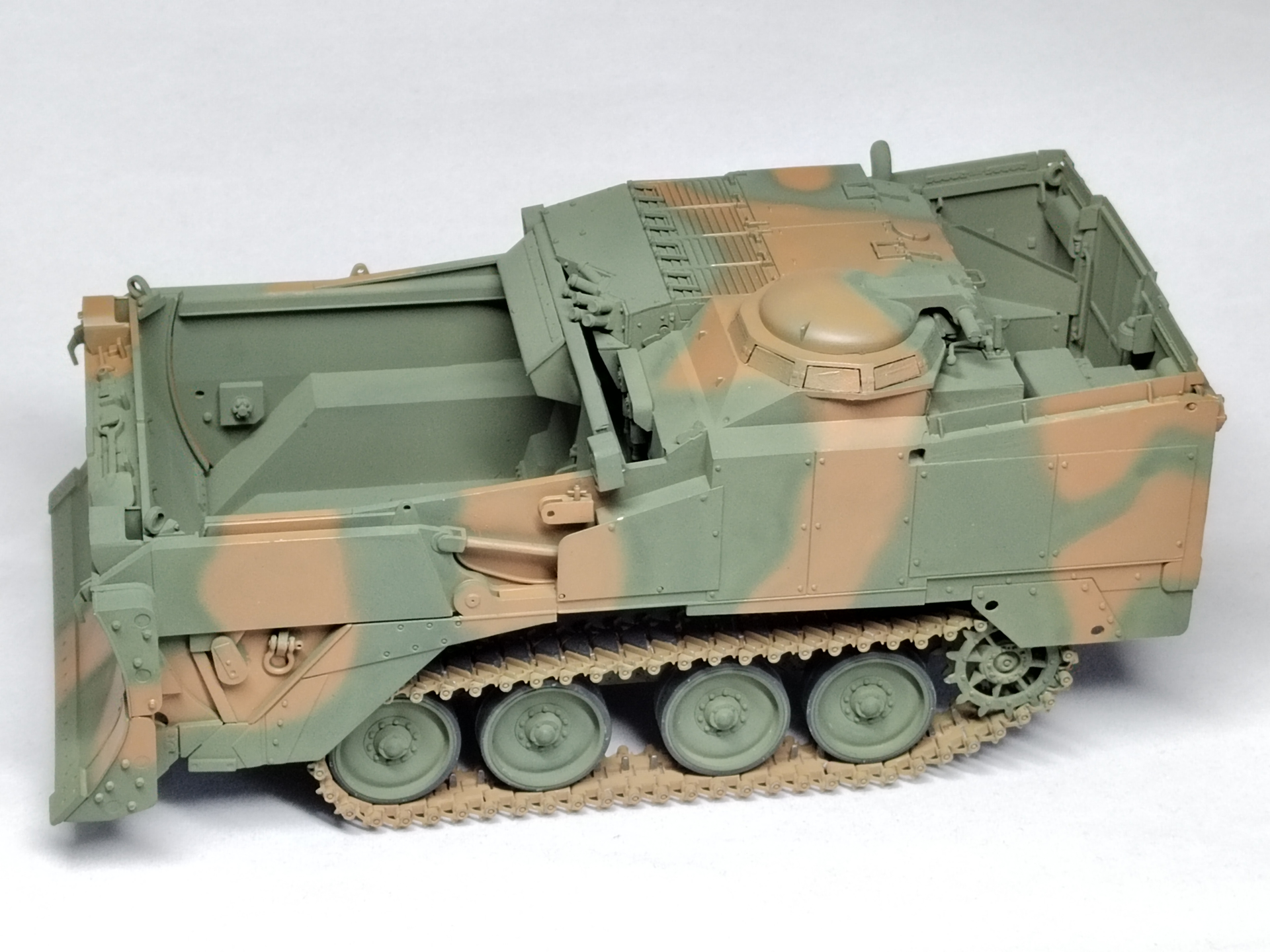
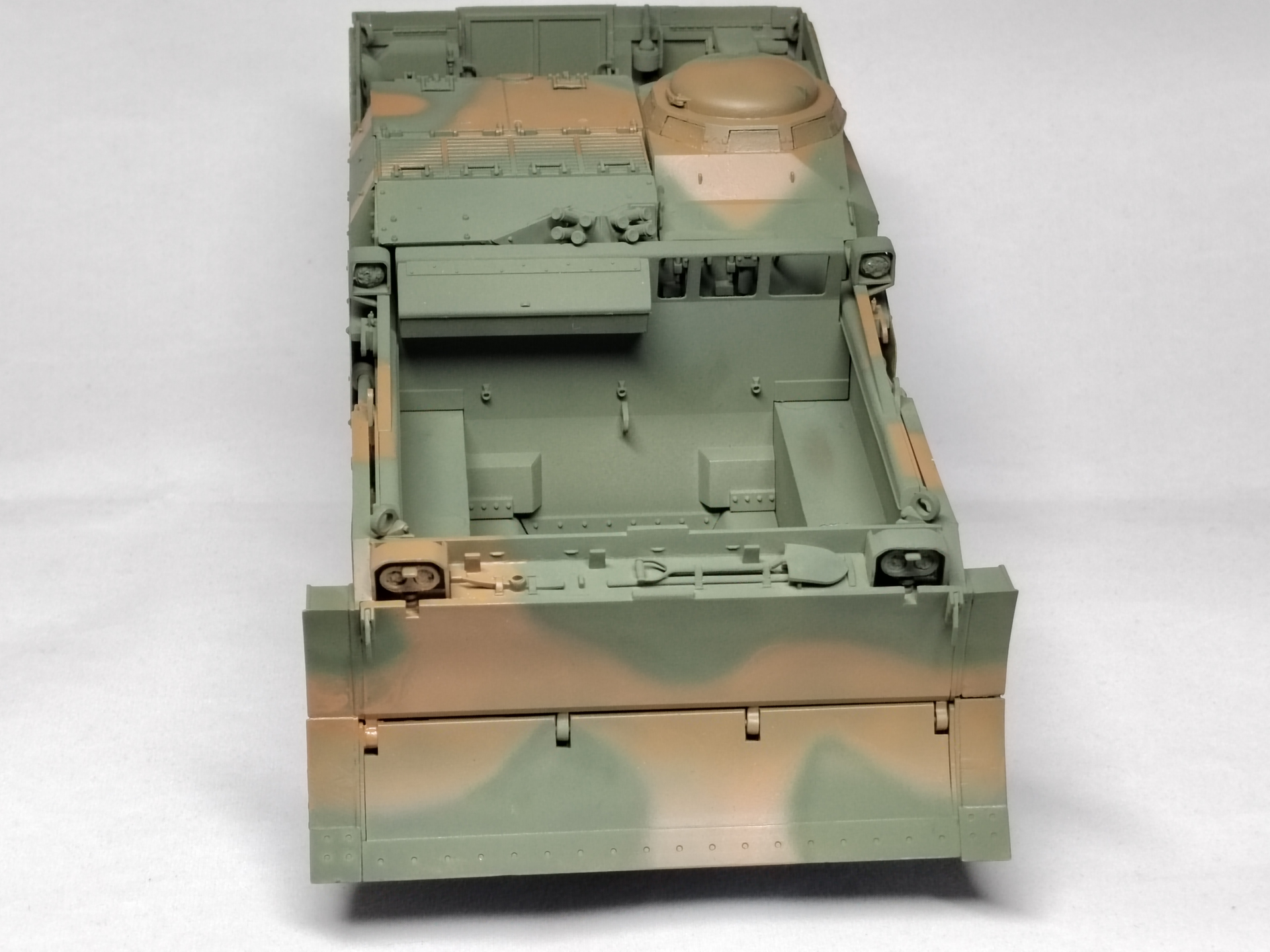
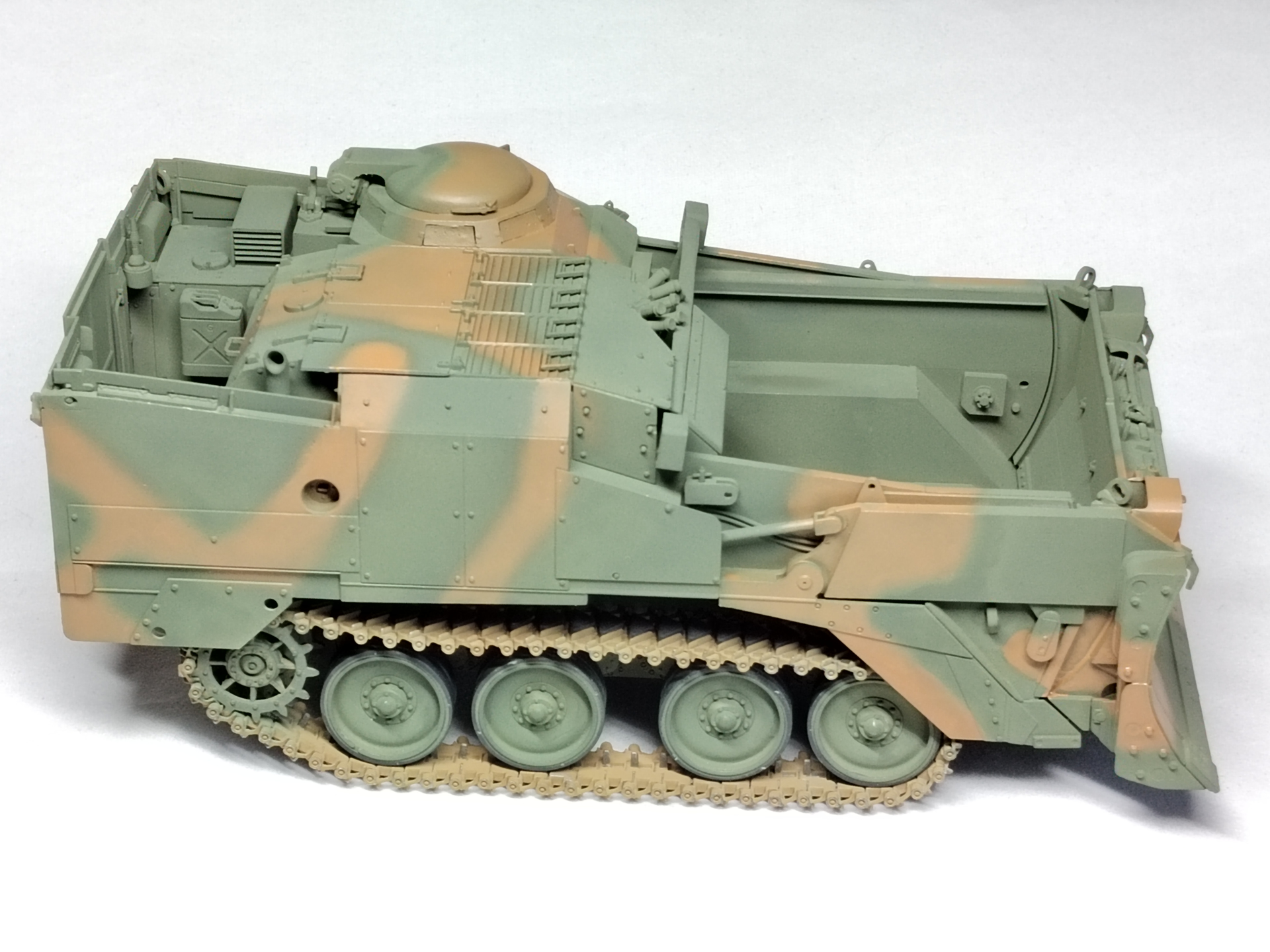
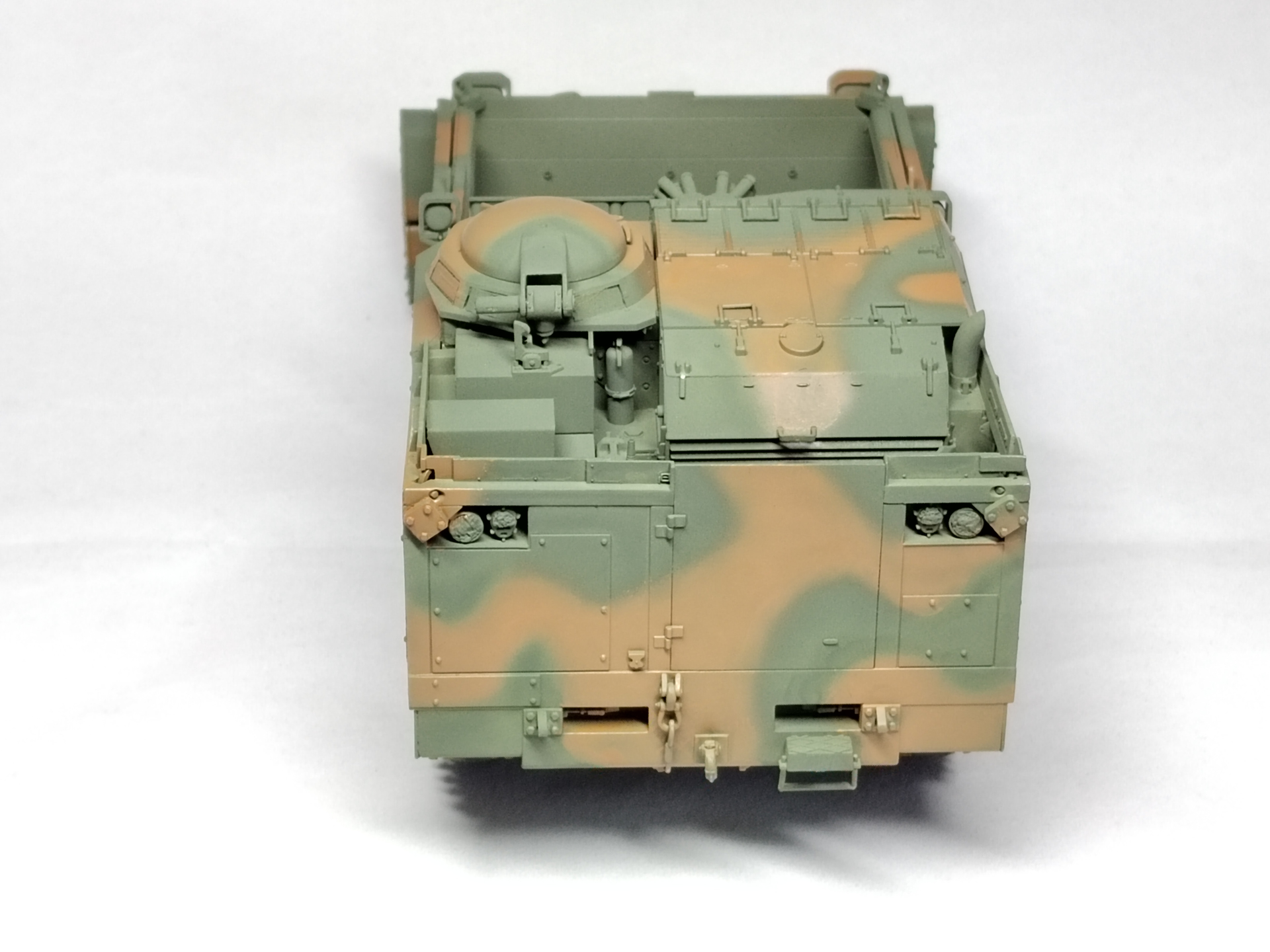
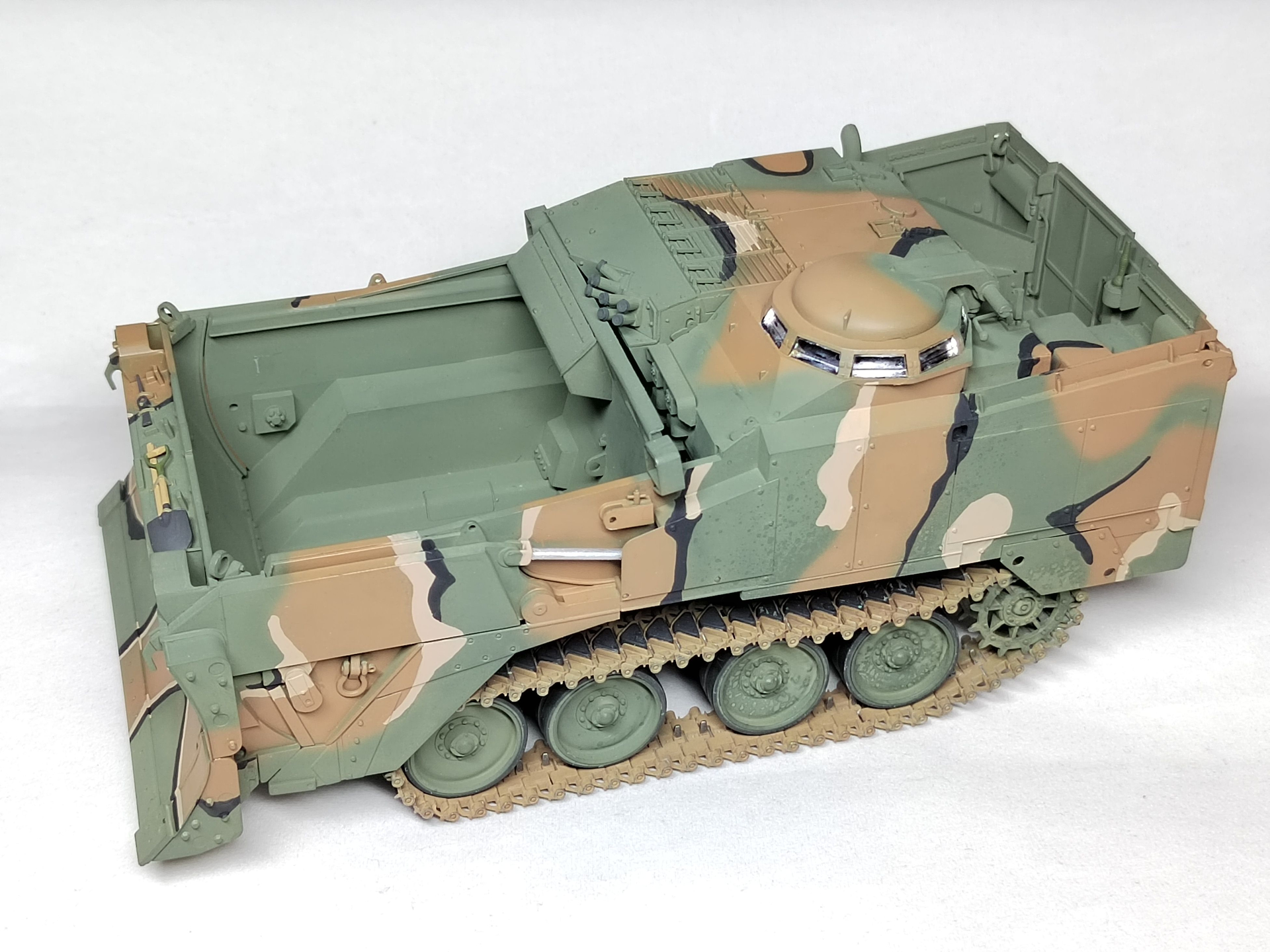
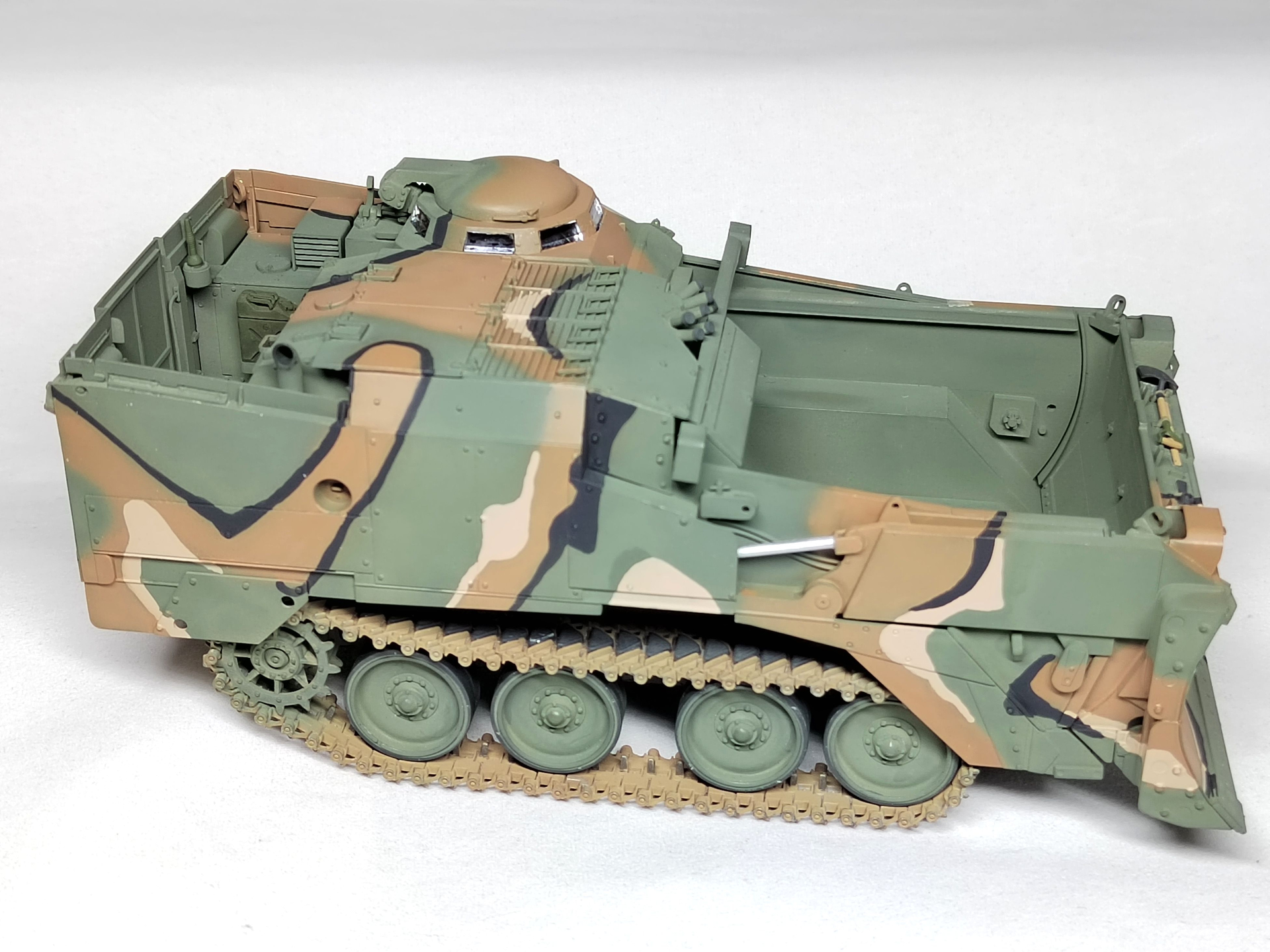
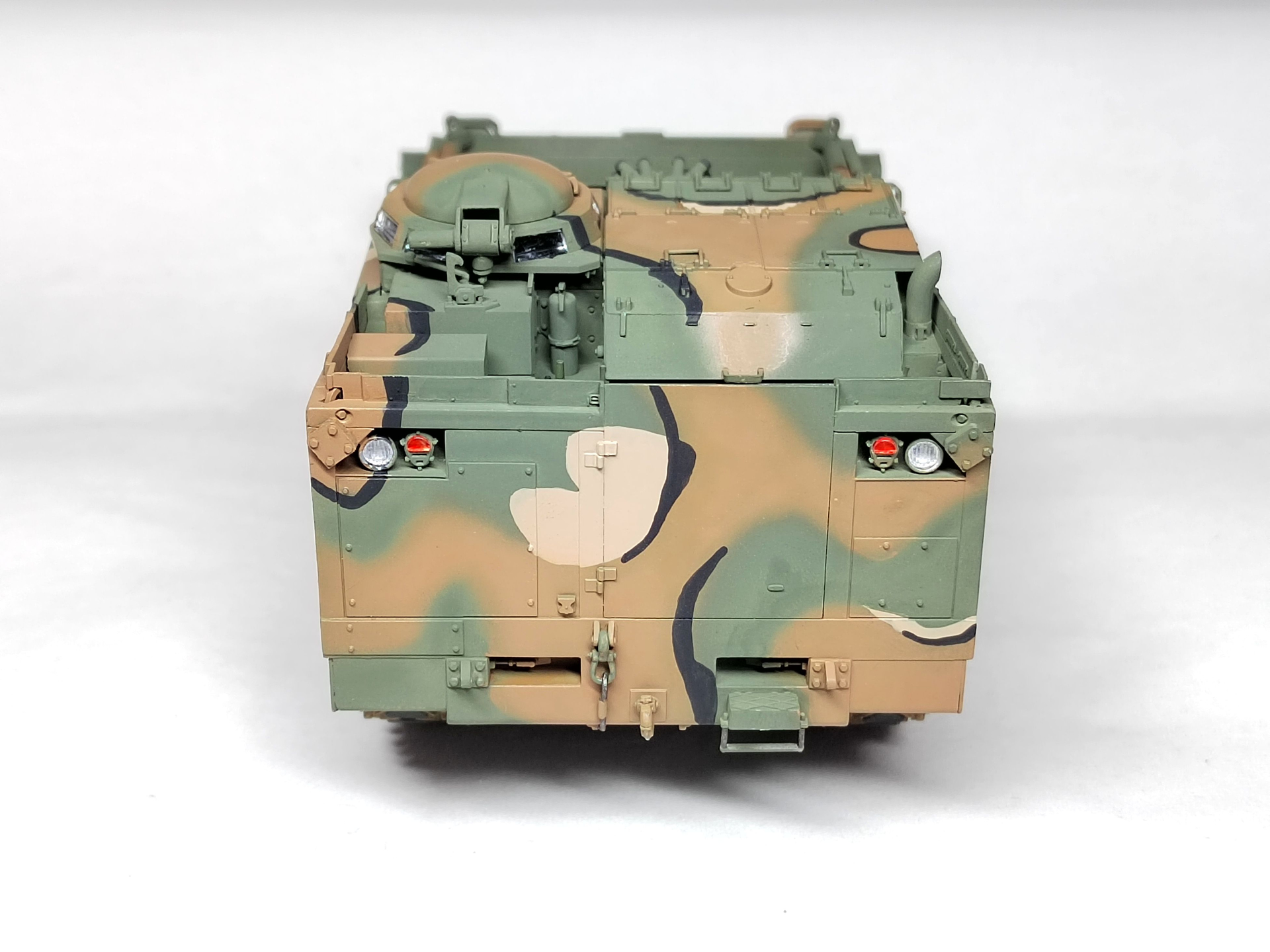
I have not. It looks quite good and I’m enjoying Bison126’s progress.
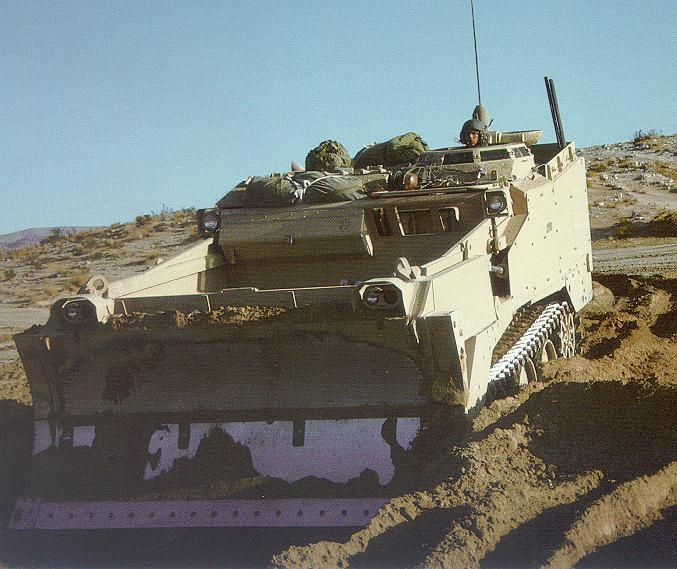
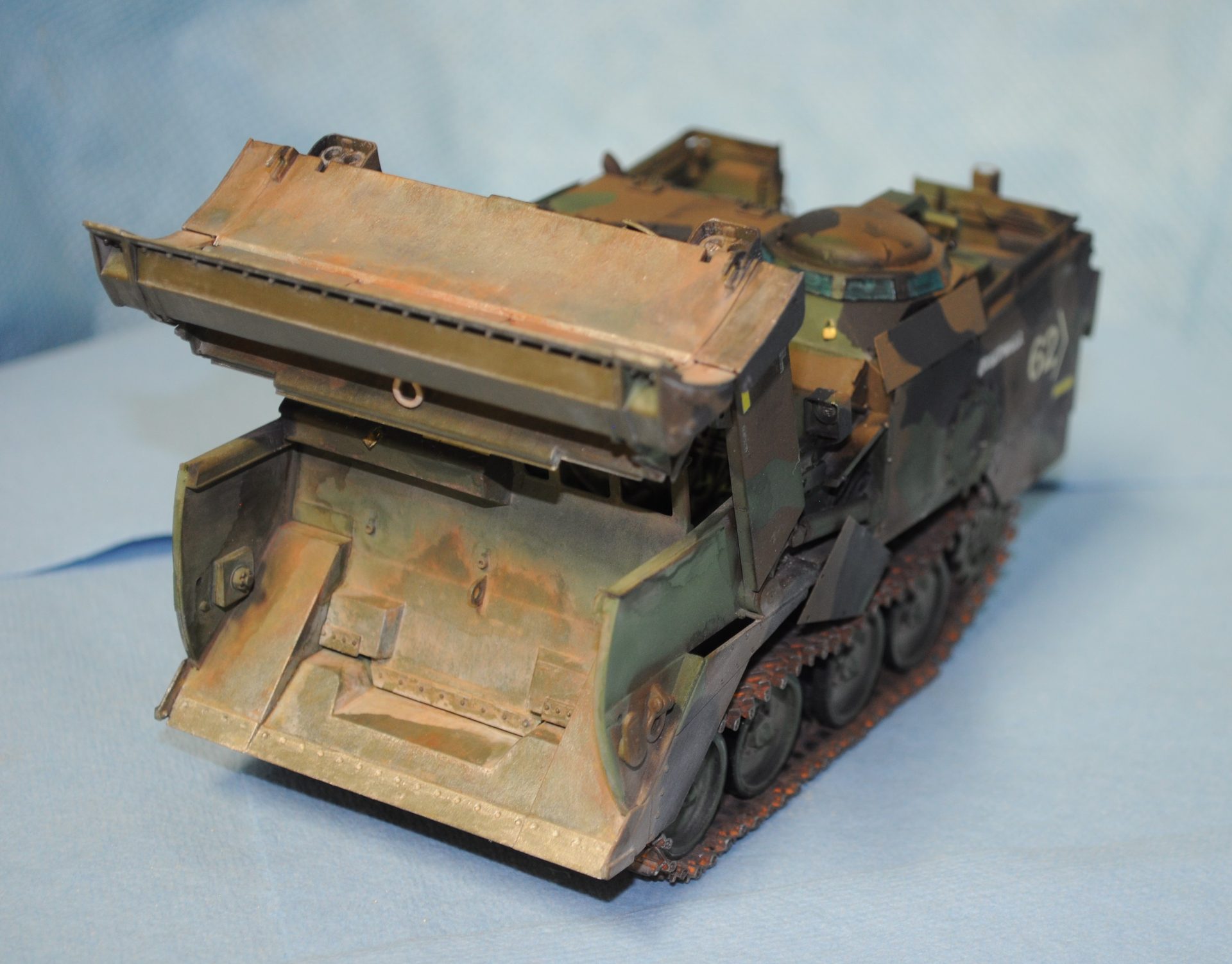
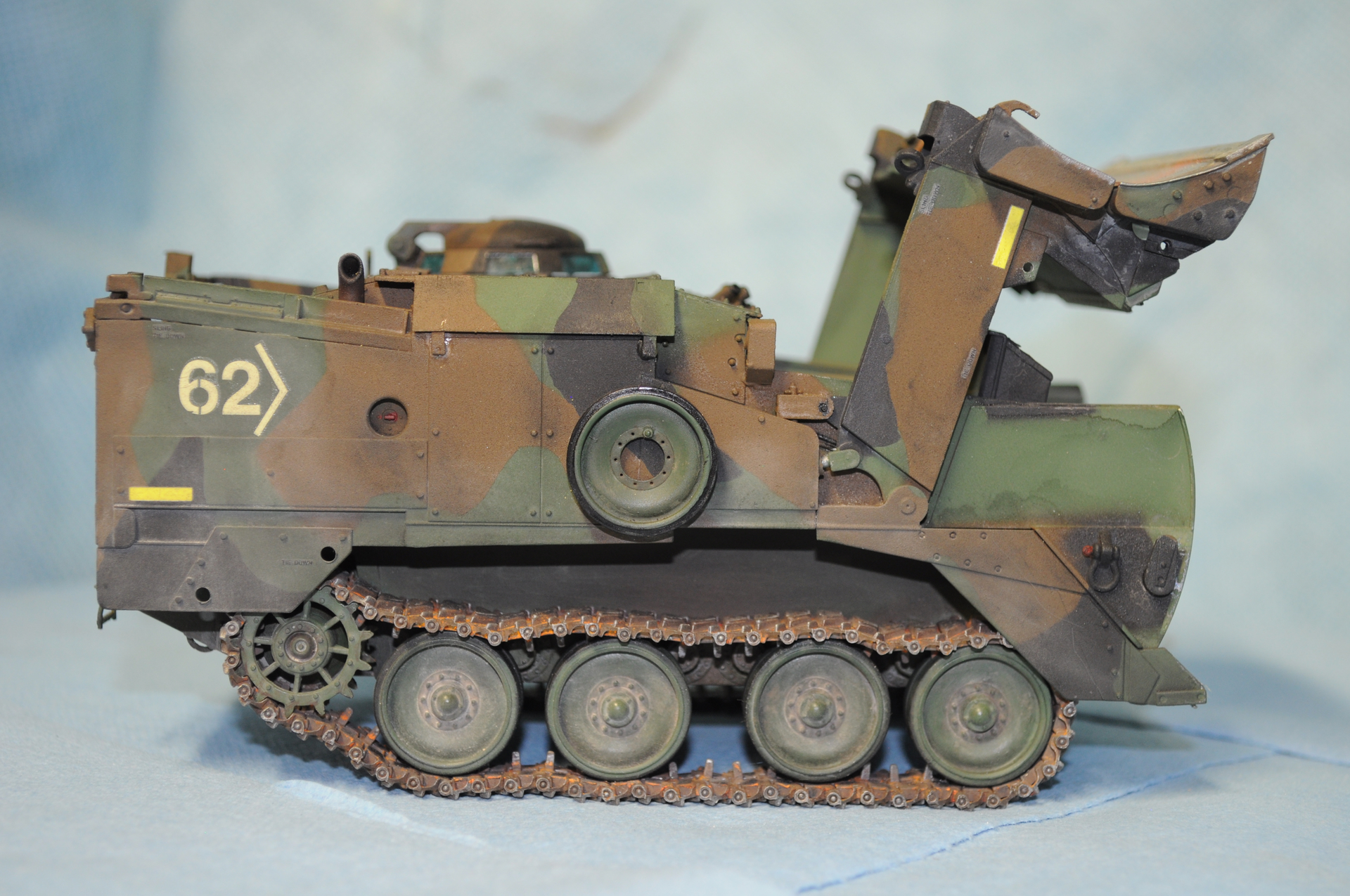
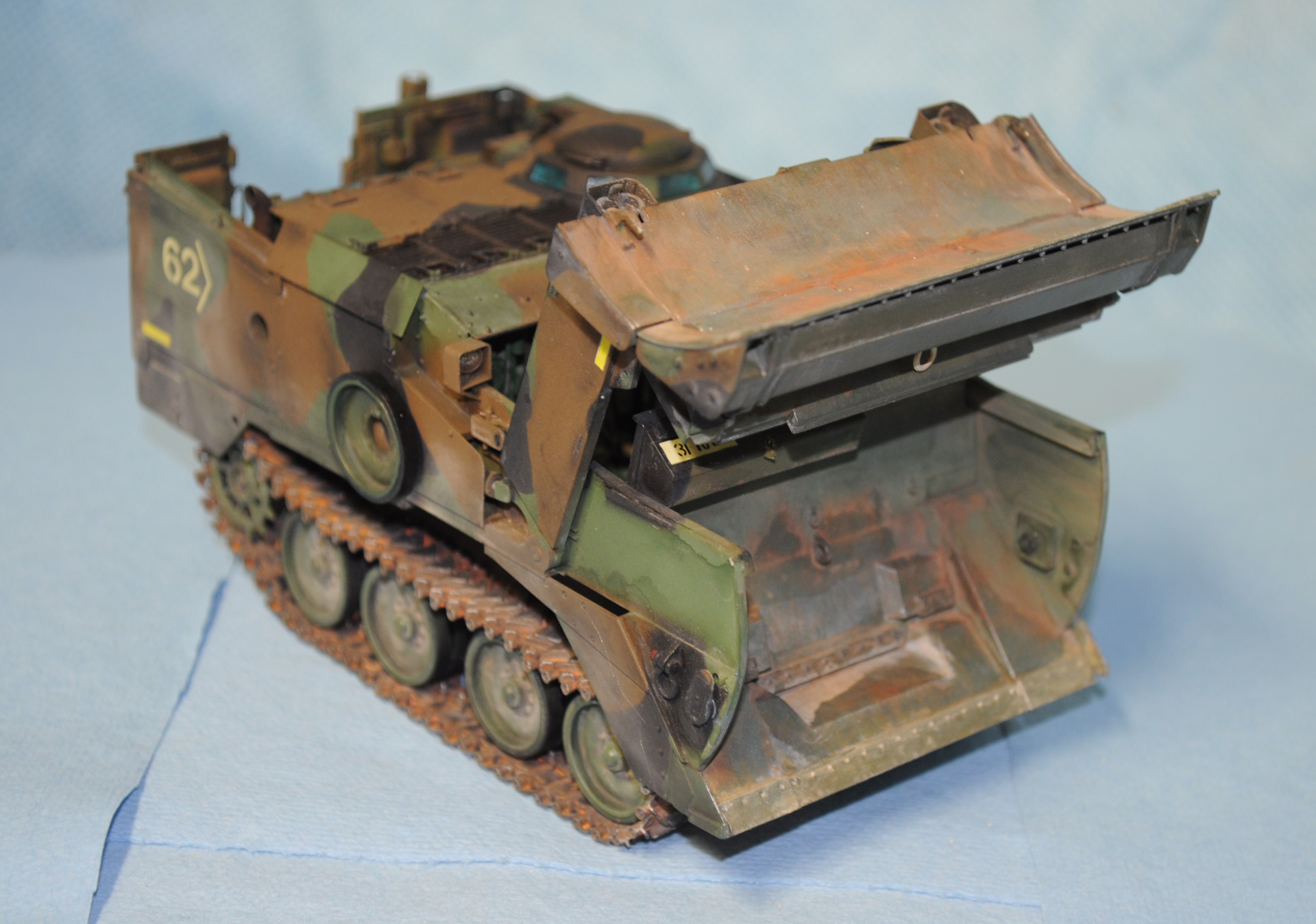
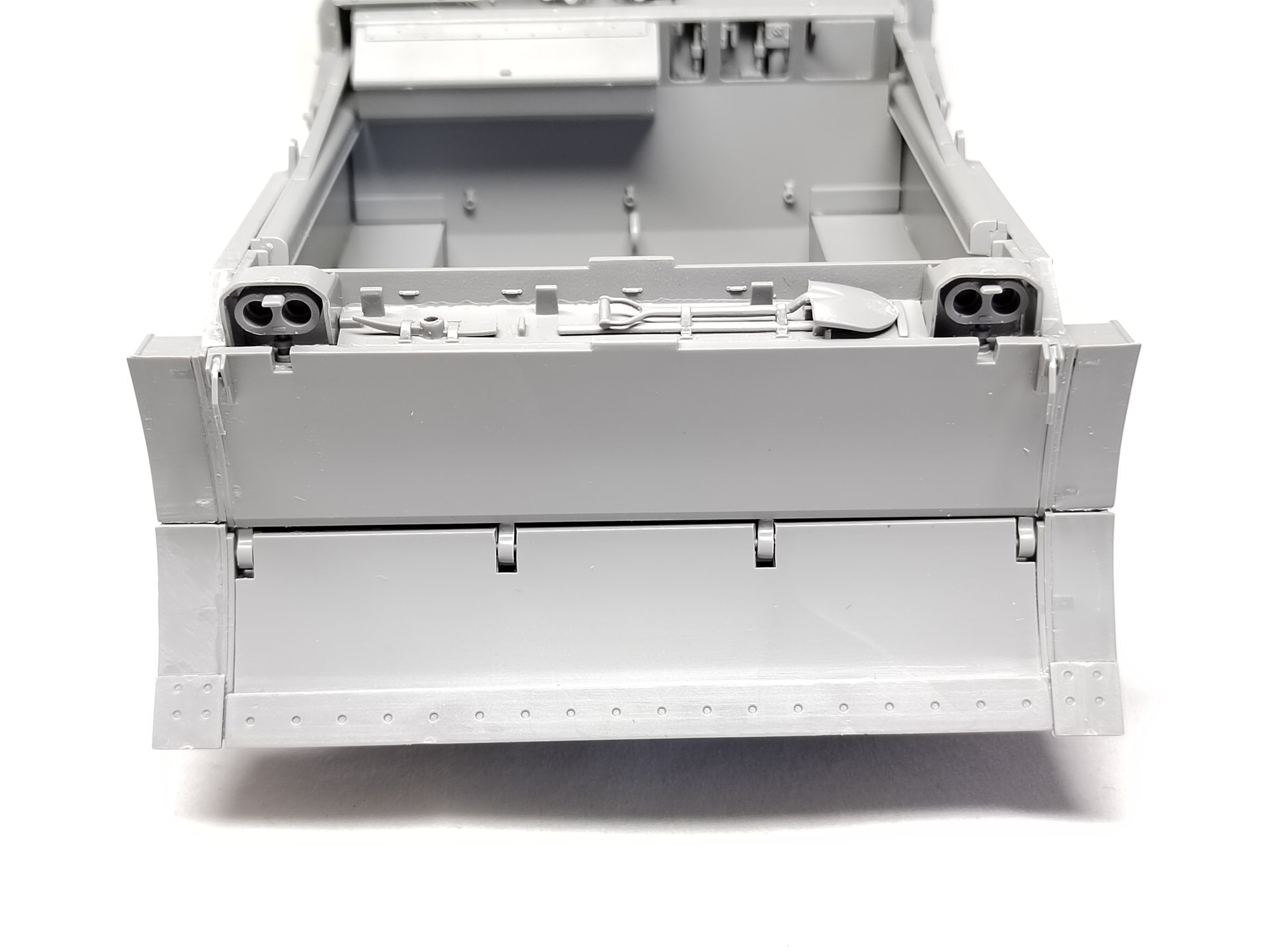
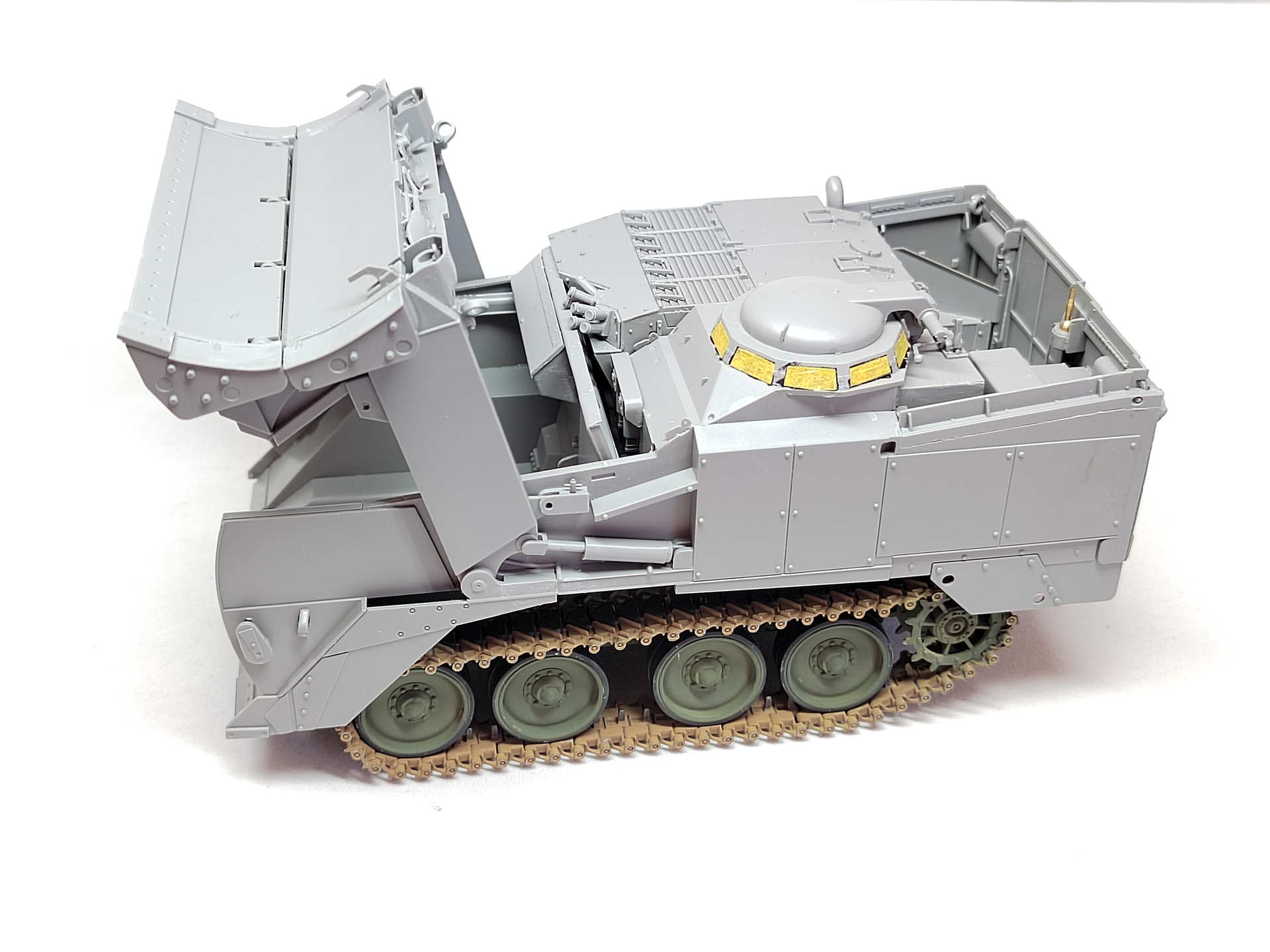
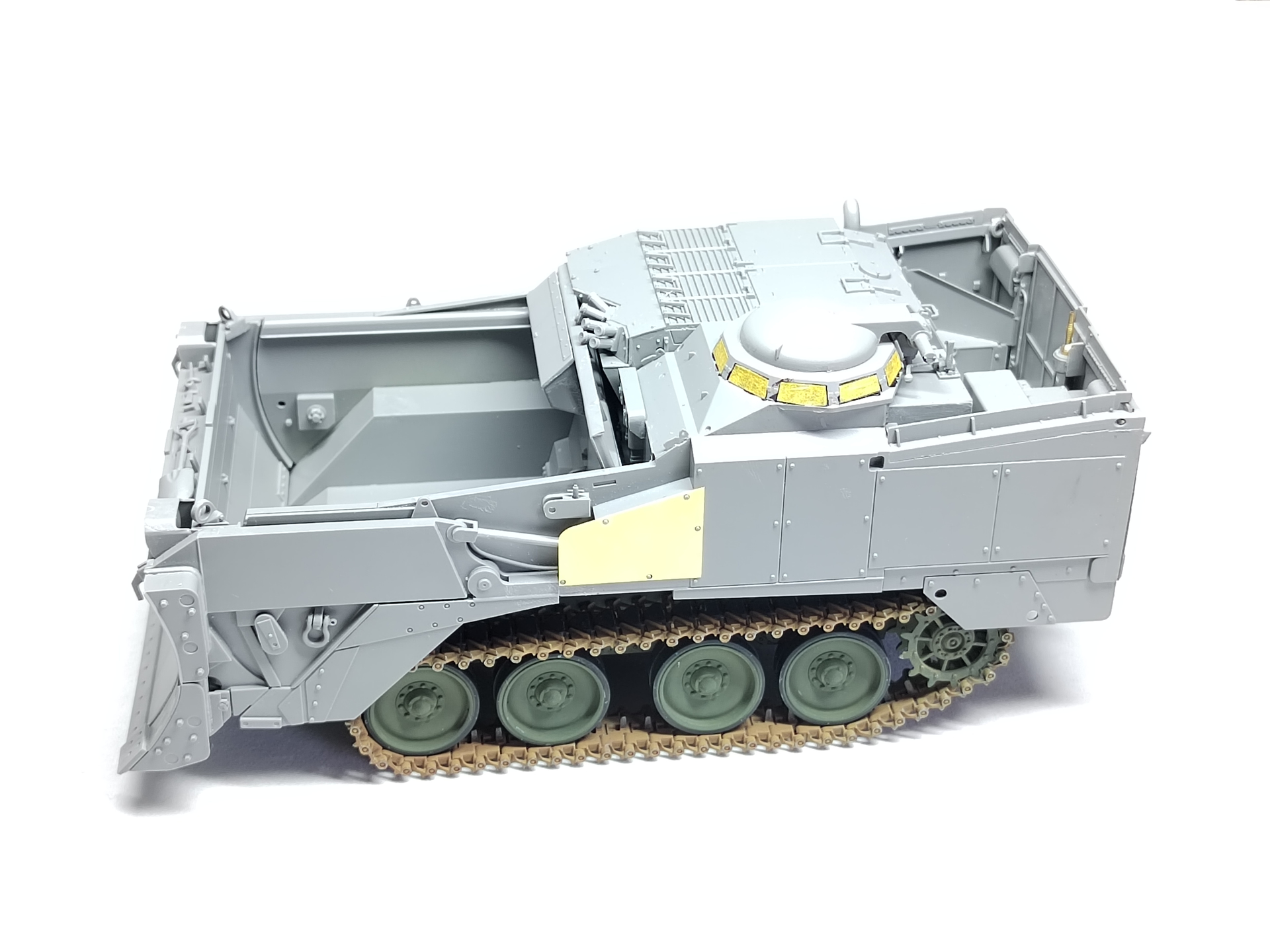
Below is how ours were painted. Note how the paint on the upper and lower bull blade is worn away. The lower blade is folded upward for traveling. The paint on the back side of the lower blade generally remained kind-of, sort-of intact. When folded up, the vehicle’s camo remained effective, no display of a big silver “shoot me” billboard.
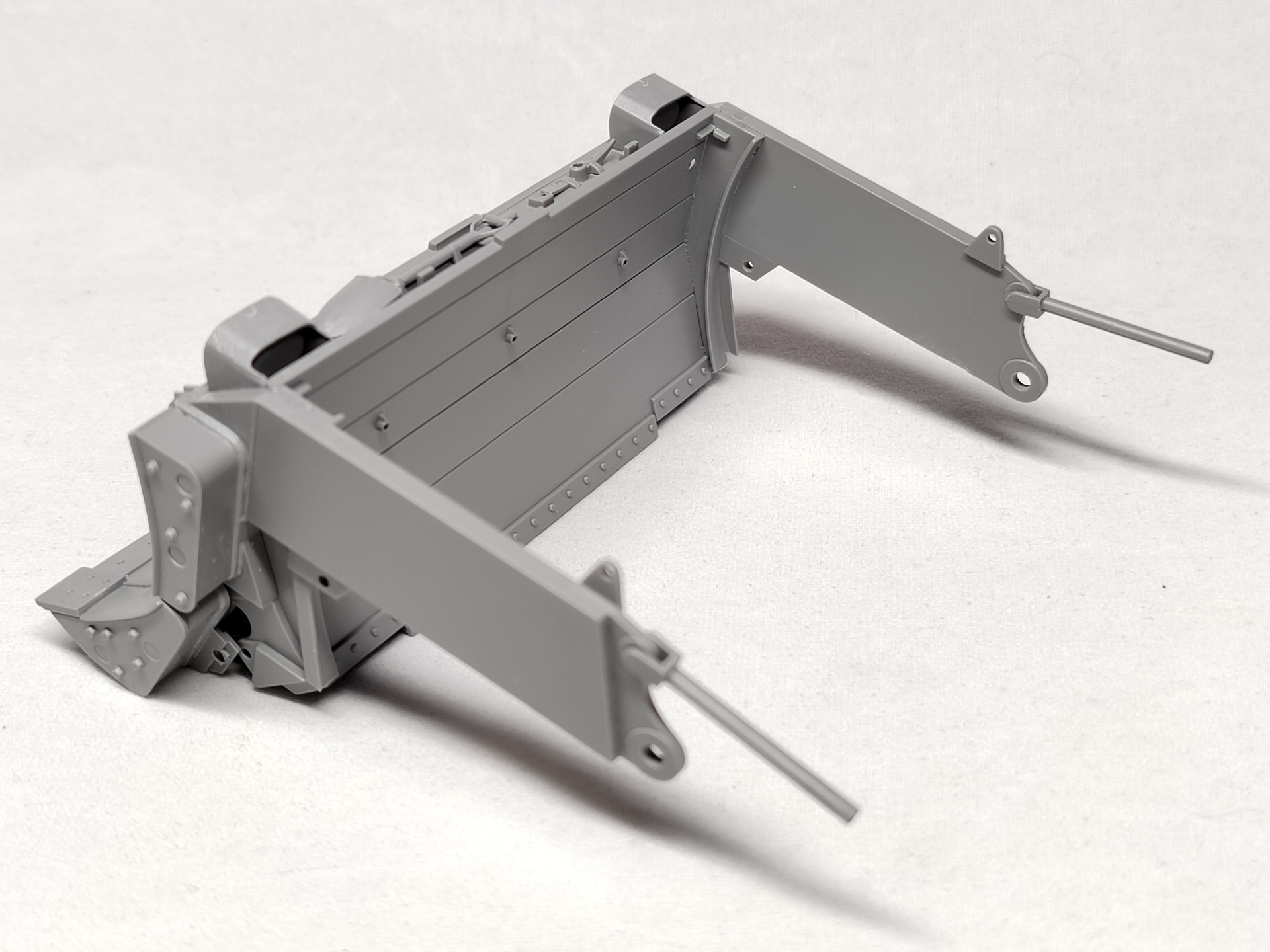
The original ACE required that the lower bull blade be folded up manually which could take a half hour or more to do. Modern ACEs’ lower bull blades are folded hydraulically.
The original ACE bull blade was made of an aluminum alloy but the reinforcing cutting strip on the bottom was steel. So the strip had a slightly different metallic color to it. The aluminum blade was prone to major structural damage when cutting soil in rocky terrain. After much complaining by us and many others, the aluminum blades were later replaced with steel bull blades which were much better.
Not visible in the photo below is the forward, bottom edge of the pan. This was also a blade, called a “scraper blade” by us, used to cut soil in order to self-fill the pan. Self-filling the pan works when the soil is soft and loose. It does not work in rocky terrain. Often, we used an excavator to fill the pan. It was faster. The scraper blade was lowered into position by lowering the whole vehicle. This was possible because the ACE has a “hydropneumatic suspension system”. To lower the nose, the driver can hydraulically raise or lower individual road wheel stations. To begin a cut, the front suspension is lowered, pitching the entire vehicle forward to drive the bull blade or scarper blade deep into the soil.
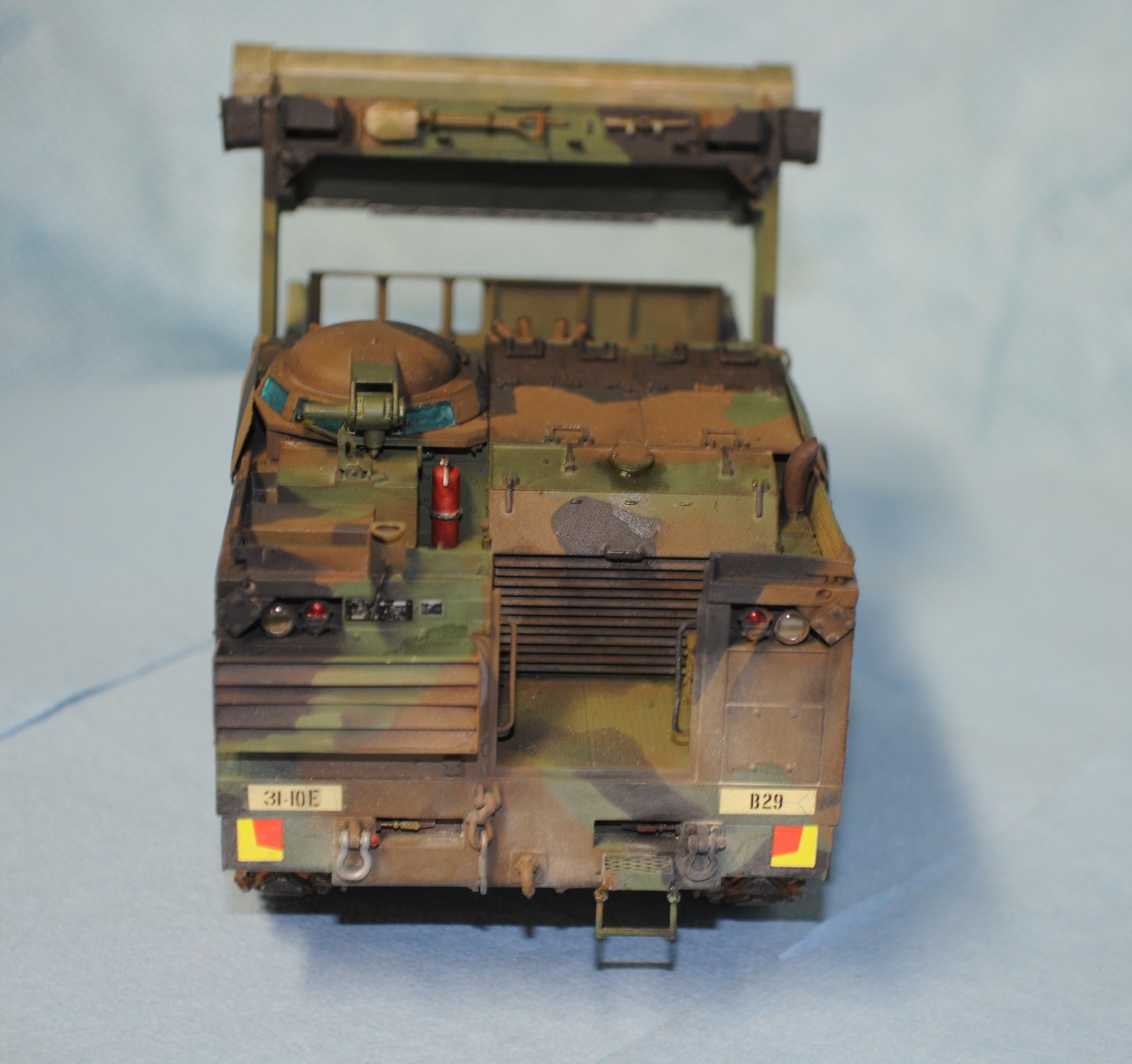
The pan (some call it a “bowl”) can be emptied by the driver. Just in front of the driver, at the back of the pan, is what’s called an “ejector plate”. The ejector plate is a vertical metal plate that moves forward hydraulically to push soil out of the pan. The pan can hold as much as 10 tons of soil as ballast. This turned out to be too heavy for early ACEs’ transmissions.
Stung by early ACE mechanical unreliability, the ACE was improved by what was called the System Improvement Program (SIP) which was done at least 3 times. According to Google, they were:
• SIP Phase 1 (Early 1990s): Added steel skid plates, bolt-on front track retainers, high-pressure hydraulic filters, battery box deflectors, ejector debris shields, and a rear bump stop modification. It also provided an upgraded winch insert and scarifier blades (sub-surface teeth used to break up hard ground) for half the fleet.
• SIP Phase 2: Introduced thicker road-arm retainers, preformed radiator hoses to reduce leaks, lengthened oil drain lines for easier servicing, and a redesigned parking brake and steering rod linkage.
Comfort and Automation: SIP Phase 4
As the vehicle continued to evolve, SIP-4 addressed core operational improvements, including:
• Microclimate Cooling Unit (MCU): An automated crew cooling system designed to keep the lone operator from overheating while buttoned up inside an armored shell under intense heat.
• Automatic Blade Folder: The legacy M9 required the crew to physically exit the vehicle and spend up to 30 minutes manually folding the massive bull blade before driving cross-country. SIP-4 prioritized an automatic, remote-controlled blade-folding mechanism operated entirely from inside the safety of the cab.
Marine Corps ACES are reported be be very advanced. They include a much more powerful engine, reinforced hull, joystick controllers, 10-camera vision system, and an automated fire suppression system. I don’t know if Army ACEs got these upgrades. If not, the Marine Corps’ ACEs would be the most capable and easiest to maintain.