i am trying to do a winter camo paint scheme on a 1/72 jaguar and i was wondering, has anyone here used masking putty on aircraft and if so what is the best brand to get and what is the best way to use it?
1 Like
I have used Ammo masking putty on several 1/35 armour kits and it works very nice. If you want perfect hard edges use thin straps of putty, not cylindrical rolls. Do not leave it on for a long time because gravity affects and changes the shape -the thinner it is, the less it is affected. Long time means one day or more, it should not be a problem on an ordinary painting session, but I would not recommend to mask today and paint days later.
You can make a rough shape and then, once in place, reshape with tools.
Paint light colors as base, mask and dark colors on top.
Be careful removing it if you have photoetch or other small parts.
It is easy enough to do it without previous experience, but practice first if you want to feel safer
4 Likes
I tried using blue/white tack and it ripped tge paint off so I need to try something else.
1 Like
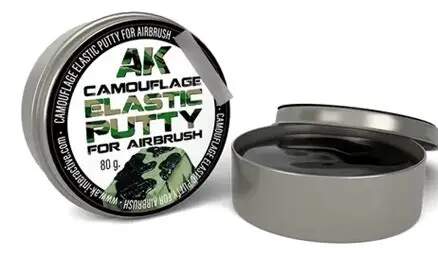
not sure if you can get that here in the UK
1 Like
I prefer using a modelling brand (AK, Ammo, Greenstuff or alike). Although it is more expensive, I put too much work building and painting my models to experiment with cheap products.
2 Likes
I thought those were types of adhesive that you can use and reuse for sticking things together. I wouldn’t use it for masking. I use Ammo’s masking putty.
1 Like
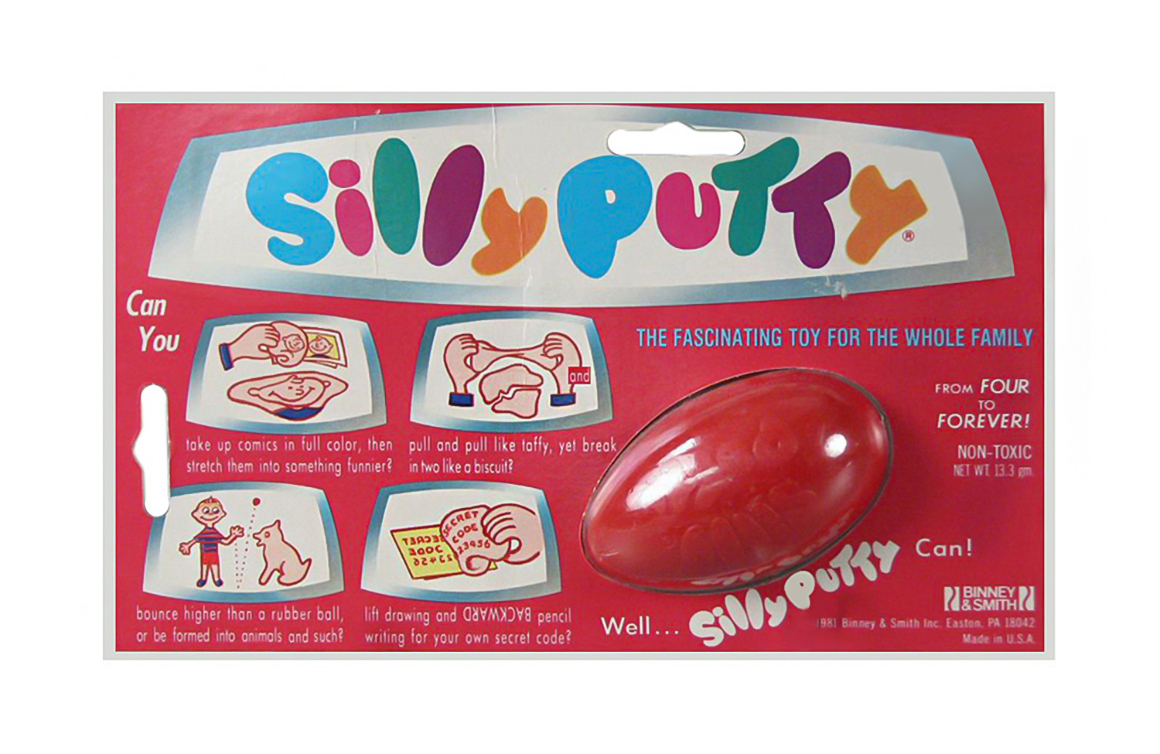
When I got back into modeling last year and read some of the classic FSM books on the subject, I went to local toy store and bought the few silly putty eggs they had, for like $7 each. Brought it home and took it out and it was very hard to work the putty. Maybe old, and likely reformulated and made on the cheap compared to what it was in the 80s and earlier. Threw it away. Bought blue tack sheet and not much better. Also imagine if I used a putty material for masking I would cause more issues than I solved, as all the little tiny thin things in model kits that can get damaged in the process.
1 Like
I’ve found many of the AK products to be repurposed stuff in a different package, at ten times the cost.
3 Likes
has anyone ever used something like this:
How To Airbrush - Airbrush Beginners Tip - Masking Frisket Film
it looks to me that it would be relatively easy to print paint schemes to the correct scale and then cut the needed masks from such film?
1 Like
i have that stuff… and it does seem to leave some residue on the model that “influences” putting the decals on
1 Like
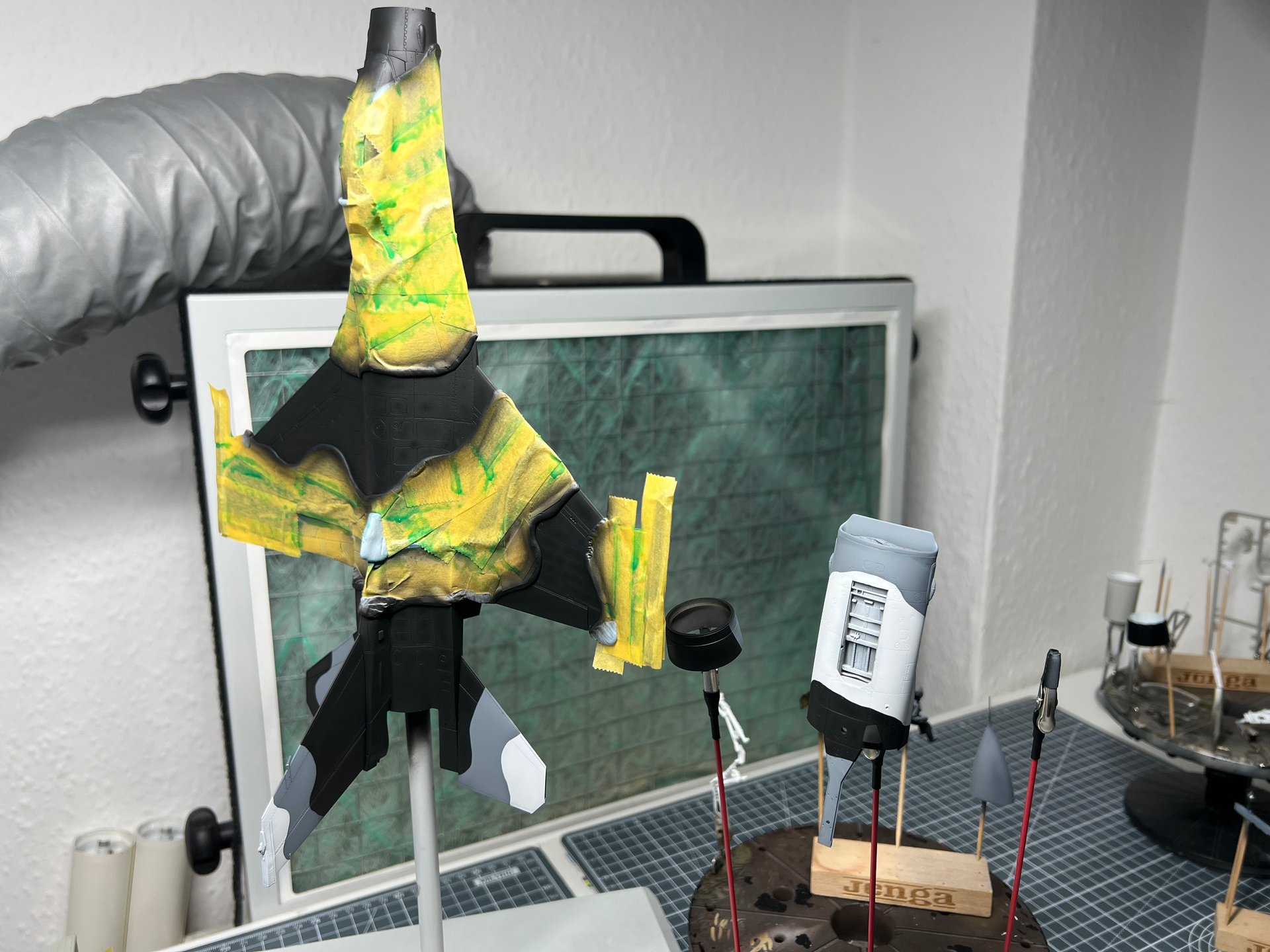
Blue tac works great. You just need to work it for a while to heat it up, which makes it tacky enough to stick. I roll it into sausages, very thin for hard edge and thicker for softer edge. Masking tape can then be used, just cut various curves etc. to fill gaps, and some masking fluid, which is probably overkill actually.
No issues with residue or paint lifting, although I do tend to use lacquer paints.
Tried the AK putty, but it keeps moving with gravity, very slowly admittedly, but then I model very, very slowly!
2 Likes
One technique I’ve seen used is to photocopy the camo pattern at scale, cut it out, and use thin rolls of putty to anchor the cutouts on the model with a bit of standoff so you can spray down onto the mask and get a slightly fuzzy edge to the camo; the article showed this with a Spitfire; I think it was in Fine Scale Modeler.
2 Likes
I use Blu-Tac a lot, mostly in the same ways as Jim @iwatajim . I adjust my camo patterns so that I can shoot paint on PE and leave it uncovered. Sometimes this is impossible; in those cases I cover PE with tape or paper.
I also use what is called subtractive masking. Say you have a green - brown - black camo pattern. Shoot the green, then use blu-tac to cover all of the areas you want to stay green. Then shoot the brown and do the same thing. Then shoot the black. Remove the blu-tac and you’ve got a perfect paint job. This method also works great for all those French WWII crazy camo patterns. I have never had blu-tac lift any paint or leave a residue.
1 Like
What matters more than what you use is how you use it. There are many examples of where someone has used a similar product with mixed results. Some areas will have a sharp demarcation line, others a nice, soft edge, and even other areas with too much overspray. The key is in spraying toward the mask at a consistent (usually 90 degree) angle.
1 Like
Amazon has everything!
1 Like