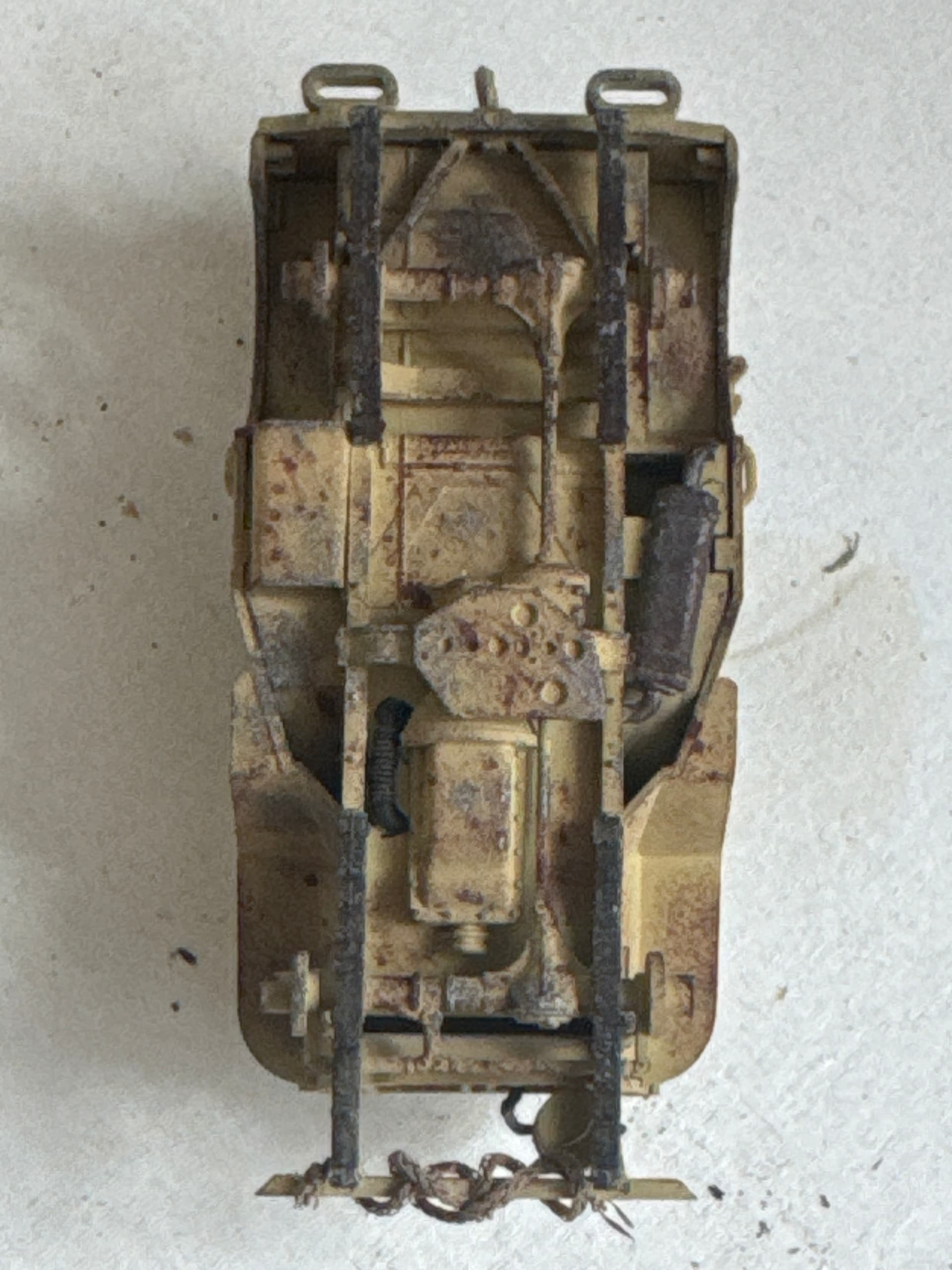
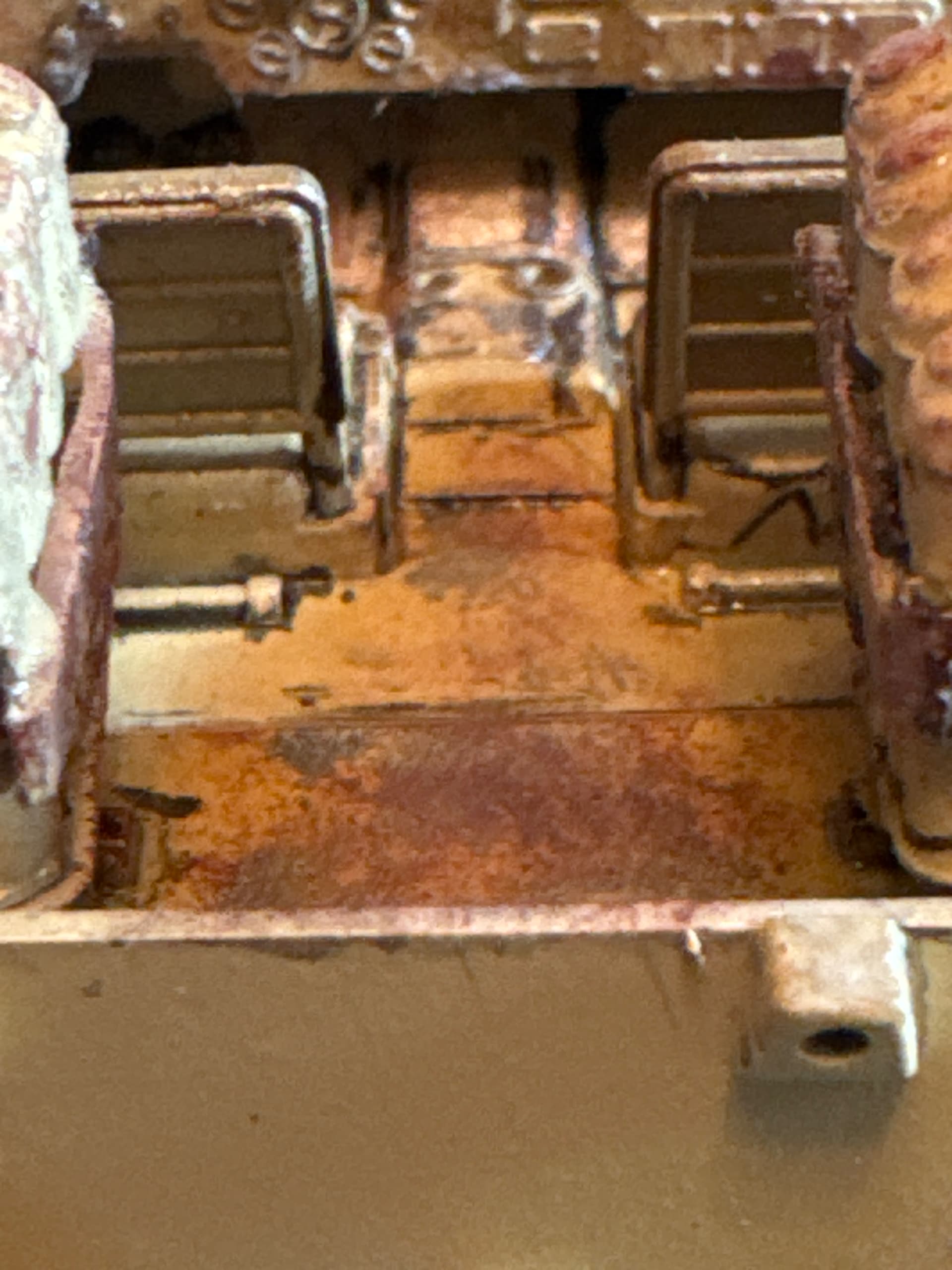
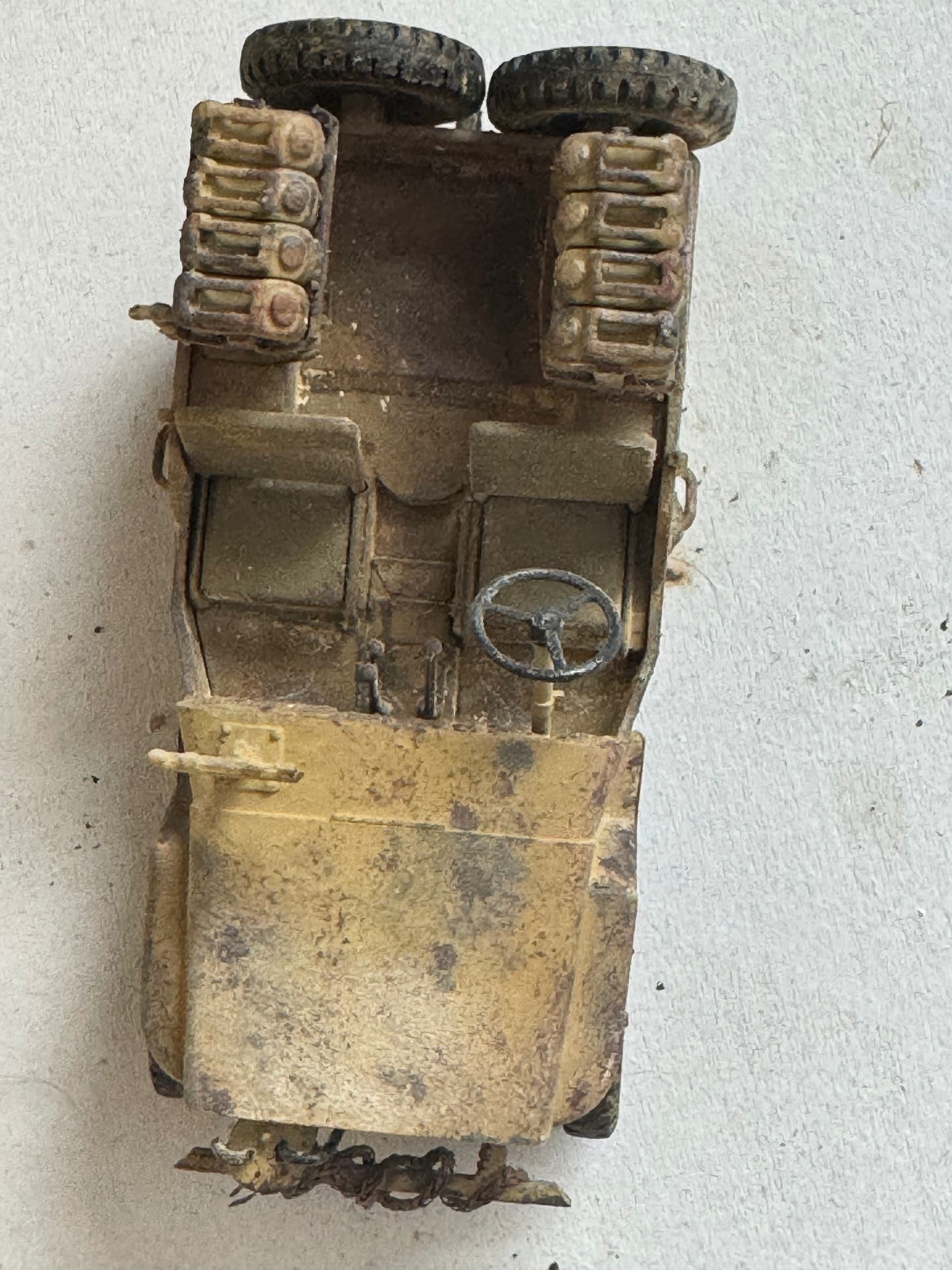
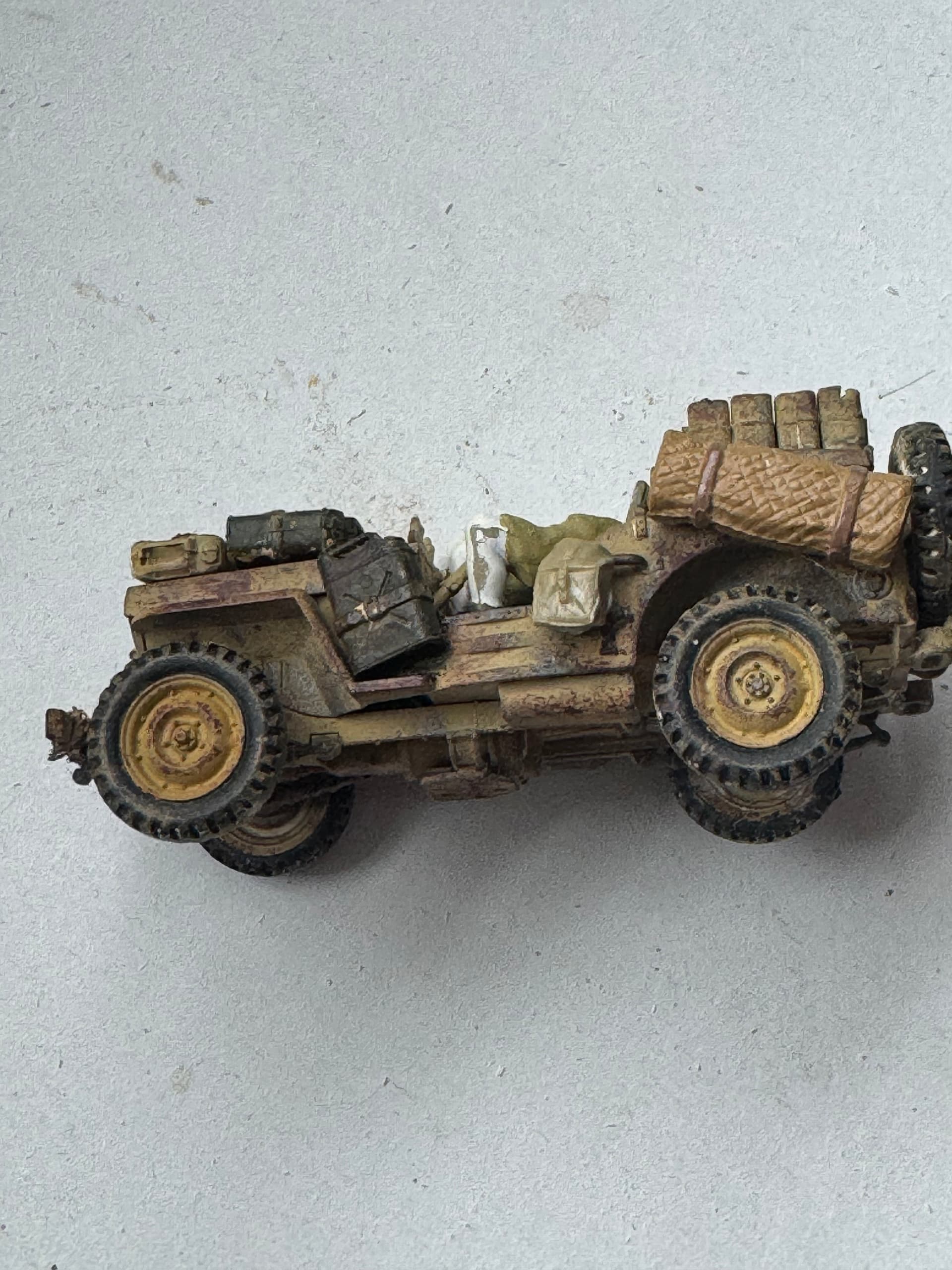
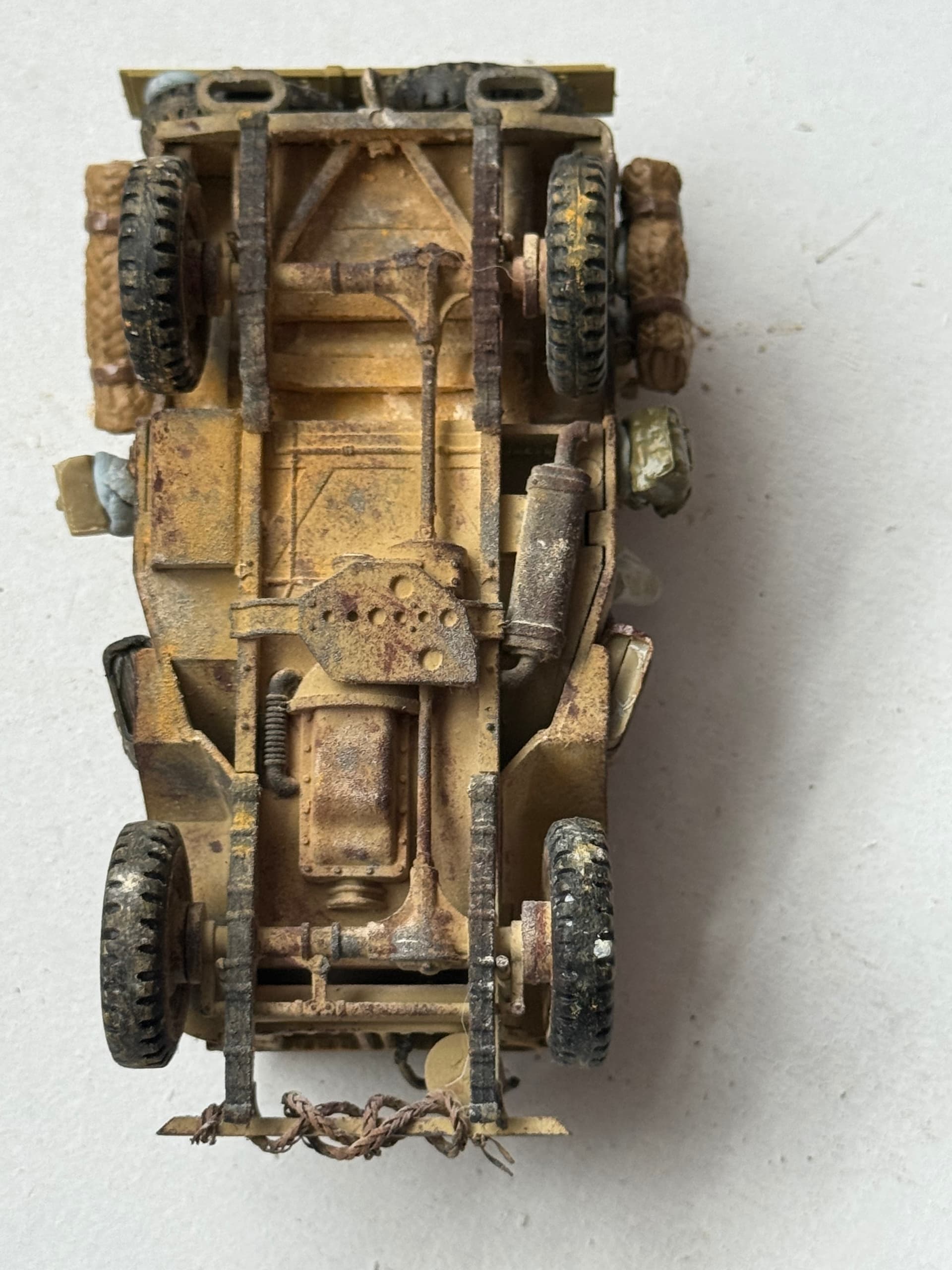
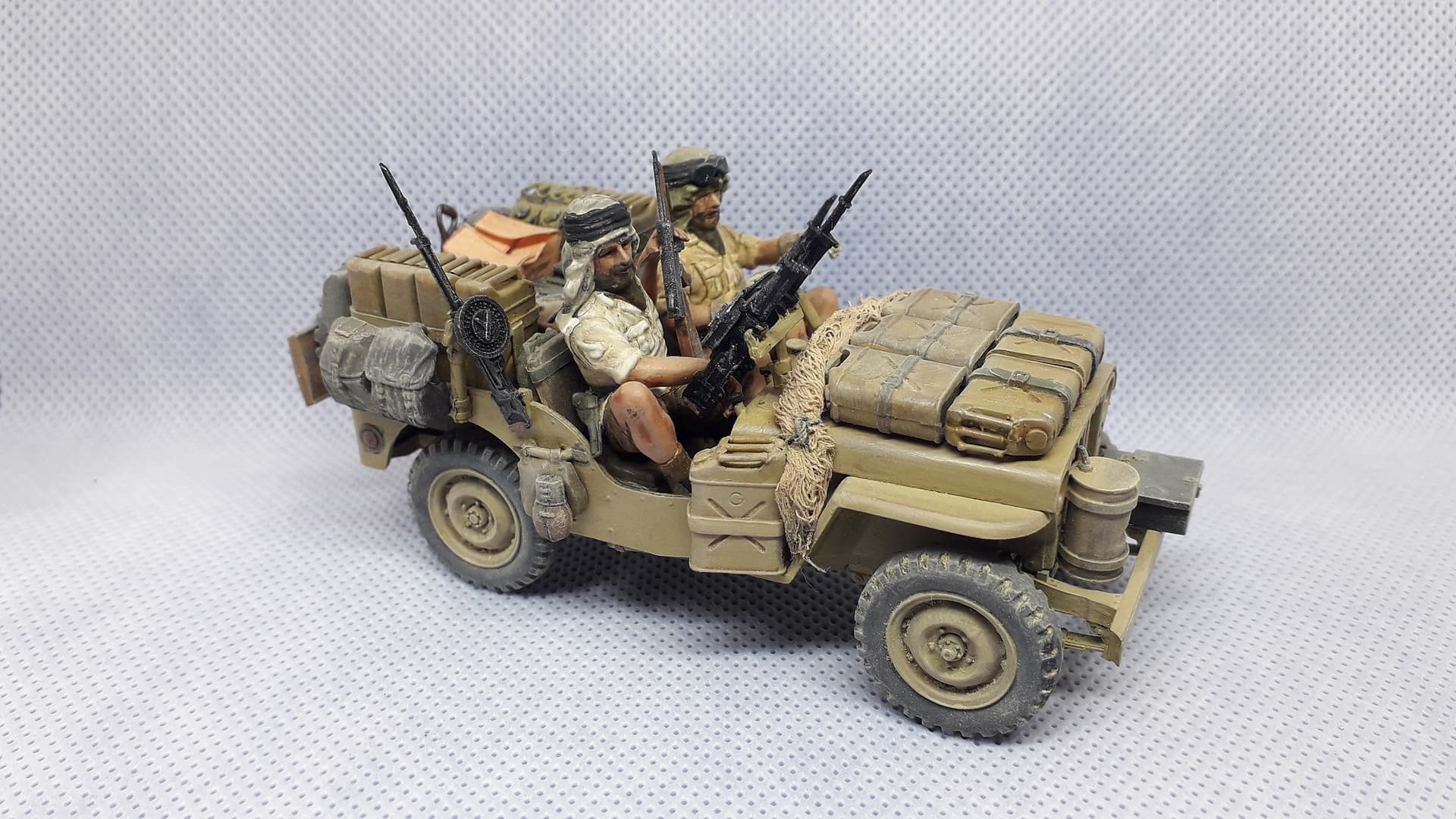
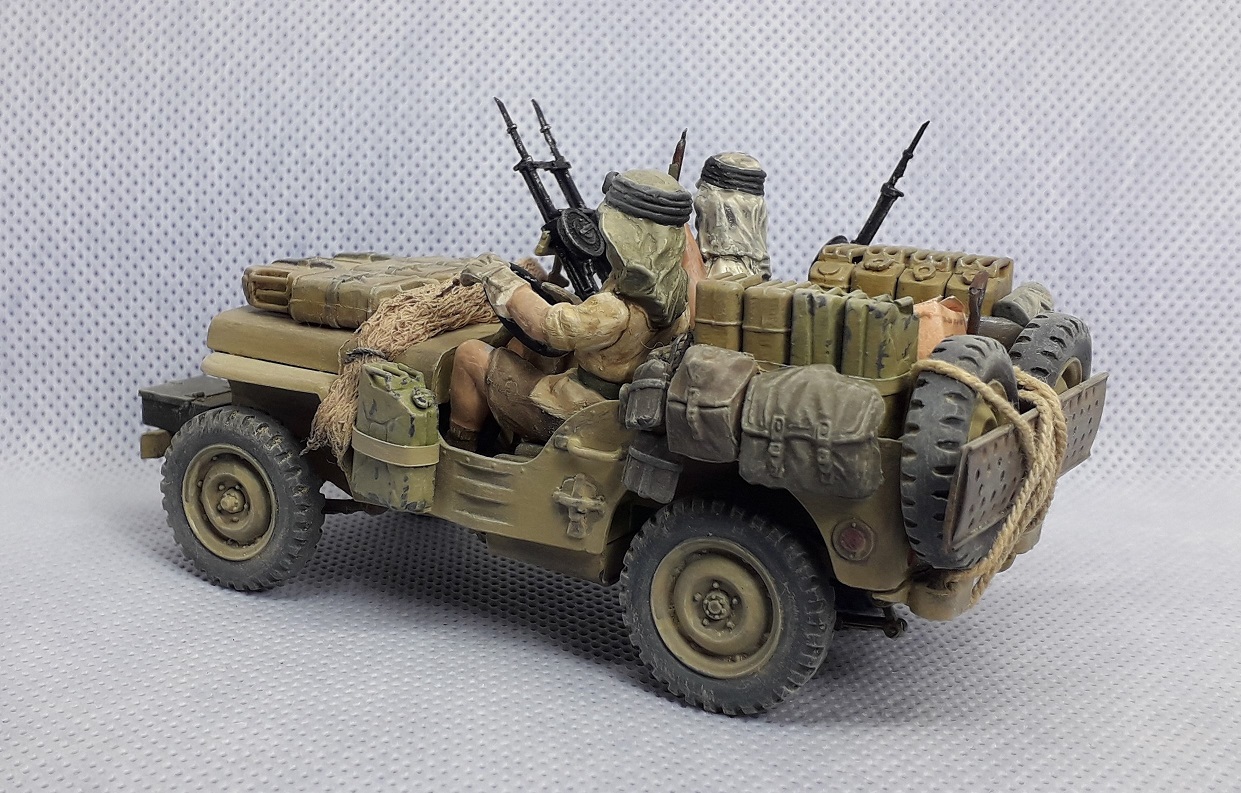
Hi I used to make models when I was a kid and have just started to take the hobby back up again. I always wanted to weather my military models and this is my first attempt would love some comments tips on how I could improve it whether it’s too much or anything that could help. This is a work in progress not completed yet


8 Likes
I would say you have over done it a bit, but that is part of the learning process. The way I do it is basically starting with a black primer. When I spray on the base color I can easily adjust the opacity to make light or darker areas on the model. Before I start the real weathering I often use tiny dots of oil paint of different colors (green, white, blue, red, brown) and blend them into the base color. The key word here is «tiny dots». It is easy to overdo this. Oil colors can also be used on a gloss surface as a «filter».
I allways put on a clear gloss coat for future weathering an decals. The process is something like gloss coat, decals, seal decals with more gloss and then a wash. The gloss coat helps the wash flowing over the model. Wait for half an hour and remove excess wash with a cotton swab or a soft cloth (depending on the model). Chipper paint can be easily done with a sponge. Then I often do a dry brush with a lighter color to bring out details. When this is done I seal everything with a dull coat or two. Pigments is something I do as the very last step.
And it is worth noticing that I like to experiment and does not allways follow my own methode. There are a lot of methods and products to use for weathering, but all of them need to be practised. Other modellers do the process different, but with some practice you find the way you prefer.
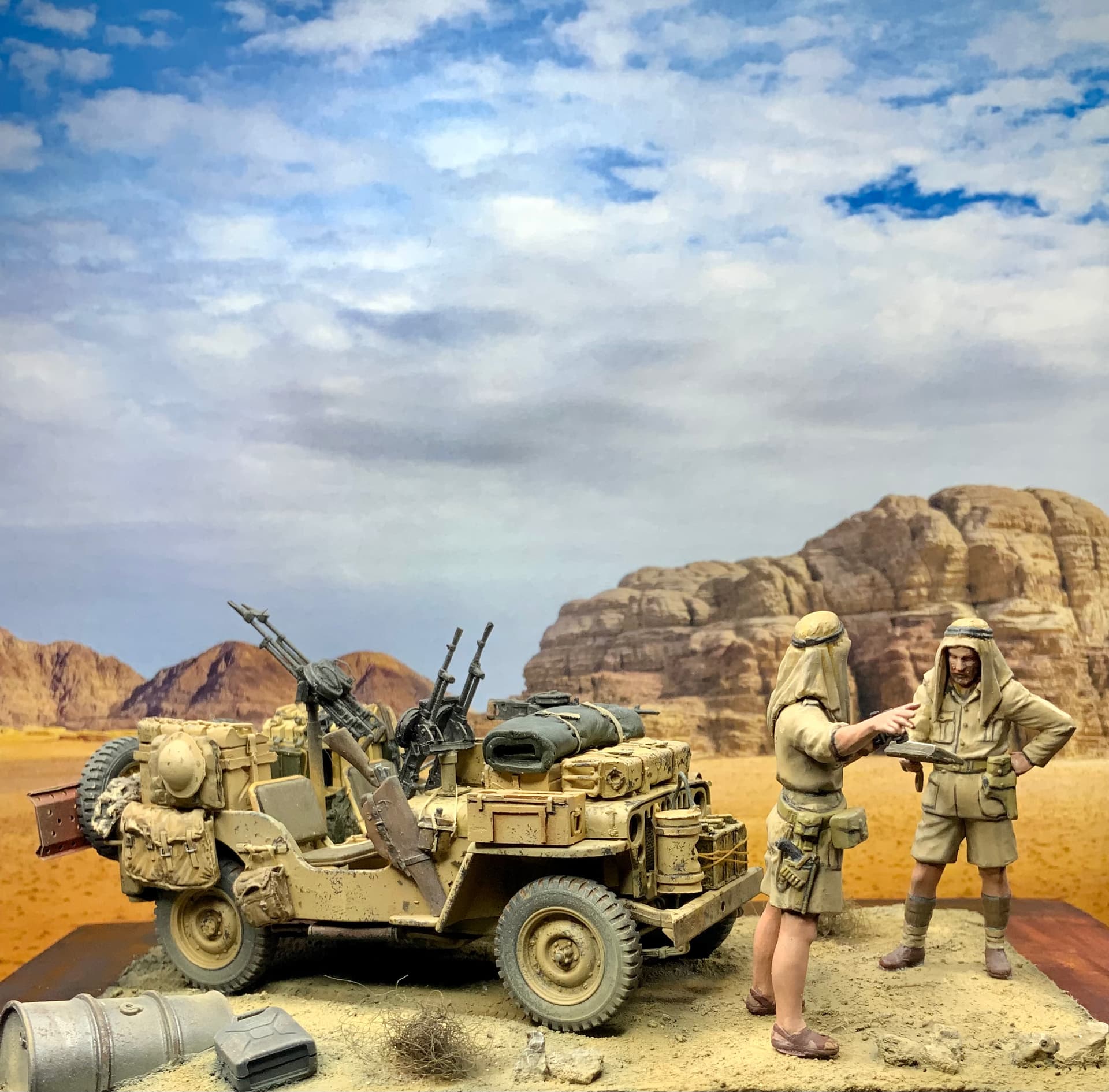
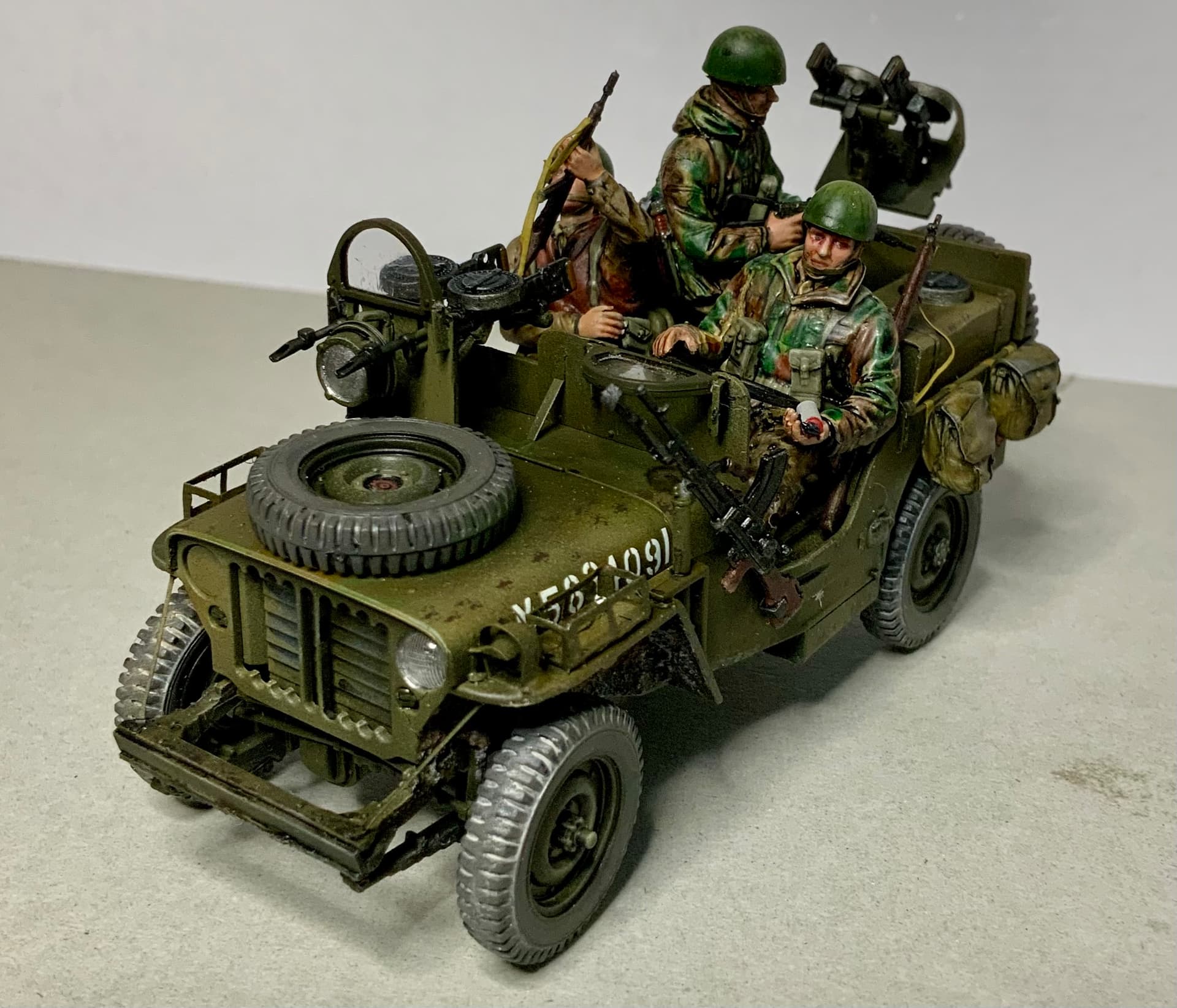
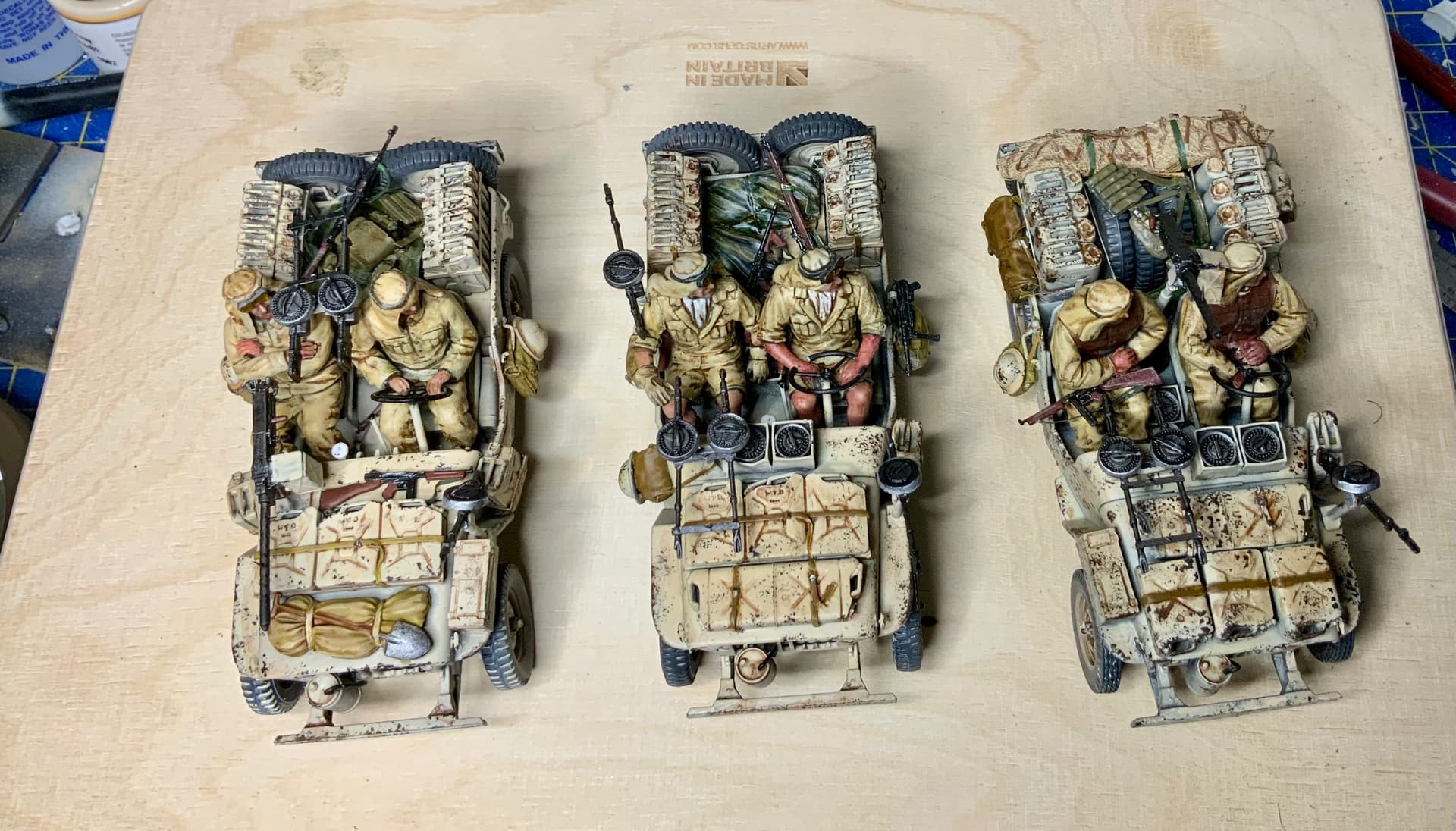
Since you are building a SAS jeep here Are some of mine, weathered mostly as described above. Good luck with your project, looking forward to see it finished.


9 Likes
Welcome! Many books have been written on the subject, and some of them actually worthwhile/worth the money. The vast and august contributions on this site are a fairly comprehensive library, the trick is finding what you want to know and I don’t have an answer to that, other than spend a long time looking around particularly the AFV forums. But judging by those photos I’m not sure you need any help at all, nice!
However, we sometimes see great work spoiled by too little weathering, or too much…complicated by the fact that for every 10 model-makers who look at something you’ll get 15 opinions about where that magical line in the sand is.
I’m typically guilty of over-weathering – see that’s two opinions already, the first as a builder and the second as a spectator before anyone else has even seen it.
So the one tip I’d offer is this – wherever possible make your weathering removable or moderate-able. If it’s mud make the constituents water soluble. If it’s pigments/pastels they’re easy to fade with a stiff dry brush or wash away completely. It it’s rust, well….I’ll leave that for someone else.
7 Likes
Thank you for your feed back I’ll try and tone it down and back. Might not get far this time but noted for next time. By the way love your models they are awesome
3 Likes
Thank you for your feedback I thought I’d over done still learning used sponge chipping and pigments struggling with pin washes though. Love your work in pictures they look awesome
3 Likes
Erik is the a way I could pull it back even at this stage used acrylics and a Matt varnish with a gloss varnish for pin was inside messed it up bit so Havant attempted sine
2 Likes


Not sure if I understand your question, but my best advice is to keep on with what you are doing, finish the model and start a new one. A Tamiya Sherman is a great kit to practise weathering on.
3 Likes
Or… and here’s my “system”, you do a thinner wash in dark brown on the yellow and then use pastelchalk (which you rub down on a piece of sandpaper and then apply with a brush) as dust, which produces the dollowing result:
In hindsight I should have used much more dust, but we all live and learn.
7 Likes
First welcome aboard.
Building and weathering is a personal choice on the amount and what you want for your project. That said, to me it’s a bit much. With weathering, less is more. About the time you think, just a little bit more is when you should stop. That little bit more is usually too much. That line will change as you naturally improve your process on your projects.
As Erik said finish this model, identify one thing specific you want to improve on for the next model and work on that. On the next project pick something else to improve on. The more you build the easier it will be.
Here are some folks process.
3 Likes
Welcome mate! Lovely to have new members.
I think you’ve now seen one of the reasons I joined this forum and its key strength; the fantastic members who share their time and experience so we can all improve our modelling.
As regards your jeep I’d say it’s a good start. It’s really tough to take weathering back and I think you’ve gone as far in that regard as you without starting to scratch and damage it. As Erik and Ryan noted, use this as good experience and consider your next model.
I’m pretty new to all this and learning heaps. One suggestion I’ve been trying to get better at doing is to start with the really light touch of colours or dusting. You can always add more.
2 Likes
Ty this is all really good advice and I appreciate it loads. Less is more. I’ll post pics when it’s finished and any all advice is appreciated. I’ve that spark taking this up again and really enjoying it and look forward to getting better
2 Likes
And main rule: do the weathering until it looks the way you want it to look… if you’re not building it for someone else..
3 Likes
I agree it’s going to be on display in my house and it’s my first attempt, I’m actually quite pleased with it but also realise it could be better and I’m grateful for all the comments and advice.
4 Likes
True statement,but he did ask for advice and tips,then it’s up to him to decide what suggestions to apply or not.
2 Likes
I did ask for advice and opinions and appreciate it all. I can see where everyone is coming from and will take it forward and probably under do the next. As was stated above weathering is personal choice but it’s good to get advice and to try and improve. I don’t think I’ve embarrassed myself with this effort but can see how I could make it better with all of your kind remarks.
6 Likes
Definitely not 
2 Likes
I always look for a photos of the subject of the kit l have, and then decide on the stowage, colour, and weathering.
The thing is you have tried and if you’re happy with it then that’s all what matters. 

4 Likes
I think that looks a lot better!
Ken
2 Likes
