History
The Panzerkampfwagen 38(t) was born in the former Czechoslovakia as the LT vz. 38, a light tank developed by the ČKD factory. After the German occupation of the country in 1939, the project was incorporated into the Wehrmacht, which quickly recognised the vehicle’s qualities. Reliable, robust, and easy to maintain, the 38(t) began to equip various German armoured units and participated in the campaigns in Poland, France, and the Balkans, becoming one of the pillars of the panzer forces at the beginning of World War II.
The Ausf. versions and Ausf. F represented the maturity of the project. Produced between the end of 1940 and October 1941, they received reinforced frontal armour of 50 mm and improvements resulting from the experiences gained in the French campaign. Although they retained the 37 mm Skoda A7 gun, considered adequate against most armoured vehicles encountered up to that point, these versions offered a well-balanced combination of mobility, protection, and reliability.
It was during Operation Barbarossa, which began on June 22, 1941, that the Panzer 38(t) experienced its most significant moment. No fewer than seven Panzer divisions participated in the invasion of the Soviet Union using the vehicle, among them the famous 7th Panzer Division, a unit previously commanded by Erwin Rommel during the 1940 France campaign.
Integrated into Army Group Center, the 7th Panzer Division advanced rapidly through Belarus during the early months of the campaign. The Panzer 38(t) Ausf. E/F participated in major sieges and mobile battles, leveraging their high mechanical reliability and low failure rate. At many times, the armored vehicles covered hundreds of kilometres in just a few days, contributing to the successive German advances during the summer of 1941.
Meanwhile, as the campaign progressed, the crews began to face an unexpected adversary: the new Soviet tanks T-34 and KV-1. The sloped armour and more powerful armament of these vehicles revealed the limitations of the Panzer 38(t)'s 37 mm gun, which could no longer face them on equal terms. Although it remained efficient in reconnaissance tasks, infantry support, and combat against light armoured vehicles, the vehicle began to show the limits of a design conceived in the 1930s.
Even so, the Panzer 38(t) earned the respect of its crews. Its simple mechanics, excellent reliability, and ease of maintenance were especially valued in the harsh conditions of the Eastern Front, where mud, dust, long distances, and extreme temperatures tested both equipment and soldiers. These qualities were so recognised that, even after its gradual withdrawal from front-line armoured units, the chassis continued to be used as a base for some of the most successful German vehicles of the war, including the Marder III, the Grille, and the famous Jagdpanzer 38(t) Hetzer.
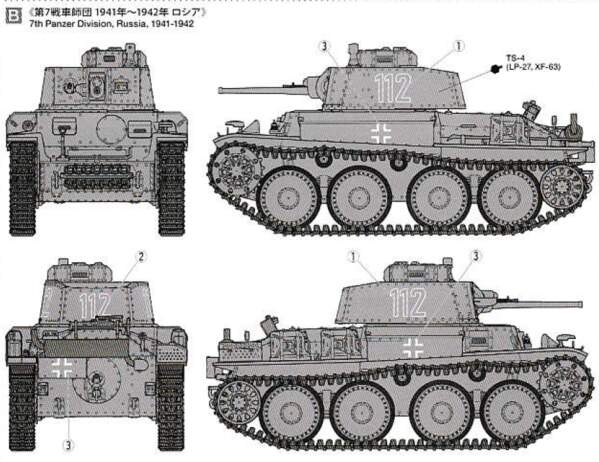
For this assembly, the proposal will be to represent a Panzerkampfwagen 38(t) Ausf. E/F in service with the 7th Panzer Division during Operation Barbarossa in 1941, a period that marked the operational peak of the vehicle and its participation in the largest land campaign in military history.
Vehicle Specifications
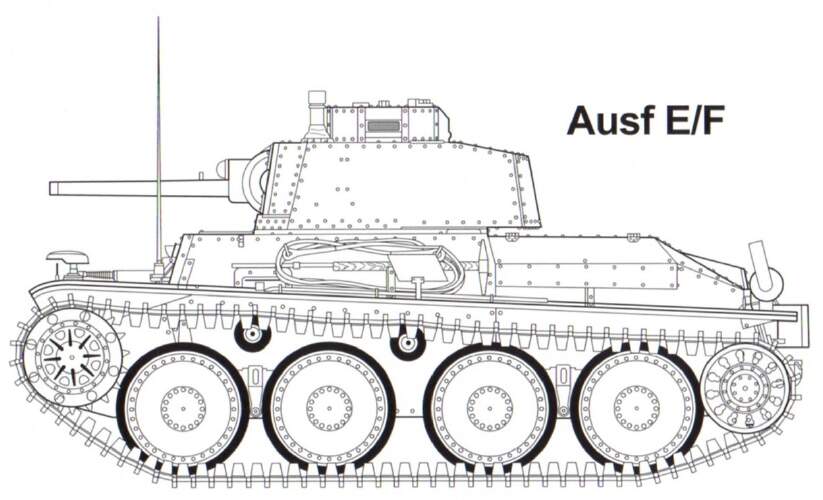
Panzerkampfwagen 38(t) Model E/F
- Origin: Czechoslovakia / Germany
- Manufacturer: BMM (formerly ČKD)
- Crew: 4 men
- Weight: approximately 9.8 tons
- Length: 4.61 m
- Width: 2.14 m
- Height: 2.25 m
- Engine: Praga EPA 125 hp
- Maximum speed: around 42 km/h
- Range: approximately 200 km
- Main armament: Skoda A7 37 mm cannon.
- Secondary armament: 2 MG37(t) machine guns of 7.92 mm
- Front armor: up to 50 mm
- Production:
- E: 275 units
- F: 250 units
Despite its compact size and relatively light armament, the 38(t) earned a reputation as an extremely reliable vehicle. In many mechanical aspects, it was considered superior to the early Panzer I, II, and even some initial versions of the Panzer III.
The Kit
The kit chosen for this assembly is the German Panzer Kpfw.38(t) Ausf. E/F, from HobbyBoss, reference 80136, in 1/35 scale.
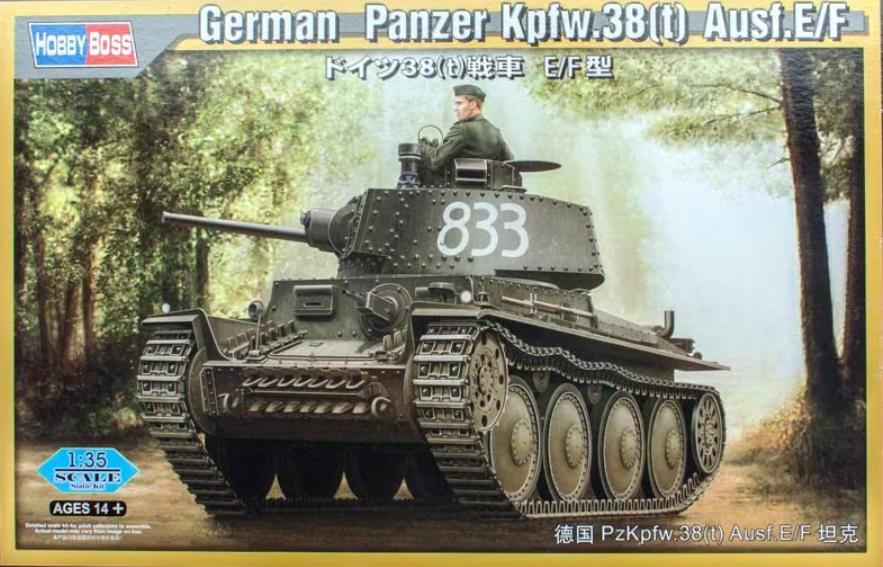
Originally released by Tristar in 2006 and re-released by Hobby Boss in 2015 under the reference 80136, this kit continues to be considered by many modelers as one of the best representations of the Panzer 38(t) available in injected plastic in 1/35 scale.
The kit features approximately 500 parts distributed in:
- 7 trees of injected plastic parts;
- 3 trees dedicated to individual belts;
- 1 tree of transparent pieces;
- 1 sheet of photo-etched parts;
- 1 sheet of decals;
- 2 crew figures;
- Assembly manual in black and white.
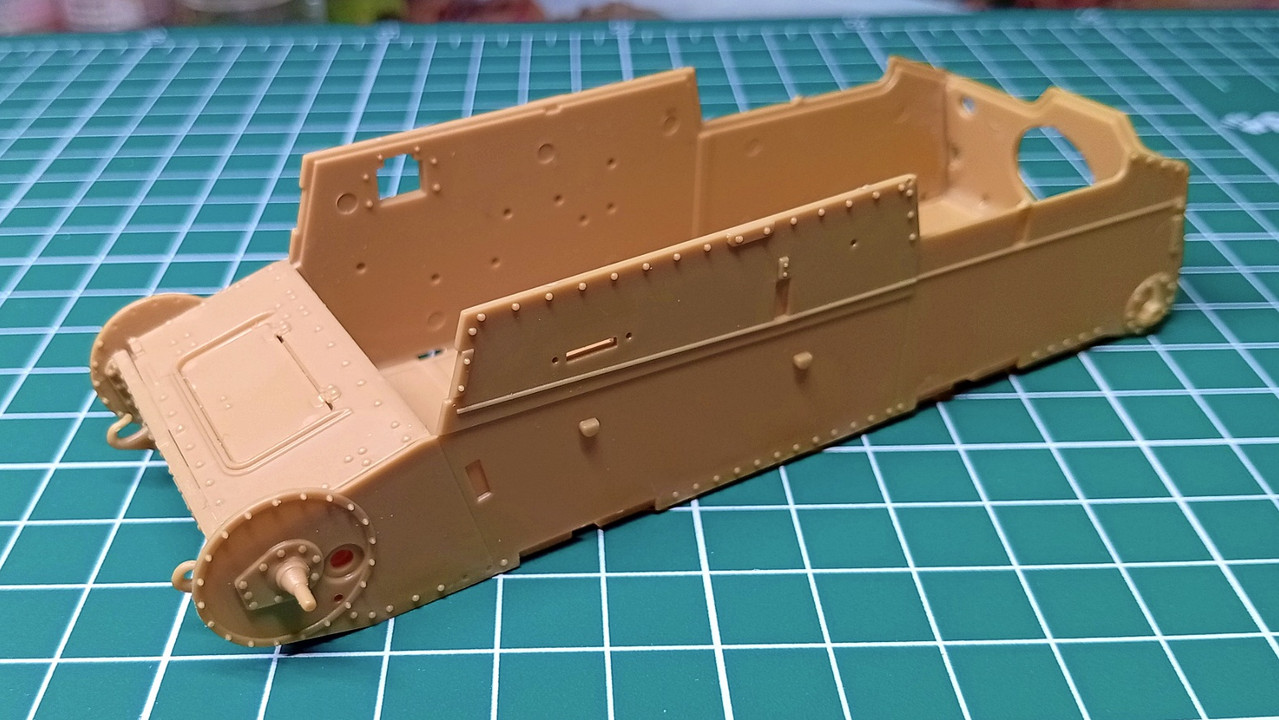
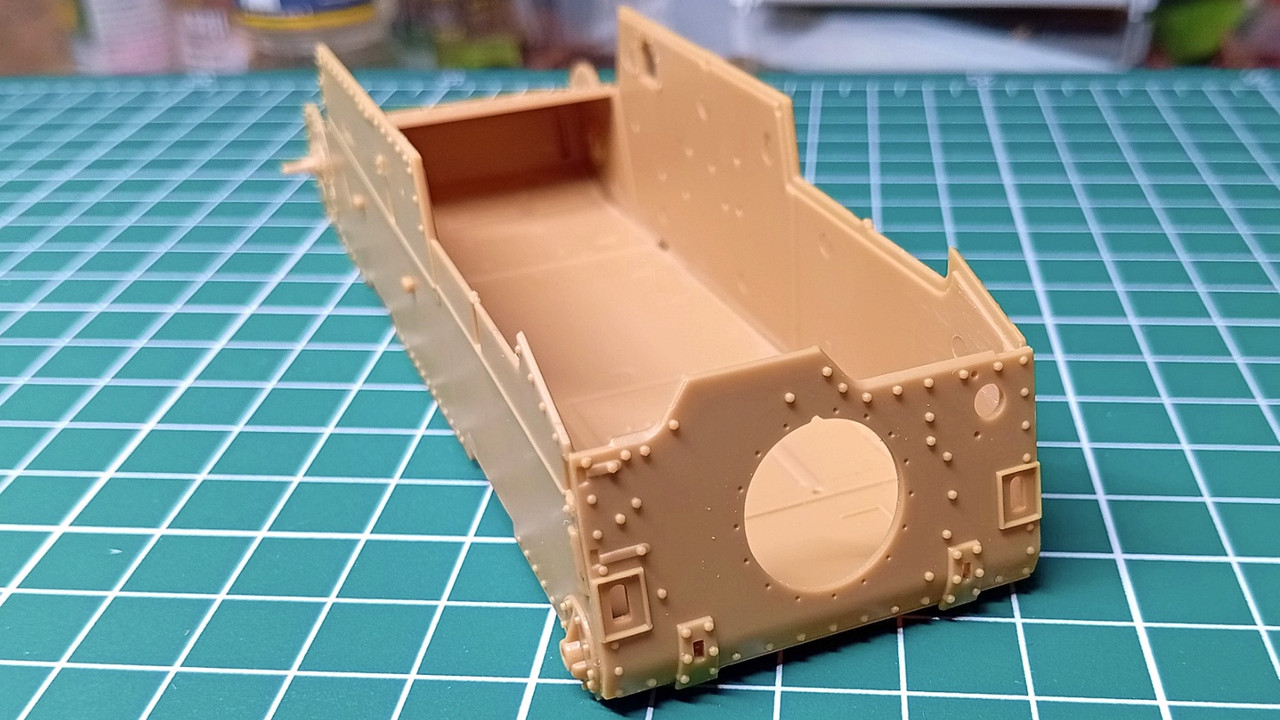
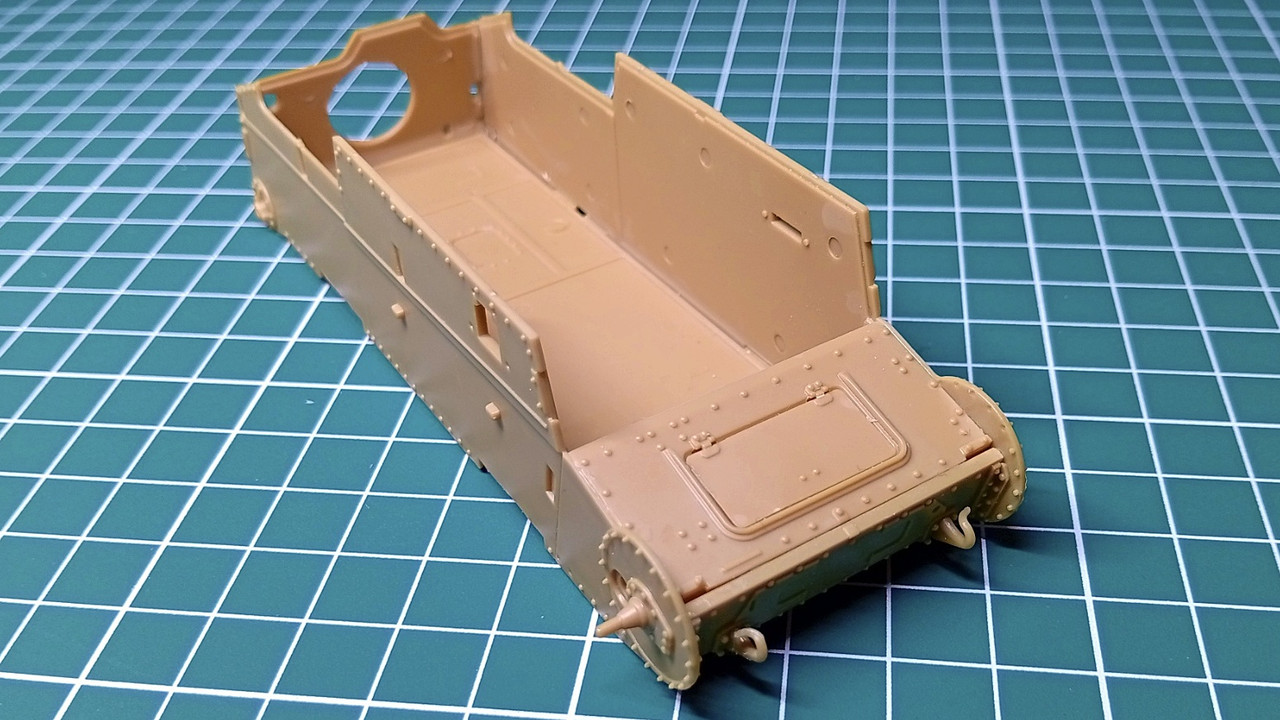
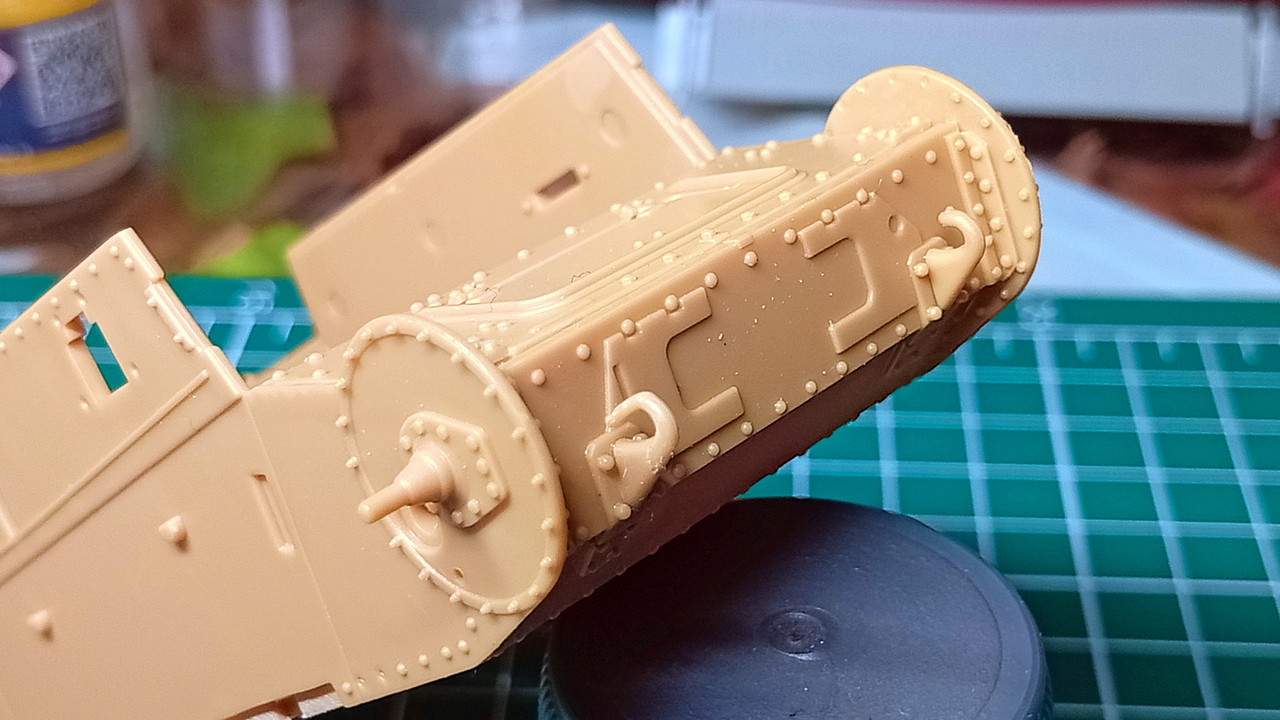
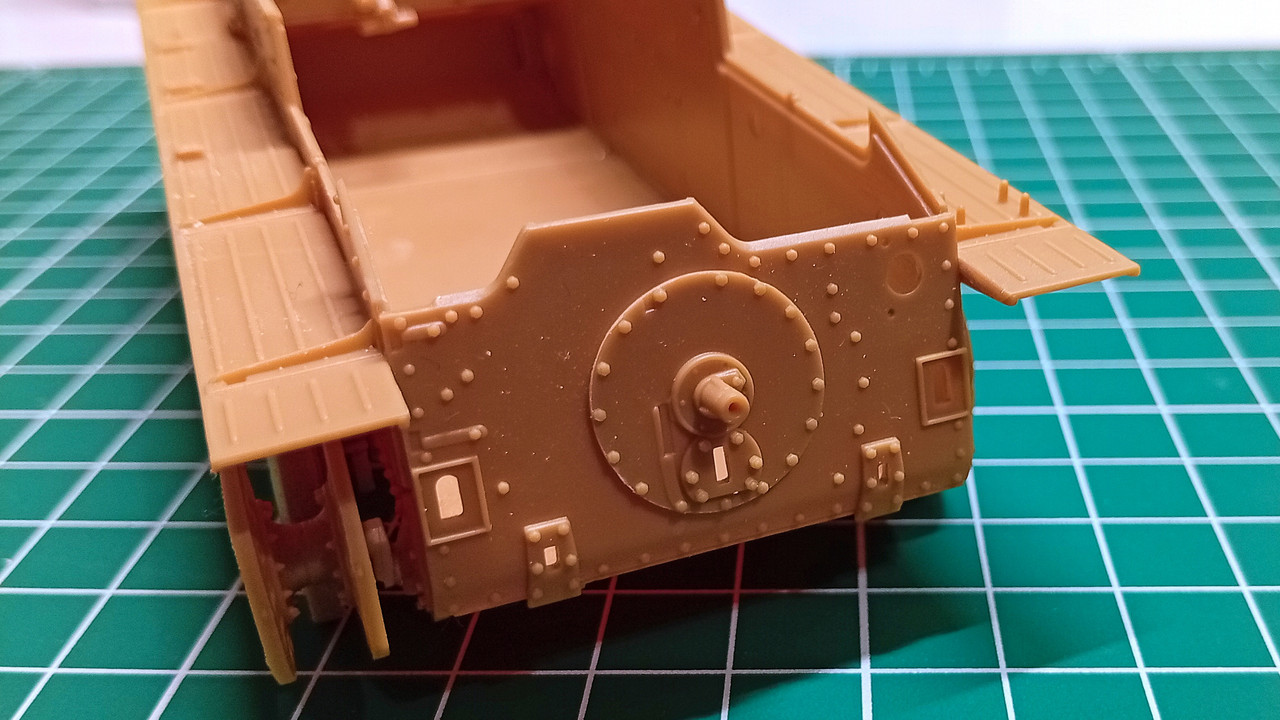
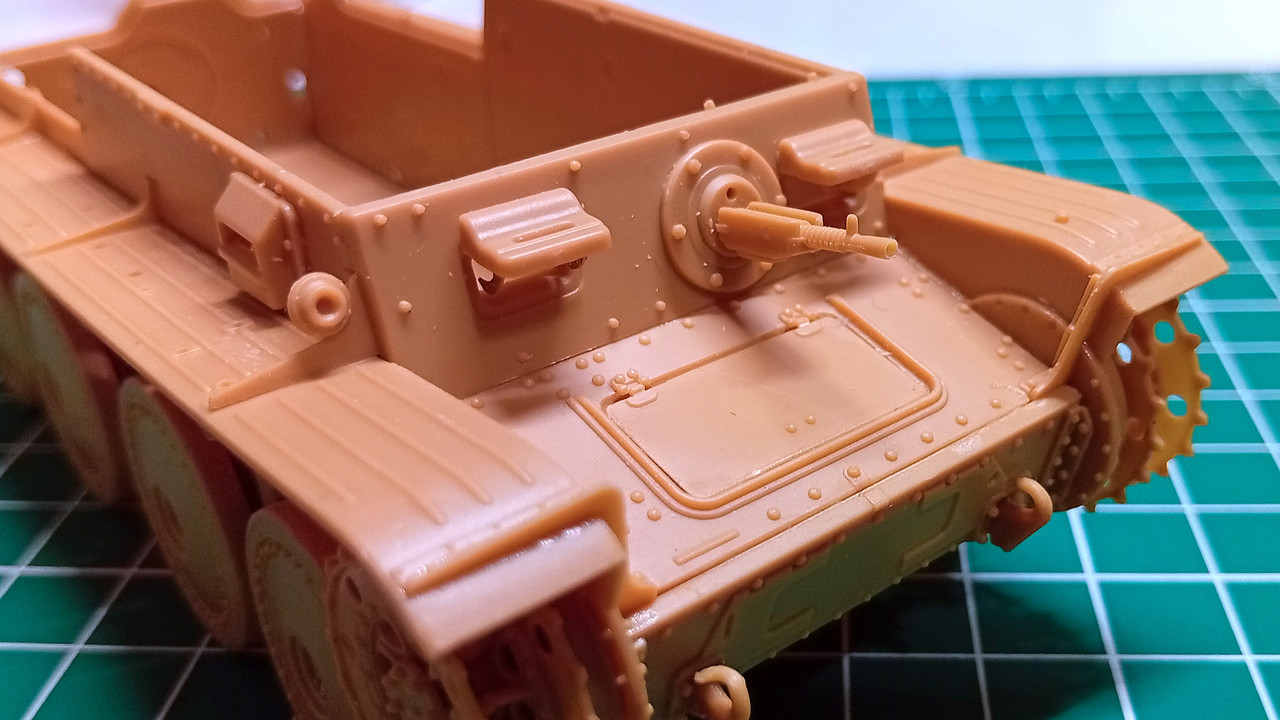
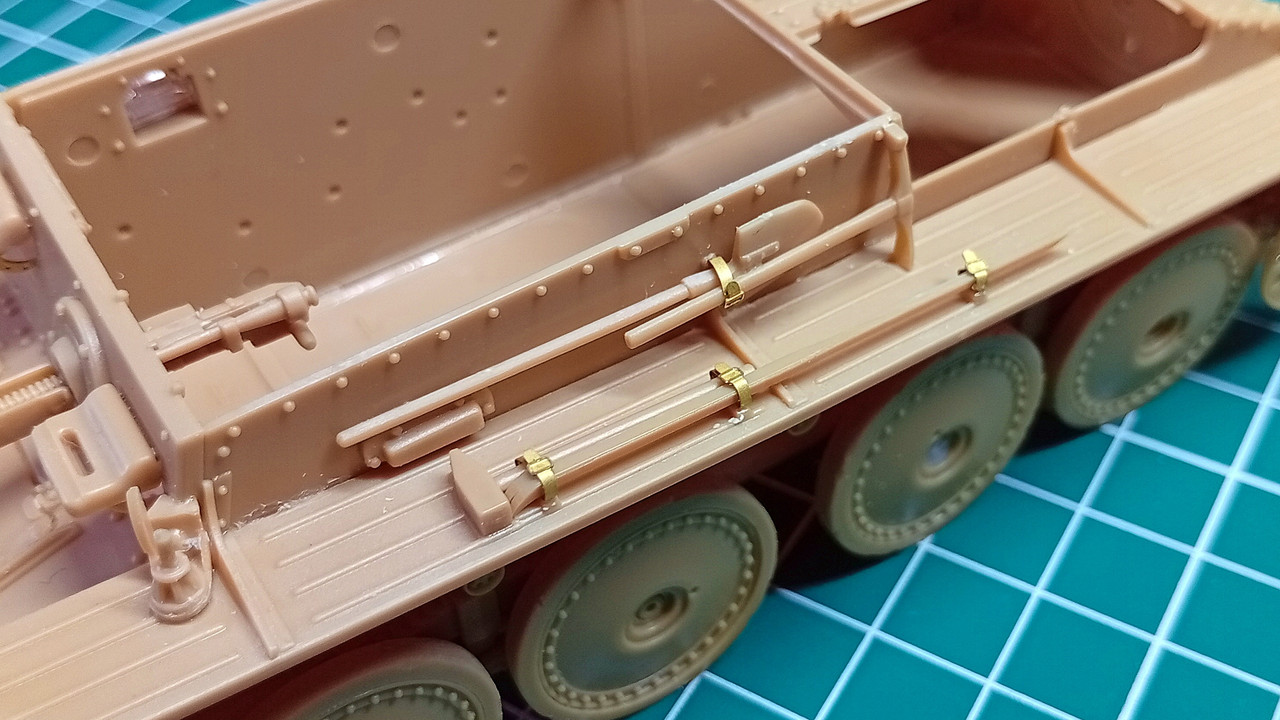
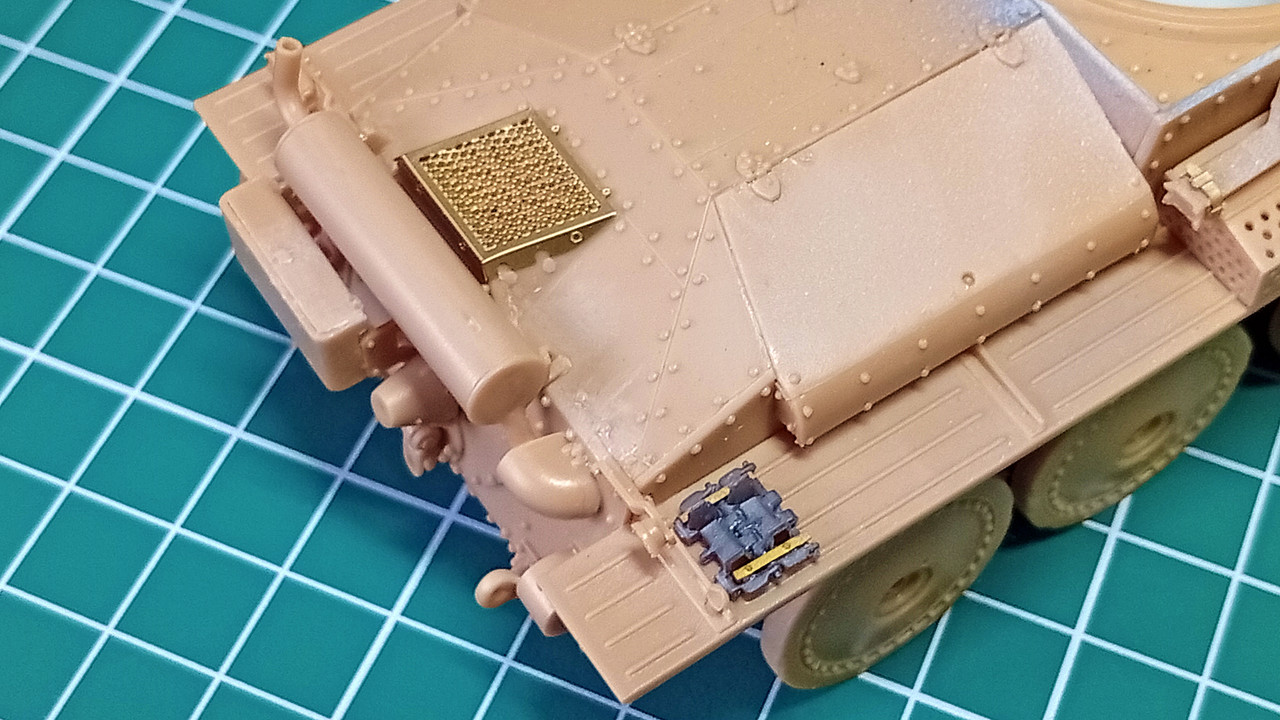
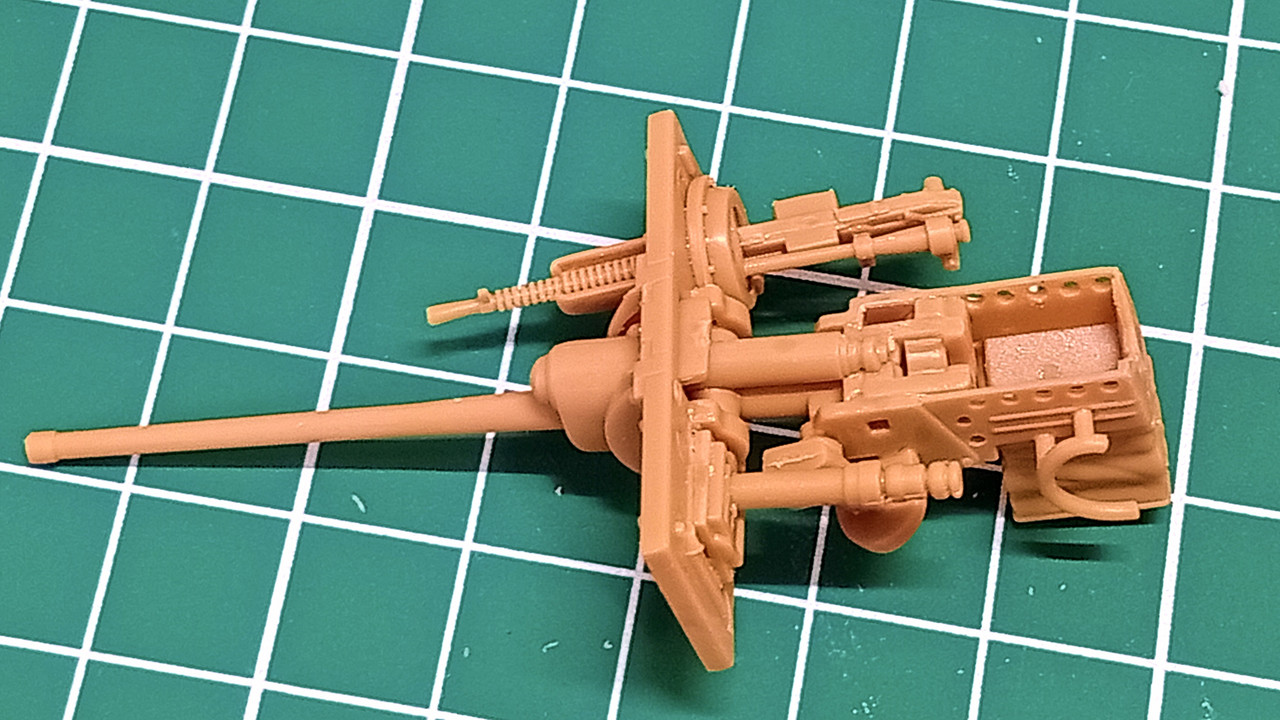
Quality of the parts: I would like to highlight the quality of the molds here. The characteristic rivets of the vehicle are very well reproduced, as well as tools, supports, external boxes, and other equipment installed on the hull. The use of slide mold technology allowed for the accurate reproduction of various details, including:
- 37 mm cannon;
- machine guns;
- Complex external components.
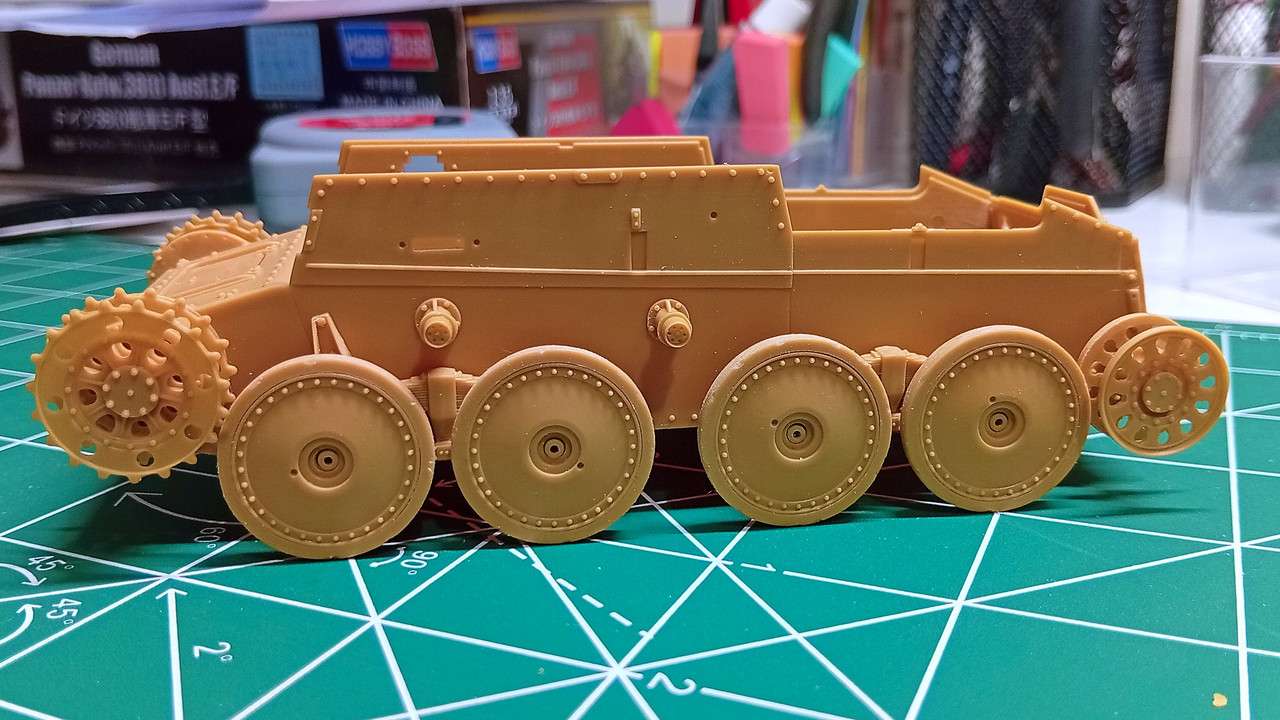
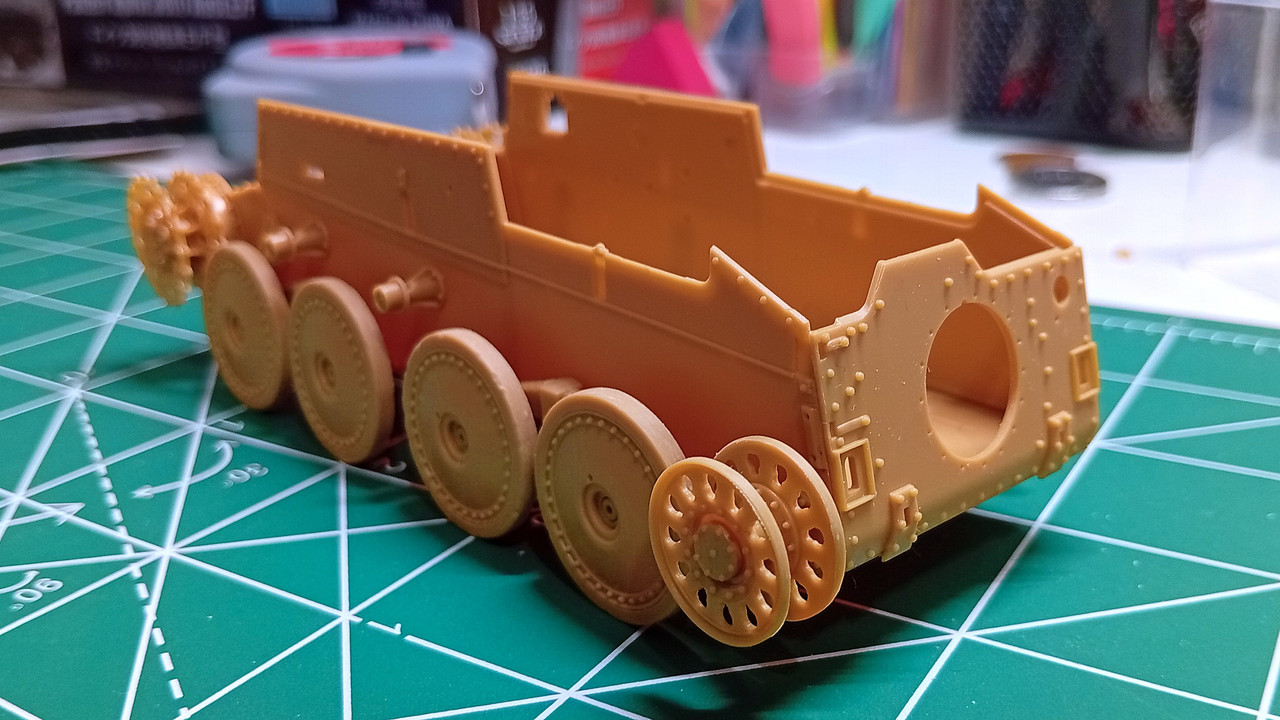
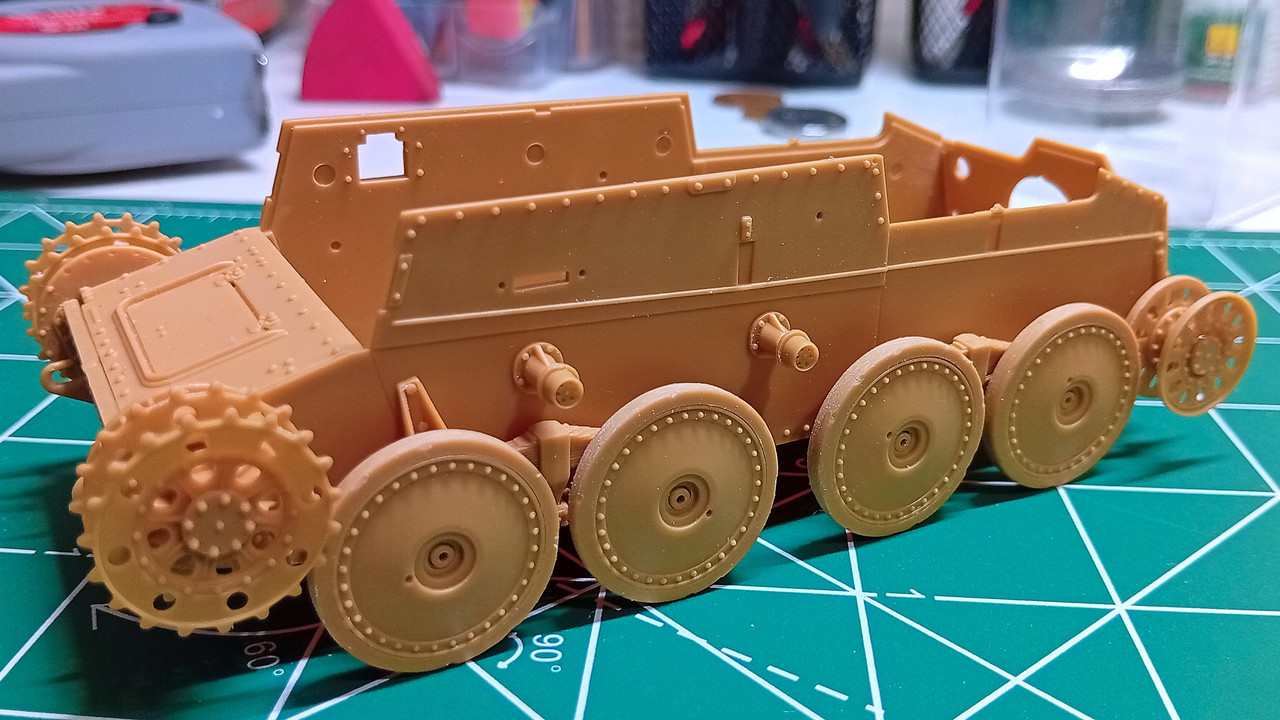
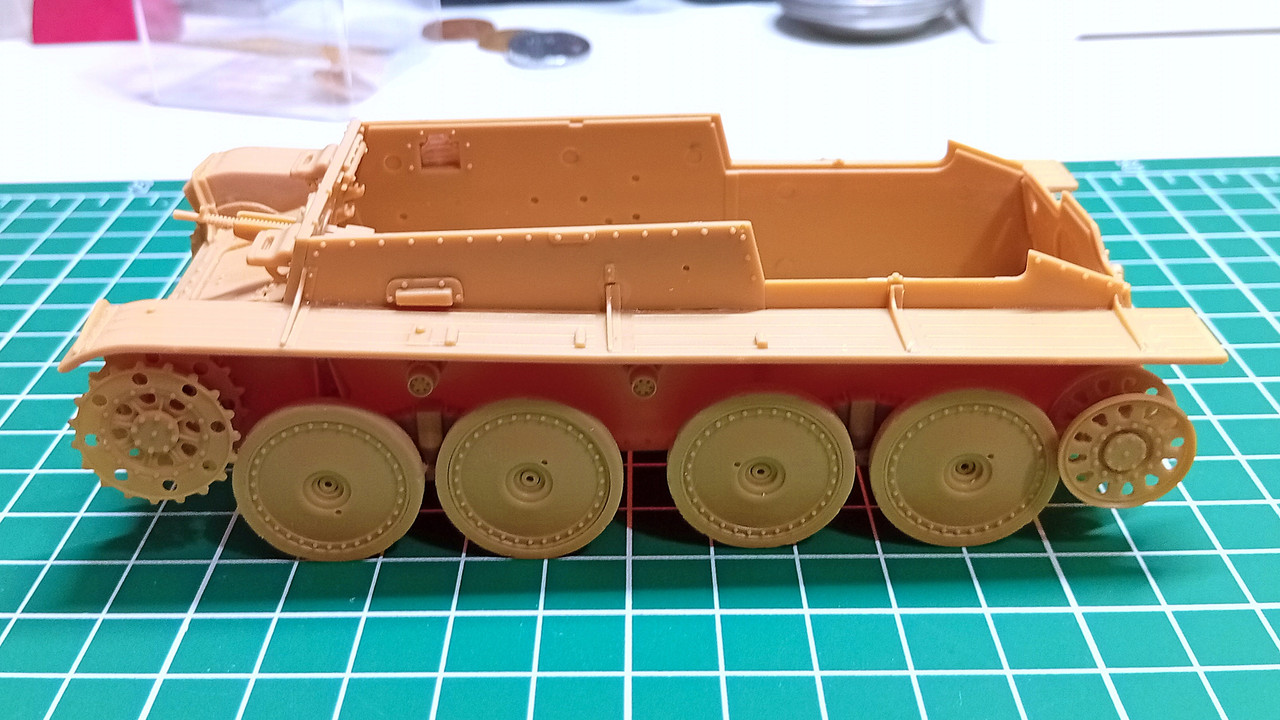
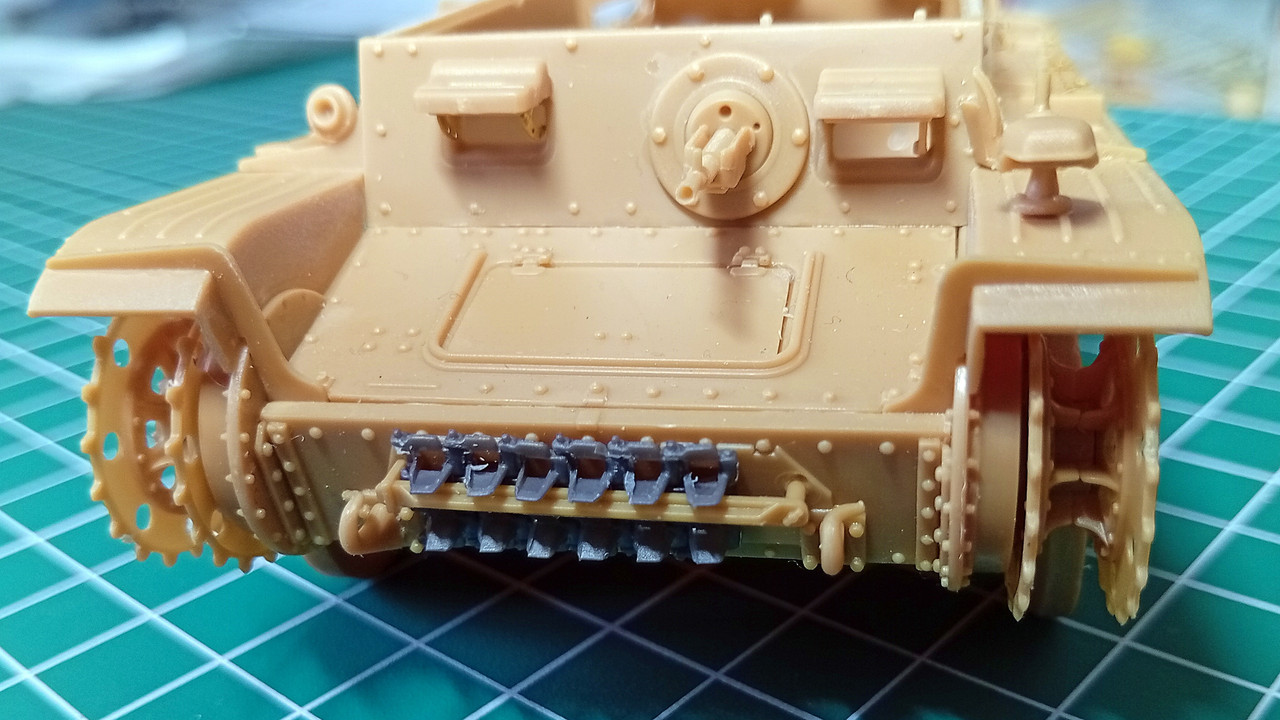
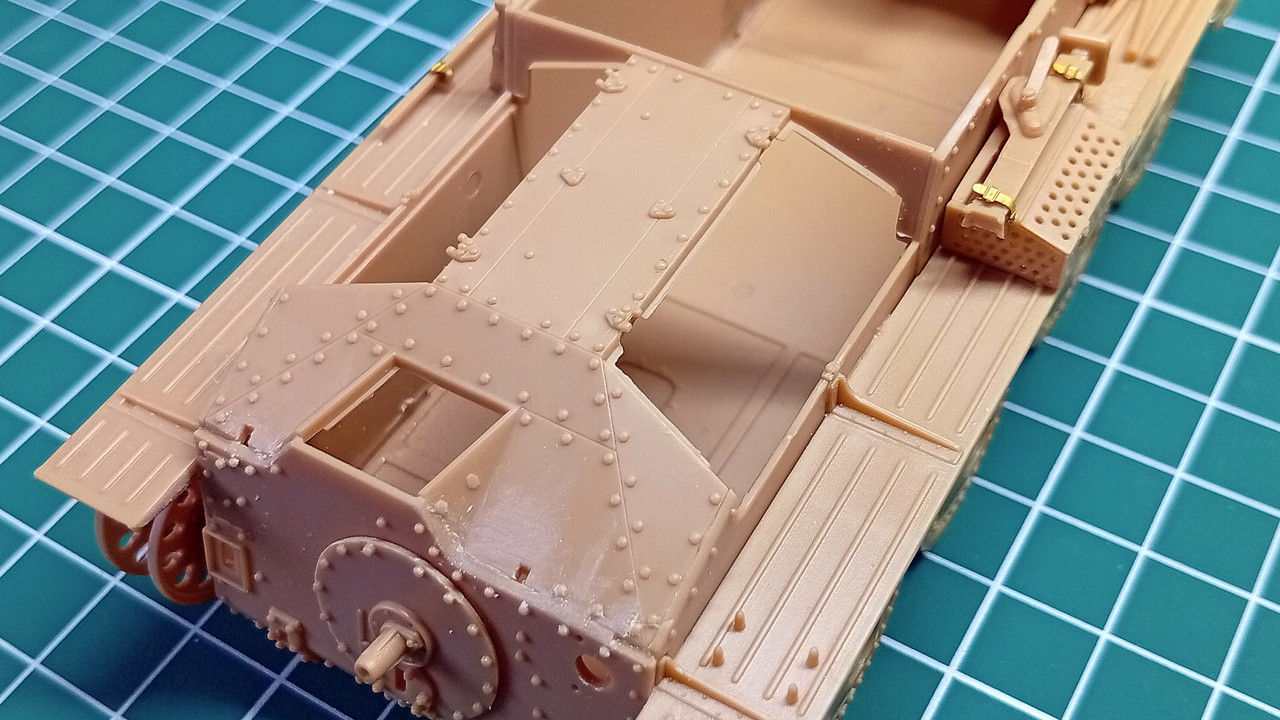
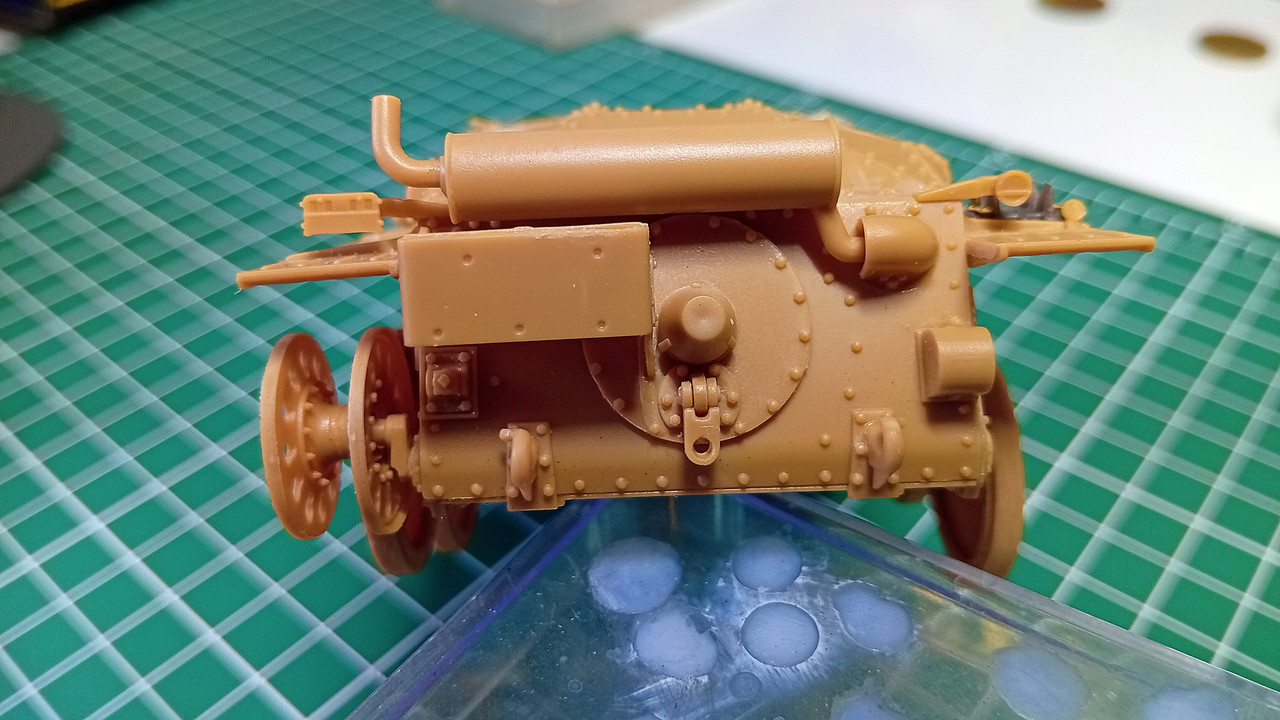
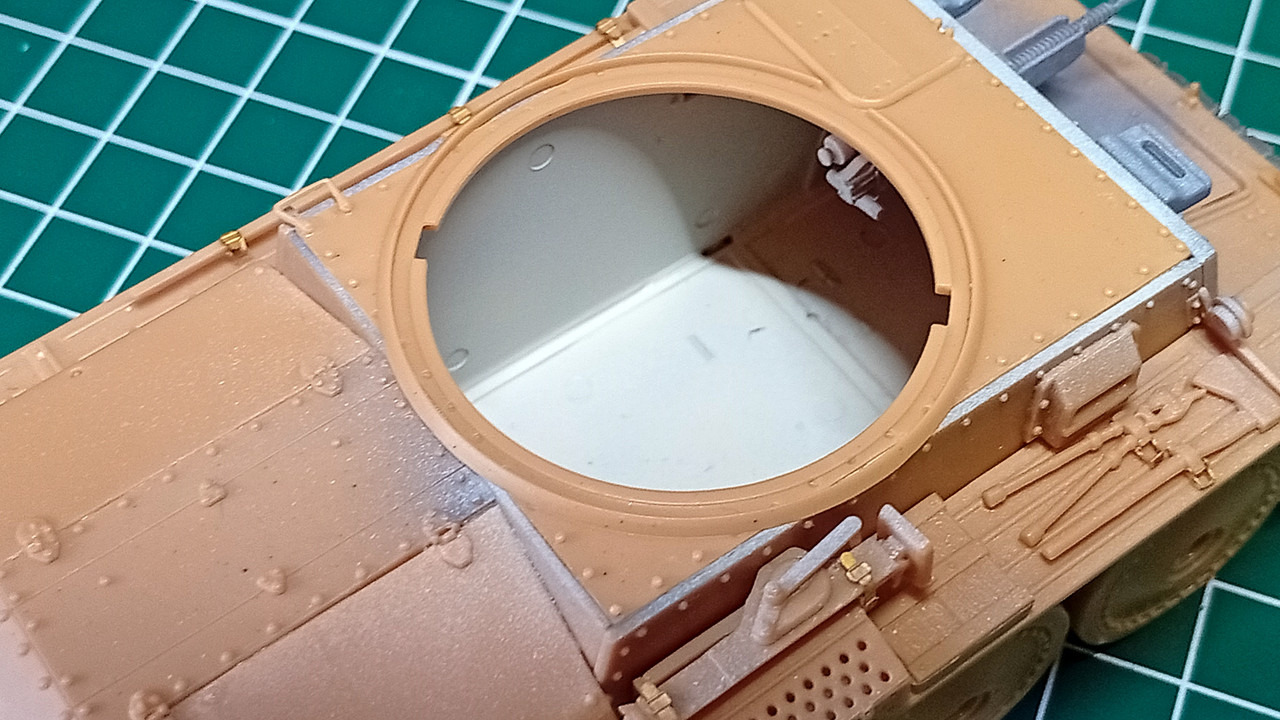
Engineering and assembly: despite the large number of parts, the fittings are very good. The hull is made up of several independent plates, faithfully reproducing the construction of the real vehicle. Apparently, there won’t be a need for much corrective putty during assembly, but a small correction in the rear area of the engine compartment will definitely be necessary. The tower follows the same pattern, showing excellent alignment and fitting of the parts.
Suspension and running gear: this is one of the differentiators of the Tristar project. The tires are molded separately from the wheels, significantly facilitating painting and aging. Moreover, the suspension remains movable; the wheels can be positioned to adapt to the terrain; and the tensioning wheel has functional adjustment. Even tho part of this detailing remains hidden after assembly, it demonstrates the level of refinement of the project.
Tracks: the tracks are composed of individual links. They apparently exhibit a clear definition of details. The snap-fit system seems to provide a relatively simple assembly.
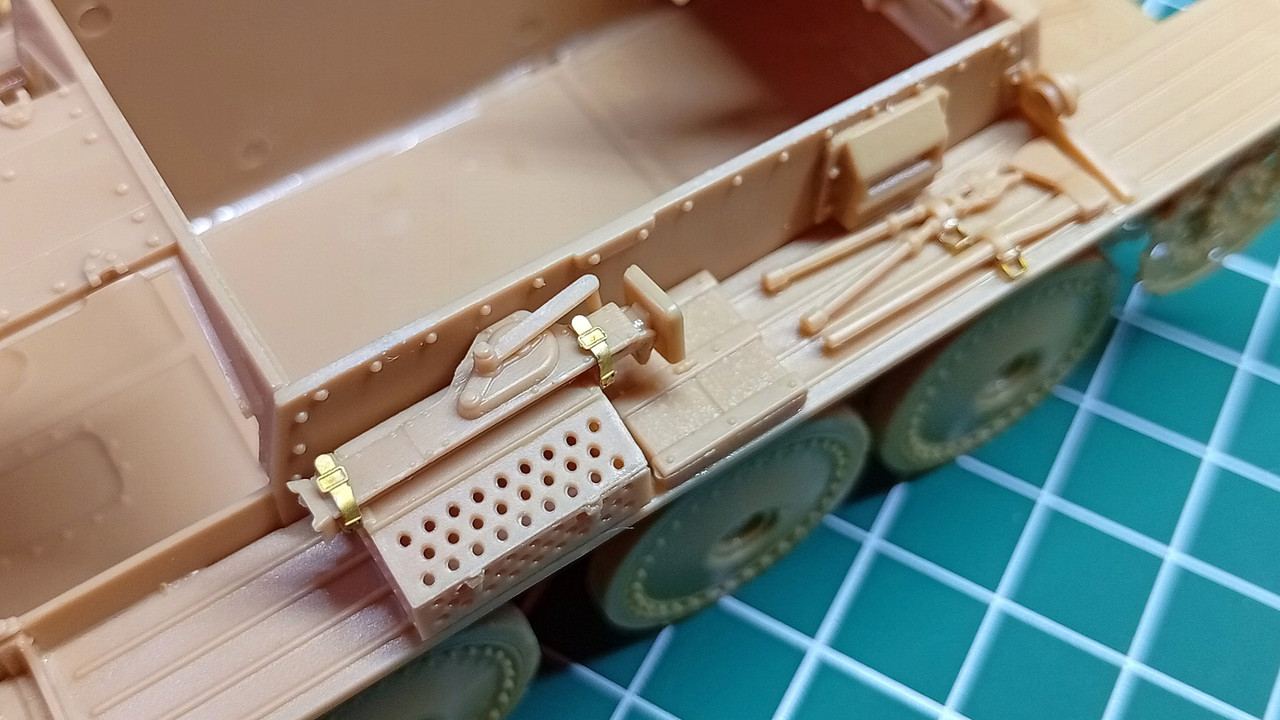
Photoetched (PE): The included sheet is not extensive, but it covers the points where the visual gain is most noticeable:
- engine grilles;
- tool holders;
- Various supports;
- small external details.
The inclusion of these components elevates the level of realism without excessively increasing the complexity of the assembly.
Interior: there is no complete interior for the vehicle. However, the original design was conceived to accommodate an interior detailing set sold separately by Tristar.
As a result:
- Various hatches are independent pieces;
- There are partial internal details;
- The armament has internal components represented.
For those who intend to display open hatches, the addition of aftermarket parts can be interesting.
What could Hobby Boss have improved?
Hobby Boss practically reproduced Tristar’s product in its entirety.
They would have been welcome:
- new decals;
- Colored instructions;
- possible metal pipe;
- Update of the conveyor belts;
- Inclusion of basic internal components.
Positive points:
- Excellent external detailing.
- Exemplary assembly engineering.
- Great fittings.
- Functional suspension.
- Photographs included.
Weak points:
- Absence of complete interior.
- Simple painting guide.
- Decals not updated.
- Few updates compared to the original Tristar.
Even after almost twenty years since its original release, the Panzerkampfwagen 38(t) Ausf. E/F from Hobby Boss remains a benchmark among kits of this vehicle in 1/35 scale. Its high level of detail, excellent engineering, and historical accuracy more than compensate for the age of the design.
More than a Hobby Boss release, this kit represents Tristar’s legacy at its peak. Although the re-release missed the opportunity to modernize some elements, the result remains highly competitive and capable of satisfying both intermediate and advanced modelers.
Combat context for assembly
The model represents the PzKpfw 38(t) no. 1113, belonging to the III./Panzer-Regiment 25 of the 7th Panzer Division, photographed in the vicinity of Alytus, Lithuania, on the first day of Operation Barbarossa.
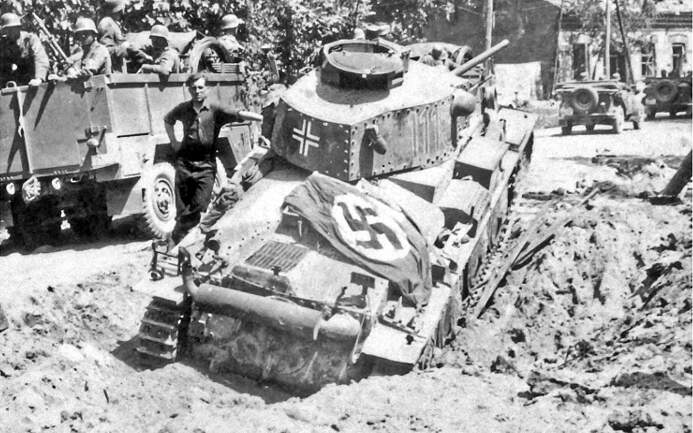
In the early hours of June 22, 1941, the 7th Panzer Division began its advance along the Suwałki-Kalvarija-Alytus axis as the spearhead of the XXXIX Motorized Corps. The initial Soviet resistance was limited, and the Panzer-Regiment 25 advanced rapidly thru the Lithuanian roads, enveloped in large clouds of dust, a characteristic frequently mentioned in the accounts of the division’s veterans.
During this rush to the Neman River, the Panzer 38(t) 1113 hit an anti-tank mine and became immobilized on the outskirts of Alytus. The photograph preserved by the NARA shows the vehicle still relatively intact, without signs of fire or catastrophic destruction, suggesting a loss of mobility rather than destruction by direct enemy fire. To the left of the tank, a Krupp L2H143 truck, the standard vehicle of the division’s motorized infantry regiments, passes by.
Shortly after the loss of the 1113, the other elements of the Panzer-Regiment 25 continued the advance and reached the bridges of Alytus, captured by noon. The III./Panzer-Regiment 25 would then participate in the violent battles fought on the eastern bank of the Neman River against armored vehicles of the 5th Soviet Tank Division, including BT-7, T-28, and the newly appeared T-34.
The reports from the crew members of the III./Pz.Rgt.25 reports that the 37 mm guns of the Panzer 38(t) proved insufficient against the T-34 in frontal combat, forcing the Germans to resort to the support of 105 mm field artillery. Despite this, the experience gained by the 7th Panzer Division in the French campaign allowed the Germans to repel successive Soviet counterattacks throughout the afternoon.
By the end of the day, the Battle of Alytus would be remembered by veterans as one of the toughest armored combats faced by the 7th Panzer Division throughout the entire war. The III./Panzer-Regiment 25 emerged severely depleted from the action, but it decisively contributed to the maintenance of the bridgeheads over the Neman River.
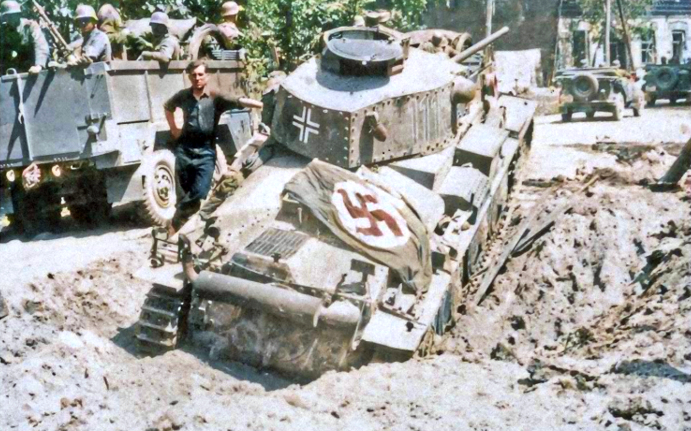
The vehicle depicted in this model, therefore, represents a moment prior to the great battle of the bridges: a Panzer 38(t) from the German vanguard immobilized by a mine while the offensive continued toward Alytus.
Bibliography
CHAMBERLAIN, Peter; DOYLE, Hilary L. Encyclopedia of German Tanks of World War Two. Revised edition. London: Arms & Armor Press, 1993. 272 pages. ISBN 978‑1854092144.
JENTZ, Thomas L. Panzertruppen 1: The Complete Guide to the Creation & Combat Employment of Germany’s Tank Force, 1933–1942.* Atglen, PA: Schiffer Military History, 1996. 288 páginas. ISBN 0-88740-915-6.