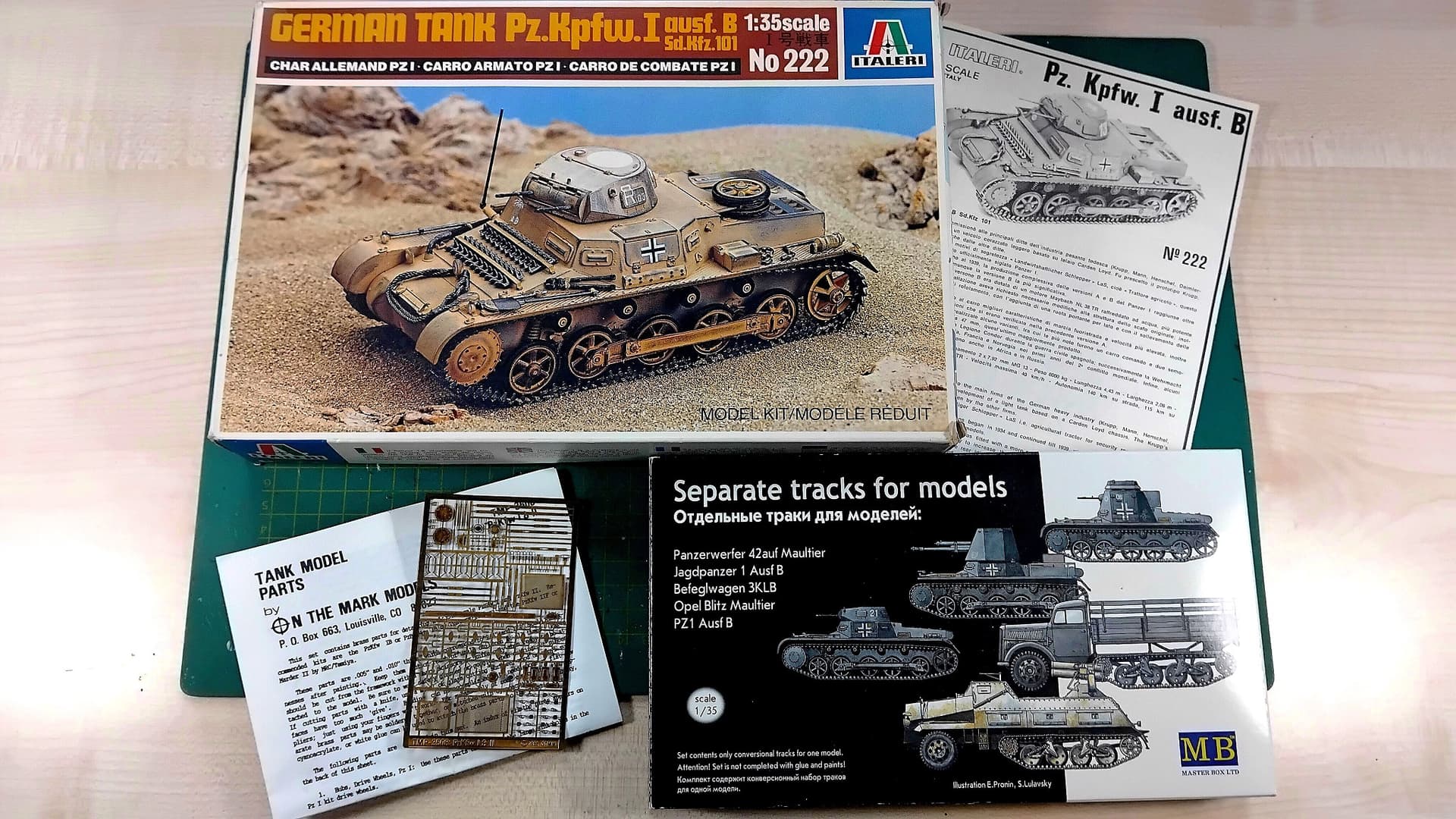
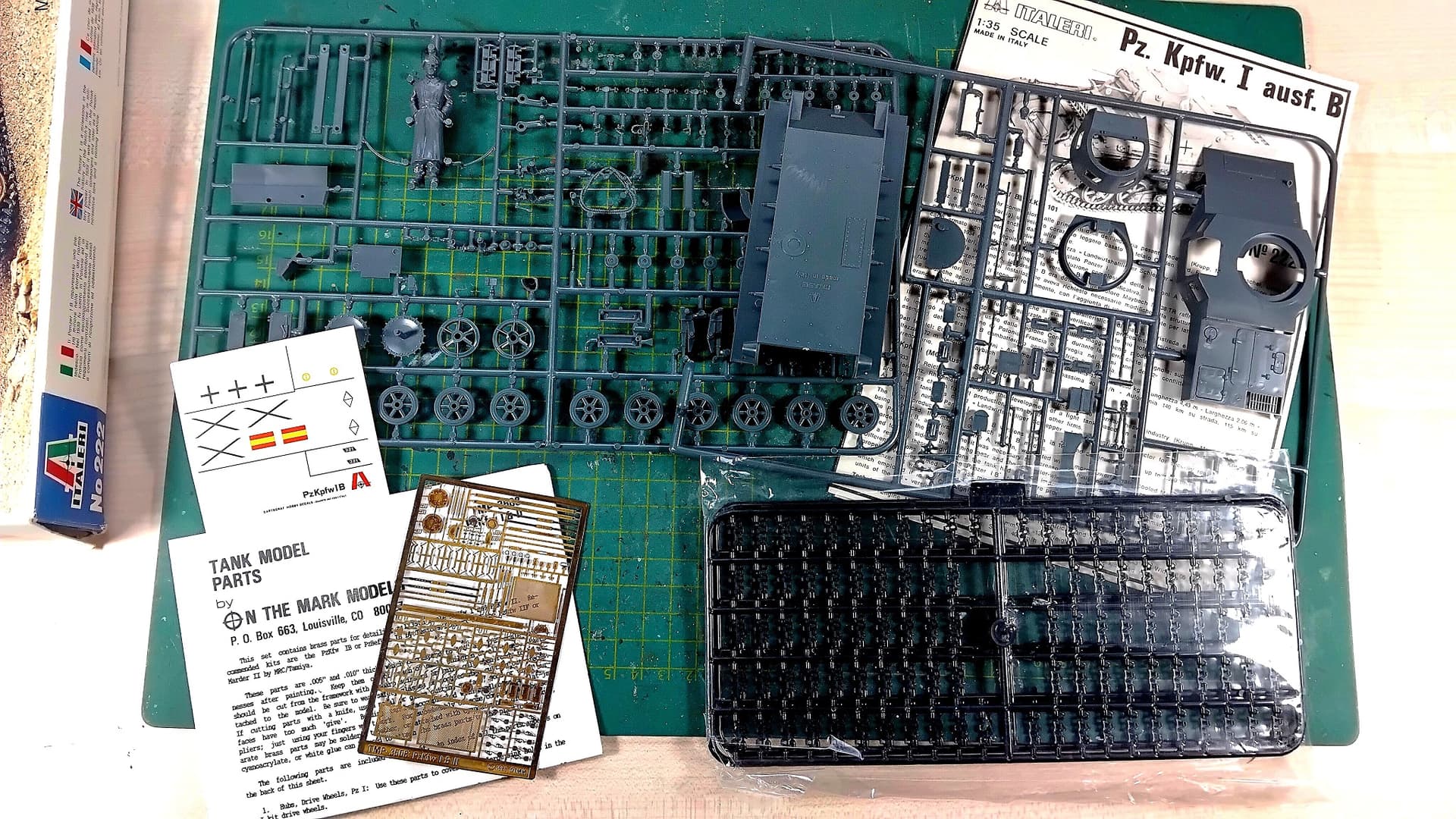
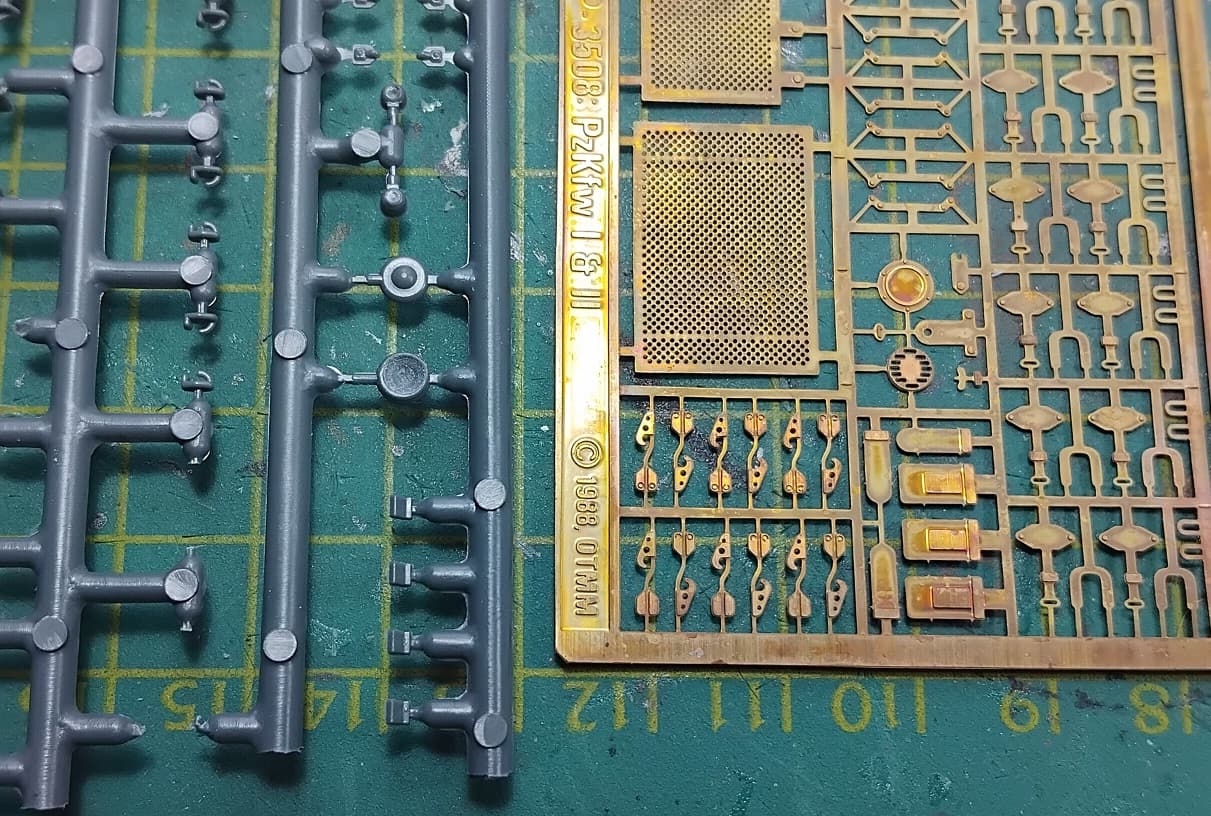
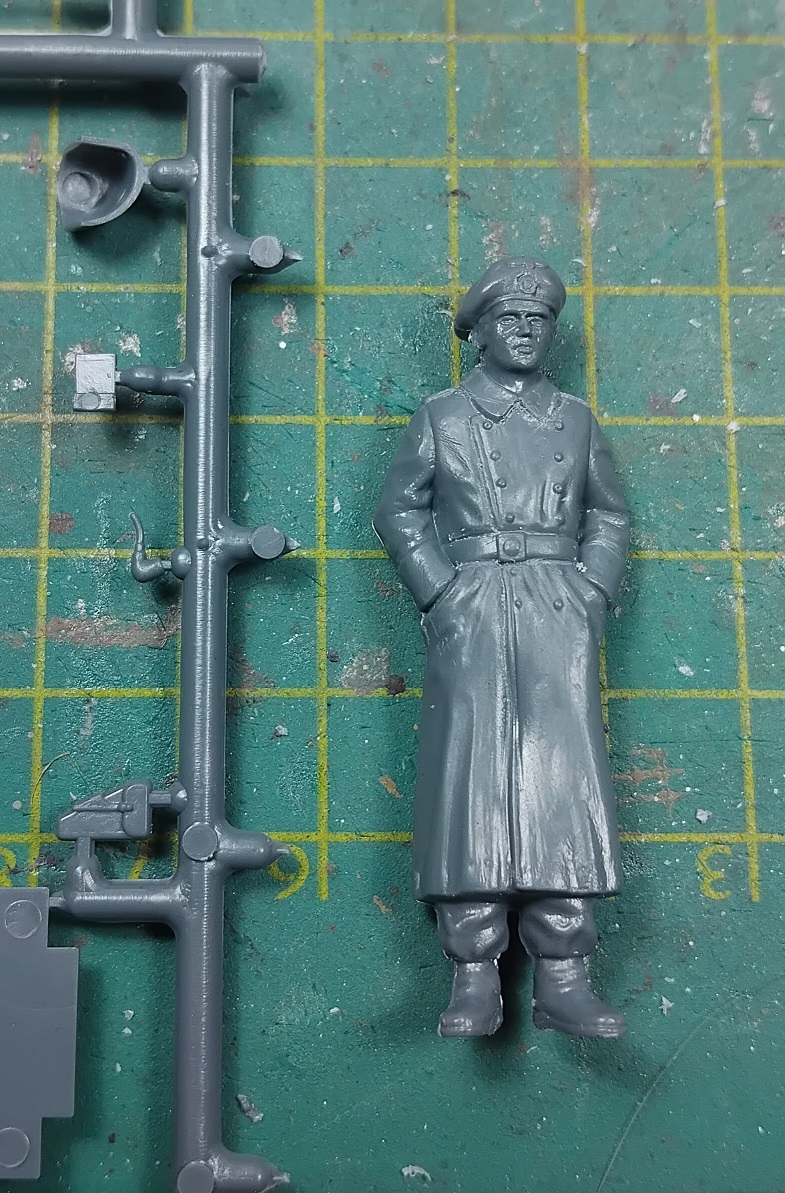
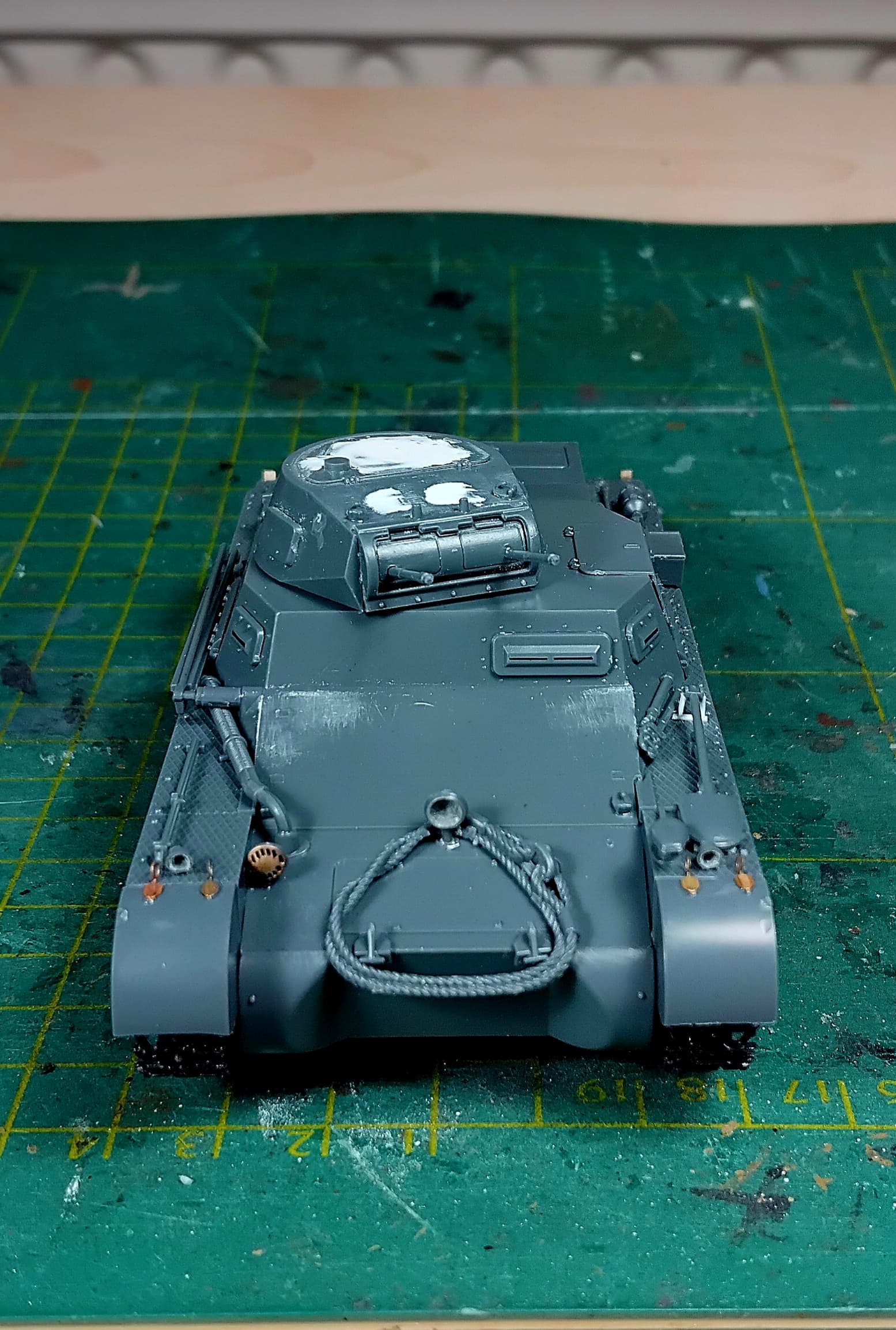
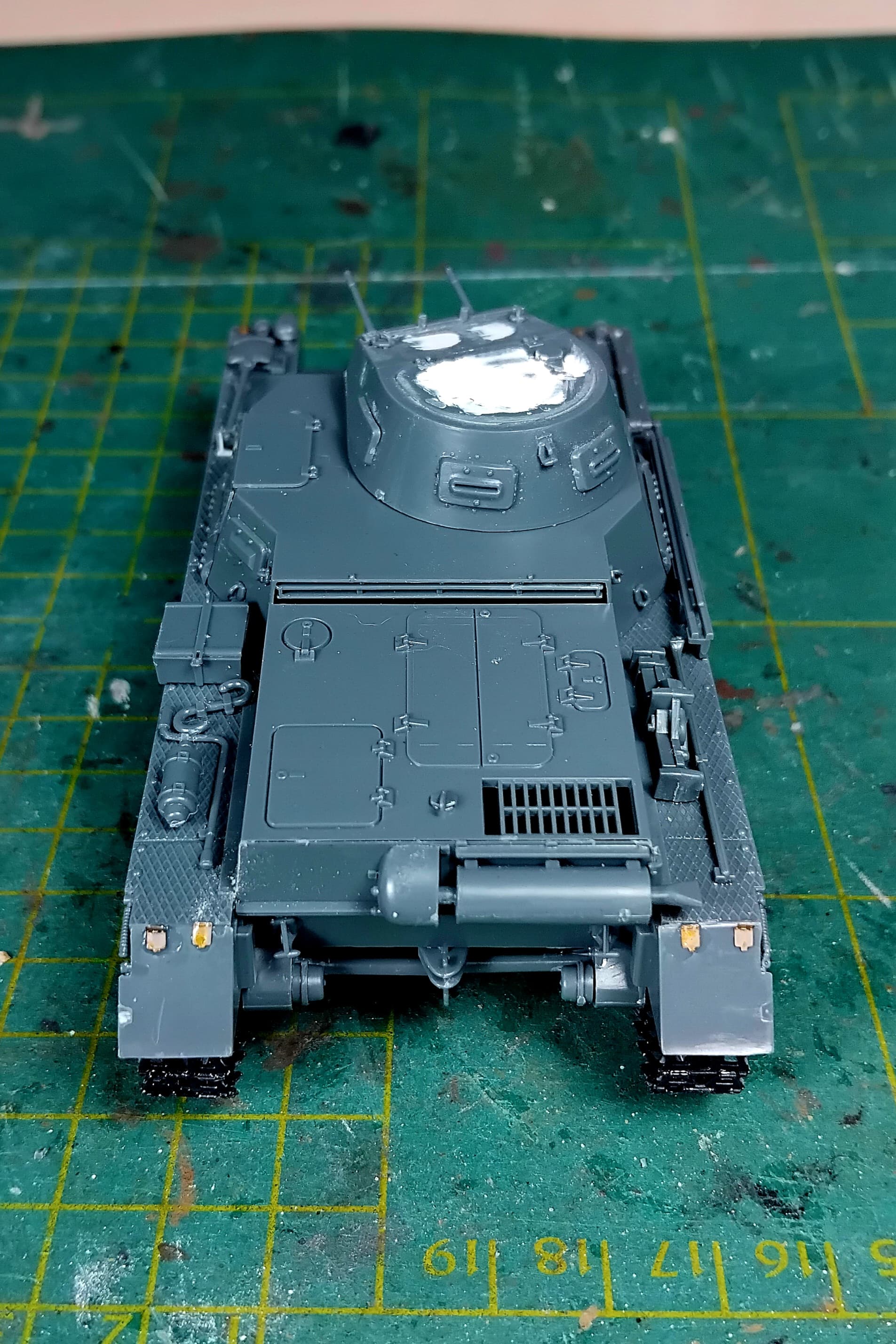
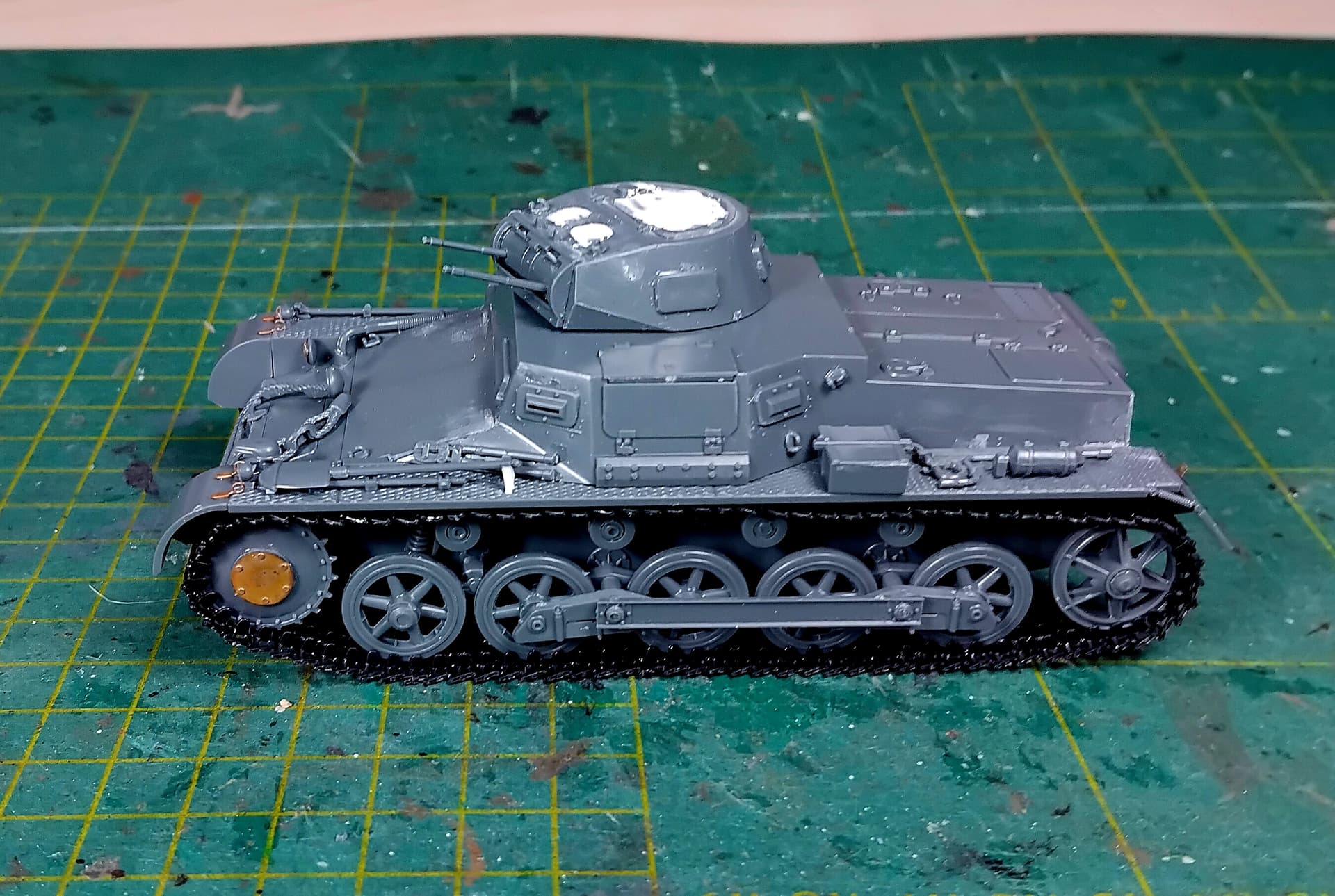
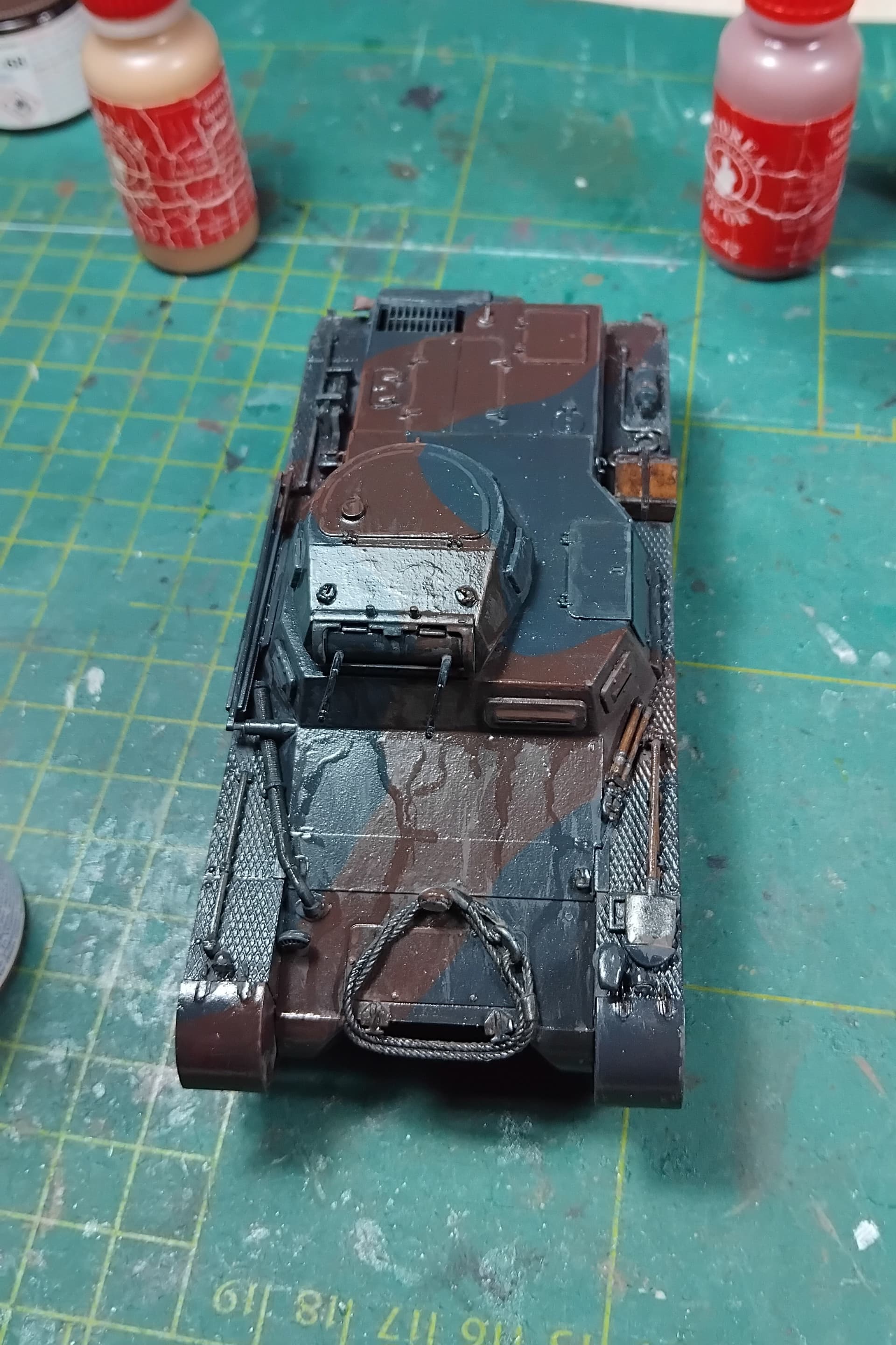
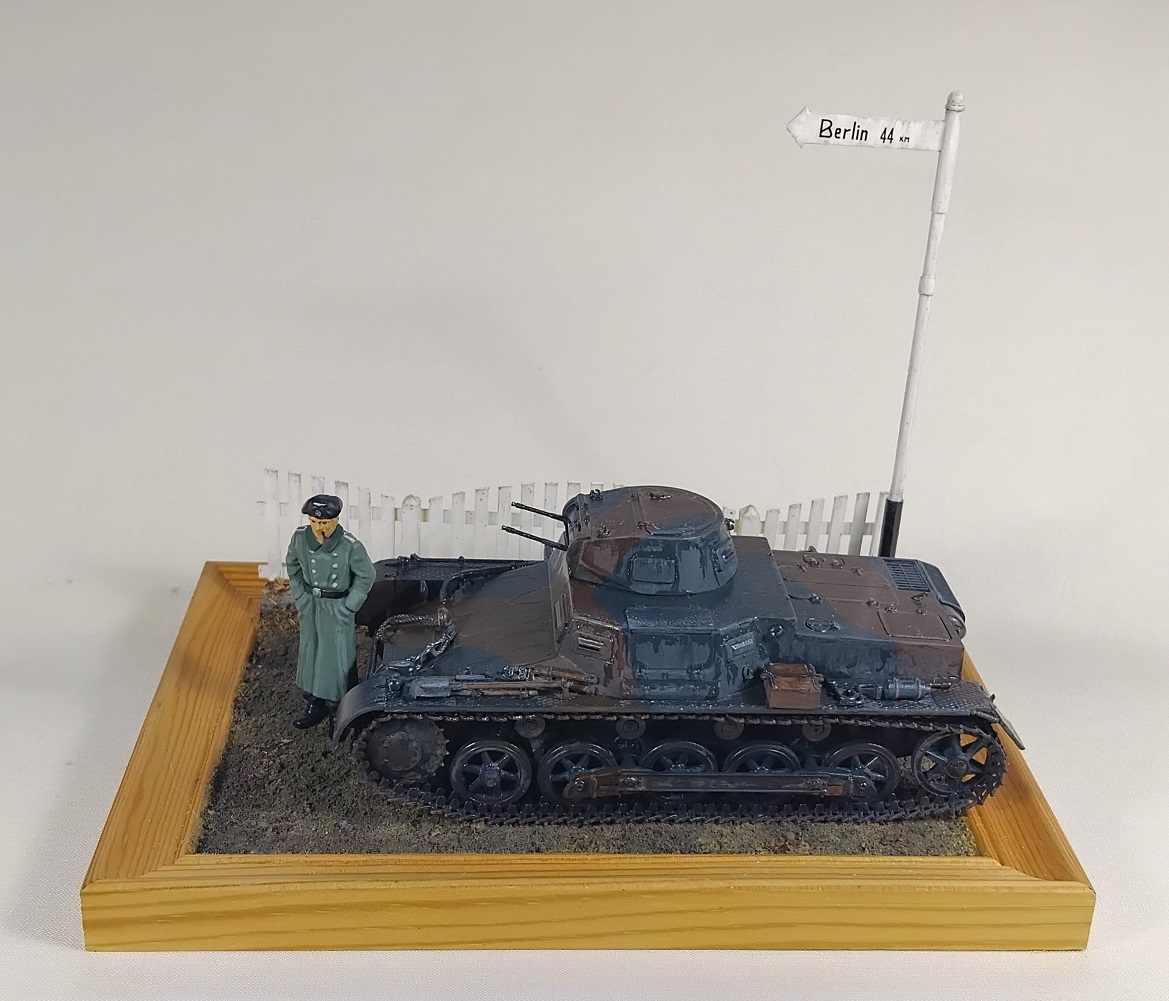
For the Italeri groupbuild I mentioned in my Portuguese M47-build I am doing another classic; Italeri’s Panzer 1. This time I’ll add the On the Mark p.e.-set and MB’s single link Panzer 1 tracks.
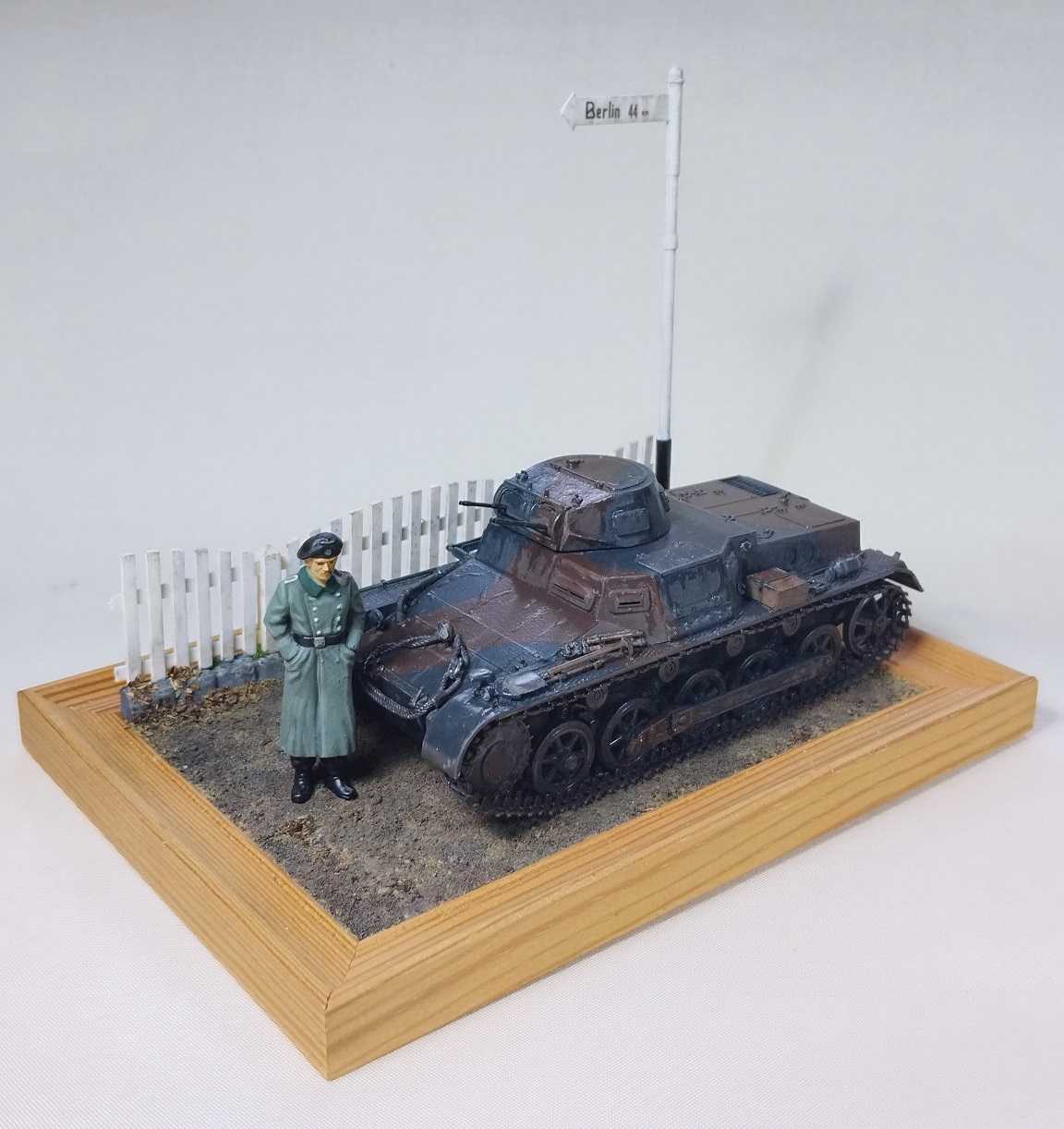
Setting will be Wünsdorf, Germany, autumn of 1938, due to the accompanying figure wearing a greatcoat. This will mean a vehicle of the 3.Pz.Div.
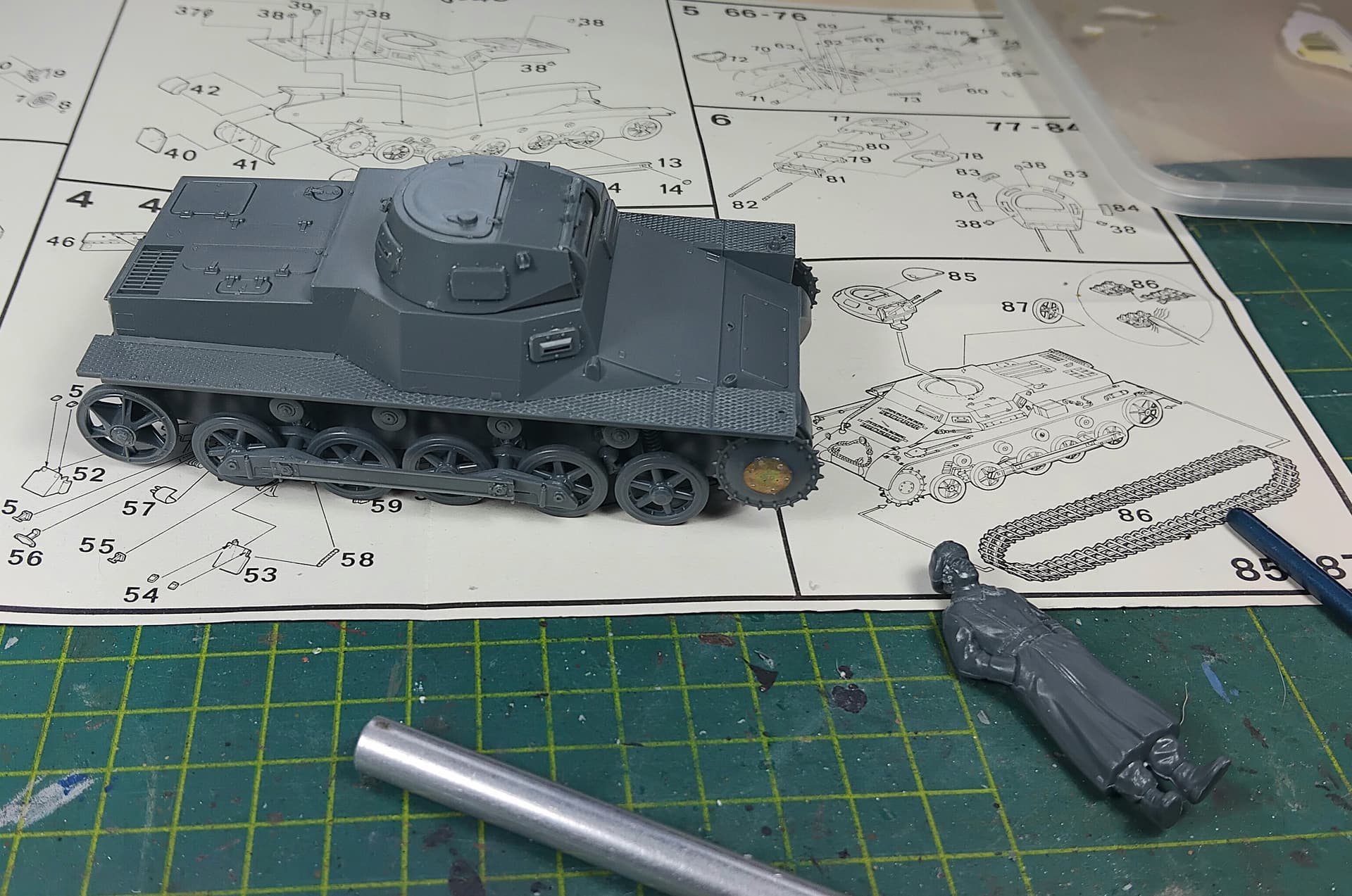
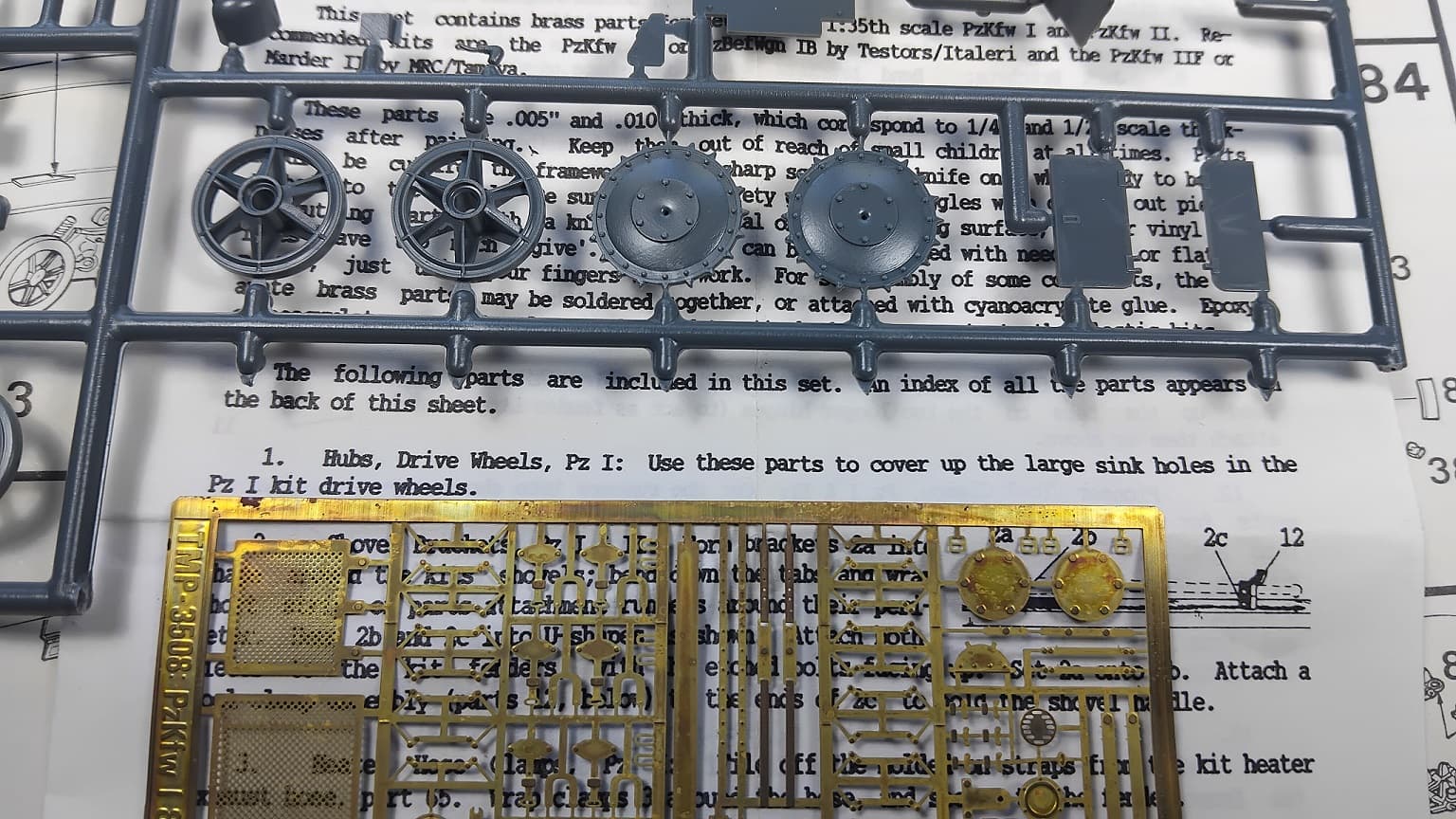
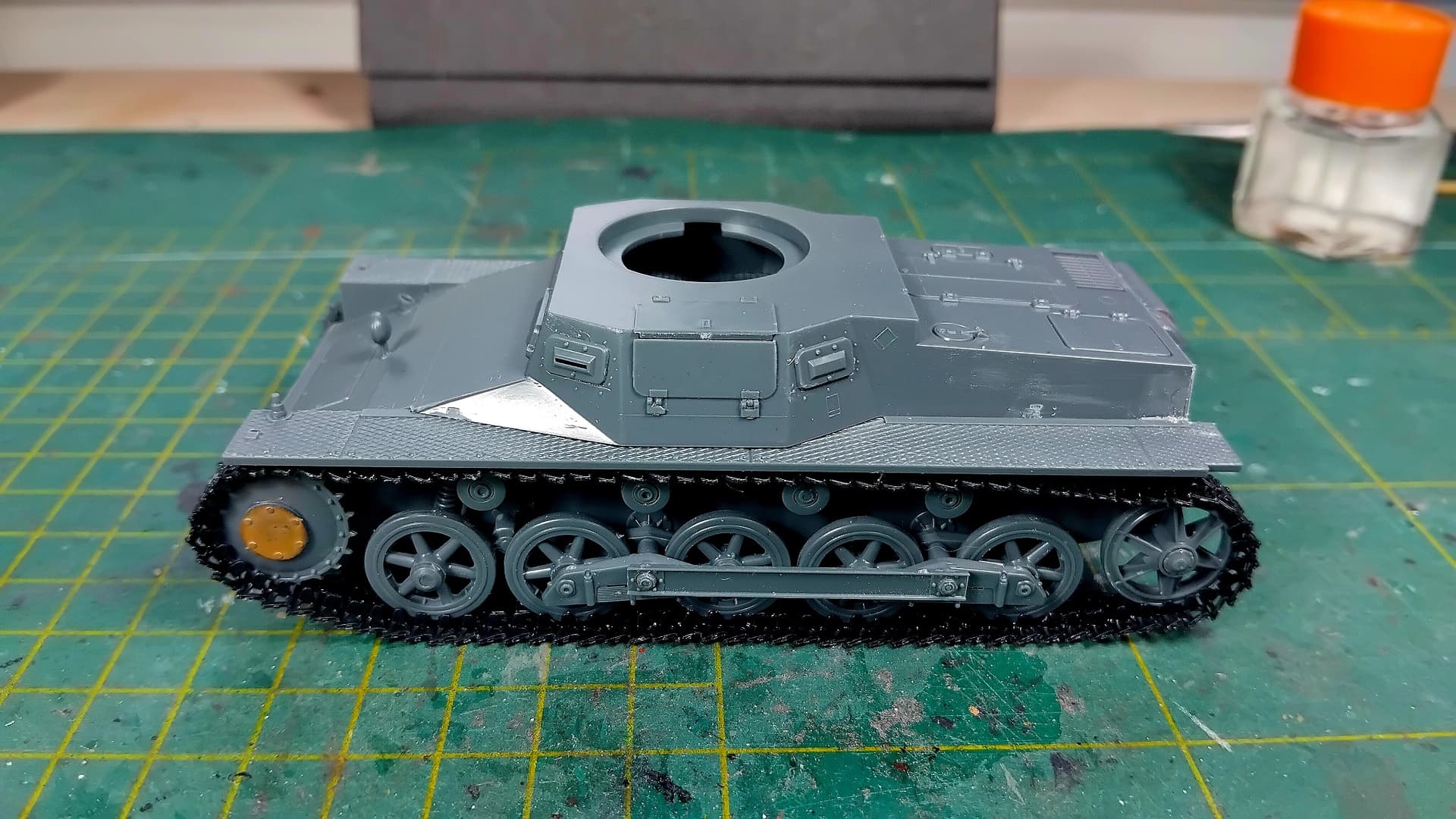
I must admit that I am quite pleasantly surprised about the fit and overall quality of this kit. Hull went together perfectly and there is very little flash. However some quite noticeable sinkmarks, for which On the mark even provides parts! Don’t know if that’s funny and embarracing on Italeri’s part. Even the finished model on the boxcover shows those flaws!
There are plenty of very small parts, some of which On the mark even makes smaller by splitting them into 2 parts! So I’ll gladly pass on those and stick with the kitparts; the turret liftinghooks in this case. There are not that many parts for the Panzer 1 anyway. Most are for the various Panzer 2 versions.
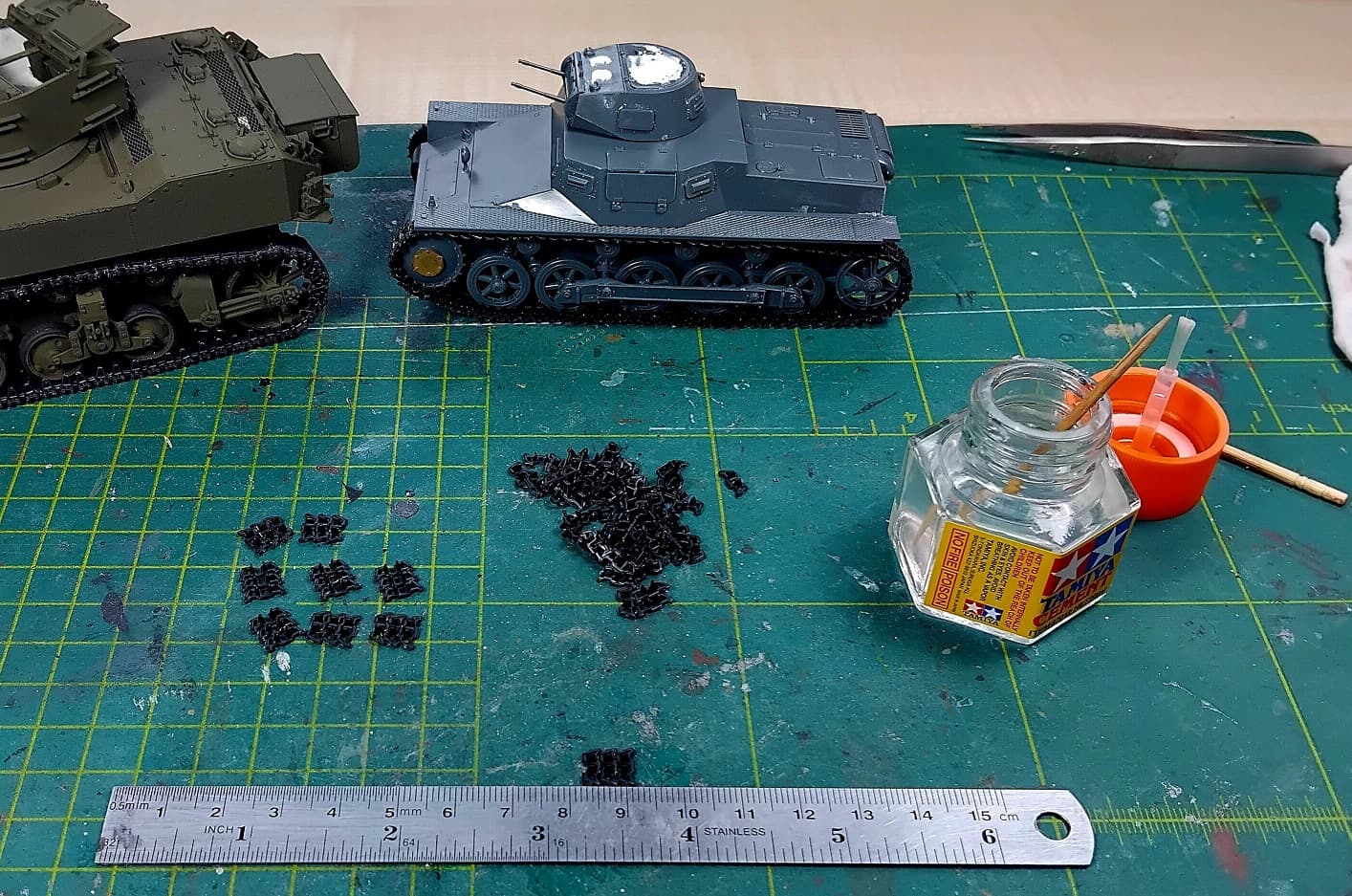
The single links of my Tiger II that I did a while ago were already challening my patience. These little, finnicky things…. almost drove me mental!
But..! They fit very well! And when doing groups of 3, joining them a bit later on, worked too. Had to use Tamiya orange, because Revell’s Contacto would stick the link to the needle, not the other link.
The bad sinkmarks on the turret were silled and sanded the old fashioned way.
The Panzer is done, constructionwise. A few things I left off, because I could find no references for them, such as (presumed) additional armour of the reardeck, 2 rows of extra tracks on the front and an additional armorplate on the nose.
Usually I keep the use of PE limited, as I find most just unnecessary. Same with this one. I left off all the toolclamps, because they’re so small and the kit’s representation is acceptable. I did add hinges on the mudguards and the cover of the horn.
The headlights were just blobs of plastic, so I drilled them out and after painting will add lenses. The shovel had to be raised so the axe would fit under it, so I made supports from evergreen.
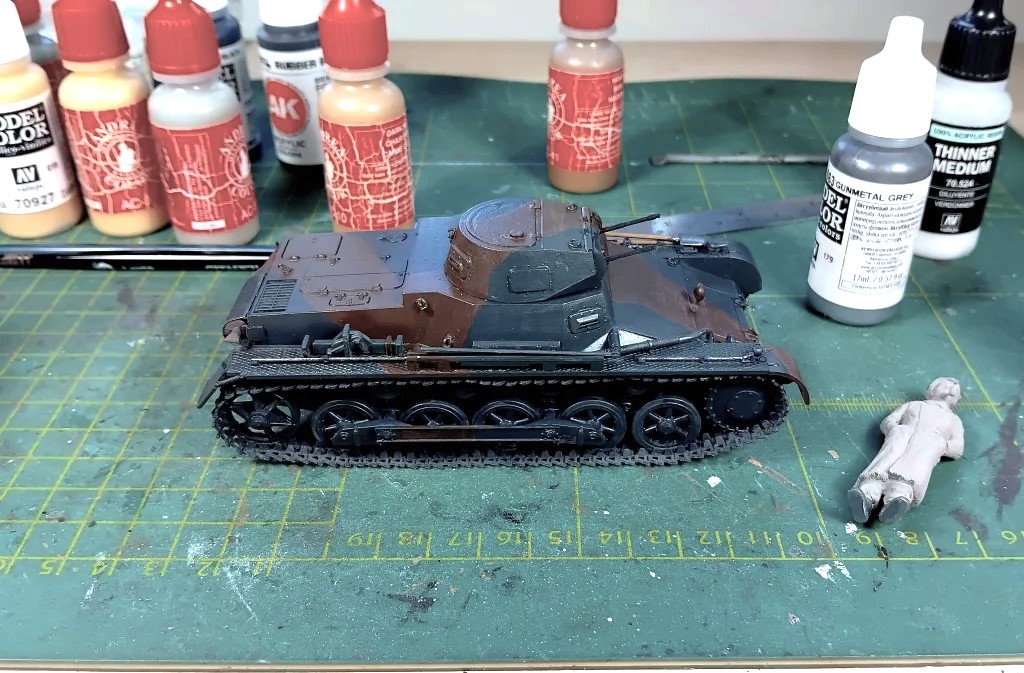
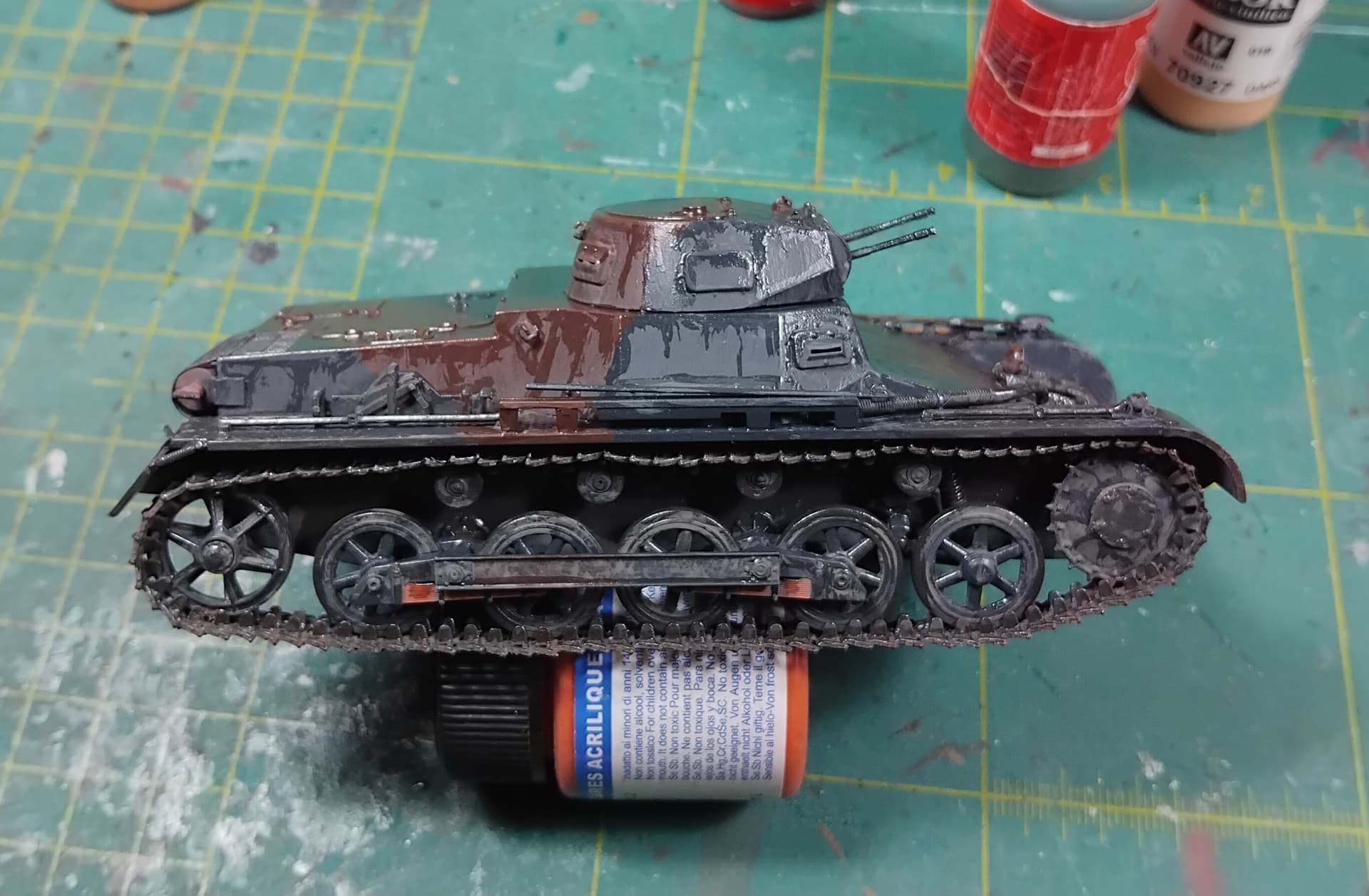
basecoat is Tamiya XF-69 German grey, which was way too light, so I hit it with a layer of Life Colour German schwarzgrau, which was a new bottle. Turned out far too blue, so I covered it again, this time with an old bottle that had a remnant of schwarzgrau in it, which was much darker and more grey.
Then I added bands of Life Colour schokoladenbraun (chocolate brown) in about 1/3-ratio. after that I added a coat of satinvarnish, which deepepend the colours more. I have since started painting the details.
I had to alter the images, since the original ones were way to intense/vibrant, due to the telephonecamera.
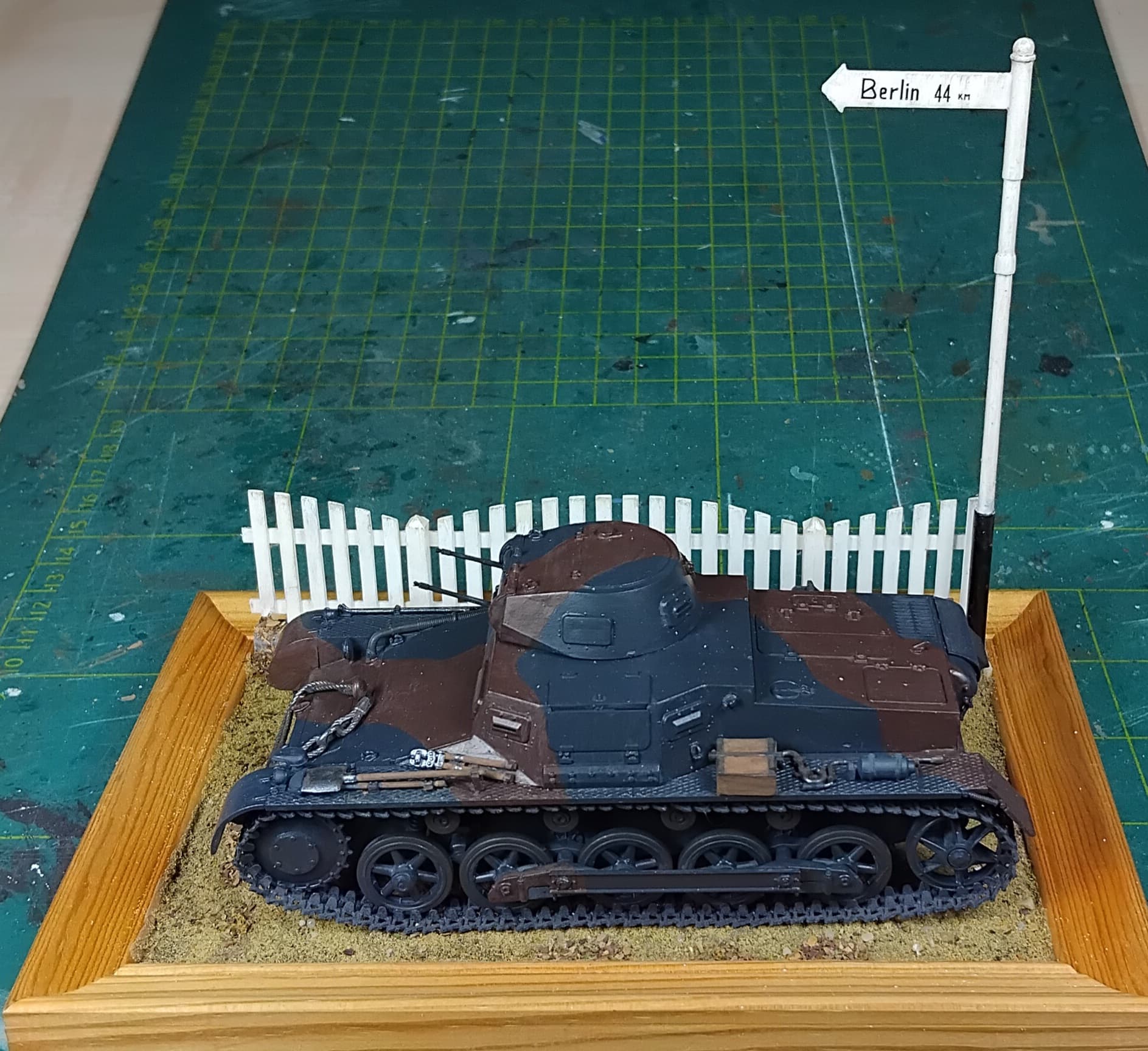
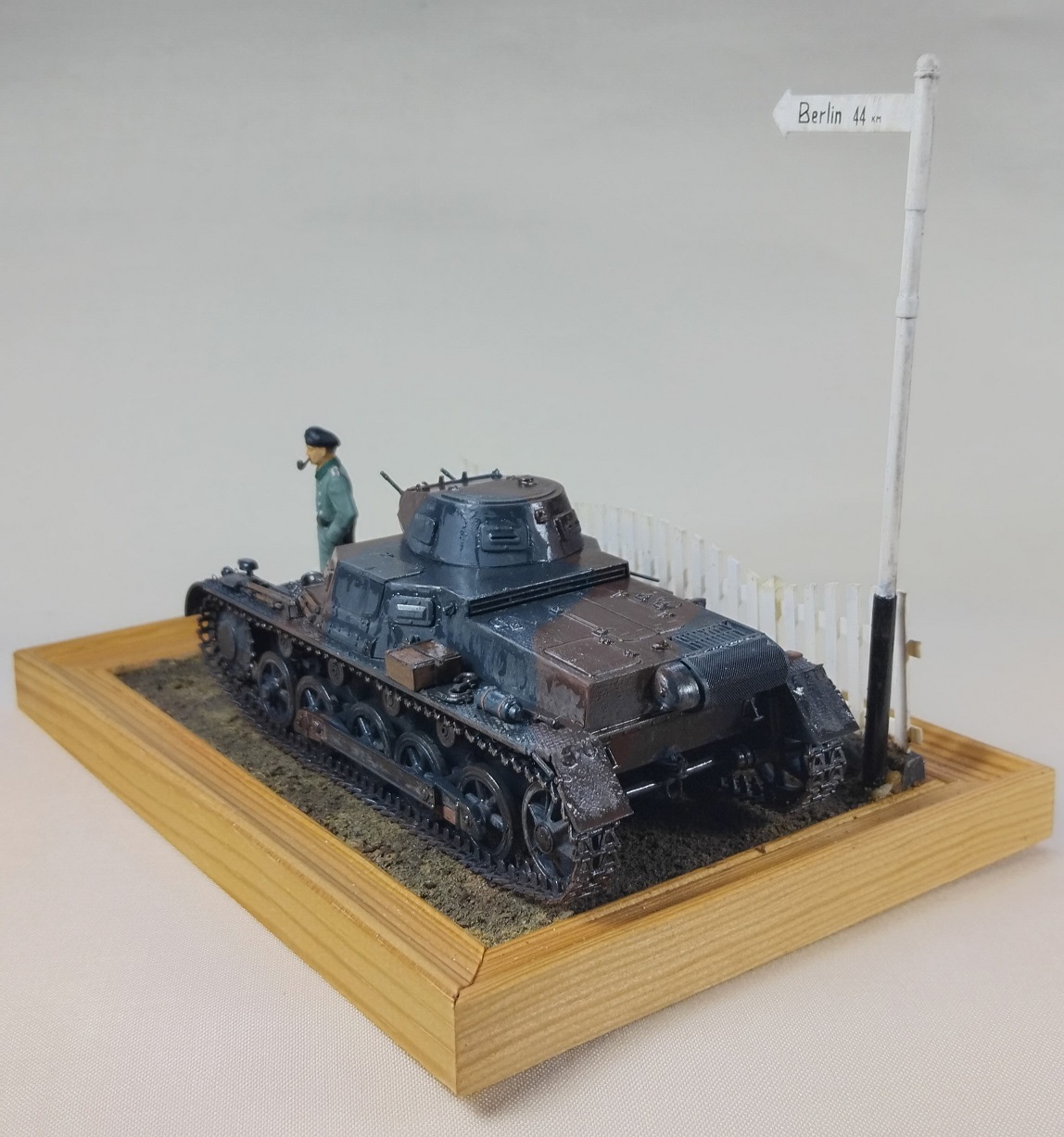
I spent the better part of this sunday working on a very simple base, using a few very old pieces from the sparesbox. I wanted something simple, nothing overpowering the small vehicle and I deliberately skipped the “diagonal and interesting lines”-mantra. That meant I had to create something else to make it visuale appealing.
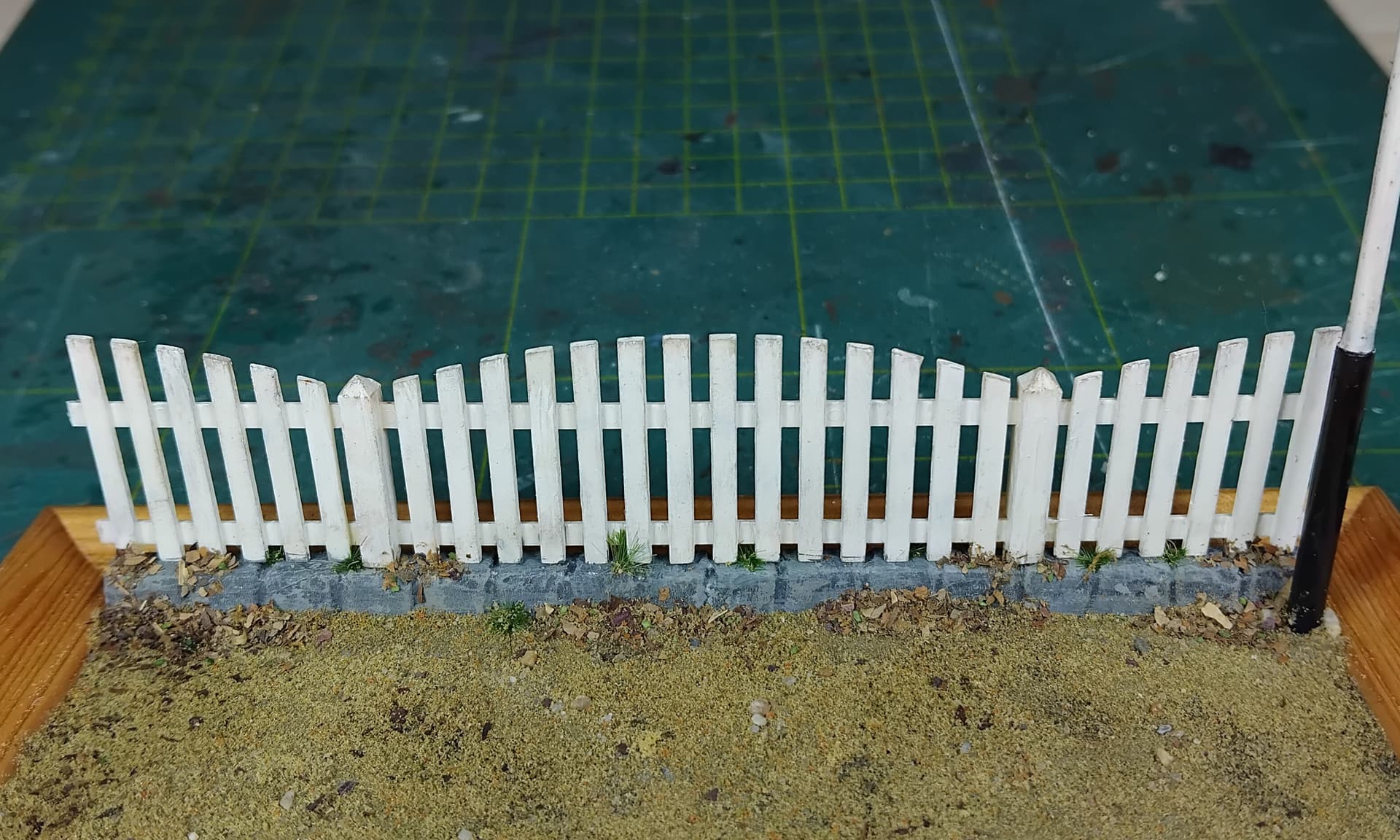
As said I had a bunch of items that were at least 25 years old, that I wanted to look at and this is what I came up with: the fence and roadsign from Tamiya’s set, painted and weathered, using pictures from late 1930’s rural Germany. The roads were remarkably flat and well kept in those days, so I replicated that.
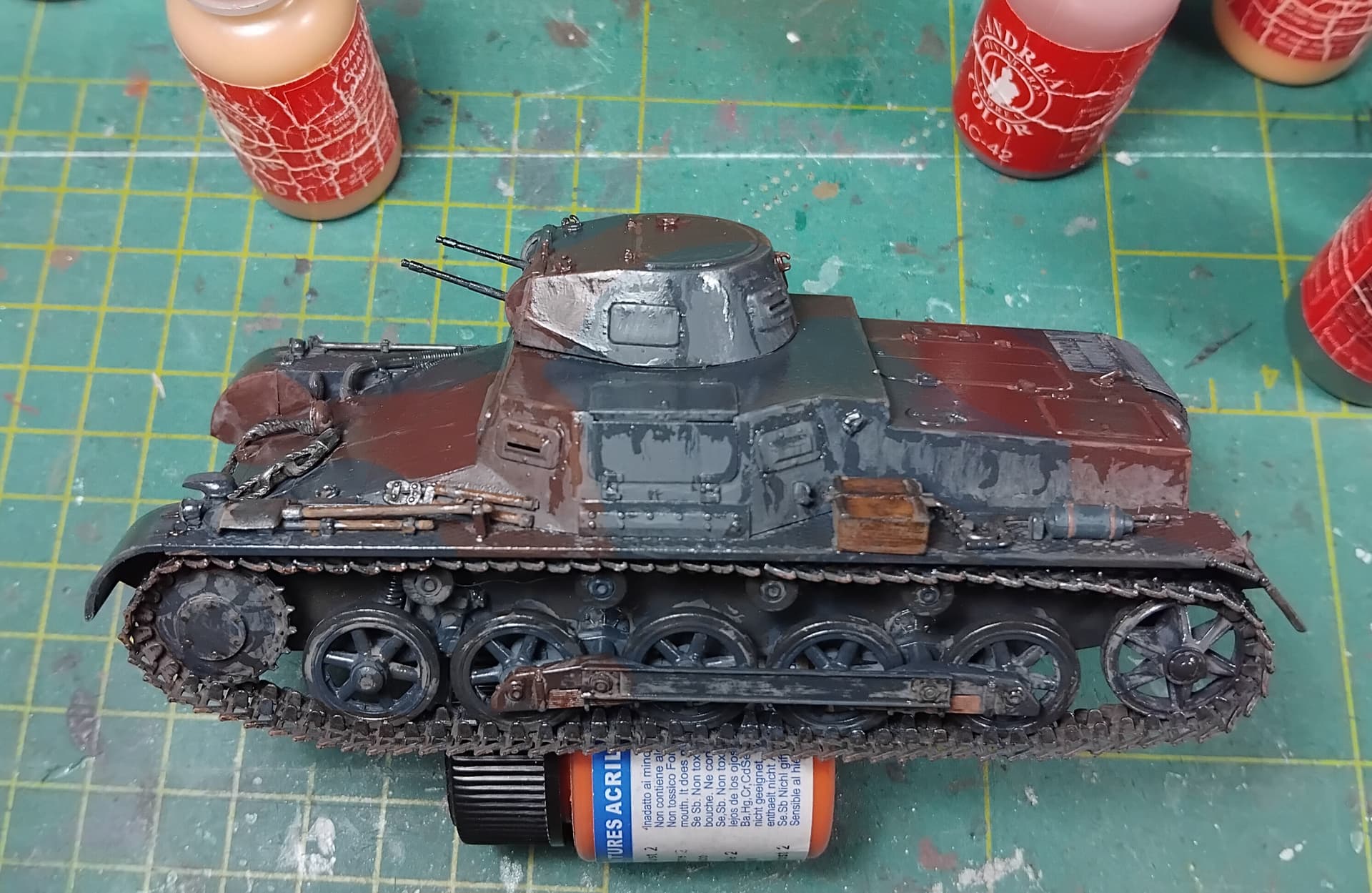
First I painted the rest of the details and then added highlights on the outer edges and raised details in a lighter, different shade then the original colour. So no drybrushing there, but actual painting. I then added a light coat of weathering wash. No rust or damages on a German vehicle in “peacetime”!
Since it is an autumn setting I tried my hand at replicating rain again. No torrential rains, but more like drizzle. So I added satin varnish on the flat, horizontal surfaces and made running waterstreaks on the vertical surfaces with gloss. These turned out to be too heavy, though.
I also added several dark washes to the base since that was much too bright and sandy.
The rainstreaks are not subtle enough, the varnishes used for this test are not satisfactory. Vallejo’s satin is too shiny and the gloss not shiny enough. The base did not come out as damp-looking as I had hoped either.
I learnefd that apparently German tanks at that date, 1938, did not have any markings, neither divisional nor tactical. I found one or two pictures of Panzer II’s with turretnumbers and some tanks with checkered markings around the turretop during tests.
I also tried my hand at the figure last night and found the definitions of the details to be very soft. Nowhere near what we are used to today. I gave it my best shot and it is nog going to get any better, so….
Here it is, ready to join its bigger brother Pz.Kpfw. II, III, IV, VI and Tiger 2. Panther is still missing..
My guess is that they are playing the commander in an exercise. You’d have to keep an eye on the commander because the training would cover flag signals as well as radio.