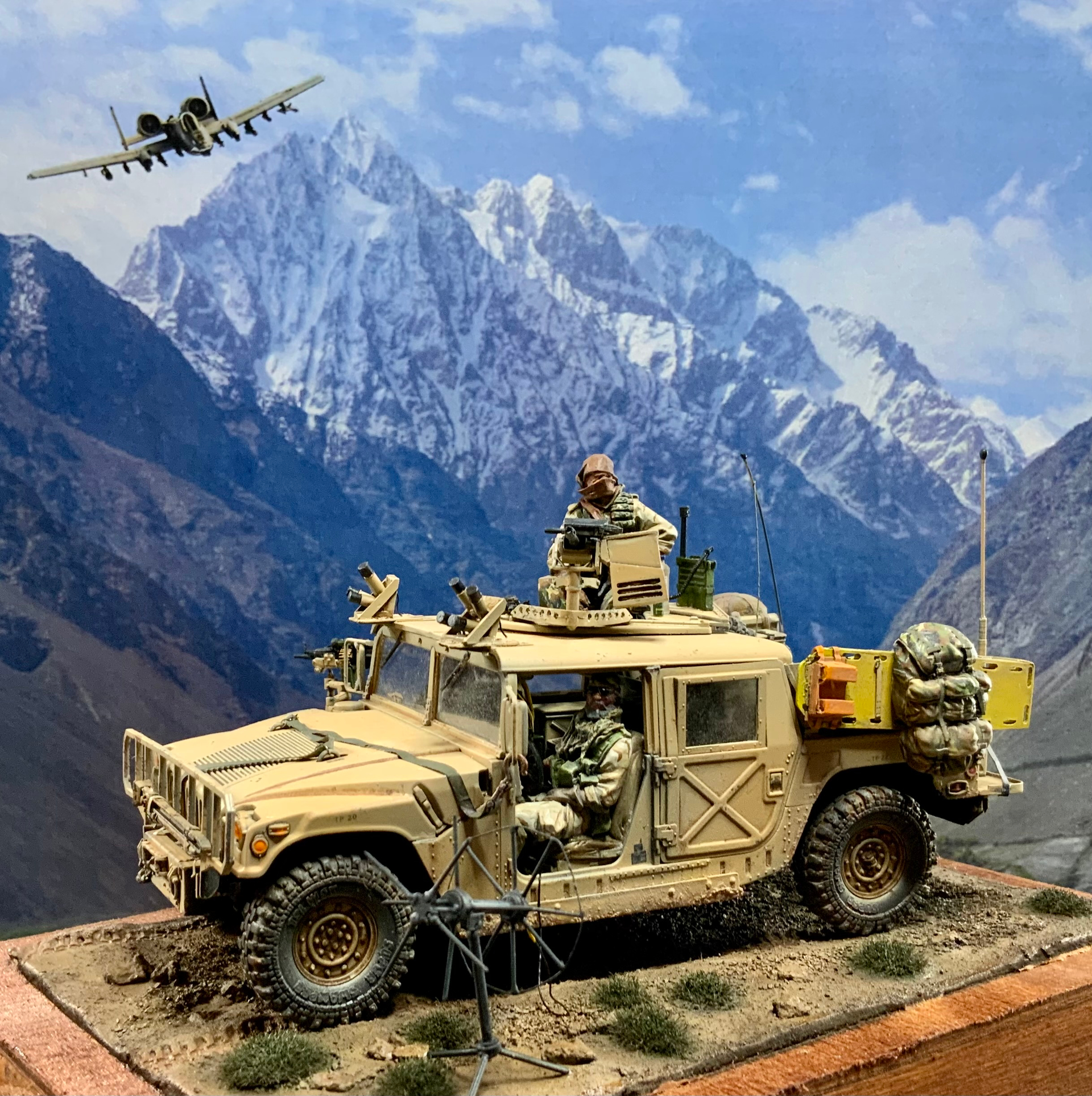
As the title says, what type and colors where used back in the early days of Afghanistan and Iraq? I assume Molle was pretty common, but I only find pictures in multi cam or UCP pattern. I’m especially interested in large back packs used by special forces during this time period (I guess they used whatever type they wanted…)
1 Like
back during the early days of Operation Enduring Freedom, the CFP-90 was prety common-issue. But older ALICE packs would’ve been used as well…
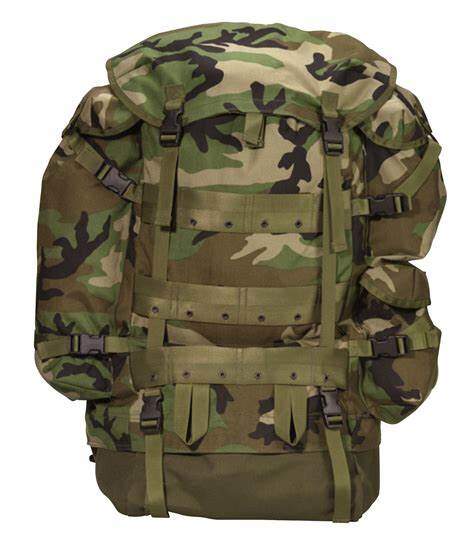
SF-types probably used other brands, like Blackhawk, which was popular at the time.
2 Likes
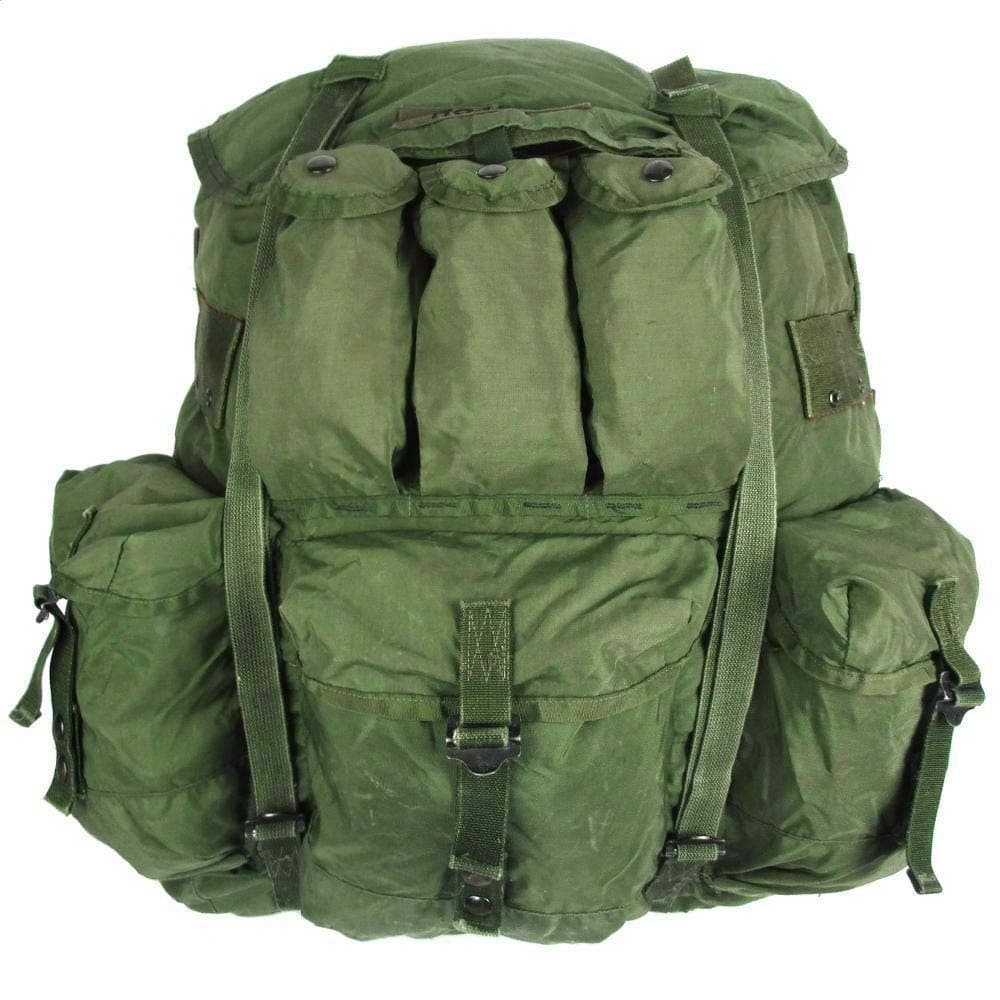
At 3ID, we still had ALICE rucksacks and other gear in '03. I used a large one. I continued to use it until about '07 when we changed to the digital pattern gray UCP ACUs. I modified mine with quick-release black snap clips on all the straps though. The buttons were a PITA.
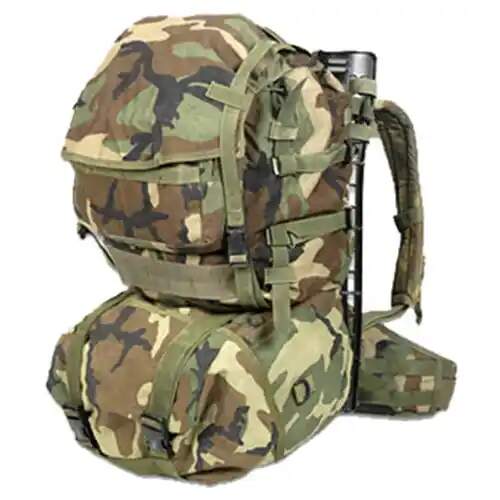
Shortly after, woodland MOLLE rucksacks stated being issued. They already come with teh black snap clips.
2 Likes
I personally used a large ALICE in both 2002 and 2007. Plain OG although I have one I spray painted black disruptive bands on.
MOLLE was crap for jumping in cold weather- it would often shatter. None of us ever really took to it.
4 Likes
These backpacks are available in 1/35 scale in plastic or resin accessory sets: MENG, HobbyFan, DML modern US figure sets, Tamiya, Legend Productions, Jason Studio, etc.
1 Like
I remember having a large LC-1 ALICE Pack when I was in-country in 2003-04 (Iraq). MOLLE was issued in limited quantities, since there wasn’t enough for everyone. I had a couple pouches, but not much else, and those I got while dumpster diving in Kuwait.
Funny story about dumpster-diving. My unit (Military Police) was in charge of the APOD at Camp Wolf/Champion in Kuwait and we ran the “Amnesty Boxes” around camp. Basically, therey were boxes where soldiers would put their contraband after returning from Iraq without getting busted trying to smuggle it in their equipment.
We would also drive to the marshalling yards to inspect vehicles prior to being loaded up on ships to return to the US. Needless to say, we always picked up weapons being smuggled inside gas tanks, under floor panels; inside connexes; you name it…
(I think that how I ended working for US Customs after the war.  )
)
Anyways, a lot of soldiers dumped a ton of serviceable equipment into the camp’s dumpsters; so me and the boys always picked up good stuff for free from the units that rotated through the APOD. Also, picked up some sensitive stuff that was not meant to be dumped (OPSEC), like military maps with unit locations, explosives, ammunition, and weapons, etc…
So, whatever did not get turned over to EOD for disposal or to command, we kept.
3 Likes
The was a couple of Marines back in 03 from one of the LAR Bn.‘s who got caught trying to smuggle an AK back inside a vehicle tire on an LAV. There was also the rocket scientist who brought a piece of UXO aboard a ship (I think it was a bomblet) that detonated in a berthing space. We heard about all that when my unit was going through our shakedown prior to going home - for all the bluster about how thorough they were going to be they didn’'t check my medical bag at all, the MP told me to just close it up he wasn’t going to know what he was looking at anyway…
2 Likes
I was a US Army Cold Warrior in the 80’s and 90’s, and never once tried to keep anything that was contraband - except that there is a big Zutritt Verboten sign in my basement from the fence of a (now-closed) facility in West Germany that remains heavily classified to this day. It came home with my household goods and I haven’t the slightest memory of how I acquired it in the first place.
2 Likes
To straphang on 18Bravo’s comments, regulations for rigging personal equipment for airborne operations were changed around that time so that only the MOLLE was authorized for use, so many of us kept a MOLLE ruck stuffed with BS for jumps and hung onto whatever other ruck we personally preferred. (I kept and used one of the second gen Lowe rucks from when I got it issued ca. 1985 until I retired in '04.)
However, MOLLE with woodland pattern was the standard issue around the time in your OP. I deployed to both OEF and OIF (as well as all of the stuff that happened in the ‘90s) with my trusty ol’ Lowe pack. (Which I’m happy to say, I still have.)
2 Likes
If I remember properly the top pic in HeavyArtys post is what i had issued during this time frame in Korea. It was sometime in 05-06 when we got the new ACU pattern stuff with the plastic frame.
2 Likes
Since this topic has popped up again - I had the Lowe system as well - probably first generation I would guess. They were very tall. We packed them according to mission needs but generally put extra gear on top. This became a problem when skiing. Your head might clear a branch, but the stuff on top of the Lowe often got snagged. If you were an out of control skier downhiller from the flatlands like I was at the time - instant yard sale.
In less than a year we turned them in. The supply guy didn’t notice that I kept the belt. It acted as the ruck’s waistband, and you could also attach gear to it. There was also a pouch on either side that contained straps for STABO operations. I used it for climbing as it included leg straps.
1 Like
FWIW, I loved the Lowe pack system. Before they were issued, I actually bought a civilian Lowe pack (which was not a trivial expense for a E-4 Corporal living in the barracks in the early ‘80s!) and jumped and carried that.
I used my civilian Lowe until we got the issued Gen I (all green, light weight nylon) Lowe packs. I actually liked the layout of the Gen I better than the Gen II Lowe (two-tone brown-OD, heavy weight nylon) packs. The Gen I pack was, I always though, better for load carrying. However, the Gen II was shorter but wider than the Gen I and had better side pockets and the top flap / pocket was more adjustable. It was admittedly better for skiing having a somewhat lower center of gravity (and much better than skiing with an ALICE which always stuck too far out away from your back and wanted to swing around independently from your body when turning).
I kept my Gen II pack and used it until I retired in ‘04. I only finally stopped jumping with it when the regulations for JMPI and rigging were officially changed so that the only pack authorized was the MOLLE (which was k-wrap!). So, I’d jump the MOLLE but still carry the Gen II Lowe. (By that time I was a Company SGM, so I never had to jump equipment again and then live in the field with what I jumped - just combat equipment pay jumps.)
I was told to just keep my Gen II Lowe when I PCS’ed from Ft. Bragg in ‘89, and I still have it.
During my tour in the ‘80s at SWC-S, the NCOIC of the SWC CIF had been shredding CIF records and then forging new ones while he was selling TA-50 to local pawn shops. When I got ready to PCS, I went to get a copy of my CIF hand receipt so I could get everything ready for turn-in. The new CIF guy pulled my file, looked at my hand receipt and told me to just keep everything. My issue record was blank, and the CIF inventory had been rectified after the old NCOIC was arrested and kicked out. If I tried to turn in my TA-50, I’d just screw up his clean inventory and make a bunch of extra paperwork for him.
I continued to use that same Gen II Lowe all though the ‘90s, to include Operations Provide Comfort I and II (multiple evolutions), Deny Flight (multiple evolutions), Project North Star, OEF and OIF.
1 Like
Did it have quick release pins?
1 Like
I used my ALICE pack with an old Desert Storm “chocolate chip” pattern cover during OIF. Who were you with in 3 ID? I was with 1/64 from 97-07.
1 Like
The civilian Lowe doesn’t, but the Gen II military pack has quick releases on both shoulder straps. The Gen II also has lots of loops made from nylon webbing sewn on to attach stuff, but the civilian pack lacks those.
The waist belt for the Gen II pack is held on by the lower ends of the metal pack stays and is not detachable like the Gen I belt (with the repelling loops stowed in those pockets). The whole idea of repelling with that lash up always seemed kind of sketchy to me, and the pockets and straps were mostly useless weight. The Gen I belt attachment wasn’t secure enough to the pack which was one of the main advantages, IMO, of the entire Lowe system. If fitted properly it’s super comfortable for really heavy loads (as if any pack with a 100+ pounds of “light-weight” stuff every is! LOL!),
The civilian pack is very similar to the Gen I pack (but made from heavy weight nylon like the Gen II pack). The one I have has more cubic inches of volume than the Gen I or Gen II packs. (However, there were different civilian Lowe sizes made.) The side pockets are separate, but the Gen II pack pockets are sewn on and are not adjustable or changeable. The Gen II pockets are made so that you can slip a pair of skis between them and main pack, and the rear pad is held on with Velcro and be adjusted up and down. (I actually added a second rear pad to mine.)
Overall, I’ve always though the Gen II military Lowe was a slight improvement over the civilian and Gen I designs.
1 Like
I was a Btry Cdr in 1-39 FA (MLRS) from 2001 - 2003.
2 Likes
The ones I remember also had metal pins that you pulled to separate the ruck from the belt. There may have been Velcro as well, but the weight of the pack would have torn it loose when ditching it.
1 Like
I think you might be remembering the Gen I Lowe. That’s the one that had two, kind of flat pins with nylon keeper straps that threaded through flat loops on the bottom of the pack and through matching loops on the belt. You could pull the pins and the belt along with a pair of leg loops (stowed in pockets sewn onto the belt) detached and could be used to repel with. Alternatively, you could repel with the belt attached while carrying the pack. There were two sewn nylon loops on the belt ends at the FASTEK buckle for a carabiner, so you weren’t relying on the plastic buckle! The whole repelling thing was kind of sketchy and gimmicky and was dropped from the Gen II pack.
I can’t remember if the back pad on the Gen I was held on with Velcro for adjustment up or down your back. (I think it did.) The Gen II belt was held on semi-permanently with the two long, flat metal stays that could be formed to fit the curve of your back. You had to pull the stays part the way out to remove the belt. The back pad on the Gen II was a separate part that was held on the pack with wide Velcro strips that ran from the bottom to the top of the pack.
I didn’t get issued a Gen I pack until I went to SWIC and Phase III. The one I got split a seam, and when I DX’ed it, that’s when I got the Gen II pack that I kept all these years. As instructors, we got the option to either get issued the Lowe or ALICE pack. Most guys took the ALICE, but I was already a Lowe fan-boy by then.
The belt and back pad on the civilian Lowe were sewn onto the pack and could not be removed. The long metal stays worked the same on all three versions. Fitted into long, skinny pockets held shut with the small flap and press-stud at the top. Slip the stay out of the pocket, bend it to fit your back, then slide it back in and secure the little top flap.
IIRC, the first guys in 10th Group that got the Gen I Lowe pack were the SOT-A’s. I don’t remember the exact circumstances how that happened, but in the late ‘70s and early ‘80s they seemed to have the “secret handshake” with somebody (maybe over at Natick Labs). (Could also have been some sort of COTS money or budget from the INSCOM side of the house?) They were also the first guys to get issue Gortex (the civilian “camper green” stuff). One of the SOT-A’s had their Team House next to ours, so we always got a good look at their new “cool guy” stuff. That’s what motivated me to go up to REI and buy my own civilian Lowe pack.
1 Like
I was not a SOT-A, I was a team guy, but we got the “Crayola” green Gore-Tex that fitted into its own pocket, and the brown Gore-Tex boots, which I wore in Afghanistan in ‘02. We also got issued Chippewas which we could keep, and Hanwags that we could not - but man they were great for cold weather riding on my bike.
2 Likes