As many of you know, this relatively young brand was founded in New Zealand by a group of “defectors” from the glorious Wingnut Wings model company.
The design work for their kits — currently only a few, all in 1/32 (except for a 1/48 Halifax now available for pre‑order) — is done in New Zealand, while production takes place in China. It’s not clear who actually manufactures them, as far as my current knowledge goes.
I bought this kit because of the reputation for excellence that precedes it, and I have to say that so far (we’re only at the beginning) it fully lives up to expectations.
There are a few choices in the kit’s engineering that are quite original and interesting, and I’ll talk about them as I go along.
For this build I’ll be using a Quinta Studio set for the cockpit, along with a few Eduard resin extras for the wheels and engine exhausts.
The first step in the instructions tackles the complex cockpit assembly, which reproduces frames 8, 11 and 13 in sequence, just like on the real aircraft.
The fit is good, and there’s plenty of detail both in the cockpit itself and on the sidewalls. As always, the Quinta decals add an extra touch of realism.
Here are a few photos of the cockpit and the two fuselage halves before closing everything up.
The only thing still missing at this stage is the installation of the Quinta seatbelts.
Kotare refers to both Tamiya and Humbrol paints, providing FS/BS equivalents for almost all of them. An interesting note is the suggested mix for the cockpit green: Tamiya XF‑71 (2 parts) + X‑28 (1 part).
This is intended to reproduce the specific shade of interior green used by Supermarine on the early Spitfire variants.
The walls:


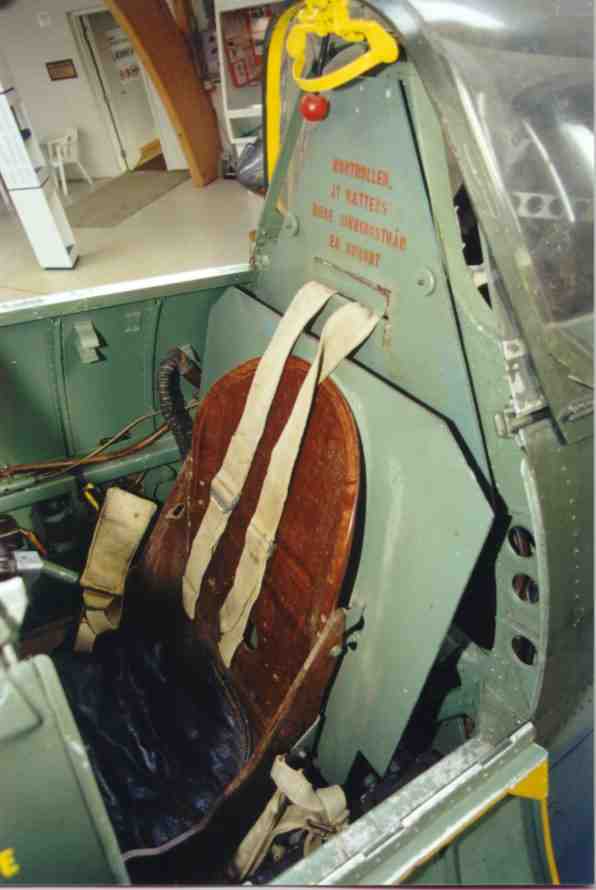
The pilot’s seat


The instrument panel and the floor:


And now, to wrap up this opening post on the Kotare Spit, here’s the completed cockpit after all the oil washes, drybrushing and inevitable weathering, fitted onto the port fuselage half before closing everything up, so you can get a full view of it.
I also added the control‑surface actuating cables myself; I used 0.13 mm elastic rigging line from ship modelling, painted in a metallic shade. It feels like this fiddly bit of work adds a nice touch of authenticity to the whole thing.
A complex bit of work, but I’m reasonably happy with how it turned out.


The next step, closing up the fuselage, will inevitably hide most of this work, but for the next model I’ll ask Kotare to release their Spit in a fully transparent version!!! 
Dan