If you have a photo of a Marine vehicle that you are wanting to portray, great. If not you might be pushing it a little. I left active duty in 1984 and started college. I went back in 1986, while still in college. But, in the Marine reserves. Never saw a M151a2 again until we got activated for Desert Storm. And, those were the modified “FAST” attack vehicles. Everything had been replaced by humvees as far as what I saw in 1986. We don’t always get the good toys last. In Jan of 1984 (8) Mk 19’s either mod 2’s or mod 3’s were sent to BLT 2/8 while they were in Beirut, Lebanon. We held onto them until late 1984 when they were replaced w/ Mk 19 mod 4’s. Also, in Jan 1984 the TOW’s that were attached to BLT 2/8 received night sites for their launchers. I don’t know how many they got or what type. I just know they got them and started using them at night. During that time frame all TOW’s were out of TOW Company. All TOW Companies were assigned to each Marine tank battalion. There were no TOW companies in the infantry. Hope this helps.
It’s a bit more complicated than that. The initial deployment of missile systems to Vietnam to defend Kontum was rapid and was in small numbers. The vehicles were eventually handed over to other units. Vietnamese Marines were also trained in their use alongside the first tranche of American units.
There is an excellent summary of TOW use during the battle, embedded within the document linked below (pages 163 - 177) covering the two UH-1Bs deployed and then the various units that operated the ground systems.
History of the TOW Missile (Army Aviation & Missile Command), dated 1977
In terms of unit markings, the photos of the initial deployment show no unit markings at all. This was an expedient/emergency deployment of a weapon system only just entering service, so I doubt much importance was placed on marking those initial vehicles correctly.
Note that in the photos I posted previously, the jerrycans are placed on the driver’s side of the vehicle (not alongside the spare wheel on the kerbside).
According to an article I just saw on M151 jeep.com, the Marines had the can on the passenger side and the Army put it on the driver’s side. Not sure where their info came from. Wayne
I wouldn’t like to say it was a definite identifier, but from the photos I’ve collected, it certainly seems more common (post-Vietnam) for the army Jeeps to have the jerrycan rack by the driver.
Thanks, that’s helpful.
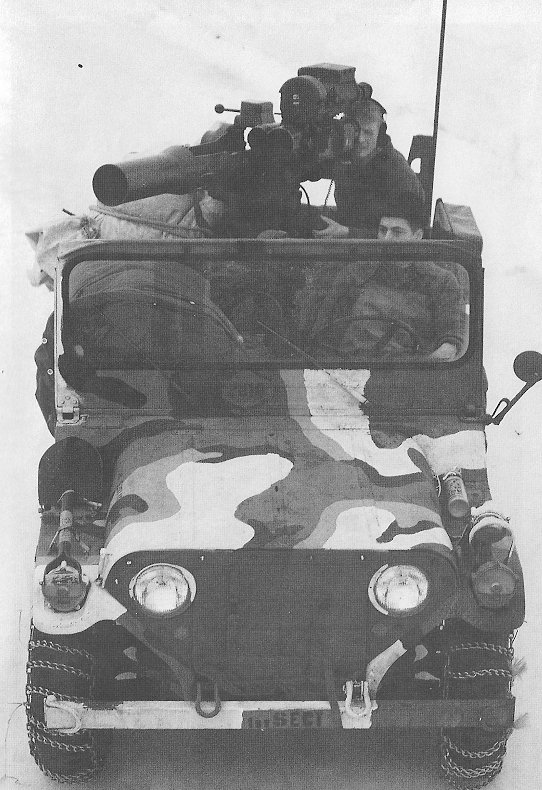
I scanned the reference image I’m using as inspiration. It shows an M151 in an arctic scheme (Ex Anchor Express in March ‘86) and shows the TOW system with the AN/TAS 4. It looks like a 4A because there is the extra box on top of the AN/TAS 4 unit, but I’m happy to be corrected on that.
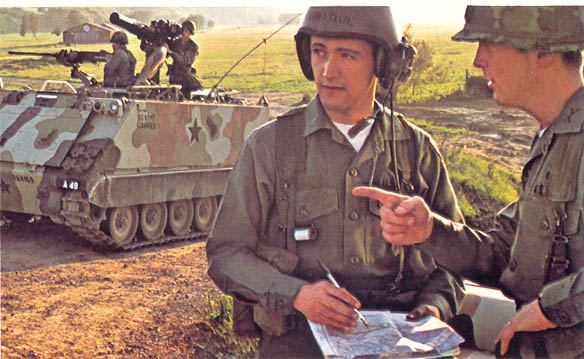
I can’t tell you what the length of the original long launch tube was without a web search. But the changeover in lengths was sometime in the early to mid 70’s. Photos of the Kontum TOW jeeps show the original long launch tubes, but photos of TOW M113s in MASSTER camo, mid 70’s era, show the short tube that is the standard type.

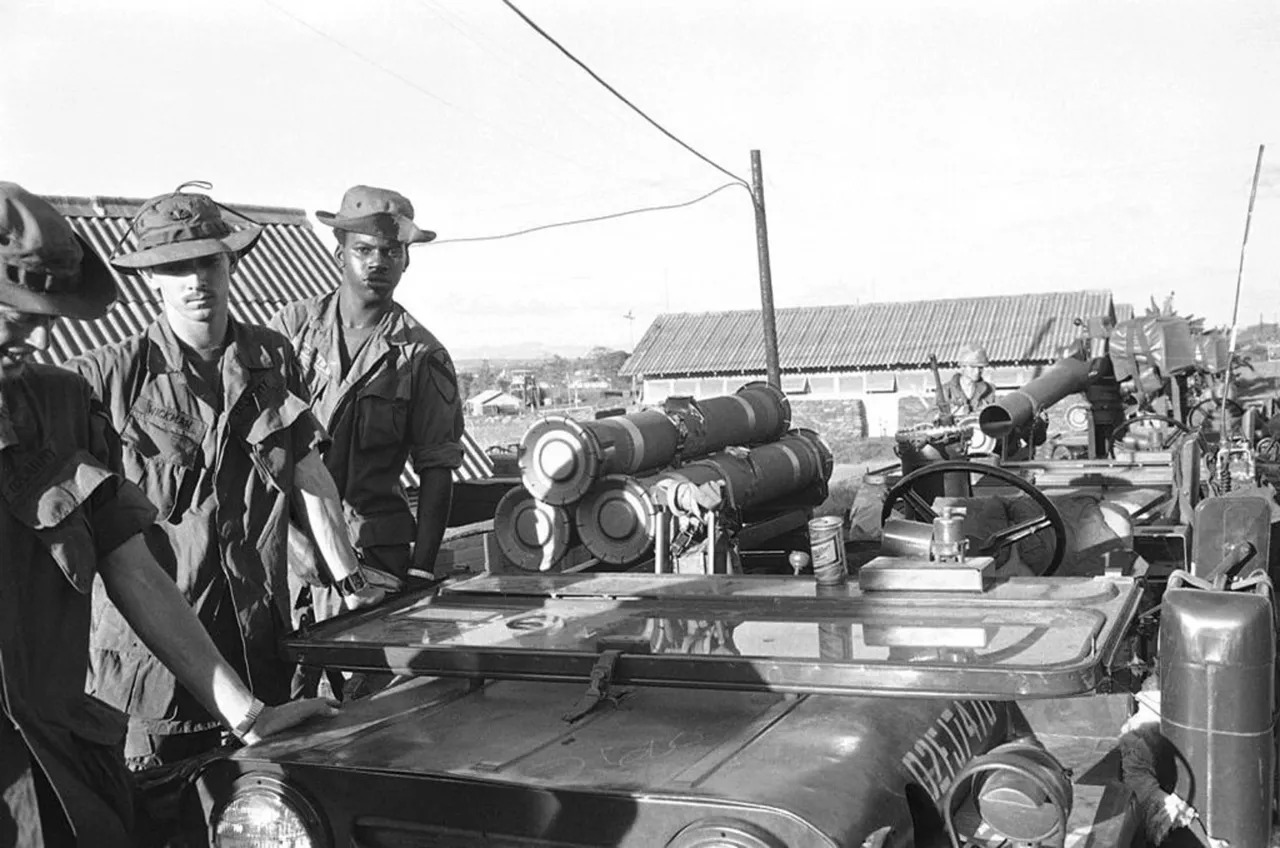
I believe it was 1st Cav who brought the TOW jeeps to Kontum. Look at the left sleeve unit patch
From the official US Army history of the program
30 April 1972 DA ordered the deployment of the ground-based TOW system with instructors to train U.S. and South Vietnamese crews to operate the weapon.
May 1972 An 82nd Airborne antitank task force was airlifted to Vietnam with 24 jeep-mounted launchers, 500 missiles, and two ¾-ton trucks from the maintenance contact team. The task force consisted of a 48-man crew plus a maintenance contact team of 10 personnel from the 763rd Ordnance Company. In Vietnam, units of the task force were attached to the 3rd Brigade, 1st Cavalry Division (CD), whose personnel were trained to operate the TOW weapon system
Just glancing at the kit I realized that with the jerrycan on the driver’s side it would be in the way of the wading gear, as used by the Marines. Wayne
Going a bit off-piste, I hadn’t realised the Marines were playing around with customising Jeeps quite this early (Cam Ranh Bay)… It’s just plain ugly and I hesitate to think what the steering was like  .
.
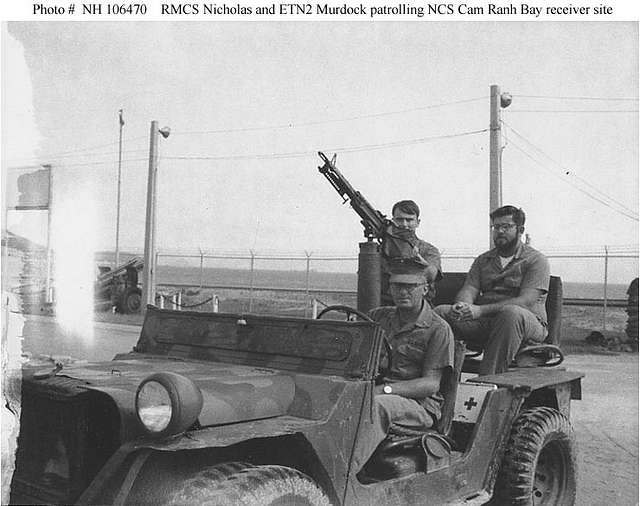
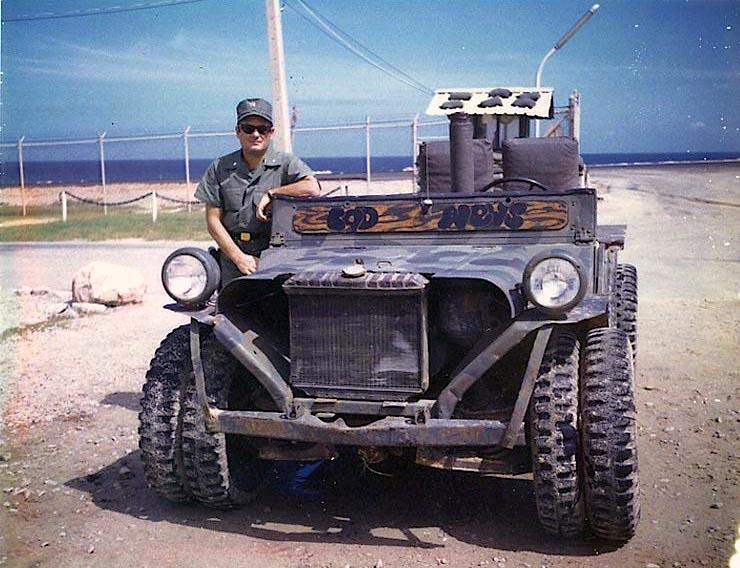
I thought about modeling that very one in the second photo, butif you do it first, it would be great to see.
No, that one isn’t on my playlist . I have several other M151s to get finished, so even it was it would be a year or two before I even started it.
Are there any pics or diagrams of what the support jeeps would look like as far as how the ammo was stowed? Wayne
That would be a neat looking model.
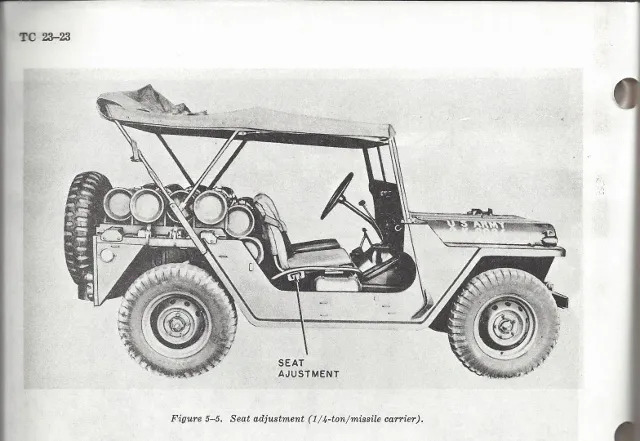
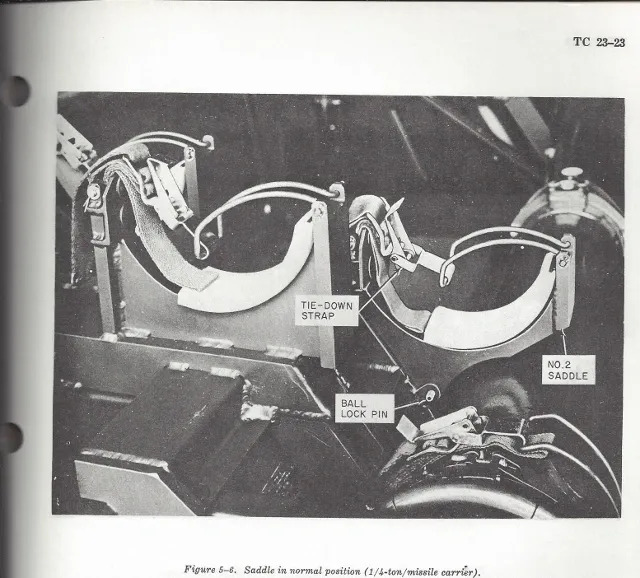
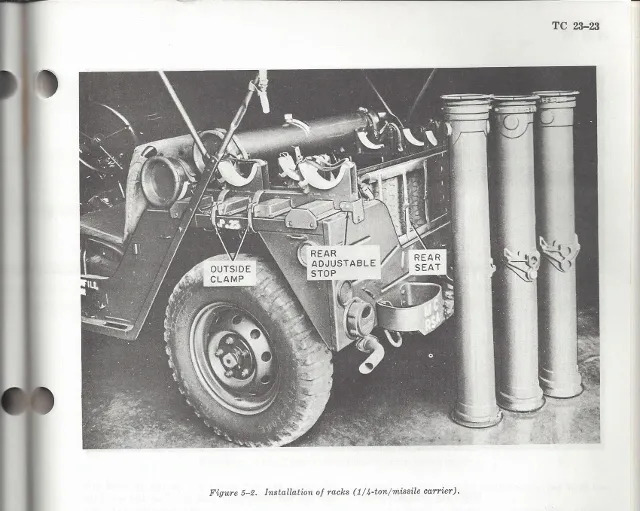
Toadman offers a mixed walk-round of a later production USMC TOW Jeep and Reload vehicle.
www.toadmanstankpictures.com/towmutt.htm
Just curious if they even had a plan, as the one picture looks like they just piled them in. They look like they are stacked facing forward with some on the front hood/ windshield.
Loading extra missiles onto TOW Jeeps is something that happens from time to time. I have a couple of photos of Marine TOW Jeeps operating in France in 1986/87 (Canjeurs) with additional missile tubes strapped to the hood on dedicated racks. The launcher vehicle has very limited ‘official’ carrying capacity for reloads - two on the travel rack and maybe one in the launcher. Worrying about having on your reload guy being there beside you at all times might well encourage launcher crews to squeeze more tubes onto their wagons ‘just in case’. It may also be that the reload vehicles were disliked, or that alternative load-outs were being trialed - or just that it was unit preference.
It’s interesting that no obvious reload vehicles are shown in the Vietnam photos, because the document I linked to previously, indicates the presence of Jeeps carrying missiles (as opposed to launchers). All the information below is culled from that report.
Amongst the ‘kills’ listed for the two UH-1B TOW helicopters in May and June are two TOW Jeeps, one with a launcher and the other with missiles (presumably a reload vehicle) being destroyed by helicopter-fired TOW missiles. There is no indication in the report that this was a friendly fire incident so presumably the two Jeeps had been damaged and/or abandoned and needed to be destroyed to prevent them falling into enemy hands. Who they belonged to isn’t recorded.
The 82nd Airborne team deployed to Vietnam in early May 1972 with 24 systems and initially trained members of 3rd Bde, 1st Cav. Four missile squads from 82nd Airborne were deployed to Kontum in late May and on 26 May 1972, they scored their first kill (credited to PFC Angel Figueroa). However, the first known TOW kill is credited to a US Army Sergeant/instructor (Sergeant Bill L. Tillman) training SVN Marines. On or around 19th May, when the Brigade CP was attacked, he manned his launcher and fired at a T-54. This might have been from a tripod-mounted TOW, since significant numbers of these were being sent to Vietnam (in addition to the Jeep and airborne platforms).
The 82nd Airborne team returned Stateside in early June, leaving all their vehicles with 3rd Bde, 1st Cav. That would explain the 1st Cav patches on the guys in the photos.
In the picture that shows them in a row it looks like the first 2 and the last ones are just carrying ammo and the 3rd one has the launcher. Also, none seem to have windshields mounted. See what you think. Wayne
The longer barrel is not a TOW but a HAW. HTH
TOW is a HAW, Heavy Antitank Weapon. The M47 Dragon is the MAW, Medium Antitank Weapon, while the M72 shoulder fired single use rocket launcher in the LAW, Light Antitank Weapon.
I don’t know the specific reasoning for switching to the shorter launch tube. But an educated guess tells me, 1, in service operations showed that the extra length was unnecessary for the missile at launch, and 2, stowage of the launch tube in the original TOW M113 was better suited. The shortened launch tube was nearly floorboard to ceiling on the interior. These are just guesses on my part, but I was a TOW gunner.
This is very likely the reason. I have launched 107mm rockets off of a pile a rocks, and repeated the accuracy in trials. The tube probably just acts as a safety shield more than anything else. Think about all the ordnance launched from aircraft that requires no tube.
This stands to reason: as long as the 107 mm rocket has time to get up to speed and spin rate, it should have its normal accuracy.
TOW is fin-stabilised, of course, and guided, so you’re probably right that the tube likely serves only to protect the gunner from the booster that launches the missile out of its tube.