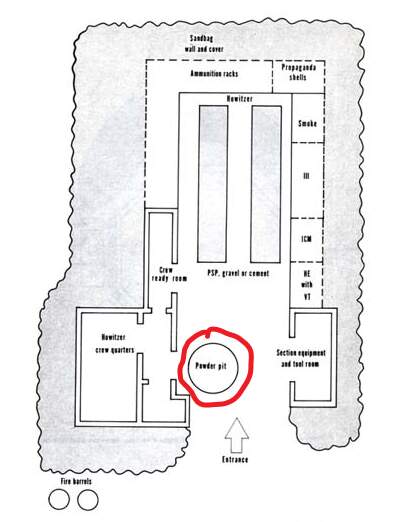
My questions are 1) I presume they held propellent for the shells, but how were they constructed, and what dimensions were they, 2) As they’re referred to as a ‘pit’ I’m presuming they were sunk in to the ground, 3) and if so, how did the SPG move in and out of the bunker over the pit as it appears to be in the way on the diagram.
Also, any other suggestions relating to the type of items I should incorporate in and around the bunker, and any online sites I should visit?
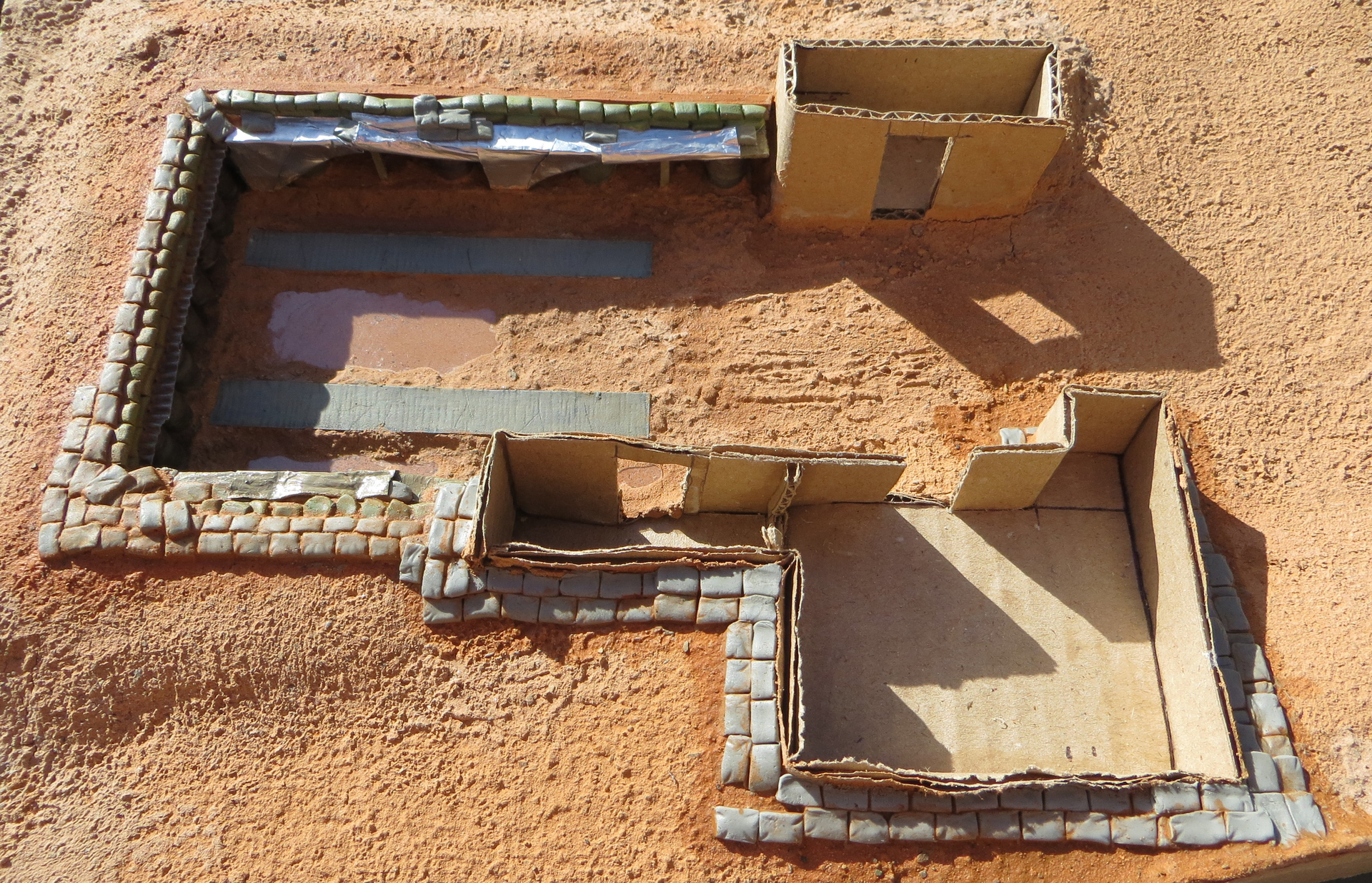
As mentioned, it’s early days, and slow progress due to all those sandbags, , but below are a few images showing some progress.
From the types of ammo in the diagram, the position is for an M109. The powder pit is a shallow hole to throw the unused powder increments into until they can be disposed of by burning.
Many of these emplacements were ad hoc setups and not laid out to precise plans. Fire bases were often very temporary and could be adapted to terrain or situations. Wayne
Seems to be a rift in the set-up of your diorama . But you need to realize that those things changed many times during the war so on those plans look at the date they were done so you can pick your timeline.
Because the rivet counters will say that if you are doing a firebase in 1970 , then why is the position set up as per 1968..
Just sayin
Regardless whether the position is for an M108 (with a 105mm howitzer and “semi-fixed” ammunition) or an M109 (with a 155mm howitzer and “separate loading” ammunition), the only use I ever heard of for a “powder pit” was the place to temporarily keep the discarded extra powder charge increments which were not used in firing, until later on for disposal. In Baumholder, Germany in the early 1970’s this was done either at the end of the day, OR just before we moved from a firing point, by lining up all the unused charges on the ground a safe distance from anything that we didn’t want to burn up, cutting one bag open to leave a powder trail to the rest of the bags and burning them on site. I have NO doubt that later on someone decided that wasn’t “safe” and also lost “accountability” for ammunition and required that they be collected and turned in.
And as far as the diagrams for the positions are concerned, please understand that those illustrations from Field Manuals and other documents were ALWAYS considered as “suggestions” as to how to construct and set something up. Unit SOP, the terrain, and the length of time in a position will dictate what firing positions look like.
So pretty much whatever you decide to model, there’s NO WAY someone can say, “That’s not correct”, because it’s almost certain somebody else actually did it that way.
Going back to the comments made by Tom, ken and Kevin made I’m presuming that creating a ‘powder pit’ as shown on the diagram would be unwise due to the proximity of crew quarters and ammunition stowage, .
 .
 . I’m looking to create…but will he finish I hear some ask,
 … my interpretation of a Vietnam Firebase SPG bunker.
 , but below are a few images showing some progress.

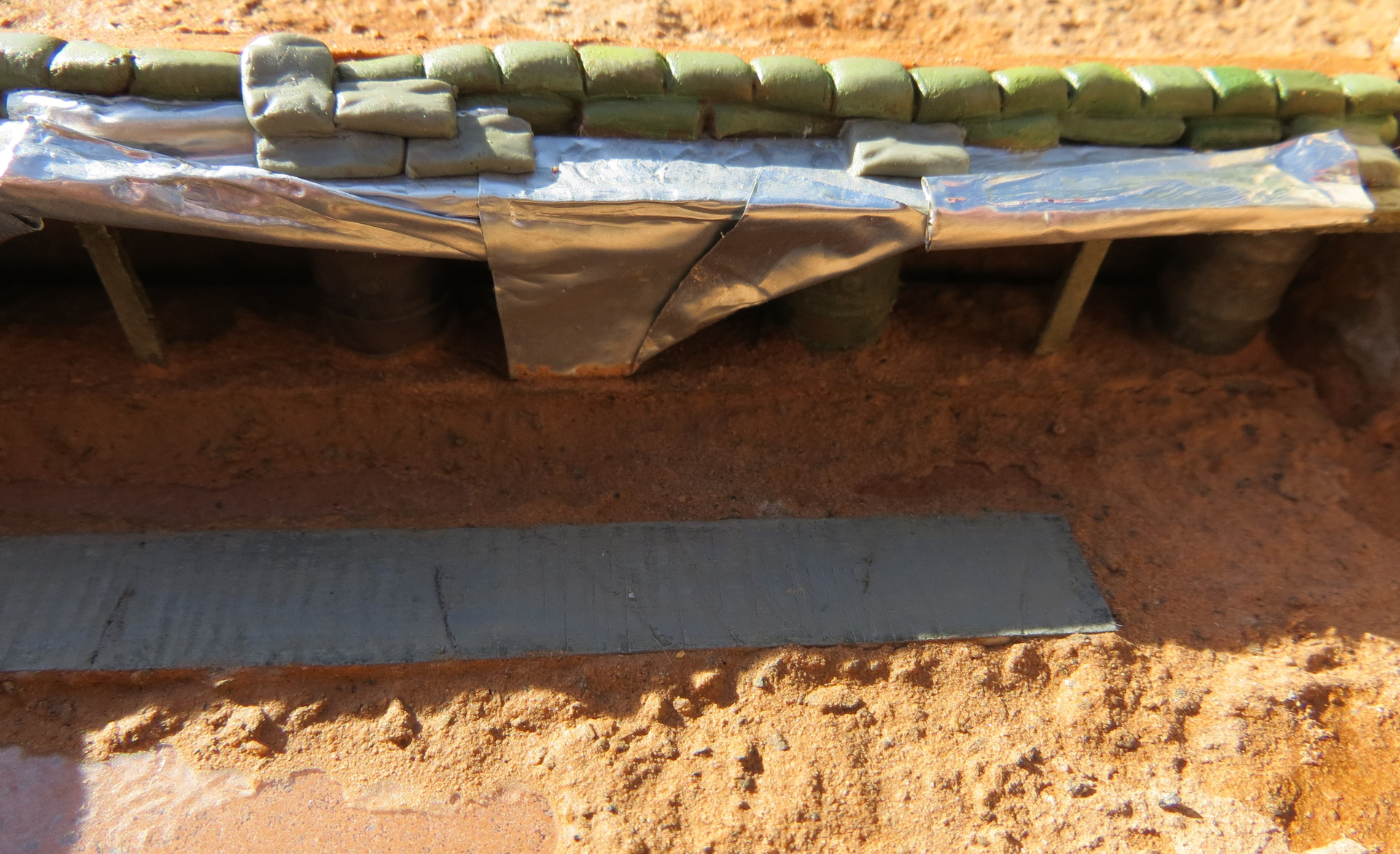


 .


 .