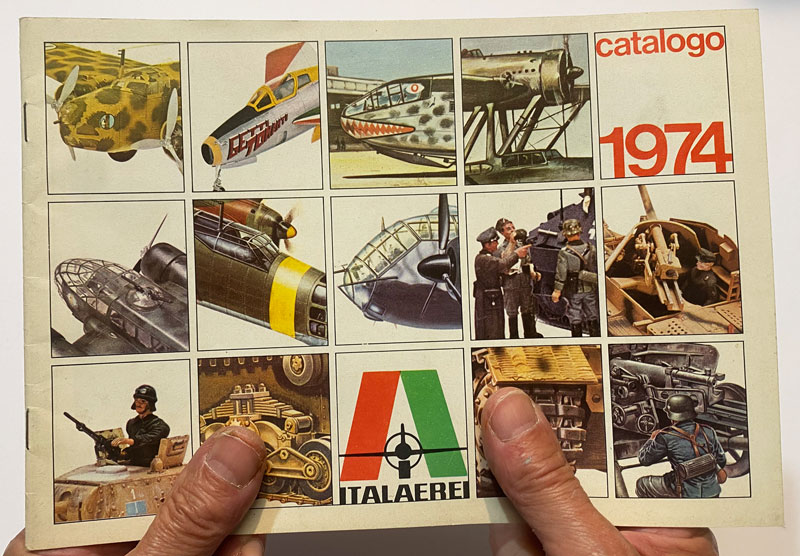
Founded in 1962 by Giuliano Malservisi and Gian Pietro Parmeggiani Italeri was initially called Italaerei Based in Bologna, it manufactures at the beginning of its activity aircraft kits and military models mainly to scale 1/35.Today the brand still exists but does not often come out of new for our greatest regret!
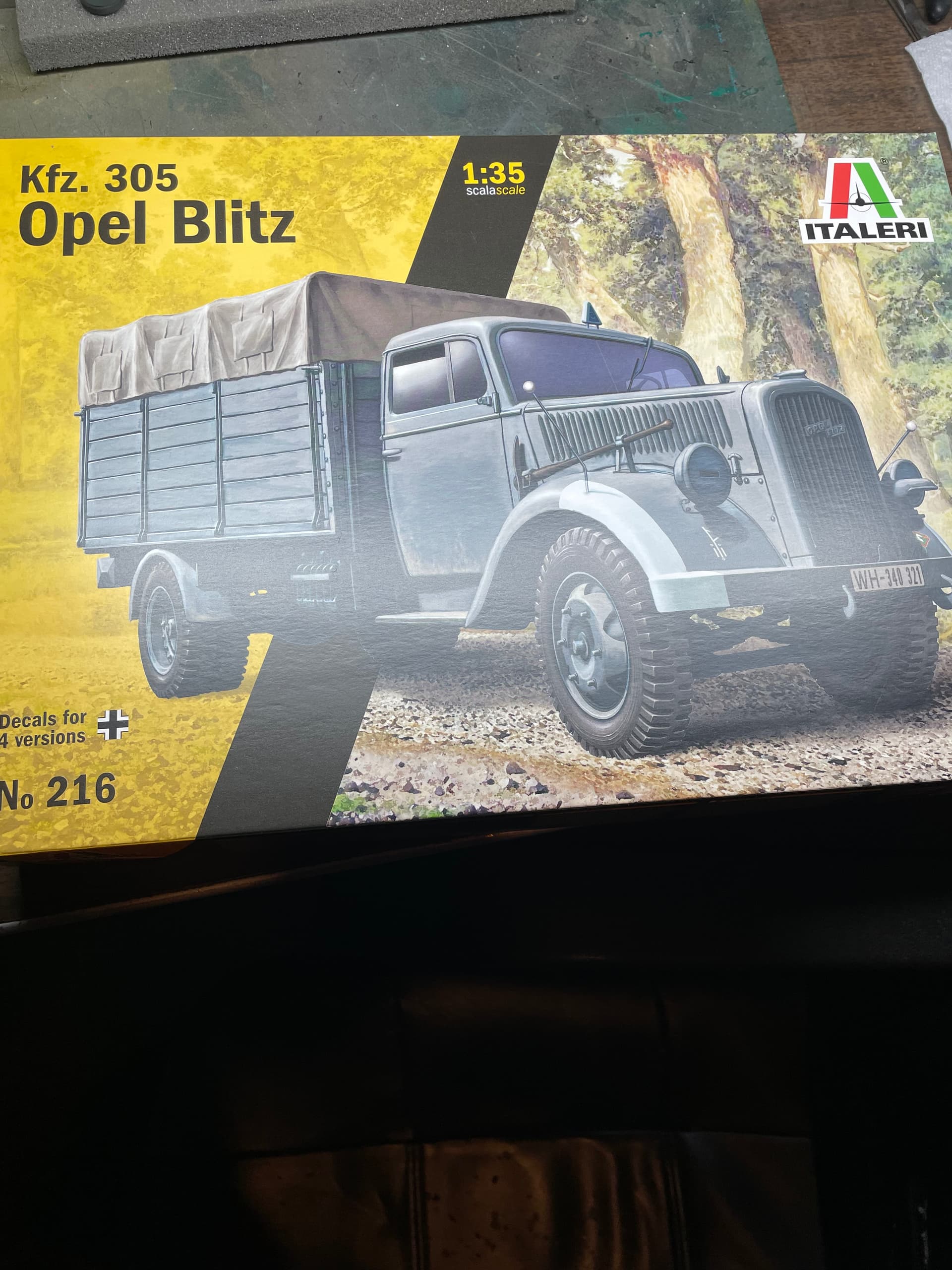
I usually keep the manufacturers’ catalogues . Despite his 51 years this one is still in very good condition… At that time the range is not very rich in kits to 1/35… Only 9 models are presented in the 1974 catalogue. The Hetzer 38 (t), Marder III,Horch Kfz.15,Panzer 38 (t),Fiat Ansaldo M13/40,Fiat M40-75/18,Tiger Elefant, Pak 40 7,5 cm,and the Opel Blitz
illustration the Opel Blitz in this limited catalog
I grew up building Italeri along with Tamiya of course as I’m sure most modelers did in the 70s. I had the Italeri Horch, M13/40 and the Elefant. I thought they were great kits at the time. I now have the Opel Blitz that I’m building for a group project about Arnhem Bridge and the 9th SS attack across it.
Yes, I did the same thing with the first models of the brand. Some kits were better than others! I have been building military models and dioramas for over 50 years, it is true that at that time, there were not as many choices and brands… I find that the Opel Blitz Italeri is still a good kit today.
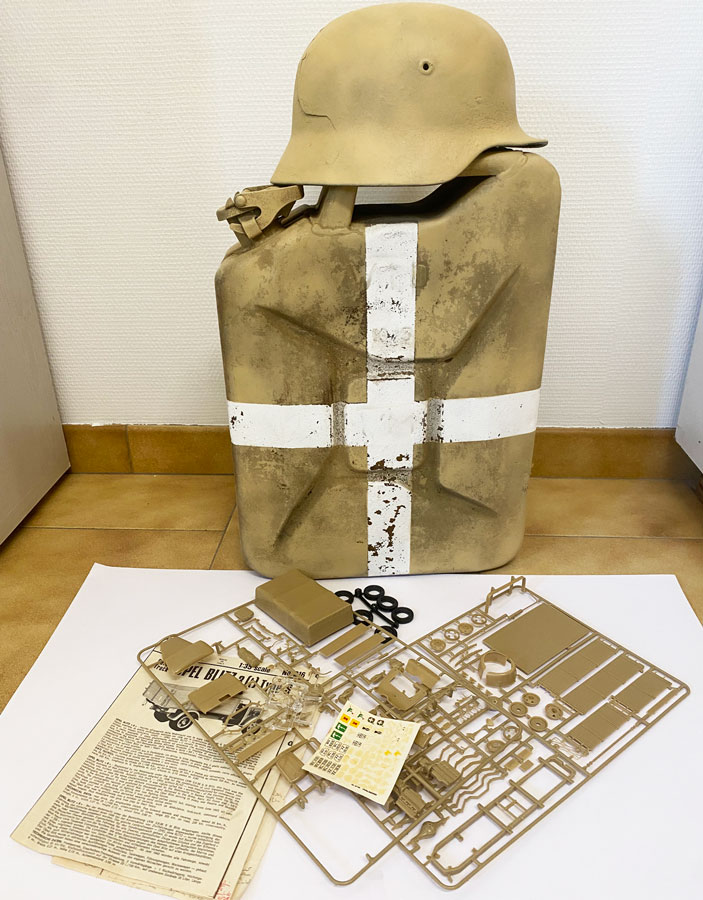
The plastic support of the kit, the assembly plan… The only disadvantage, the rubber tires that I have found over time on my Horch Kfz.15 is that the rubber tire has eaten away at the injected plastic… a chemical reaction in time causing irreversible damage! At the back of the accessories related to the diorama
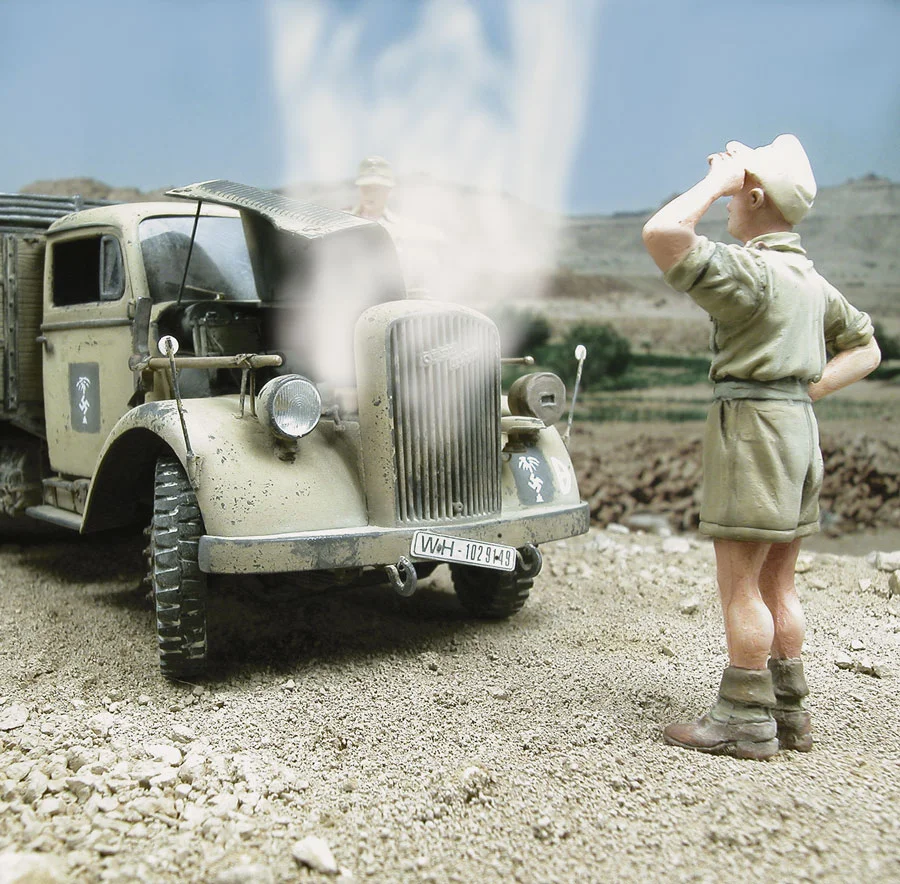
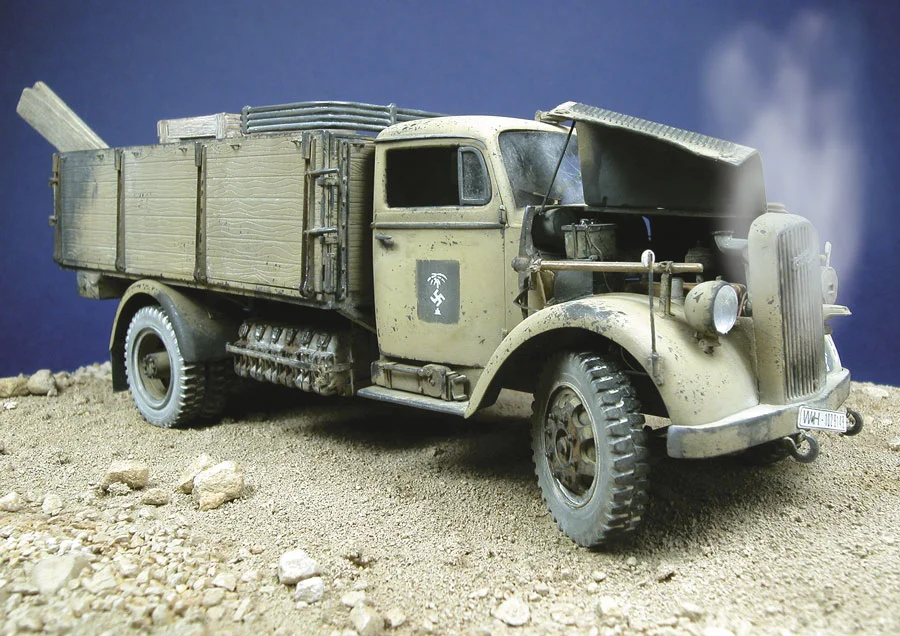
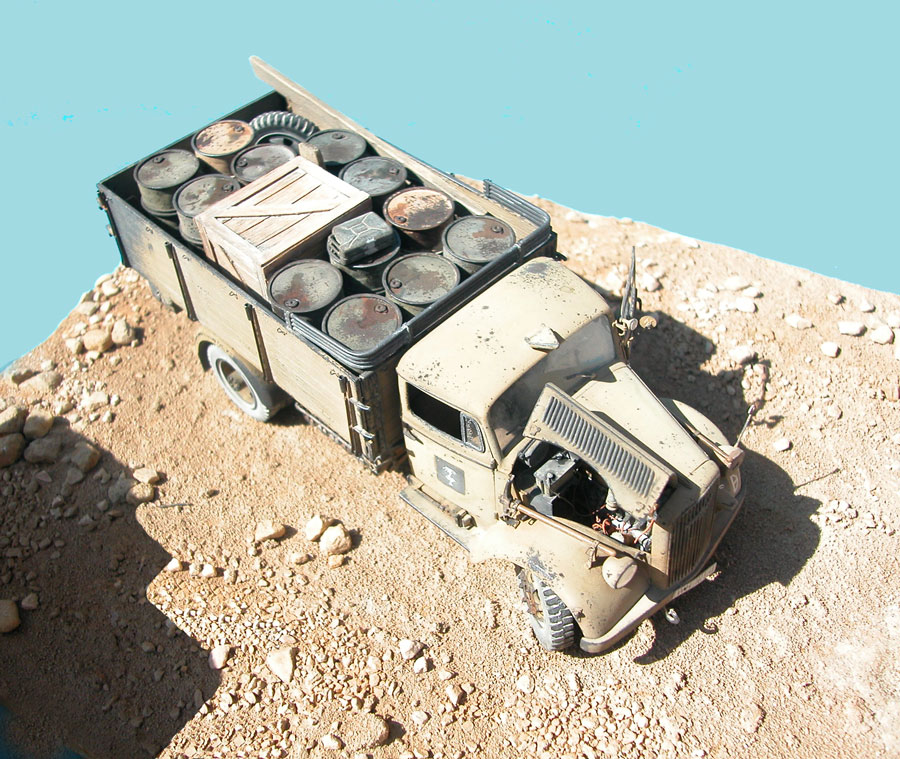
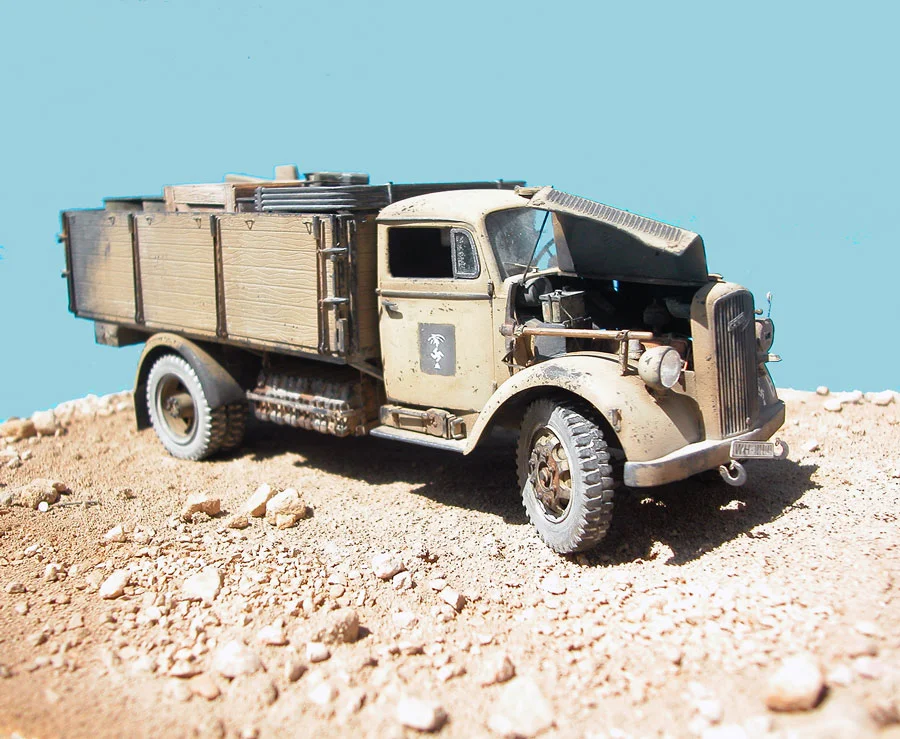
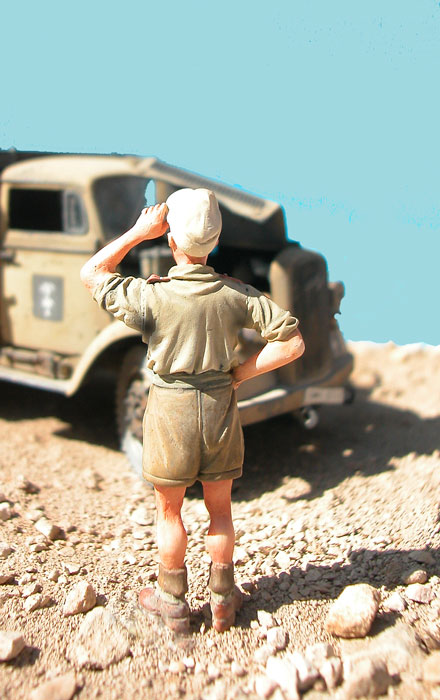
Well, let’s get to the heart of the matter… I wanted to represent a vehicle in trouble with the weather conditions in the desert. German equipment is not ready for this war.
The living conditions are abominable, the metal of the machines burns, the interior is a real furnace. The water that men swallow to quench their thirst is hot or even boiling, because it is stored jerrycans. The repeated sand storms wear down organisms and mechanics. Especially fine sand penetrates everywhere… And then there are the flies, they proliferate and contaminate food… The overheating of the water in the radiator forces the truck crew on their way to the front to stop. The heat is overwhelming.
To reinforce my words,To recreate the effect of the heat I photographed my Blitz under the sun… Thanks to the shadows on the ground, the effect seems realistic.
A vehicle comes to help the broken down truck, we can see its shadow on the side!! Seen the range of the shadow, no doubt an panzer
I feel that the whole scene is very well done. Terrific groundwork, excellent model and weathering and the figure is well done. You are right about the photography as well. Thanks for sharing.
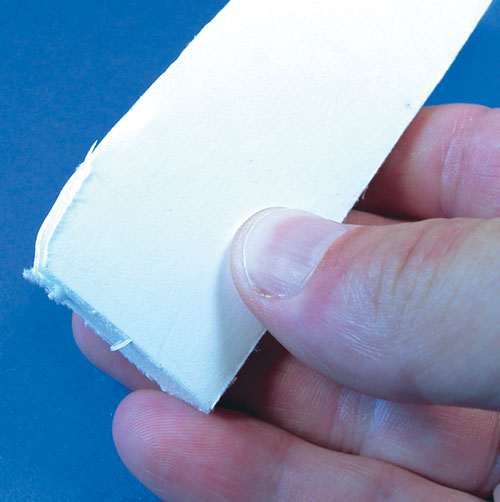
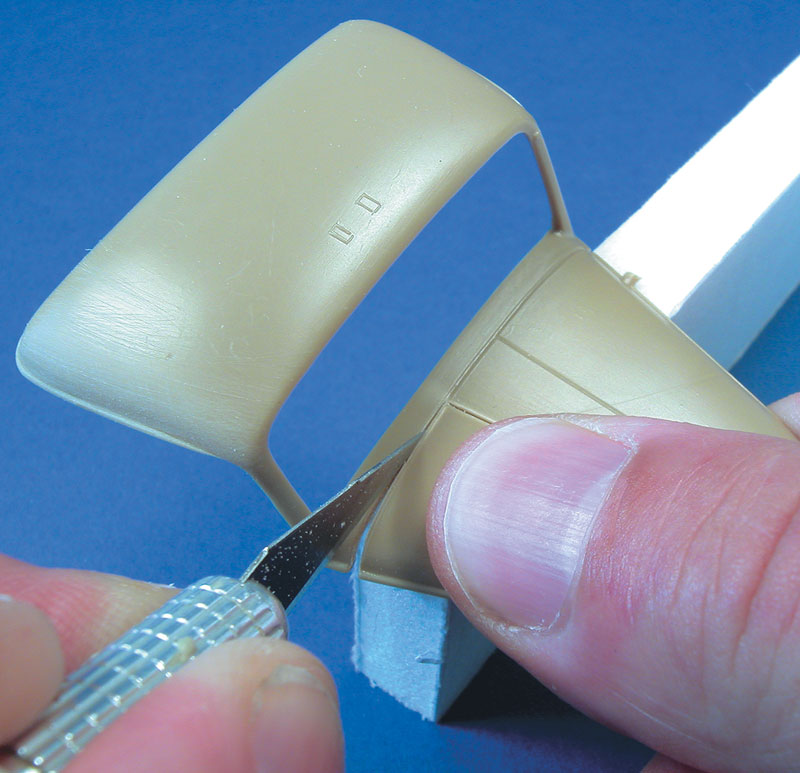
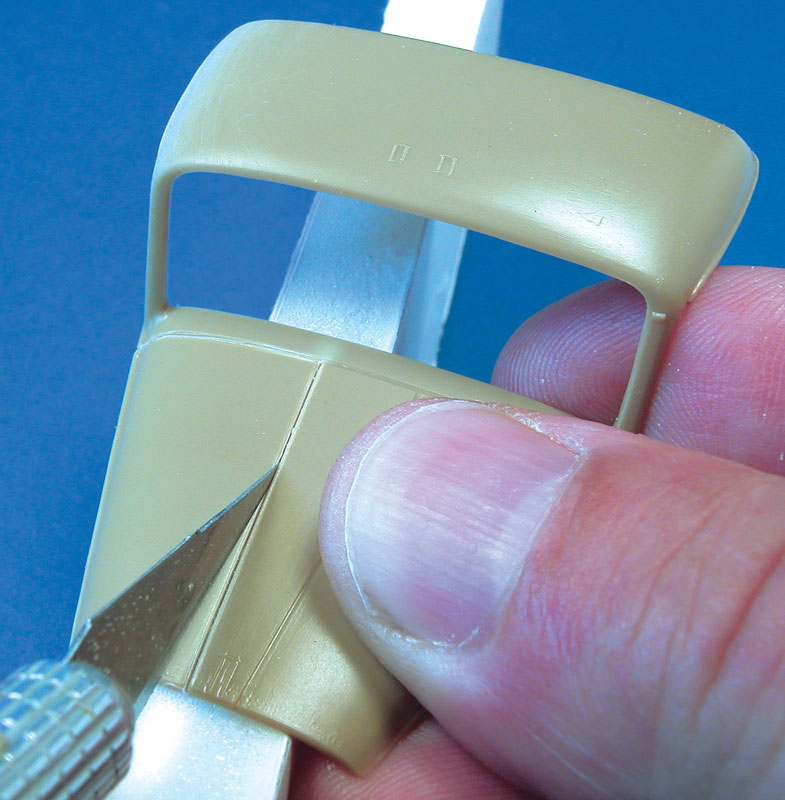
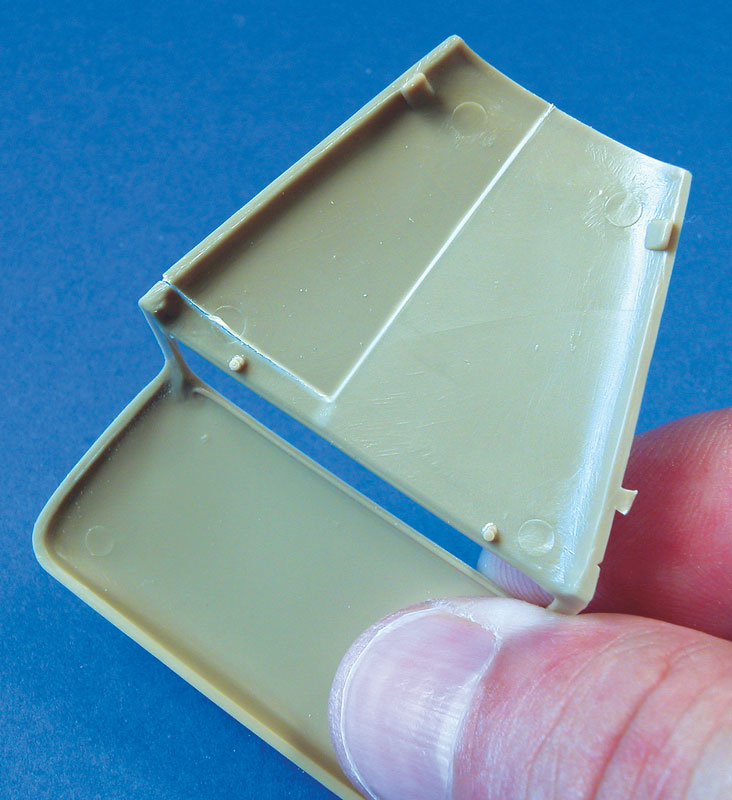
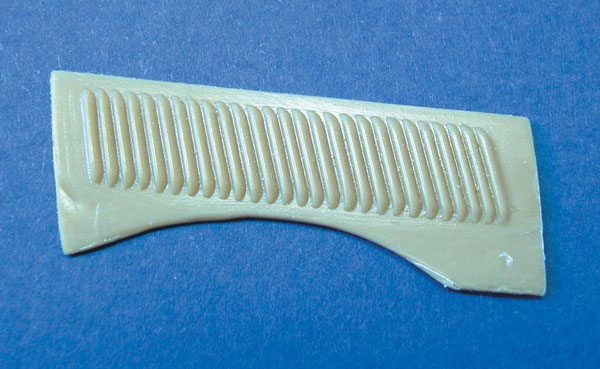
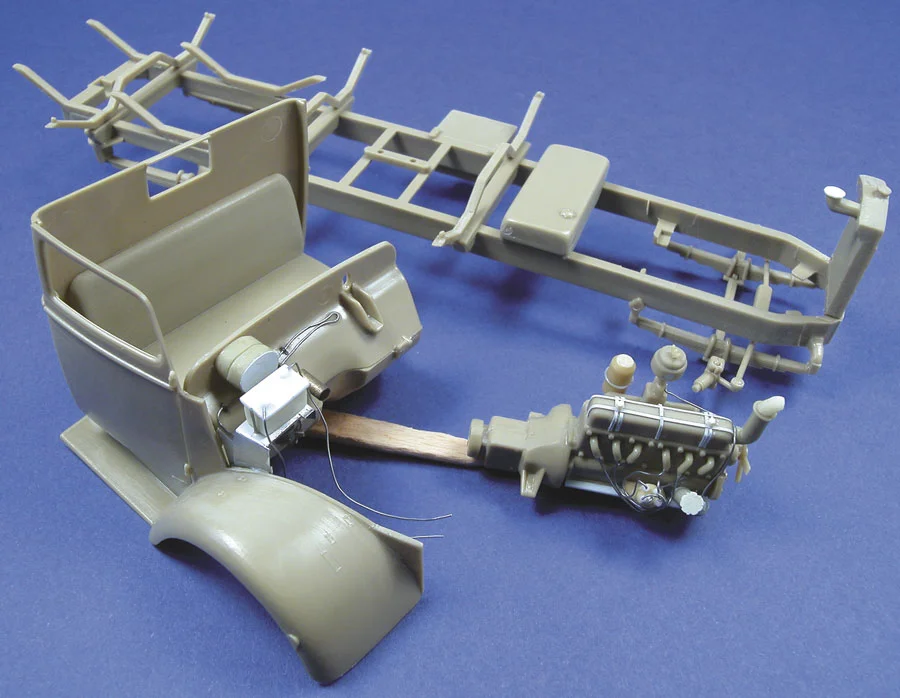
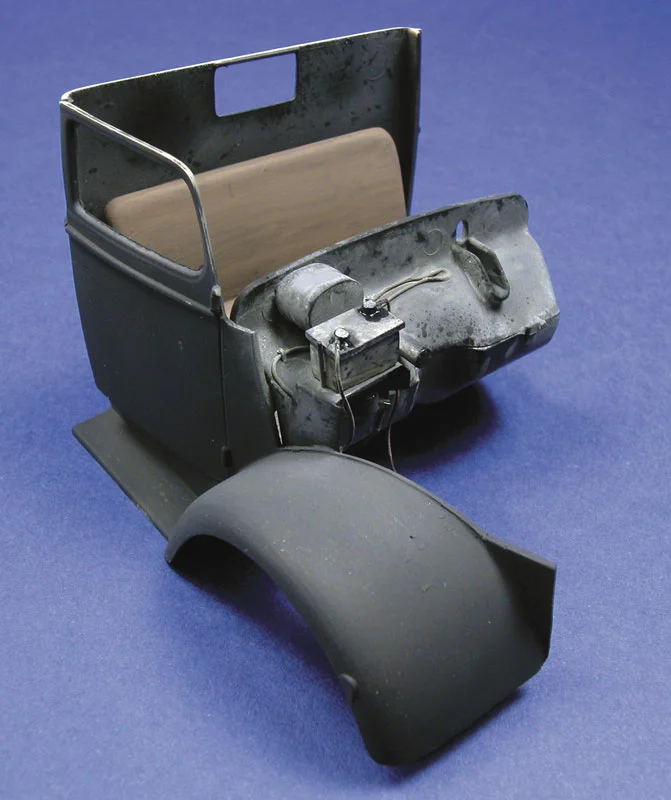
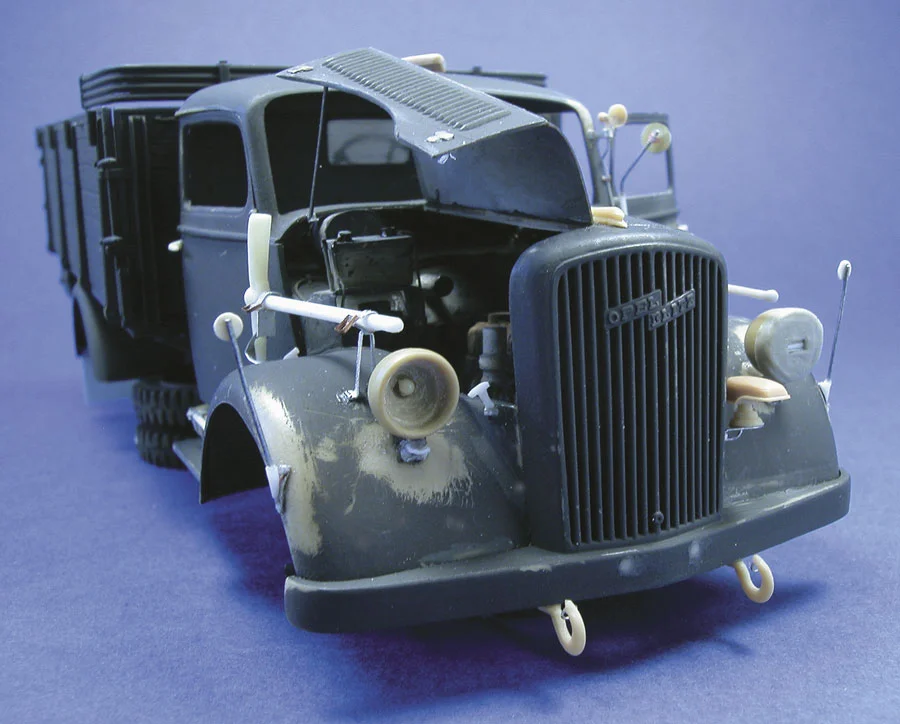
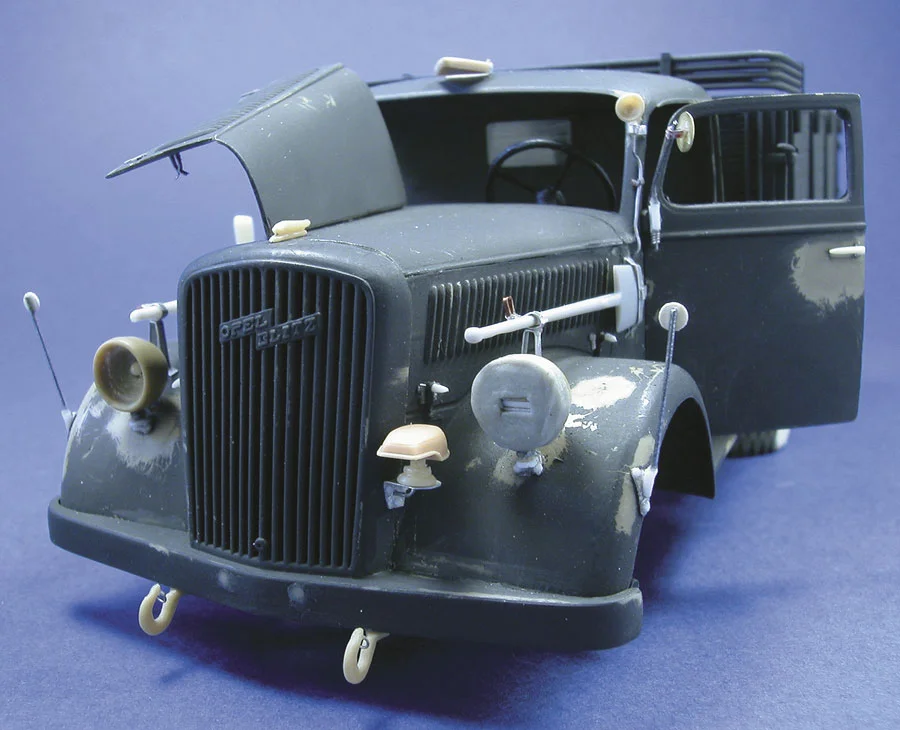
The cut-out of the engine hood is made at blade X.Acto number 11, to avoid deforming or breaking the plastic during this step, a support in cardboard feather cut from the shape of the Italeri part is positioned inside. This cutting will have to be done carefully, the piece being reinstalled on the kit.It will have to do the same for the cutting of the side panel.Too thick the piece will be refined on a sheet of sandpaper with medium grains.The inner edge of the wing is sanded with a file
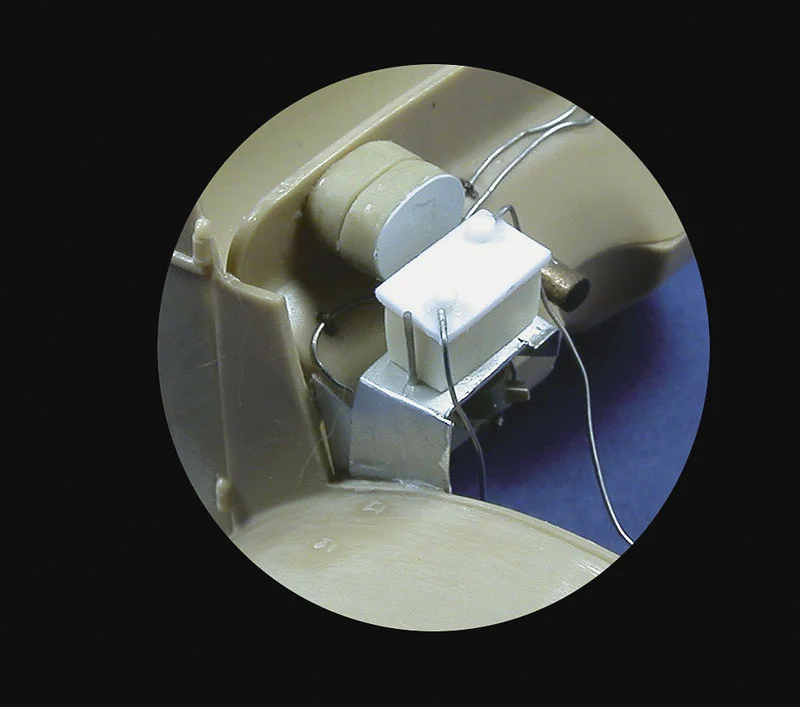
The battery holder, the battery and the bottom of the glove box are made from various materials, aluminum foil,surplus plastic parts, Evergreen rods.The electrical cables are made of tin wire because much more maleable than copper for their shaping.
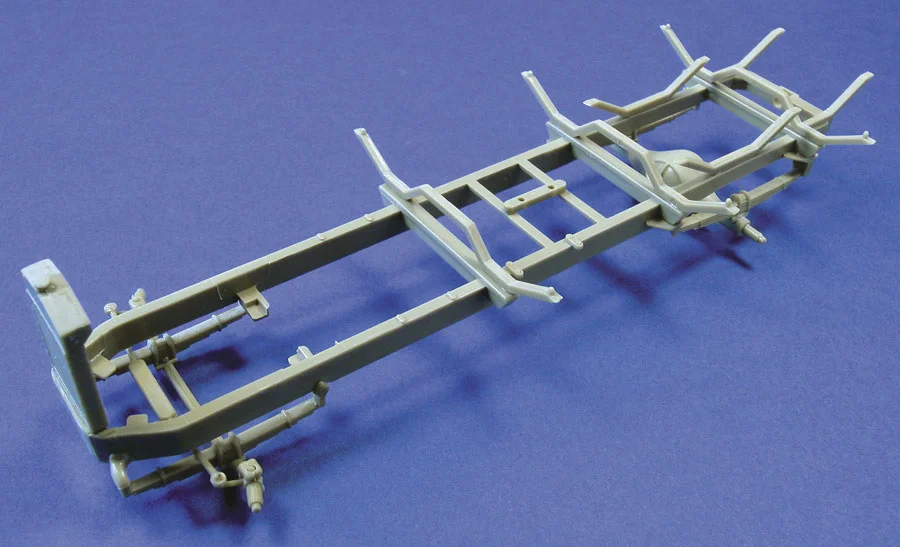
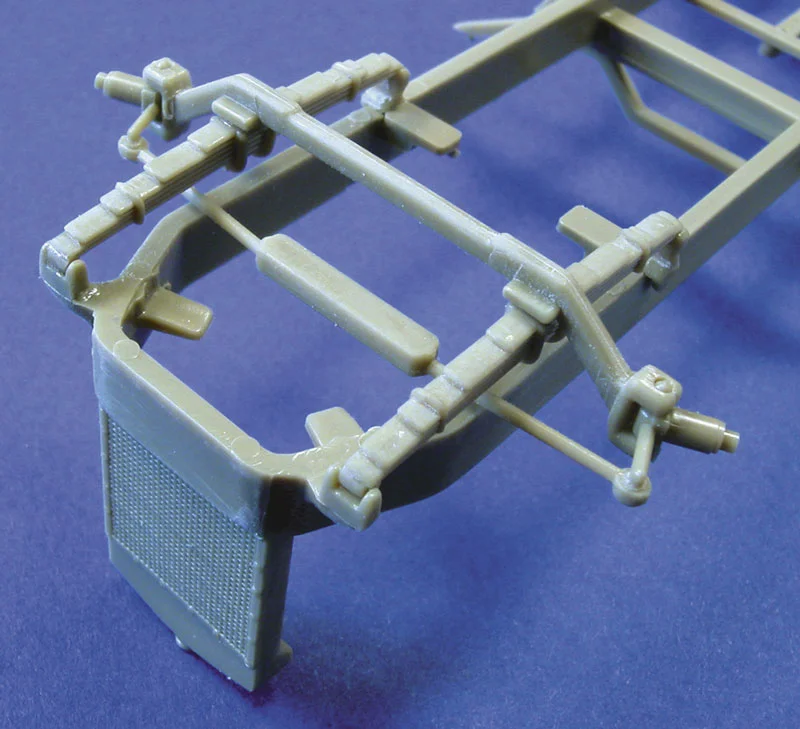
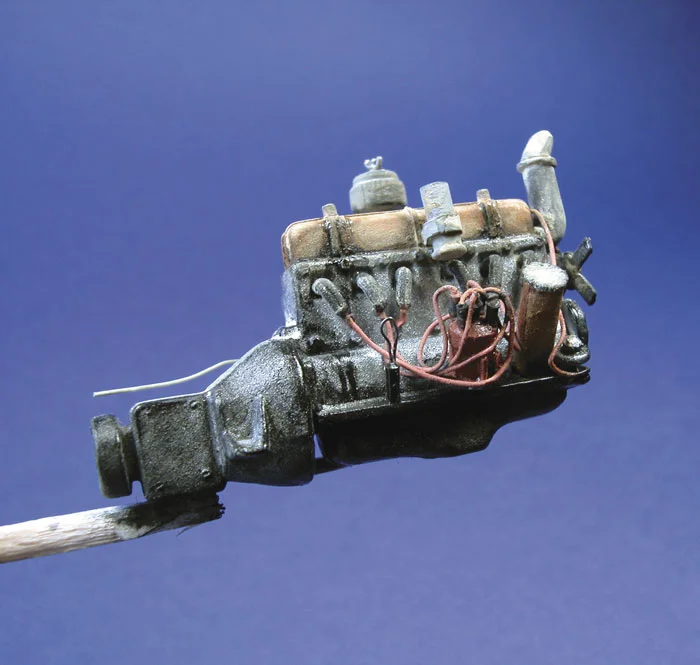
The first three subassemblies,engine chassis,cab. I repeat again, the engraving is excellent for the time and the plastic very pleasant to work.
Be careful if you are planning to use the Italeri version for the Arnhem Bridge attack. Most of the trucks involved were Fords (ICM do several versions) along with some French made Renaults (ICM do one of these). There were a couple of Opels involved, one had the later wooden or compressed cardboard cab (Einheitsfahrerhaus) also available from Italeri and the other was Holzgas powered. Previous to the attack, another Opel (version unknown) was shot up on the bridge while carrying something inflammable and was completely burnt out. This information from Marcel Zwarts, “Einsatz Arnhem”. He has taken the trouble to identify all the vehicles involved, which lays certain myths about 9SSAA equipment (e.g. NO Pumas or Sdkfz234 range vehicles, but Sdkfz 222, 221, 231 and 232 were on strength).
Thank you for that information- very interesting. That battle is one of my favorite subjects and while I’ve read a lot about it, I’m just finding out details about the specific unit vehicles and such. I have 2 or 3 books on Arnhem but both are very old; the Osprey book and Concord book. So to be clear, the Italeri kit I have would not be accurate for that particular battle?
This project I’m working on is a group effort and we are not going for that specific accuracy, if it was just my project I would be. The Concord book has a diagram in it with some of the vehicles on the Bridge that were destroyed after the attack. I’d love to get the Einsatz Arnhem book.
It looks from the “Einsatz Arnheim” book that it wouldn’t be correct for the 9SSAA attack, but it would be OK for the burnt out vehicle, if you want to tackle that. It would appear that Ford also made the Blitz under licence, as well as Daimler-Benz, particularly after the Opel factory was finally bombed in 1944 (Opel was, of course, the German wing of GM in America).
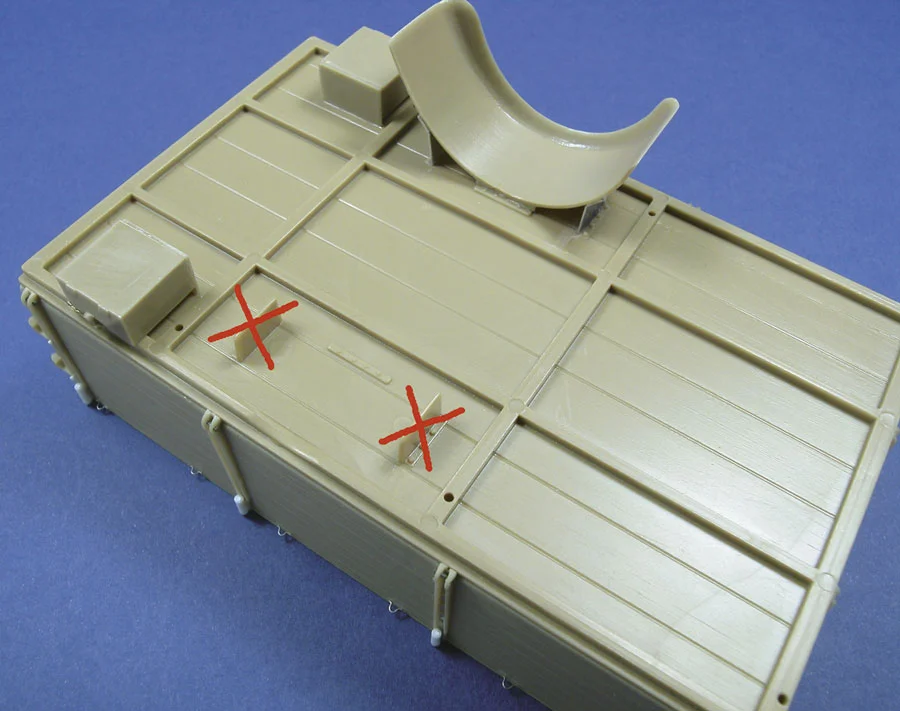
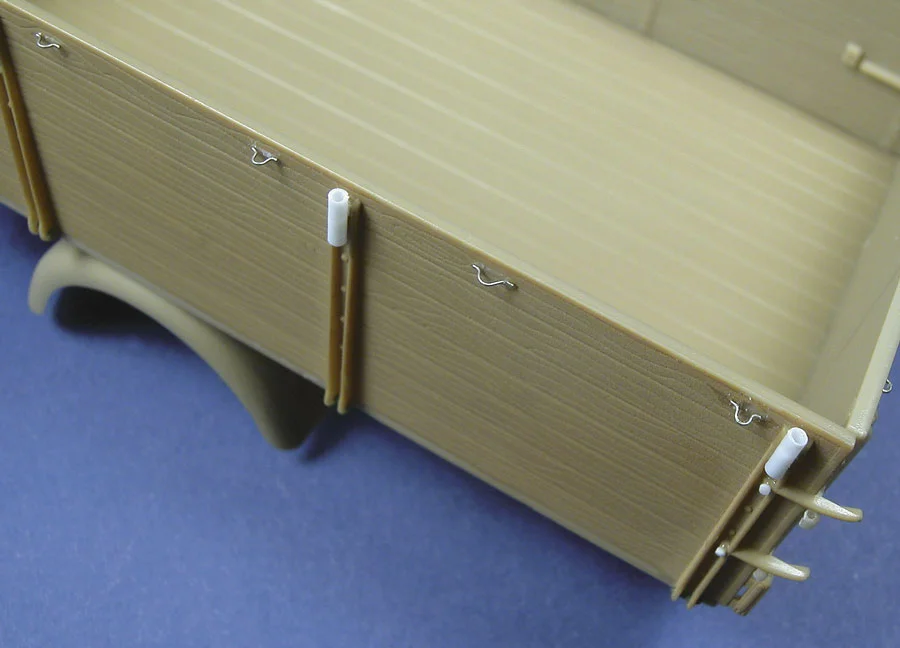
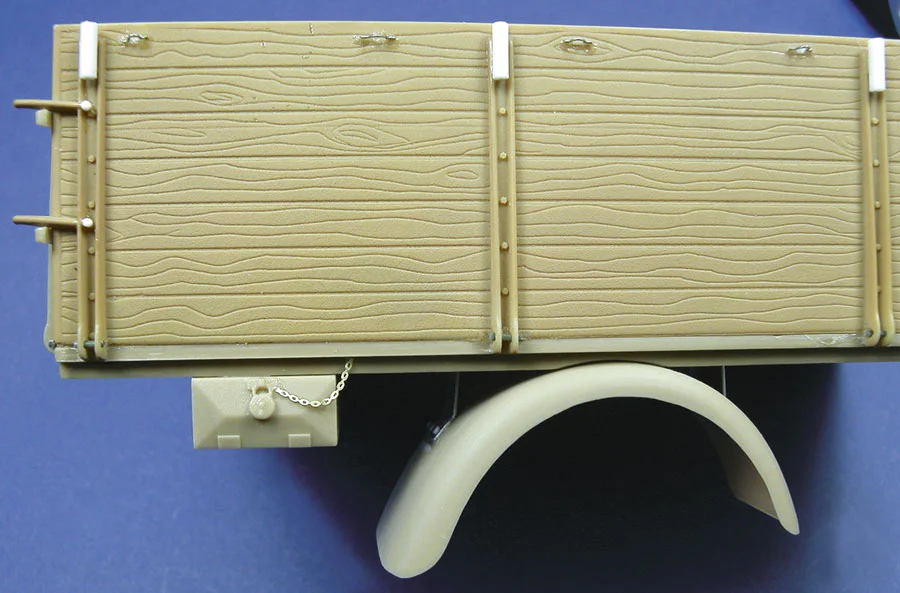
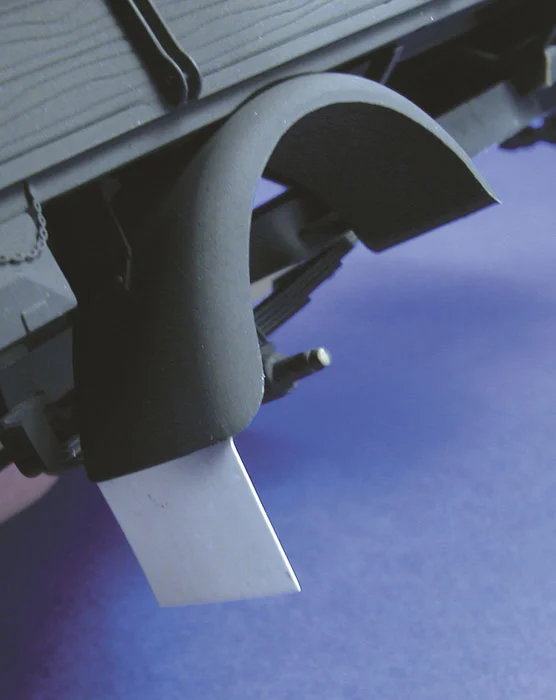
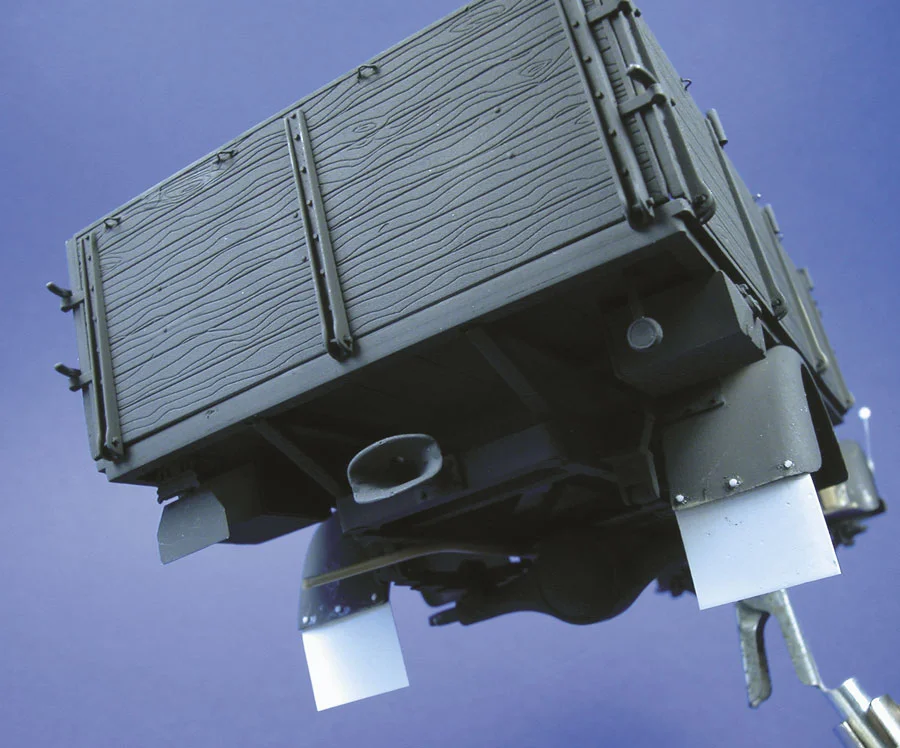
Remove the parts on the wings and under the platform that are supposed to be rear wing fixings. They will be replaced by newax supports cut from 5/10 thick aluminum held by three bolts on the wing and four on the tray (Punch and Die Hexagonal tool) that ensure the fixing of the sheet.the four tubes in which are inserted hoops for the canvas are made of Evergreen round ref.211 SA 040. Length 4.5 mm.The hooks (arceaux) for fixing the canvas are made of electric wire shaped on a sewing needle.You will notice that the tubes supporting the hoops (arceaux) are only drilled over a small length.The chain on the chest comes from the Royal Model chain range ref.037.On all four sides,two holes are drilled in each hinge, then a plastic rod is inserted.
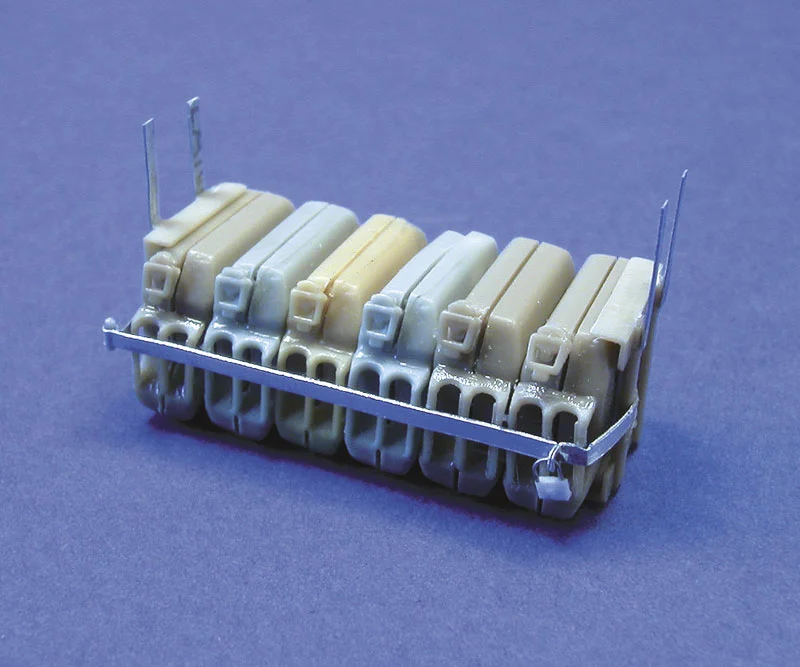
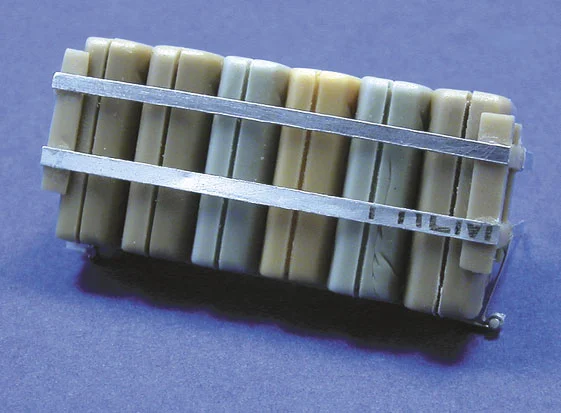
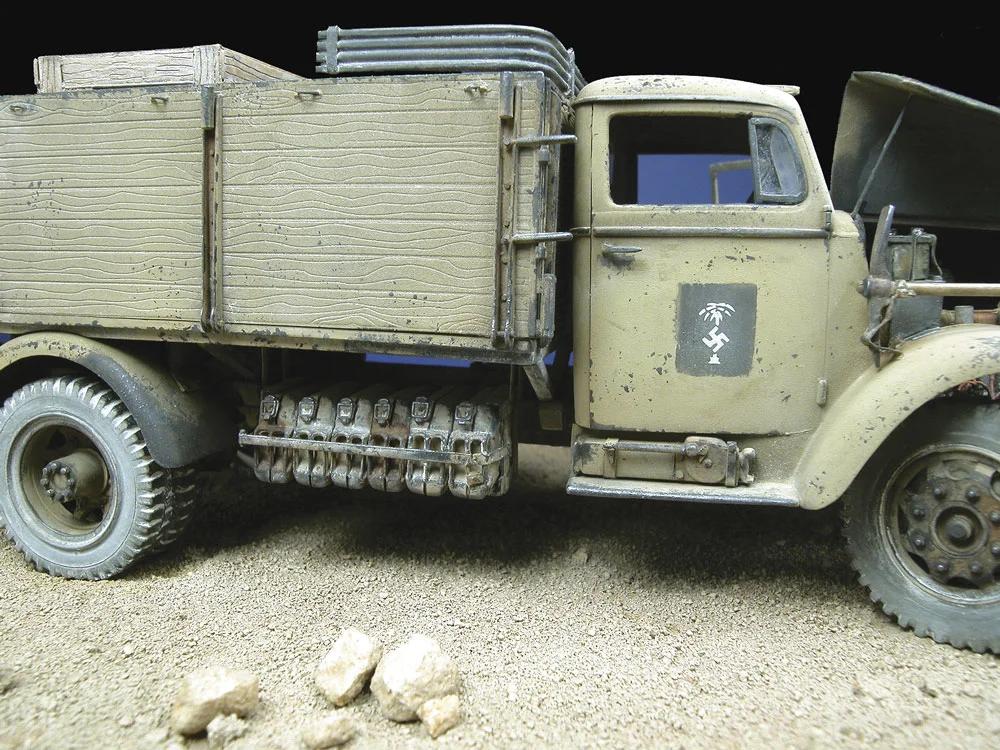
Shortages of fuel and water are frequent the supply columns run only at night to avoid the British hunt and the distance to travel is great to reach the front… They oblige the D.A.K to increase its storage capacity on the vehicles (despite the risks) by creating transport frames manufactured most of the time in the field and installed everywhere on light and armored vehicles . There are no precise rules we do as we can and with what we have at hand. Six jerrycans half water half gasoline will be added to the cargo of my Blitz. Made of 0.5 mm aluminum foil, the frame will fit the size of the jerry cans. Two small corners in Evergreen profile will reinforce the lower part. Finally a removable bar equipped with a lock will ensure the holding of jerry cans in this improvised housing.
As was the case, the truck is originally gray panzer Humbrol 67. It will be covered with a sand shade to move in the desert… I added rubber bibs on the rear wings. They were cut from plastic card 2/10.The set is painted, we no longer distinguish the different materials that make up the battery.
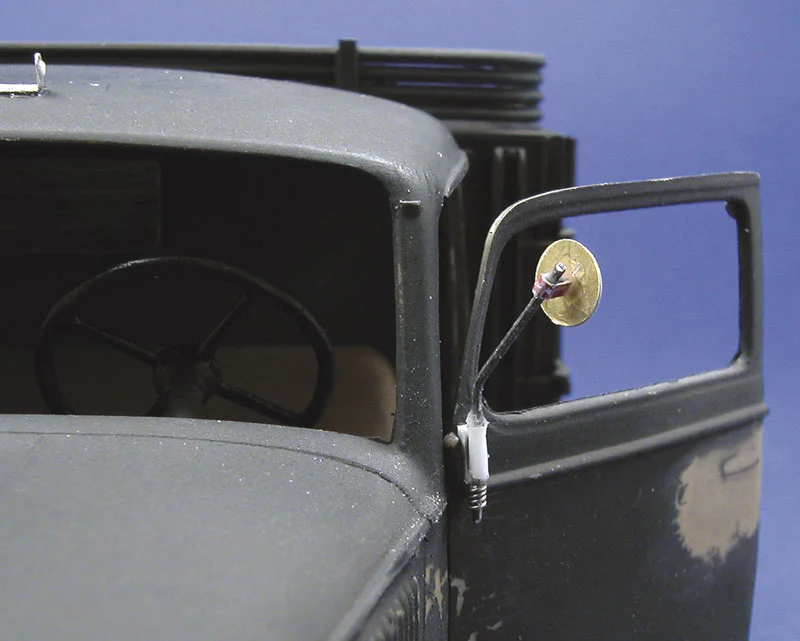
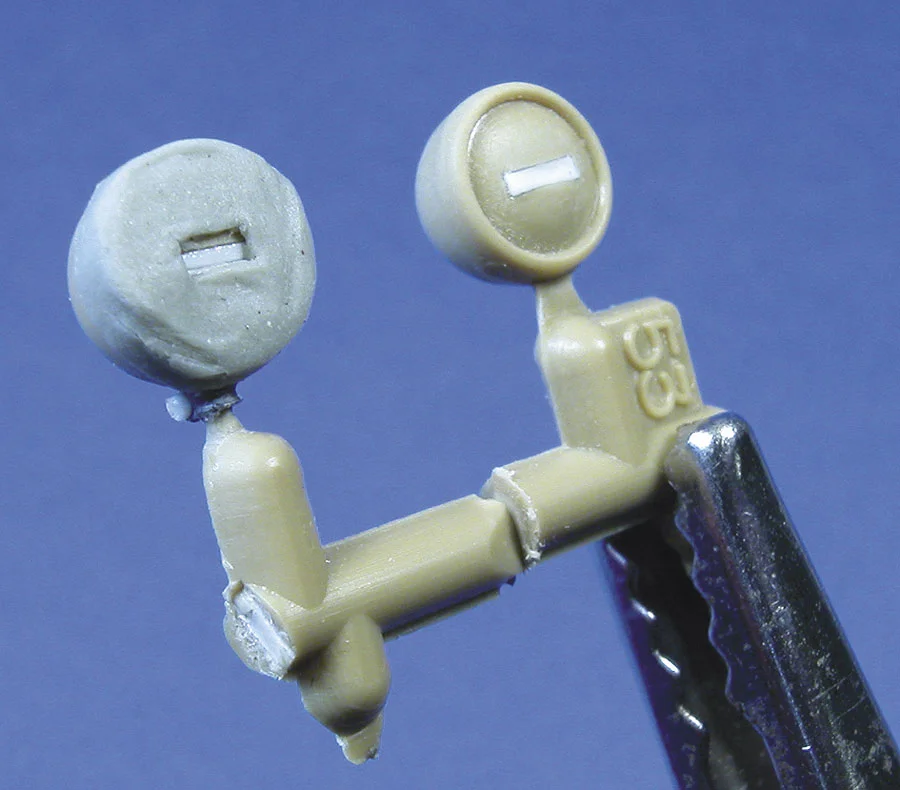
The cabin requires a bit of attention for the external accessories. The interior of the research lighthouse is dug, after painting, do not forget to add the glass that will be cut into a round Punch and Die in a fall of Rhodoïd. The power cable is made of tin wire. The new headlights are taken from the surplus box; they come from a Tamiya Sd.Kfz 250. The one on the left is covered with a fabric cabochon for night lighting. Here reproduced in Magic Sculpt. The template rods are made of metal wire and are equipped with die-cut discs.
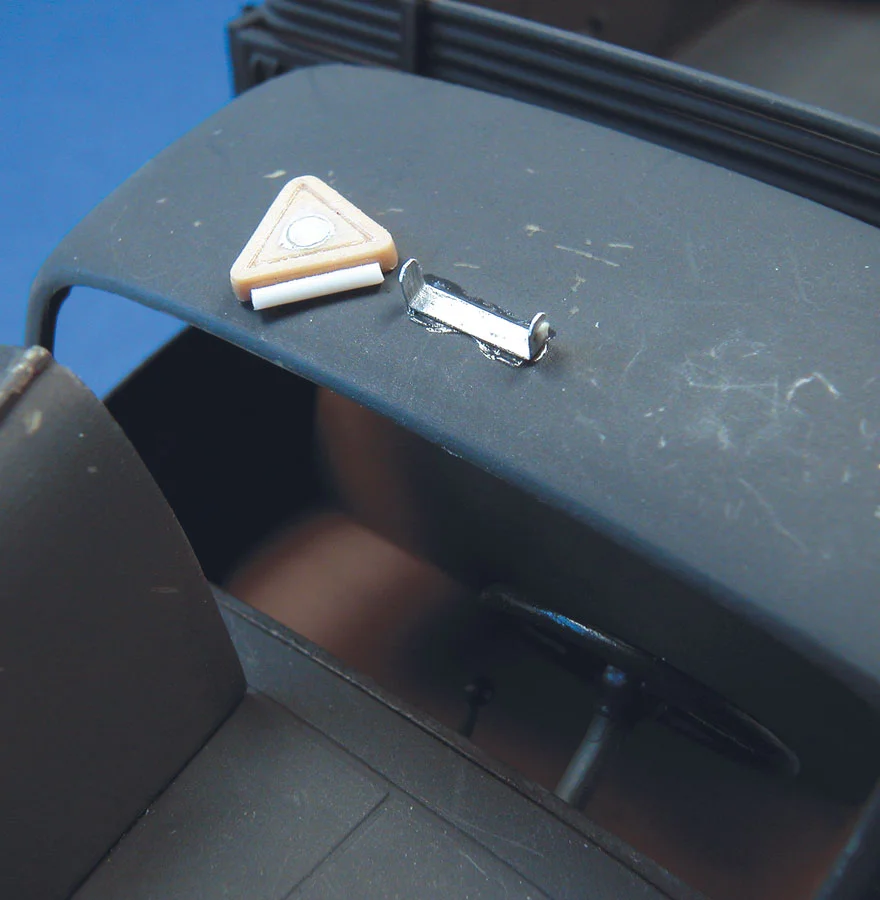
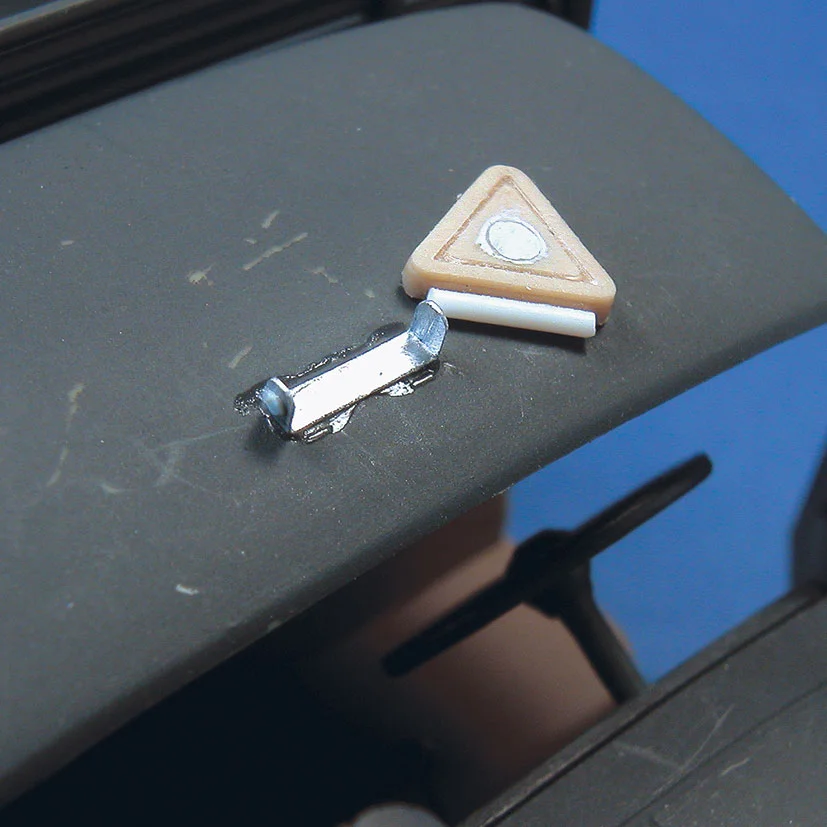
The convoy triangles are installed on the cabin roof and they follow a simple rule that is not often repected… Without a trailer the triangle is lowered, with the trailer the triangle is raised. A mechanism in the cabin allowed to mechanically actuate the triangle.