8 Likes
more info here
1 Like
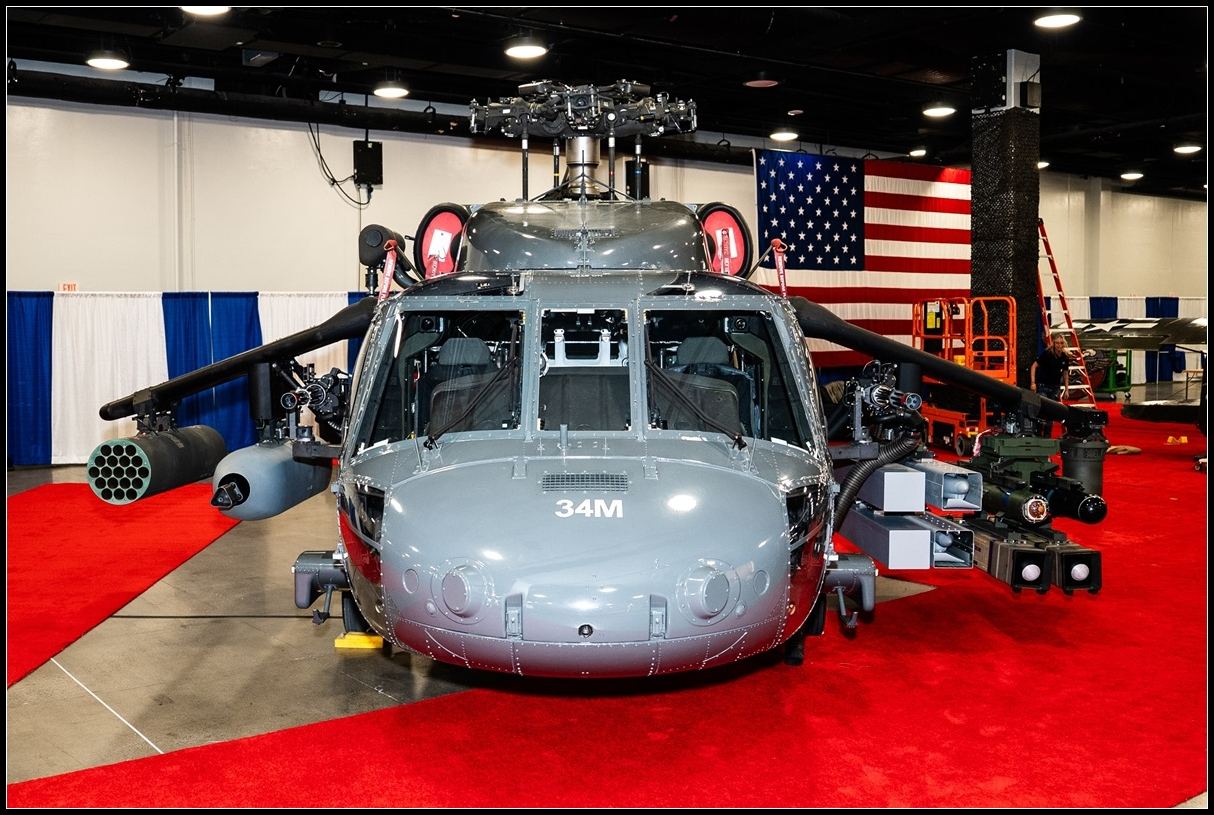
Nothing new. It has always been capable of carrying lots of weapons. Sikorsky released this in the early '80s with the original S-70A design.

The US Military has decided to keep it mainly as a troop carrier with a few specialized, heavier armed versions.
Colombia has been using a heavily armed gunship known as the Arpia for years as well.

4 Likes
Indeed it is. Read the article. I think elements of it are being displayed at SOF Week soon. It’s in Tampa, You should visit. If they let you in.
2 Likes
But is it armored like a HIND?
1 Like
Not like the Hind, but there is the new HybridTech flooring and BPS, among many other new features.
36
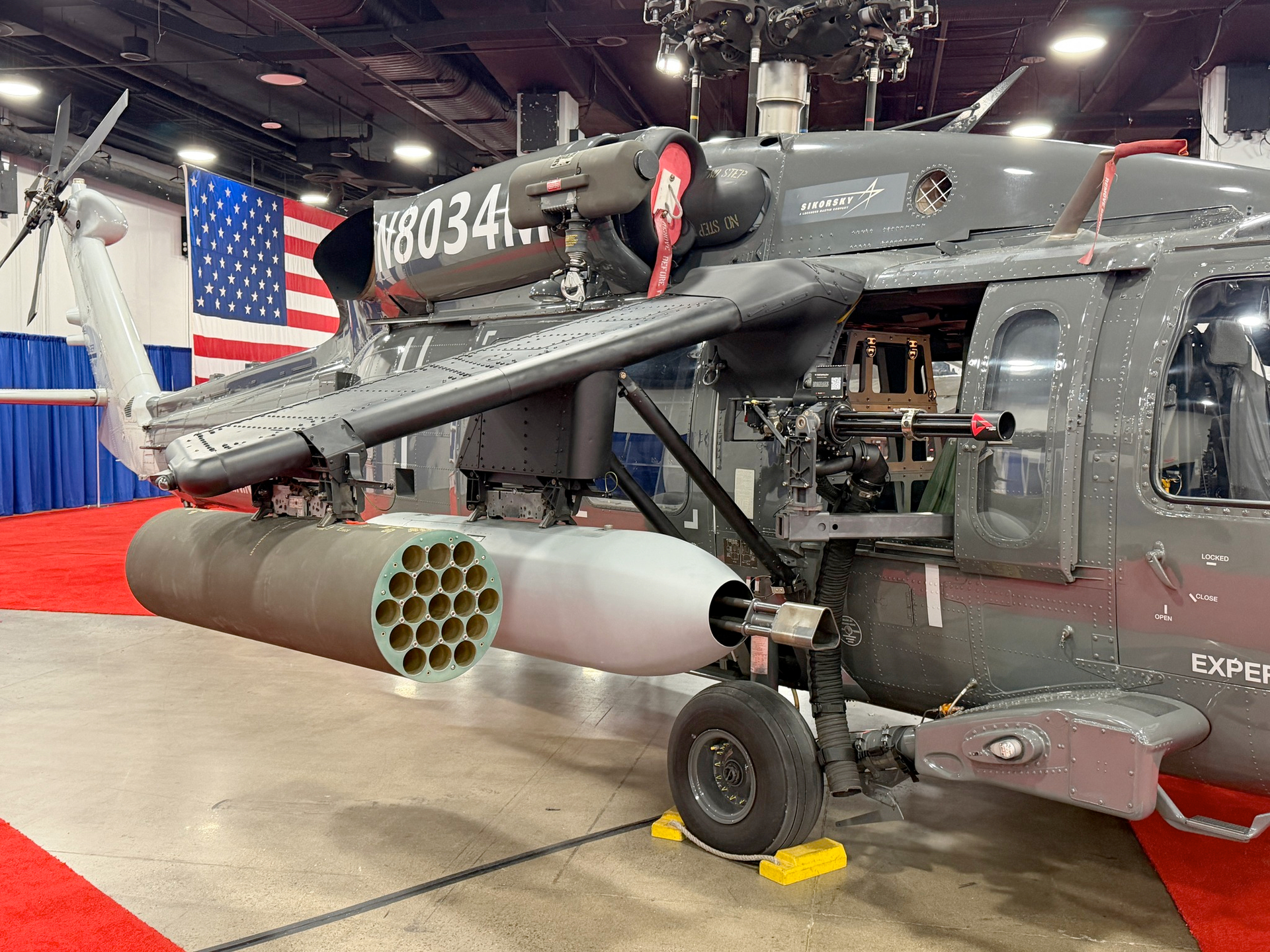
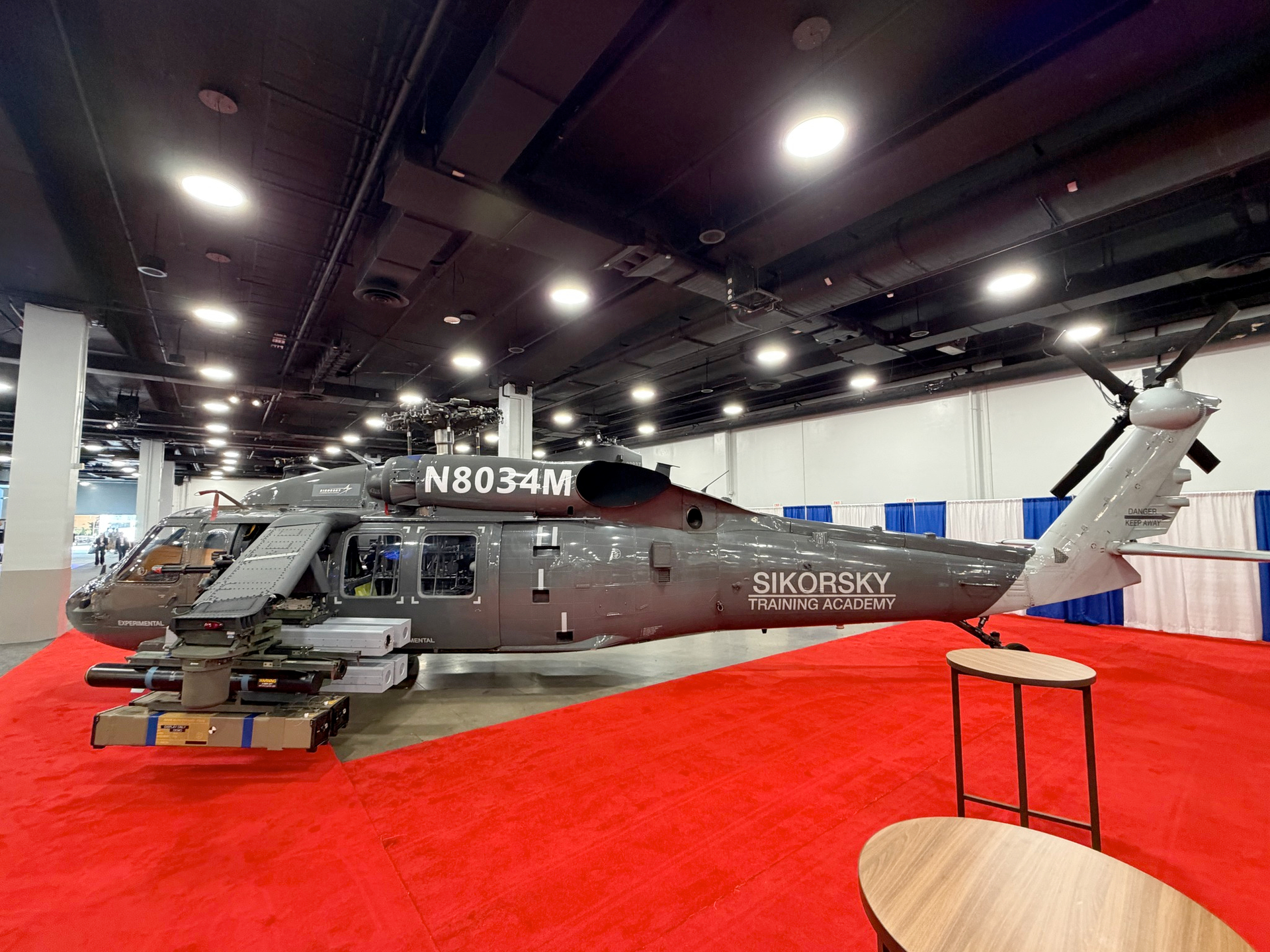
The wings retain a sensor at the end (that cylinder), which the older External Support Stores System (ESSS) wings don’t have.
Also, I don’t know what the Modular Weapons Kit offers, but it if offers several different ejector rack options, then that itself is a significant improvement than just mounting on the four pylons. As you can see in the photo below, the ejector racks allow for different ordnance to be mounted, including different missiles and launched effects. The older wings might not have this option of mounting a different assortment of missiles and weapons on the same hardpoint since 2026 weapons are “smarter” than 1980 weapons.
The light gray oval cylinder is a .50cal Gatling gun pod. It still retains the side winch for lowering and raising personnel.
Photos from HeliOpsMagazine.

4 Likes
The idea is nothing new. Sure, it is not the same as the '80s H-60A. It is the latest H-60M with updated wings and the latest weapons, but it is still the same basic airframe and idea as the '80s prototype and the Colombian AH-60 Arpia Gunship.
2 Likes
Basic airframe is a relaitve term here. While the new T901 engines fit in the same footprint, the surrounding airframe and mounting points have been upgraded to handle the increased torque and vibration levels. I think 50% increase in opwer might require a slight adjustment to the airframe.
Certain other existing components are also going to be replaced with newer composite materials where they’re needed.It’s kind of like saying the CH-47A has the same basic airframe as the F model. Appearance? Yeah. Structurally, far different.
It’s similar the old question: If you rerplace an axe head, and then later replace the handle, is it still the same axe?
37
1 Like
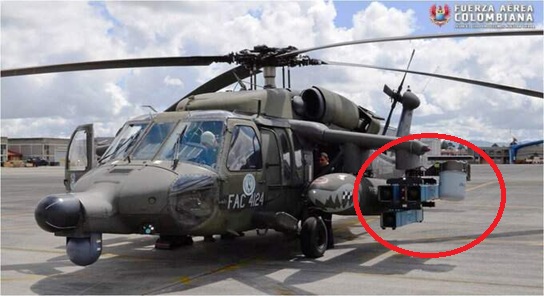
That is the targeting head for the SPIKE (NLOS) Rockets in the square launchers next to it. The Colombian AH-60 Arpia has it attached to the old ESSS wings.
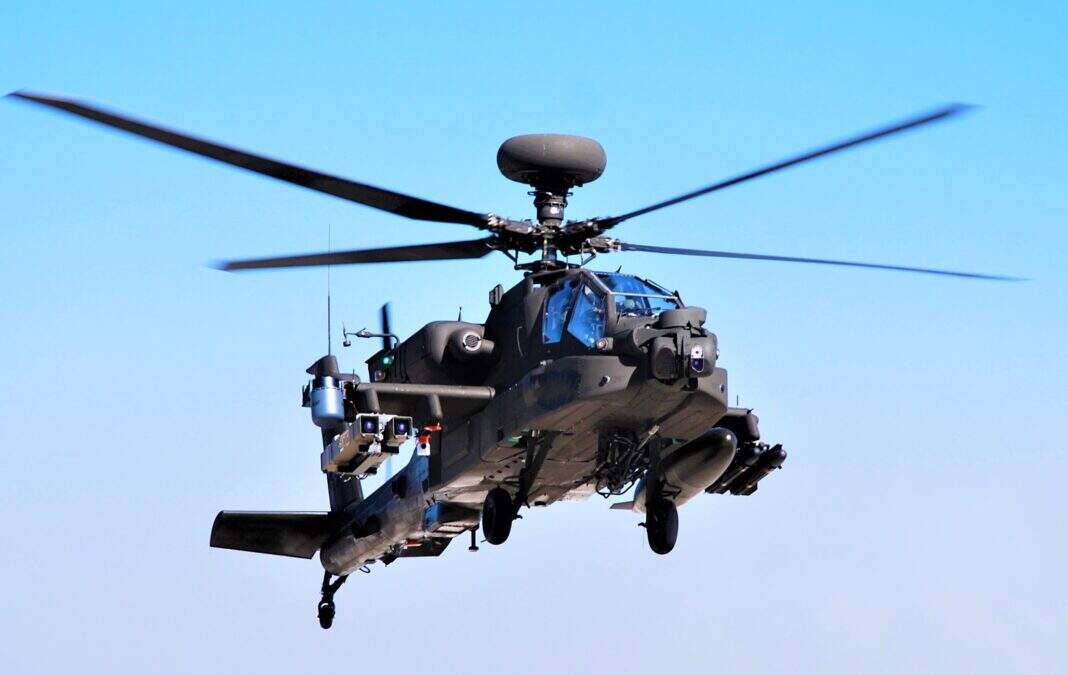
They can be/are also used on the latest AH-64E Apache.
2 Likes
@HeavyArty, @18Bravo: would it not be far more efficient to buy a few extra apaches or vipers that are built from the ground up to be weapon carriers instead of slamming additional pods and rockets onto what basically remains a troop carrier?
1 Like
Yes. That is why the US Military has not bought any of these uparmed Blackhawks except for a few special ops birds, which so far have only used single hard points on them anyways. These are mainly tech demonstrators for Sikorsky.
1 Like
Thanks, Gino.
2 Likes
Yes and no.
The US Army’s AH-64 Apaches and the U.S. Marine Corps’ AH-1Zs were designed to hunt and destroy enemy tanks and armored vehicles. Their 30mm autocannon (AH-64) and 20mm Gatling gun (AH-1Zs) can engage aerial drones but they’re really not designed too, even with new airbursting ammunition (30mm) because it’s kind of an overkill in caliber. Hence the Blackhawk with the weapons wings can add an extra dimension of aerial drone hunting since the Special Operations Forces and Pararescue lack dedicated heavy attack helicopters besides the U.S. Army’s Special Forces Command’s AH-6 “Little Birds.” The U.S. Air Force’s Special Operations Command’s HH-60W “Jolly Green II” CSAR cannot always depend on the AH-6s for light attack escort.
This isn’t to mean that the heavy conventional forces attack helicopters cannot have drones and launched effects; the U.S. Military is experimenting with these, just that when transporting assault troops, don’t always expect the heavy attack helicopters to be escorting and providing Close Air Support to the ground forces.
1 Like
It would not, for a variety of reasons, some of which have been mentioned. I work with folks who have flown CH-53s, Hueys, and Cobras. None of them of them would have enjoyed going into combat without armament. These new packages allow for defensinve systems, personnel recovery, and the ability to srike targets of opportunity. None of them flew the Apache, so I turn to the SME on that platform - my son. Operating and maintenance costs of Apaches are alomst twice that of Blackhawks. The Apache requires 35 hours of maintenance for every hour spent in the air. Those weapons are fairly useless on the ground.
2 Likes
Has anyone ever built a big wing helicopter and thrown away the tail boom?
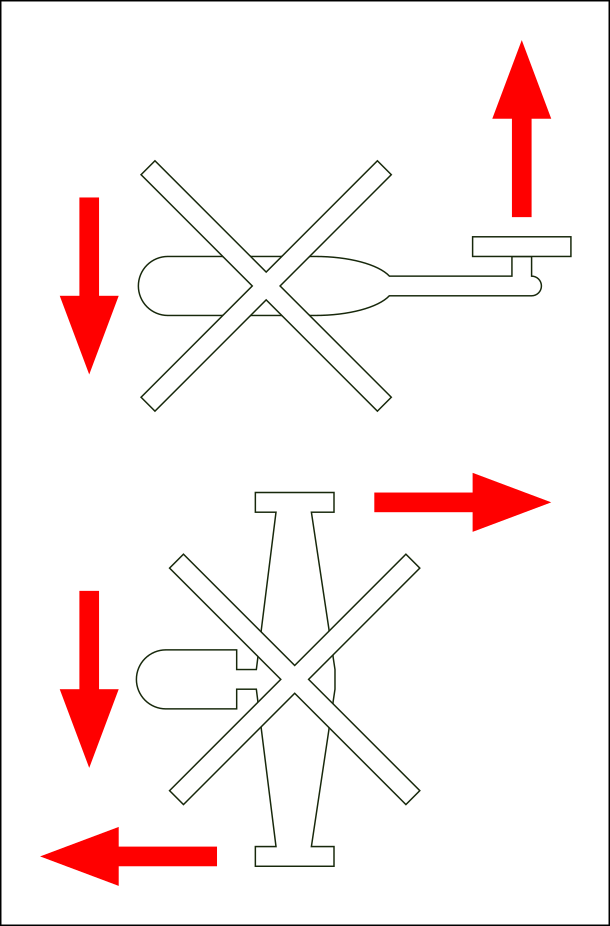
I would get rid on the left wing thruster but whatever.
1 Like
Not the boom per se, but there is the NOTAR.
1 Like
There are also the Kaman helos that use angled, intermeshing counter-rotating rotors to counter torque. They still have a stubby tail for stability, but no tail rotor.
K-1200 K-Max
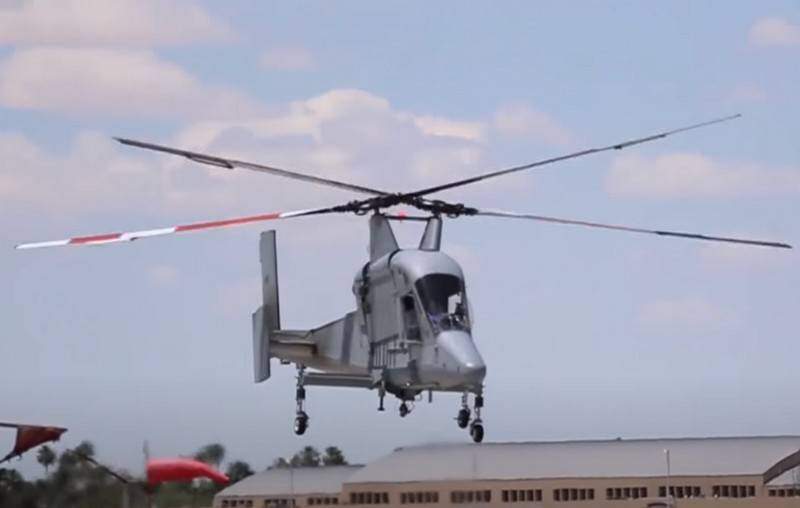
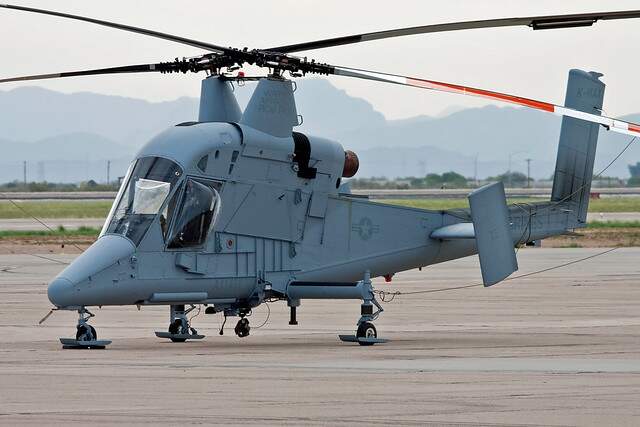
The old Kaman HH-43 Husky as well.

2 Likes
Many of the helicopter drones, such as the U.S. Marine Corps’ K-Max, are now decommissioned and in museums. I know because I asked NAVAIR as I wrote an article on the topic of unmanned aerial vehicles.
The reason for this is because smaller, cheaper, lighter, and expendable unmanned drones have taken over. The U.S. Navy can produce many more FPV drones for a lot less cost than making these larger and much more expensive helicopter drones to do the same work because the U.S. Navy determined that most deliveries to warships off the coast are under 50 pounds of spare parts and it makes little sense to launch an expensive unmanned helicopter and burn so much aviation fuel to deliver the small cargo.
These larger unmanned helicopters were used in the Global War on Terror, but even the unmanned MQ-8 Fire Scouts were decommissioned and stored and not built in numbers. The War in Ukraine’s use of small, cheap, expendable drones has really changed how the U.S. Military views drones now.
2 Likes
there are several experiments, and the closest to ùmy heart is the Airbus Racer:
Airbus Racer Compound Helicopter Flies at the Paris Air Show – AIN
you still need the boom for extra stability
1 Like