Being on the management board of a housing association (rather unique Swedish concept) and having to deal with rusted pipes, leaks (spontaneous or caused by clumsy workers/owners), whining about cooking smells from the neighbours, whining about noisy neighbours (I have listened and it is spooky quiet), too warm or to cold, aging building materials, elevators failing, fees not paid et.c, I sometimes think that a cabin with a wood heater, well and pump in the yard,
dry closet off in a separate building would be quite restful but then the access road would get blocked by snow or falling trees or washed out by heavy rain or snow smelting.
I’ll just have accept my fate and realise that I am screwed AI or no AI …
1 Like
Did the beer go bad?
1 Like
AI (and its potential), both positive and not positive, is remarkable. I mean that sincerely. But like everything else Sapien related, we must never forget that it is prone to abuse by NS (Natural Stupidity)
2 Likes


The old saying:
A fool with a tool is still a fool.
4 Likes
Exactly. When you’re out of your depth and try to use AI to prove a sheet metal tool locker is actually an armored fuel tank, it may be time to put away the keyboard for a while. There’s a reason ChatGPT and other platforms give you that warning…
1 Like
My 5 cents, in using AI:
It acts like a toddler who wants to please everybody, it won’t disclose classified or secret stuff, but when you use reverse psychology it corrects you by throwing the facts in your face.
I tried using it for 3D designing and I’m pretty confident it won’t replace us (3D modelkit designers) yet.
Mind you there is a difference in 3D model rendering (lots of scammers out there) and 3D modelkit designing.
Designing with polygons and regions is easy (hollow models with no volume, AI is very good at it), designing to spark erosion metal molds for plastic model kit injection is something else.
So I’m not in fear for my package of skills being replaced by AI yet.
But in general I’m not a fan of using AI in modelbuilding of 3D printing for following reason:
Some people use AI to render something, claim it’s ready to 3D print, you pay big money, afterwards it can’t be printed (seller no longer contactable) and then complain to be scammed.
3D cults is full of such scammers.
But the reaction to someone wanting to use AI is a bit overboard.
2 Likes
Tell me what you think about this example of AI:
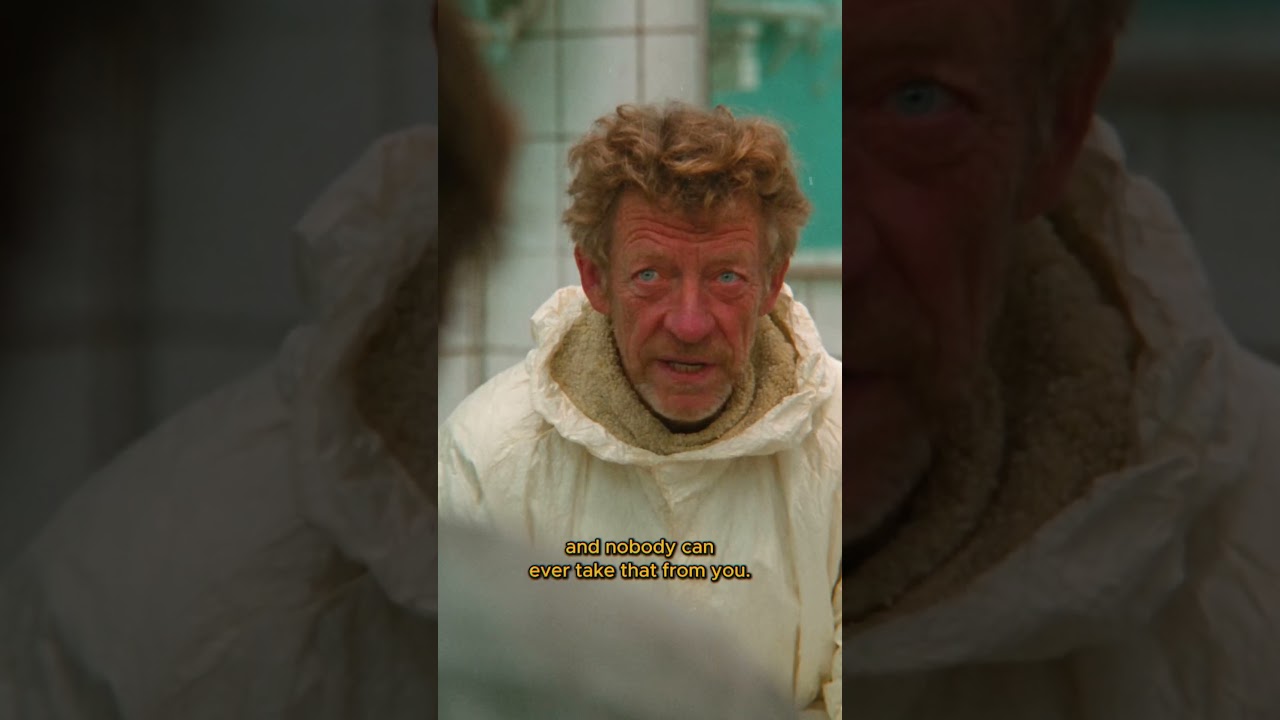
Isn’t yours a country that prizes cans of rotted (I mean fermented) fish that can only be safely opened outside?.. 
2 Likes
There is a small subculture of surströmming-lovers.
The rest of us cover our noses and move up-wind a.s.a.p.
It smells like rotten eggs, dogs love it.
I would rather work in the severs than eat surströmming.
2 Likes
It is like some other examples of bad actors / bad acting I have seen.
Acting on the level of reading straight from the manuscript.
“A bit contrived” sums it up quite nicely …
1 Like
Fairly good acting for AI though, compared to Will Smith eating spaghetti.
1 Like
I think you missed the irony in that one.
There’s a channel here that does AI generated shorts and sometimes feature length “films.” I have to say a lot of them are very good.
2 Likes
Wow. Isn’t the entire point of our hobby to replicate as accurately as possible? OK the primary aim is to please ourselves, but next is to create something realistic, at least in our own eyes.
So why shouldn’t the means justify the ends? If I see a purely AI/3D printed model that looks like the real thing I’d applaud it. Still waiting mind you.
That said I’d also have a personal grading system beyond applause, with total scratch-building on top.
4 Likes
I was talking (writing) about how the “actors” spoke.
The irony of the actual content was obvious.
Some AI voices stil have issues with understanding English,
just two examples: how they pronouce read or lead (I will read a book, I have read a book,
Jones will lead the workforce, older solder contains lead).
1 Like
Creative use of “AI”
2 Likes
Machine religion, machine god
partially AI-generated music based on Warhammer lore
Poetic content? Can be discussed.
There are many non-AI songs with a “deeper” content and there are
all-human songs with a lot less “depth”.
I listen to the sound, I enjoy the end product, and couldn’t care less about
how or who created it.
1 Like
AI is not inherently good or bad, just as with almost all new technologies (from picking up the rock to splitting the atom), but is subject to potential abuse along with creating unintended and unforeseen bad consequences, even when used in benign ways intended for good.
Technology has always (until perhaps now or perhaps sometime in the not-too-distant future) been neutral and, again like the weather, has simply added another condition to the environment that we have to learn to live with (for good or bad). The consequences of that technology, its use and existence, have also been in the hands of the people who have used it. However, as technologies grow in their power to affect everyone and everything, the consequences of its use are not limited to just those who actually use it. Everyone is possibly affected whether they embrace the tech or not.
Certainly, the use of AI in many situations has shown that it can have positive effects on productivity and efficiency. So far, so good. On the other hand, the potential detrimental consequences of some technologies have taken decades if not centuries to manifest themselves in ways that people can recognize in their daily lives. And often the more powerful and pervasive the technology, the quicker it has been embraced and changed the human condition in some macro way, the longer it has taken to see the detrimental consequences, which are themselves very often quite subtitle and seemingly trivial (at least when first noticed). Sometimes those detrimental consequences are indirect and difficult to associate with the technology that is their root cause.
I’m not a technology Luddite who immediately assumes the worst about AI. I am, however, cautious and, I believe, rational in viewing the near ubiquitous and ready adoption of AI with no thought to its potential for detrimental, unforeseen and unintended consequences. There are many examples of this slow realization and recognition that what was once thought of as a totally benign or positive technology has turned out to be not so free from bad consequences.
The discovery of Penicillin led to the universal adoption widespread medical use of antibiotics. No one could argue that in the past century, that antibiotics have saved countless lives. However, over that same century of ever-increasing use and development, the widespread universal use of antibiotics is now beginning to be viewed with caution as the potential bad consequences are slowly dawning on the medical community. Antibiotic resistant strains of disease causing bacterial are becoming more prevalent as well as the recognition that overuse of antibiotics can cause damage to the human biome.
The train, mentioned in an earlier post, was the archetype industrial age technology based on burning coal. Long-term detrimental effects were there (just not with imagined dangers of speed to the human body) but in the creation of pollution and social and cultural conditions that were neither healthy to the individual or society. The use of coal evolves into the use of other fossil fuels, and today we have the potential for manmade global warming and climate change. These detrimental effects have taken nearly two centuries to manifest themselves in ways significant enough to be recognized (and which are still being debated).
There was a time when benign and productive uses of atomic explosives were viewed as something that might change the world for the better, and even today people debate whether or not nuclear generation of electric power is a net positive or net negative. Gun powder, nitroglycerine and TNT have dug thousands of miles of tunnels and probably hundreds of thousands of other useful excavations while at the same time they have been used to kill millions in war.
AI is potentially the same kind of uber-powerful technology that could have equally (or greater) positive and potentially negative consequences. So, while everyone embraces it with a warm hug and a big ol’ sloppy kiss, I think it’s also worth considering those possible and potential negative consequences. Now, not a century from now, is the time to proceed with caution.
Human creativity and imagination have created AI, but don’t allow a lack of imagination to hamper the contemplation of what an AI future might look like, both the good and the bad, and to them put some rational limits on how it’s used and allowed to develop. Like antibiotics, the immediate positive attributes shouldn’t blind us to the possible future negative outcomes on individuals, society and culture.
That caution is not being a luddite; that’s just being careful enough to not look down the barrel of a loaded gun with someone else’s finger on the trigger.
2 Likes
Around here the fear is that TikTok and social media will adversely affect the reading ability among teenagers. TikTok replaces books …
I was told about it in the summer of 1985, 41 years ago. My company CO told us that some types of antibiotics were kept away from use to try and make sure that we had something that bacteria hadn’t developed resistance against.