May I ask what color did you use for the overall painting?
2 Likes
Thanks Herman,
It took a bit of research. I do know that many have selected Tamiya XF67 (Nato green) for this one. My eyes finds it a bit to vivid green with a yellow tinge. The Swedish standard color used on this model of Archer is called 325M. I consulted AI which gave me the FS standard colors 34096 or 34079. As I do have the FS color chart I found a very close match in Tamyia XF58. I did add about 10% Tamiya gloss clear and about 2% of Tamiya gloss black to this. I did prime my Archer with Tamiya X1 gloss black (X1).
I have not had the opportunity to see Archer in real life but I have seen other Swedish vehicles painted in 325M. In sunlight it has a yellow/green tinge but appears rather dark grey green in shadow and overcast conditions. From studying a great number of Archer images on the web I feel that XF58 is a better choice than Tamyia Nato green. MRP do have a Swedish colour mix called 325M but this one is far too dark and brownish in my oppinion.
/Ingvar
3 Likes
Thanks Ingvar, very enlightening. I have the colorchip of 325M, that I can use as reference for a future build. So Swedish Army paint there vehicles in 325M only?
2 Likes
Hi Hermann,
Yes and no, the CV9040 B is most often in 3 color splinter cammo

while the up-armored CV9040C most often is in 325M
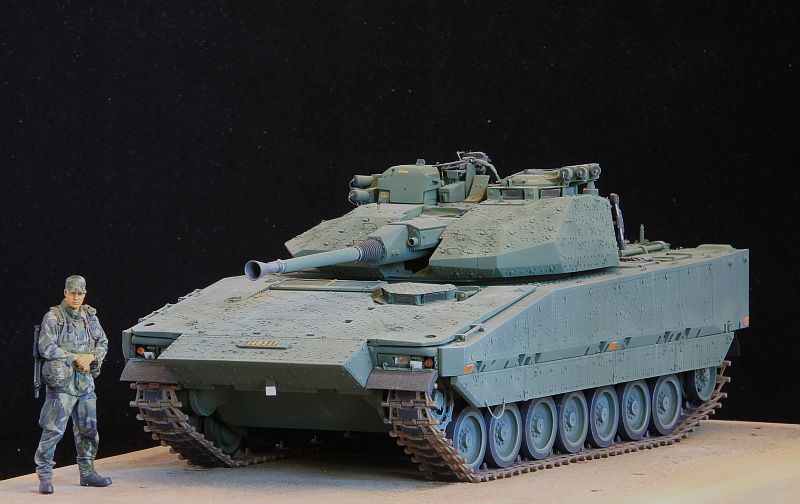
Most Strv 122 (Leo2A5 SE) are in the same three color splinter.
Some older vehicles can still carry the old four colour splinter cammo. The brown color in this scheme was omitted sometime in the 1990ies.
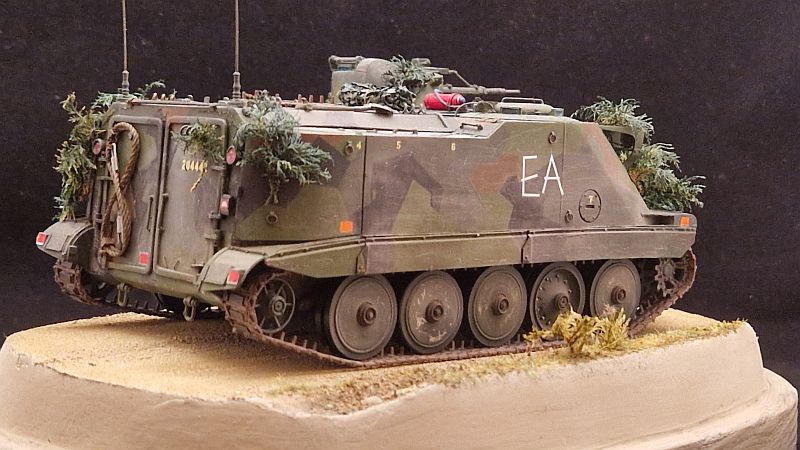
My personal thoughts are that you need more than paint to stay hidden nowadays due to improved optics. MCS (mobile camoflage systems) is a better option when you need to stay hidden and in this case the base coat is of less importance. (it still looks cool though  )
A Strv122 in MCS (or my attempt at it)

And yes, there is an MCS coat for the Archer…
/Ingvar
4 Likes
Barracuda is looking excellent. I saw real Barracuda on Bundeswehr vehicles and can image how difficult is is to make.
1 Like
Hi all,
I do consider this one finalized now. A friend saw that I followed the kit instructions on the RWS and mounted the right armor plating on the left side and vise versa. That is corrected now. I got a load of small chains in my mailbox earlier. These have been airbrushed with some light rust and fresh rust to get that bright orange touch. Some weathering on the vehicle to bring it all together. A soldier standing on the side to give perspective on the whole thing (He will NOT be standing there during a fire mission )
Do you see something I have missed on this one or can I safelly put it together with my other vehicles in my Swedish collection?
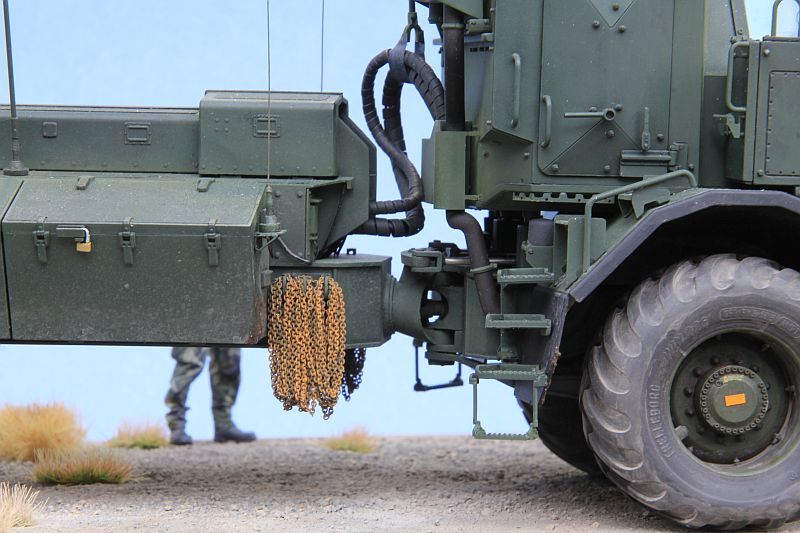


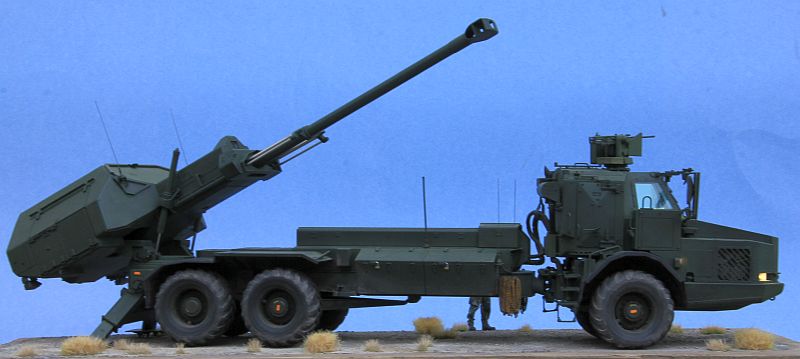
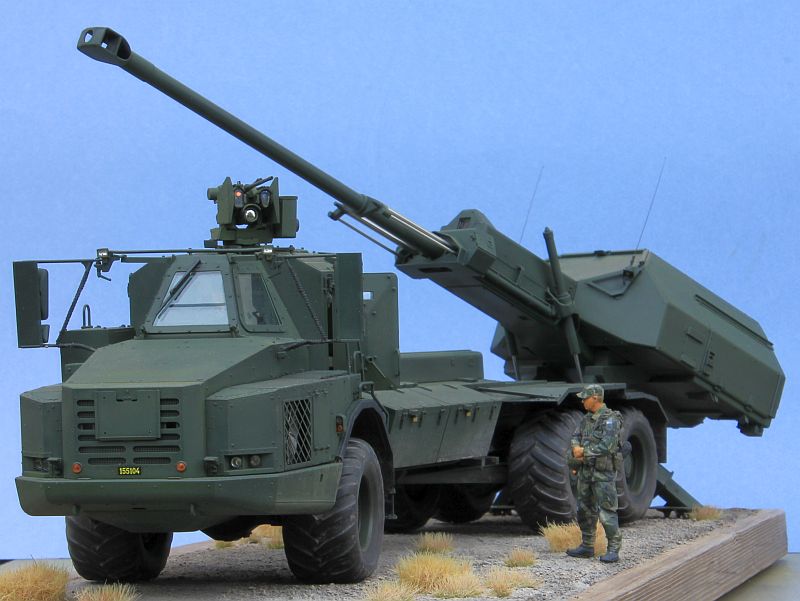

Thanks for watching…
/I
19 Likes
Excellent job Invar! You have a great collection of very well done vehicles there as well.
3 Likes
It looks great to me. I don’t think you missed anything. Awesome job.
2 Likes
Very nice work Ingvar, your attention to detail is exceptional!
2 Likes
Thank you all for the kind feedback.
/I
1 Like
Very nice big, ugly gun. Give it a nice forest back drop and it could pass for the real thing.
Ken
2 Likes
You did a stunning job on this one.
I have a question though, is it standard to have the tires structure oriented the opposite between the front axle and the rear ones?
Olivier
2 Likes
At least in the US, it was SOP for certain units to purposely reverse the tread on tires. For instance, on the HMMWV gun trucks, the left front and right rear would be oriented correctly, and the right front and left rear would have reverse tread. This insured that whether the gun truck was moving forwards or backwards, it had a tire on both side with tread “gripping” in the proper direction, as well as front and rear.
All theories about trying to confuse the enemy about the direction they were going is just nonsense.
I don’t know if other countries adopted this, but is does make a bit of sense.
2 Likes
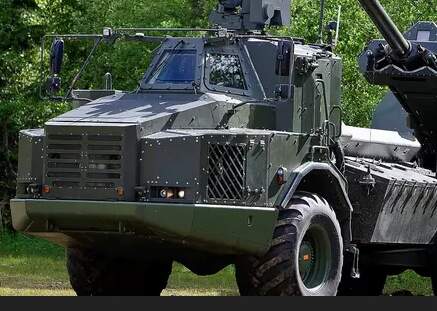
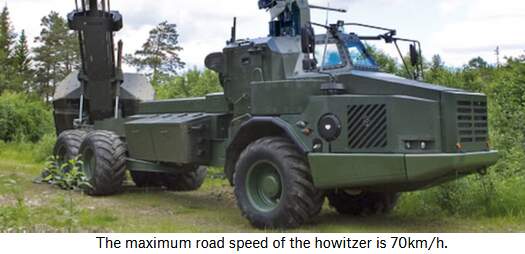
I wondered about that too the other day, so I asked Google for some photos of Archers, and indeed, it’s like that on real ones, too. For example:

(source)

(source)
3 Likes
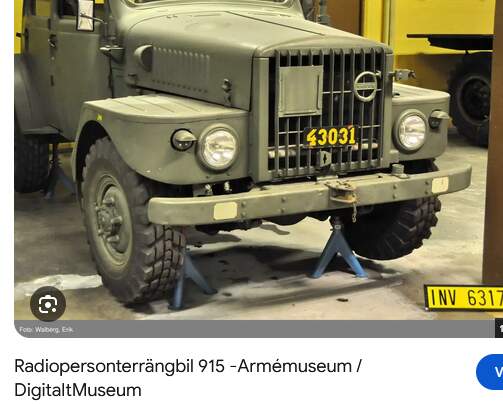
The reason behind reverse pattern on the front axle is the fact that this specific pattern gives more grip in one rotational direction than the other. It is good to have the ability to dig yourself out of some boggy terrain, hence the direction on the two rear axels. Someone realized that it is as important to also stop when you need to, that is why the front axel have the pattern reversed. This principle have been used on Swedish wheeled army vehicles (having directional tread patterns that is) at least since the 1960ies. At least the TP21, RAPTGB 915, TGB11, TGB 13 etc. have used this way of arranging the tires in order to be able to stop effectively as well as accelerate in slippy conditions. As most know, about 60 -70 % of the stopping power on a wheeled vehicle provided by the front wheels.
Some other vehicles have unidirectional pattern, -in this case direction does not matter as much.
/I
1 Like
I think the front axle has the tread arranged for going forward
while the rear axles have the tread oriented for going backwards.
The front tires do the digging when going forward and leaves
tracks for the rear wheels to follow.
The rear wheels do all the work when backing up and the
front axle gets a track to follow in.
1 Like
Fabror tung, jag tror du behöver fundera mer på det där. När framhjulen slirar på löst underlag vid inbromsning kommer de att bygga en kulle framför sig som hjälper till att få stopp. Vända åt andra hållet flyttas underlaget åt sidan i stället. Principen har använts mycket länge inom svenska armen, jag killgissar att det finns empirisk data kring detta. Däckmönstret är ju defacto orienterat så, se även bilder på Tgb 11, 13 och Suggan. Alltför många tänker på att få grepp så att man kommer fram, -men alltför få tänker på på vad som händer om man inte får stopp på sitt fordon när det tarvas.
1 Like
Jag noterar bara att mönstret är vänt så som det är vänt på vanliga frontlastare
och traktorer. Den riktningen betraktar jag som rättvänd
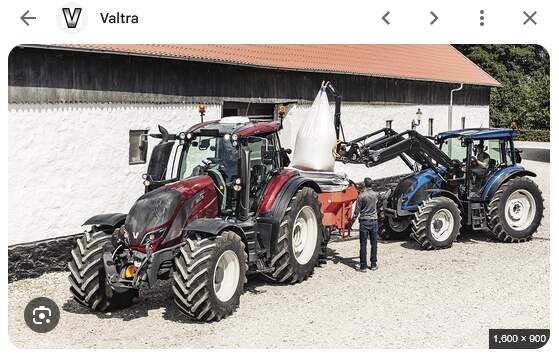
När däcket “gräver” så föser det marken åt sidan, när det hasar framåt samlar
det ihop underlaget in mot mittlinjen.
1 Like
Super build sir
3 Likes
Vot aer yew too goen oon aboot?
The Swedish Chemist’s Shop - YouTube

M
2 Likes