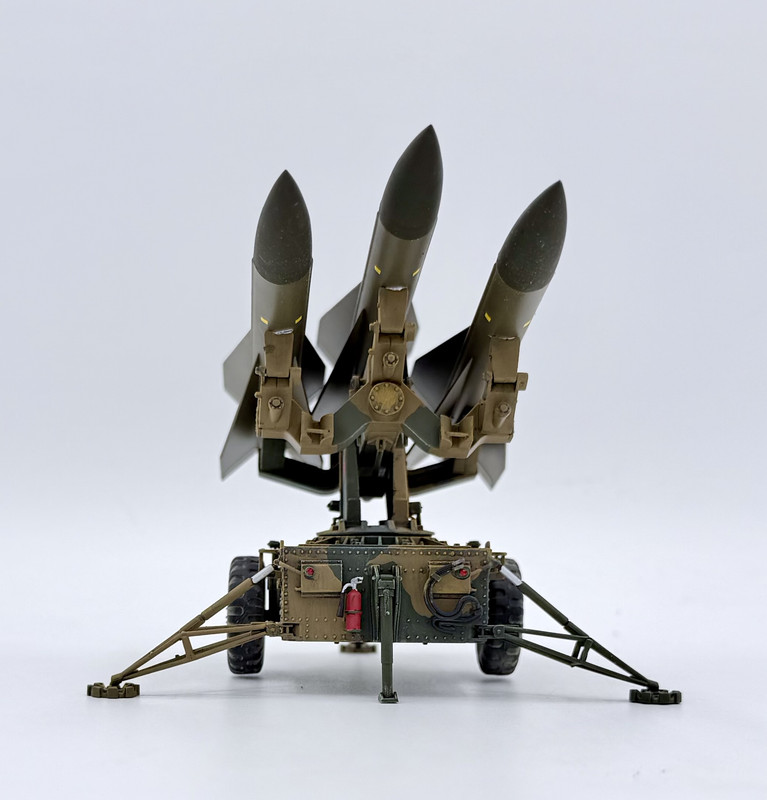
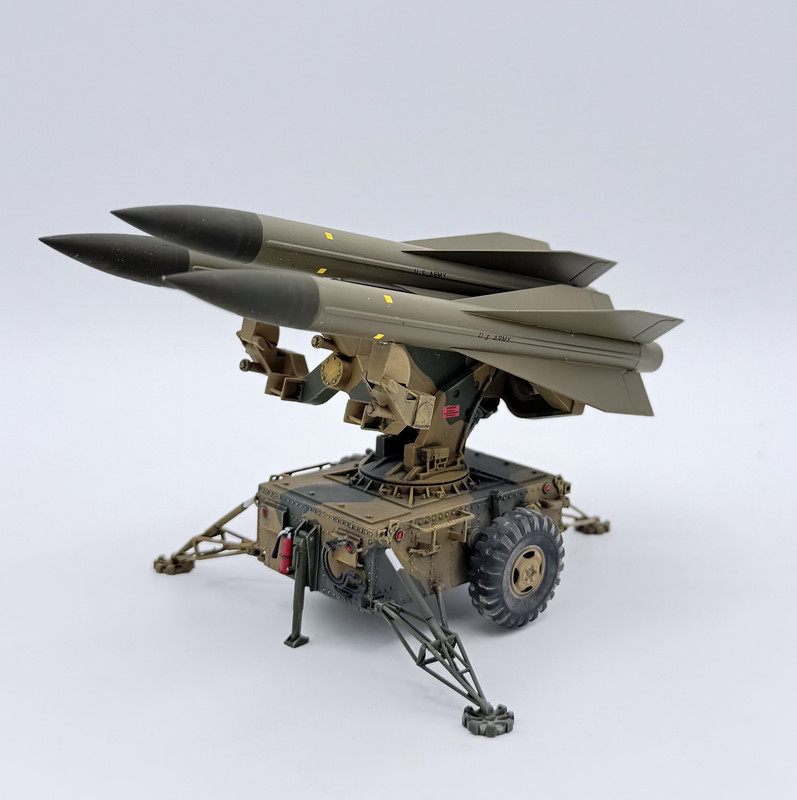
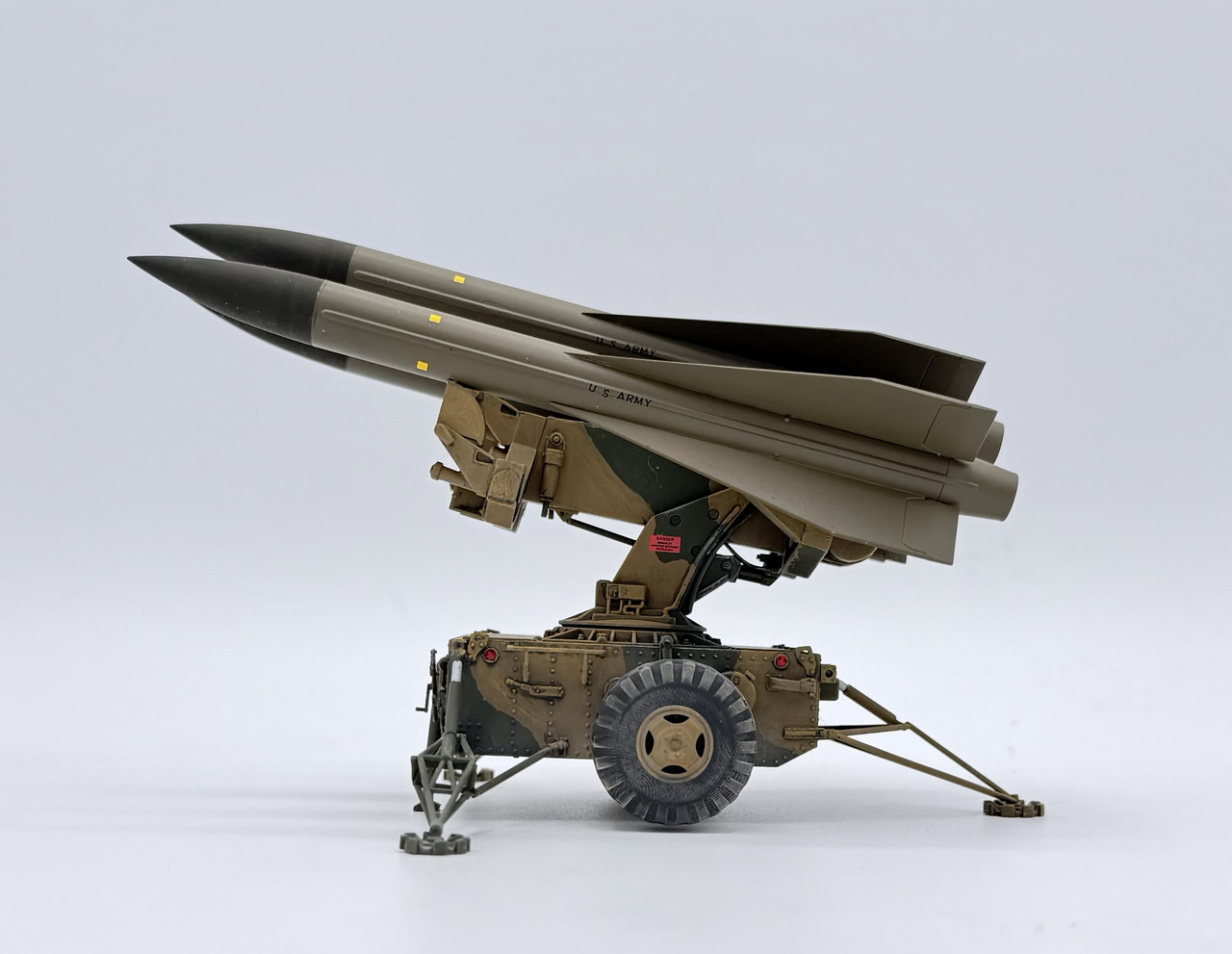
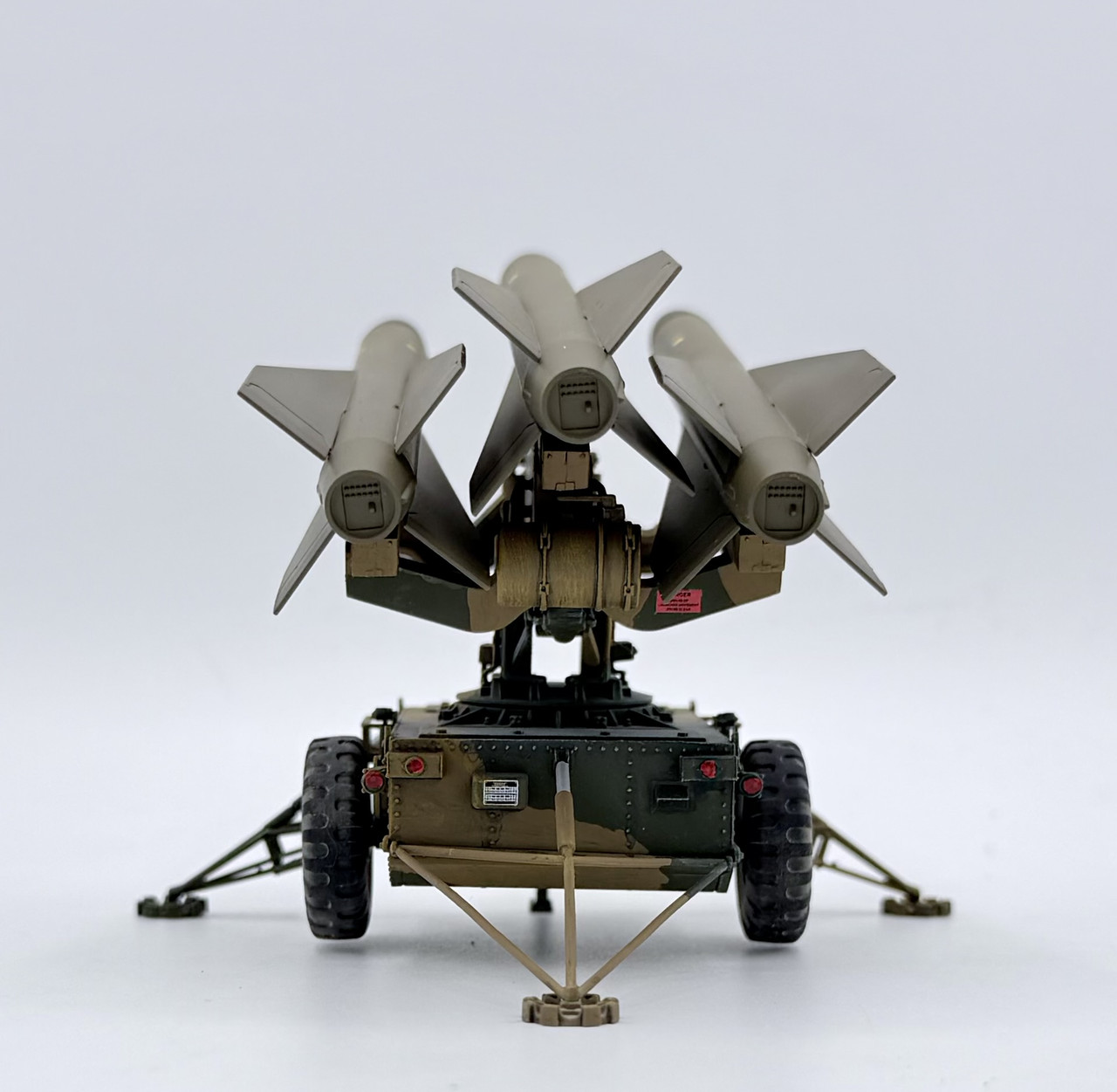
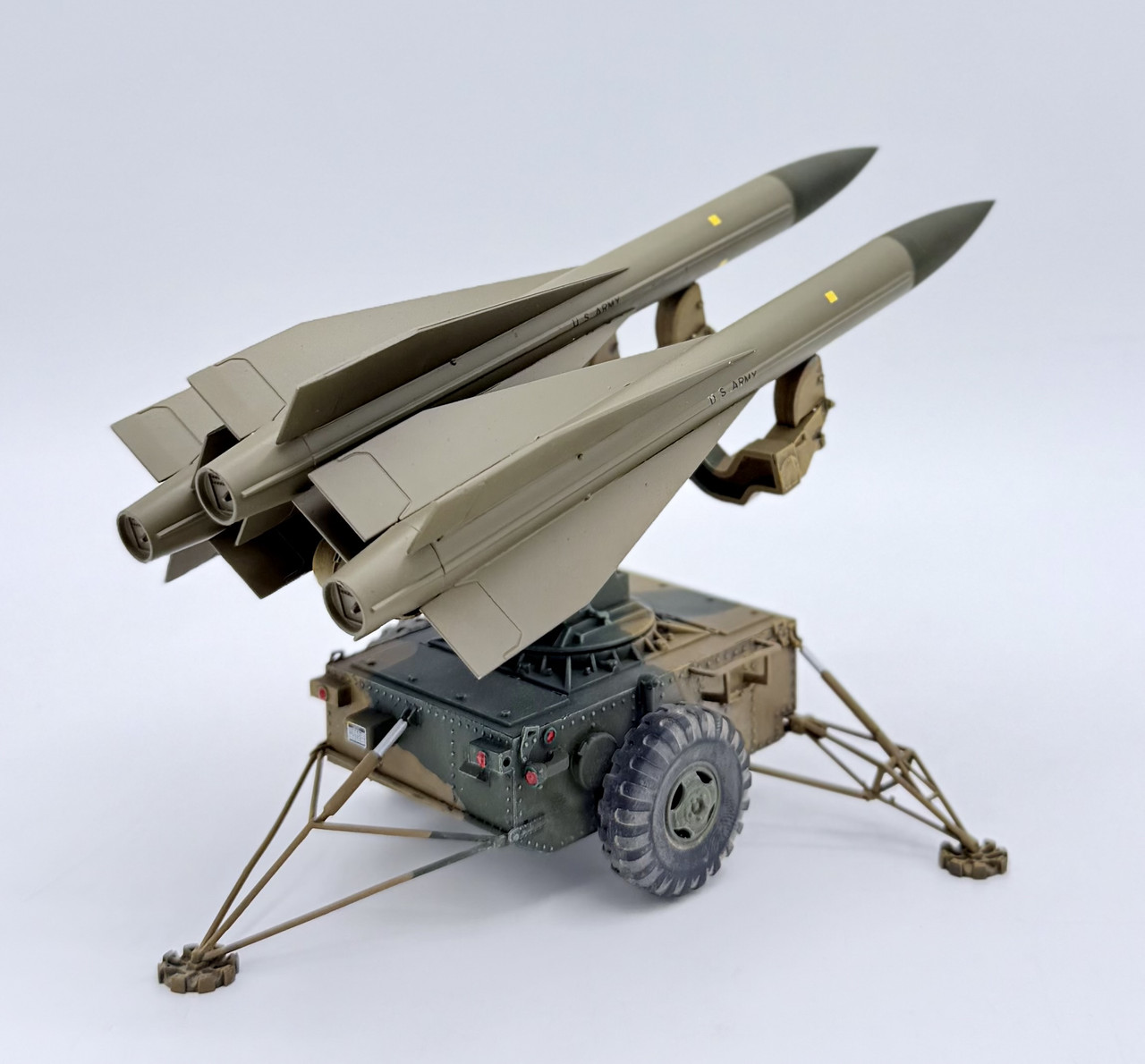
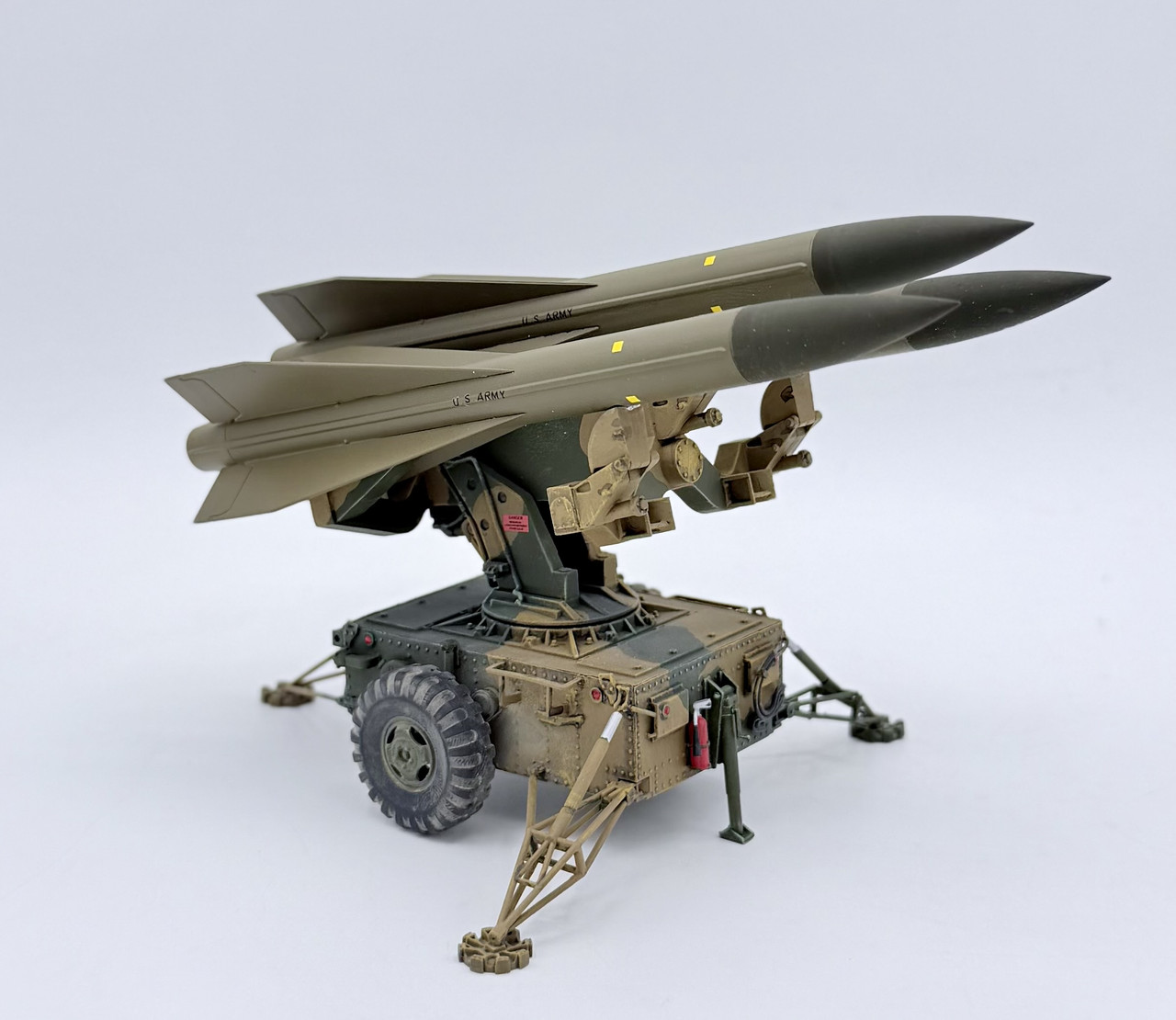
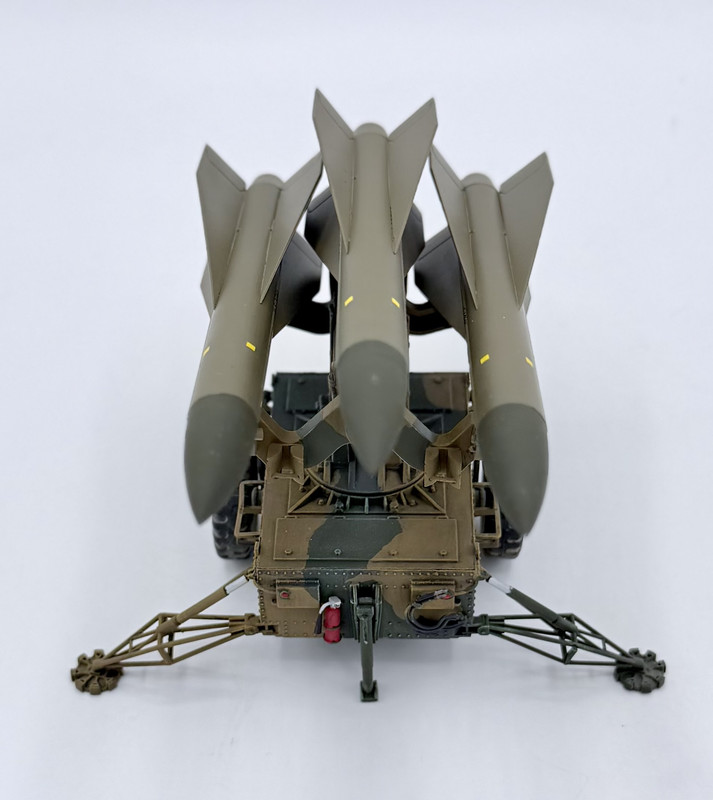
My latest completion, Dragon’s 1/35 HAWK missiles on M192 launcher. I built this kit OOB and painted it in MERDC colors based off the few reasonable reference photos of US Army launchers that I could find online. The Launcher is painted in AK 3rd Gen and Real Colors paints, while the missiles are in Gunze Aqueous and Tamiya acrylics.
I always had a bit of a soft spot for these missiles. As a kid I used to go to an aviation/air force museum with my father every other year or so, and what impressed me most was seeing these missiles and the Nike missile. They were so menacing to a young kid, because they just oozed aggression. So when I saw this scene in the movie The Dictator, it made perfect sense to me.
Many thanks for the kind feedback. Now look for where Dragon made their goof on the kit. Otherwise I would highly recommend it. In all honesty one session of research would have let me find and then correct their gaffe when I could have.
Gino, is that a M35 2 1/2 ton or M54 5 ton series truck that was a prime mover for these things?
M35A1 is what it looks like. M35 features are the spare wheel on the driver’s side and fuel tank on the passenger side, and no extended exhaust stack (A1 version). The above missile supply trucks look to be M36A1 long wheel base, extended bed versions.
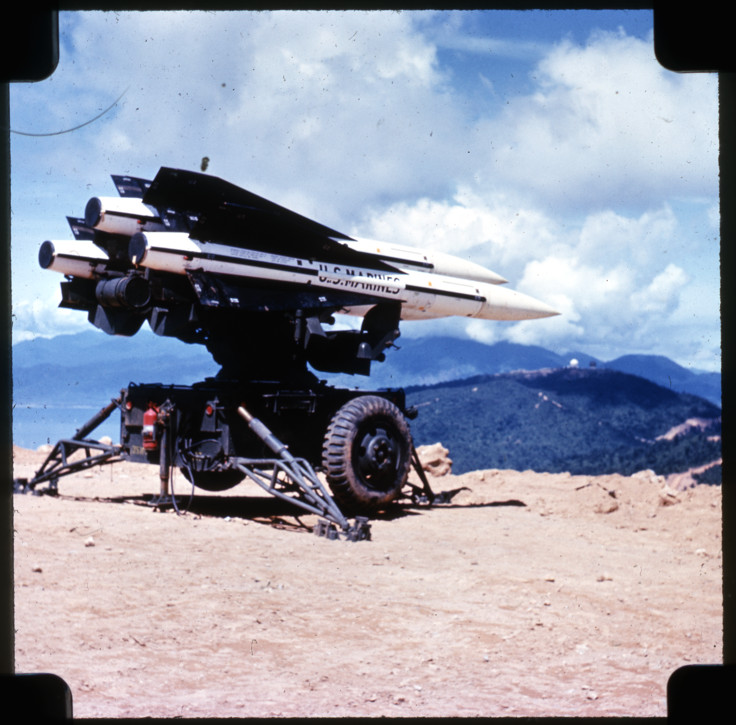
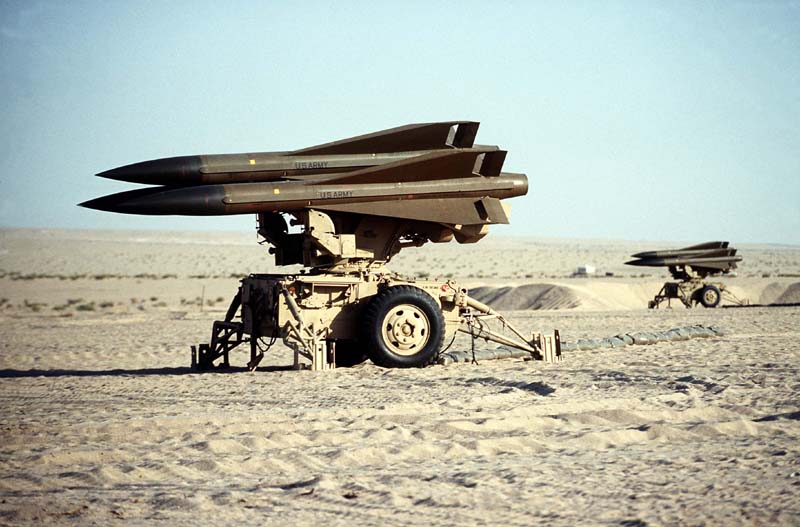
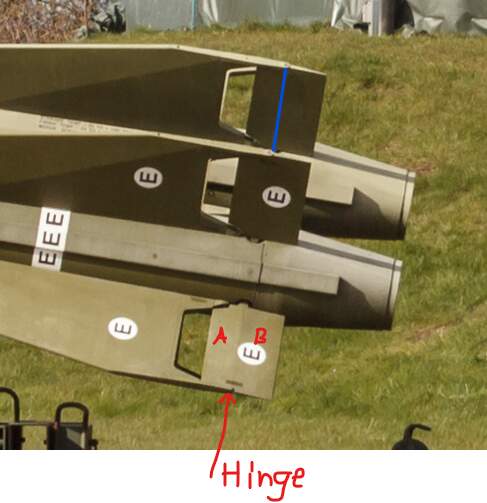
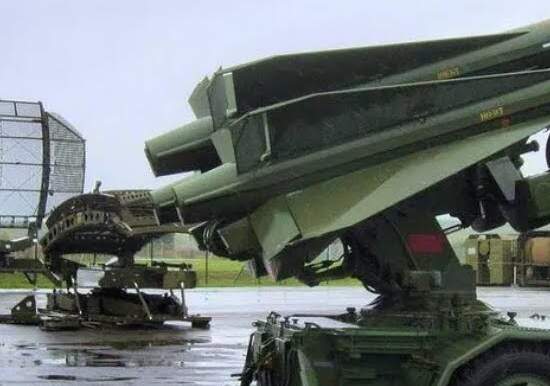
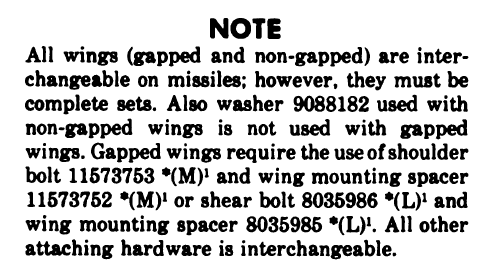
As the HAWK is being scrutinized here: In so many photos the control surfaces have a large gap at their front, in others none at all, and some have a narrow gap. What’s making the difference, please?
I wish that I knew. I asked a guy in our AMPS chapter who used to be a HAWK crewman, and he didn’t know, or more accurately couldn’t remember… After all, they were phased out in US service some 30 years ago, give or take. Judging by photos though, and taking an uneducated wild guess strictly based upon my own interpretation, the older models would be the type with the control surfaces without the gap, and the ones with the gap are a later type.
A part of the rudder is in front of the hinge so that the flow
of air (or water) pressing against that part of the rudder helps
to reduce the force needed to turn the rudder.
The part behind the hinge must be larger otherwise it will be
very difficult to ge the rudder back to neutral.
I presume the gap is there to make sure that the front part of
rudder gets some airflow as soon as the rudder is turned.
Area A is smaller than area B (fits with balanced rudder).
Hinge is forward of the middle of the control surface.
Area A tapers towards the front and will catch airflow as soon
as it deflects just a little.
Area B tapers towards the rear.
The blue line indicates the angle between area A and B, also
visible as a slight variation in the colour between the two surfaces.


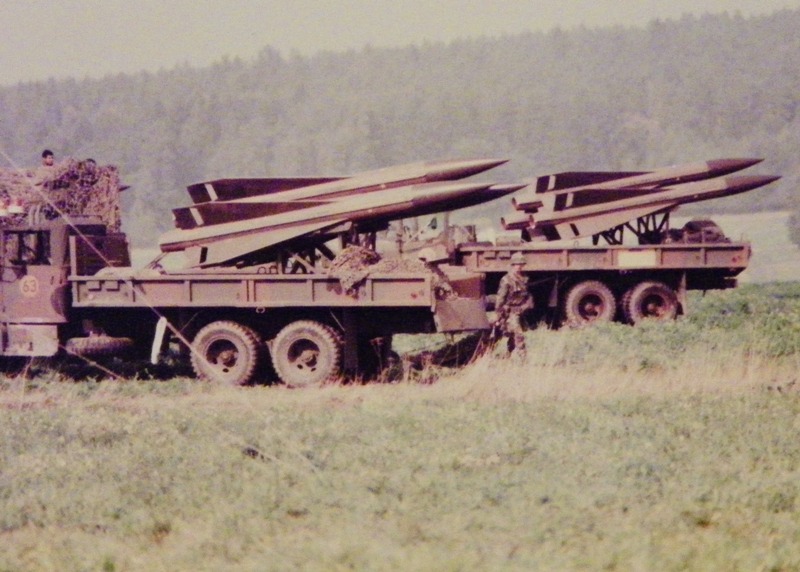

 After all, they were phased out in US service some 30 years ago, give or take. Judging by photos though, and taking an uneducated wild guess strictly based upon my own interpretation, the older models would be the type with the control surfaces without the gap, and the ones with the gap are a later type.