Many years ago I read or heard about using construction machines (tracked excavators, bulldozers etc) as reference for track weathering.
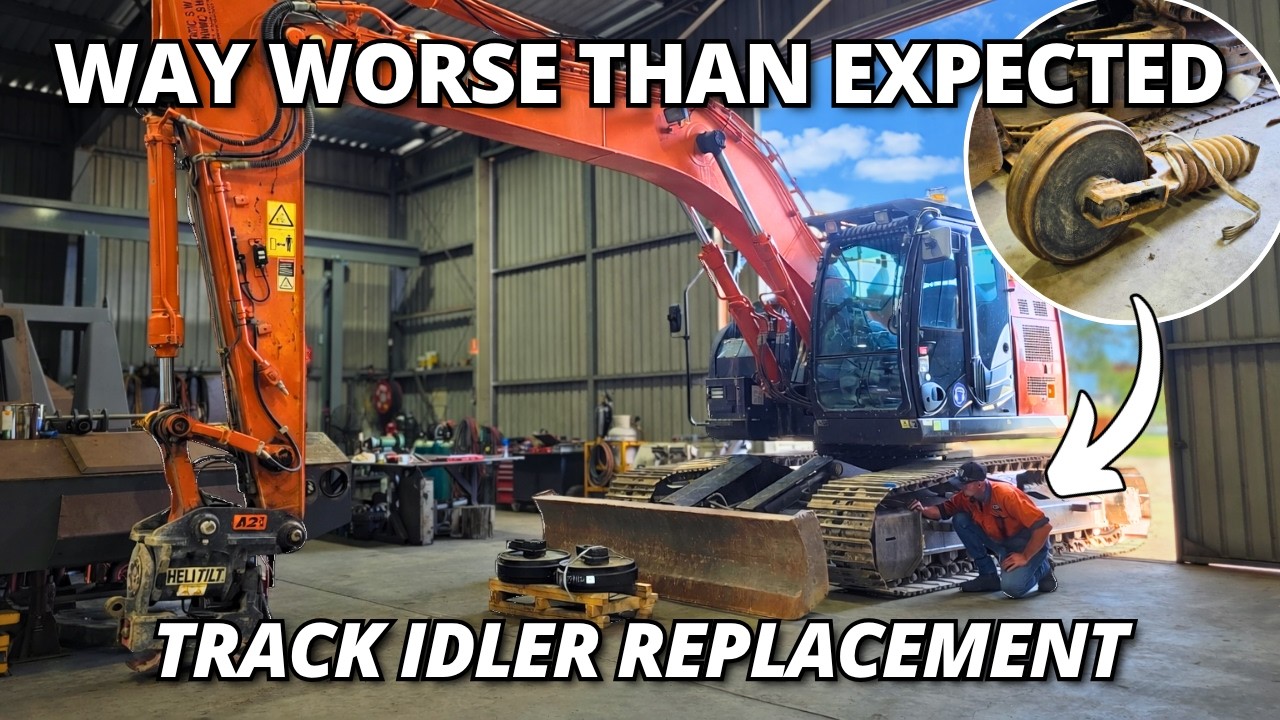
This video is about replacing the idlers on an excavator. Plenty of close-ups.
Many years ago I read or heard about using construction machines (tracked excavators, bulldozers etc) as reference for track weathering.
This video is about replacing the idlers on an excavator. Plenty of close-ups.
Yeah, he does some impressive repair and fabrication work. similar to Oz Armor.
Useful for those modelers who know what material they’re modeling. Many tracks were made from Manganese. That would rule out those who liberally apply rust chips to HMMWVs, M109 series, etc…
What’s really interesting is that the idler is not bright steel as often modeled, but rather has a nice patina of rust even after being driven. That’s why I like to look at the weathering on the thing I’m actually weathering.
Having been an equipment operator for years, I always look at how modellers show the wear surfaces on tracks, blades and the spades, on vehicles and artillery pieces. Unless they were in use the bare metal surfaces would quickly acquire a dull patina of light rust, Especially in a humid or damp climate. That, and the nooks and crannies where dirt and mud will build up are things I almost always notice, along with grease buildup around joint surfaces and fuel/oil spills. Most operators are not the neatest people. Ha ha Wayne
Years ago, a bulldozer was working nearby and we allowed the driver to park in our backyard in evenings and weekends. Being a keen AFV modeller I noticed how the tracks sprocket and idler would acquire a light patina of rust over the weekend but that all disappeared after a days work. Lots of dirt and dust of course. But no rust when it was active.
Of course this wasn’t directly comparable with tanks because as mentioned above, manganese was used for tank tracks.
Tank armour itself isn’t prone to rust either. Some AFV modellers apply lots of rust very inappropriately.
I remember coming across an gutted, abandoned and neglected Sherman on a French roadside near Roscoff, a few years ago. Even though it had been sitting there for years. There was rust but not nearly as much as you might think.
So as has been said, do your research.
I think most of the “rust” is just accumulated dirt.
The tracks are manganese steel Mangalloy - Wikipedia
After years of using silver for everything, I decided to replace it with engine grey on the ‘steel rolling contact surfaces’
Depends on the tank and the tracks. Some years ago, Business Insider had an article about the refurbishment of M1 tanks; one of the photos in the article showed the tracks before they were reinstalled on the refurbished tank; you can clearly see the bright orange rust patina:
You don’t get a really good view of the tracks, but there are a series of photos beginning with the reassembled tank in the shop and its subsequent testing; in the photo looking down the barrel of the cannon, you can see that all of the corrosion that had accumulated on the tracks while the tank was being refurbished has been scrubbed off.
One of the more interesting photos in the article shows an empty hull and turret being hoisted onto a flatbed having sat outside for a couple days after the gutted hull and turret were blasted with steel pellets to strip them back to bare metal; you can see from the color how fast the bare metal acquires a bright orange layer of rust waiting to be shipped to Lima, OH, where it gets bead-blasted again to remove the rust before getting repainted; I have to wonder why the bare hulls and turrets don’t get a primer coat after coming out of the first bead-blasting to eliminate the second one.
Grey with highlights from a soft-lead pencil - 8B - 12B artists pencils. (Along with appropriate black, and brown oil washes)


That’s interesting, clearly something else is happening with the M1 tracks. I noted something similar with a bulldozer that was parked in our backyard every weekend when it was working in the park behind our house.
If it rained at the weekend the tracks took on a patina as seen in the picture. But after a few hours work it was back to natural metal.
Presumably the M1 tracks are similar.? They may take on some rust when parked but in service the rust is worn off?
From various pictures I’ve seen, tank tracks will rust quickly if the tank just sits around in a more-or-less humid environment for several days, but that the patina which accumulates is thin, and is quickly scrubbed off by abrasion from dirt, either scrubbed against the track as it rolls over the ground, or kicked up onto the track. Tanks in use may have dirty, dusty, or muddy tracks, but won’t have rust unless it’s been standing stationary for a while.
