Fixing Warped Resin Parts

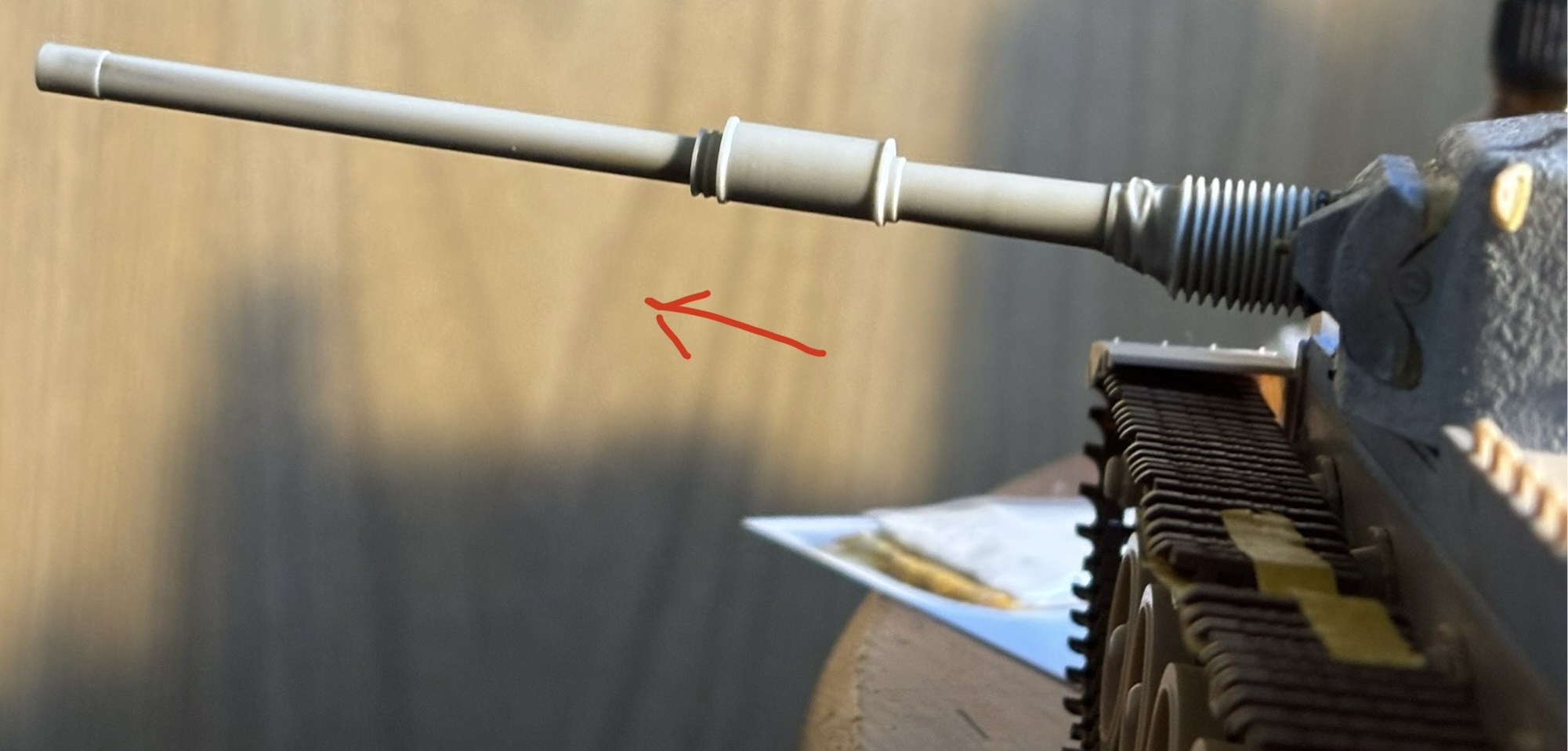
Hi! I just put on a resin Panzer Art barrel for my Sho’t Kal, and noticed that it was warped.

(The mantlet is pointing down a bit, while the gun tube starts to bend up)

I’ve seen a bunch of suggestions such as boiling water or using a blow drier, but I wanted to ask what you all would do in this situation.

Thanks!

1 Like

Ditto.

3 Likes

Start with the least aggressive procedure first.

3 Likes

From my screen the final section of tube isn’t curved, it’s straight – if so the problem is the joint itself. I’m not sure if the above suggestions will help you bend the joint, maybe so. But if it was me I’d cut the final section off, sand a tiny sliver off the cut end and re-glue it so that it’s true. To be certain I’d insert a short length of rod to connect both ends for additional strength.

3 Likes

Or the most effective one. I have been a proponent for many years on this site of blow dryers. You can concentrate the heat for a longer duration, and by using masks, apply heat only to the areas you want. Not practical when using boiling water. Sure, you can resin tracks in boiling water and they will soften, usually with less than optimal results. I’ve built dozens of resin kits and having used boiling since the last millennium.

Here’s why:

boiling water = 100 °C (212 °F),
but many epoxies list a softening point or Tg of only 50–60 °C… so why doesn’t cured resin immediately warp when you pour hot water on it?

Here’s why:


1. Thermal Conductivity

Epoxy and other cured resins are poor conductors of heat.
When hot water touches the surface, only a thin layer of resin actually reaches the water’s temperature. The bulk of the resin remains much cooler — often under 60 °C — especially if it’s thick, on a heat-sink surface (like wood or metal), or exposed for only seconds.

Think of it like touching a frying pan: the surface is hot, but the handle stays safe to hold.


2. Short Exposure Time

The duration of contact matters enormously.
Tg is defined under steady-state heating, not quick splashes or a minute of rinsing.
So brief exposure to boiling water doesn’t allow the polymer chains time to mobilize and “relax” into a soft state.


3. Water’s Cooling Effect via Evaporation

Water cools itself quickly through evaporation, and even boiling water loses heat rapidly once removed from the source. A few seconds after contact, its effective surface temperature can drop well below 100 °C, especially on cooler resin.


4. Post-Curing and Crosslink Density

If the resin was well-mixed, fully cured, and especially if post-cured, the crosslinks between polymer chains resist motion far better than in partially cured resin.
So a resin with a nominal Tg of 60 °C might actually withstand short bursts up to 90–100 °C without warping.


5. Softening ≠ Melting

When you exceed Tg, the resin becomes more rubbery, not liquid.
It takes sustained heat above Tg to let it actually deform — just like glass that softens before it flows.

Blow dryer:

  1. Temperature control:
    • Most household blow dryers reach 60–70 °C (140–160 °F) on high, though some “professional” models can go up to 80–100 °C (176–212 °F).

    • Two-part epoxies and polyesters often start to soften or warp around 65–80 °C, depending on their formulation. So a blow dryer can warm the resin gently without instantly risking damage.

  2. Even heating:
    • Blow dryers allow for gradual, controlled heat, which helps prevent hot spots.

    • Direct contact with very hot surfaces (like a heat gun or boiling water immersion) can easily overheat parts and cause warping or bubbling.

  3. Moisture:
    • A blow dryer adds a tiny amount of air movement, which can help evenly distribute heat.

    • Unlike boiling water, it won’t introduce moisture that could affect the resin surface.
3 Likes

I suppose it depends on the degree of warping; to better define this item we need a scale on which to measure this variable. I suggest we call it the Warp Factor…
:smiling_face_with_horns:
M

4 Likes

WOW thank you so much for the in depth post, I’ll 100% try out a hair drier next time! I used hot water yesterday and noticed that it didn’t do anything when I put the barrel into it for multiple 20-30 second intervals, so your post explains a lot!

Amazing post!

2 Likes

That’s a pretty smart idea, I’ll take a look at it again and think it through.

2 Likes

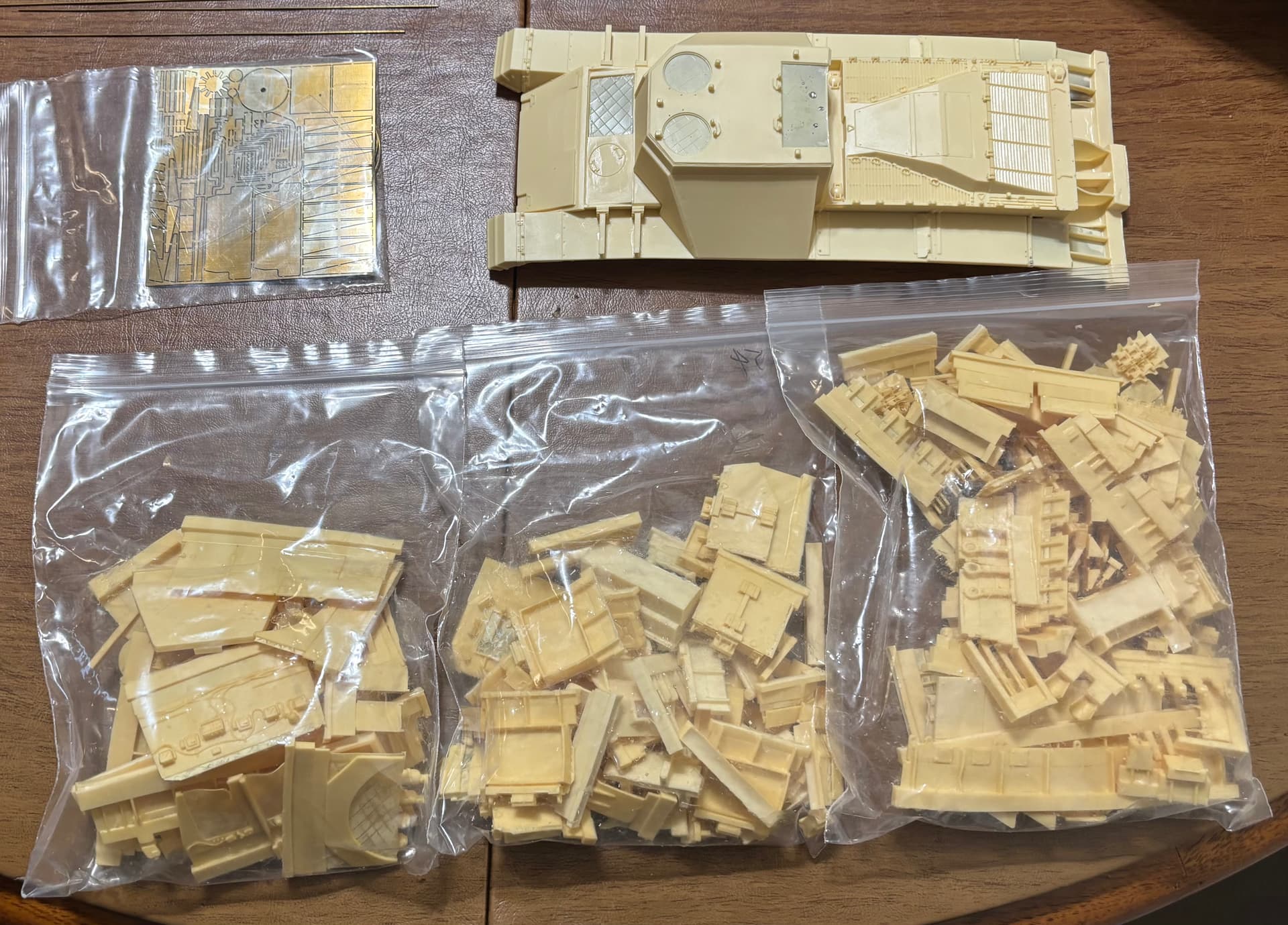
Also I just got this legend conversion set yesterday and it’s got a LOT of resin, if anybody has any tips on how to work on it I’d really appreciate it!

1 Like

I’ve posted tips specifically for Legend before, as I had a lot of input into their kits for years, but those posts may be hard to find.

I use combination of techniques, depending on the part.

Many of the smaller Legend parts have a “line of demarcation” between the part and the resin plug. I just score it lightly with a no. 11 X-Acto until the blade guides itself. Then you can apply slightly more pressure. Keep scoring until the part snaps off. Patience is key here. You don’t need to waste a good blade here either - I find older blades work best. The work like scribes - taking out a thin tendril of resin on each pass. Sharper blades have a tendency to cut rather remove material. That works too, but if you’re pressing hard enough to cut, you can slip and make an errant mark on your piece.

The second thing I like to use is plain old sprue cutter, or nippers. The key here is not to try and cut everything off in one go - take little bites. And plan it so that if your cut spits the piece, it splits it where you want it to split, not on the good part you’re trying to save. That just takes practice. And each part is obviously different.

Third thing: Barrel shaped steel cutter on a Dremel. You can remove huge swaths of material very quickly - works great on those large plugs that are not conveniently located on the end of the piece. Speaking of which:

Fourth method - rotary saw on a Dremel. I usually reserve this for those large plugs in locations where I can just make one long cut without having to worry much about damaging the part.

And finally, the fifth method I use: Wet/dry sandpaper on a piece on granite. This works best for me on large flat resin parts that have a “base” of resin almost as large as the part. Simply place it on the sandpaper on sand. People will tell you that you need to use a circular motion. You don’t. You can if you like, but you can press too much on one side just as easily going in a circle as you can going back and forth. I may start in a circular motion, but as the base gets worn down you’ll be able to tell which corner might be getting sanded more than the others - then simply adjust pressure.

And then there are parts where that same base actually extends past the edges of the part. These are easy. Sand it until the excess around the edges becomes translucent. You can monitor your progress by looking at the translucent excess. If it goes all the way around the part, you can judge your progress by making sure each edge is the same thinness. Usually you can sand until the thin excess literally flicks off.

Hope that makes sense. If I get ahead in my reading this weekend maybe I can post some photos.

2 Likes

That makes a lot of sense! Thank you so much for the advice, resin kits sound like they have a lot of clean up. I’ll be sure to post a blog when I get to the kit eventually though!

1 Like

I vote for Tims suggestion as well.

I was going to ask which part of the original barrel is improved by the resin replacement?
All of it, just the mantlet, the muzzle, the length, the bore evacuator (the can around the barrel), something else?
A variant of Tims suggestion is to cut out the improvement and combine that with the original part.

In addition to what 18bravo wrote about removing resin (all of which a very solid tips)
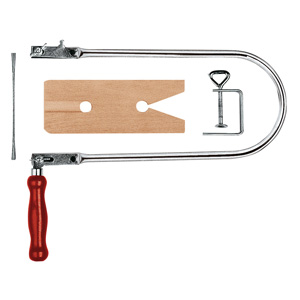
I use a fret saw, this allows me to get into tight corners and saw inside the part.


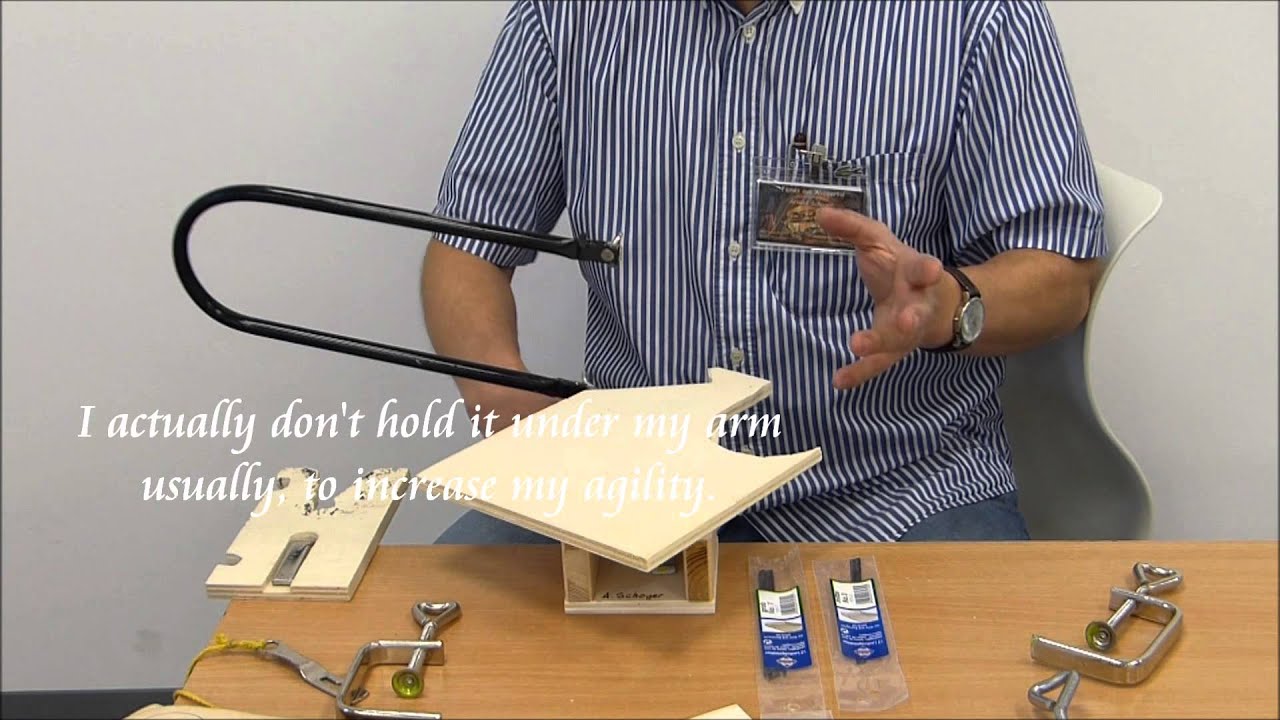
The saw blade is mounted in clamps while compressing the bow slightly.
This holds the thin blade straight. The thin blade can be inserted through small holes.
The board supports the workpiece and sawing is by up-down motions.
If someone sees you from behind while sawing they might possibly misunderstand what you are doing. The board is easy to make.

Speaks German dialect with English subtitles

2 Likes

I’ll look into a fret saw sometime, thanks a lot for the suggestion! But the resin part replaces the entire barrel, including the little accordion at the base.

1 Like

If, for whatever reason you have to modify/remove the “accordion” component, it is possible to replicate this portion using lead wire wrapped around the barrel/tube. I used this on my What-If German M103A2 and whilst a bit of an optical illusion, I feel it does work. See here:

1 Like

I use different methods.

If there is a gap between the part and the casting block, I drill somme holes and then cut along the hole row, then remove the rest of the excess of resin with a cutter.

If there isn’t any gap between the part and the casting block, put it in boiling water during 30 minutes then casting block is easy to remove with a cutter.

Same way for fragile parts or thin parts.

I also use a cutting plier when I am almost sure there isn’t any risk to break the part, then remove the rest of excess with a cutter.

1 Like