Only if I intend to include it in the Workin’ on the Railroad or Rail Inspection Vehicle GB’s 
2 Likes
This info is from @Jakko’s build thread.
https://forums.kitmaker.net/t/quayside/51849/15
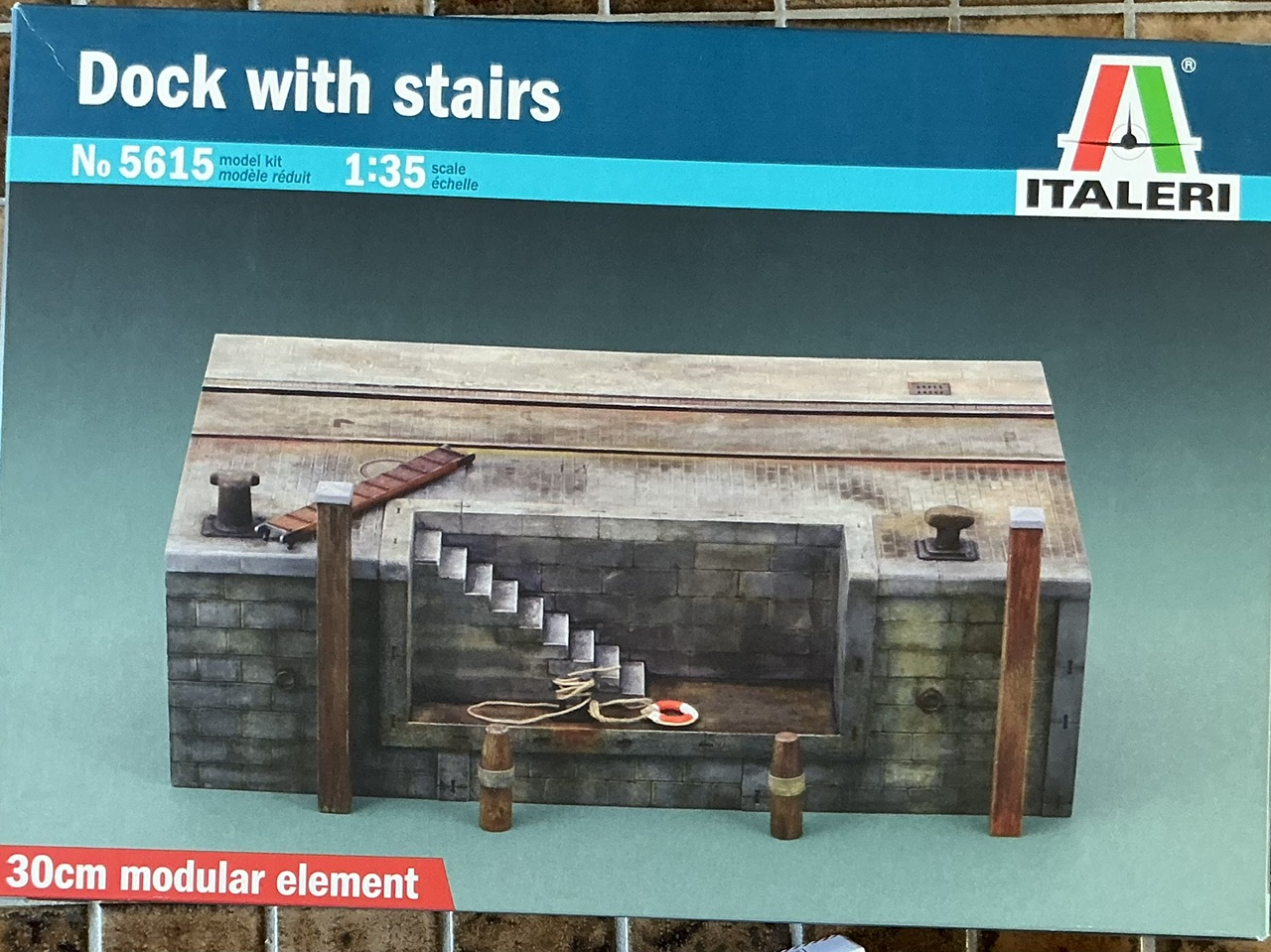
There is 41.5 mm between the inner faces of the rails, meaning they scale out to 1.45 m IRL. That’s under 2 cm out from standard gauge of 1.435 m, which is 41 mm in 1:35. So, the short answer is: any railway kit made to scale standard gauge should fit, but Russian (or Spanish) ones will not.
5 Likes
I notice you don’t have Dragon mentioned here yet. A few weeks ago, I happened to (re)discover that I have this set in my stash, with the parts mostly assembled but without glue:

Measuring them just now, the gauge is 41.5 mm.
3 Likes
Thank you again for your additional contribution 
3 Likes
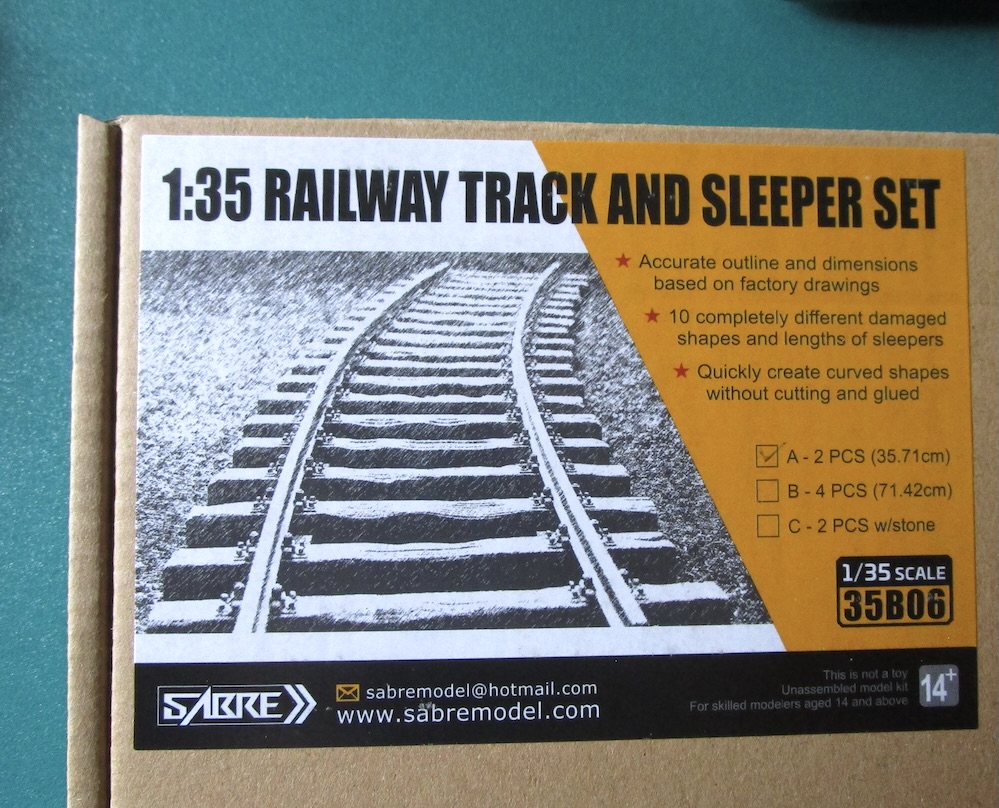
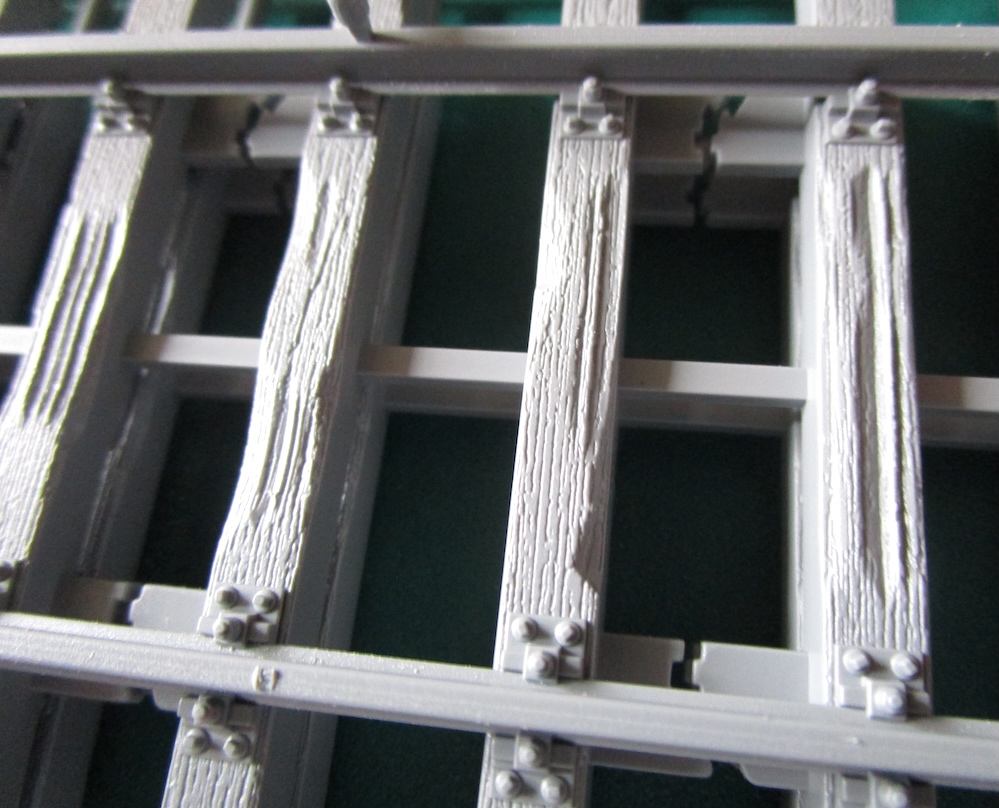
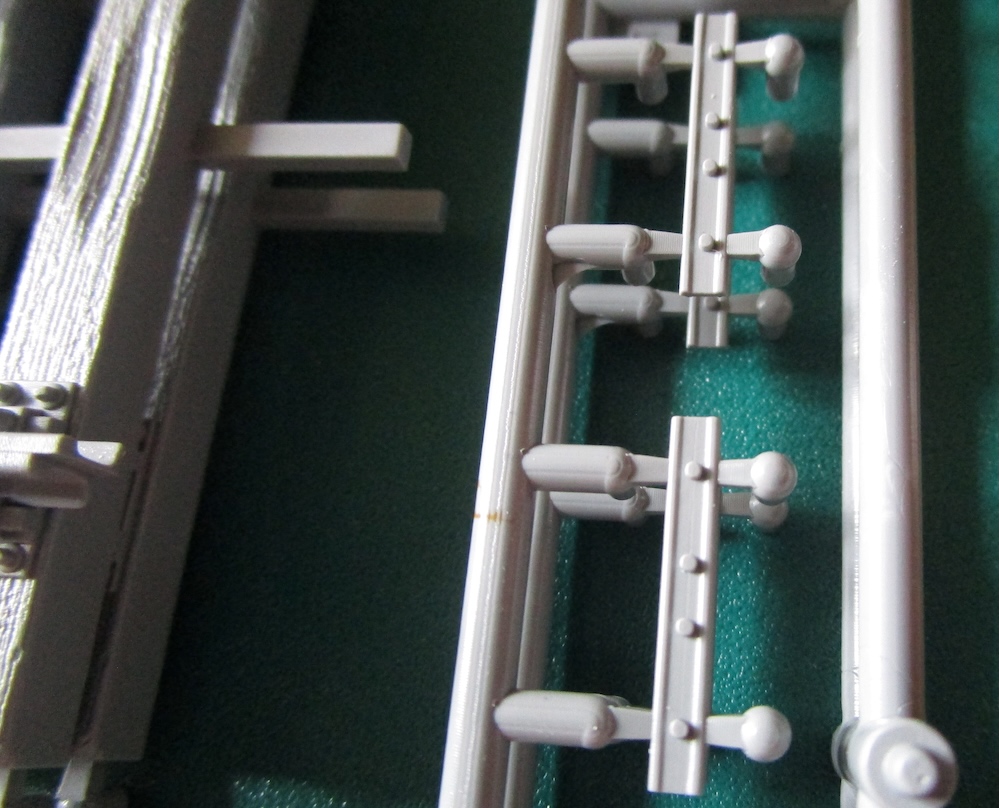
Recently picked up Sabre #35B06, 1:35 Railway Track and Sleeper set.
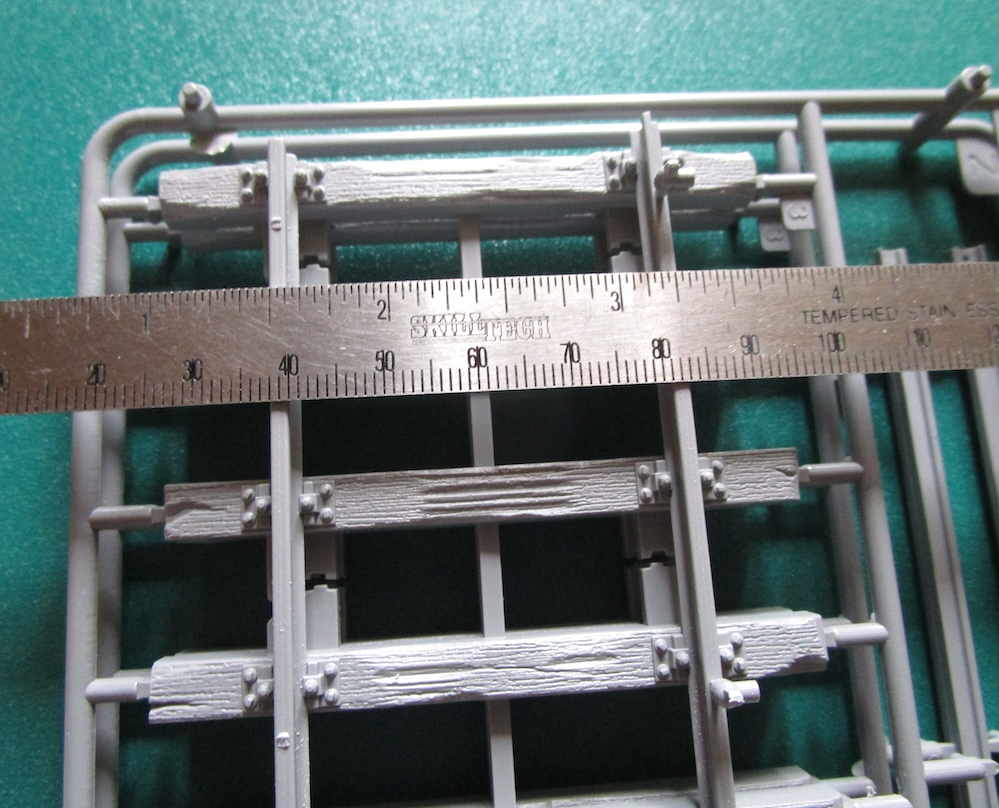
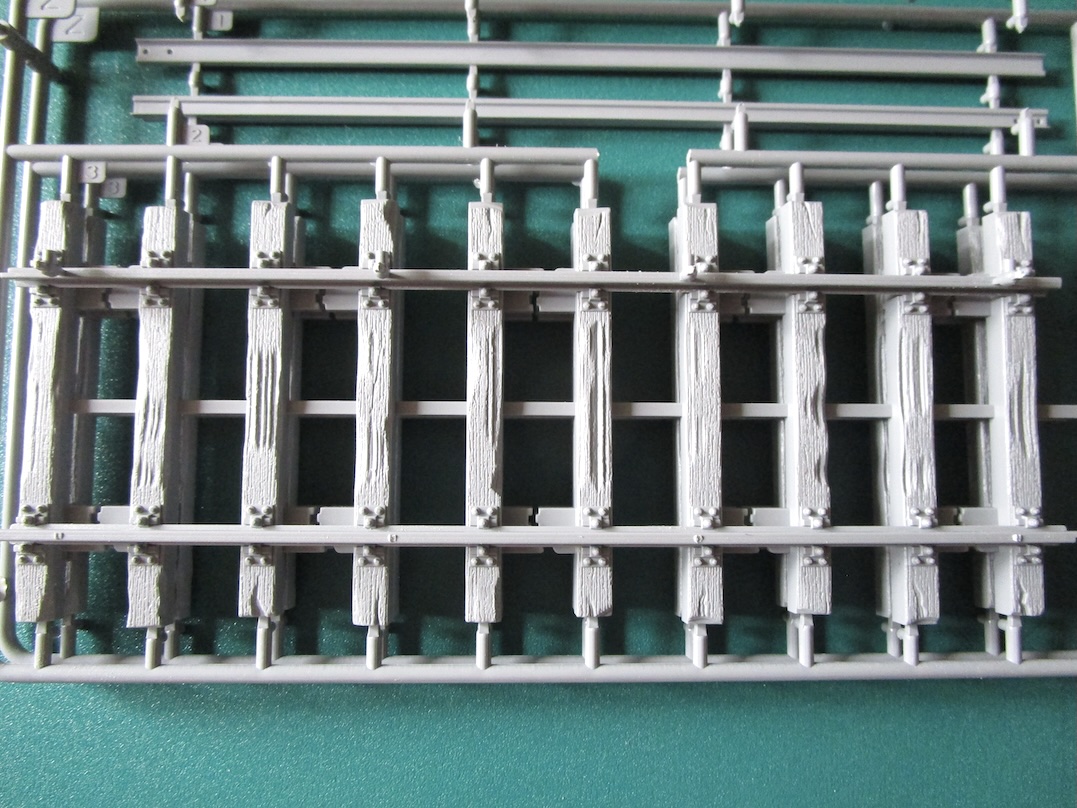
Measures 41MM between the insides. The wooden sleeper detail is great with all ten different. Same tooling though because the two sprue sets are identical. The fastener detail in the joiner parts are round. Should they be hex in 1:1?
6 Likes
Interesting question. I’ll have to look that up. I only know of European track having the hex bolts. However, looking real hard at your picture, it looks like they tried to make the bolts hexagonal, and the detail is soft.
That said, it may be the design of the bolt you should have particular country. My guess is so long as the track gauge is standard, would not really matter if rails were held onto the cross ties with spikes, or bolts.
3 Likes
Several European countries had different rail set ups and there was a time post WW2 that they used to jack the carriages up and alter the axle length. Yes I am going back about 50 years.
3 Likes
There are still parts of Europe that operate using different rail gauges, with facilities like the Talgo re-gauging locations that can alter railcars’ wheel gauge right on the track, requiring only swapping the motive power to continue on the different gauge.
3 Likes
@ Darren, yes, the study of rail gauges is very interesting to me. 4 ft 8 1/2 in is universally known as “standard gauge” (except, I think, in Russia and maybe india, where they think their wider gauges are the standard of the world).
Narrow gauge - defined as anything smaller than standard gauge - has a large following for modelers and enthusiasts around the world. They can still be found in main line service around the world, too. In the US, as in the UK and elsewhere, interchange yards where the two gauges came together created some very interesting modeling opportunities, as well as real life ingenious solutions to getting freight from one place to another without physically unloading free cars. Like Darien mentioned, in some places the cars/wagons were physically raised off of there trucks - “bogies” in the UK and elsewhere - and set onto the trucks of a different gauge. I know they did that in Evansville, Indiana, until the widespread regauging to standard gauge that happened in the 1880s. If I recall correctly, the Erie Railroad built to "broad gauge "of 5 or 6 feet; I did not know if they physically lifted the cars to new trucks, nor the date that they joined the rest of standard gauge.
Starting around 2012 I began reviewing samples from Armor35 and one set of their track was Russian track regauged to European standard gauge, cast with holes and depressions for the spikes and tie plates.
Darren, thanks for bringing this up because it’s a fun discussion.
2 Likes
Legend has it that a delegation from Tsarist Russia came to England to check out the new invention railway. By mistake, they measured the OUTSIDE distance between the rails and took it as the INSIDE distance. And the Russian name for train station VOKSHOL came from misreading the English station name Vauxhall.
2 Likes
I had always heard it was a deliberate decision, to prevent enemy trains from just driving into Russia during wartime.
Not quite, as it dates from before railways were a thing:
Etymology
Borrowed from English Vauxhall, in reference to Vauxhall Gardens in London. The ending was influenced by зал (zal, “hall”). The spelling фоксал (foksal) attested in 1777 is from French facs-hall, from the same English source. The transportation sense derives from an epithet for the Pavlovsk railway station building, which at one time served as both a passenger lounge and a place of entertainment. Doublet of Воксхолл (Voksxoll).
3 Likes
Didn’t Isambard Kingdom Brunel originally design his broad gauge as 7ft? It would make for more stable wagons, and allow them to be made wider if space allowed. As it is, a 10ft-wide wagon (in the US) on 4ft8.5" axles is a balancing act…
(Or an 8ft wide wagon in the UK, where the loading gauge is smaller due to all the pre-existing buildings and stuff that get in the way…)
3 Likes
Wide gauge → needs large radius curves
Narrow gauge → can handle smaller radius curves.
There is a bit of geometry behind this behaviour …
Narrow gauge is therefore preferred where the tracks have to wind through narrow valleys.
Open plains is the perfect playground for broad gauge.
3 Likes