…the H0 Track as it is, is way off scale so it can’t be used. There must be a wider distance between the two tracks.
Not necessarily. If this North African scene is set in Libya, then the railroad would be Italian-built. Italy had a weird way of gauging their track, which created some weird gauges, per Wikipedia:
Italian law defined its track gauges in terms of the distance between the centers of each rail,[1] rather than the inside edges of the rails, giving some unusual measurements. According to the law of 28 July 1879, the only legal gauges in Italy were 1,500 mm (4 ft 11+1⁄16 in), 1,000 mm (3 ft 3+3⁄8 in), measured between the rail centres, which correspond to 1,445 mm (4 ft 8+7⁄8 in) and 950 mm (3 ft 1+3⁄8 in) between the rail inside edges. The narrower gauge has 1,000 mm between the centres of the rails, which explains why it is called Italian metre gauge, in spite of it in fact being 950 mm in gauge when measured from the inside of the rails, in the way gauges are normally measured in other countries.
One weird gauge was/is 1,100 mm (3 ft 7+5⁄16 in). Standard gauge HO track sized to 1/72 is 1,177mm, close to that 3 ft 7+5⁄16 in gauge, and that’s measuring by the inside of the rails; converting to measuring from rail centers - which I did not account for - would make the HO track even closer to 1,100mm.
So actually I am planning to use the metal H0 track and take it off the plastic parts. Then make my own wood pieces
The end of steam is hotly debated in the US. I can’t recall the exact dates, but Illinois Central’s last mainline revenue steam operation was in early 1961, a 4-8-2 coal drag into Paducah from…Central City? I think Chicago Burlington & Quincy or subsidiary ran some steam into late 1960, as did Norfolk & Western. I forget when Rio Grande’s last Colorado steam dropped their fire.
That amazes me. I always associated steam with bygone eras, something seen in very old movies. They must have been maintenance nightmares. So many moving parts externally. I know the engines that pulled our equipment in Germany were diesels, I remember that much. I have a nice three day weekend here and will try to find those photos. Very interesting stuff there
Nice work on the gondola Phil, it looks a nicely detailed kit, . I’ve only ever started building one Miniart kit…unfinished, and gathering dust in the attic, …and I found their plastic to be very soft…too soft for my ham-fisted building methods, …how did you find the plastic on the gondola, ?
Thanks to Fred and John for their kind words, . The water is going to be murky John, hopefully I can get it to suggest depth whilst not actually having any, .
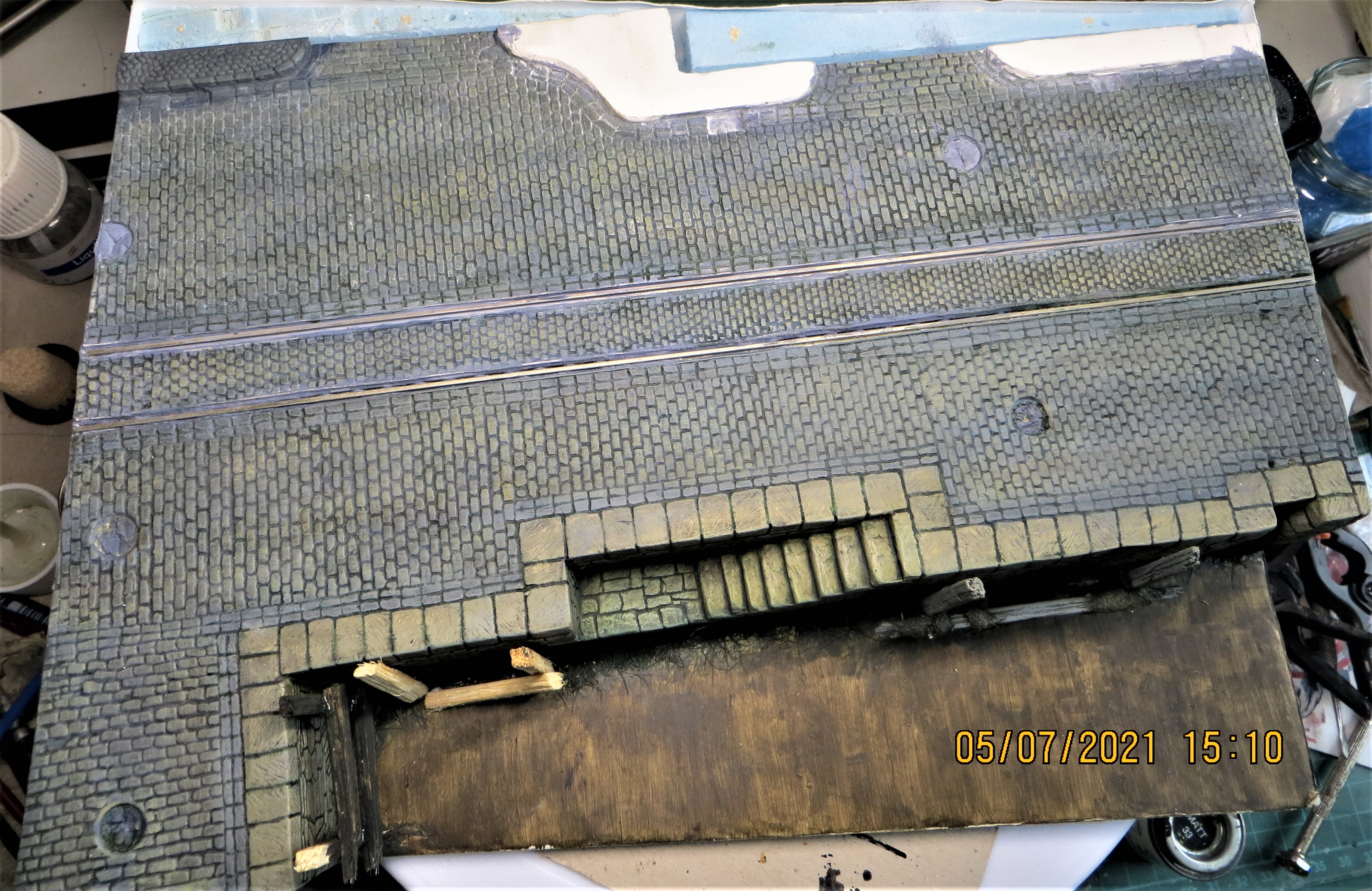
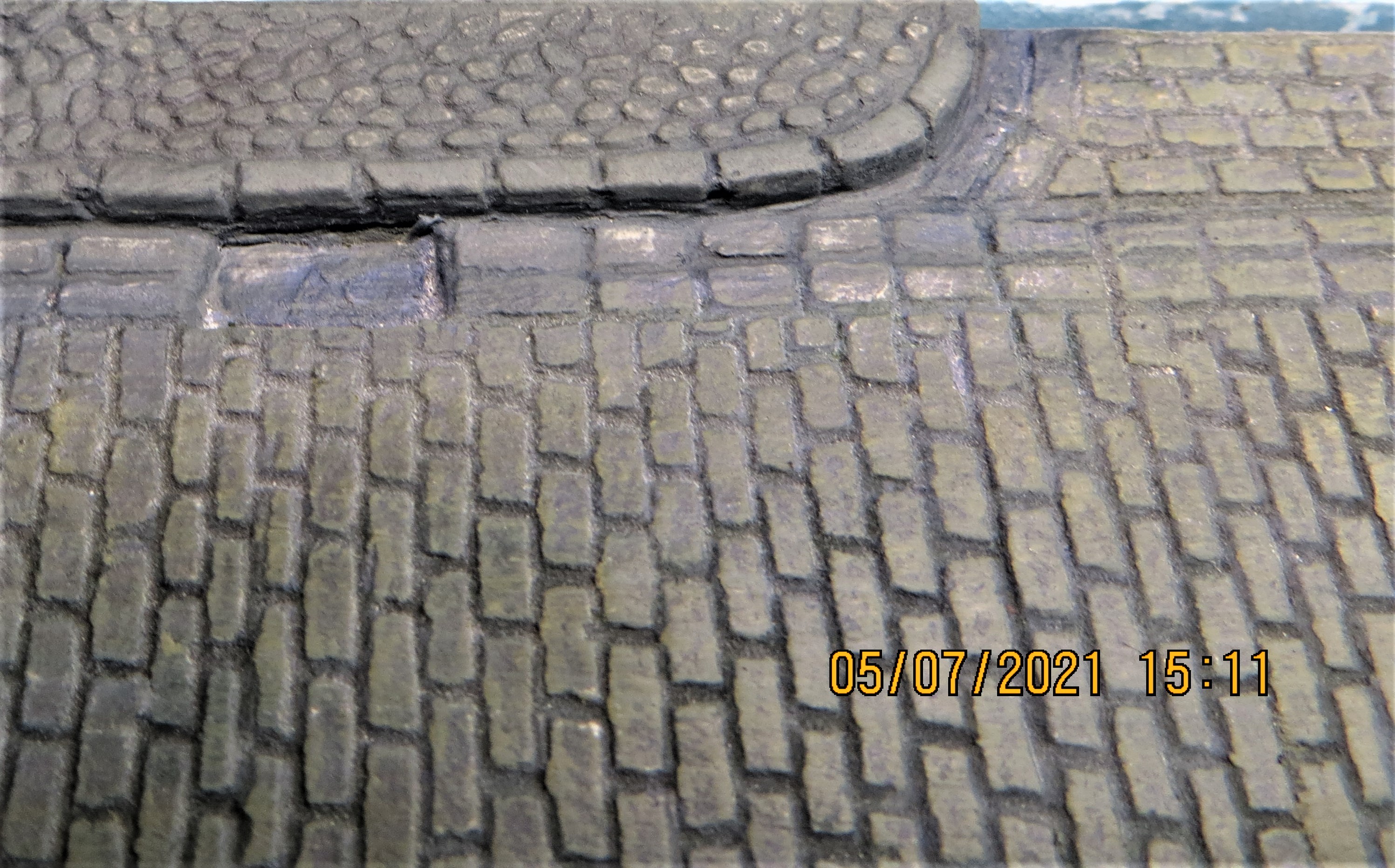
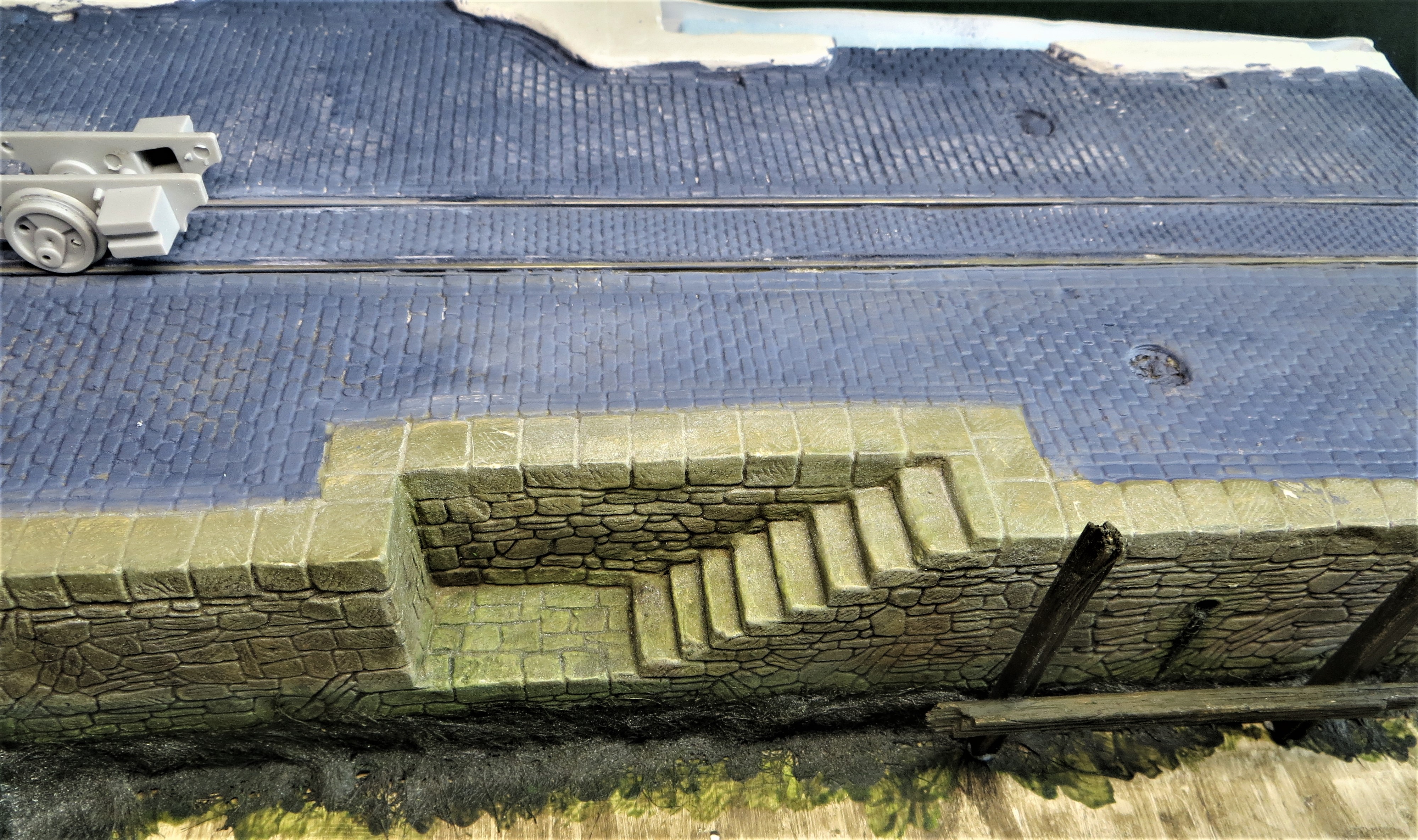
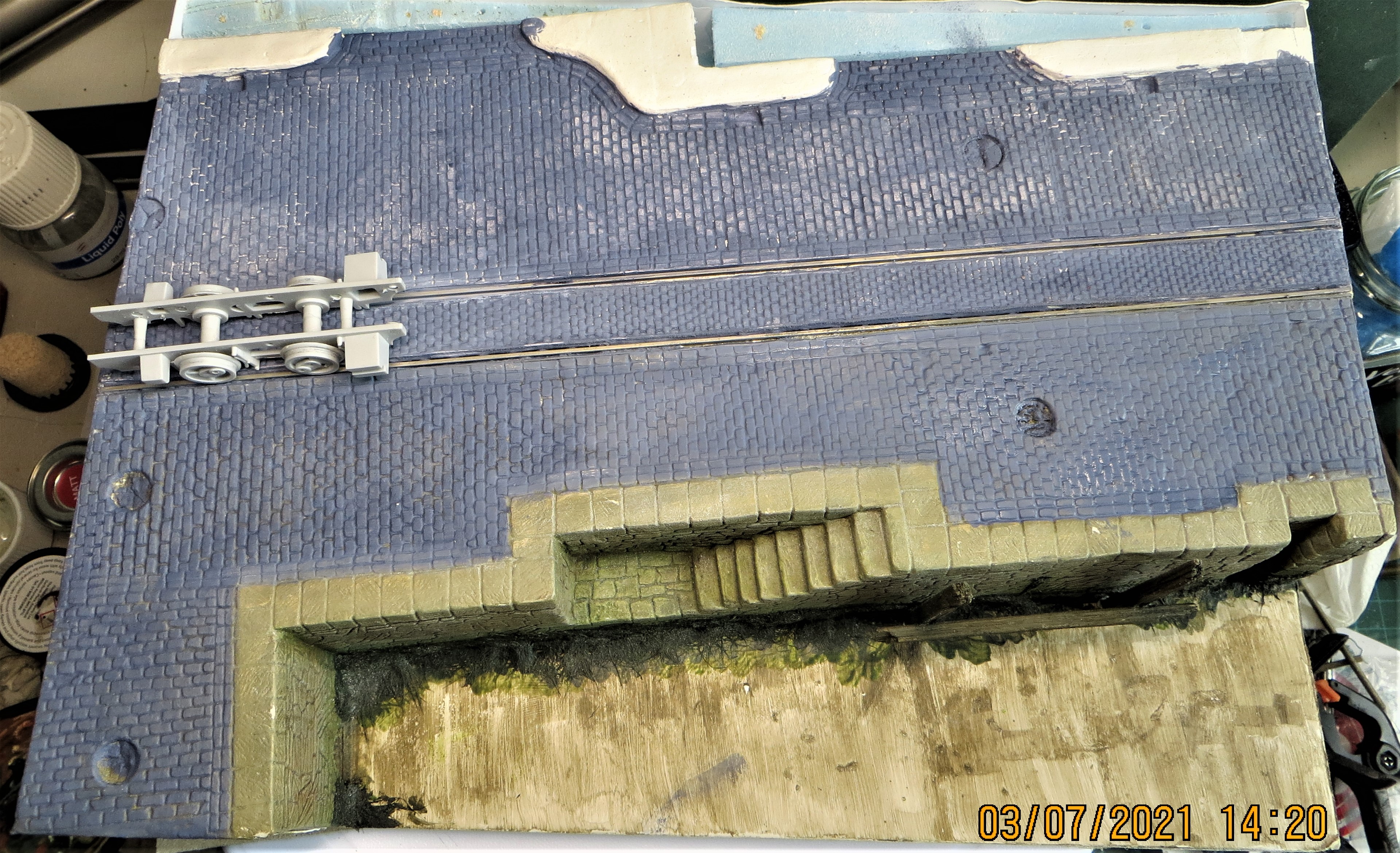
The weather has been a tad inclement today so I decided to bite the bullet and spend an hour, or four finishing the scribing of the ‘cobbles’…geez! can’t believe how much my hand aches, . I have also given it a rough coat of paint so that it shows up better.
There are a number of errors, some of which I can probably hide, and some of which I will need to re-scribe. I am thinking that I might cover some of the cobbles up so that it looks as if tarmac has been used to resurface some areas, but I’m struggling to find any good images for reference purposes, .
It keeps getting better each time G. The highlight is without doubt the actual quayside. The detailed scribbing for the stones and how you angle them so they look like they support each other really stands out and looks superb.
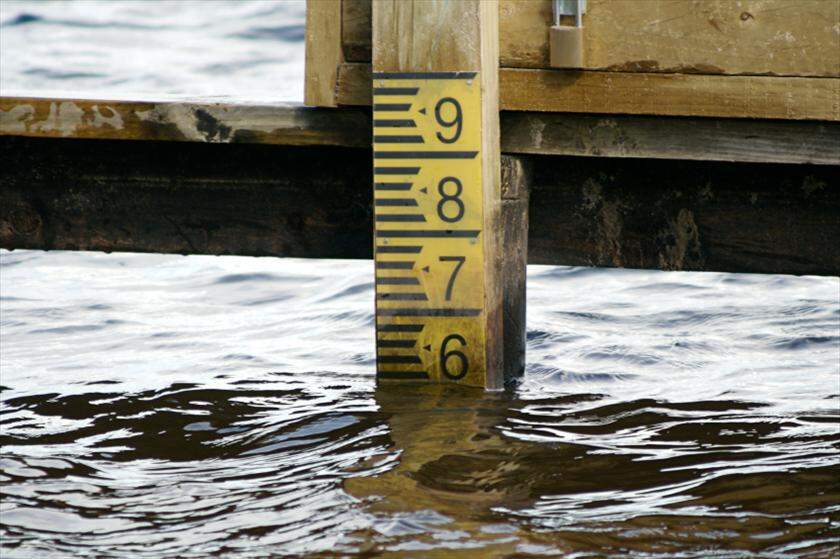
I was thinking, and it was just a thought so dont think you need to do it, that maybe a harbour depth marker post might be a nice touch ?
Thank you for the positive feedback John, it’s always nice to get supportive comments, especially after a mind-numbingly boring session, such as scribing hundreds of small rectangles, .
Your idea of a depth gauge is a good one, , I’m going to see if there are any pictures of ones that would have been around in the earlier part of the last century, .
A tad more progress, I’ve given the cobbles a few rough tones, like the wall it needs quite a bit of work paint-wise, but my problem is I flit around between areas, .
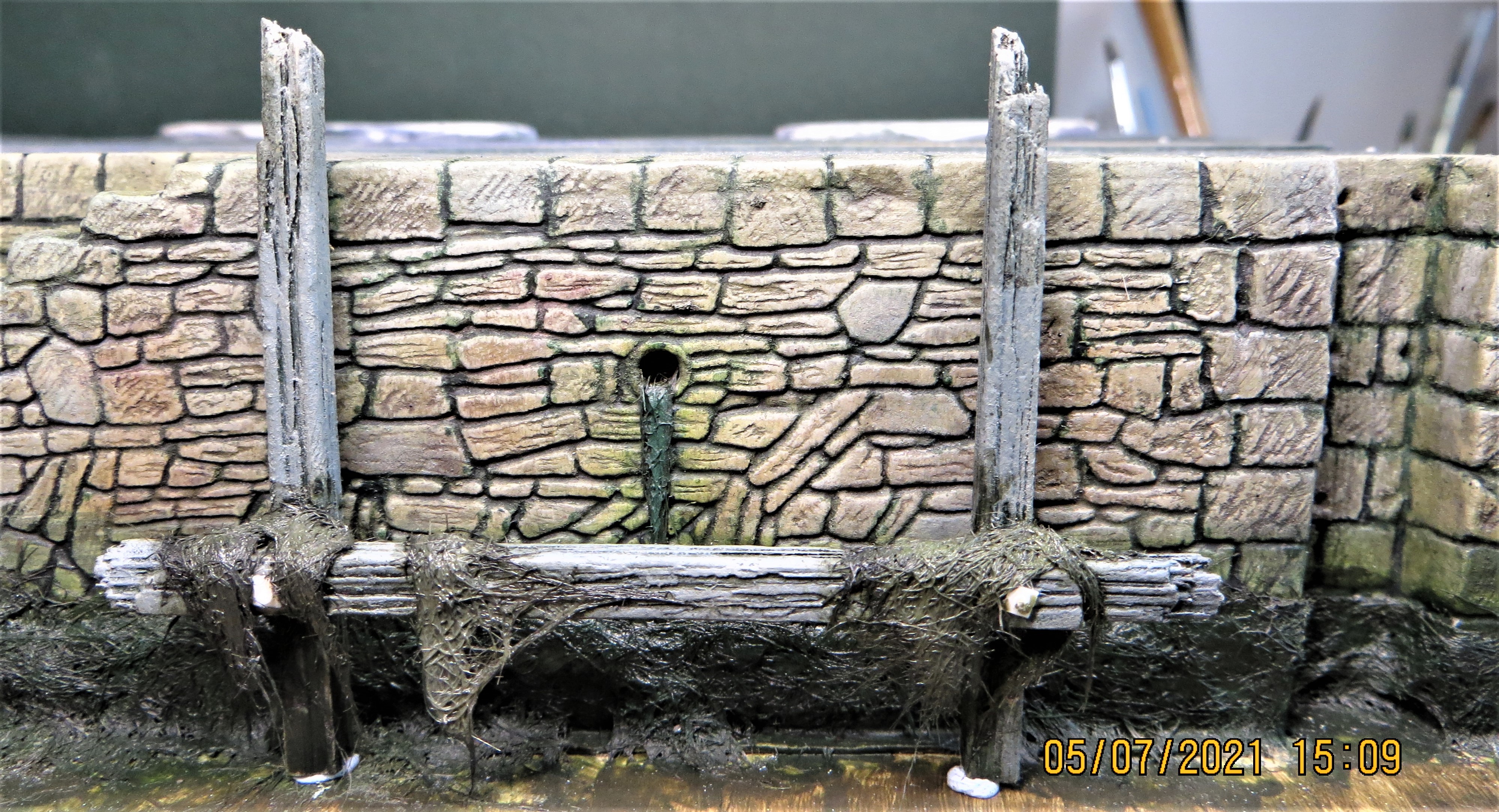
I’ve also made some additional timber ‘bumper rails’, not sure if I’ll use any, or all, of them, . And have started adding some detail to the original ‘bumper rails’ in the form of fixing plates and trapped weed.
Yes. There is to this day a debate about the merits of steam vs diesel (“stinkpots” to many steam advocates) vs electric locomotion. (Fun fact: “diesel” is a truncation of diesel-electric propulsion, which uses a diesel engine “prmie mover” to drive a generator, which makes electricity to power traction motors on the axles of the locomotive.) There have been attempts to create a steam-electric locomotive and when oil prices zip up, the debate renews about using coal topower the generator. An old adage from long ago is, “A steam loco can pull a train it can’t start [to move] and a diesel can start a train it can’t pull.” That has to do with tractive force and adhesion, and horsepower generated at speed.
Ultimately, steam locos required large infrastructure facilities (fuel and water stations to name the most obvious) and a bunch of people to service them. IIRC, it took about 7 people to service steam loco. Diesels were happy with a drink of fuel, maybe a refill of sand, and occasional lubrication, all of which could be done by one man.
Regardless of the merits of hauling a train, economically a steam loco is not practical.
True, they are really diesel-electric with each set of wheels having a traction motor.
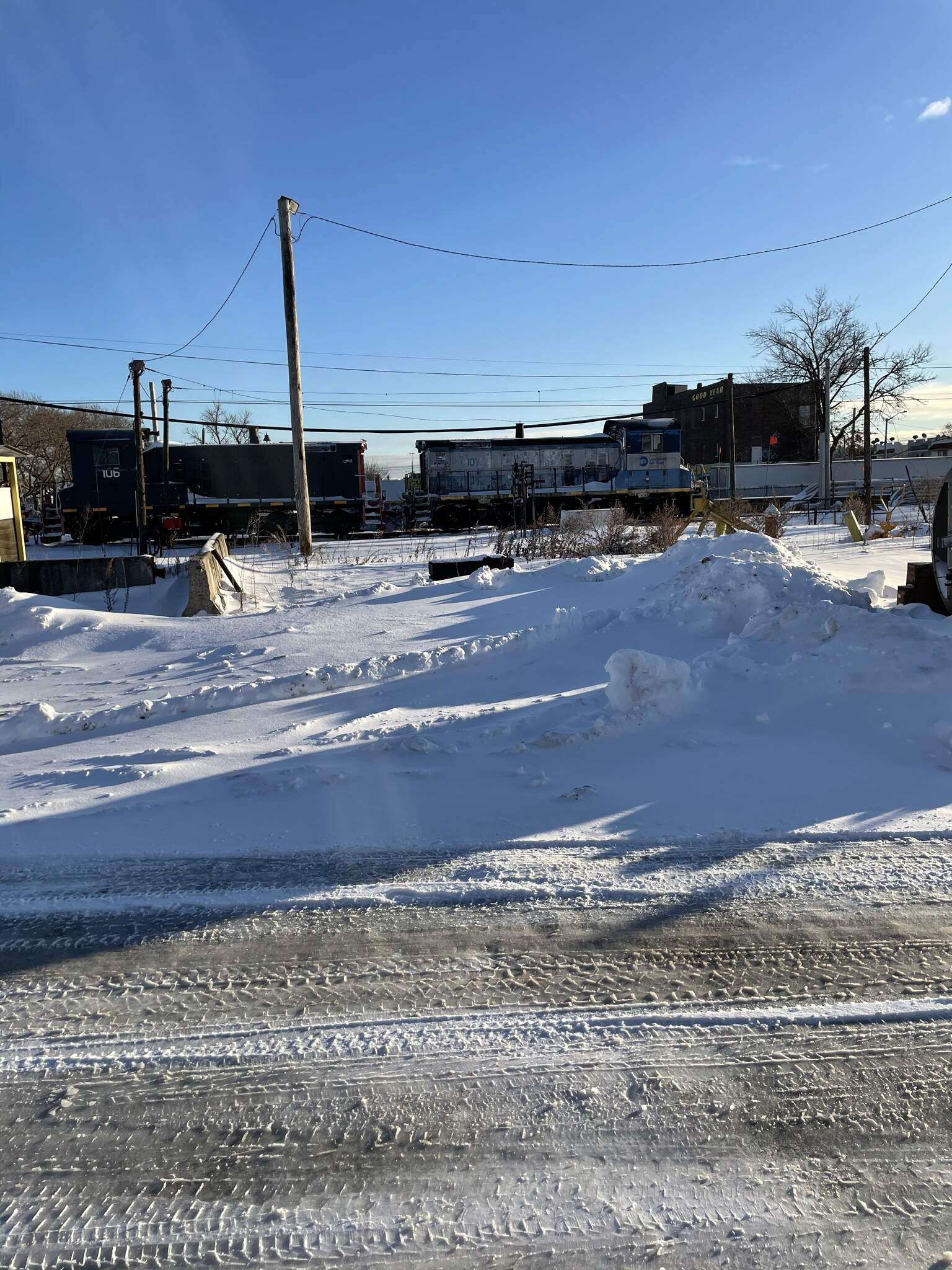
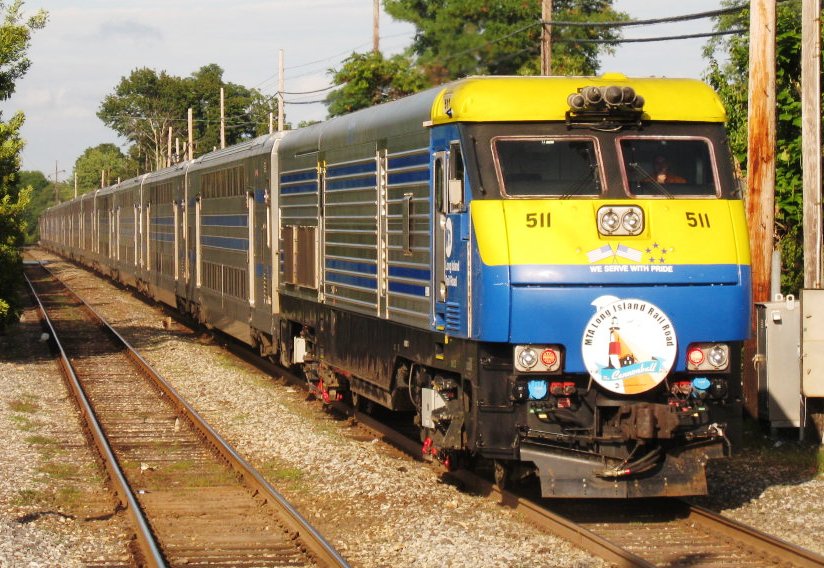
On the LIRR we have what are called Dual Mode (DM) engines that convert to electric power after they leave Jamaica, one of the major hubs on the system, before they go into one of the 4 East River tunnels into Penn Station. Diesels are not allowed on the tunnels because of the fumes. They are 500 series engines, the 400s are DEs, straight diesels. They look identical except for third tail contact shoes that are on the 500.
Oddly, we used to have what were called the Harold Protects. They were EMD SW1001s numbers 102 and 104 that sat outside the tunnels in Harold interlocking and were used as rescue engines to pull disabled trains out of the tunnels. That ceased in 2010 and had been used for about 50 years.



 .
. ,
, …and I found their plastic to be very soft…too soft for my ham-fisted building methods,
  ?
? . I have also given it a rough coat of paint so that it shows up better.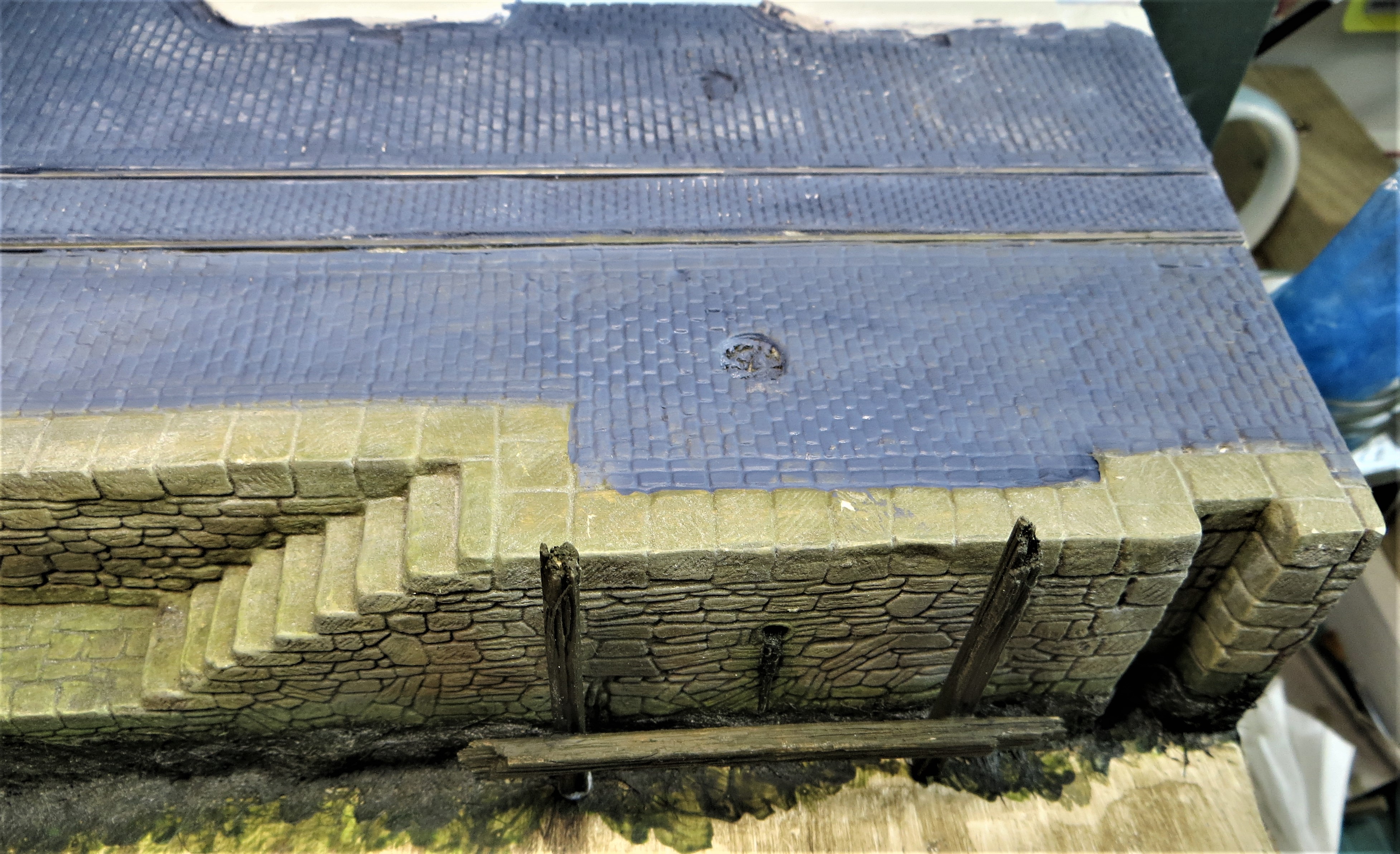

 .
.
 .
. .
.