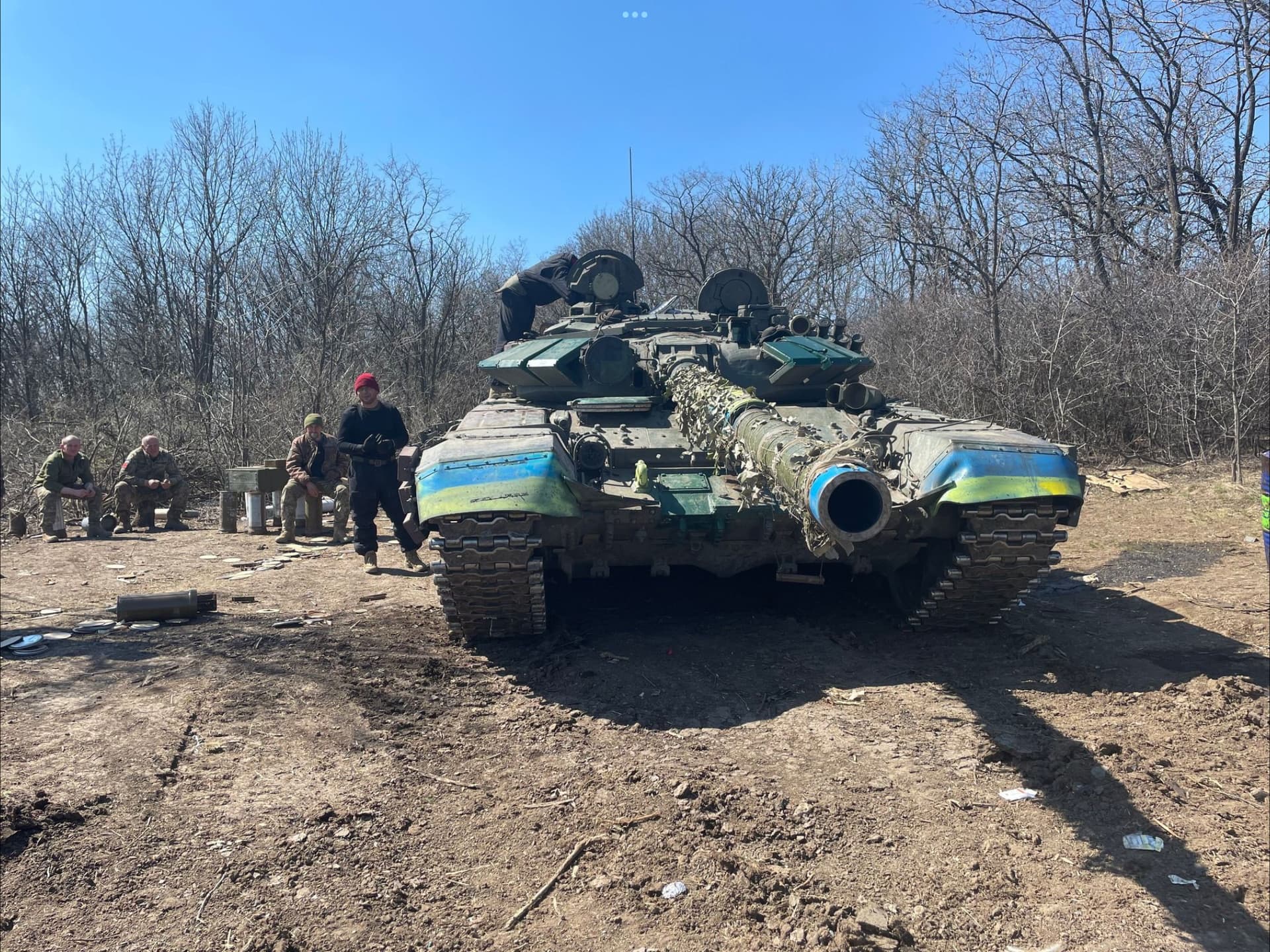
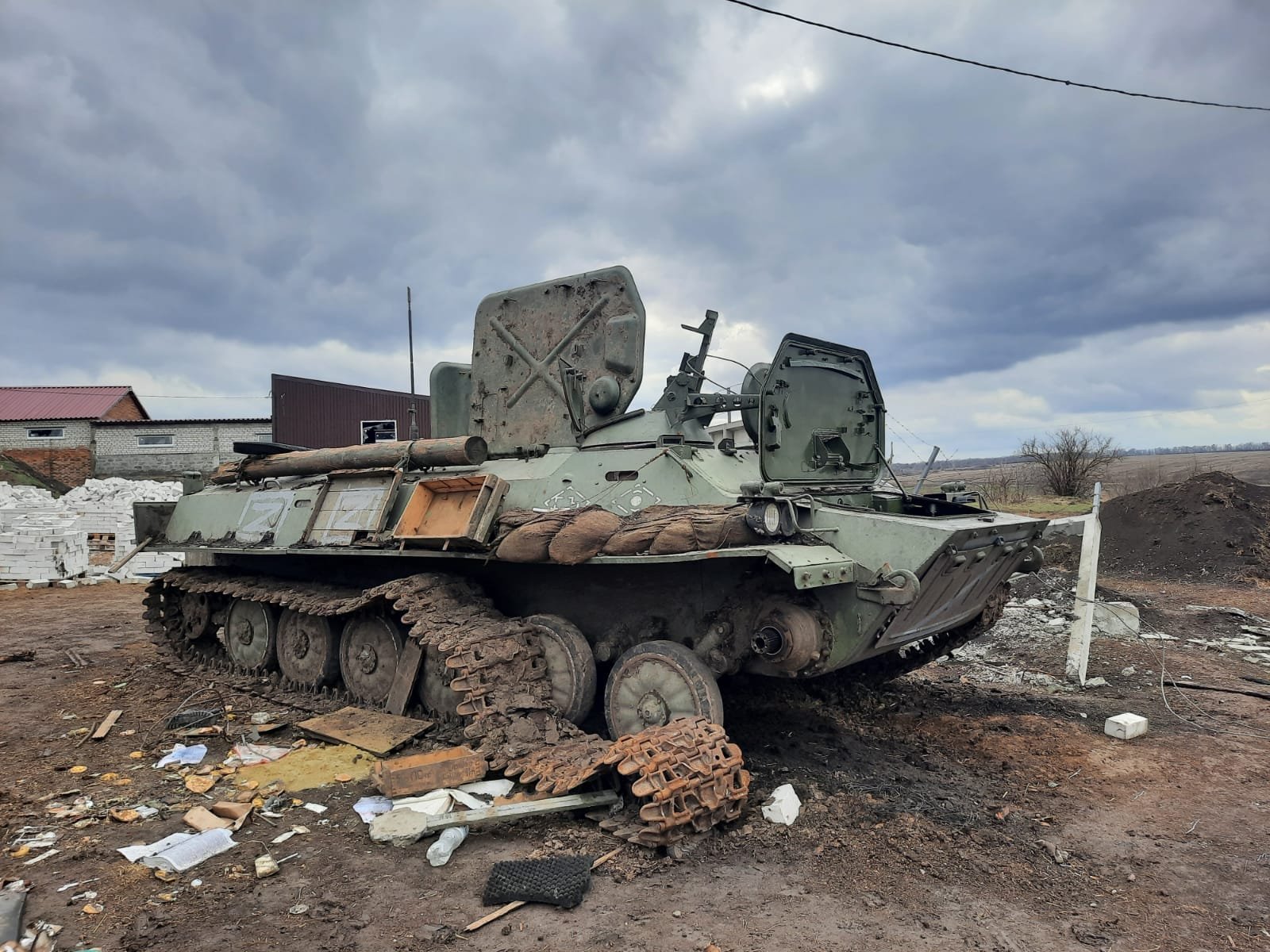
New tracks (one side), a good wash and polish and this one should be good to go
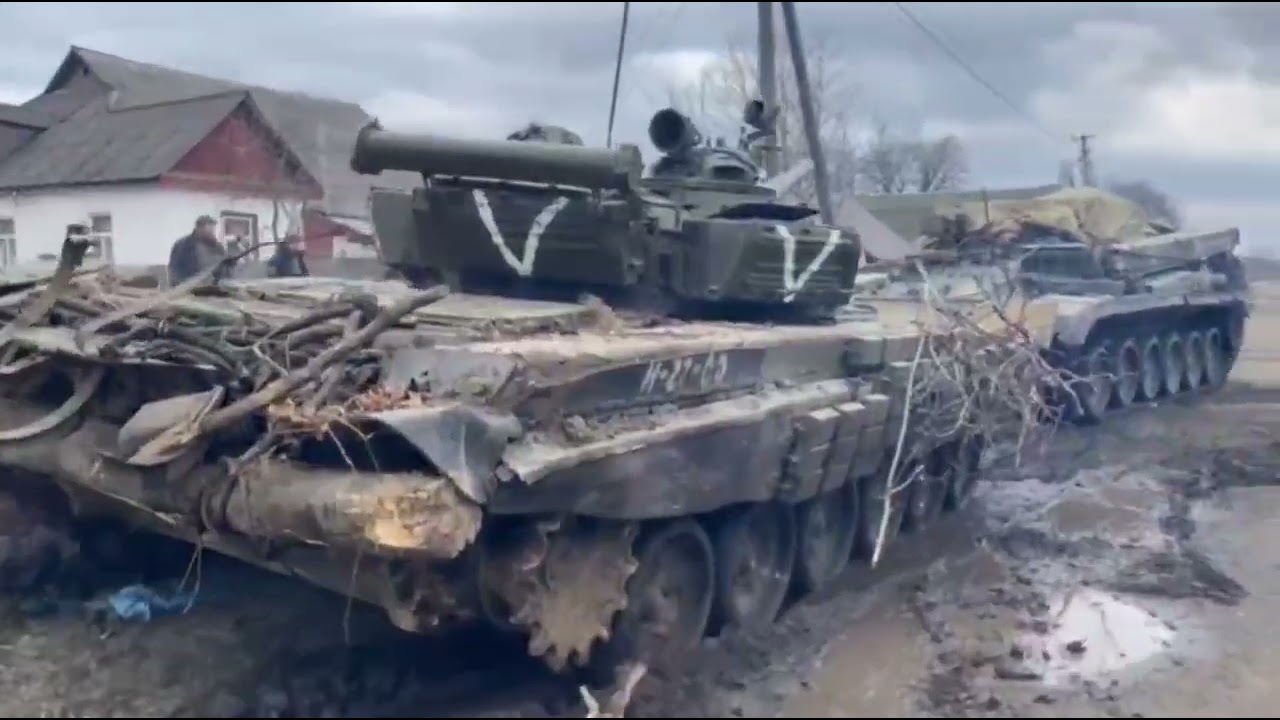
New tracks (one side), a good wash and polish and this one should be good to go
I feel like it might “Putin” on the other side.
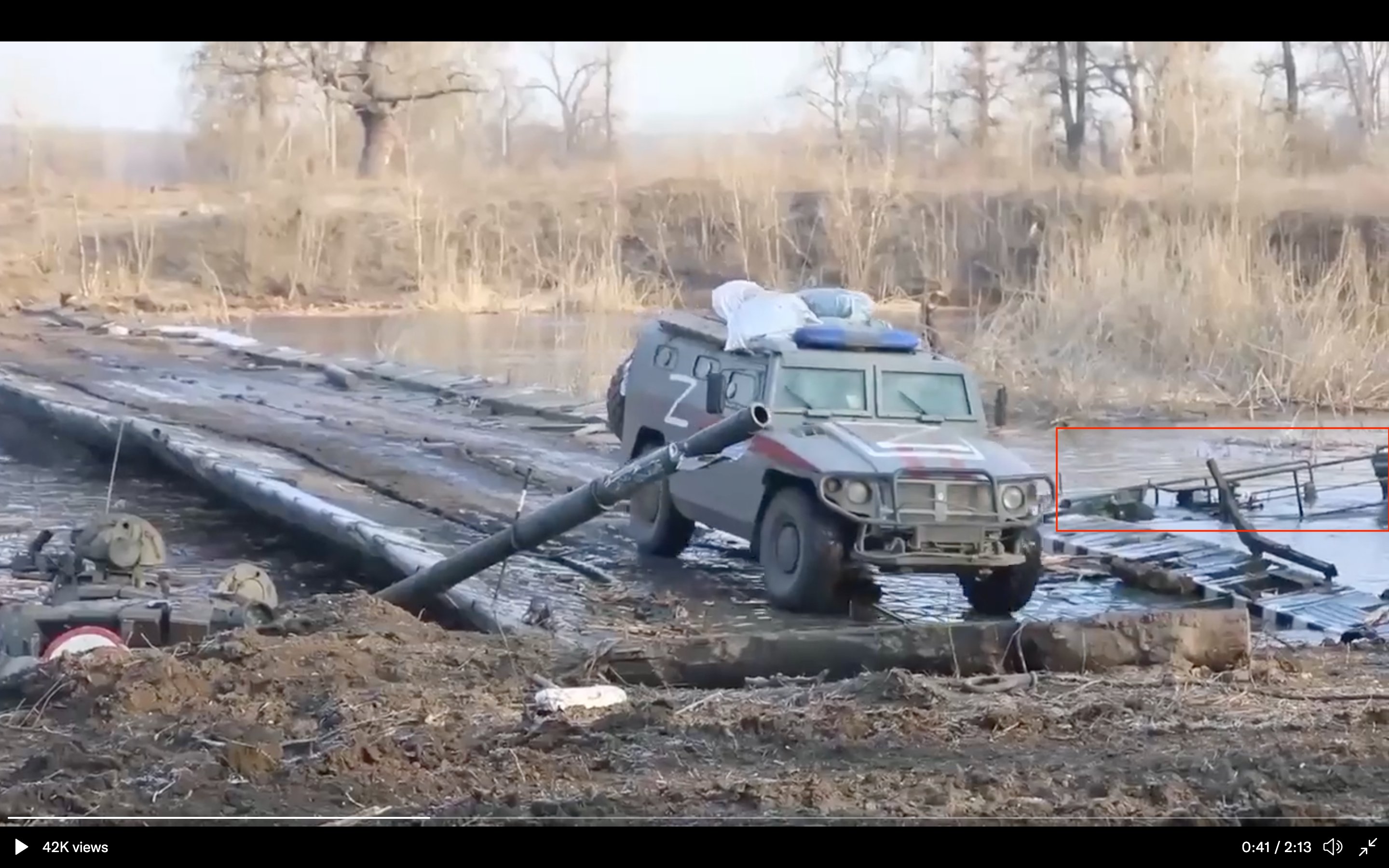

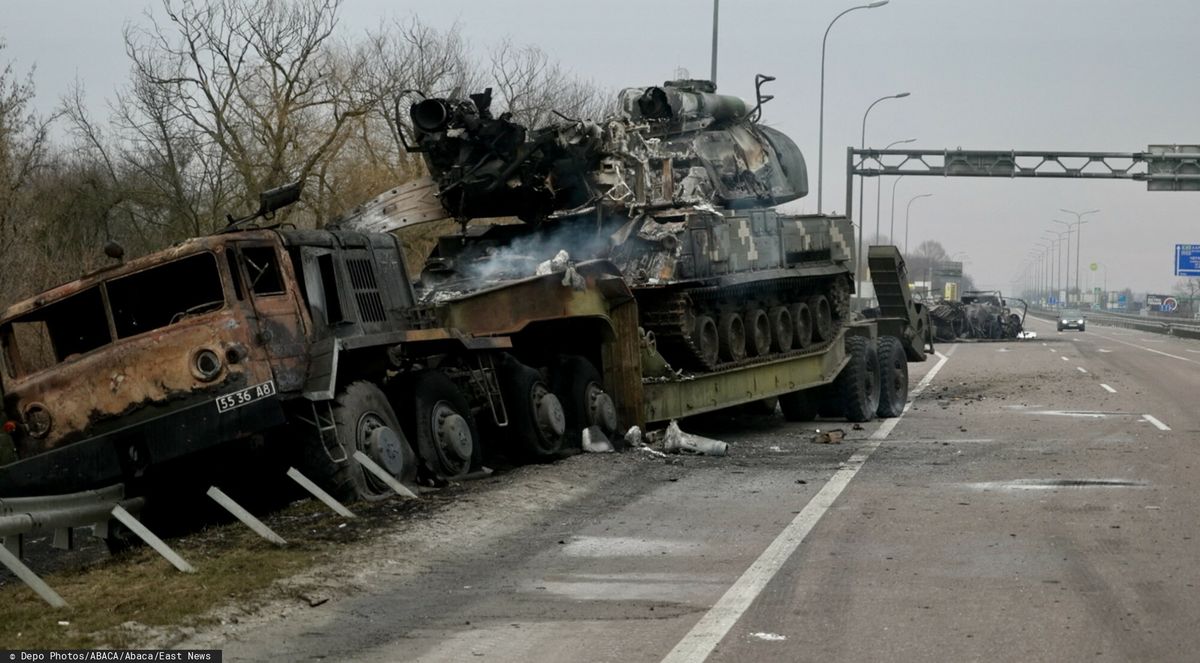
The whole cab is gone ? …


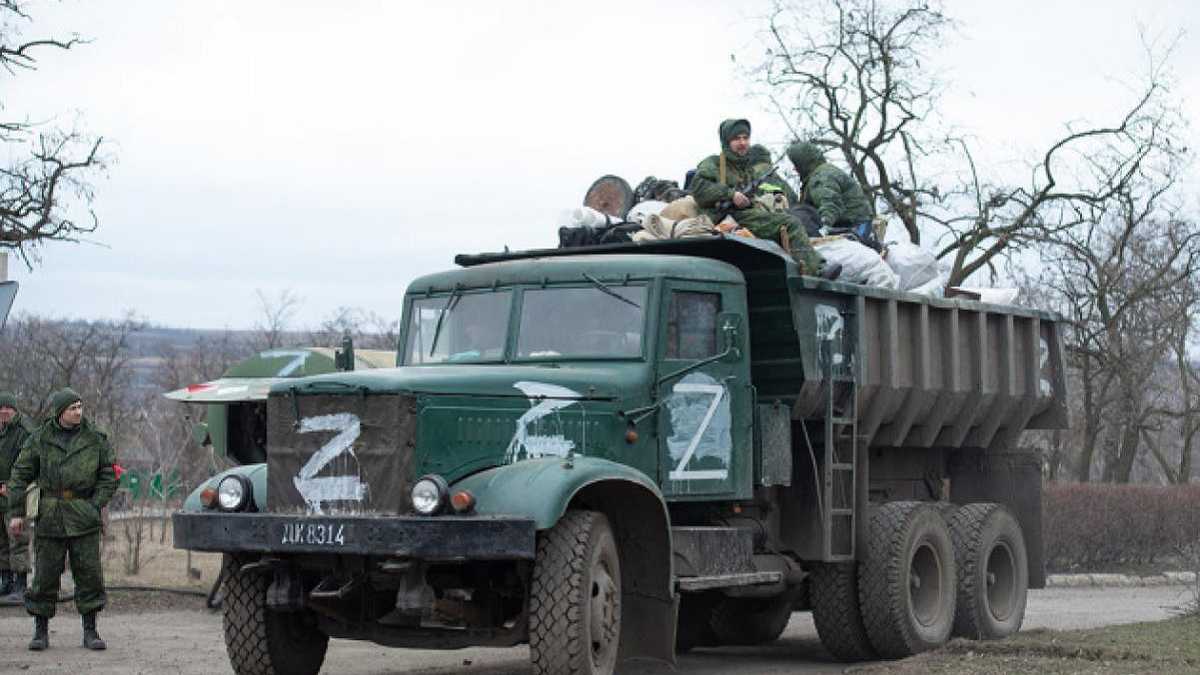
H.P.
I think the M1a1 would be a step too far. Even it is pretty high tech for them. Generic M60’s would work.
I’m pretty sure SF is in there right now
gary
It is part of the driver’s first name - the rest of it was on the the other plow arm and his last name was on the rear. The missing letters are “invov” and “Kwicksky”…
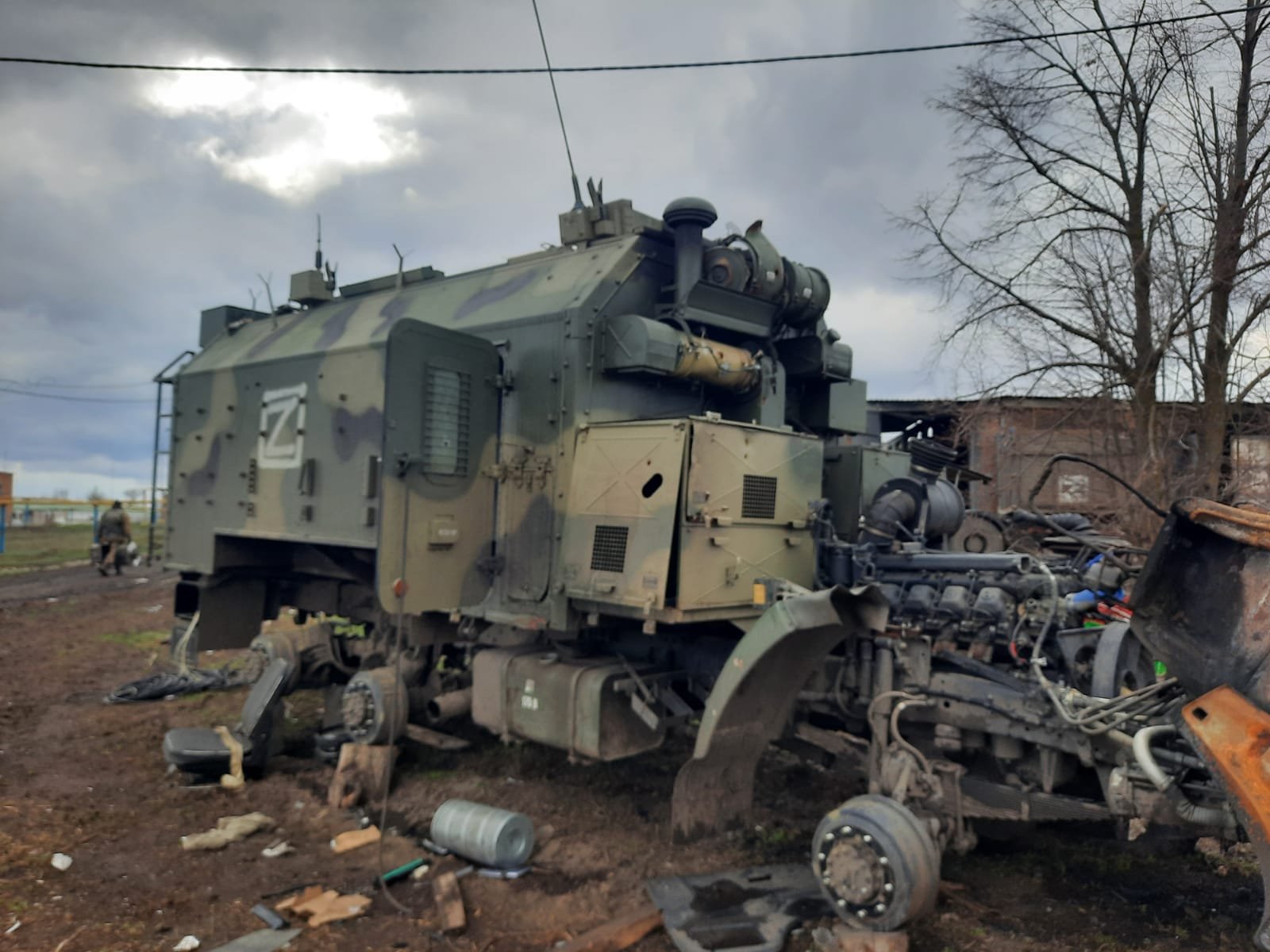
That last image is just begging to be built.
Question for the experts - how interchangeable are the munitions? I understand Russian and Ukraine equipment is all but the same. But if the west sent equipment how much of the captured munitions would be usable in western equipment?
It’s not gone. It’s still somewhere around here in the Ukraine. We just can’t keep track of where we’re Putin all the parts. 

—mike
Pretty much none of it. Russian tanks, BMPs, even rifles use different ammo than NATO equipment. They are not interchangeable. One more reason not to send them newer/possibly more capable US or NATO tanks and other equipment.
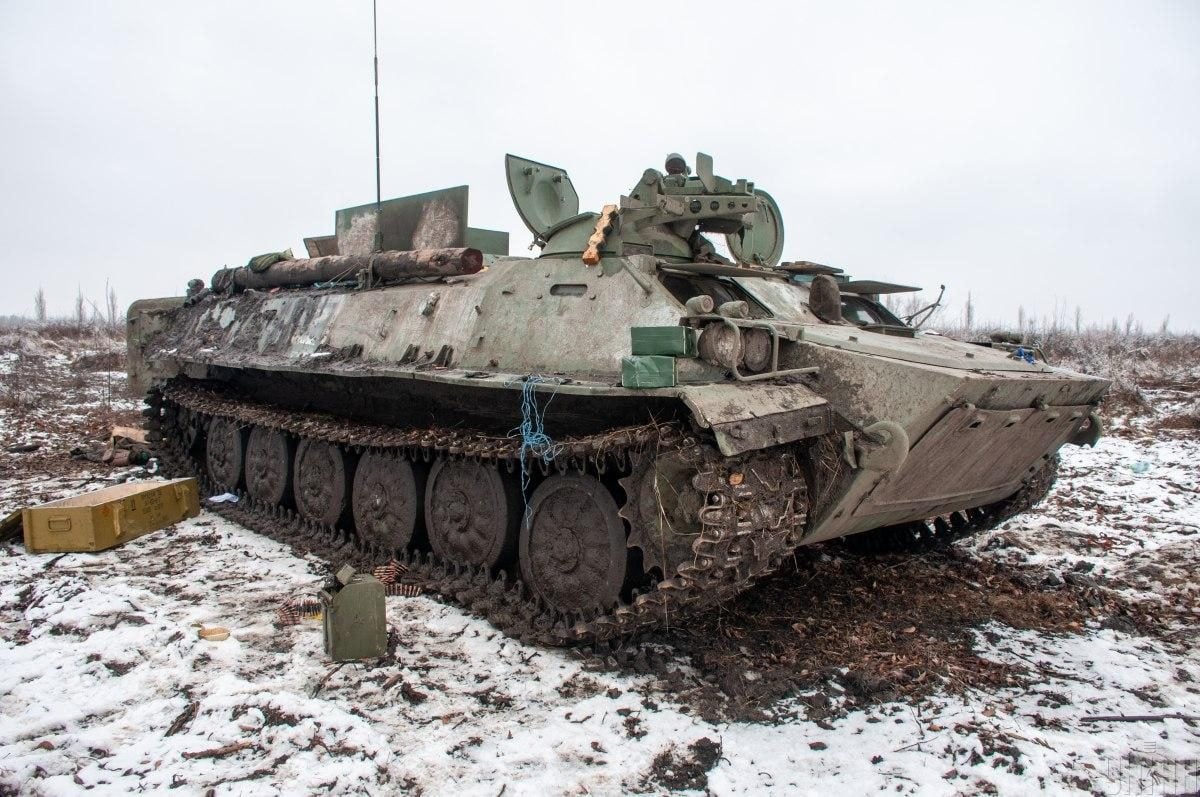
does anyone make russian style jerry cans and empty 125mm ammo crates?
i know that there is one company that does make the tank ammo but i was wondering if anyone makes open ammo crates for the tank ammo?
i have some solid cast ammo containers but i can’t open them up as they are cast as a solid block.
What do Russian style jerry cans look like?
Ken
Judging by the ones in the Zvezda Kamaz kits, extremely similar to German WWII cans.
Ah, the “science” of ballistics.
The difference is not as great as one would think. Historically there never really has been a standard way of measuring caliber in terms of projectile or bore diameter.
Take the .38 special. I can shoot it from my S&W .357 Magnum, but not vice versa. Why? Length of cartridge. Bullet diameter however is the same. But how does .357 = .38? Back in the day some manufacturers measured by the bullet diameter. Some measured the OD of the case. In this case the .38 was measured by the OD of the cartridge case. The actual bullet diameter is - - .357. Gunmakers might also measure caliber by the barrel’s bore diameter, or even the tooling used to create it.
So in the case of say, Russian 152mm howitzer projos compared to NATO 155mm projos, the difference is obvious, right? Simple math - 3 mm. Nope. The bore in a Russian cannon is measured at the depth of the rifling grooves. NATO cannons measure at the surface of the grooves. It’s actually very close. It’s theoretically possible to alter the obturating bands on a 155mm projo to fire it through a 152mm cannon. Why isn’t it done? Because it’s simpler to just produce projos in the required diameter than to alter individual rounds.
Mostly you can’t. The big problem is not so much the size of the projectile, see above, but of the cartridge itself. For example, both NATO and Russia use a 7.62mm bullet, but the cartridge for the Russian round is shorter. The NATO round will not fit in the gun. Tanks are even worse; the shells and cartridges are all of different sizes, so you cannot fire them in different tank guns. NATO used a 90mm, Russia did a 100mm, NATO went up to 105mm, Russia did a 115mm, NATO has a 120mm gun, Russia went with 125mm.
Part of this is done in an effort to “outgun” each other, part is an effort to keep the other side from using your own ammunition against you.
Ken
So in a nutshell the Ukrainians had better capture as much munitions as they can.
Actually the Ukrainians need to produce more munitions, not capture them. They have a pretty good production capability. If they can get T-72s from new former WP NATO countries such as Poland, Czech Republic, Slovakia, etc. the UA can employ those with minimal delay and transition training.
In the Soviet Union, during the Cold War, the three primary tank factories were in the Urals, Leningrad, and Kharkov. Before the collapse, Leningrad was producing the T-80, Urals was producing the T-72, and Kharkov the T-64. All three use variations of the same 125mm main gun. The T-80 and T-64 were more advanced in that they incorporated the capability to fire a guided missile thru the main gun, the AT-8 Songster, long before the T-72 gained such a capability.
Kharkov is a major objective in the Donbas because it hosts the Ukraines tank producing facilities.
More video.
Ukrainian captured tanks and AFV getting refurbished.
https://www.youtube.com/watch?v=NfJjiYmBWog
The BTR was sitting on trolleys made from IS/KV wheels.
Exactly this, others call the rifling lands and grooves in the British Army we call them lands and seas. The barrel size would not be that different in reality, however using projectiles of a different calibre (in tanks) would prove to be catastrophic in most cases due to the high pressures involved. Armour piercing rounds work due to projectile composition and sheer kinetic energy. The pressures in the gun have to be really high to generate the speed needed to punch through armour. As I said in a previous post if you want to go faster you have to go smoothbore which is what we are doing with Challenger 3. That and the fact that just about everyone in Nato uses a variation of the same gun on their tanks and therefore ammunition is significantly cheaper than British 2 part ammunition.
This diagram shows the lands and grooves (seas) The Russians measure calibres using the Y axis, Nato using the X axis.
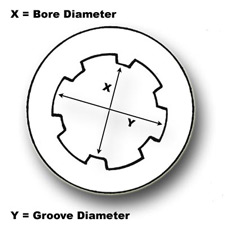
In regard to barrels failing (again in tanks) the simple act of forgetting to remove the boresight results in catastrophic failure, as a loader one of your loading tasks is to check that the bore is clear before loading a projectile. if you can’t see a circle of daylight you don’t load.
Not sure if this barrel failure was due to boresight, or damage to the barrel or even possibly grounding it (the barrel can fill with a plug of mud, soil or sand after being pushed into the ground) however this is exactly what happens when pressures exceed barrel tolerances.
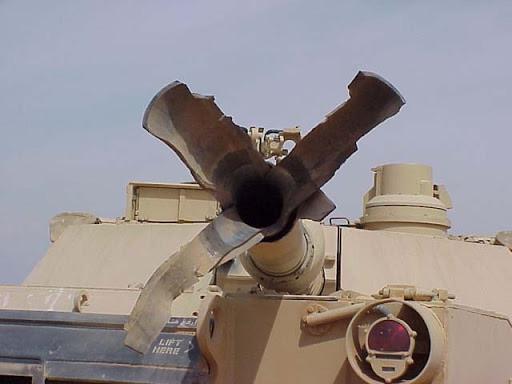
I’ve seen a 105mm Centurion barrel at the Gunnery Wing in Hohne that looked exactly like this and it was due to someone forgetting to remove the boresight.
If anyone is really interested then look up autofrettage which is the process of preparing barrels to withstand the extremely high pressure corrosion placed upon them.
the one i saw had a sloping side where the fuel cap was located and it also had a sloping side on the opposite side as well.
i am assuming it was a fuel can/jerry can as it was standing up right on the back of some apc.