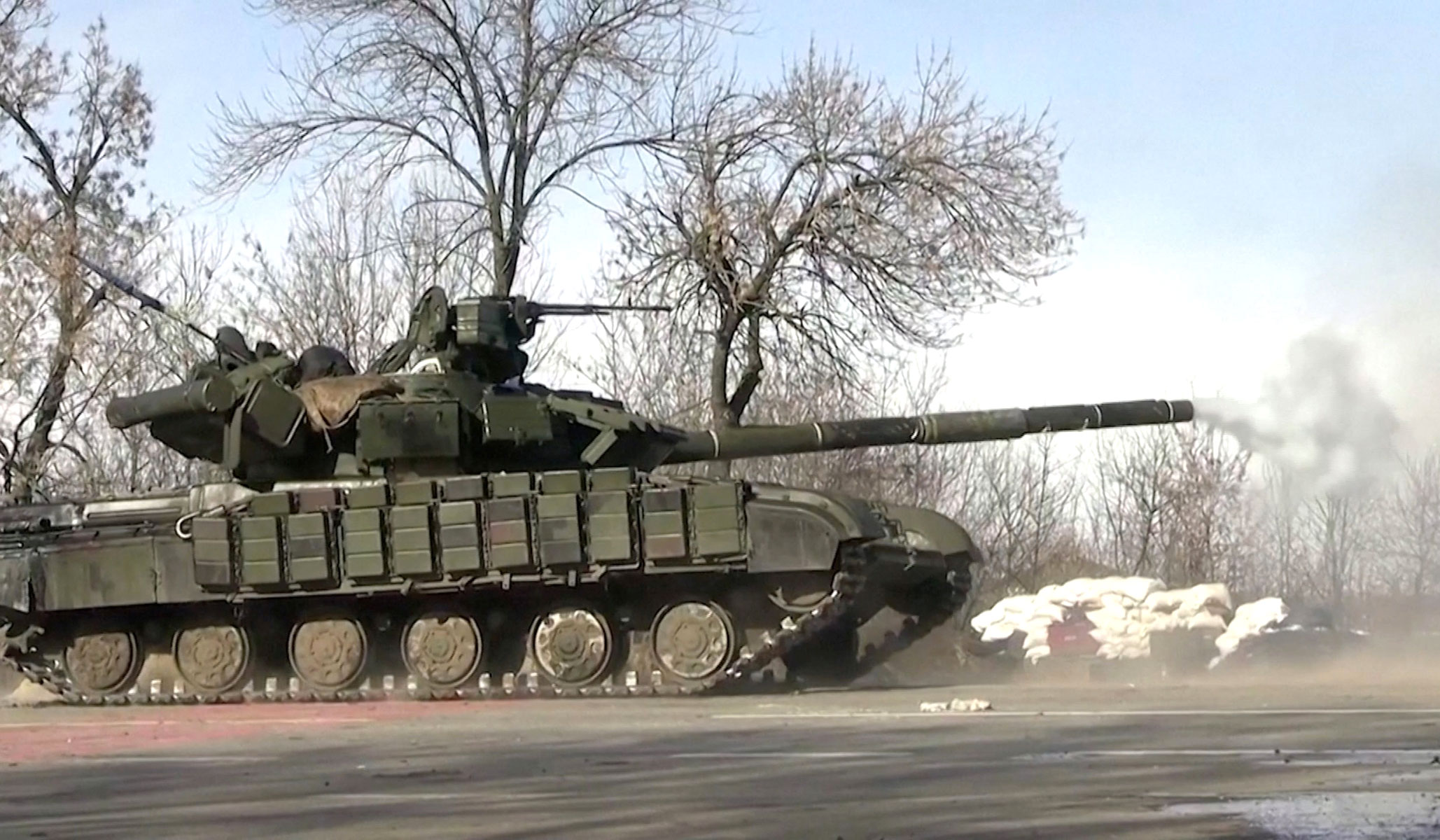
Something isn’t clicking for my brain.
If Russia measures sea/groove to sea/groove and gets it to 152 mm then the
distance between Russian lands must be less than 152 mm. Did I get this right?
If NATO measures land to land and gets it to 155 mm then the
distance between NATO sea/groove must be more than 155 mm. Did I get this right?
How deep is a sea/groove? Maybe 2 mm?
If a Russian measured a NATO 155 mm gun according to Russian standards (distance y)
the result would be 155 + 2+ 2 mm = 159 mm
If a NATO gunner measures a Russian 152 mm howitzer he gets 152 - 2 -2 mm = 151 mm
The difference would be 8 mm.
A Russian projectile fits into 152 mm minus 2 x depth of groove (assume 2 mm) so the outer diameter of the projectile body is 148 mm.
The distance between the lands in a NATO gun is 155 mm. The rifling bands on a Russian projectile needs to be 148 mm + 7 (to reach 155) + 2x2 mm = 159 mm in outer diameter to fill the seas/grooves on a NATO gun. The rifling bands need to stand out 11/2 mm on each side. No need for filing to reduce diameter.
The NATO projectile has a 155 mm projectile body which needs to fit inside the lands of a
Russian gun, the lands on the Russian gun are at 152 - 2x2 mm = 148 mm. Need to take 7 mm
off the shell of the NATO projectile. Will not work.
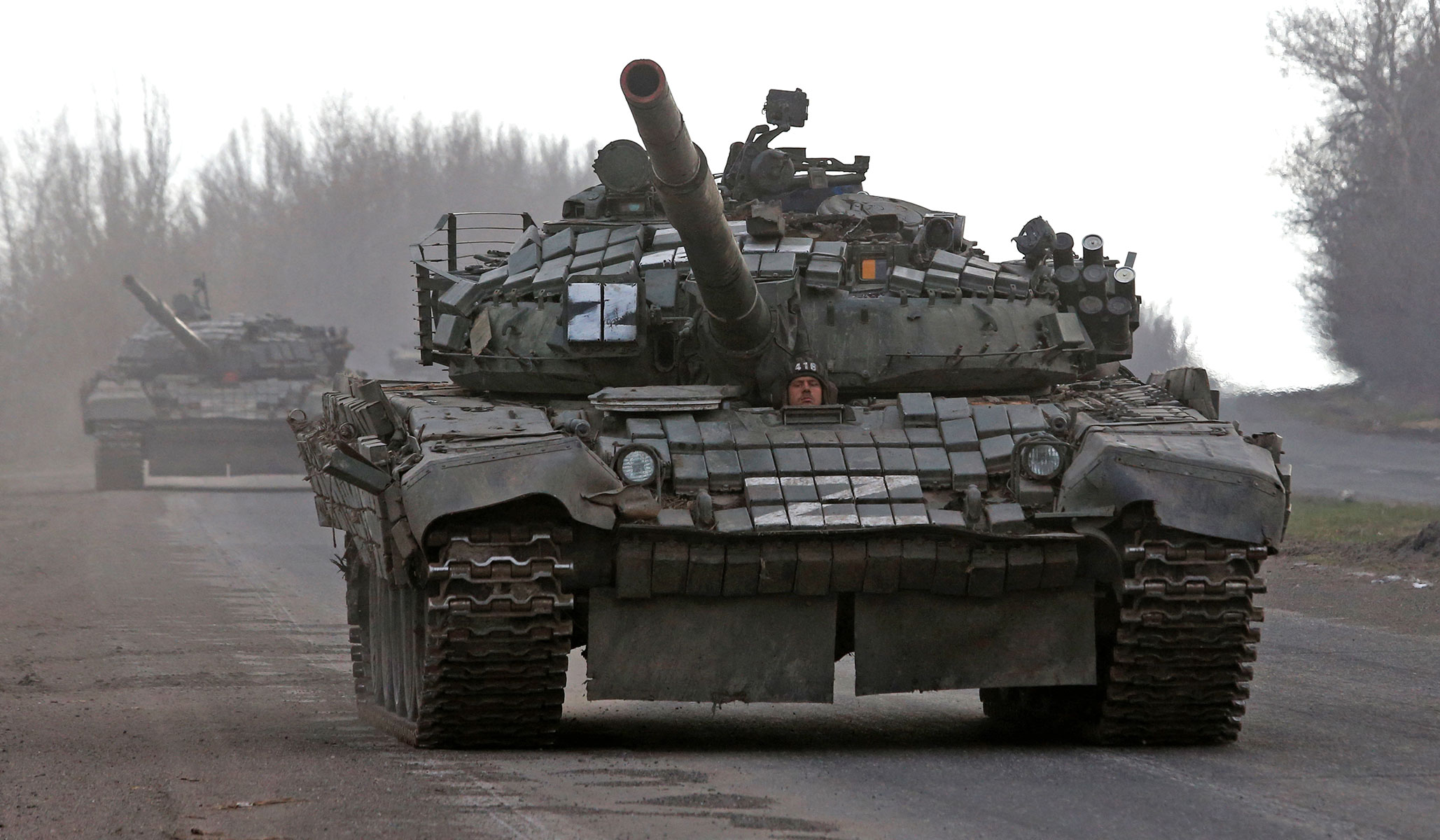
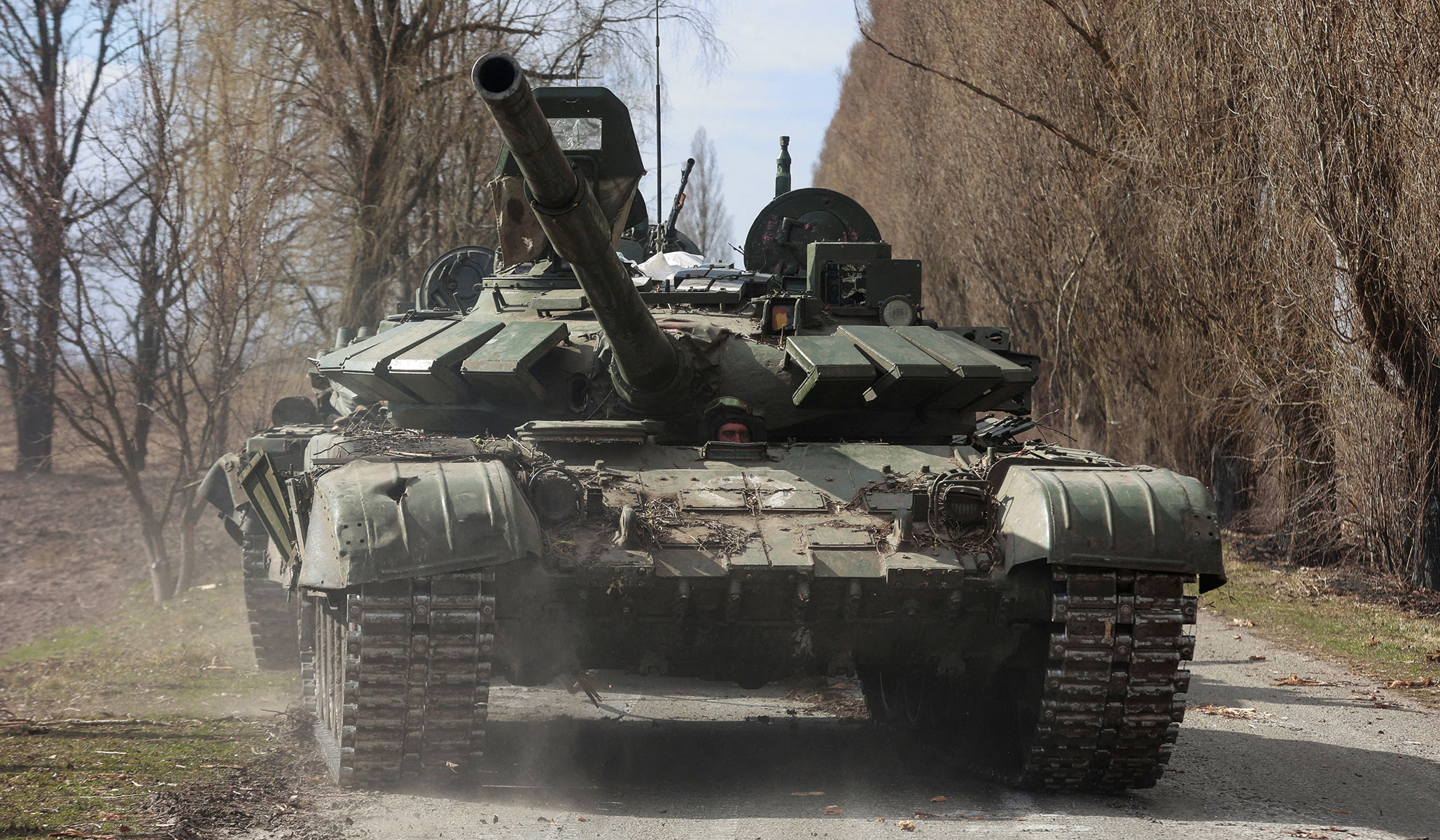
Tank guns, NATO 120 vs Russian 125.
NATO lands at 120, NATO seas/grooves at 120 + 2x2 = 124 mm
Russian lands at 125 - 2x2 = 121 mm, Russian rifling bands to fit Russian seas/grooves at 125 mm.
Need to take 1 mm of diameter, or 0.5 mm of radius off the Russian projectile.
Can be done without too much issues BUT
the Russian projectile shell would be 1 mm too big.
Note that if the Russian seas/grooves are 2.5 mm deep the Russian shell will fit between NATO lands.
Back to the question of sea/groove depth on the different tank guns …
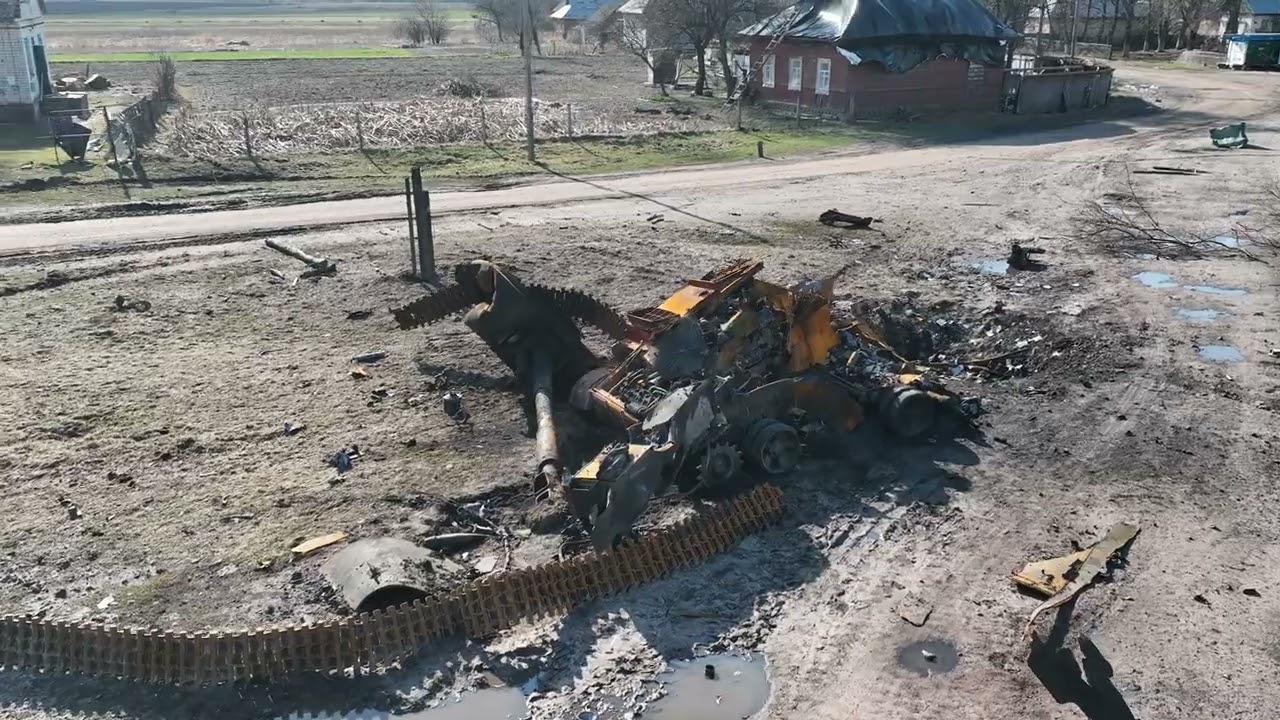
What is the best word to describe this?
Obliterated?
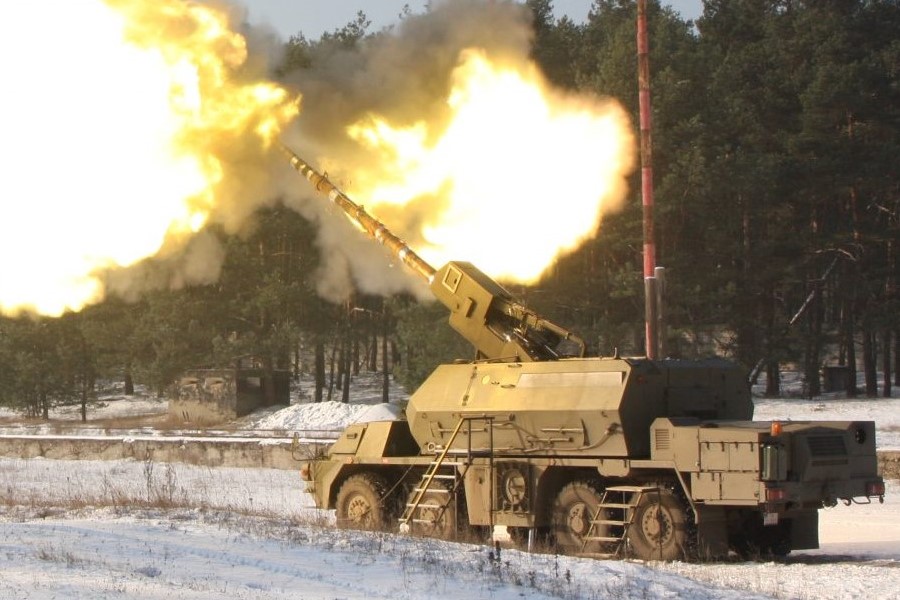
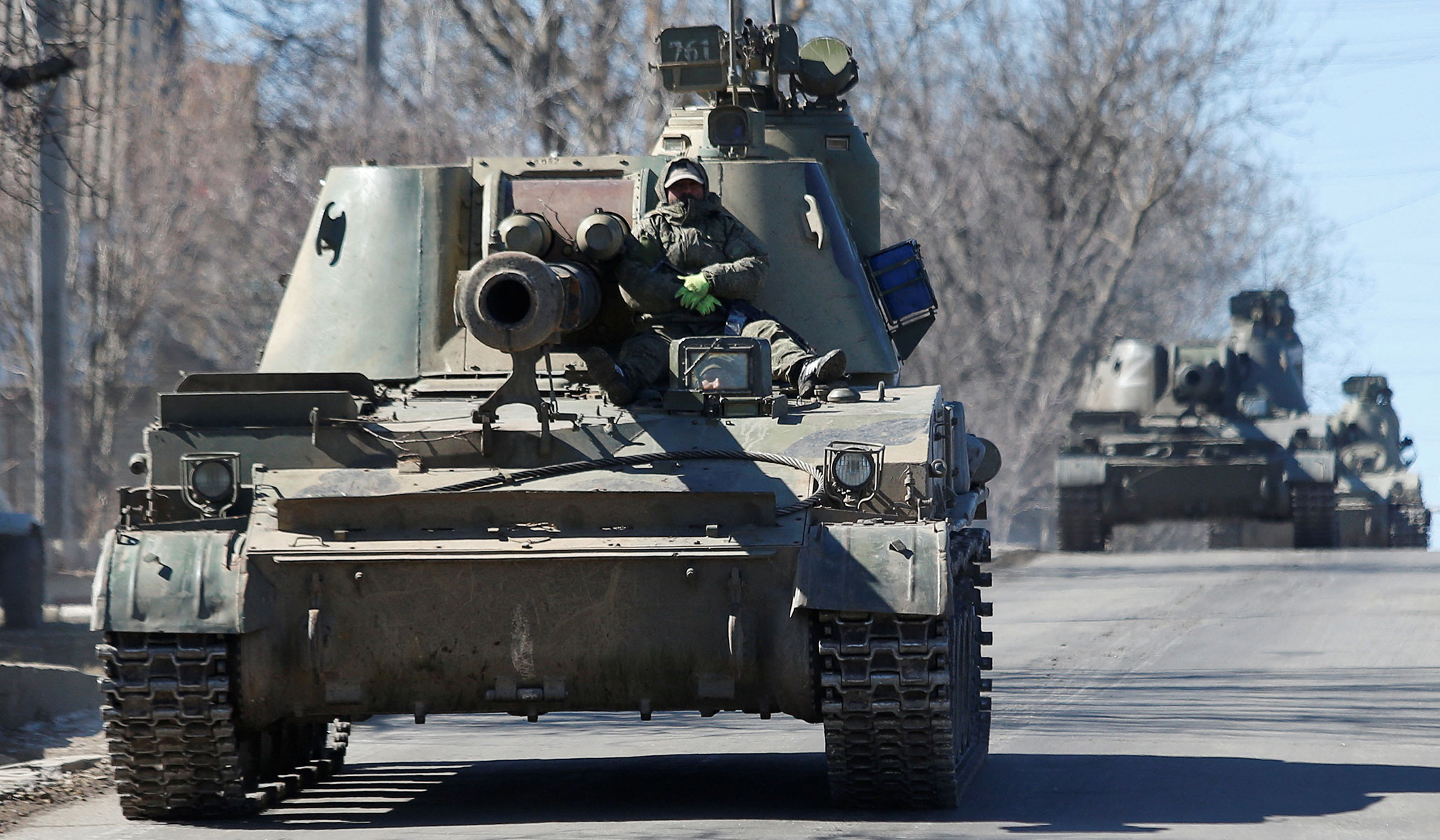
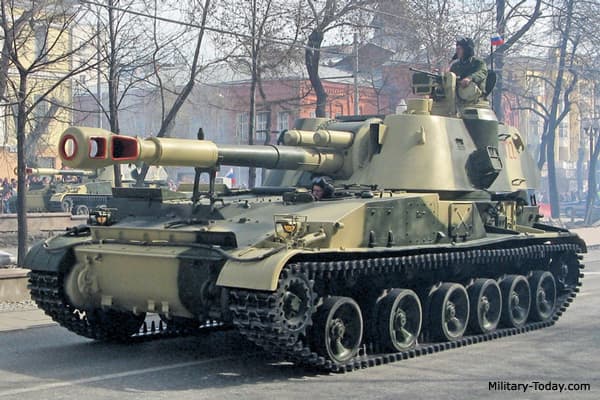
It used to be a 2S3 Akatsiya
6 road wheels with unequal spacing
Only the front 3 road wheels are still there.
The rear end with the 3 rear road wheels, i.e. the fighting compartment,
has been turned into a crater.
If the crew was inside the Russians will not need a mobila crematorium.
Not much left to send home as ‘cargo 200’ …
I’ll admit that I have no idea of the depth of the rifling on barrels, even British ones let alone anybody else’s. Also I cannot begin to state facts for artillery as that was not my area of expertise during my military service, so Gino is probably the man for that.
I will go out on a limb here and state that ammunition designed for a particular weapon system wouldn’t work in a different one. If you get away from just thinking about the projectile dimensions and take everything else into account, charges and projectiles are produced to tight tolerances to produce the same effect every time (within limits). Anything else means ballistic calculations go out of the window. Also barrels are produced to withstand pressures specific to ammunition types used for that weapon system. You can’t just willy nilly try and fire different ammunition through a barrel (even if it did fit) you would end up with the barrel result in the picture above, or something even more catastrophic. Fire control systems also use calculations specific to ammunition types to produce the information necessary to lay the gun accurately, and that goes for artillery and tanks. And at the end of the day if you are down to using a graticule pattern it is calibrated to specific ammunition at specific ranges.
Also lets not forget training, I would put money that no one here with prior military service would even think about using a different round than what was originally intended for the gun.
I cannot speak for small arms, pressures are significantly less.
I have just gone back and re-read your post. It might be that there is a difference between the physical dimensions of Russian v Nato ammunition due to the difference in how calibres are measured, I could’t say however due to having never measured Russian ammo but I do see your point in your calculations.
My calculations are based on a guess about rifling depths so it is an attempt to wrap my brain around the different measures. It could pan out for 120 vs 125 mm but the 152 vs 155 artillery should be totally impossible.
I’m no artillery man so I’m basically fishing for facts …
Had an AS90 blowup in BATUS, 2002 just the tracks and belly plate left, wind down barrel, blow none burnt propellant, onto a bagcharge, Crew got out and went into cover, well burnt and then spread itself over a wide area.
After I wrote that I thought I may very well have gotten things reversed in my description, but decided not to edit it, because who really pays that close attention? Obviously you!
Either way, we had that ammo discussion at the 40 level 13B course three years ago. I thought it would be easier than infantry or SF SLC. Wow, was I wrong. That was a fairly challenging course, but we did go in depth into how close the rounds really are.
What I can tell you first hand however, from teaching Soviet mortarts in Afghanistan, is that you can fire 81mm US mortar rounds in a Soviet/Chinese 82mm mortar, but not vice versa.
Modern tank guns, NATO 120mm, Russian 115mm, 125mm; are smoothbore guns, there is no rifling, no land and grooves/seas. It is just a smooth tube of the stated diameter.
Other guns are still rifled.
Ken
 seriously though that must have been a full bomb load to have produced that.