A view of the bridge of the icebreaker Sankt Erik in Stockholm, launched 1915
That binnacle is rather high. The sailor at the rudder shall be able to look into it without bending forward, think head-up display. The size of Japanese sailors may need to be considered but since Mikasa was built in England the binnacle might be European sized.
The sailor turning the rudder wheel does not necessarily need to see the ocean ahead, the officers are giving the orders about which course to steer. A good view of the compass is absolutely necessary since he steers according to the compass.
3 Likes
Thanks for this wonderful view of the bridge and your information. 
Looking at the picture, the altitude on my compass should now be approximately correct.
2 Likes
The photo of Mikasas bridge should give a clue if you compare your binnacles with the height of the lower window sill.
Sailors vary in height, I can barely stand straight in Sankt Eriks wheelhouse …
2 Likes
That’s correct.
The compass goes roughly to the middle of the windows. However, it’s not known whether these are still the original compass pillars. Not much else on the museum ship is really in its original condition.
2 Likes
The eternal dilemma for model builders looking at museum displays

build a model of the original or make a copy of the museum object
or something in between …
On the other hand: Is it reasonable to assume that the team who restored/rebuilt the Mikasa wheelhouse did some research, maybe found the original drawings for the binnacle and made a copy.
2 Likes
This photo is from some fishing boat but I use it anyway to illustrate what I wrote about the duties of the helmsman (Steuermann):
Some warship (WW II or later)
- Rudder angle indicator. Officers order something like 10 degrees starboard rudder to get the desired turning radius. If they say ‘come to course 190’ there is an implcit understanding on the ship that this means a specific rudder angle. Sharp turns costs momentum and costs fuel to get back up to speed again (hydrodynamics …). The helmsman needs this indicator.
- Some other compass. Gyroscopic compass somewhere and this is just a repeater?
- Radar. An officer standing up shall be able to tilt his head forward and look into it. The funnel is there because those radar screens had weak “light” so the eyes needed darkness to see the screen.
- You know what this is already, it is there as a backup if the fancy modern stuff should fail …
Nobody needs the helmsman to become tired from looking down into a compass for 4 hours. Normal watch times is 4 hours but maybe the helmsman get relieved more often on warships.
4 Likes
Wow, thank you for the extremely detailed information, that is very interesting.
1 Like
I asked google about: battleship wheelhouse 1900
and got all kinds of photos, the fishing boat was unexpected …
All wheelhouses need to handle the same needs,
controlling the rudder, knowing the rudder angle, see the compass,
send signals to the engine room, voice communications,
navigation, see the surrounding waters.
Over the years those needs have been met in different ways.
In the old days the commanding officers were on an open bridge (Royal Navy in WW II).
The helmsman didn’t need to see the water, he can be indoors, warm and cosy to avoid
getting tired and losing track of the compass. On some ships the room with the helm was deep inside and didn’t even have “windows”.
Time to let you continue with your build

3 Likes
All the original construction drawings for the Mikasa were still in the archives at Vickers when she was reconstructed and a full set were given to the restorers. However, I suspect Binnacles, etc., were bought in from specialist manufacturers. It would be interesting if all the orders and receipts for Mikasa were extant (I believe this is the case with the Titanic) and could be cross-referenced to a manufacturers catalogue.
Regards,
M
2 Likes
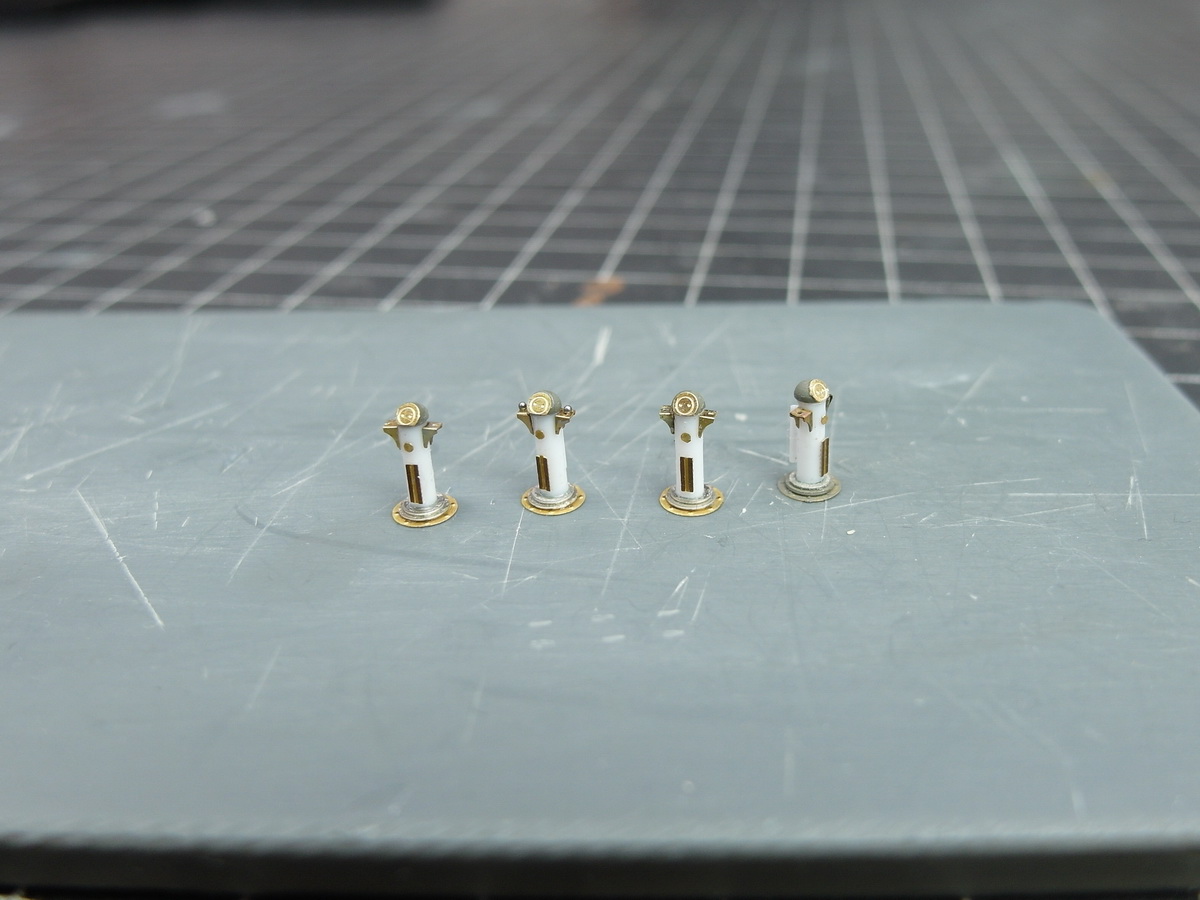
A quick update.
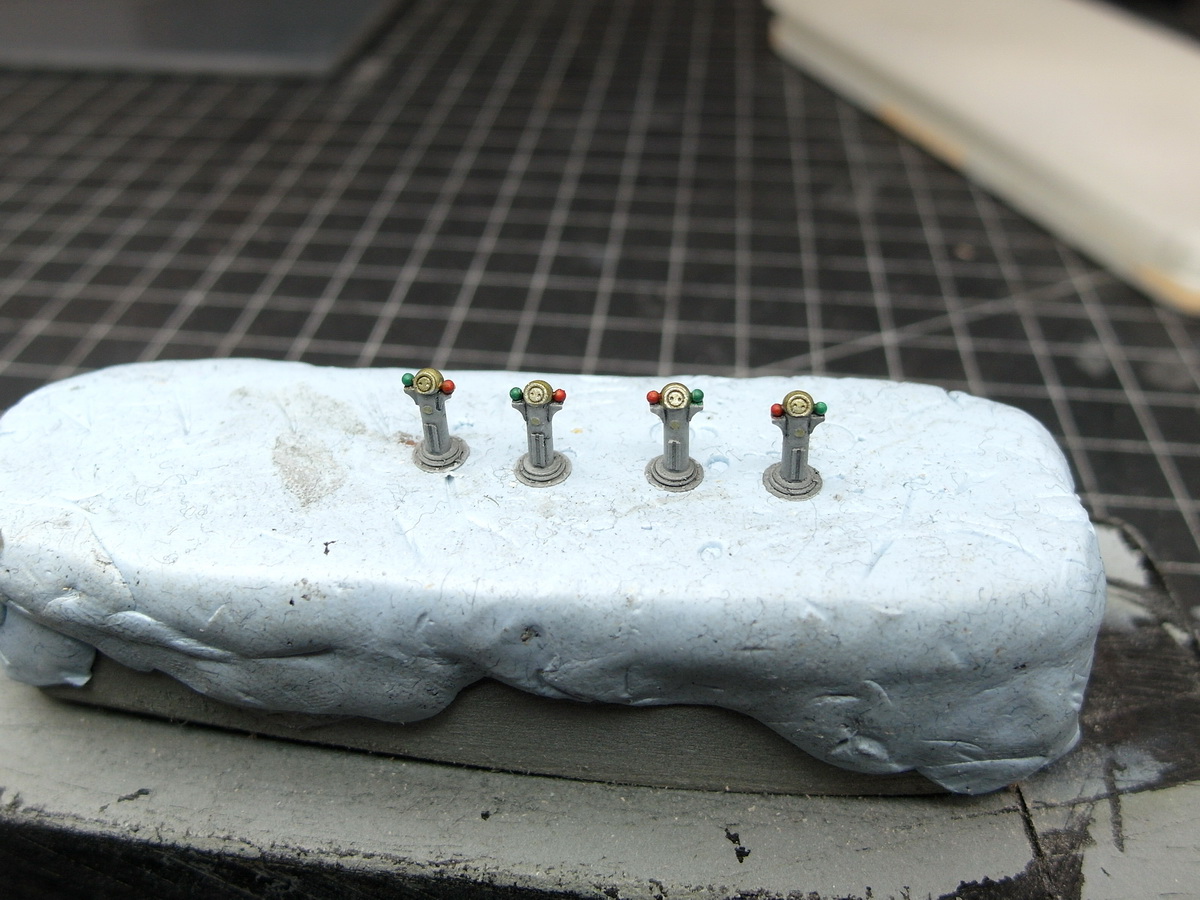
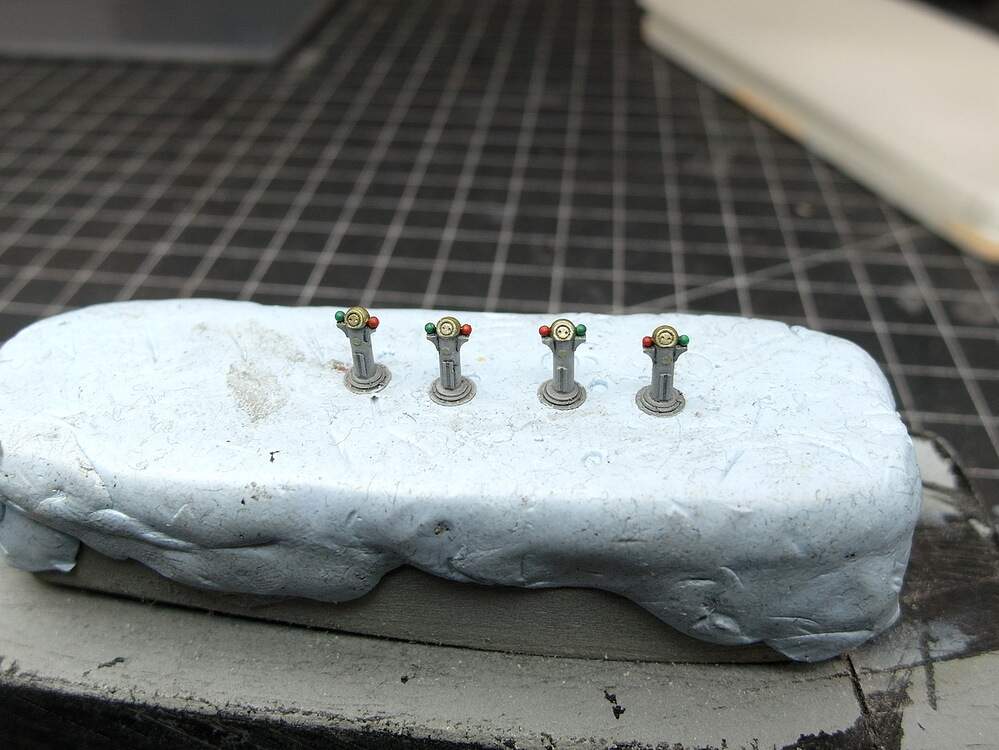
I really had to fight my way through my compass crisis. It was quite tough and took a while. But now four are finally finished.
And they also received a washing.
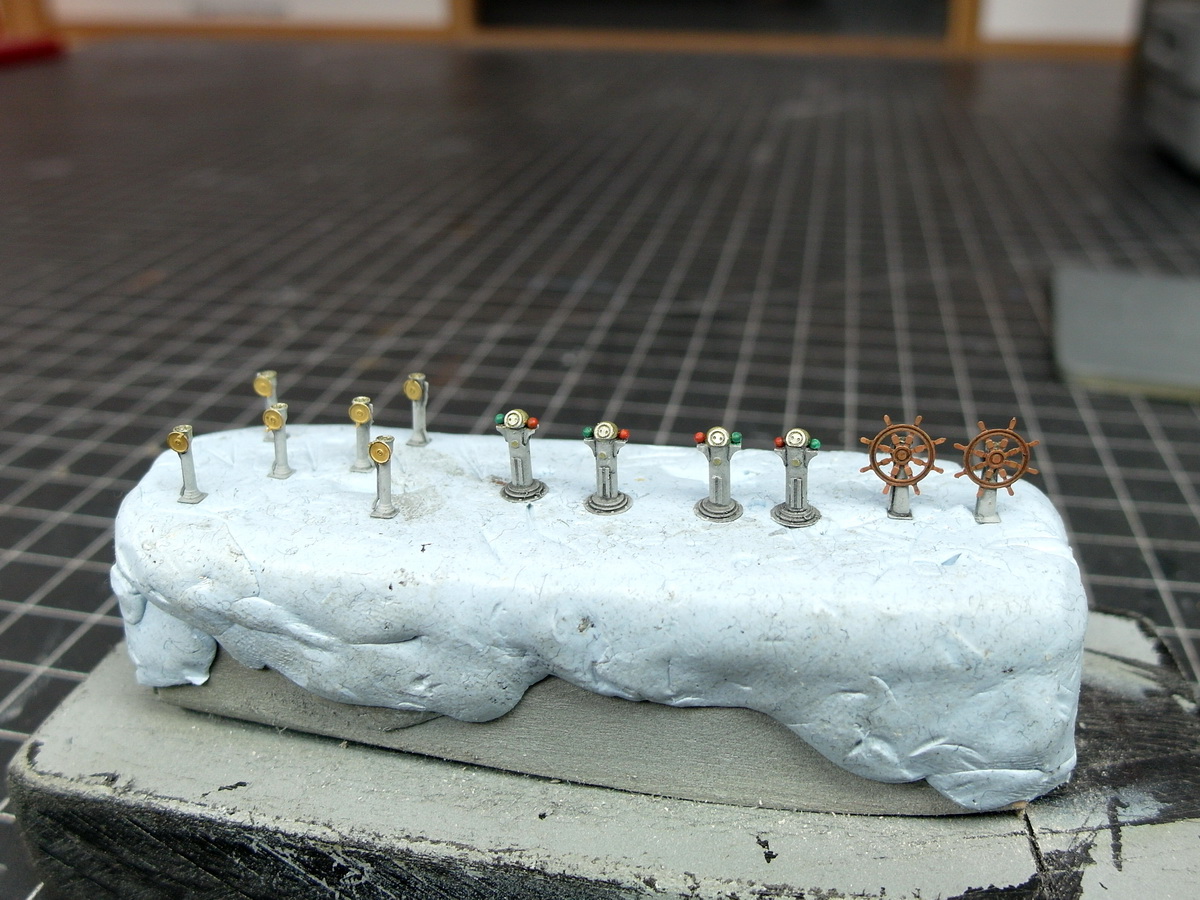
Next up are the steering wheel and the engine telegraphs.
12 Likes
Those look REALLY nice!
I assume that the red and green compensation balls are reversed for the binnacles destined for the rear steering positions?
1 Like
Thank you very much, Robin.
That’s right, one pair faces the bow, the other the stern. I almost forgot to pay attention to that when painting.
3 Likes
Those look superb and I have to say …. I love your balls ….. I never thought that statement would be said in here lol
6 Likes
Jörg, I agree - super work on those binnacles!
3 Likes
Shaking my head.
Jörg, your work looks great.
4 Likes
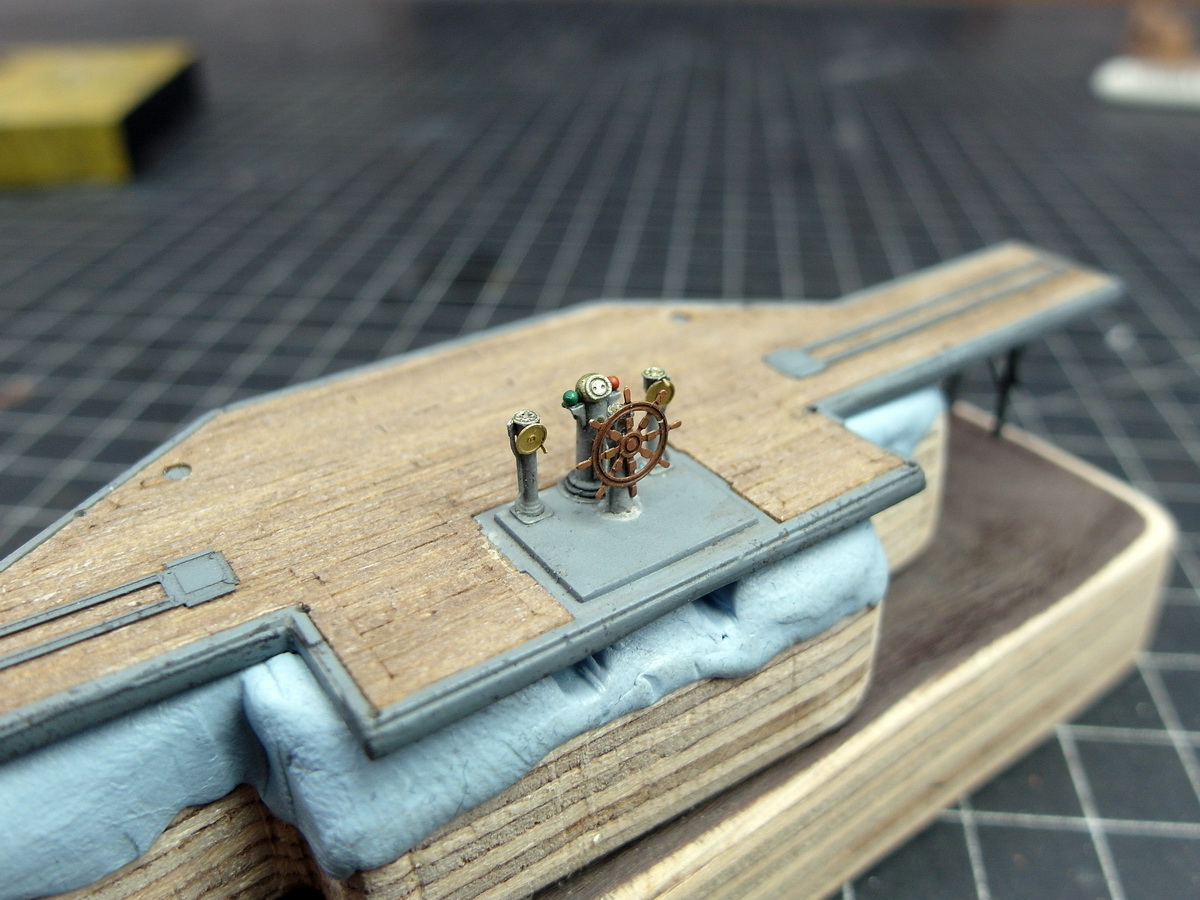
Thanks to all and now a small step further.
Both steering wheels and the engine telegraphs are finished.
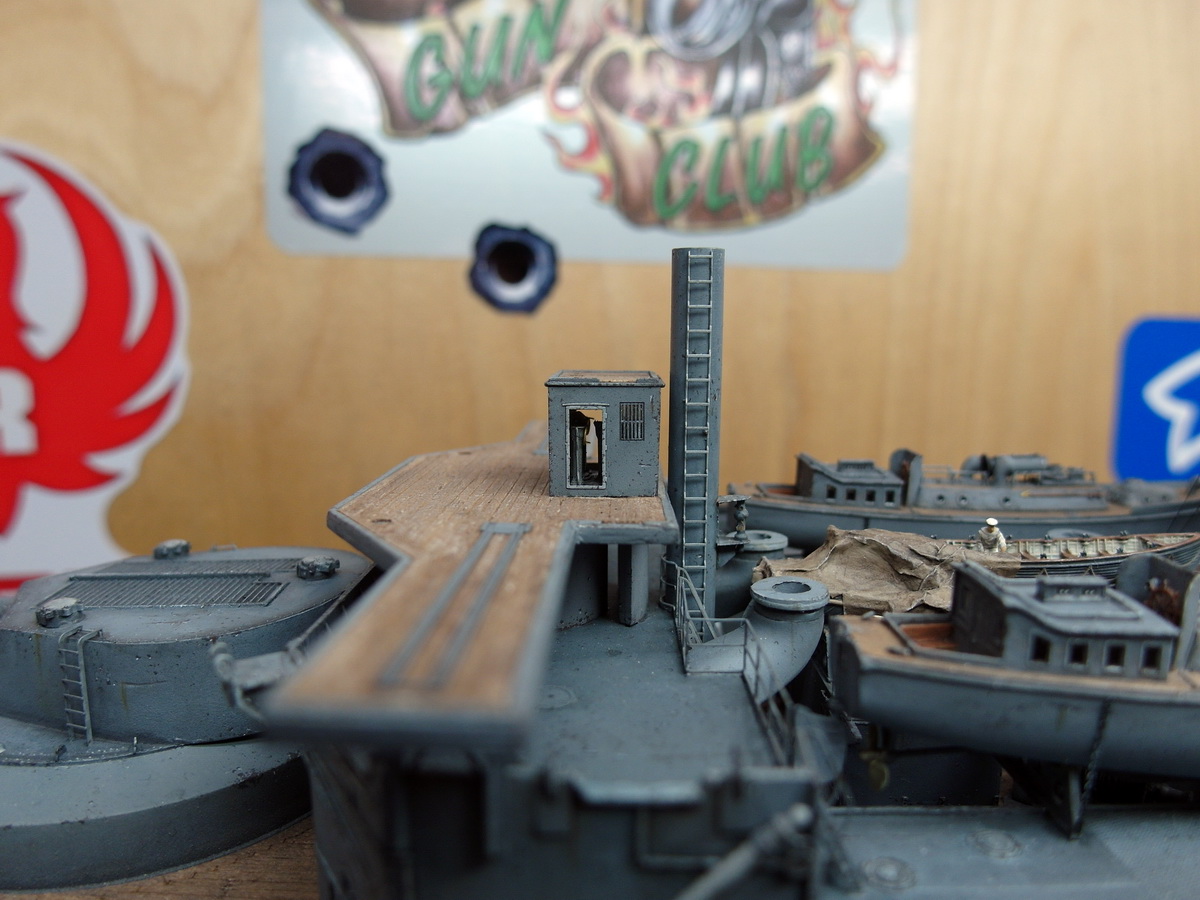
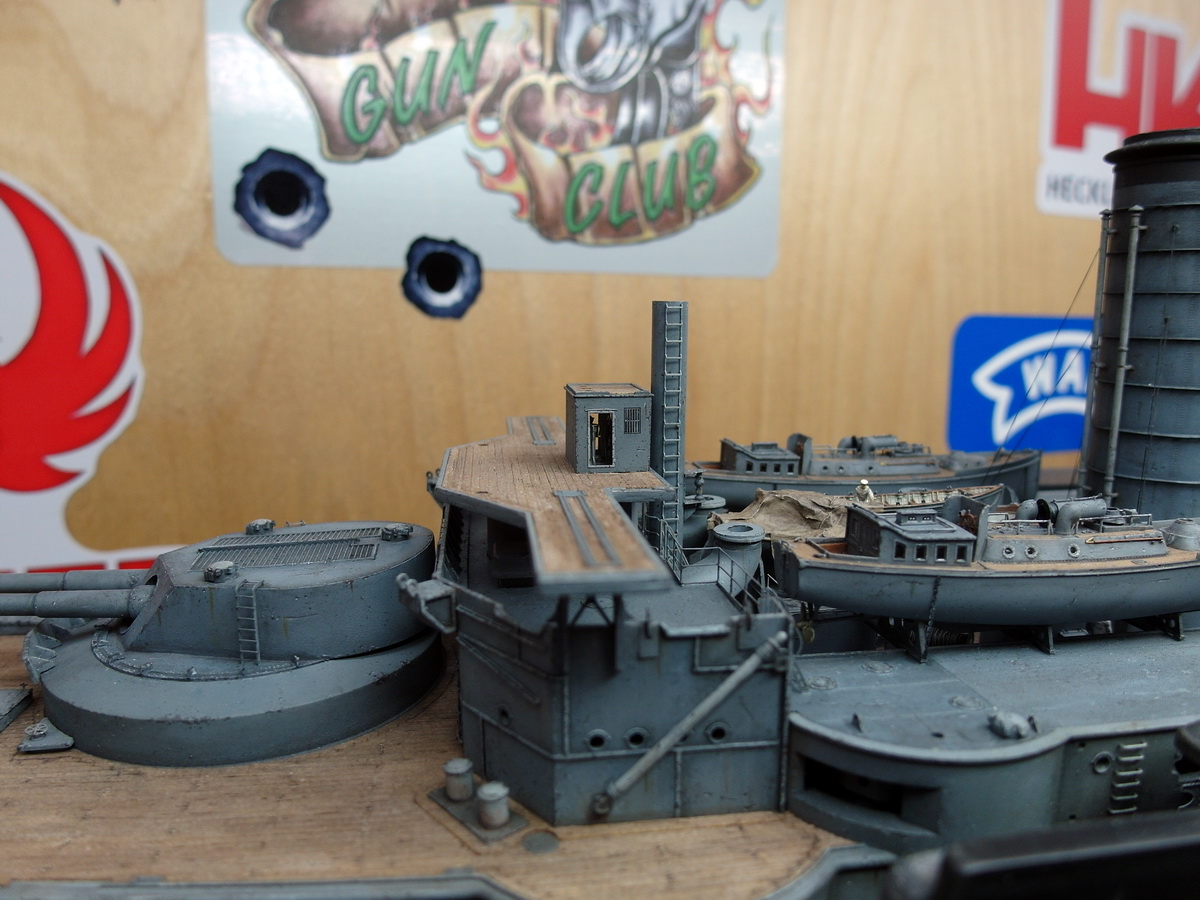
Let’s start with the small wheelhouse towards the stern. It’s quite cramped. The floor is still a bit shiny from the glue, so I touched it up with matte clear varnish.
I initially wanted to put figures in here, but I decided against it. Otherwise, it would look too cramped.
I also did a little trick with the compass. I cut a piece off the bottom part with a scalpel so I could get it as close as possible to the front wall of the wheelhouse and the steering wheel would fit properly behind it. You can’t see any of it afterward.
And I even tried placing it on the Mikasa to see how it works.
I am very satisfied with that.
12 Likes
Ahoy, sailors!
Preparing the interior of the wheelhouses proved to be a real challenge. After a few setbacks and starting over, it finally worked.
And the many helpful tips from users in all the forums where I post my build logs contributed greatly to the success.
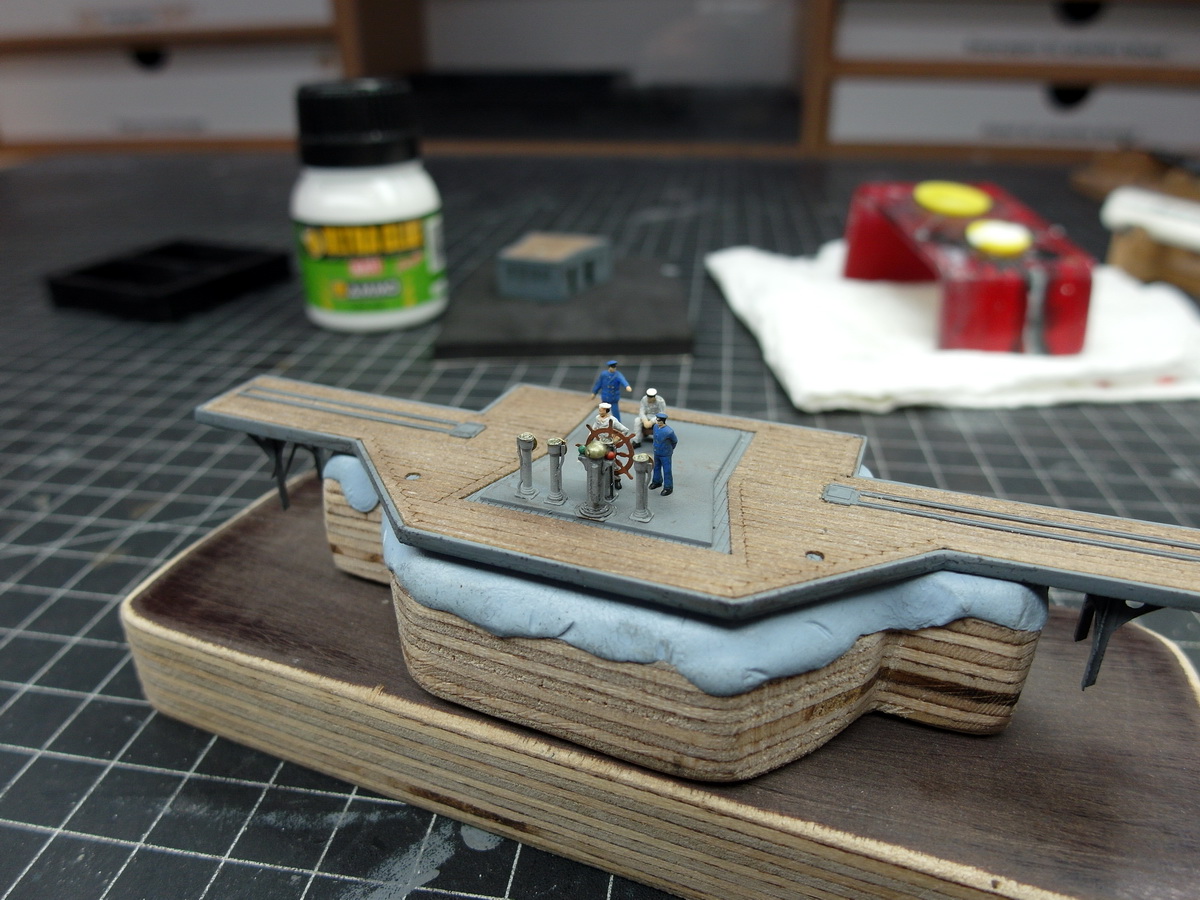
But now, on to the forward wheelhouse.
There was much more space here than at the stern, and I could really let my creativity flow.
You probably know how it is. Making and preparing repetitive parts is often a tedious and boring task. But when it comes to arranging them on the model, it’s like Christmas and Easter all rolled into one. That’s when I really enjoy it.
That’s exactly what happened in the Mikasa’s wheelhouse. I arranged the individual parts as shown in the pictures of the museum ship. Again, I positioned them a little further away from the base of the compass mast to save space.
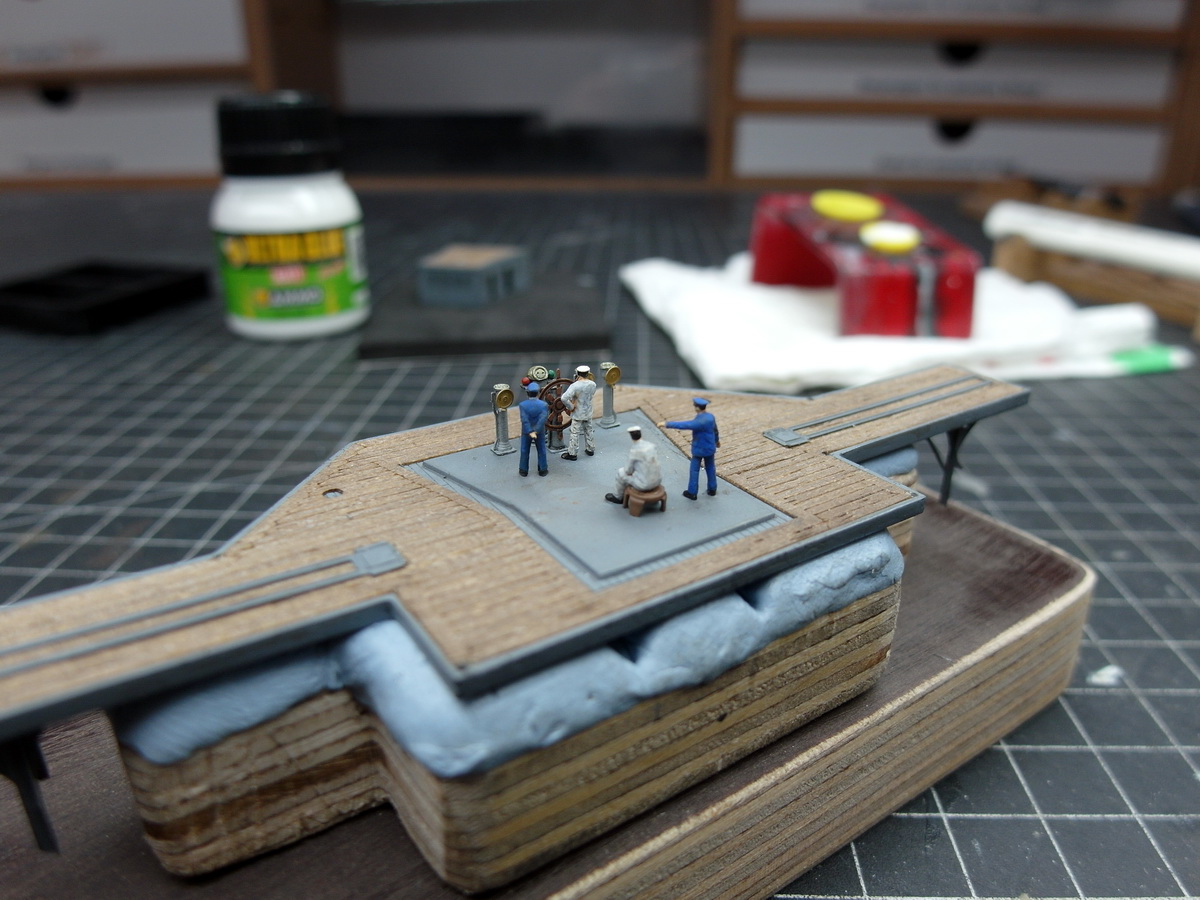
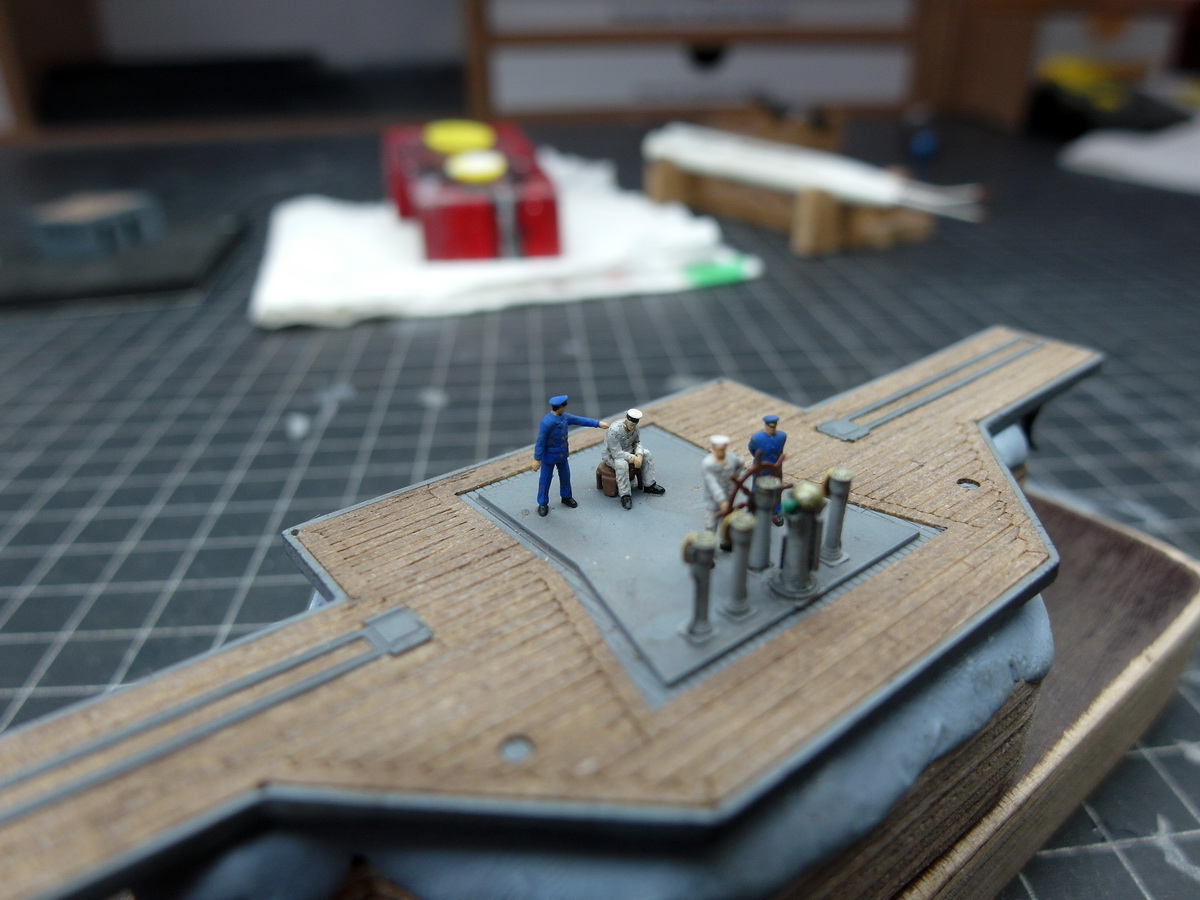
Officer and sailor on deck and full speed ahead.
In room two, a sailor I had modified sits in front of the desk. The officer is shouting instructions.
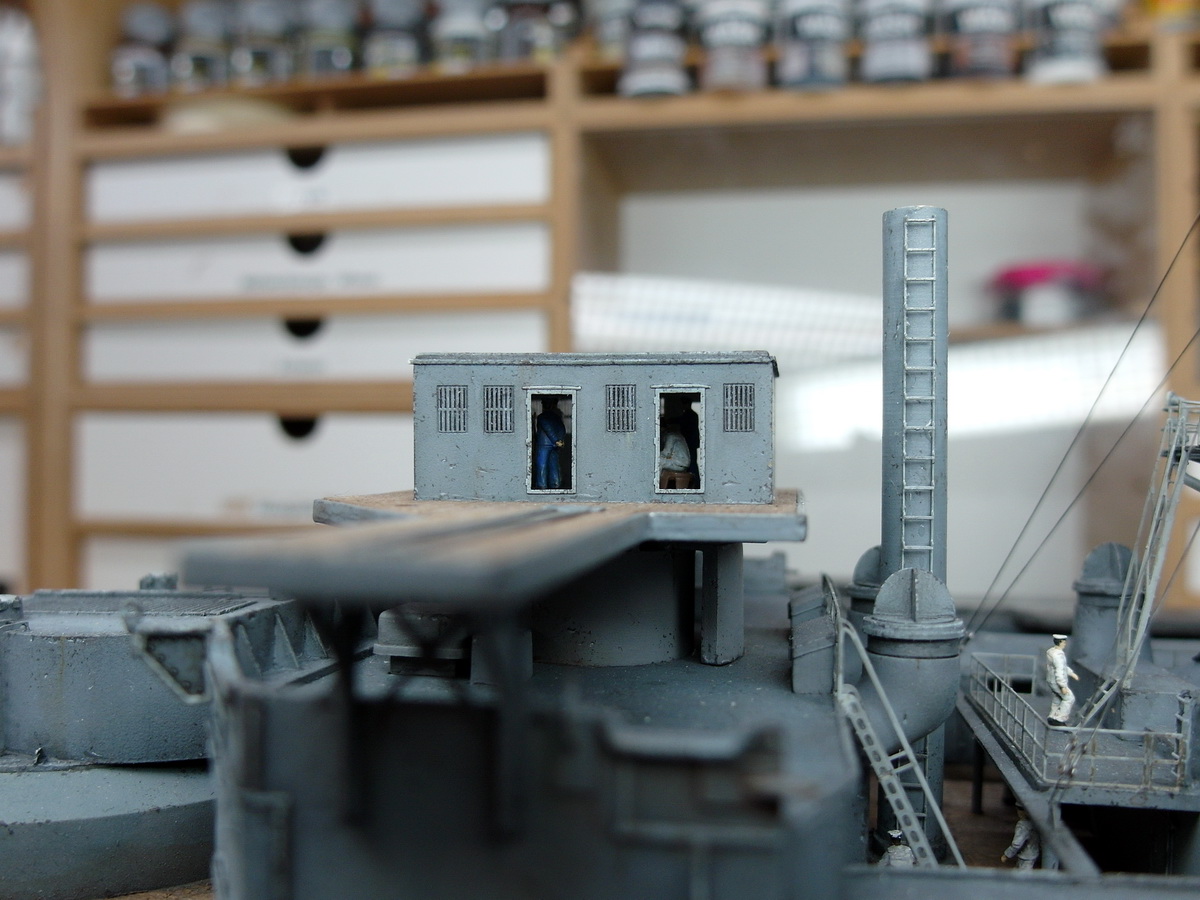
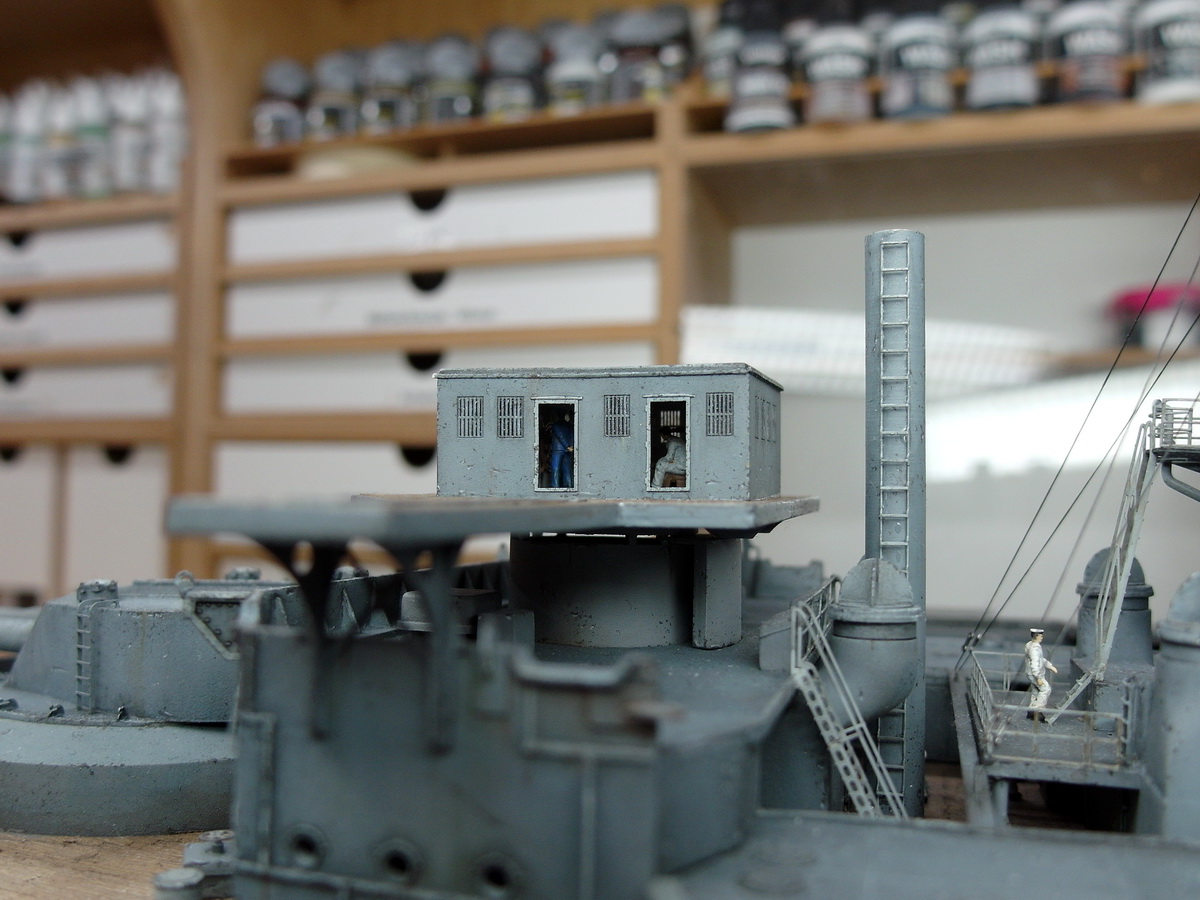
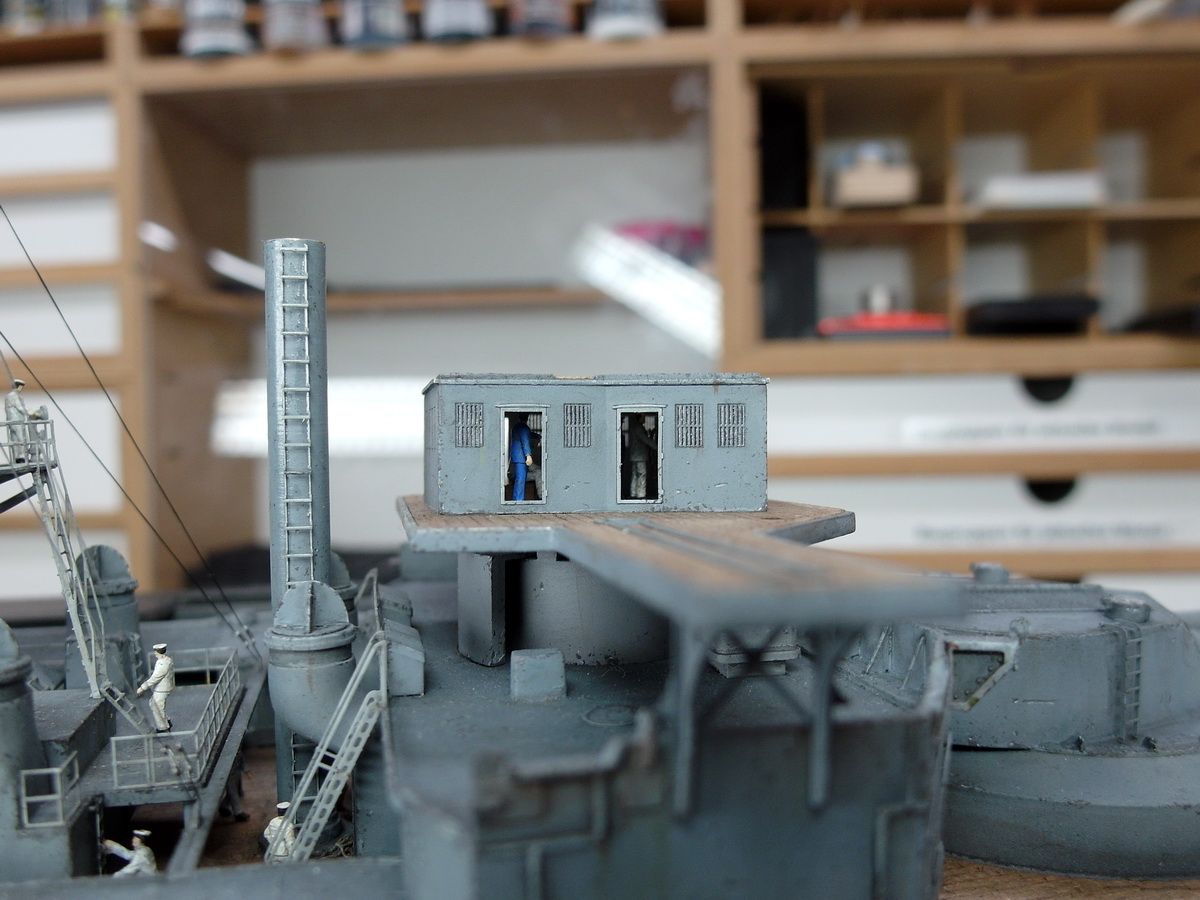
Let’s put the lid on and see what else is visible of the whole scene.
It’s very difficult to get a proper exposure with the camera. Because I have to get the lens very close to the wheelhouse, I’m blocking the light from the work lamp.
However, I think you can see enough to guess what is going on in the room.
11 Likes