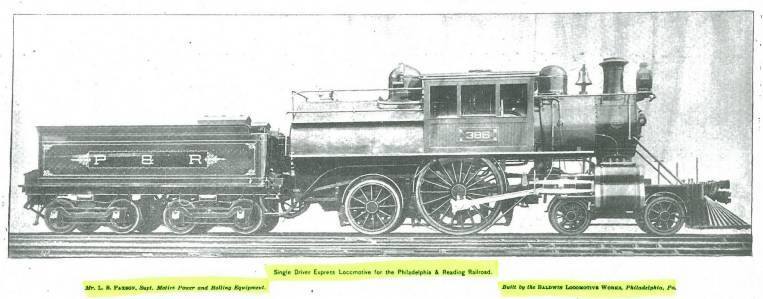
Locomotives that were built with pivoting bogies for their driving wheels are known as articulated locomotives. I’ve never thought to look up it there have a different term in Europe or elsewhere. “Mallet” is not unique to articulated locomotives, although I’m not 100% sure that they were used on rigid framed locomotives. Mallets were articulated but mainly Anatole Mallet developed this design for the steam from one engine to be reused at lower pressure in the other engine; hence the design is very easy to identify because the cylinders at the front of the locomotive are so much larger than the trailing set. Other systems on articulated locomotives as well as rigid wheelbase locomotives are “simple”, and “compound”. Compound may also be directly related to Mallet’s system, which I need to go look up because it’s been a long time since I’ve thought about it.
Garratts - are they too cool, or what! I’ve read where there’s a class that were developed for passenger service and could reach upwards of 100 km per hour, or greater. (I cannot wait to unpack and build my vintage Kitmaster Garratt!) Personally I think they are brilliant designs but they do have the problem common to all tank locomotives (those that carry the water supply over the boiler). The more you run the locomotive, less tractive effort get a cheap because the weight over the drivers is constantly decreasing.
Steam locomotives and all their contraptions and apparatus are fascinating. All I can say is that I’m glad that they’re predominantly made of metal, after my early experience of firing a small oil burner, when I misapplied the atomizer and the fuel ratio and had flames licking up between the backhead and the cab floor.
What a horrible ride that would be. It was a critter on the “Katy”, the Missouri, Kansas and Texas, which ran through Missouri, Kansas, Oklahoma, and Texas, where 360 days of the year it was either scorching hot and humid, or frigid cold and humid..
He adapted the compound principle for articulated locomotives.
The compound design itself was invented by Jonathan Hornblower back in 1781 but it came to nothing due to patent fights with Watt and Boulton.
The compound design (there is a rather neat little animation on that Wiki page) was revived in 1804 by Woolf.
Monsieur Mallet, born 1837, then adapted this design to fit articulated locomotives (of which there are a few different types).
Yes.
But, the weight of water and coal is relatively small compared to the whole locomotive.
One example, LMS 2-6-0+0-6-2 Garratt built by Beyer, Peacock & Co.
Those built 1930, loco weight 154.9 metric tons, coal 7.1 metric tons, water 20 metric tons.
Assuming that loco weight is given as empty the weight used for traction would be
182 tons when starting and 154.9 tons when arriving at the final destination (if every lump of coal and every drop of water have been consumed).
The weight arriving would be 85% of the weight departing assuming that no water or coal has been taken on during the voyage.
Could be clever to refill water and coal before trying to climb gradients.
Okay. So. All these little rail inspection vehicles. The converted cars and trucks with a relatively short wheel base. They have no steering of any kind? The normal steering is locked out?
When I see a cluster of wheels relatively close together, they are not steered?
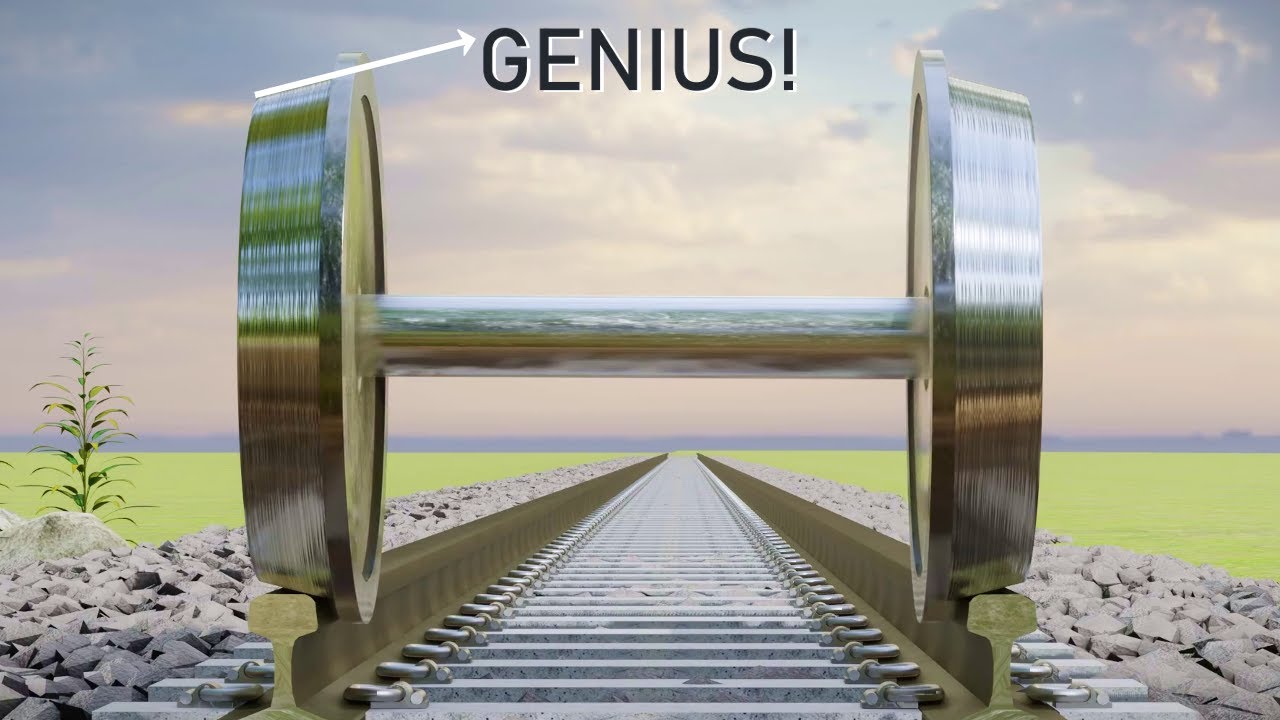
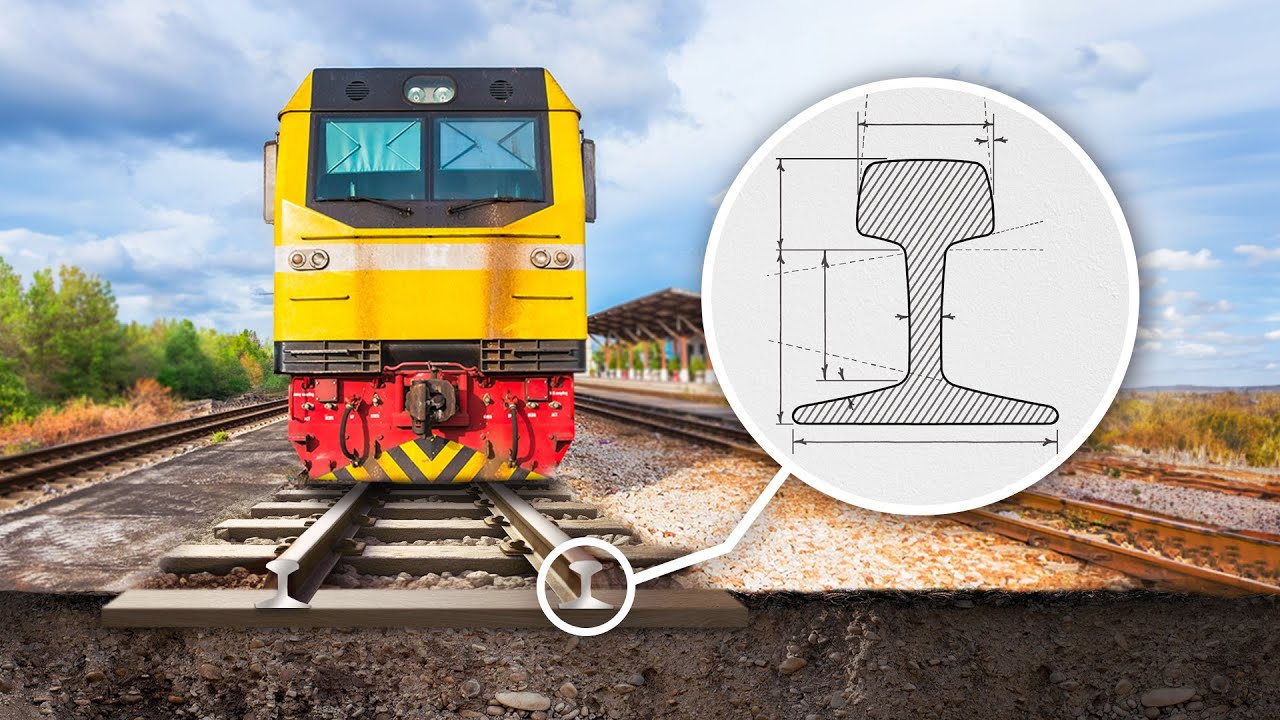
Rail vehicles can be steered but they are steered by the track, not the humans (or possibly a computer or AI in the future) travelling in the train/locomotive/railcar/whatever.
The geometry of the track and the wheels holds the waggon or train on the track.
Switches/Turnouts are used to move over to another track.
The geometry of the running surface (can’t say tread can I?) is precision engineering and manufacturing.
If you want to really dive into the science behind all this you can google these words:
railroad wheel contact geometry
All my current drawings for a science fiction rail inspection vehicle place the front wheels on a bogie. A bogie makes the project more complicated. I now understand a short wheel base vehicle does not need a bogie or any other form of steering.
Correct. The cylinders, valve gear and drivers are the engines. Articulated locos had multiple engines. We’re probably saying the same thing but losing something in the translation of terminology.
If you are speaking of automobiles that were turned into rail riders, I can’t 100% say for certain. I don’t believe I’ve seen the interior one that actually had a steering wheel. I’d say that the steering mechanisms were locked and the vehicle was guided simply by the geometry of the track, like ordinary rail cars.
This is all very new to me. Over the years, I played with a handful of small train sets but never put much thought into how a train works beyond the most obvious stuff. For road/rail vehicles, I now presume the steering wheel is locked out (or not used) when in rail mode.
Maybe I should prototype using Lego before cutting plastic.
I have spent time around serious railroad and steam engine aficionados and picked up scraps of knowledge.
I think the whole locomotive is named ‘engine’,
‘engin’ is French for machinery, contraption, device, vehicle.
A steam engine in a ship is the sum of cylinders, rods, valves.
When it comes to locomotives I think they talk about the components like
cylinders, rods, valves.
If we use the analogue with a steam engine in a ship the driver wheels would be the equivalent of the crankshaft (the rods connect the cylinder with the crankshaft).
A Shay locomotive does have the equivalent of a ships steam engine with a crankshaft connected to an axle that turns the wheels using angle gears.
Did you work/volunteer with a steam railroad? The little Vulcan 2-4-4t “Rachel” I volunteered with and got to fire for a day, unfortunately that was her last season. The Opryland president who loaned it to us “in perpetuity” retired and his successor decided he wanted it back, to be a centerpiece in the lobby of a hotel. Then it ended up sitting out on a back lot in the weather, stack uncovered, for about 10 years. Then it got shipped down to Texas, where it was sitting in a barn for years, awaiting to be gussied up to be another display on the resort grounds. I have not checked on her status in several years.