Looking better and better. I might suggest that you repaint the wooden crate on the fender either into a lighter weathered bare wood color, or a gray color like the jerry cans.
For the wooden crate I just followed the Tamiya advice as it clearly marked it as “brown-red”.
Right now it looks a bit jarring, but I am sure that with a matte coat and a good deal of sandy pigment it will look much better.
However, I just realized that I was supposed to apply some of the decals BEFORE gluing some of that stuff.
One is supposed to go right under the water can, the other would be almost completely obscured by the water basin.
I was thinking of not using them at all and instead of placing some on the roof and the hood, like some of the spare Balkenkreuz.
Did that happened or it would be 100% non historical?
According to this decal guide I found, apparently it did happen:
.jpg)
1 Like
I decided to go with one of the Dragon decal schemes, so I removed the water can and the basin so I can place the crosses.
Now, I was thinking, is there any risk in using cement on top of a gloss coated decal (once I re-attach the stuff)?
Assuming Tamiya Extra Thin Cement… I’d guess it would eat right through. Try using a little dab of white glue instead. If for some reason you need to remove it later, you can swish it away with a brush and water w/o damaging the surface. HTH.
—mike
1 Like
Thanks, white glue is a good idea.
1 Like
I recently found out that Elmer’s makes a clear, washable glue. It works the same way that the white glue does on Tarps and diorama work, Thin-able just like the white too.
Also, I bagged on some folks on here for using Krylon and Rustoleum spray cans, but my apologies to them because a really good model primer that I have found is Rustoleum High Heat black. It’s a little bit more expensive, but I get a finish like Tamiya extra fine.
1 Like
Your progress is looking great!
1 Like
A question about varnishes:
I just finished a single gloss coat on the model, this is usually the time I start applying decals and do the pin wash.
Now, I was reading around that gloss coats offer better protection than matte, so I was wondering if it would be a good idea to apply a second gloss coat so i can cover both the decals and the pin wash too.
After that I obviously plan to apply a matte coat.
1 Like
I usually apply gloss, then decals, then gloss again (to seal the decals) before adding pin washes etc. Then I add a matte coat to seal and flatten everything.
1 Like
Pin-washed.
As usual I went a little over the top with the panel lines, but in my experience they fade away a lot once you put a matte coat and weathering.
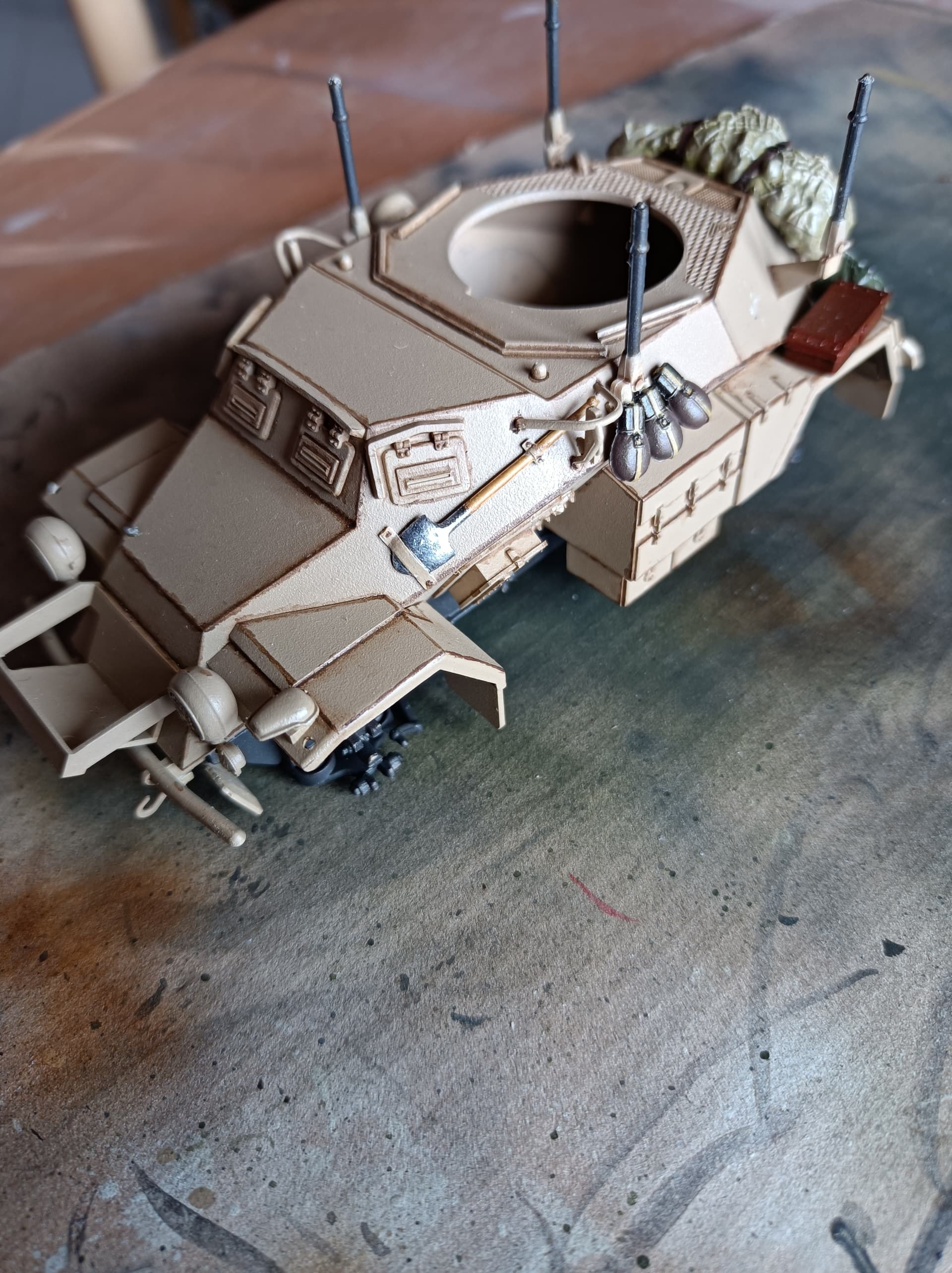
2 Likes
Looking great! You are really showing a lot of improvement, and gaining confidence too!
Ken
1 Like
I placed the decals but I have trouble with this front licence plate:

According to Tamiya instruction it goes right up the bumper:
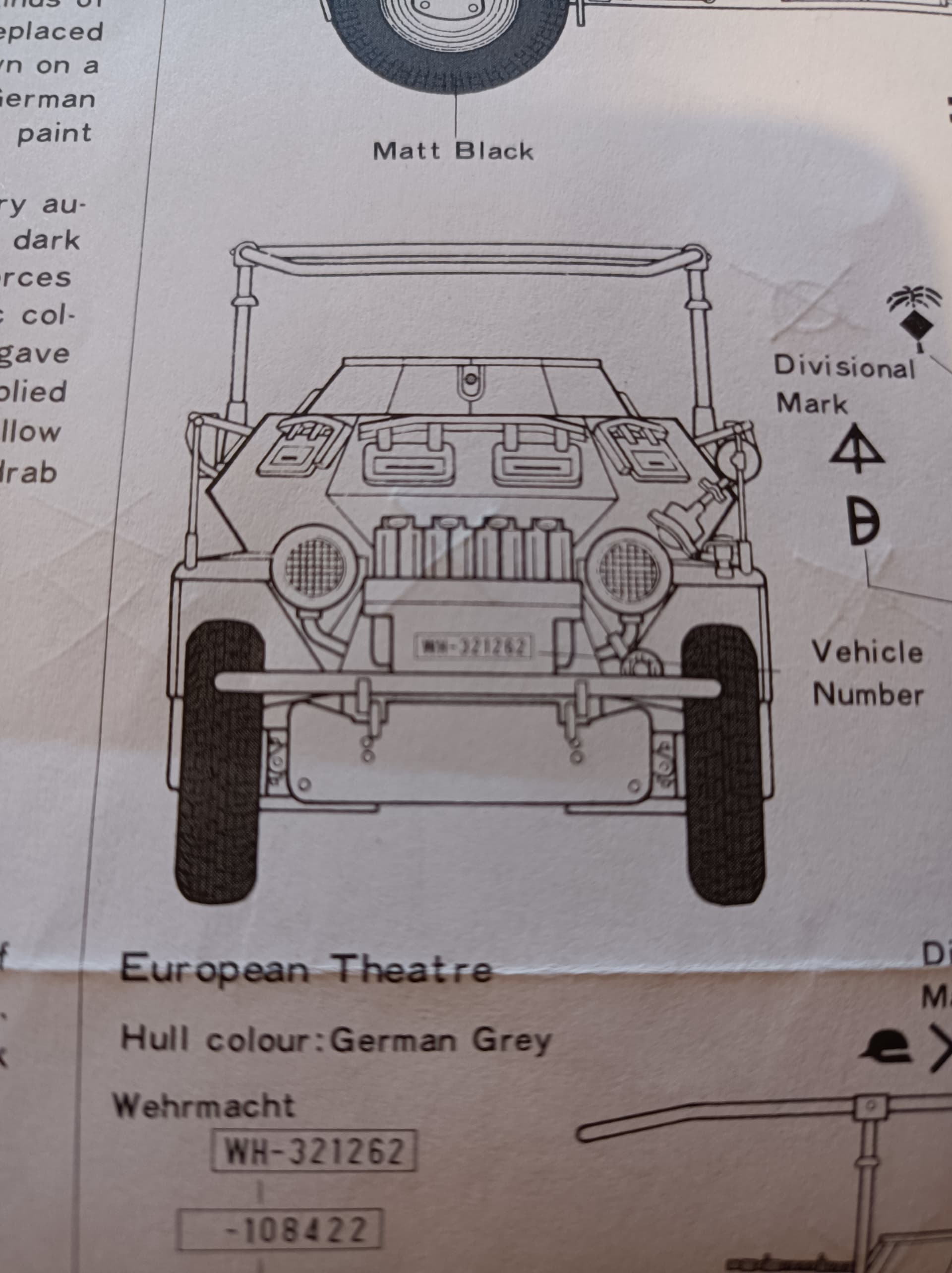
But in reality that surface is completely diagonal, making the plate almost completely directed towards the ground, thus making it invisible unless someone went looking under the vehicle:
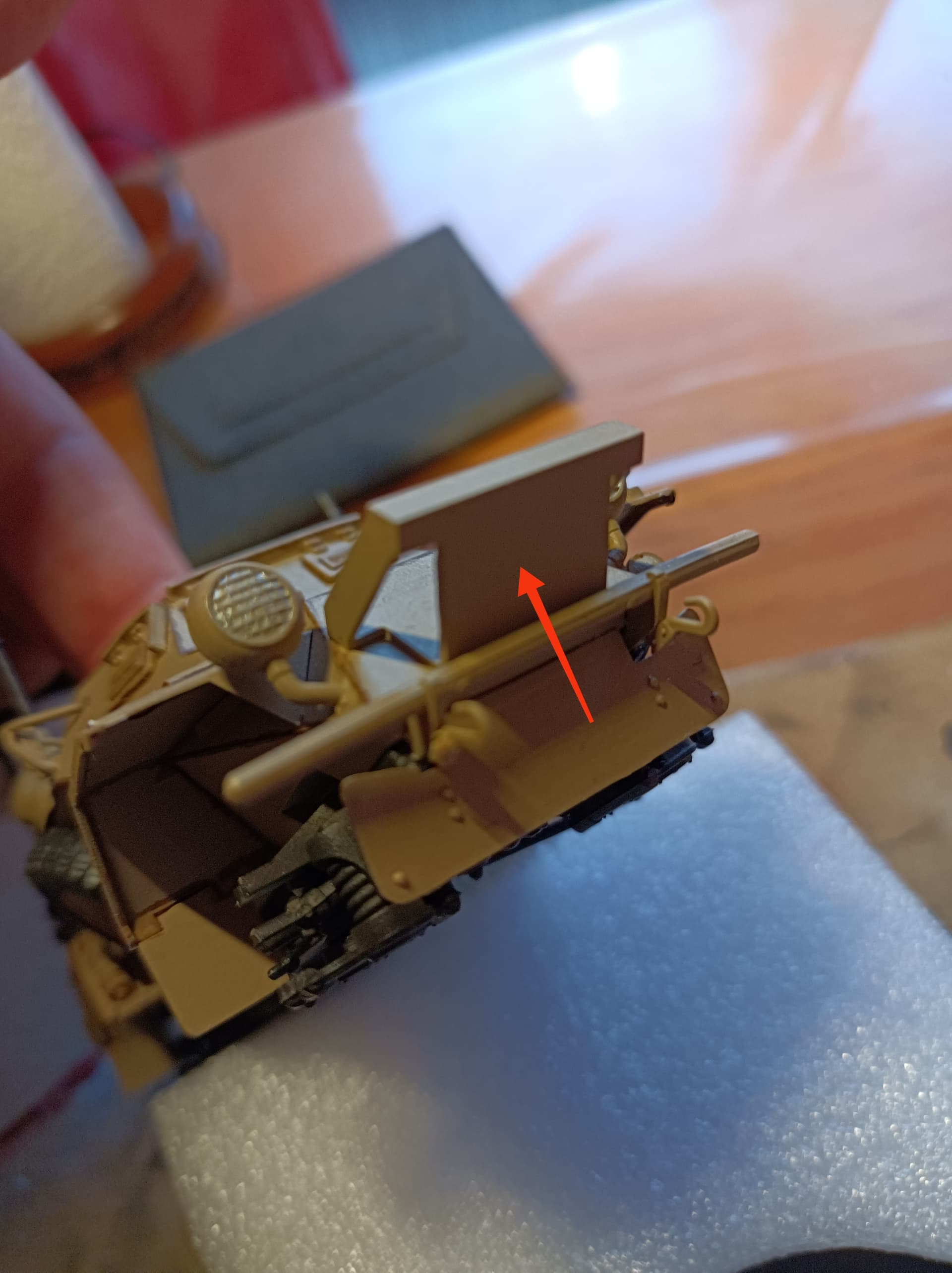
Where should it be placed?
1 Like
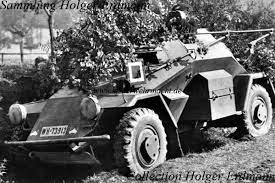
Looks like it. I guess that with the rack, the put the plate on the bottom of the rack for at least some visibility, lest it be covered by jerrycans. The regular 223 (no rack) had it on the UFP:
1 Like
As alternative, I could place it on that plate under the bumper, I saw some modelers doing that.
I am not going going for 100% historical, but if there are better places I am open to suggestions.
Putting it as Tamiya says would be essentially useless as it would be 100% invisible.
That is an option. You could make the rack look hastily/sloppily welded on, as a modification. That would justify such a placement.
I think I’ll place it under the bumper, I want it it to be visible.
Speaking of which, this is the first model I get that has id plates. Did all German vehicles have them or its just this one? My Panzer II has none.
1 Like
I think that only wheeled vehicles had them, the Sdkfz. 251 has them, so I assume any vehicle with wheels, such as most of the Sdkfz. vehicles did. The 223 definitely is not the only one. Tanks would have had turret markings and the like for ID, but wheeled vehicles did not.
1 Like
Number plates were fitted to or painted onto motorcycles, cars, trucks, armoured cars and SPWs (Sdkfz250, 251 etc). Tanks and self propelled tracked guns didn’t have them, with the notable exception of the Hummels issued to 9SS PD, which all carry number plates. Interestingly, the number shown, WH1227925 was issued late in 1942 or early 1943; seven digit numbers belong to the latter part of the war, most seen in photos are five or six digit (or less in the case of SS vehicles). They were issued in straight numerical number, so you can see it would take some time to reach a million registrations. This would beg the question whether it is appropriate for this vehicle which is a pre-war to early war production vehicle. The four wheeled armoured cars, Sdkfz 221, 222, 223 and 261 were based on the Standard Chassis for Heavy Car (like the Horch 40), which ceased production in 1942.
2 Likes
Interesting info, thank you! 
I use circle templates on almost every model I build, and have never had that problem. Maybe I am just lucky,