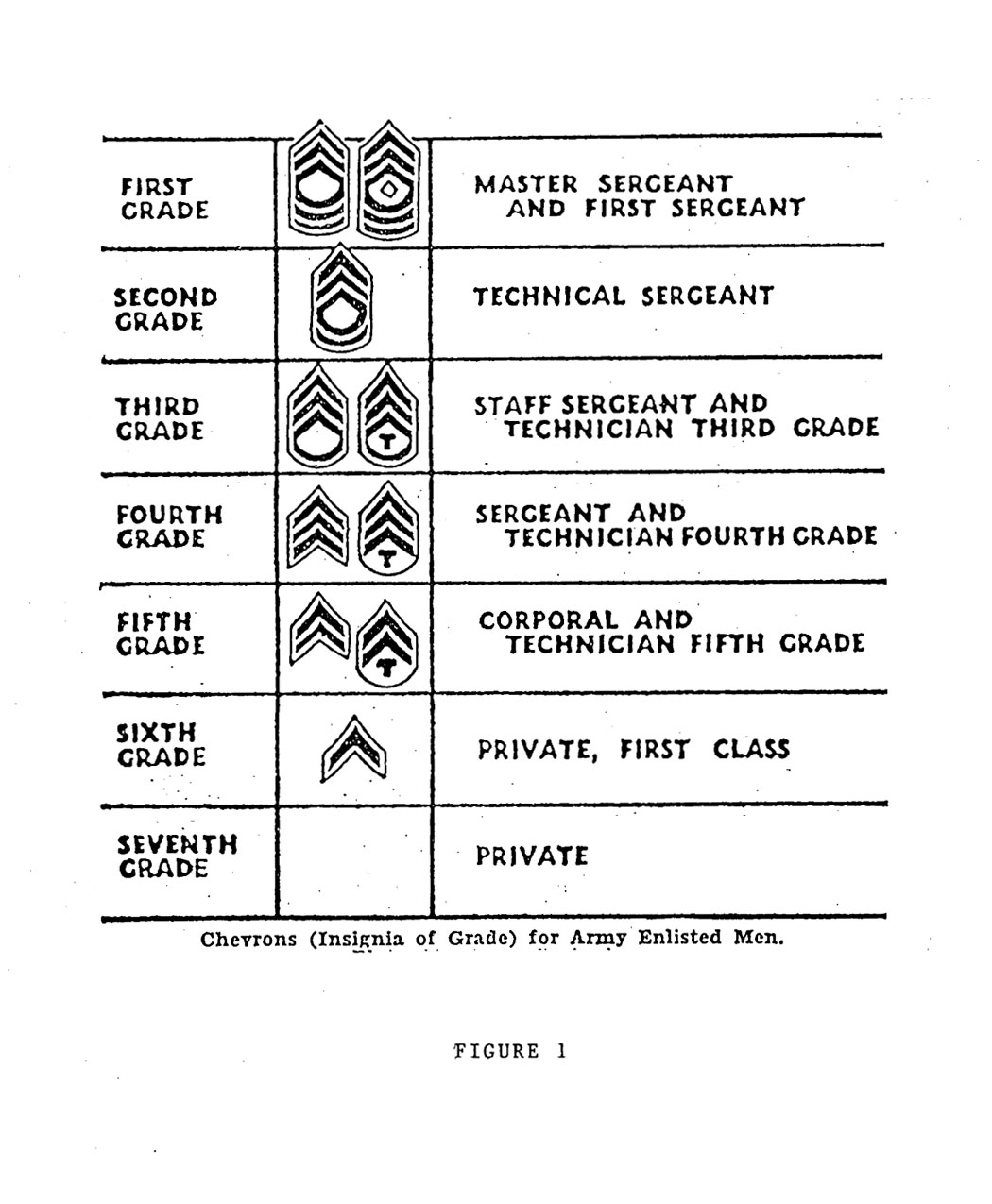
I think you want to paint over those T marks. They are a WWII thing that was gone long before VN.
1 Like
Well, sure but I don’t have to use them as there’s others on the fret!
Thanks anyway Lee. All beginning to come together now.
4 Likes
The T is for technical and gone like Lee said. The last one 8 is a diamond for a First Sgt and would be a good choice for a senior SNCO.
2 Likes
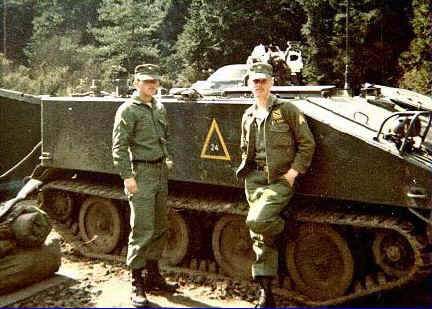
I’ve just had a late thought: whilst I’ve portrayed the 14th Cav badge on the LH sleeve, would/should there be another on the RH sleeve?
I may have erred in putting it on the sleeve in any case - see this pic - which if so, is infuriating:
2 Likes
That’s great; thanks again.
1 Like
As I recall the Army only did the left shoulder unit patch. The photo I posted above only has the 1st Inf Div badge on the left shoulder.
1 Like
Thanks Ryan; I understand that 14th Cav were a Corps Troops asset in any case; conceivably then, V Corps badge would be somewhere, but I’ll end up going mad if |I keep chasing this(!)
1 Like
US Army unit assignments are Greek to me, I eat crayons and we are much simpler.
4 Likes
Some soldiers are stereoscopic - the same patch on both sleeves if they had done a combat tour with that unit previously.
Or it could be a different unit’s patch altogether. Easiest solution with the least amount of research - just the left sleeve.
3 Likes
The T Chevrons were Korea and WWII era ranks. They were replaced after Korea by the introduction of Specialist grades. The “sham shields”. The T grades would not appropriate for the 60’s
Loader here is a Specialist 4 while the TC is a Sergeant First Class, probably the Platoon Sergeant
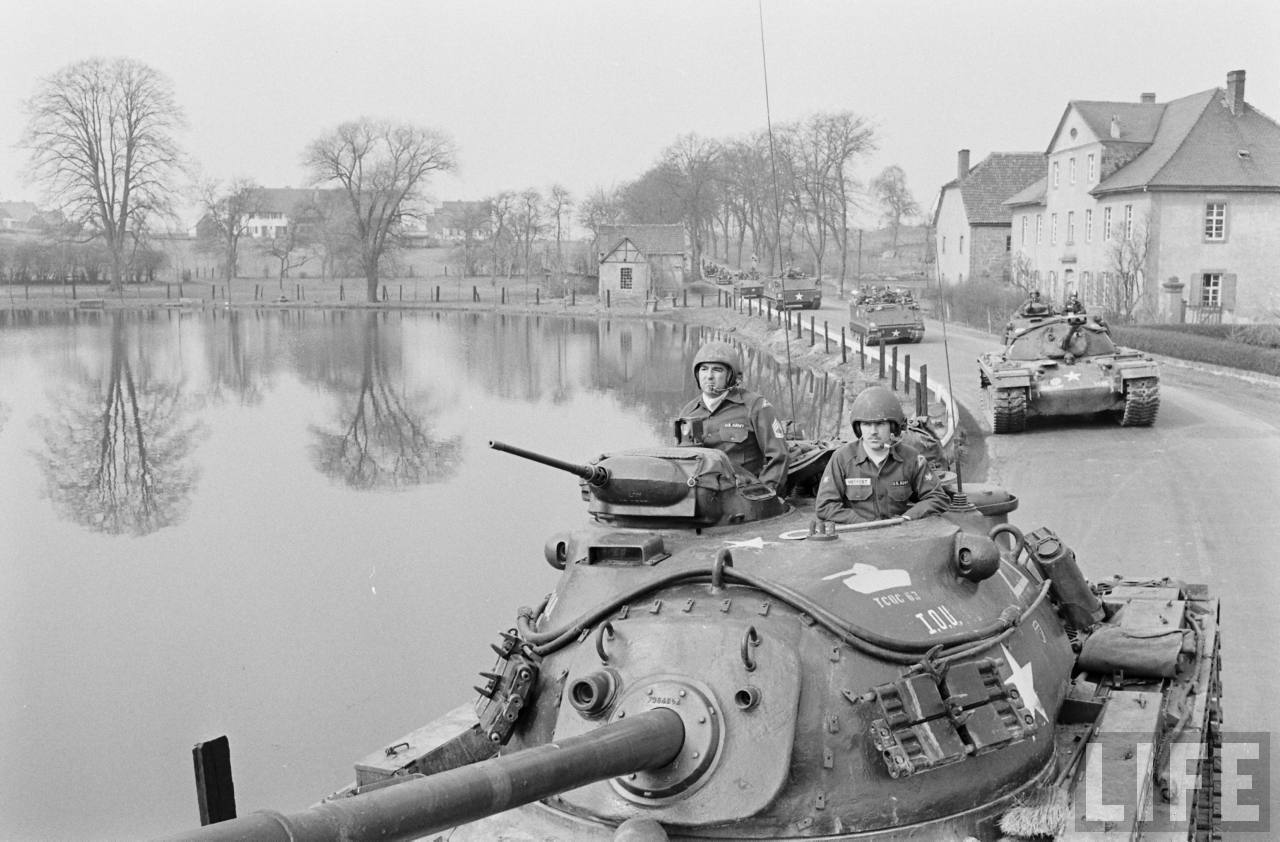
These tanks are 14th Cav, but they are wearing 7th Army patches. It wasn’t until later on in the late 60’s or early 70’s when they began to wear the Cav Regiment shoulder patches.
2 Likes
Left shoulder patch is current unit of assignment. Shoulder patches are worn on the right side to show a soldiers previous overseas combat unit assignment.
2 Likes
Well, it’s a bit of a pain; depicting 14th Cav patches was a bit tricky as it were, but equally I don’t want to have it all shown as later than the decal sheet proclaims (1962 ) so I’m sure I can manage a rendition of the 7th Army version. Bit of pain but if it needs doing then so be it.
Thanks!
1 Like
The reason for the T is that around the Second World War, the US Army had two side-by-side sets of NCO ranks. One was normal NCOs, the other were “technical” NCOs, with the difference being basically that the latter didn’t have combat leadership functions. The T-ranks were not called sergeants, but Technician nth grade.
4 Likes
They were often called Tech Sergeant, usually assigned to people in technical fields lake mechanics.
Ken
5 Likes
Lots of enlisted aircrew were Tech Sergeants. In the ground forces, radio operators and other similar specialist jobs often held Tech ranks. More pay than a private, but about the same command authority. Think of Upham in Saving Private Ryan.
3 Likes
So, after a bit of a protracted build, and a fair bit of dithering over the colour scheme, here we are: A US M48A2 transiting during an exercise. This is the lead tank (of this part of the convoy) and the Commander is signalling to the following vehicles.
The Revell kit turned out, I feel, far better than I was led to believe it might; the overdone cast effect on the turret has not proved to be that much of a problem; of course, the same effect is elsewhere on the tank and detracts somewhat especially on the rear deck. Still, we are where we are, and in retrospect, perhaps I should have considered reducing the effect on the rear hull.
I thought, overall, that Revell had done pretty well regarding details and build. I even feel that the rubber band tracks are perfectly useable. That might be heresy to some, but as I indicated earlier, there are punch marks on roughly every half-dozen track shoes, and on an individual track set from AFV Club, they’re on every link! I only had to obscure such on the Revell tracks once, each side.
The only proprietary accessories I used were the handles for the stowage bins from FC Modeltrend; a small detail perhaps but I feel makes quite a difference.
All other stowage, as described before, was from Magic Sculp and lead foil, with etch buckles from a fret from Aber. Padlocks on the kitbags were from an Accurate Armour set. I added some Magic Sculp to the mantlet cover as I thought that was a bit lacking.
I ended up going with Revell’s recommendation of their enamel No 66, “Matt Olive Grey”. In some shots it looked too grey, in other pics - taken in daylight - it looks about right. I did experiment as described in the build, and I’m still a little unsure. Decals were the kit ones, which attracted me to this kit in the first place: I wanted to portray a tank in service in West Germany at the rather fraught time of the early 60s.
The crew figures were as recounted; I added one extra and that is the MP figure at the roadside. He’s converted from one of the figures that comes with the ancient Tamiya Jeep kit. I set to modifying with Magic Sculp, lead foil, Hornet Head, and added an SMG from the Tamiya US Weapons set. It was a lot of work. Lots of sanding and experimentation are all part and parcel of devising half-decent figures for the Cold War. I’m almost used to it by now – almost.
So, here we have it: a Cold War workhorse, that strangely, doesn’t seem to see much light of day on the display tables – or at least from my purview; the earlier A1 version, “yes”, probably due to Elvis’s ride, or the Berlin Wall confrontation in ’61, but the A2? Unless it’s Israeli, - not so much, yet it populated the US and German tank fleets during those tense years; other NATO members (in the Central Region) of course, were battling on with Centurion in 1962.
The opposition, ie the Soviet forces in East Germany, then consisted of T-54s and T-55s; the T-62 would enter service round about the same time as the M48 here is portrayed.
Thanks to all who helped along the way – one of the great strengths of this site.
That’s it folks – over to you.


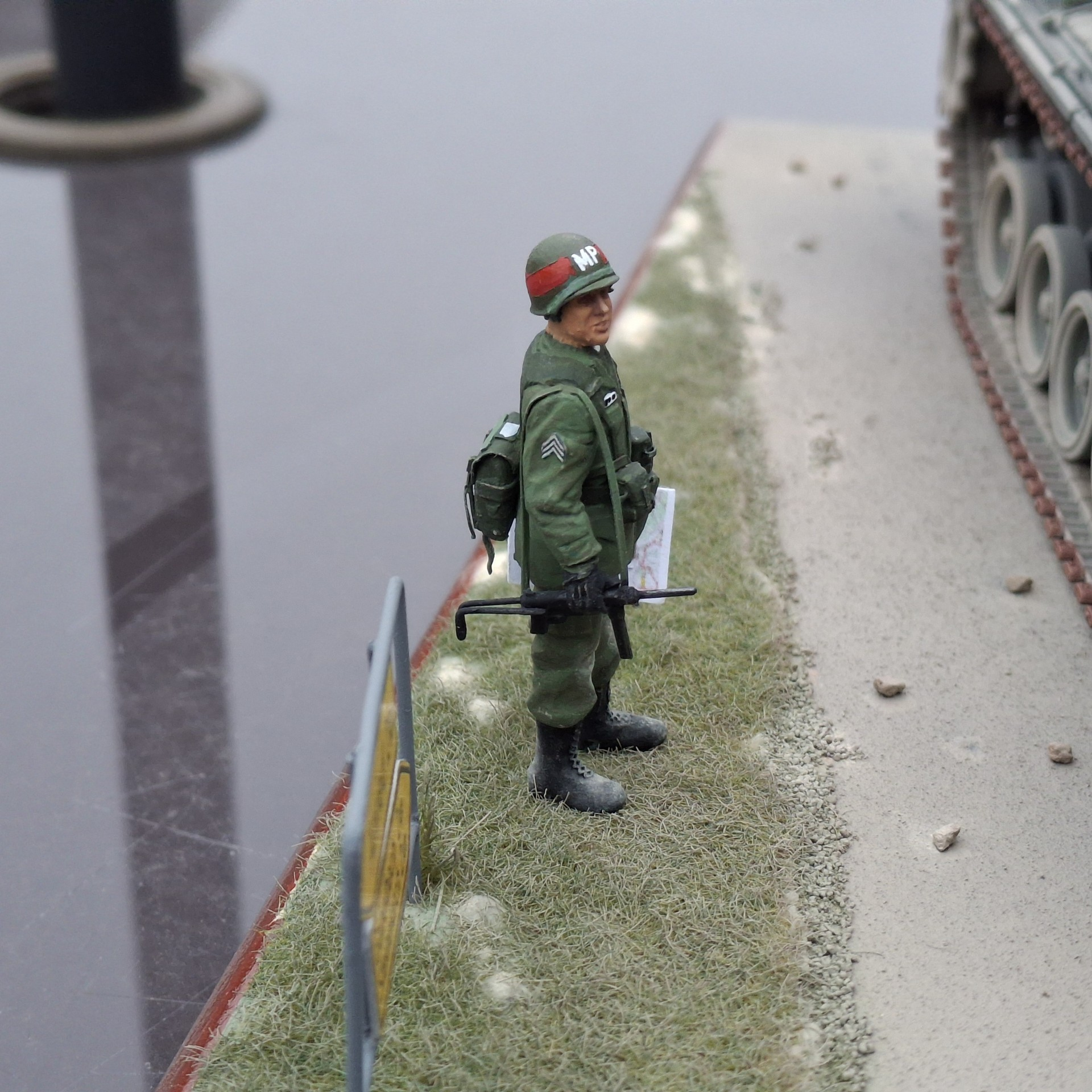
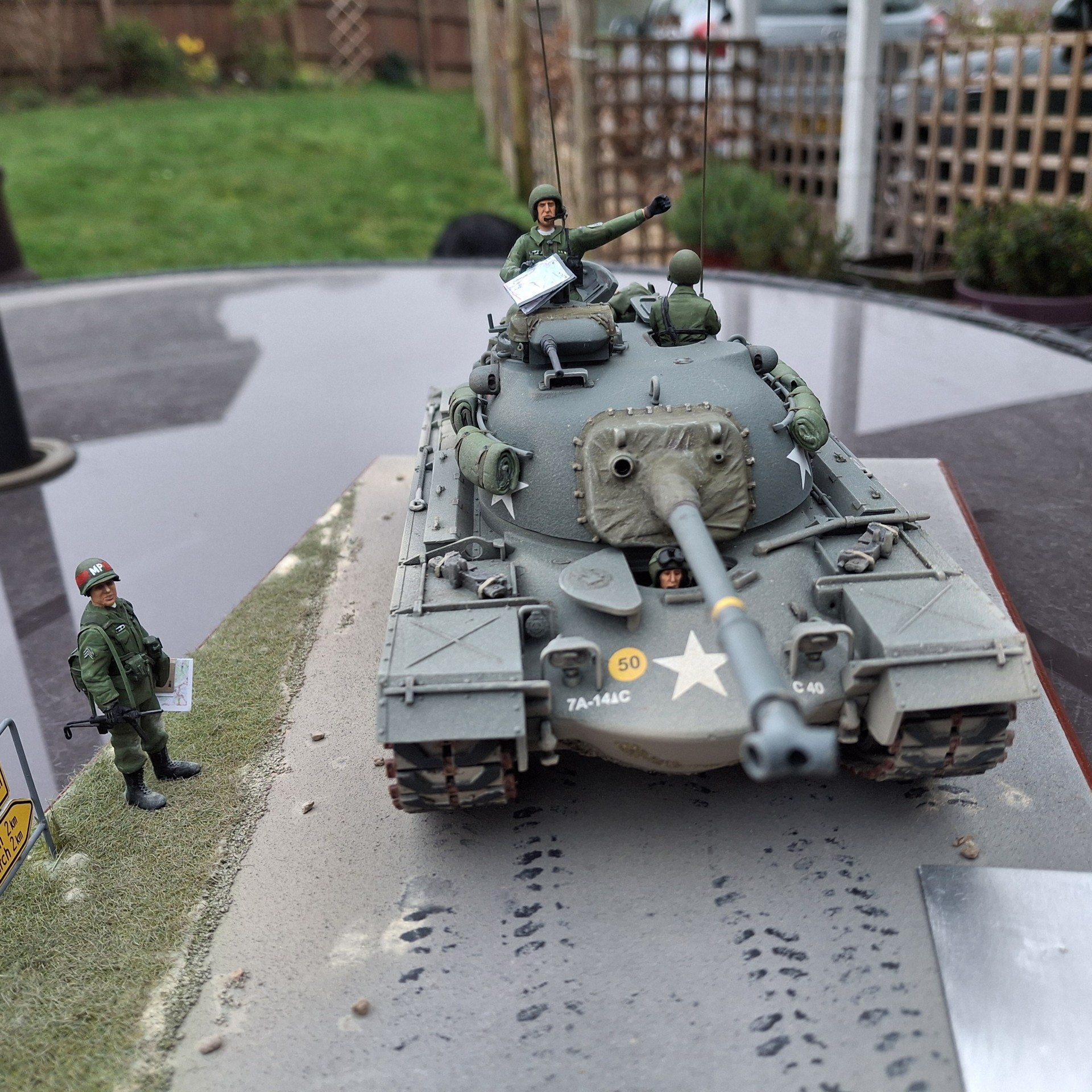
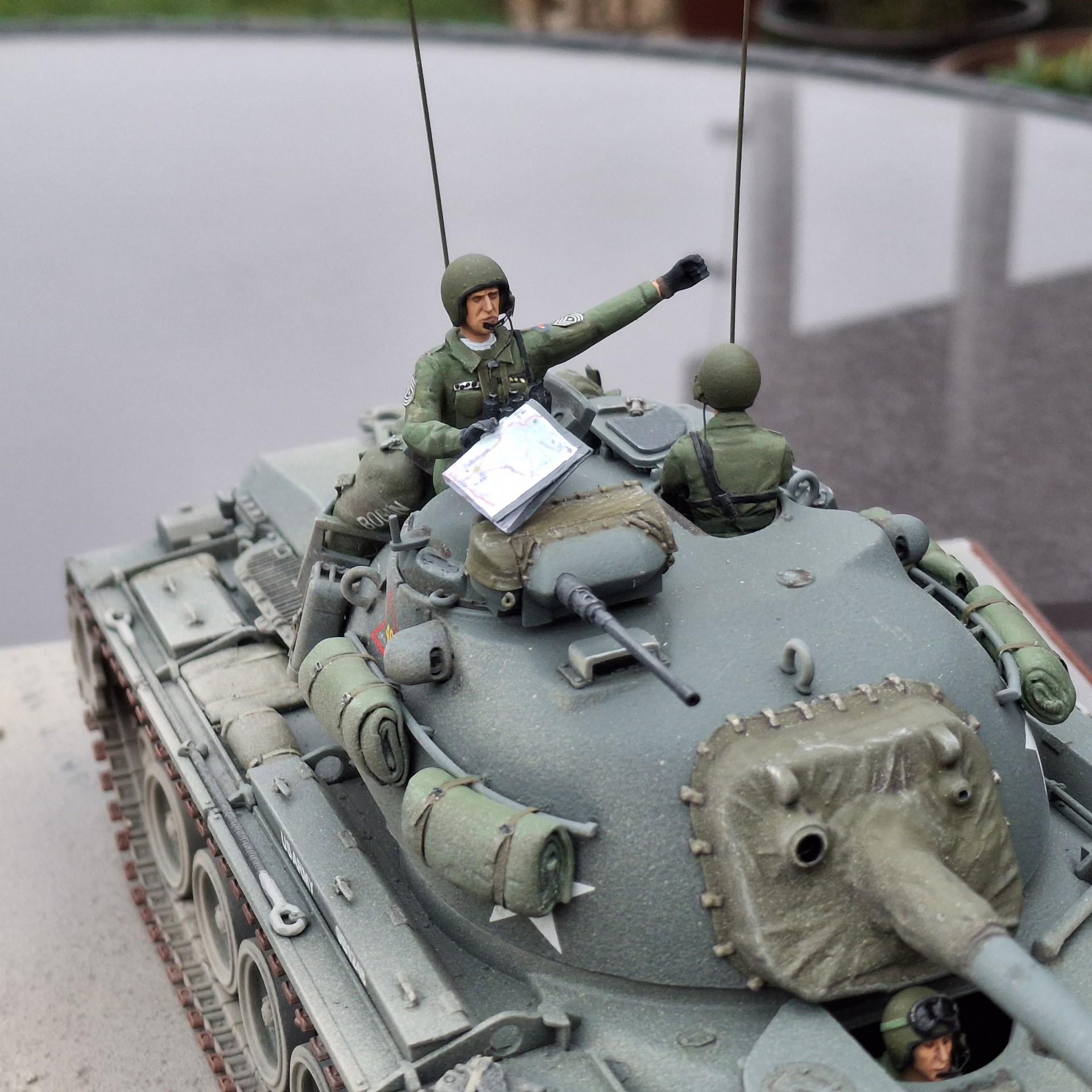

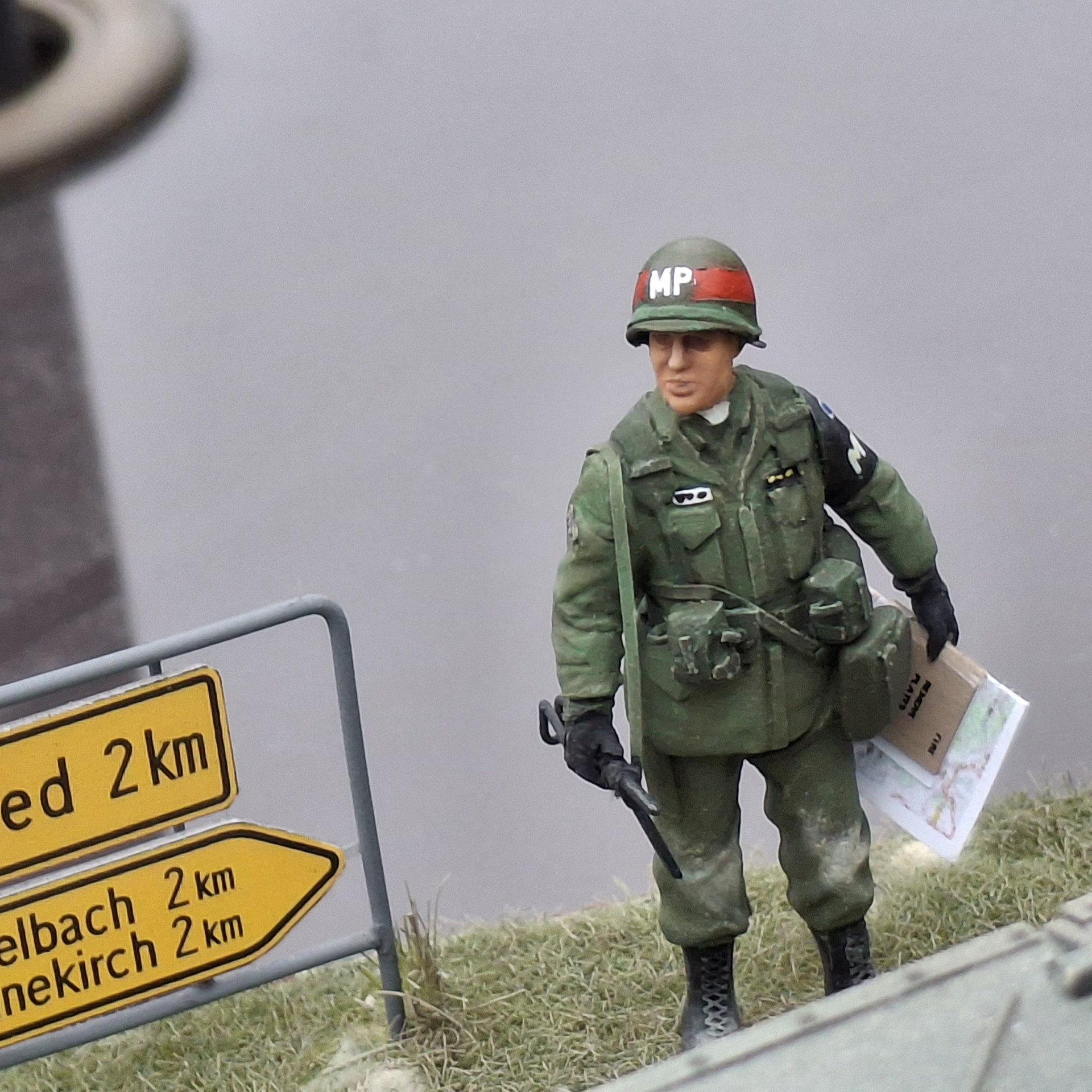
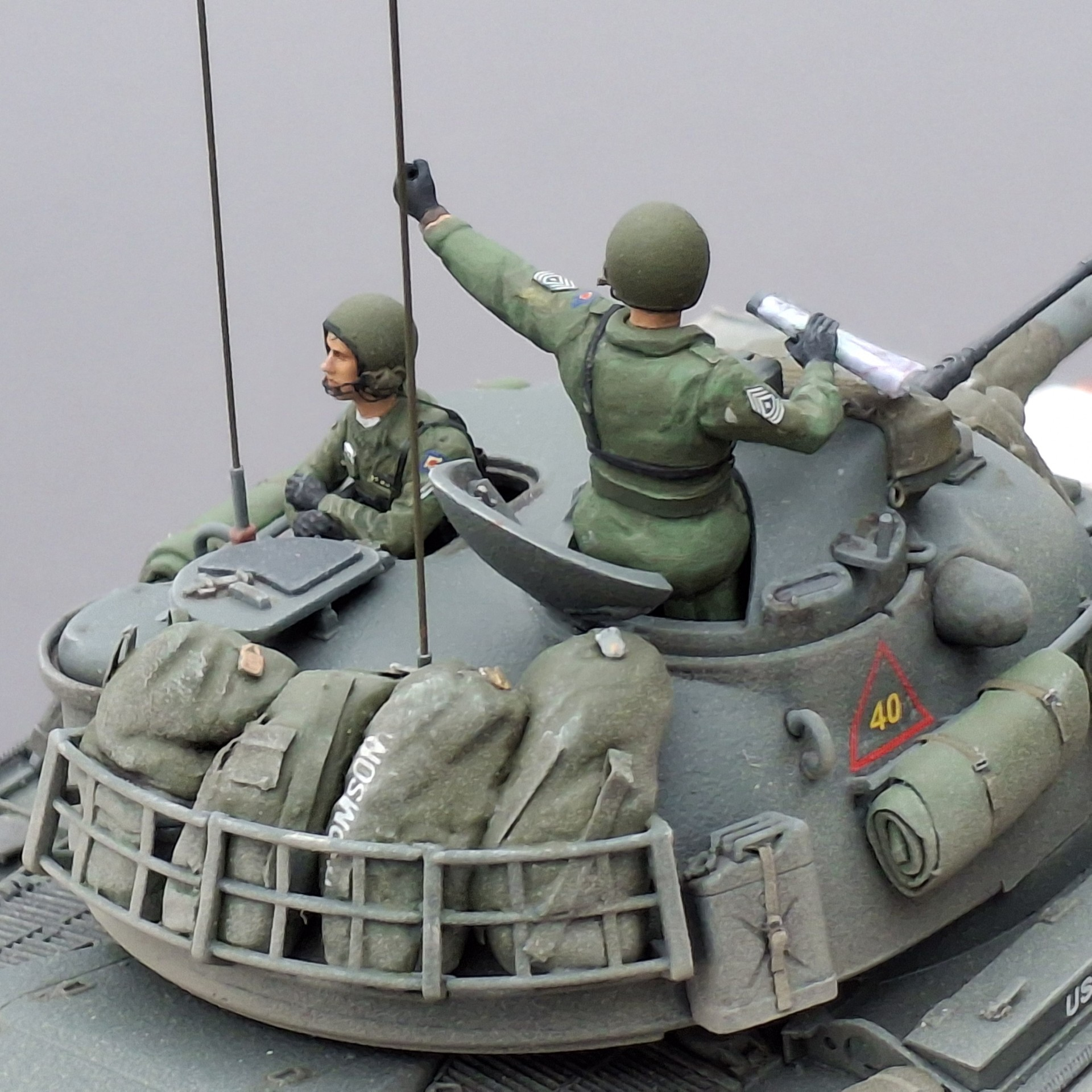

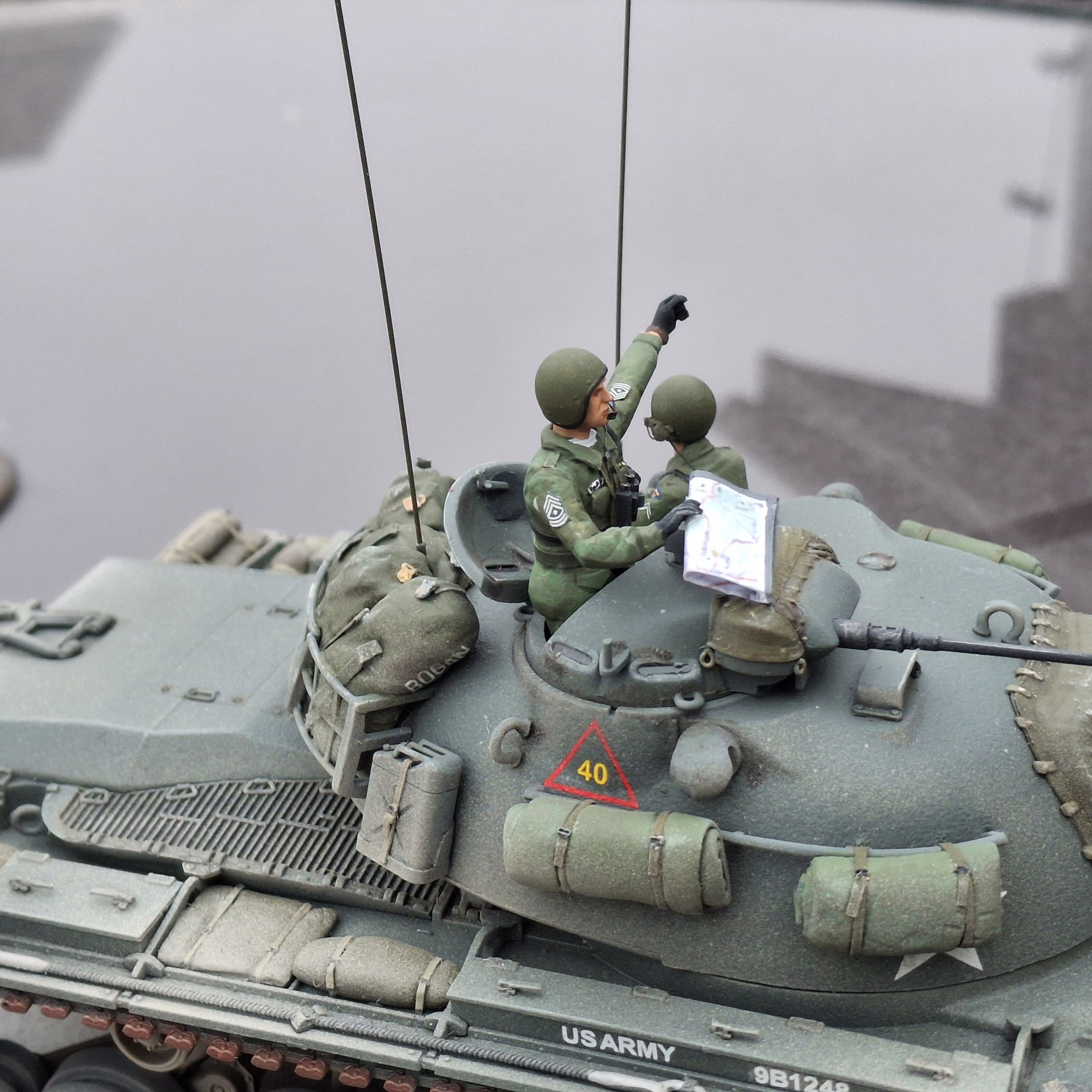
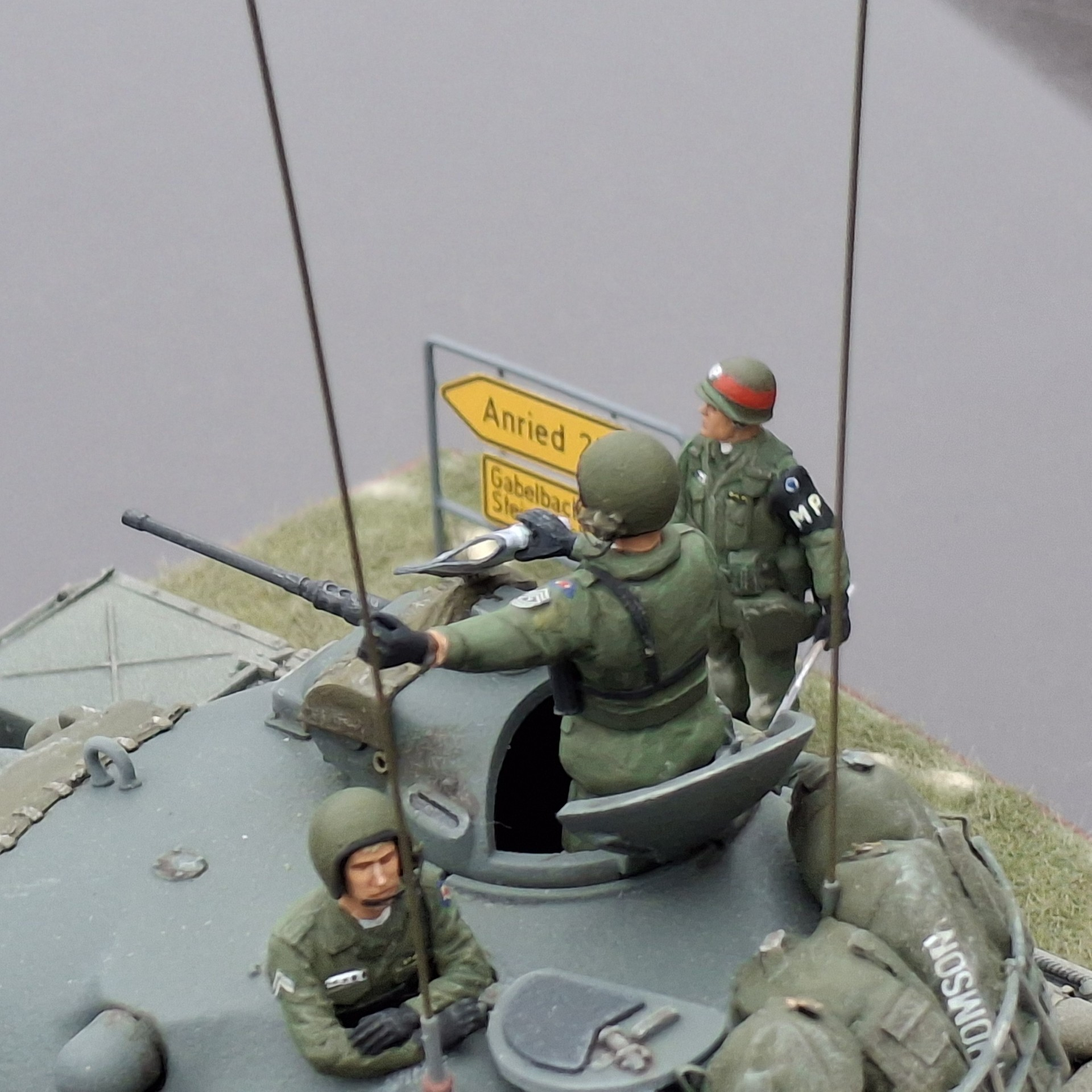
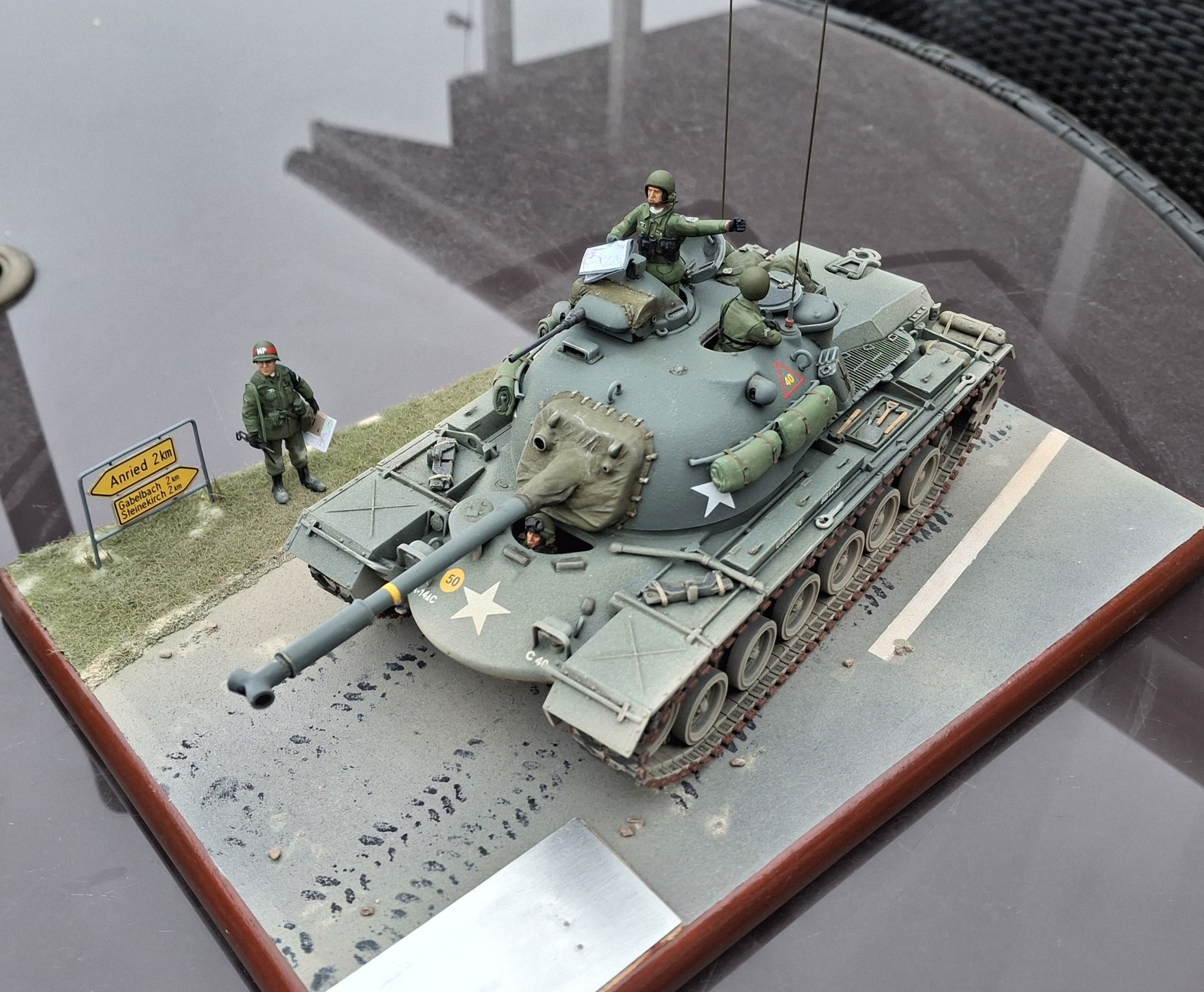
And the pic that started it all, what seems like a long time ago now!
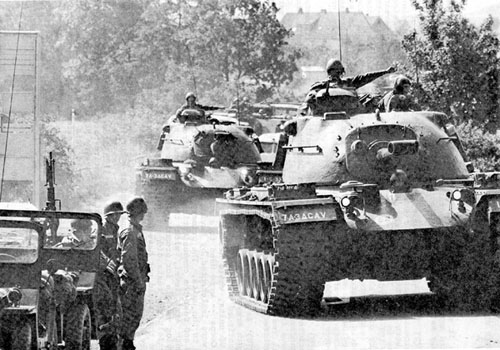
I’ve noticed I still need to undertake a few touch ups here and there; for instance, I forgot to “silver” the track teeth, but that can wait until tomorrow perhaps. I am also awaiting the completion of a brass name-plate, but that too, should be ready tomorrow.
25 Likes
Nicely done! And nice field expedient map case.
2 Likes
I recall from my own time - far later than 1962 admittedly - that the Bundeswehr had very decent issue map cases; for some inexplicable reason they were briefly on sale in our NAAFI (services’ shop and canteen); they were extremely well made, obviously a transparent material, and a zippered grey fabric edging. I recall seeing them in use with the US soldiers we had co-located with us, and the design stuck.
Whether or not it’s appropriate for US forces in 1962, I have no idea, but then bartering amongst different nations always goes on, so that’s where I’m coming from.
4 Likes
Super work Brian with your usual attention to the small details- you’ve brought that old picture to life!
2 Likes
For us, map cases have been since maps. Rarely if ever do you see a map in the field without one - either dedicated, or field expedient like yours. Yours would be combat acetate with hundred mile an hour tape.
Start here and scroll down:
3 Likes