That is not how the fire started. No drones impacted the ship. It is thought an electronic device was left on or shorted out in the ships laundry and it overheated, starting the laundry area on fire. The fire then spread due to fire doors being propped open. A failure to follow procedures.
The big company I worked for would tell us that there were very few accidents,if any.When they did their root-cause investigation,there was always a reason for the “accident”,it didn’t just happen out of the blue,things like inattention,failure to follow procedures,no or wrong PPE
Just like traffic collisions. There is no such thing as a traffic accident. Collisions are usually caused by somebody making a bad decision and the collision occurs. Occasionally they may be caused by an equipment failure, which is usually related to owner/operator neglect.
Regardless of the cause, there must have been a super unfortunate cascade of issues and events to have caused a fire with such damage necessitating a return to port??
Them navy kids are pretty good at shipboard firefighting and damage control.
The Ford was scheduled to be out of service for an extended period for other reasons as well. In many ways she remains experimental but this is about to change.
Radar upgrade: the US Navy is replacing the costly, maintenance-heavy Dual Band Radar (SPY-3 and SPY-4) on the USS Gerald R. Ford (CVN 78) with the modernized SPY-6 (specifically the SPY-6(V)3 Enterprise Air Surveillance Radar). Think of SPY-6 as “Super Aegis”. She originally used a combination of the SPY-3 (X-band) and SPY-4 (S-band) radars, which collectively made up the Dual Band Radar (DBR). The replacement is the SPY-6(V)3. This fixed-array variant uses fewer components, providing reduced costs and significantly greater reliability. Subsequent Ford-class aircraft carriers (beginning with USS John F. Kennedy / CVN-79) were built utilizing the SPY-6(V)3 from the get-go. Other radar arrays and sensitive electronics degraded by harsh maritime environments are also being restored.
Flight deck upgrade: the Ford was not built to operate F-35 fighter jets from the start. While she is the Navy’s most advanced supercarrier, her initial design and construction predated the finalized specifications for the F-35C. Modifications to operate F-35s, such as upgraded jet blast deflectors and specialized deck coatings to withstand the F-35C’s 3,600°F exhaust, are being integrated during the upcoming maintenance period. This alone will take months to complete.
Plumbing System Upgrade: crews are completely overhauling the beleaguered Vacuum Collection, Holding, and Transfer (VCHT) system. This includes replacing worn valves, inspecting pipes for corrosion, and modernizing the system’s control software to improve reliability.
Aviation & Combat Systems Maintenance: following the launch and recovery of thousands of aircraft, the Electromagnetic Aircraft Launch System (EMALS) and Advanced Arresting Gear (AAG) are undergoing rigorous inspections and servicing.
Propulsion & Reactor Overhaul: deep maintenance is being performed on the ship’s A1B nuclear reactors and propulsion components.
She’s going to be out of service for quite a while. When she returns to service, she is expected to be fully operational and updated, on par with USS John F. Kennedy CVN-79 and the new USS Enterprise CVN-80.
Yes, way at the southern entrance. The Ford was in the northern Red Sea. Also, Yemen has not launched any drones at US forces or Gulf States during the conflict. They have launched a couple missiles north toward Saudi, which were all intercepted or landed harmlessly in the desert. Mainly, they are staying out of this one.
Yemen is the eastern half of the “Strait of Tears”, with Djibouti being the western half.
Due to the amount of commerce shipping via Suez Canal and the Red Sea, it’s possibly even more critical of a choke point than Hormuz. At least before the Houthis turned the Red Sea into a shooting gallery a few years ago.
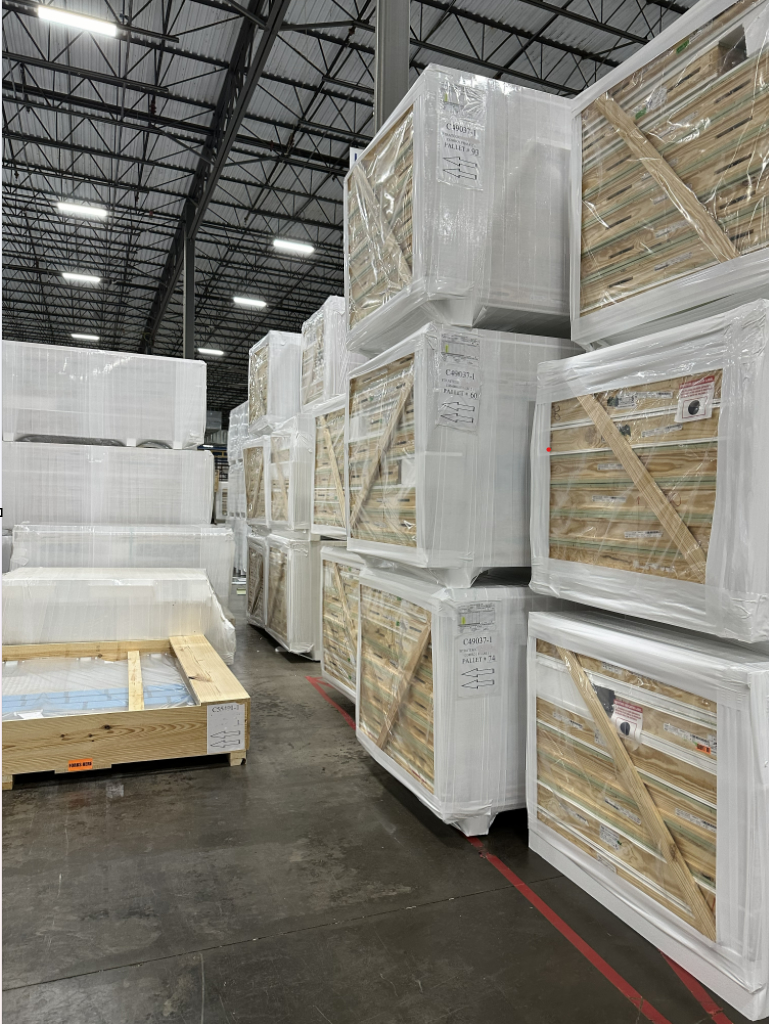
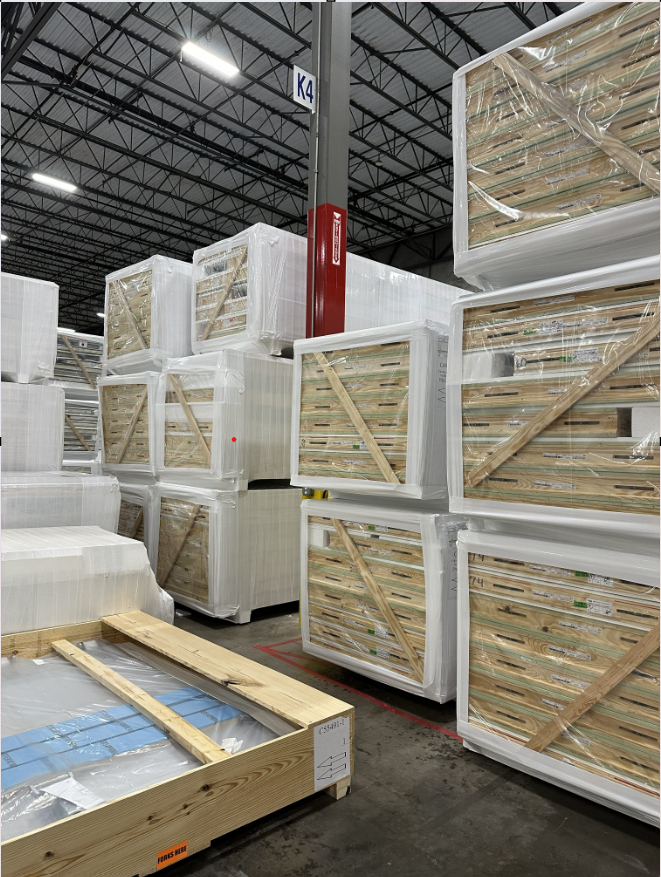
Like this, where I worked as a security consultant for a gig a few years ago? I took these photos for the safety officer, who was quite the hottie. She had no idea.
Nothing should be within those red lines. Why?