Annealing is a technique that anyone who’s going to work with PE parts pretty much has to learn sooner or later. It sounds like some sort of alchemy, but it’s really very basic. It’ll “click” very quickly after you’ve done a few pieces.
FWIW, I’d recommend using one of the miniature butane torches that are available. You can find these locally at Harbor Freight or Northern Tools. Also, a lot of auto parts vendors sell them for guys to use to heat wiring shrink wrap. Another potential source is a store that sells kitchen supplies like pots, pans, and utensils. Chefs use a butane torch to “brown” the tops of their meringue pie toppings.
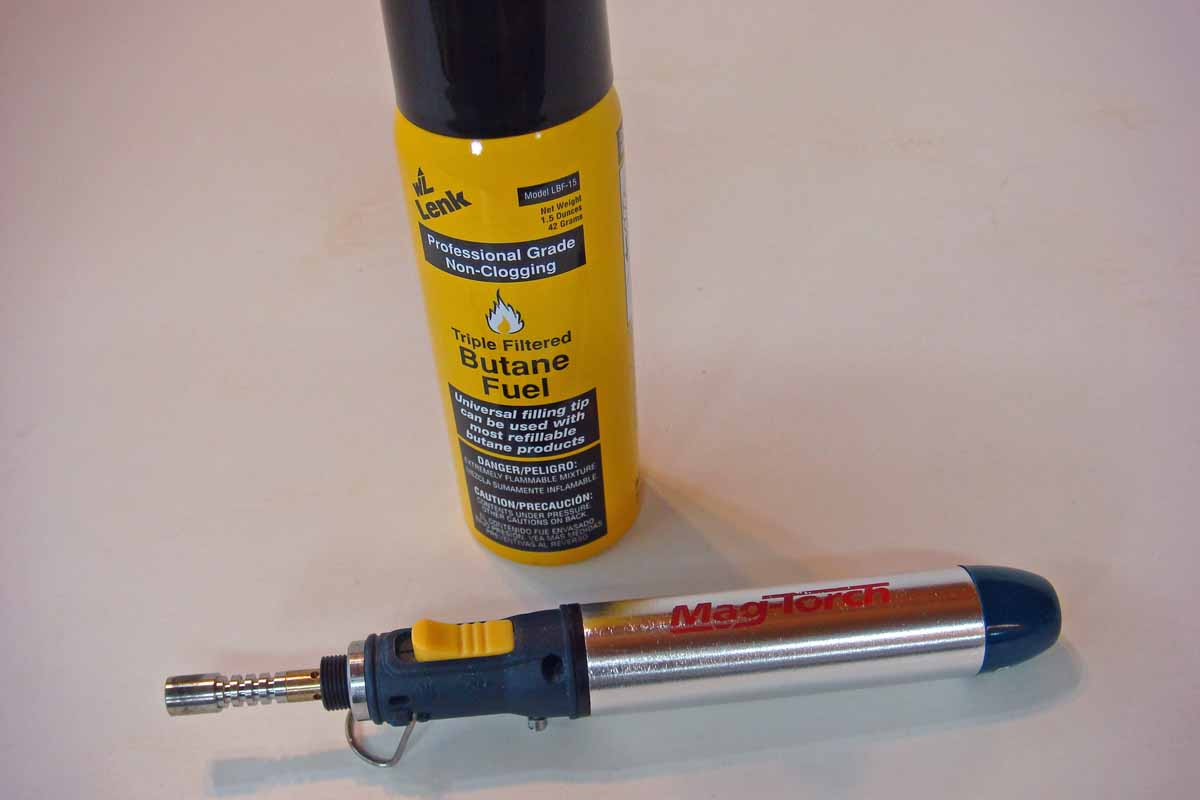
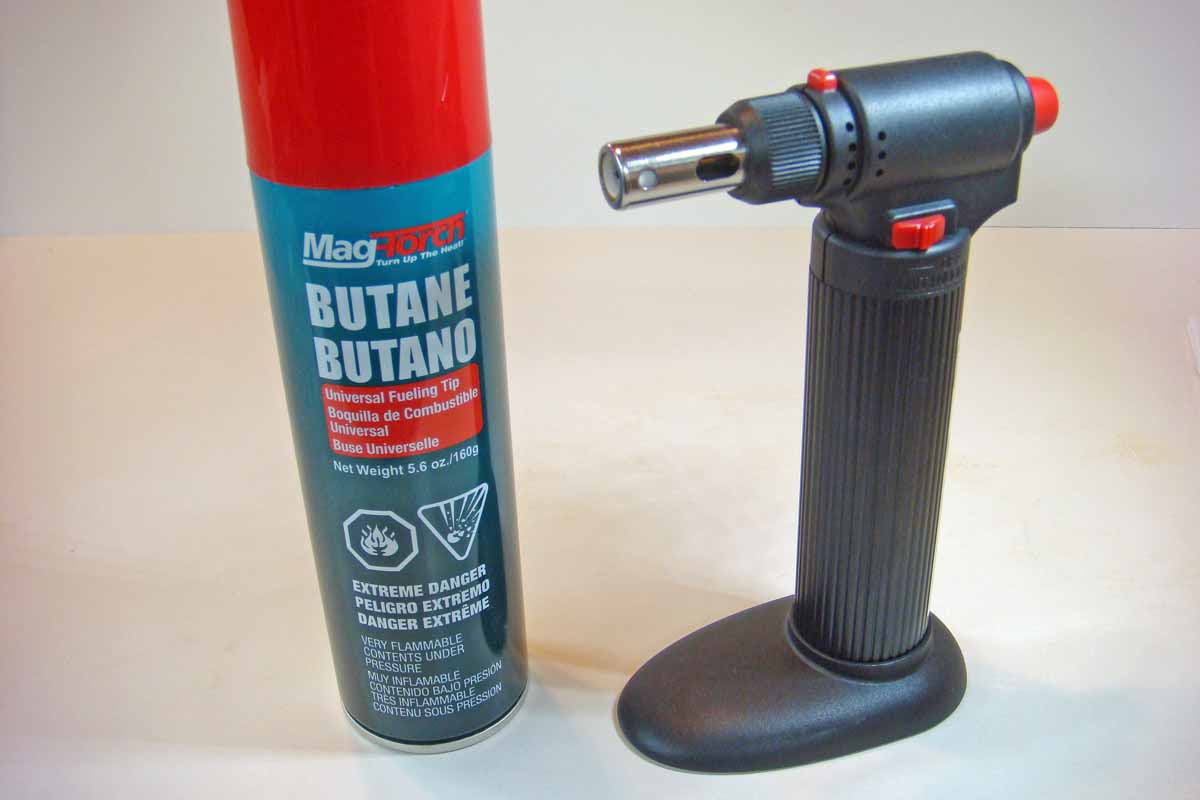
Here are two examples of butane torches I got from Northern Tools.
This first one is my favorite, but alas, the plastic slide on-off switch breaks too easily. It’s just not made for constant use, lighting it over and over many dozens of times. Eventually, the little switch just breaks from fatigue.
This larger one can stand on its own to allow you to use both hands. It also has a built in piezo electric igniter which is really handy. Without a self igniter, you’ll need a cigarette lighter to light your torch. A little awkward, but easy to get used to.
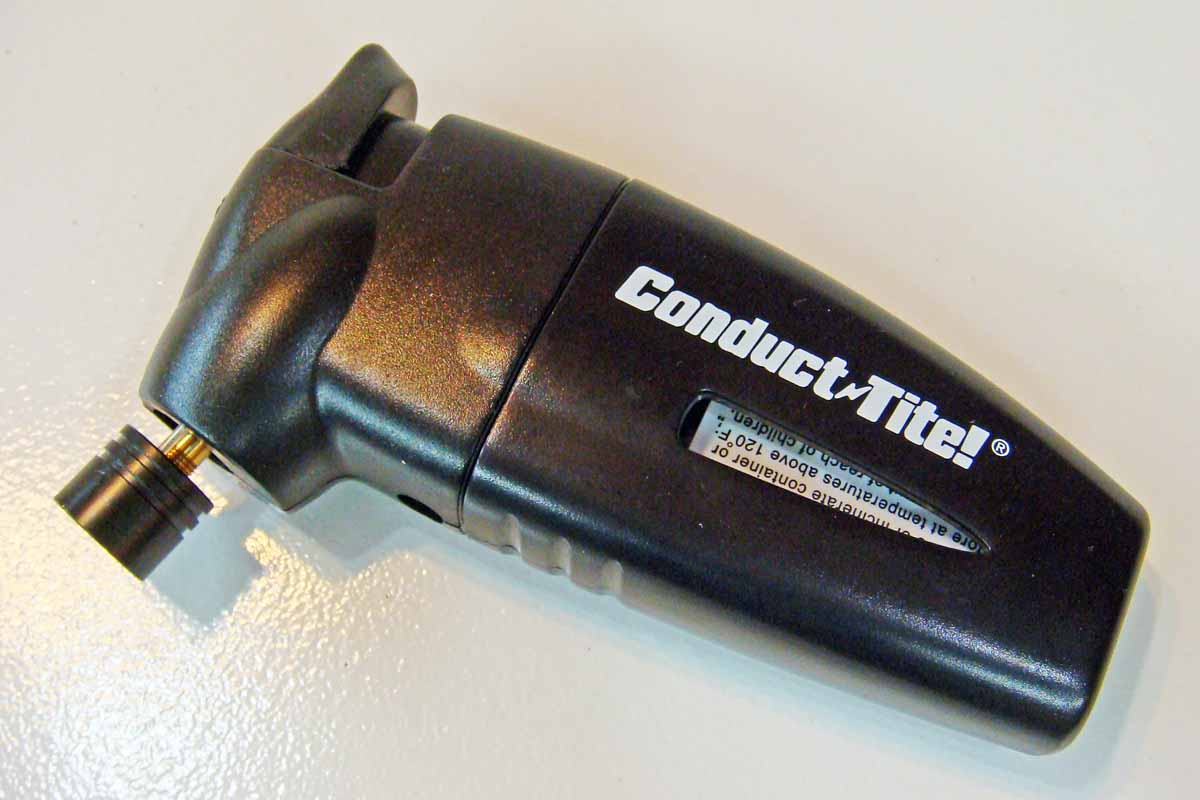
This is a torch I found at the local auto parts store for less than US$5. You do get what you pay for, and this one is not too durable, but it worked for a while. It has a nice, small flame, but it can’t be adjusted for flame size. It’s either on or off. Still works quite well for most PE annealing and soldering.
Refill butane can be found at the same place you buy the torch or with the cigarette-cigar-pipe smoking supplies anywhere that sells tobacco products. You don’t need to buy the torch brand name proprietary stuff, either. The ordinary lighter refill butane is the exact same stuff and usually cheaper.
This photo shows about the ideal proximity of the tip of the flame to the part. However, with a butane torch, if the part gets into the flame, there’s not sooty residue.
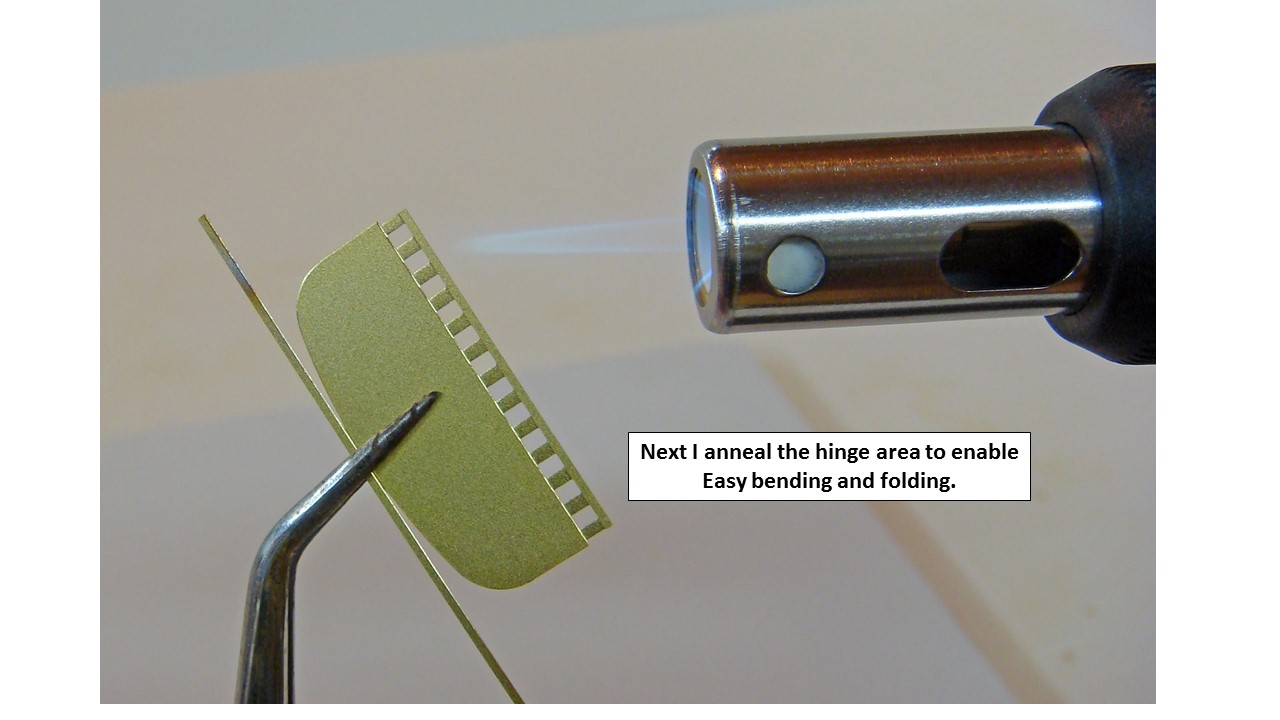
Although captioned for something entirely different (an example of how to form a PE piano hinge), you can see the way the brass discolors after it’s been annealed. Just heating it until it changes color is usually enough to soften it. You also don’t need to heat every area on a large part, just the areas that will need to be formed. That way you can keep some of the temper or hardness in the rest of the part to help it resist distortion.
