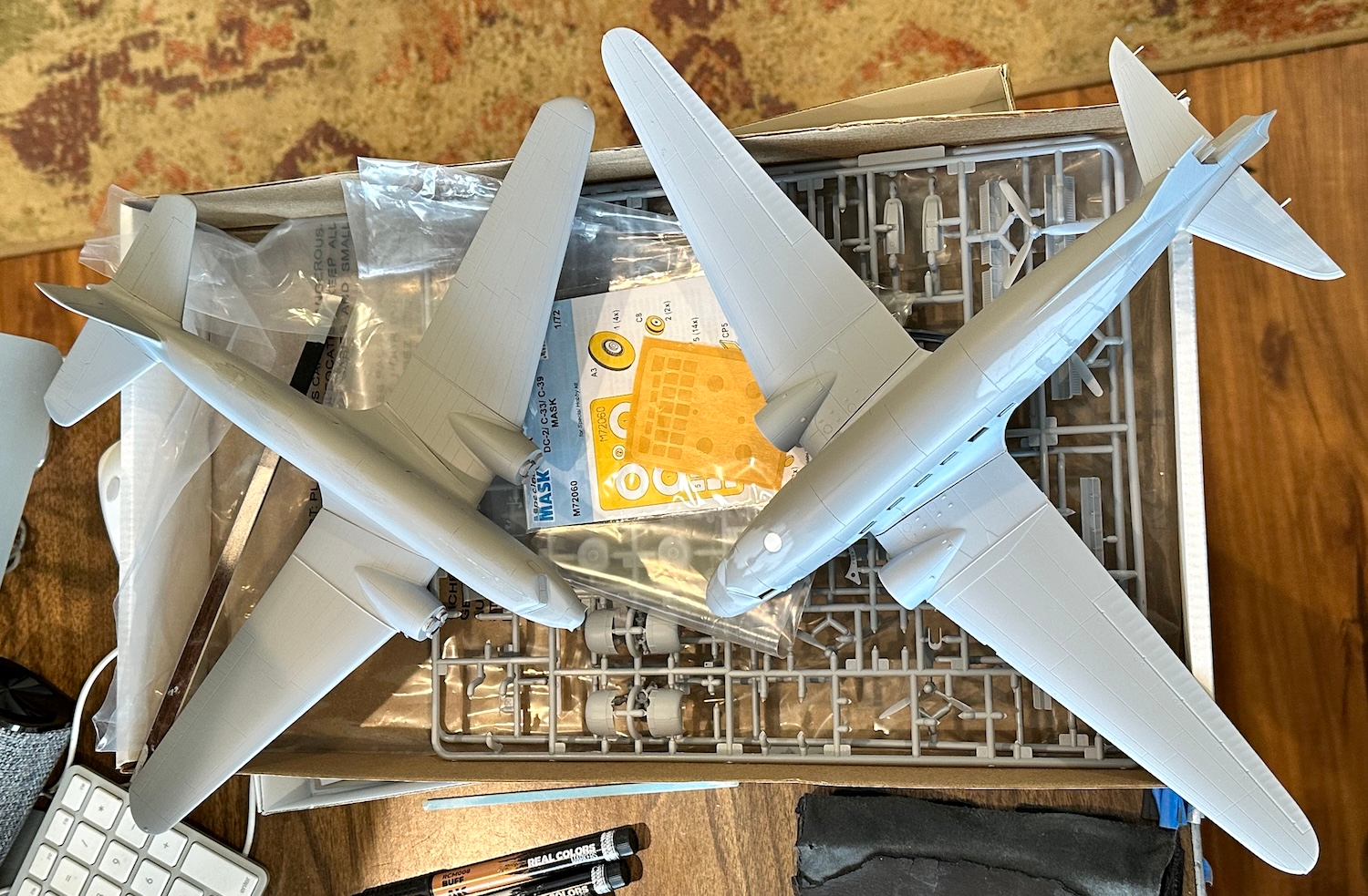
I love the idea of building a DC-2 1/2. The pilot who flew it said it flew very well.
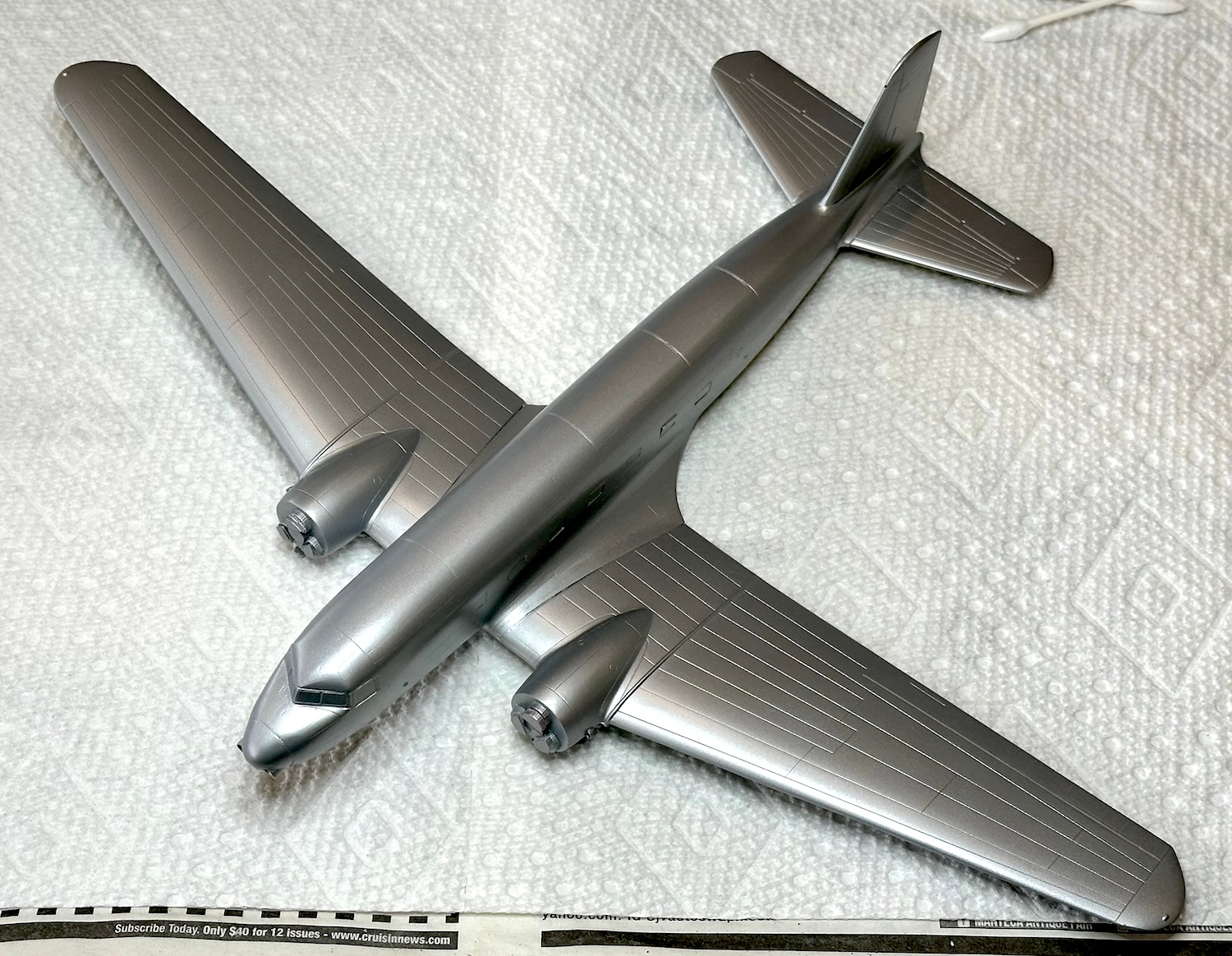
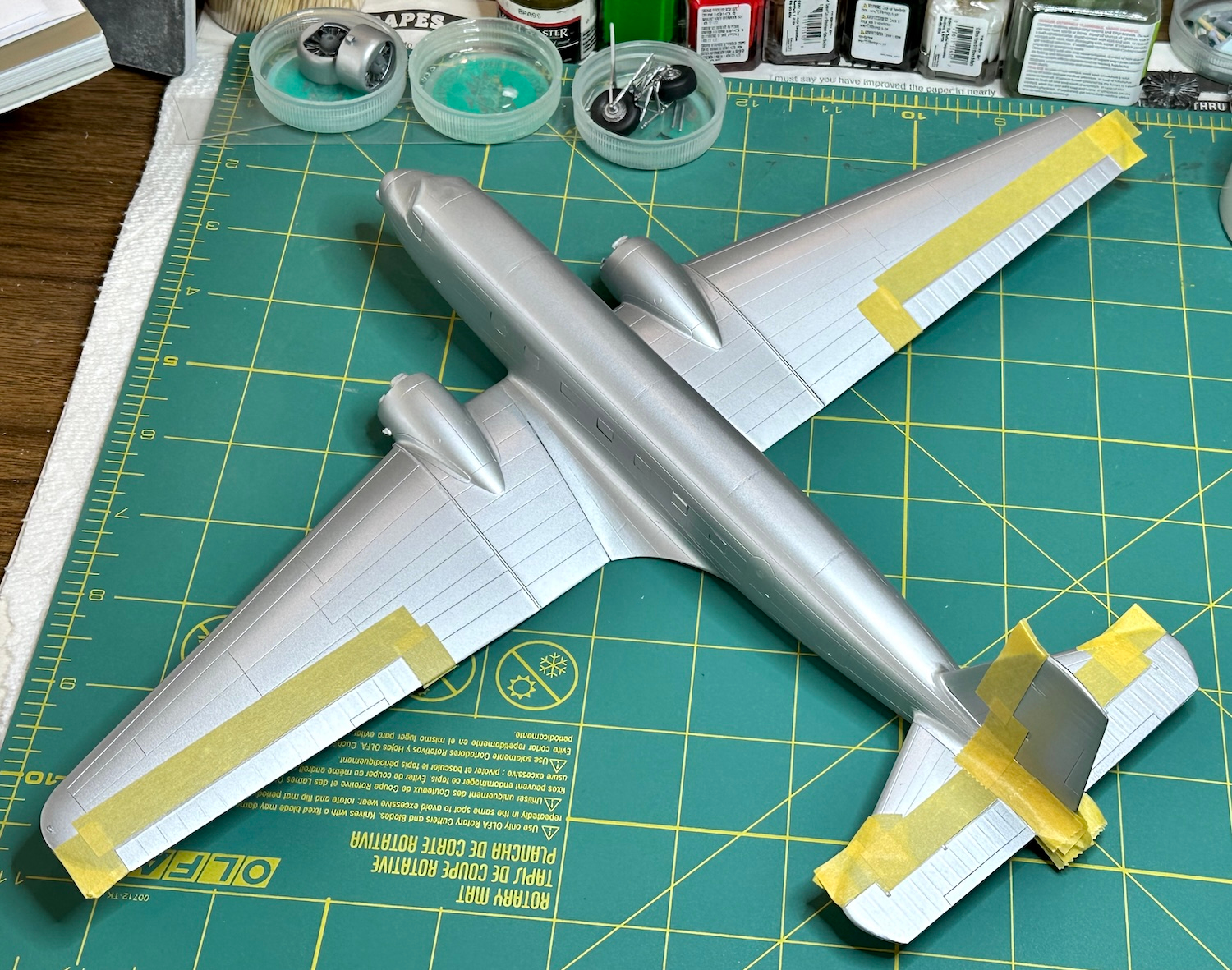
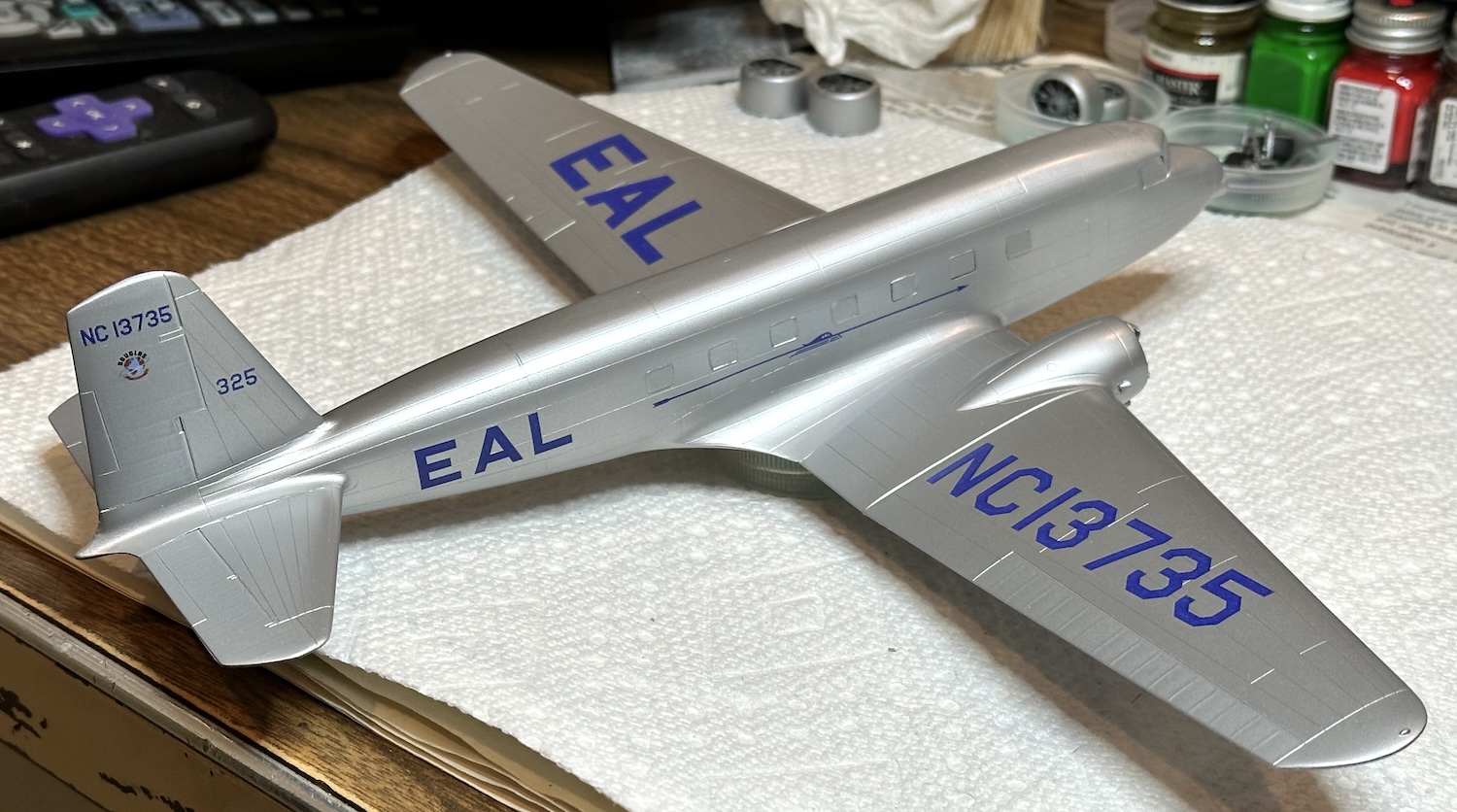
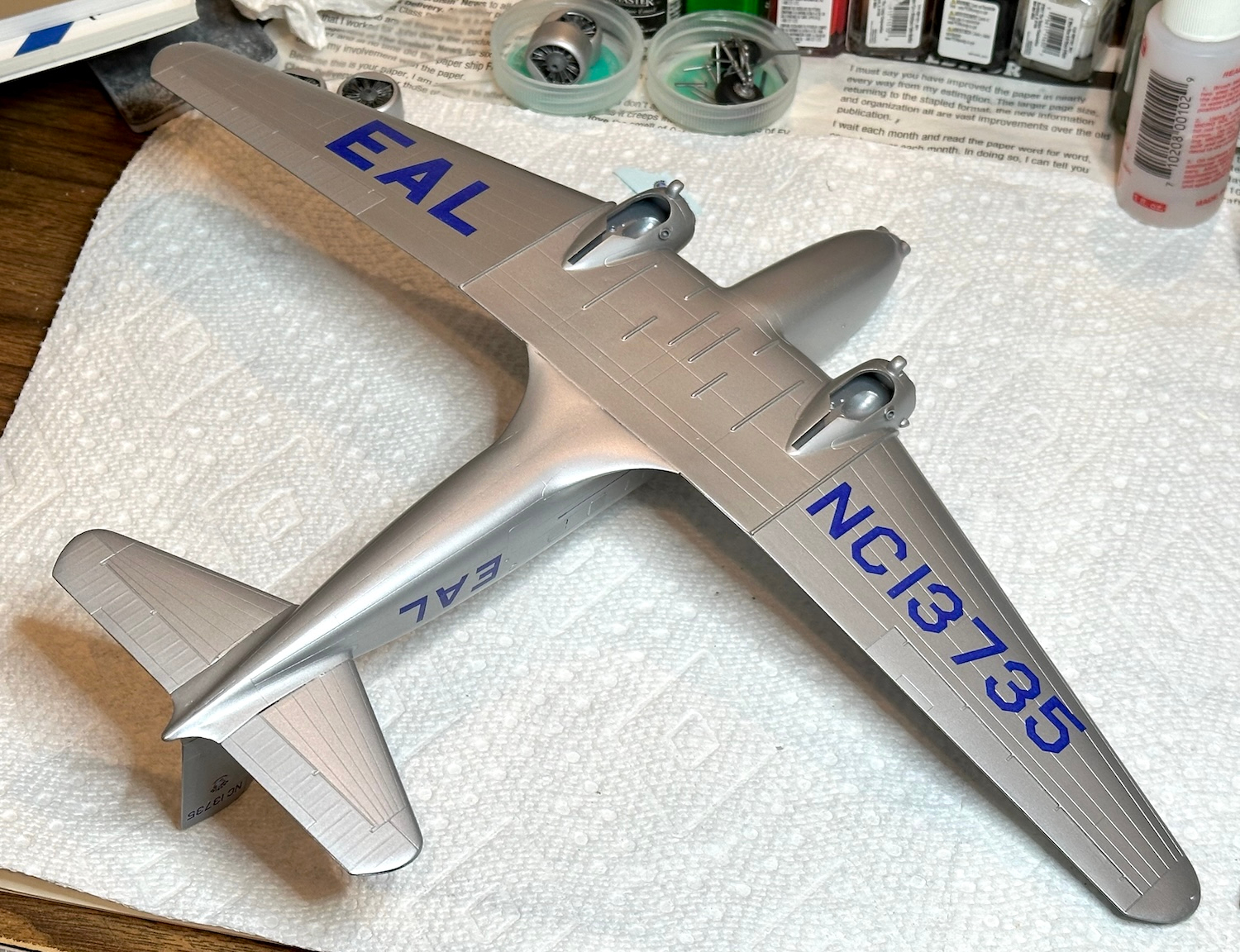
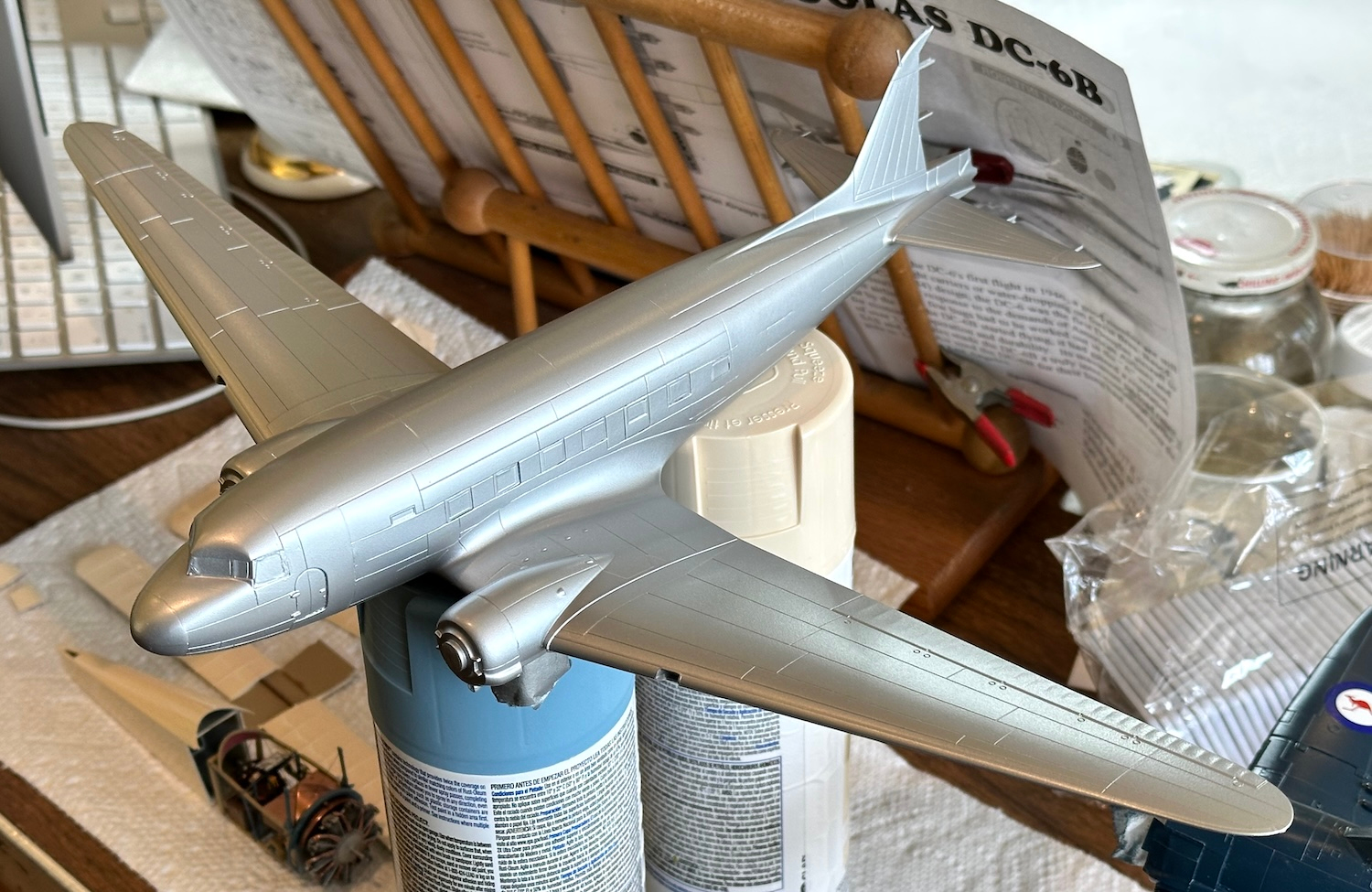
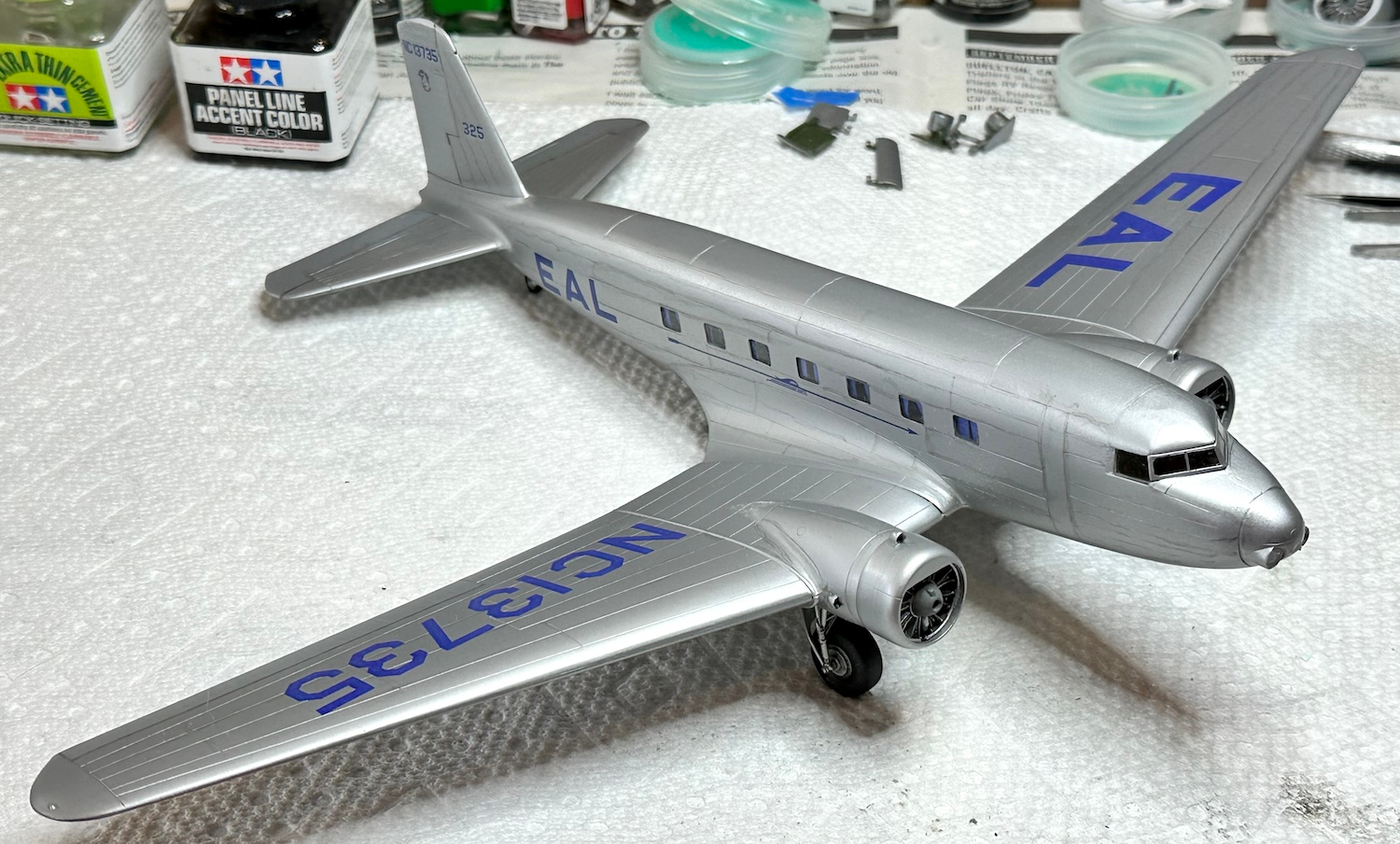
More work done of the DC-2. It got a shot of silver paint TS-12 Bare Metal and then was masked for Tamiya’s Mica Silver which I hoped would contrast with the bare metal. An hour’s masking and thirty seconds to paint . . . The control surfaces were AL doped fabric but I can’t find good old fashioned flat aluminum rattle can model paint anymore. What’s up with that?
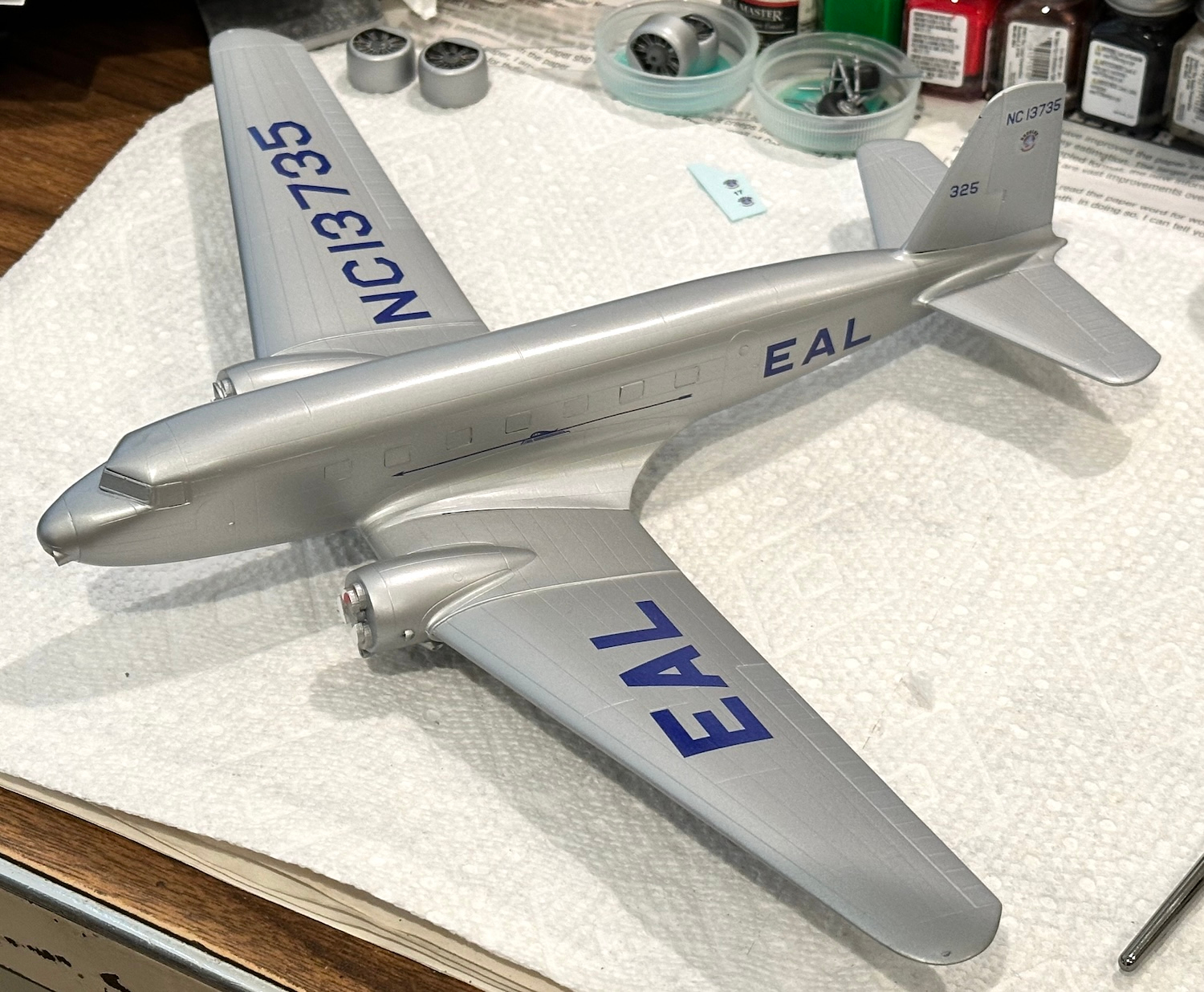
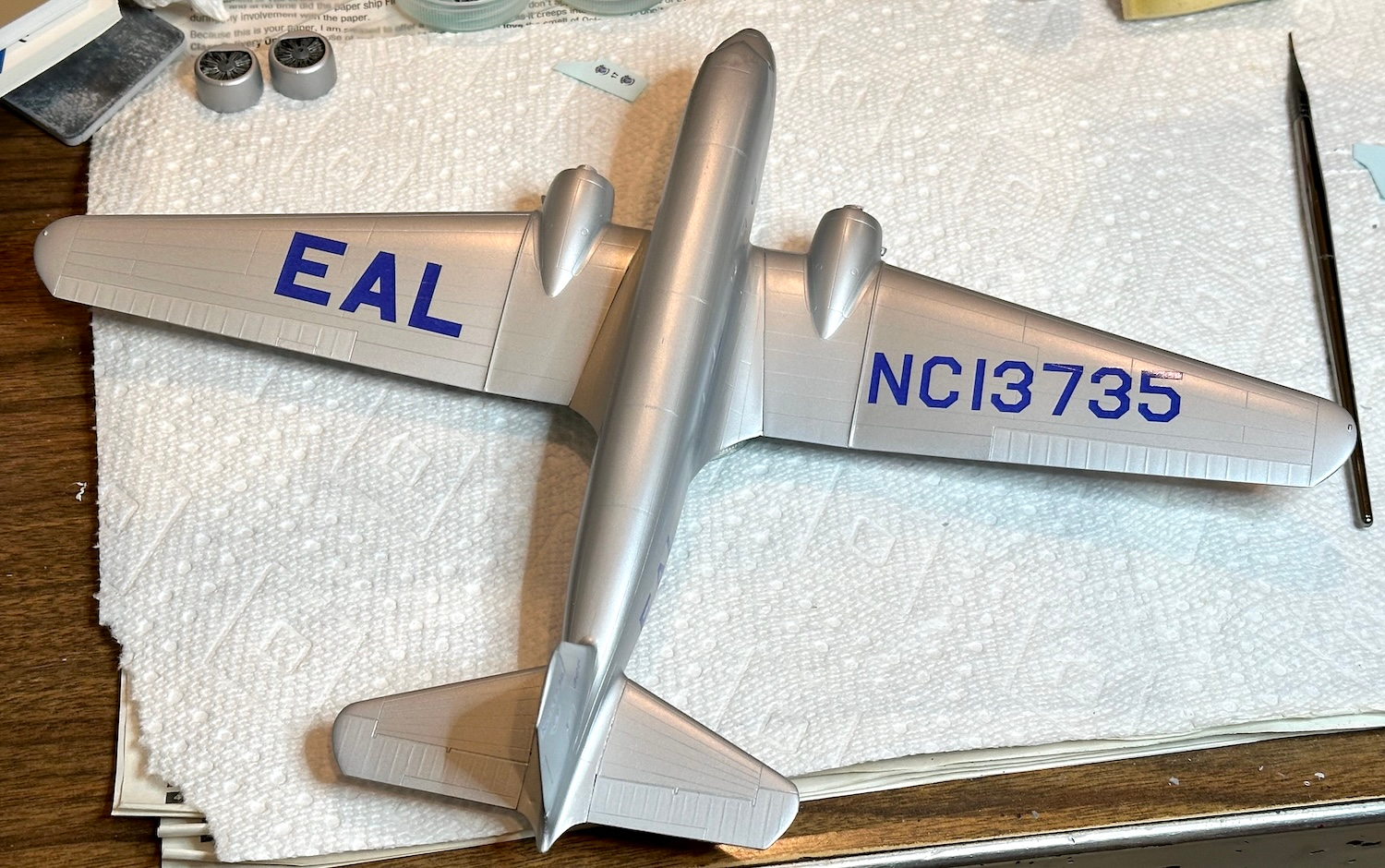
The MPM kit decals for Eastern Airlines were applied and they are some of the nicest I have even used. The go on easily, stick to the model when wanted and move when needed. The colors look great too. The carrier film is close to invisible. Airfix, are you listening?
Notice the baseline of the letters & numbers on the wings do not correspond to the lines of either the leading edge, the trailing edge or anywhere in between. The baseline actually slopes inward! I have read that this was the way Eastern had it applied and the only photo I have seen of this aircraft confirms that. I would love to talk to the person responsible for this to see what he was thinking . . .
I love the electric blue Eastern choose, very fashionable in the mid thirties. Also, note the rather plain markings. The designers were not used to working on such a large canvas yet and they, along with many others in the early days of aerial graphics, had much idea of what could be done. As plain as these seem, they were only a few years away from what was probably the best markings of any airline anytime, the majestic Great Silver Fleet markings. Those are know enshrined on the DC-3 in the Smithsonian.
I have been doing a lot of work on the DC-3 conversion and have much to show & tell about that later on.
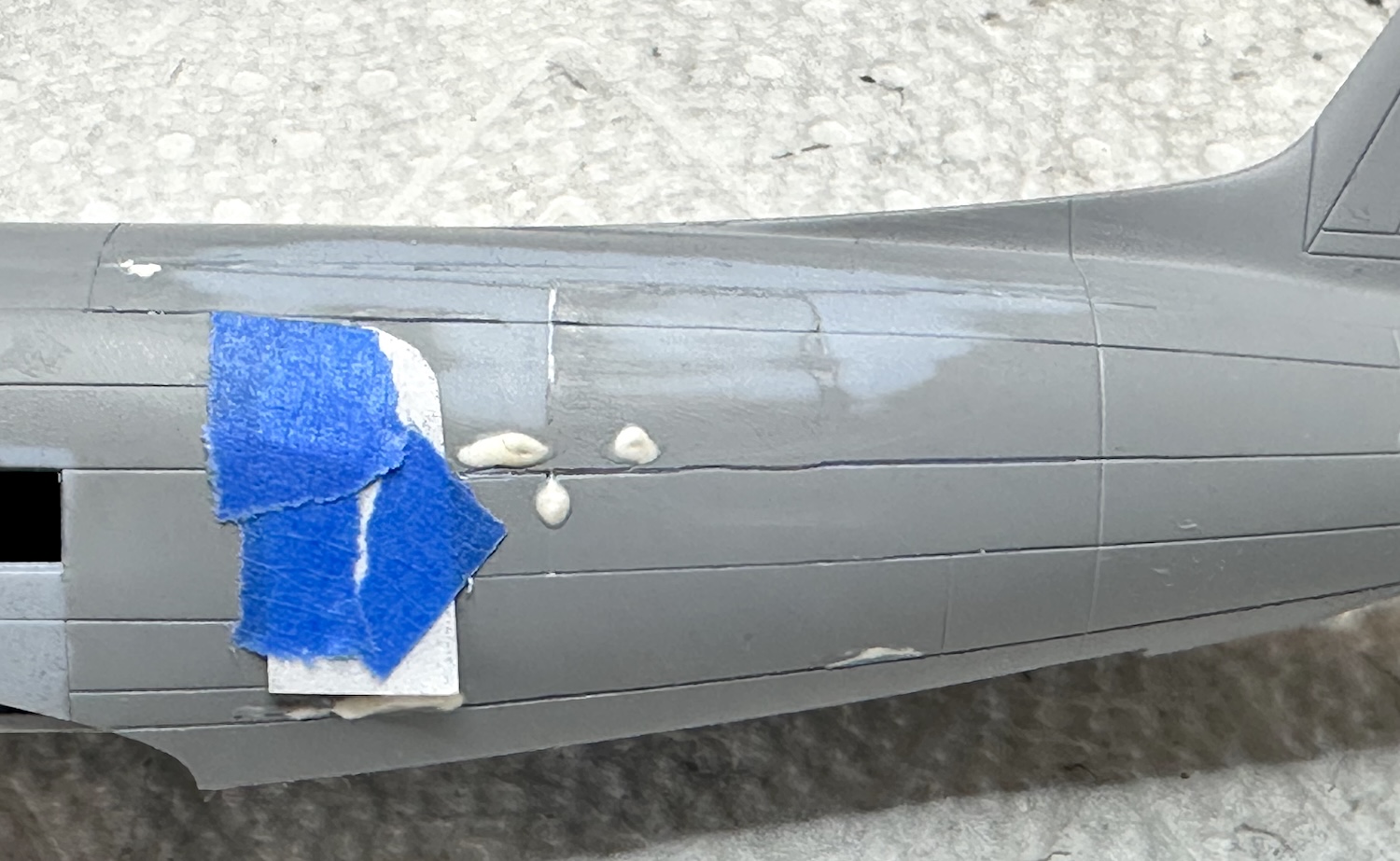
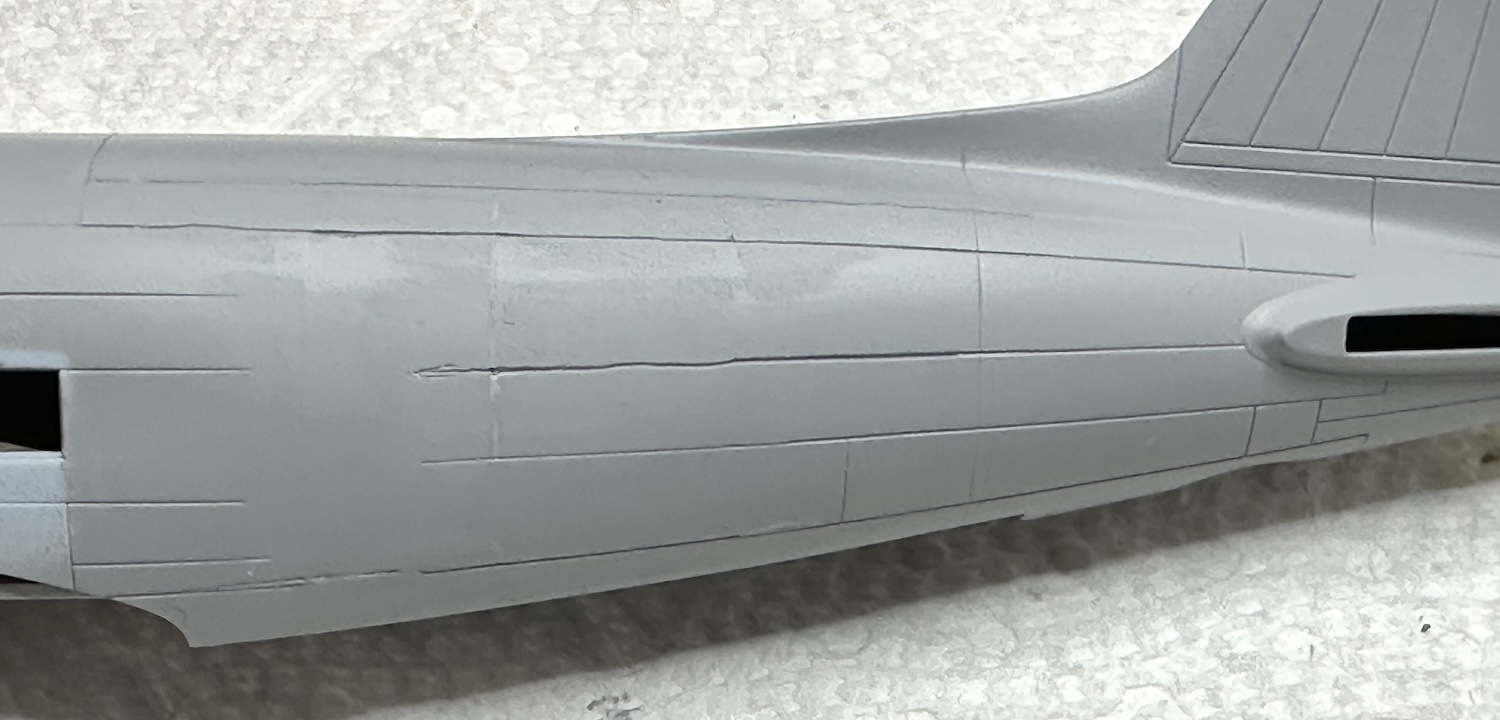
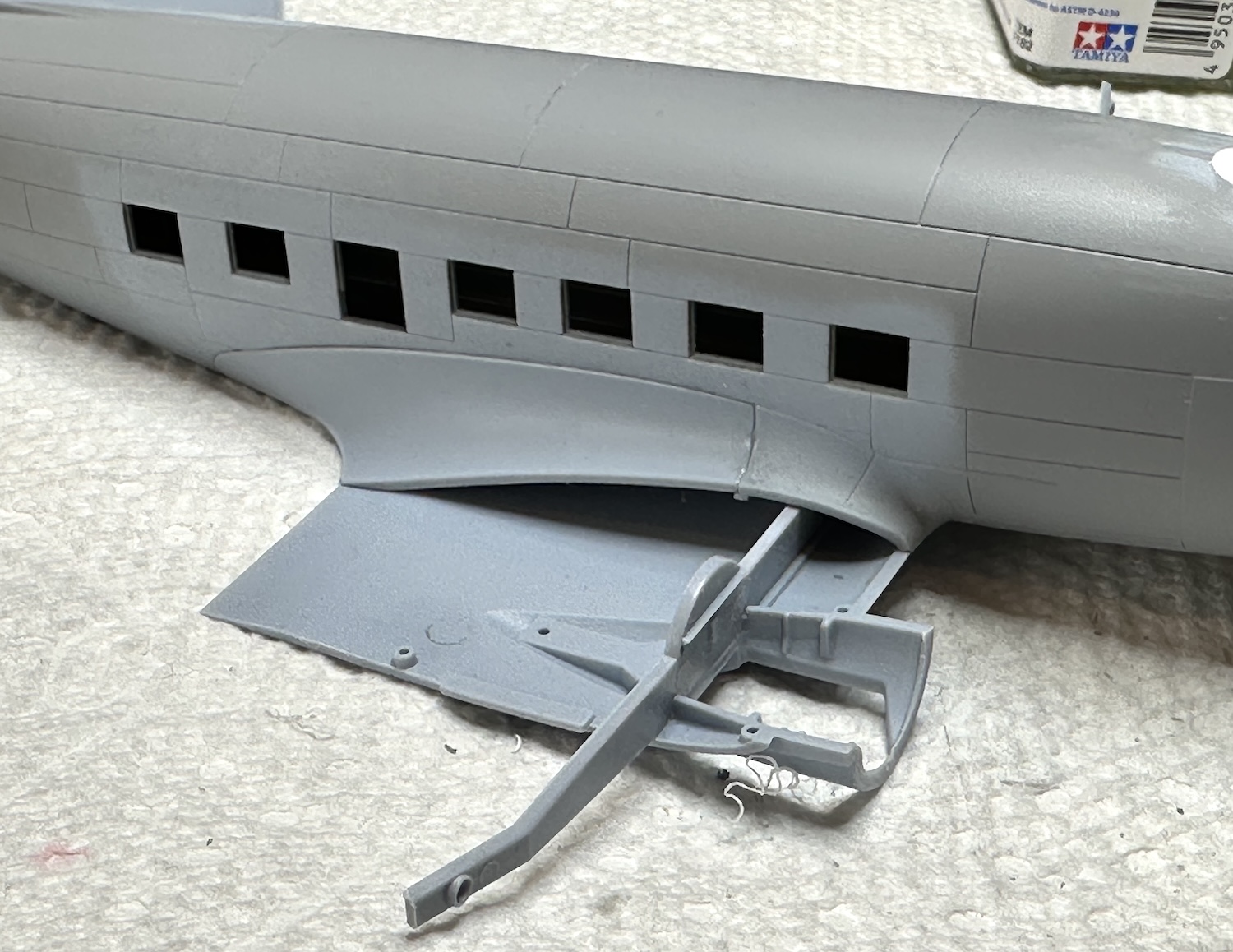
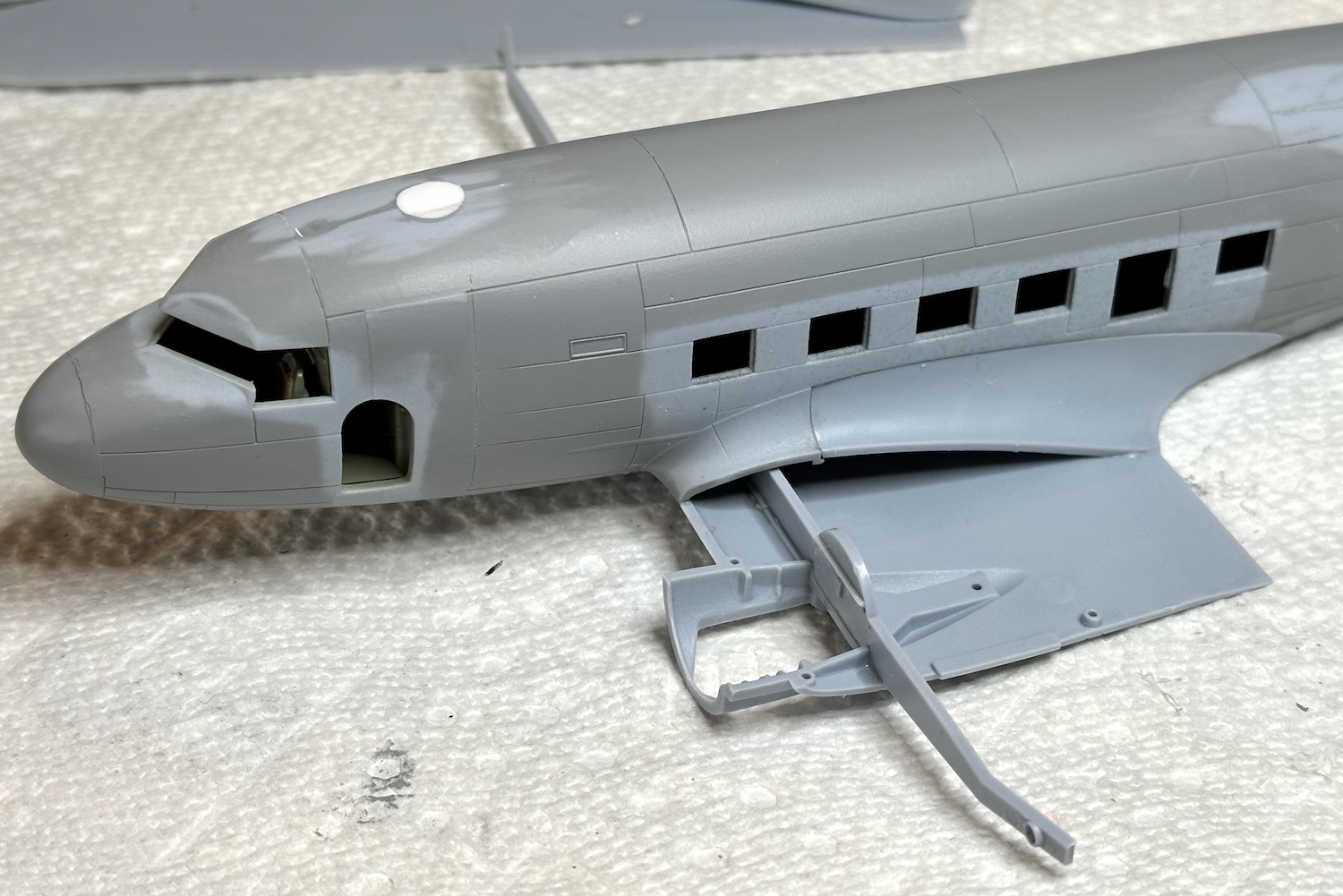
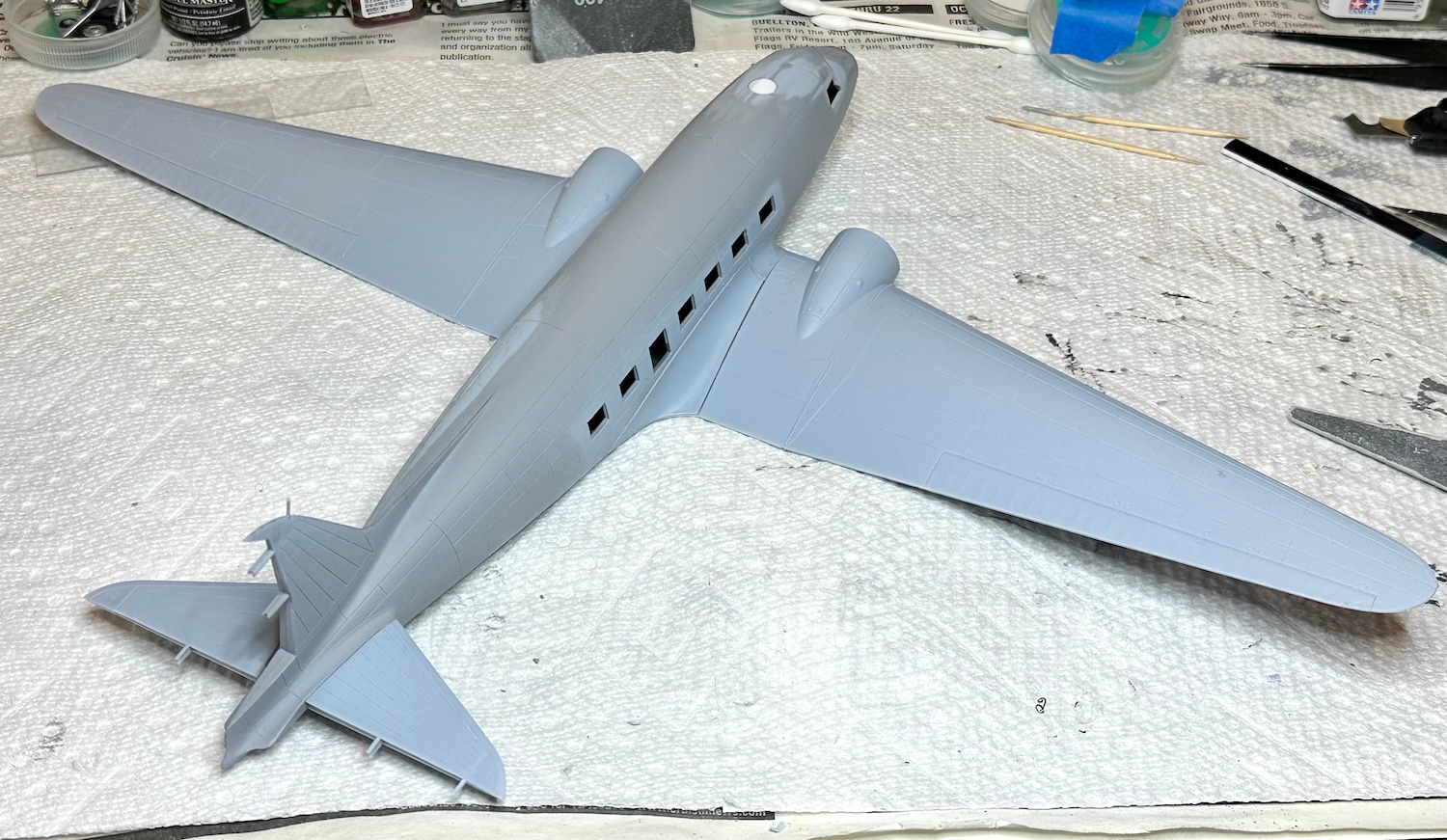
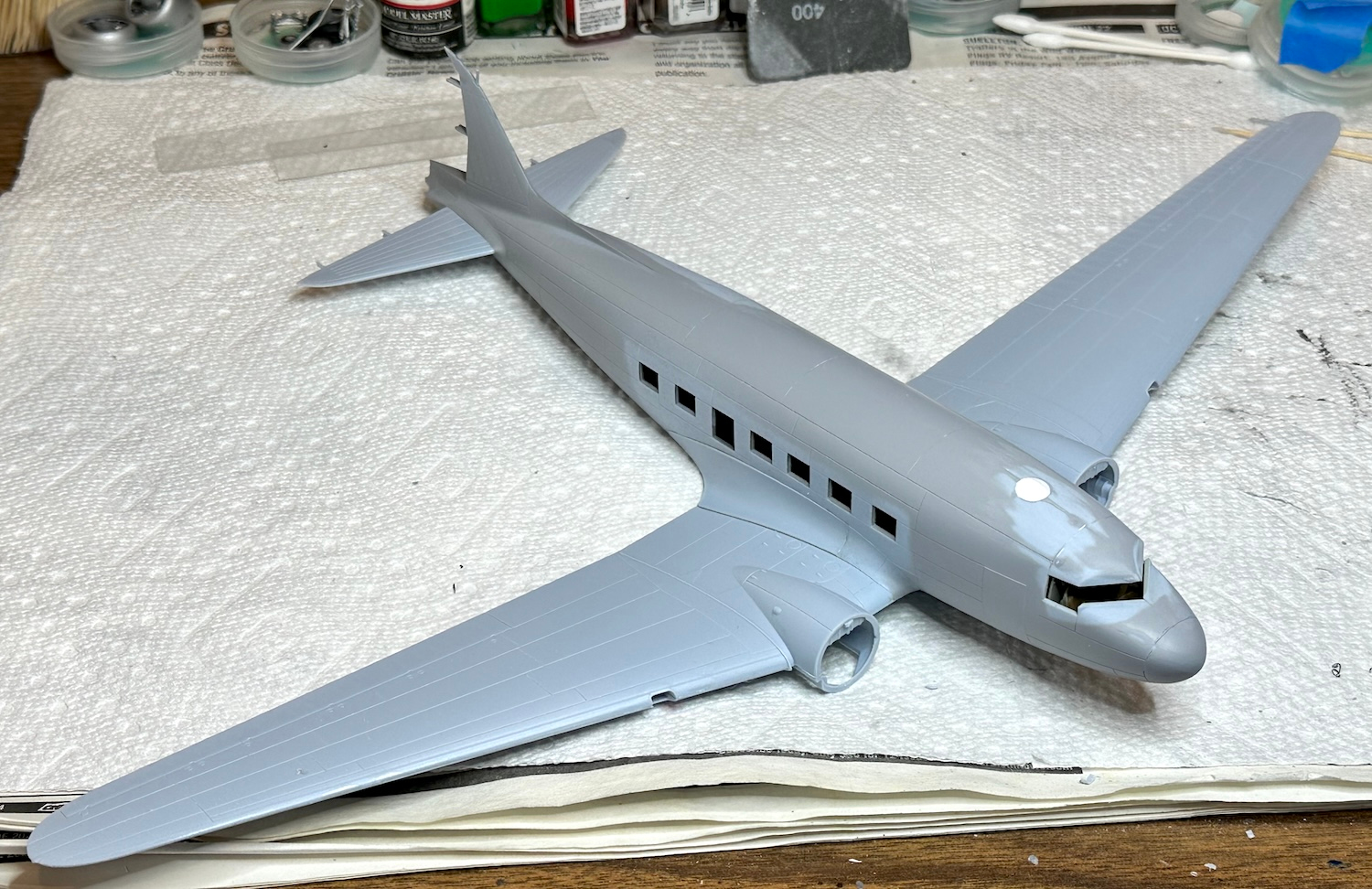
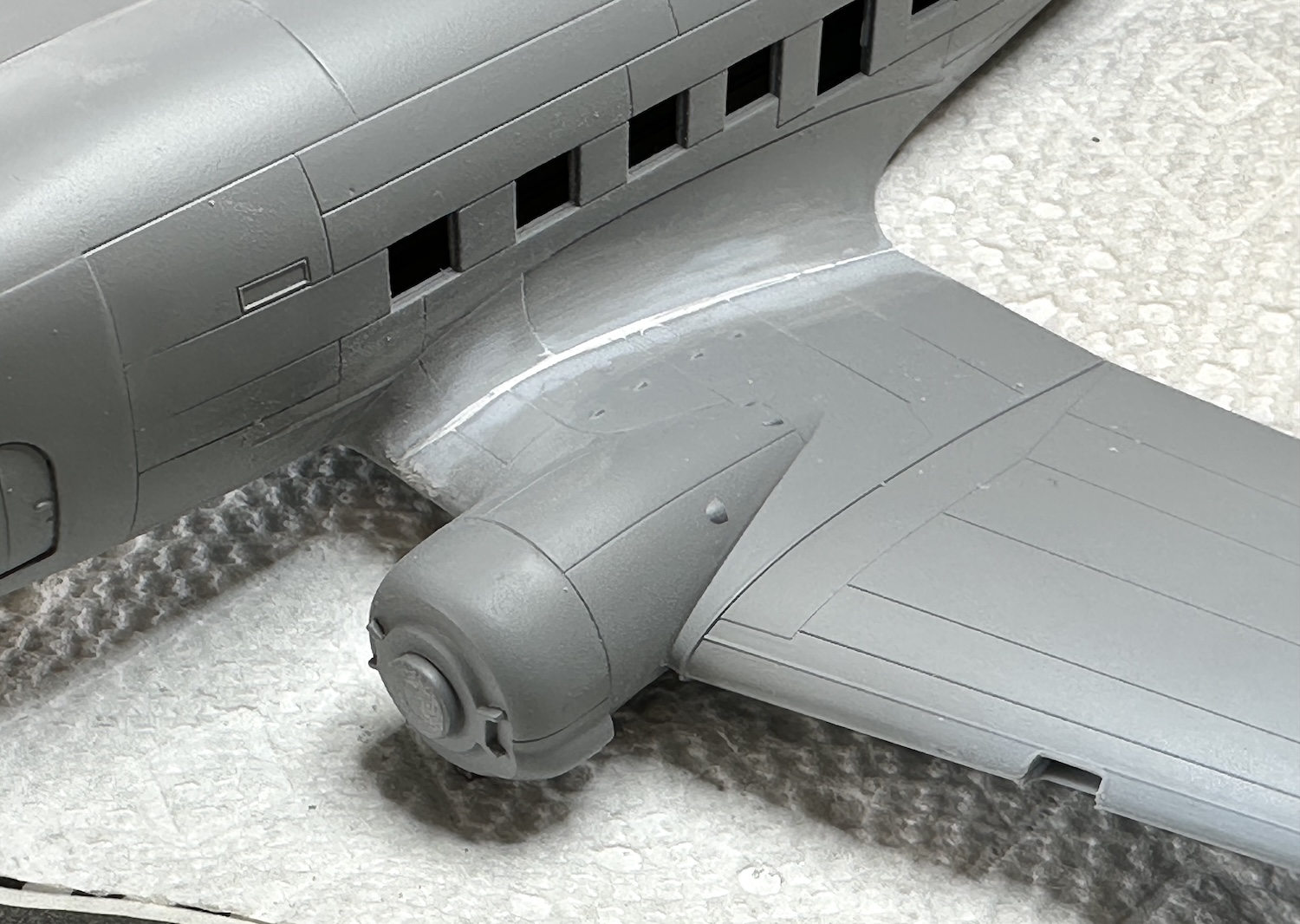
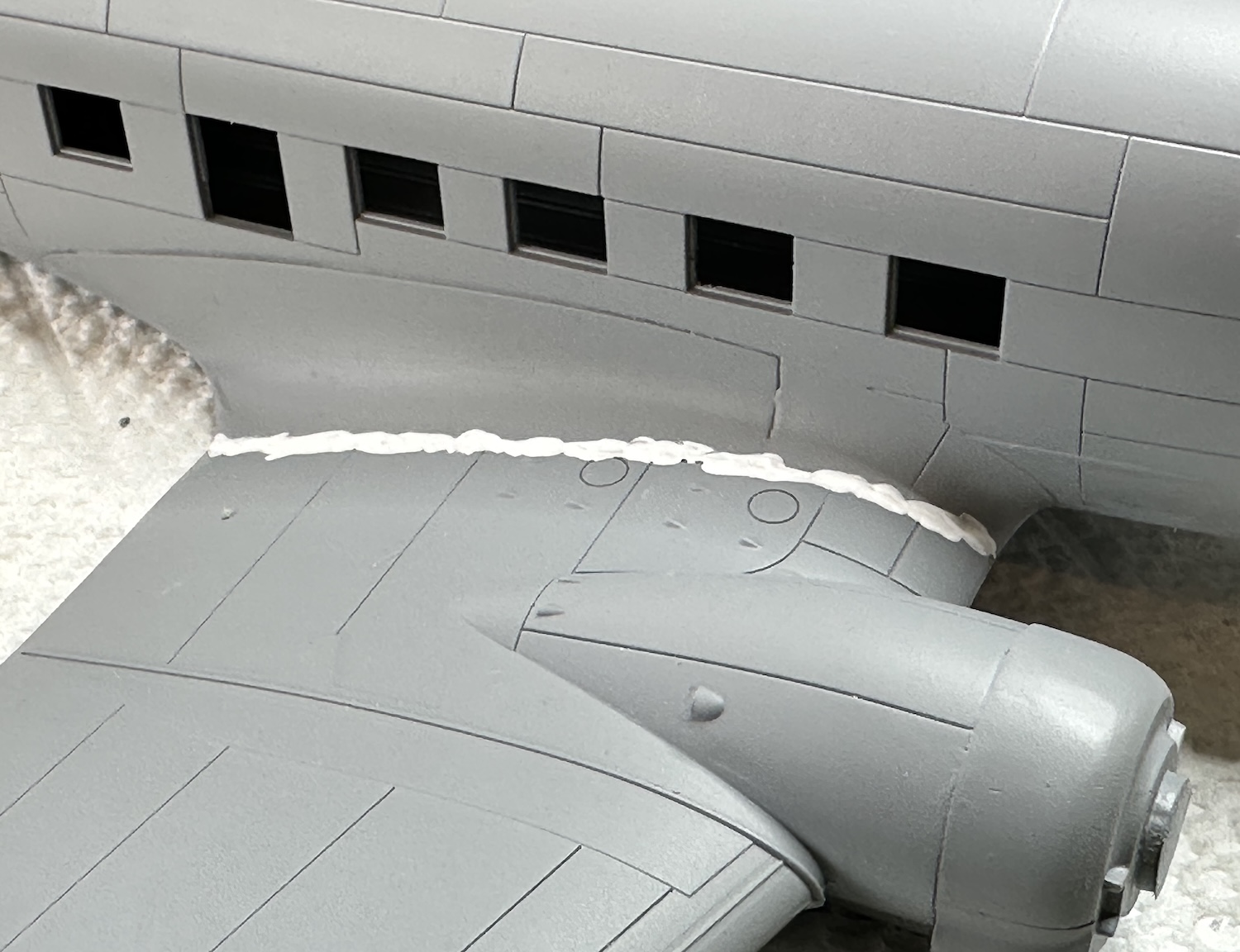
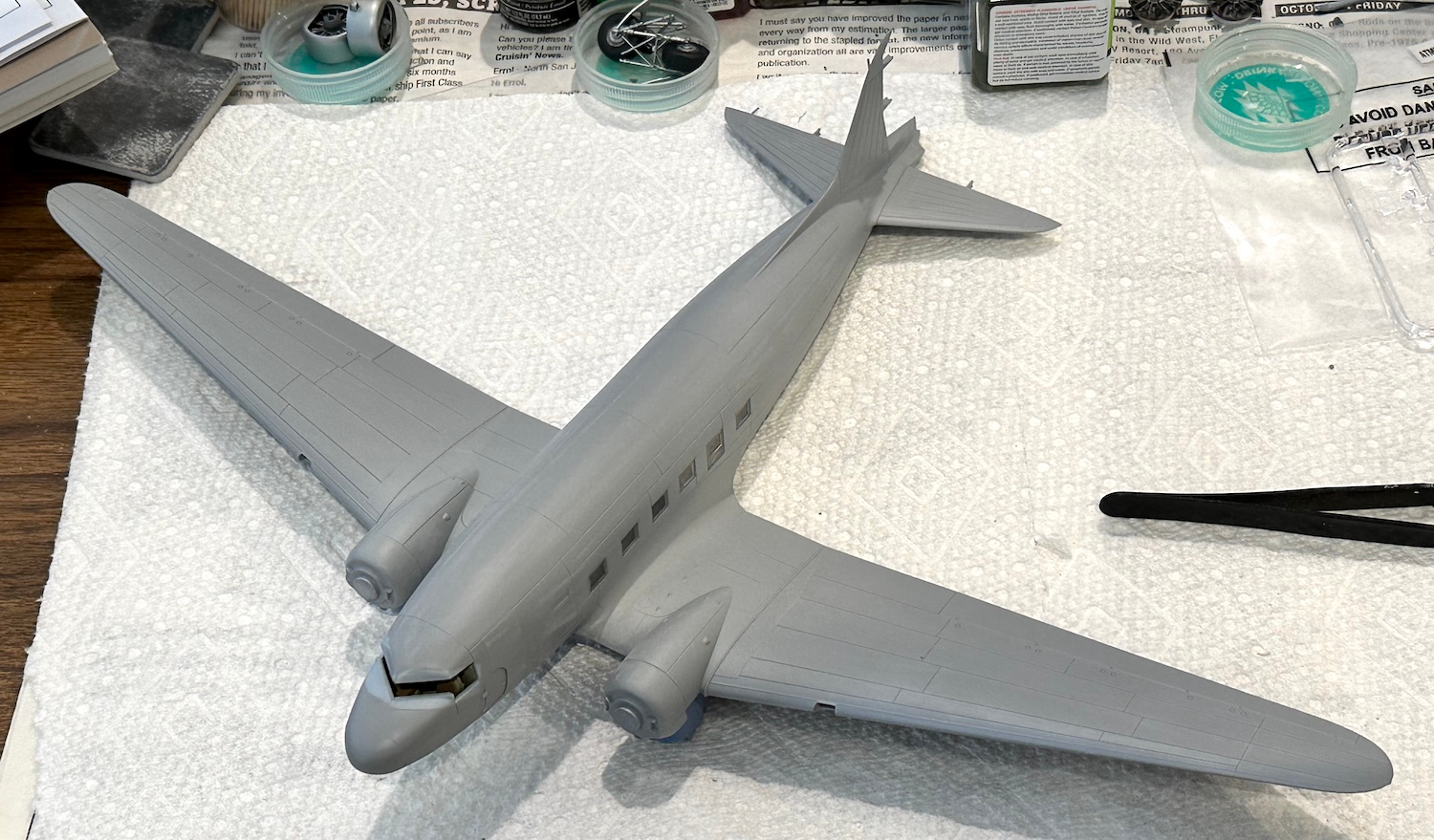
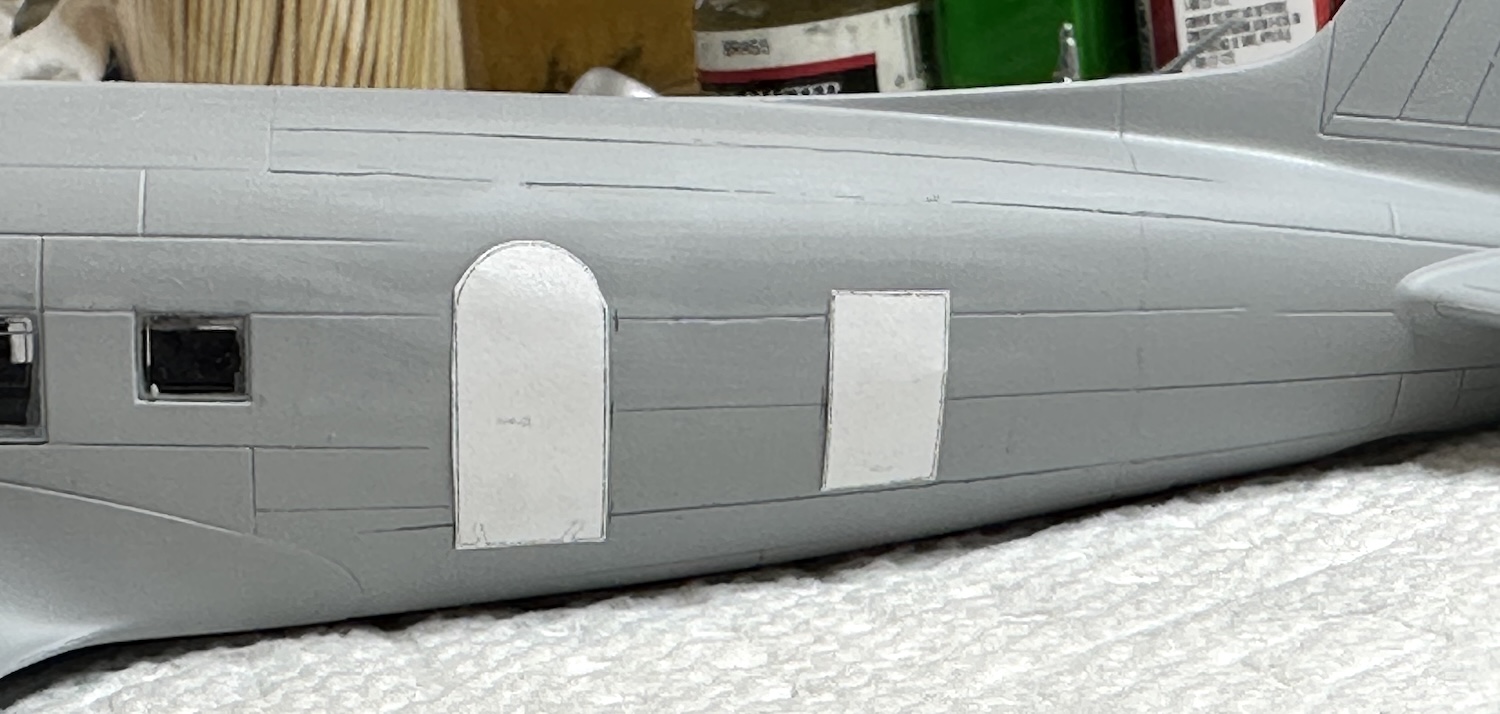
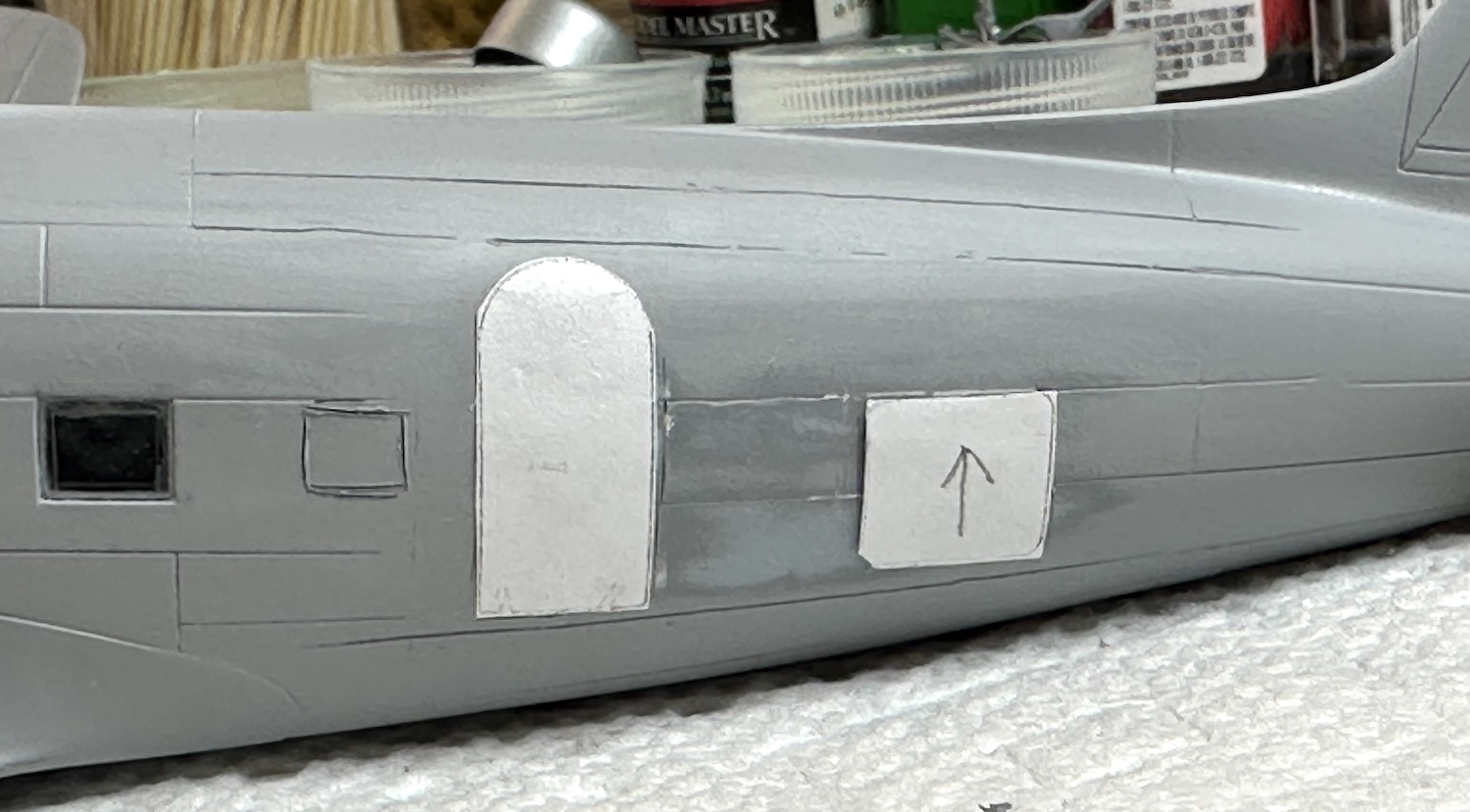
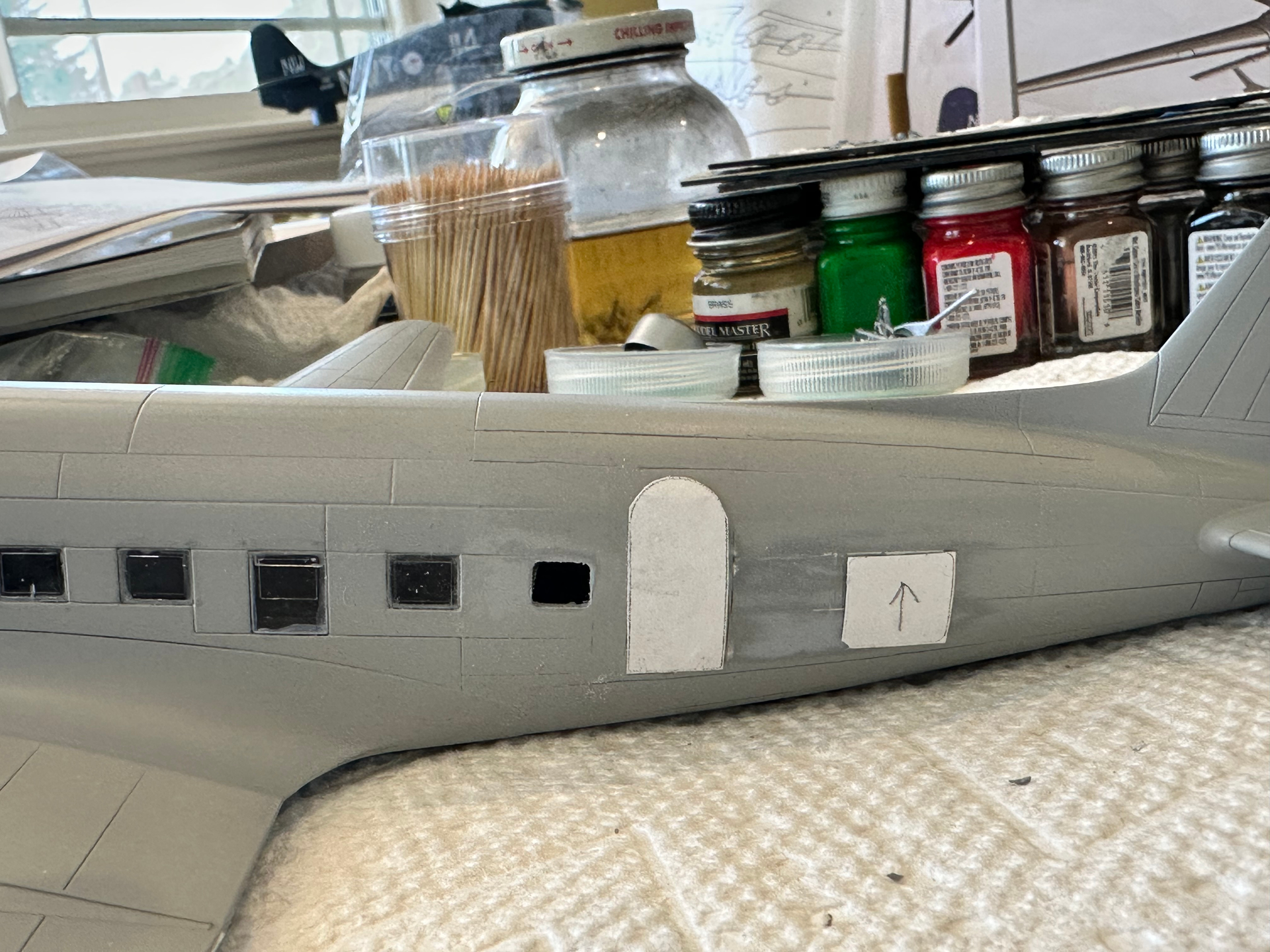
Its been a while since I posted about the early DC-3 conversion from the Airfix C-47. I have been beavering away at it in two principle areas. The first is the port side of the fuselage where the cargo doors needed to be glued in and puttied over. This was easily done but re-scribing the panel lines turned out to be tougher than it should have been. More on this later.
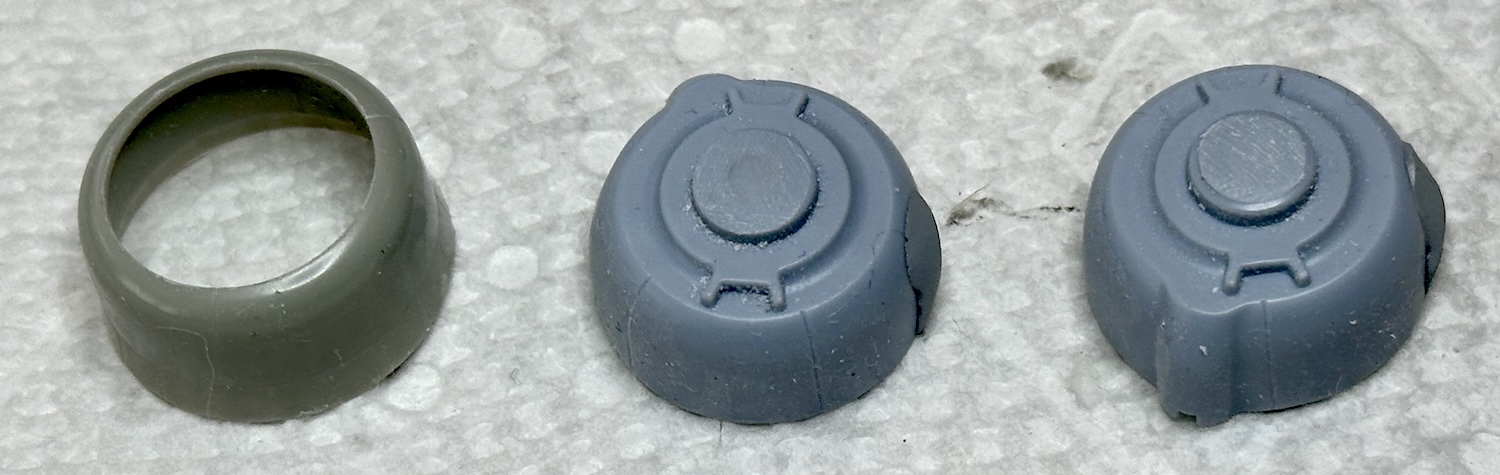
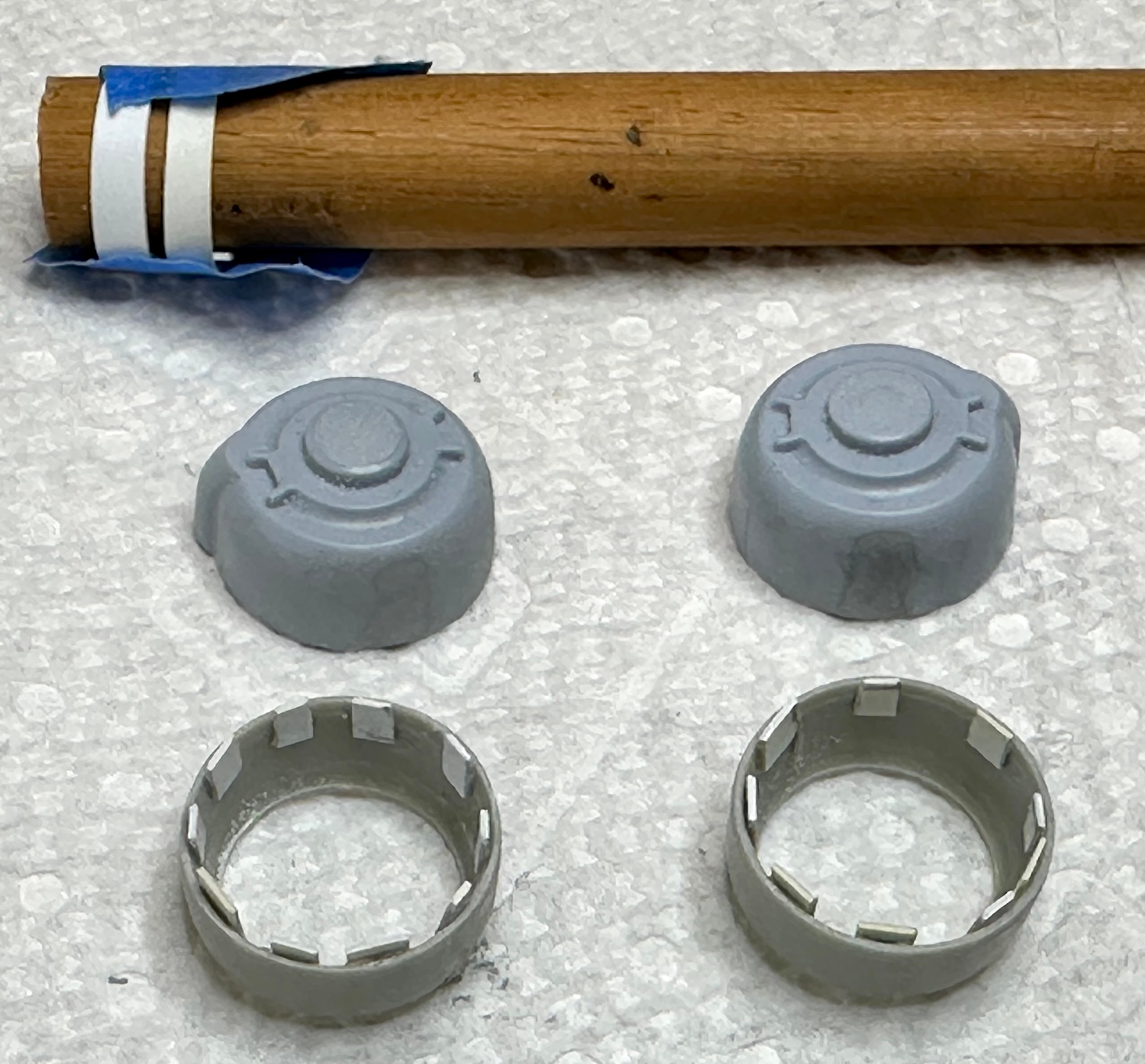
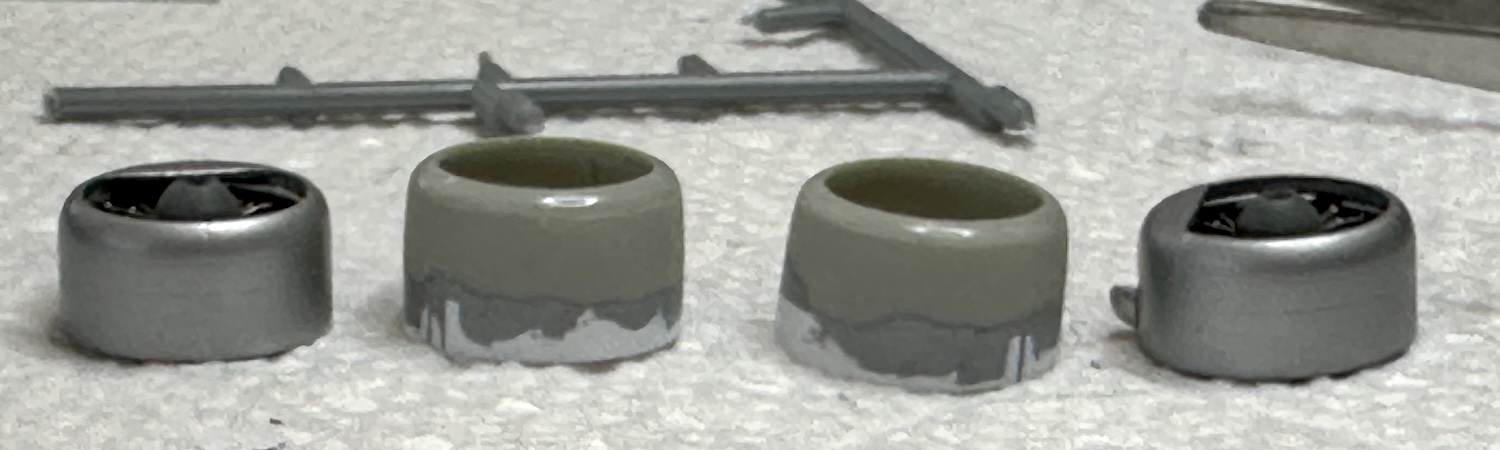
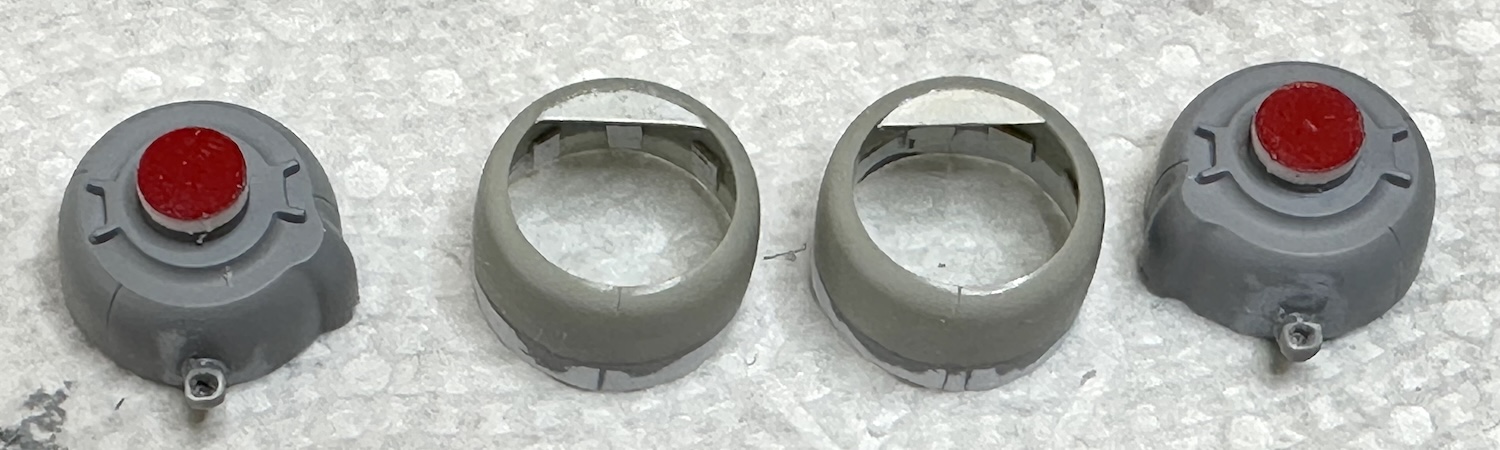
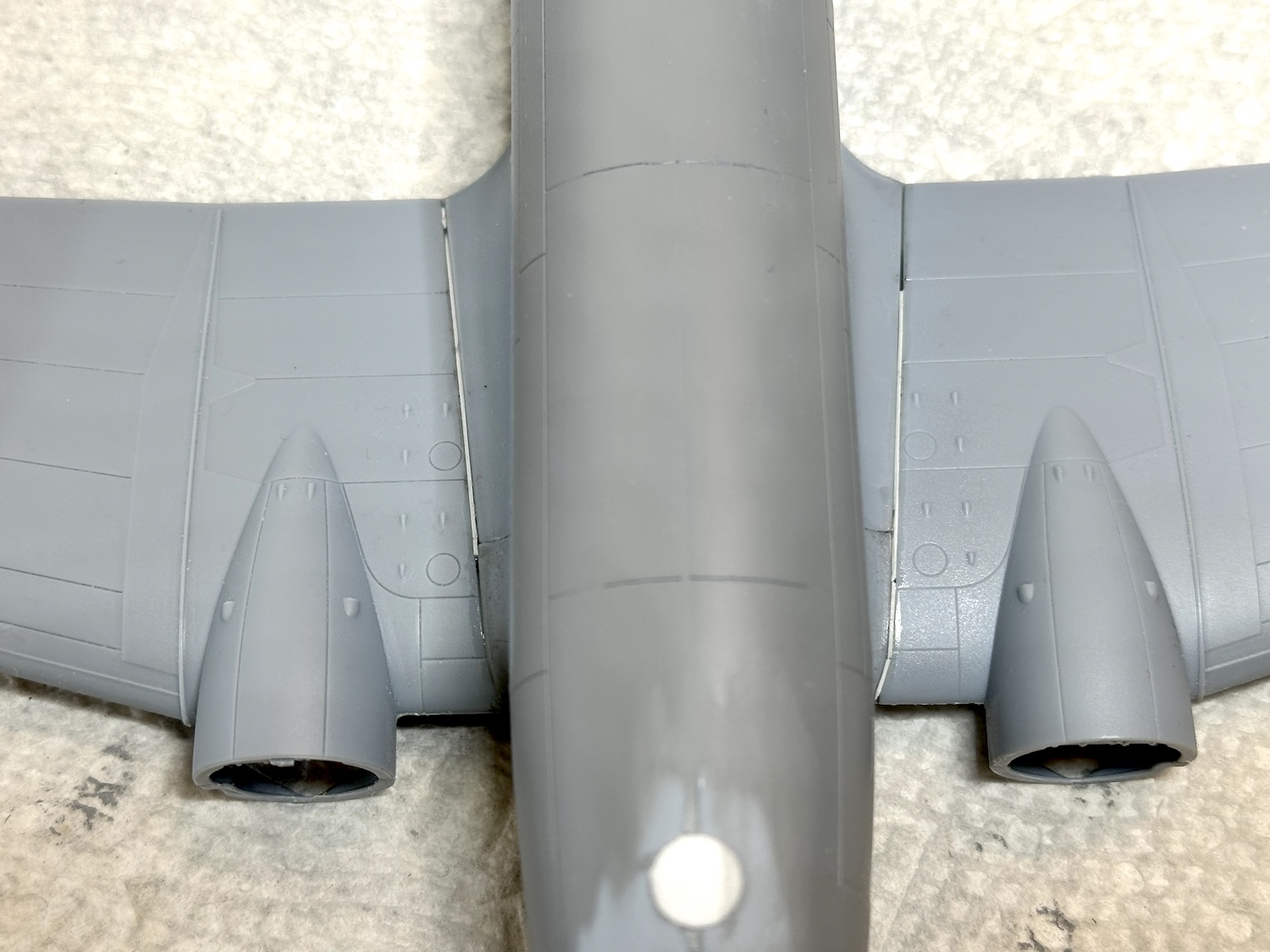
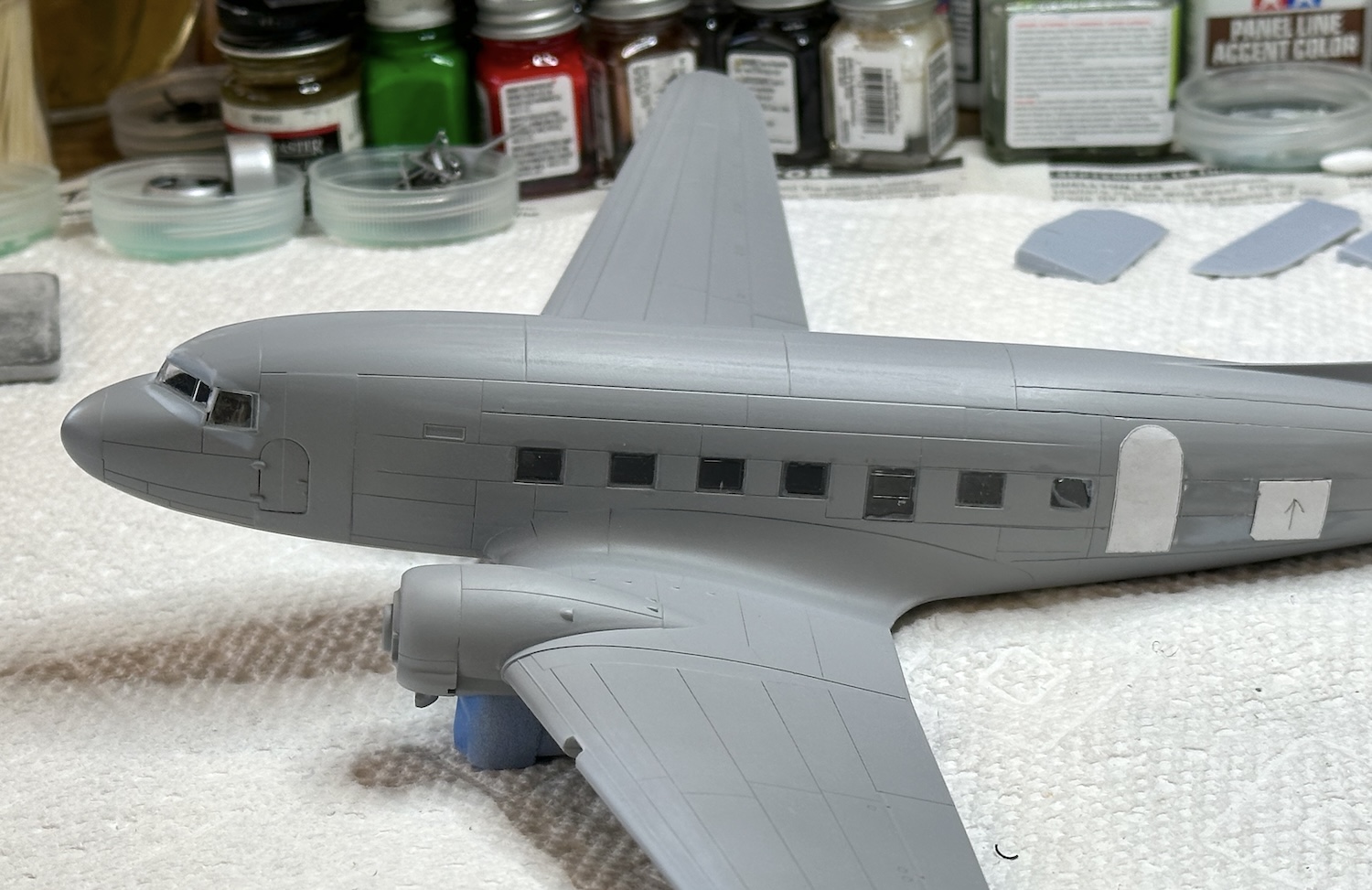
The second area was the conversion of the engines & cowls to Wrights from the Prats. I used a set of surplus B-17 cowls from the Academy B-17C kit. These needed to have the opening enlarged and the cooling gills cut off. A plastic card piece was made and wrapped around to replace the missing gills. The front of the nacelles needed work also. The big P&W oil cooler needed to be cut off and the big carb air intake filled with putty. Much putty & sanding was needed with all of these parts.
That Airfix kit is a nice little kit. But the engraved panel lines take away from it. As such, I wouldn’t even try to replicate them where the cargo doors were. In fact, on smaller scale aircraft I ike to fill them in when feasible. Given how hardit is take make your panel lines match the ones onthe kit, I think you might end up being happier not doing them.
I agree the panel lines are way overdone on the Airfix C-47 kit. It’s still great kit and learning to cope with the issues are part of the fun. Speaking of issues, more of those to talk about . . .
One of the biggest problems with the conversion of a C-47 kit to an early DC-3 is the paucity of information of just what changes Douglas made to their wonderful DC-3 to convert it into the military workhorse it became. There is very little modeler’s information in print or online that I could find.
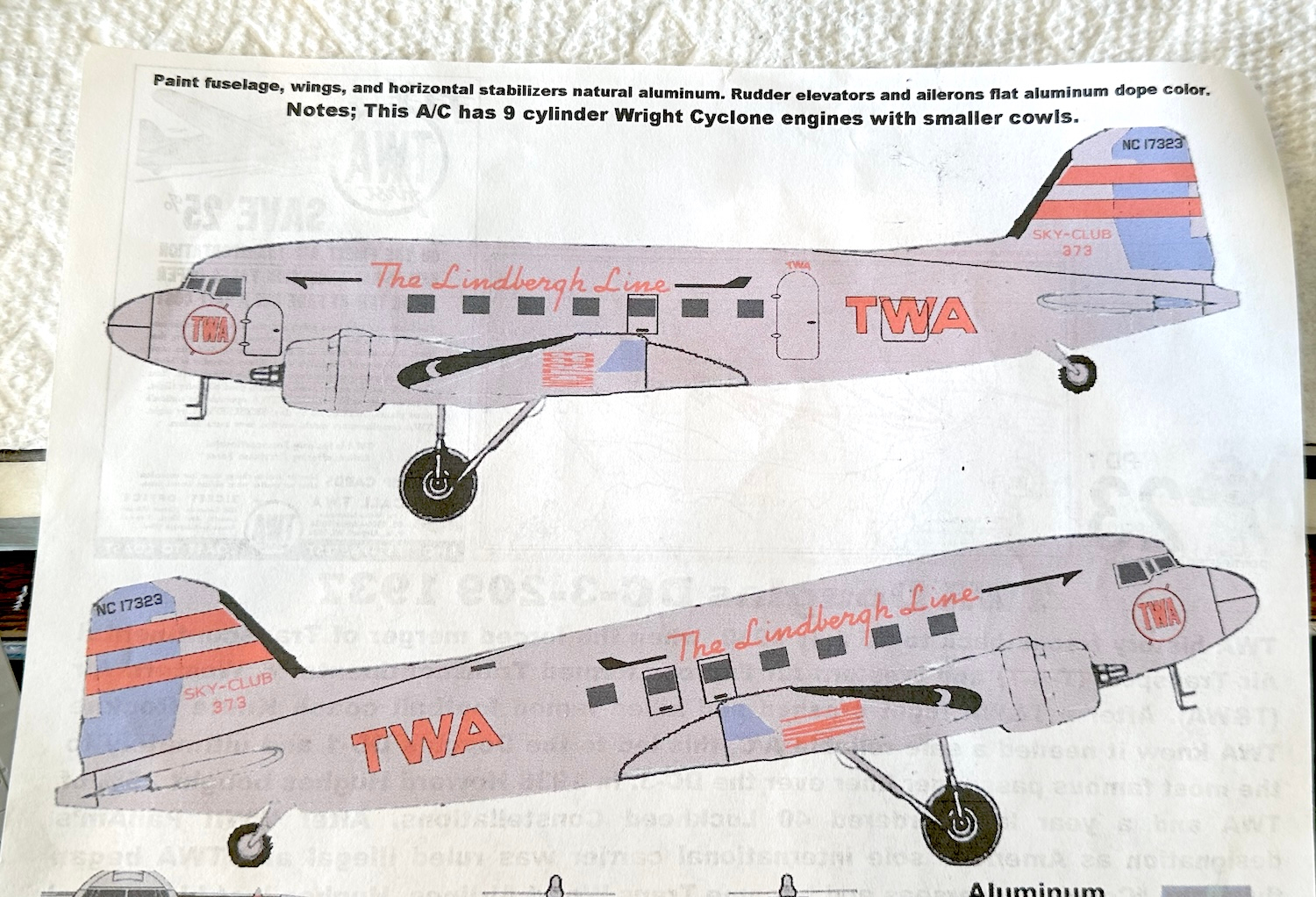
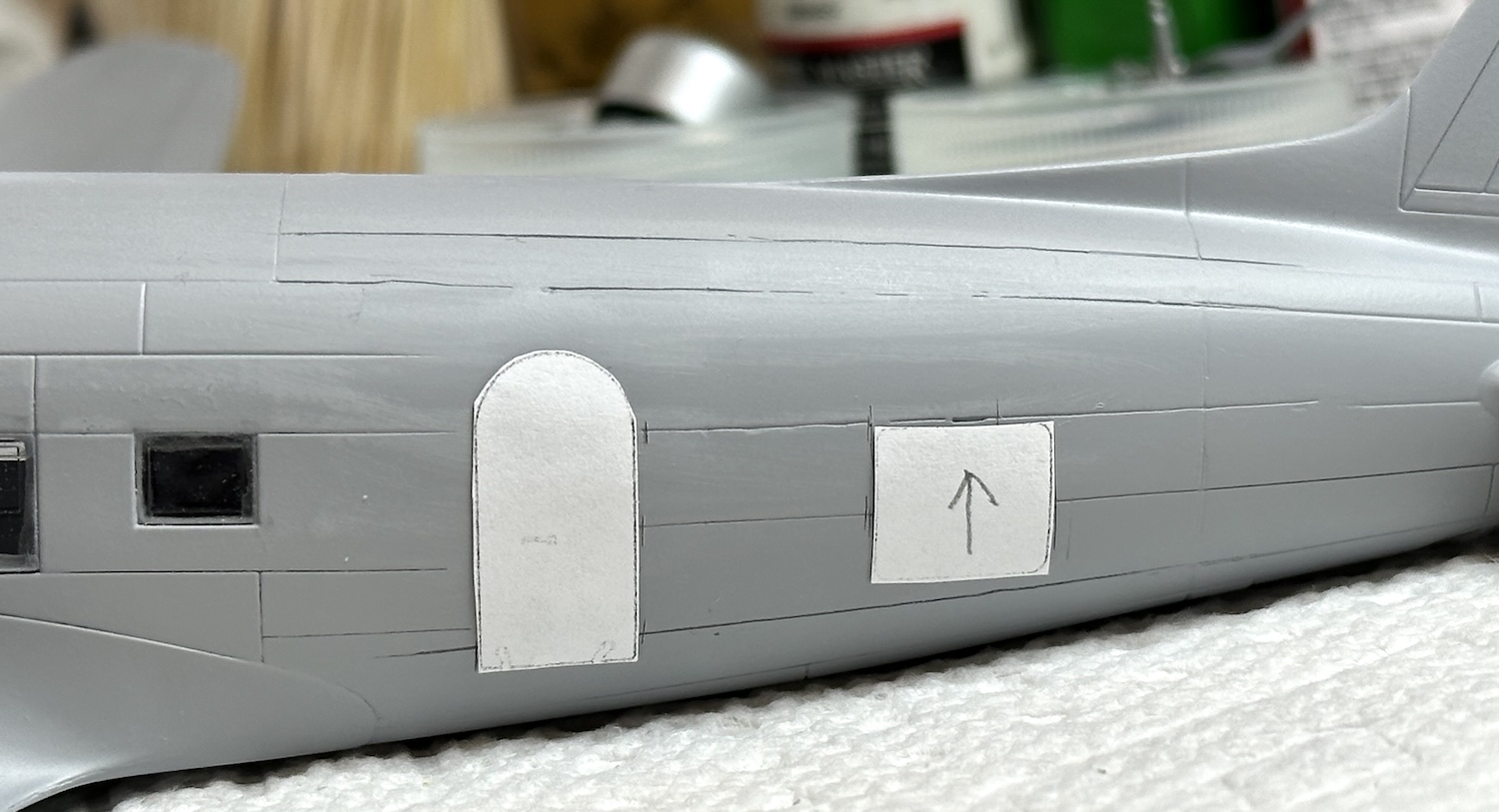
Draw Decals make an excellent DC-3 “windows & doors” sheet. I photocopied it and cut out the airline door & baggage compartment door aft of the passenger door and attached them to the model with bits of BluTac to try to find locations for panel line scribing and later decal application. No place looked right, the gaps were wrong anyplace I tried them.
Alert viewers might already see the issues that only belatedly dawned on me. First, the baggage door is the wrong shape. After the war, surplus C-47s were remanufactured by Douglas and many others to civilian uses including for the airlines. The Draw decals are for one of those conversions with a large baggage door. The prewar DC-3 had a much smaller door.
OK, that was one issue, a much worse one was that the C-47 had a huge cargo door & Douglas had removed the last window on the port side. In all my looking at pictures and at the model, I did not notice that. The model was never going to look right without that last window. A paper template of the window was made and the passenger door & smaller baggage door templates were mocked up. Ah, that’s better! It looks happier already!
After all this came another round of putty, sanding and primer. I do not remember how many times I have scribed and messed it up needing another round. Finally I decided, good enough, it’s time to move on. The model was masked and painted and here the project sits as of now.
Thank you so much for getting this campaign active. I want to revise the award one more time. As nice as it looks in a large size, I feel it’s still too fussy for the very tiny size needed. I’ll post it here for comment tomorrow.
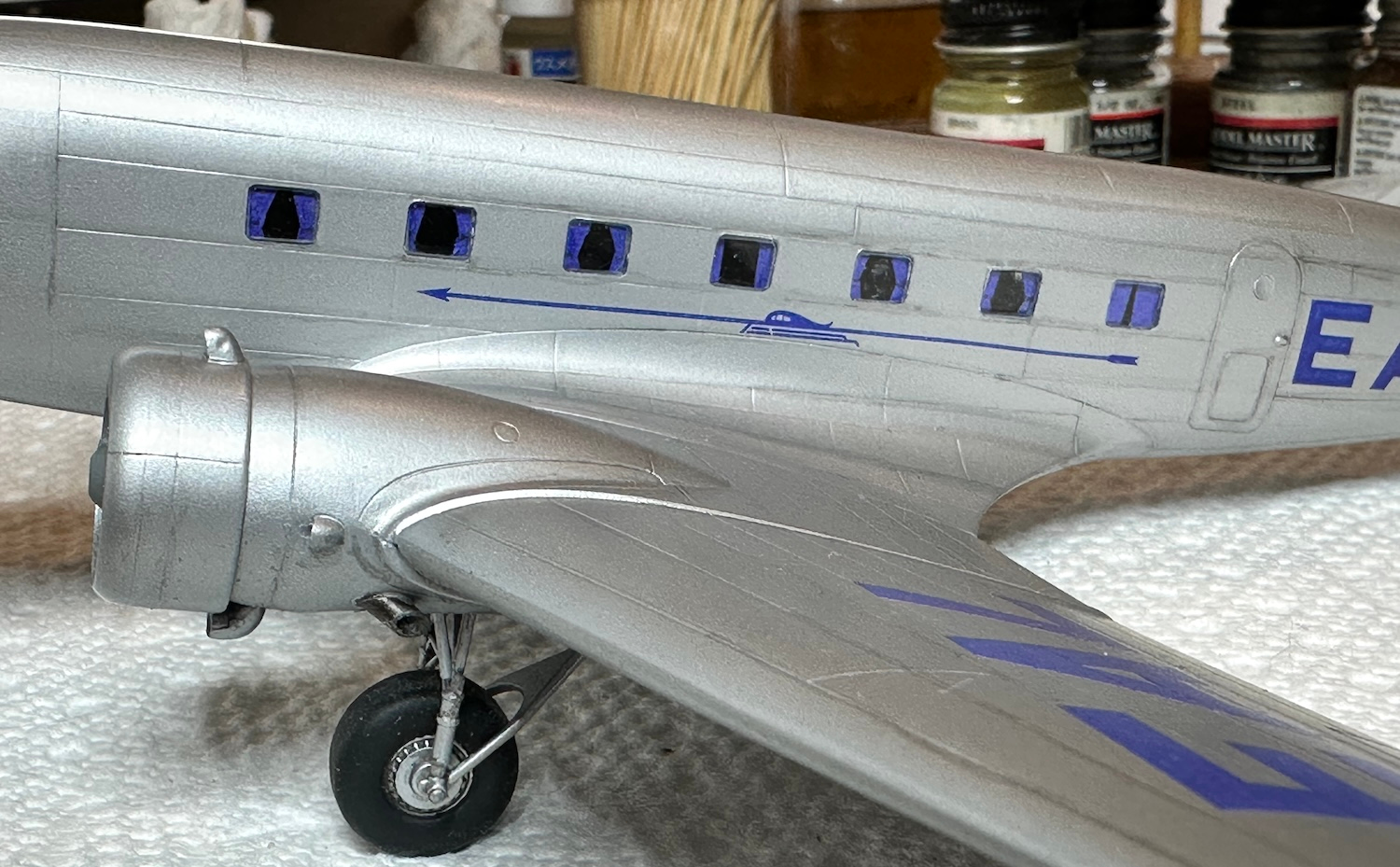
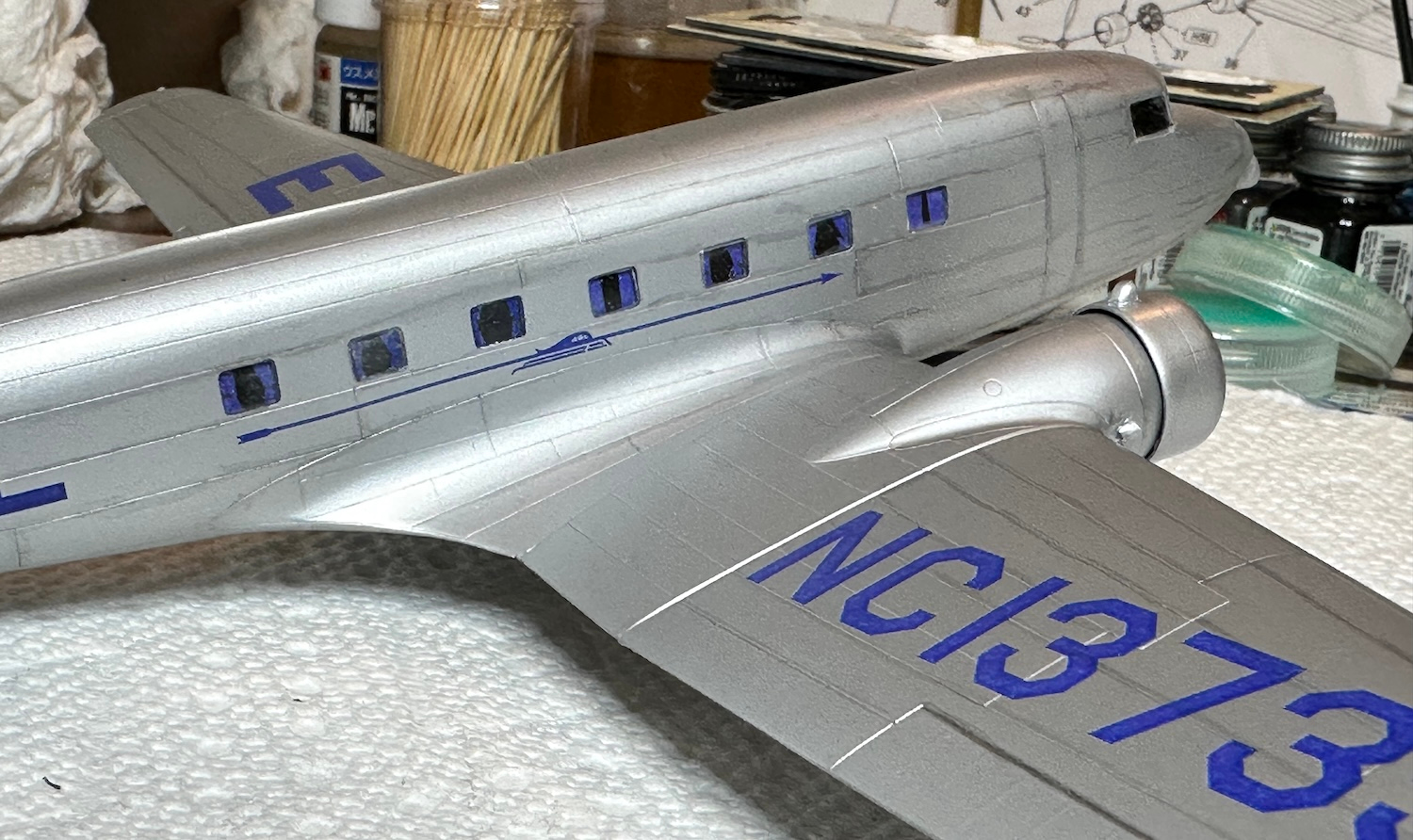
The MPM DC-2 is coming along bit by bit. It got a coat of Tamiya Semi Gloss which adds a lightly frosted look that I’m not wild about. It did seal the decals and the wonderful MPM kit decals look great, almost as it they were painted on. The panel lines were accented with black Tamiya panel liner. I had thought I had wiped up all of the excess but seeing the photos on the big screen it is obvious that I didn’t do a very good job. What does this stuff thin with?
The engines and gear were added and some light exhaust staining was added.
I really like the curtains added to the interior. They match the electric blue Eastern used and help to hide the bare interior. Too bad I didn’t think of this trick in time to add curtains to the DC-3 project.
BTW, the MPM masks were not only easy to apply, they came off easily and had really sealed the clear parts.
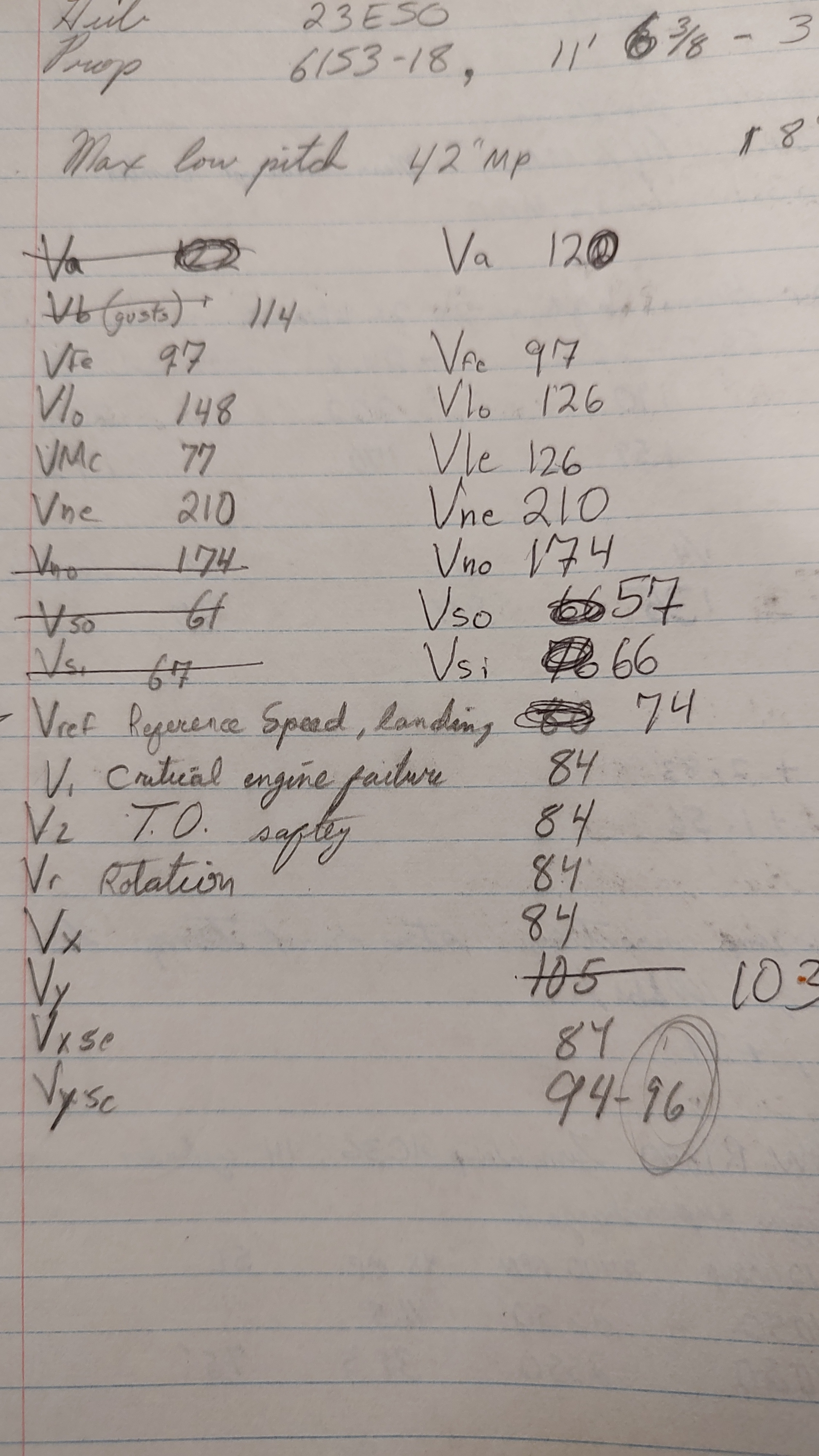
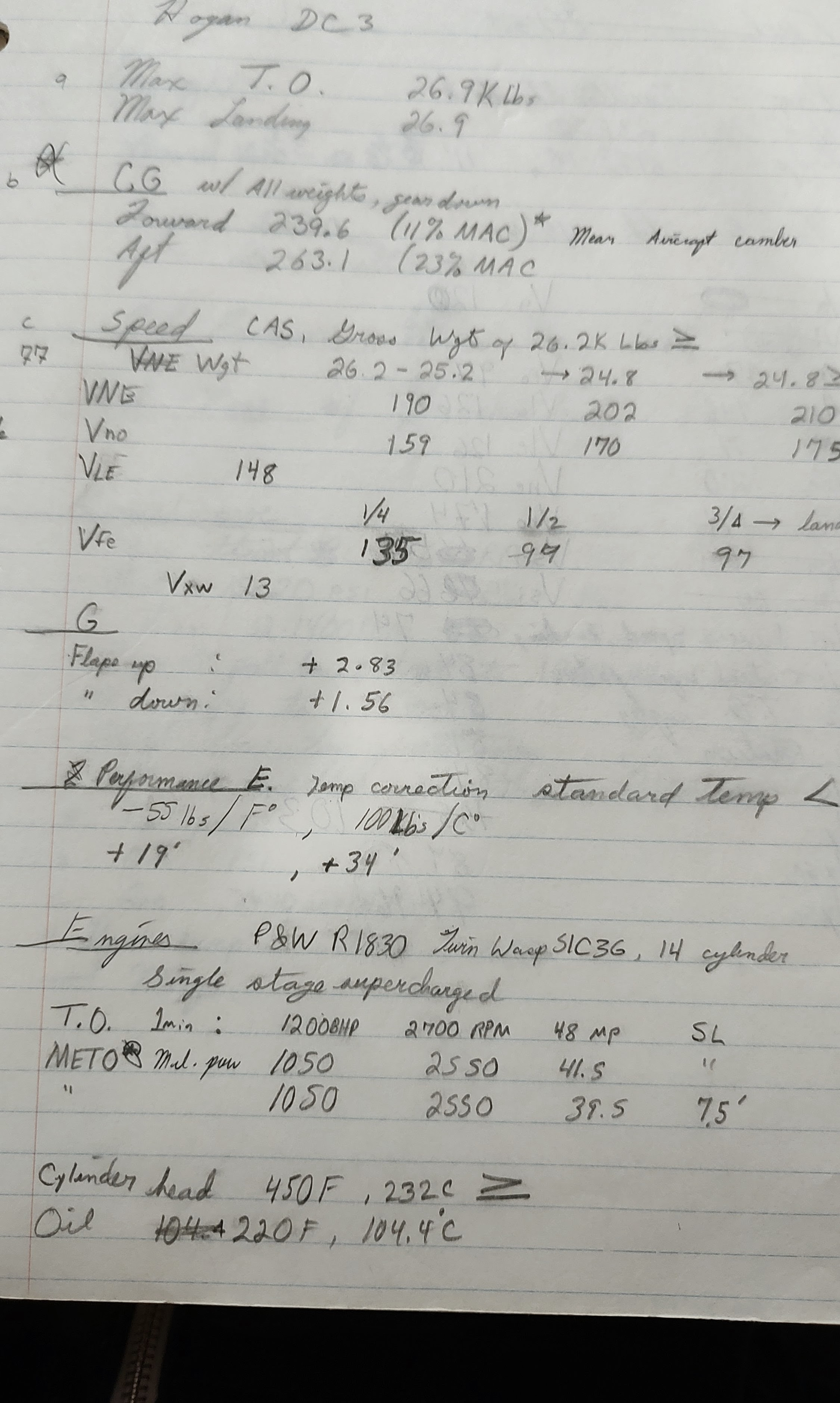
I hear you. What I’m perplexed by is why so many of the airspeed numbers are crossed out? That was my notebook in class, not a test. I’m wondering if it’s because we were using performance tables that had changed with the age of the aircraft?