I am NOT a pilot but one YouTube video I saw was by some pilot who commented on a
DC-3 which had crashed at takeoff.
Apparently the correct way was to get the tail up a.s.a.p. to get airflow over the control surfaces.
Failure to do this could cause a crash …
I notice that this campaign is still listed in the “lauchpad” rather than in thew active builds. Is this something that I have to do? How about posting our award?
Paul
What was a DC-3 like to fly?
Before getting the DC3 job my experience had been in light singles, the Piper Aztec, Cessna 310, and a much too short time in the T-37. Of three, the DC-3 was the slowest. In a interview years ago, Kevin, when asked what it was like to fly the DC3, his reply was " slow ". When I started flying the “Douglas Racer” I had about 210 hours of multi-engine time. Even though the Aztec and 310 were faster than the DC3, it was still fast. Not as fast as I wanted to be going eventually, but it was still pretty nice. Solid and smooth. If I recall correctly, on the ground with the tail down, the cockpit floor was higher than the cockpit of a 727. Once, I taxied VFR on top!
They design of the cockpit was tricky to get between the seats. I recall the three that were on the certificate that I was allowed to fly all had different cockpit configurations behind the seats.
Habits? It was heavy on the controls, comparatively, although a buddy that flew it and now flies a PBY Catalina and B-17 says the most sluggish of the three is the PBY.
I always heard that the DC-3 was likened to a big Piper Cub but I did not fly my first Cub until I had a couple hundred hours in the -3. I’d say the Piper Cub flies like a tiny DC-3. It did not roll fast, I don’t remember the rudder being any problem, other than moving the rudder was like peddling a bicycle in terms of how much leg movement you used. In fact, after flying the -3 for a couple hundred hours, I decided to rent a Cessna and putz around. On take off, correcting the P-factor, my muscle memory was with the long strides of the DC3 rudder. If it’s possible to “ground loop” a nose wheel plane, I almost did it! Rudders of the Cessna you manipulate basically with the balls of your feet. The DC3 you extended and retracted your legs. I couldn’t tell you anything about the sensitivity of the elevator so it must not have made any impression on me. Just a nice steady airplane. We stalled the airplane engine low RPM we did not perform accelerated stalls, and the stall broke easy with just a nose down pitch.
I was not at DC3 affectionado before I got the job but I’d read enough about them to know that you would enter bad weather, it was a good one to be in. It could get bounced around pretty good in terms of turbulence; there’s a reason that when you give air traffic control a PIREP, you tell them your type of airplane. My shock when I started with the company was that despite universal conventional wisdom hammered into all pilots that you stay far away from thunderstorms, we routinely penetrated thunderstorms. No weather radar, either. Looking out the window and seeing the wing tip flopping up and down several feet, I had to keep reminding myself that there was no credible report of a DC-3 disintegrating in flight. At least that’s what the left-seaters told me. The DC-3 could truck a lot of ice, too. I only recall one time that we considered the load moderate. The three that I was certified to fly had de-icing boots. I experienced two interesting icing events. The most uncomfortable episode was landing at Cleveland. On approach we entered an undercast and the airplane iced really quick, including the windscreen, and we could not see the runway clear enough and executed a missed approach. Fortunately it was a shallow inversion and around 4,000 ft we were in sunlight. Flew around until it melted off and then we start at the approach again. Now if anybody has never mentioned it, the aircraft’s windshield wipers are all but useless. They did not keep the windscreen from icing up the first time. Fortunately, I was the copilot so I had the honor of opening the side window, contorting myself across the cowl flap actuators and the combing for the instrument panel, reaching my arm out the side window and around the front, crazily wiping hard enough to keep a little spot clear enough to see through for the landing. Who says the left seat gets all the fun? So we’re down there and getting the freight loaded, it’s still drizzling freezing rain and the airplane was covered with a glaze of ice. I walk over to the FBO to call for the deicing truck. Remember me being shocked about flying through thunderstorms? You ain’t heard of nothing yet - the captain cancels the call and says “get in”. Off we went into the wild blue yonder!
Oh yes, it does rain inside the cockpit. I wound up with wet pants several times.
Out of curiosity I did a Google search on DC3 handling problems, and am amused by what I found. Almost all of it is out of the flight simulator community. Searching farther, found a pretty good site from a guy that posted the checklists and obviously has talked to DC3 pilots, although I’m not sure he has any practical experience in the airplane. He admonished to never never never try to make a three-point landing in a DC-3. We always landed on the mains and let the tail drop, although I’ve also been with a left seater who showed off some three pointers. Like anything, airspeed and attitude.
Those people talk about how squirrely it is on the ground. I didn’t think it was squirrely whatsoever. I did not think that the torque on takeoff was any problem, either. There was a time that we were heading home after delivering our cargo, we were talking about how well the airplane moved around, and I was give the reins to play with it. It did not roll fast enough to snap your neck around, but I thought it rolled pretty good for such a big bird, and actually was admonished for rolling so fast, citing would I do when I have passengers on board? The last thing I wanted on my airplane where bunch of meat sacks to ruin my flying pleasure!
I trusted the DC-3 from the get-go. Douglas built her right. If you notice, with the landing gear retracted, the wheels protrude out of the nacelle a bit. Aircraft is designed to be able to land gear up from a 300 ft per minute descent rate.
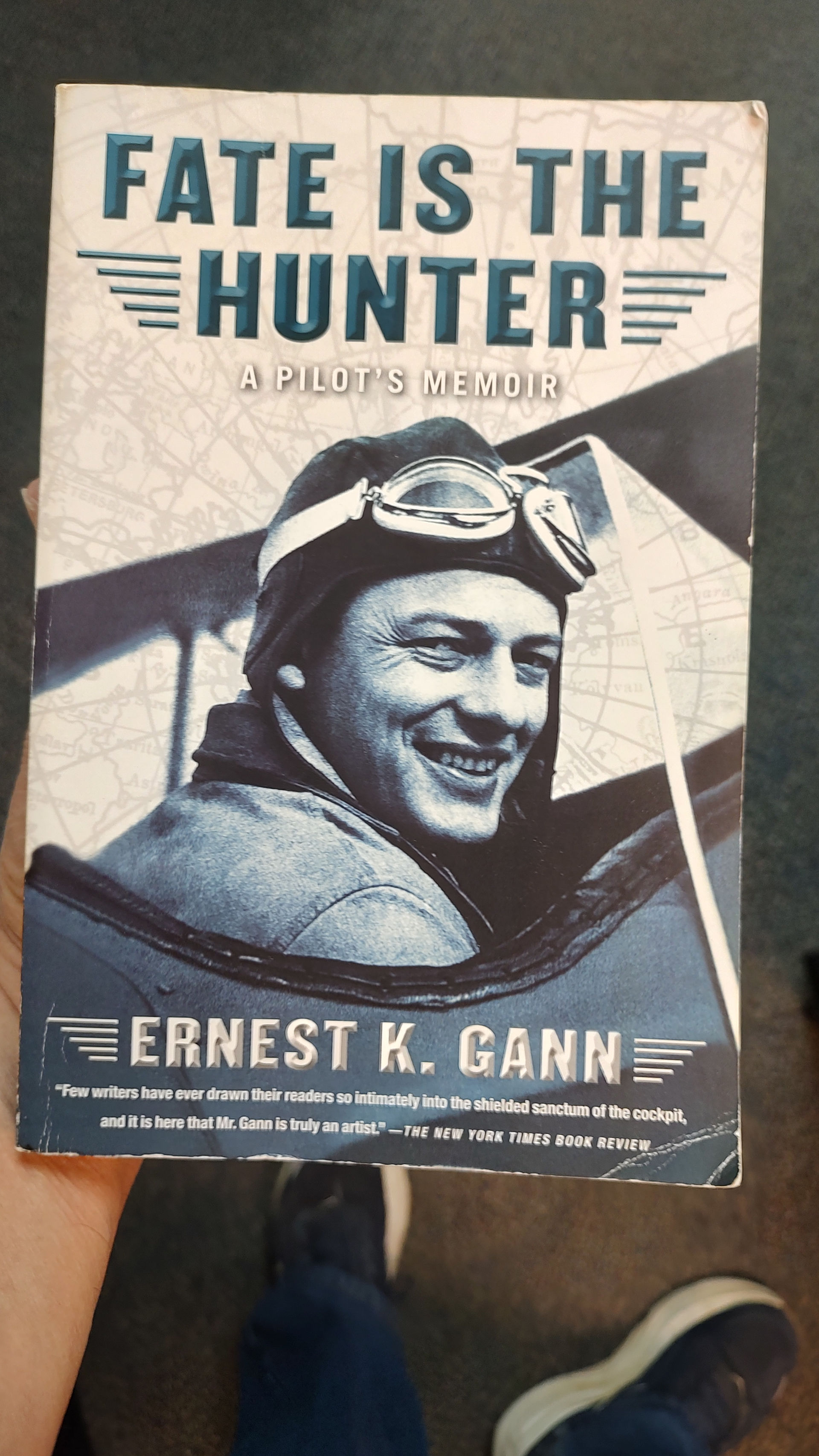
I had a lot of fun at the airplane and several varied adventures. And speaking of adventures, I’d never heard of Ernst Gann before I started flying for the company. The pilots and copilots frequently talked of which book they were reading, and an occasional success at a bookstore where they would find an old copy of a book they had not read yet. I have a couple that I’m working through.
Well, those are my recollections. If I think of anything else I’ll include it. I hope this was enjoyable.
4 Likes
Stumbled across this website. This guy loves the Gooney. It has tons of resources.
1 Like
Michael Satin is the campaign guru. I pm’d him to ask him to make this live.
If I recall correctly, site owner Jim posts the awards at the completion of the campaign.
By the way, Casemate Publishing has a book about the 90th anniversary of the DC-3. If any of you will commit to reviewing it, I think I can get you a copy.
Send me an email if you want to review the book.
Thanks for those thoughts, they really do give us a better perspective on the DC-3. Gann wrote a lot about flying them but his remenises were from a time when they were new front line equipment. In Fate Is The Hunter he talks about routinely penetrating thunderstorms with passengers. The first time he was told by the senior pilot to fly right into the storm while his tormentor (the captain not the storm) flicked lit matches in his face. It was a lesson in concentration that Gann says saved his life later on. He has a lot of great stories.
I remember another one was about taking off from Newfoundland for Greenland or Iceland with a load of construction materials. The ARMY loadmasters at this point had adopted a way of working that basically said “if it will fit though the doors the C-47 would handle it.” The load turned out to be steel beams that were strapped down left to right but not fore & aft. As they climbed out right after takeoff the load shifted rearward requiring all the strength of both pilots to keep from stalling while the rest of the crew desperately pulled the load back where it needed to be. A mear overload was standard but the aft CG was nearly fatal.
Lots more great stories in that book. He does not mention the airline he flew for but Wiki lists it as American.
Paul
1 Like

3 Likes
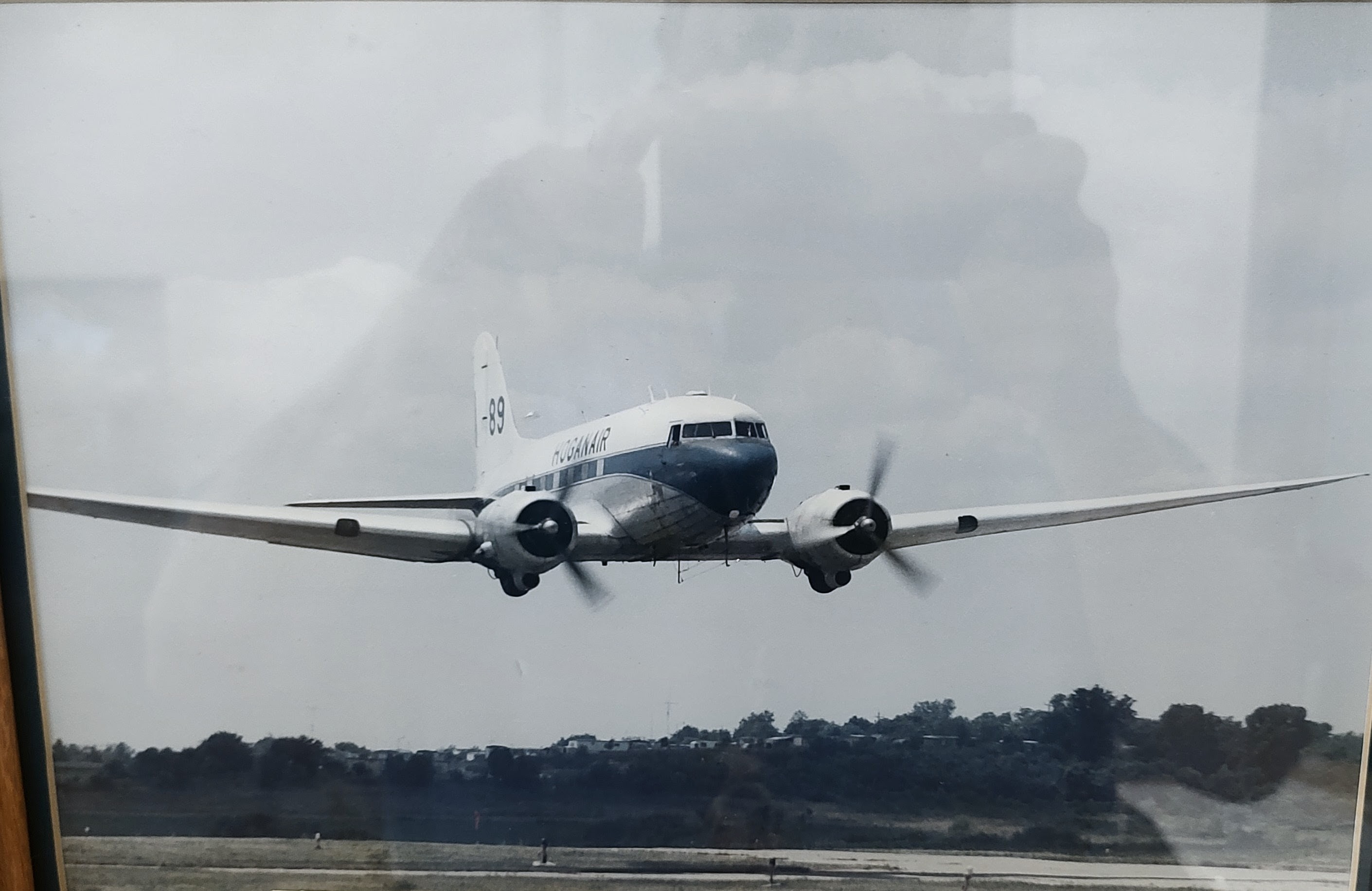
That really is low, it must have been a thrill for the photographer!
A few weeks ago someone posted a picture of the Pratt & Whitney medallion as used on the DC-3/C-47.I mistakenly said it went under the crankcase on the drain section. While this would have been true on the earlier single row engines, it was wrong for the later engines. Sorry about that!
Below is a picture I shot at the Planes of Fame Museum in 2020. That aircraft was built as a P-12 and has been painted by the museum as an F4B. That idea is not totally wrong as the Air Corps gave some of their P-12s to the NAVY when they had been replaced by more modern equipment such as the P-26.
I used the picture to help detail the engine of a 1/32 Hasegawa F4B build last summer for another campaign.
Paul

2 Likes
Definitely. Not “change underwear” level but close …
1 Like
It’s not as low as the video Robin posted but I have a photo of one of our Goonies making a little pass.
Back in the early 90s one of the guys bought a video camera and he set it up on the runway to film a DC-3 taking off. He got buzzed by a -3 and dove for it, and his camera tumbled. It was low and close. I’m not sure he was expecting his buddies to pull that one. I thought it was on YouTube but I can’t find it.
2 Likes
We had some interesting loads. I’d have to consult my logbook for specific details but here are a couple. (Had to correct a bunch of typos but I think it’s correct now.)
FedEx hired us to move overflow for the Christmas rush. Two flights I remember.
One flight was MEM (Memphis) to GSO (Greensboro) and the two remarkable events about that flight were an incredibly beautiful sunrise on an undercast, and a big flock of Canadian geese that flew over us when we were cruising at 9,000.
The most memorable flight had many components to it. We landed and took forever taxing around the FedEx ramp until they found us a place to park. Then they were supposed to send a crew van out to get us. We were dressed for the cold but needed the heater. Well, no flying, no heater. (That was definitely not the coldest I’ve ever been in a DC-3 but that’s a story for another time.) After about 45 minutes, we flagged down a crew van. They promise they had somebody coming out to get us. Technically, we were not supposed to de-plane but after another 45 minutes we decided to get out or walk around. I vaguely recall a security vehicle charging up to us and when we told them what was going on they said they’d get in touch with a crew van. Probably 10 or 15 minutes later a van picked us up and we finally had the heat. However, we had to drive around the ramp again for probably another 30 or 45 minutes. Finally, they took us to the crew lounge. You probably image the crew lounge was something like a first-class passenger club in the terminal. Ha! Maybe for the FedEx crews but we lepers never got close to that place. I remember it as being like a single wide mobile home. Inside it was at least warm. The feng shui I recall as second and third hand tattered furniture but there was a tv, mud (coffee) and probably some sort of snacks. (Probably expired gas station tuna salad or chicken salad sandwiches recovered from a convenience store dumpster.) I don’t recall if we had to pay for our own snacks or not. (Most definitely it was not Tom Hank’s welcome home banquet in the movie Castaway.) It probably had a functional bathroom. At least when it was built. Visiting crew lounge was probably not really that bad and I can say that because neither of us contracted hepatitis. I will ask one of my roommates if they ever visited the place and if my memory is accurate, but that’s how I remember it. My mind seems to play tricks on me ever since I chewed down a few cups of their coffee - never had to chew a swig of bubblegunesque coffee before, and had to gulp it quick before it dissolved the styrofoam cups.
Eventually the Pony Express rode up and told us the cargo was on the way, and they sent us a crew van to take us back to the airplane. Our walkaround found no bullet holes courtesy of Memphis so we bulked out the crate with Christmas packages and off we went to CMH (Columbus, Ohio). That was one of my more memorable flights that tested the stability of the airplane and my piloting skills. She was definitely neutral stability. I’m certain that the paperwork showed we were within center of gravity but the left seater described it as balancing a bowling ball on a butter barrel. It was only about a three and a half hour flight but it seemed like 30 and a half because we had to fly that pig every second. Again I’ll have to check my log book but I recall at least the weather was fairly good and only intermittent IFR. We squeaked home just under duty time, took our crew rest, and probably as soon as legal, went up and did it again.
I can tell you exactly what night it was because the breaking news on the TV in the cattle car in Memphis was Operation Just Cause in Panama. We got back and sat around the TV, trying to take it in through our burning bloodshot eyes. One of the linemen was not happy. He was a discharged Marine and didn’t want to talk about it because I recall the Marines tried to put a covert force ashore from the ocean, and they all got stuck in a mud flat, and had to be rescued. And I vaguely recall that he had served with one of those guys.
That should be my verbose contribution of stories for the night. Hope you enjoyed it.
Addendum: heard back from one of my freightdog roommates. He did go to the Memphis crew lounge, and he remembers it as being a “ghetto double-wide, very dark inside, with pilots lying all over the place.”
3 Likes

Your description of the pilot’s lounge cracked me up, it sounded so familiar to what I often encountered while a long haul truck driver back in the 1970s. I can still taste that battery acid coffee . . .
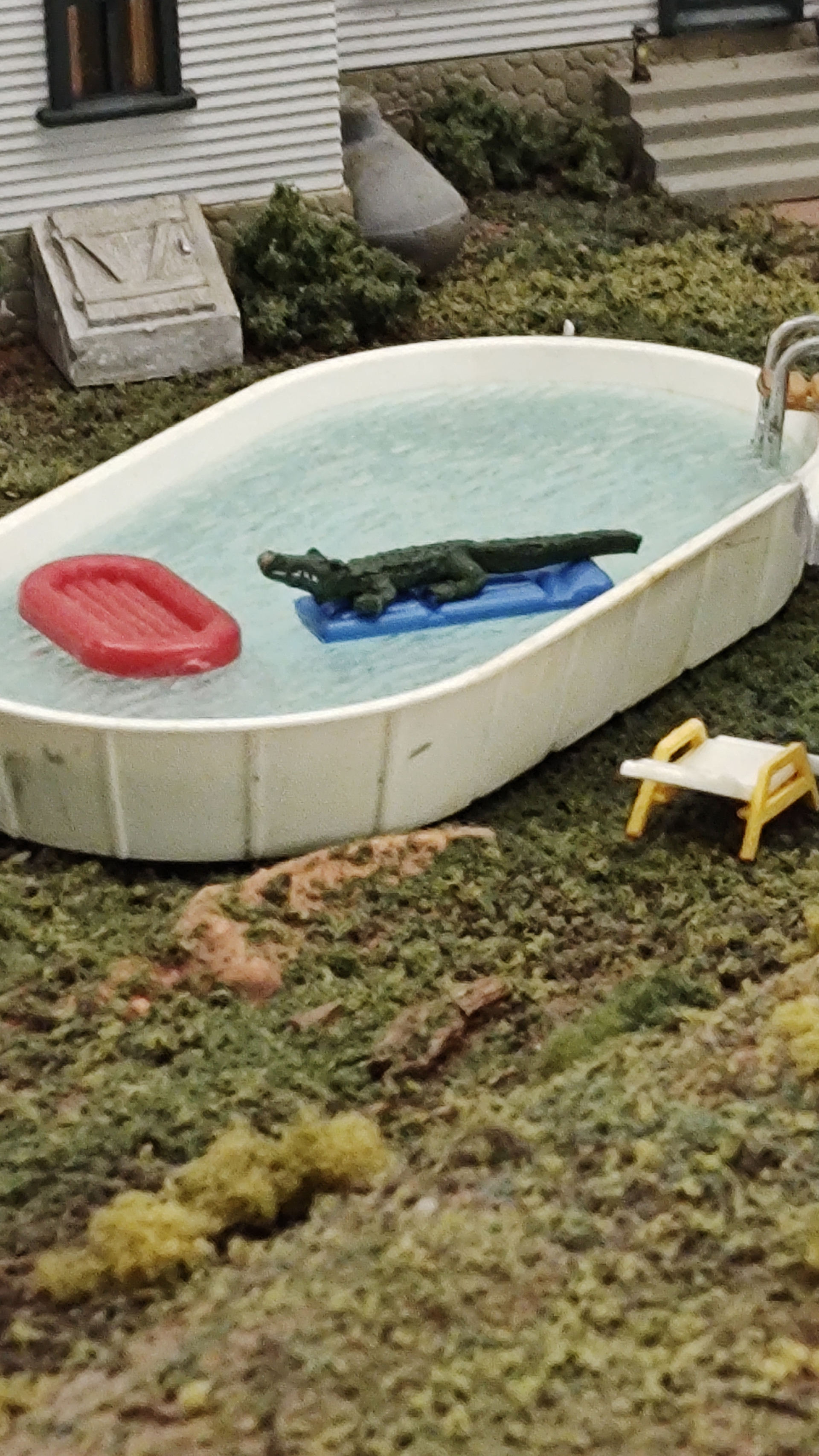
I was at one terminal south of New Orleans where the sign on the bunkhouse door warned us to carry a flashlight at night to look for alligators. I never saw any in the yard myself.
I got to thinking about the importance in history of the DC-3. It really had three distinct periods, in all of which it was the most important bird flying.
First was its record breaking prewar service putting the airlines on a profitable basis and greatly increasing air traffic with its speed, safety & comfort.
Second was its military service in WW2 described by Eisenhower as one of the indispensable weapons that helped to win the war.
The third area of importance was postwar service. Many surplus C-47s were employed as airliners for years after the war and then in many utility capacities such as hauling freight as our freightdog was.
That’s a record to be proud of.
Paul
2 Likes
Paul, very happy you never had encountered any alligators. I must be careful of them even at a model railroad layout I operate on.

1 Like
Paul, quite right about the impact of the DC-3/C-47. Apparently the Columbian Air Force is still using them with Basler conversions as AC-47s. No doubt others.
No denying it’s indispensability during World War ll. I think even in Korean & Vietnam, with more capable airlift airframes, the C-47/RD4 performed important services. When the post office came out with that campaign about their priority boxes it made me think of C-47s, “If it fits, it ships.”
My friend Stan, the video above, he had a Mooney. He was one of the early pilots hired by Delta after World War ll. I don’t remember the N-number but it was his position in Delta’s pilot pool. That was part of his N-number and he wanted “SB” as the last two alphanumerics, but that registration was already taken. So his Mooney was his position in the company and then some random two letters, i.e., N123SB.
Stan was one of my favorite pilots to fly with. One of the things I really liked about flying with him was that as a member of the nerdaradi, I soaked up that he knew so much about so many things from the past. I started mostly as a flatlander pilot and when flying freight, had to play a lot across mountains. We’d be flying along VFR at night, me wondering if we were high enough, and Stan would tell me where we were based on looking at the ground lights. And he would identify terrain features and elevations, e.g., Mount Mitchell, Clingman’s Dome, and put me at ease. Years later I was able to calm some pilots and air traffic controllers by bringing up that Mount Mitchell is the highest obstacle between the Rocky Mountains (or maybe Guadalupe Peak, Texas, if that’s considered part of the Rockies) and, literally, Europe - stay above Mount Mitchell, you won’t crash. Stan knew this from fly those routes for some 20 years. Many hours of which were in DC-3s.
When I get those rare moments where I can read again, I’m working my way through this.
1 Like
I can only imagine that you over the road truckers had it worse than us. I don’t know if I’ve ever been in a true “truckers’ truck stop” but I stopped at a couple places on I-10 and I-40 out in the Southwest that had me wondering if I needed a secret handshake to get out of there alive.
Not all FBOs were remarkable in a bad way. There was a freight operation out of Donaldson Center Airport around Greenville-Spartanburg. I remember that was run by a husband and wife team that looked like they were out of Hollywood. They had many grills and ovens and smokers going 24/7, and you could grab steaks, hot dogs, barbecue, cold cuts, whatever you wanted. If I recall, it was either complementary or for a token feed. The actual lounge was probably nothing remarkable but with that kind of service awaiting hungry and thirsty pilots, who cared? I know it was definitely appreciated by all of us. And they had a constant flow of on-demand Part 135 freight charters coming and going. I don’t know if I was still flying in the Golden age of on demand part 135, but if not, I was in the tail end of it. Stan was out of the Air Force before the Berlin airlift from what he heard and seen about it, at Donaldson Center freight operation reminded him of it. They changed the three letter identifier of that airport decades ago to golf Yankee hotel. I can’t stretch out of my memory the avenue Merrick former identifier. Not that it matters. It is always a great place to fly into.
Other FBOs ran the gamut of culture, comfort, and atmosphere. I recall that every time I went into the FBO at Toledo Metcalf airport, the pilots lounge always had a porno playing on the tv. Others had walls festooned with photographs of the airports mission during World War ii.
1 Like
More work done on both the DC-2 & 3, but for now we will take the DC-2. I really like this kit, it is in some ways better than the Airfix DC-3 in other places, not so much. Overall, it is very good for being “limited run.”
The fit of the wings to the fuselage was excellent, not perfect but far better than I expected. The weights in the fuselage with the bottle caps under the wingtips as shown previously worked great. It narrowed the gap to the point where I decided I could live with it.
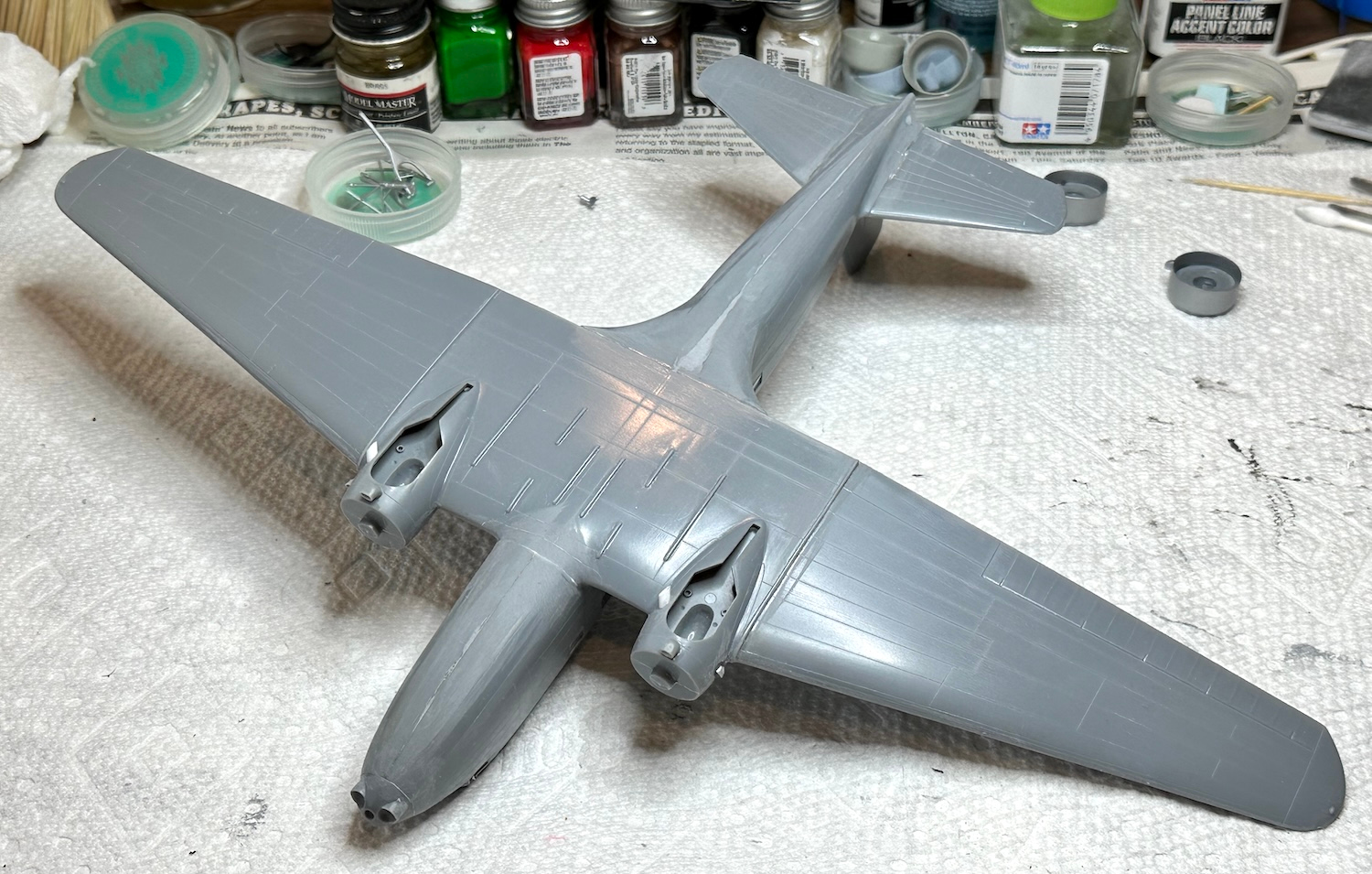
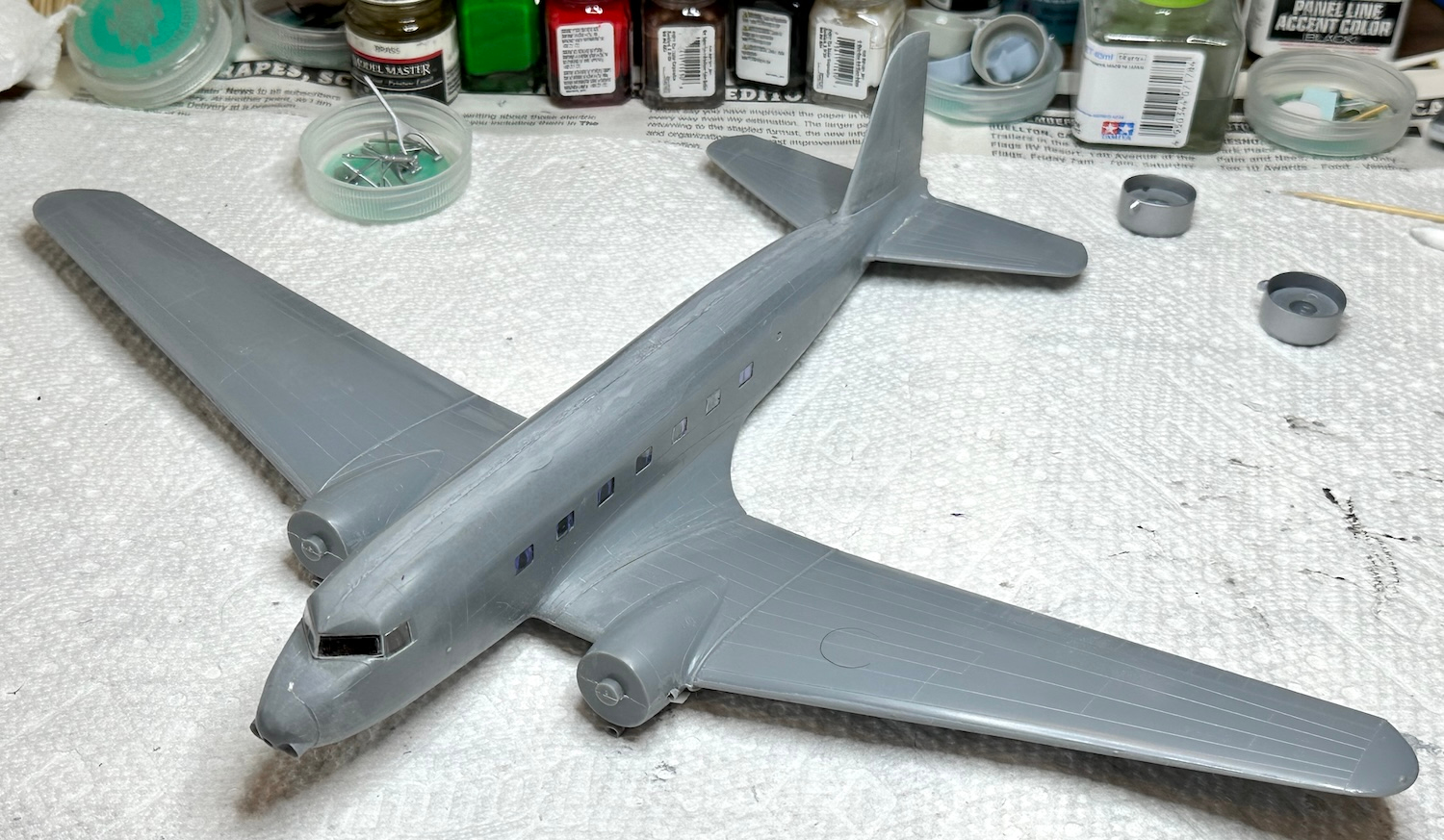
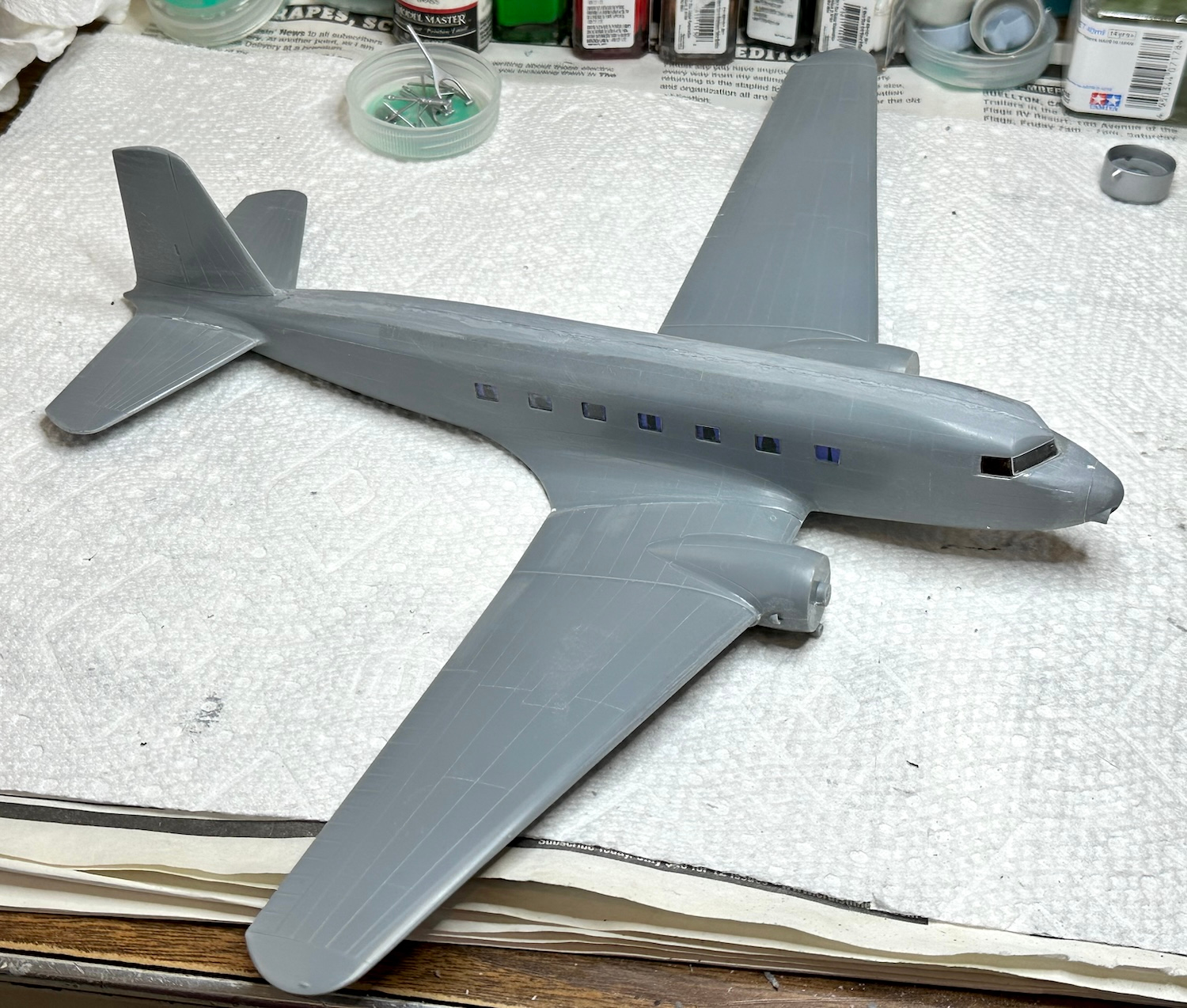
Not so with the fuselage spine. There the warped halves wanted filling and sanding, several applications. With all that wet putty on in places it was only a matter of time before my big fat fingers found a spot of putty and reapplied it elsewhere where it was not wanted. In this case, right on the starboard passenger windows. Oh the swearing when I saw what I had done! Being a quick witted fellow (HAW!) I moistened a Q-Tip with lacquer thinner and wiped as much off as I could get QUICKLY. I knew it would craze the clear plastic & it did. At least I got most of it off.
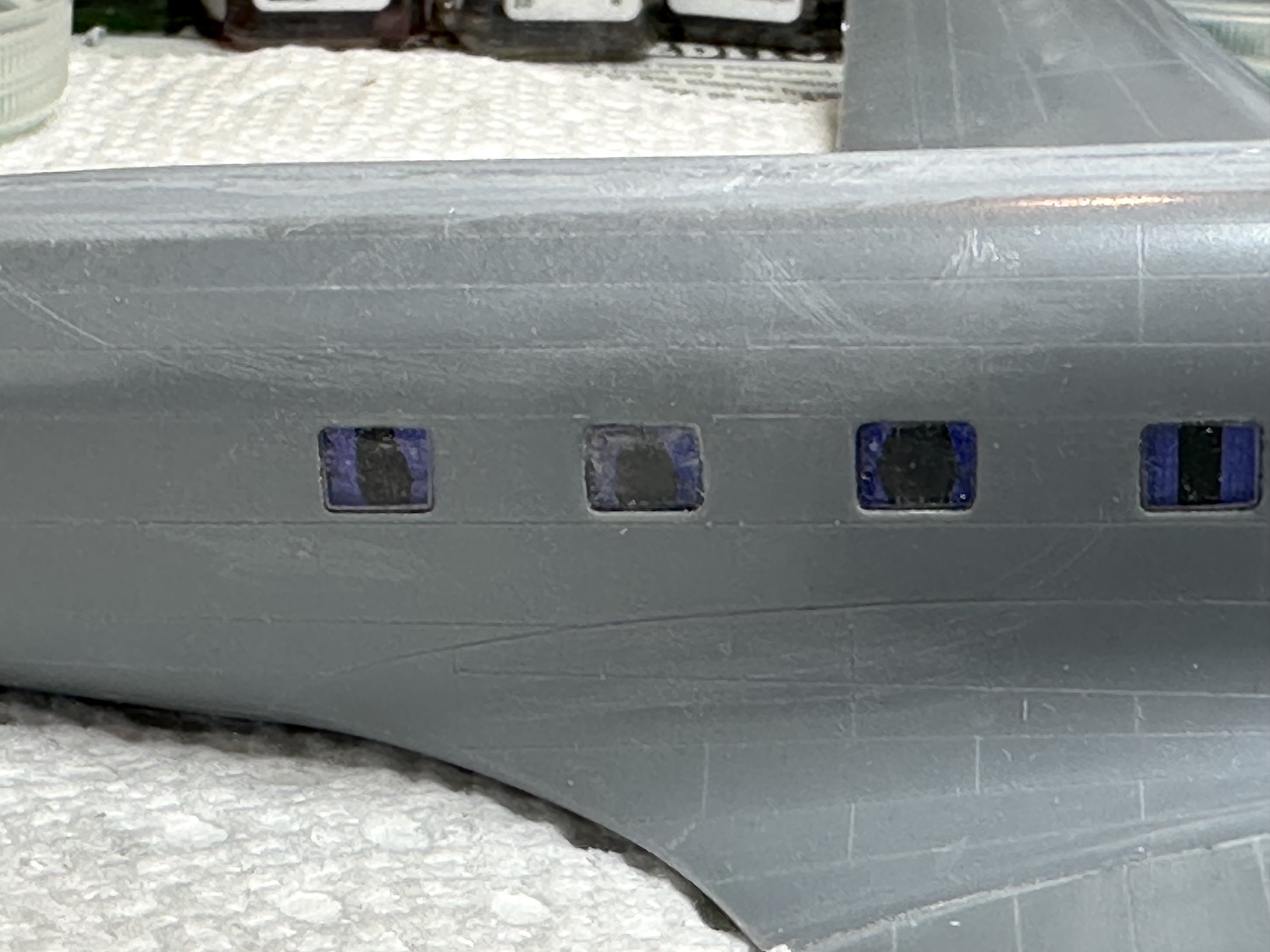
After that I tried various sanding pads and sticks and worked my way from 400 grit down to 2000 grit. Of course, the kit windows were recessed into the gap and so nothing I had could really get at the whole area. It was better than before. Next came three heavy applications of Future and now they look somewhat happier than before.
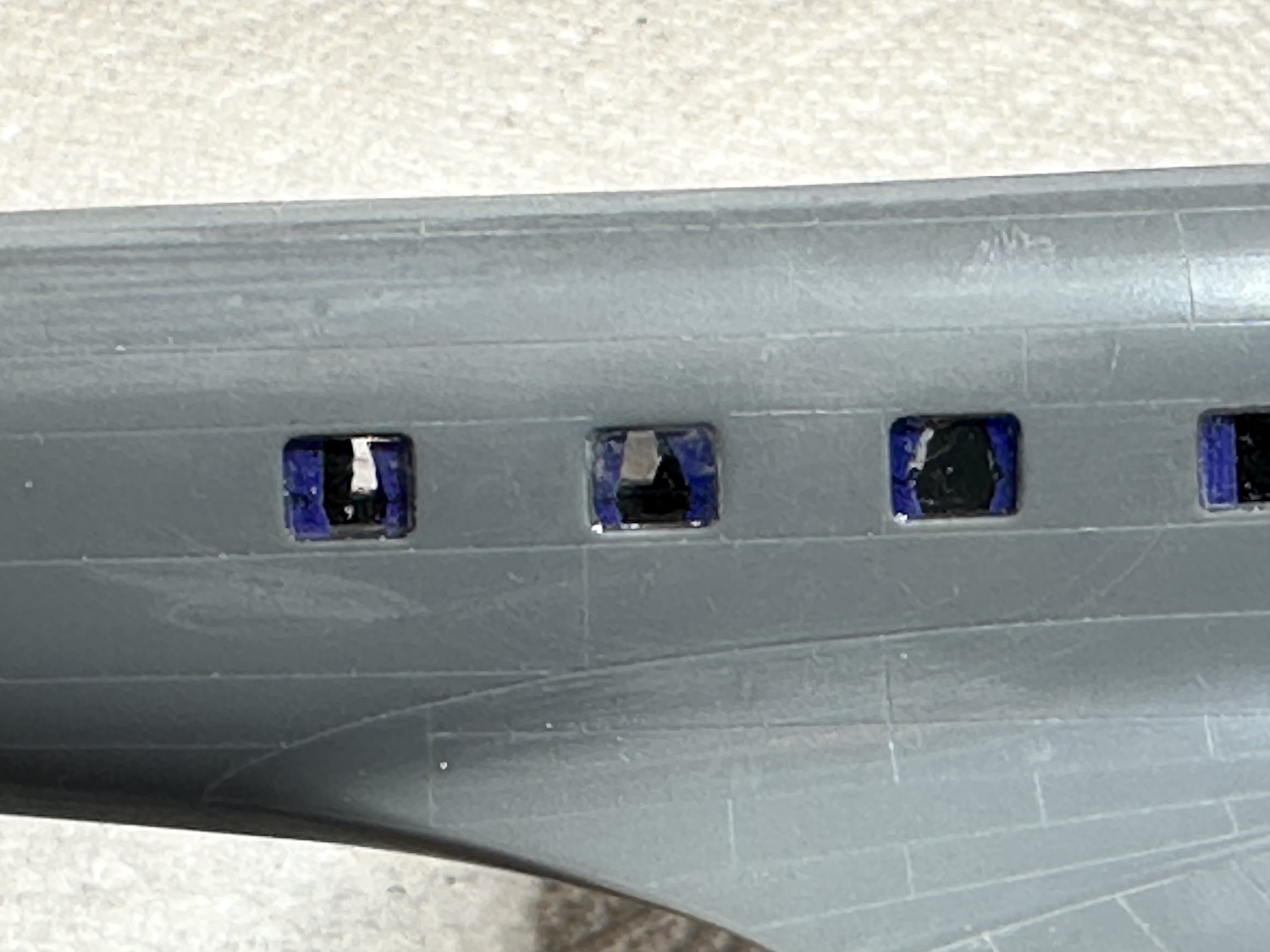
While all of this was going on, the cowls were modified by adding bits of cut plastic card to create that distinctive upper lip. This too need some putty & sanding. Then the issue of the engine location needed to be addressed. MPM provided a perfect coffin corner by making the front of the nacelles a perfect fit to the rear of the engines. Doing so set the motors well back in the cowls which not only looks wrong but mounting them there would not allow the propeller shafts to reach them. The engines needed to be mounted very close to the front of the nacelles but not all the way forward. Some sort of distance piece would be needed. I used .030 lead wire glued around the inside lip of the cowl and that worked well except that I forgot to hipe the gap between the two ends of the wire behind the lip. Oh well, it look pretty good anyway.
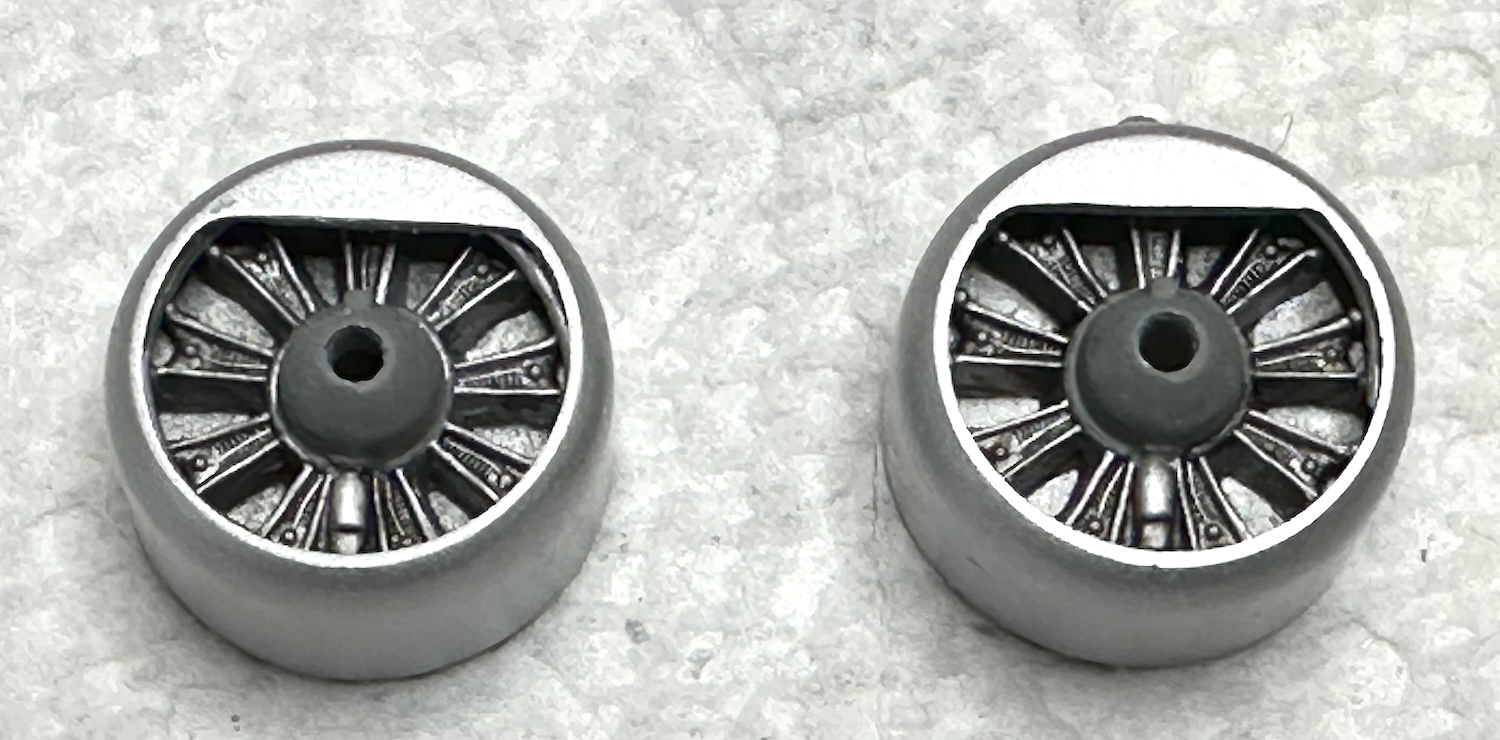
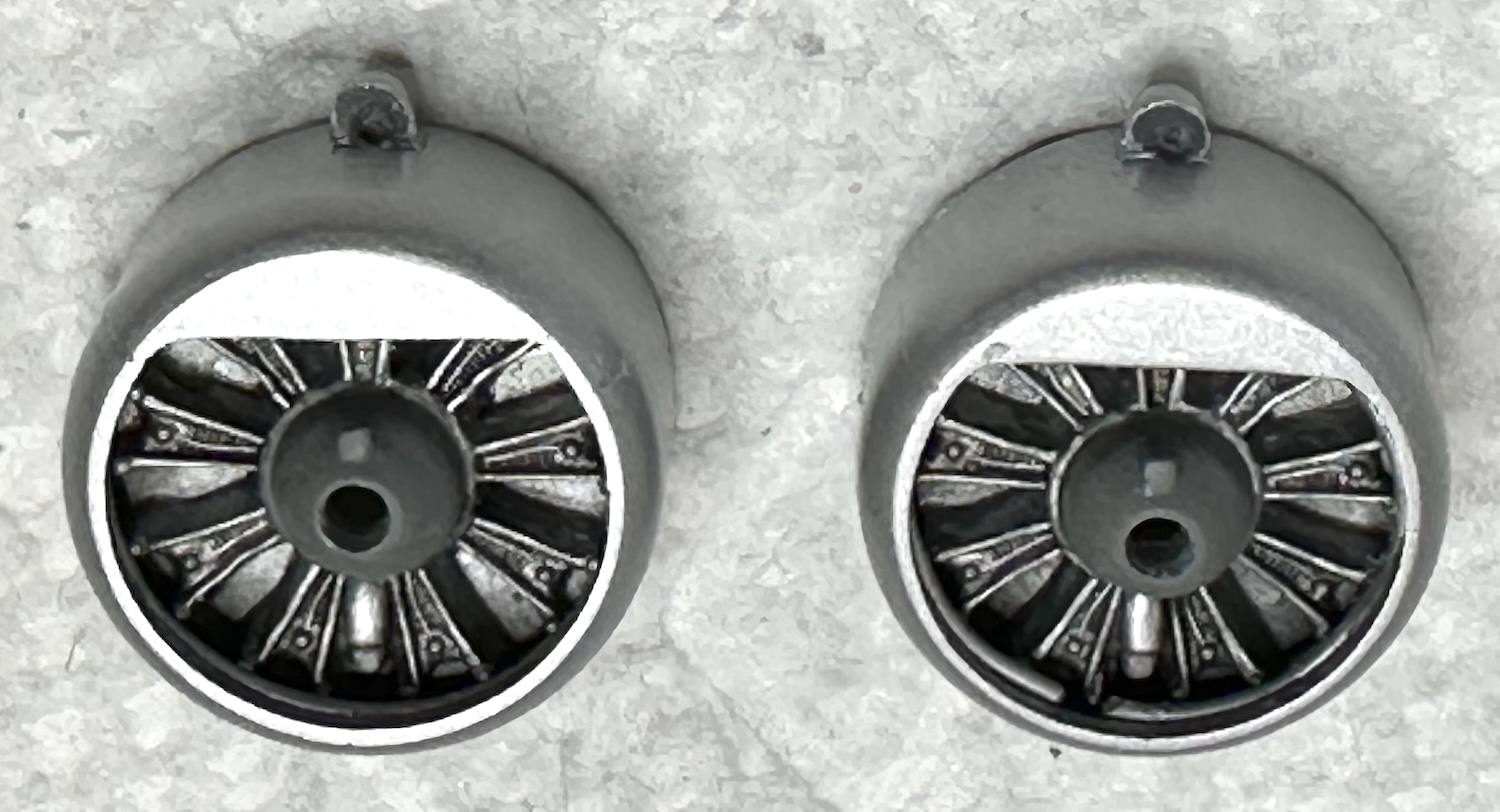
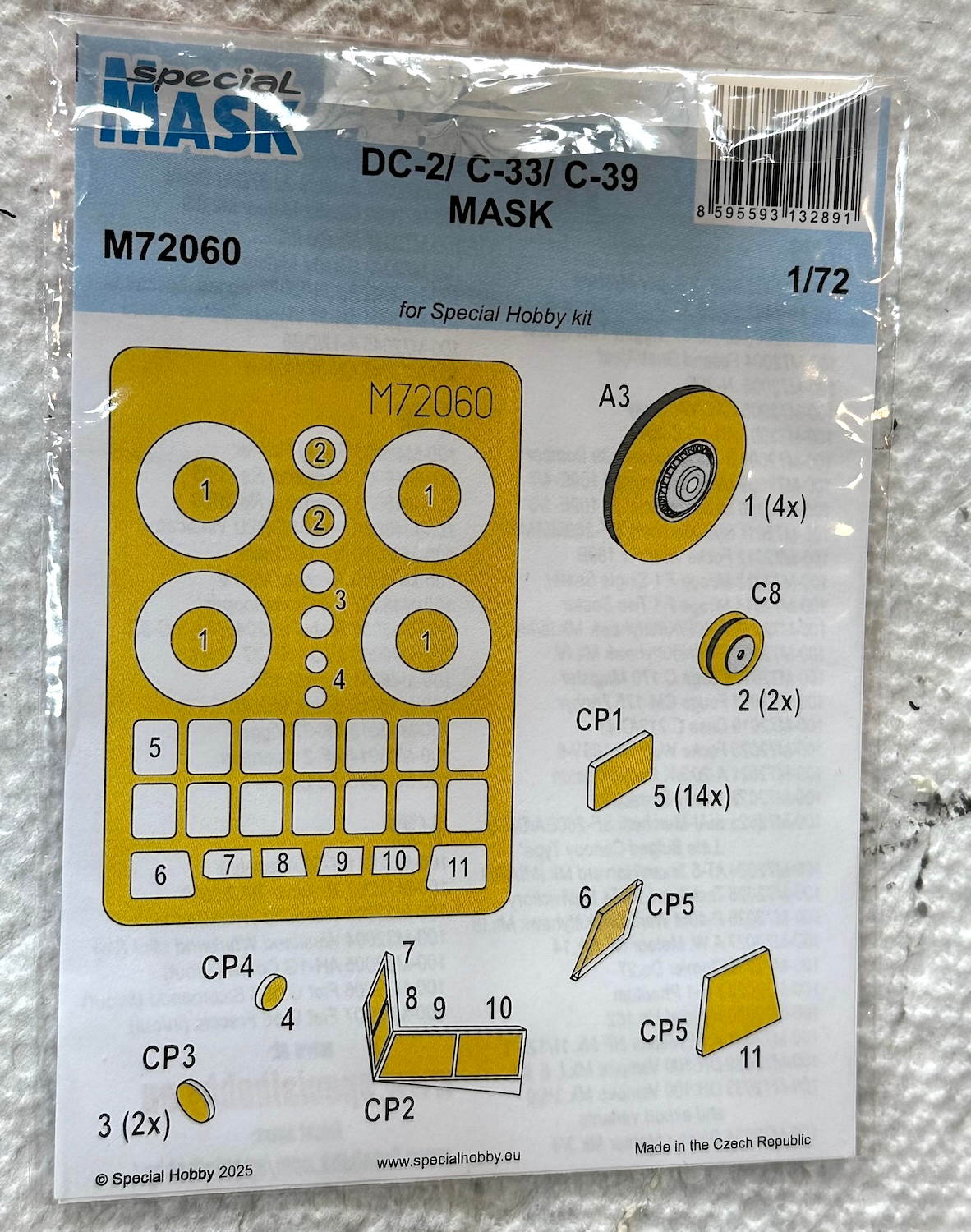
After more putting & sanding on that fuselage spine it was time for some primer to see where we were at. I used the Special Hobby masks bought from their website and found them very easy to work with. I will order more of these for other kits. Of course, the proof of the mask will be when they are peeled off and we see if they really sealed.
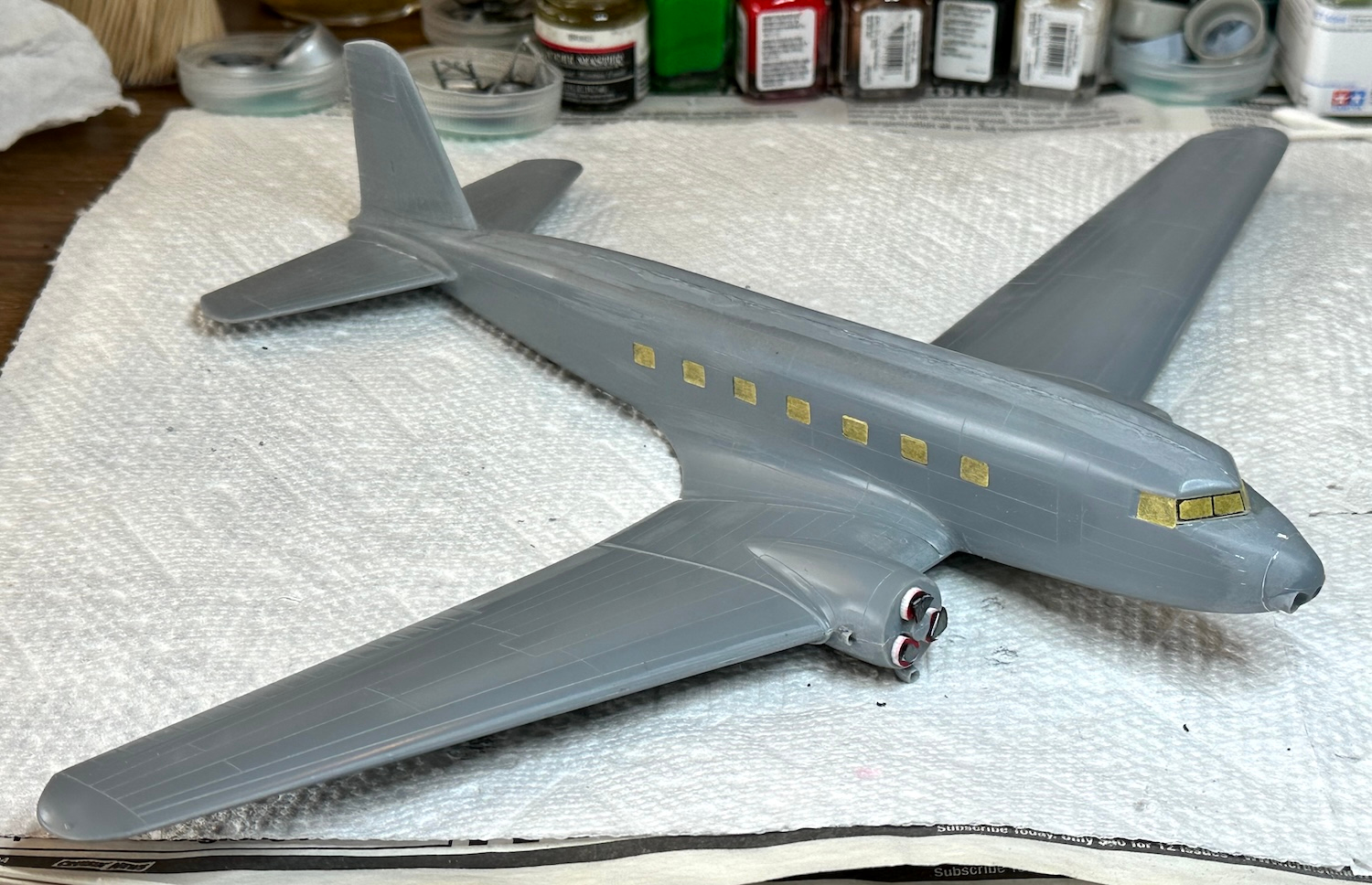
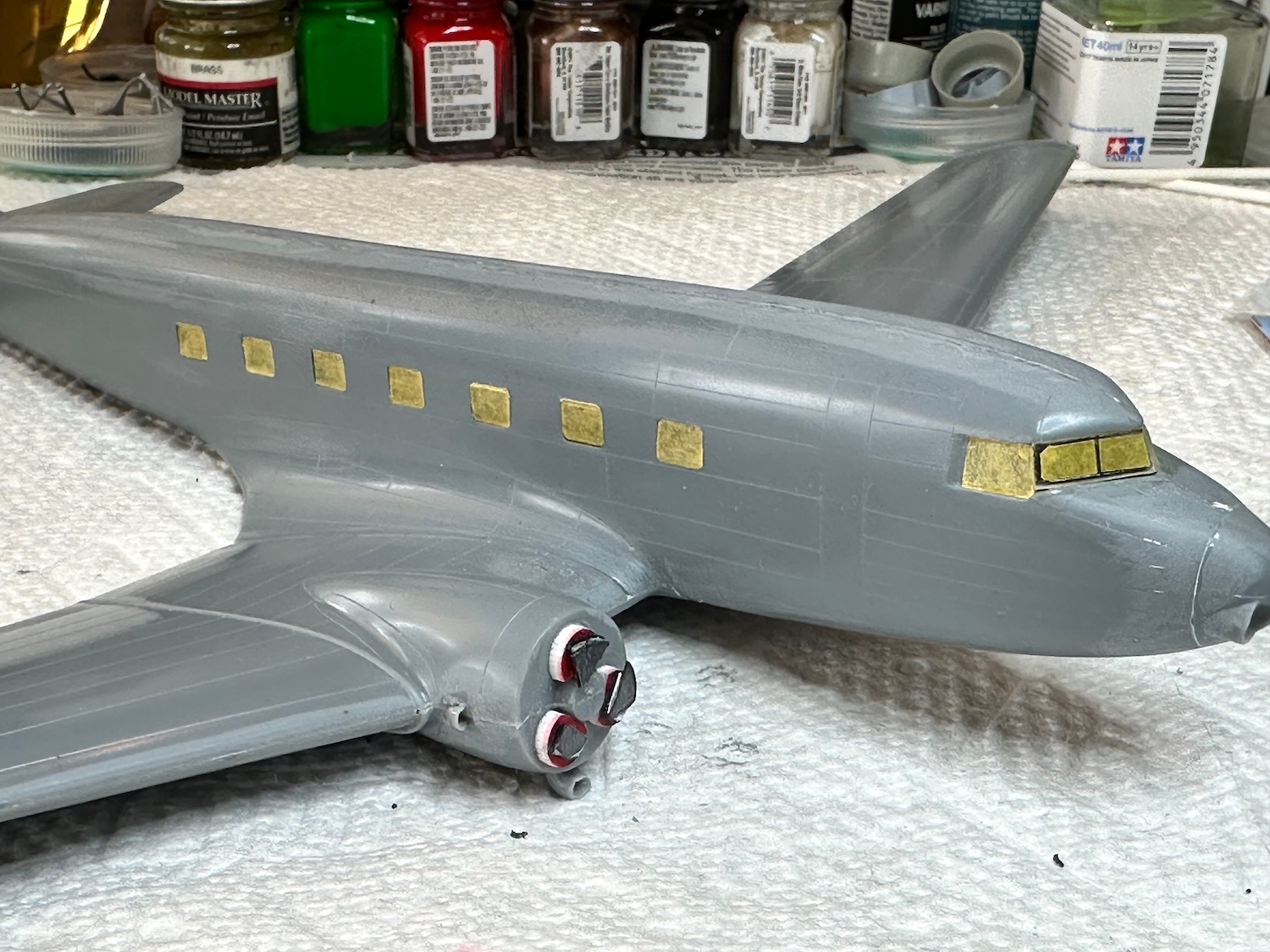
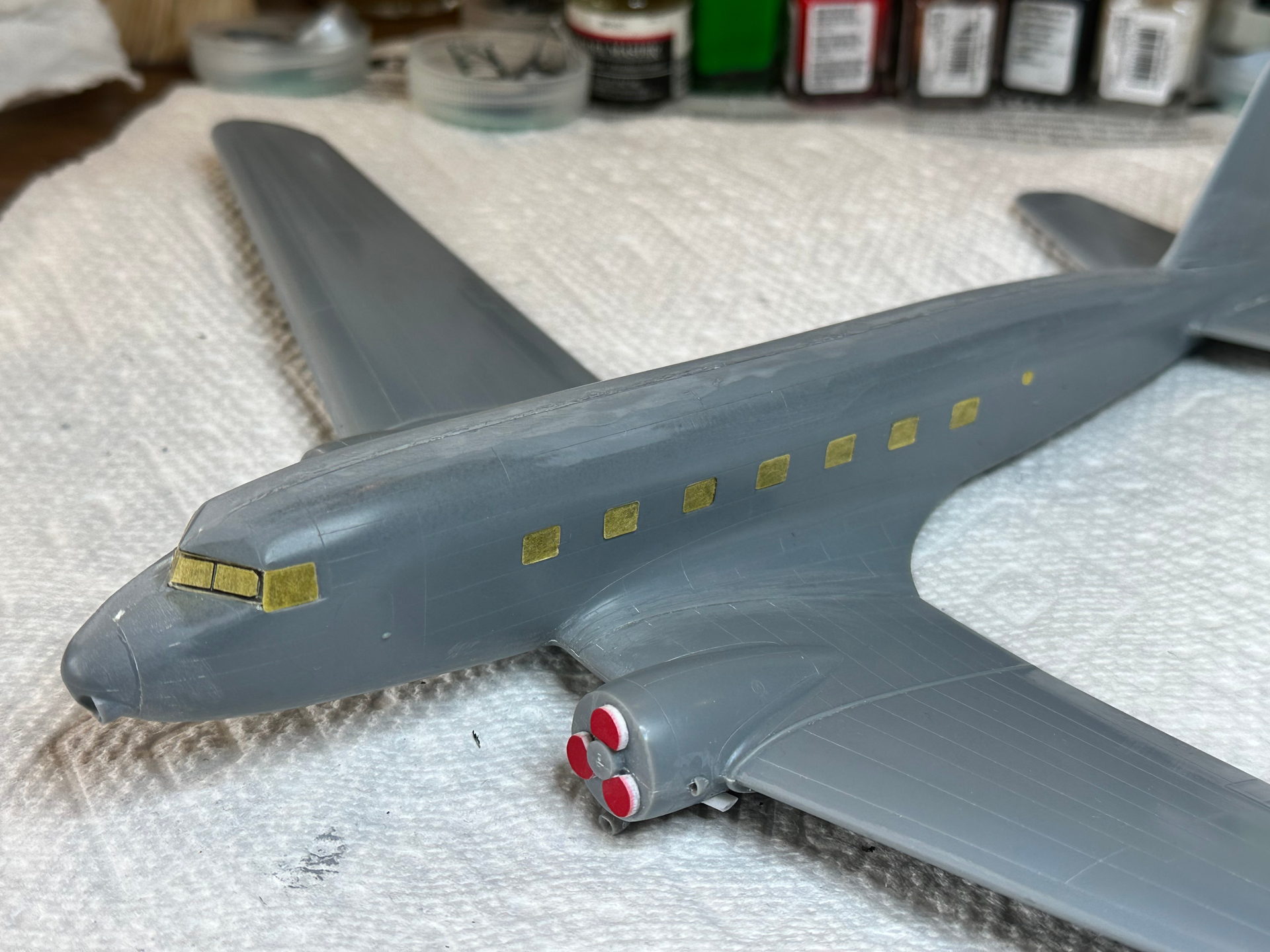
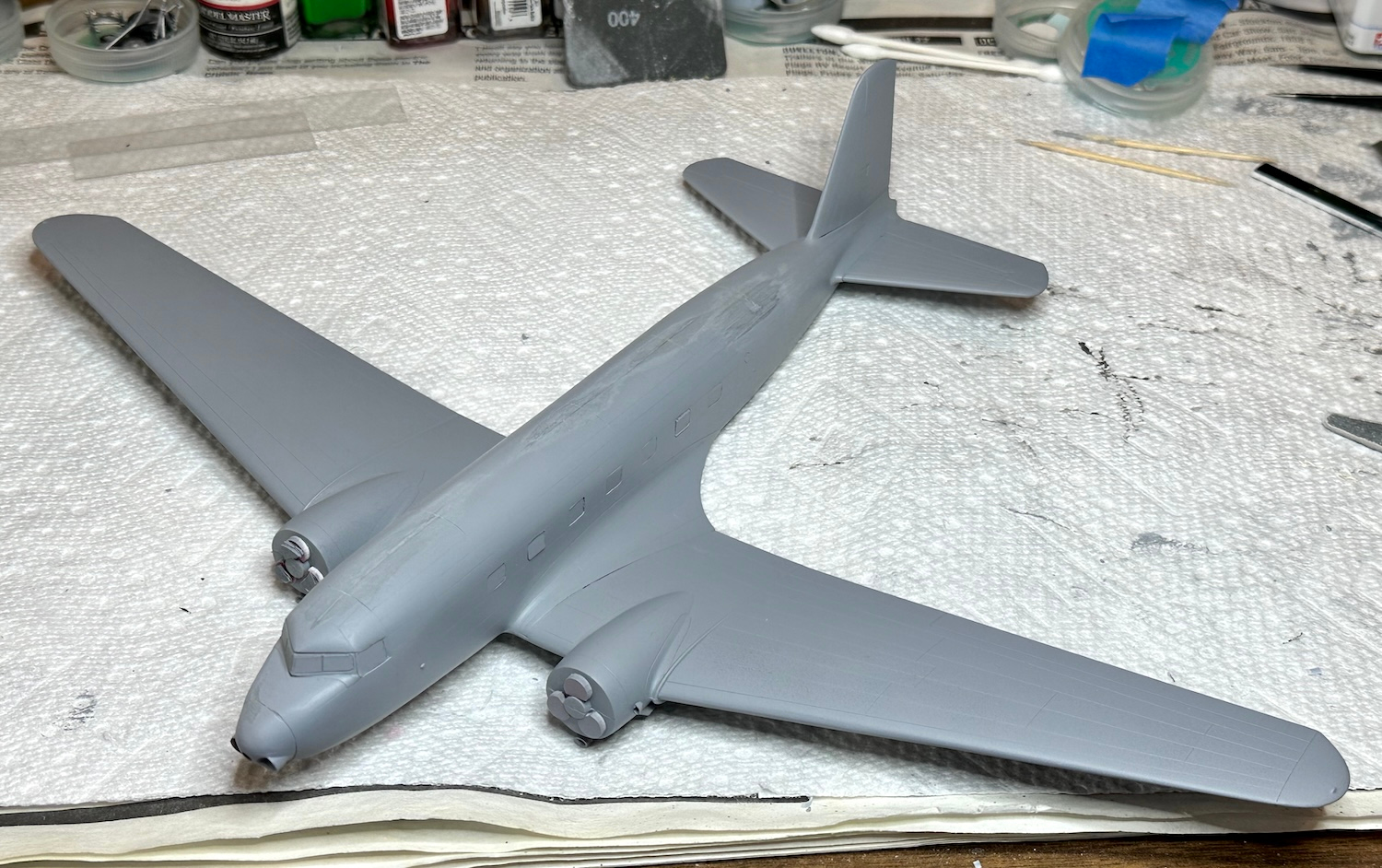
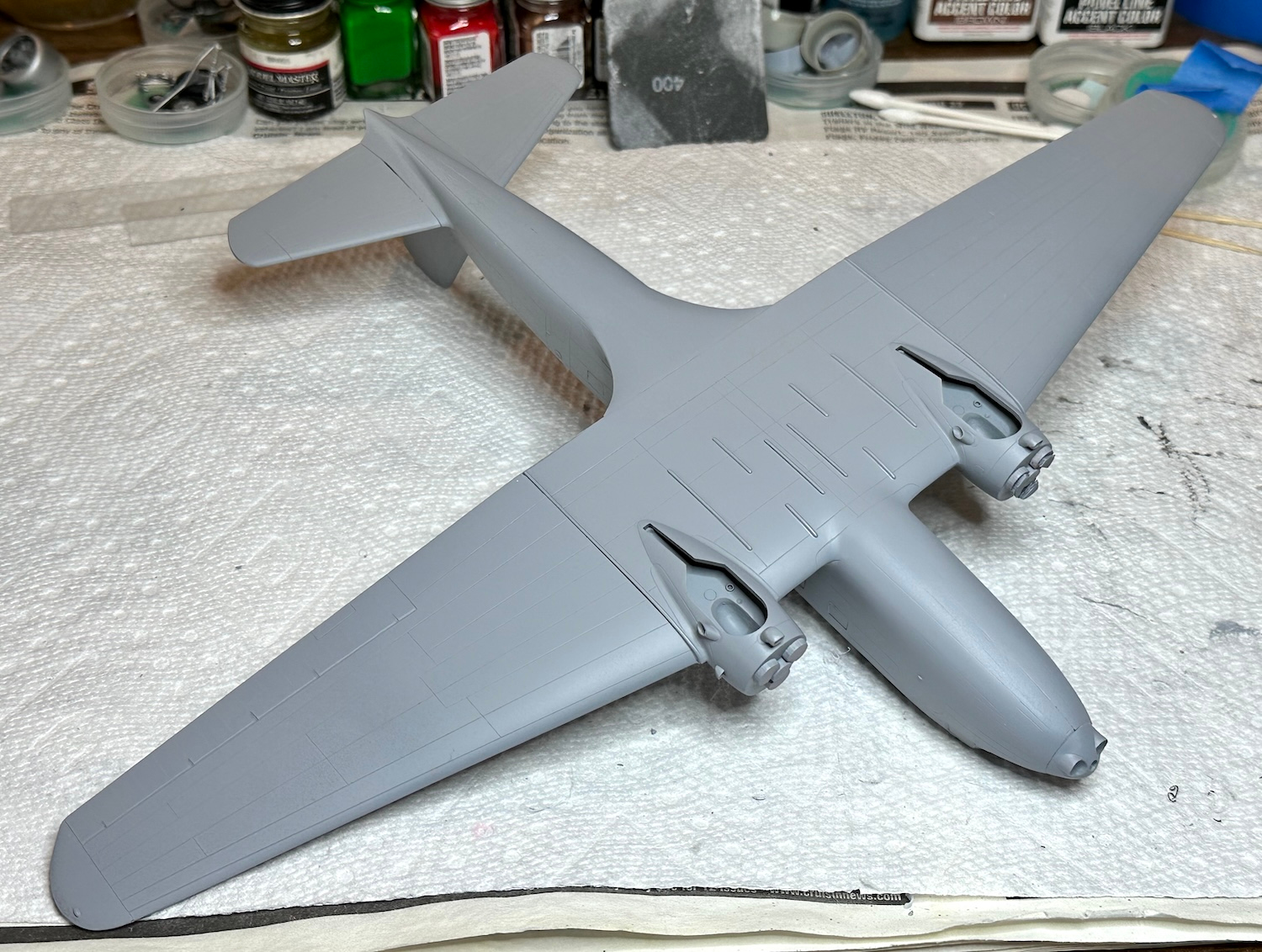
I added plastic spacers to the firewall area to mount the engine/cowling assemblies but this may still want some adjustment.
Paul
4 Likes
Anybody want to model a DC-2 1/2? 