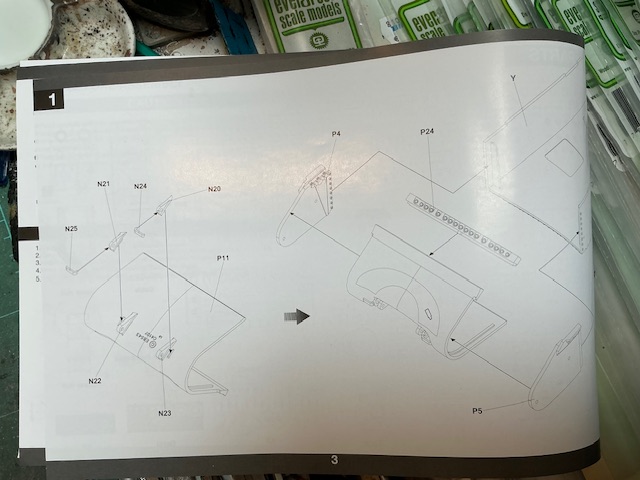
With Churchill almost finished, I find myself in need of a model that’s quick and easy to build, if only to prove to myself that I can complete a model in under a year  About three months ago, I purchased this kit at a model show:
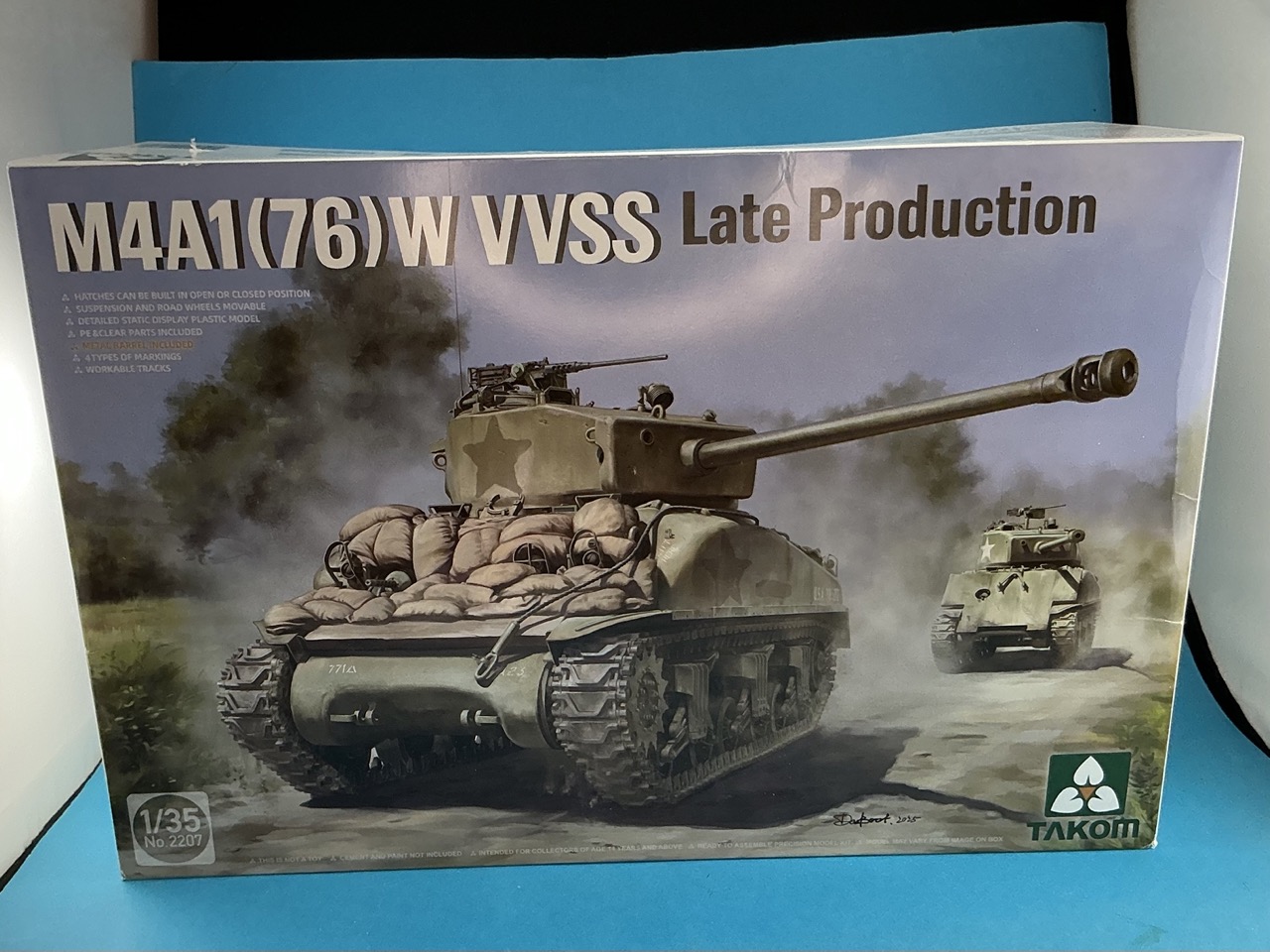
Takom’s brand-new M4A1 (76 mm) VVSS. Considering the general quality of Takom kits, I think it’s a suitable one to build without a lot of hassle. First, though, a look at and in the box. Starting with at, because the first thing you’ll notice is:
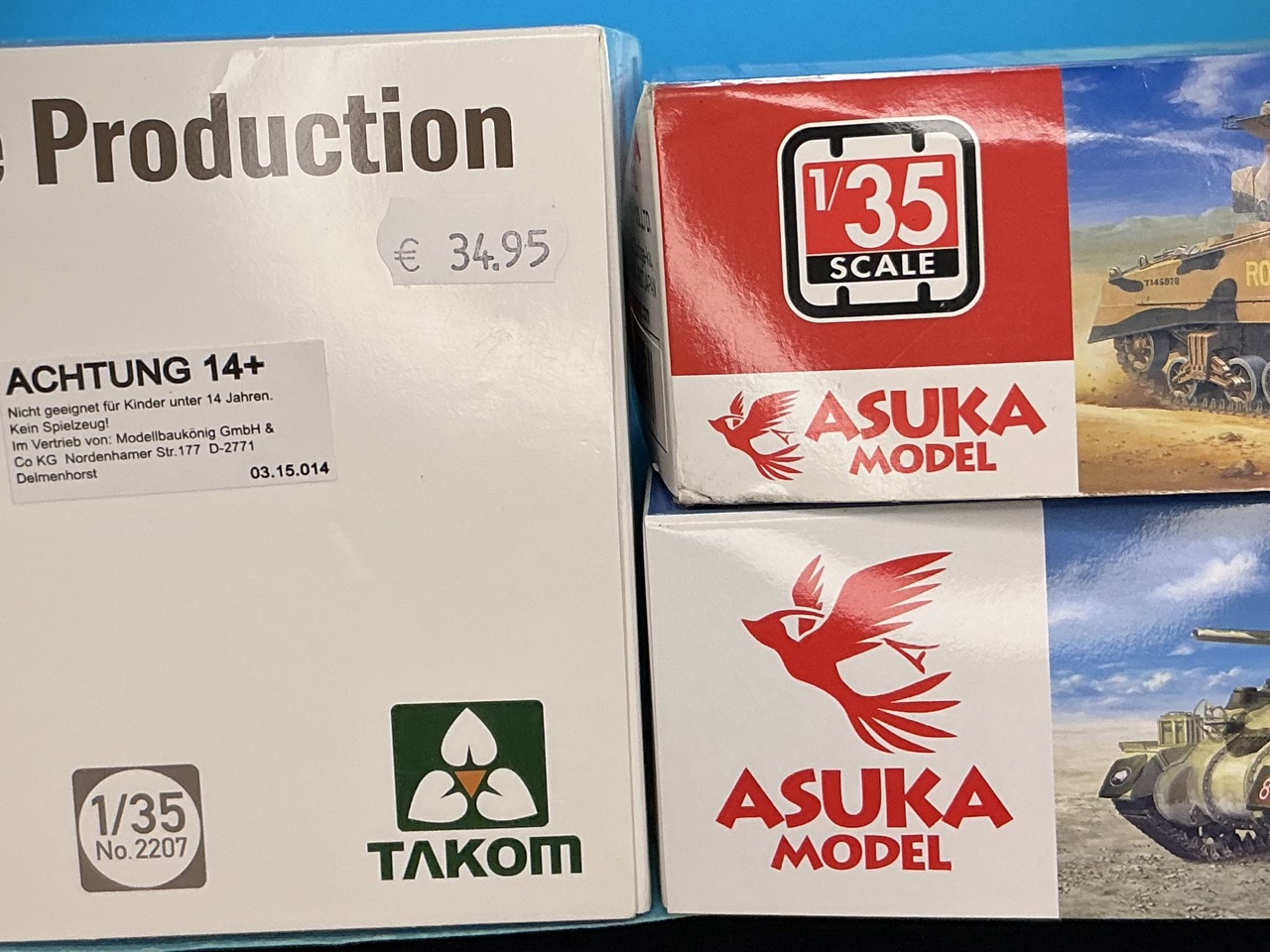
That box is more than twice the depth of an Asuka one, while all of them contain one Sherman … When you open the box, it gives the impression that this is mainly because Takom doesn’t appear to be very good at designing sprues so they fit neatly in a certain size of box, and so just opted for a bigger box. But for that price, you can’t complain: €34.95 is ten to twenty euros less than you pay for an Asuka Sherman around here (depending on the exact version). And as we will see, you’re getting your money’s worth. Largely because of this:
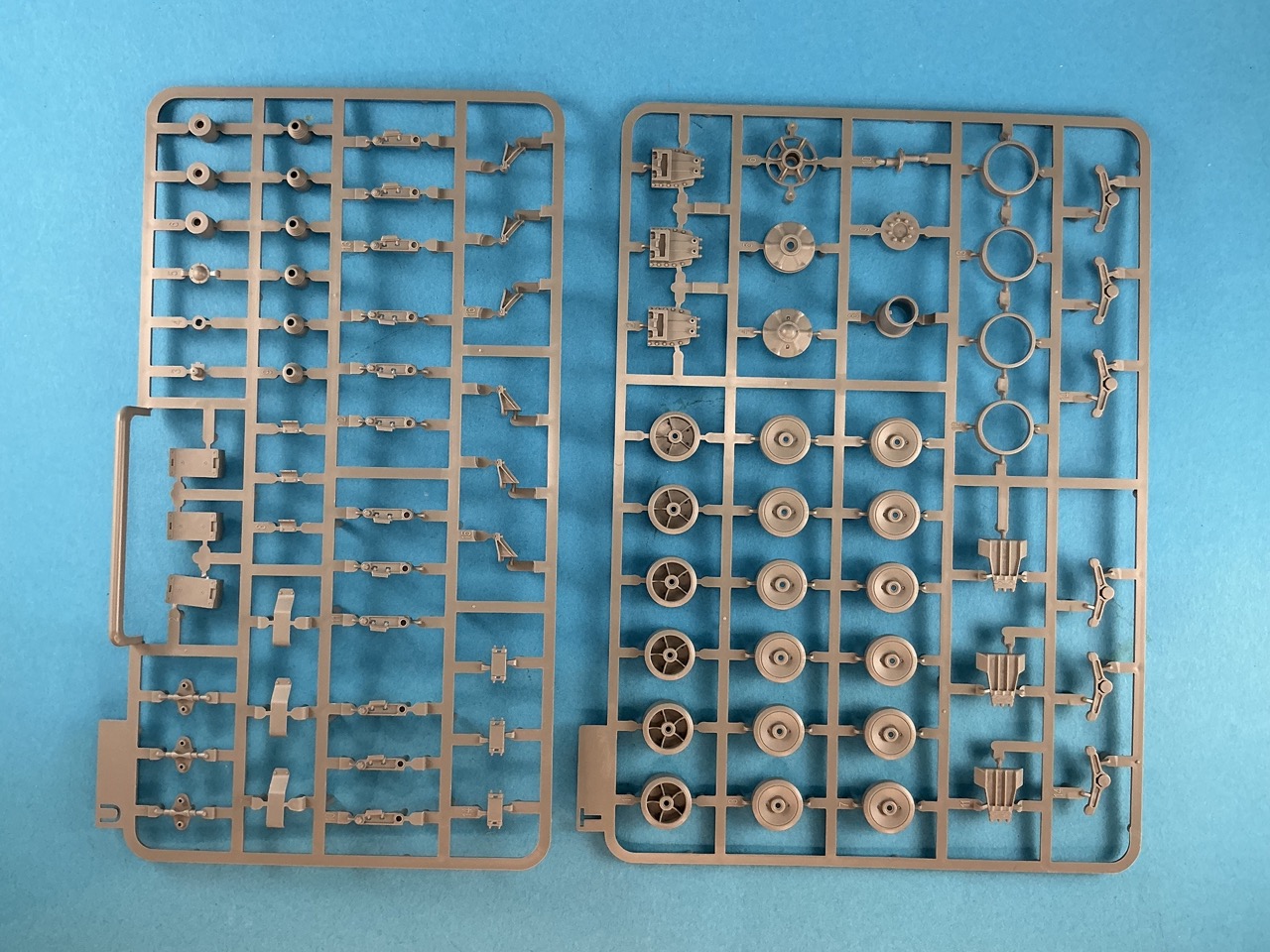
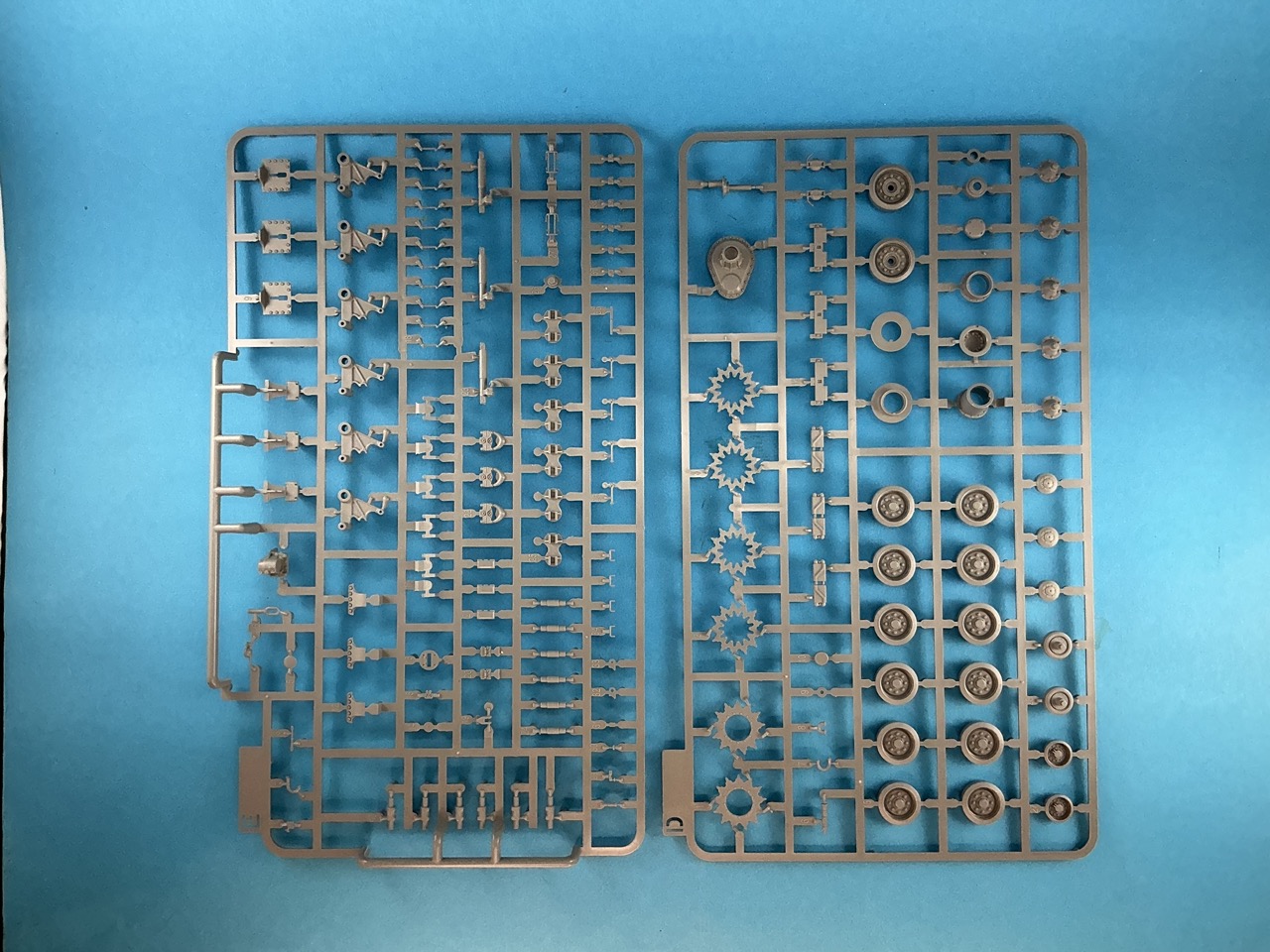
The first photo shows a set of VVSS suspension with two types of wheel (both late types, with larger hubs for stronger ball bearings), the second photo shows a set of HVSS suspension and some extra details (you get two copies of each of these sprues). So, you buy a VVSS Sherman and actually get all the parts you need to make an HVSS Sherman instead — except that the only tracks included are these:

(Times four.) VVSS only, then, not HVSS. But the latter can be bought separately from several different manufacturers, so you can easily use the HVSS bogies for a different model. Now, Takom also has an M4A1 (76 mm) HVSS, which presumably lacks the VVSS sprues. But with a bit better planning, they could have saved this trouble, because it leaves me with the impression that the only reason for those HVSS sprues is because they also include the drive sprockets, periscope flaps, etc.
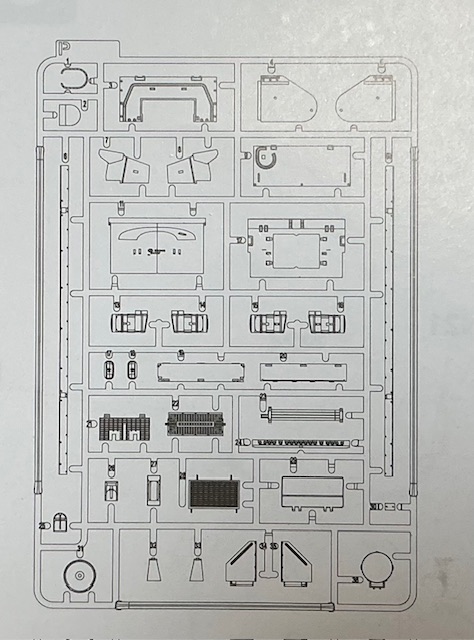
Also noteworthy is that the upper hull is packaged separately with a piece of bubble wrap on it. Here without its plastic bag:

It turns out that the bubble wrap is because of this:

Very good to see that they’re doing their best to prevent those two pins from breaking off. After taking these photos, I put the hull back into its bag with the bubble wrap back on it.
There are also some notable accessories in the kit:
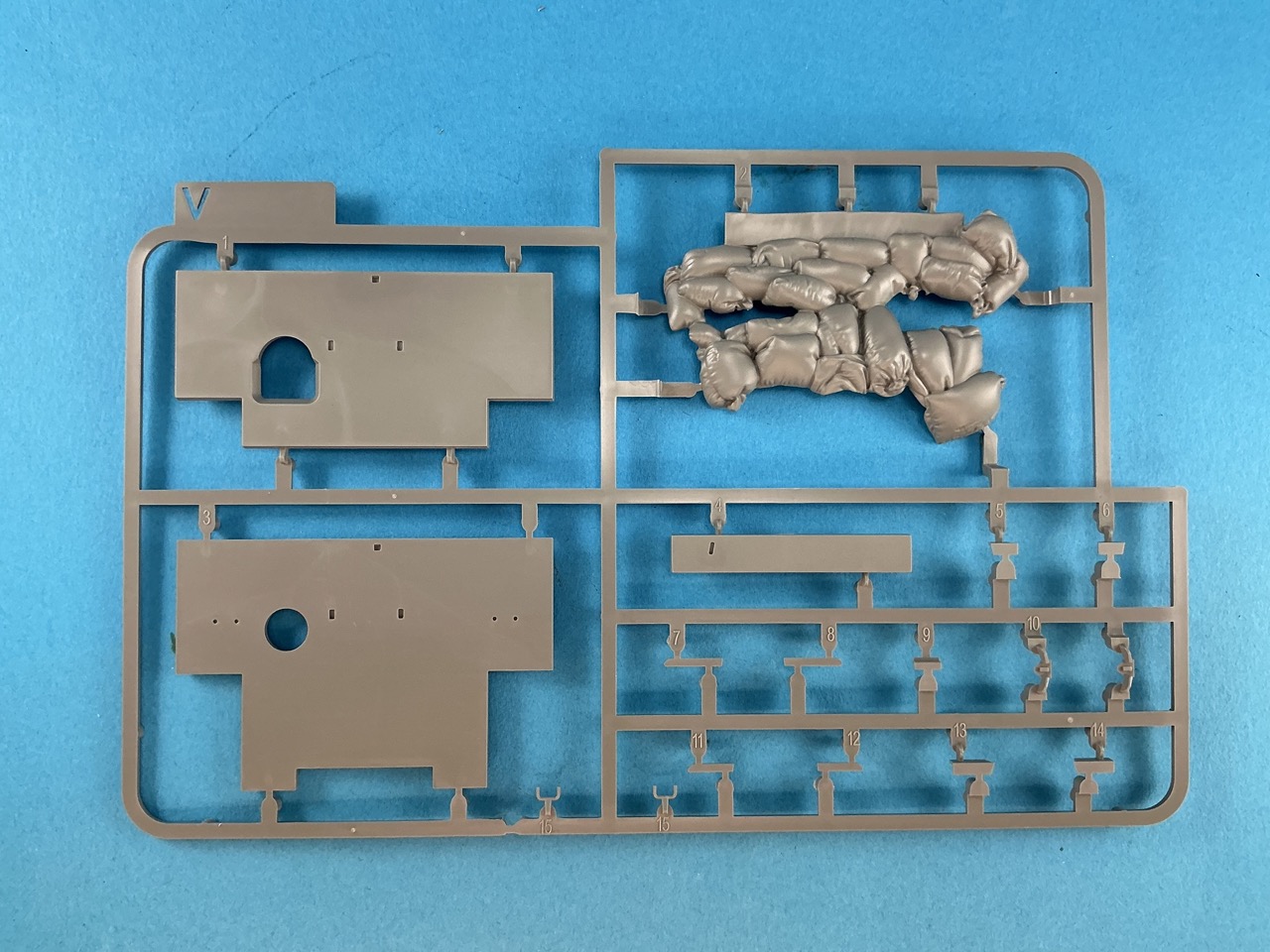
Two diferent extra armour plates and a set of sandbags for the hull front. Of course, you can only use one of these, but I find the sandbags especially noteworthy because you don’t often see this in plastic. I haven’t been able to find the upper of the two armour plates in photos of real Shermans yet, but the bottom one is from a well-known picture of an American tank. Unfortunately, that tank was a slightly different variant than what’s in this kit … The photo of it clearly shows it to have the round, two-piece loader’s hatch while the kit has the later, oval, single-piece hatch (aside from which, on the real tank, the crew had swapped the commander’s and loader’s hatches).
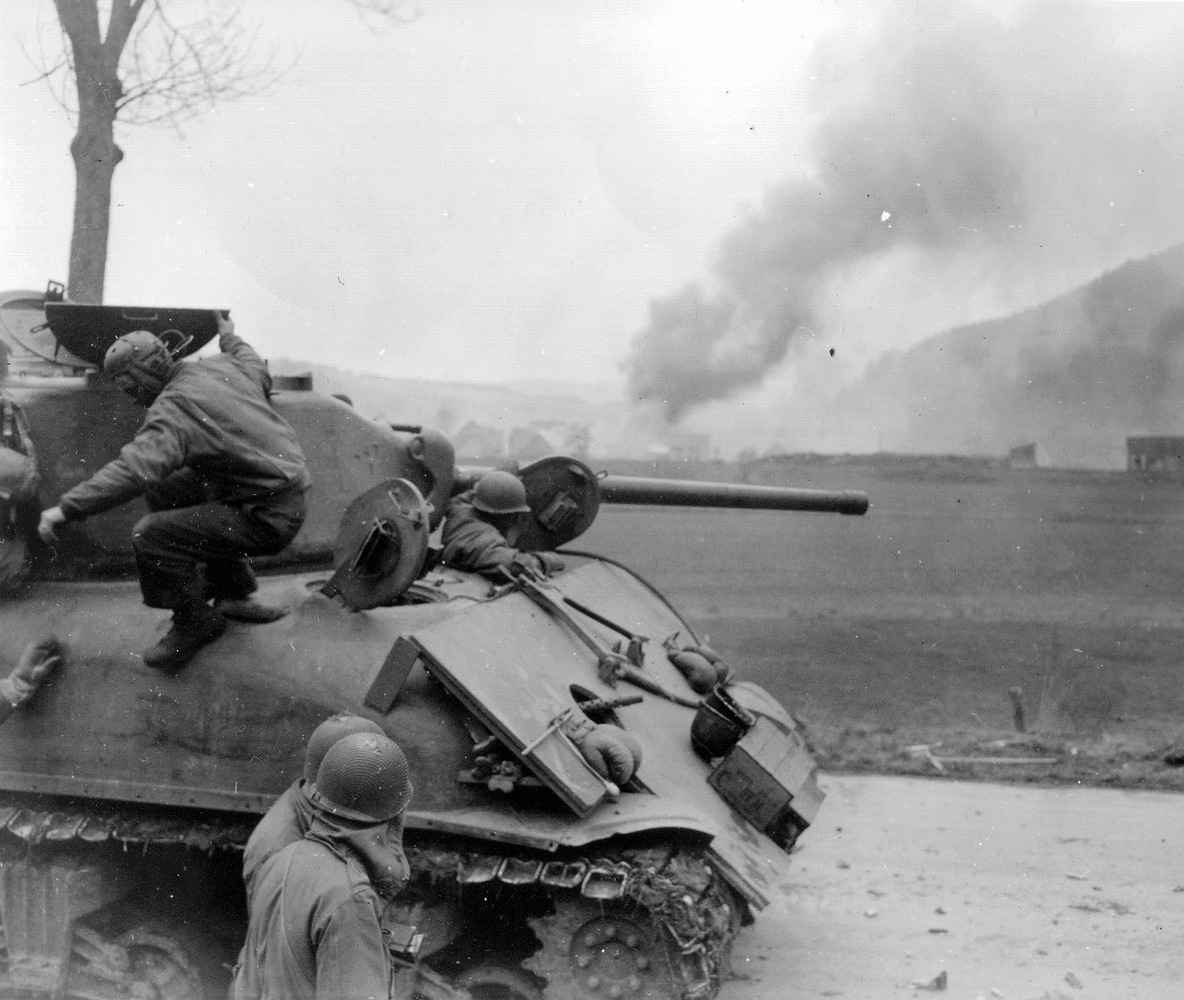
But that’s only relevant if you want it to be for your model, of course  In any case, in addition to all of this you also get an aluminium gun barrel (as well as a plastic one), a copper-wire tow cable and etched parts for things like the headlight guards. What’s more, the kit also has two gun shields: with and without the canvas cover, though the instructions only mention the latter.
A very complete kit, really, and as I mentioned earlier, it also looks like very good value for money.
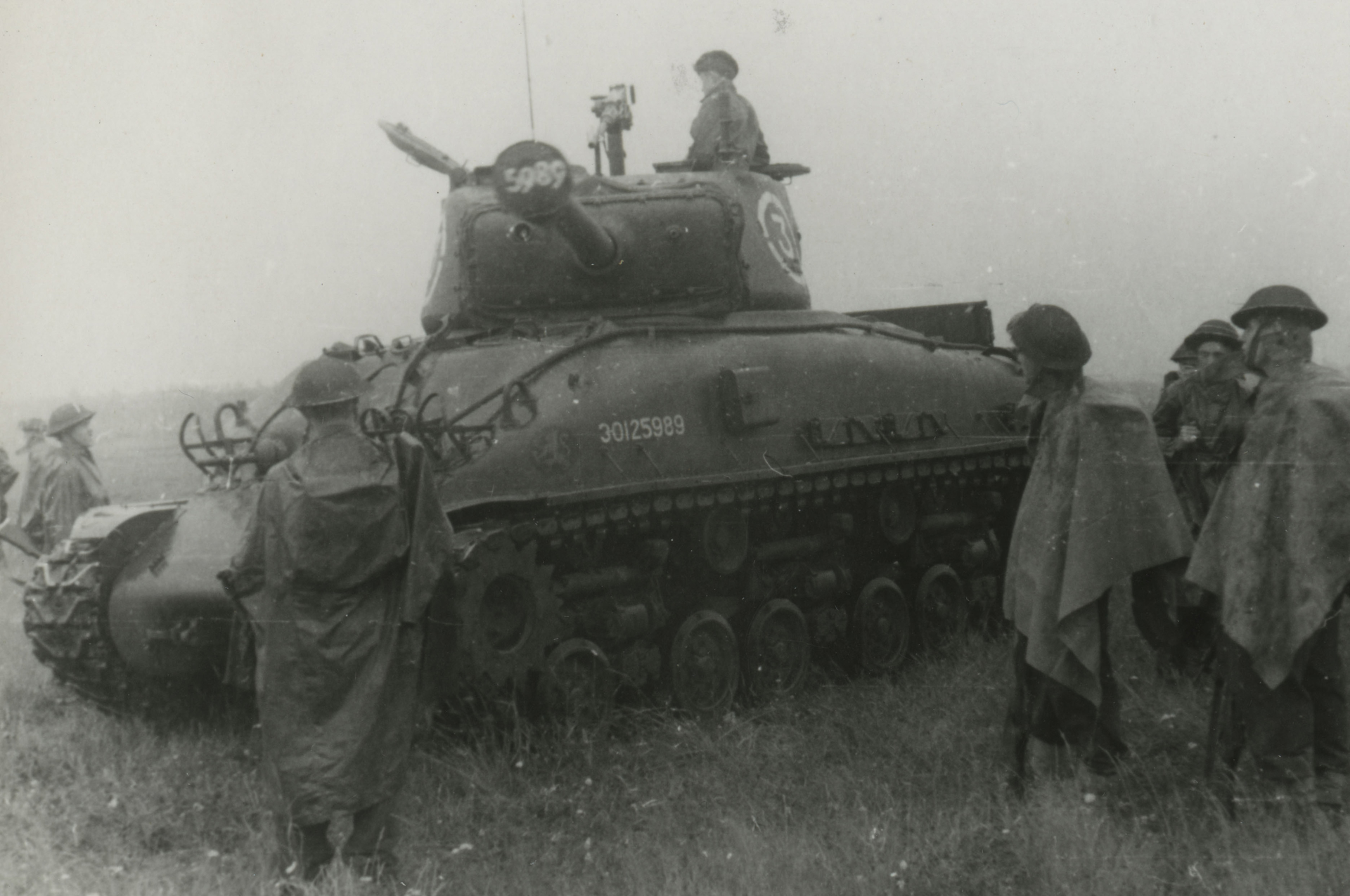
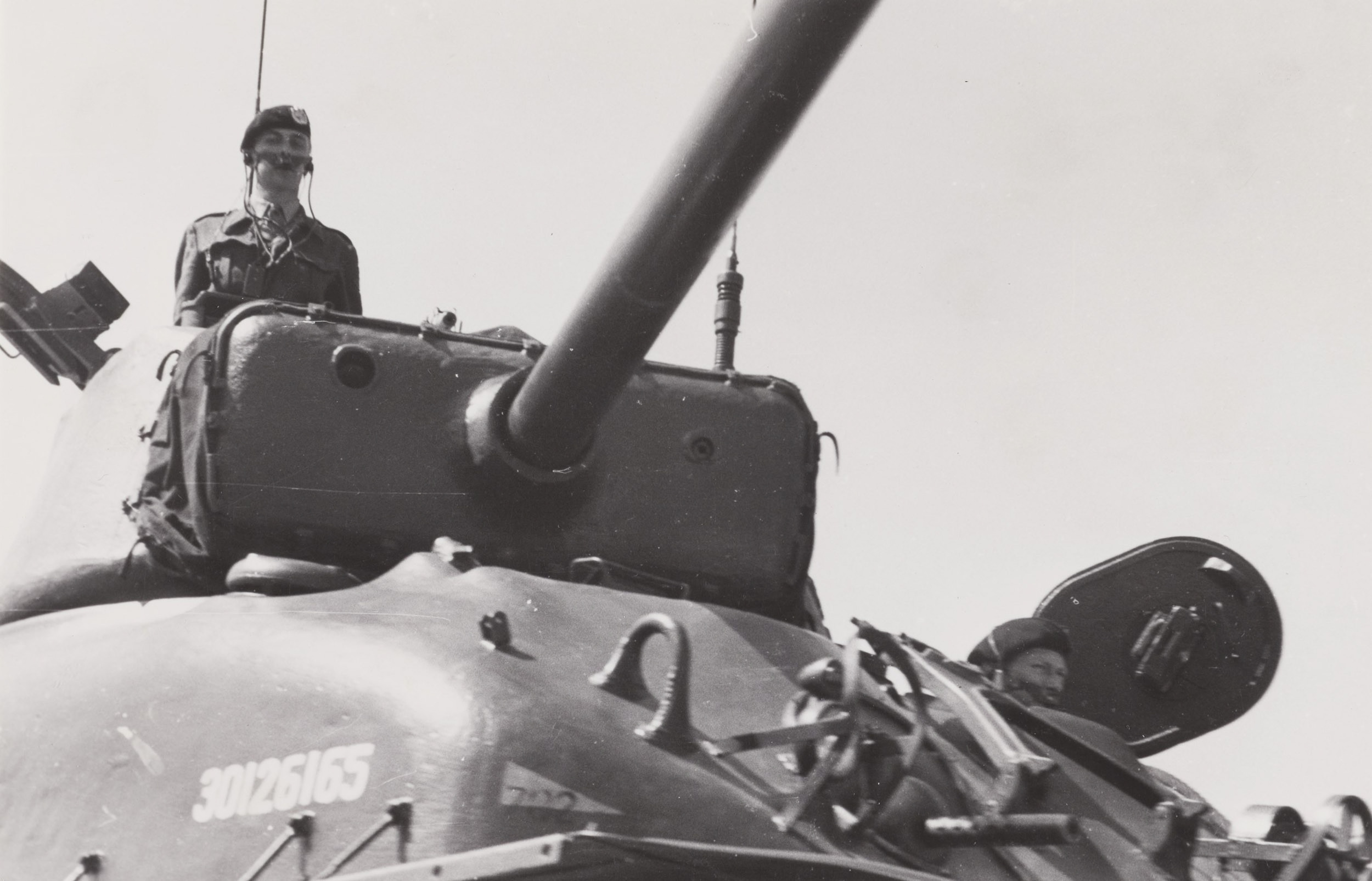
I intend to use this kit to build an M4A1 (76 mm) of the Royal Netherlands Army (Koninklijke Landmacht, lit. “Royal Ground Force”, or KL). This appears to have mainly had HVSS tanks, but also at least some with VVSS, as these photos show:
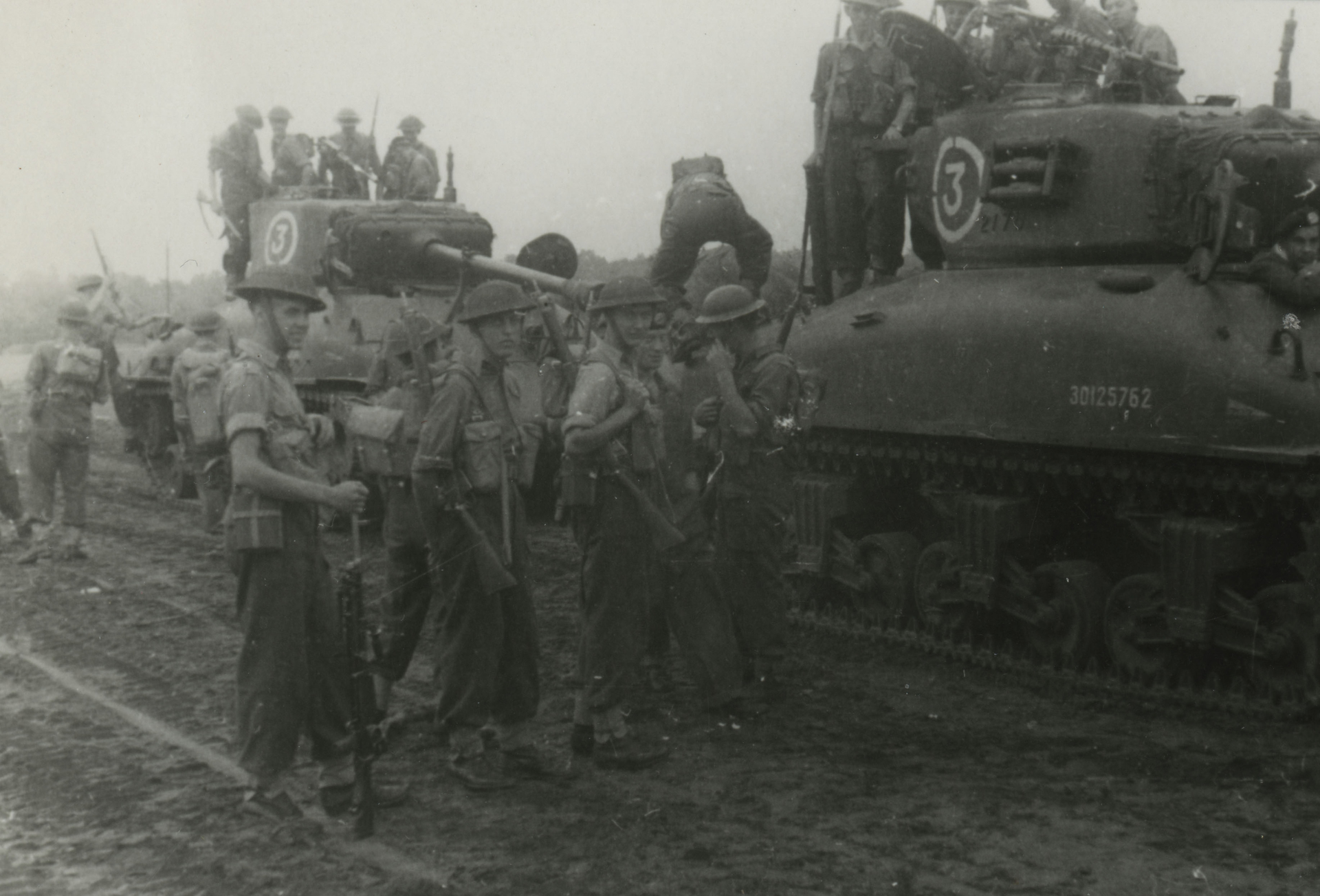
(Source)

(Source)
Here’s that same tank a bit closer, cropped from the photo above:
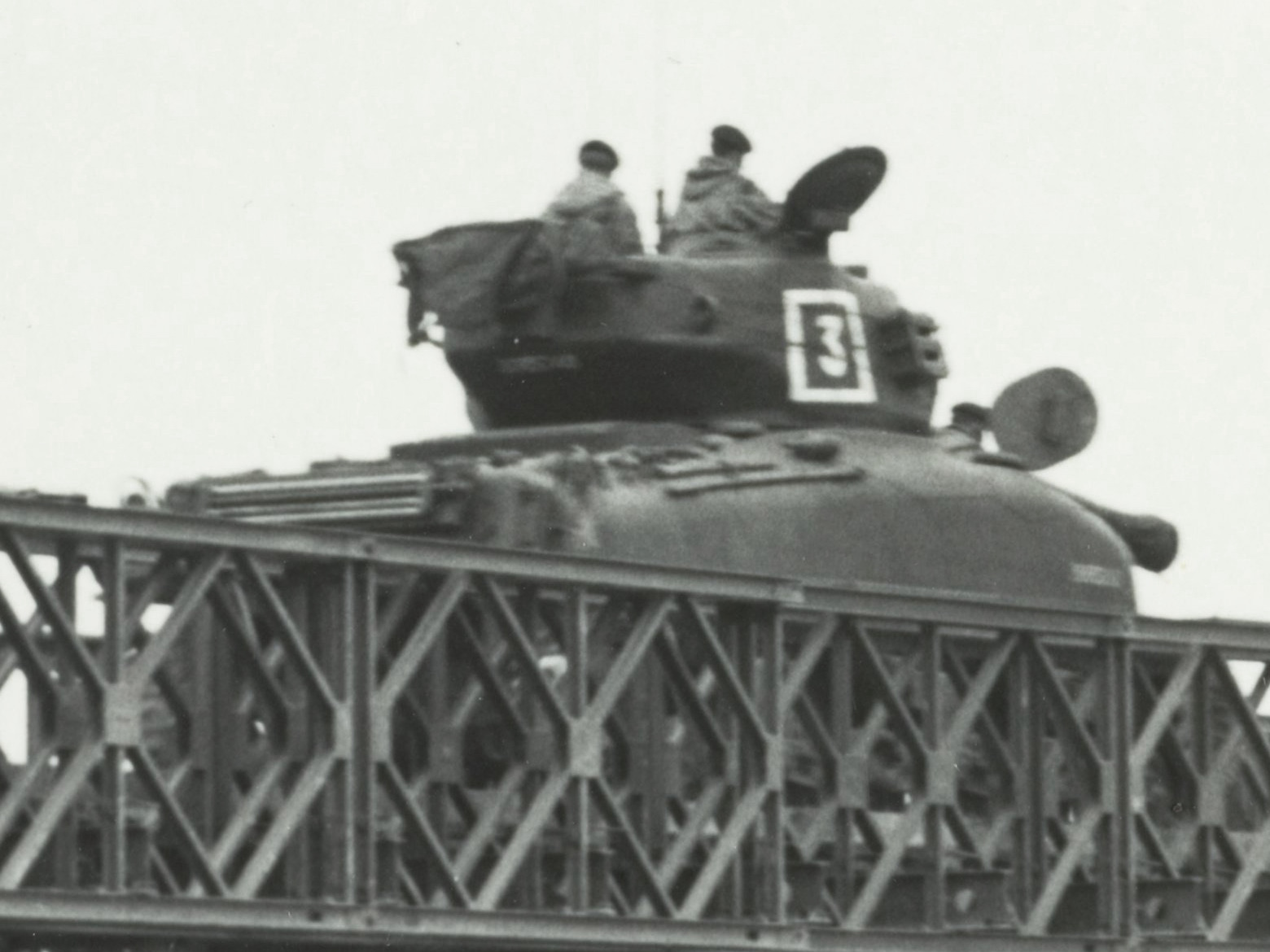

(Source)
And again, the relevant tank cropped from the photo:
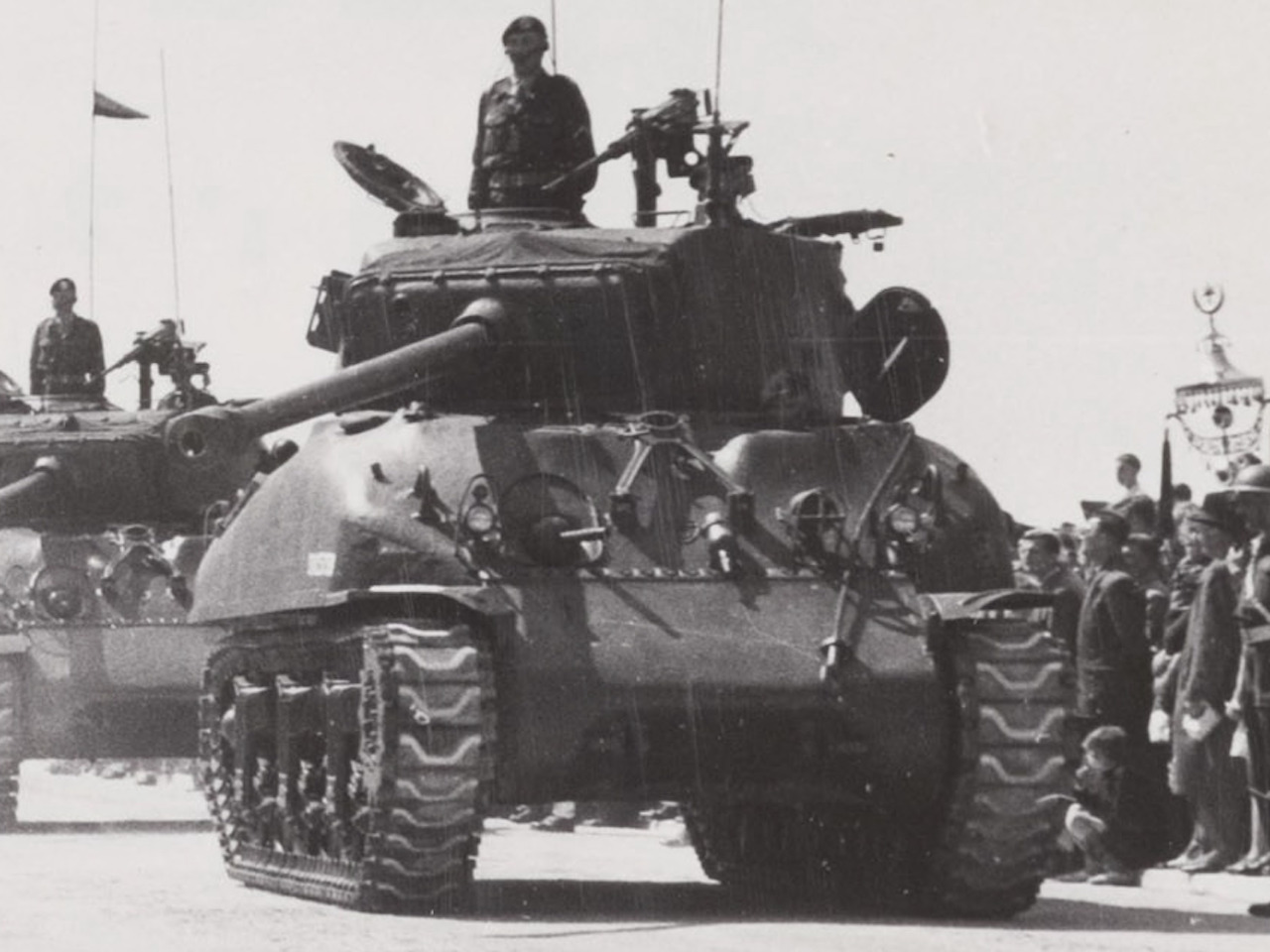
Except for the suspension, they seem to differ little from the more numerous HVSS tanks.
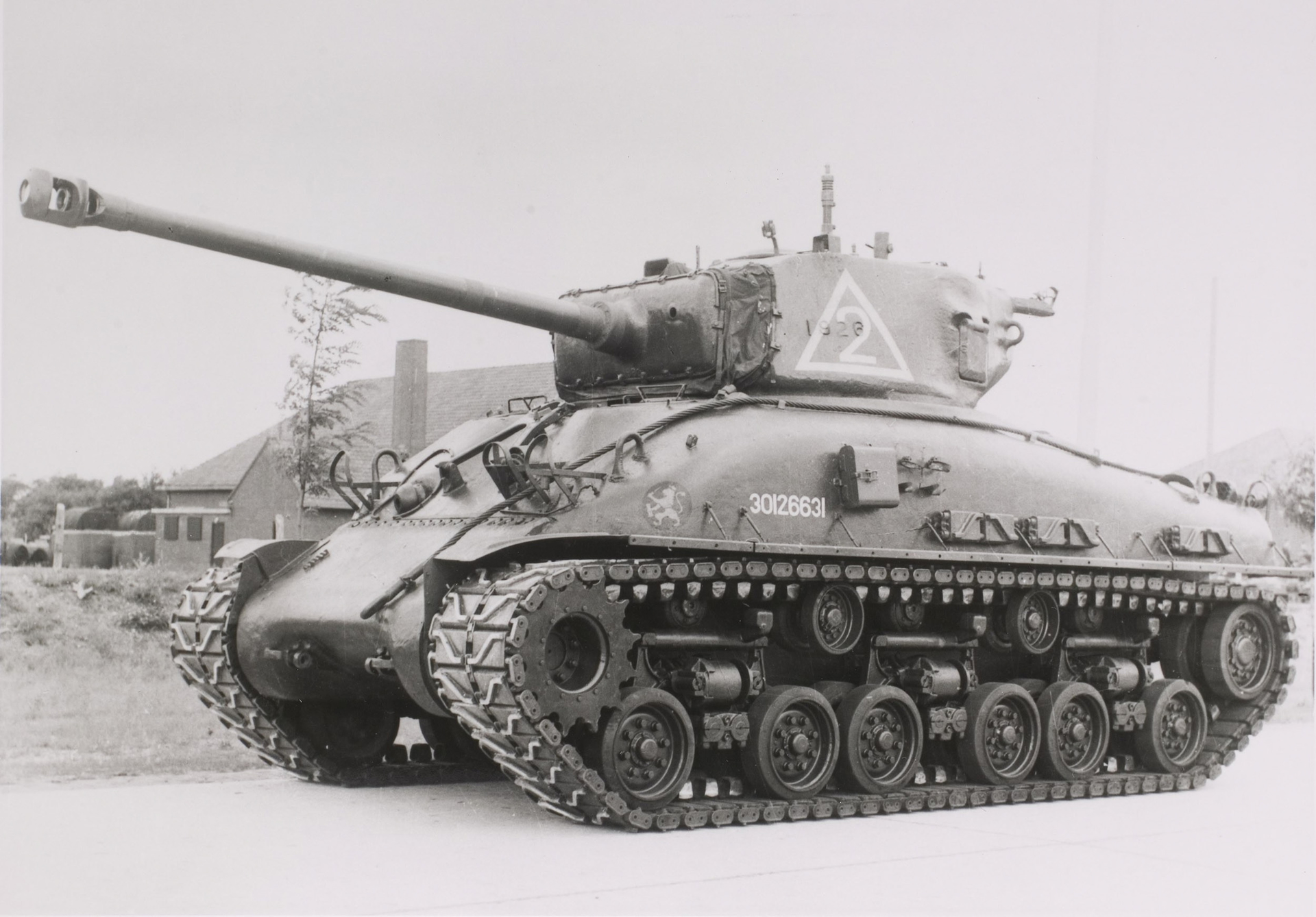
(Source)

(Source)
(Source)
(Source)
There are some minor differences between many of these tanks, especially in number and placement of fire extinguishers, by the looks of it. They all have an extra piece of curved steel over the horn, apparently simply welded to the legs of its brush guard. The photo of the tank on the Bailey bridge also shows it had an infantry telephone on the right rear, and of course all the VVSS tanks have the spare track holders on the turret sides and a gun travel lock with a hinged piece part that goes over the barrel. These details show they were supplied as part of the Mutual Defense Assistance Program (MDAP), and didn’t come from a post-war vehicle dump somewhere. I do wonder if the VVSS tanks had the armoured first-aid kit container on the left side of the hull, like the HVSS tank that’s pictured from the left, but I haven’t found a photo of a Dutch M4A1 (76 mm) VVSS tank that shows this side.
Markings are the original American registration number towards the front of the hull sides, with in front of it on the left the Dutch national emblem (a black disc with an orange lion rampant) and on the right, a triangular emblem with a number in it. I’m not sure what colours this had, though — if I had to guess I would go for yellow over red, as the light colour is darker than the registration number. On the turret is a geometric shape with a number inside. The squadron and platoon, perhaps? It doesn’t look like the individual tank’s number because the first photo has two tanks that are both number ③. The registration number also appears to be painted on the underside of the turret bustle.