Thanks. I’m undecided on if I’ll roll it over to 2026 or start on something completely new and perhaps easier to build.
3 Likes
Tamas, Ron, Jesper and Peter,
Thank you for the kind words! Looking forward to the next one and hope to see you all there.
Happy Modeling and Happy Holidays, Merry Christmas and a Happy New Year!
-zon
4 Likes
Can i integrate my JUNKERS 588 “Fafnir” in this campaign ?
The build was started 3 weeks ago and i finished at the 19th december.
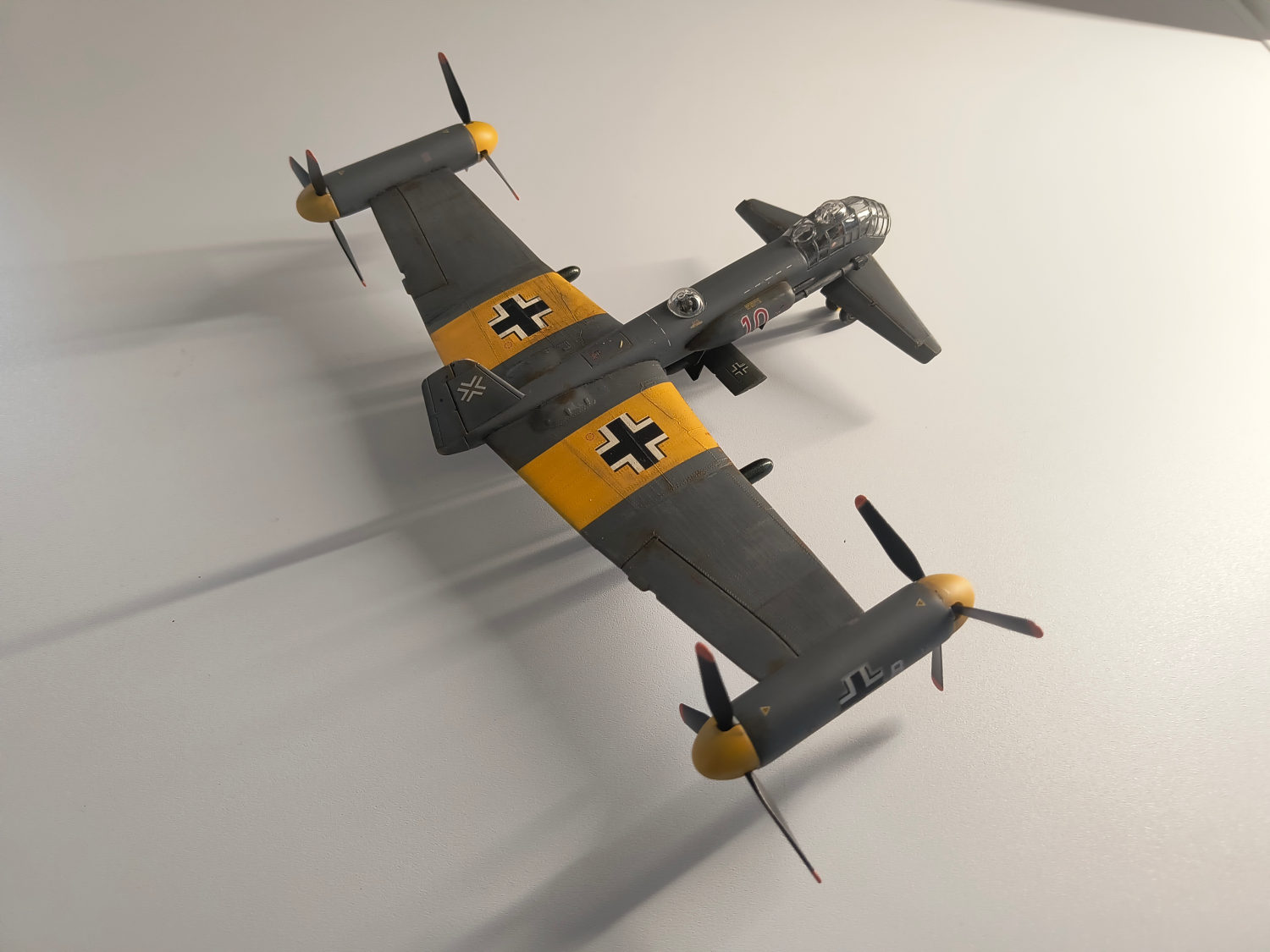
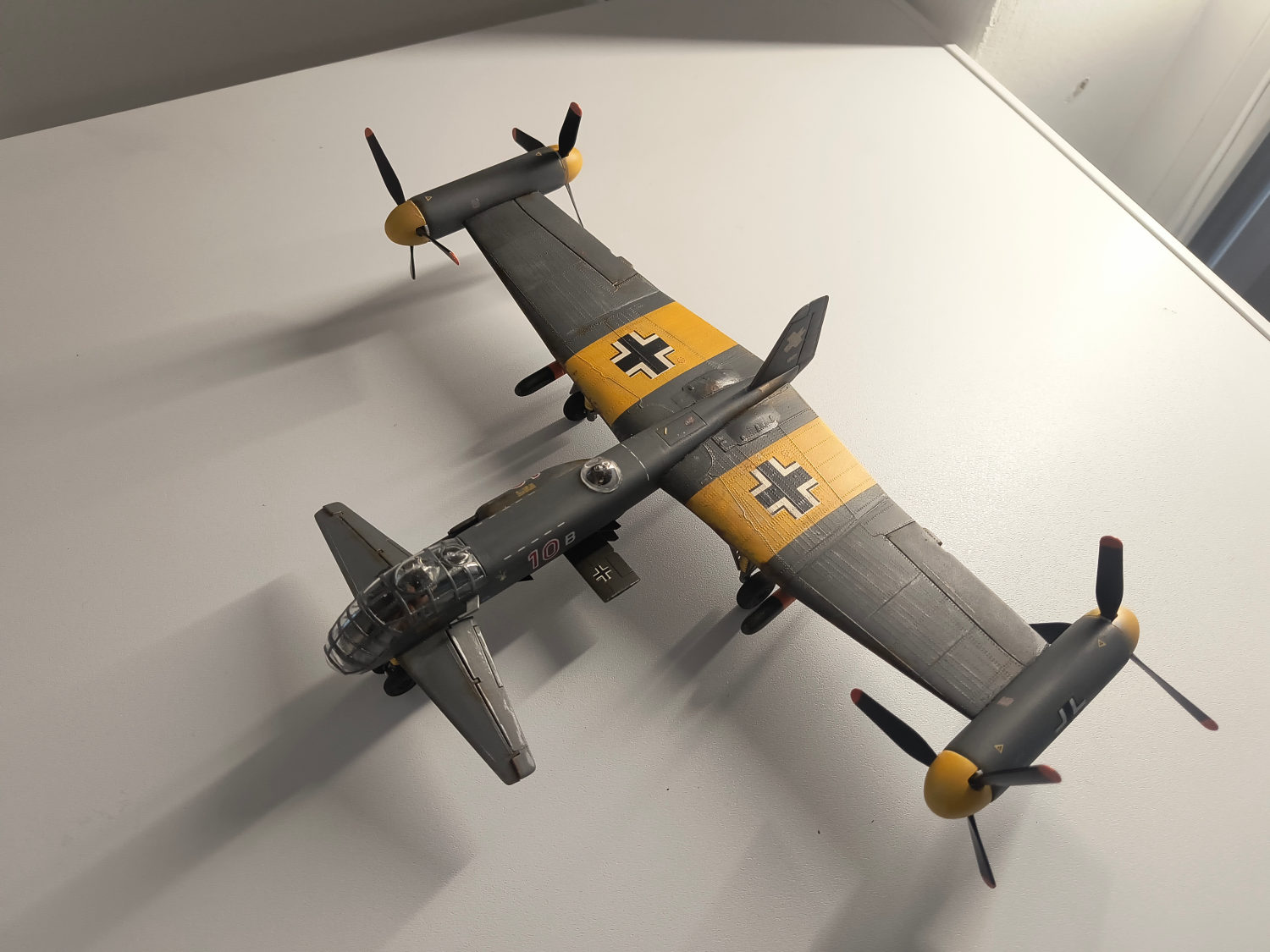
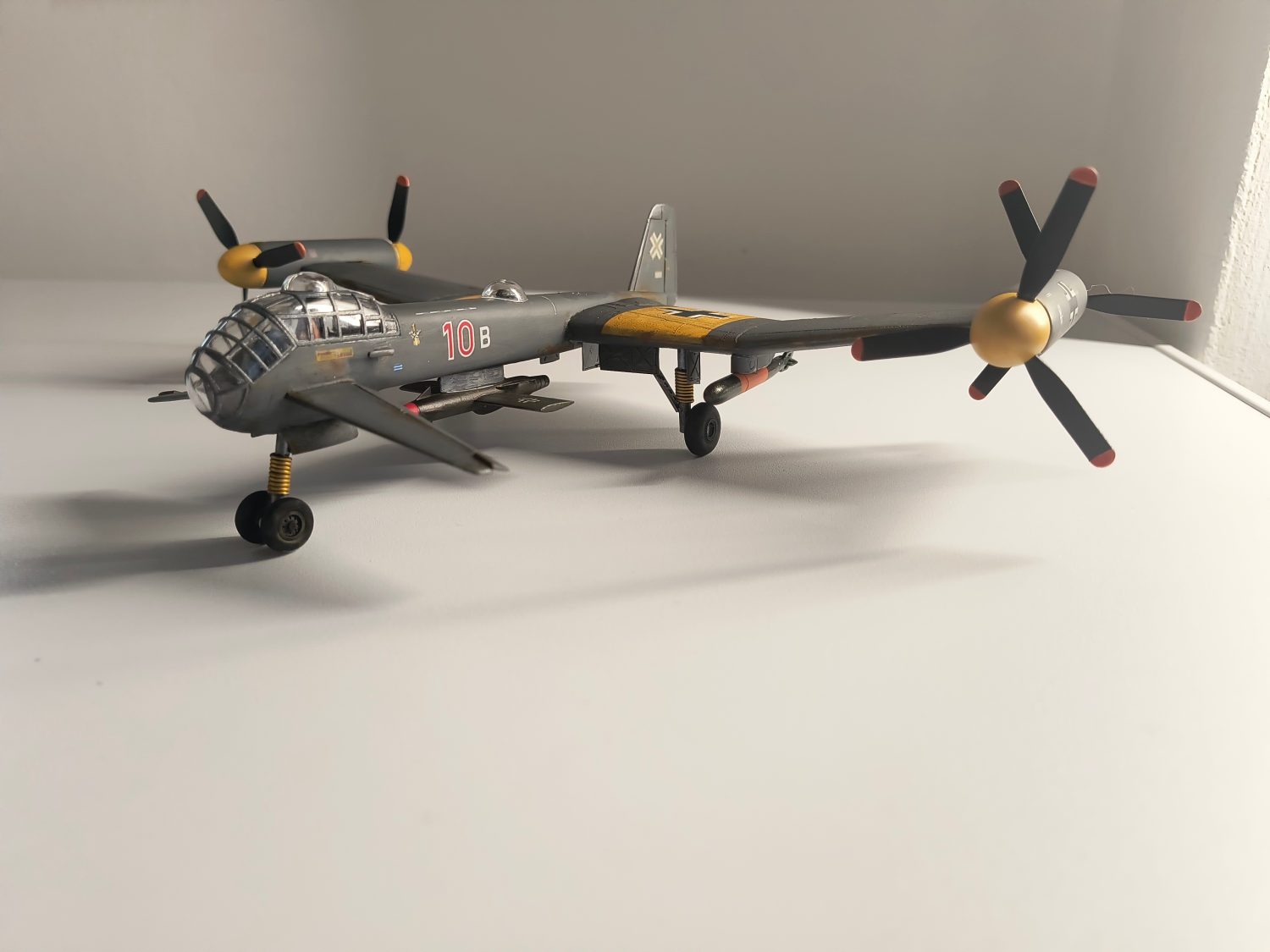
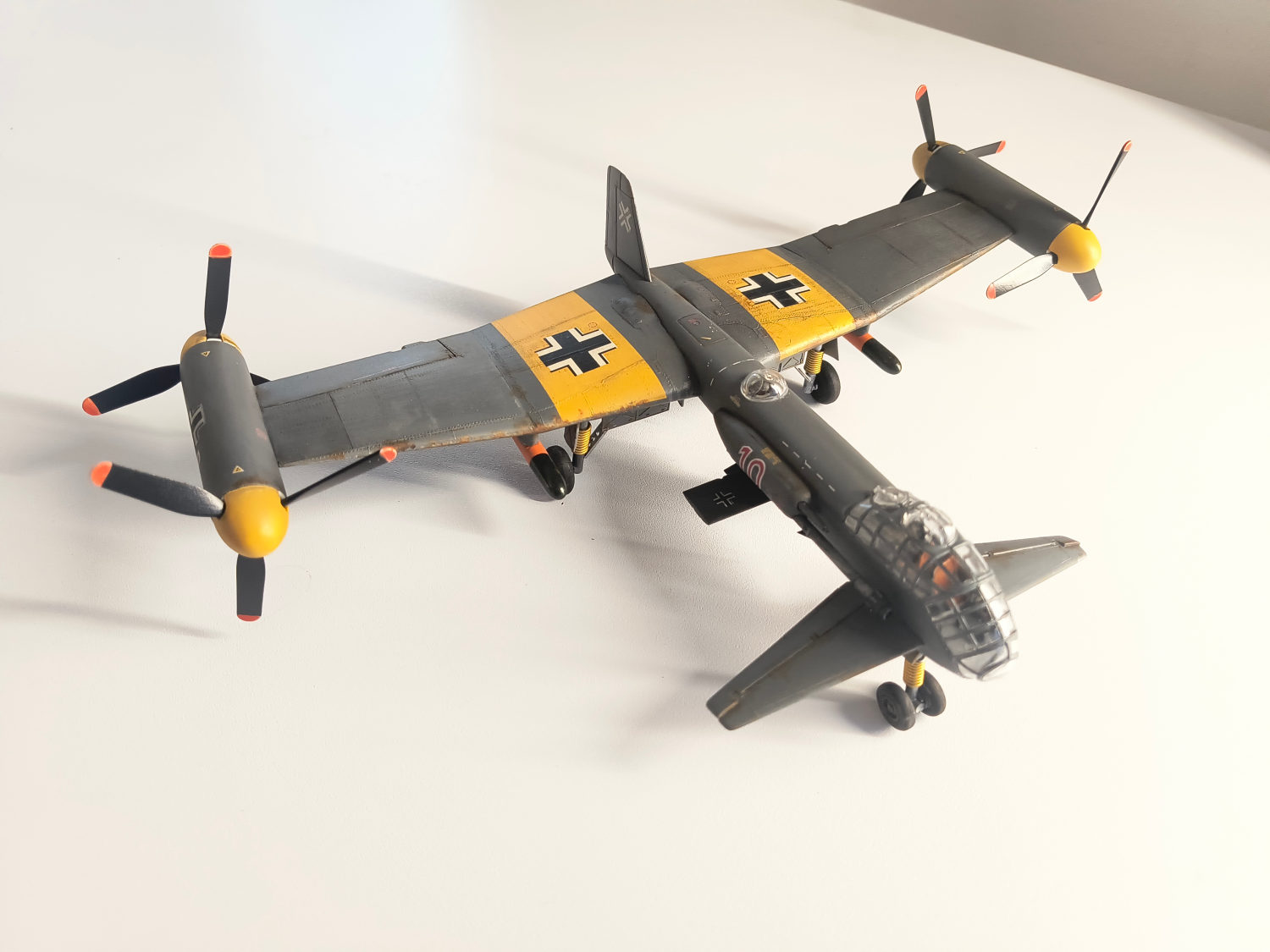

BACKSTORY:
Two things were problematic in the use of the twin-engine bombers: the vulnerability of the aircraft and the crew due to the large windows in the cockpit, and the limited weapons payload. Therefore, a concept was developed to construct the windows entirely from newly developed SCHOTT armored glass and to construct the entire outer skin of the aircraft from armor steel supplied by ThyssenKrupp. This increased the overall weight of the aircraft from approximately 10 to nearly 30 tons.
The only way to get this monster airborne was to significantly enlarge the wings and, of course, increase the engine power. For this purpose, large 48-cylinder X-engines (double V) with (ingenious!) dual crankshaft outputs were developed to drive the gigantic propellers in a push/pull configuration. A massive gull wing was designed to provide the necessary ground clearance and also significantly improved flight stability.
… The landing gear also had to be adapted to the aircraft’s considerable weight and, for safety reasons, was designed with solid steel springs instead of a complex hydraulic suspension system, making it very easy to maintain.
Between 1946 and 1948, the Reich Air Ministry (RLM) favored a configuration with large wings and small leading-edge slats to improve all-around visibility for the crew. At the same time, the concept of a fast bomber that could also be used as a ground-attack aircraft was maintained.
For this purpose, the Fafnir was equipped with a permanently installed light cannon developed by Siemens on the right side of the fuselage (similar to a flamethrower). This weapon had a range of approximately 1,500 meters at a flight speed of 500–800 km/h and could thus engage Allied aircraft before it came within range of enemy weapons. The fire-breathing dragon was consistently and very successfully used against enemy bomber formations and played a significant role in the success of the German offensive of 1947.
. … For use as a bomber, in addition to the internal bomb bay, various external stations were used, here equipped with an Adler guided missile and two torpedoes for fighting ships.
10 Likes
That looks cool! Very insect like.
1 Like
And here is the other build, started and finished in November.

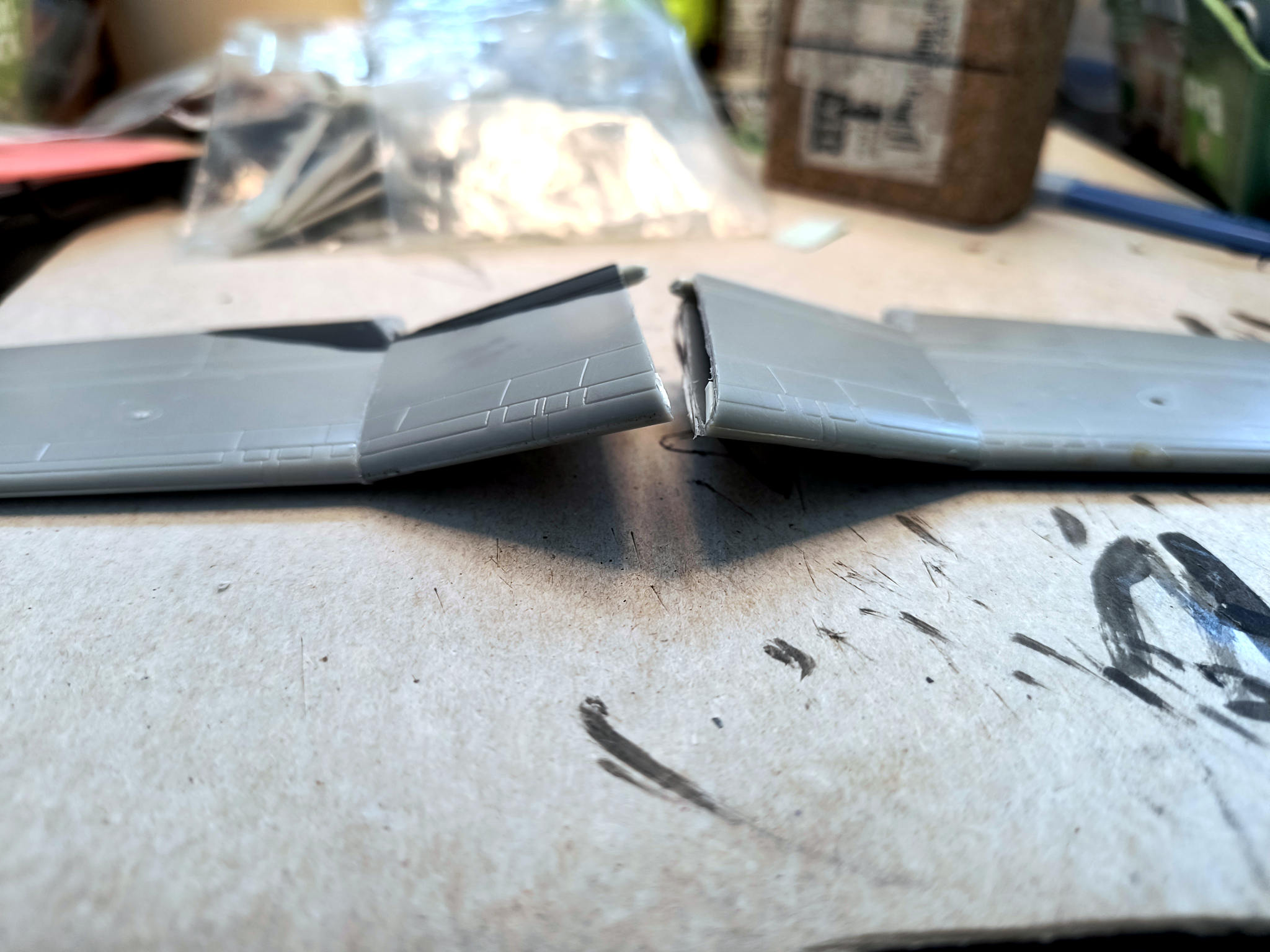
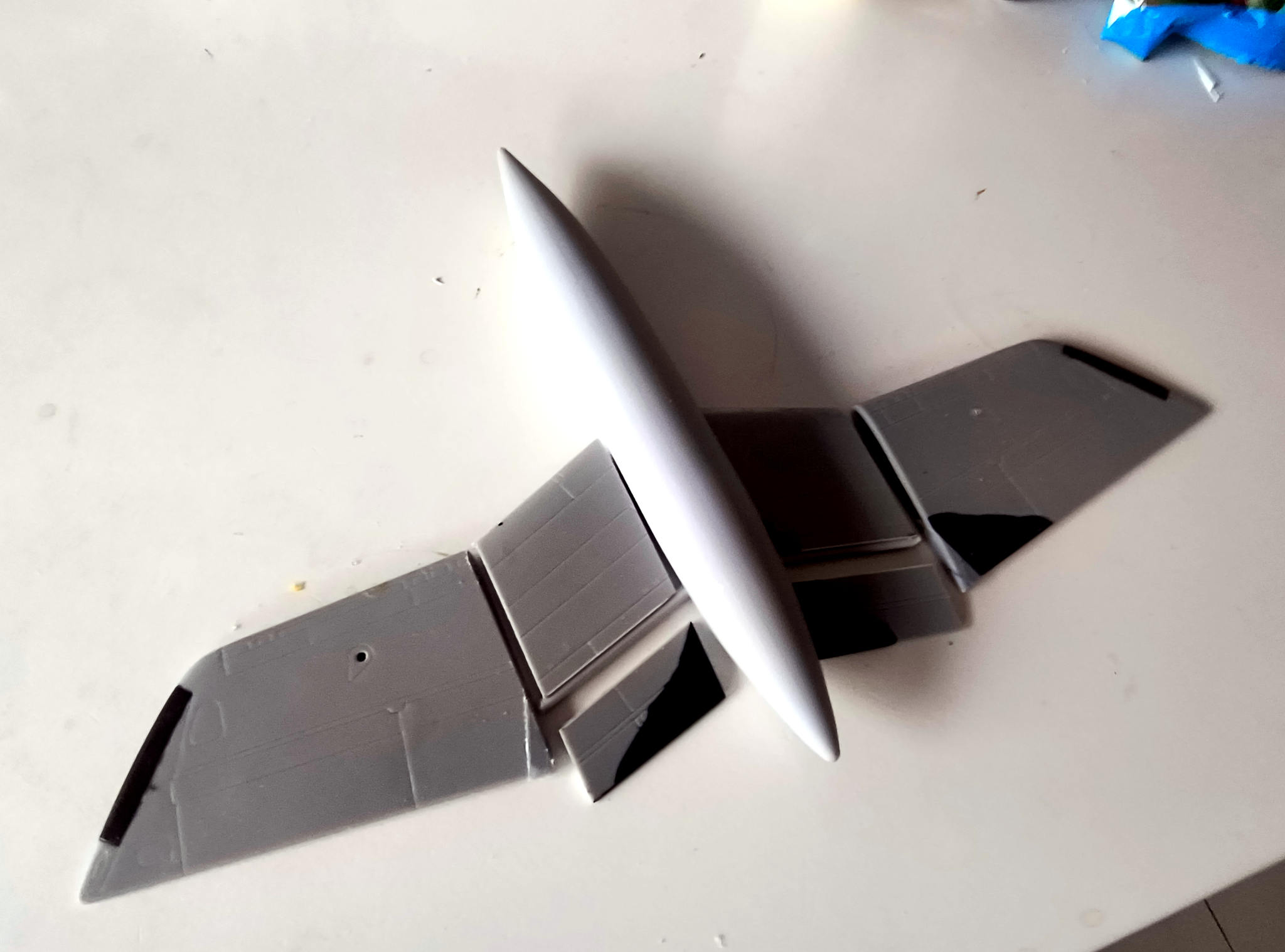

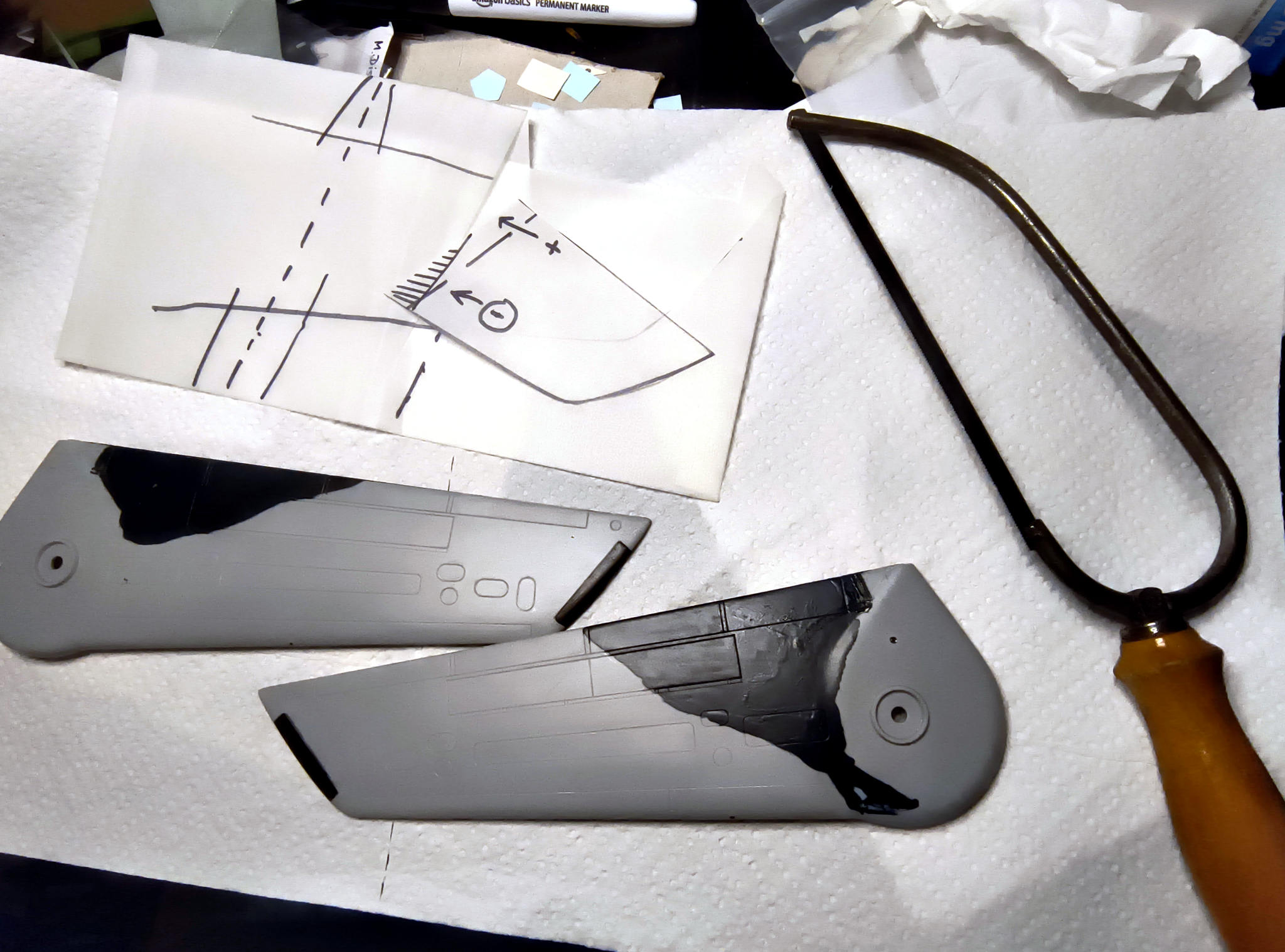
Started with two lost wings from a 1:72 Tornado fighter and a drop tank in 1:32 .
Cutted apart and fixed again 
5 Likes

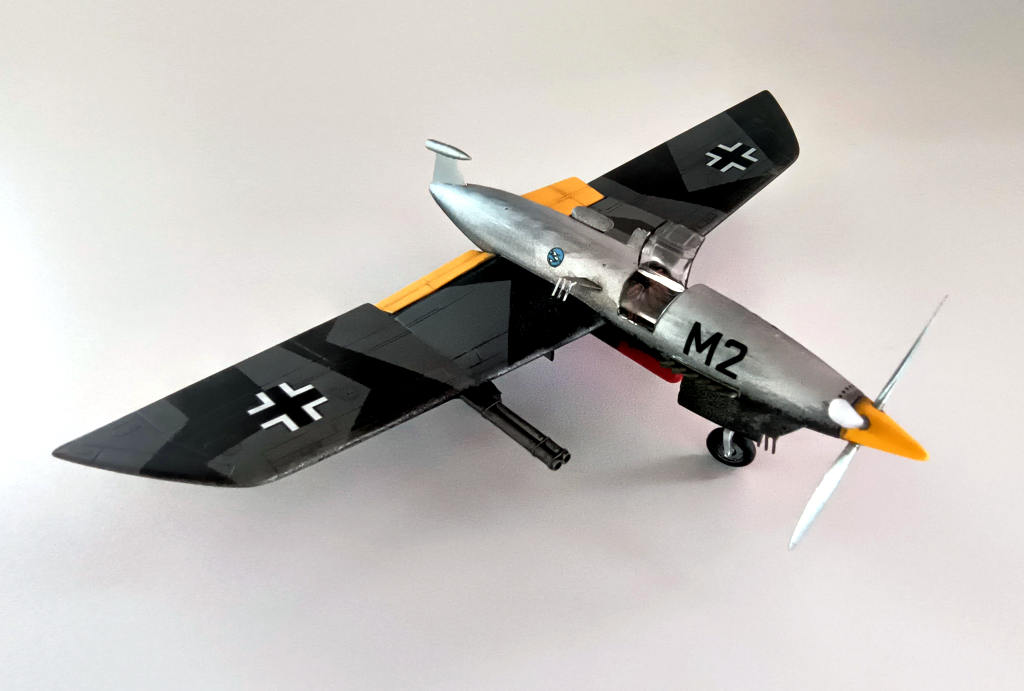
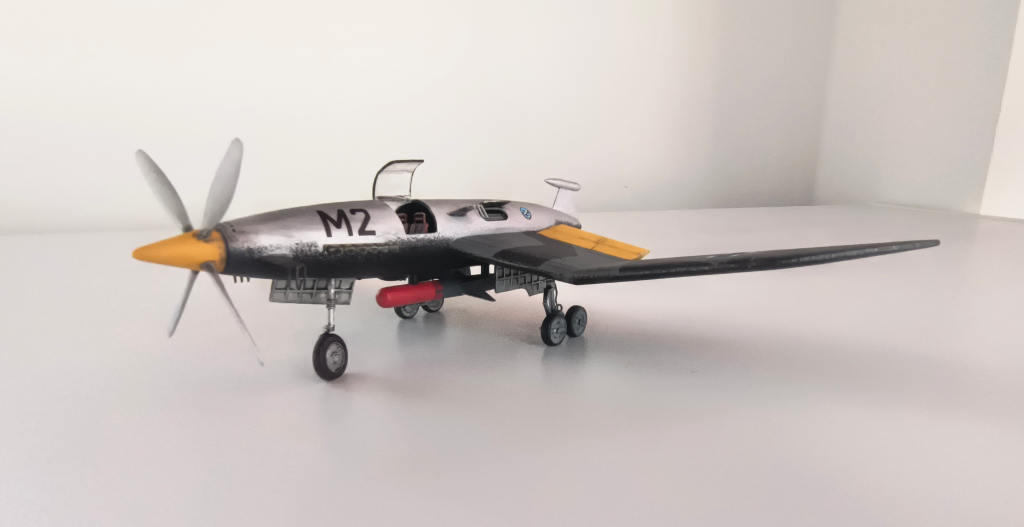

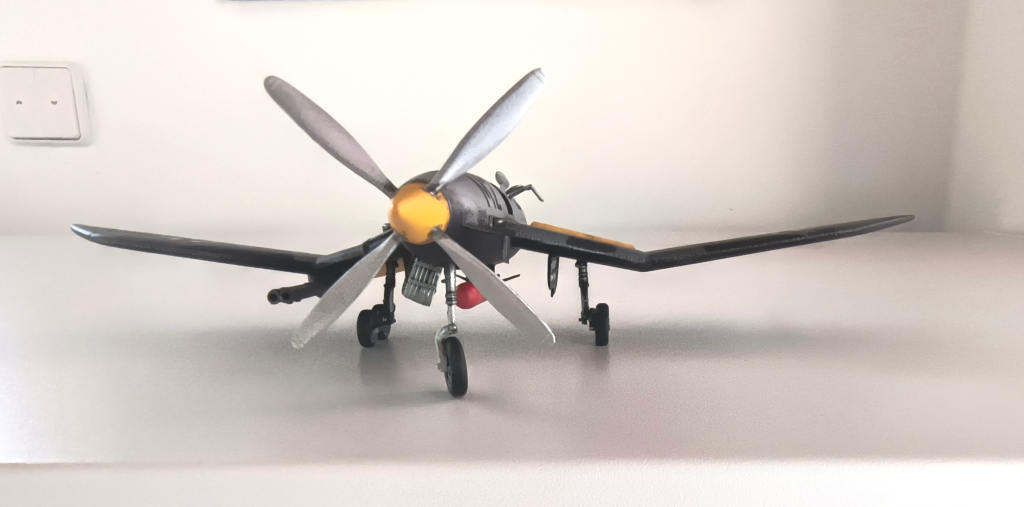
Following the successful operations of the Blohm and Voss 155 high-altitude fighters, the concept of single-engine high-altitude fighters with long range was advanced with great effort and innovative improvement of classic technology.
The Junkers Ju-341 Night Gull made its first flight in December 1946 and was already deployed as a night fighter on the Western Front in the spring of 1947. The very large wings and the crew of up to four pilots (sleeping cabins in the rear fuselage) enabled enormously long flight times; the first aircraft, the Rheinmetall K215 double-barreled cannon and the new four-barreled Siemens “Vampire” radar, were already a deadly weapon with the highest accuracy, even in complete darkness.
The engine is a gigantic Blohm & Voss 12-cylinder turbodiesel with a displacement of 180 liters and high reliability. This made it possible to fly distances of well over 20,000 kilometers even with just one engine and an adjusting screw. The concept was far superior to all available jet engines.
Therefore, in the summer of 1947, Admiral Dönitz asked for the testing of the Ju-341 as a long-range torpedo bomber with the newly designed multi-head torpedo T- 154 “Moräne” (16 self-guided autonomous underwater missiles with “Orca” depth sounder).
With this armament, Allied convoys could be sunk unerringly in US ports with just one attack; the Night Gull could carry out these attacks without escort due to its armament and altitude. Intermediate landings on Japan, Easter Island, Argentina and Madagascar enabled the pattern to be used worldwide.
The livery of these units was the scheme of the newly established naval air squadrons in the Nordkapp night variant, naturally with radar-inhibiting properties. This also allowed the company’s own radar antennas to be built very small and reduced to 4 x 3 compartment antennas on the fuselage
10 Likes
Sky Warden
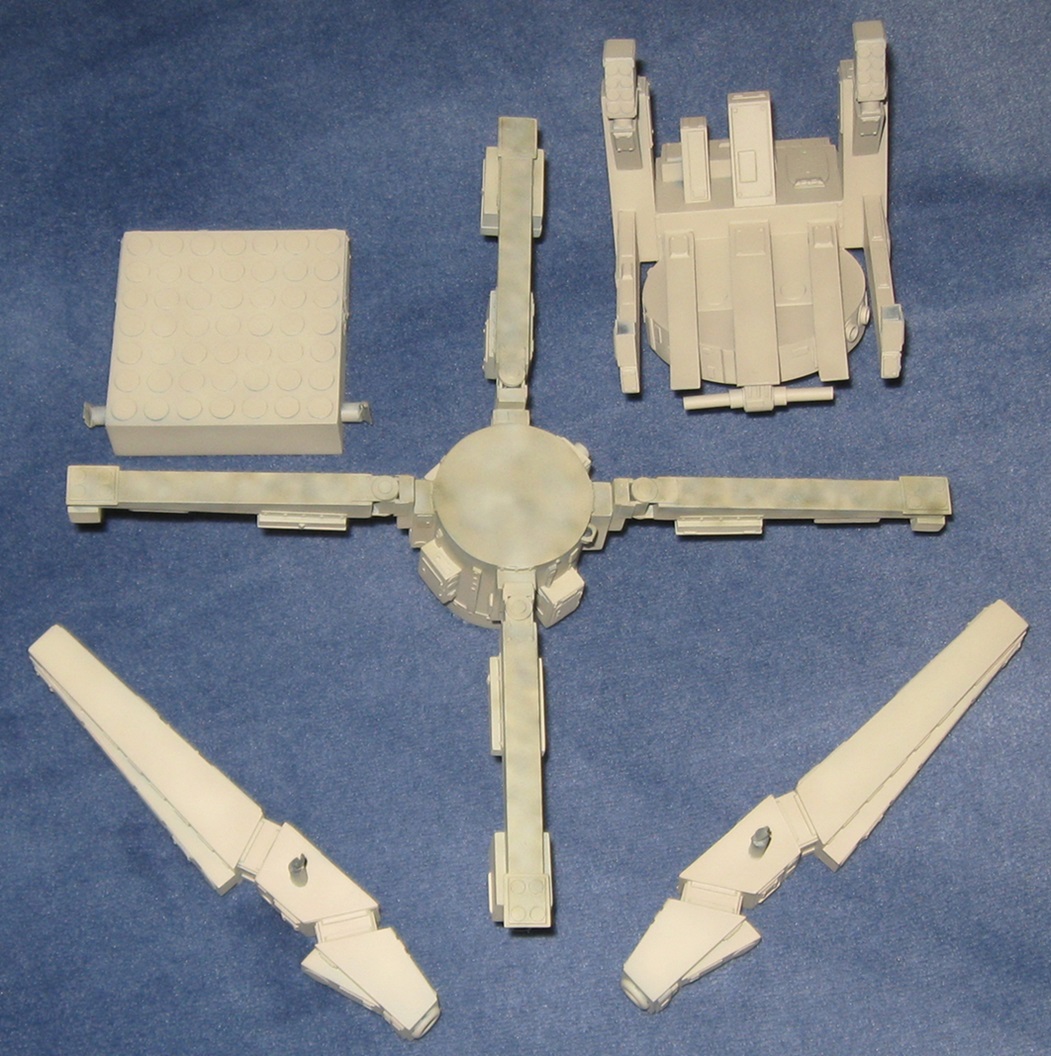
Priming and airbrush painting is finally done. Unusually cold weather makes airbrush painting in the garage with acrylics rather difficult.
9 Likes
Gerrit, nice builds. Looks cool and nice backstory!
Doug, nice to see color being added. It is an outstanding build!
3 Likes
Sky Warden
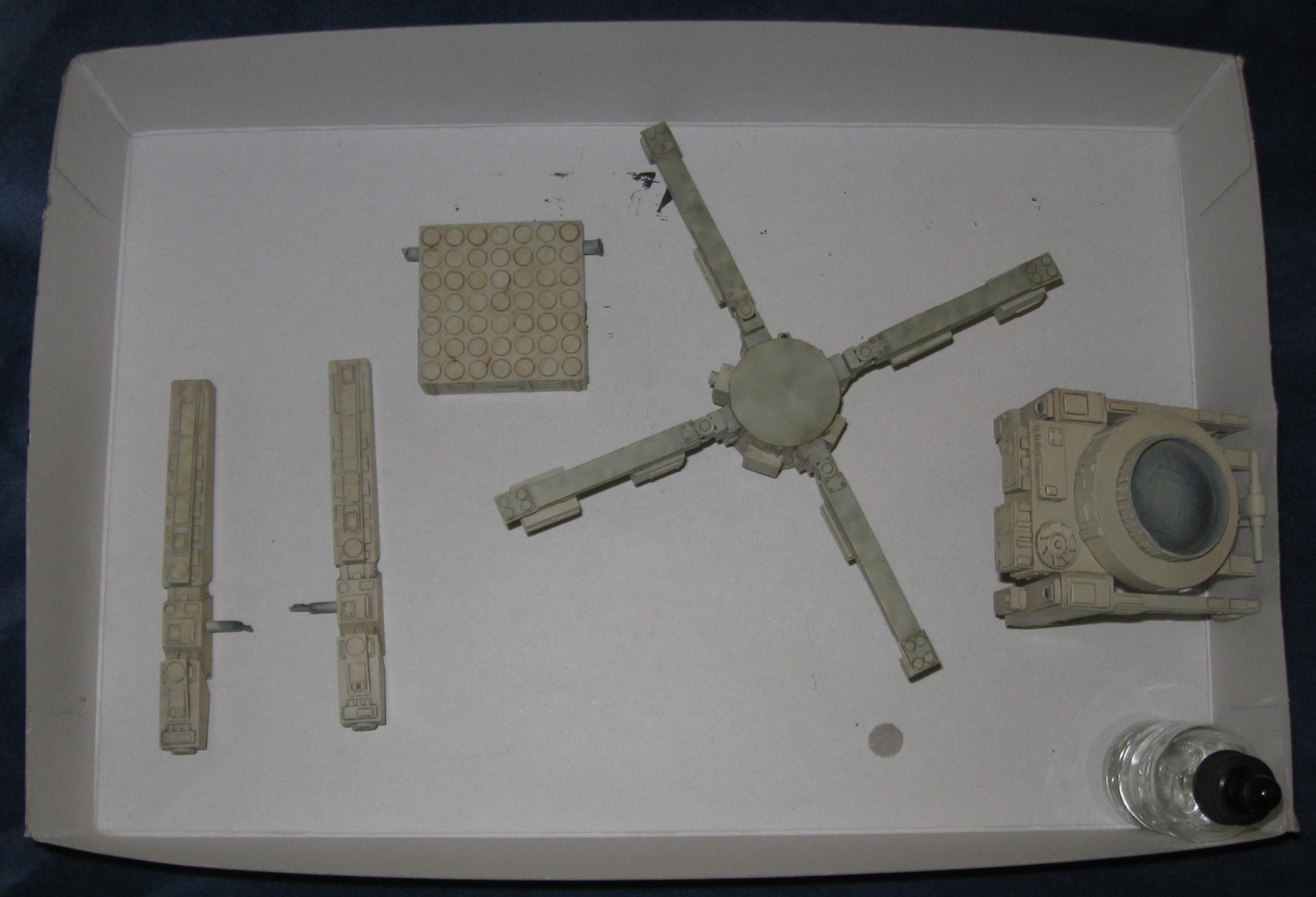
Oil painting always takes me a long time to complete. Detector and guns are all painted. Base and turret are still underway.
I cannot finish by the deadline so this one will need to roll over into Science Fiction XII. That means no guided missile frigate for Science Fiction XII. So it goes…
9 Likes
Sky Warden
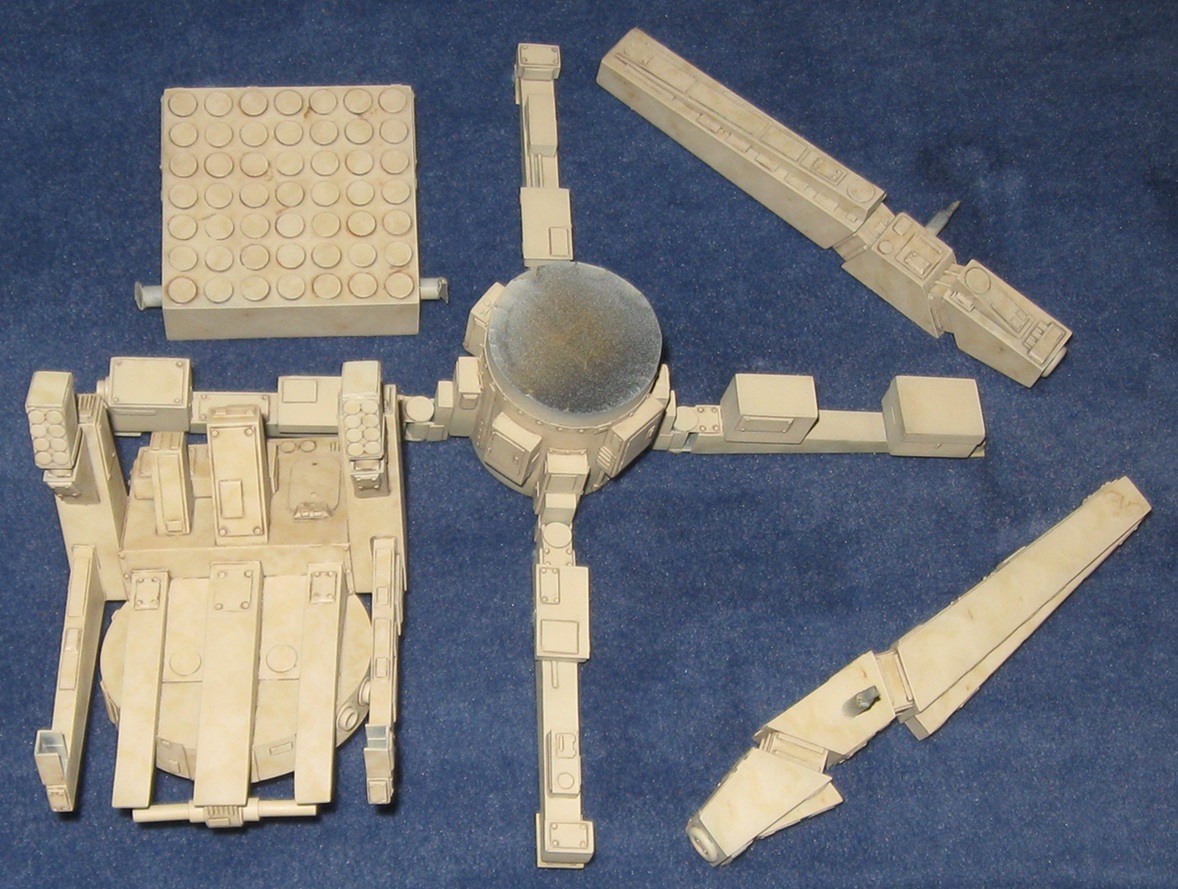
So close! I could rip the tape off, put it together without a drop of glue, and call it done and no one accept me would know! This is another 4.5 hours of oil painting. I ended up edging the guns and detector. In my opinion, those parts now look better. The turret is maybe 4 hours from completion. The base is maybe 10 hours from completion. Then it needs a clear coat. If I decide to add decals, that will add another two days and a couple hours of work.
The base color is current US desert tan. Can you tell? I am not sure I can tell.
With the base paint and panel line work done, it is finally possible to see all the little details. Fairly happy with the result.
7 Likes
Doug, looks great! I will extent the campaign with another month, so you do not have to rush it.
It would also be a pity to leave the frigate for 2027… 
2 Likes
Thank you! I hope to finish painting in a few days.
2 Likes
I also just realize I have not posted a picture of my own entry. Thank god for the extension 
As soon as the snowing here in Denmark stops I will take some pictures.
4 Likes
Sky Warden
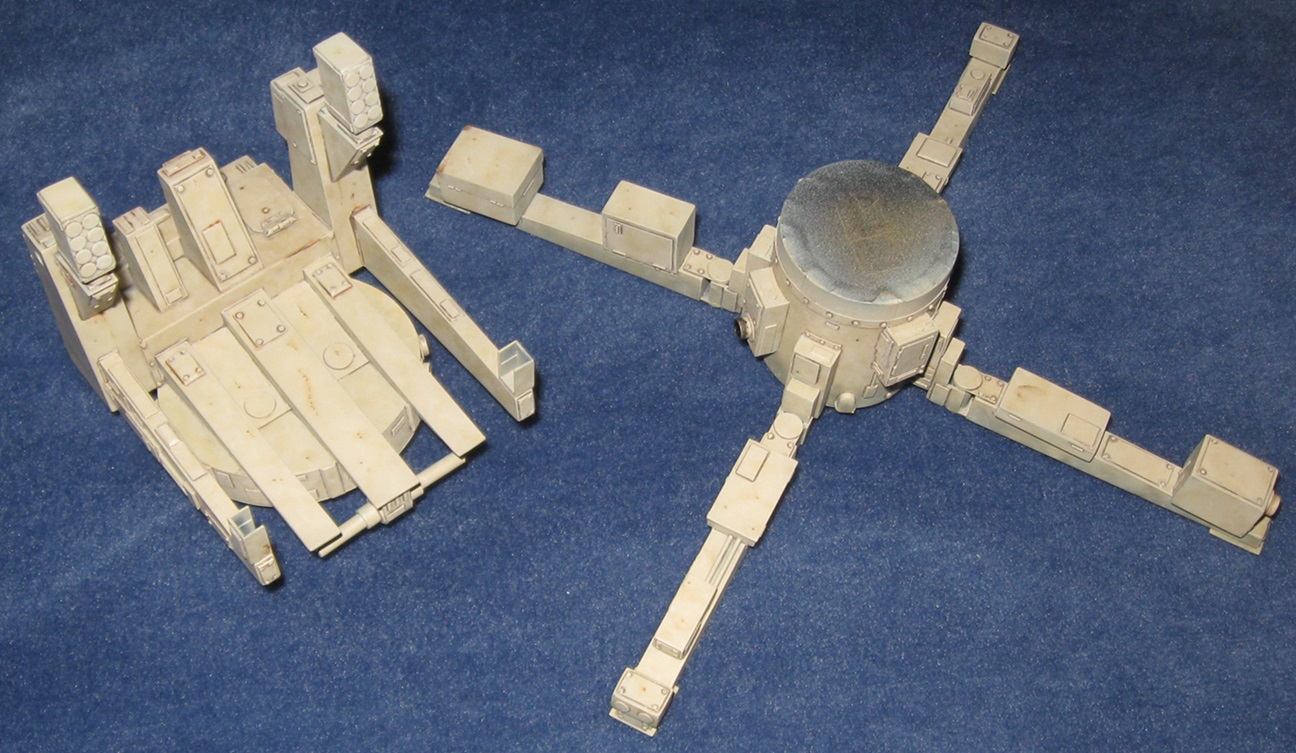
I am very happy to report that all the oil painting is d o n e. Yeesh. I will give the oil paints a few days to dry then spray the final clear coat.
7 Likes
Finished: Sky Warden
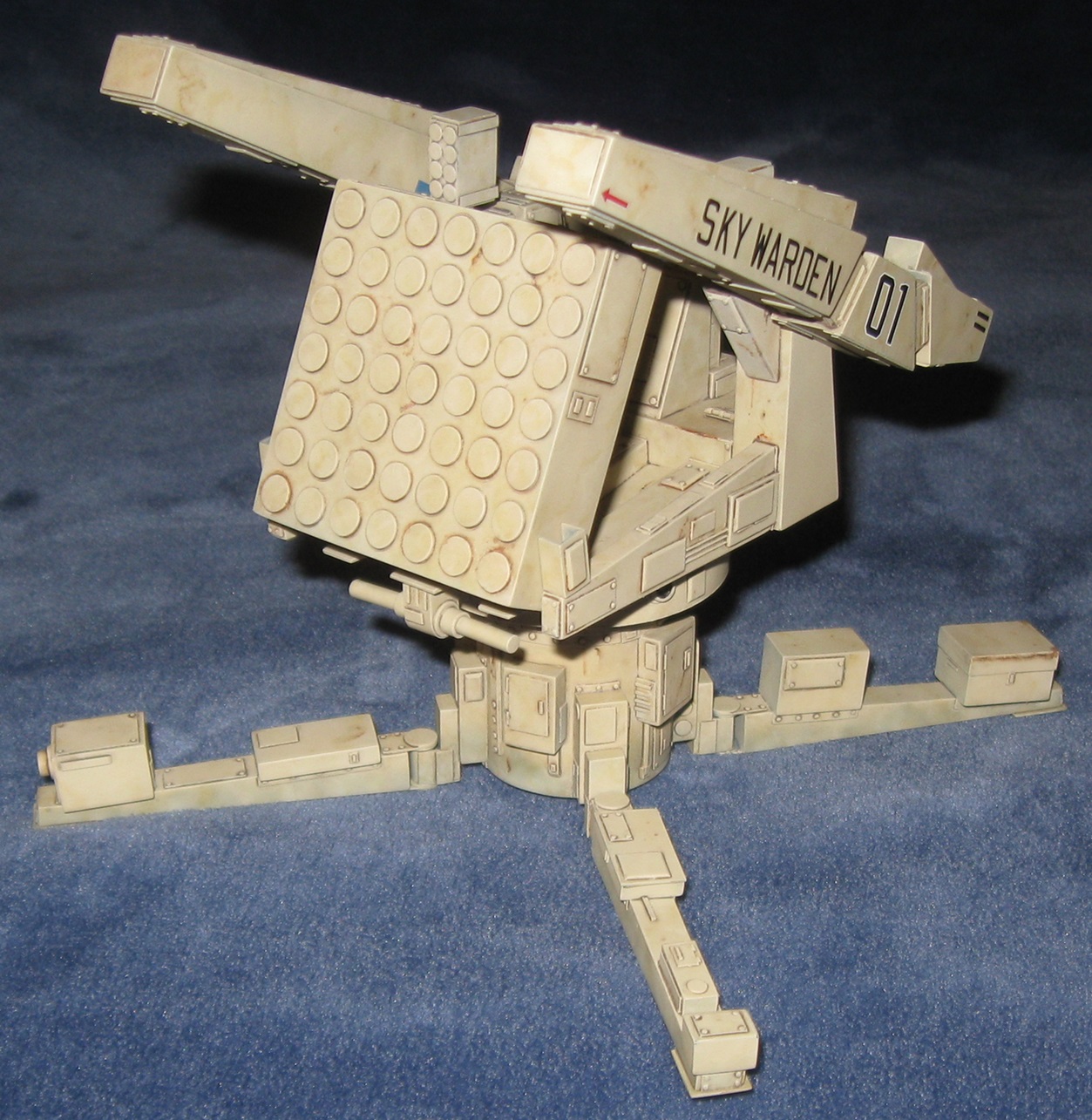
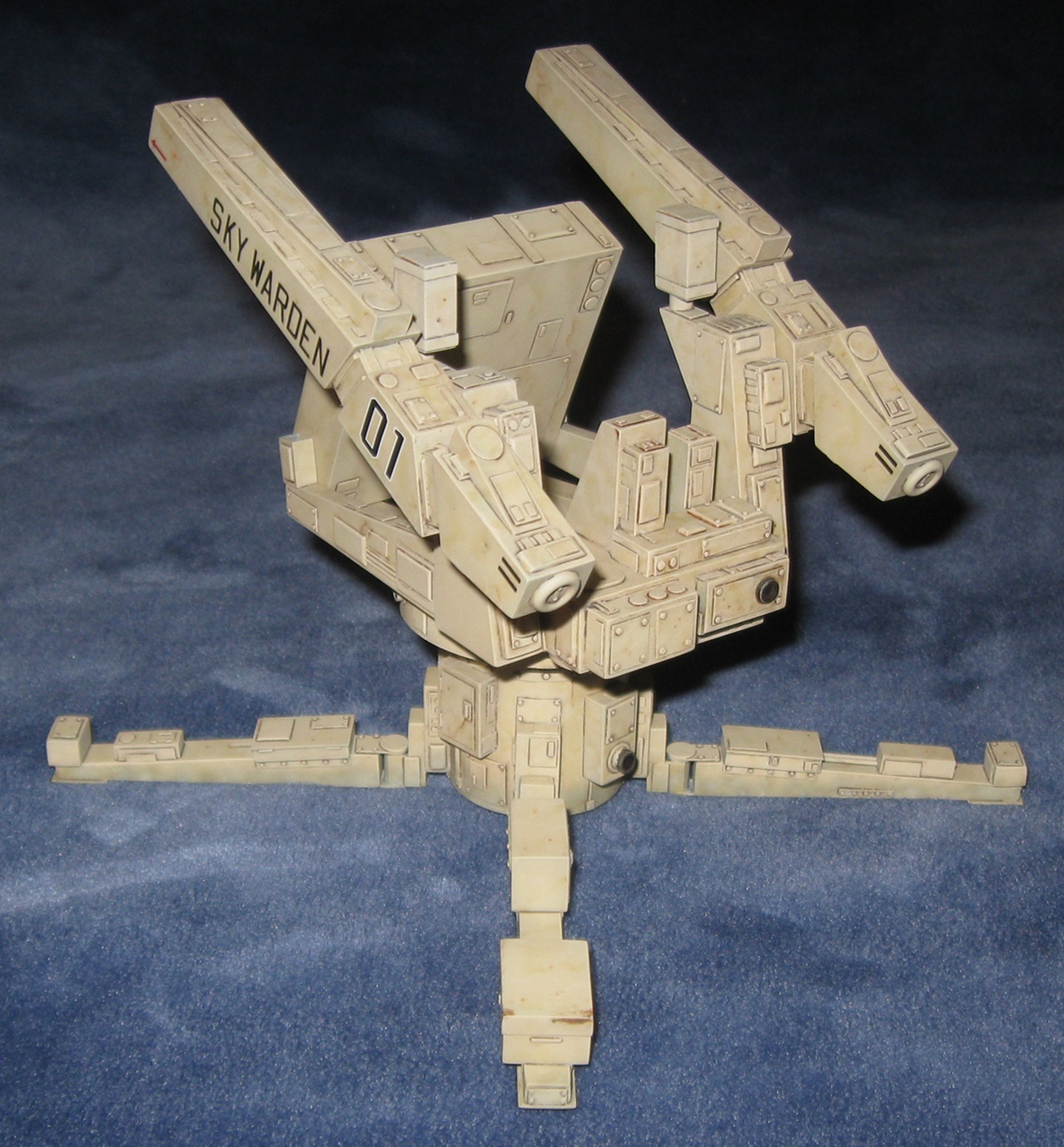
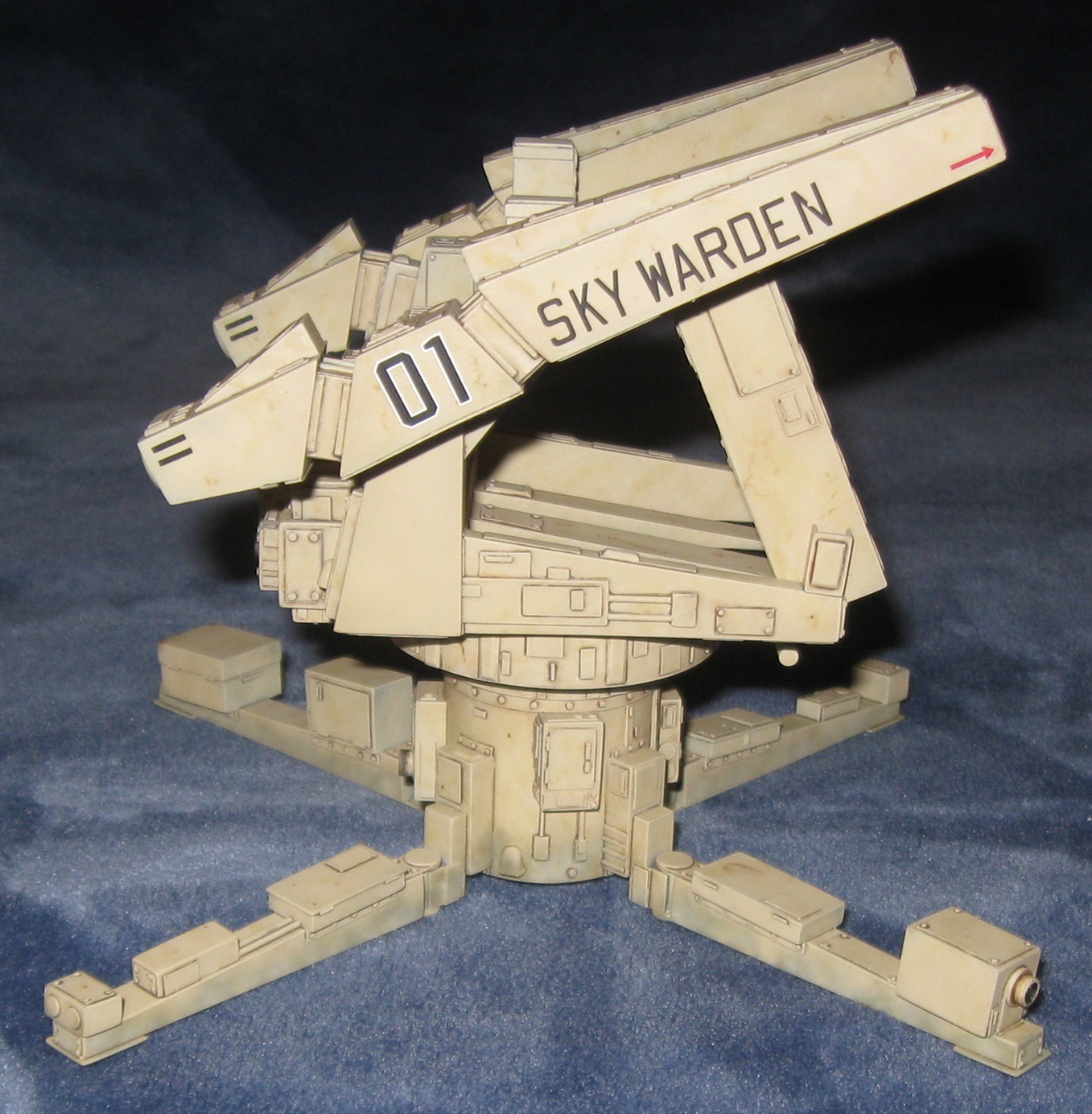

Sky Warden is a prototype weapon system under development for the Beam Energy Aerial System Terminator program.
Each unit consists of a composite RADAR detector, two beam energy cannons, a battery capacitor, a power conversion unit, and a cruciform base with power traverse.
The composite RADAR of Sky Warden acts like the eye an insect, allowing the unit to focus on multiple targets at once at different wavelengths or converge multiple detectors on a single target to increase range and resolution. The modular nature of the detector allows it to function even with many malfunctioning units.
The system can use microwave, visible light, or x-ray band focused beam cannons. The software can operate two different types of cannon on the same mount. Each type of cannon has inherent strengths and weaknesses, allowing multiple Sky Warden units with different cannons to engage all possible aerial targets at short to very long distances.
Each unit includes a power capacitor allowing the unit to fire 5 times at full power, 50 times at medium power, or 500 times at low power. Targeting software automatically detects the nature of a threat and fires at the appropriate power level at up to three shots per second per cannon. A single Sky Warden unit can quickly sweep a drone swarm from contested airspace. Multiple Sky Warden units can control a very large volume of airspace with extremely high kill probability using interlocking fire in rapid fire mode. Sky Warden can also engage hypersonic weapons with ease. A battery of 10 Sky Wardens can engage 50 hypersonic weapons at 30 miles with a 99.99999% probability of killing all weapons in 10 seconds.
The detector and cannon of Sky Warden can depress 10 degrees and elevate 87 degrees. In look up mode, Sky Warden can engage enemy satellites in low, mid, and high Earth orbit. BEAST software is programmed to recognize all known potential enemy satellites. In the event of total war, a battery of 500 Sky Warden units spread over the continental United States, Alaska, Hawaii, Guam, and other possessions and bases can sweep 100% of all enemy satellites from Earth orbit in 37 seconds, ensuring United States dominance of near Earth space.
An on board generator can convert fossil fuels to stored electrical energy for additional firing capacity. However, in order to save weight, the unit does not carry a large supply of fuel. Instead, Sky Warden relies on a fleet of autonomous replenishment vehicles that plug into a power coupling. When a given replenishment vehicle is exhausted, it simply drives away, allowing the next autonomous vehicle to couple and provide power. In this way, a Sky Warden unit can maintain near constant operation even when heavily engaged.
The cruciform base of Sky Warden can fold, allowing transport by almost any flatbed transport platform. The turret and cannons may be removed in 10 minutes, allowing Sky Warden units to traverse beneath most bridges and through most tunnels.
Sky Warden is designed to operate in a battery of 4 to 1,000 units. All units connect to a single network with processing load shared across all Sky Warden units. As the number of Sky Warden units grows, processing power increases, ensuring excess processing capacity in all threat environments, even with many units destroyed or damaged. BEAST software evaluates targets detected by all units, assigns a threat level to each target, then engages each target through a human decision process of by autonomous operation. BEAST software also controls autonomous energy supply vehicles, insuring maximum operational time for each Sky Warden unit in a battery.
Sky Warden is a true killbot, capable of making human lethal decisions without human intervention. BEAST software is programmed with over 10,000 known aerial systems and includes decision making loops for evaluating and engaging unknown targets.
Thank you for your interest in Sky Warden and the Beam Energy Aerial System Terminator project.
10 Likes
Outstanding model and excellent backstory Doug!
3 Likes
Dang, that is cool!
3 Likes
Fantastic build, Doug! Very nice finish and excellent scratchbuilding skills.
Love the backstory! Congrats on finishing!
2 Likes
Finally the weather cleared enough so I could take daylight pictures outside.
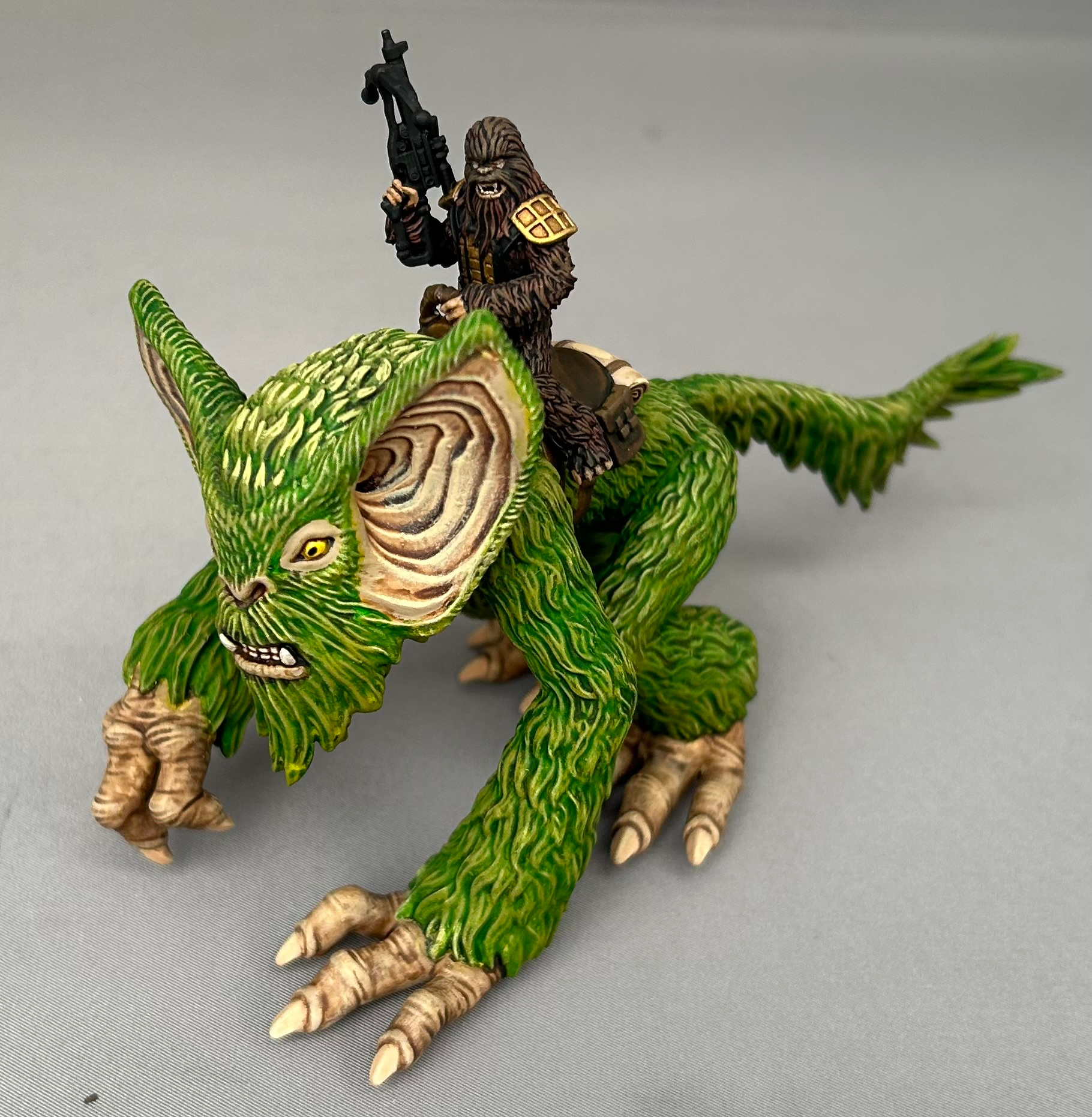
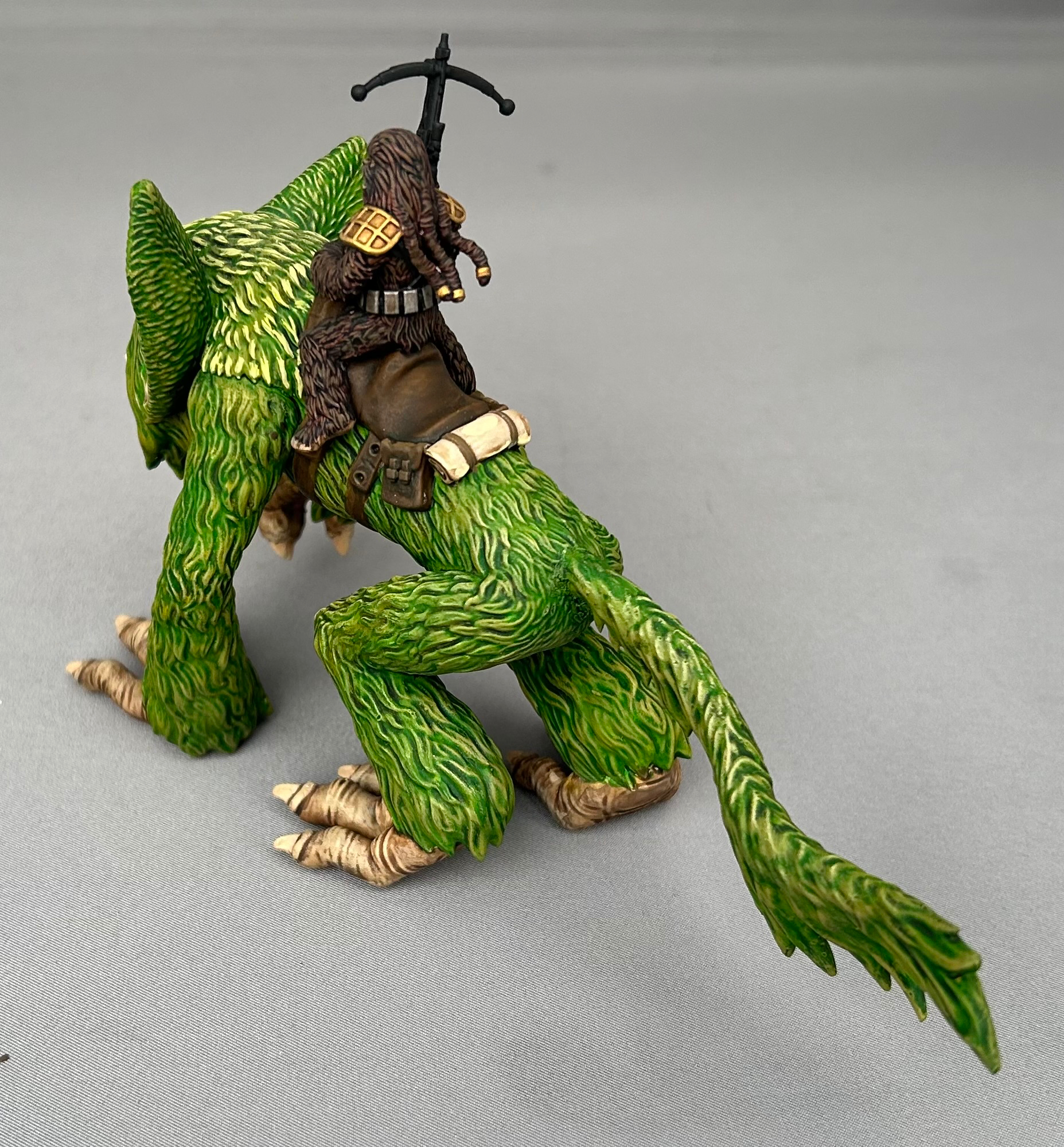
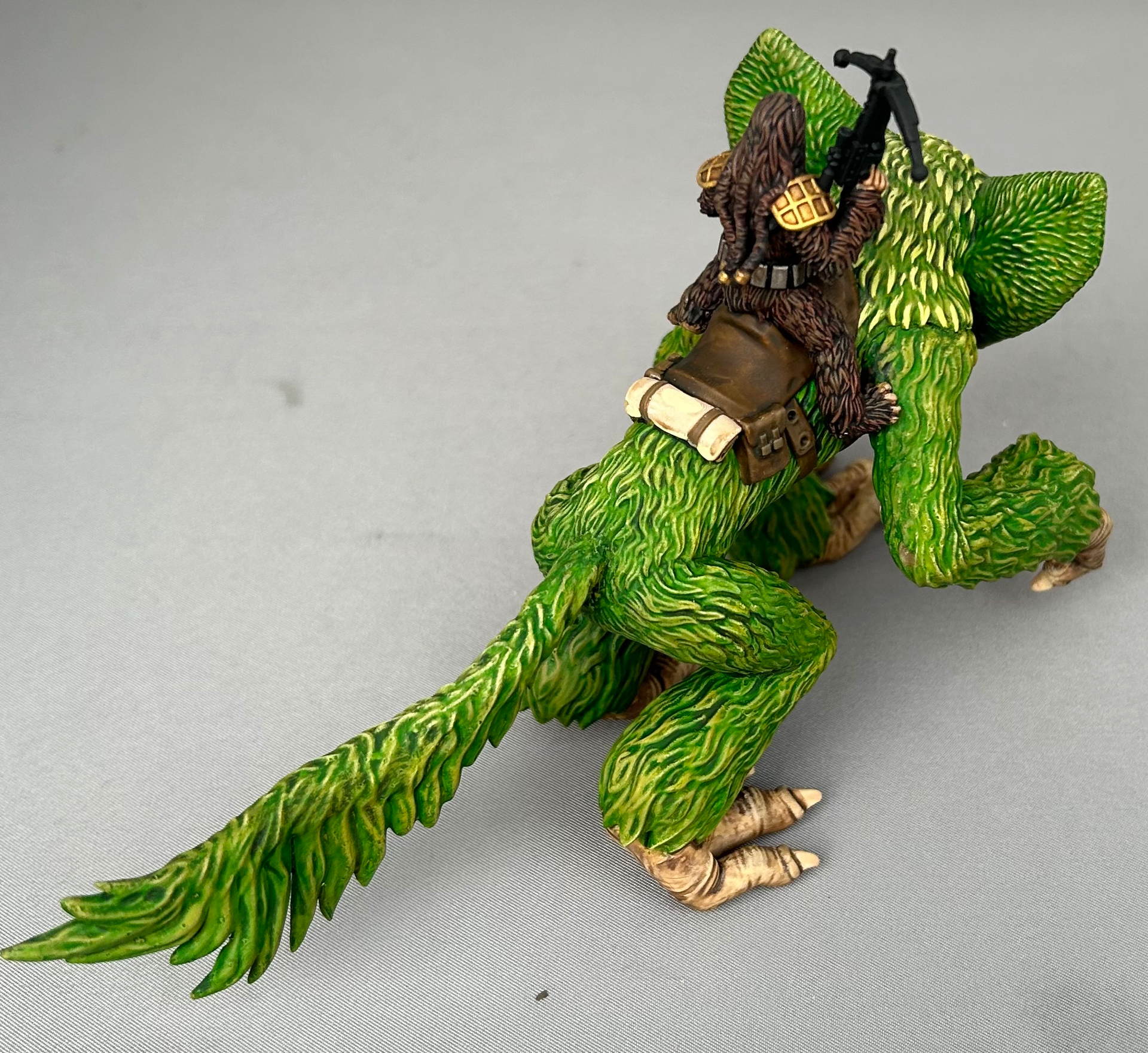
Here is the Wookiee chieftain on his beast. I wondered what kind of beast it is. I have not heard or read about it in the lore, so I guess it is something invented by the 3D designer.
I imagined it is some kind of monkey from kazyik (Wookies’ home forest world). I went with a green fur to fit the forest theme and create a nice contrast to the brown Wookiee fur. Also I found some scary looking pictures of yellow monkey eyes and tried to recreate that.
Once I have decided the rules for him I will order the appropriate base and give it a forest/jungle theme.
Thanks to all participating in the campaign.

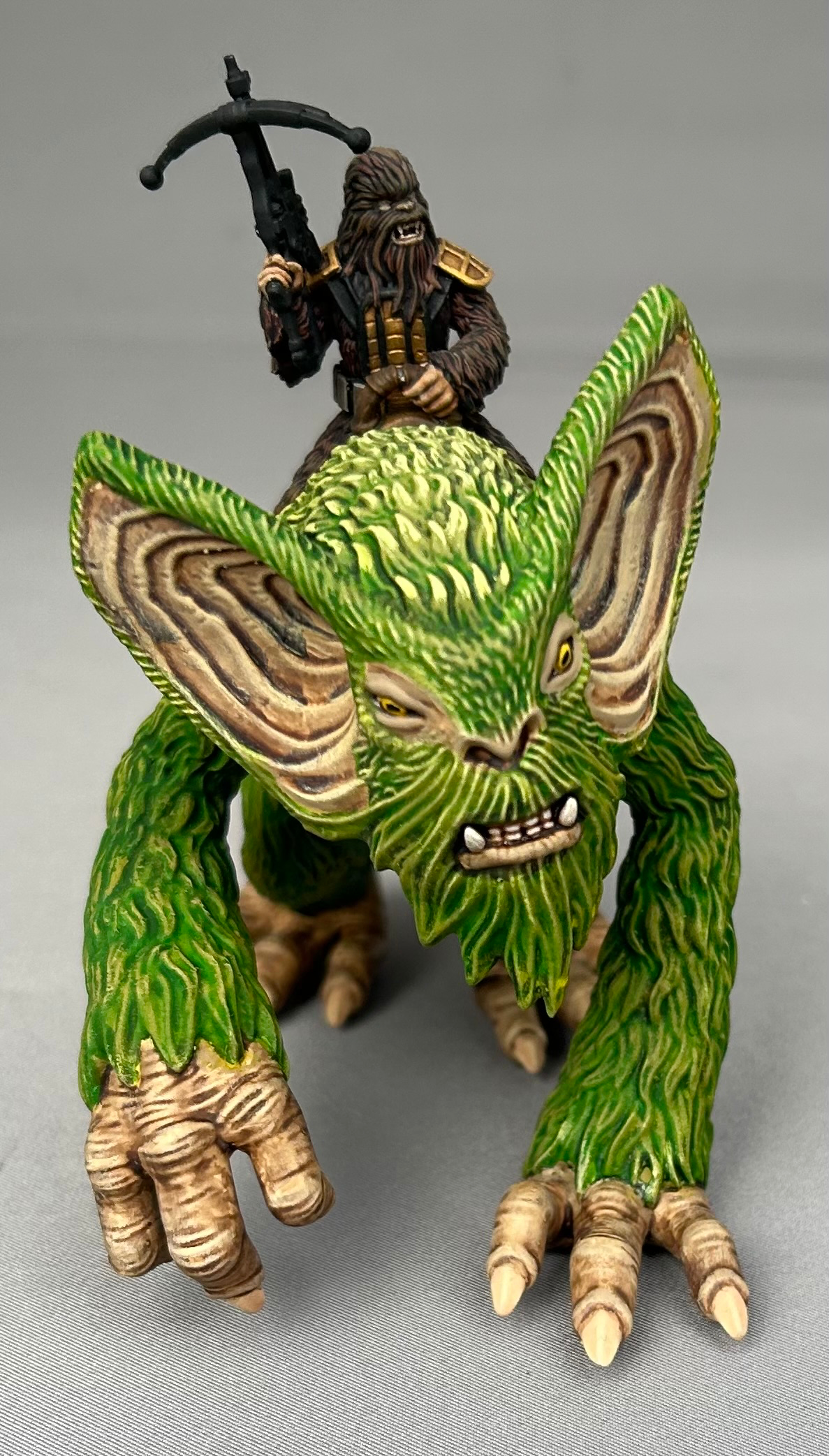
17 Likes
That turned out really great! Very vibrant!
The animal may be a gundark. It has the right general form but is missing two arms. Some interpretations of the gundark, as in Star Wars: The Old Republic, only have four limbs. Also, gundarks come from a desert planet, not the forest planet of the wookies. Dunno.
2 Likes